You know that room. Every American coming-of-age story has one.
It’s in the basement, or the garage, or tucked behind a door that’s always slightly ajar. There’s a CRT television with a Nintendo plugged into it. A leather couch with questionable origins. Posters taped — never framed — to the walls. A locker covered in stickers. Somewhere in the corner, a basketball. A lamp that somehow makes everything feel warmer than it should. And stuff, so much stuff — action figures and movie posters and candy and board games and magazines — accumulated with the specific logic of a twelve-year-old boy who spent his allowance on exactly the things he wanted.
You’ve seen this room in Stranger Things. In Stand by Me. In every 80s and 90s teen movie where the cool kid’s basement became the unofficial headquarters for the whole neighborhood. It’s a room that exists at the intersection of obsession and comfort, where the decor is biographical and the vibe is entirely non-negotiable.
Walt’s Cornershop in Ilsan is that room. Somehow, improbably, it exists on a stretch of Ilsanro in Goyang — and you can get coffee there.
Finding the Den
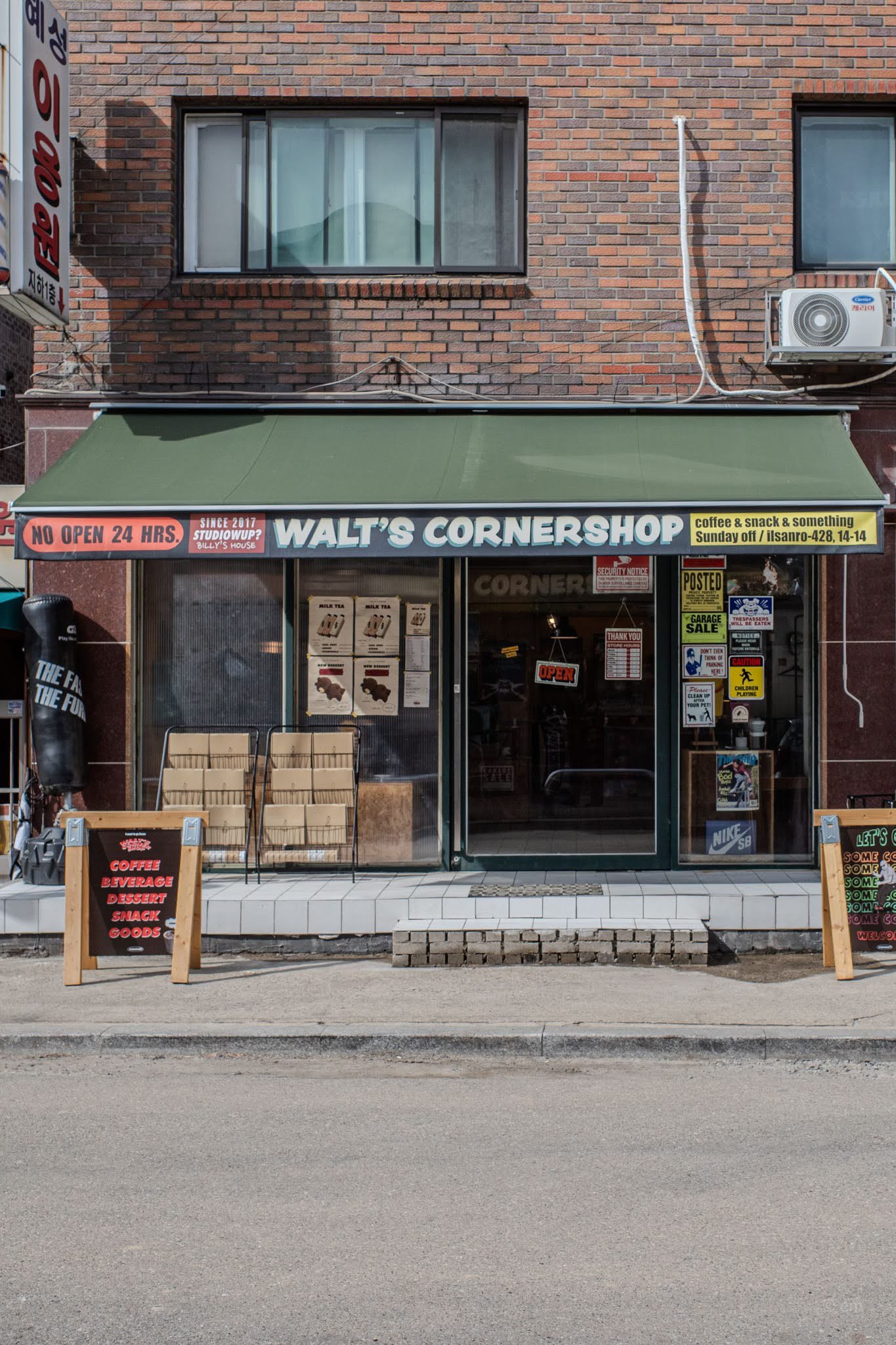
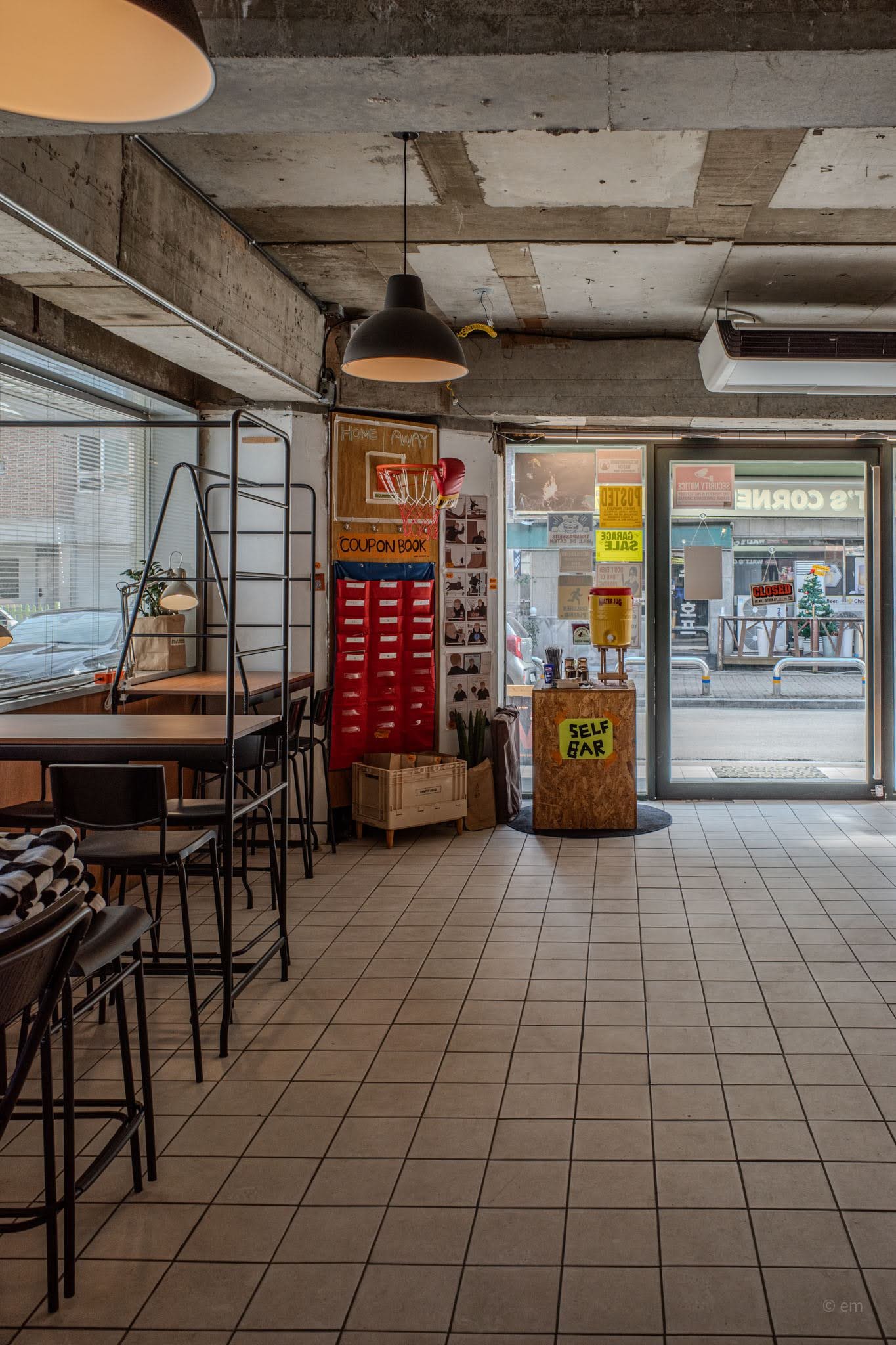
The exterior gives almost nothing away, which is part of the magic. A green canvas awning. A hand-lettered sandwich board. A storefront plastered with American garage-sale signs and warnings that feel lifted directly from a suburban street in Ohio circa 1994. NO OPEN 24 HRS. GARAGE SALE. TRESPASSERS WILL BE EATEN. You could walk past it and assume it was a quirky snack shop and nothing more.
That would be a mistake.
The Room Reveals Itself
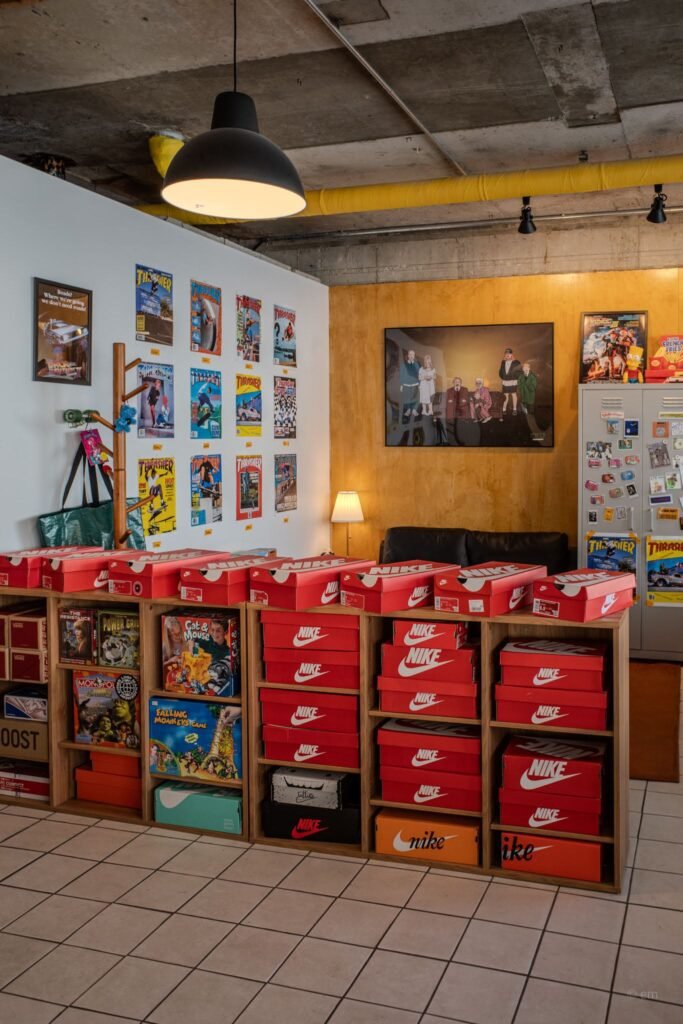
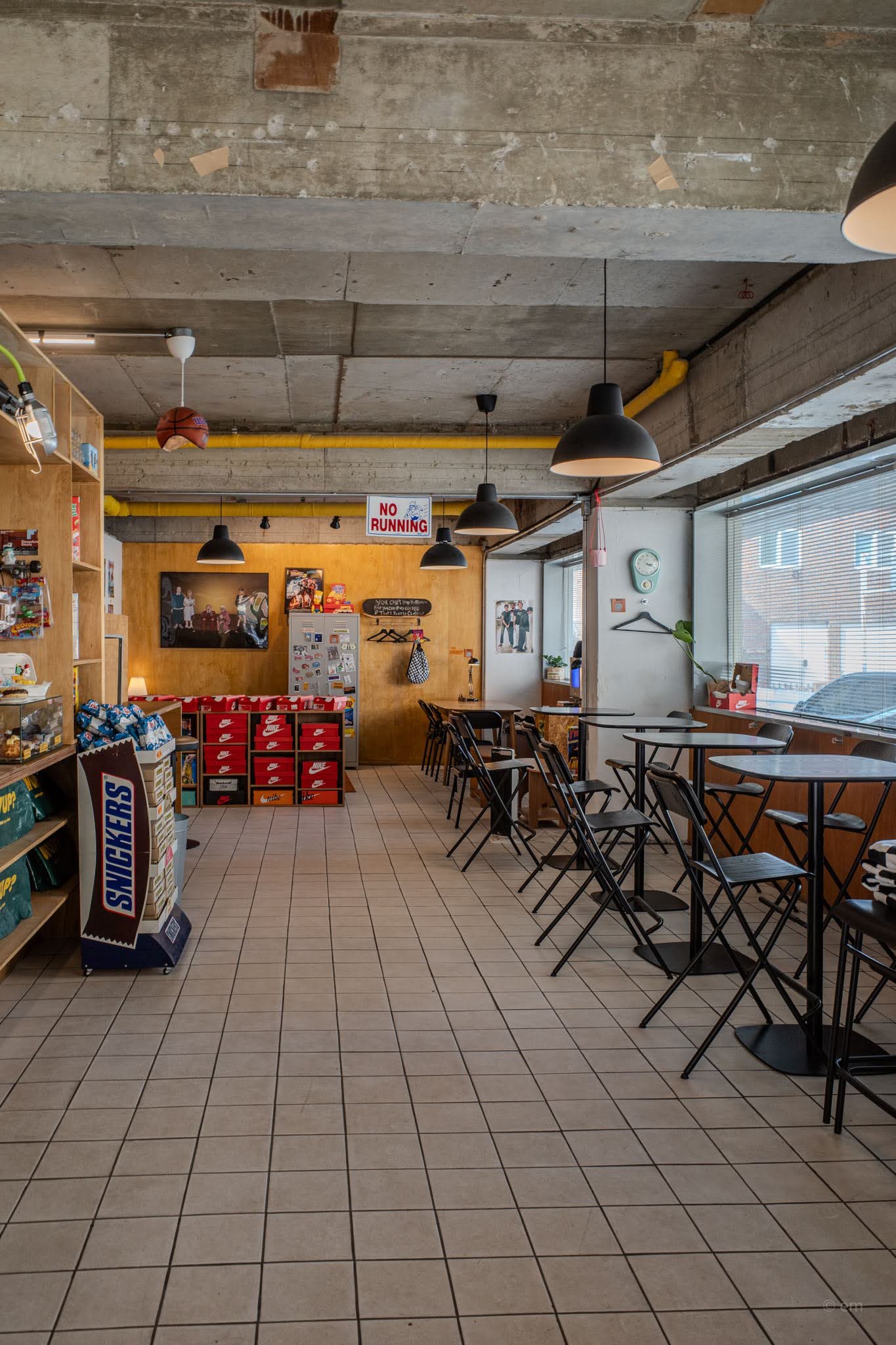
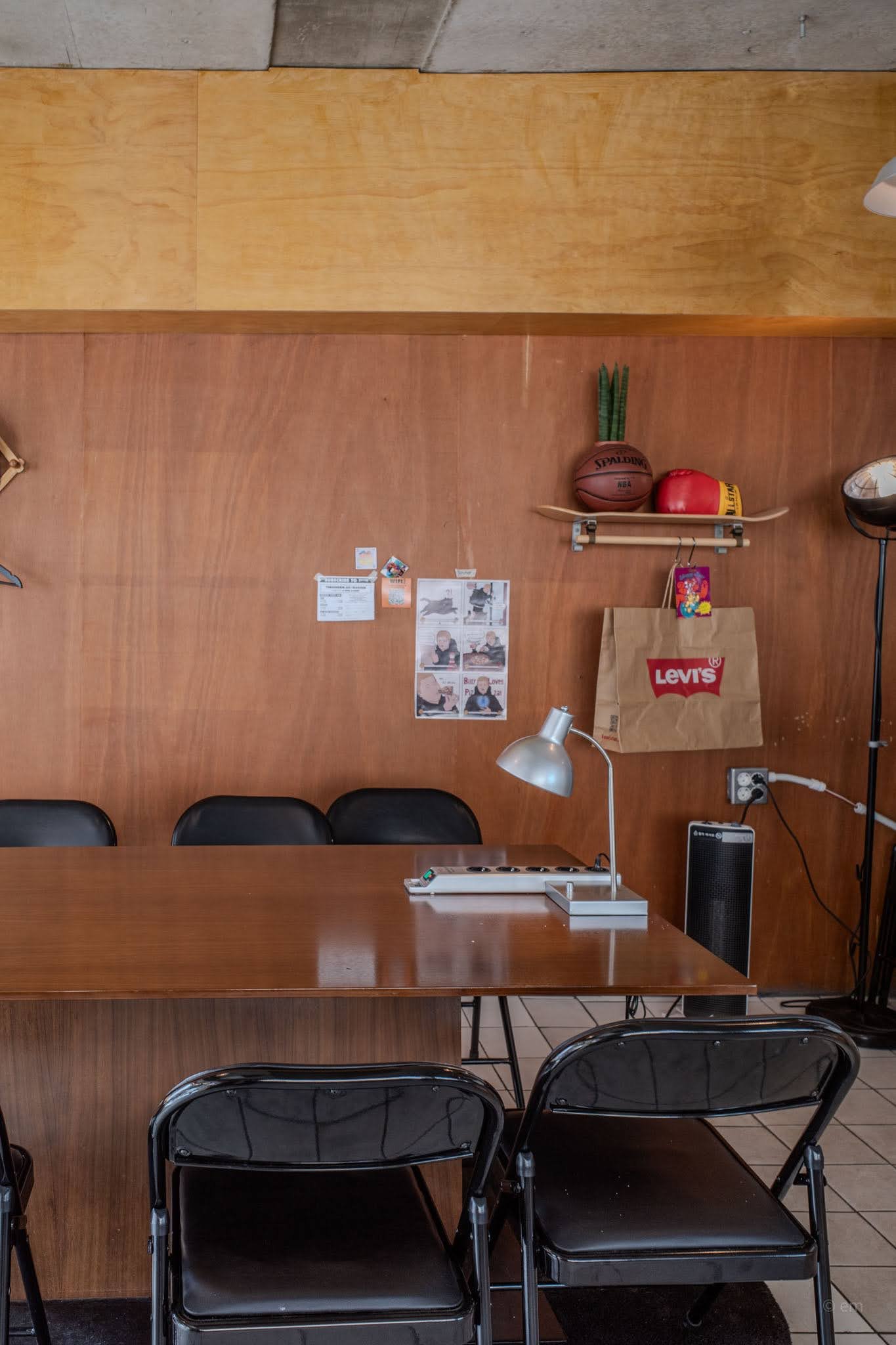
Step inside and the transformation is immediate. The floor is tiled like a convenience store. The ceiling is raw exposed concrete, shot through with bright yellow pipes. Black pendant lamps hang low. And then, as your eyes adjust, the details start arriving one by one — the way they do when you first walk into that room and realize this kid has been quietly building something extraordinary.
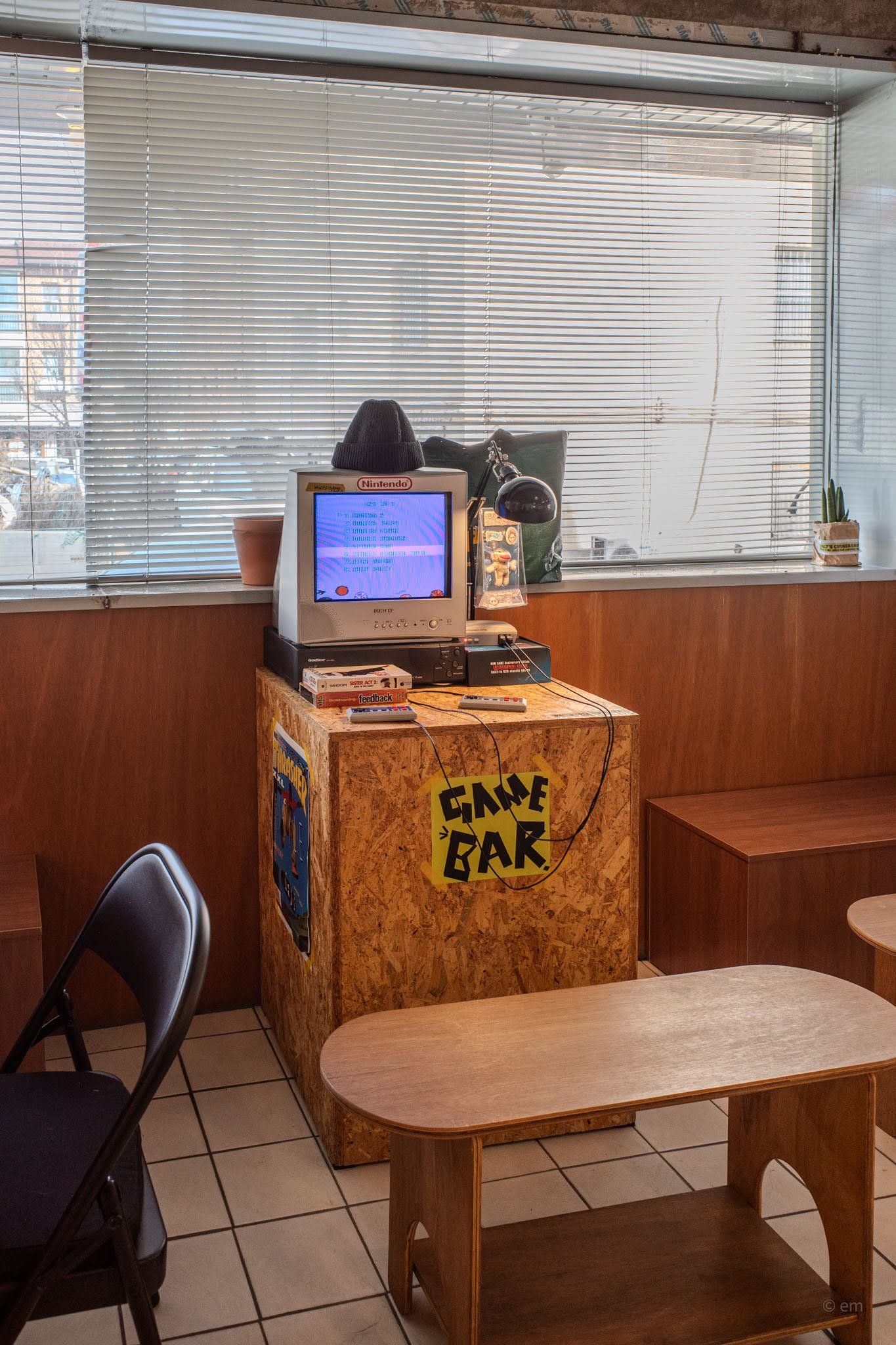
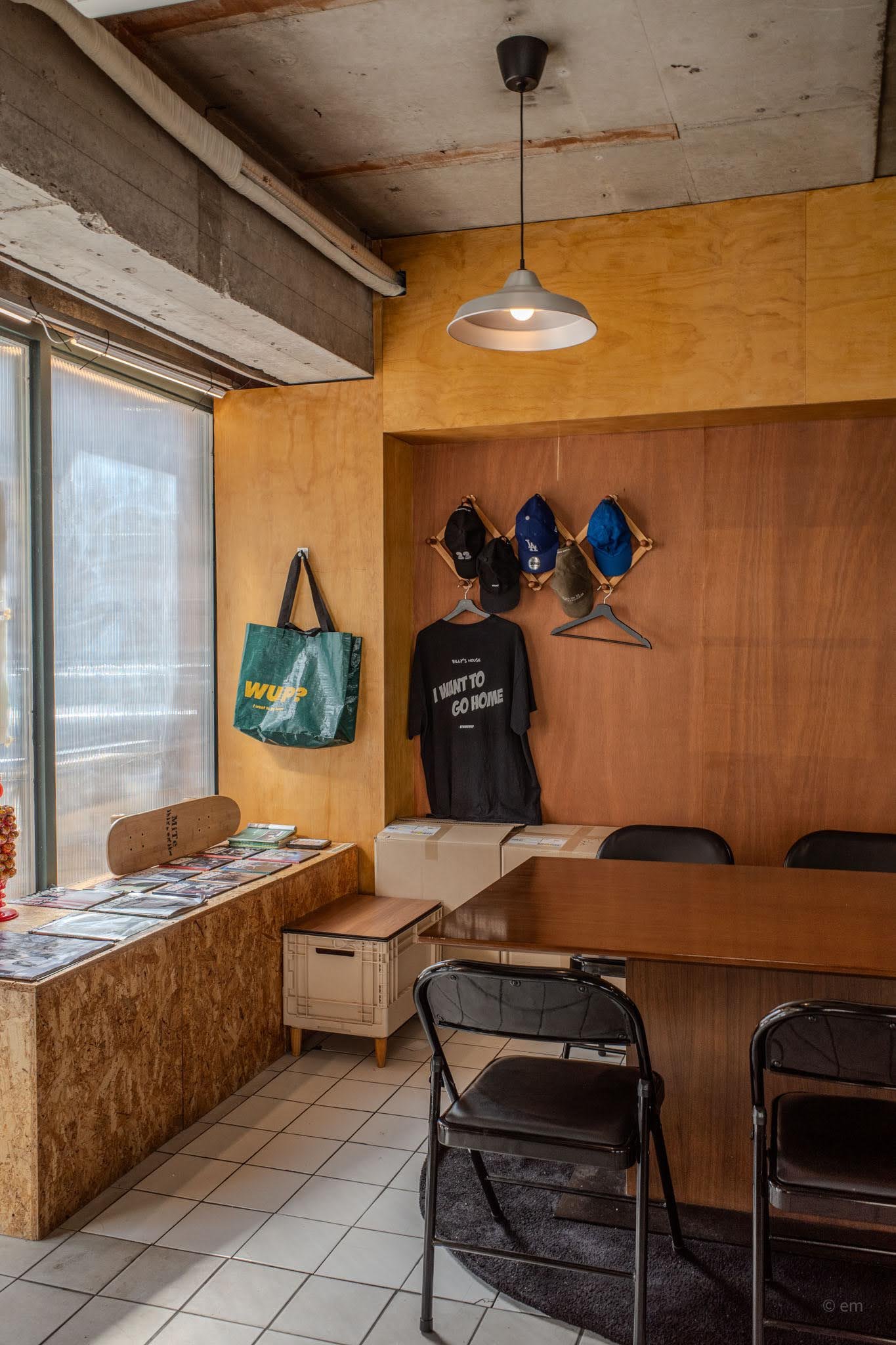
The Game Bar is in the window alcove: a CRT television with Nintendo branding, a game loaded and running, controllers resting on the OSB wood platform like they were set down five minutes ago. There are VHS tapes nearby. A beanie hat draped over the set. It looks less like a café feature and more like someone just paused mid-session to go get a snack.
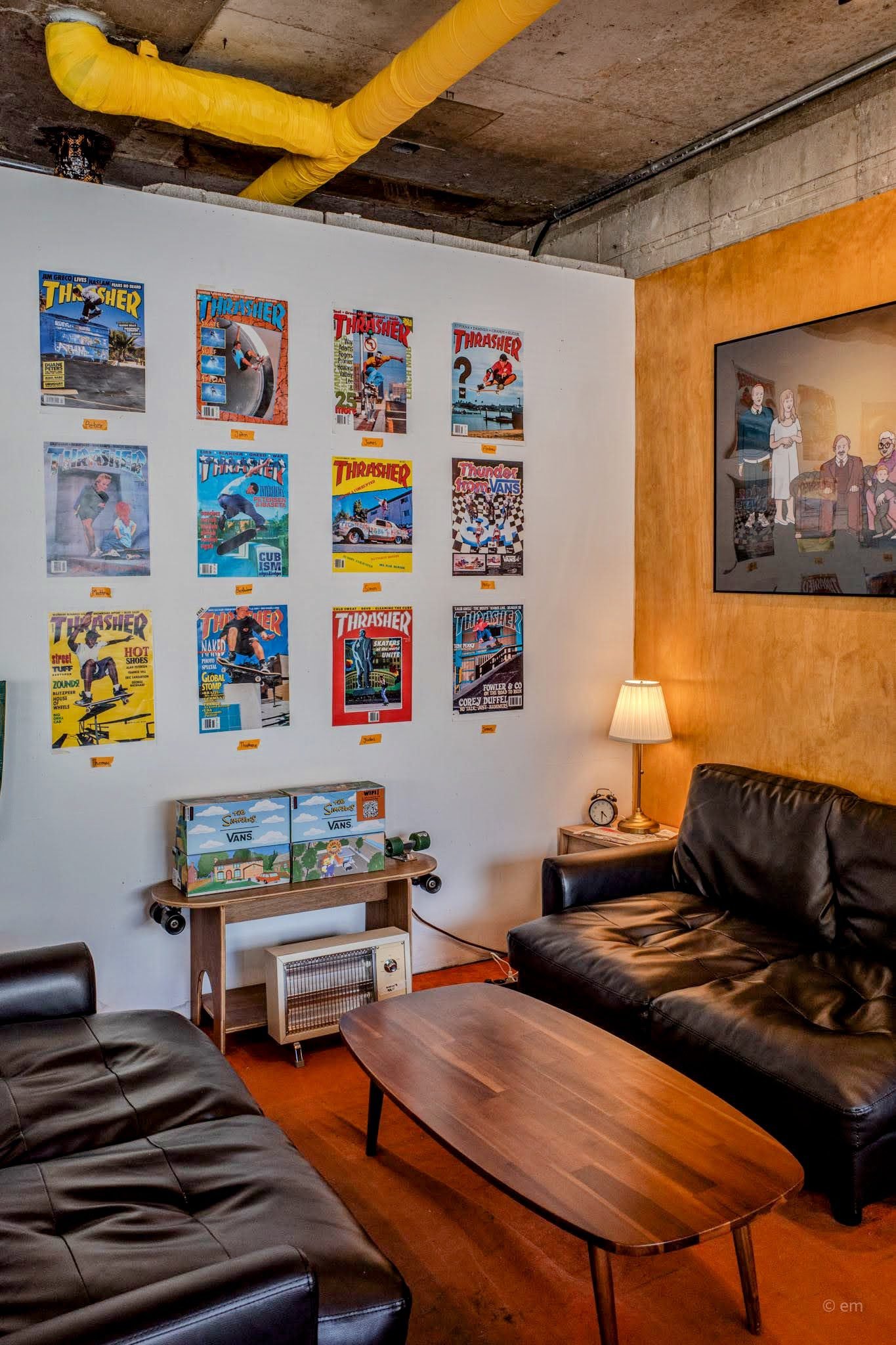
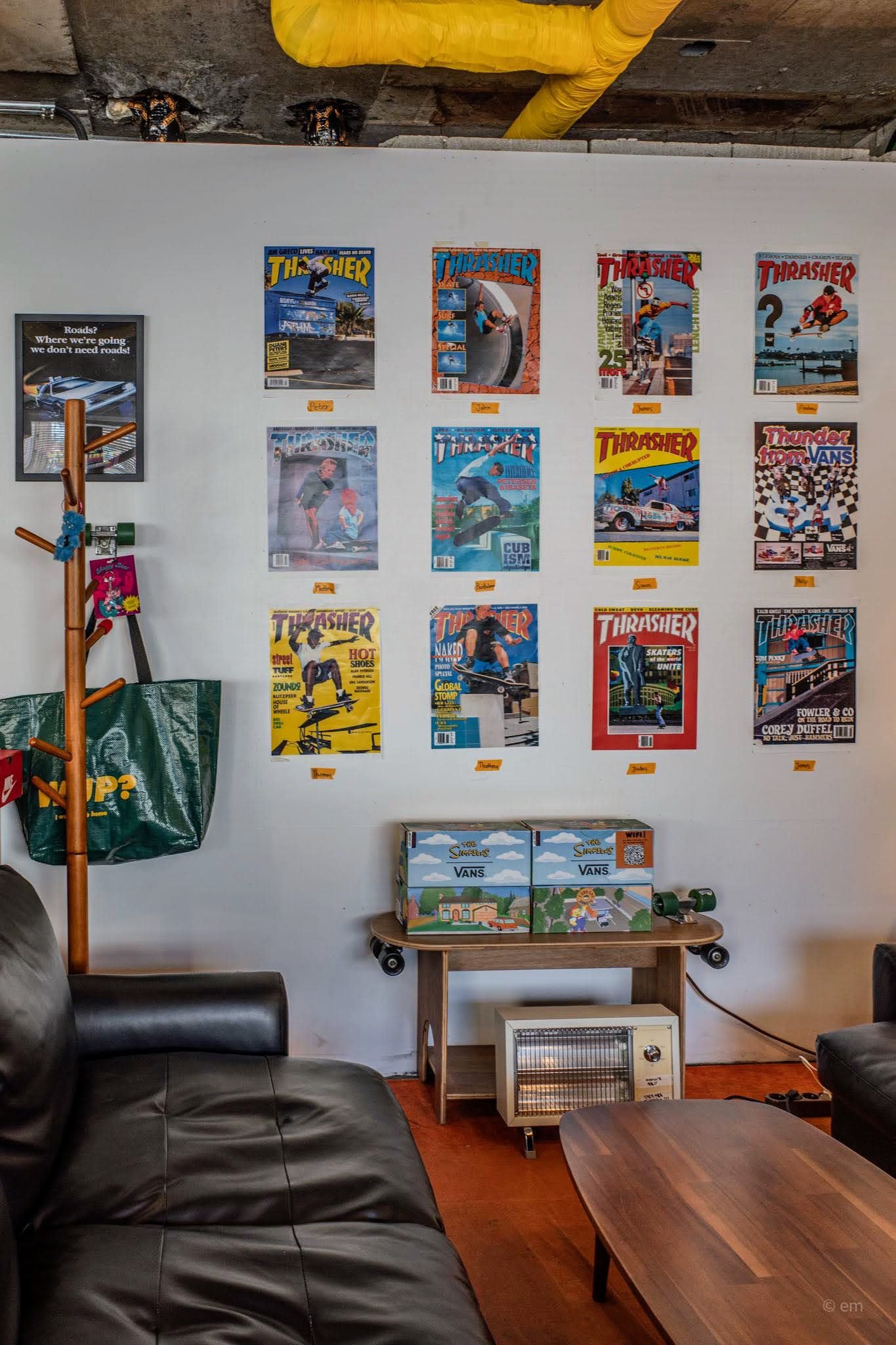
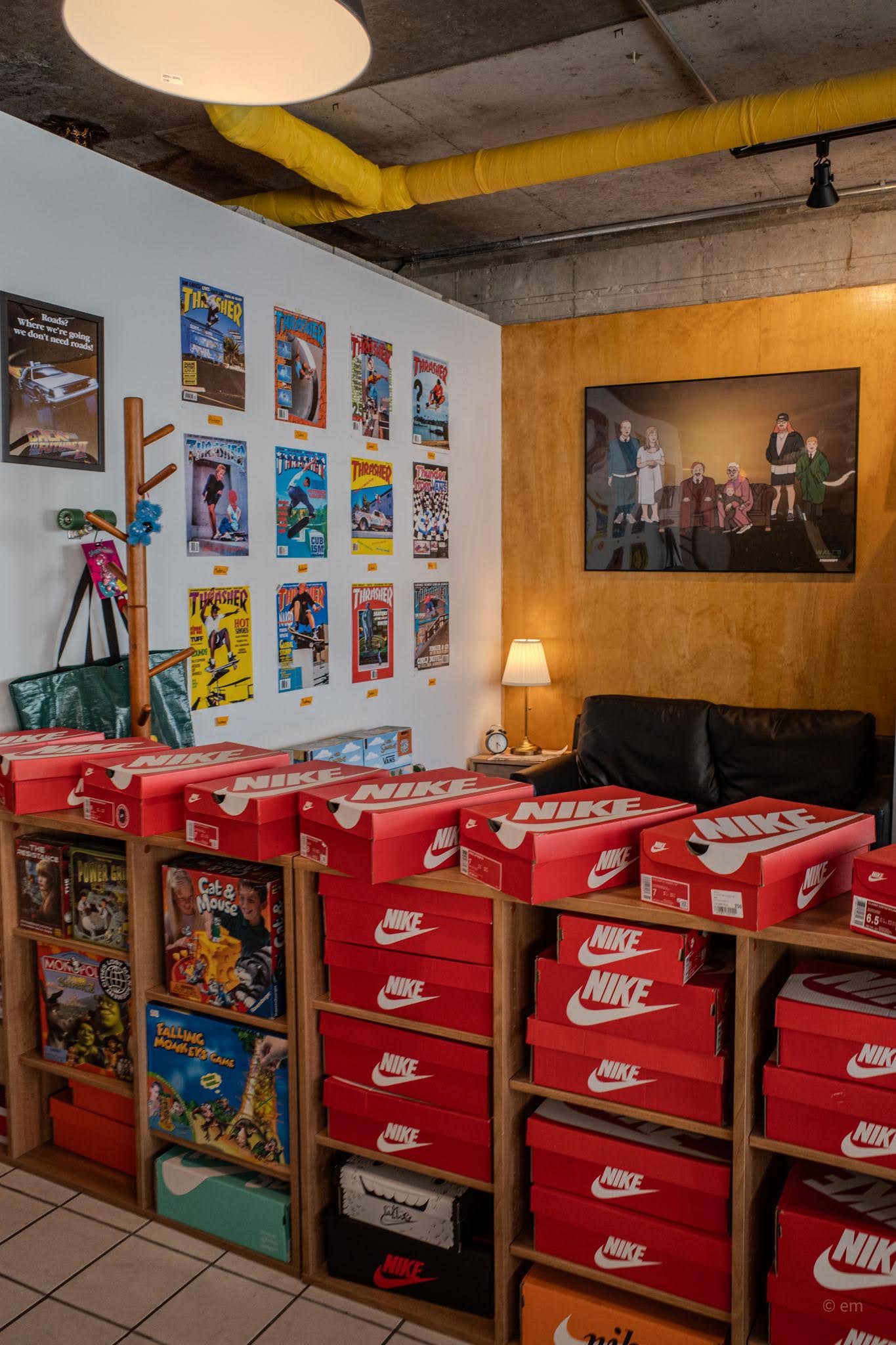
Across the space, the Thrasher wall dominates — twelve magazine covers arranged in a perfect three-by-four grid, each one taped directly to the white plaster. Not mounted, not framed. Taped, with that casual confidence that belongs exclusively to teenagers who know their taste is correct. Road & Track kids had their cars. Thrasher kids had their skaters. This wall belongs to the latter.
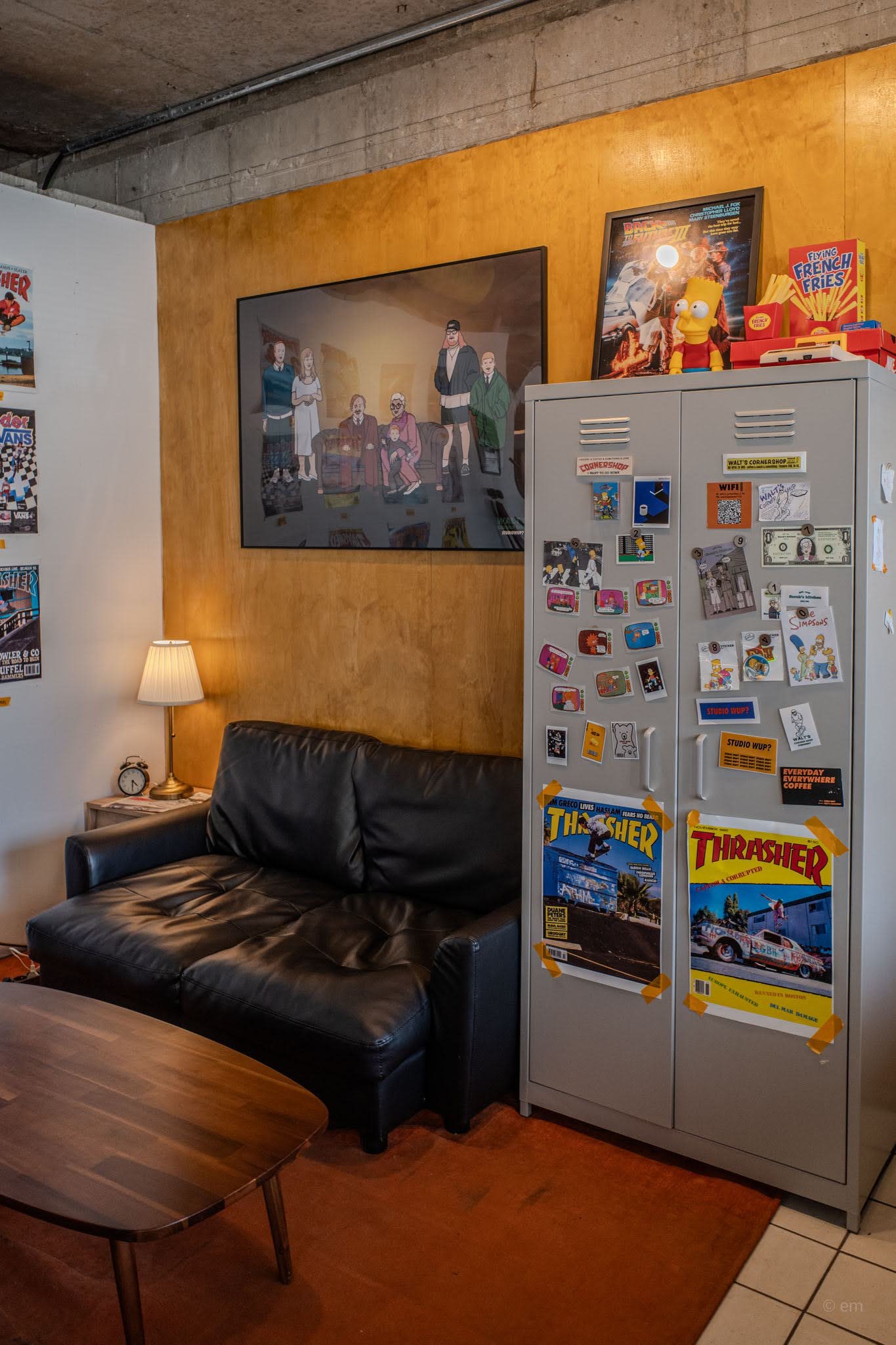
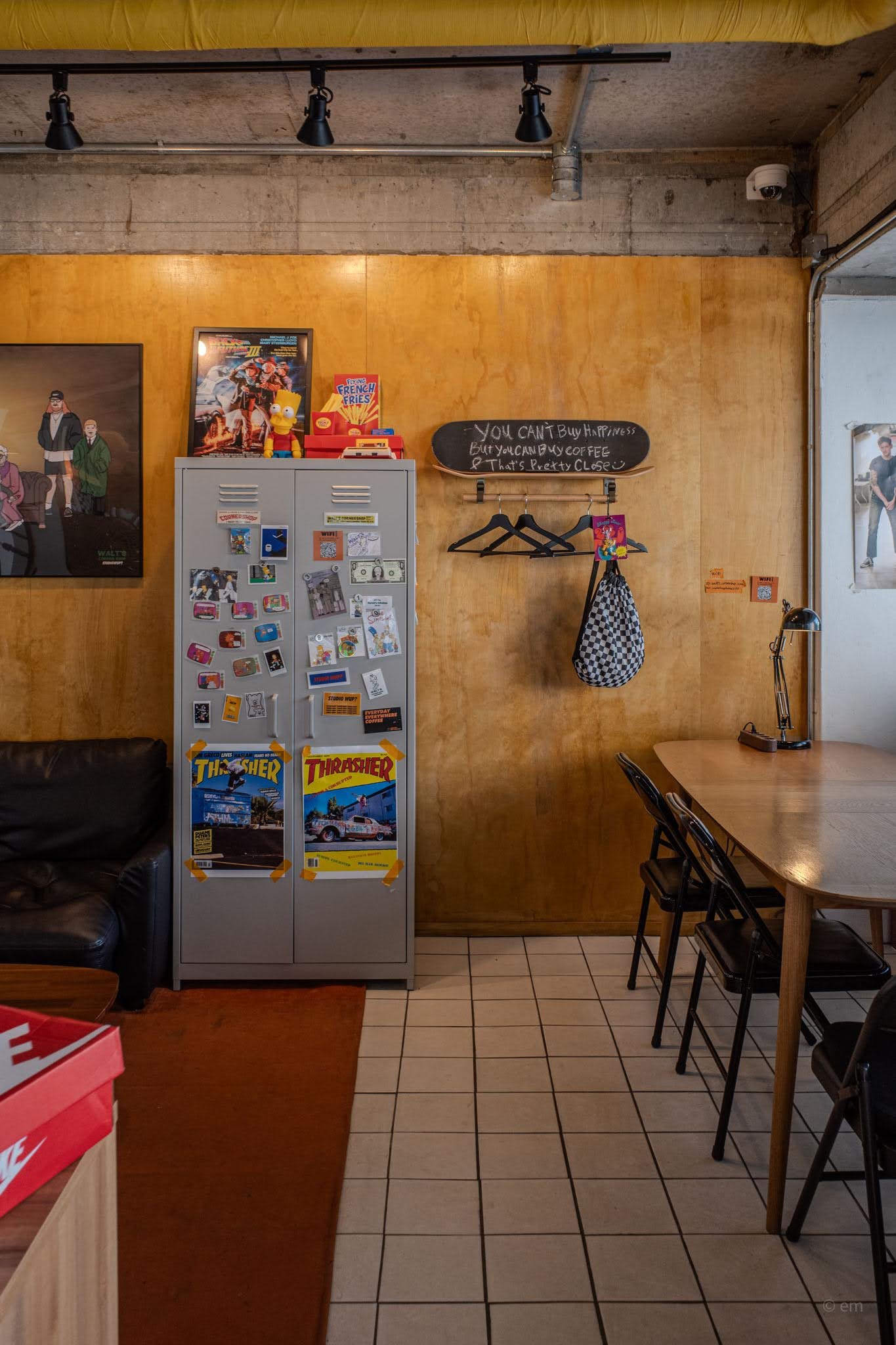
The school locker in the back section is covered in the accumulated evidence of a life well-spent: Simpsons stickers, band stickers, Walt’s Cornershop stickers, a dollar bill, a WiFi password card, polaroids. Two issues of Thrasher are taped to the front doors with masking tape, their yellow spines bright against the grey metal. On top of the locker sits a Bart Simpson figure, a Back to the Future Part III poster, and a box of Flying French Fries. This is not curation. This is a kid’s room.
Behind the locker, the space deepens into what feels genuinely like the innermost chamber of the den. Two black leather sofas — the kind that were never bought new — face each other across a walnut coffee table. A floor lamp glows beside an armchair. An alarm clock sits on the side table. A Simpsons x Vans skateboard serves as a coffee table display. This is where you come when you’ve gotten past the outer layers, where the music is playing and nobody’s parents are home.
The Stuff (Because Every Good Den Has Stuff)
A proper secret den isn’t just about furniture. It’s about the accumulation — and Walt’s Cornershop understands this at a molecular level.
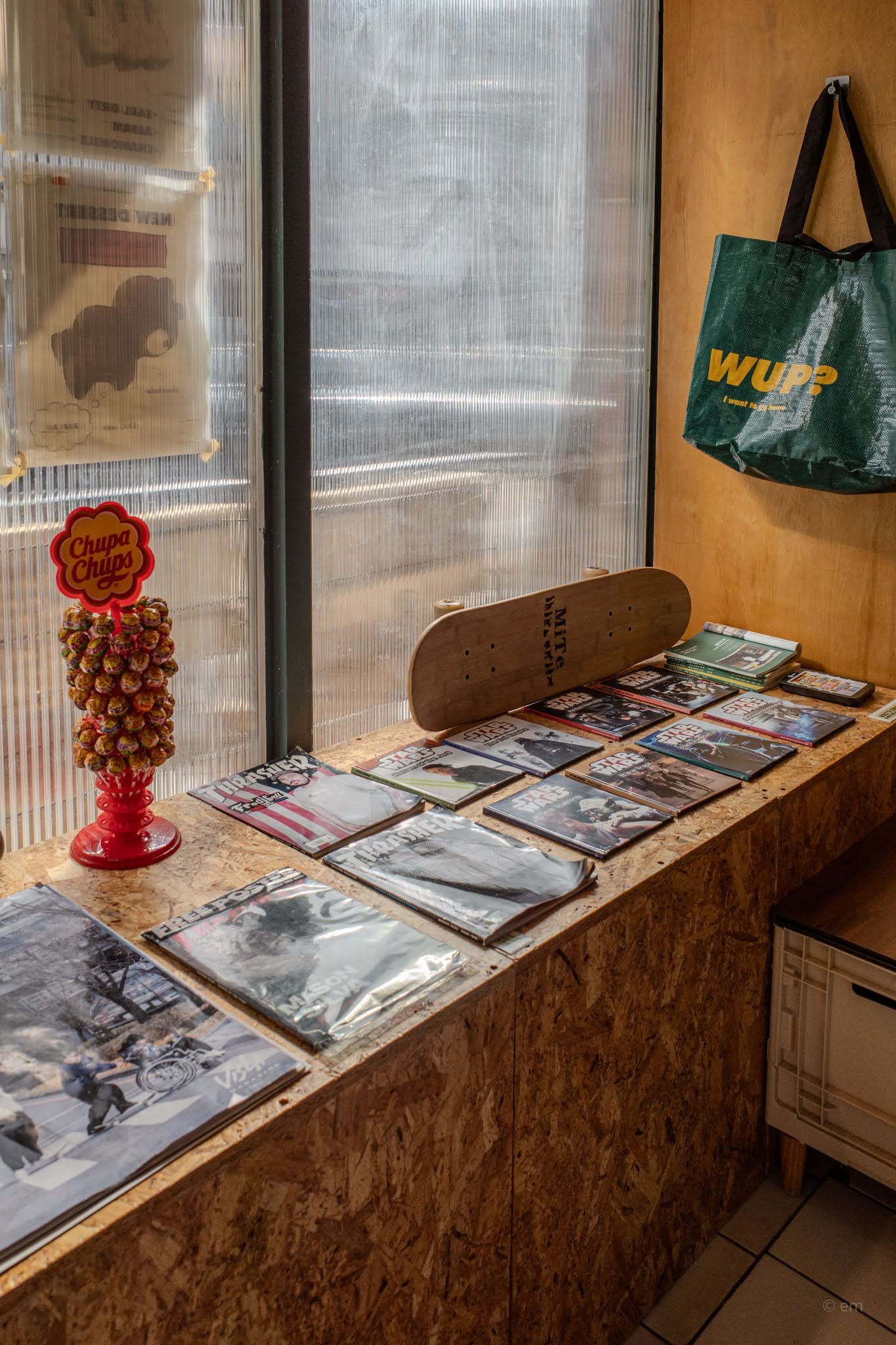
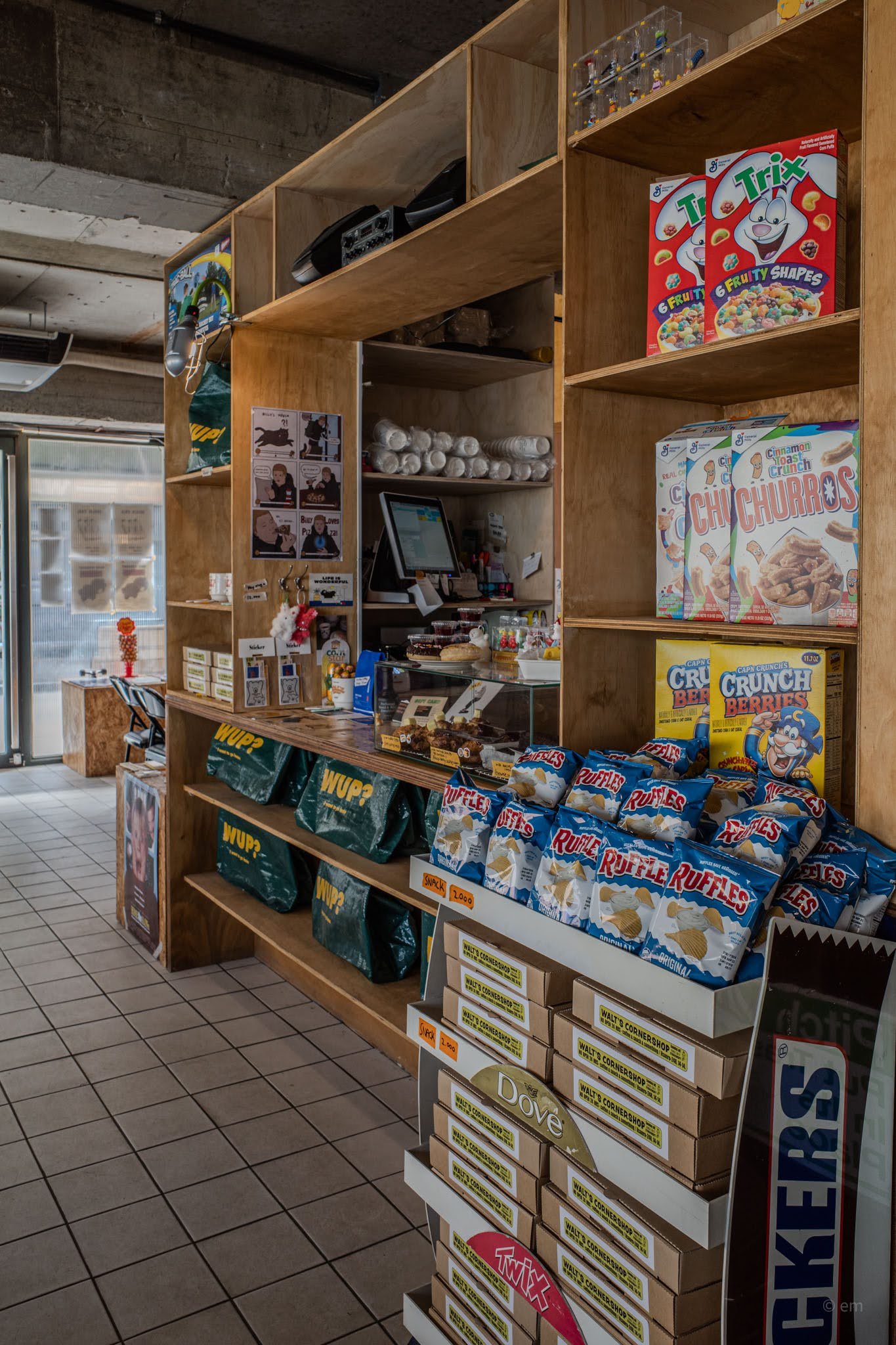
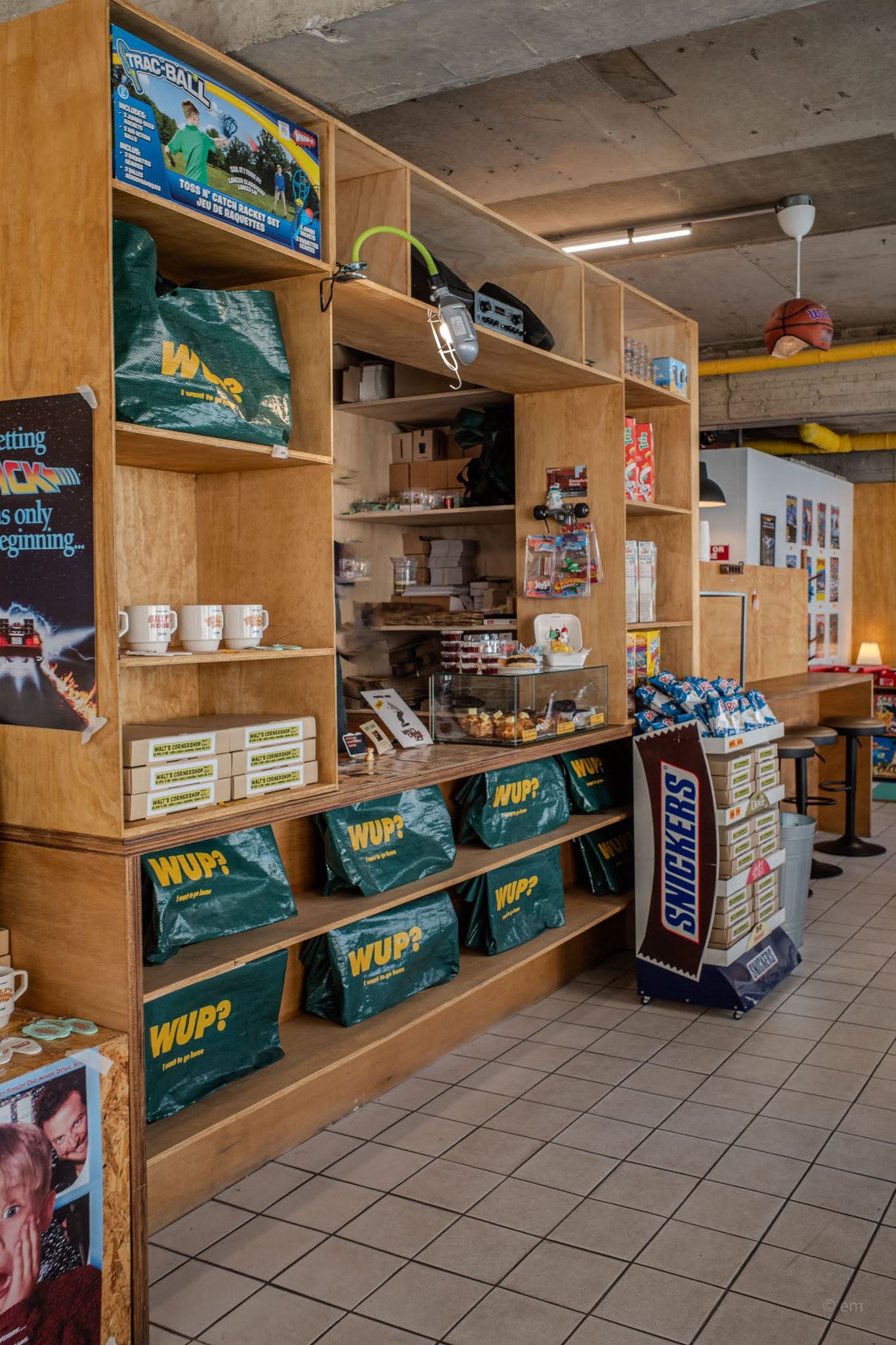
The shelves near the entrance carry American snacks with the reverence of collectibles: Ruffles in their blue bags, Cap’n Crunch Berries, Trix, Snickers bars on a branded display. Not imported as novelties but stocked as if they simply belong here, which in this context they do. Nike SB boxes — the red ones, stacked in wood cubbies — share shelf space with board games: Monopoly, Falling Monkeys, Cat & Mouse, Power Grid. A Chupa Chups lollipop tower stands near the window counter where skate magazines, Thrasher back issues, and Star Wars DVDs are laid out like a flat lay from a very specific kind of bedroom floor.
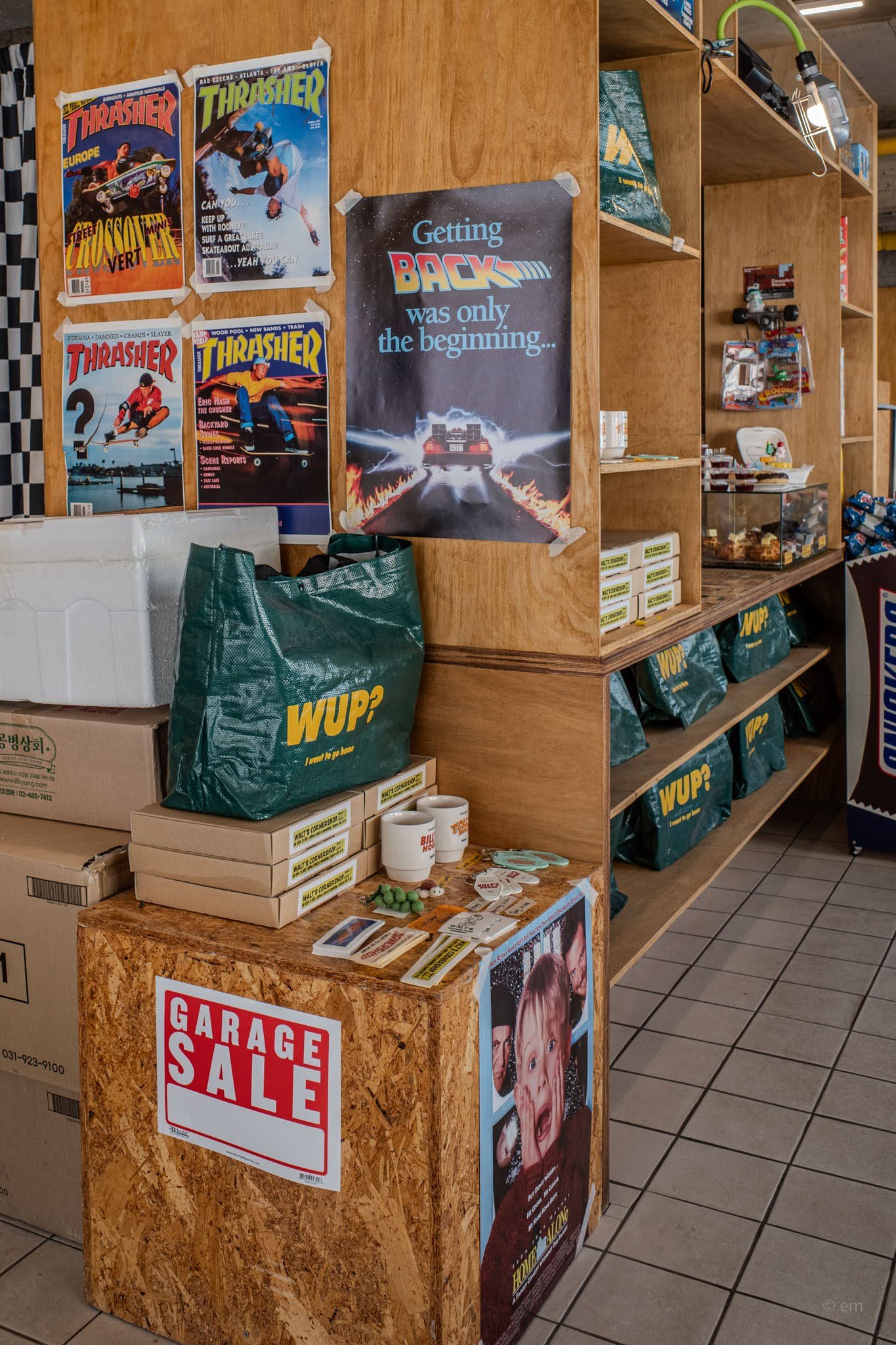
The WUP? branded section adds another layer — hunter green tote bags with yellow lettering, branded gift boxes, ceramic mugs with the Walt’s Cornershop logo, a black t-shirt hanging from a hanger that reads I WANT TO GO HOME. It’s the merch of a place that has built a world and wants you to carry a piece of it.
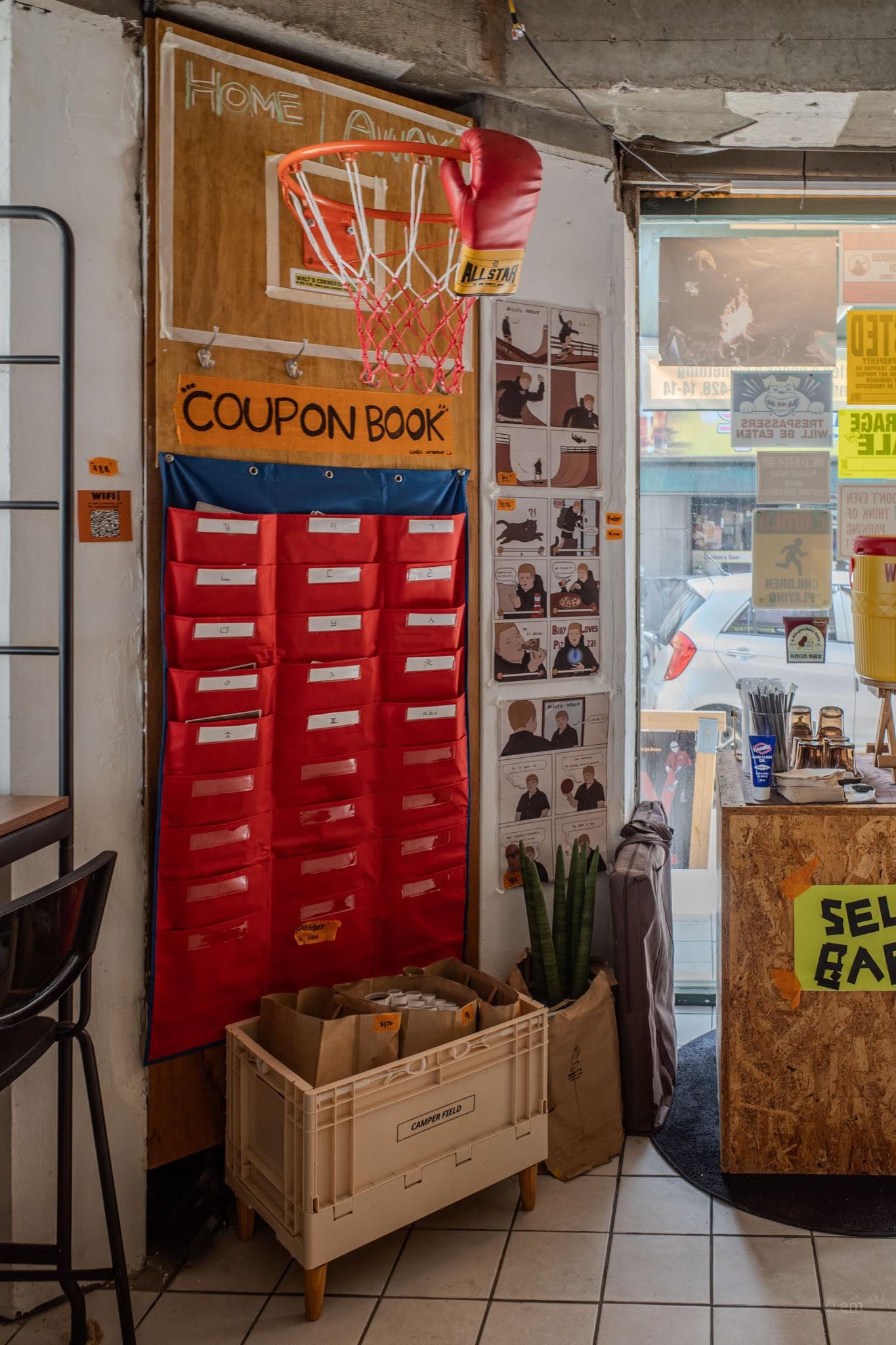
Near the entrance, a miniature basketball hoop hangs above the Coupon Book wall organizer, its red pockets filled with loyalty cards. A boxing glove is hooked over the rim. The Home Alone tapestry in the back corridor — Kevin McCallister, frozen in that iconic wide-eyed scream — feels like it was always going to end up here.
What to Order: Then and Now
The menu has always matched the space — playful, slightly unhinged in the best way, with a strong sense of character.
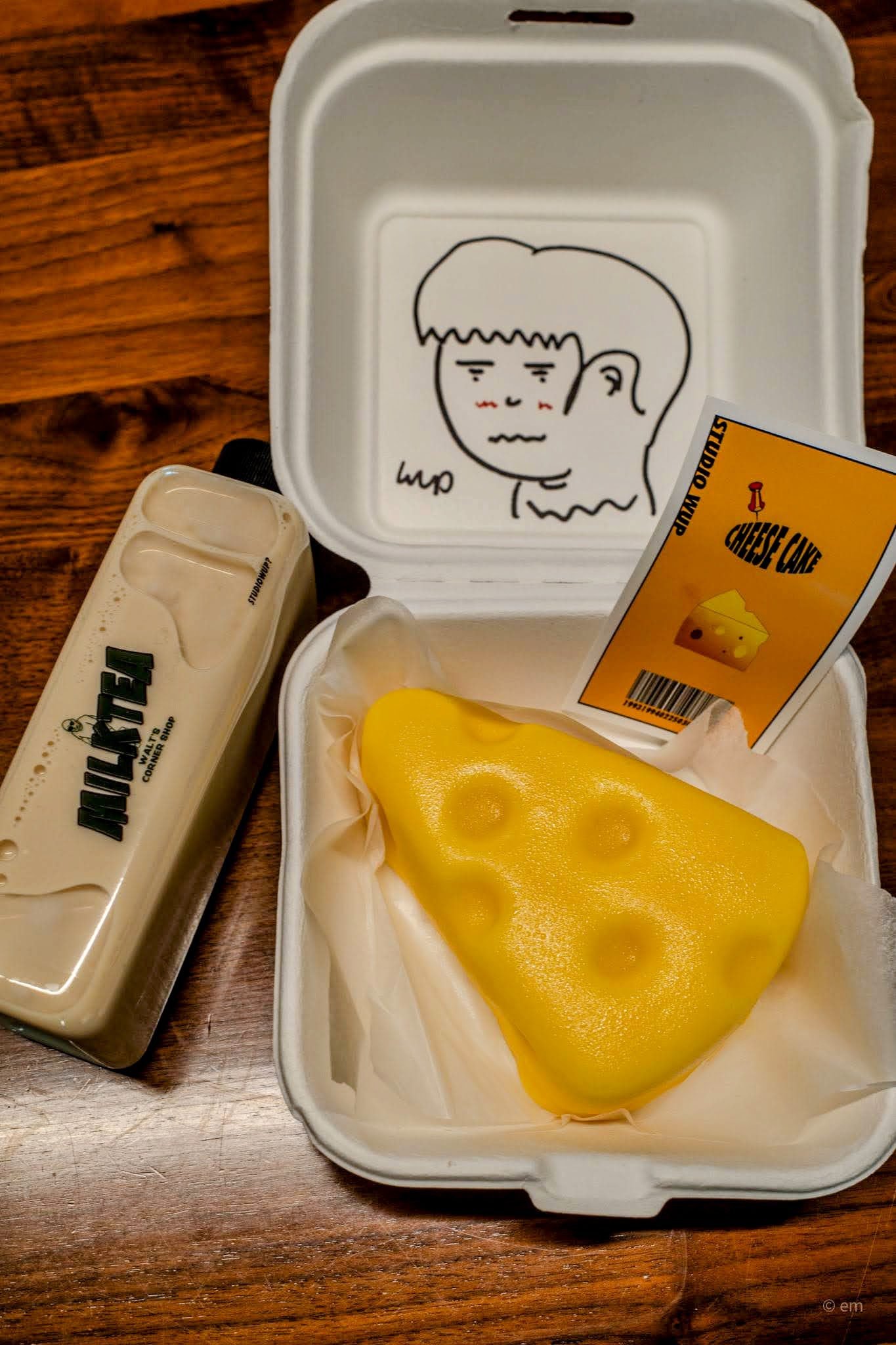
The dessert that made Walt’s Cornershop famous was the cheesecake: a wedge of yellow mousse molded to look exactly like a cartoon block of Swiss cheese — holes and all — served in a white styrofoam clamshell container with a Studio WUP? character illustration stamped inside the lid. It looked like it had been drawn before it was baked. The milk tea came in a collectible-style bar, branded like something you’d find in a vending machine in a Recess episode. Both felt like they’d jumped off a Saturday morning cartoon screen.
In 2026, the menu reflects where Korean café culture has traveled. Butter tteok — crispy-skinned glutinous rice cake with a yielding, chewy interior, the dessert that swept through Seoul this year — has landed here, and the format suits the space perfectly. So does the ube latte, its deep violet color landing naturally in a room that has never shied away from bold decisions. The drinks menu still runs through coffee and a rotating cast of seasonal beverages; the sign outside still says coffee & snack & something. The “something” is what keeps changing.
Why It Works
There are a lot of places in Korea that gesture toward American nostalgia. Very few of them get it right, because nostalgia that isn’t felt just becomes costume. Walt’s Cornershop doesn’t feel like a concept that was researched — it feels like a place that was built, piece by piece, by people who actually grew up inside these references and wanted somewhere to put them all.
The concrete ceiling and the yellow pipes and the tile floor give it the bones of a basement. The warm lamp light and the worn leather sofas give it the feeling of a room that’s been lived in. The Nintendo, the locker, the Thrasher wall, the board games — these aren’t art-directed props. They’re the collected evidence of a point of view, assembled over years, in a corner storefront in Ilsan.
It is, genuinely, someone’s secret den. They’ve just left the door open for you.
Practical Info
Address: 428, Ilsan-ro, Ilsandong-gu, Goyang-si, Gyeonggi-do
고양시 일산로 428, 14-14
Hours: Not open 24 hours — check current hours before visiting
Closed: Sundays
Instagram: @studiowup (verify current menu and hours)
Menu changes seasonally. Check Naver Place or Instagram before visiting for the latest offerings.
![[Lost] Moon Landing: A Retro American-Style Cafe in Bogwang-dong](https://hiddencollector.thesensitiveways.com/wp-content/uploads/2026/03/R0013789-200x300.jpg)