Something about the entrance feels like crossing a threshold that wasn’t meant to be crossed.
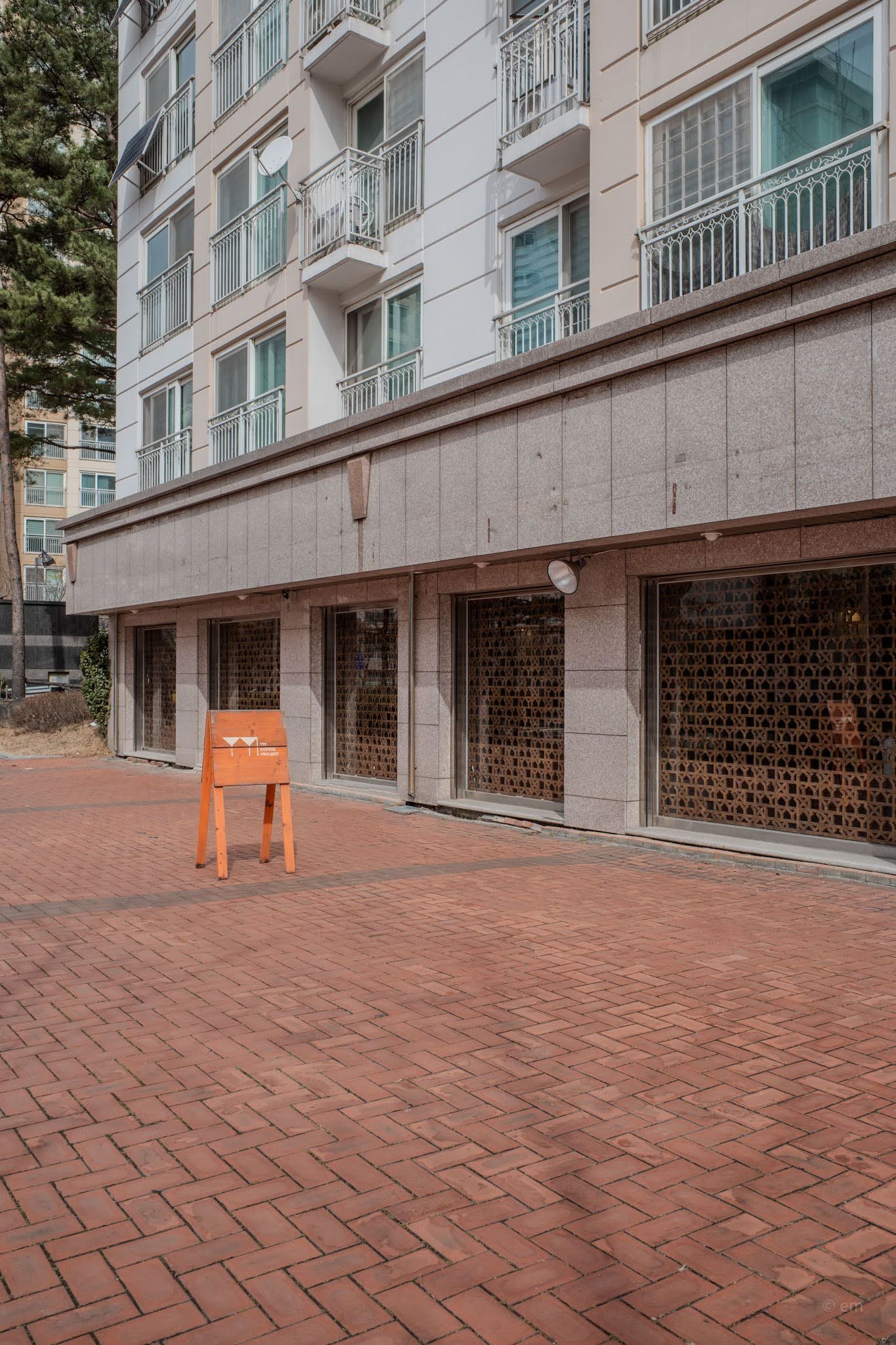
Tucked into the ground-floor retail unit of a Raemian apartment complex in Eunpyeong’s Gupabal neighborhood, YM Coffee Project is not a place you stumble upon. There’s no signage on the building. The windows are covered — from outside, the carved wooden lattice screens reveal nothing except a warm amber glow from somewhere deep inside. An orange A-frame board on the brick-paved walkway is the only indication that something is here at all.
The Approach
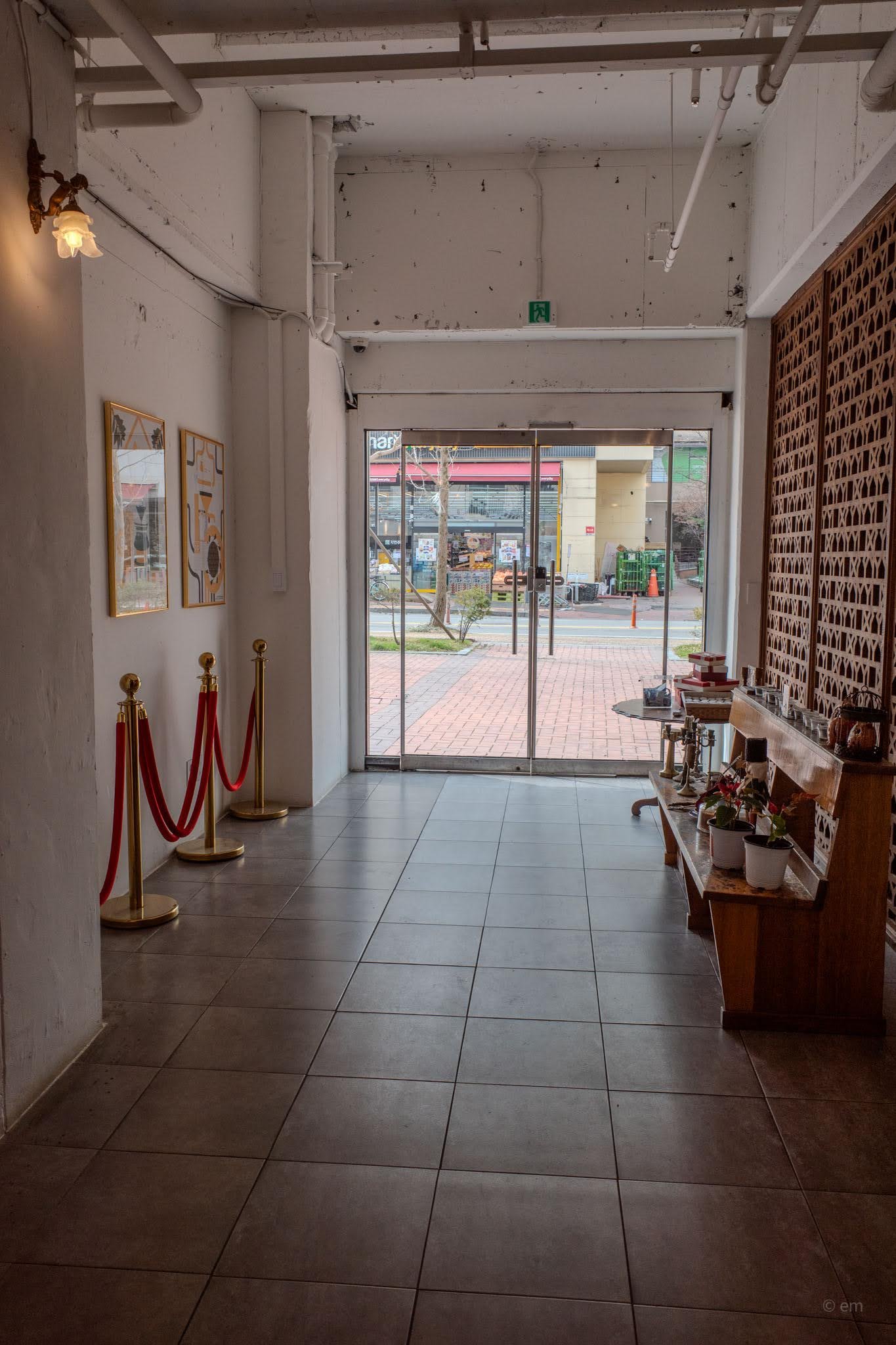
The building is a long, granite-clad residential block on a quiet pedestrian stretch near Gupabal Station. The café occupies several commercial units at street level, but its presence reads as deliberately withheld — the lattice panels filter the interior from view, and there’s no traditional shopfront. Entering through sliding glass doors, the foyer is spare and cool: dark tile, white walls, a pair of gold stanchions with red velvet rope. Two small framed prints hang to the left. It has the quality of an anteroom — a decompression space before the real thing.
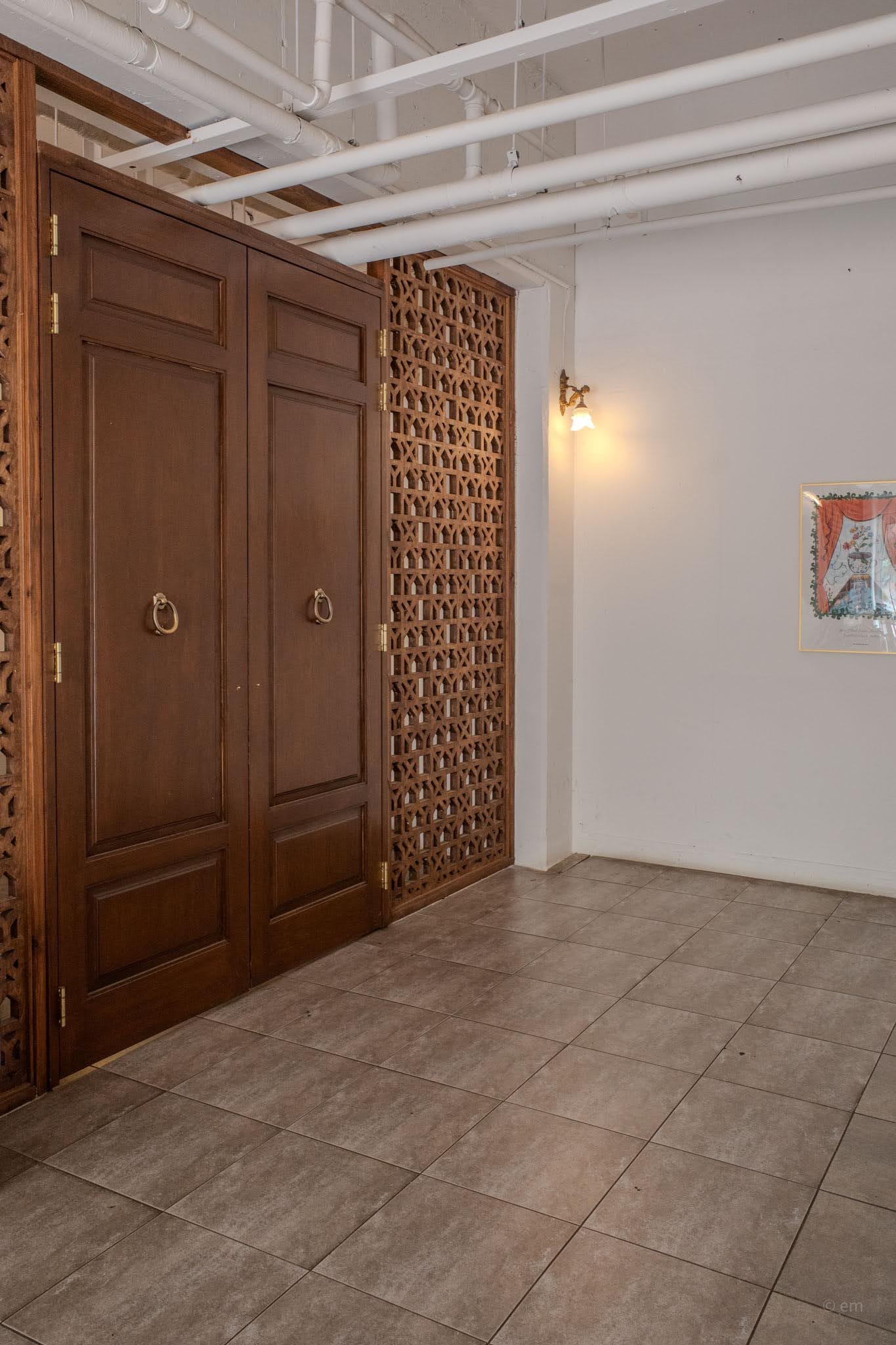
Then a set of carved wooden double doors with brass ring pulls opens into the main hall, and everything shifts.
The Interior
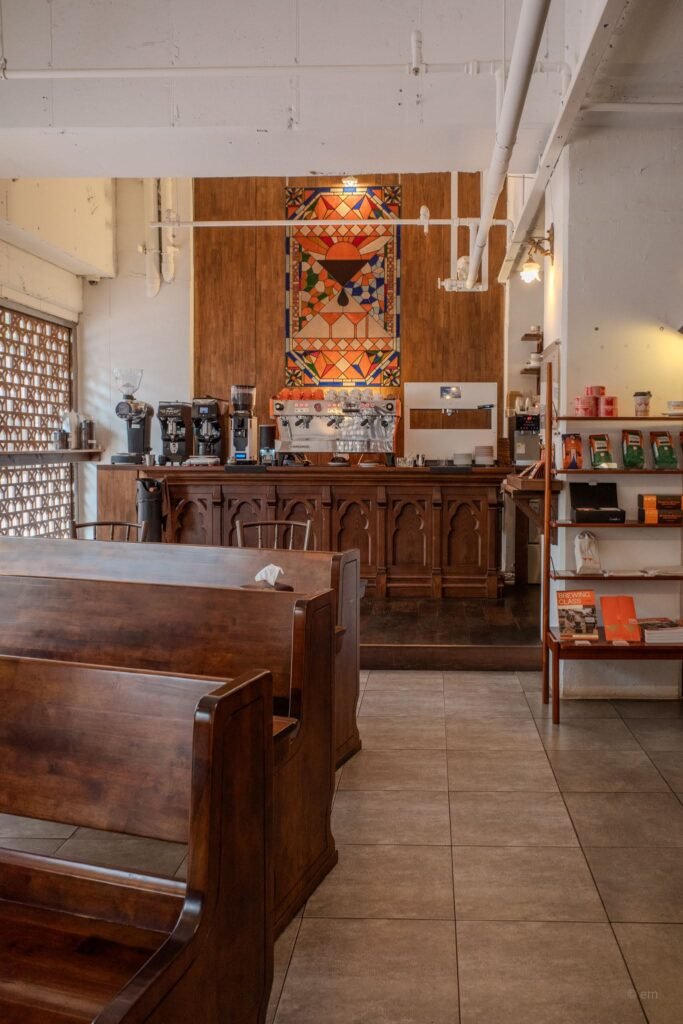
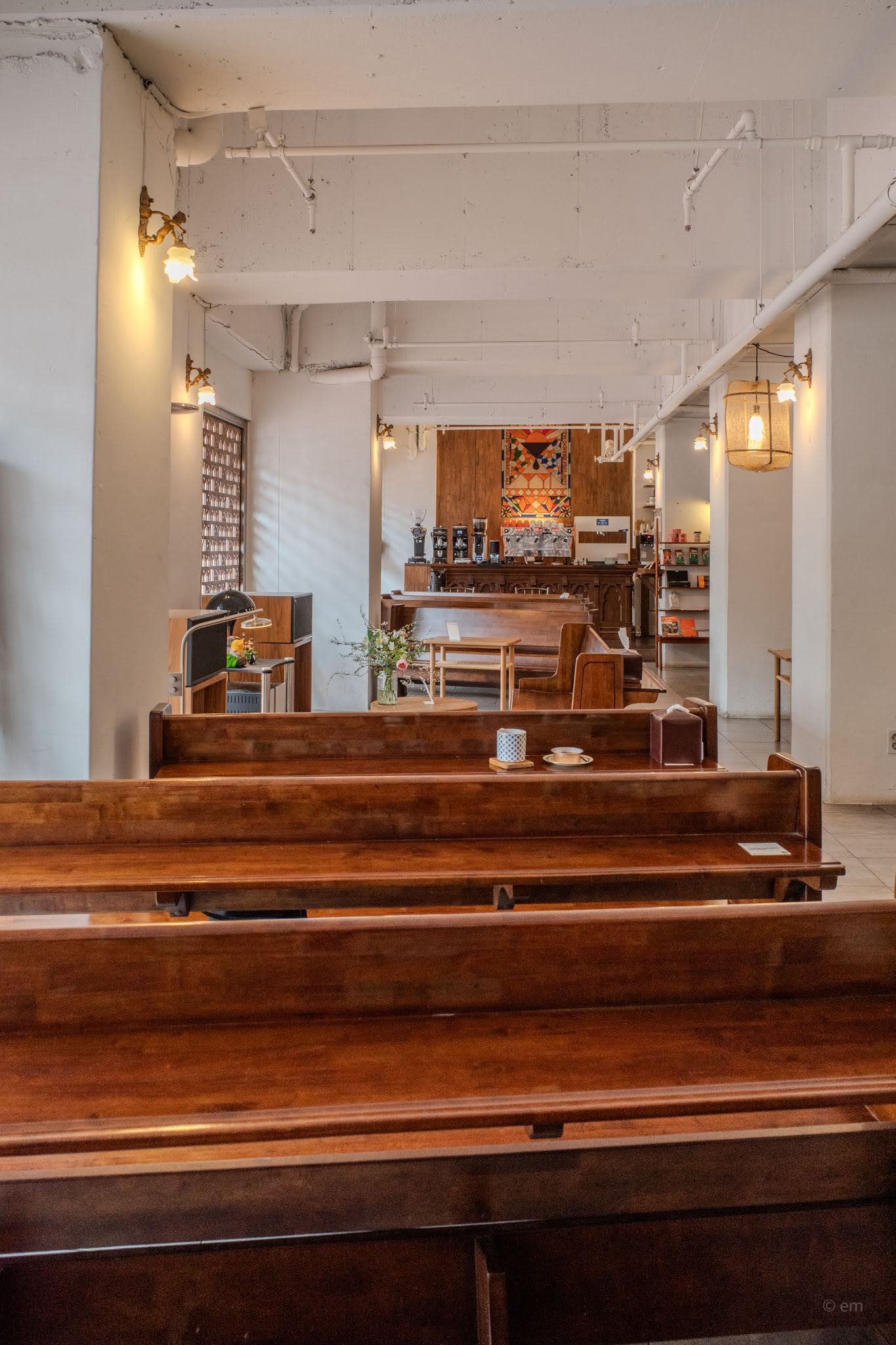
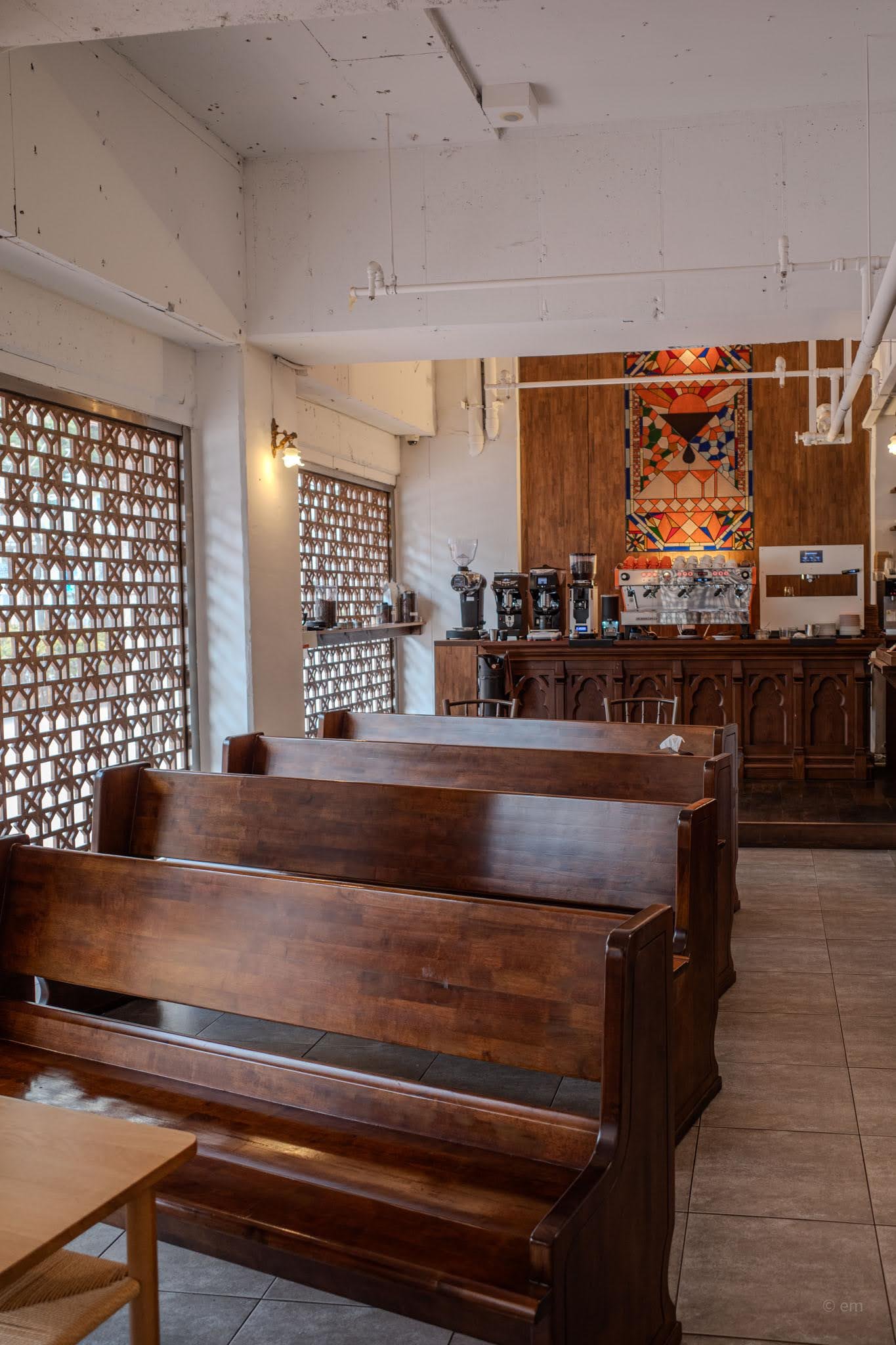
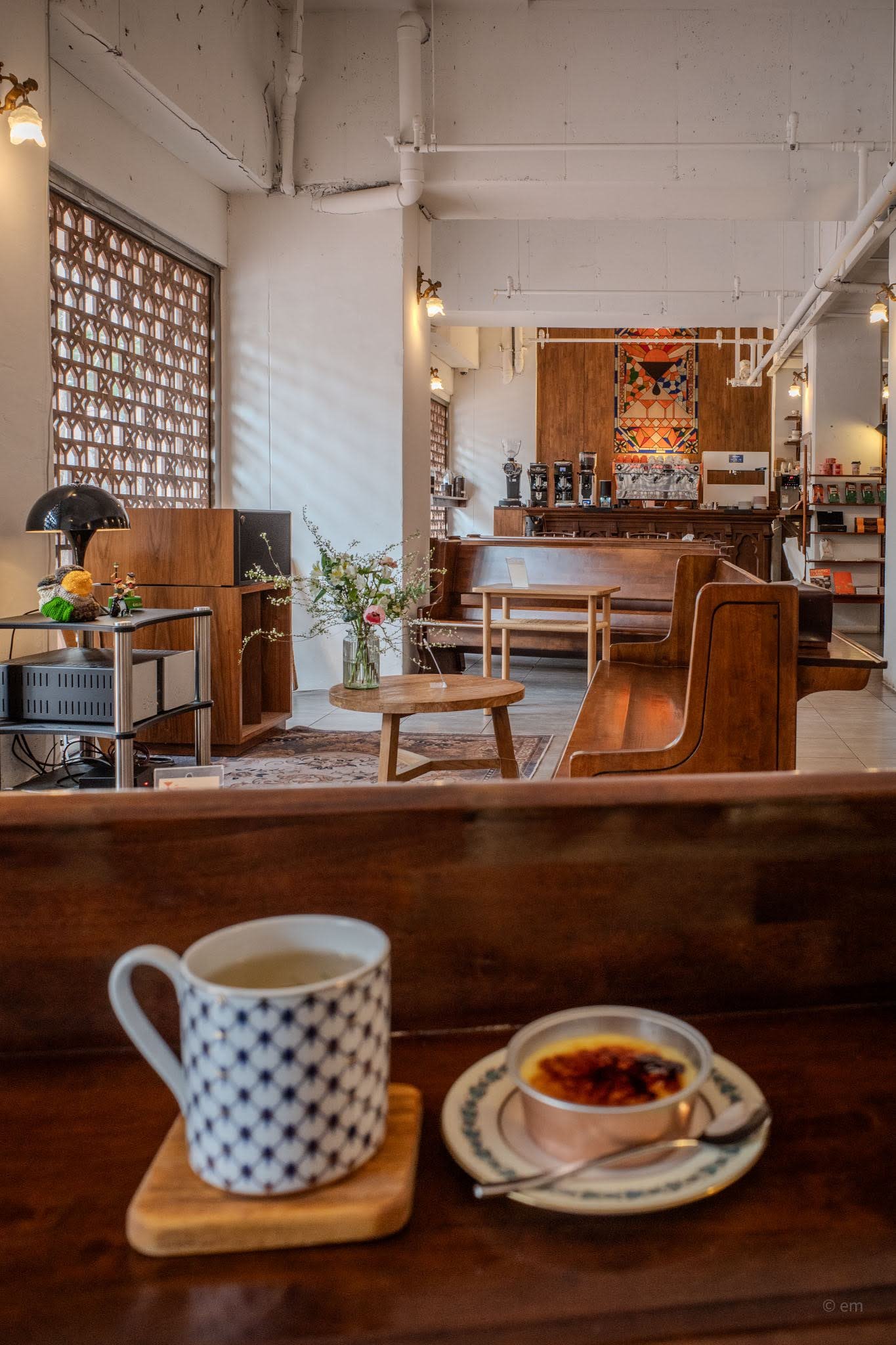
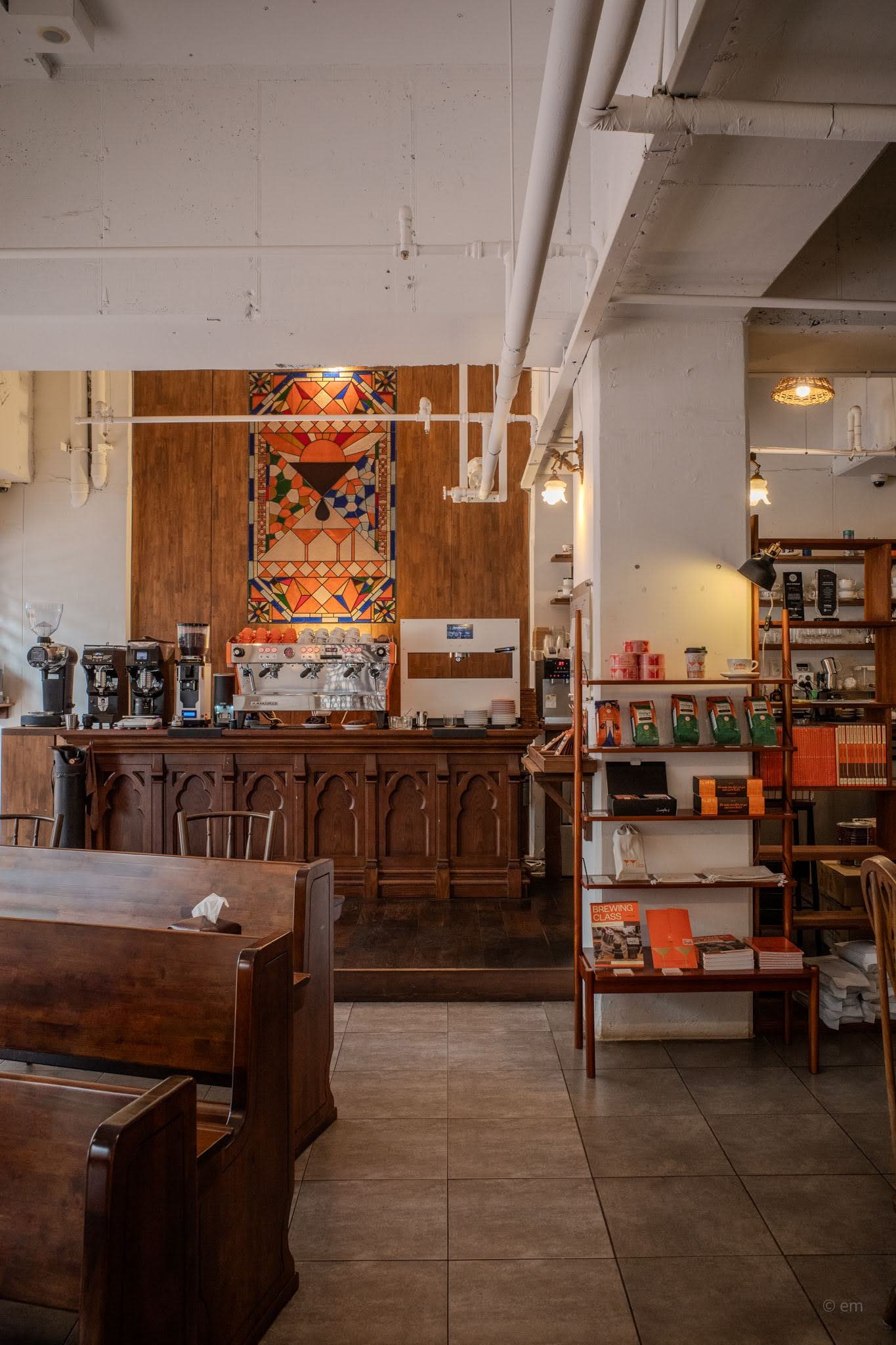
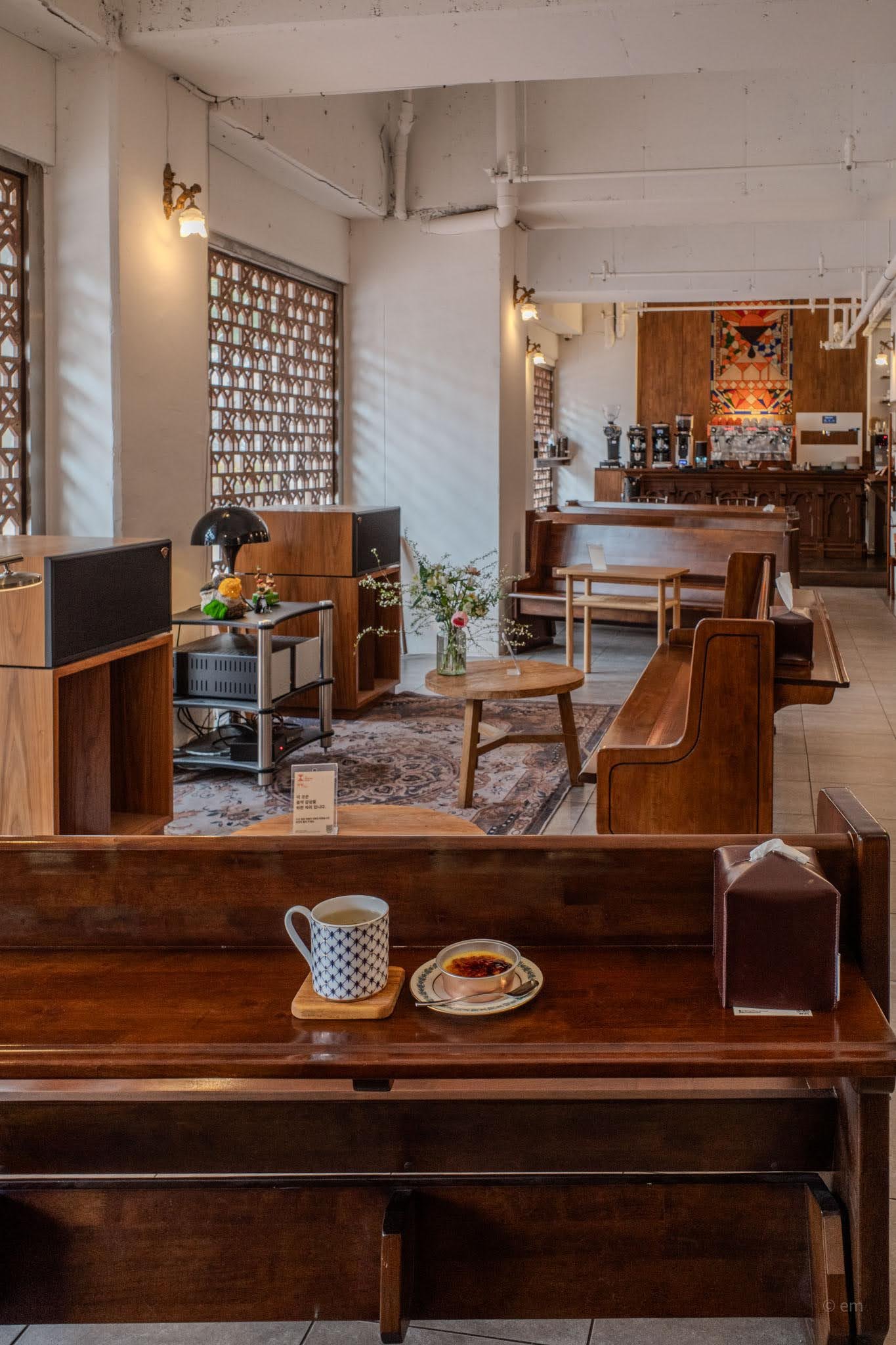
The space is long and narrow, oriented toward a raised platform at the far end — the bar counter — exactly where an altar would be. The seating throughout the nave is church pews: heavy, dark-stained wood, arranged in rows, some backed against each other in pairs so that guests sit side by side facing forward rather than across from one another. The effect is unmistakably ecclesiastical. You don’t have a conversation across a table here. You sit in the pew. You look ahead.
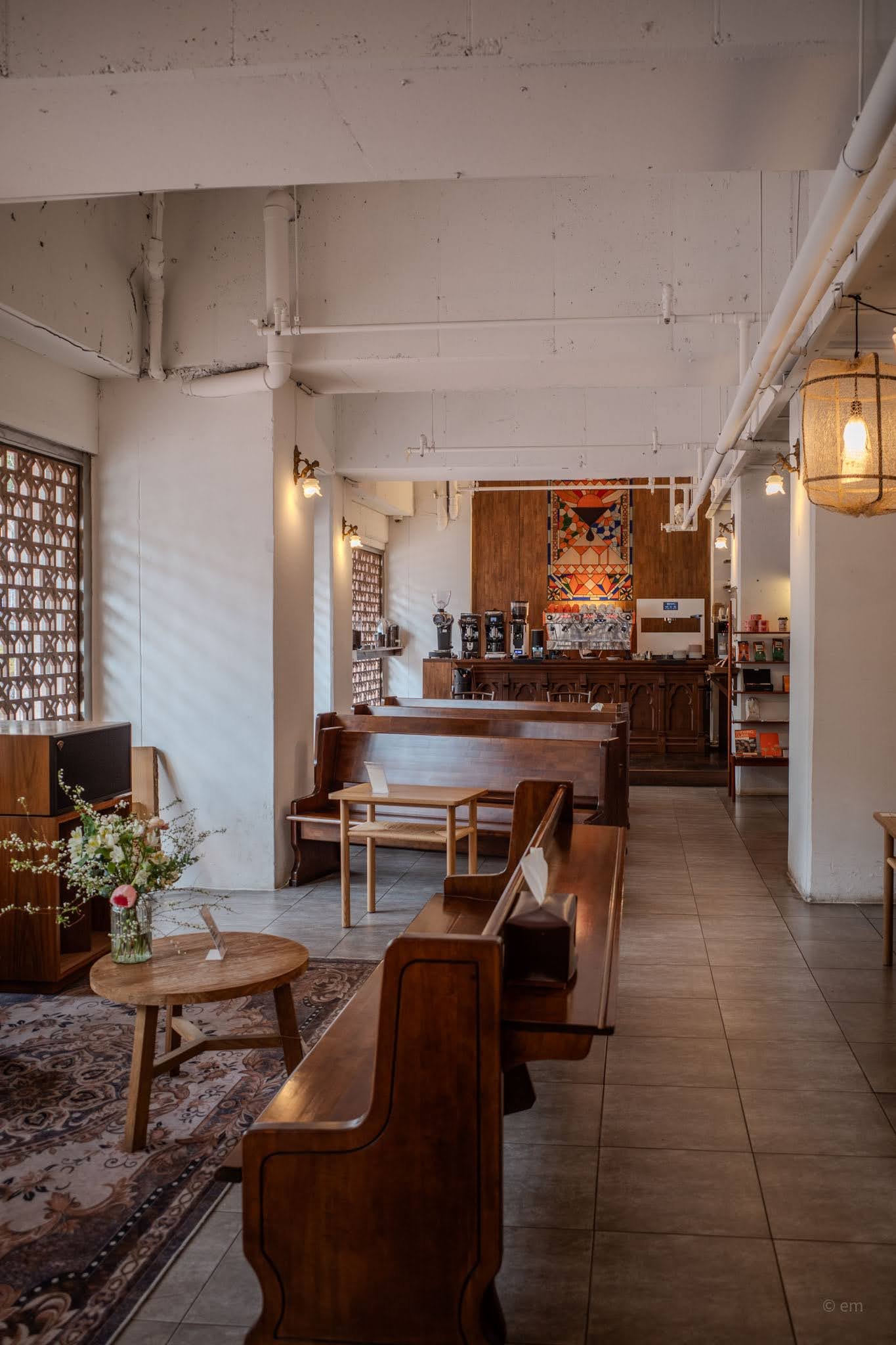

The counter itself is carved in Gothic arch motifs along the fascia, mirroring the vaulted decorative language of the lattice screens that line the windows. Above it hangs a large vertical artwork in vivid stained-glass style — a warm, geometric folk-art composition in amber, orange, and cobalt that reads from across the room like a rose window. The espresso machine and grinders are arranged below it like liturgical objects on a credence table.
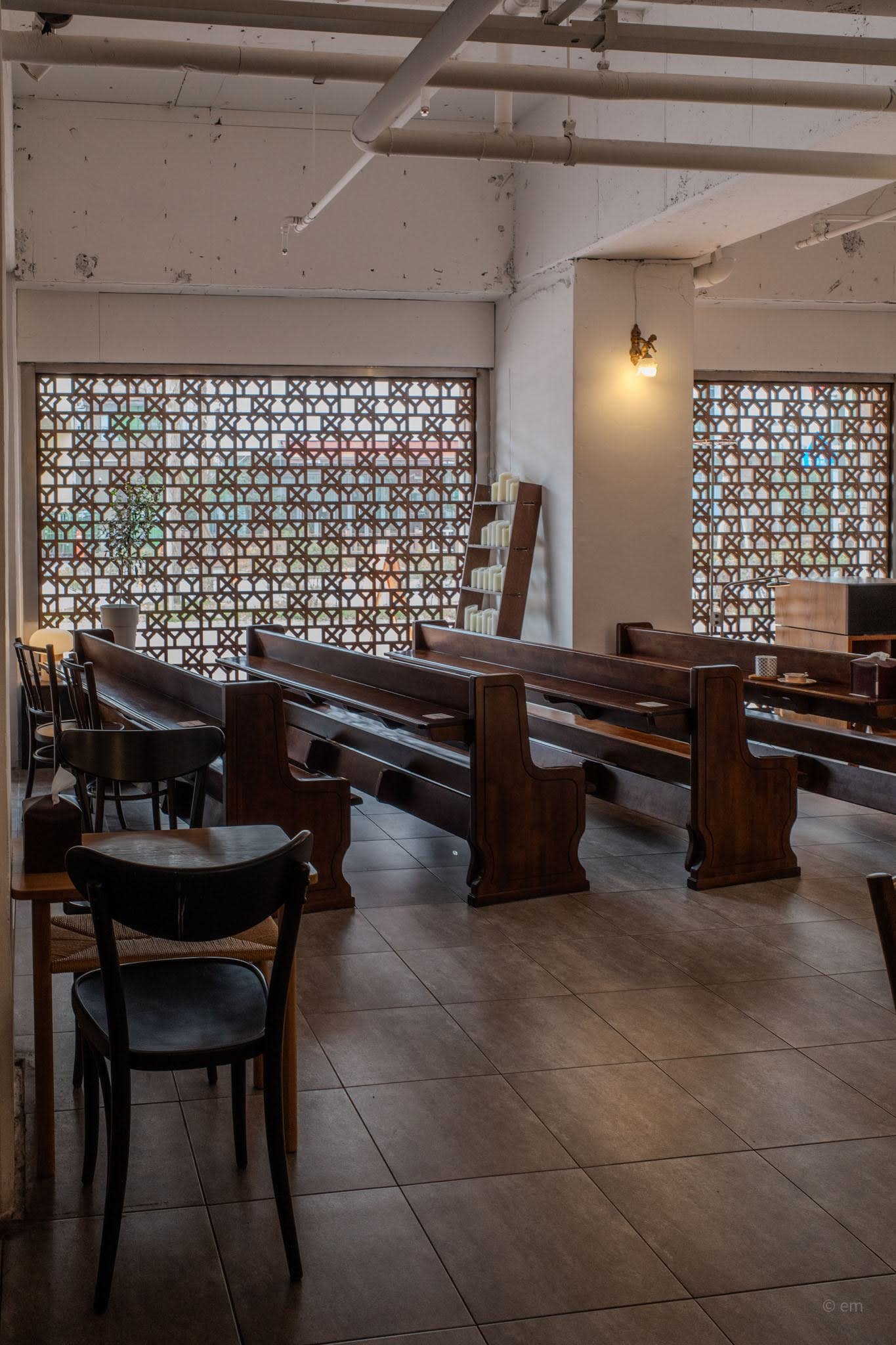
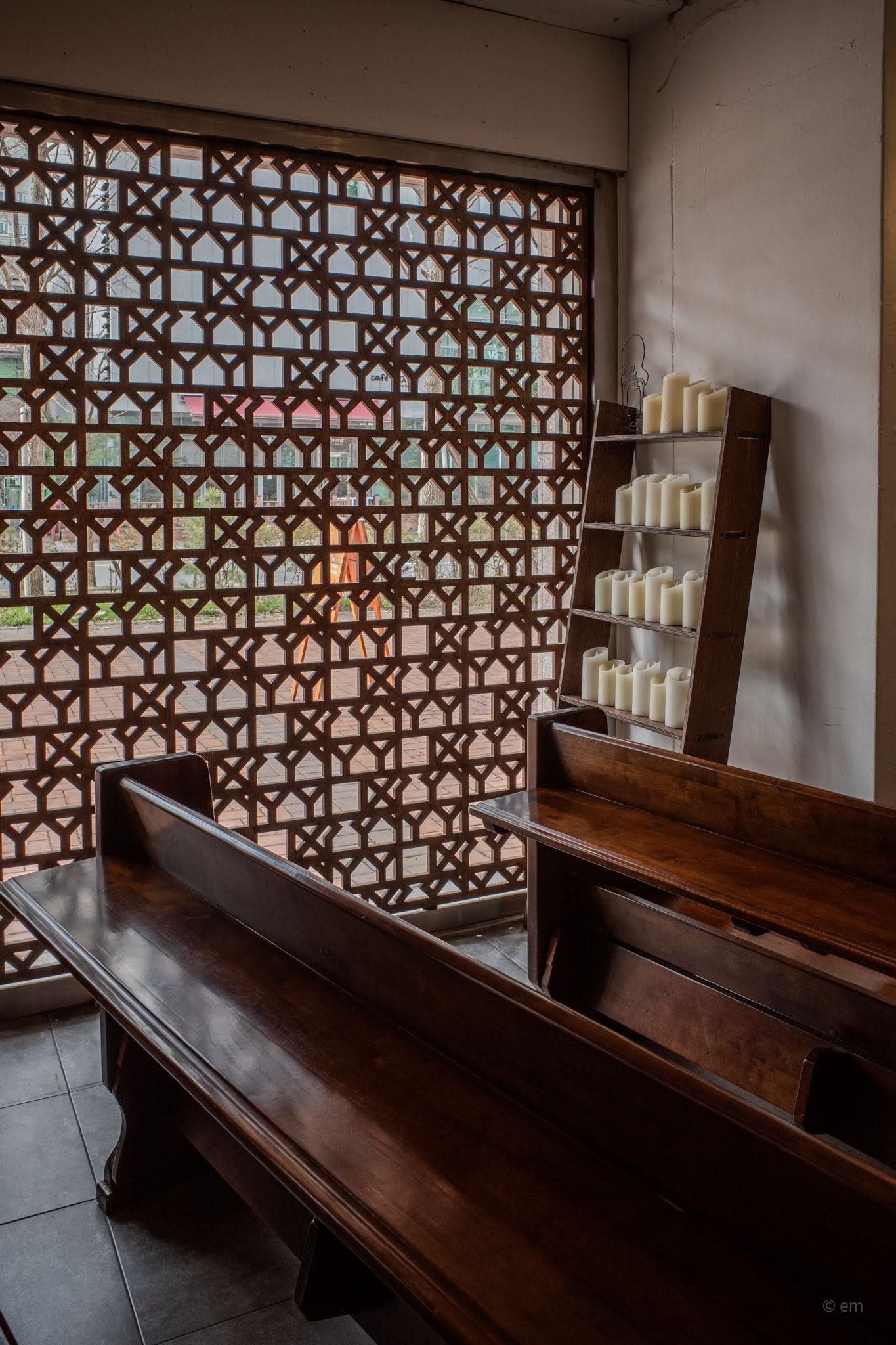
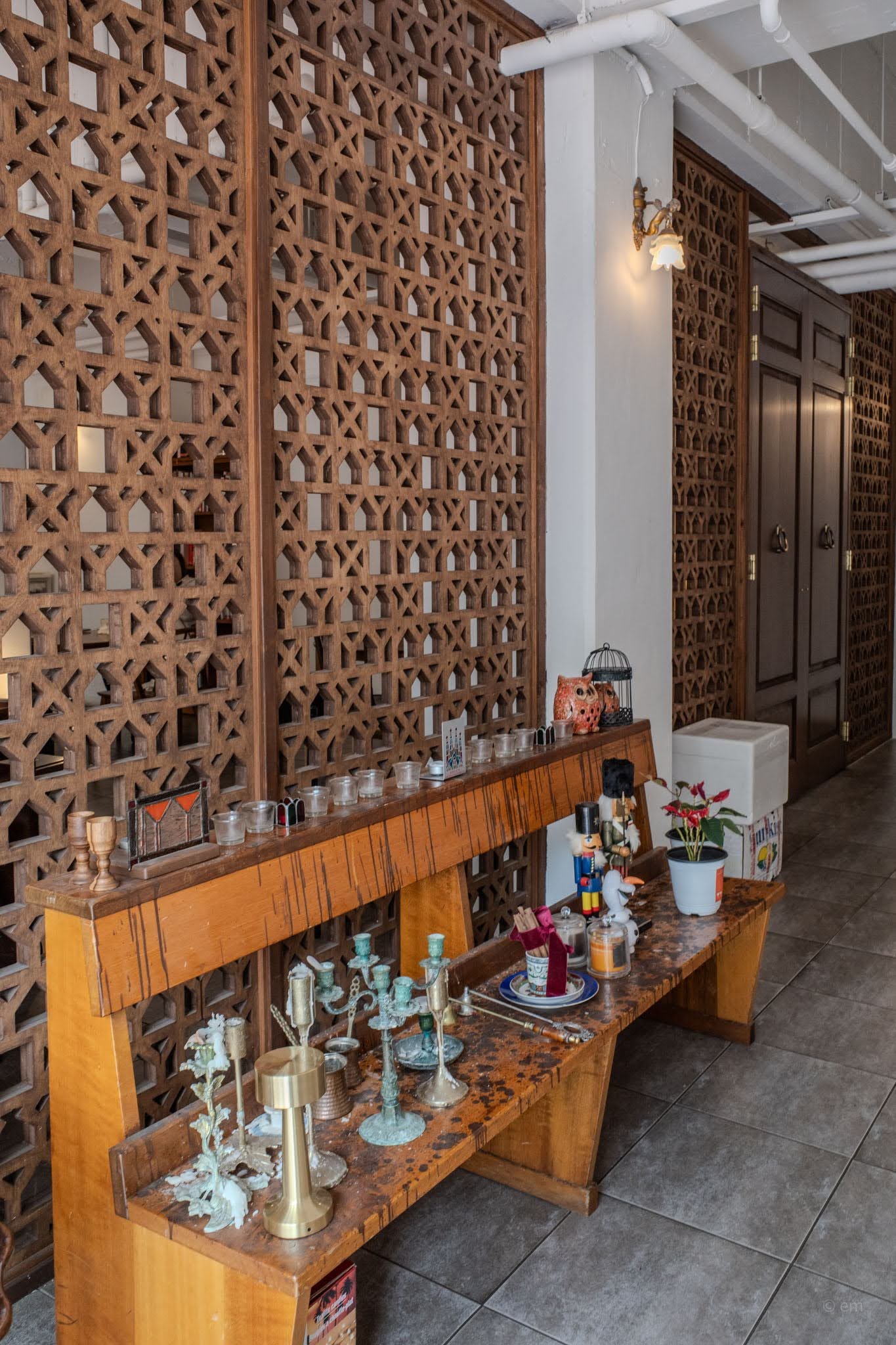
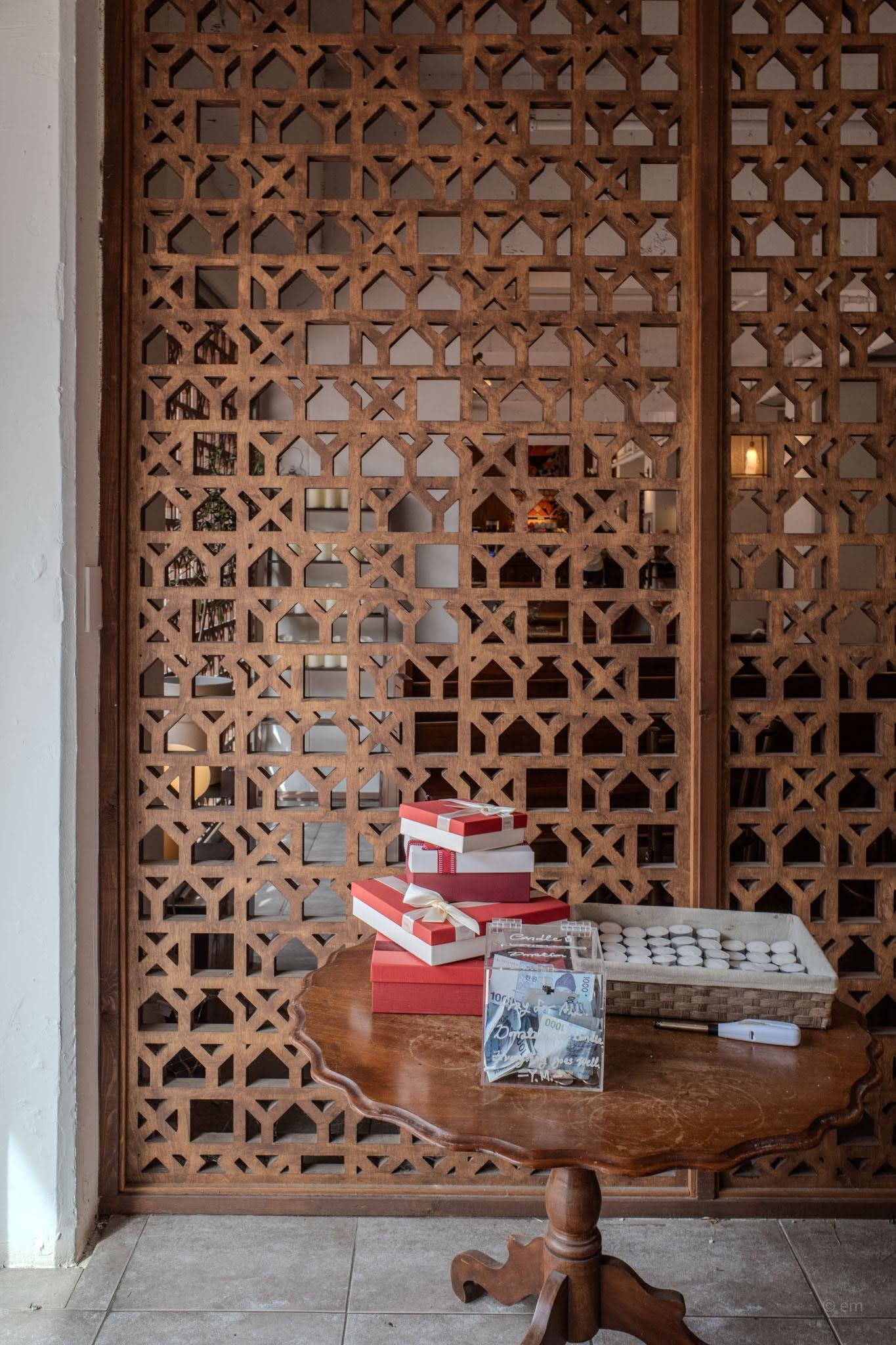
The lattice screens deserve their own attention. Running floor-to-ceiling across most of the exterior wall panels, they’re fashioned in an Islamic geometric star-and-cross pattern — mashrabiya-adjacent — that filters direct daylight into a latticed grid of small shadows across the white walls and tile floors. The effect changes hour by hour as the sun moves. In the early afternoon, the screens turn the entire room into a kind of sundial.
The Concept
The owner, a competition-level barista and the author of a brewing class textbook, has described the concept as rooted in memories of European travel: the ubiquitous town churches, the particular quality of silence inside them, the experience of coffee in their shadows. The conceit here isn’t purely decorative — the audio setup, positioned at the rear of the nave with large walnut-cabinet speakers and a separate amplifier rack on a Persian rug, projects music toward the seating area from behind. The visual drama arrives from the front. The sound from the back. The design is asking for something close to attention.
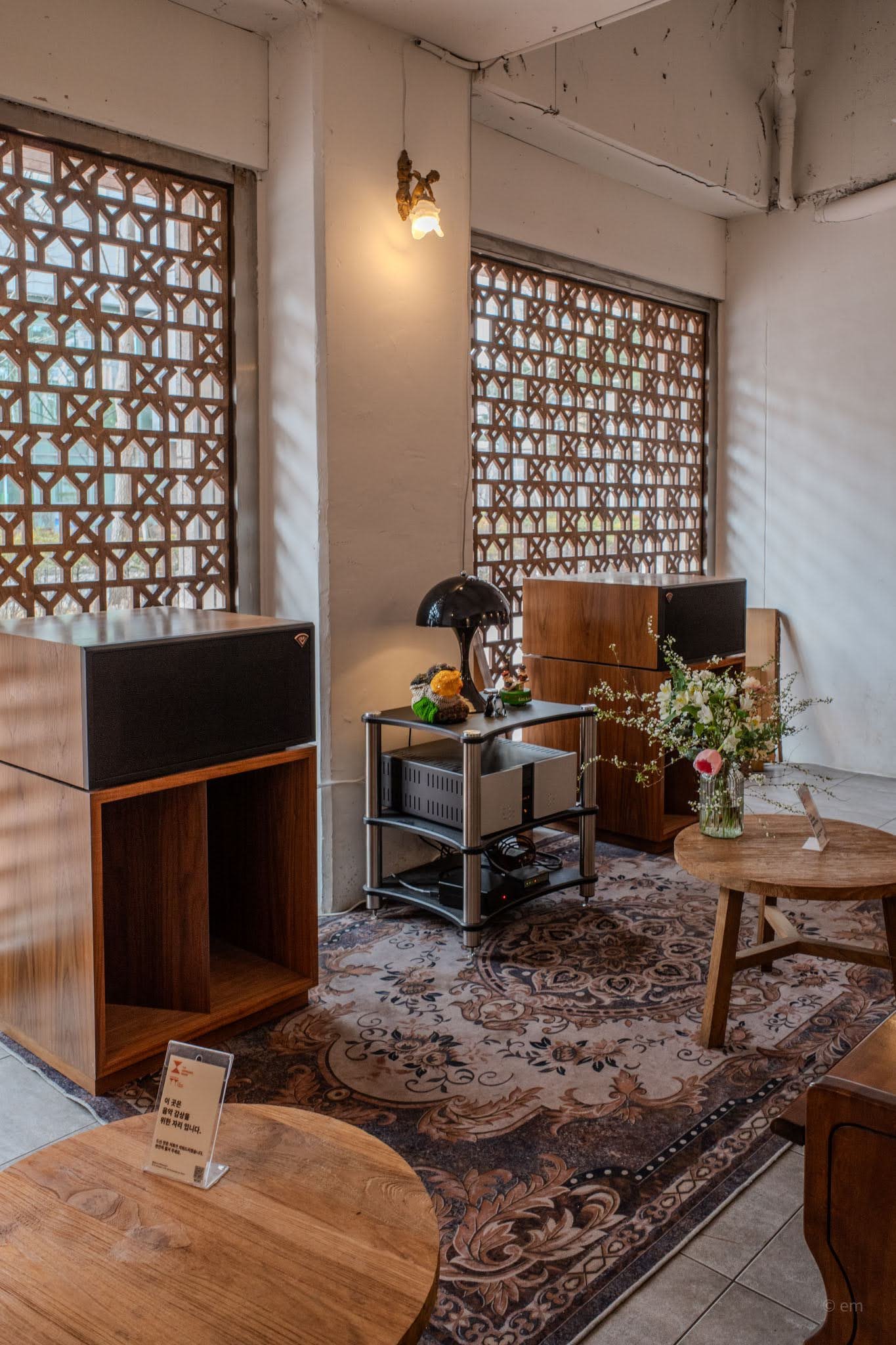
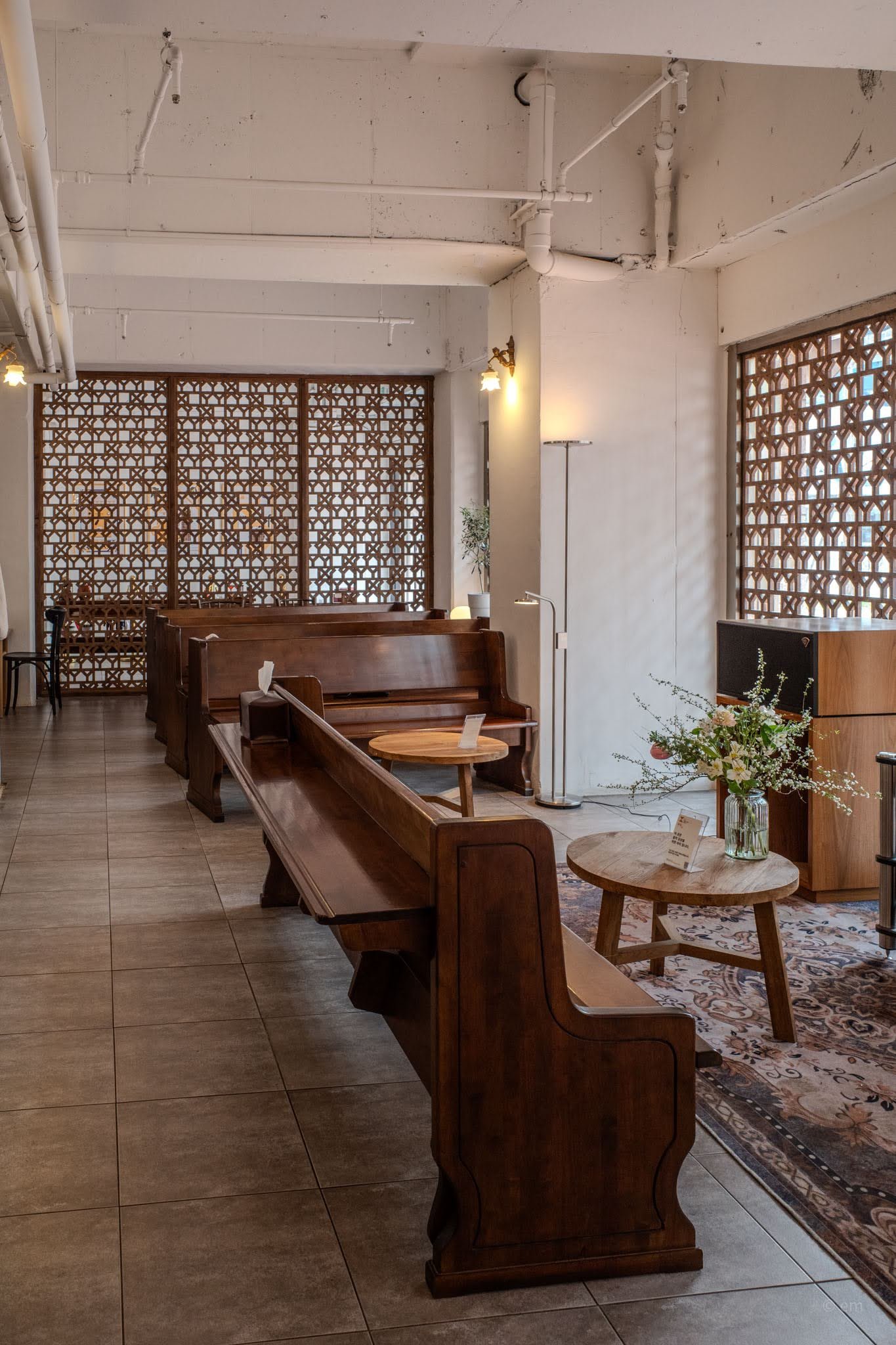
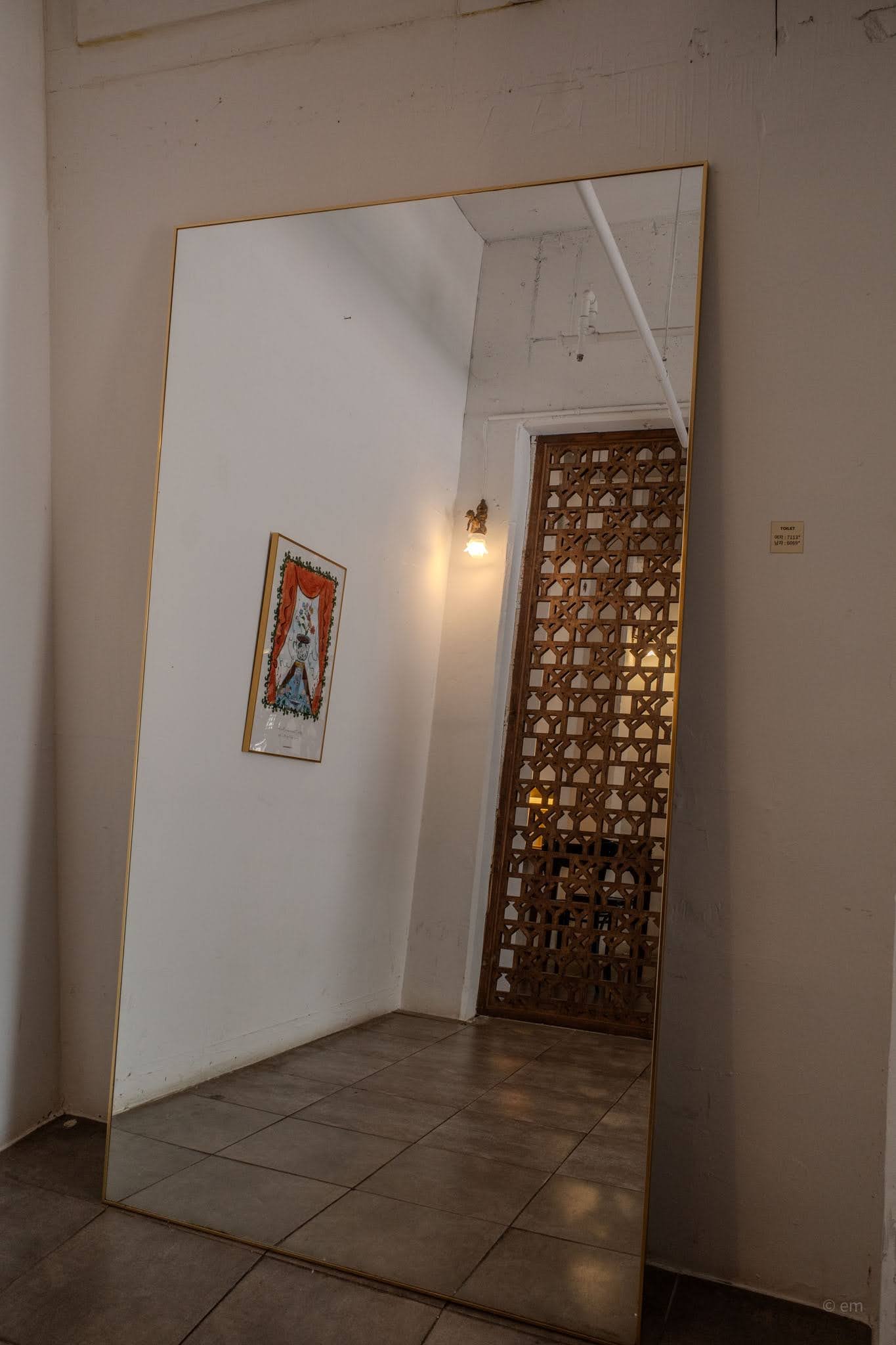
In the space between the pews there are small round birch-wood side tables, a vase of fresh-cut flowers, an ornate tilt-top occasional table near the entrance screen. A tiered ladder shelf near one window holds rows of cream-colored candles. A full-length gold-framed mirror leans in the side corridor near the back, where carved folding doors and more lattice panels close off an additional zone — a back room that feels even more removed from the street.
The Coffee
YM Coffee Project is a roaster as well as a café, operating under HACCP certification and selling bags of their own beans alongside a small curated selection of brewing books and accessories on a shelving unit near the counter. The Gupabal location — also known as YM Espresso Room — is their espresso-focused space, as distinct from the hand-drip-oriented first branch in Yeonsin-nae. The house approach to extraction is reportedly exacting: shots that don’t meet standard are discarded and restarted, which means orders may take longer than expected. That patience is built into the concept.
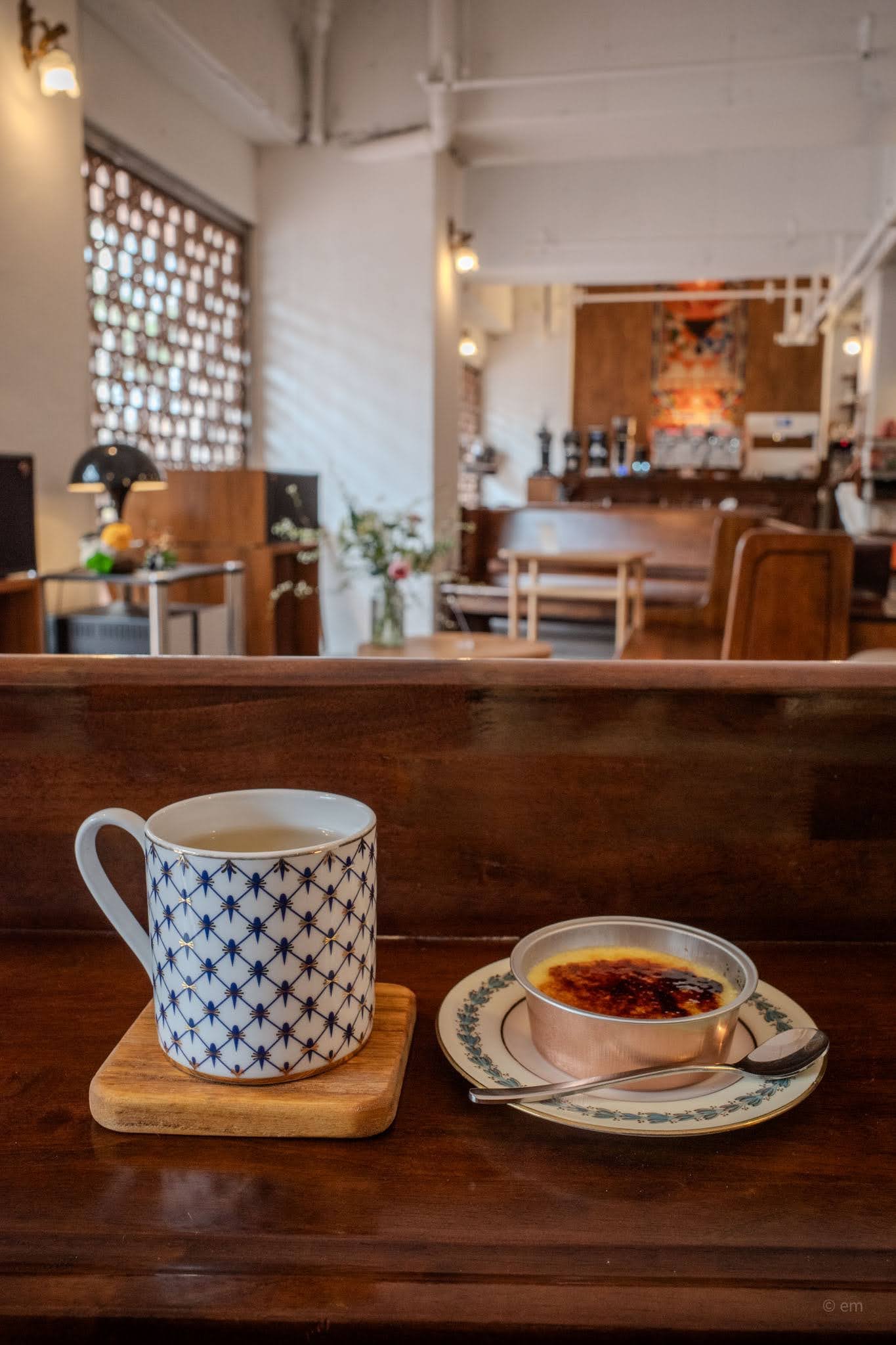
The café latte comes in a selection of three beans, including a house signature blend. The espresso chocolat pairs a shot with chocolate couverture and house cream — darker and more restrained than most café chocolate drinks. The crème brûlée is served cold in a silver ramekin on a vintage saucer, the caramelized crust intact and burnished, the custard set firmly enough to hold. Teas come in blue-and-white printed mugs that sit, somehow, entirely in register with the rest of the room.
The pews face forward. You sit down, you look ahead, and eventually a cup appears.
YM Coffee Project (YM Espresso Room) | 67 Jingwan 3-ro, Eunpyeong-gu, Seoul (Raemian Apartment 909-dong, 1F Unit 101) |
Mon–Wed, Fri–Sun 10:00–22:00 | Closed Thursdays | @ymcoffeeproject