Some places don’t quite fit the world outside their doors.
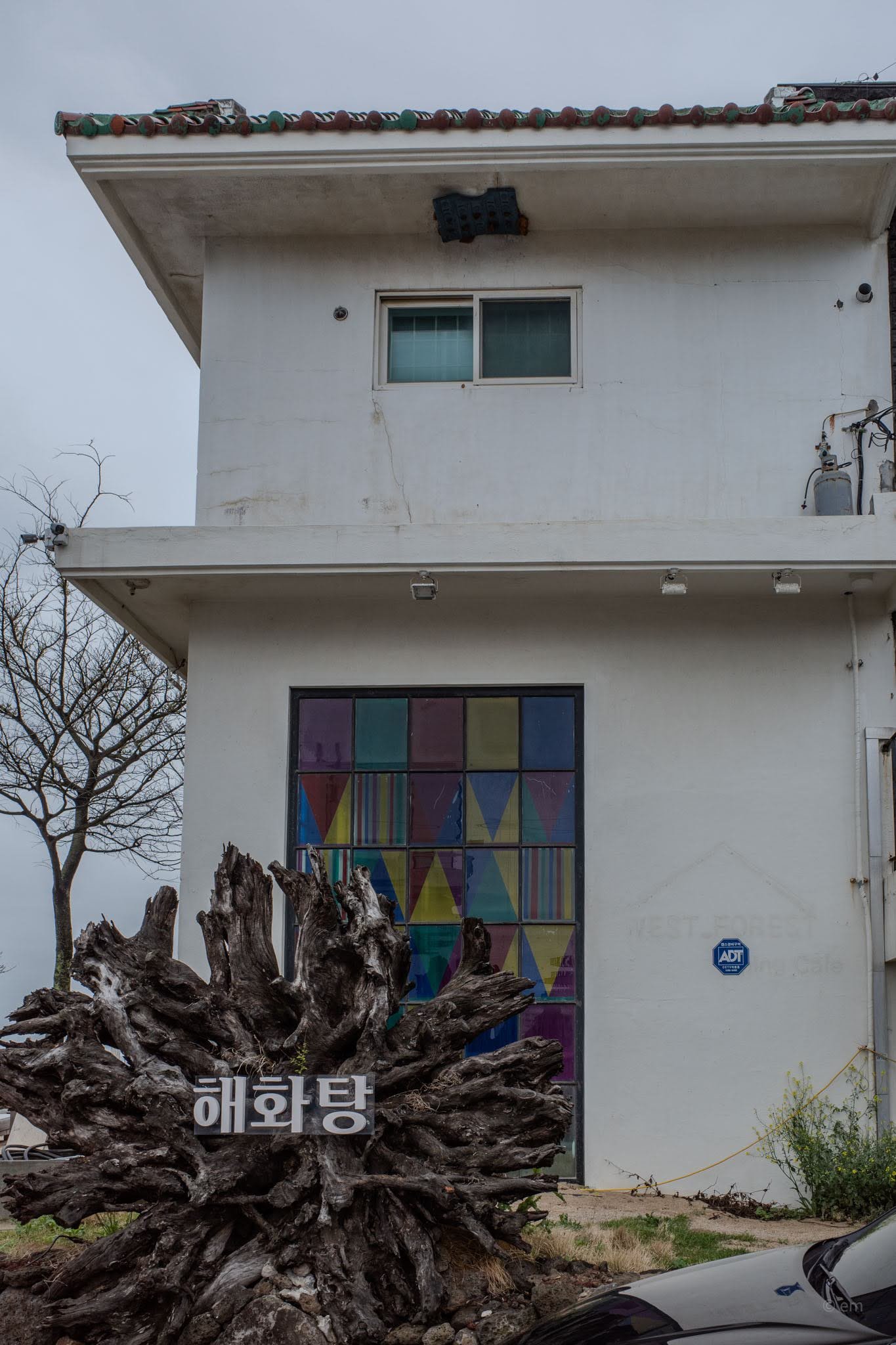
The sign is embedded in a tangle of driftwood root — massive, skeletal, planted in front of a white render building with Korean roof tiles running along the edge. A tall entrance door filled with colored geometric glass. Nothing about the outside prepares you for what’s inside.
A Bath Designed for Ceremony
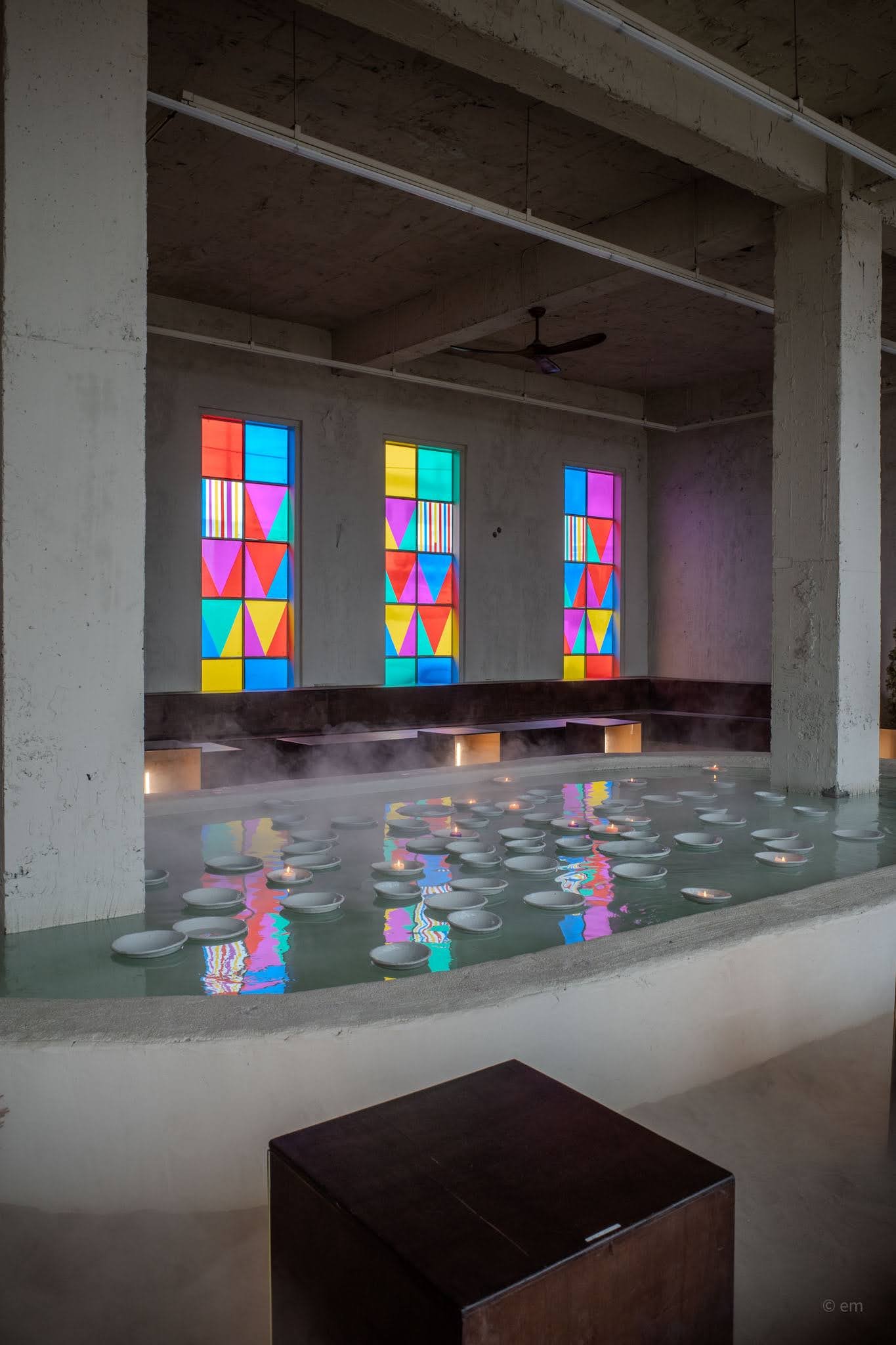
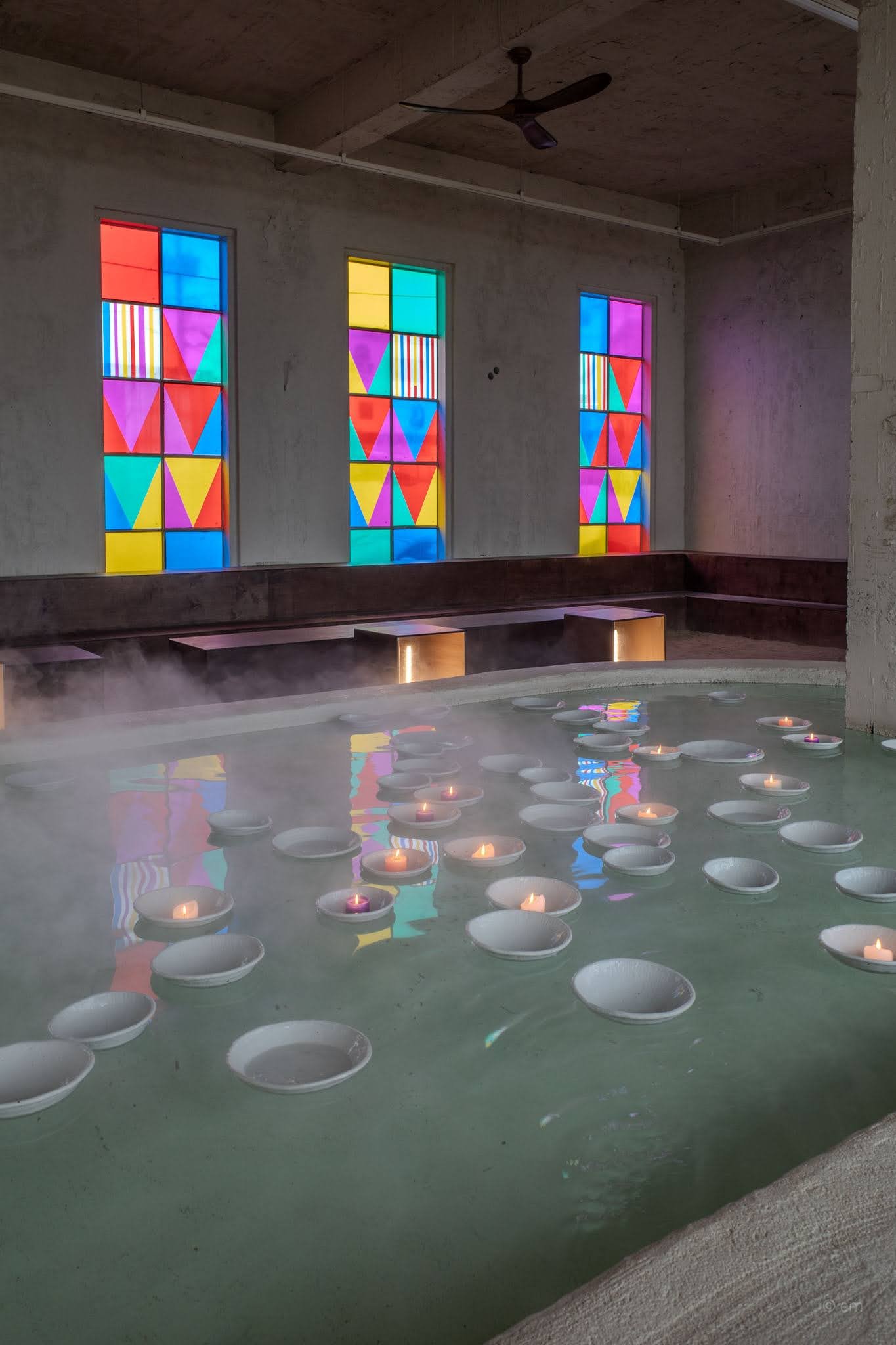
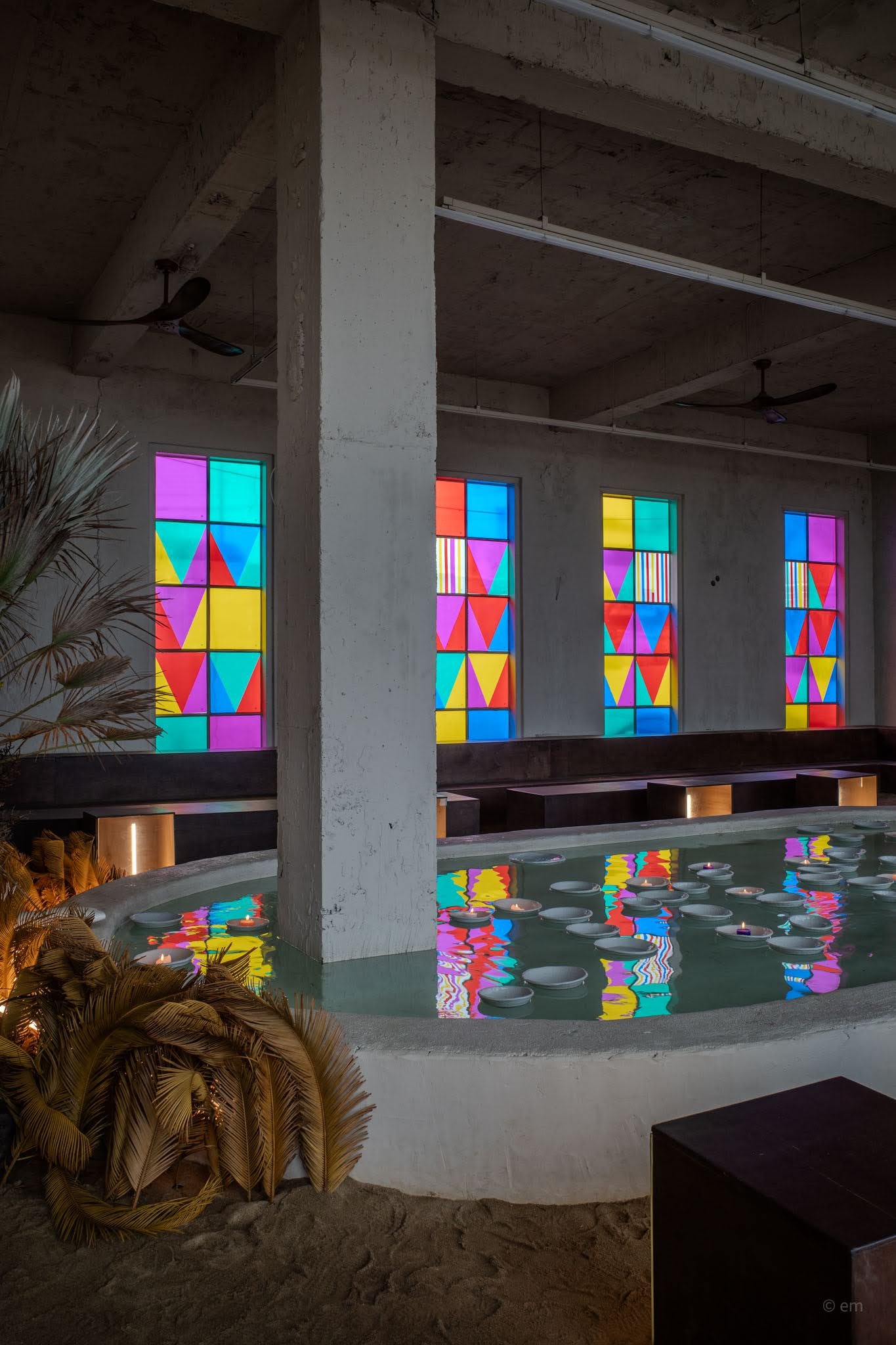
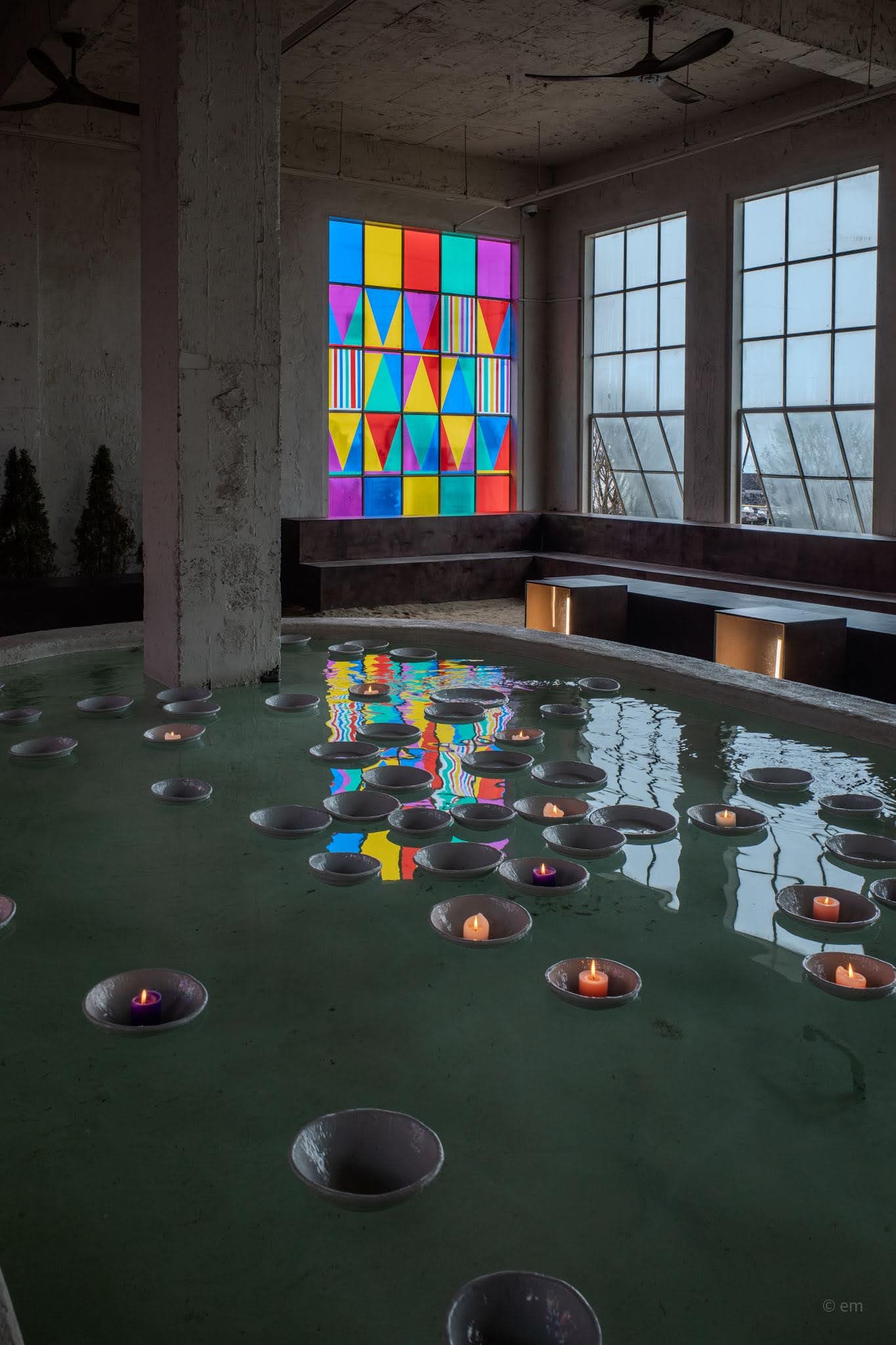
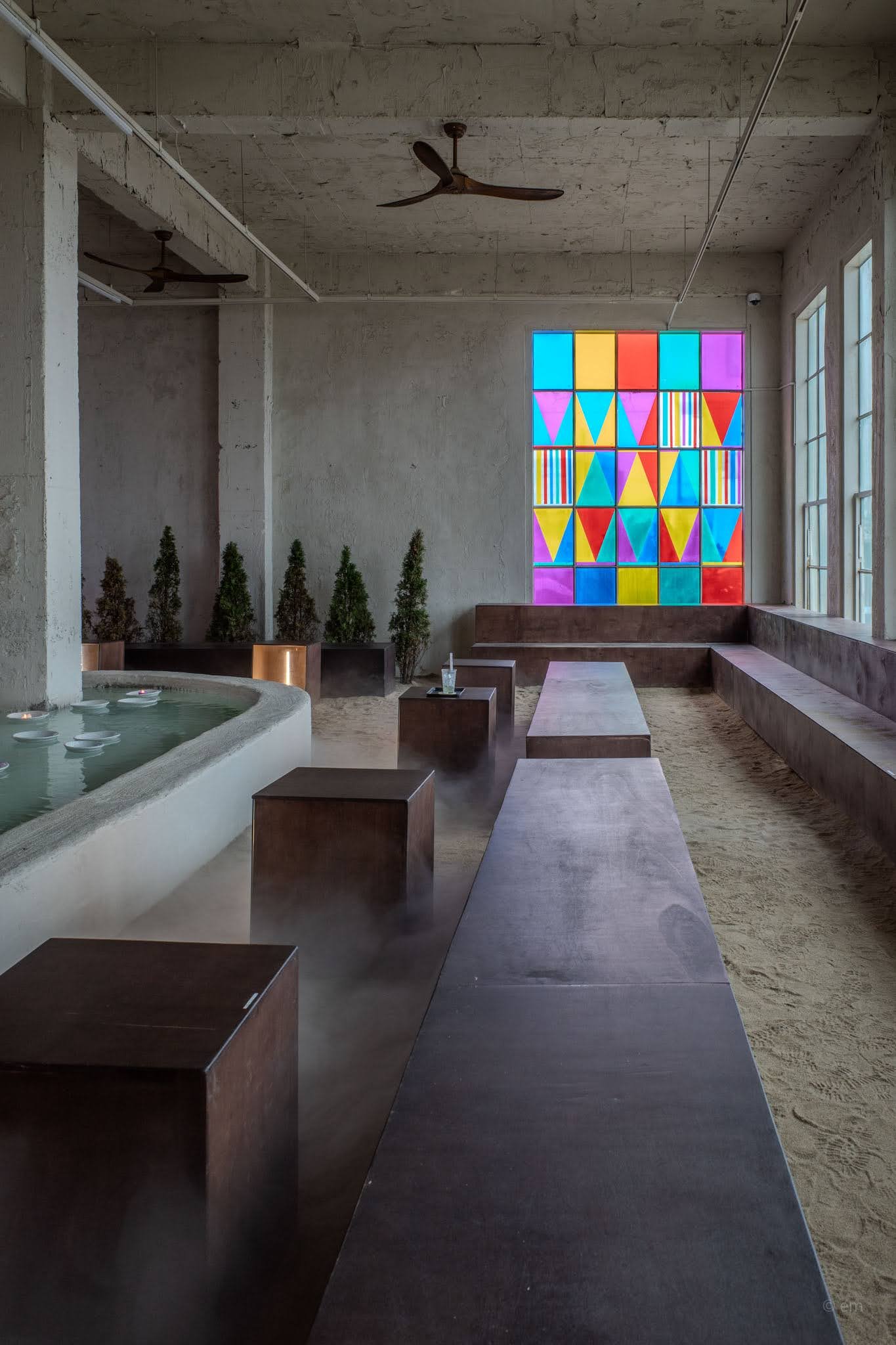
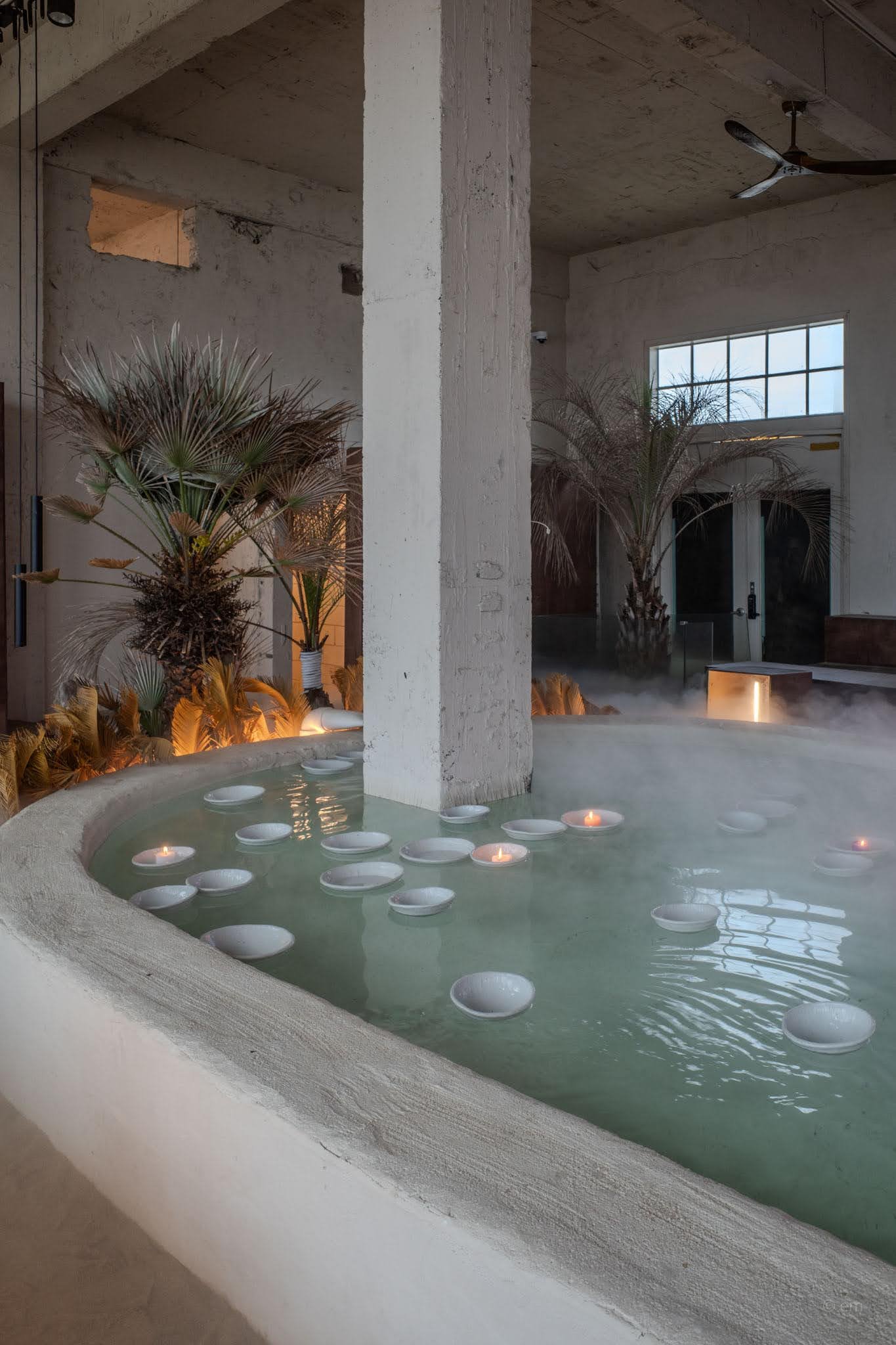
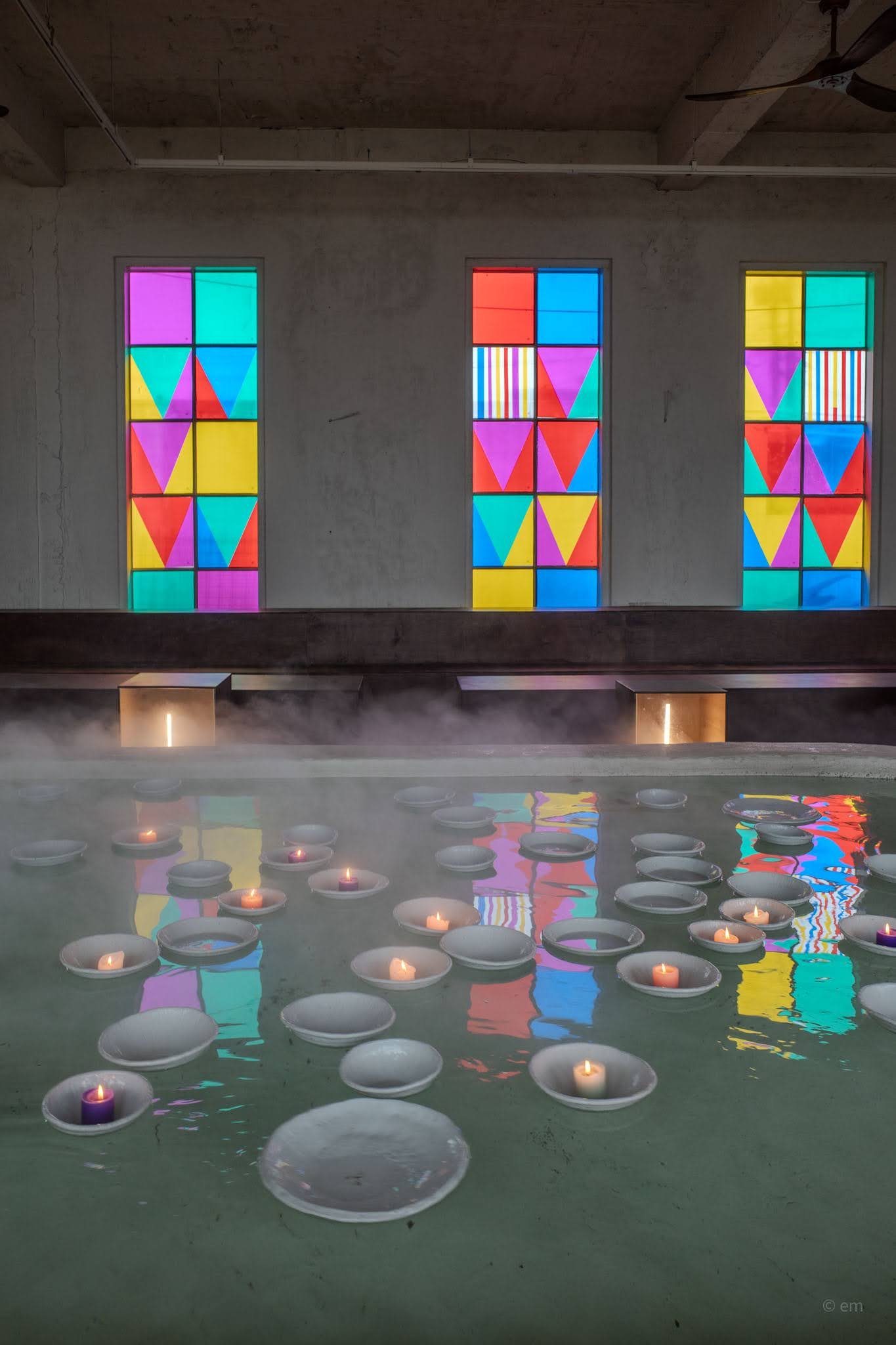
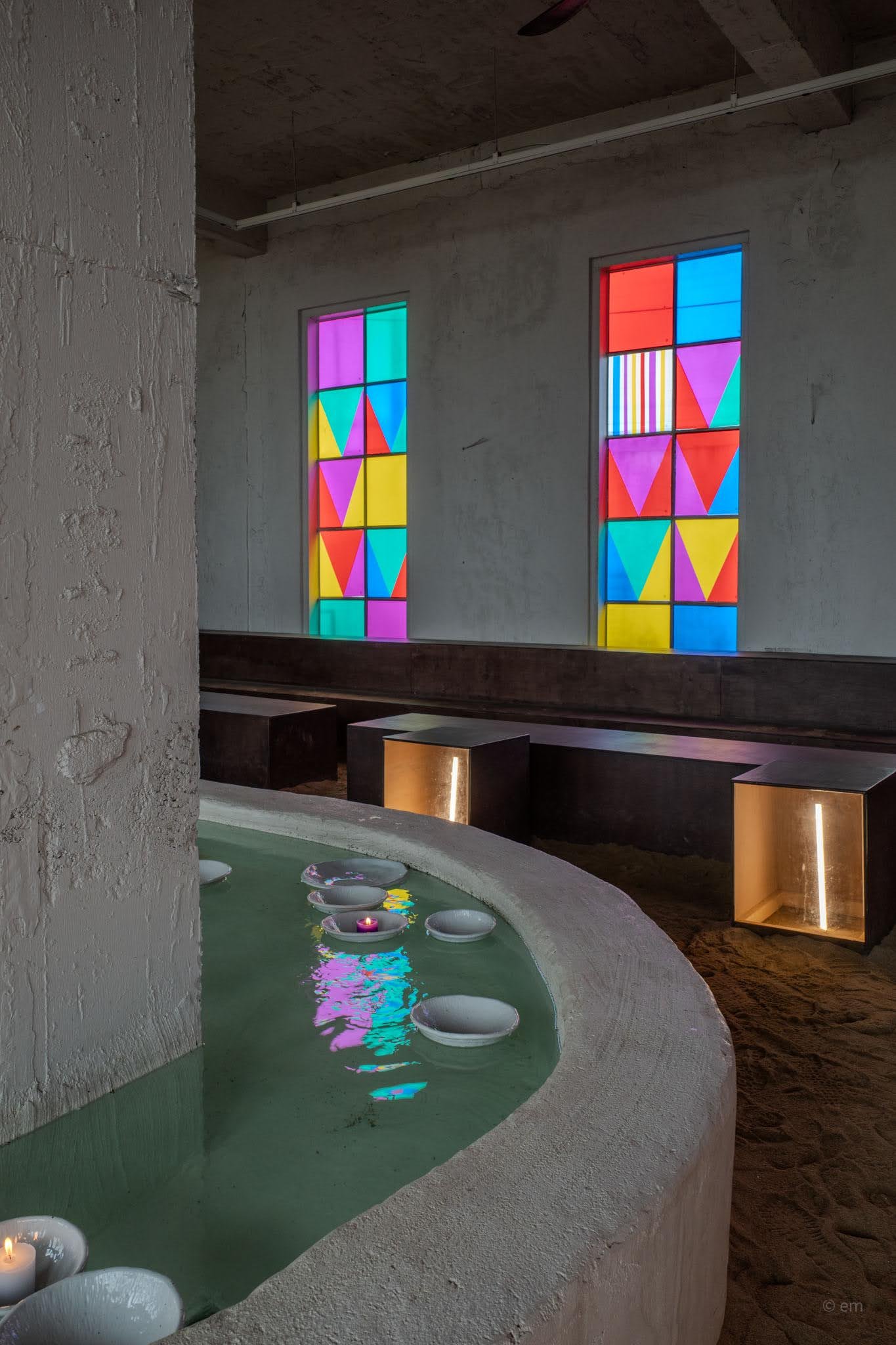
해화탕 — Haehwatang — takes the public bathhouse as its conceptual anchor and rebuilds it as something closer to ritual. Step through the door and the floor becomes sand. Real sand, fine and pale, shifted underfoot by every visitor before you. Around the room: dried palms, living fan palms casting slow shadows, volcanic rock. And at the center, occupying almost the entire hall, a large oval pool filled with still, celadon-green water.
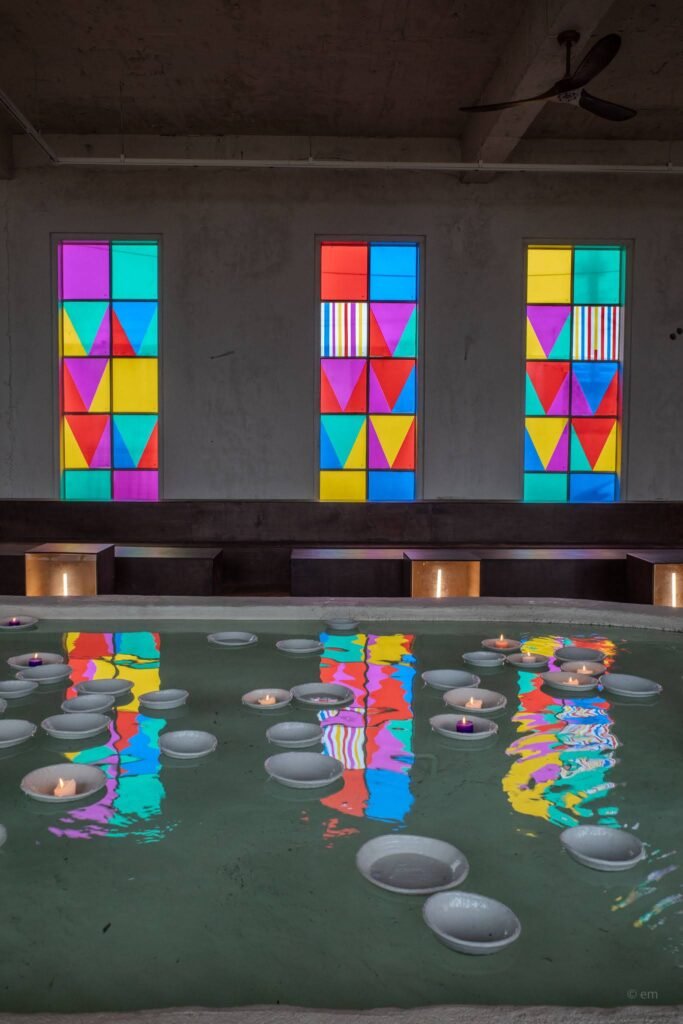
The pool is lined with floating ceramic bowls — dozens of them, drifting, occasionally nudging each other with a soft ceramic knock. Some hold lit candles. The sound they make, low and irregular, is the sound the space breathes to.
There is a phrase that keeps coming to mind standing at the edge of it: installation art. The bowls, the water, the candles, the sand — assembled with the deliberateness of a curated object in a gallery, except that nothing here is behind glass or roped off. You order a drink and sit beside it. The ceremony is participatory.
The Windows
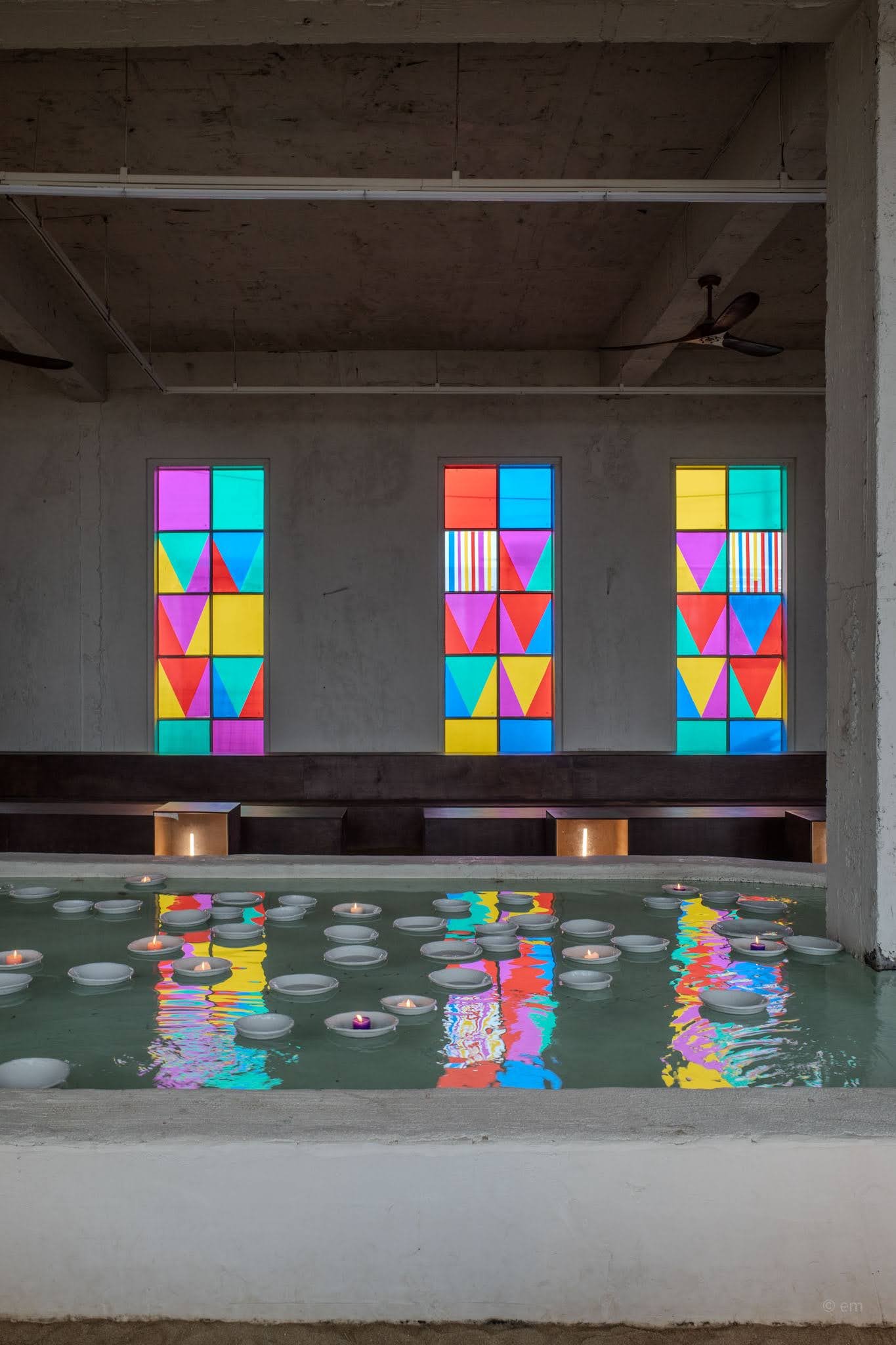
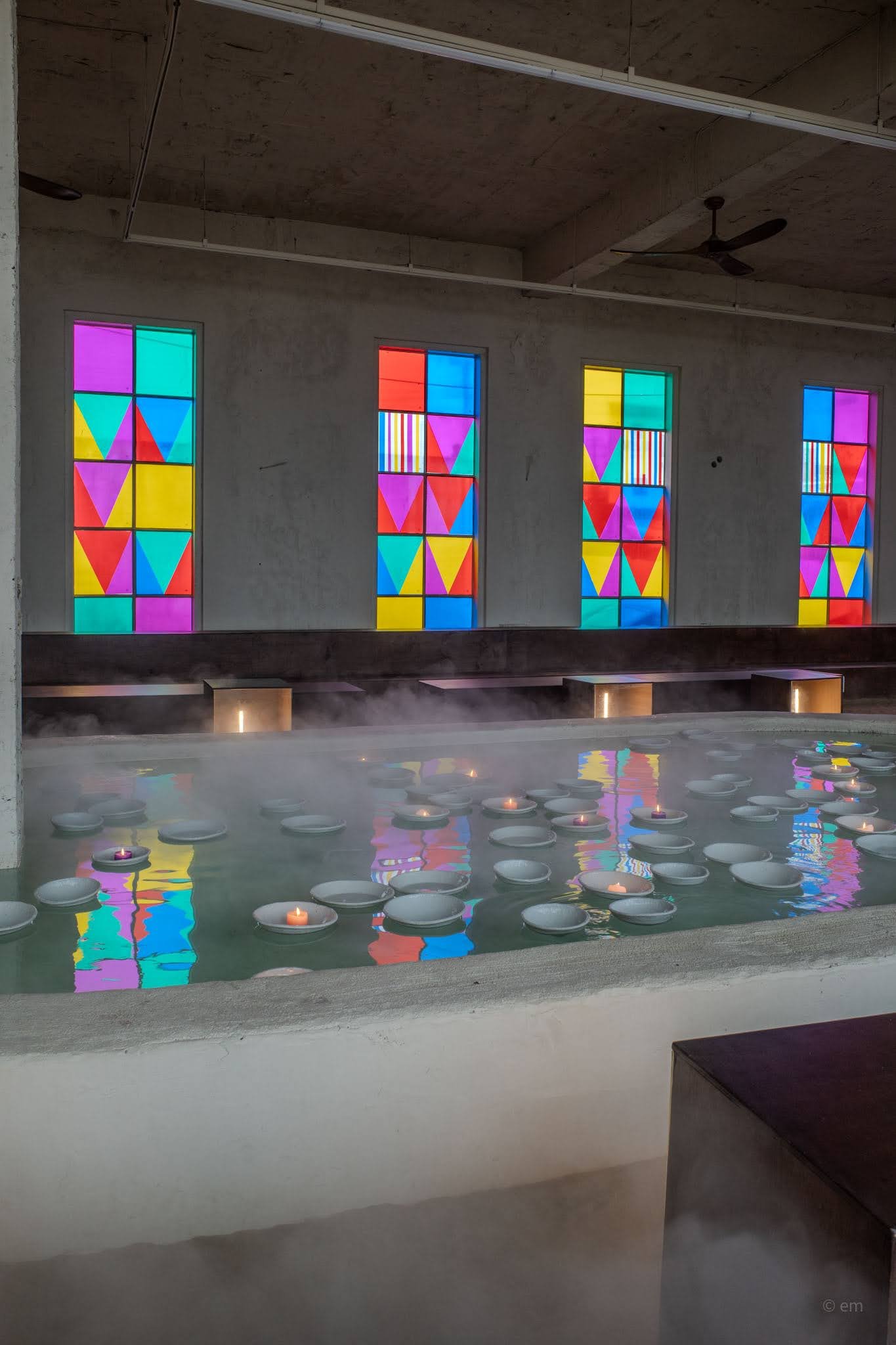
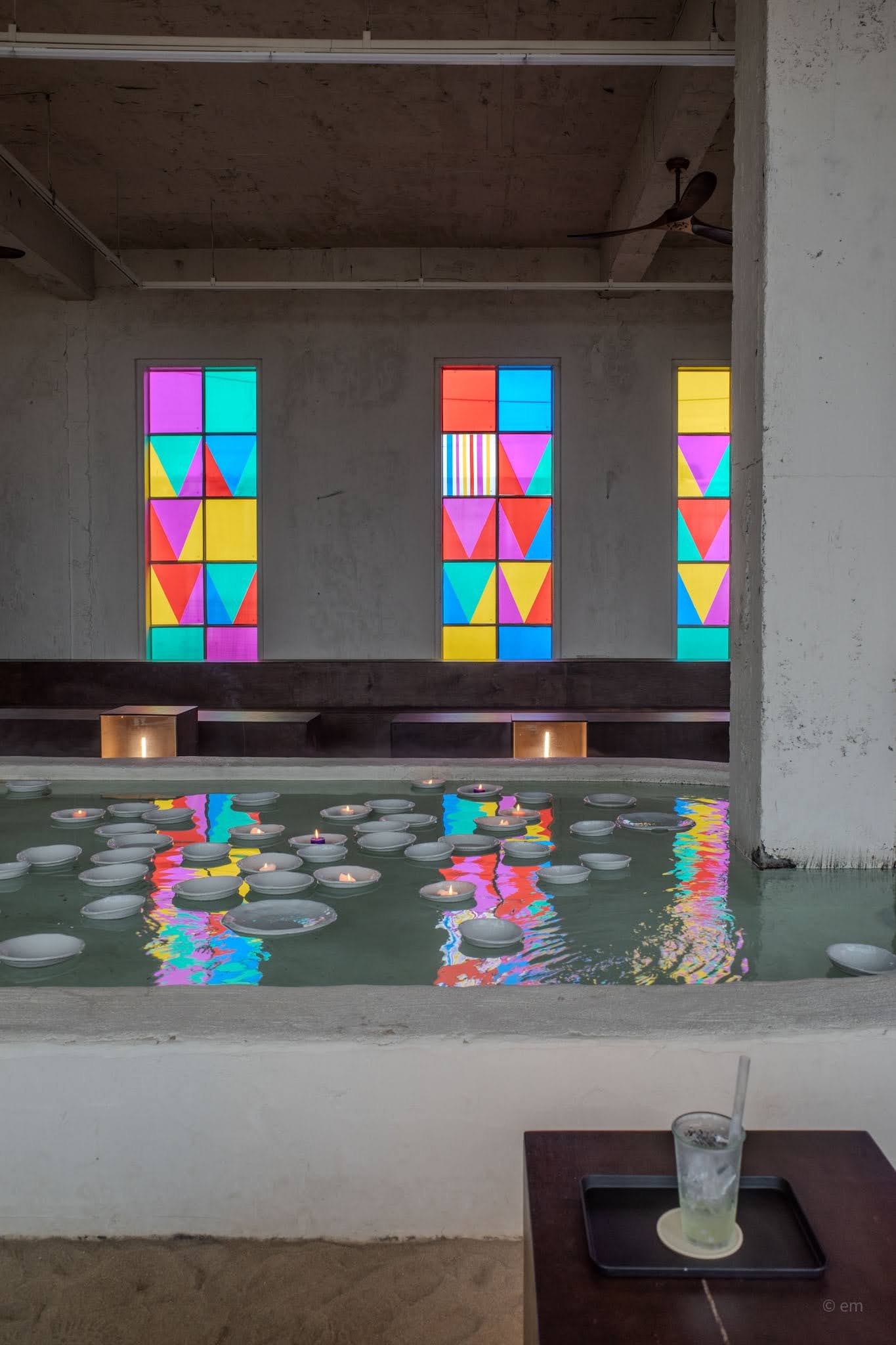
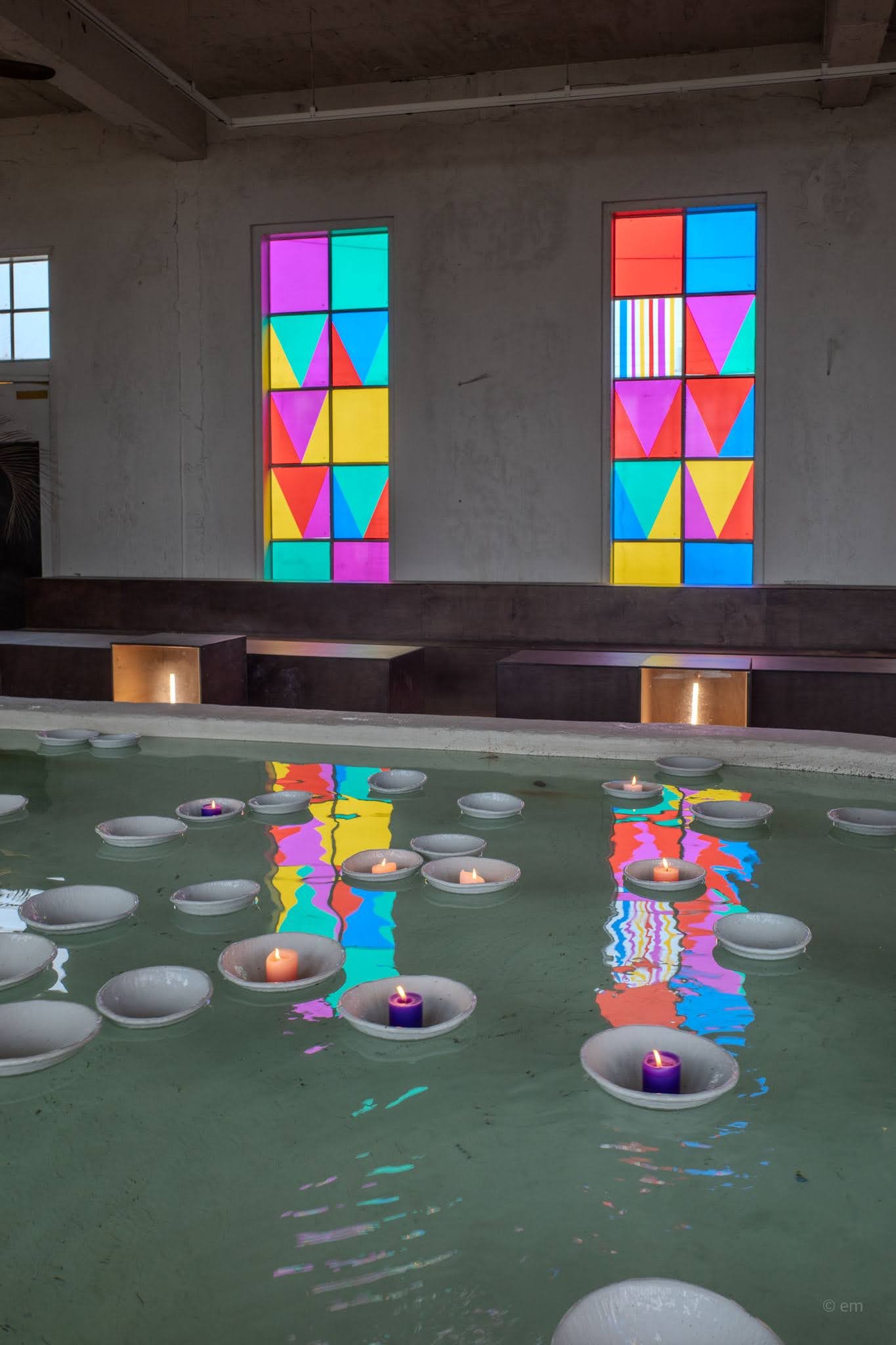
Three — sometimes four, depending on which wall you face — tall, narrow windows run floor to near-ceiling on the interior walls. They are not traditional stained glass in the cathedral sense. The glass is contemporary, graphic, saturated: bold triangles in magenta, red, teal, yellow, cobalt, purple, arranged in interlocking geometric patterns with occasional stripes of vertical color. The palette is closer to folk textile or op-art than anything ecclesiastical. In a white-walled gallery, framed in steel, these panels would read as serious contemporary art. Here, the wall is bare concrete, the ceiling is raw, the room is a café — and that displacement is exactly the point.
When the light pushes through into the dim interior, it falls onto the water in long, trembling columns. Every bowl that drifts through a reflection pulls a streak of magenta or yellow along behind it. The ceiling above — exposed beams, industrial ceiling fans — holds the light differently, cooler, quieter. Below it, everything pulses.
The reflections are where the image lives. The windows themselves are vivid, but what happens on the surface of the water — that constant, slightly unstable recomposition of color, broken and rejoined by the movement of ceramic on water — reads like a living painting. It changes with every bowl that passes through it. No two frames are the same. Photographers figure this out quickly.
Fog
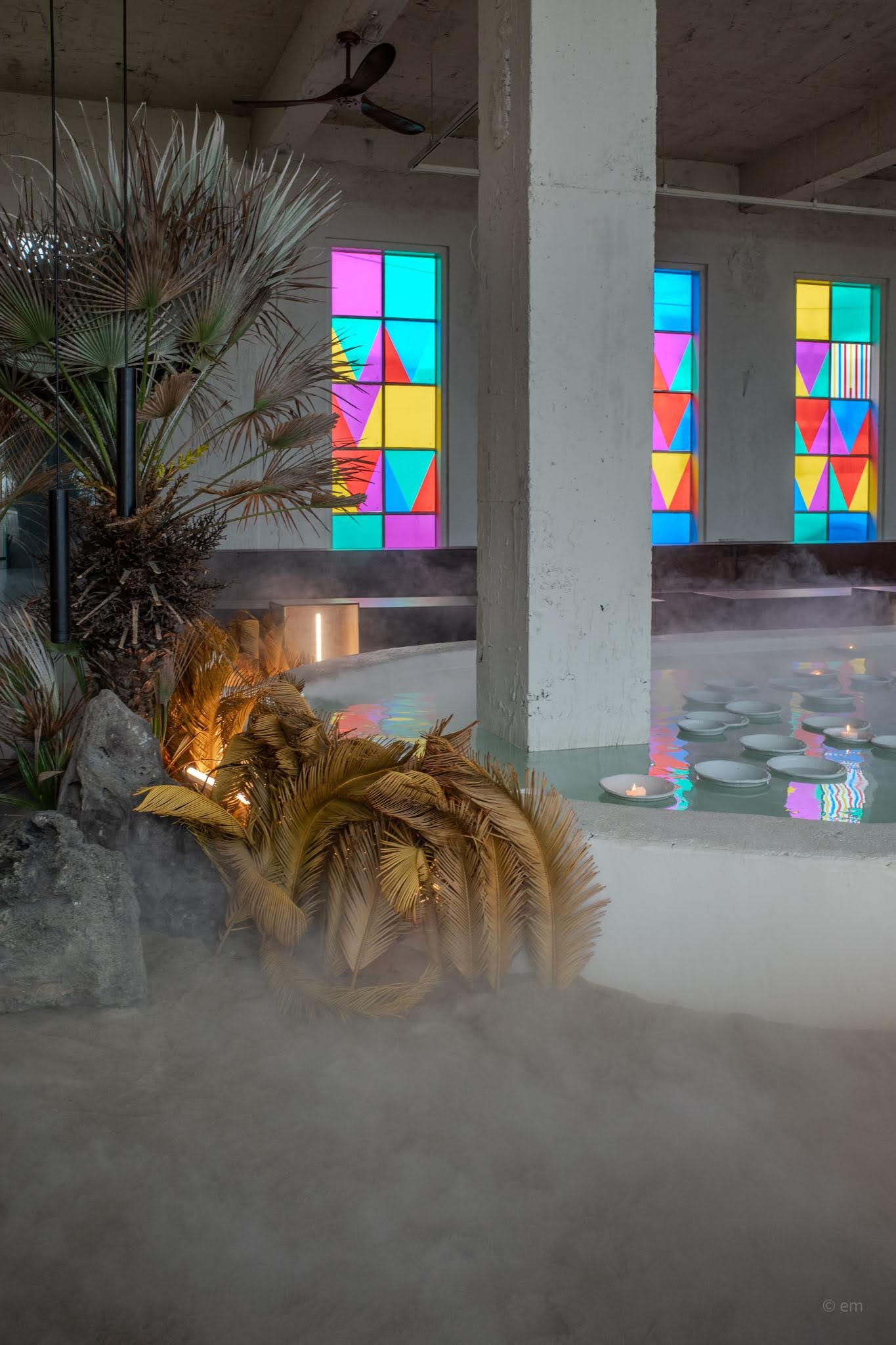
Every thirty minutes, the mist comes.
It rises from the water, fills the lower half of the room, swallows the base of the palms and the rim of the pool. The candles continue to burn through it. The reflections of the windows warp and dissolve and reassemble. For ten minutes the space is something else entirely — less a café than a waking dream, the smell of warm water and wax and sand mixing with the low sounds of ceramic drift.
If the room between fog releases belongs to the gallery, the room during the fog belongs to theater. The mechanics are simple — mist, light, sound — but the effect lands hard. The geometry of the windows, so crisp and primary in clear air, becomes something atmospheric, painterly. The floating bowls disappear to their rims and reappear. Visitors tend to go quiet. There is nothing to say that the space isn’t already saying.
Sitting beside the pool on a low dark steel bench, drink on a tray beside you, the experience is genuinely hard to categorize. The vocabulary that keeps surfacing is devotional. Not because of any overt religious reference, but because of what the space asks of you: to sit still, to watch, to let the light move.
On the Menu
Ordering is by kiosk — one drink per person — from a range that covers coffee, lattes, ades, smoothies, and tea alongside cake and desserts. The drinks are straightforward; the prices are reasonable for a space this considered. But the item worth noting is the 소원초, the wish candle: a single candle you purchase separately, carry to the pool’s edge, and set adrift yourself. It joins the others already out there, finds its current, and becomes part of the installation. Whether you make a wish is between you and the water.
Outside
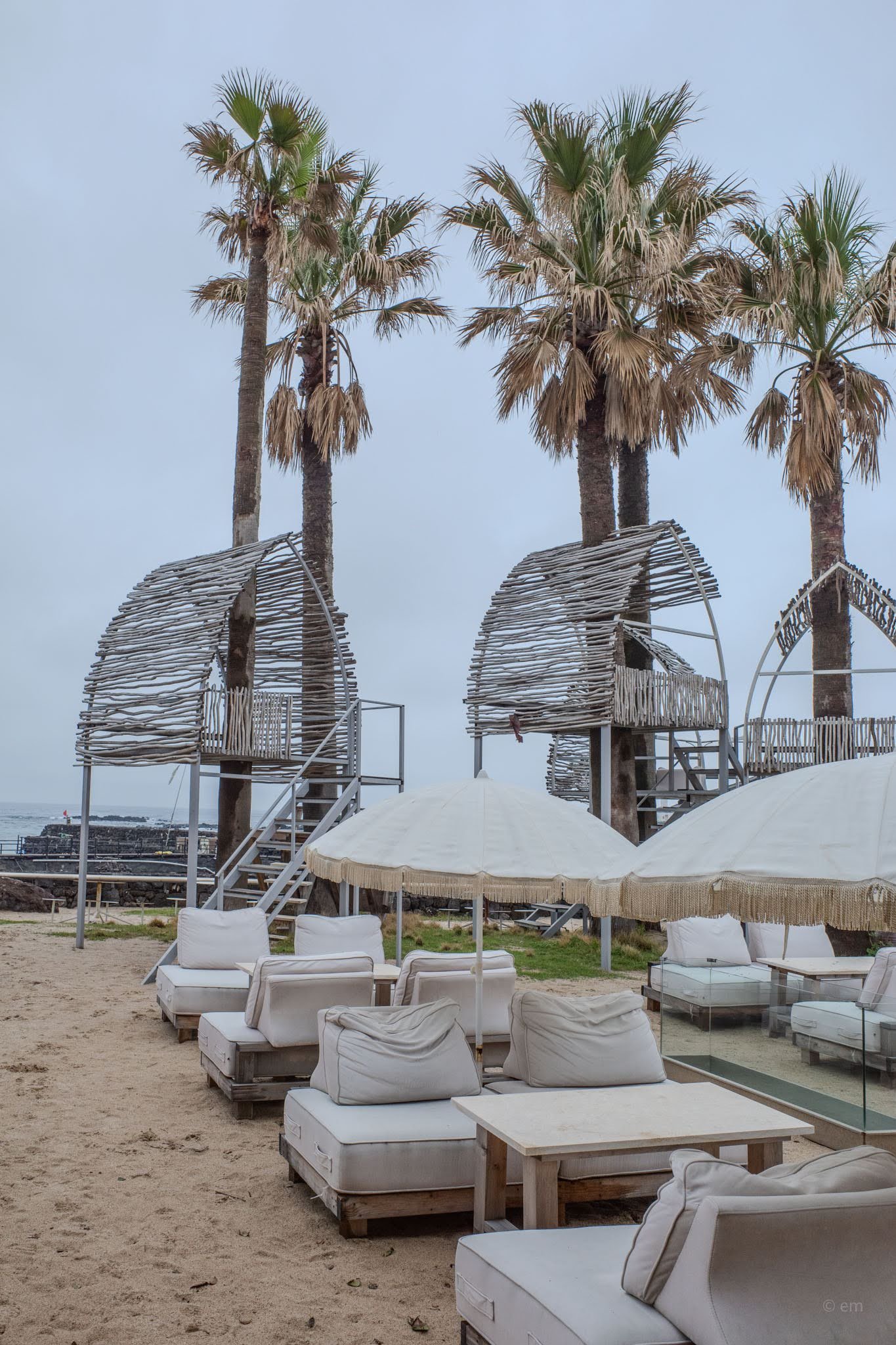
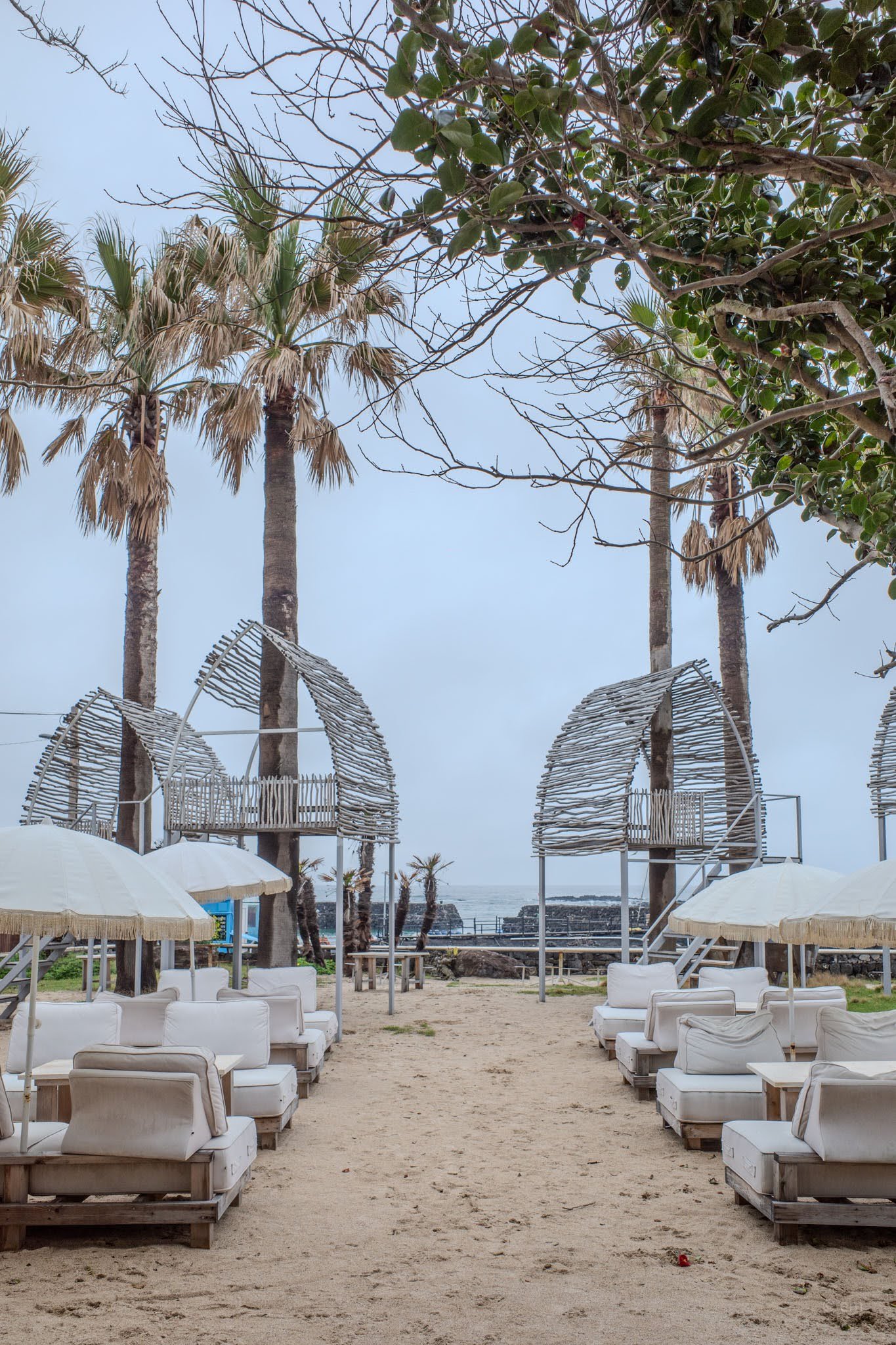
Beyond the building, the outdoor area extends toward the sea. White lounge furniture arranged on sand, fringed umbrellas, and along the waterfront edge: two large woven rattan pod structures raised on metal frames among the palms — something between a cocoon and a crow’s nest, looking out over the Jeju coast. The horizon opens up. The water is a different kind of still out here.
The transition from interior to exterior is a real one — from the compressed, chromatic intensity of the pool room to open sky and salt air. Both belong to the same place. Neither cancels the other out. The outdoor area is its own photographic language: bleached rattan, pale sand, the particular grey-blue of a Jeju coastal sky. Inside, everything is color and ceremony. Outside, everything exhales.
Name: 해화탕 (Haehwatang)
Address: 5855 Iljuseo-ro, Hallim-eup, Jeju-si, Jeju
Hours: Daily 10:00 AM – 7:00 PM
Note: Ages 16 and over only; fog releases every 30 minutes
Instagram: @haehwatang