The name is a provocation, or maybe just a description.
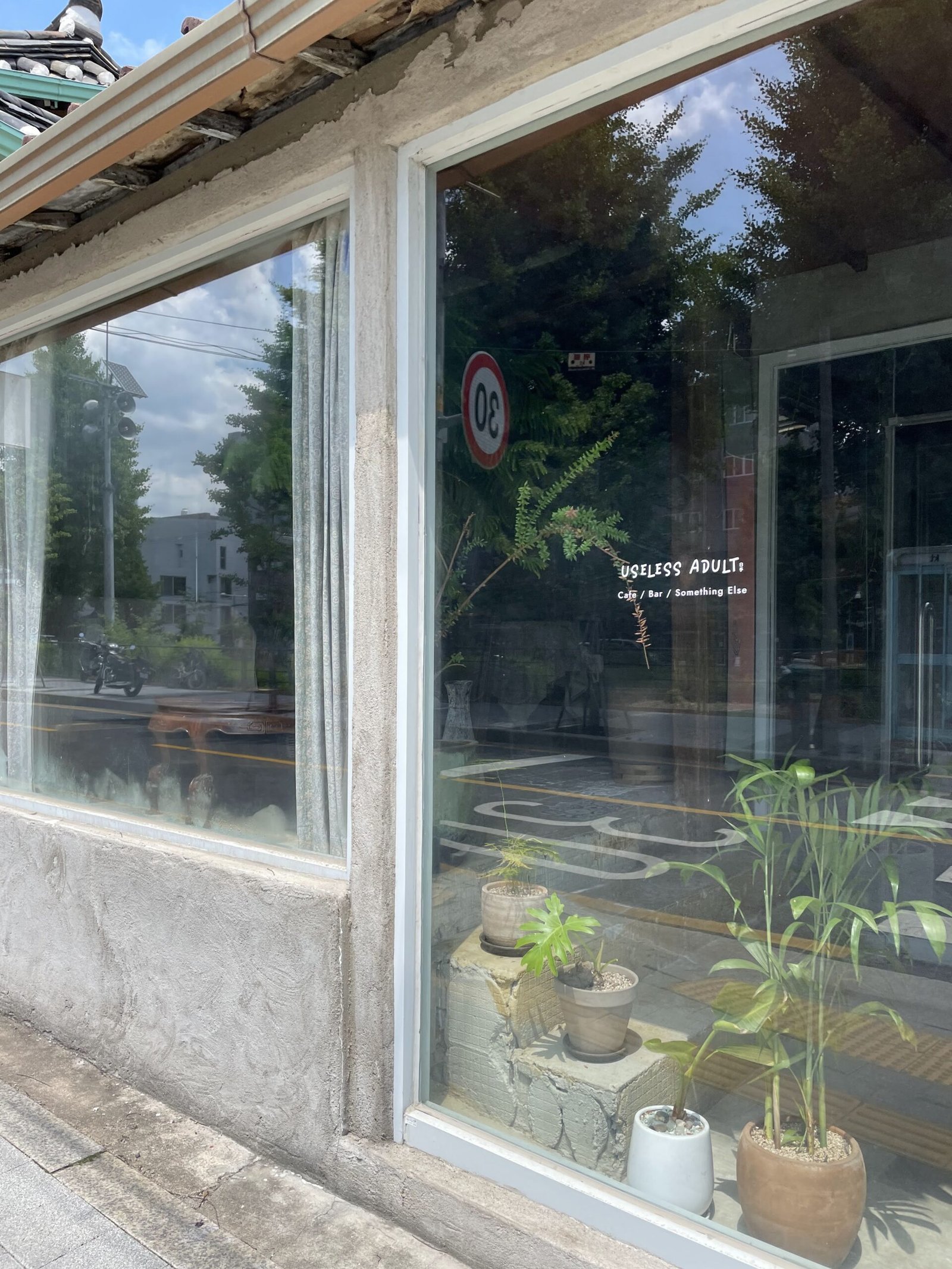
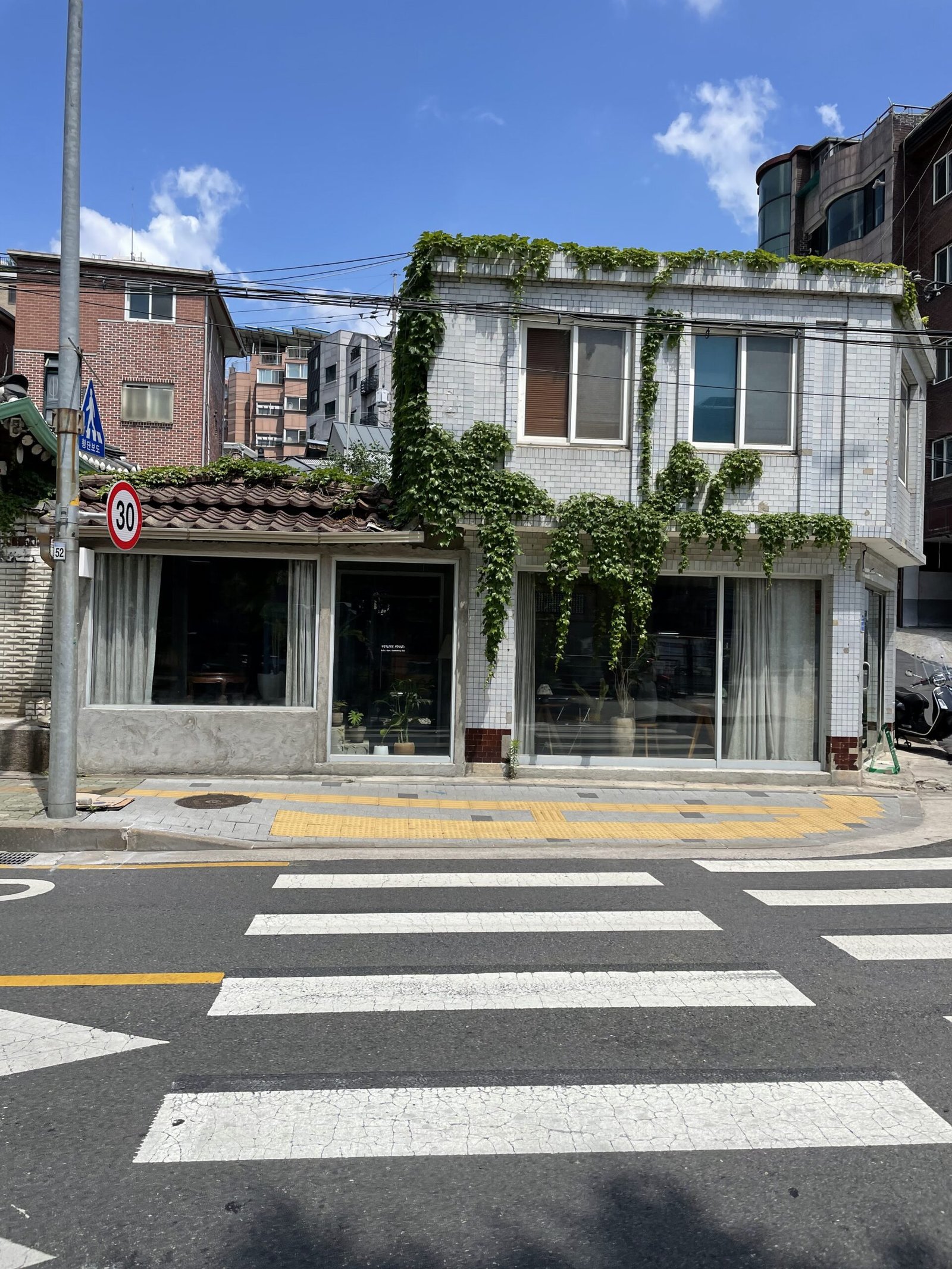
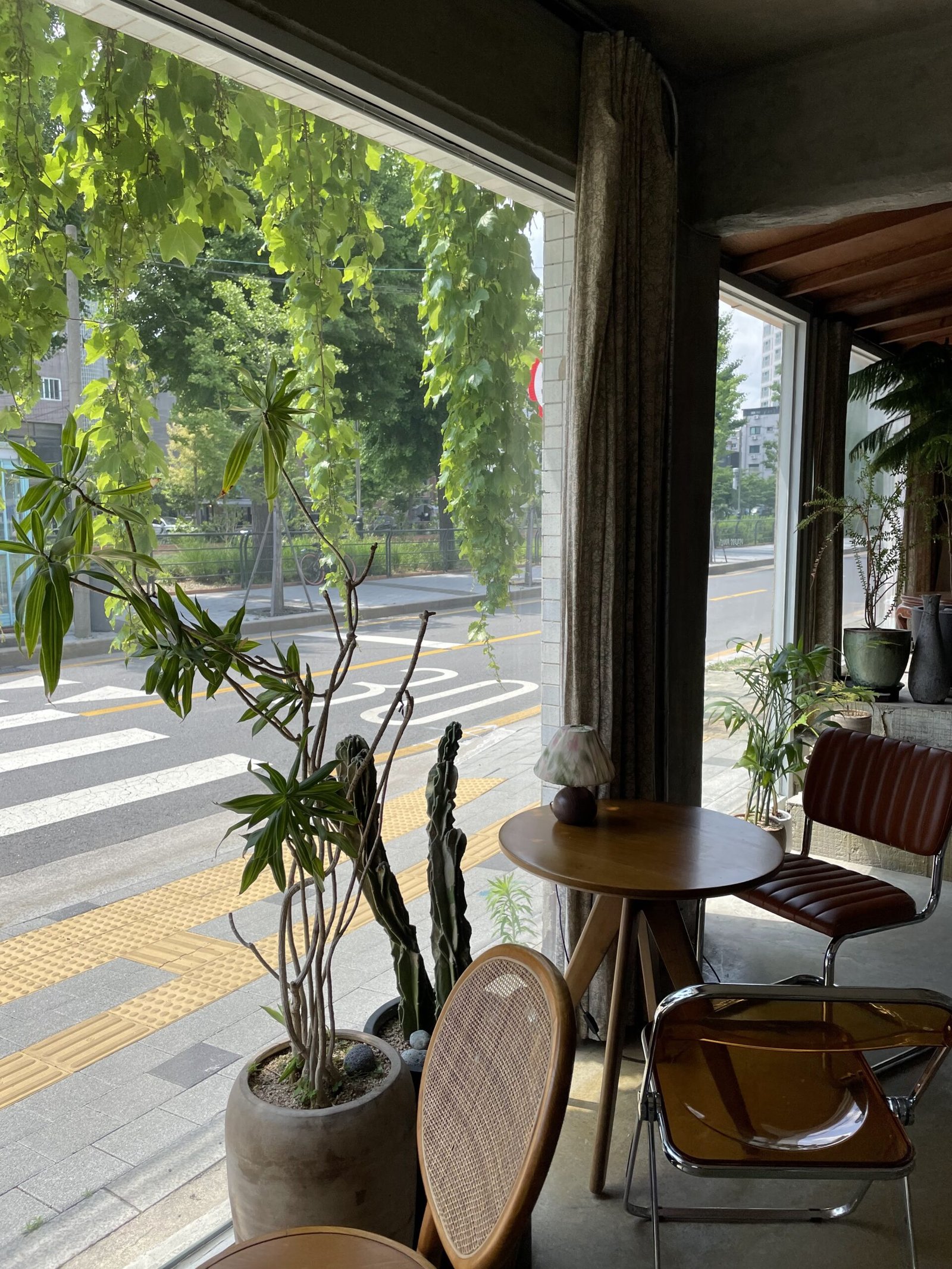
On a quiet corner in Bomun-dong, a white-tiled building sits behind an unremarkable facade — ivy creeping up the walls, a few potted plants in the window, the kind of exterior that offers nothing away. The only legible hint is small white text on the glass: USELESS ADULT. Cafe / Bar / Something Else.
The “something else” earns its billing.
The Concept of Obsolescence
The name isn’t accidental modesty. Useless Adult operates from a stated premise: that objects dismissed as outdated, of no use to anyone anymore, carry within them a residual life — as atmosphere, as art, as history. The space is assembled from such things. Old furniture, antique cabinets, discarded paintings, paper lanterns — nothing here is new, and nothing here is purposeless. What looks like clutter on first glance reveals itself, slowly, as curation.
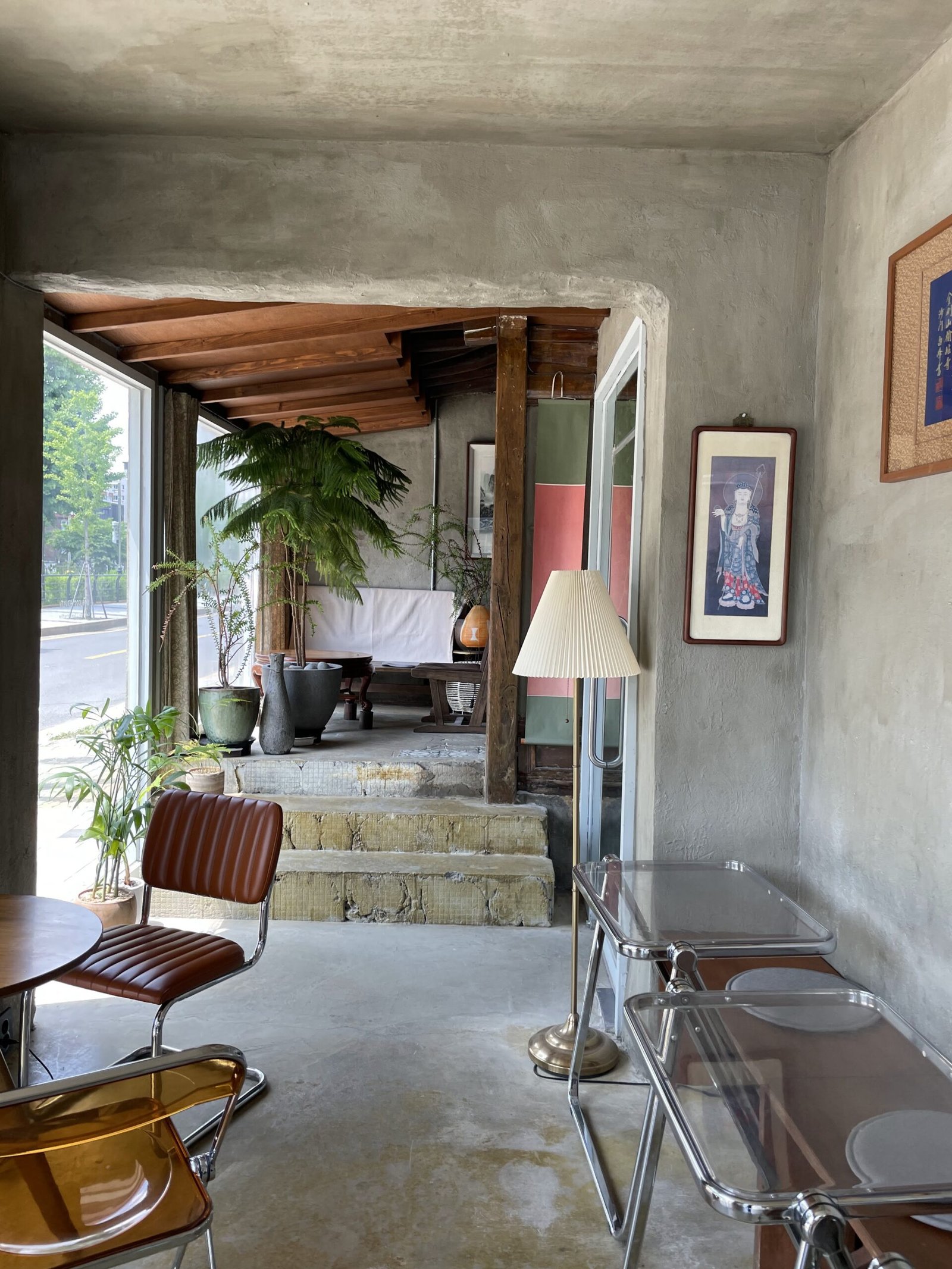
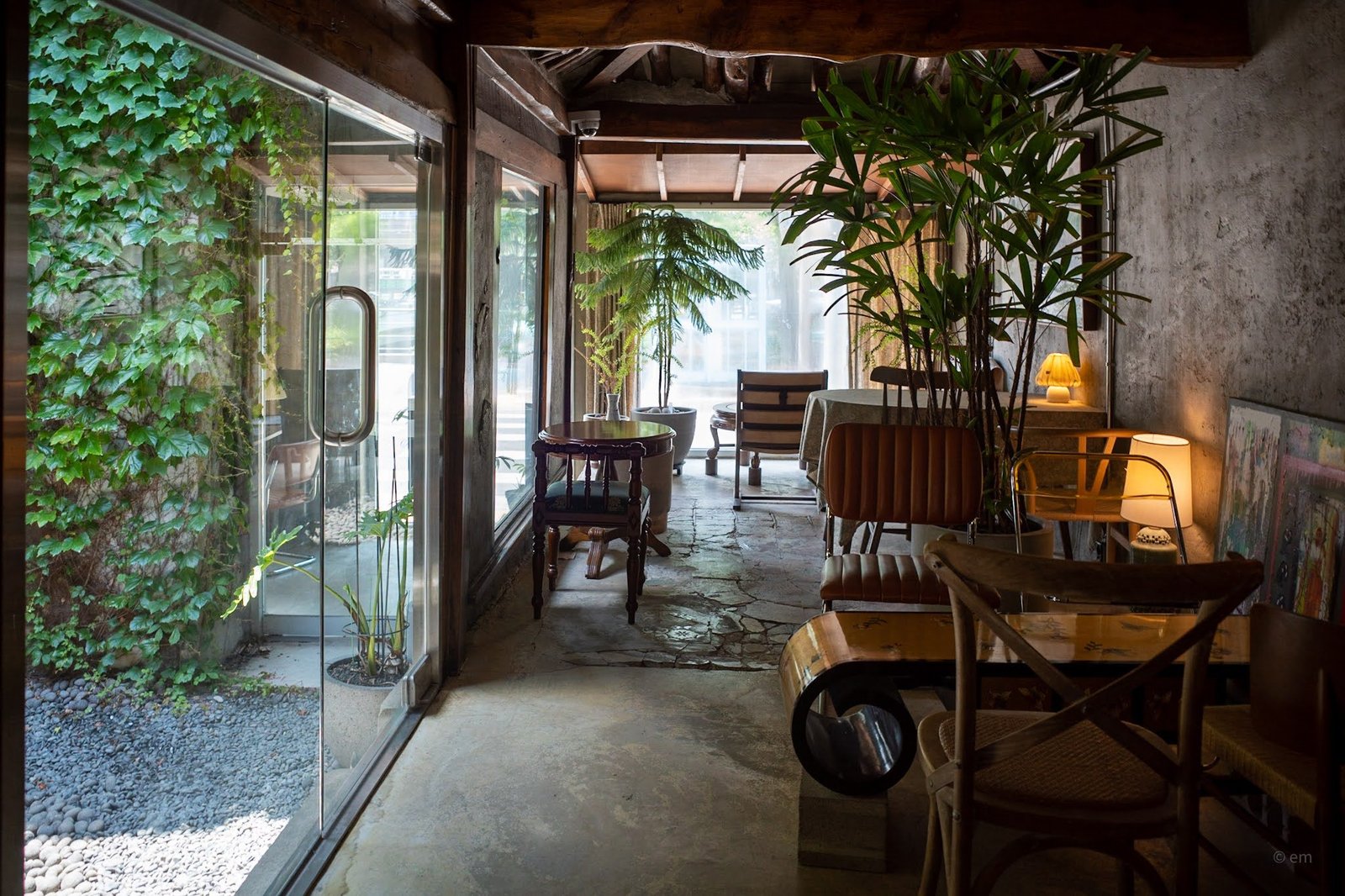
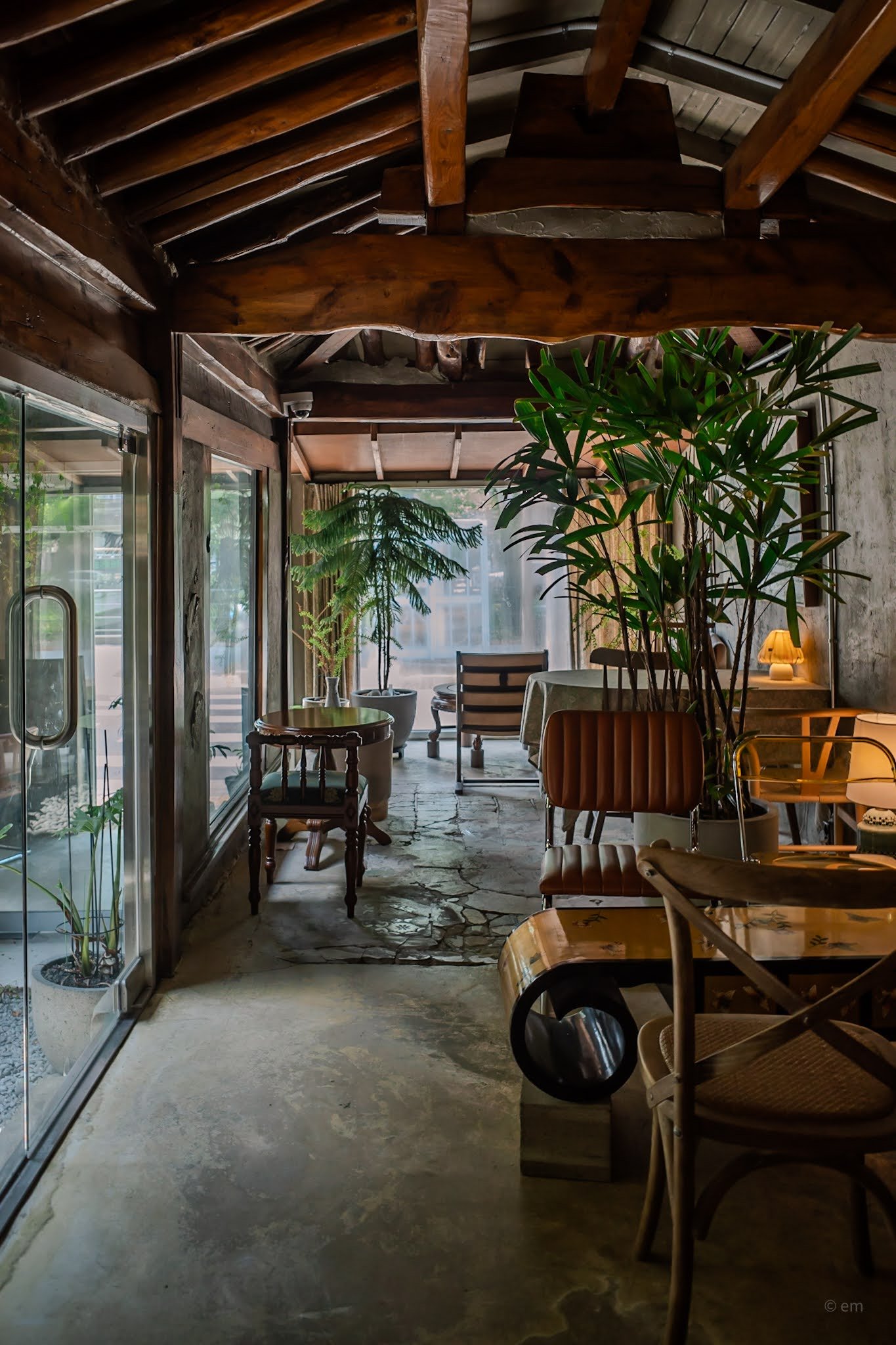
The building itself participates in this logic. The café occupies an older structure in Seongbuk-gu’s Bomun-dong neighbourhood, near the Seongbukcheon stream, where the bones of the space — exposed wooden ceiling beams, unfinished plaster walls, flagstone flooring — have been left intact rather than smoothed over. Glass walls enclose a courtyard that would otherwise be open air. The result is something halfway between a hanok interior and a greenhouse, warm and slightly uncertain about its own boundaries.
Inside
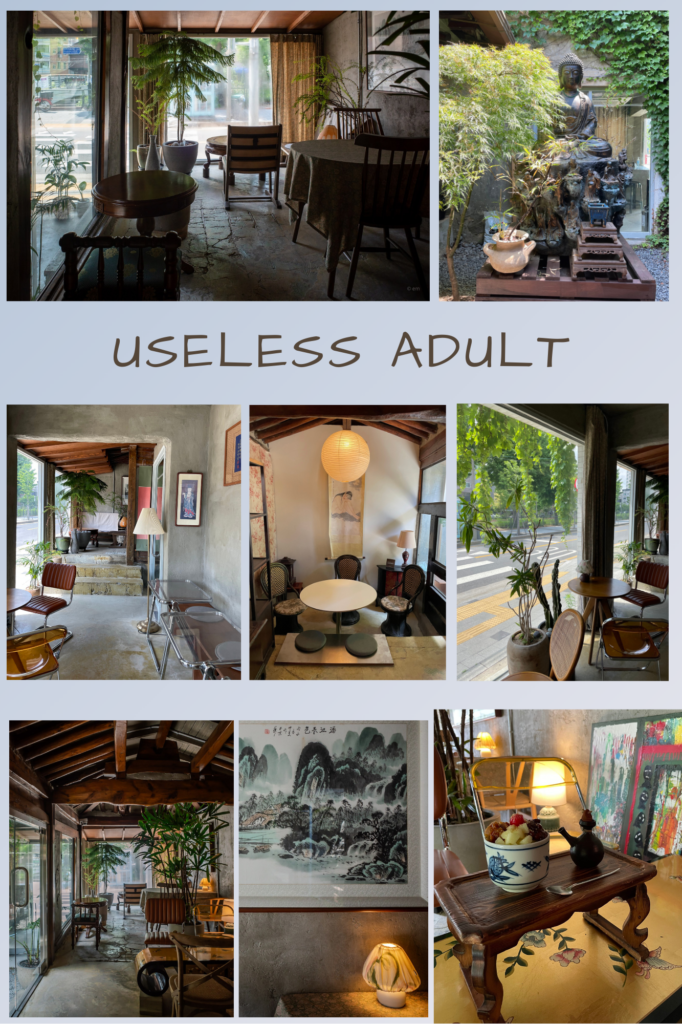
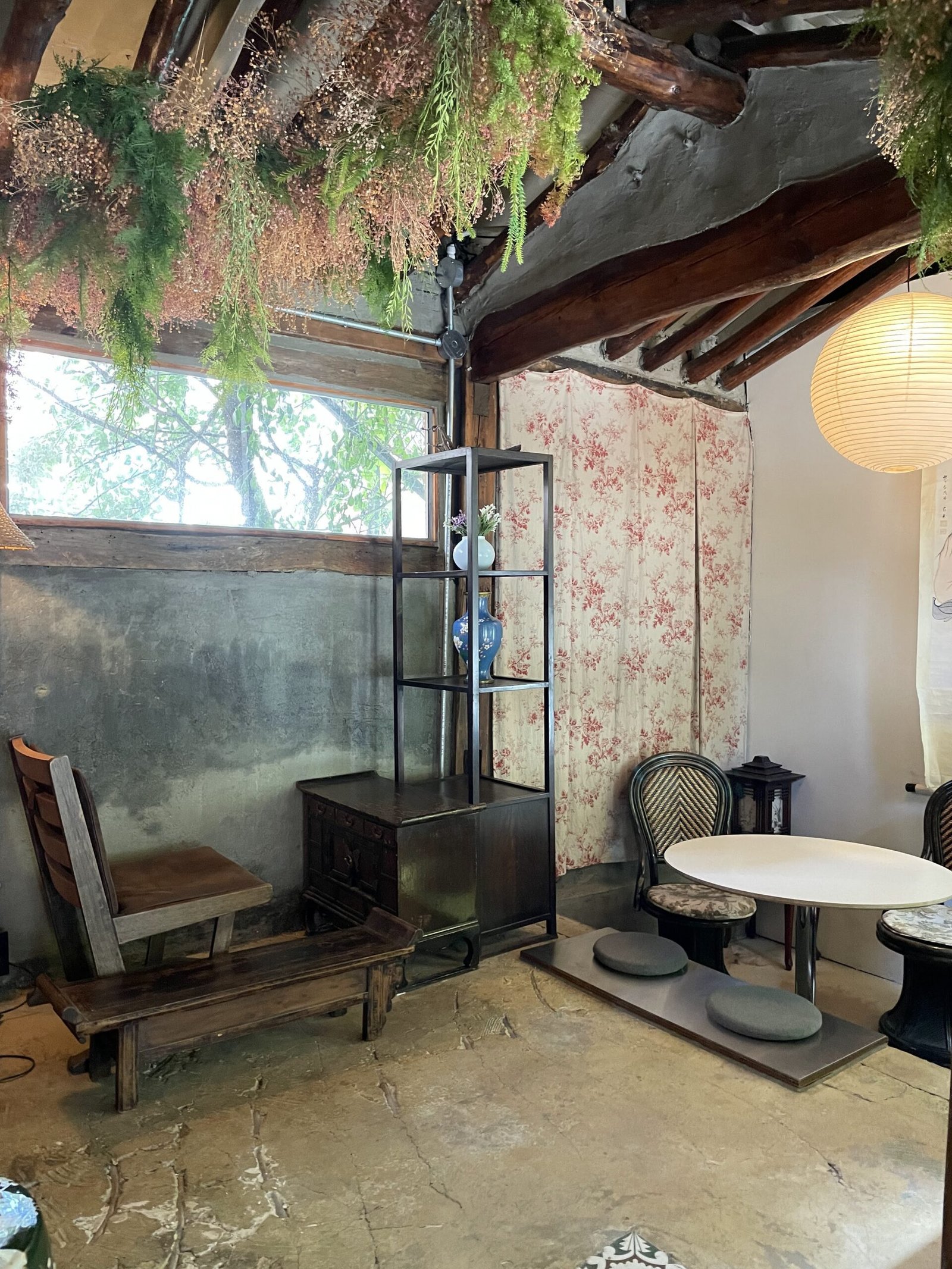
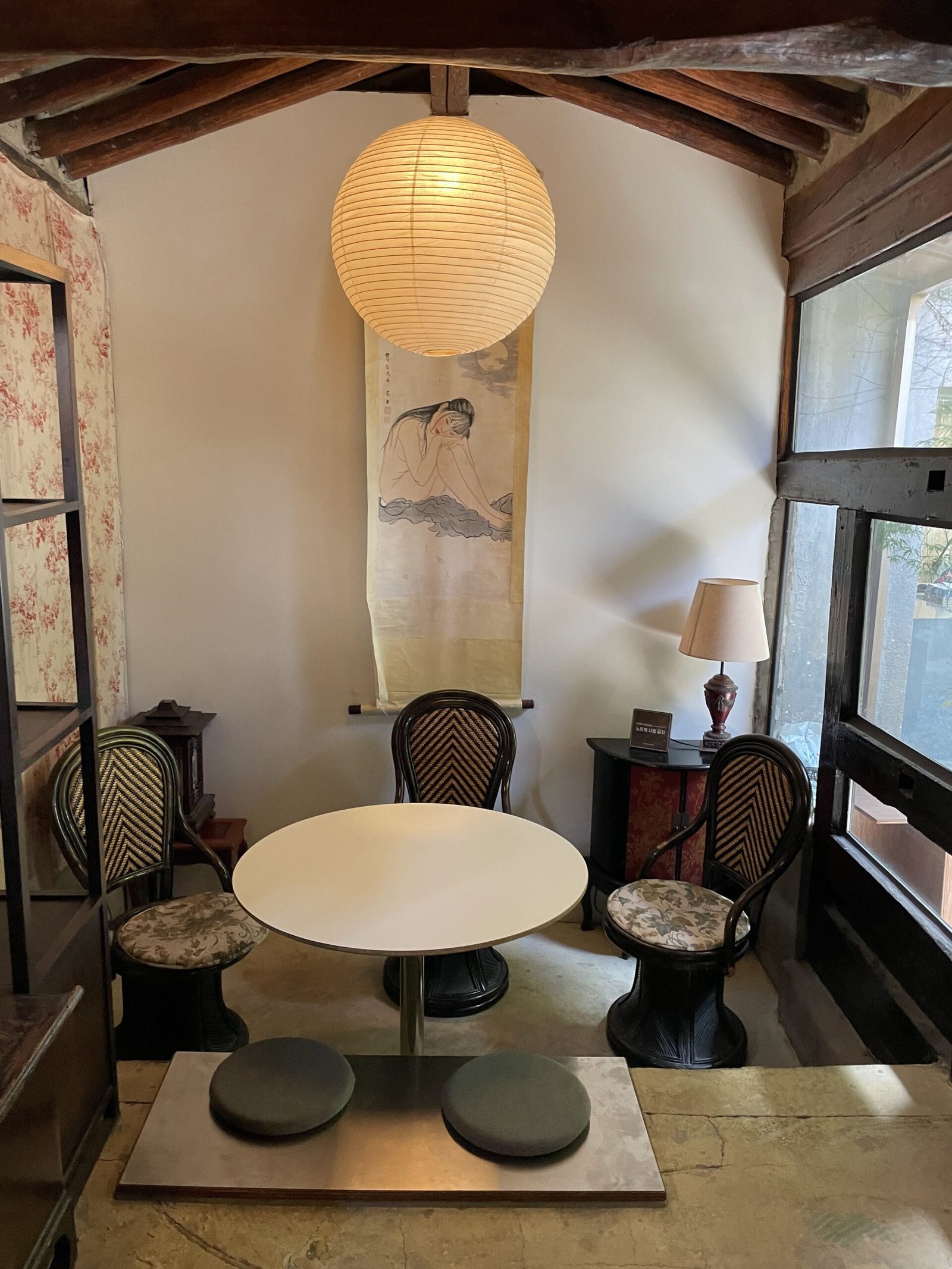
The interior is divided across levels and zones, each with its own accumulation of things. In one corner, a round white table sits on a low platform, surrounded by rattan chairs with chevron-woven backs and floral cushions; from the ceiling above it hangs a paper lantern the size of a beach ball, and behind it, a hanging scroll bearing an ink painting of a bathing woman in the classical East Asian mode. Toile de jouy curtains run floor to ceiling beside it — French pastoral pattern in red on ivory, beside Korean ink brushwork.
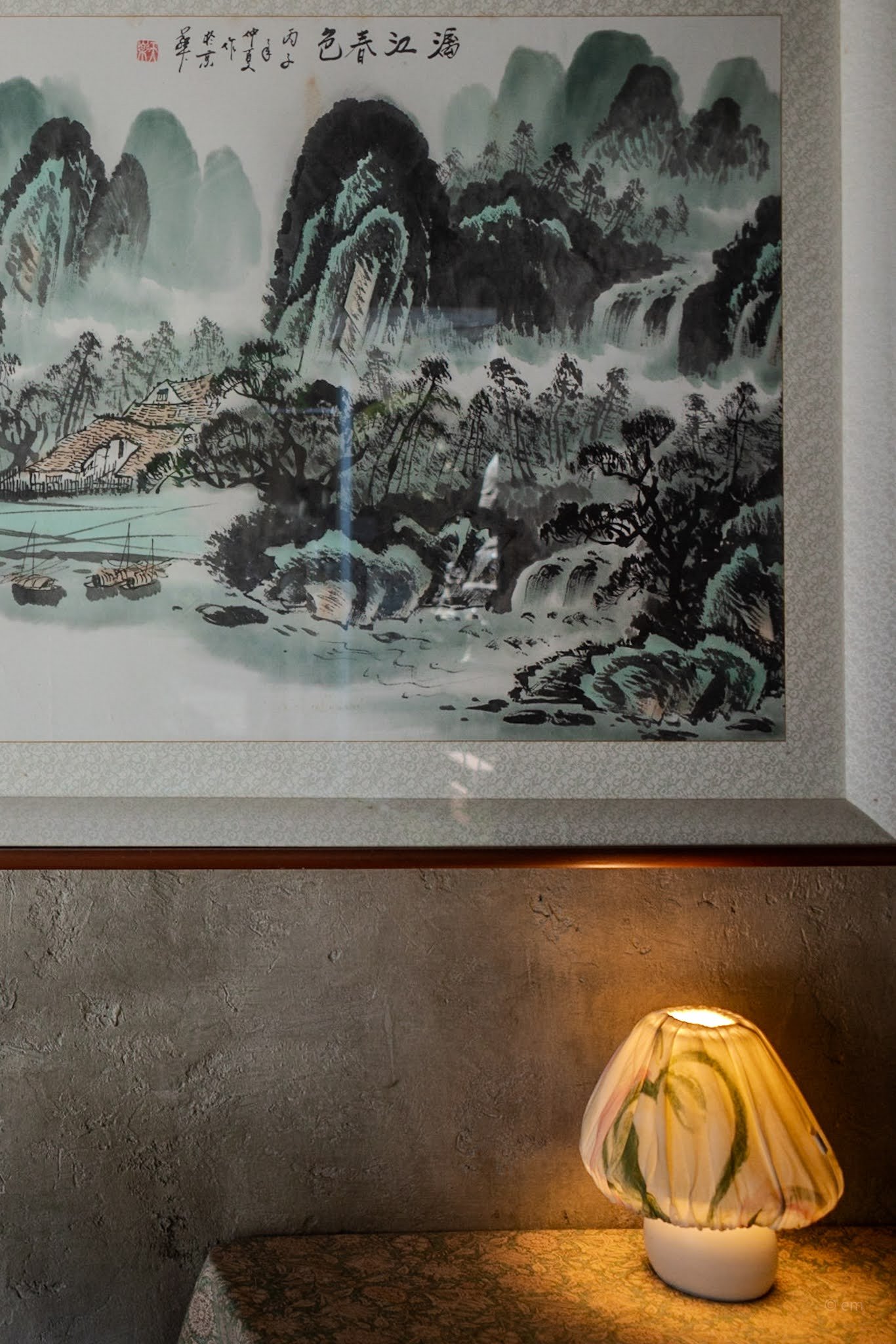
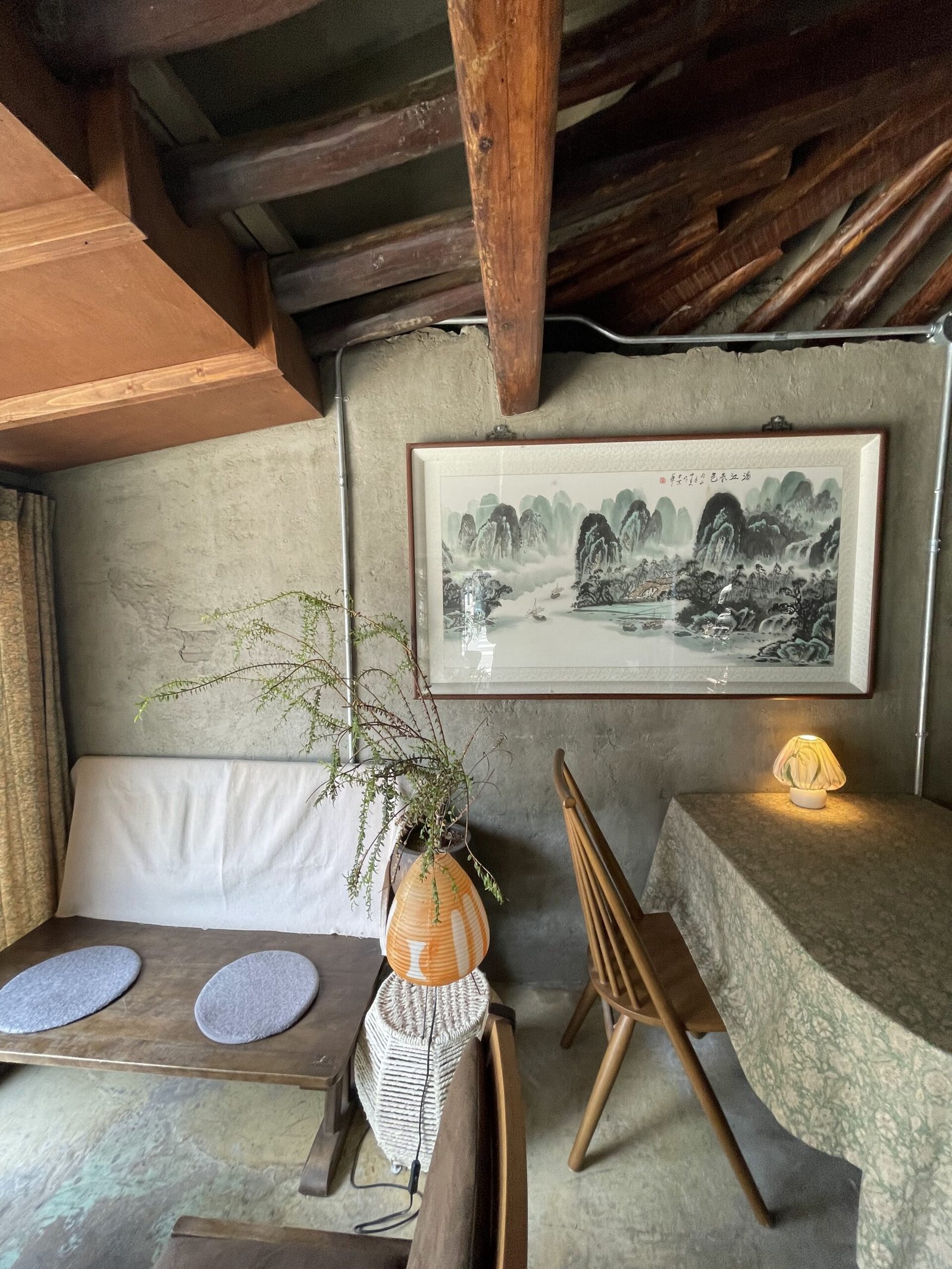
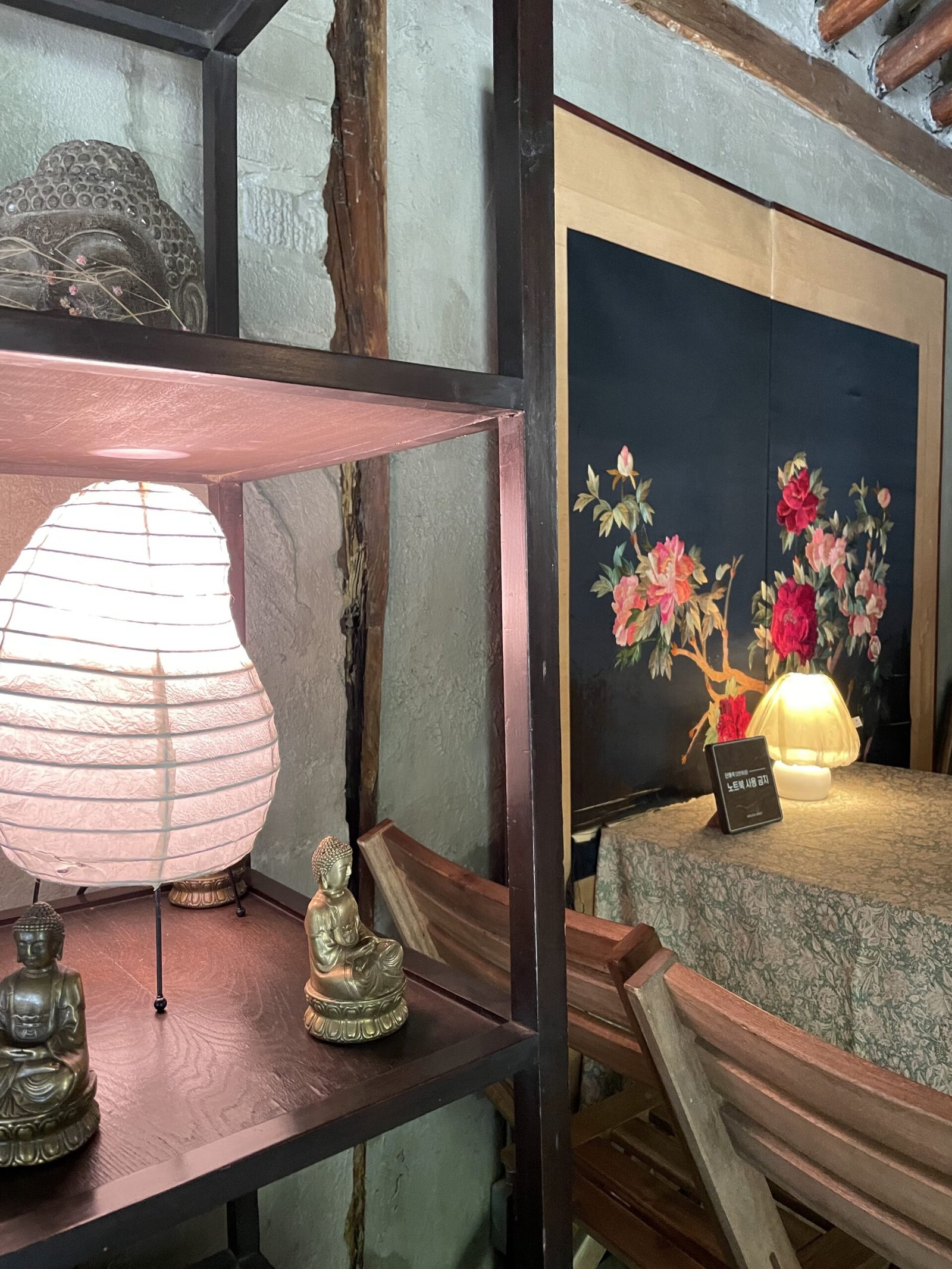
Elsewhere, a room with grey textured plaster walls holds a daybed, a low wooden table, and a large framed Chinese ink landscape — fog-wrapped mountains, fishing boats, falling water — hung under exposed rafters and lit from below by a small ceramic mushroom lamp. Dried botanical installations cascade from the beams in the main space: ferns, pink flowers, sprigs that hang so far down they graze shoulder height. A metal shelving unit stacked on an antique lacquered cabinet holds blue-and-white porcelain vases and bunches of small flowers. On another shelf, a stone Buddha head sits beside a small brass seated Buddha and a glowing hanji paper lamp, the whole arrangement looking out through a wooden latticed partition at a peony screen — dark navy ground, red and pink flowers in full bloom.
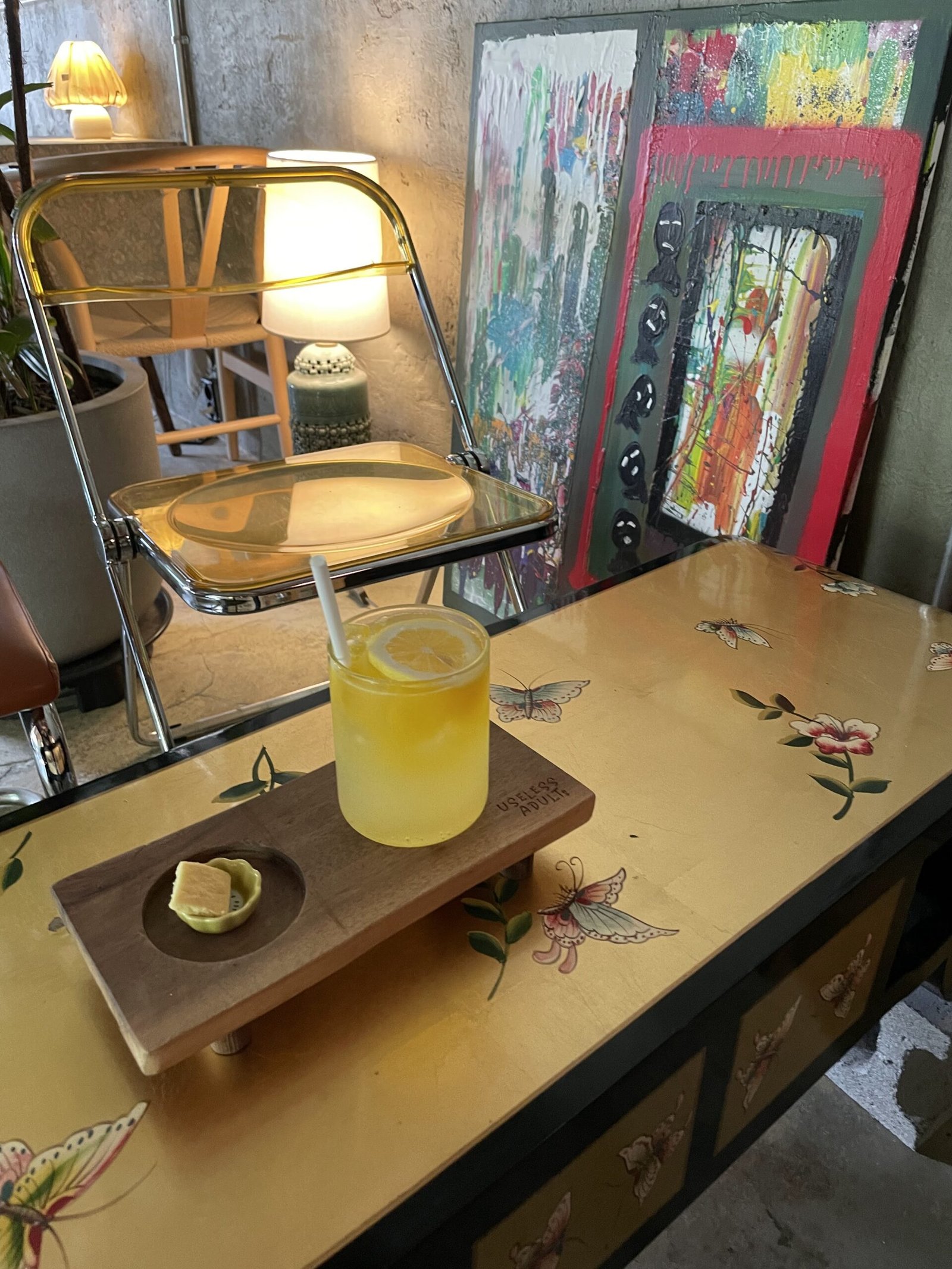
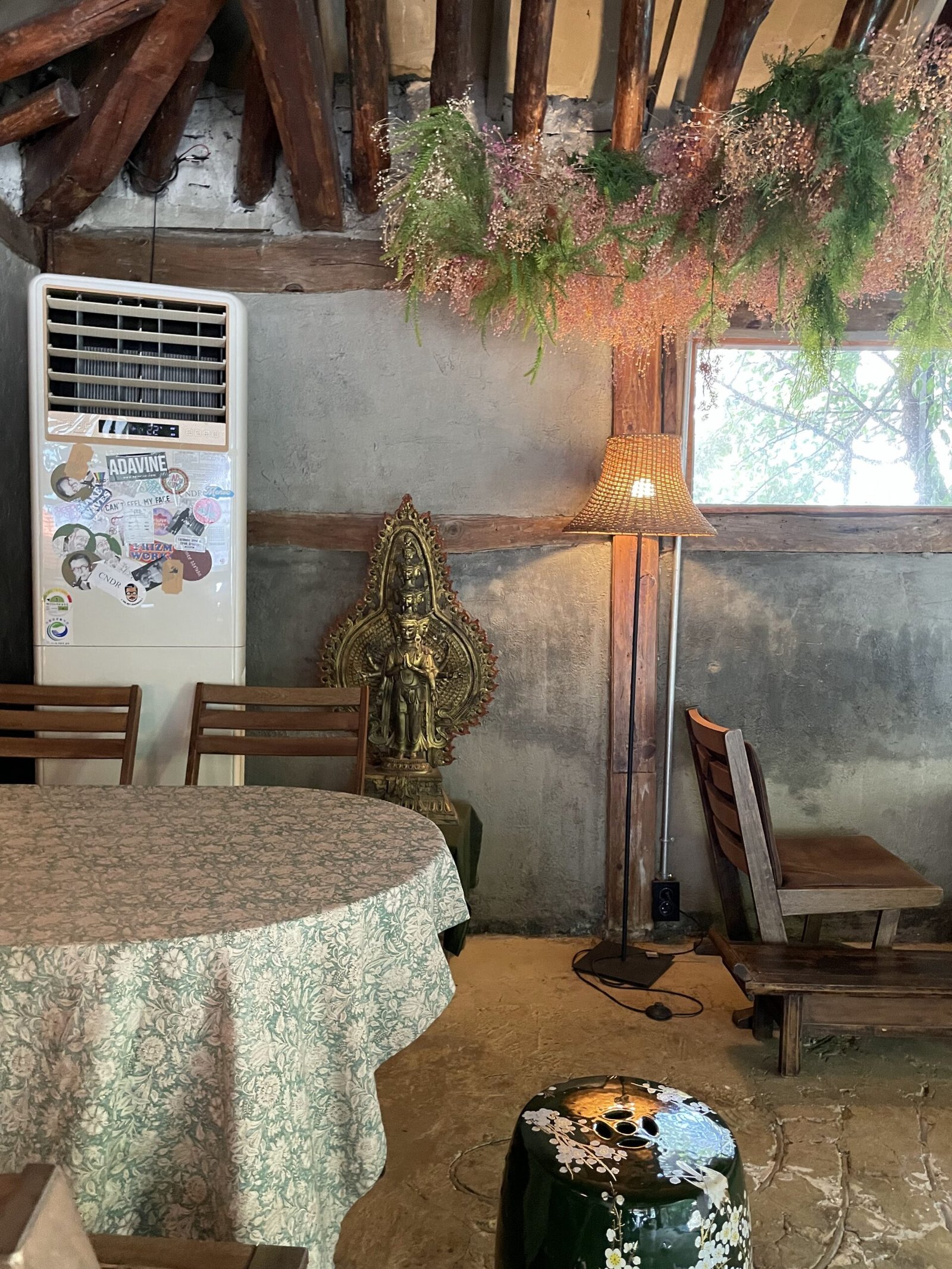
The yellow-painted table near the entrance, covered in painted moths and florals, is where amber-tinted chrome folding chairs — Italian pop design, circa 1970-something — end up positioned beside stacked abstract canvases leaning against the wall. The AC unit in one corner is covered in stickers. Nobody has tidied this away.
The Courtyard
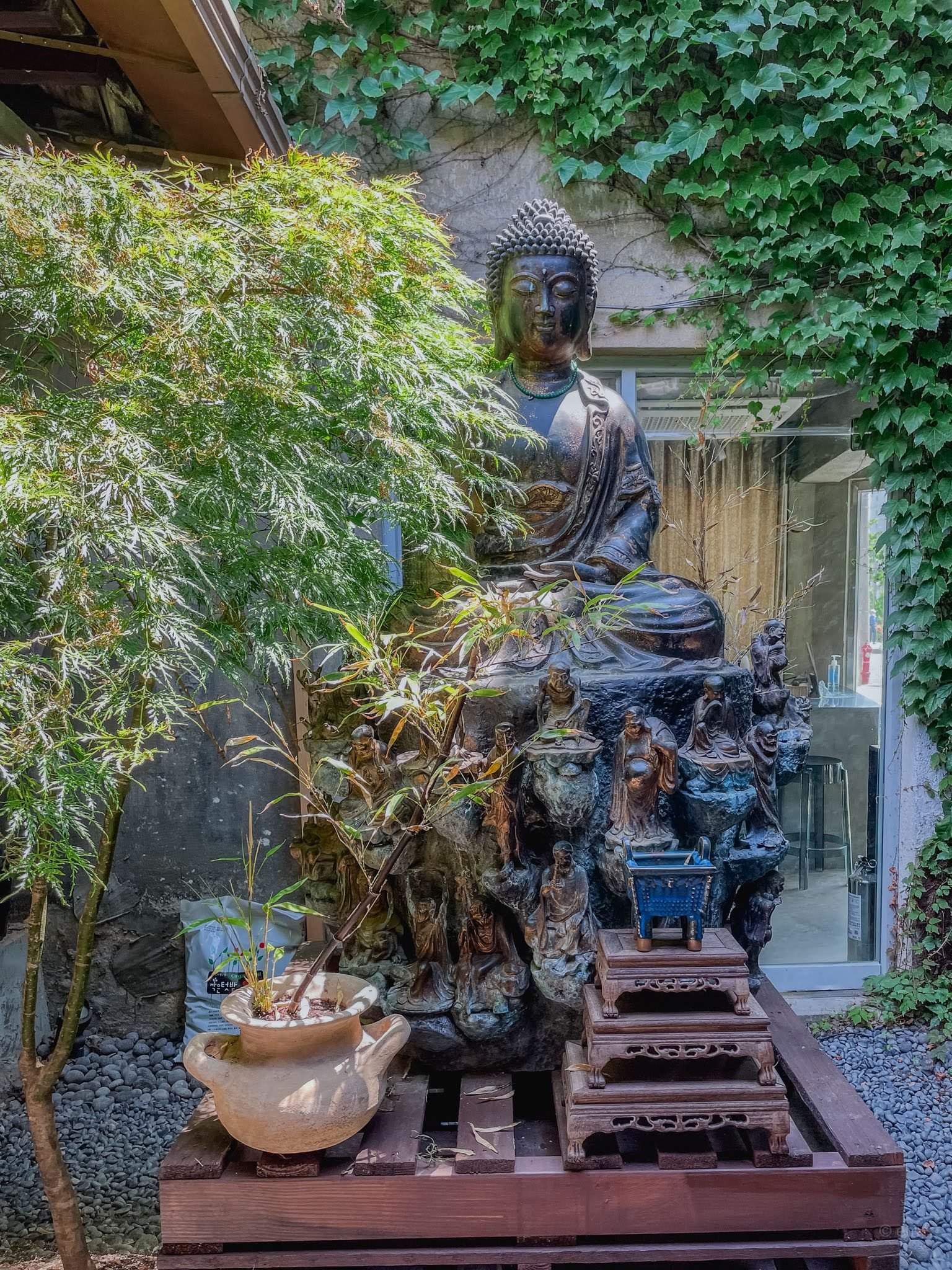
Through the glass wall to one side lies the courtyard: a small rectangular space paved in smooth grey pebbles, with a Japanese maple growing at the edge and ivy covering every exposed surface of the surrounding walls. At the centre of this garden, on a wooden platform, sits a large bronze Buddha — seated in meditation, life-sized or close to it, surrounded by smaller attendant figures carved from the same material. It is not an installation or a prop. It is simply there, looking out through the glass at the amber-lit interior beyond.
Inside, a golden Avalokitesvara figure stands against the plaster wall — the bodhisattva in elaborate aureole, the kind of object that in another context would occupy a temple alcove. A framed Guanyin print hangs on a second wall. The sacred imagery accumulates across the space without announcement or explanation. No sign asks visitors to treat it with particular reverence. The AC unit nearby is still covered in stickers.
On the Menu
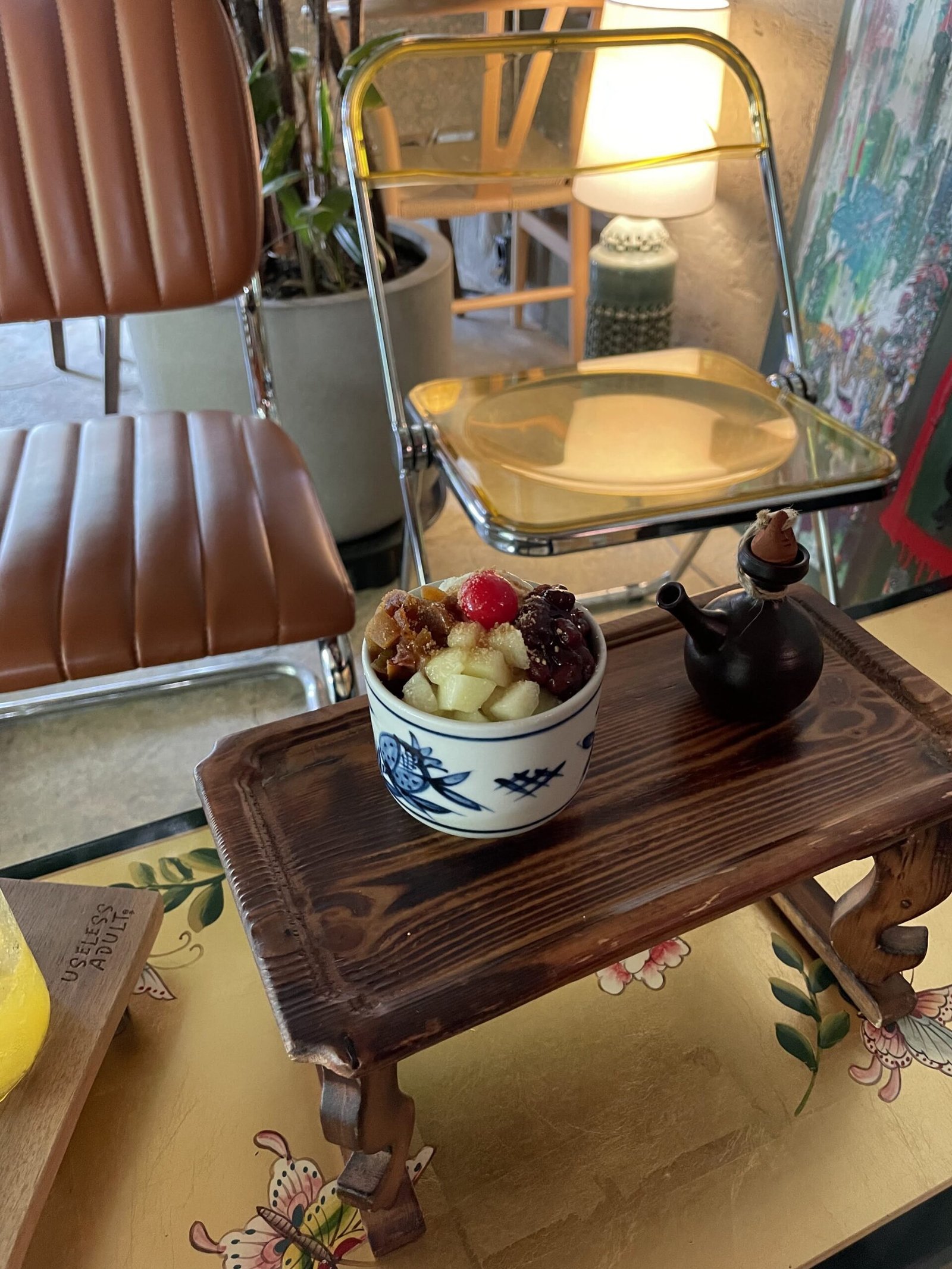
The kitchen’s reference point is also East Asian, but Japanese rather than Korean. The anmitsu — a traditional Japanese dessert of agar jelly, red beans, and assorted toppings including fruit and a glacé cherry, served in a blue-and-white porcelain bowl on a miniature wooden dabo table stand — arrived with a small dark ceramic bottle of kuromitsu syrup on the side. It is light and cold and slightly austere, not sweet in the way bingsu is sweet. The lemon drink came on a branded wooden serving tray.
Drinks span coffee, hand drip, highball, beer, wine, and absinthe-based cocktails. The range implies that Useless Adult genuinely means the “Bar / Something Else” portion of its window copy, and that the hours running until ten at night are not ornamental.
Useless Adult 25, Bomun-ro 18-gil, Seongbuk-gu, Seoul, 1F (Anam-dong; approx. 20 min walk from Bomun Station Exit 6) Hours: Daily 12:00 PM – 10:00 PM Phone: +82 70-4085-7003 Instagram: @useless_adult
Things of no use to anyone, arranged until they become something else entirely.