The name on the glass says Sanctuary. What’s inside makes you believe it.
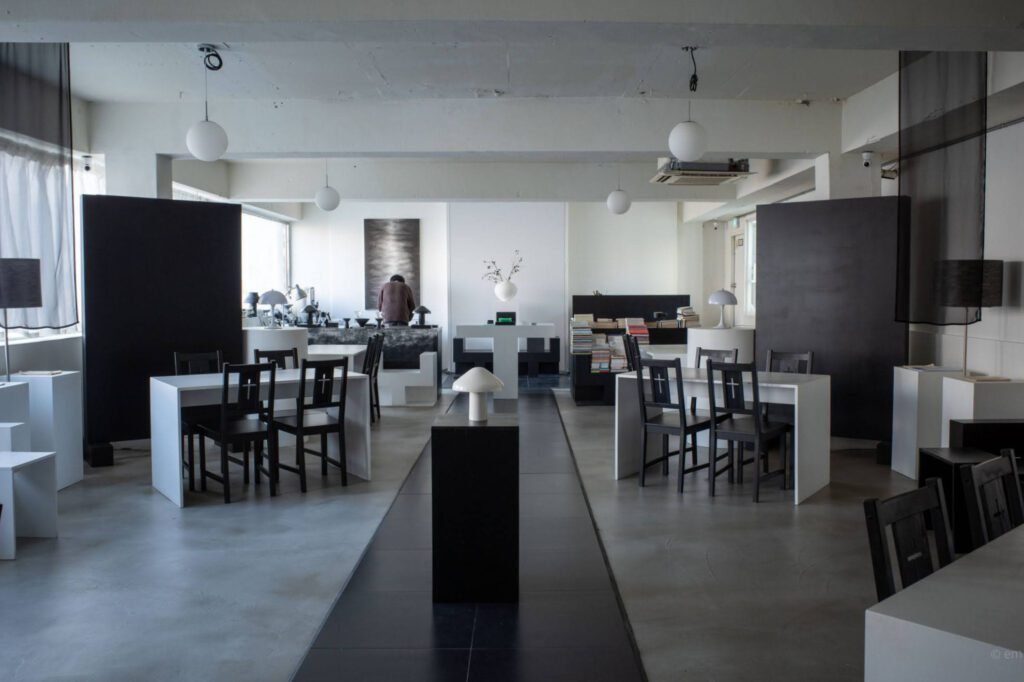
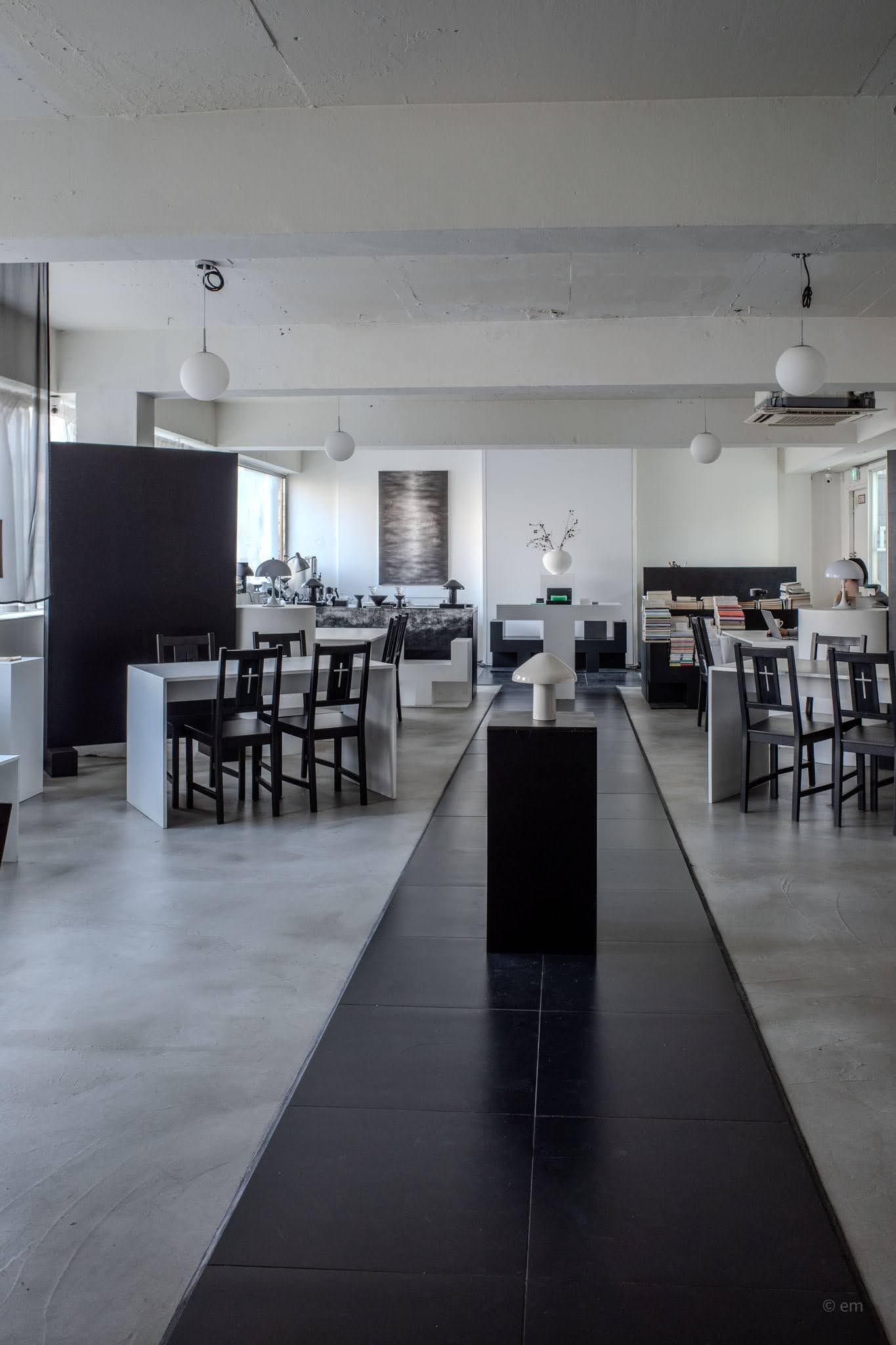
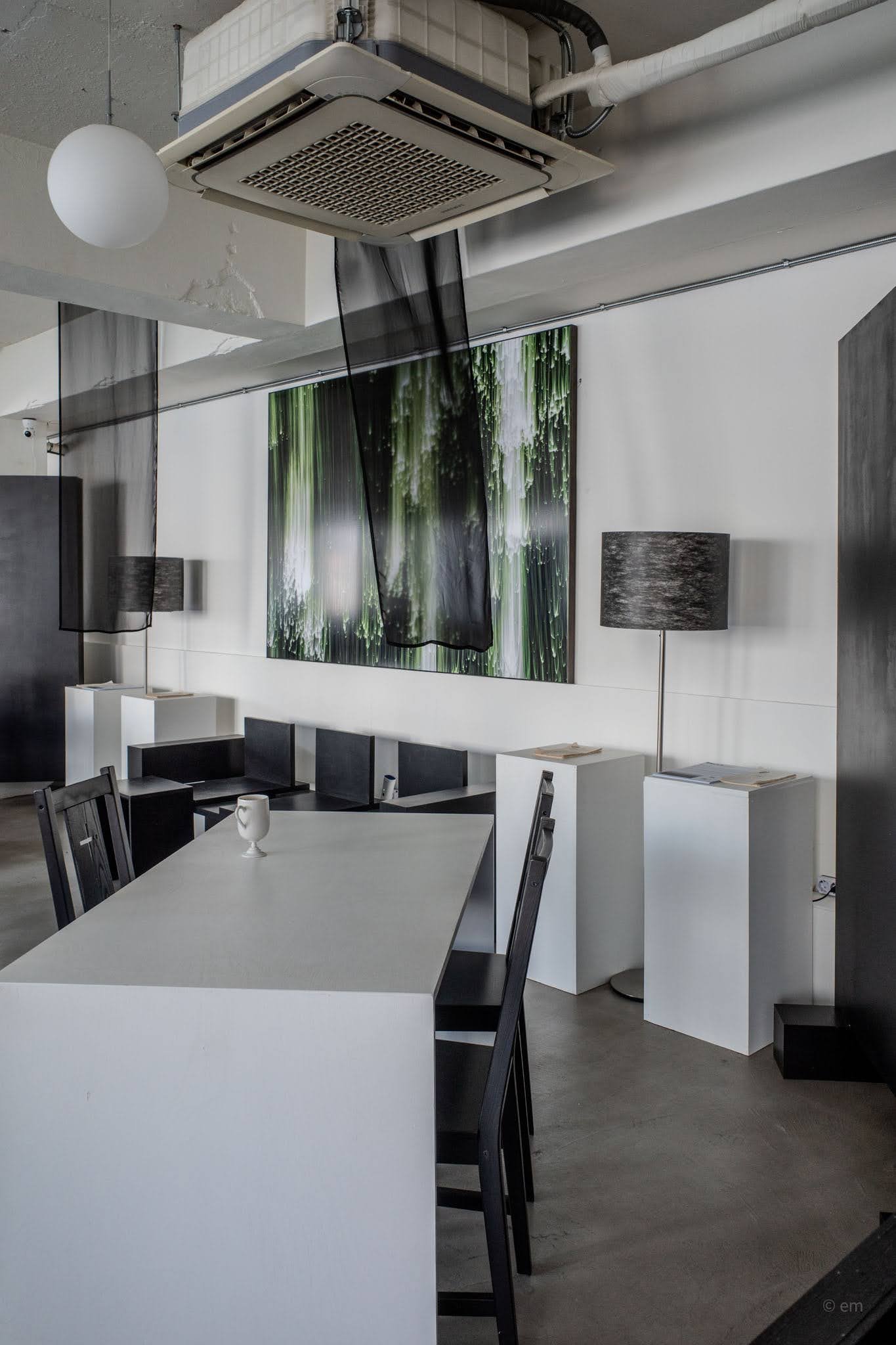
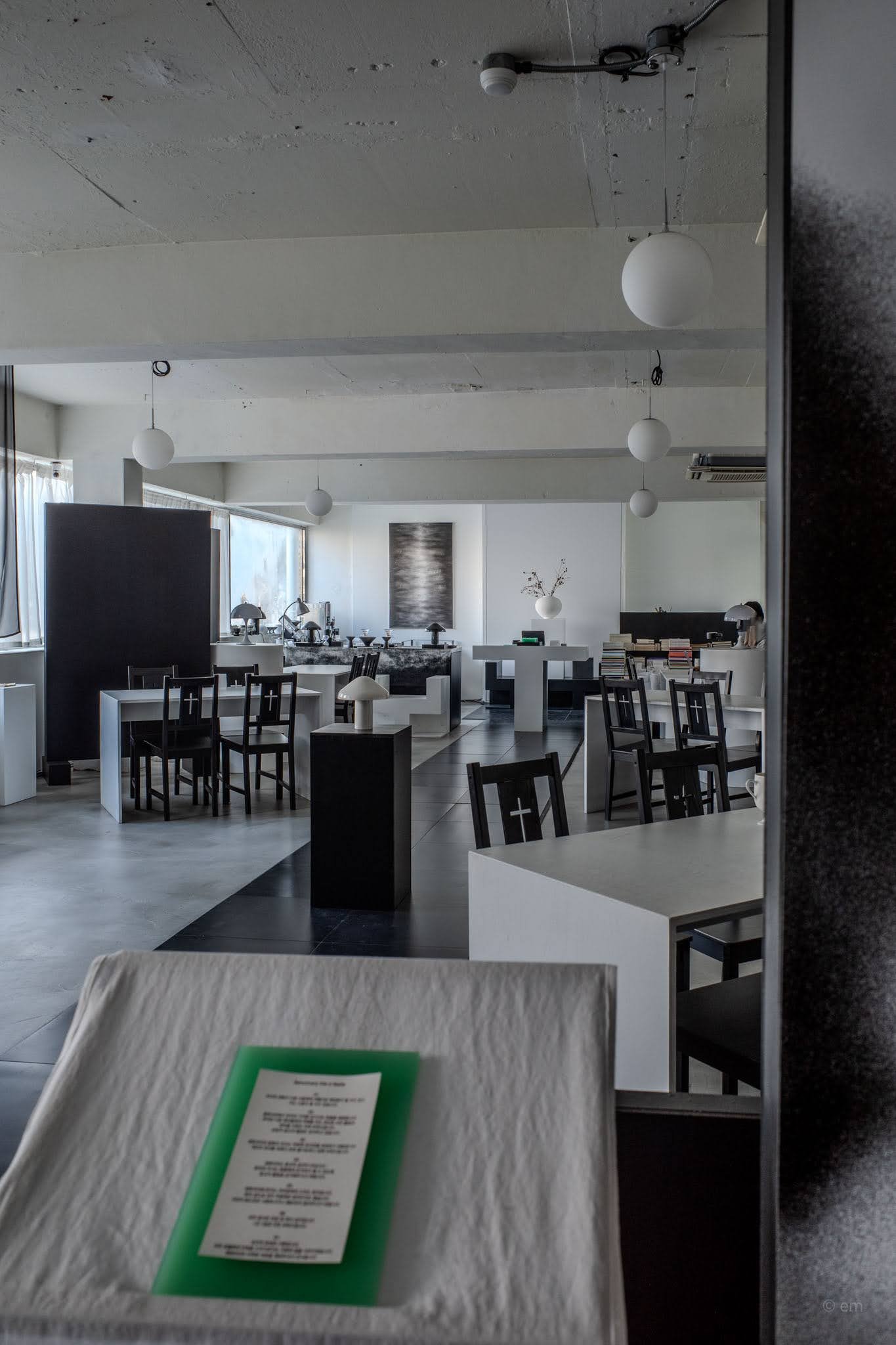
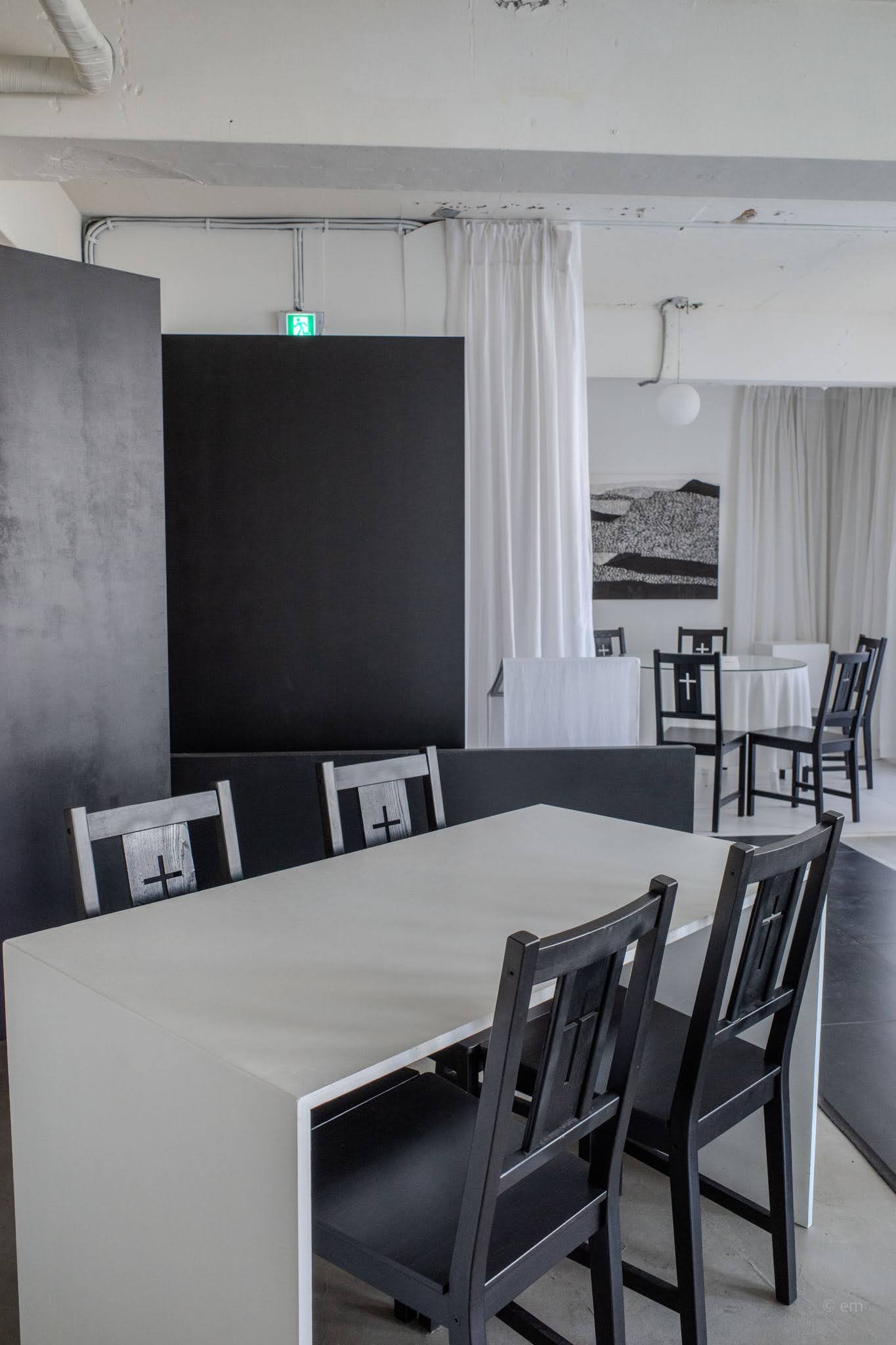
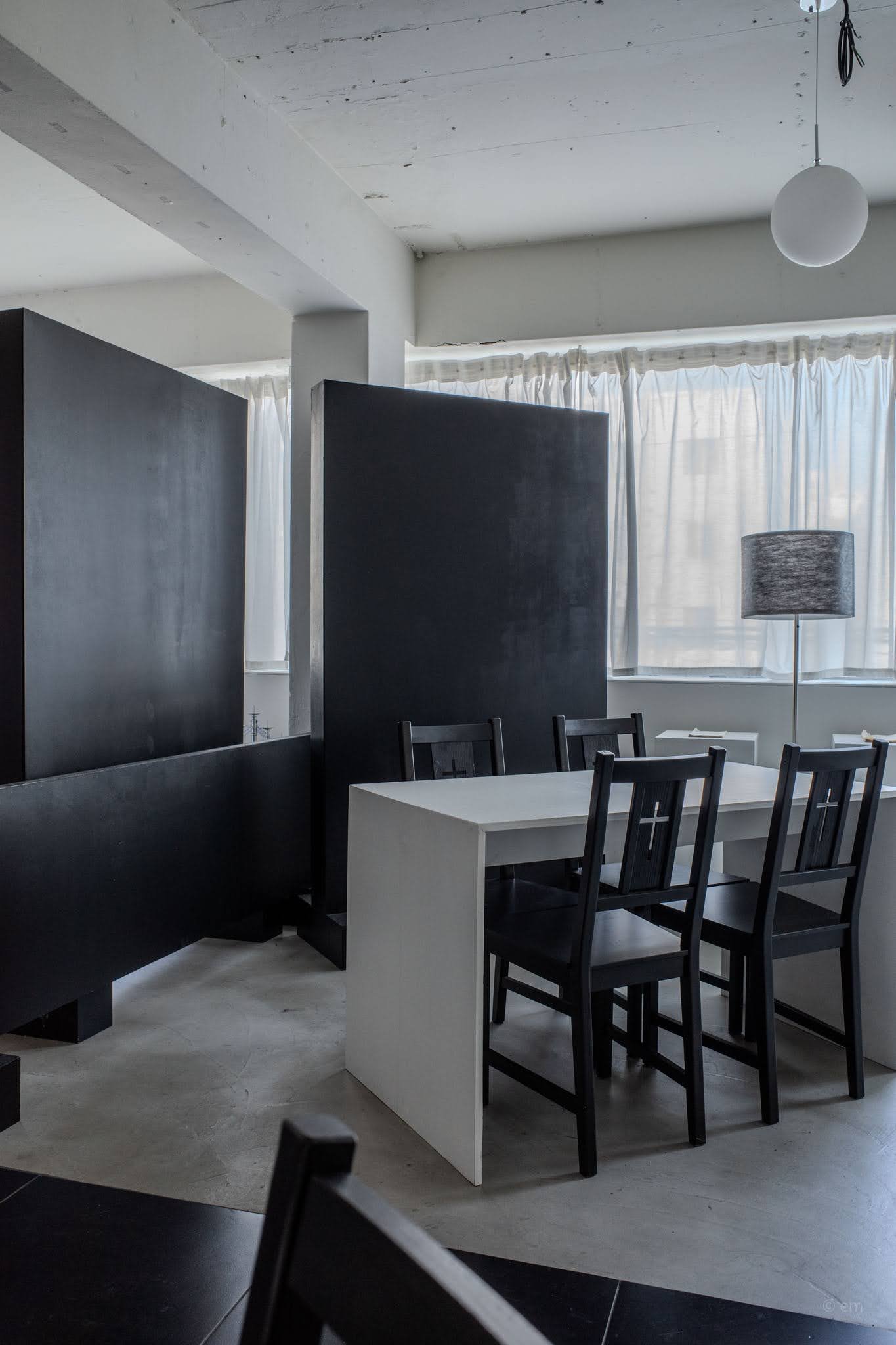
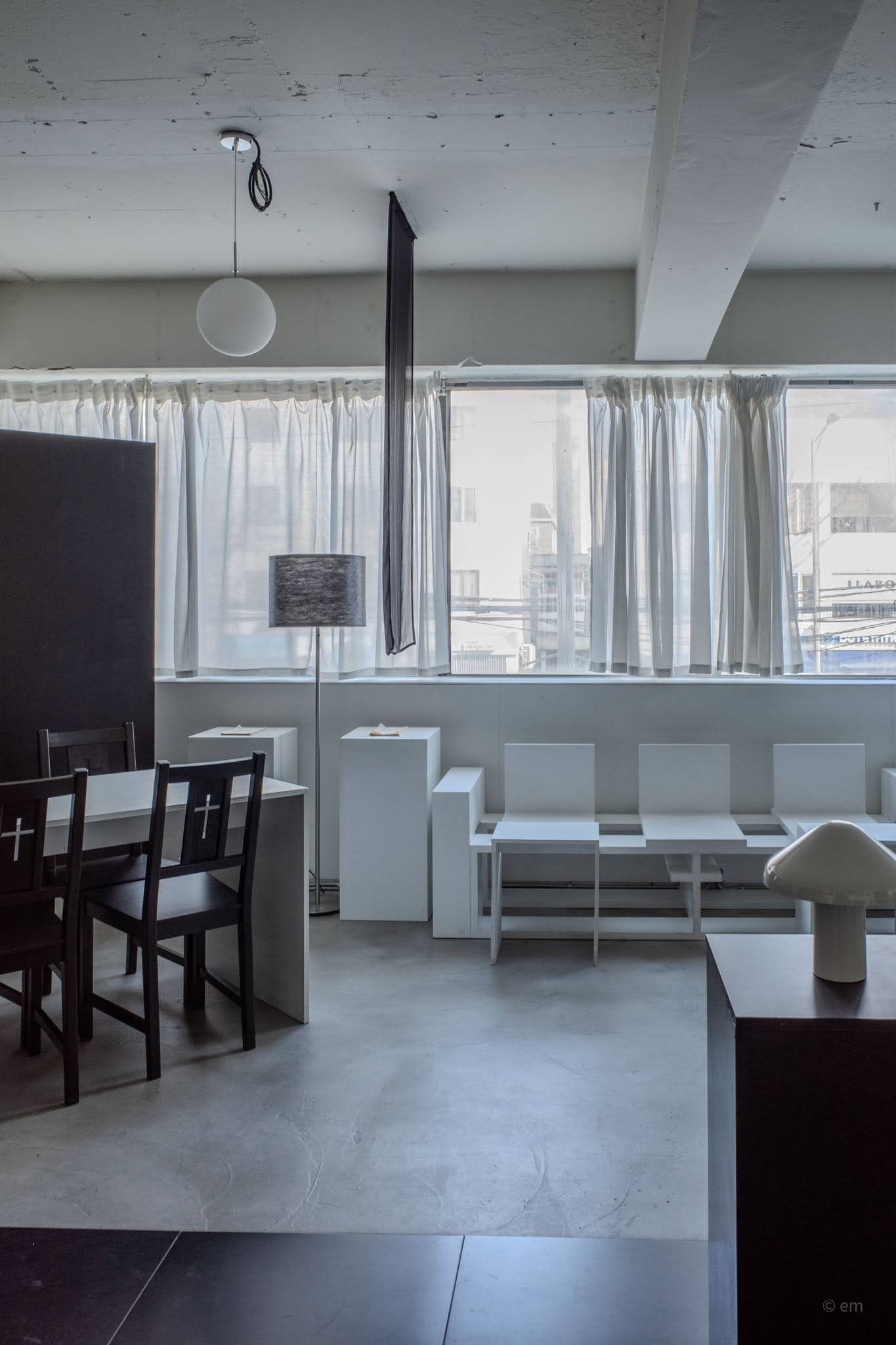
There’s a moment, stepping off the elevator into this second-floor space in Mapo-gu, when the city outside simply stops mattering. The windows are there — large, running the length of the wall — but sheer linen curtains blur whatever is beyond them into soft light. Inside, everything is black and white: concrete ceilings, dark partition panels standing like stone walls, white rectangular tables, and chairs with crosses carved into their backs. A raised black-tiled path runs through the center of the room like a nave, dividing the space into flanking pews. Sanctuary is not a metaphor. It’s the operating principle.
The Space
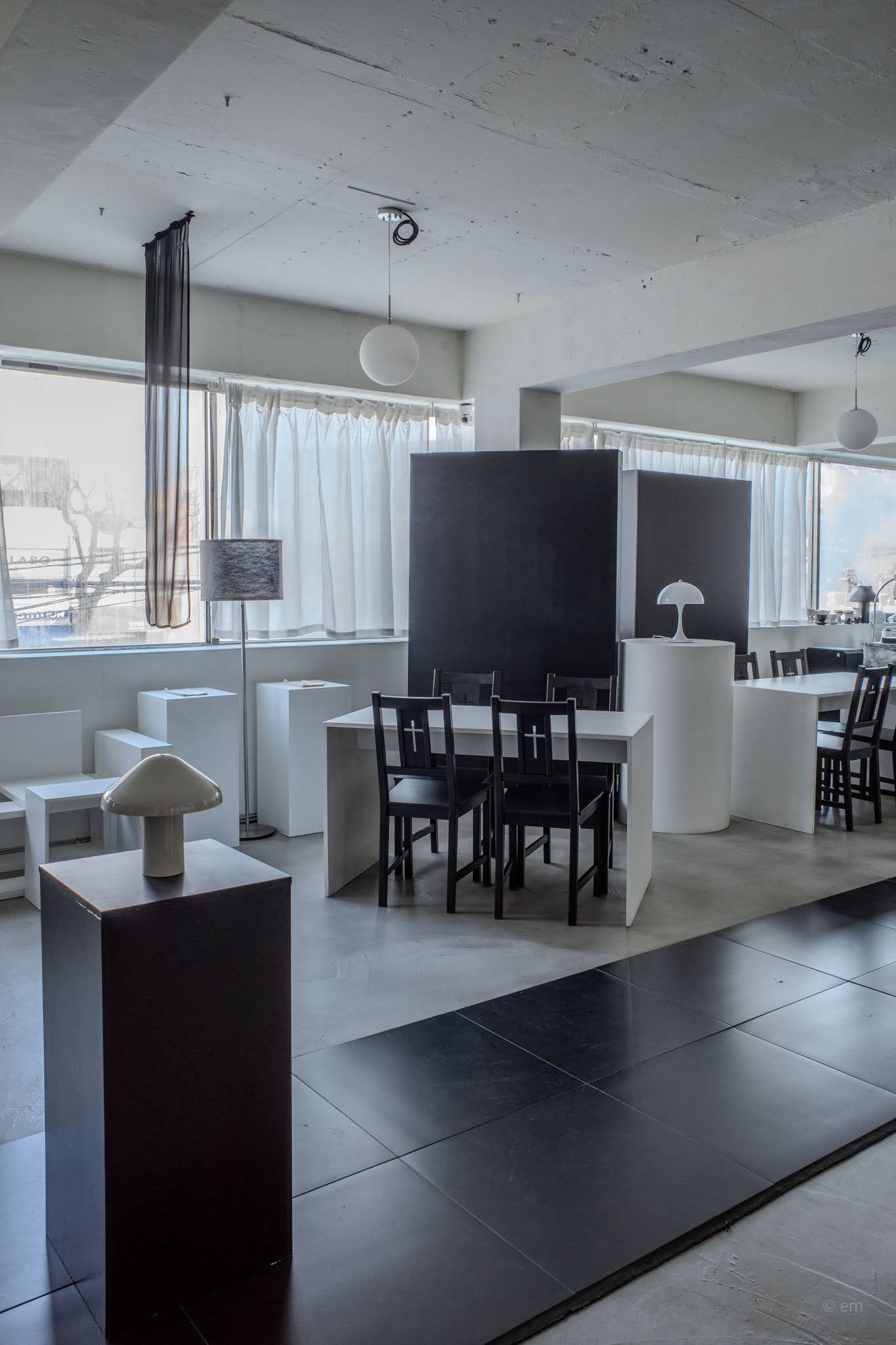
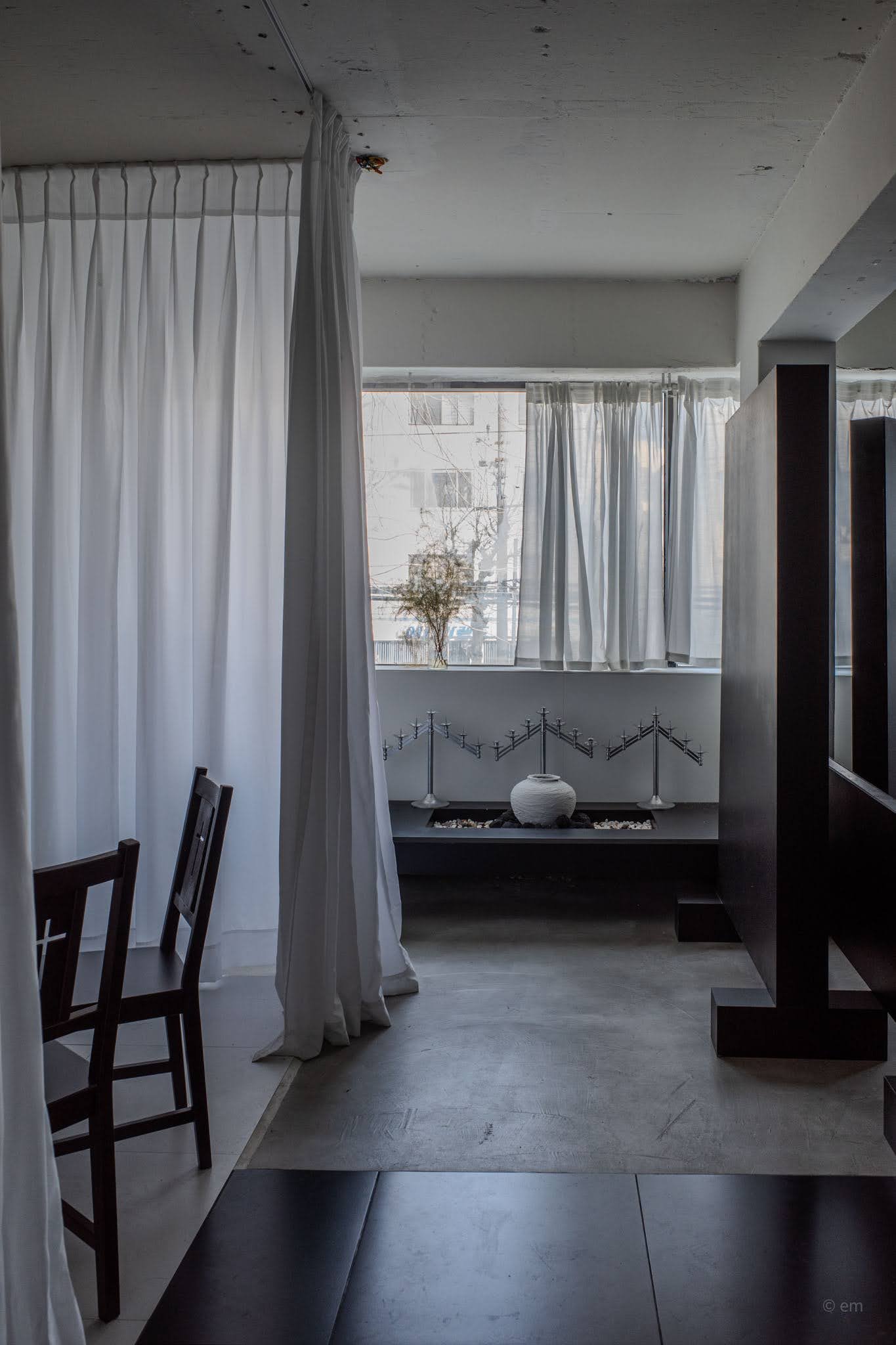
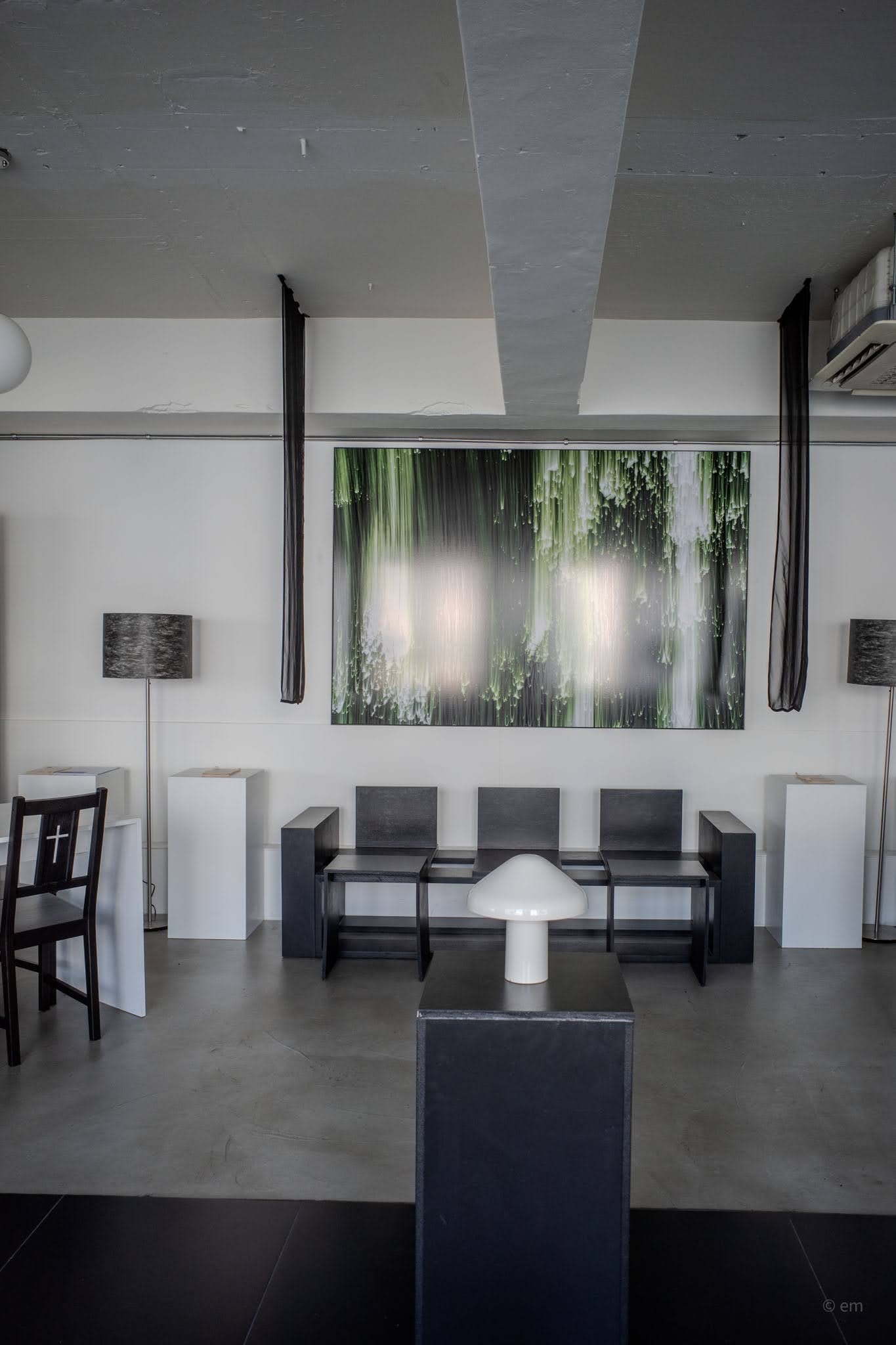
The room is large and open in the way old institutional buildings sometimes are — raw ceiling beams and exposed concrete, the bones of the structure left visible. But over this raw shell, the café has been assembled with considerable deliberateness. Tall matte-black partition panels create interior volumes without closing the room off entirely, and sheer black gauze panels hang from the ceiling, softening the light that falls through. Globe pendant lamps float above. Mushroom-shaped white table lamps sit on dark pedestals, placed like offerings on stone altars.
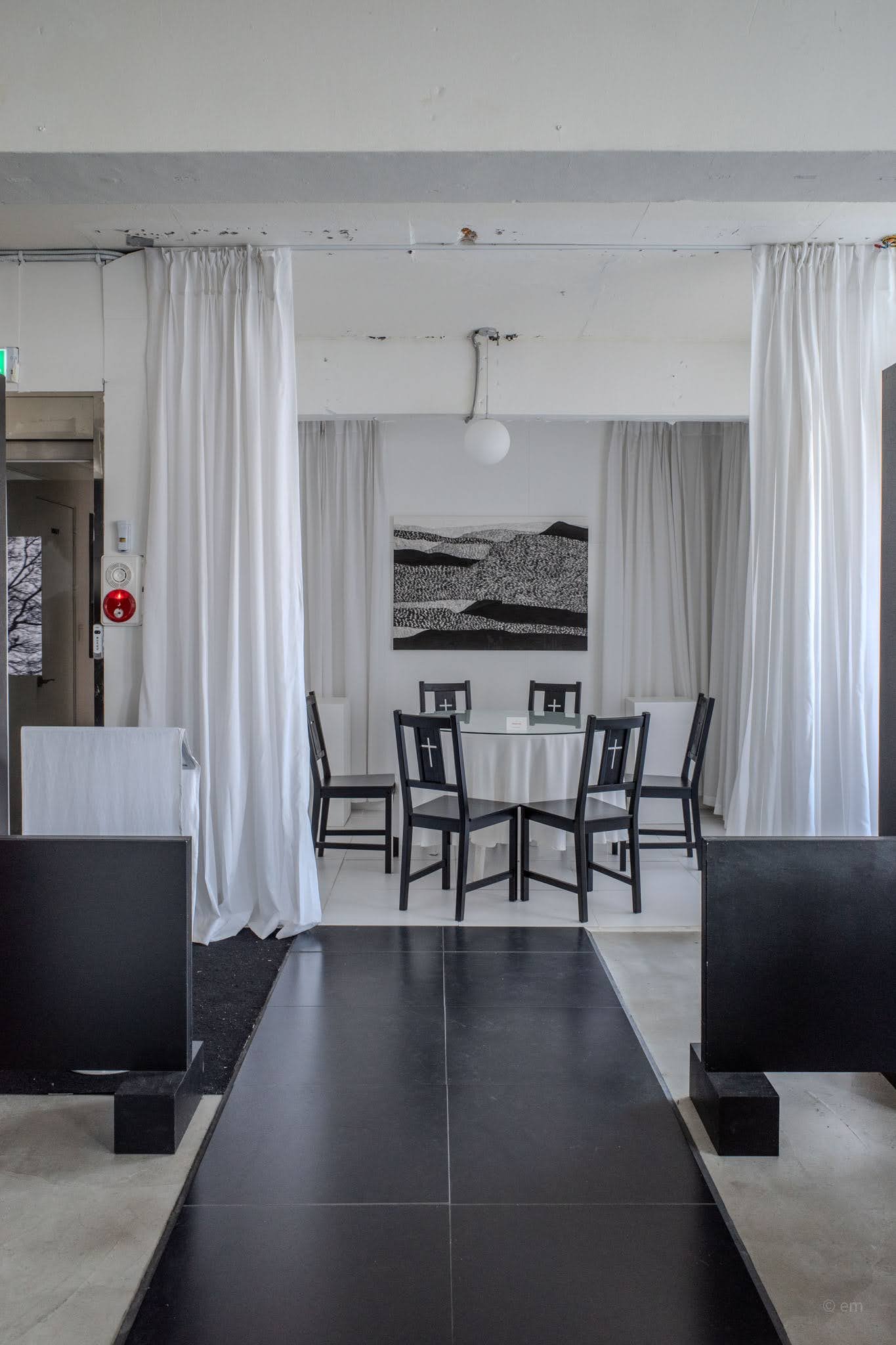
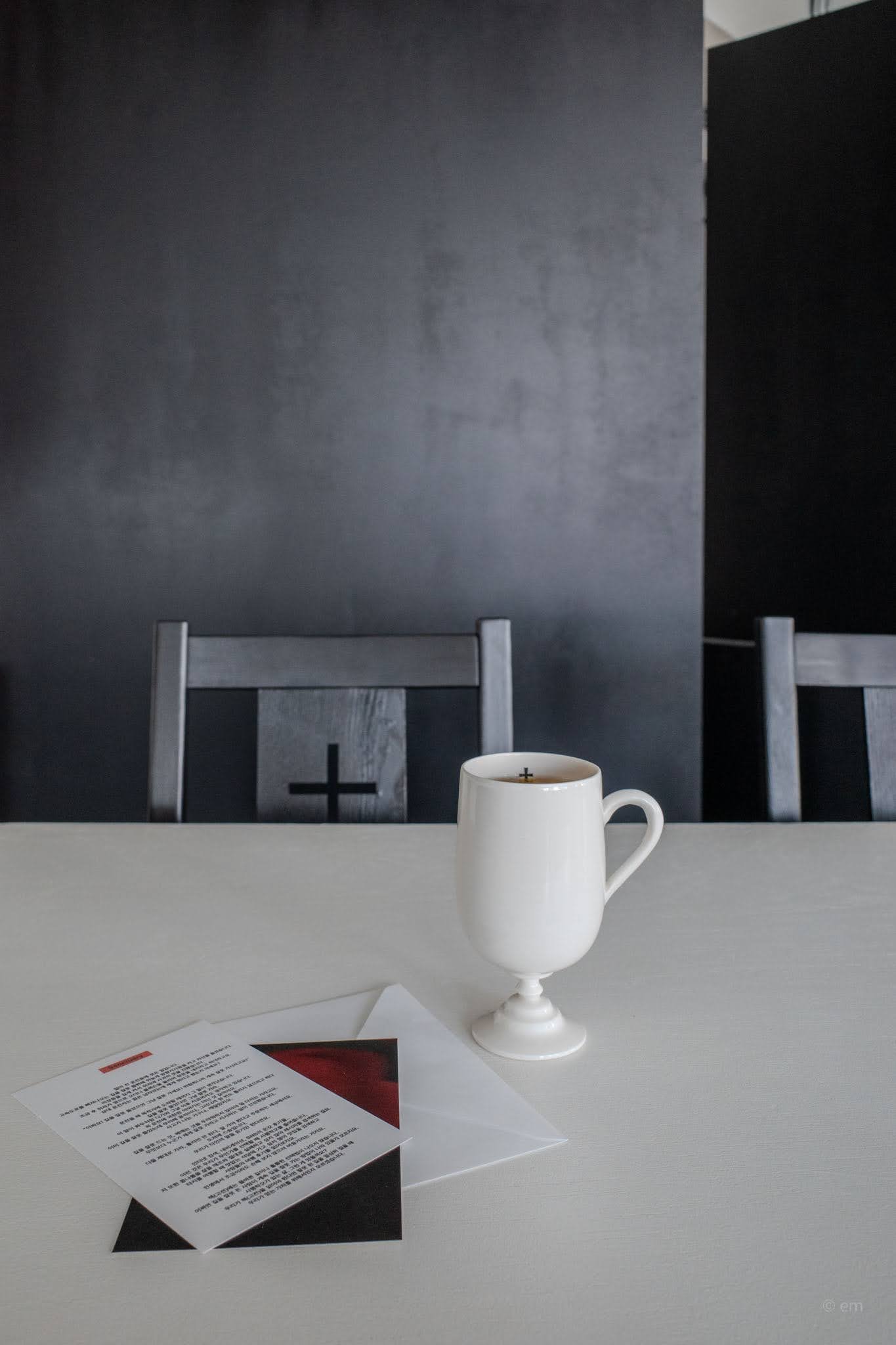
The cross-back chairs, lacquered very dark, appear throughout the space — at white rectangular tables in the main hall, at a round table beneath an inner chamber separated from the rest by white curtain panels. That inner room, accessible through a parted curtain, is lit by a single globe pendant and holds a round table draped in white linen: a chapel within the chapel, quieter and more enclosed. In a corner near the windows, a long low dark ledge serves as a kind of altar — candelabra, a white ceramic vessel, smooth white stones beneath.
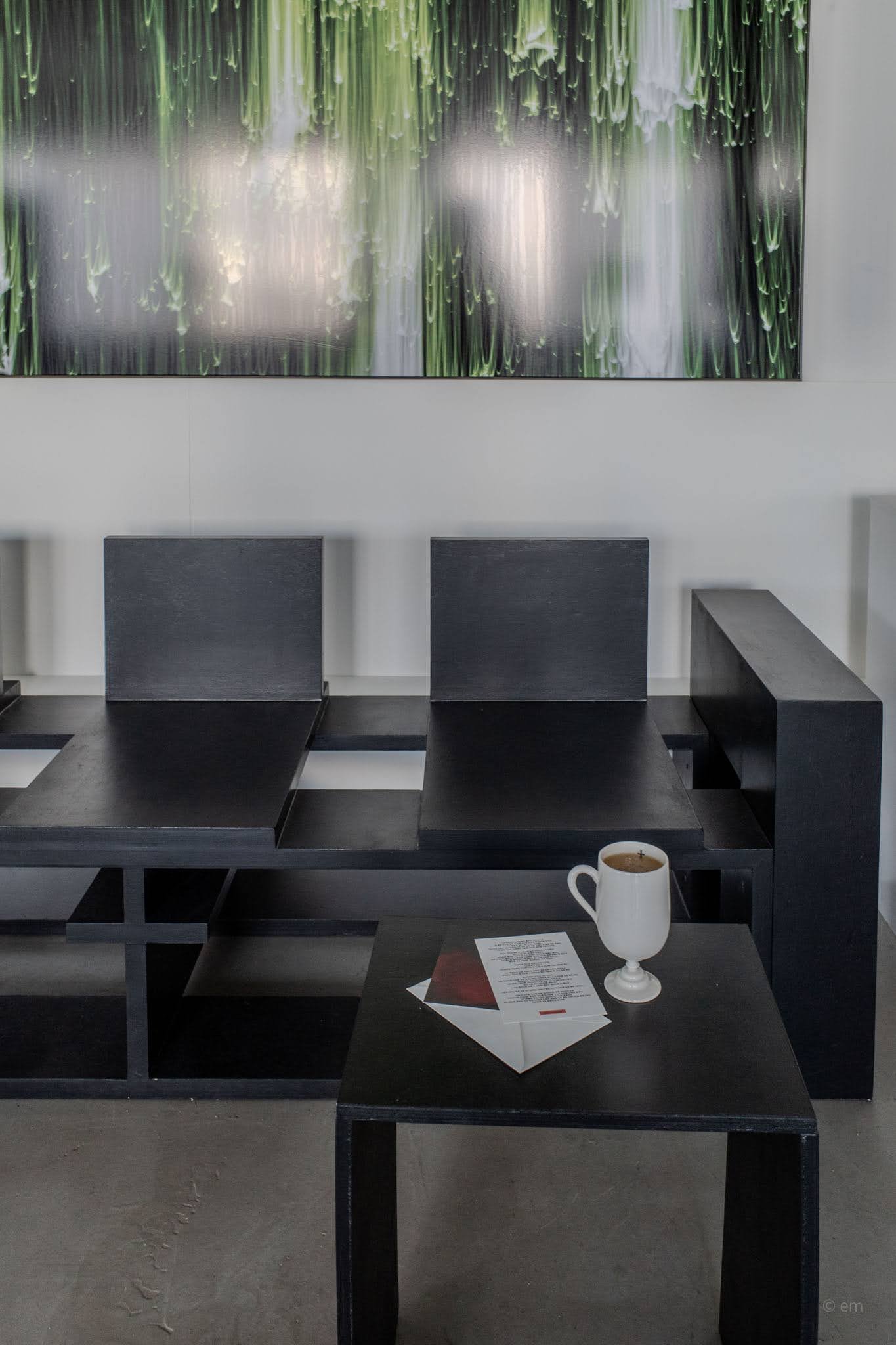
Against one wall hangs a large-scale artwork of a luminous green digital forest, its light fracturing downward like rain. In the inner room, a black-and-white landscape painting — rolling hills rendered in dense, stippled ink — sits above the round table. Both feel like landscapes one might contemplate rather than simply look at.
The Objects
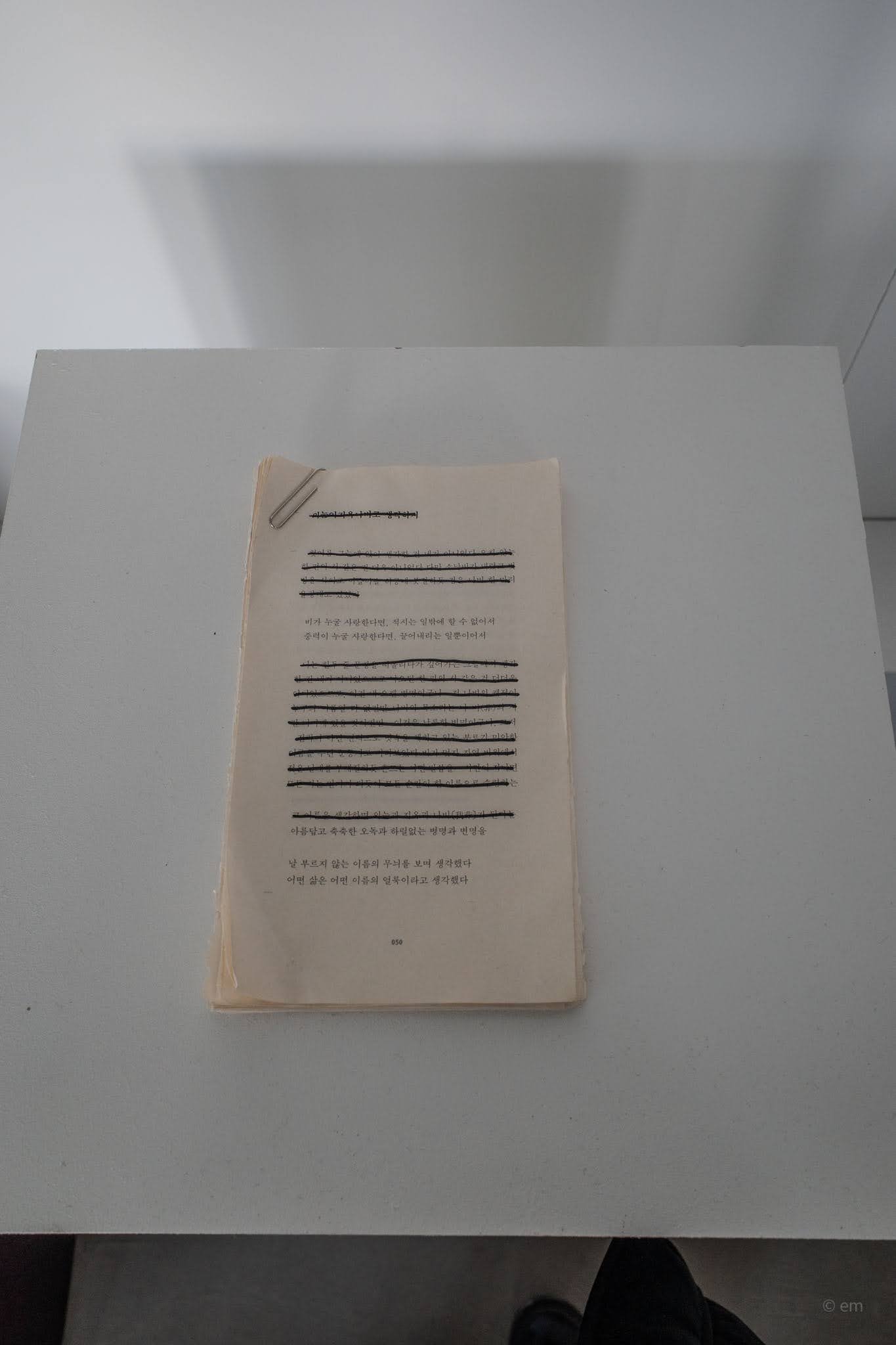
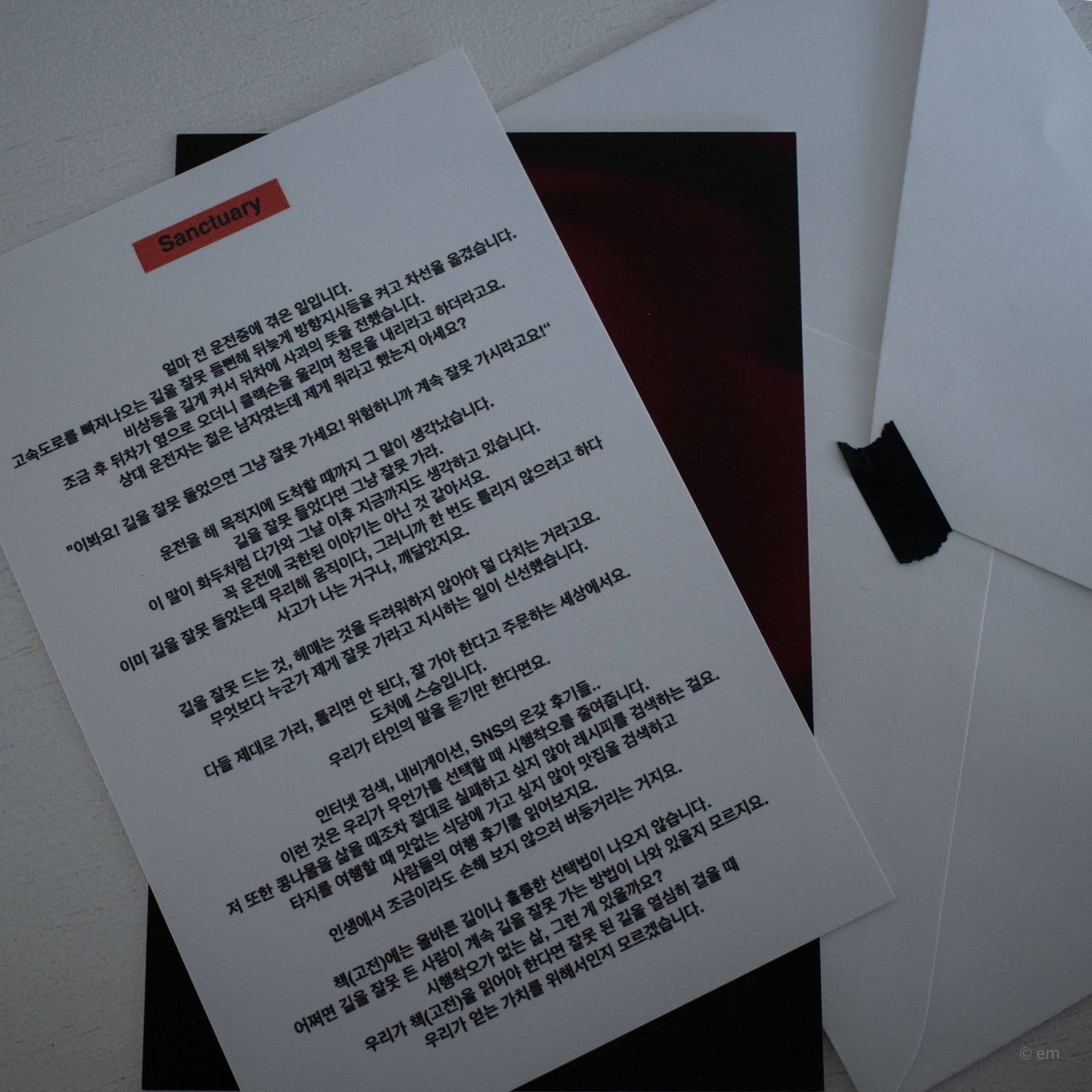
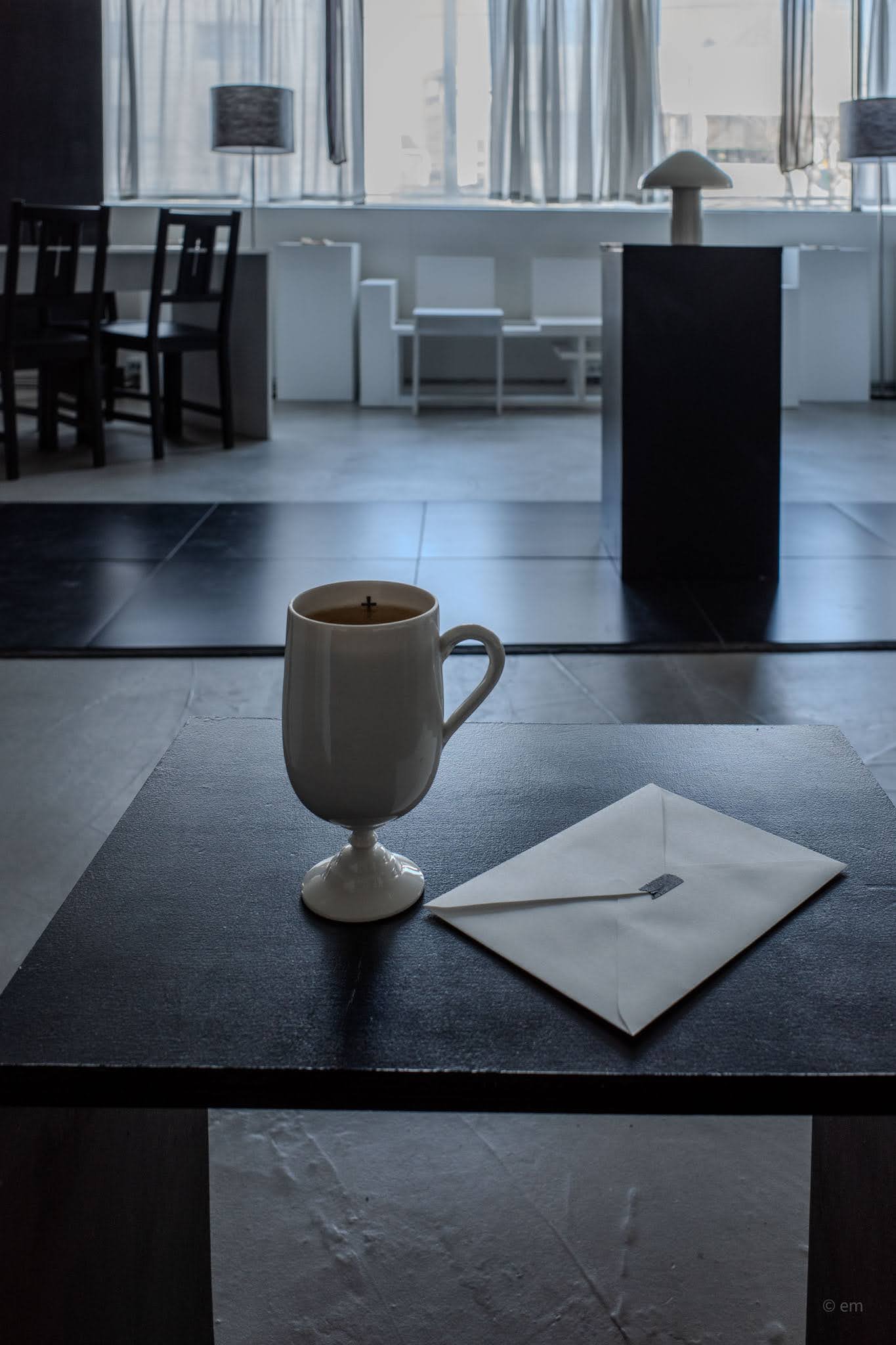
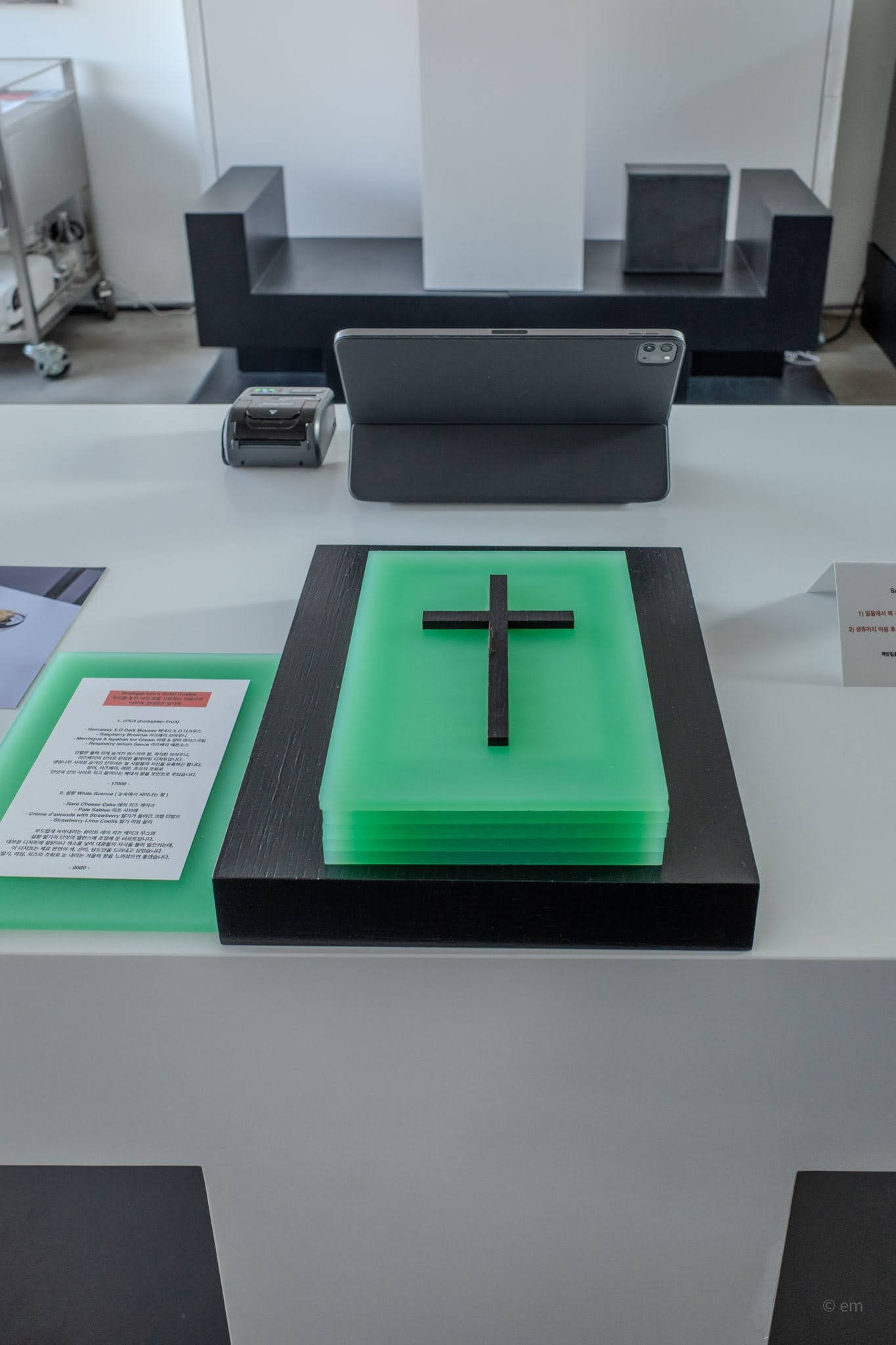
Sanctuary hosts a rotating exhibition program. Whatever is showing on any given visit, the pedestals and the logic of display remain: the café treats the work of others as something worth pausing in front of. Each visitor also receives a white envelope at the door containing a letter card printed with the café’s own text — a meditation on navigation, lostness, and the compulsive desire to follow others’ directions. It is philosophical, gently pointed, and worth reading slowly. The menu, meanwhile, arrives on a glowing green acrylic slab with a black cross laid on top. It is the only thing in the space that is green, and therefore both impossible to miss and slightly surreal.
The Coffee and Food
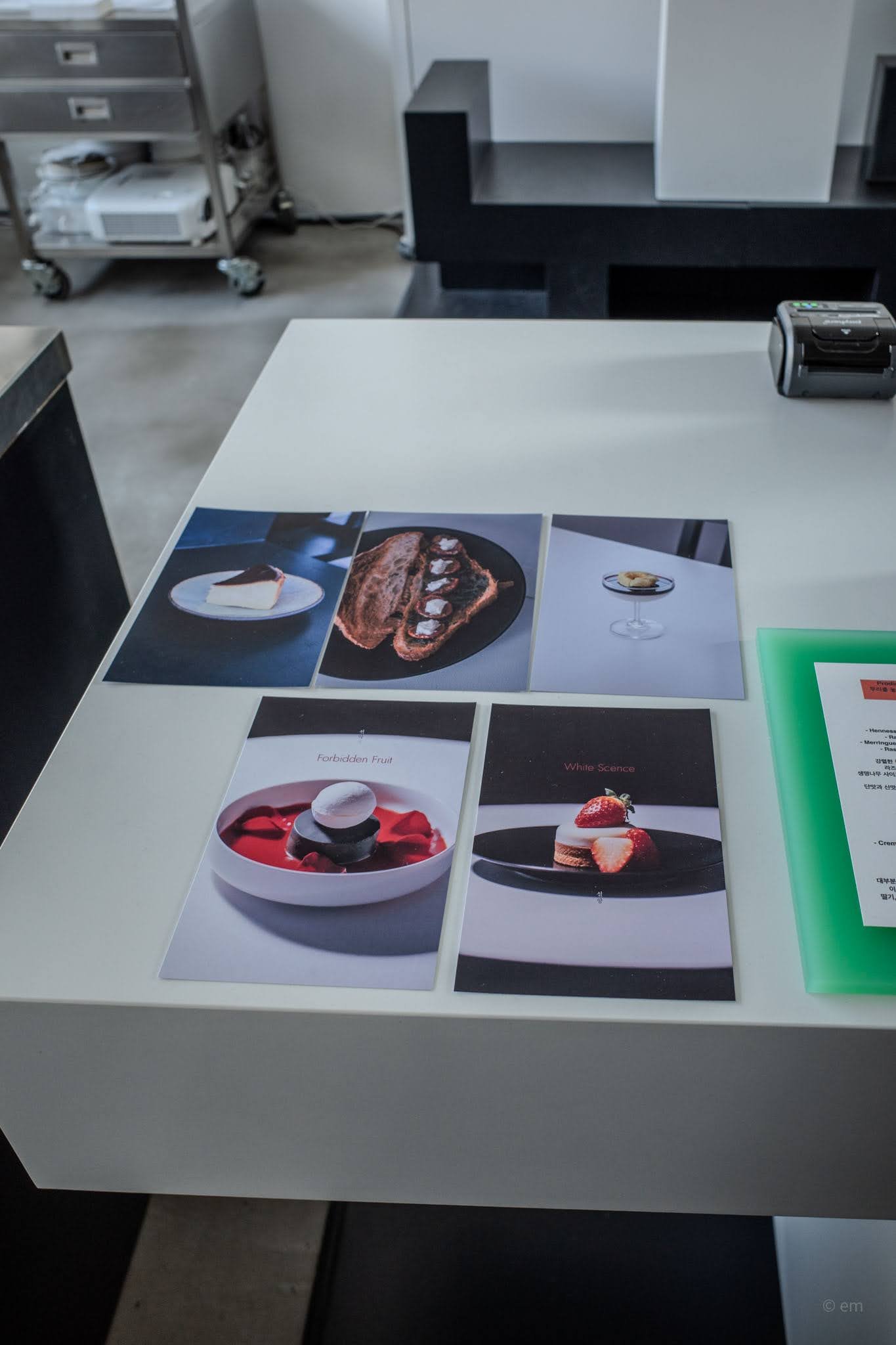
The coffee program centers on brewing — the bar visible at the back of the room holds multiple drip setups alongside a small forest of equipment. Coffee arrives in a white porcelain chalice-form mug, goblet-shaped and footed, set on a square dark pedestal: the communion reference is deliberate and deadpan. The menu is small. Two dessert items are offered by name: Forbidden Fruit, a dark chocolate mousse constructed around Hennessy X.O with a raspberry velvet sauce, served in a bowl with components staged in austere contrast; and White Science, which assembles a pale cheesecake, baklava, almond cream, and a strawberry lime coulis with the same cool precision. Neither is casual. Both read like small acts of ceremony.
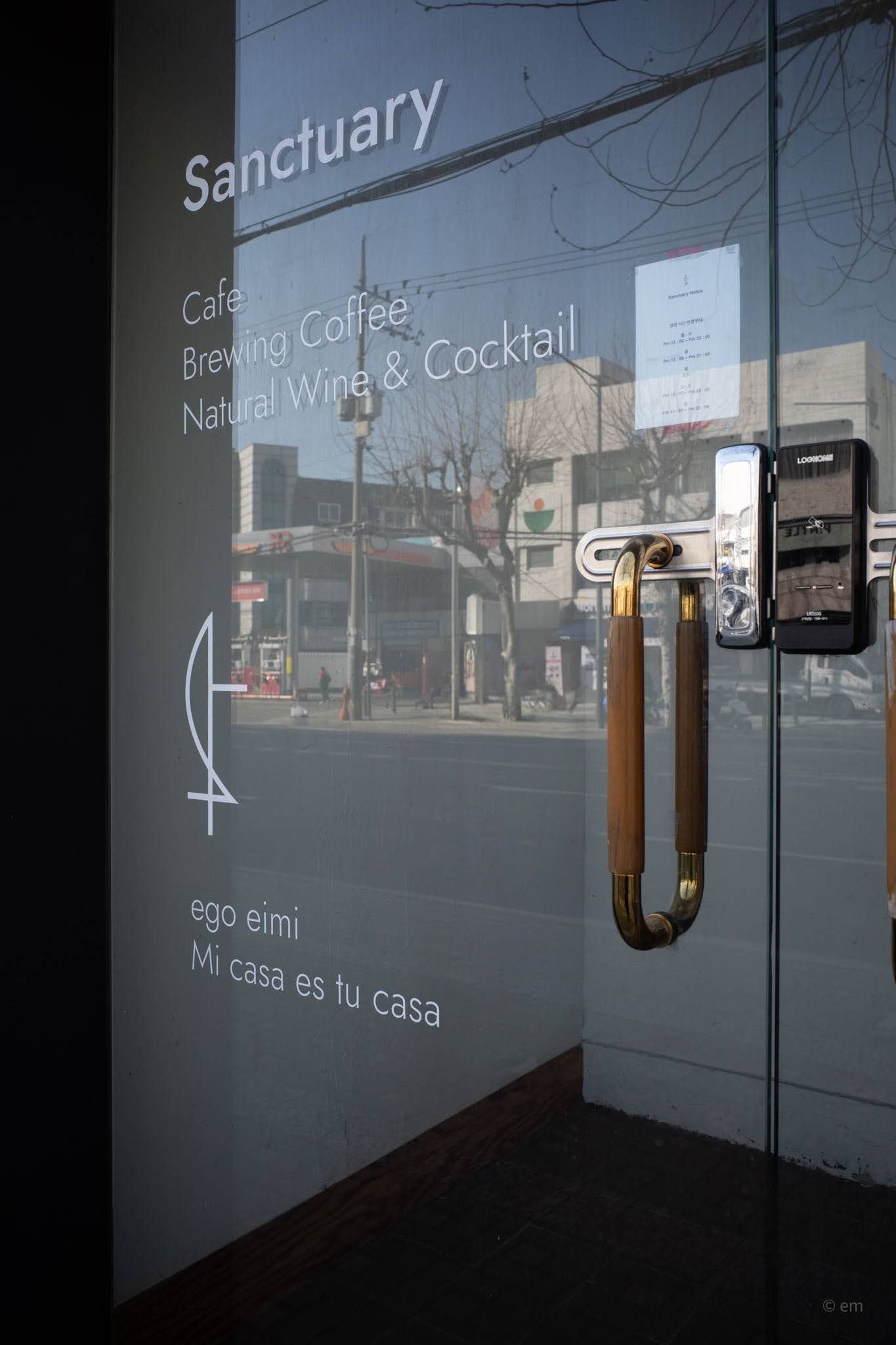
Natural wine and cocktails are available — the door glass announces this alongside the brewing coffee, and the combination is consistent with the space’s willingness to blur category. This is a café that might become something slightly different after dark.
The Philosophy
Two phrases share the glass door: ego eimi — Greek, meaning “I am,” the phrase Christ uses in the Gospel of John as a declaration of divine presence — and mi casa es tu casa, Spanish, meaning “my home is your home.” The juxtaposition is the whole concept in miniature. A claim of being, and an act of radical welcome. Come as you are. The cross marks the space but does not preach in it. Whatever the intention, what arrives in practice is quieter than theology: a room that holds you still for a moment and asks for nothing in return.
Sanctuary is located at 65 Worldcup-ro, 2F, Mapo-gu, Seoul (서울 마포구 월드컵로 65 2층). Nearest subway: Hongdae Station (Line 2 / Airport Railroad / Gyeongui-Jungang Line), Exit 1, approximately 830m. Closed Thursdays. Hours for other days and the Instagram handle should be confirmed via Naver Map before visiting. Hand drip coffee runs 6,000–10,000 KRW.
Sit down. You’ve arrived.