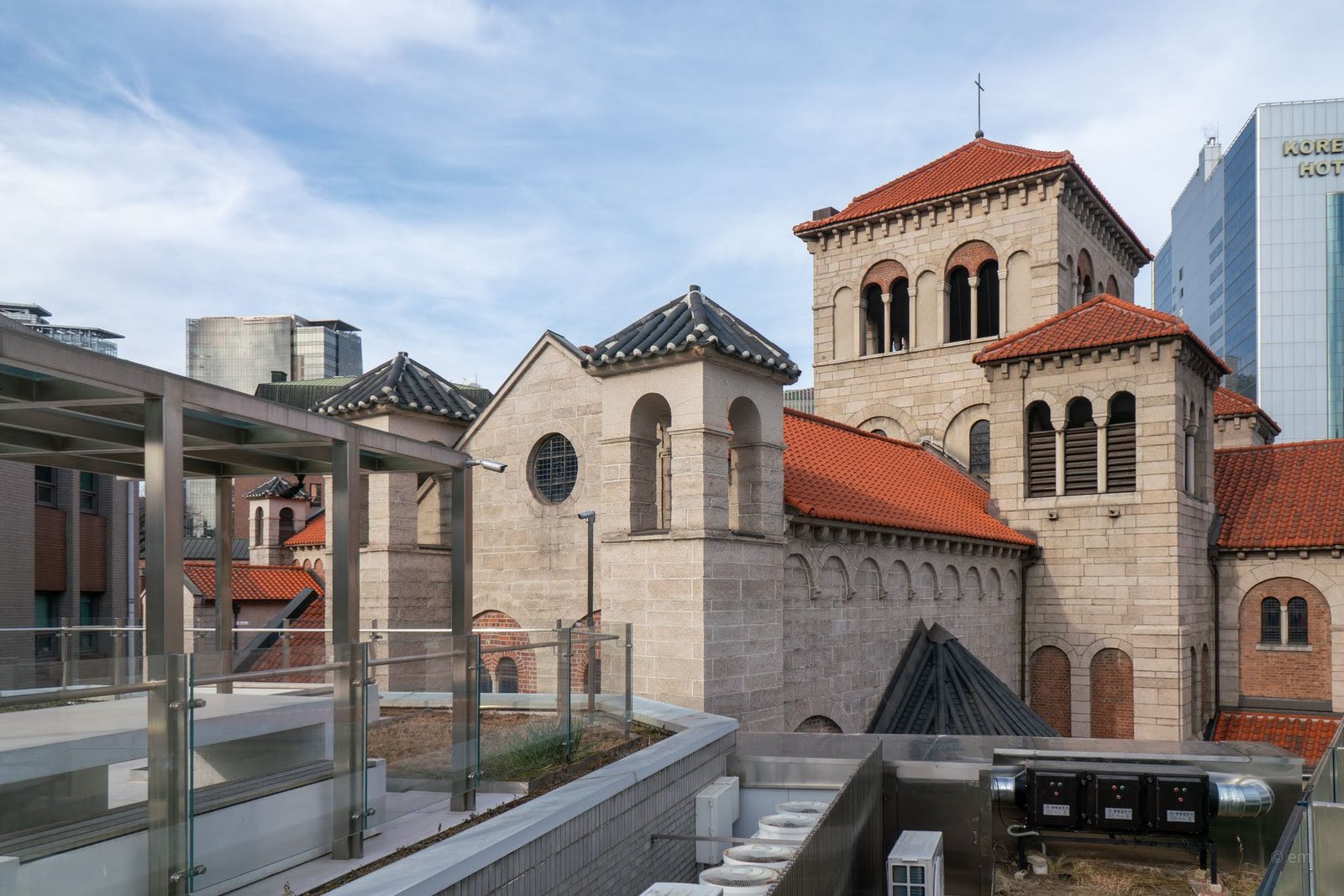
A terracotta bell tower rising above glass railings, a cross silhouetted against the Seoul sky — it takes a moment to remember where you are.
Seoul’s Jeongdong district has always been a strange corner of the city: a handful of blocks where the late Joseon era, the Japanese colonial period, and the modern metropolis all crowd together without resolving into anything coherent. Nowhere is that collision more vivid than from Cecilmaru, the rooftop terrace of the Cecil Building — an Anglican Church property in Jeongdong, where the National Jeongdong Theater Cecil now operates, where the Seoul Anglican Cathedral fills the frame with what looks, unmistakably, like a piece of southern Europe dropped into downtown Seoul.
The Vantage Point
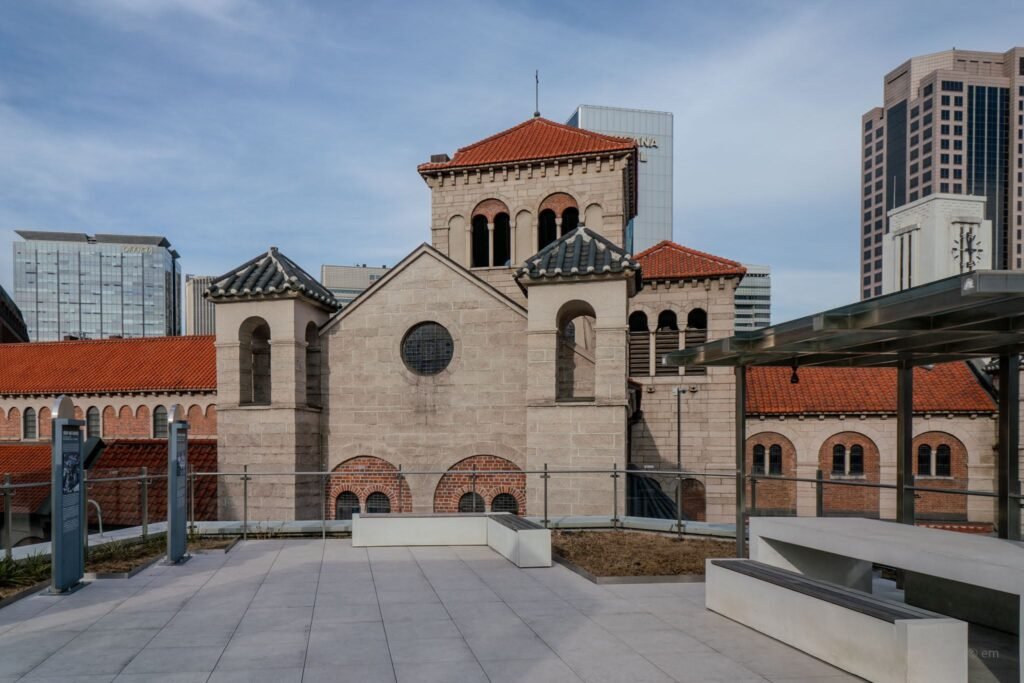
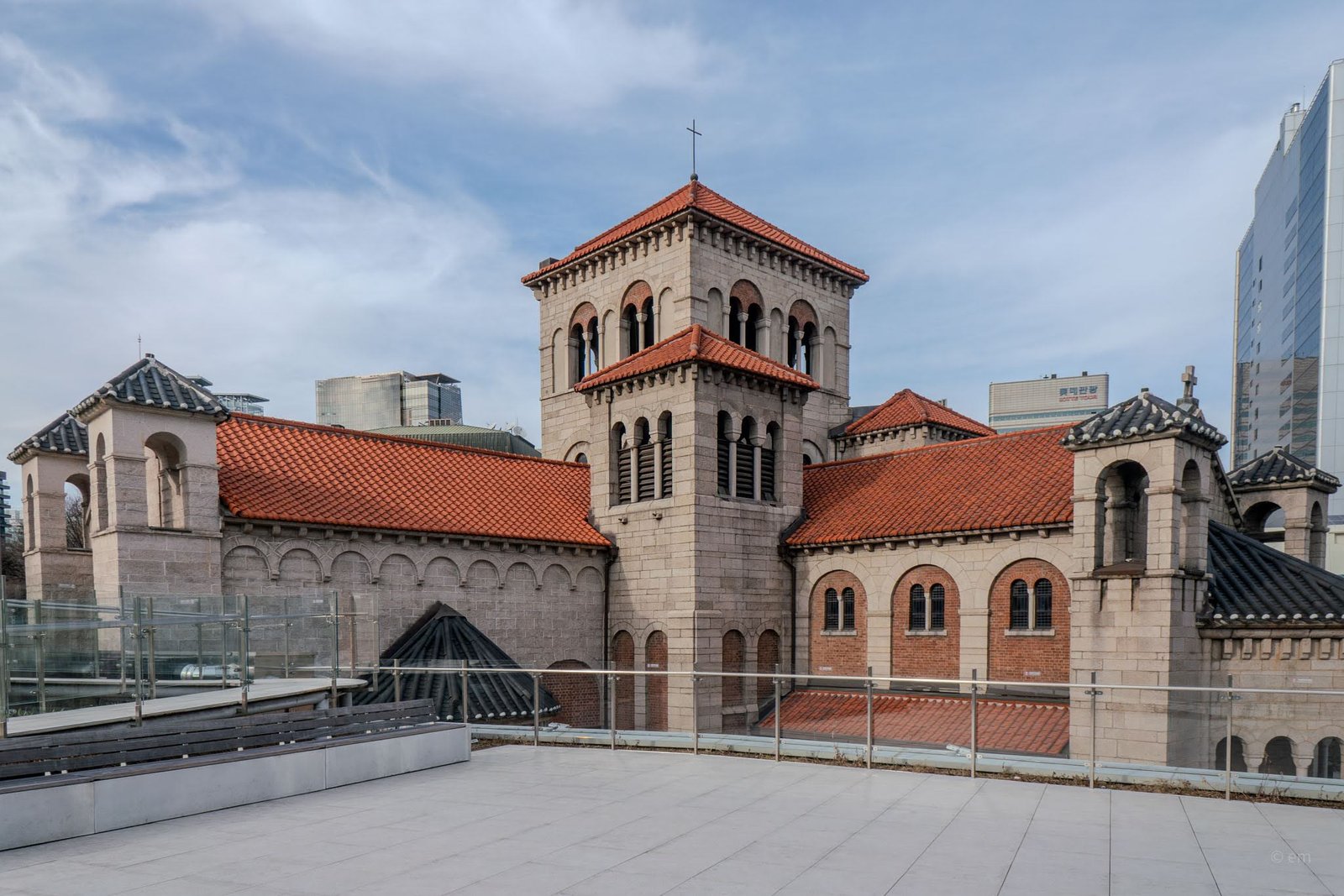
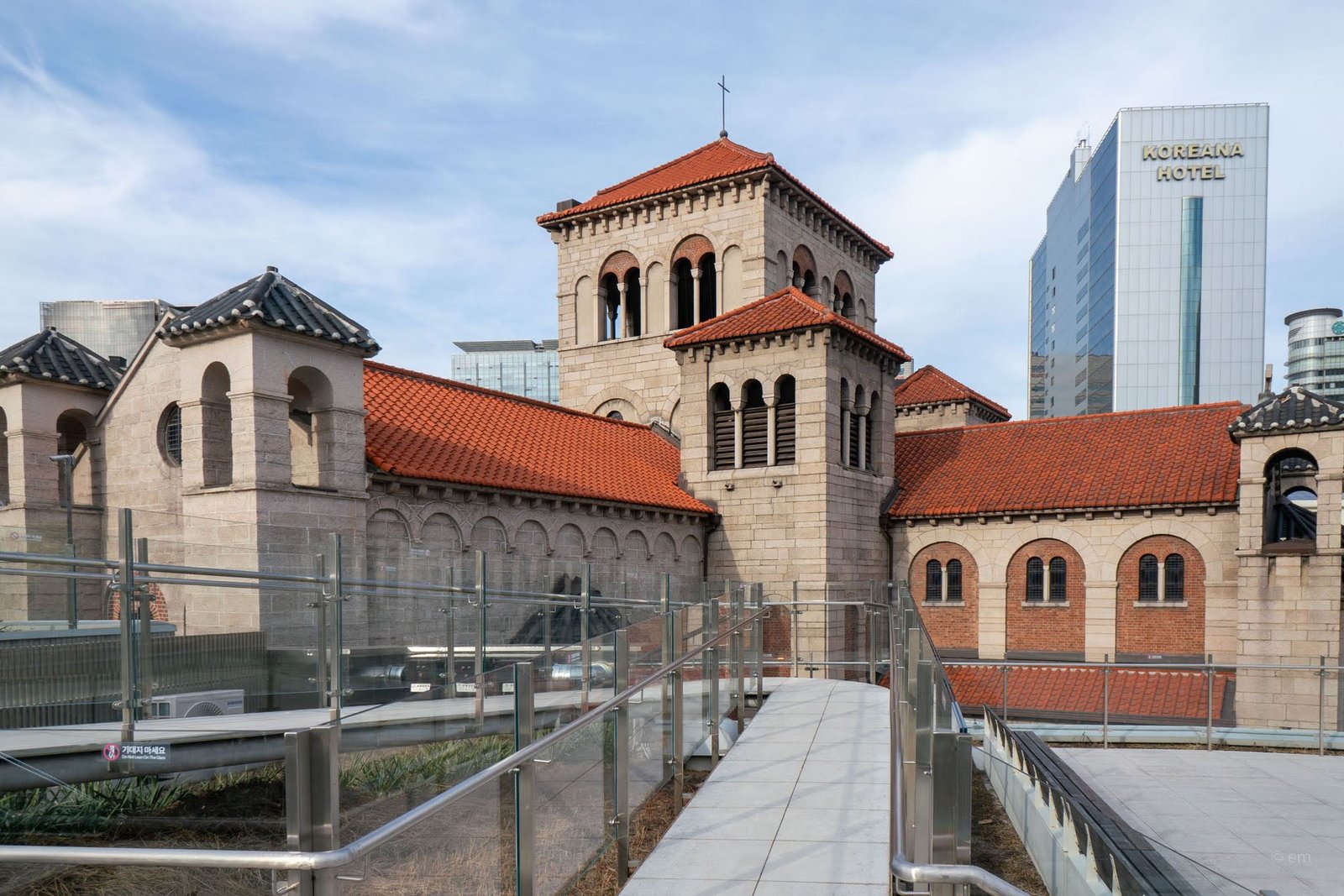
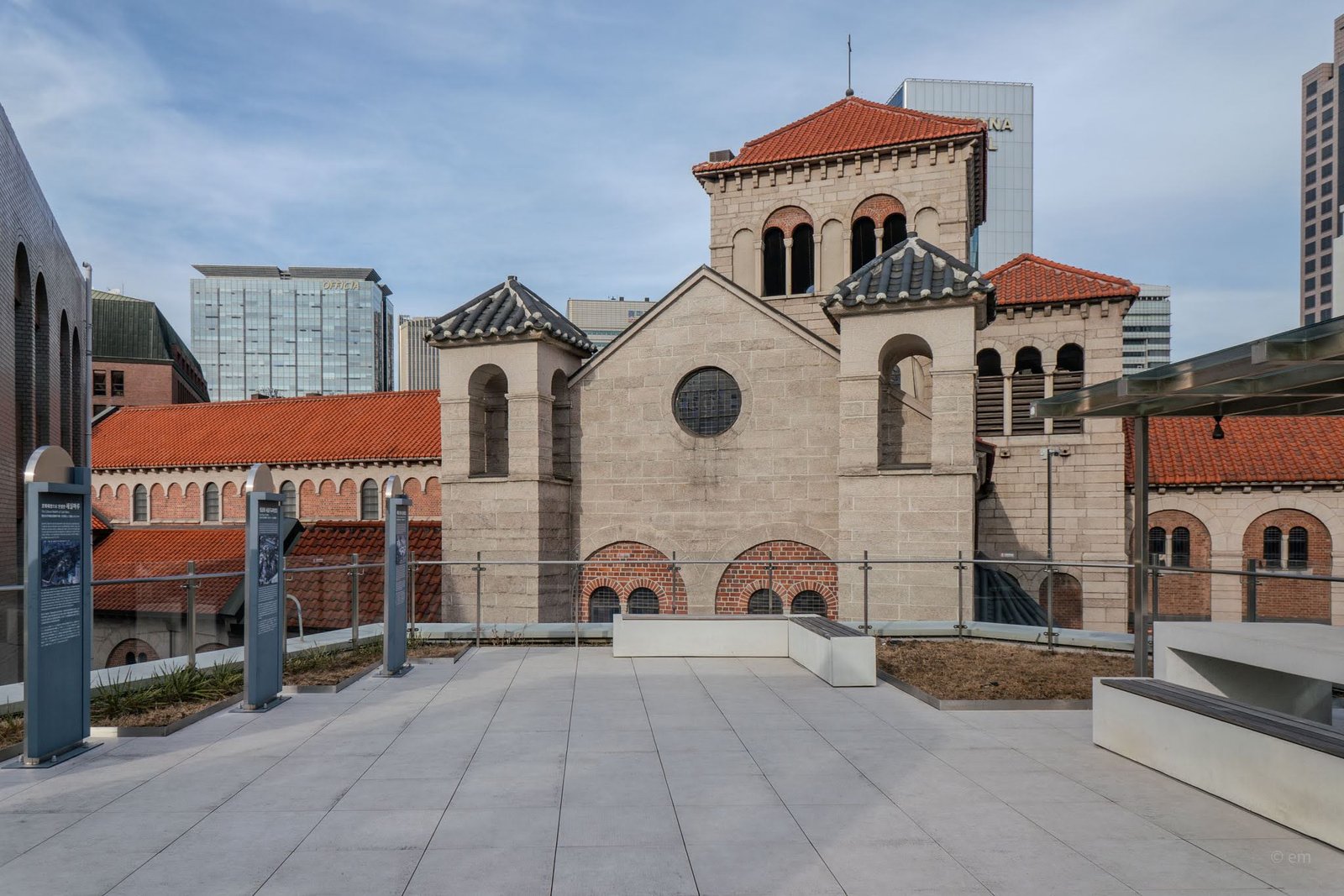
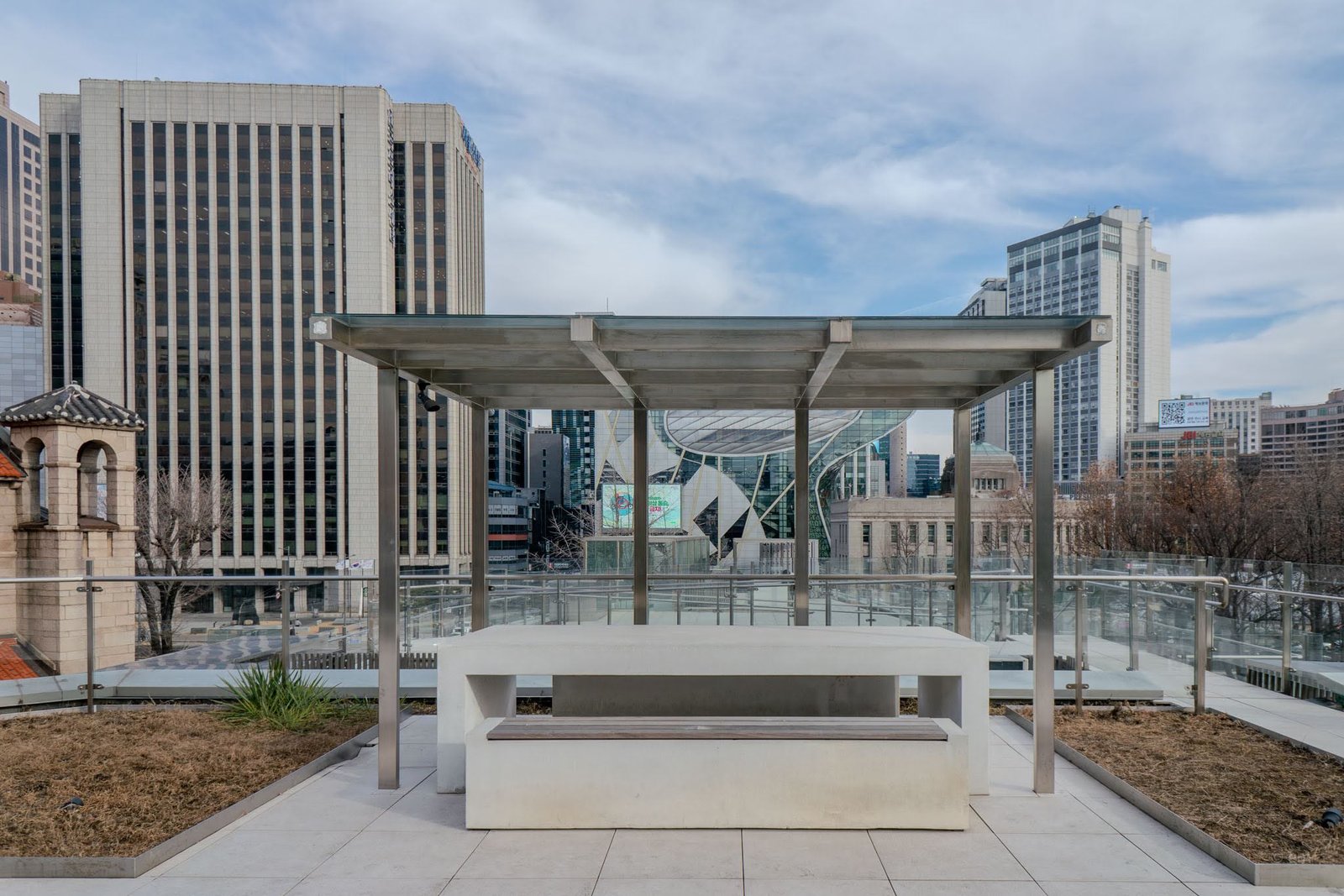
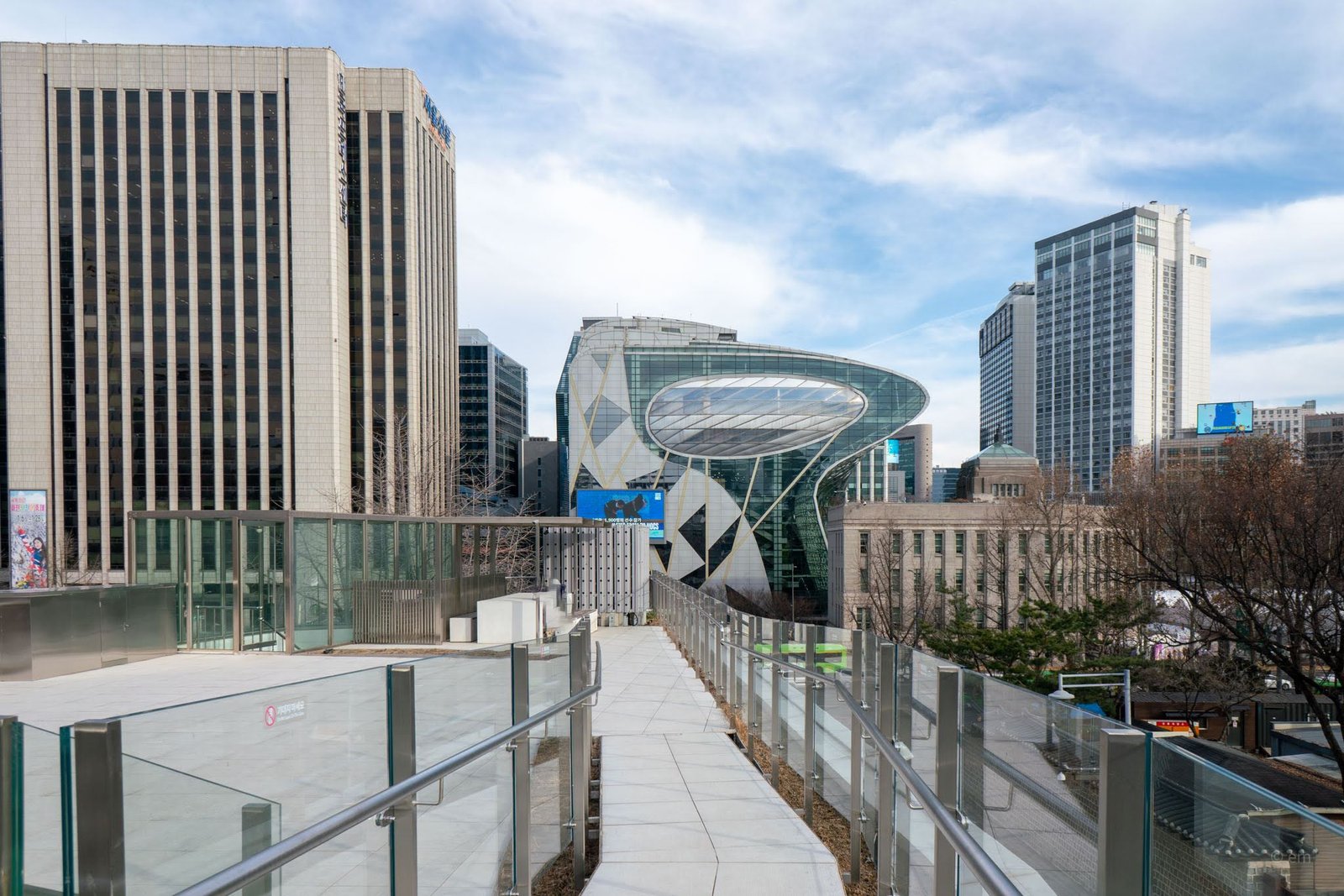
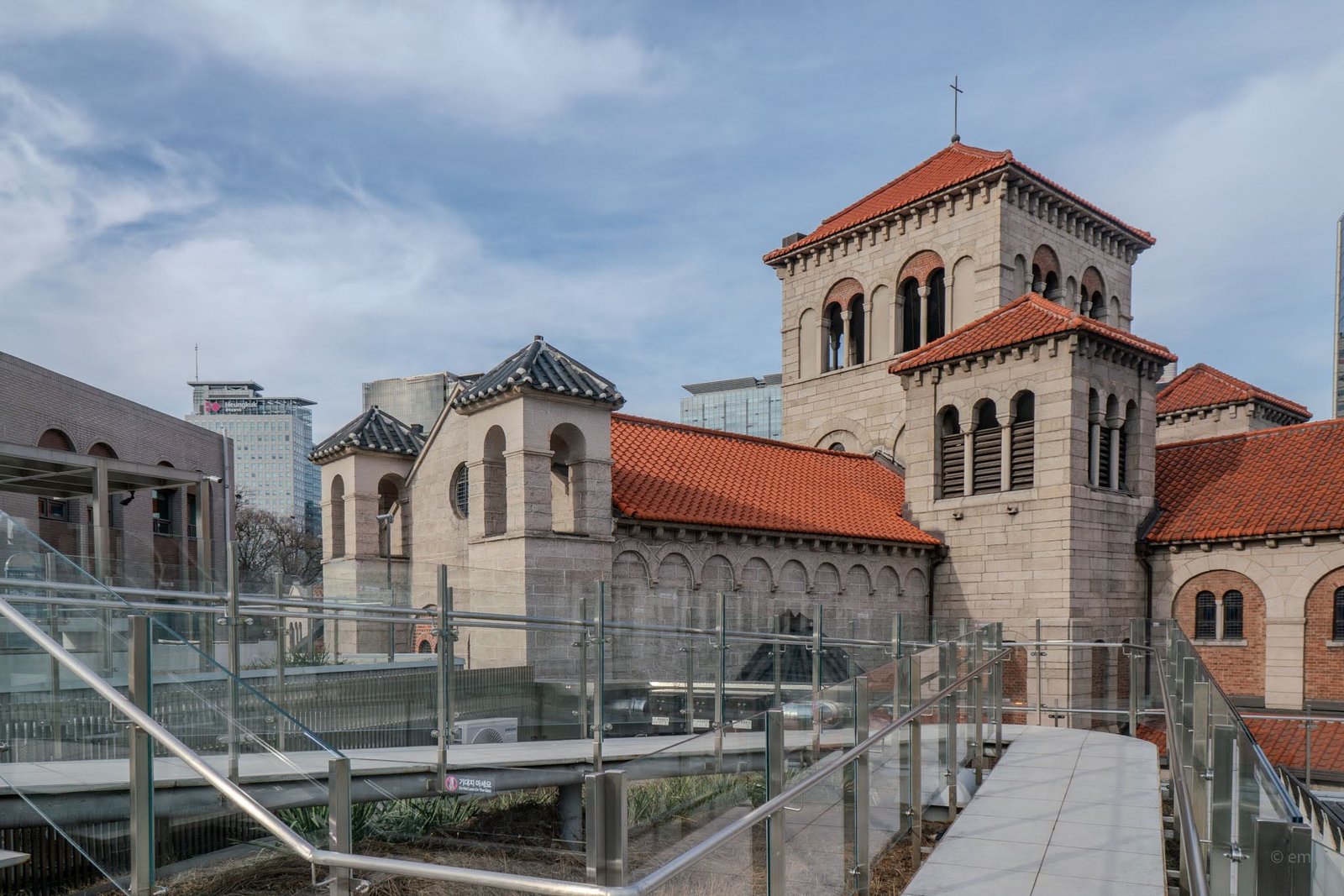
Cecilmaru itself is modest — a flat rooftop terrace with glass-panelled railings, concrete benches, and a steel pergola that serves more as a frame than a shelter. There’s no ticketing, no queue, no particular ceremony to arriving. The draw is entirely directional: turn one way and the cathedral dominates; turn the other and Seoul City Hall’s undulating glass wave and the surrounding office towers complete the temporal whiplash. The terrace sits just high enough to look across at the cathedral’s roofline rather than up at it, which is what makes the photographs work. The red terracotta tiles, the arcaded blind gallery running along the nave walls, the squared bell tower with its crenellated parapet — all of it lands at eye level, close enough to feel architectural rather than distant.
The Cathedral
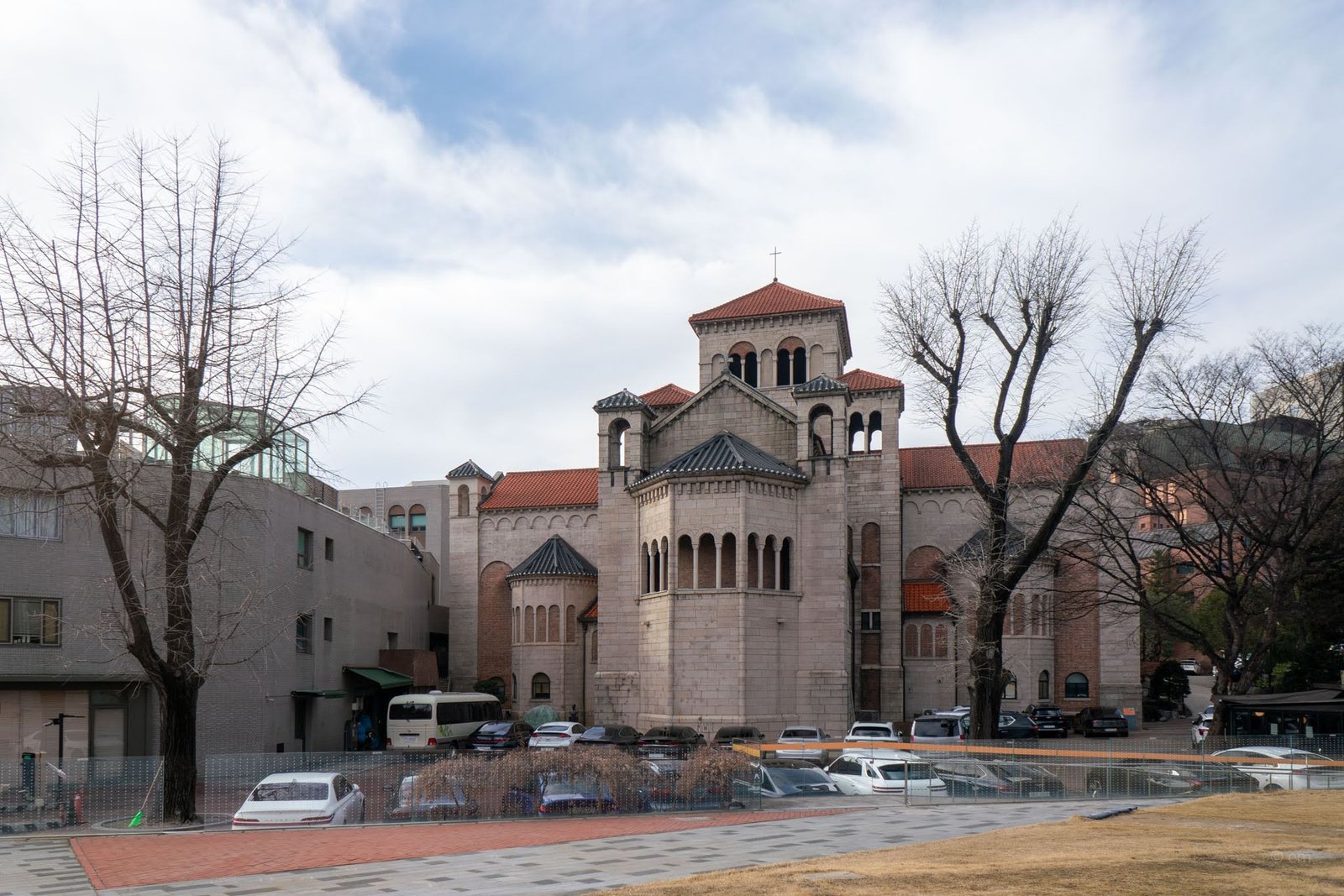
The Cathedral Church of Saint Mary the Virgin and Saint Nicholas has stood in the heart of the capital since 1922 — a striking, almost otherworldly presence that seems transported from a European city of another era. Designed by English architect Arthur Stansfield Dixon, it is built in the Romanesque style, whose simple and horizontal geometry Dixon believed harmonized with the city’s traditional hanok skyline — a deliberate contrast to the Gothic verticality of Myeongdong Cathedral nearby. The choice shows in the photographs: the cathedral spreads rather than soars, its mass low and lateral, its towers blocky and solid.
What makes it genuinely singular is the hybrid detail that Dixon wove into the fabric. Alongside the granite stonework and the terra cotta roof tiles, the flanking turrets carry traditional Korean giwa — dark clay tiles with the same upturned profile found on palace eaves across the city. From Cecilmaru, these two rooflines coexist in a single frame: the burnt-orange Mediterranean tiles of the nave and the charcoal curves of the Korean pavilion elements, a century-old architectural negotiation still visible on any given afternoon.
Construction began in 1922 but came to a halt four years later due to financial difficulties, leaving the building incomplete for decades. The story of its completion is equally improbable: the original blueprints, lost during either World War II or the Korean War, were rediscovered at the British Museum archives, and the cathedral was finally finished according to Dixon’s original plans in 1996. The expansion seam is detectable if you look for it, though the whole reads as one continuous structure from above.
The View the Other Direction
It’s worth noting what else Cecilmaru offers when you turn away from the cathedral. Seoul City Hall’s new building — Iho Architects’ vast glass wave — sits in full view, along with the Seoul Hall of Urbanism and Architecture and, beyond it, the old City Hall dome. The compressed skyline of office towers, cultural institutions, and a hundred-year-old stone church makes the case for Jeongdong more effectively than any heritage signage could.
Cecilmaru (세실마루) | 16 Sejong-daero 19-gil, Jung-gu, Seoul | Hours: 9am–9pm, closed Mondays | Free access | Cecil Building (Anglican Church property); National Jeongdong Theater Cecil operates within
Seoul Anglican Cathedral (대한성공회 서울주교좌성당) | 15 Sejong-daero 21-gil, Jung-gu, Seoul | Open to visitors outside of service times