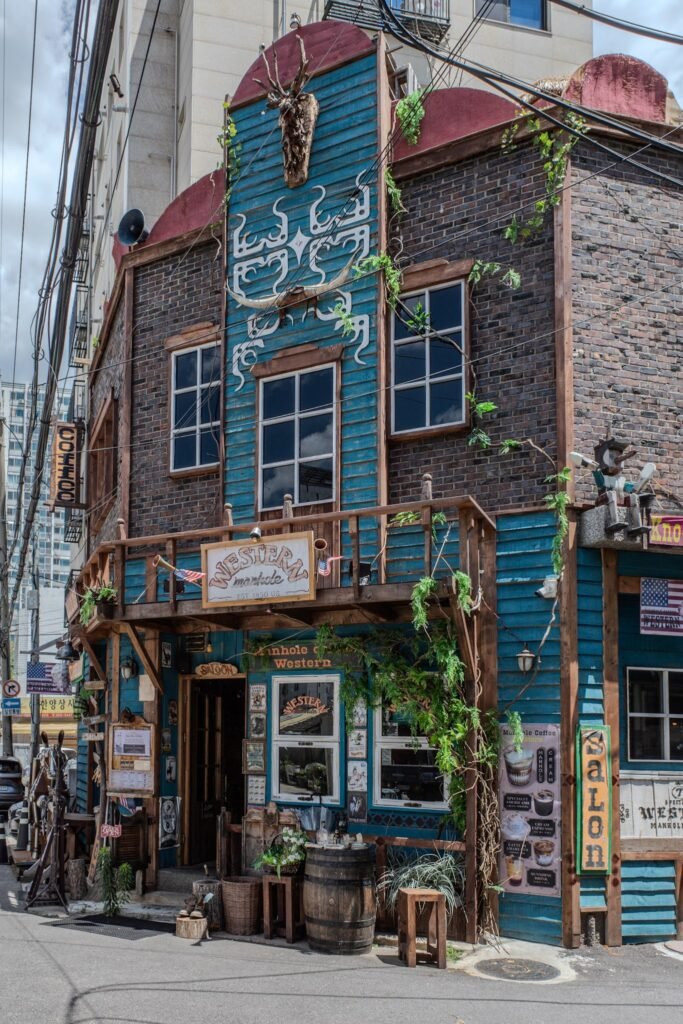
All photos in this post were taken during the cafe era — before the space transformed into what it is today.
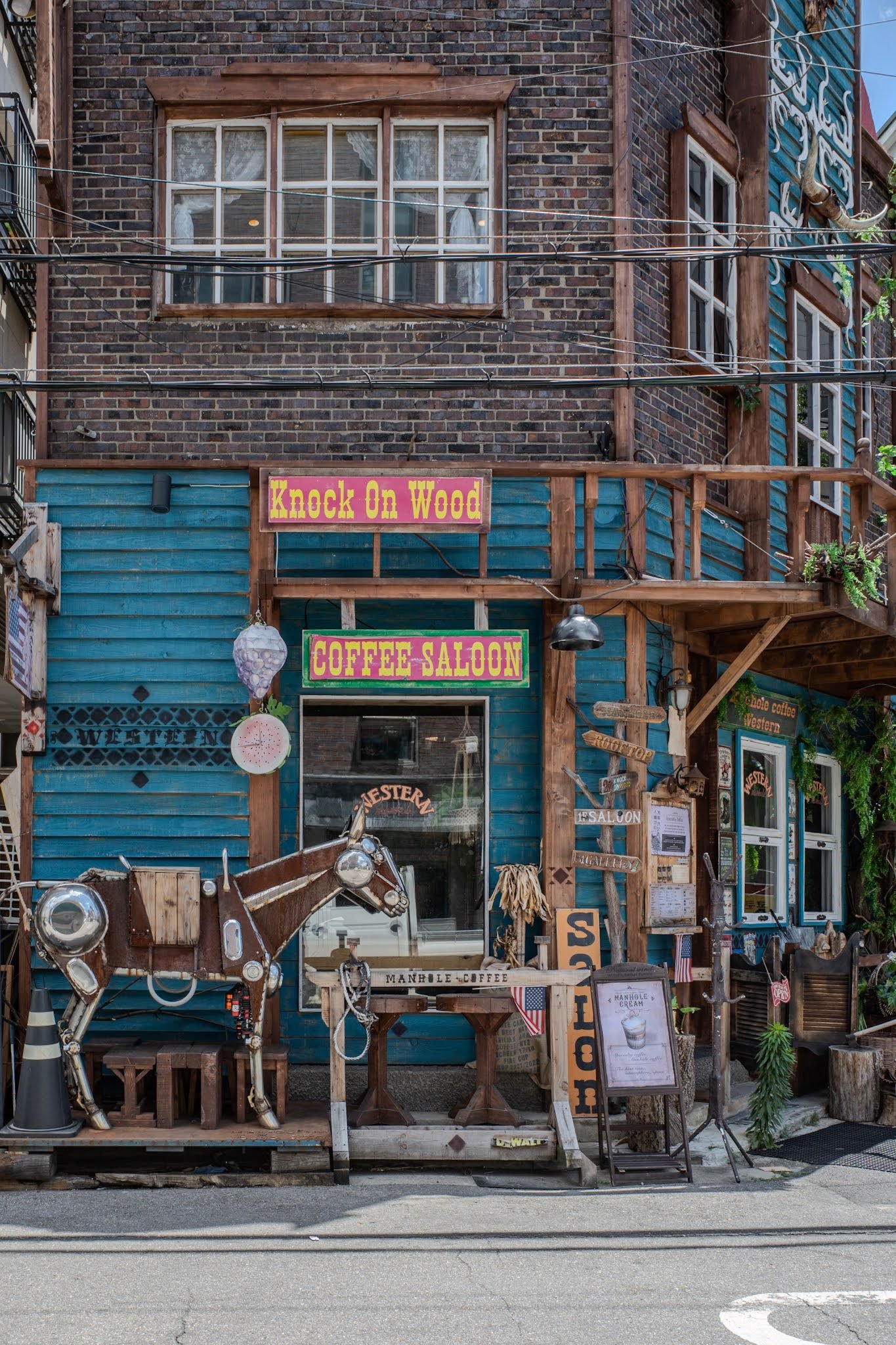
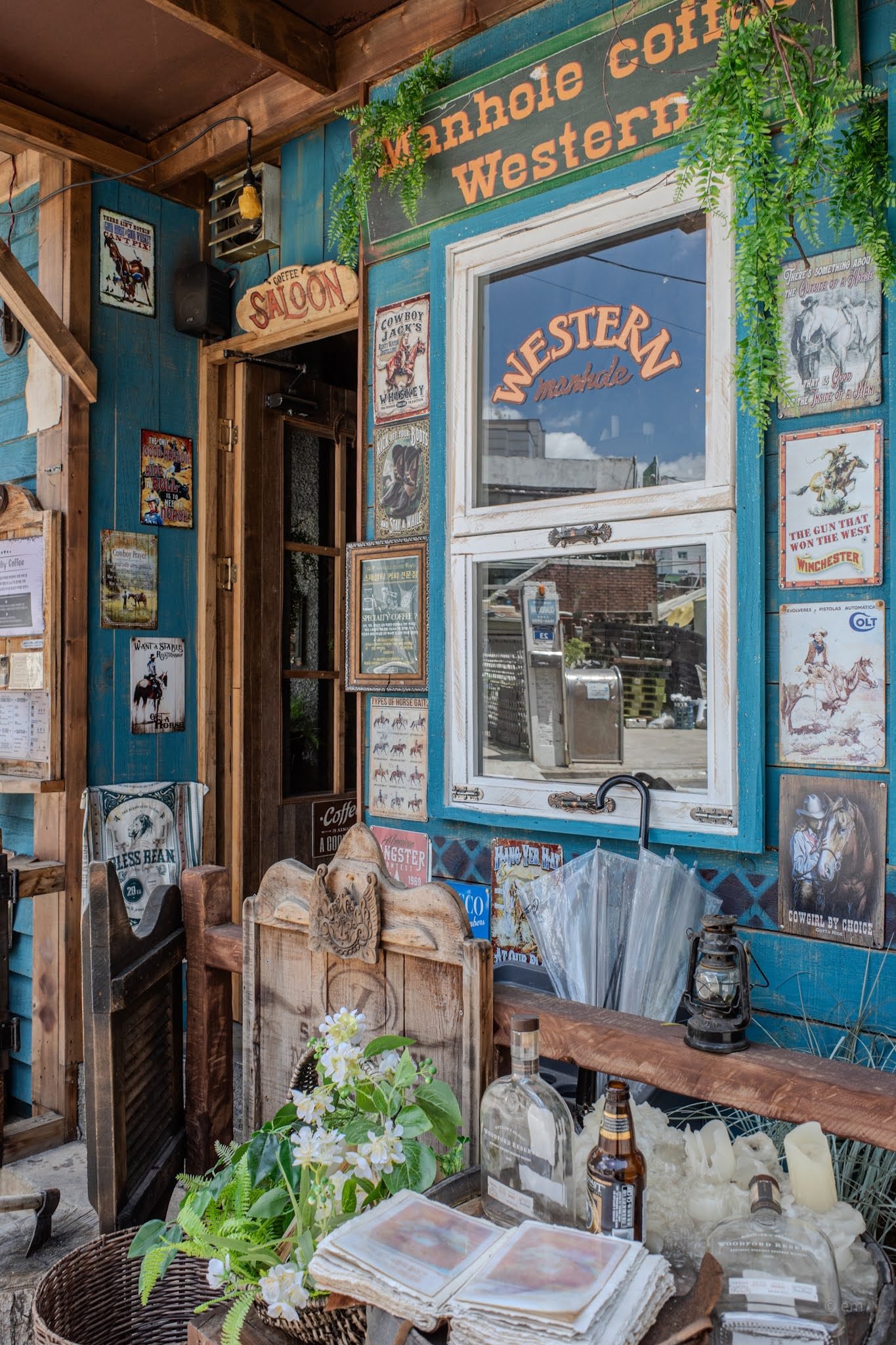
There’s a corner in Yeongdeungpo, Seoul, where you could once walk through a saloon door and feel — convincingly — like you’d stumbled into 1850s America. Turquoise clapboard siding. Antler mounts. Wanted posters fluttering in the breeze. A Budweiser sign above a handcrafted bar. This was Manhole Coffee Western (맨홀커피 웨스턴), and for a few years it was one of the most gloriously unhinged cafes in the city.
It has since reinvented itself as a bookshop. But before we get to that — let’s talk about what it was.
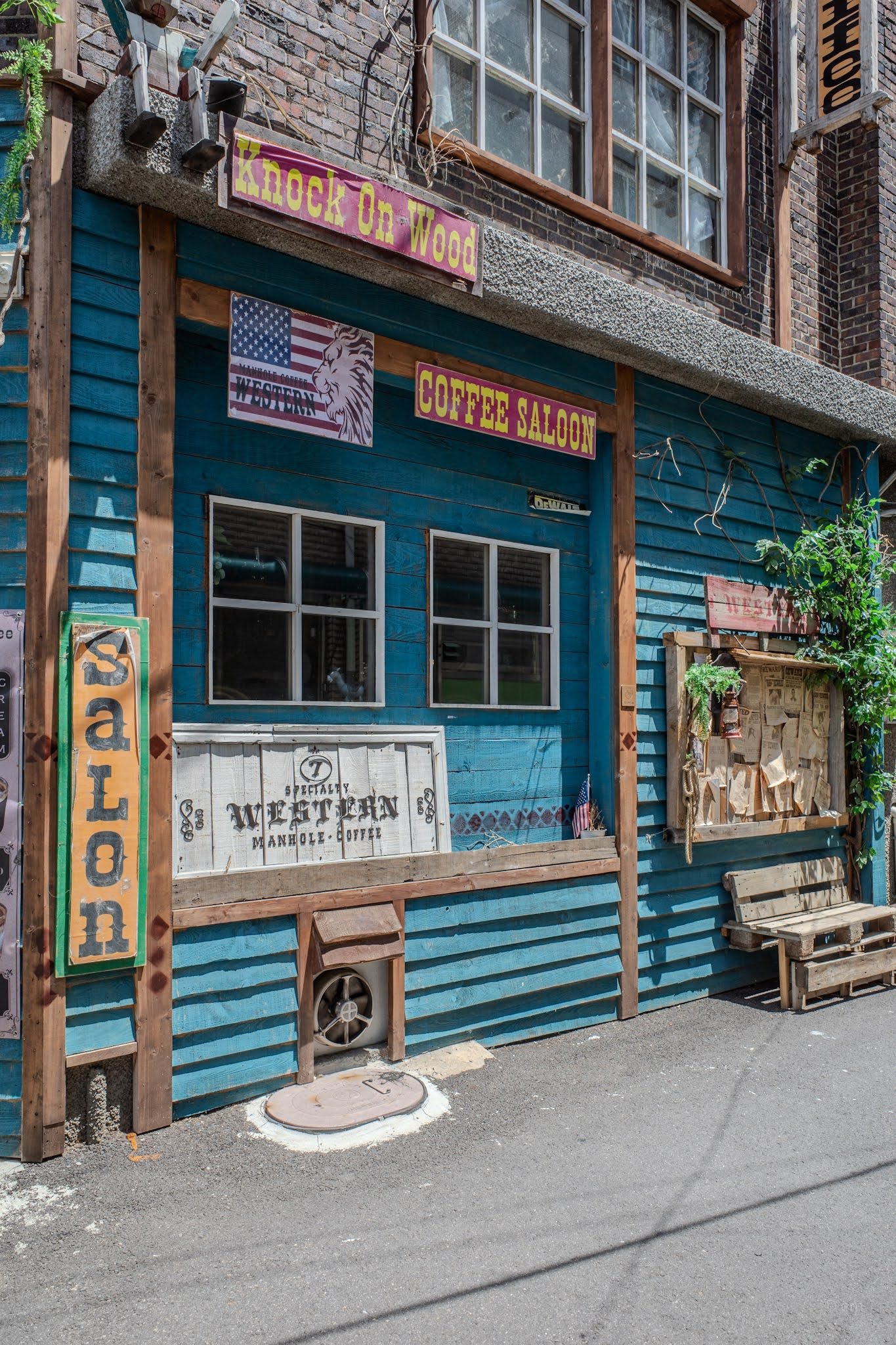
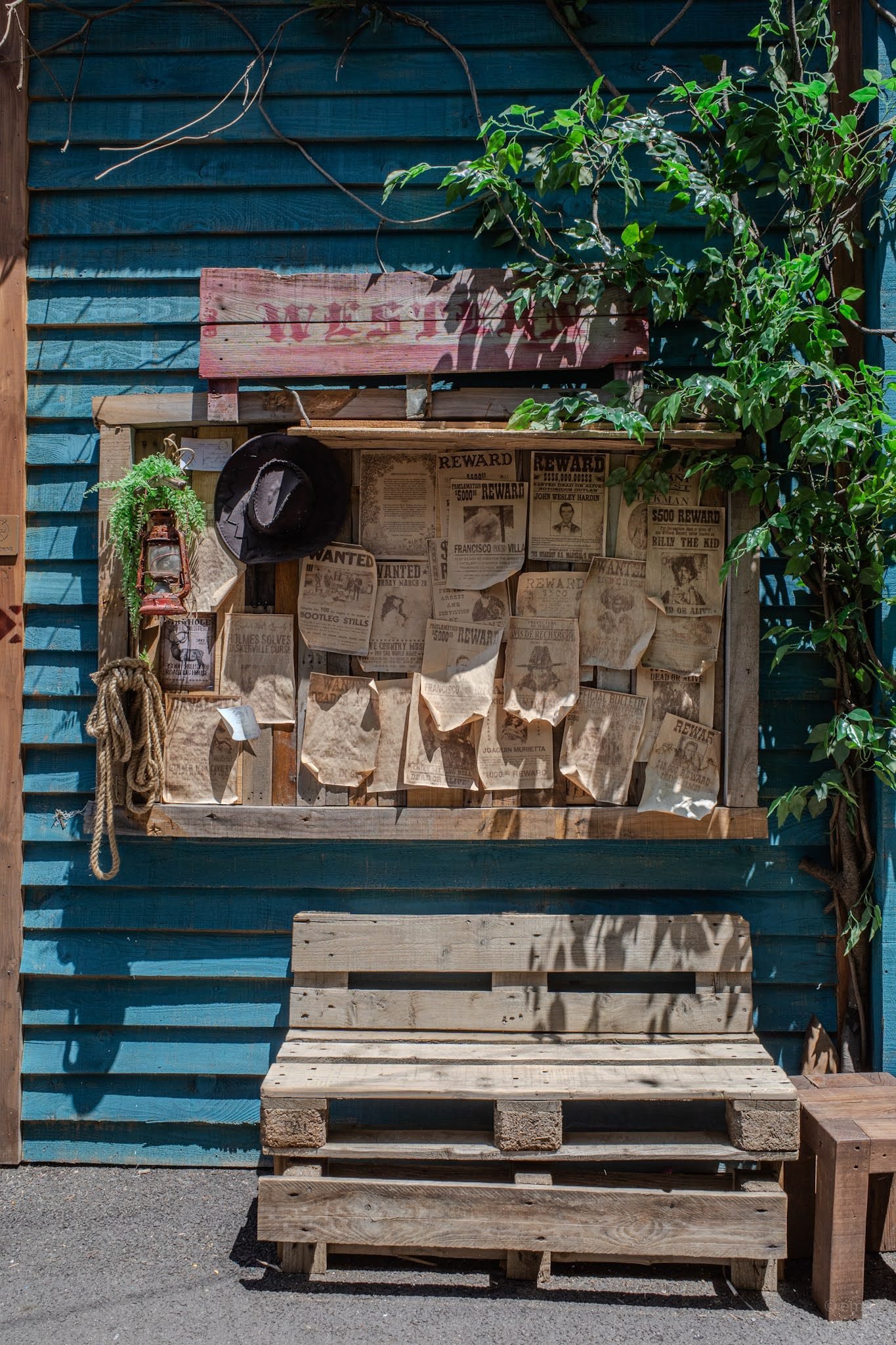
The Outside: A Frontier Town Squeezed Into a Seoul Alley
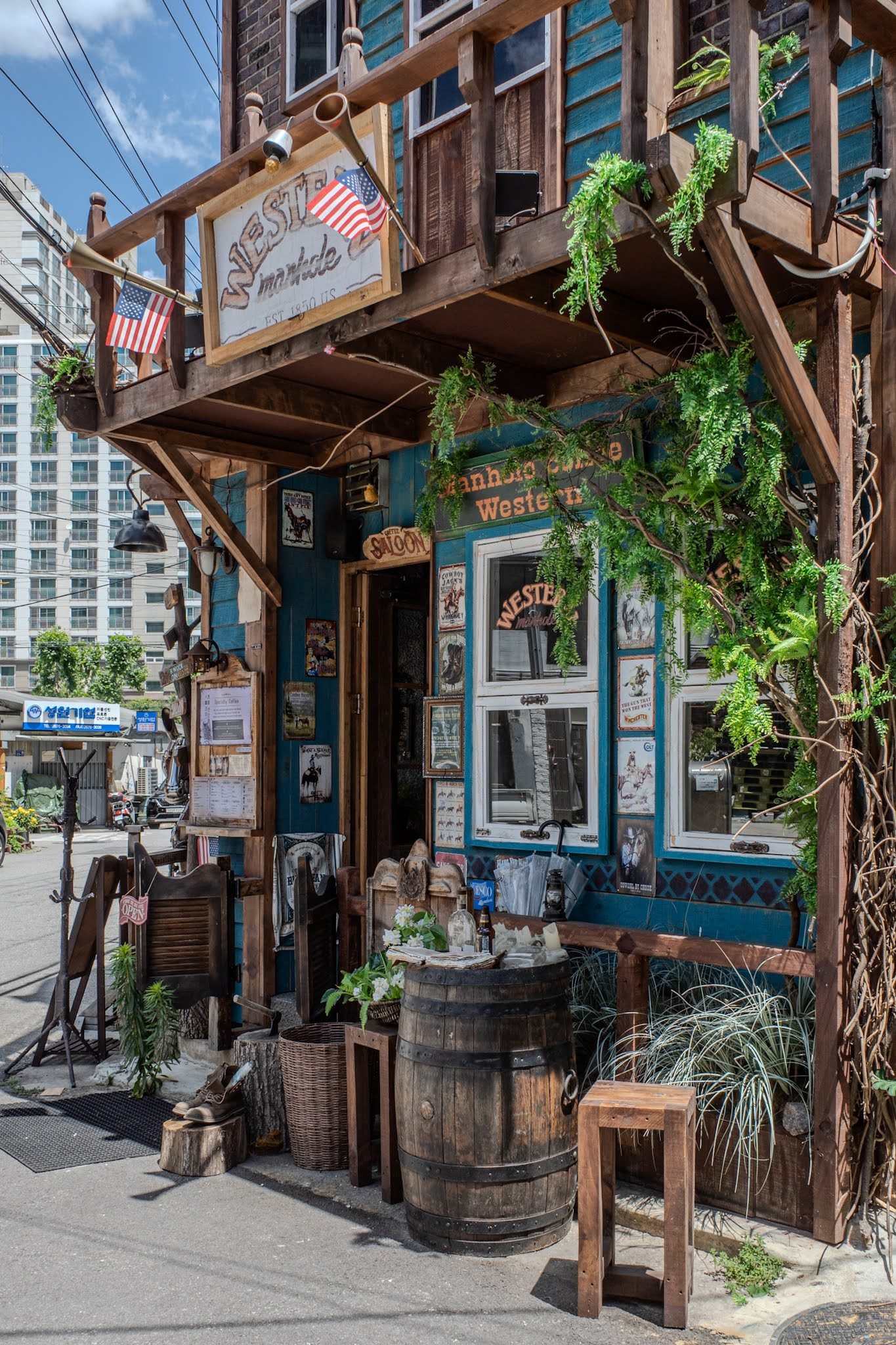
The first time I turned the corner and saw it, I stopped walking. The facade is a full-on Western movie set — teal wooden planks stacked against exposed brick, a second-floor balcony with a carved wooden sign reading Western Manhole, and a taxidermied stag head presiding over it all like a frontier mayor. American flags, hanging plants crawling up the exterior, barrels, and hand-painted menus completed the scene.
It shouldn’t work. It absolutely works.
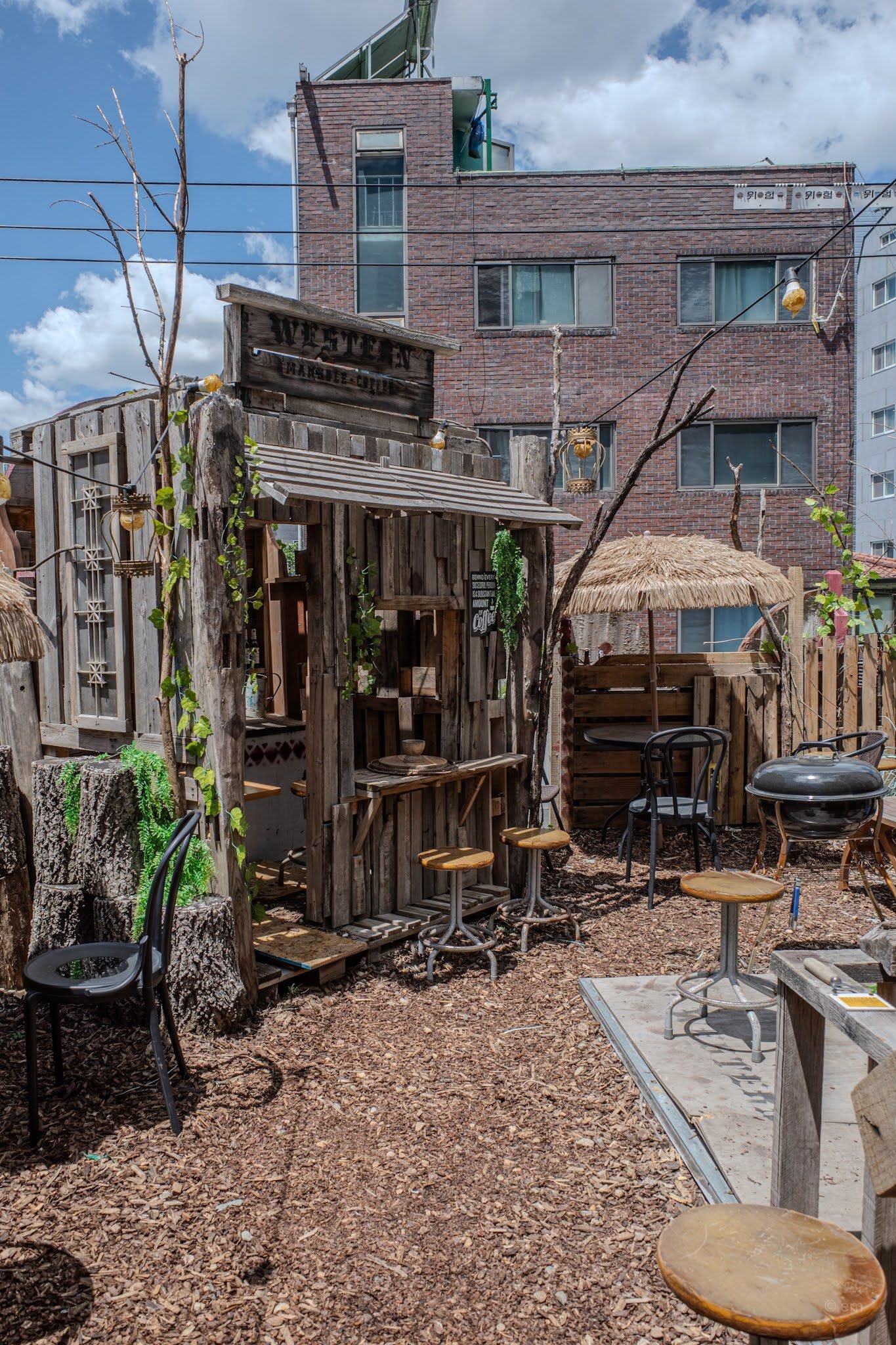
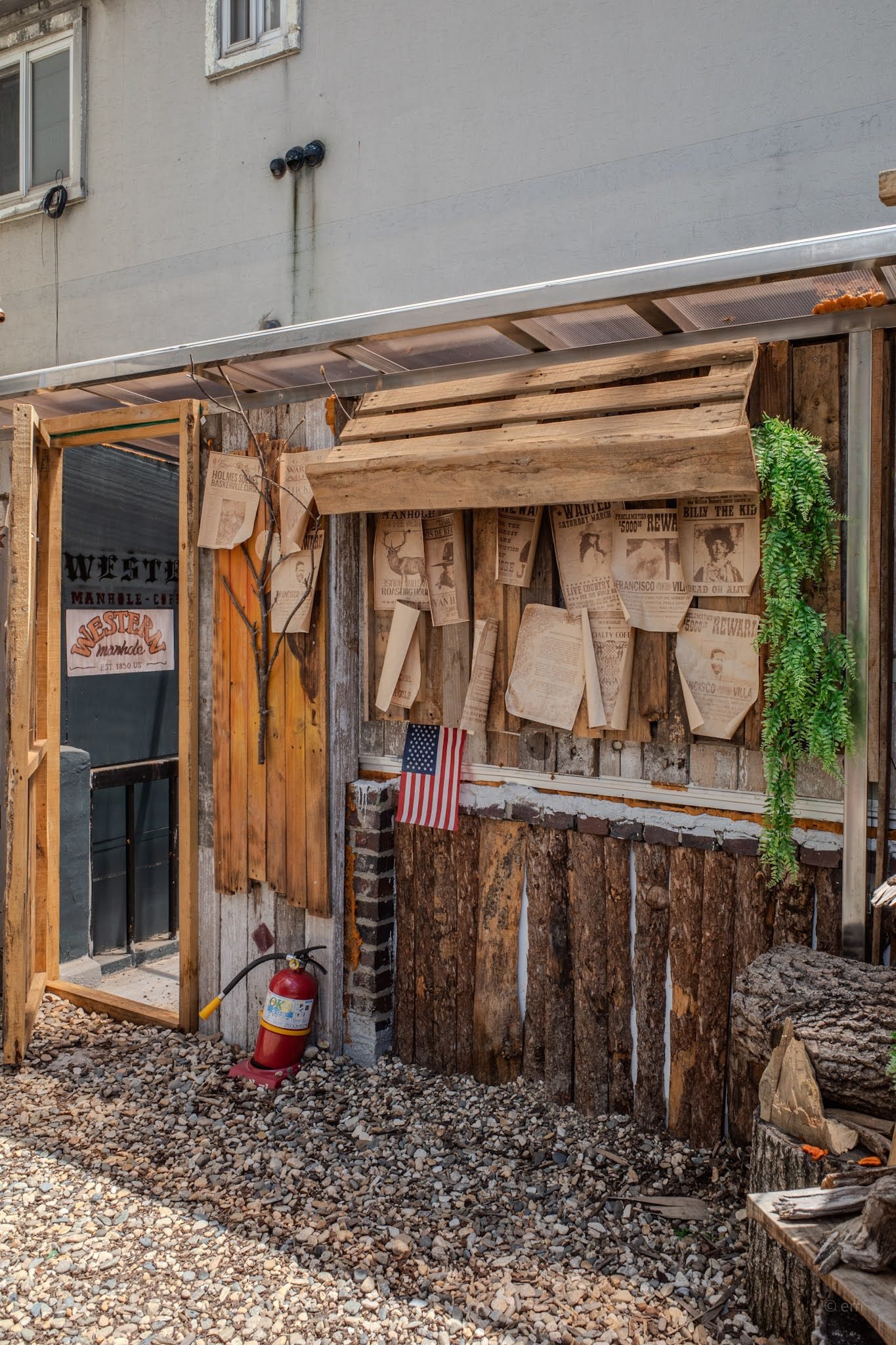
The outdoor area extended around the back into a proper yard: wood-chip ground, thatched grass umbrellas, rustic pallet benches, and a bulletin board plastered with Wanted posters — Billy the Kid, Francisco Villa, John Wesley Hardin. A place that took its theme seriously enough to get the details right.
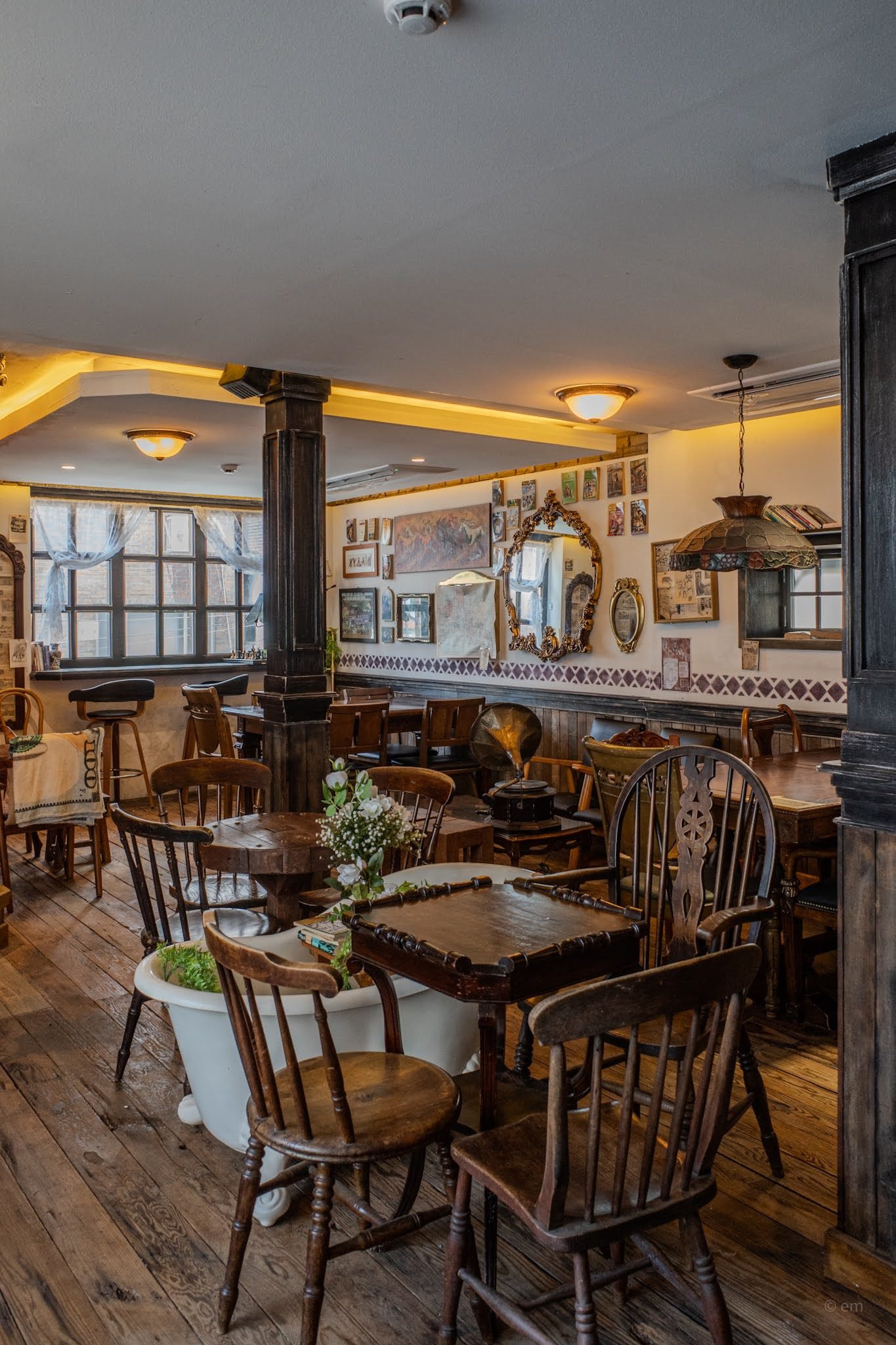
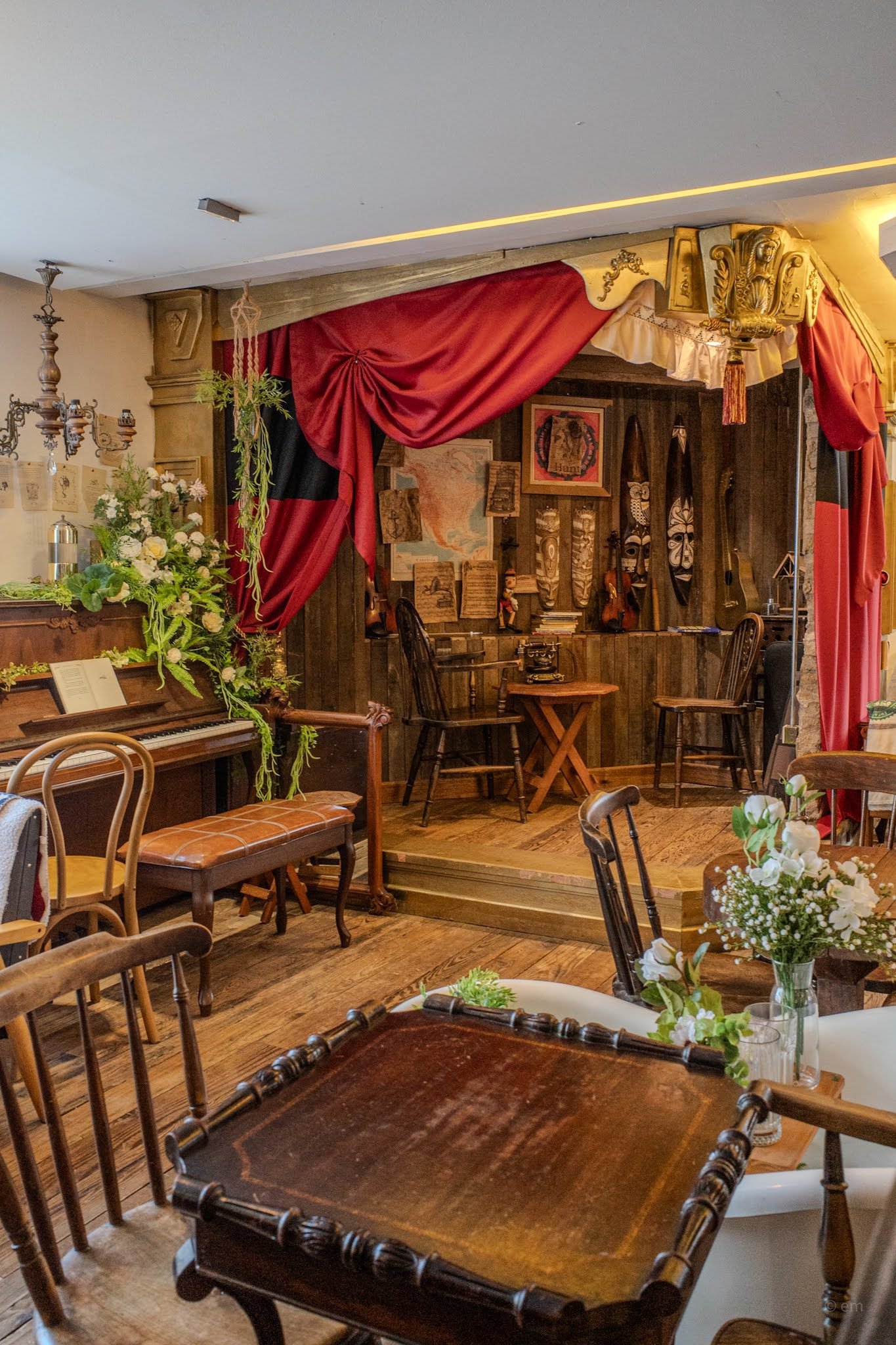
The Inside: Floor by Floor, Era by Era
Step through the saloon doors and the density of the place hit you immediately. This wasn’t a cafe with Western decor accents. This was a cafe that had consumed Western history wholesale and reconstructed it floor by floor.
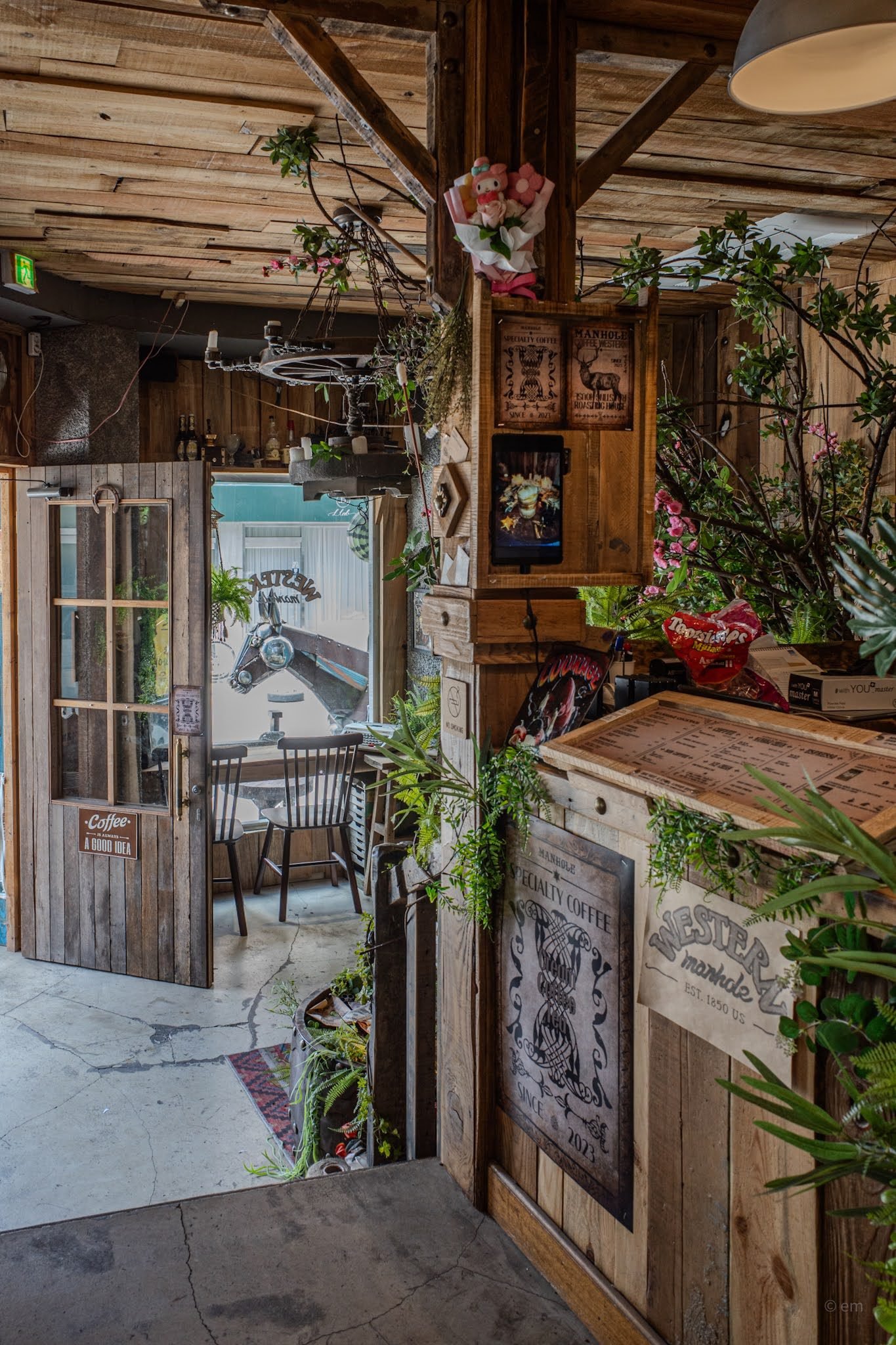
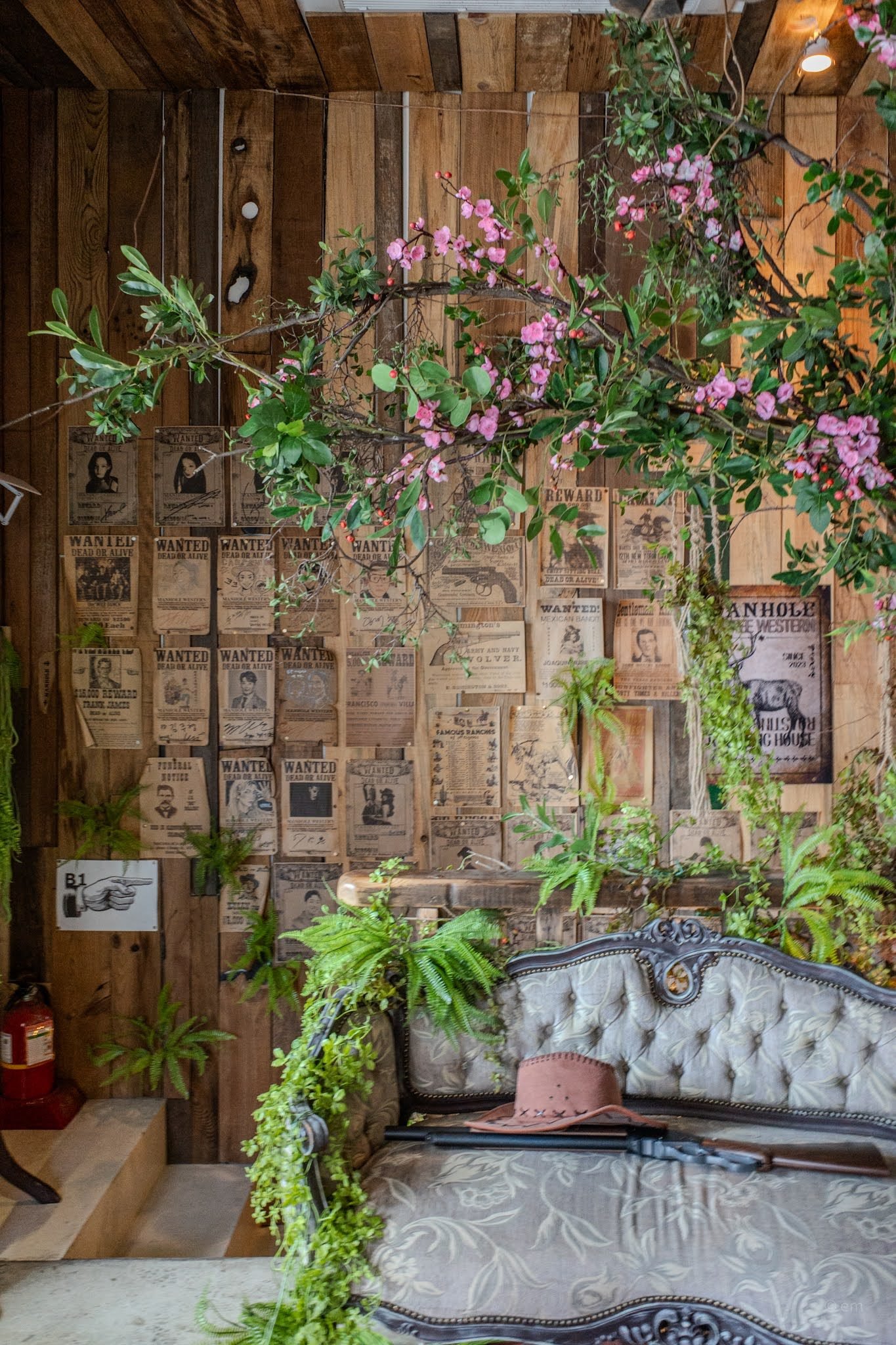
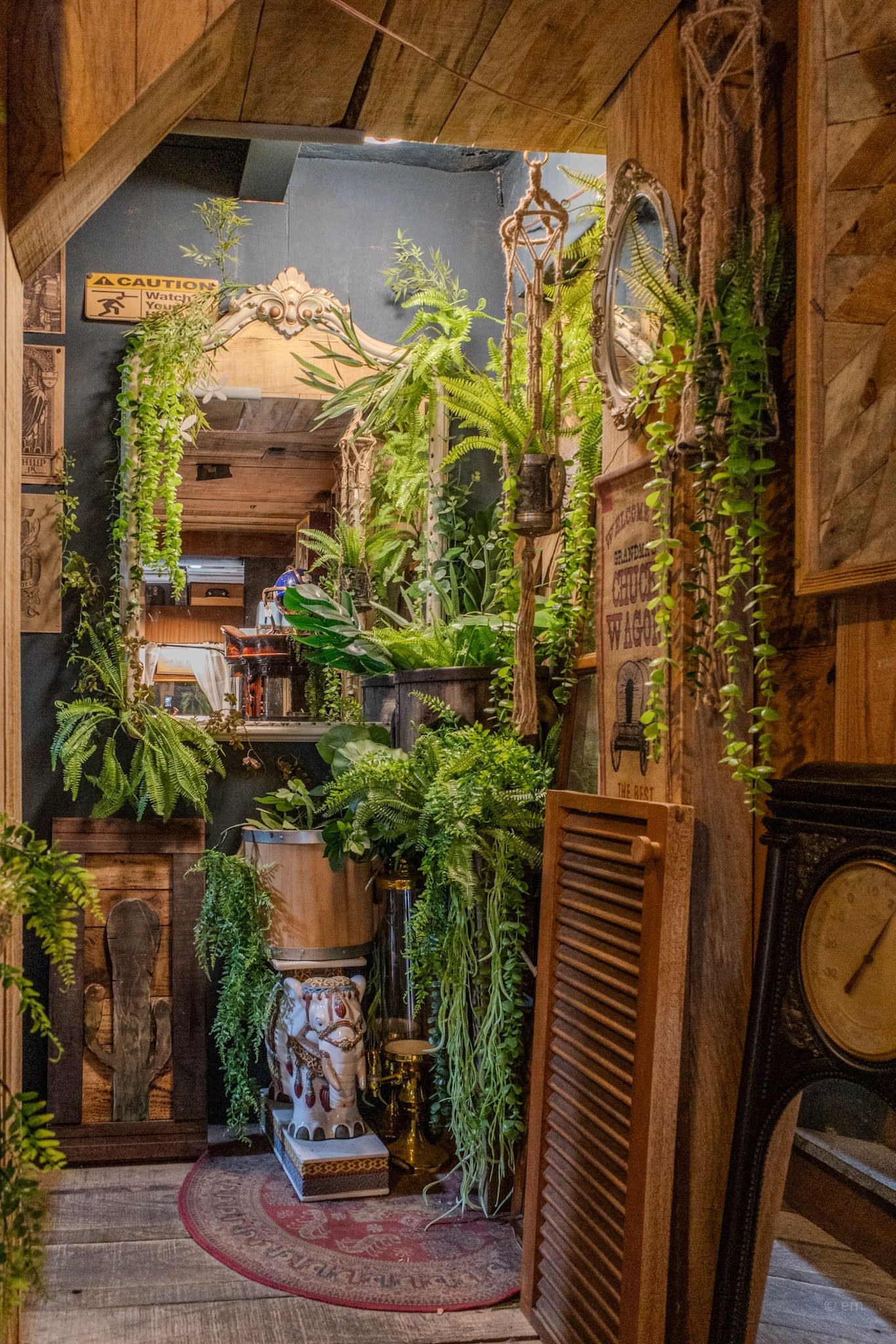
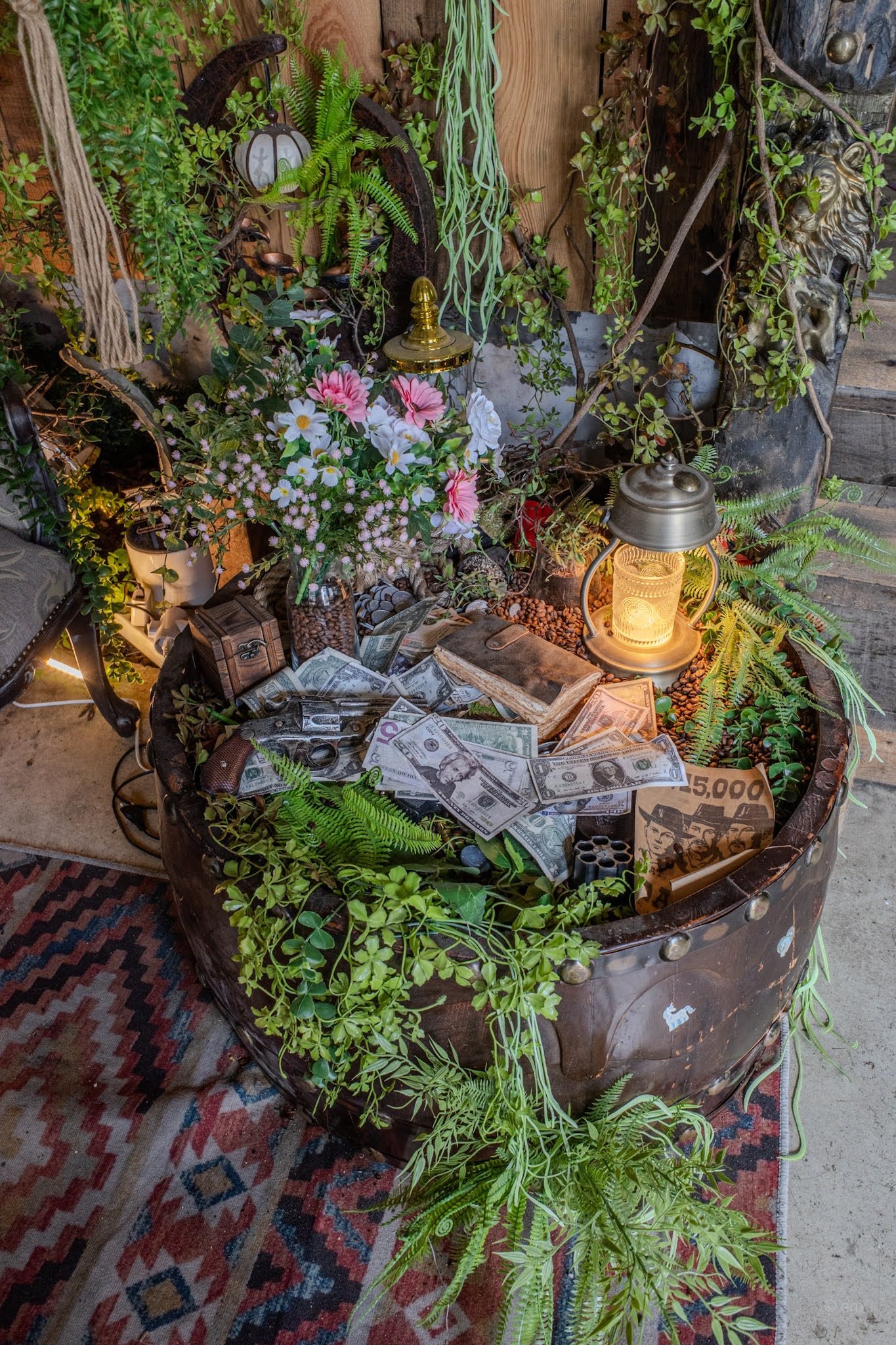
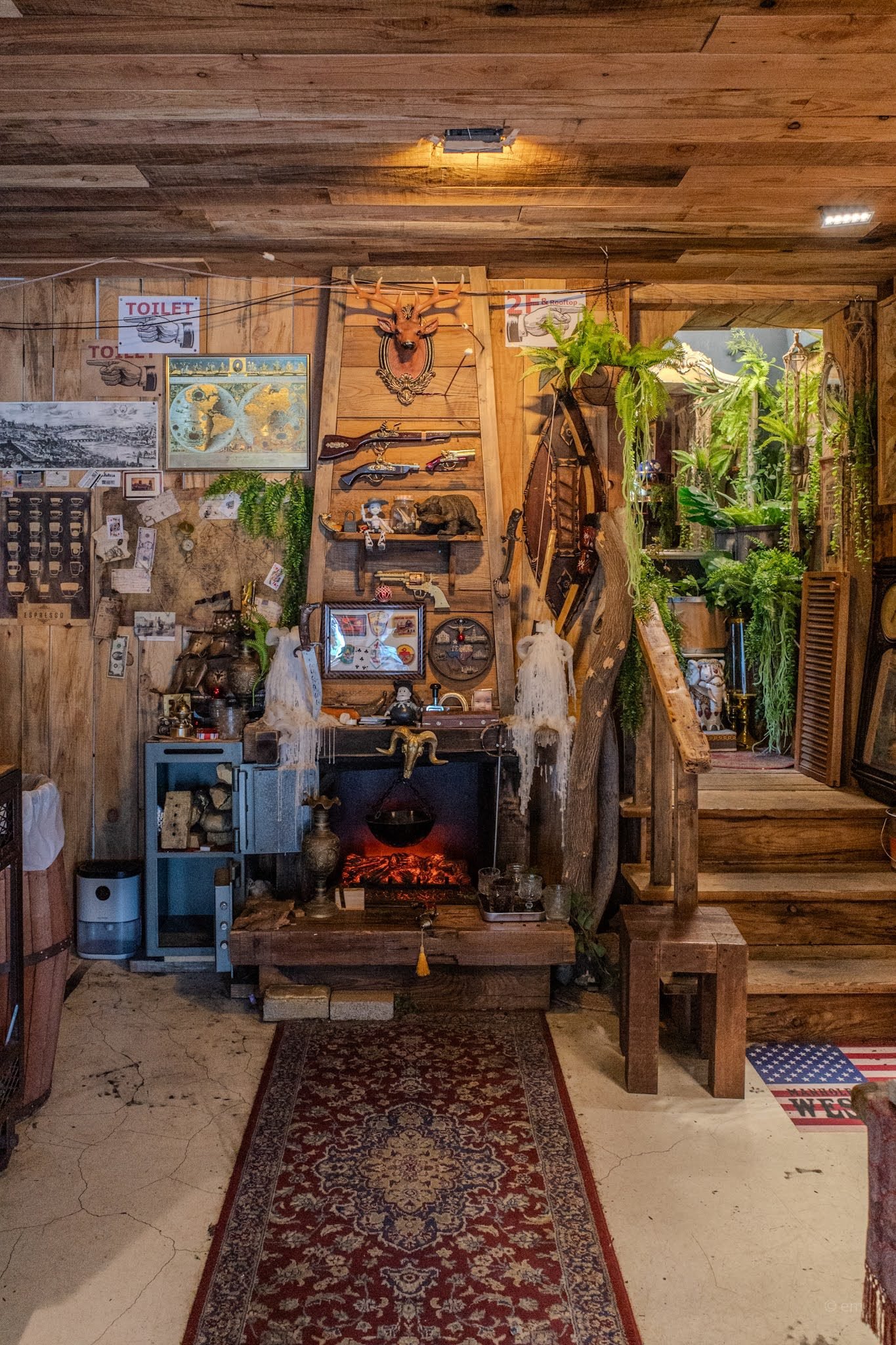
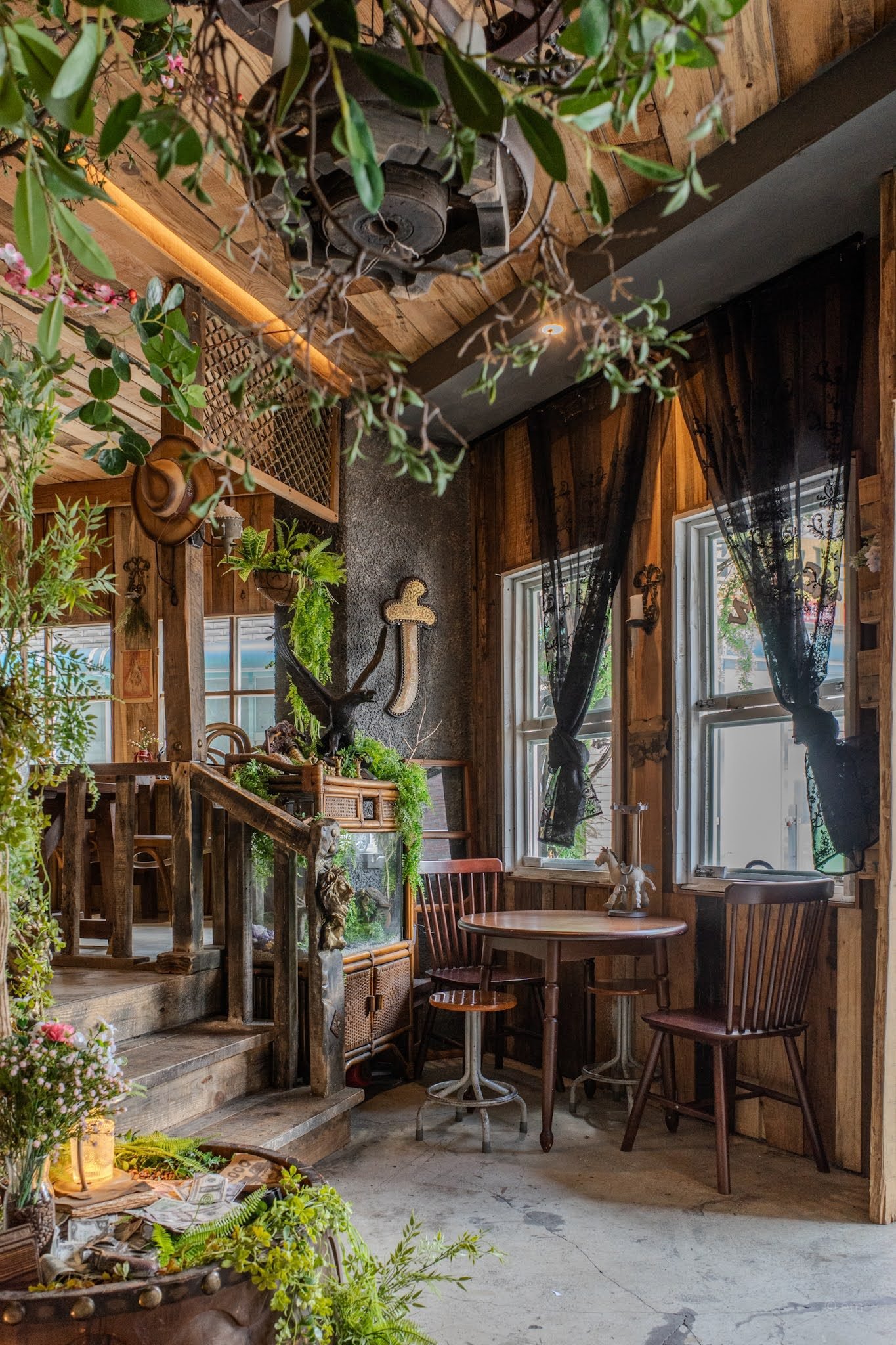
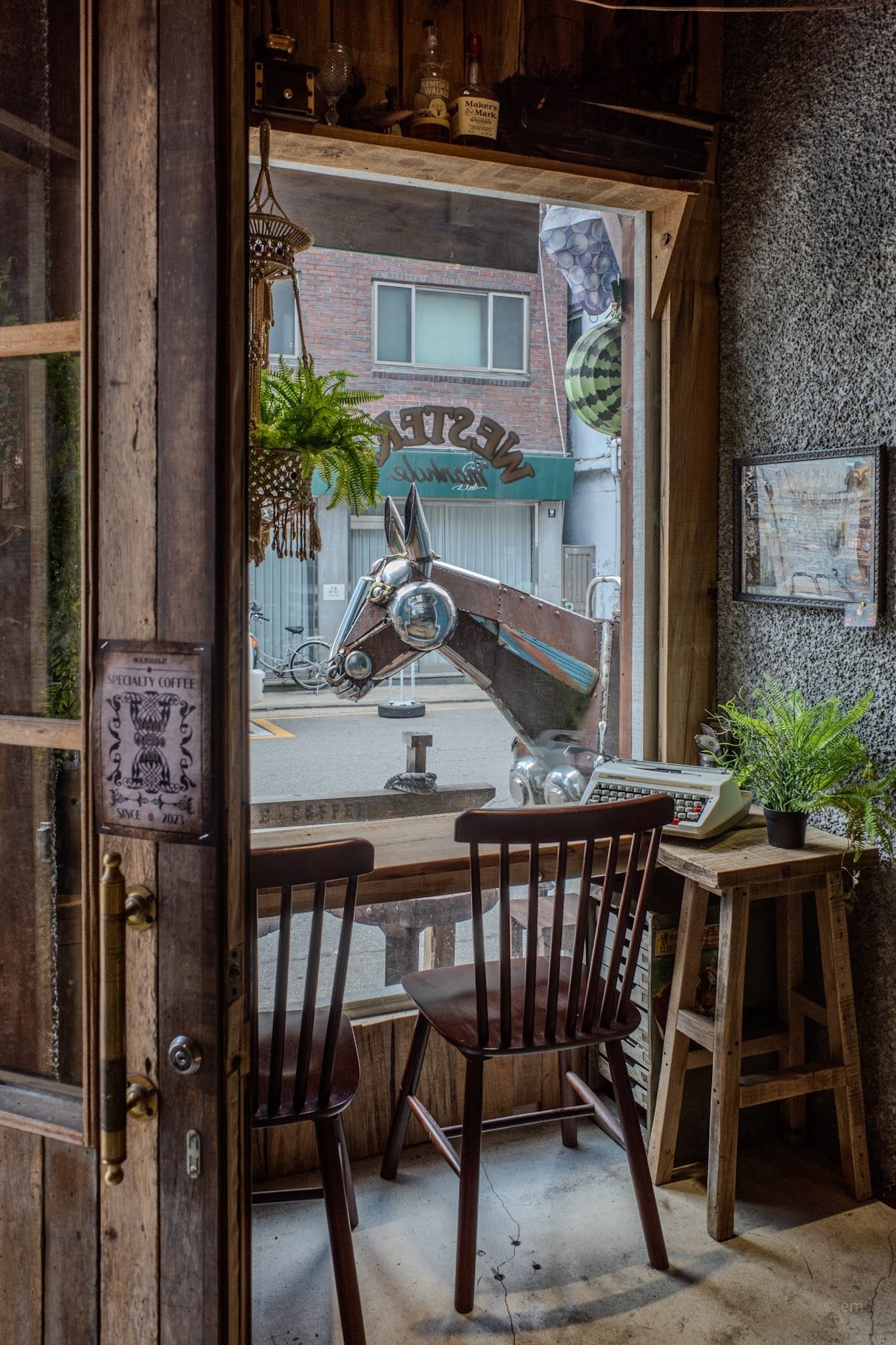
The ground floor was where the mood was set. A fake fireplace dominated one wall, framed by mounted rifles, antique pistols, and a stag head — the kind of arrangement that suggests someone once lived here, and wasn’t particularly peaceful about it. Across the room, a tufted Victorian sofa sat beneath an entire wall of Wanted posters — Dead or Alive notices, Reward bulletins, outlaw portraits — partially obscured by branches of pink flowering blooms that had somehow taken root and spread across the whole surface. The contrast was jarring and completely right. An antique display cabinet held orange ceramic cups, Wedgwood plates, green art glass, and boxed silver cutlery sets, every shelf curated with a flea market obsessive’s precision. Near the street-facing windows, round cafe tables sat beneath trailing greenery and black lace curtains, light filtering in past a life-sized metal horse sculpture standing in the alley outside. A barrel near the entrance had been turned into a miniature landscape — fake dollar bills, a leather journal, a lit lantern, ferns spilling over the rim. The ground floor was essentially a stage set that also happened to serve coffee.
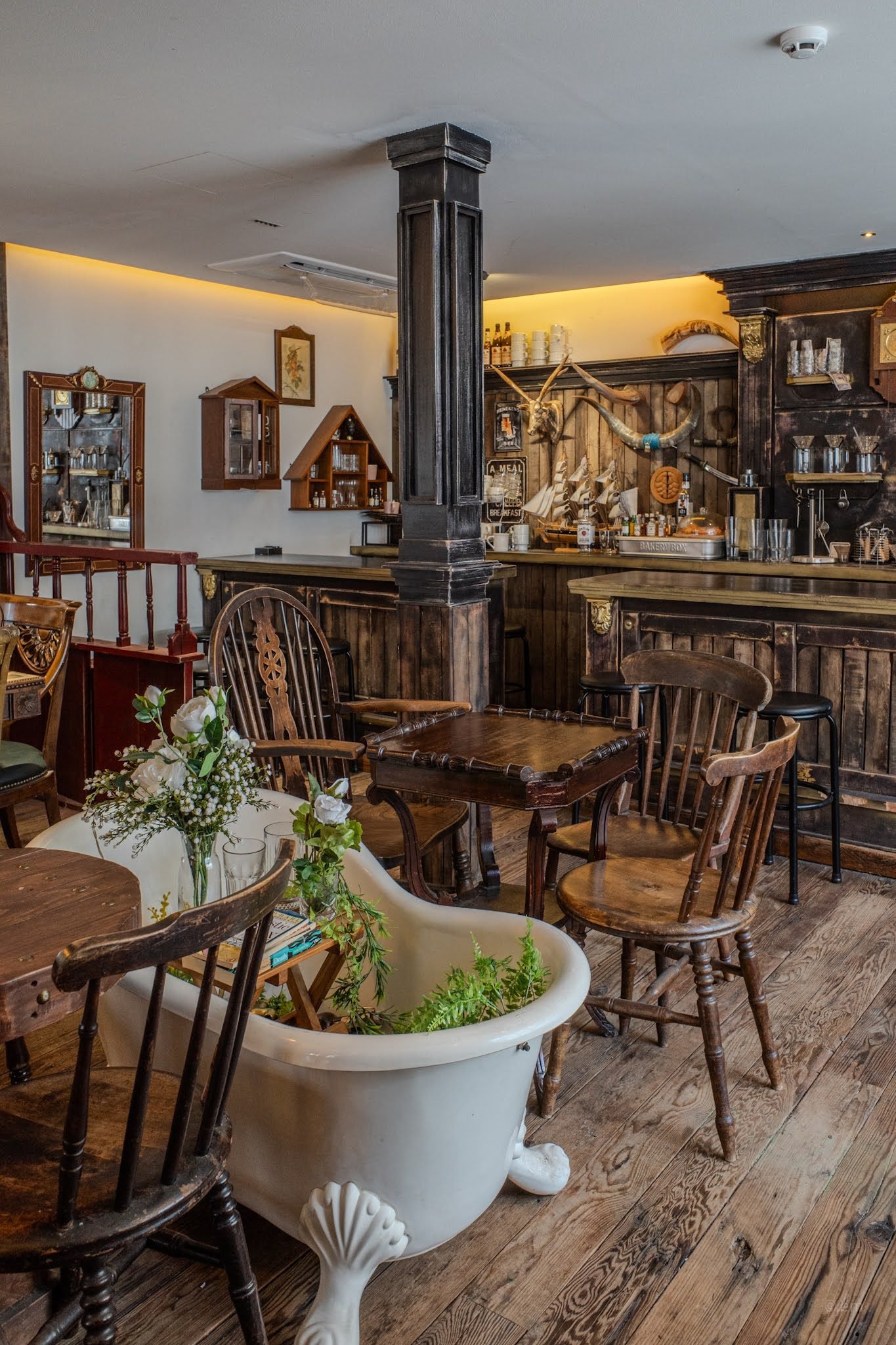
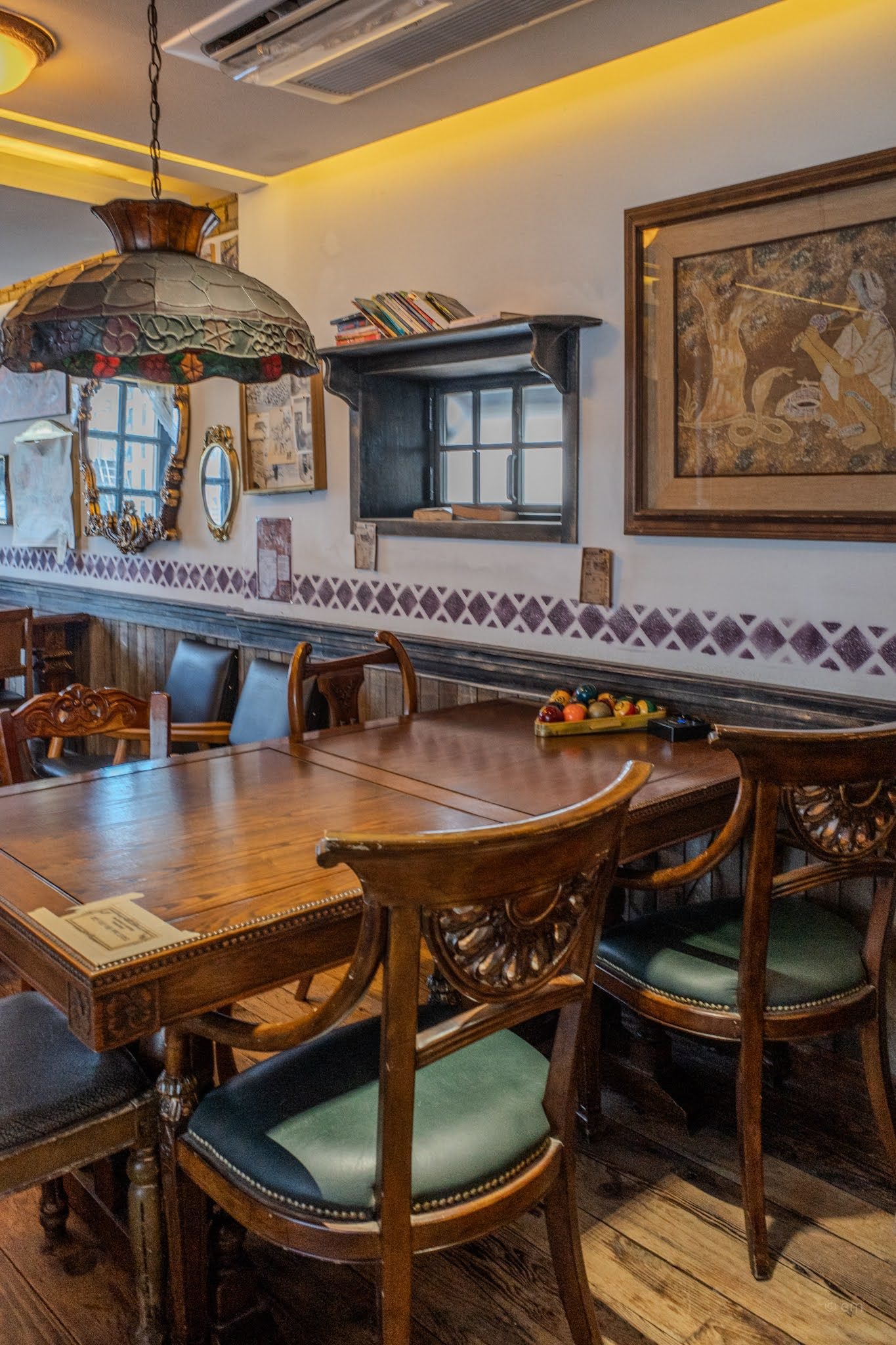
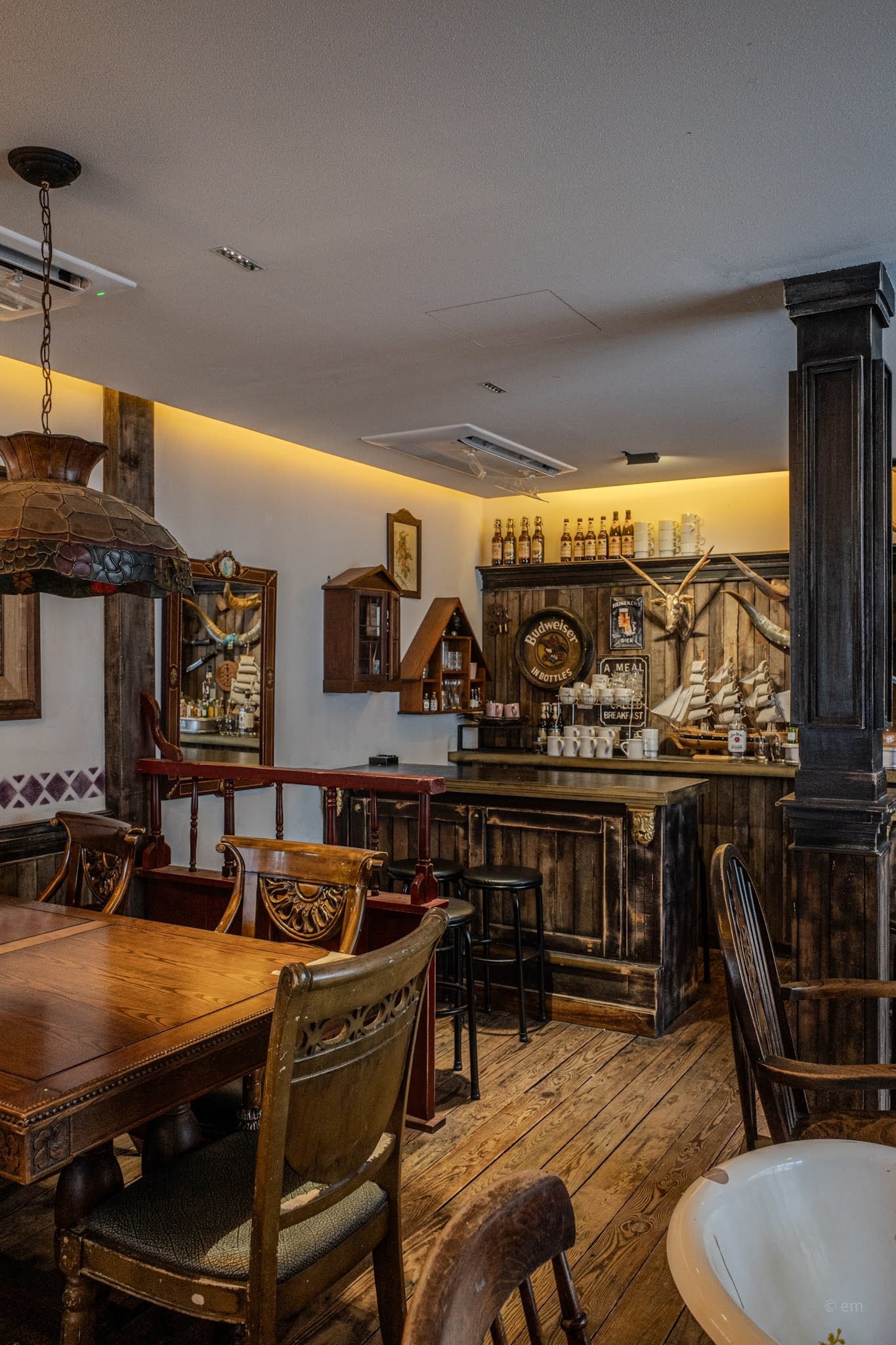
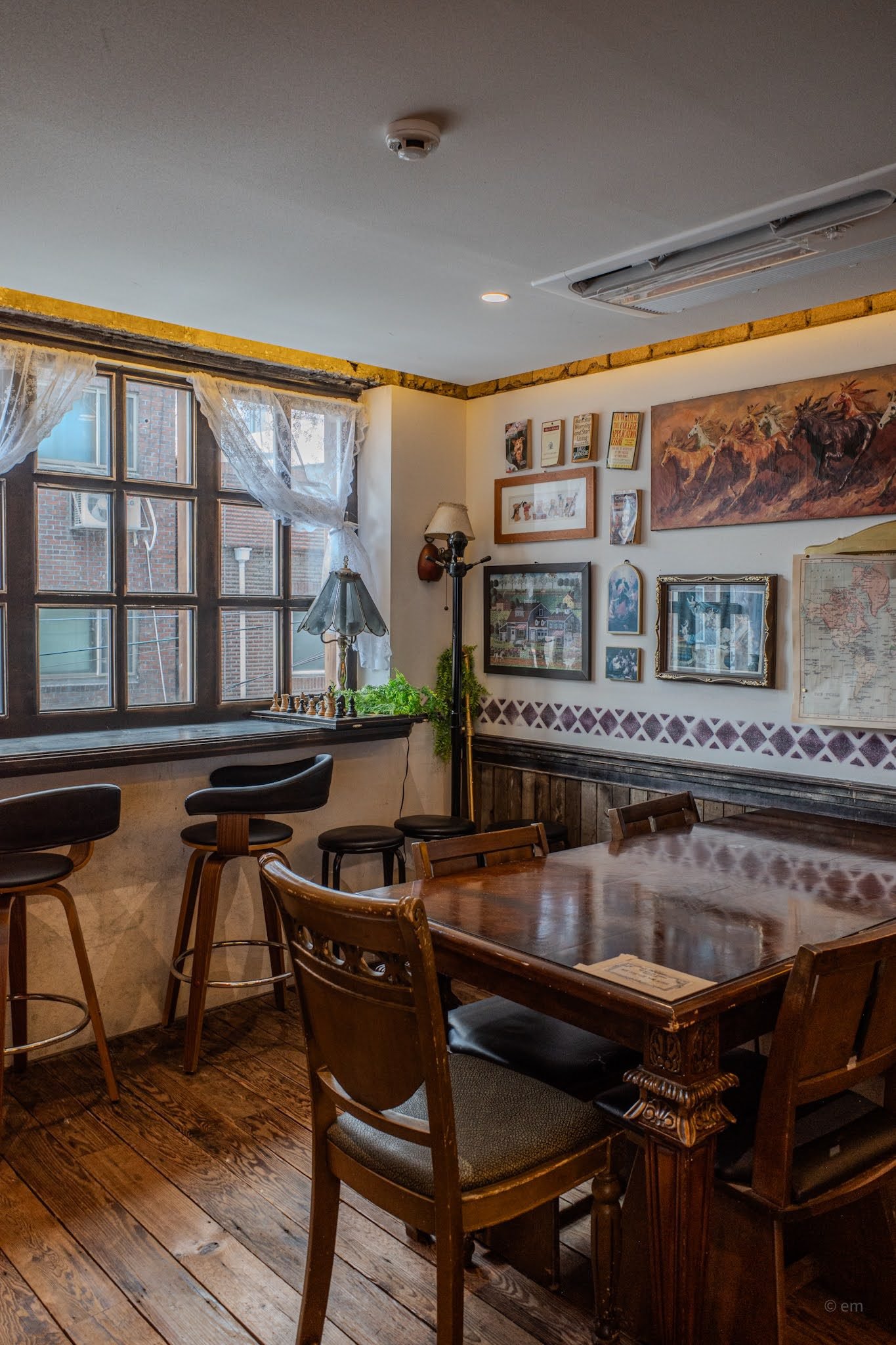
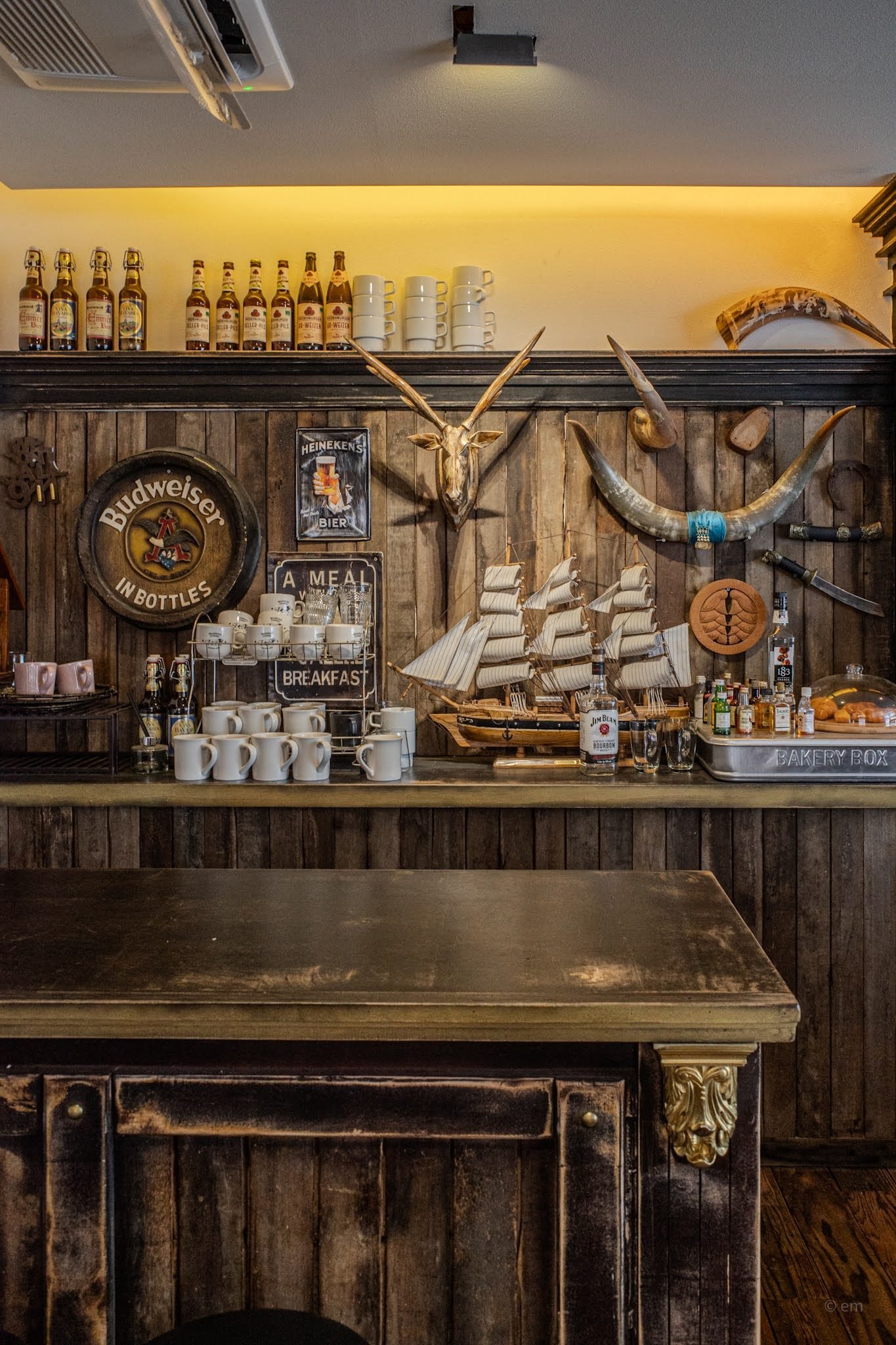
The second floor opened into the main event. Bar and theatre shared the same uninterrupted space here — no partition, no transition, just both things at once. The bar ran along one side: dark barnwood panels, animal horns mounted above, a Budweiser medallion, rows of whiskey bottles on warm backlit shelves, a proper espresso setup tucked among the Americana. Bar stools, a “Bakery Box” tin, a model tall ship. On the other side of the room, red velvet curtains were dramatically draped over a small raised stage, a vintage upright piano decorated with flowers beside it, tribal masks and carved totems on the back wall, a typewriter on a side table. Bar and theatre, occupying the same breath of air. Between them, the dining area: mismatched antique wooden chairs, wide-plank floors, an old gramophone on one of the tables, ornate gilt mirrors, a claw-foot bathtub repurposed as a planter. It looked perpetually ready for a performance that was always about to begin.
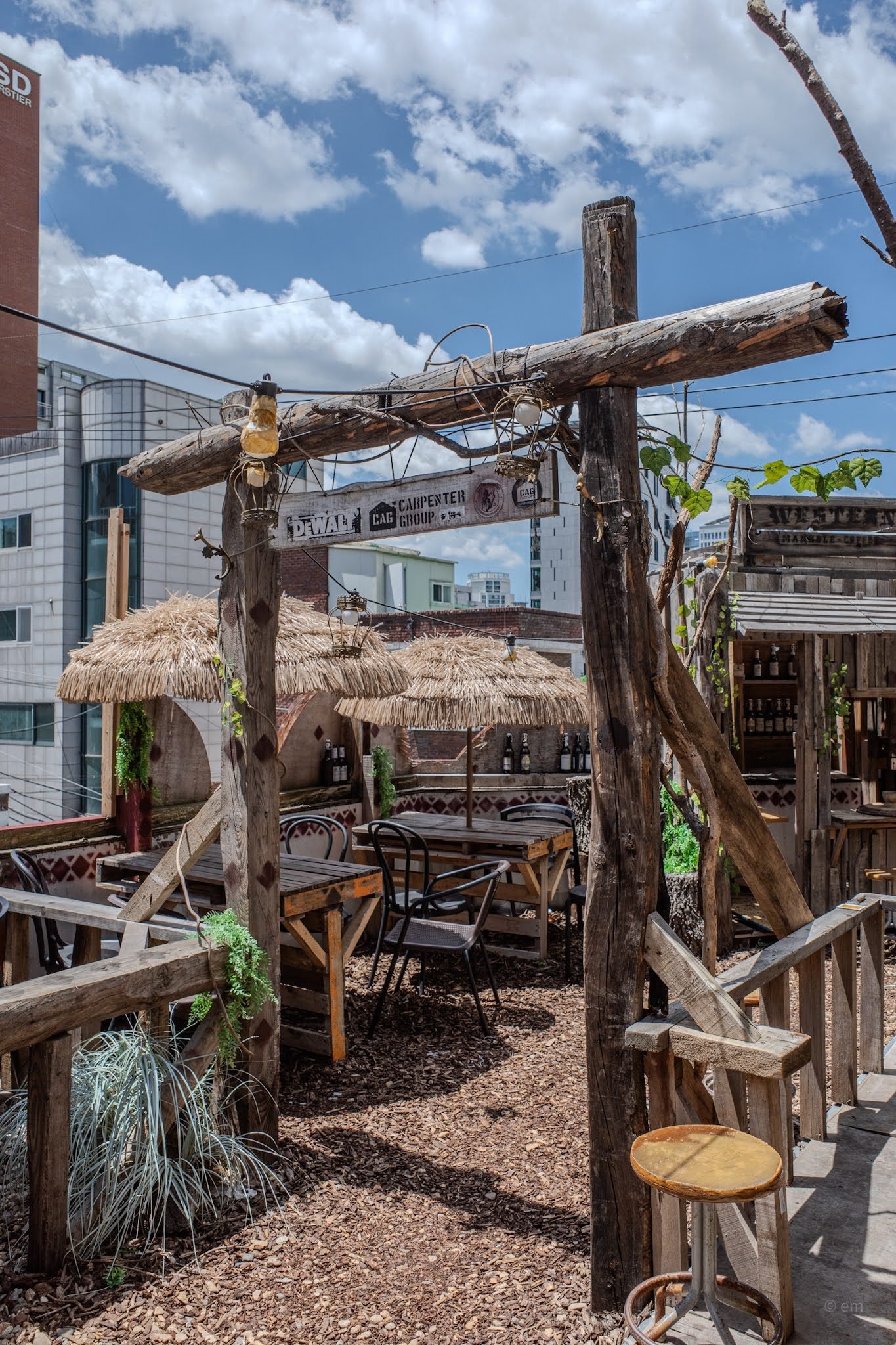
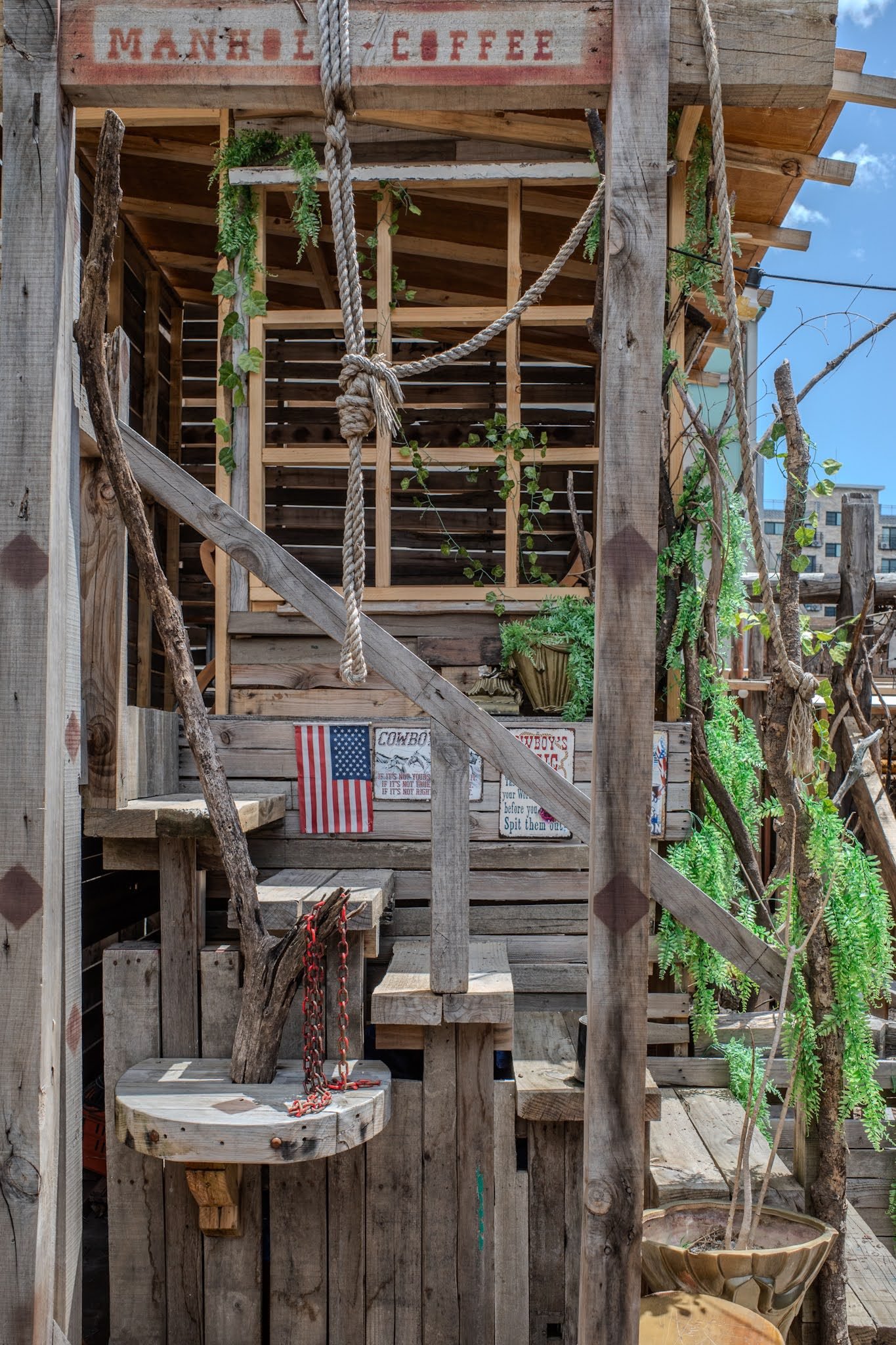
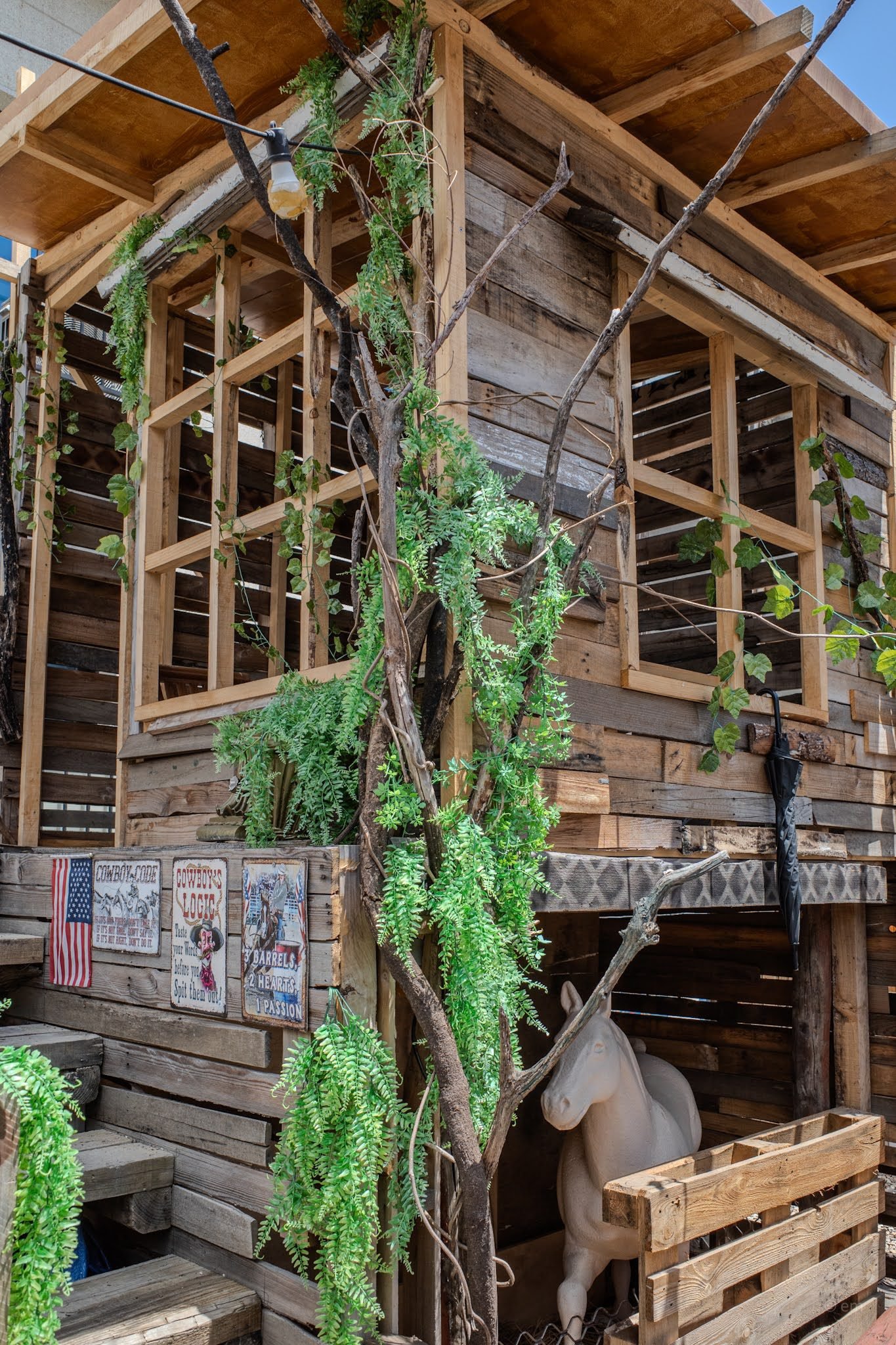
The rooftop was a different kind of wild. Rather than a standard outdoor terrace, the owners had constructed what can only be described as a horse stable-meets-frontier outpost up top — rough-sawn timber frames, reclaimed wood siding, vines trailing over the structure, a ceramic horse figure tucked under the eaves. Cowboy Code signs tacked to the walls. Thatched grass umbrellas over picnic tables. The whole thing felt like a set piece airlifted from a ranch and dropped onto a Seoul rooftop.
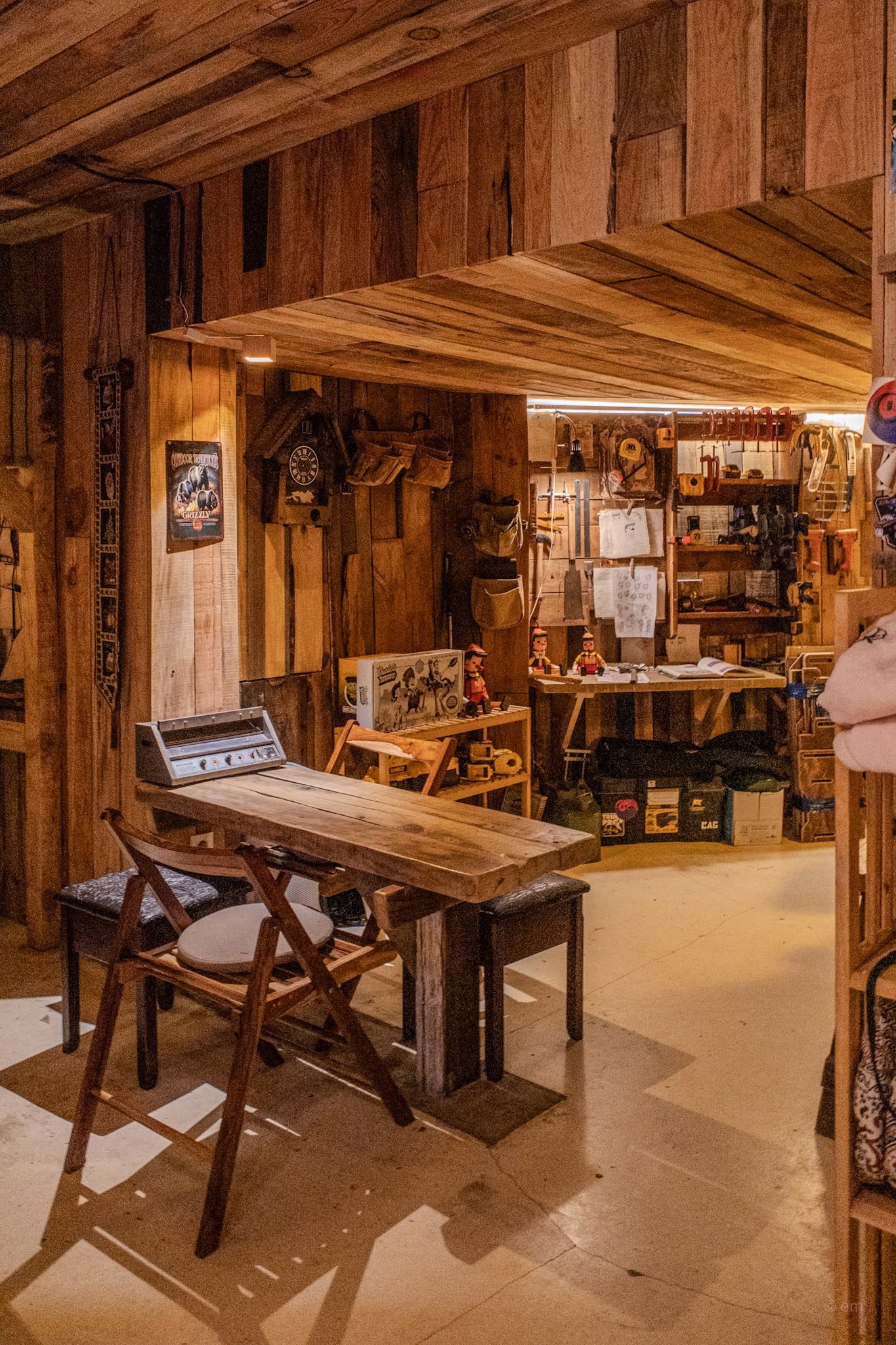
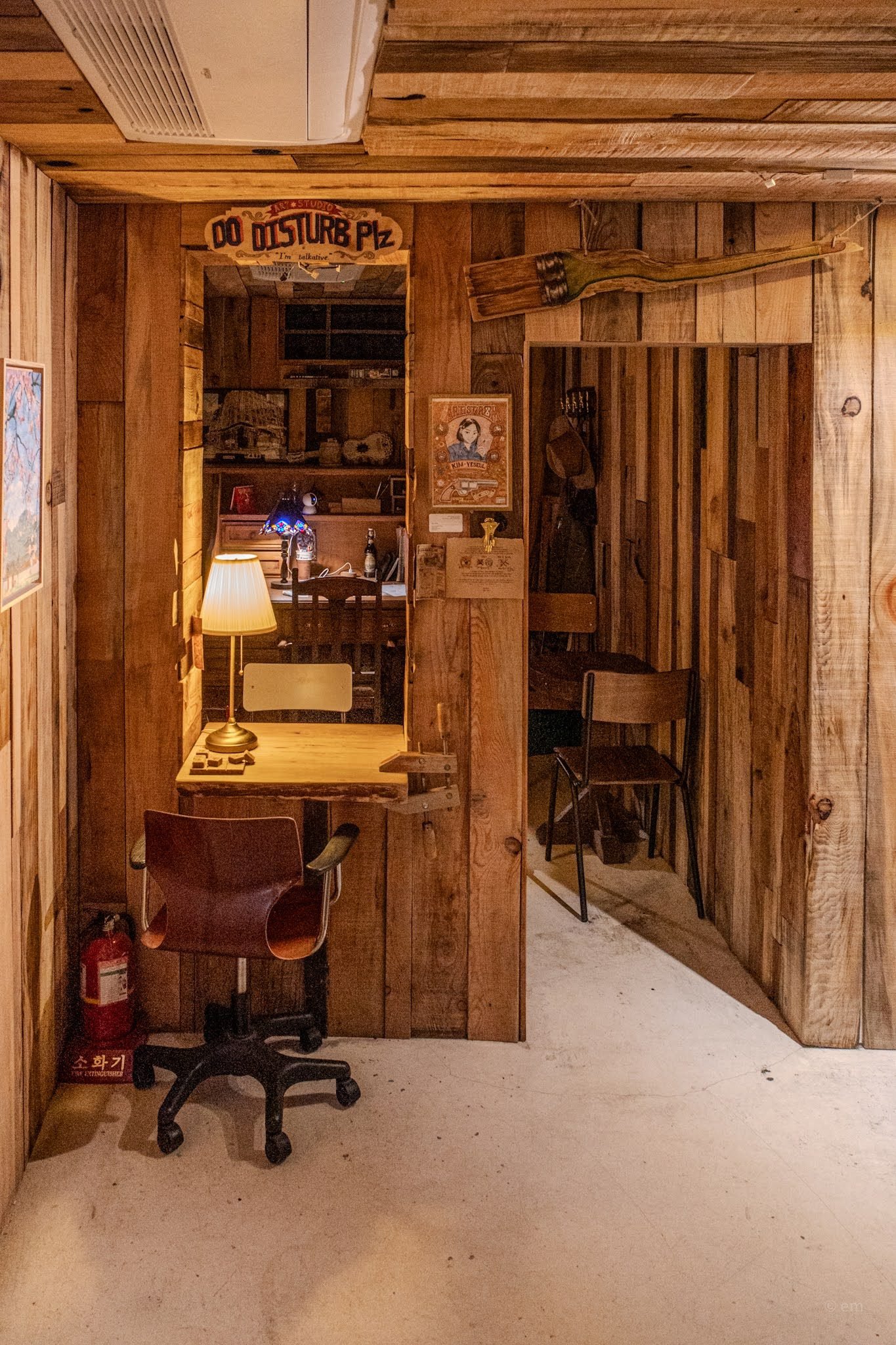
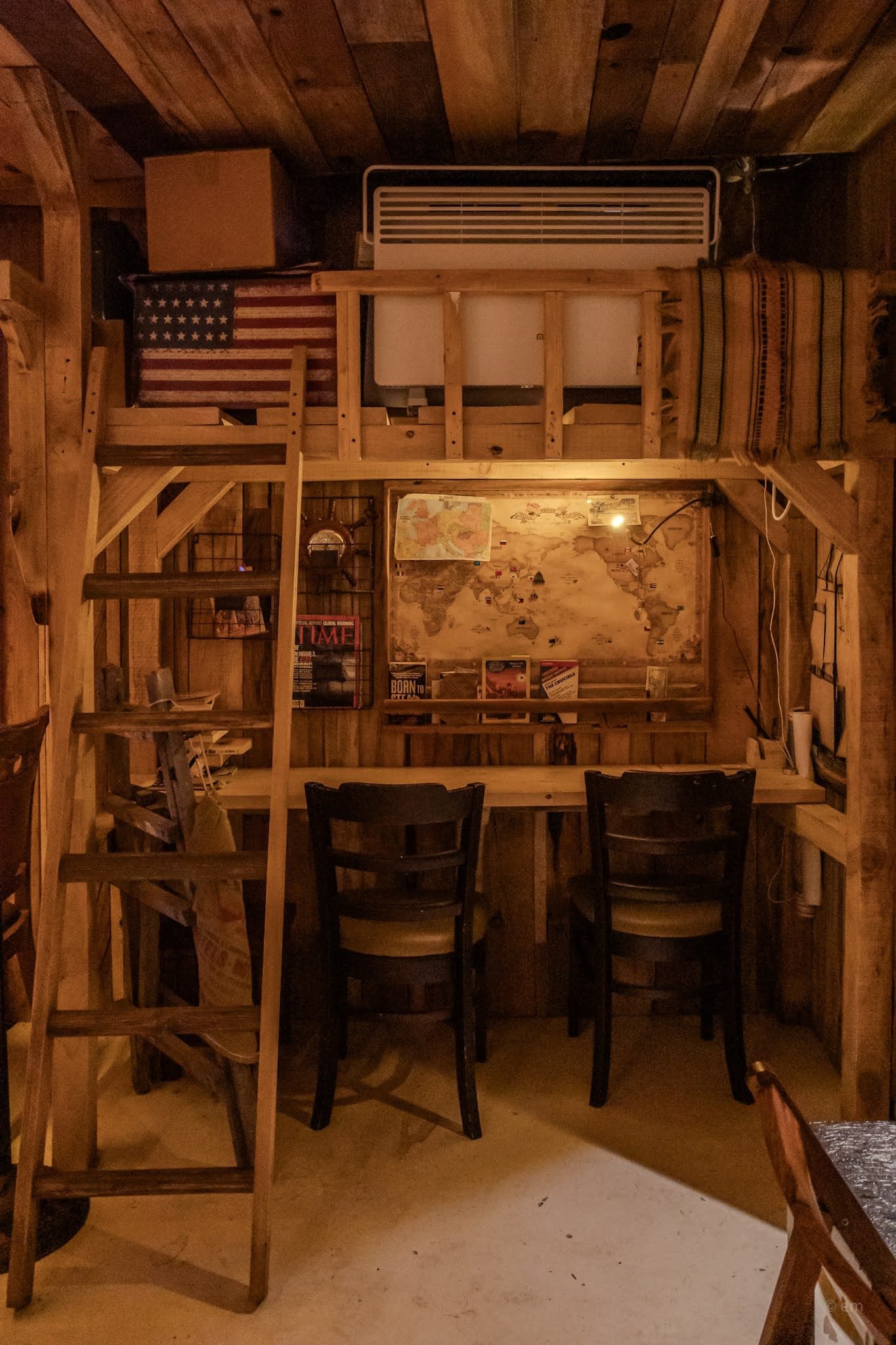
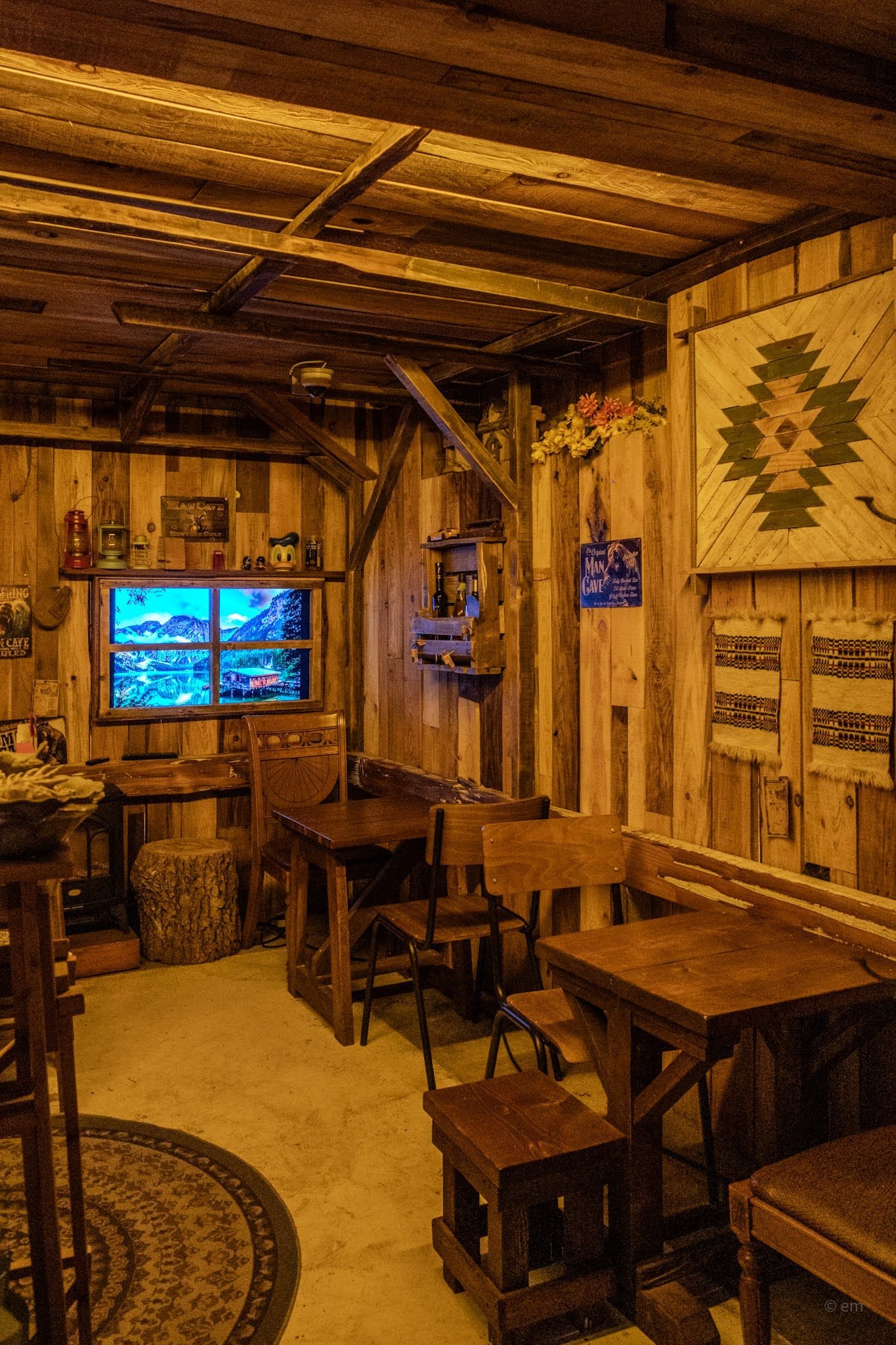
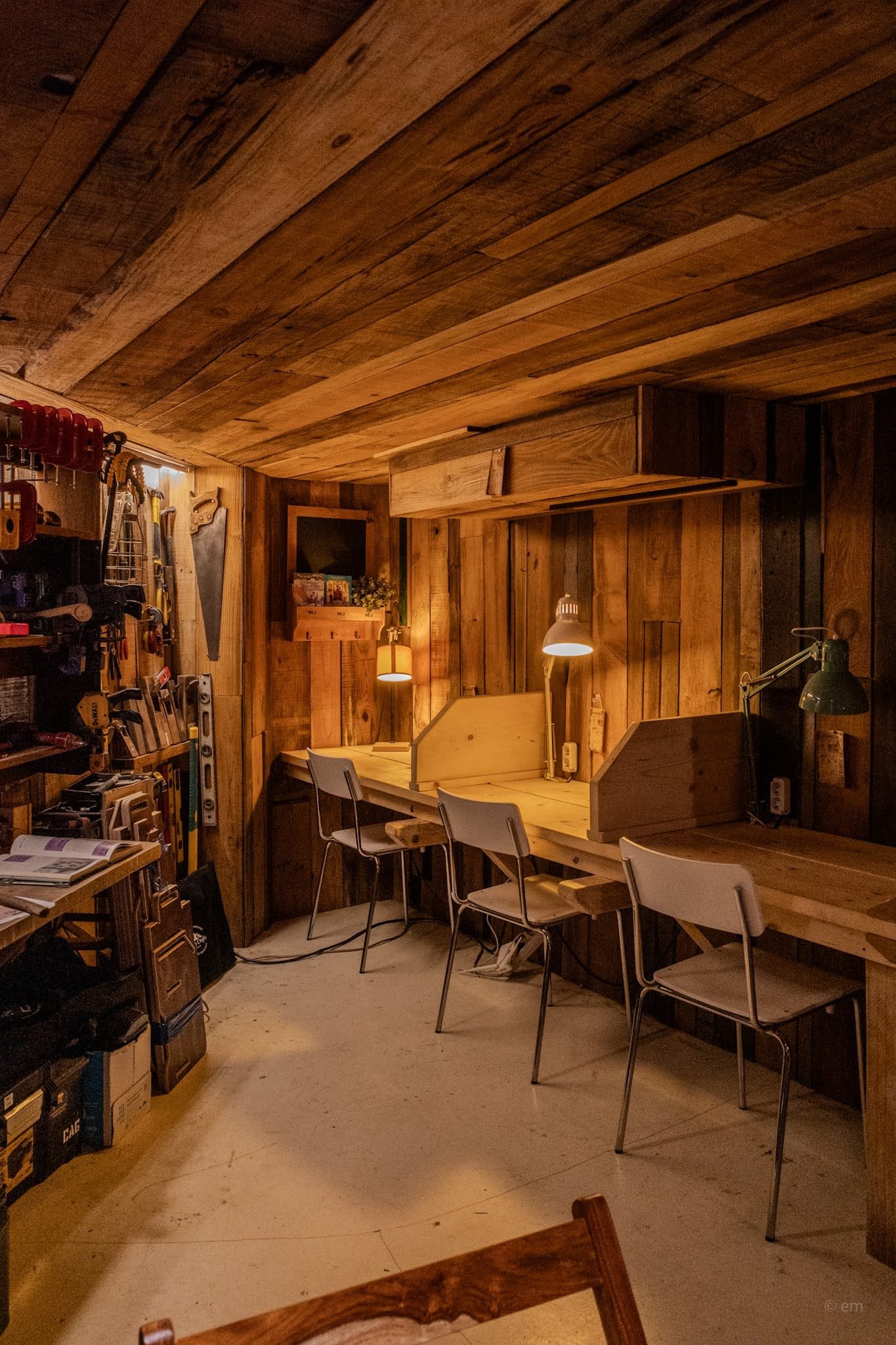
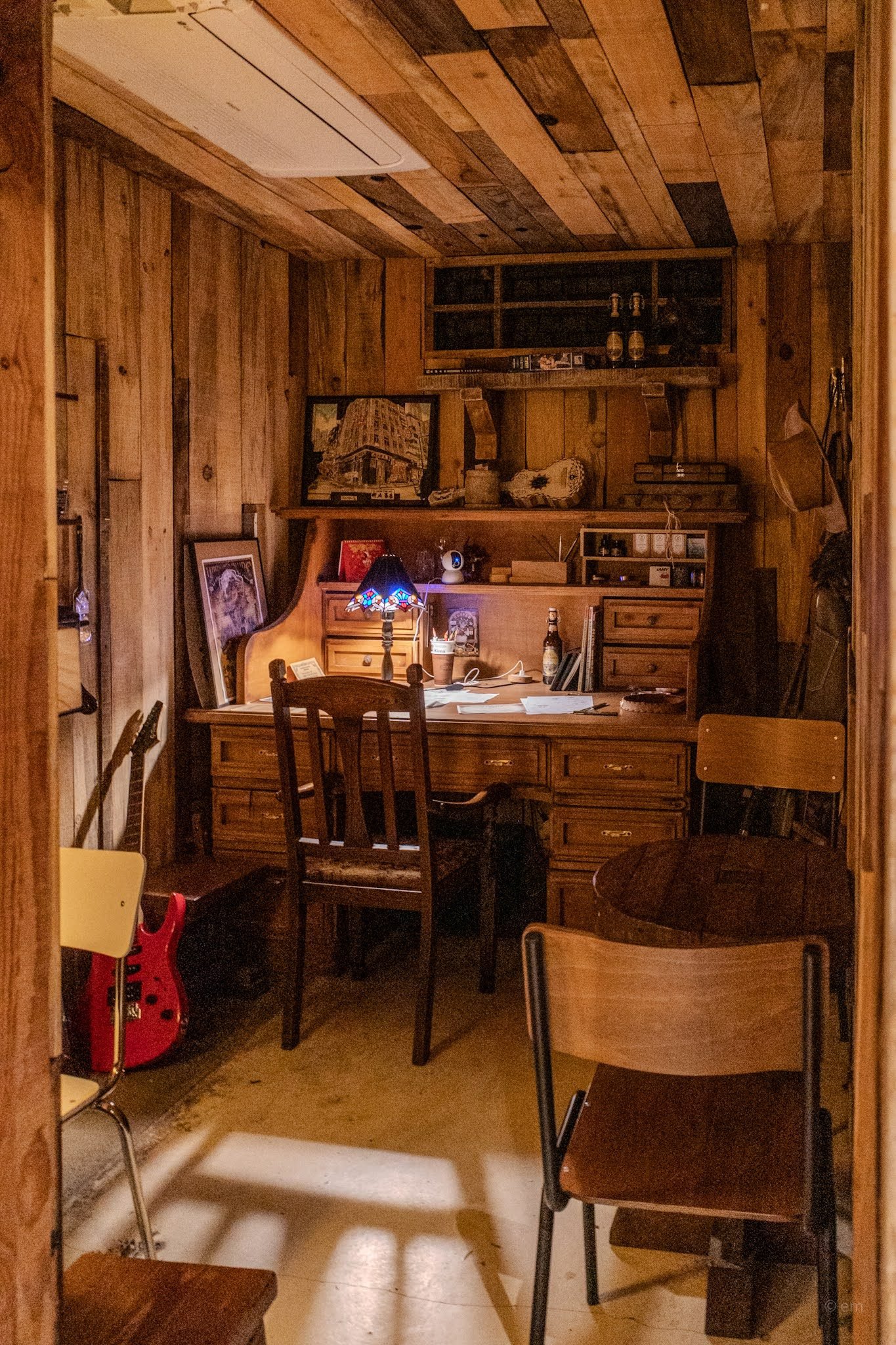
The basement pulled the atmosphere somewhere else entirely. Mountain cabin territory: raw log construction, plank ceilings, warm amber light. Intimate nooks accessed through low corridors — a loft seating alcove reached by a wooden ladder, a world map pinned to the wall above with old issues of TIME on the shelf. A private room styled as a writer’s study: roll-top desk, a Tiffany lamp, a red electric guitar in the corner, a bottle of Paulaner on the desk. A “Man Cave” room glowing amber, a screen playing mountain landscapes, a geometric quilt pattern on the wall. A plant corridor so overgrown with hanging ferns and trailing greenery that passing through it felt like entering a greenhouse that had quietly absorbed a frontier lodge.
The craftsmanship throughout was genuinely impressive. All the wood — ceilings, walls, bar counters, stairs — was reclaimed lumber. The whole place was reportedly built from salvaged material from an old hardware shop that previously occupied the space, run by an elderly couple.
What It Is Now
In 2023, the space began its next chapter. The Western cafe is still there, but the owners have expanded: Manhole Coffee Western Bookshop (맨홀커피웨스턴책방) now occupies a connected space, turning the complex into a three-part venue — the original Manhole Coffee, the Western cafe, and the new bookshop. The bookshop reportedly carries comics and literature across multiple floors, with the underground level dedicated entirely to reading. A separate building called the Coffee Lab was added across the street to handle overflow.
The vibe — obsessive, handbuilt, deeply personal — seems intact. The owners aren’t the type to half-step a concept.
Getting There
맨홀커피 웨스턴 (Manhole Coffee Western) 서울 영등포구 영등포로27길 24 Nearest station: Yeongdeungpo-gu Office (영등포구청역), Exit 6 Hours: 12:00–21:30, closed Monday & Tuesday
These photos are from a visit during the original cafe period. The space has since expanded with the addition of the bookshop. If you visit now, expect the same Western chaos — plus shelves.
![[Lost] Gazette](https://hiddencollector.thesensitiveways.com/wp-content/uploads/2026/03/R0012766-200x300.jpeg)