Gazette, Songpa: A New York Diner That Seoul Didn’t Know It Needed (And Lost Too Soon)
Some places leave a mark not because they were the most famous, or the most polished, but because they had a point of view. Gazette was one of those places.
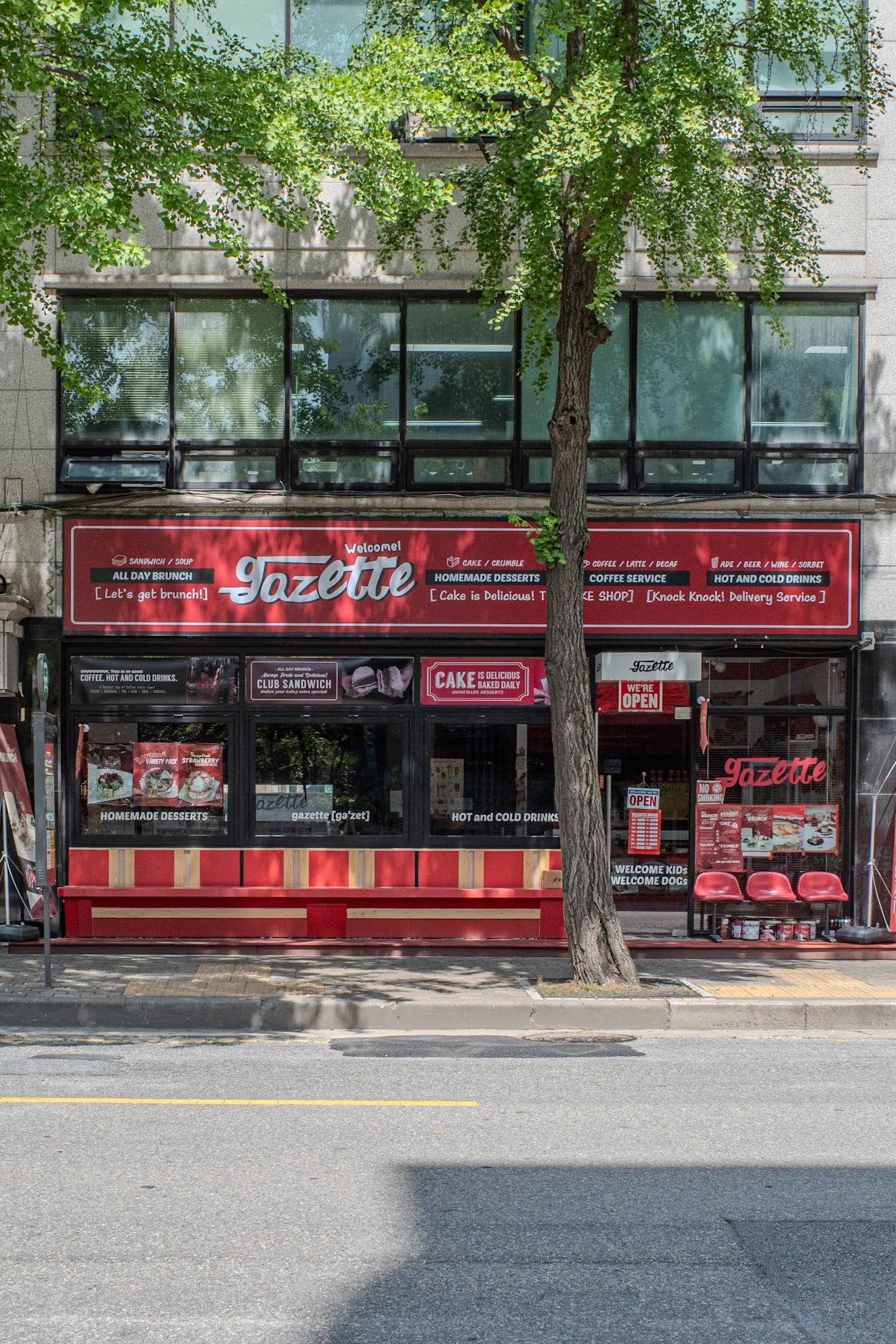
Tucked just a short walk from Olympic Park in Songpa-gu, Gazette operated out of a red-and-black storefront on Wiryeseong-daero 12-gil — the kind of address you’d pass without noticing until, one day, you did. And then you couldn’t unsee it.
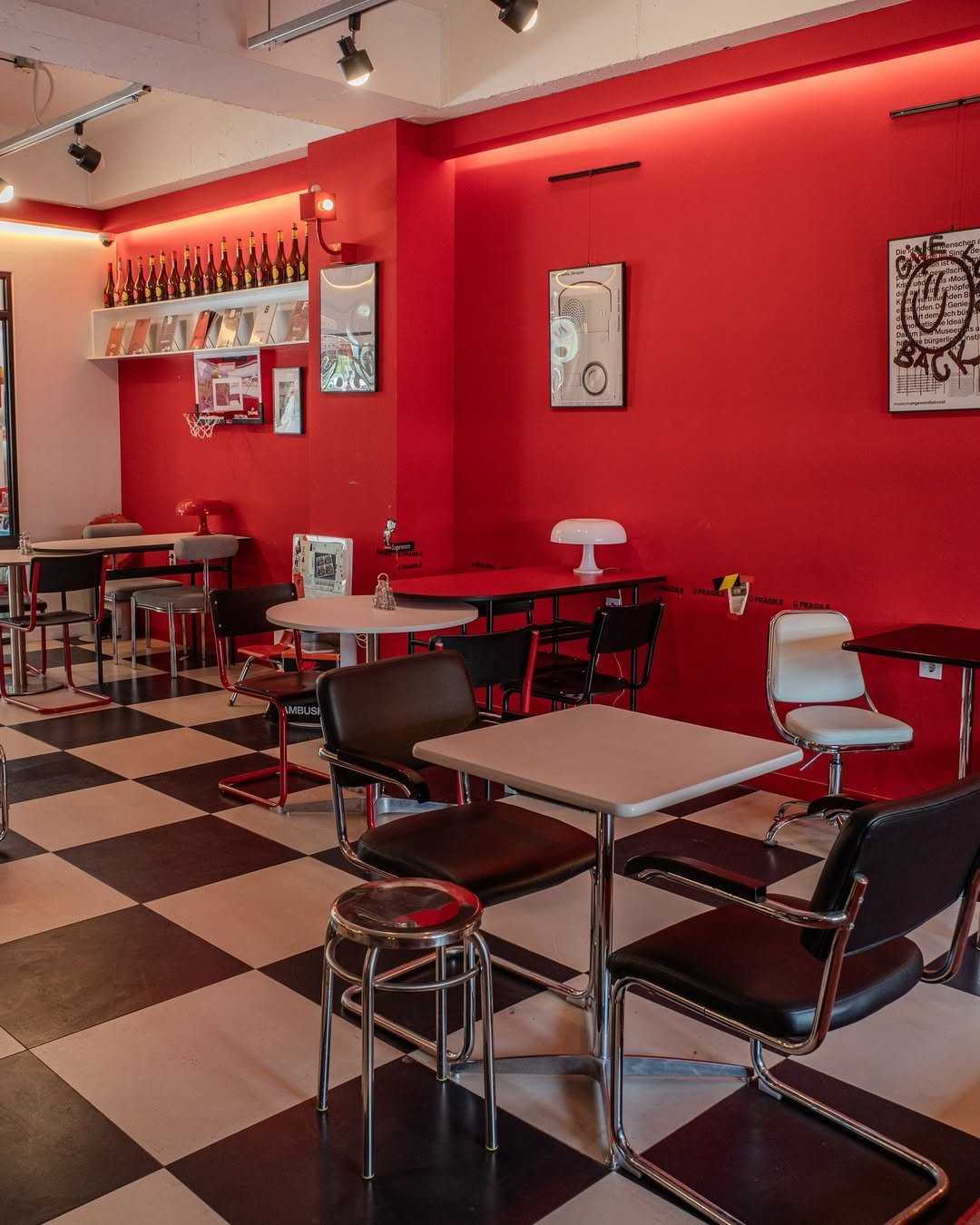
Red as a Philosophy
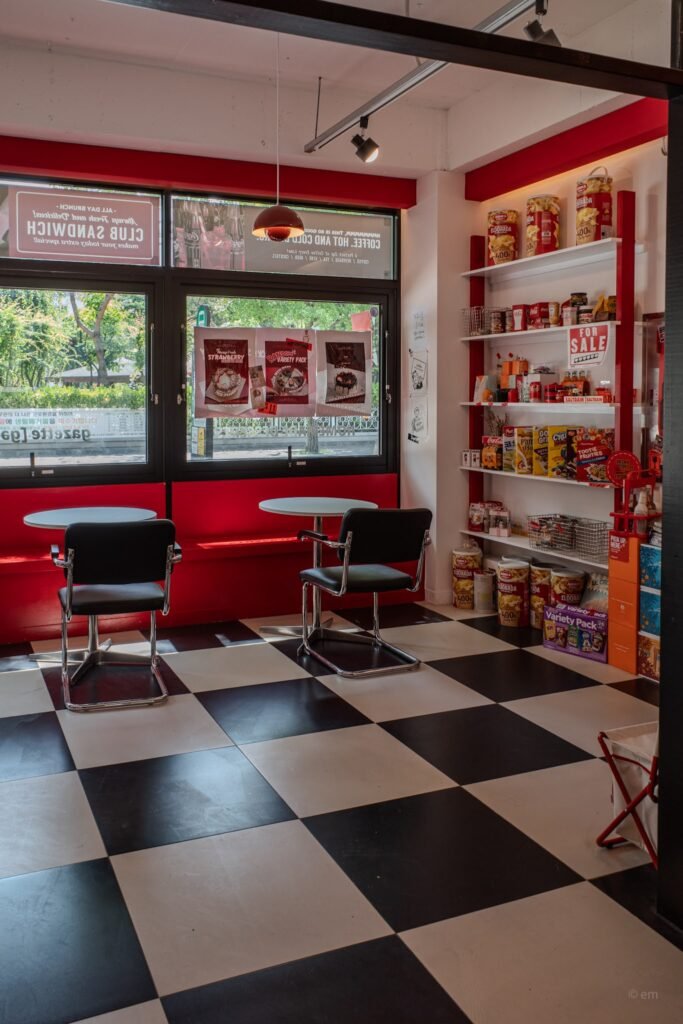
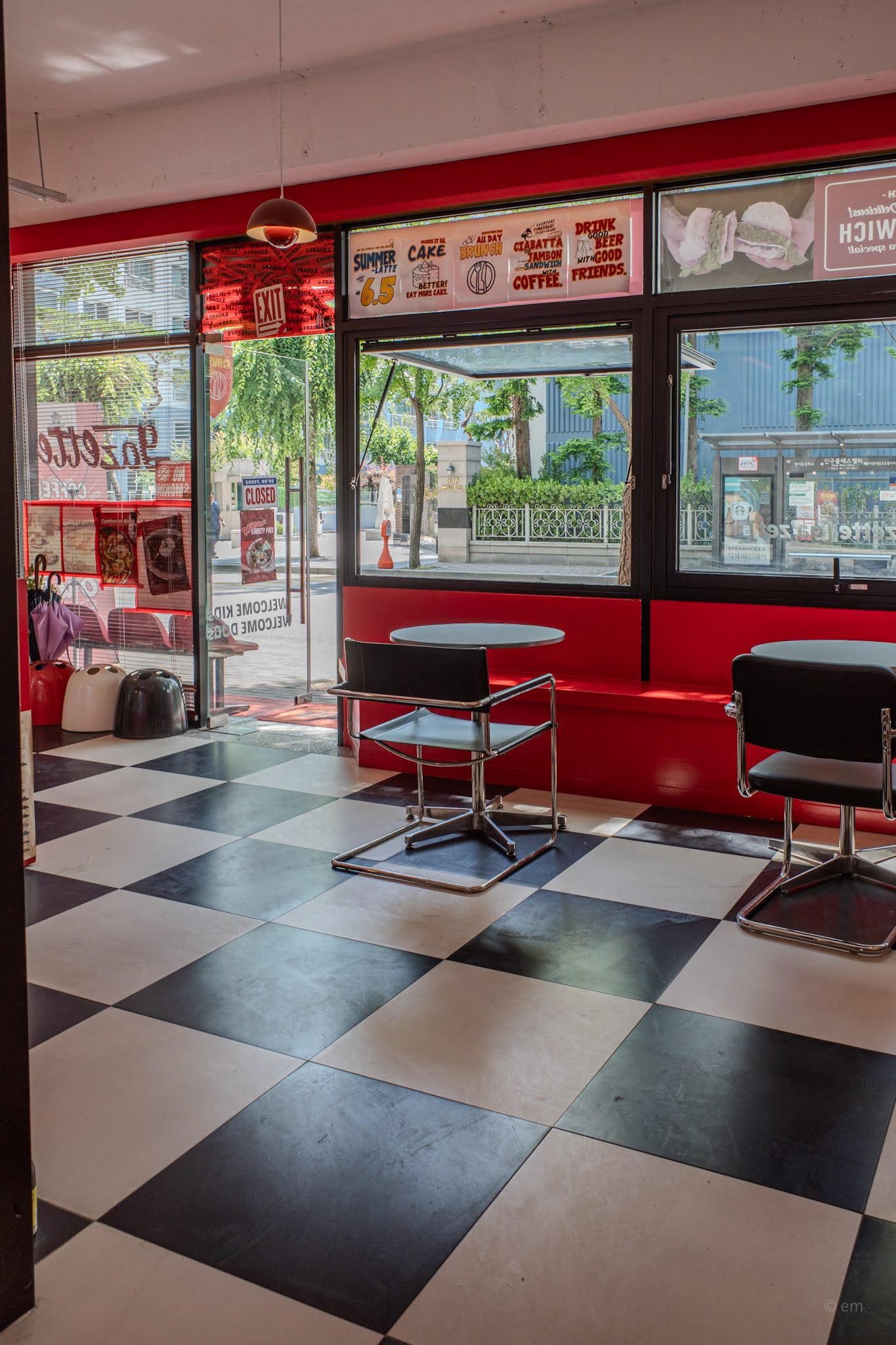
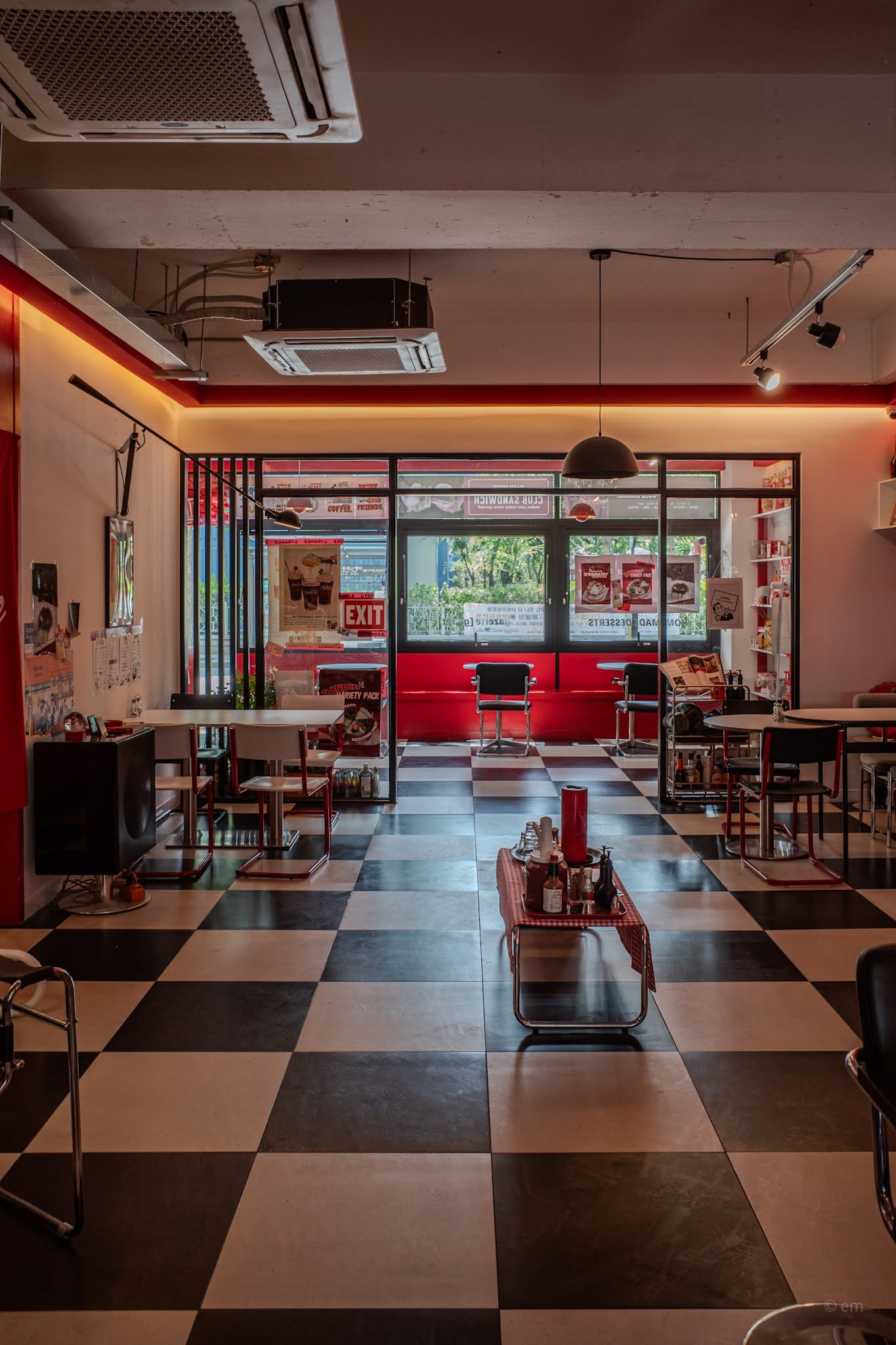
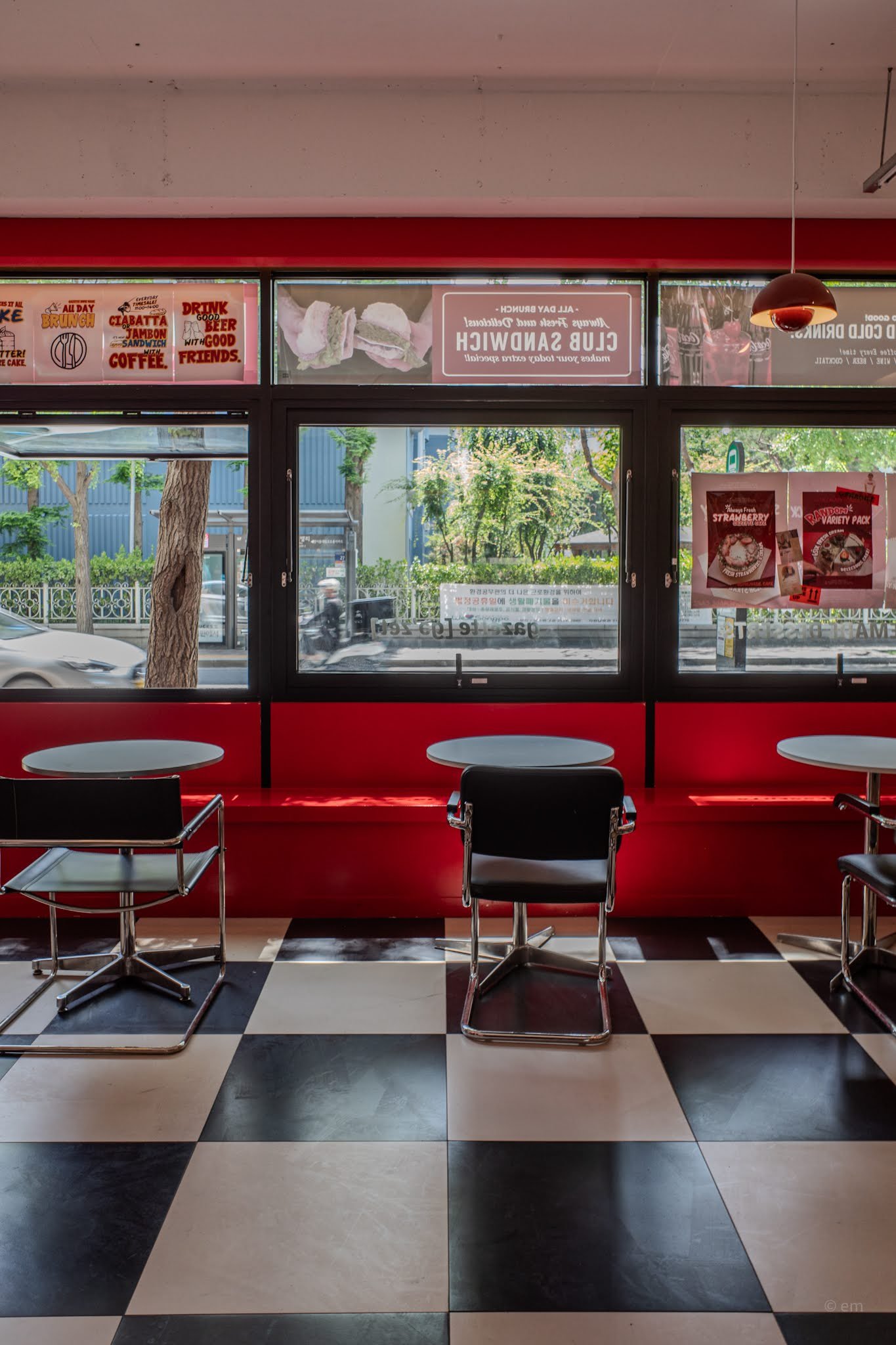
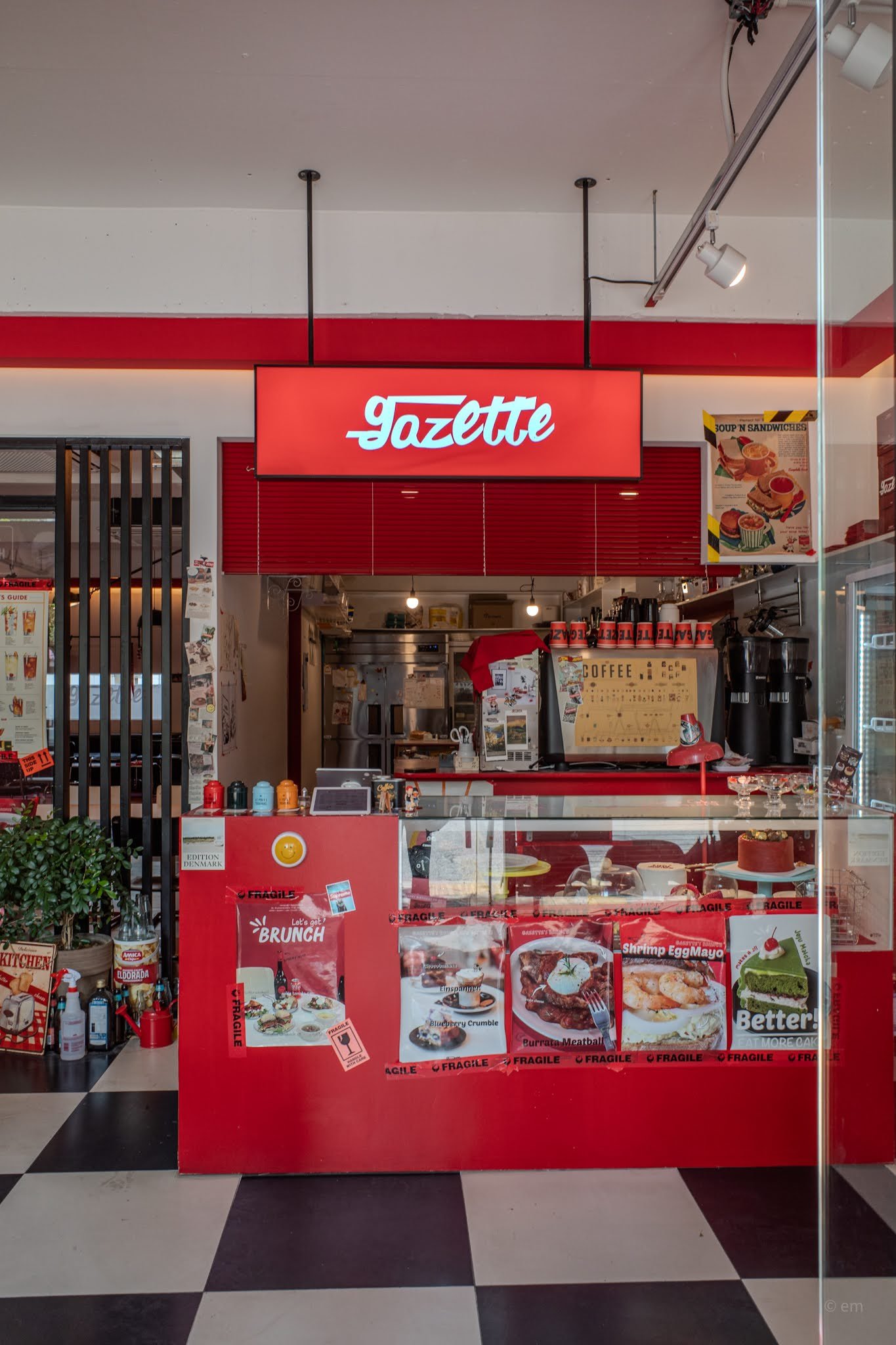
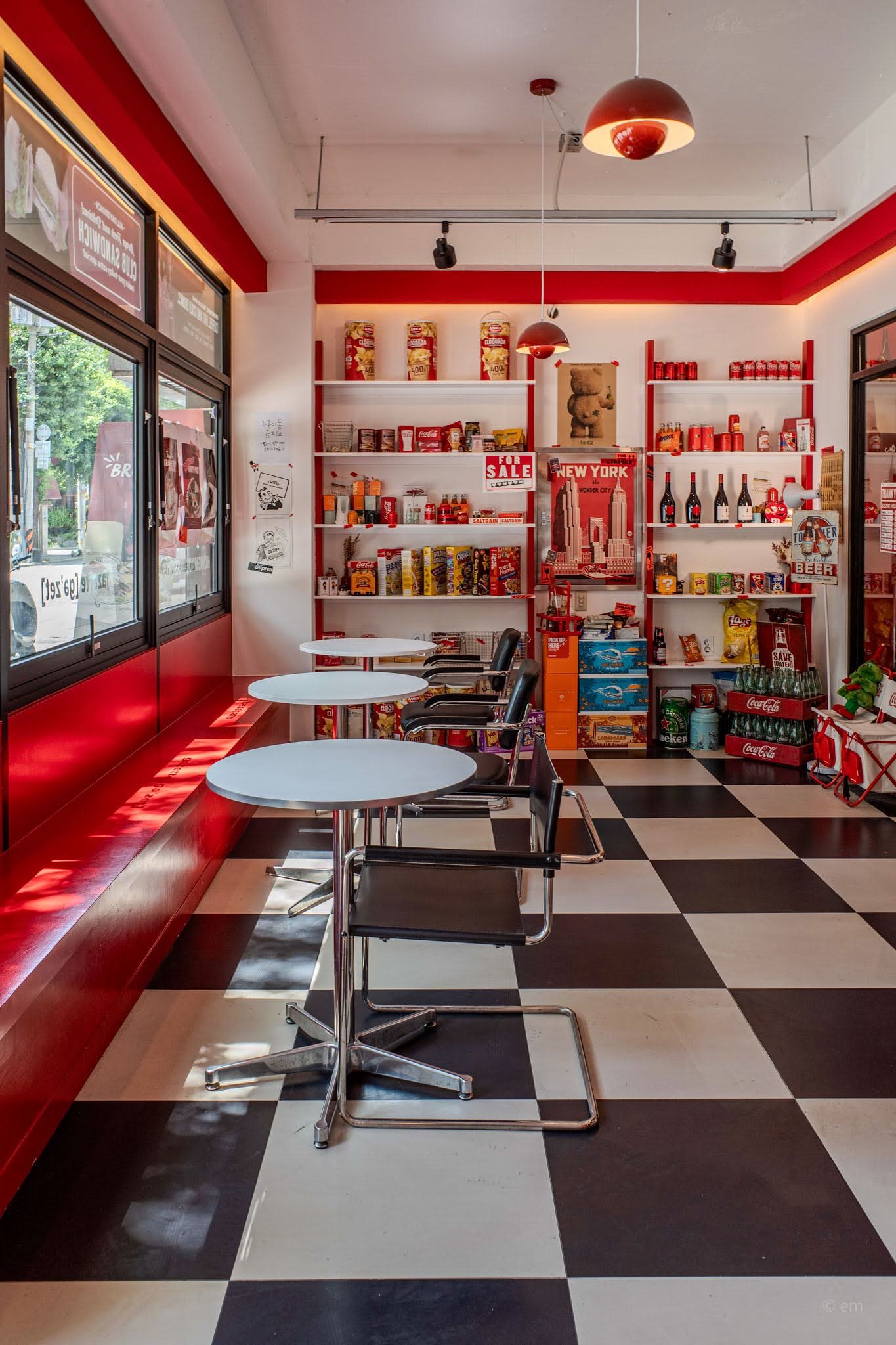
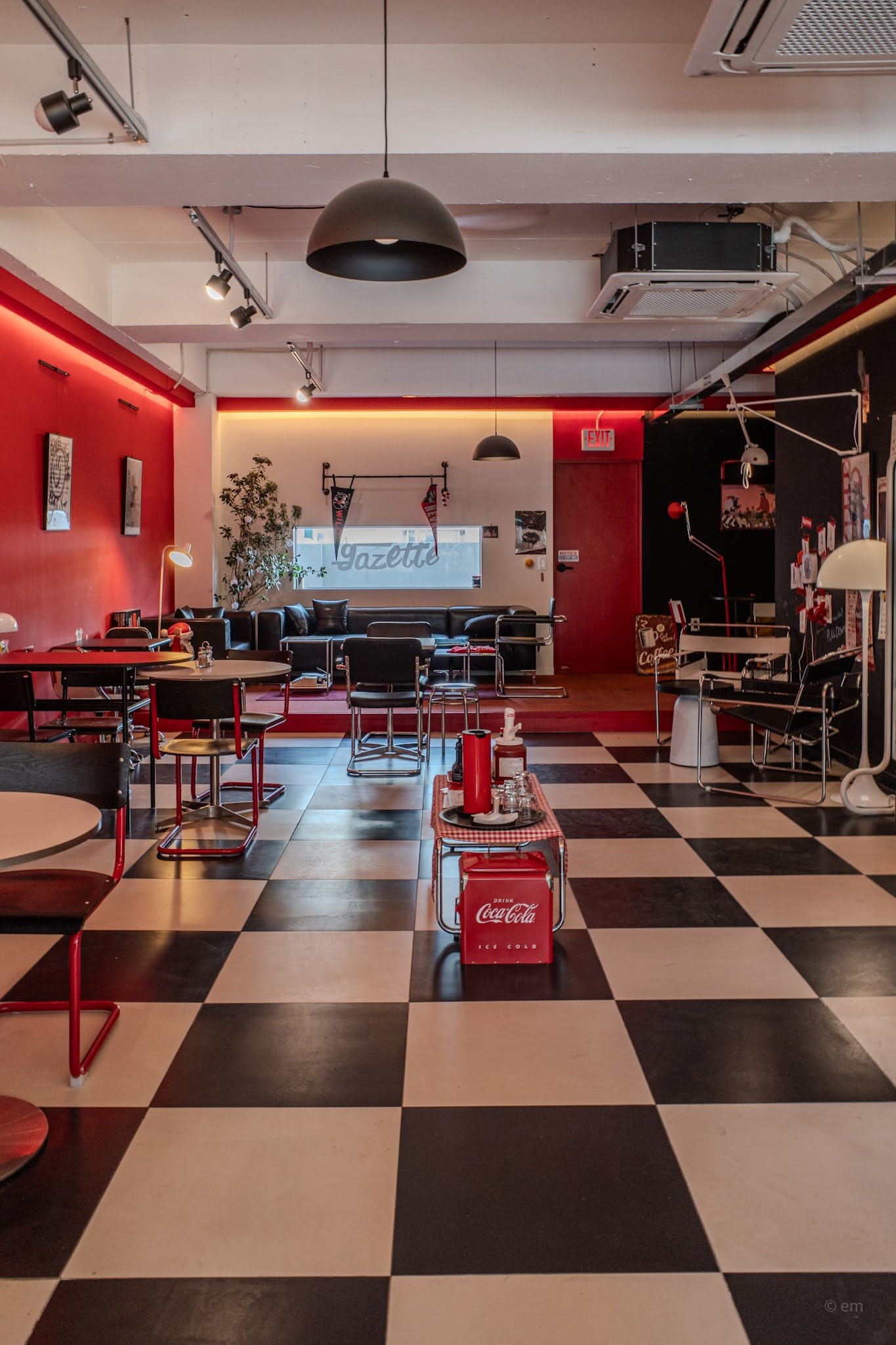
The first thing that hit you was the color. Not a shy burgundy, not a tasteful brick. This was full-throttle, unapologetic Coca-Cola red — walls, counter, signage, exterior awning, all of it. The interior was divided between a blazing red room and a black chalkboard wall in the back, with a classic black-and-white checkerboard floor running the length of the space. It felt less like a café that had chosen a color scheme and more like a café that was a color scheme.
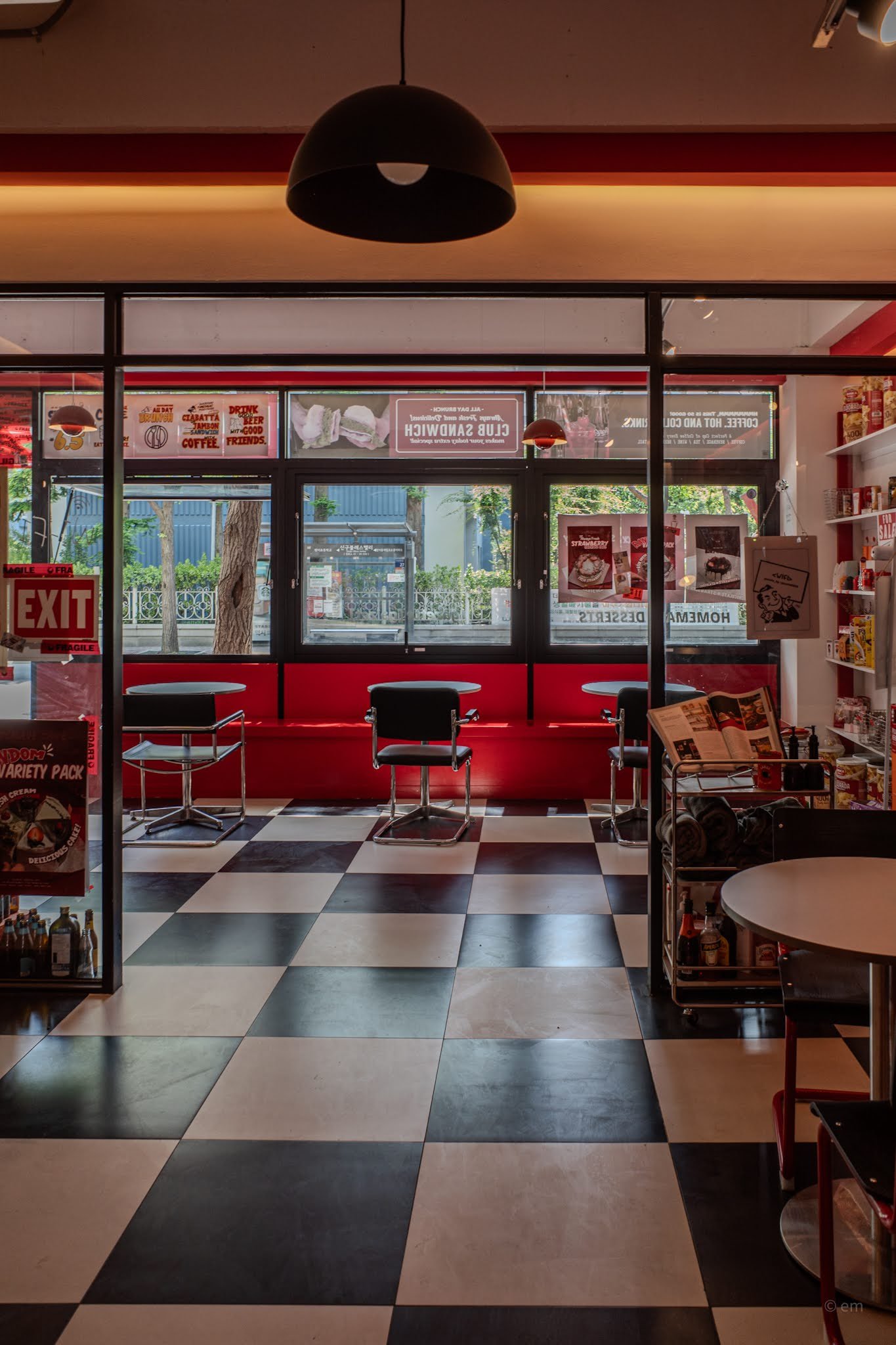
The furniture matched the ethos: chrome-framed Wassily chairs in black leather, retro diner tables with laminate tops, compact round café tables lined up along a red banquette bench facing the street. The whole thing had the bones of a 1950s American diner but filtered through someone with a very deliberate eye for design.
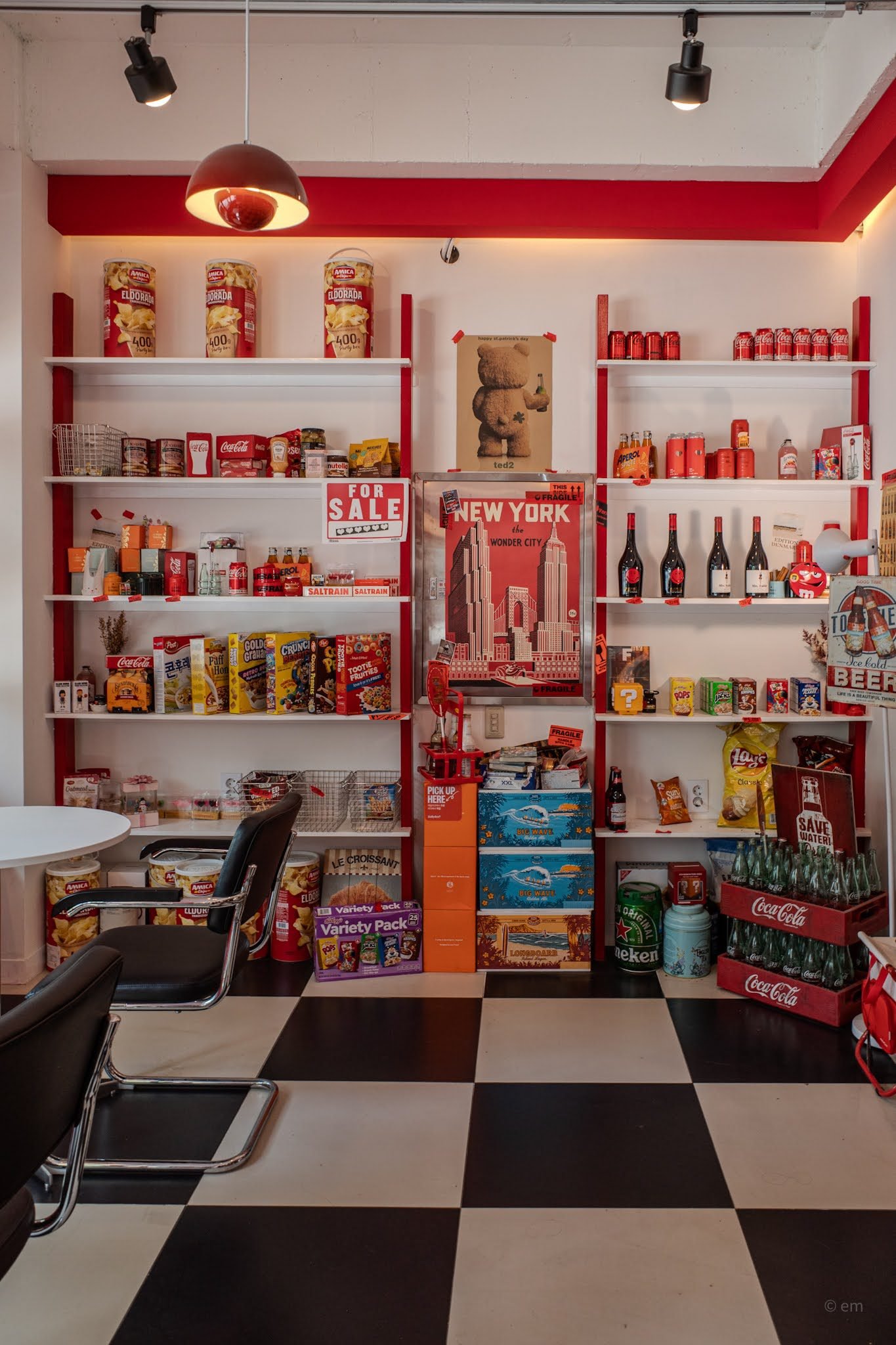
The New York Grocery Store Wall
If the red room was the headline, the retail shelves were the story that kept on giving.
One entire wall was stacked floor-to-ceiling like a corner bodega in lower Manhattan — Tootie Fruities, Golden Grahams, Froot Loops, Eldorada chips, vintage Coca-Cola crates, Aperol, wine bottles, Heineken cans, Betty Crocker-era advertising posters, a New York Wonder City print — all of it curated with the same energy as a mood board that somehow got built in real life.
It wasn’t a shop, exactly. It wasn’t pure decoration, exactly. It existed in that pleasantly ambiguous middle zone where objects become atmosphere. The shelves felt like they were saying something — about American pop culture, about the romance of convenience stores, about the collector’s impulse to gather beautiful, slightly absurd things and put them on display.
A vintage Coca-Cola mini fridge sat on the floor. A “For Sale” sign was propped among the snack boxes. None of it needed to make total sense. It all made complete sense.
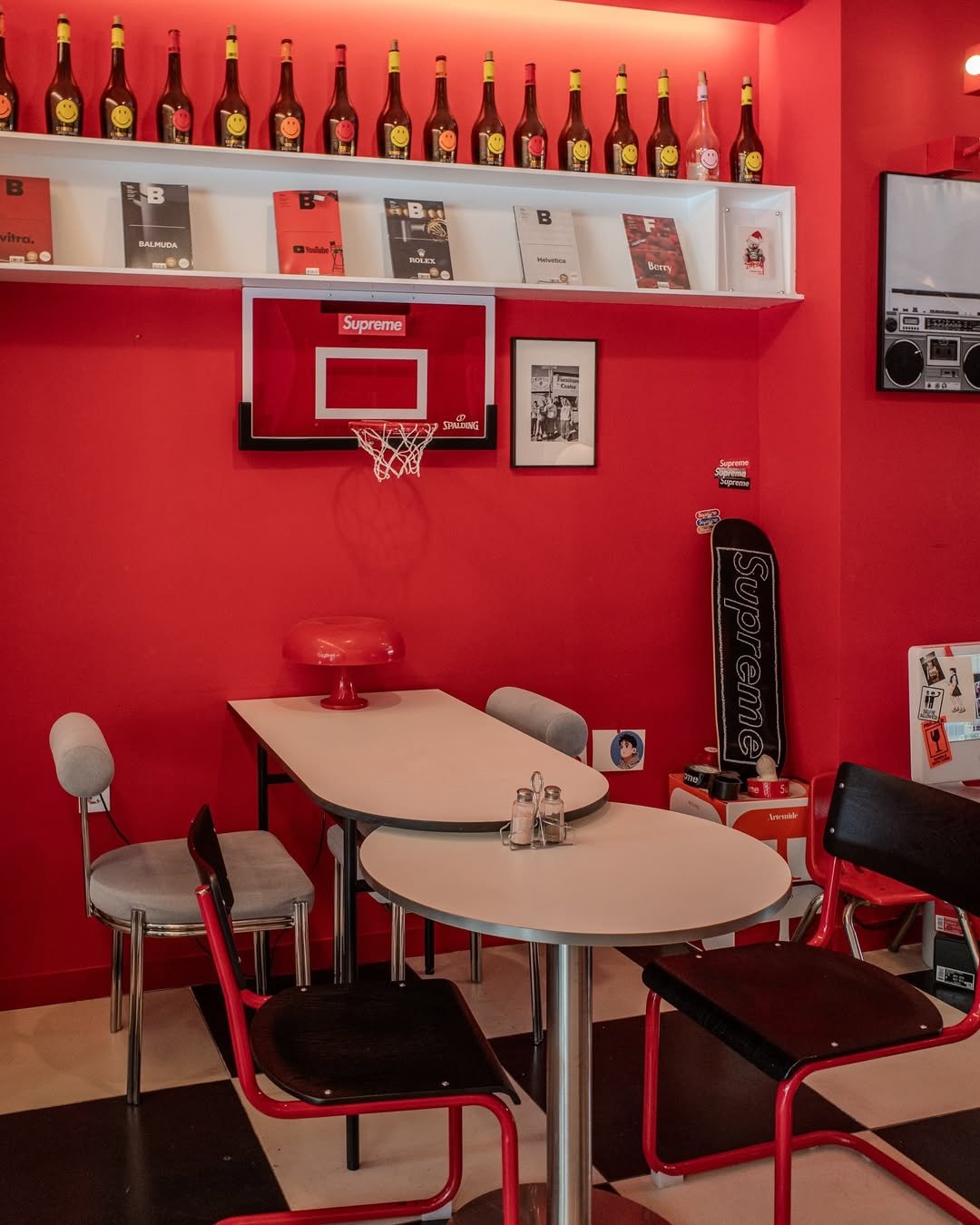
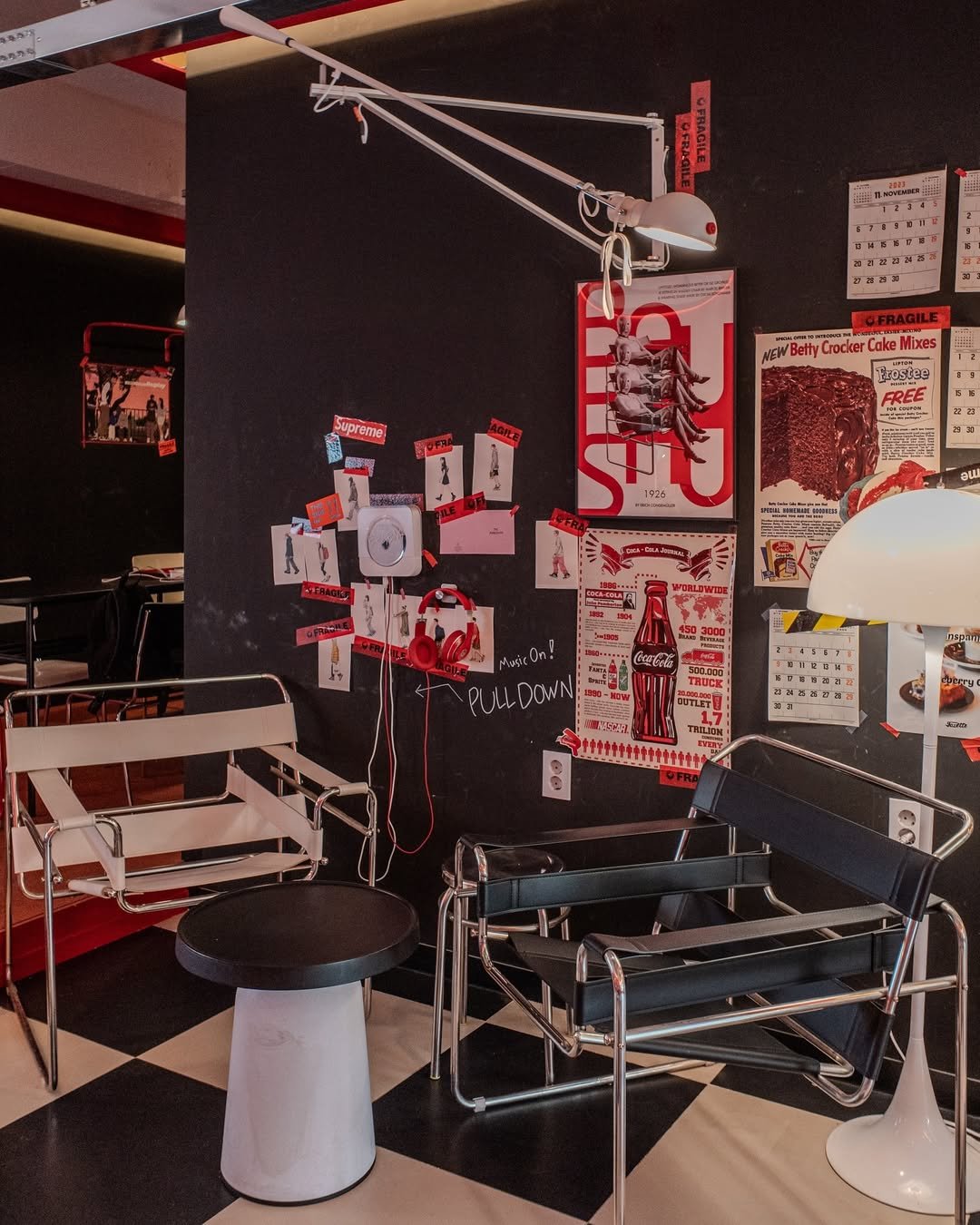
The Streetwear Corner and the Black Room
The back of the café was a different register entirely. The chalkboard wall was pinned with Supreme stickers, fashion cutouts, magazine clips, and a Beats headphone set hanging on a wall-mounted CD player with a handwritten note: “Music On! Pull Down.”
A Supreme x Spalding basketball hoop hung above the diner tables in the red room. A Supreme skateboard deck leaned against the wall. Design magazines — Balmuda, Rolex, Helvetica — lined a long white shelf above a row of identical bottles topped with yellow smiley faces.
The references were wide: Bauhaus furniture, streetwear culture, mid-century American kitsch, European design publishing. It could have been a mess. Instead it felt like the personal collection of someone who genuinely loved all of it — and trusted you to love it too.
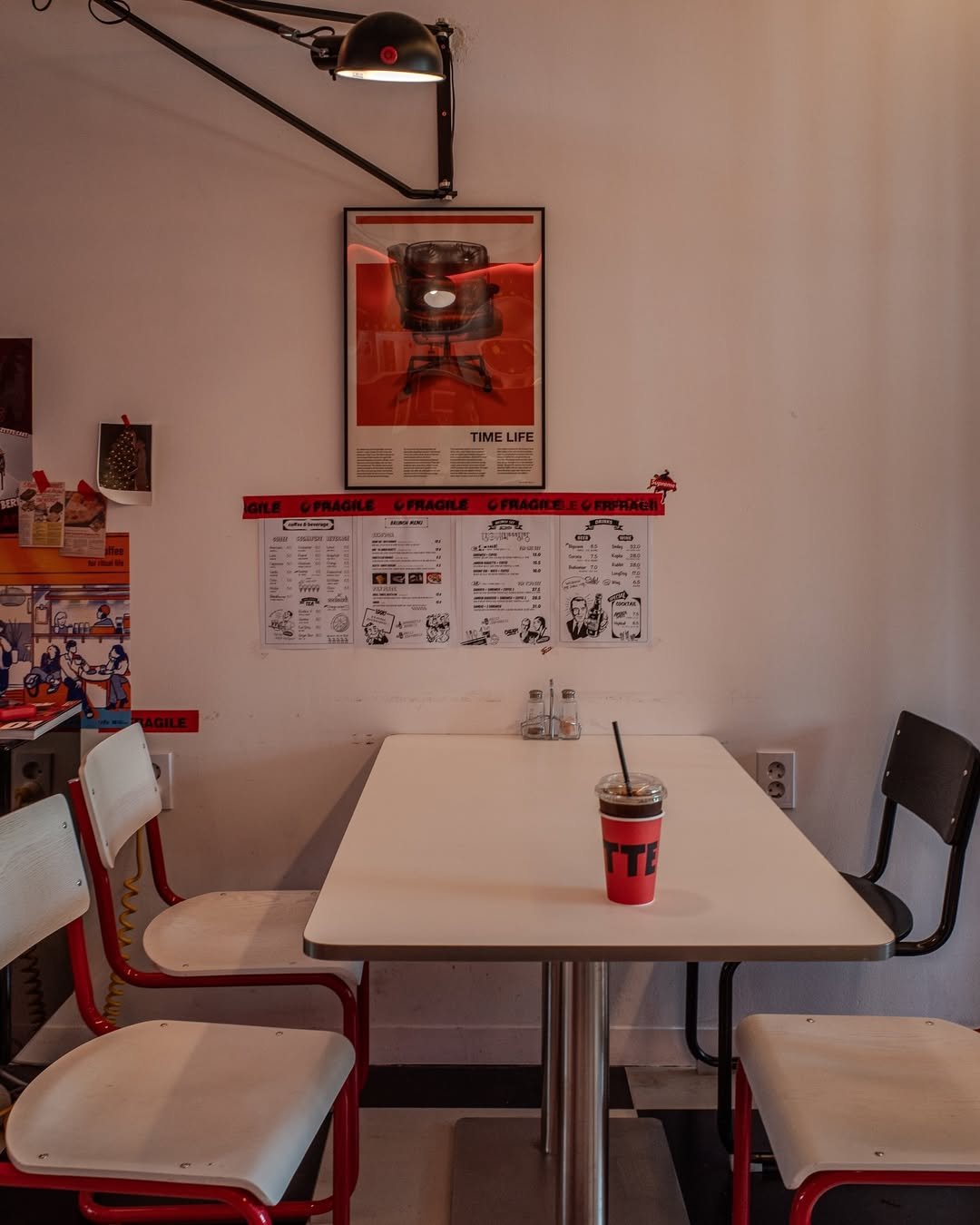
Brunch, Sandwiches, and Cake Worth Mentioning
The food held its own. Gazette served all-day brunch with a rotating menu that leaned into club sandwiches, ciabatta with jambon, shrimp egg mayo, burrata meatball, and homemade desserts baked fresh daily. The cake case near the counter — a glass display full of red velvet, matcha, and crumble tarts — made it almost impossible to order just a coffee.
The iced latte arrived in a branded red cup. Of course it did.
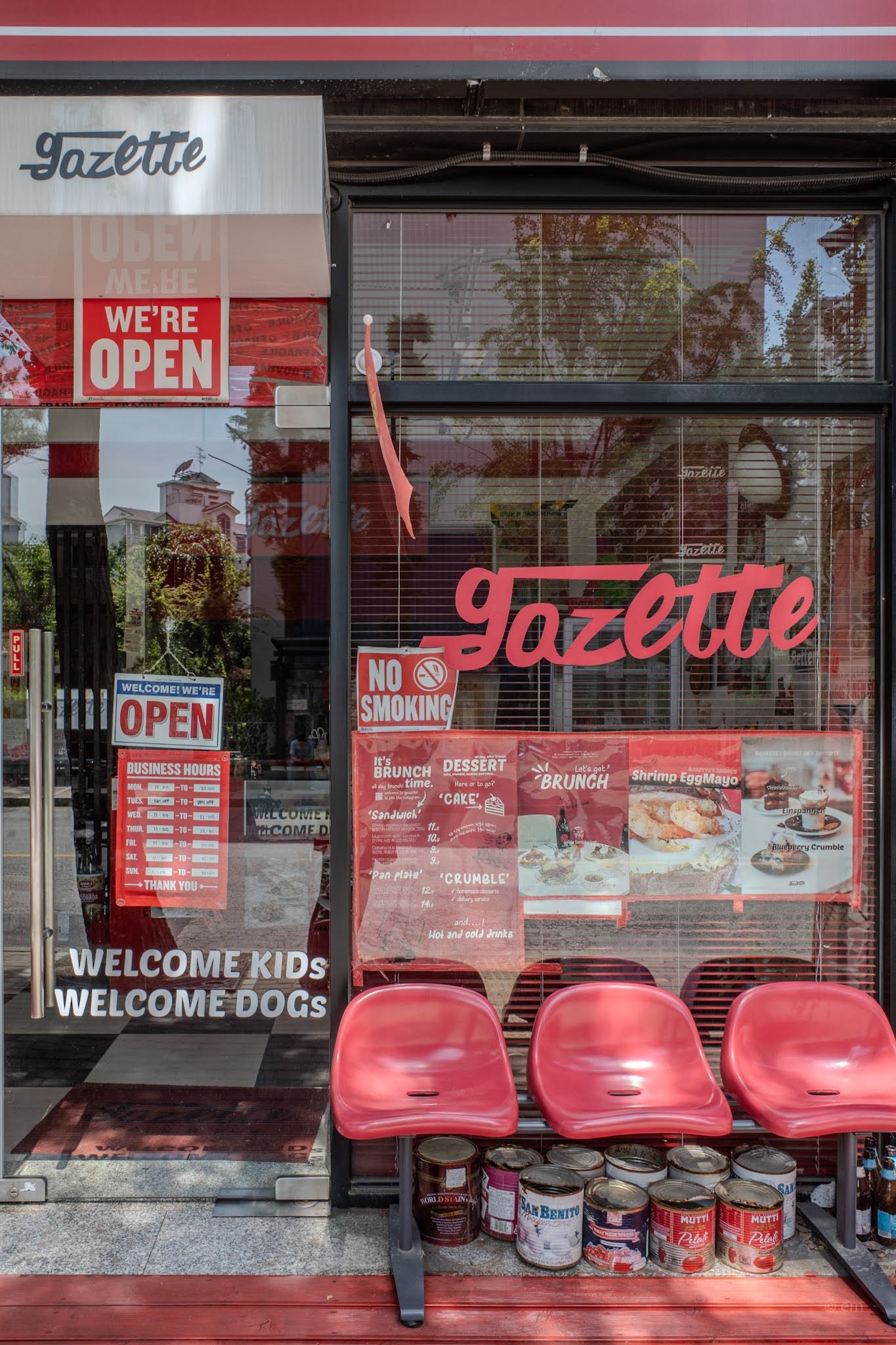
“Welcome Kids. Welcome Dogs.”
That sign on the front door summed up something essential about Gazette’s personality. The space was neither precious nor pretentious. Despite the carefully assembled interiors and the design-conscious DNA throughout, it didn’t take itself too seriously. Kids ran around. Dogs waited outside. Regulars lingered over coffee on a weekday afternoon. The banquette by the window caught the light beautifully in the late morning.
It was, in the end, a neighborhood café — one that happened to look like a collaboration between a New York deli, a 1950s diner, a Supreme pop-up, and a Bauhaus retrospective.
Gone Now
Gazette has since closed. The storefront on Wiryesung-daero 12-gil has moved on to whatever comes next.
That’s the strange grief of places like this — they exist intensely, they make an impression, and then the city folds over them. What remains are photographs taken on good-light days, and the faint muscle memory of what it felt like to sit in a red room in Songpa and feel, briefly, like you were somewhere invented just for people who notice things.
If you passed it and meant to go back, you weren’t alone.
Gazette (가제트)
서울 송파구 위례성대로12길 28
Permanently closed
![[Lost] Whales Donut](https://hiddencollector.thesensitiveways.com/wp-content/uploads/2025/08/WHALES-DONUT-200x300.png)
![[Lost] Saladaeng Temple, Seongsu: The Boat No Longer Runs](https://hiddencollector.thesensitiveways.com/wp-content/uploads/2026/04/R0012440-200x300.jpg)
![[Lost] Pink Mellow](https://hiddencollector.thesensitiveways.com/wp-content/uploads/2025/08/pink-mellow-200x300.png)