Permanently closed
Some places don’t ask for your imagination. They’ve already done all the imagining.
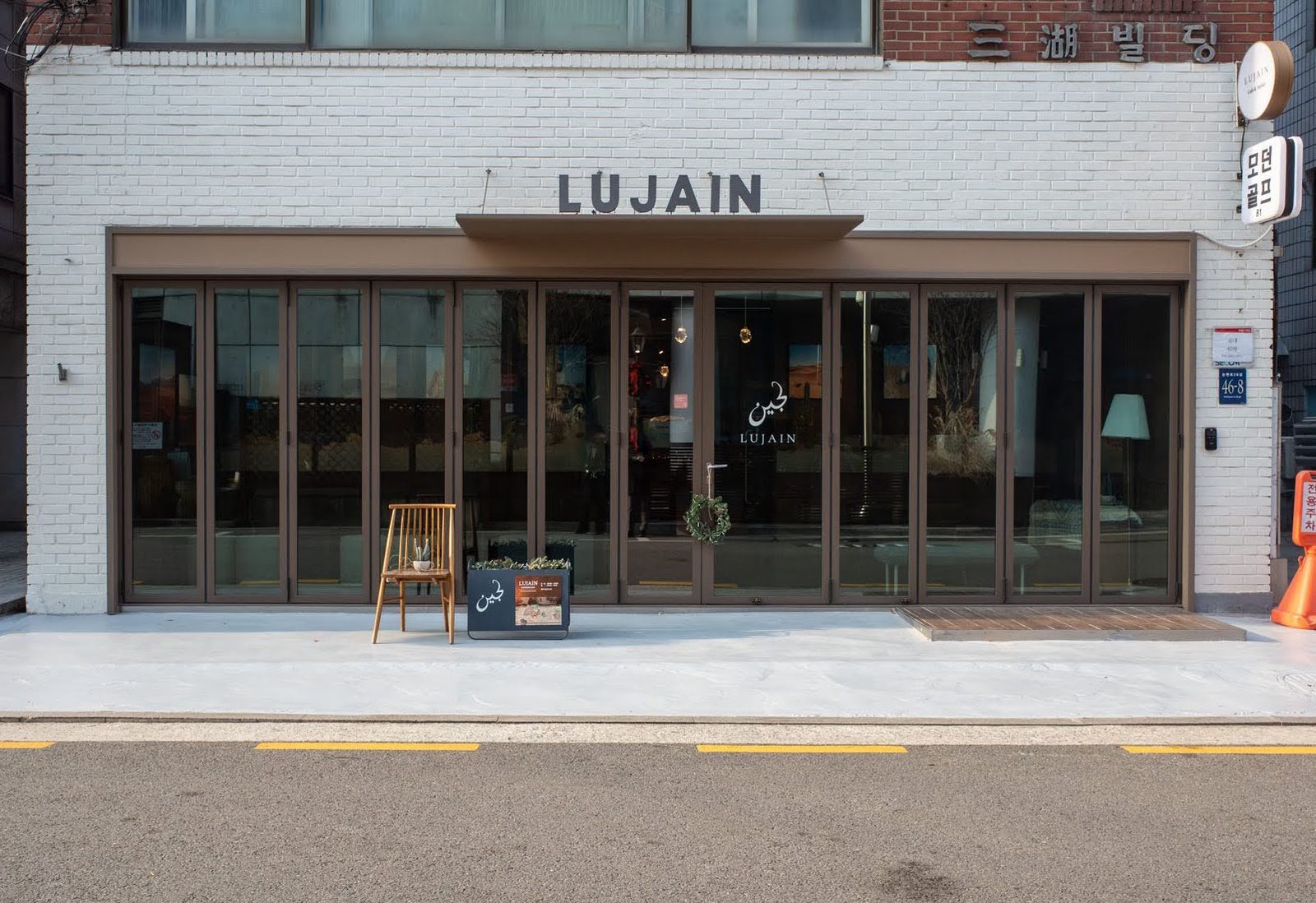
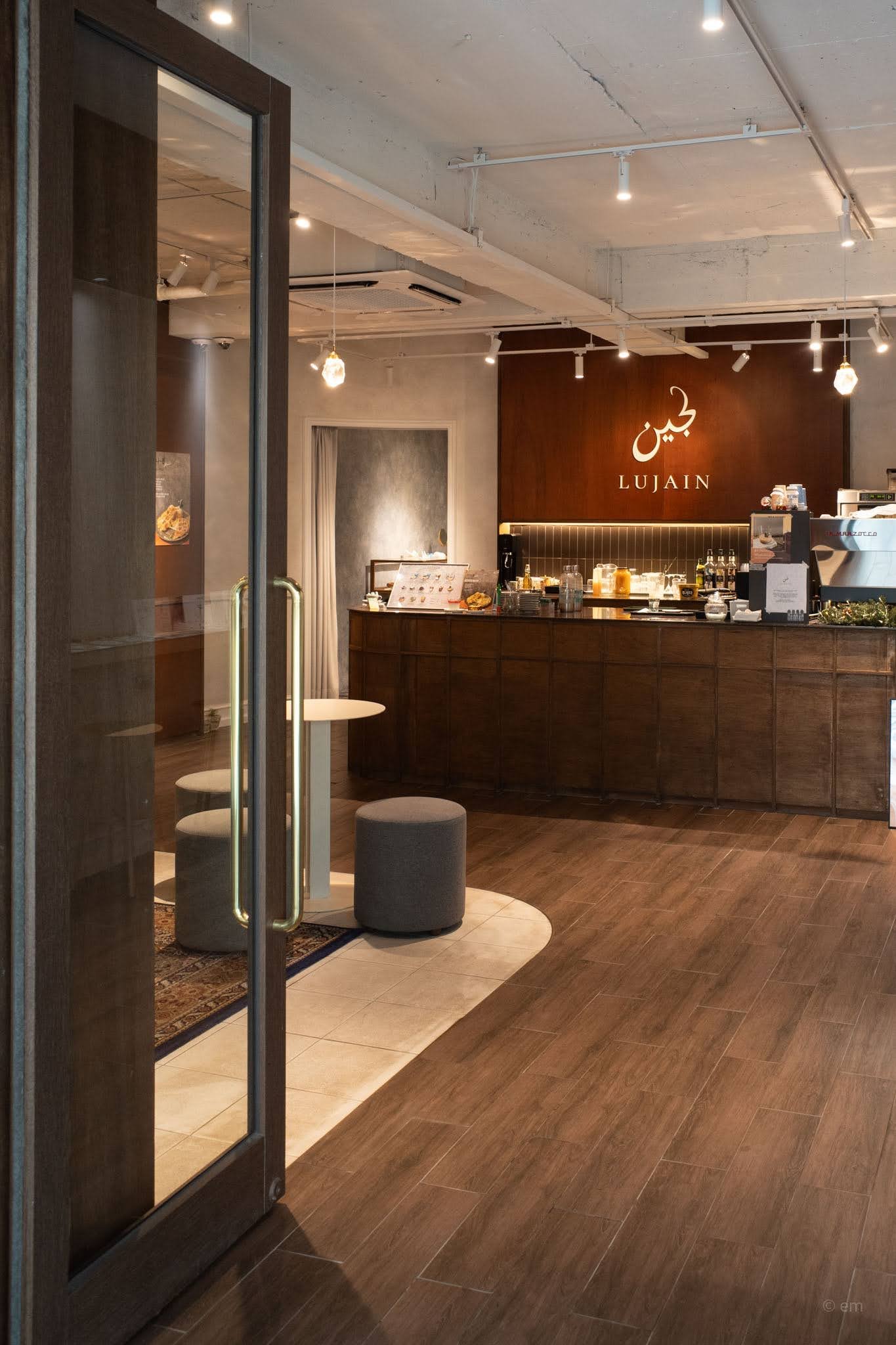
Lujain Espresso Bar sat beside Yangjae-cheon, close enough to the water that it should have been ordinary — another café on a café-lined street, another window facing the stream. But the window at Lujain faced outward while the entire interior faced somewhere else entirely.
A Desert on the Creek
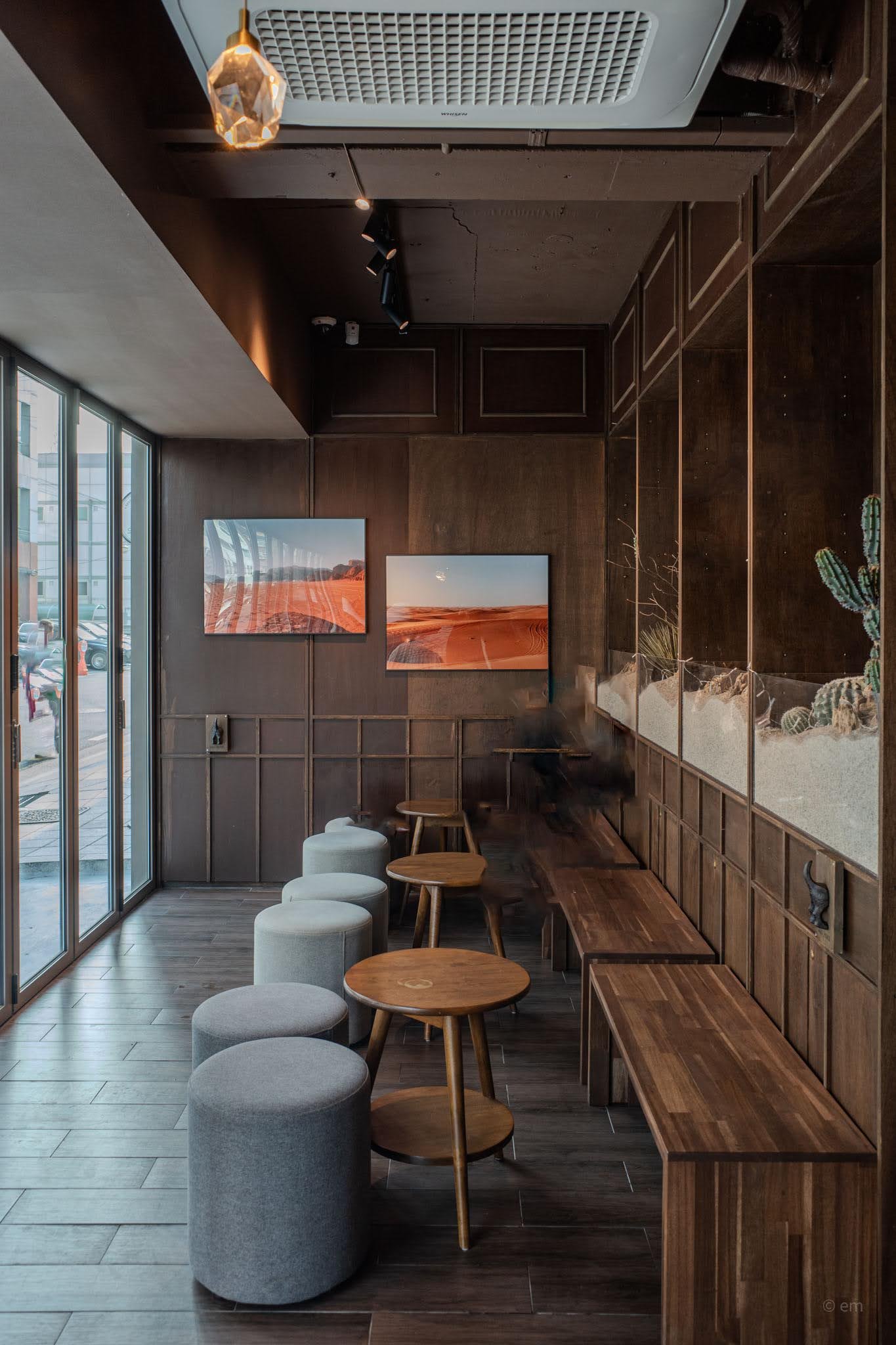
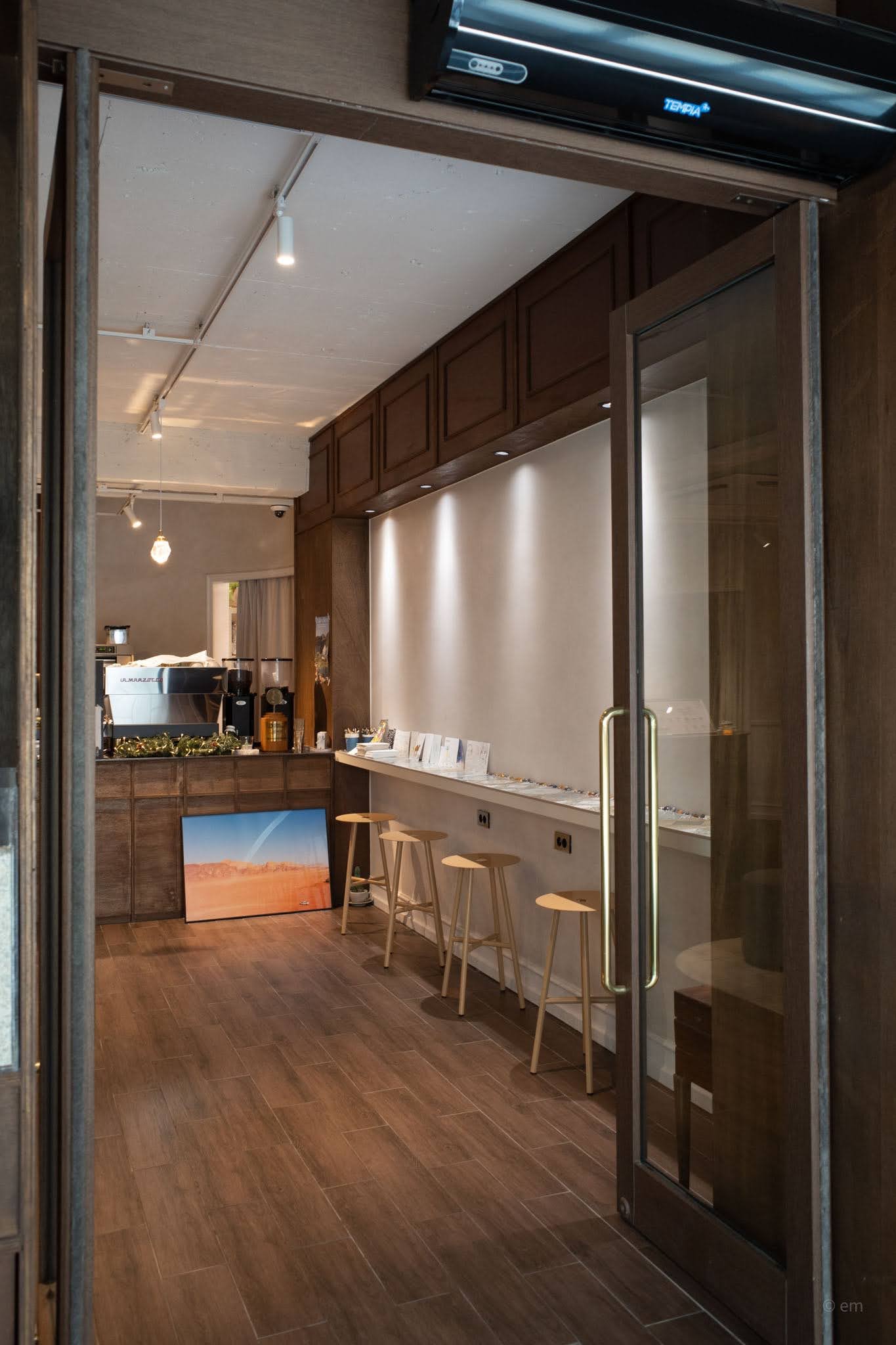
Lujain was the Seoul flagship of an Arabic jewelry brand of the same name, and whoever decided to build a café into it made exactly the right call. The concept was the desert, pursued not as a mood board reference but as an actual environment. The walls throughout were clad in dark, deeply stained wood paneling, trimmed with thin gold lines that gave the whole space the quality of antique cabinetry. The ceiling was low. The light was amber. When the door closed behind you, the creek and the apartment blocks beyond it disappeared, and you were somewhere drier, quieter, and considerably further away.
The Terrariums
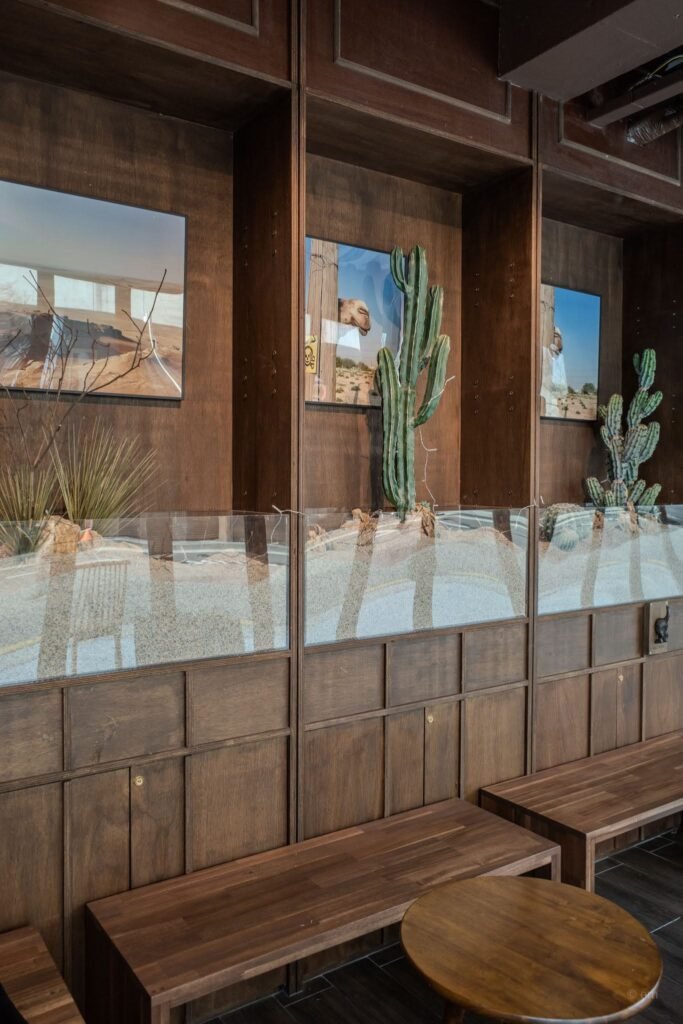
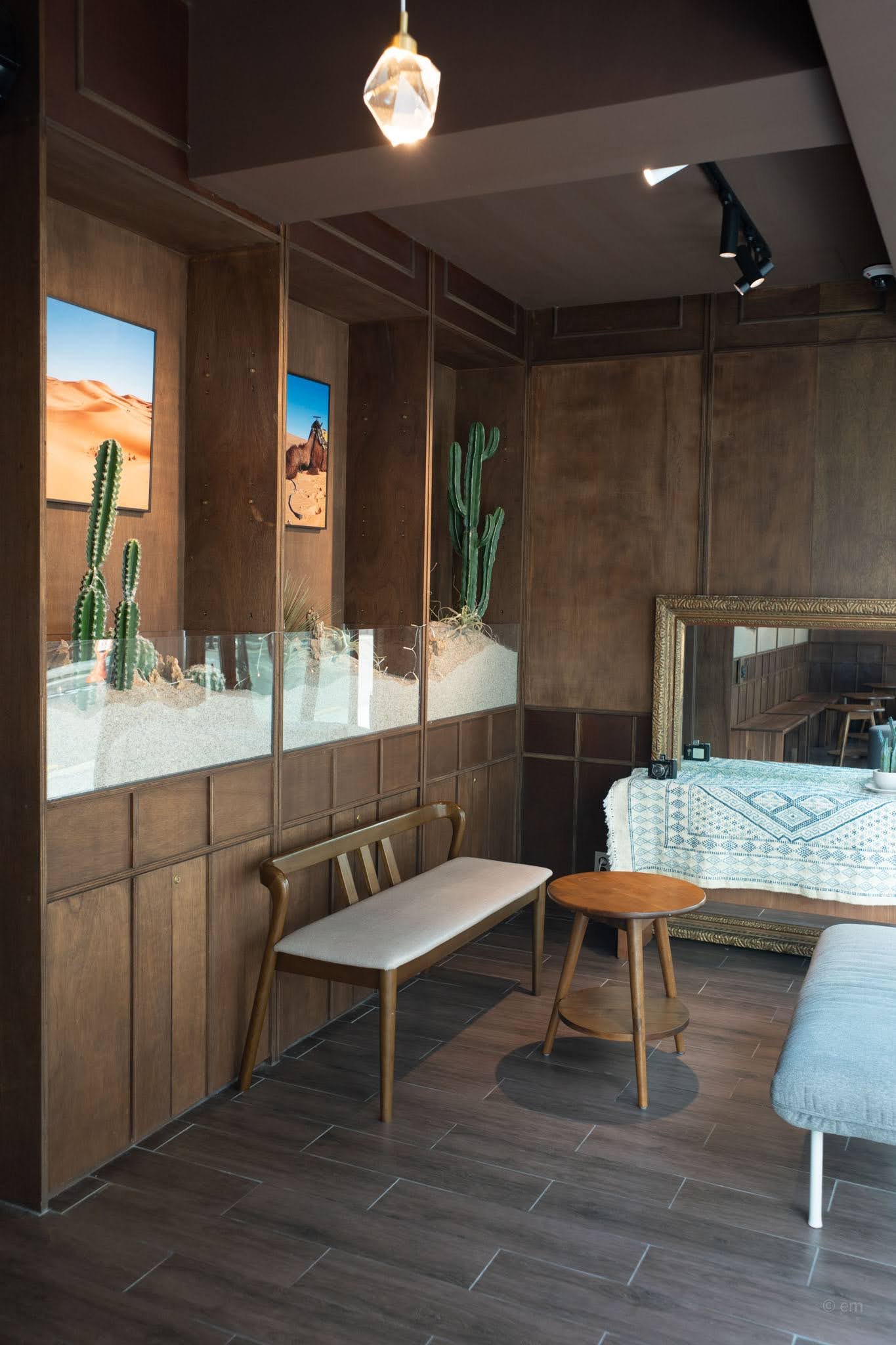
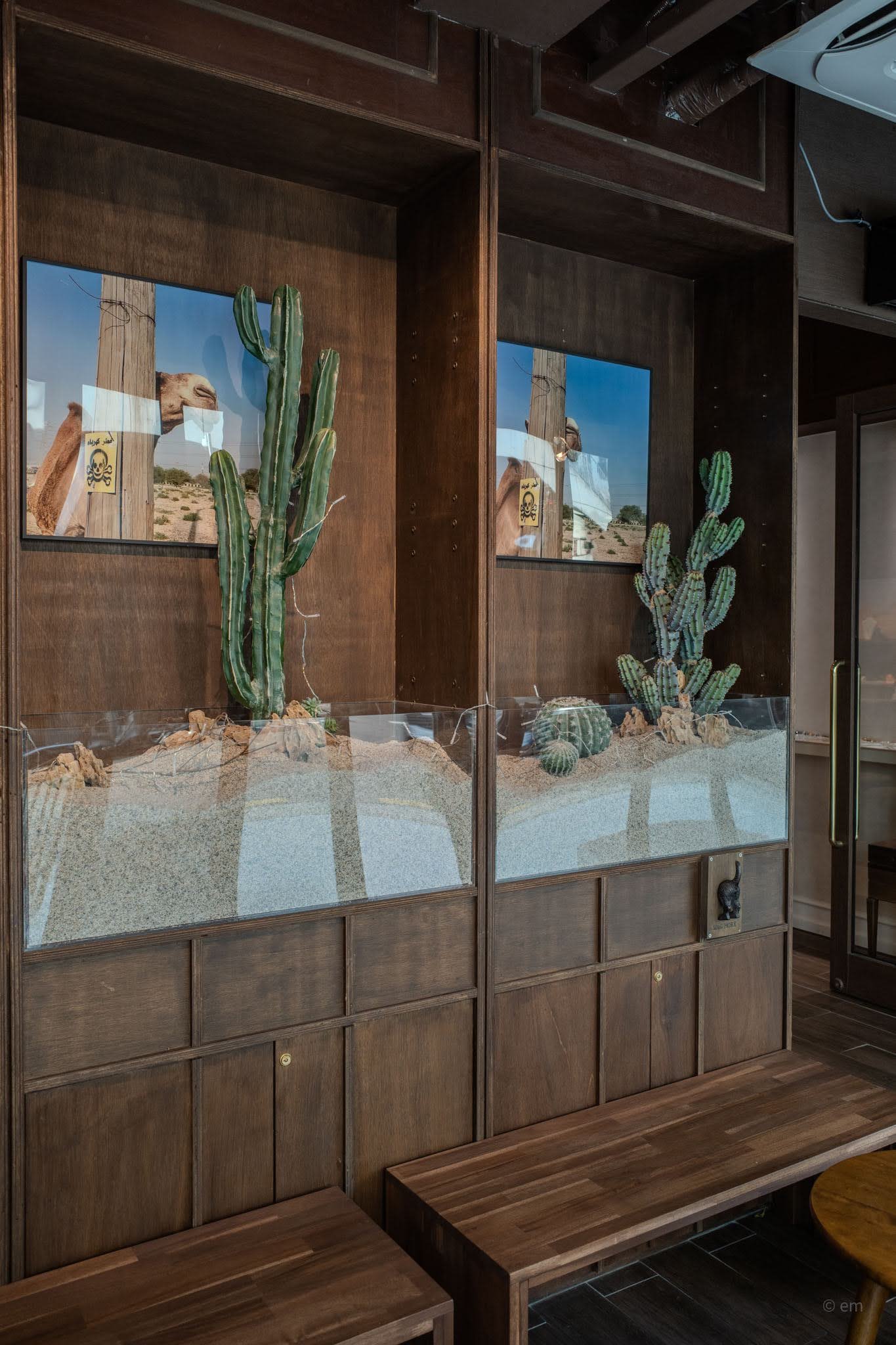
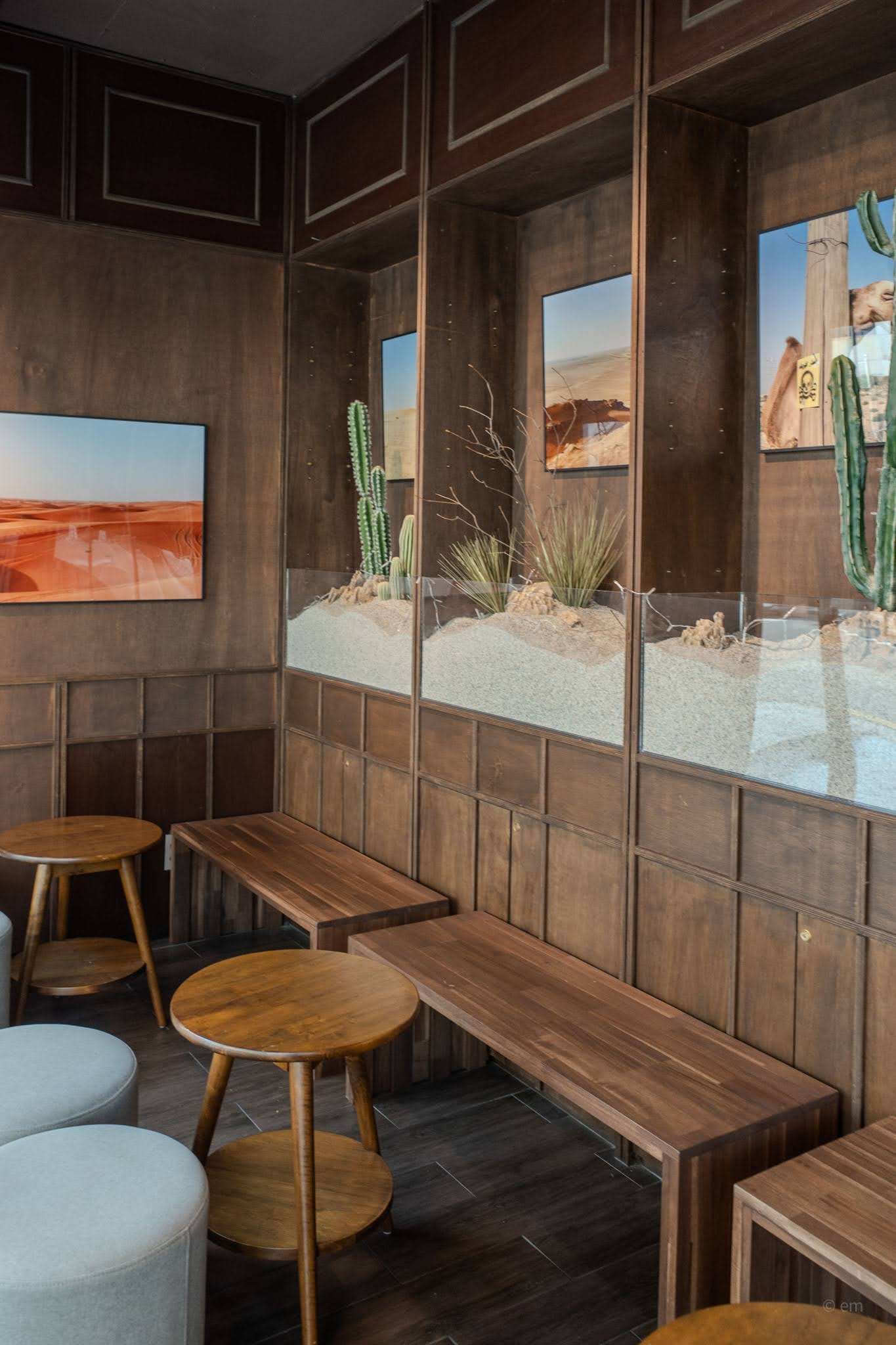
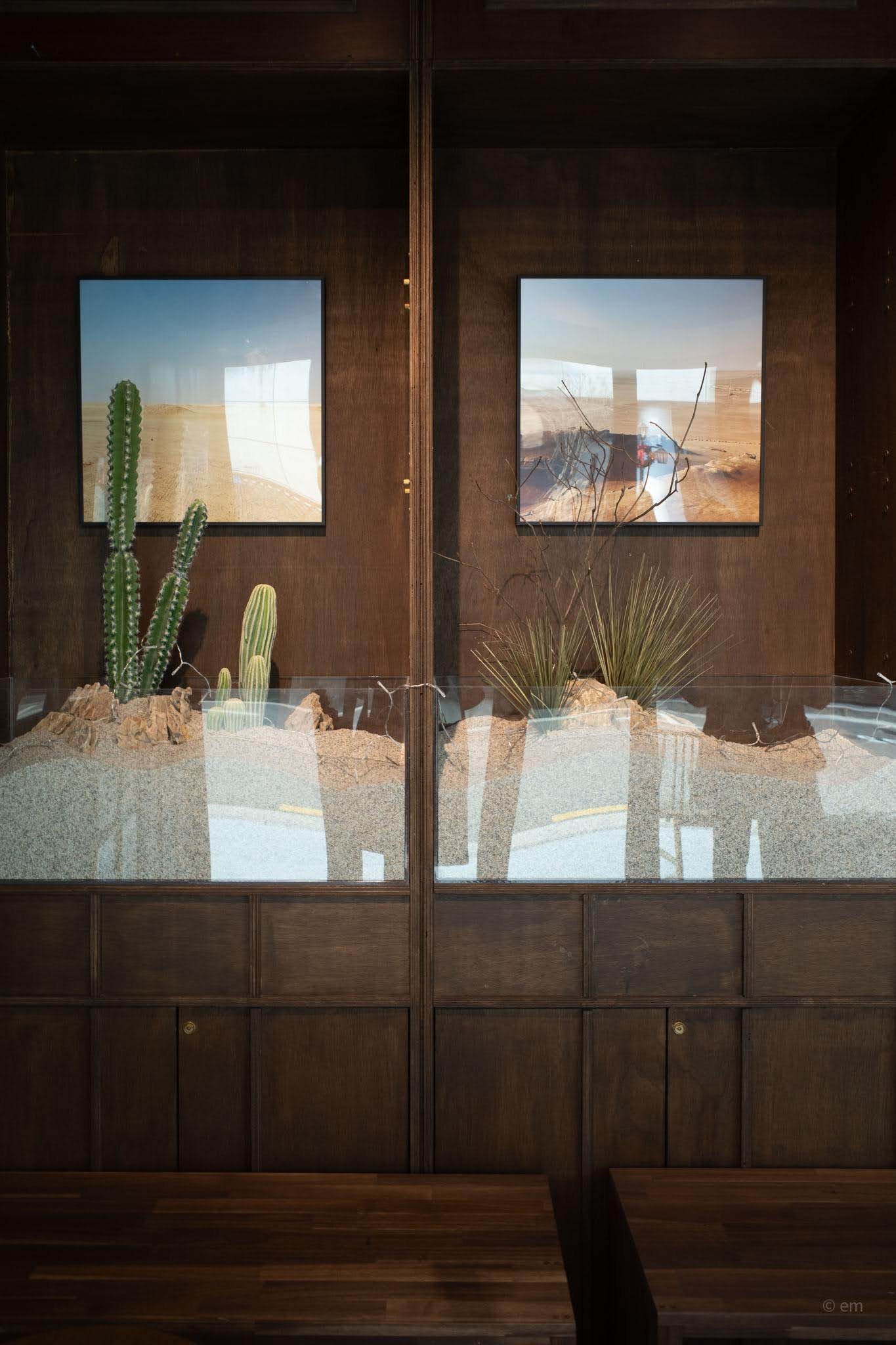
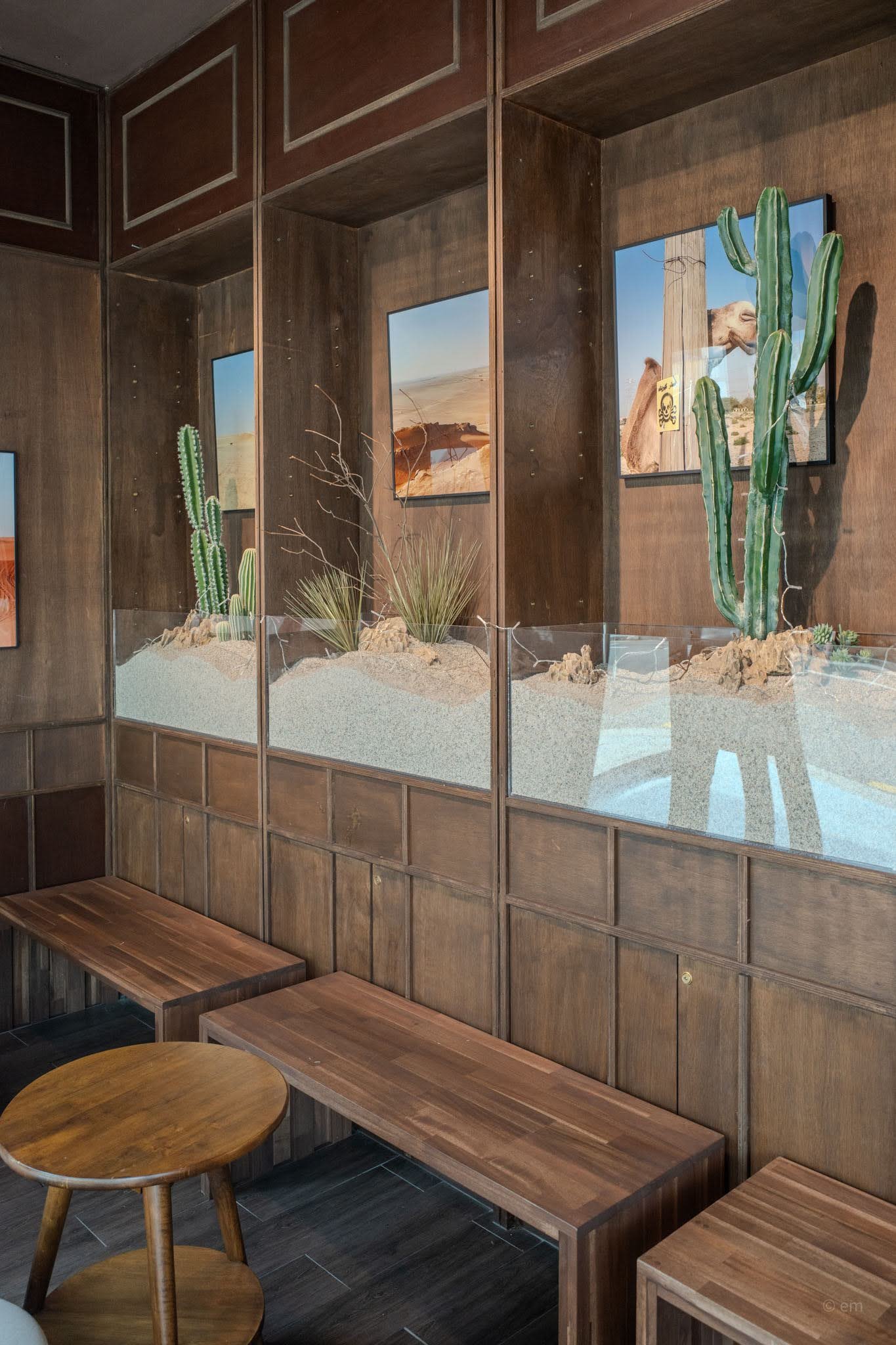
The main seating area ran alongside a long wall of glass-fronted cases built flush into the paneling — miniature desert landscapes containing real sand, real rocks, and tall columnar cacti rising against the dark wood. Between the cases, small photographs of the Arabian desert were mounted at eye level: red dunes with the long curving marks of tire tracks, a camel beside a roadside utility pole, flat blue sky above open nothing. The cacti in the terrariums and the cacti in the photographs rhymed with each other across the glass, the real and the represented trading places in the low light.
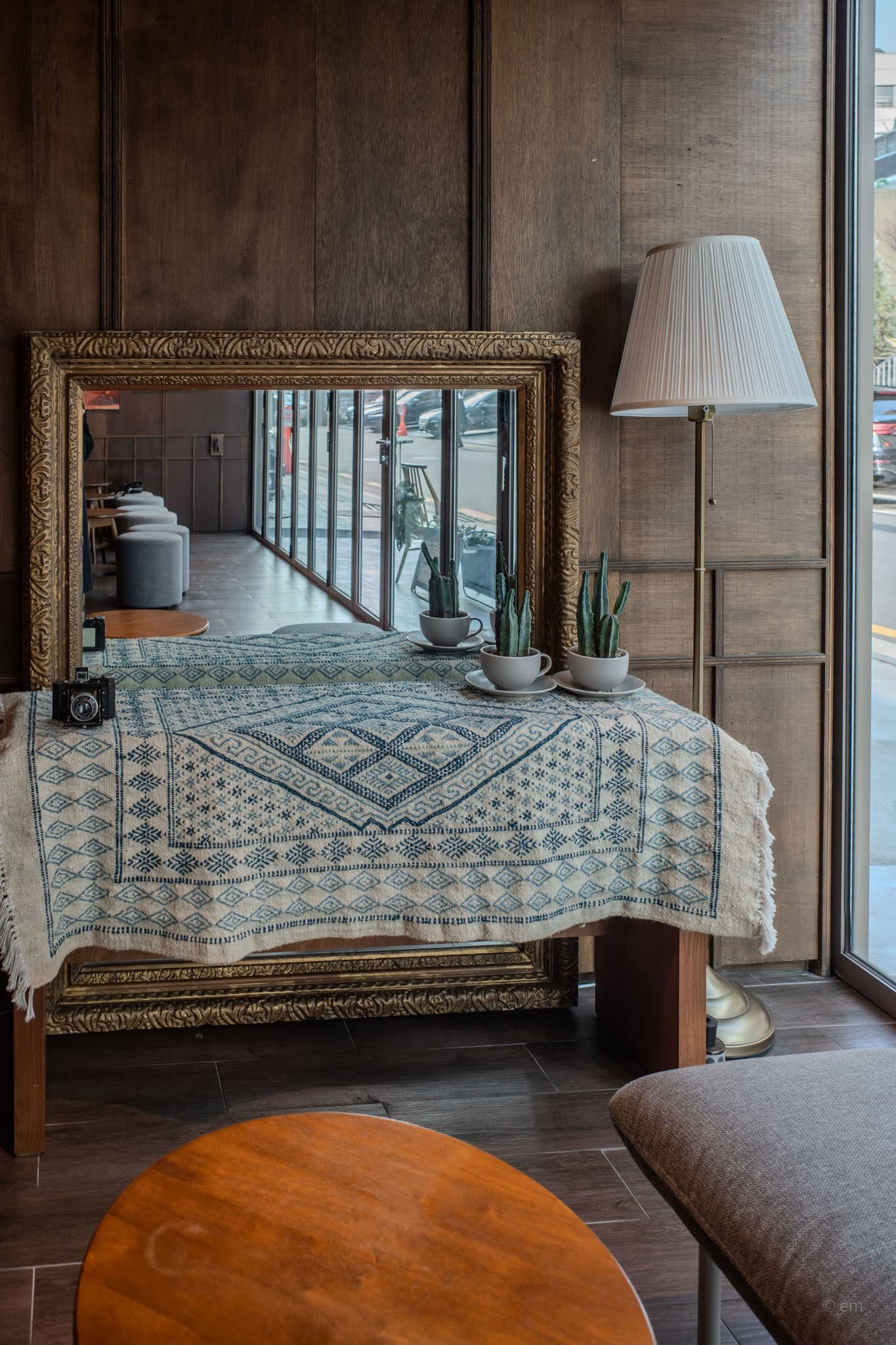
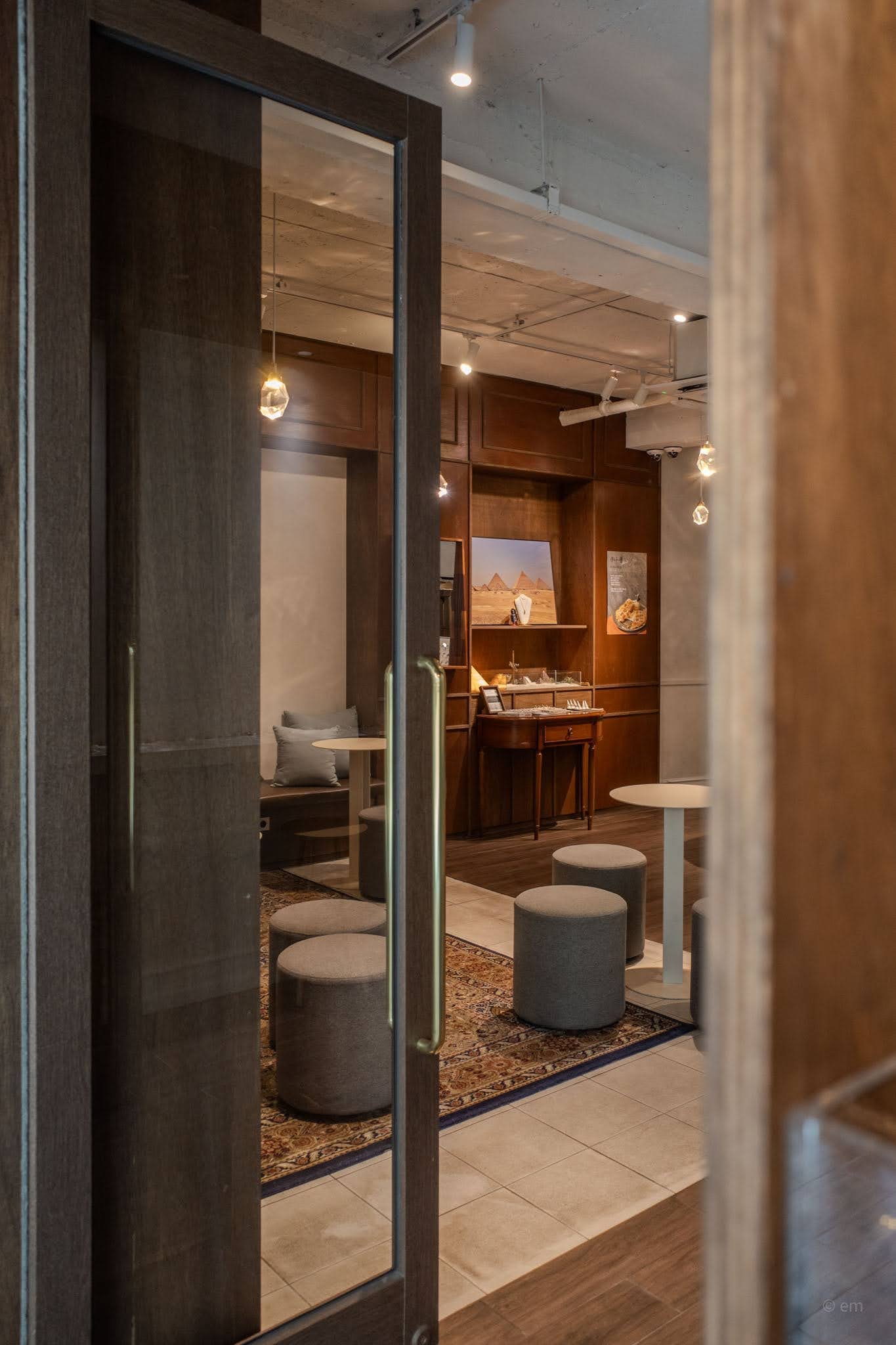
The rest of the room was furnished with walnut benches, round wooden stools, and soft gray cylinder ottomans. There was also, near the front window, a gold-framed ornate mirror repurposed as a table — a Moroccan textile draped over it, porcelain cups arranged on saucers, a vintage folding camera placed just off-center. It read like a still life that had been composed and then quietly inhabited.
Day, Night, and the Space Between
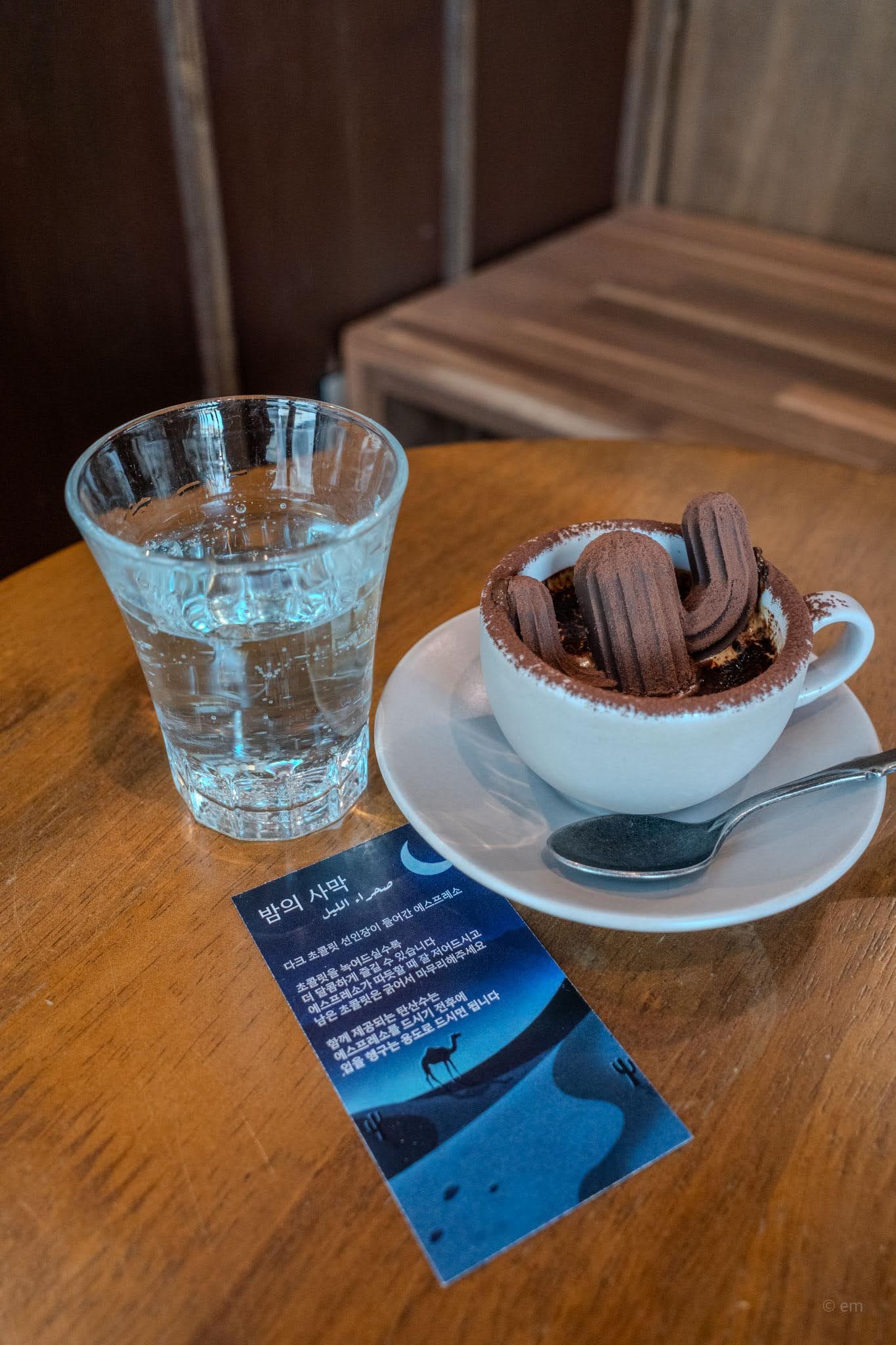
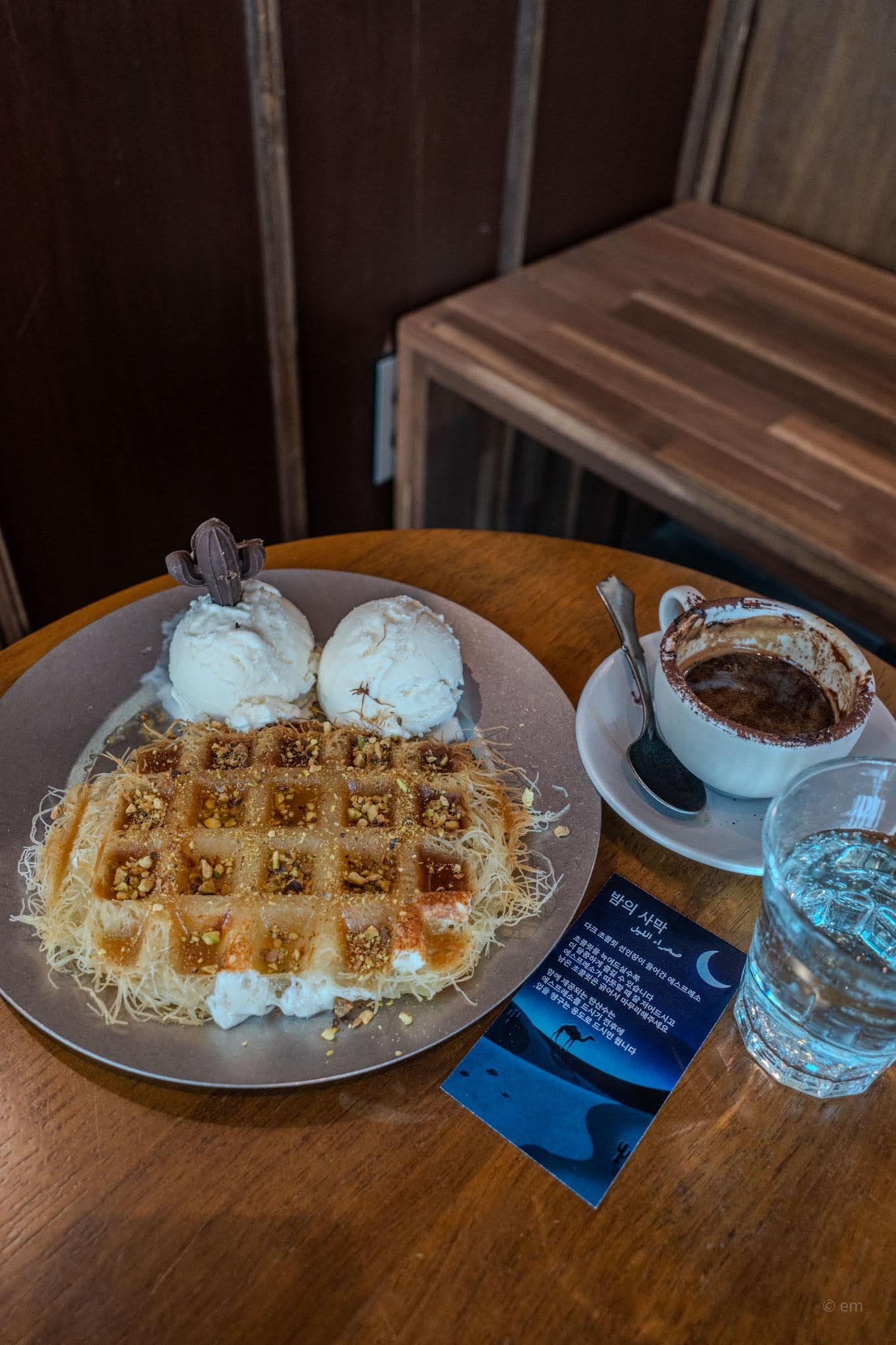
The drink menu was built around three desert-named signatures. 낮의 사막 — Desert at Day — was a milk-based coffee, soft and easy. 밀크 사막 was a house-made milk tea, the same sandy concept in a different register. 밤의 사막 — Desert at Night — was the one with the instruction card: an espresso dusted with cocoa powder around the rim, small cactus-shaped dark chocolates standing upright in the center, a printed card tucked alongside with a moonlit camel illustration and a note explaining how to drink it. You let the chocolate melt down into the espresso first. Then you finished the coffee. The theatrics were restrained enough to earn it.
Drinks ran roughly ₩4,000–7,000, decaf available across the board.
The dessert menu went further into the concept than most cafés would dare. The flagship was the KUNA-FFLE — a portmanteau of kunafa and waffle, a hybrid that took the shredded-pastry, melted-cheese logic of the Levantine original and rerouted it through a format more immediately legible to a Korean café audience. At ₩9,700 it was the expensive thing on the menu, and reportedly worth the stretch. Alongside it: an egg tart at ₩3,300, and a basque cheesecake — neither of which had any particular Middle Eastern claim, but both of which sat easily in a room this confident in its own logic.
The Jewelry, Behind Glass
A glass-doored room off the main corridor held the jewelry proper — and it felt like a different country from the dark wood and sand of the café side. The floor here was lighter tile, layered with a Persian rug. The display case was an antique-style writing table with drawers, jewelry pieces arranged across its surface. A photograph of the pyramids hung on the back wall. Gray cylinder ottomans were clustered nearby, as if this were also a lounge, or a waiting room for someone who hadn’t arrived yet. Crystal pendants hung from the ceiling here too, but the light felt cleaner, cooler. Each piece came with a small narrative card, in the manner of a gallery. The brand worked in Arabic script motifs and desert-inflected references; the pieces felt continuous with the space rather than imported into it.
Some oases dry up. The desert just moves on.
Lujain Espresso Bar was located in Yangjae-dong, Seocho-gu, Seoul, near Maebong Station.
The jewelry brand continues at lujainkr.com. The café is closed.
![[Lost] VeSi the Scone](https://hiddencollector.thesensitiveways.com/wp-content/uploads/2025/08/vesi-the-scone-200x300.png)
![[Lost] Hey, Laura!](https://hiddencollector.thesensitiveways.com/wp-content/uploads/2025/03/HEY-LAURA-200x300.png)
![[Lost] Fumu Fumu](https://hiddencollector.thesensitiveways.com/wp-content/uploads/2025/09/fumu-200x300.png)