The dock is still there. The raft no longer moves.
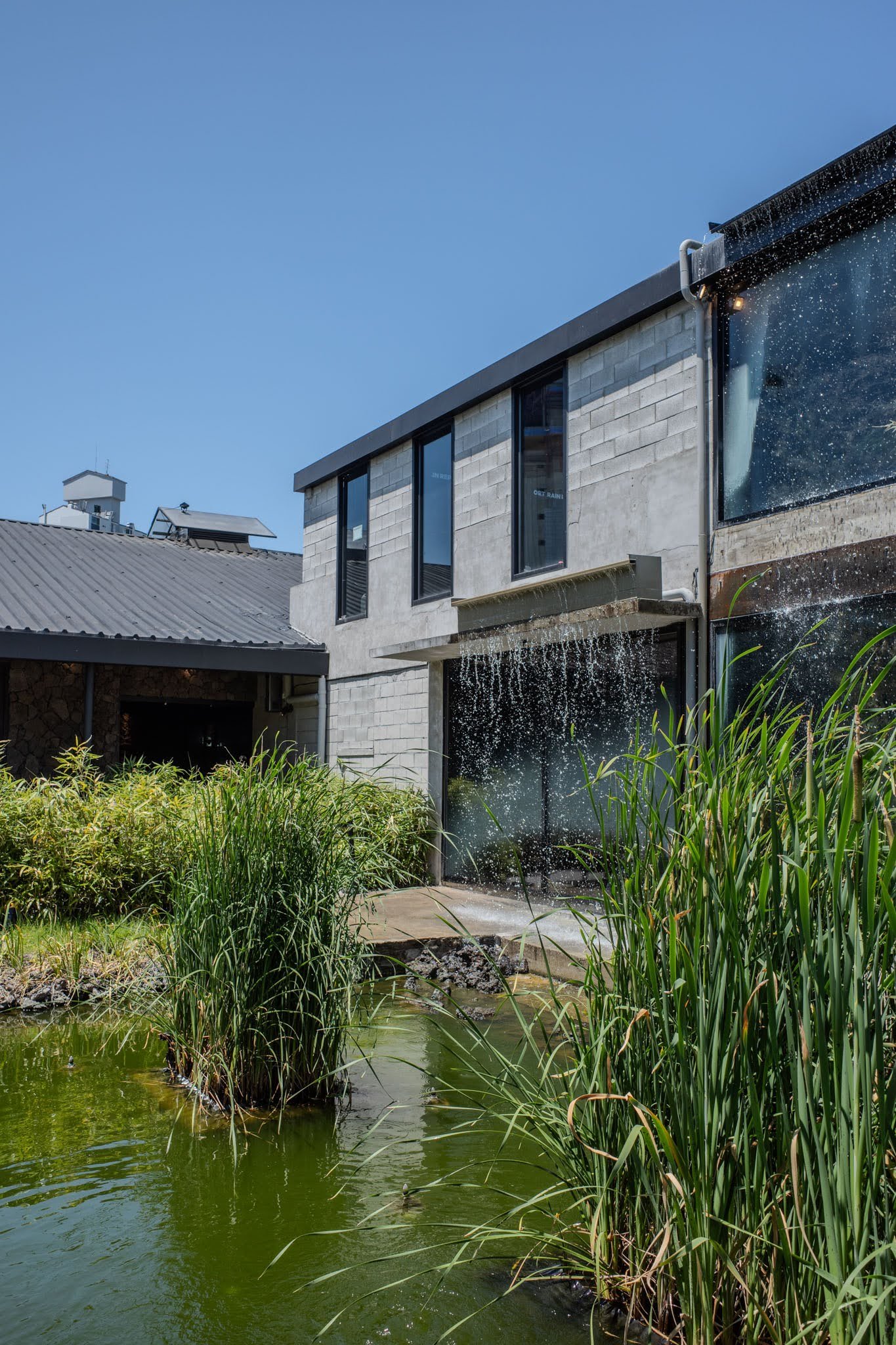
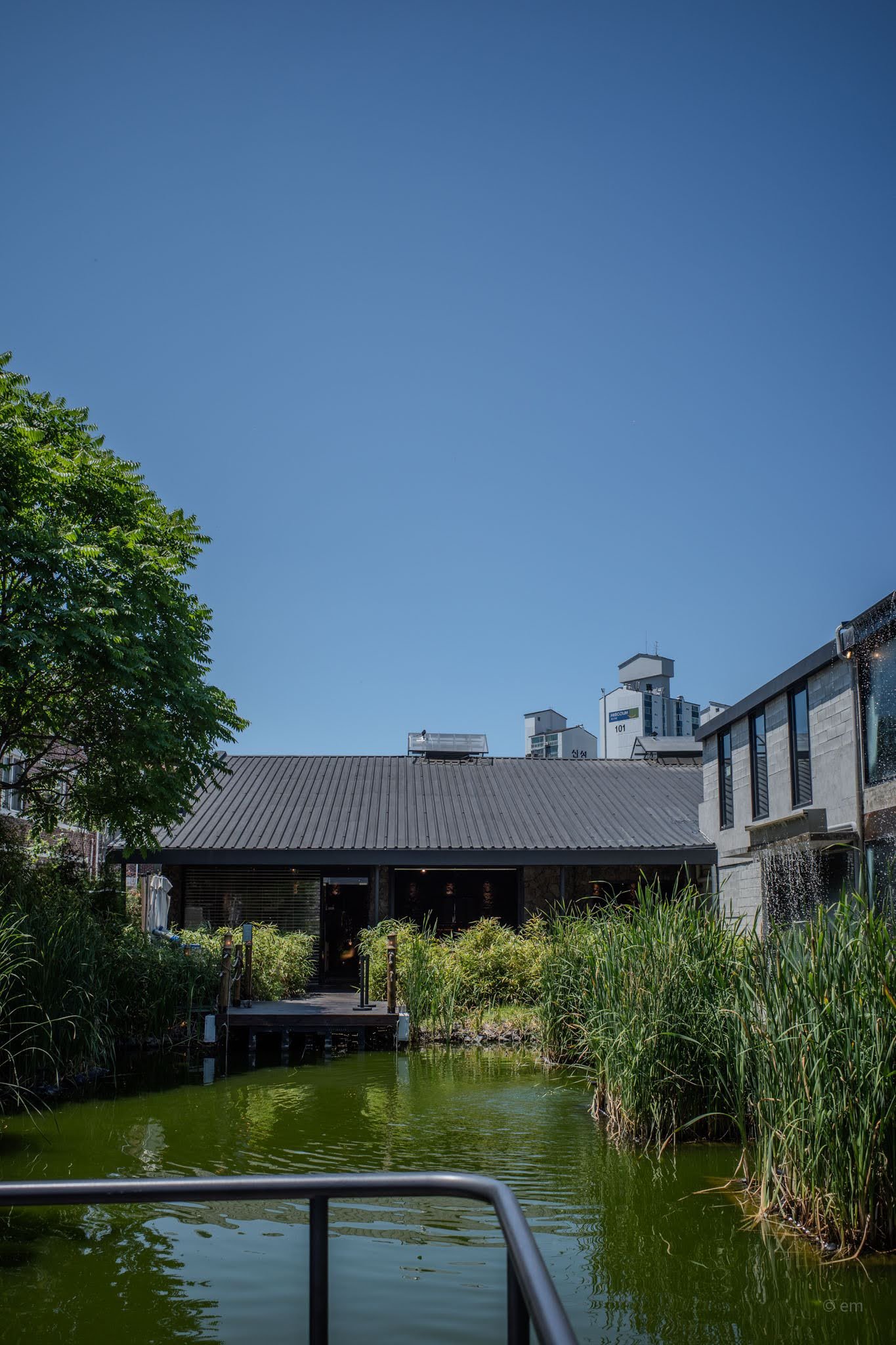
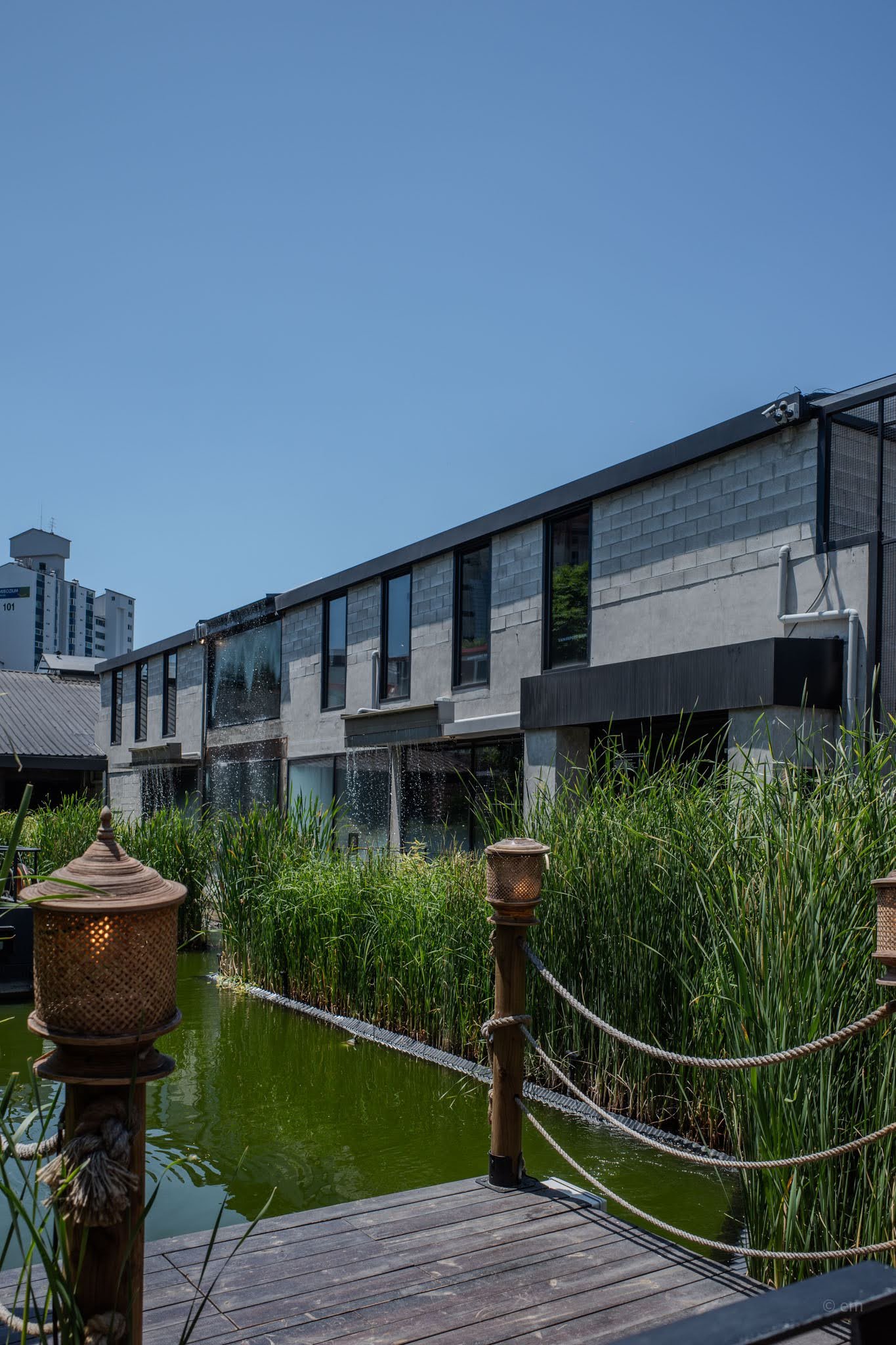
You found Saladaeng Temple the same way everyone did — not by recognizing the building, but by spotting the pond. The gray concrete exterior on Seongsui-ro 16-gil gave nothing away: just cinder block walls, tall reeds pressing against the water, a weathered wooden dock. And then a raft, crossing slowly across a green pool. You stepped on. The city fell behind you.
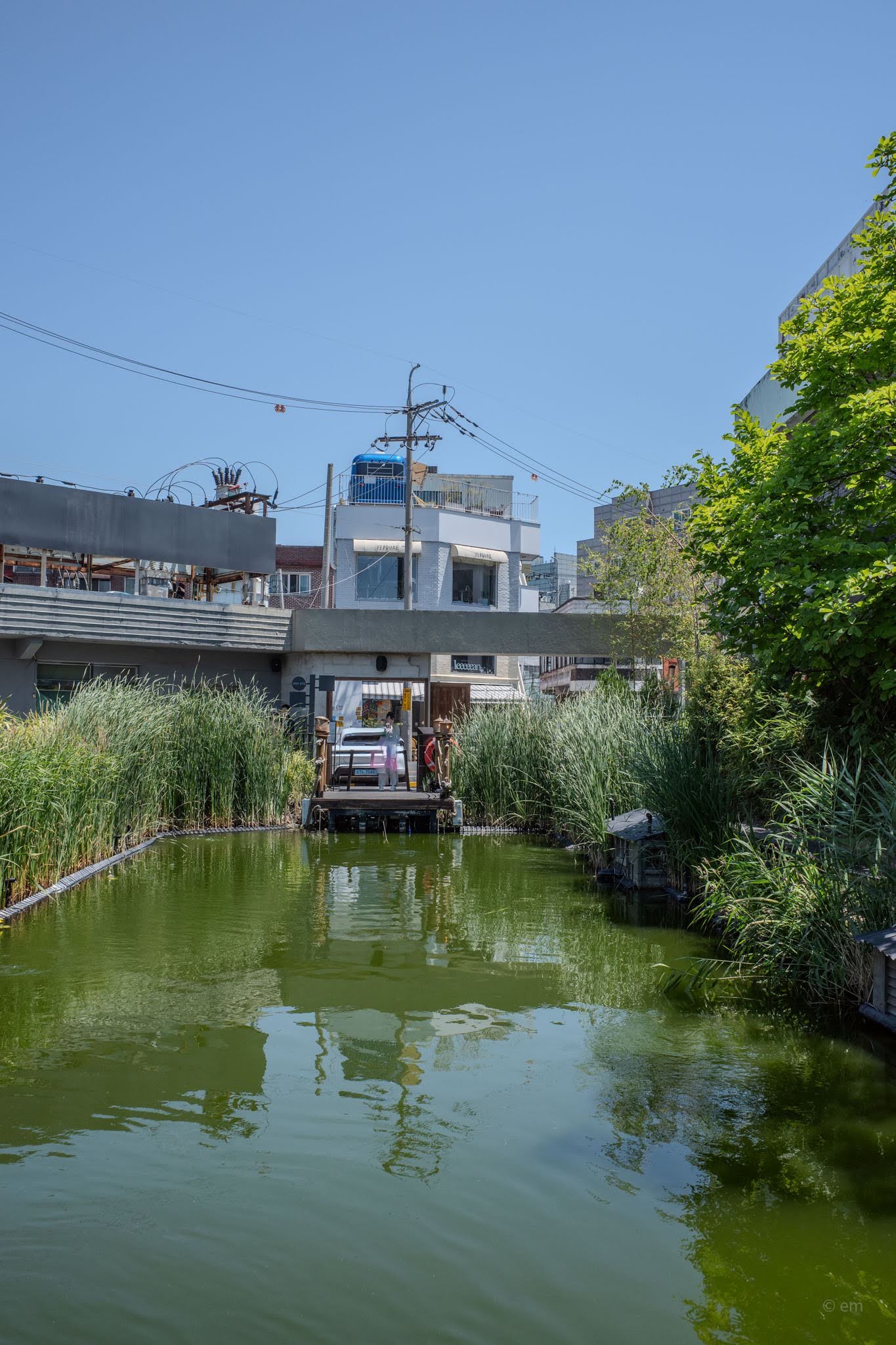
The Crossing
The boat was the concept — or close enough to one. Glow Seoul, the F&B space design studio behind the Saladaeng series and a long roster of high-concept Seoul spaces, built the crossing as a threshold rather than an entry. From the moment you stepped onto the floating platform, you were meant to already be elsewhere. Bamboo torches burned at dock level. Rope railings strung between posts. The raft moved on a mechanical track, but that detail mattered less than the effect: reeds on all sides, open sky above, the city skyline visible but somehow failing to register.
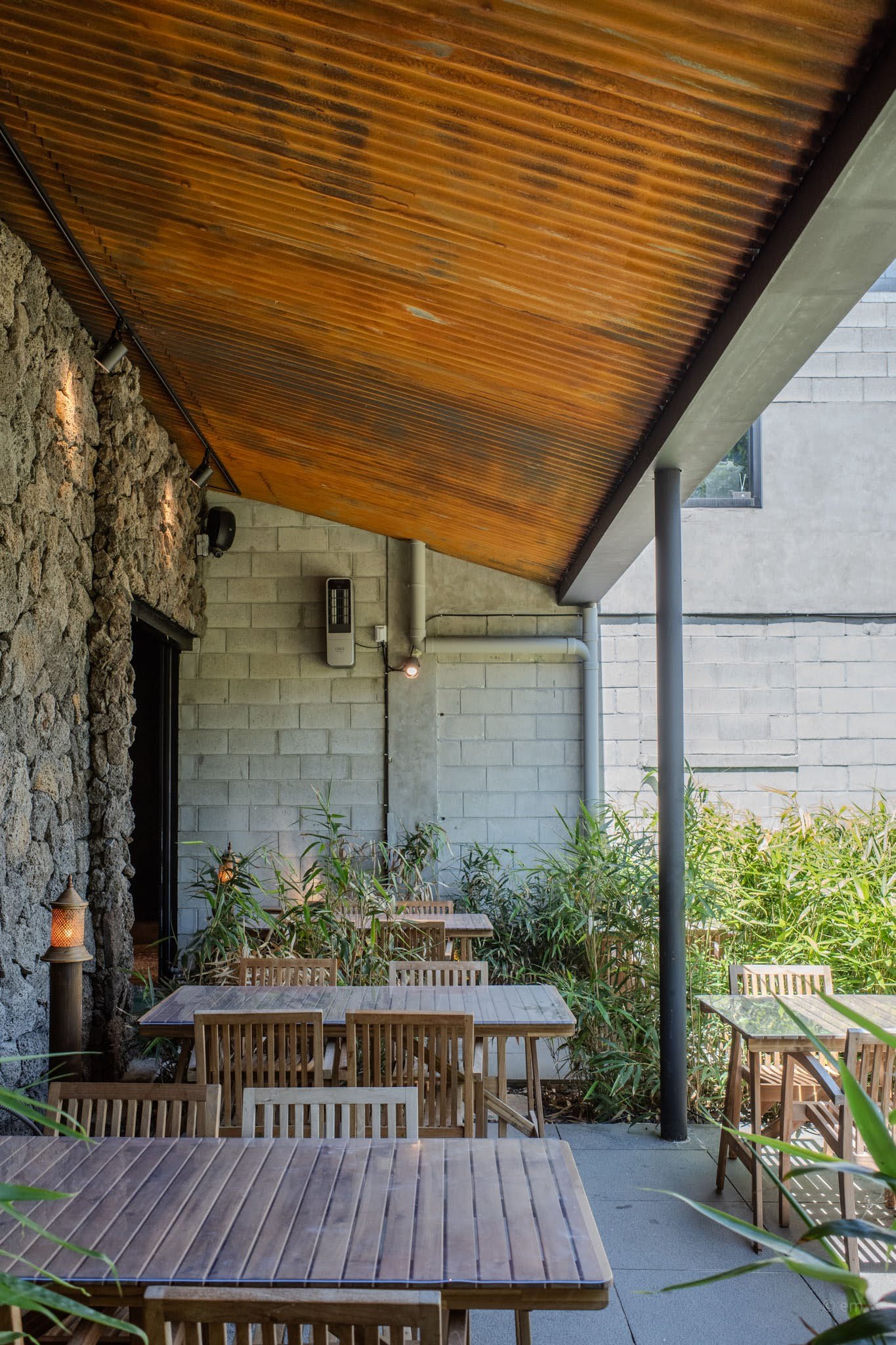
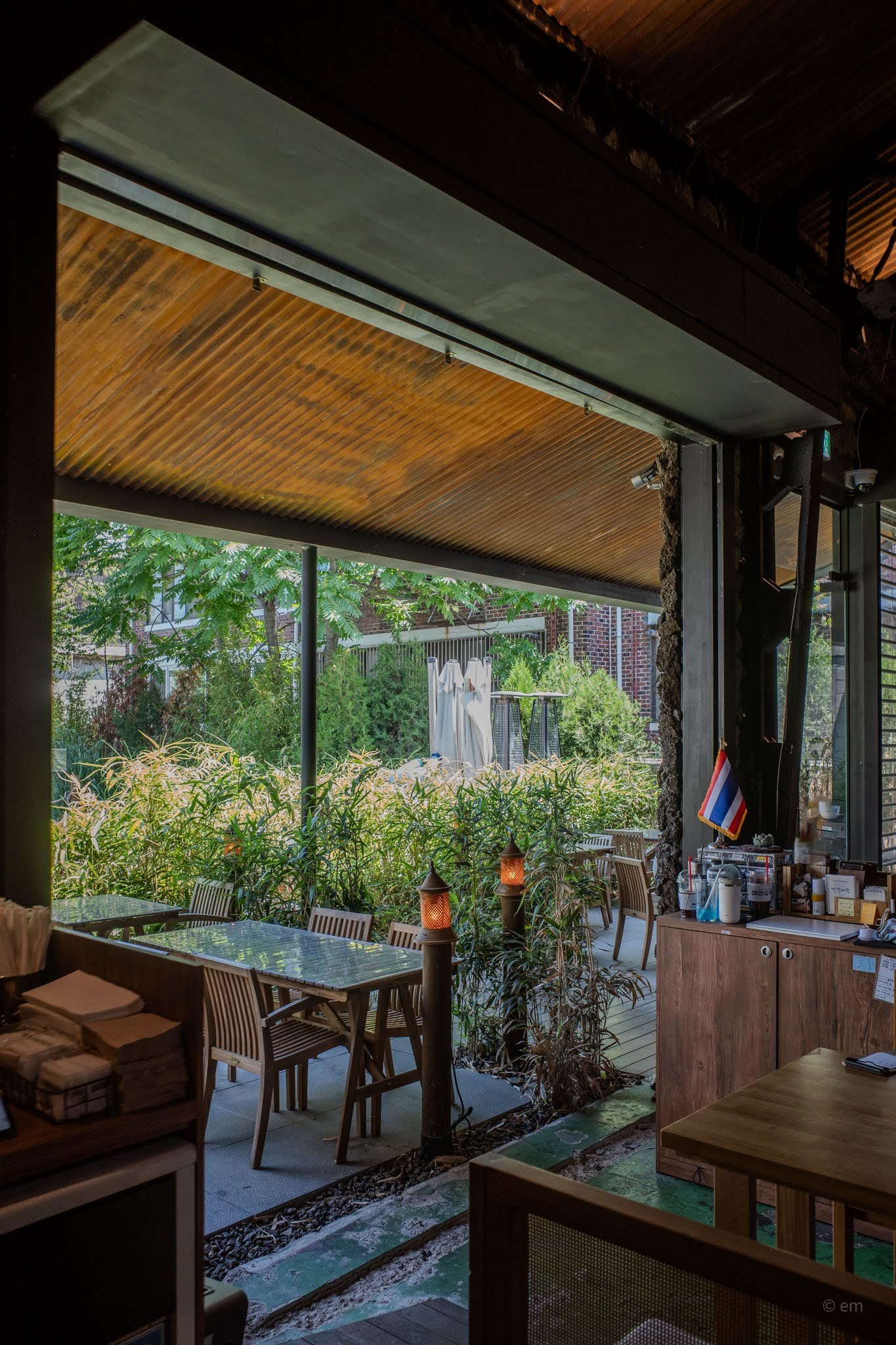
The outdoor terrace on the other side made the transition physical. Teak tables sat beneath a corrugated amber awning, bamboo pressing in from both edges. Rough volcanic-looking stone faced the passage wall. A small lantern burned on each table. Wide sliding panels opened onto the interior, and through them you could already see what was waiting.
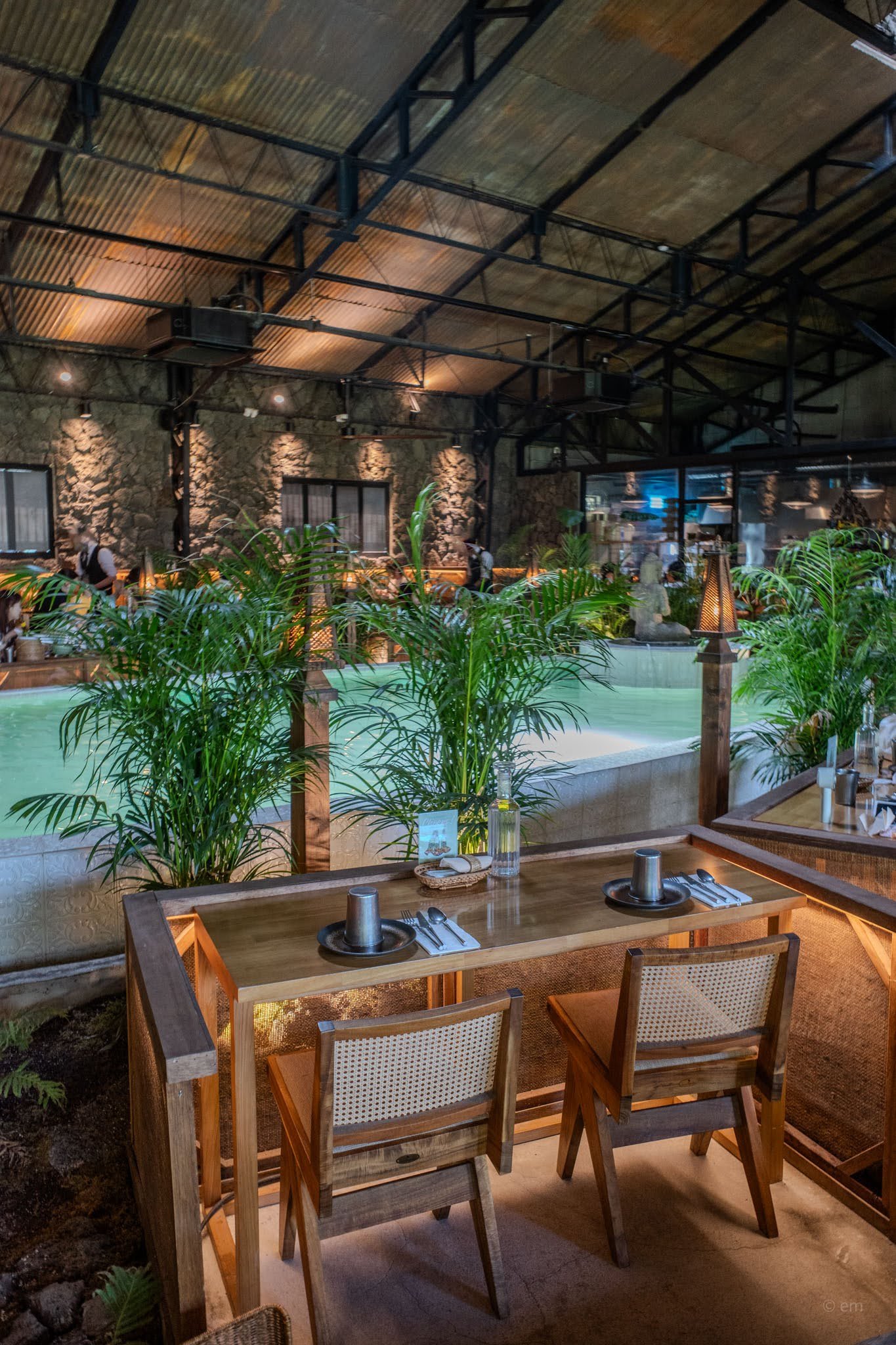
The Temple Itself
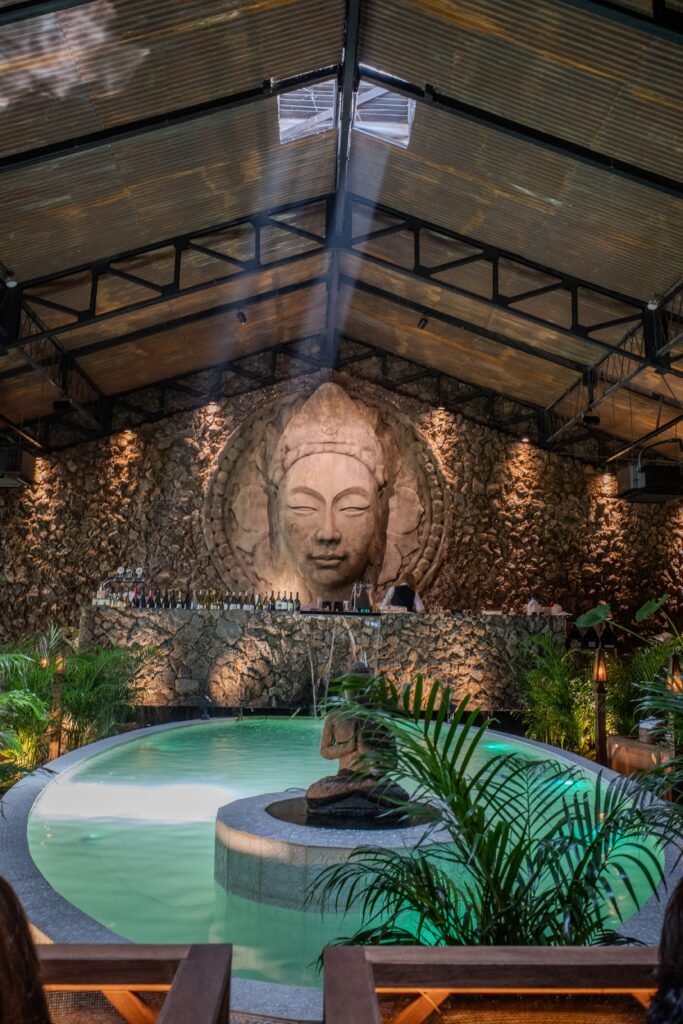
What Saladaeng Temple understood was the value of deliberate emptiness. The main hall was vast but sparsely seated — a decision that traded table count for atmosphere. A circular pool held the center of the room, its water lit a soft turquoise, a seated stone Bodhisattva figure rising from a low island at its center. Palm fronds crowded in from all angles. At the dining tables nearest the water, cane-backed teak chairs faced the reflection.
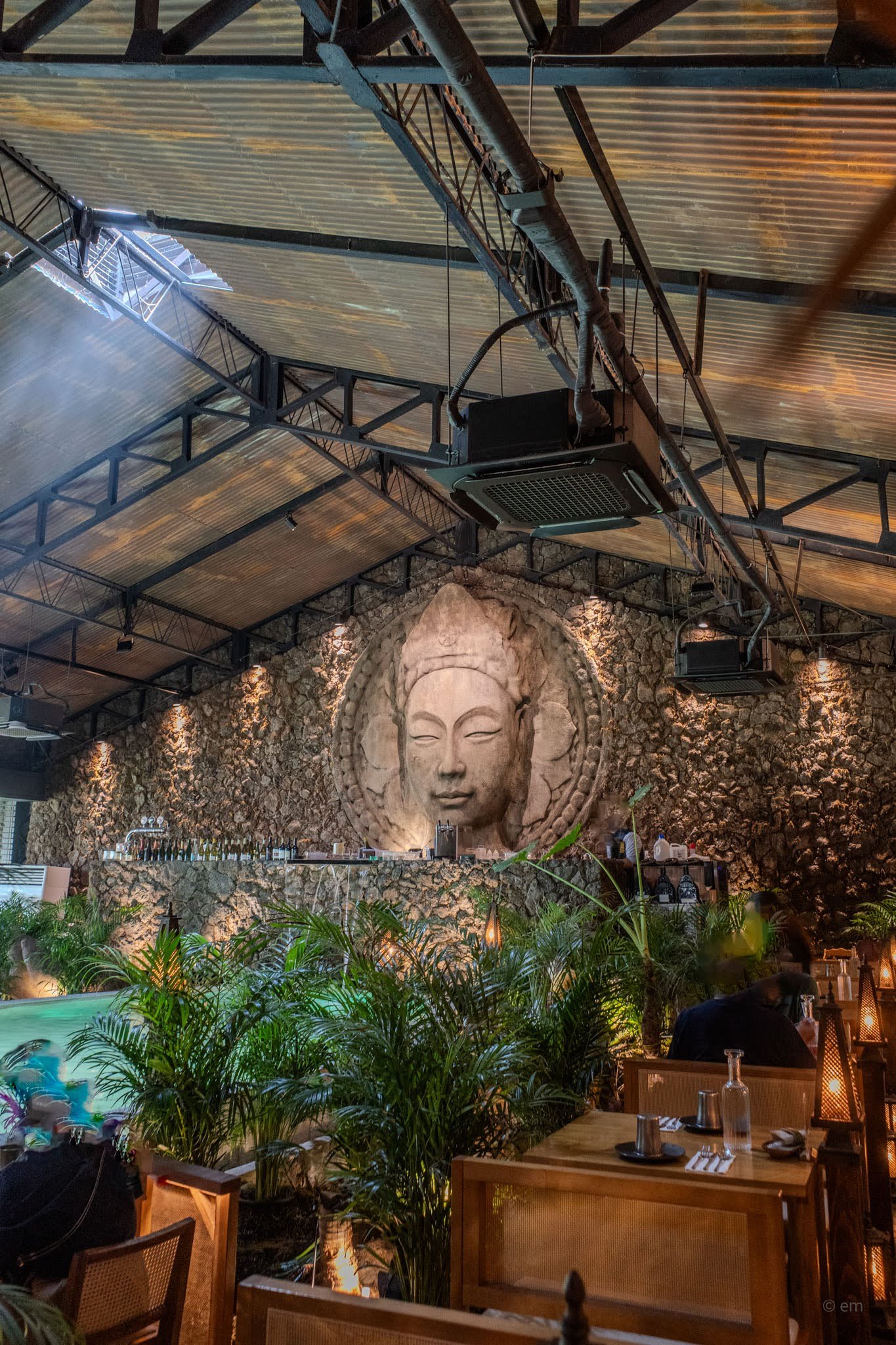
The far wall held the room. A carved face — enormous, eyes closed, serene — was embedded directly into rough-cut stone, haloed by uncut volcanic rock in the manner of a bas-relief excavated from a cliff rather than constructed. Below it, the bar ran the full length of the wall, bottles lined in rows. Warm spotlights caught the stone’s texture. The corrugated metal ceiling ran overhead on exposed steel trusses, industrial in structure but pulled warm by pendant lanterns and the amber glow that gathered around every surface after dark.
The space was the second chapter in Glow Seoul’s Saladaeng series. Its predecessor, Saladaeng Embassy, had drawn on the French Embassy in colonial-era Vietnam as its reference point. Temple moved the same thread further into mythology: not a diplomatic outpost but a sacred site, hidden inside an urban block, reached only by water.
What Was on the Table
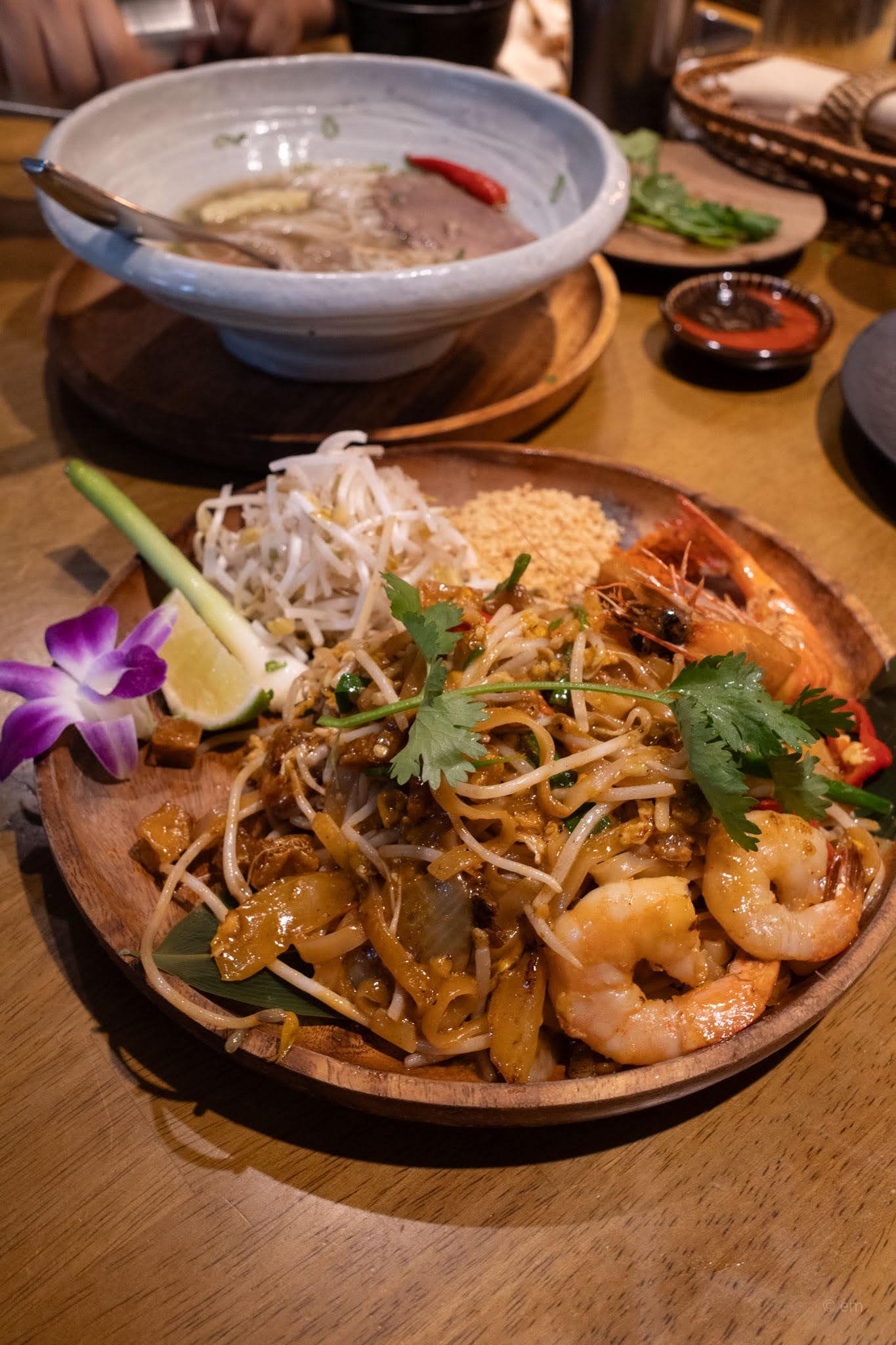
The kitchen positioned itself as French-Thai fusion, though the menu’s center of gravity leaned clearly Thai. Shrimp pad thai arrived piled on a rounded wooden board — river prawns arranged along the rim, lime wedge and a single fresh orchid placed with the precision of a garnish that has been photographed many times and knows it. Crushed peanuts, fresh bean sprouts, and cilantro in their own sections. Tom yum soup in a wide gray-blue ceramic bowl alongside, a red chili floating at the surface.
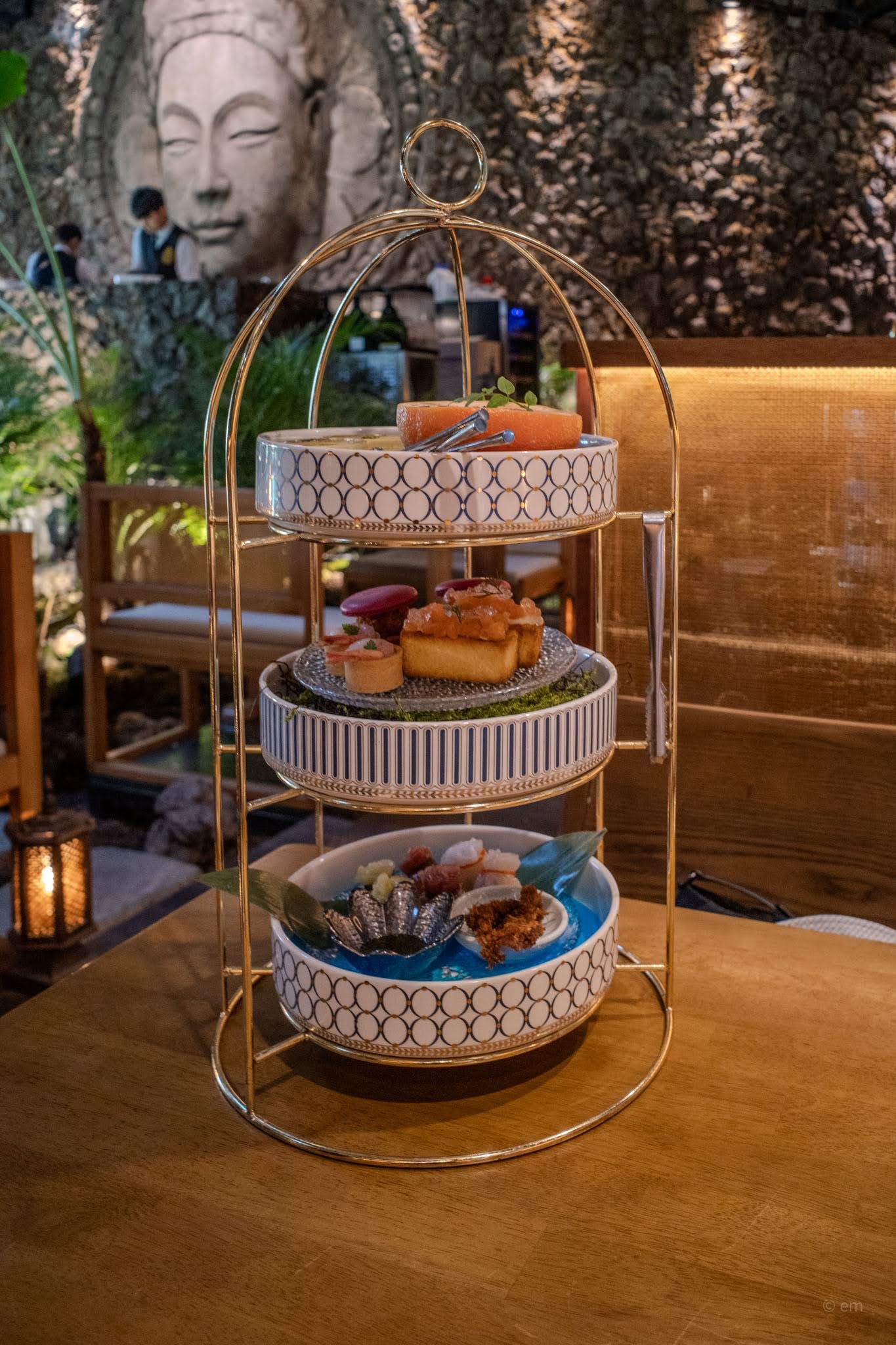
The order that defined the room was the three-tier tray. A gold birdcage-shaped rack held three patterned porcelain bowls stacked vertically. The bottom tier arrived in blue-glazed ceramic, shellfish preparations laid against what appeared to be blue-tinted water pooled at the base, crispy accompaniments alongside. The middle tier was bedded in preserved moss, holding small crostini-style open-faced bites and miniature seafood rolls. The top brought crème brûlée portions and a halved grapefruit with its flesh caramelized and jeweled. It arrived at the table like a vitrine opened for inspection, and the room was full of people doing exactly that.
Elsewhere on the menu: poo pad pong curry, Iberico pork steak, coconut squid fry. Mangosteen juice. Wine from the bar below the stone face.
After the Crossing
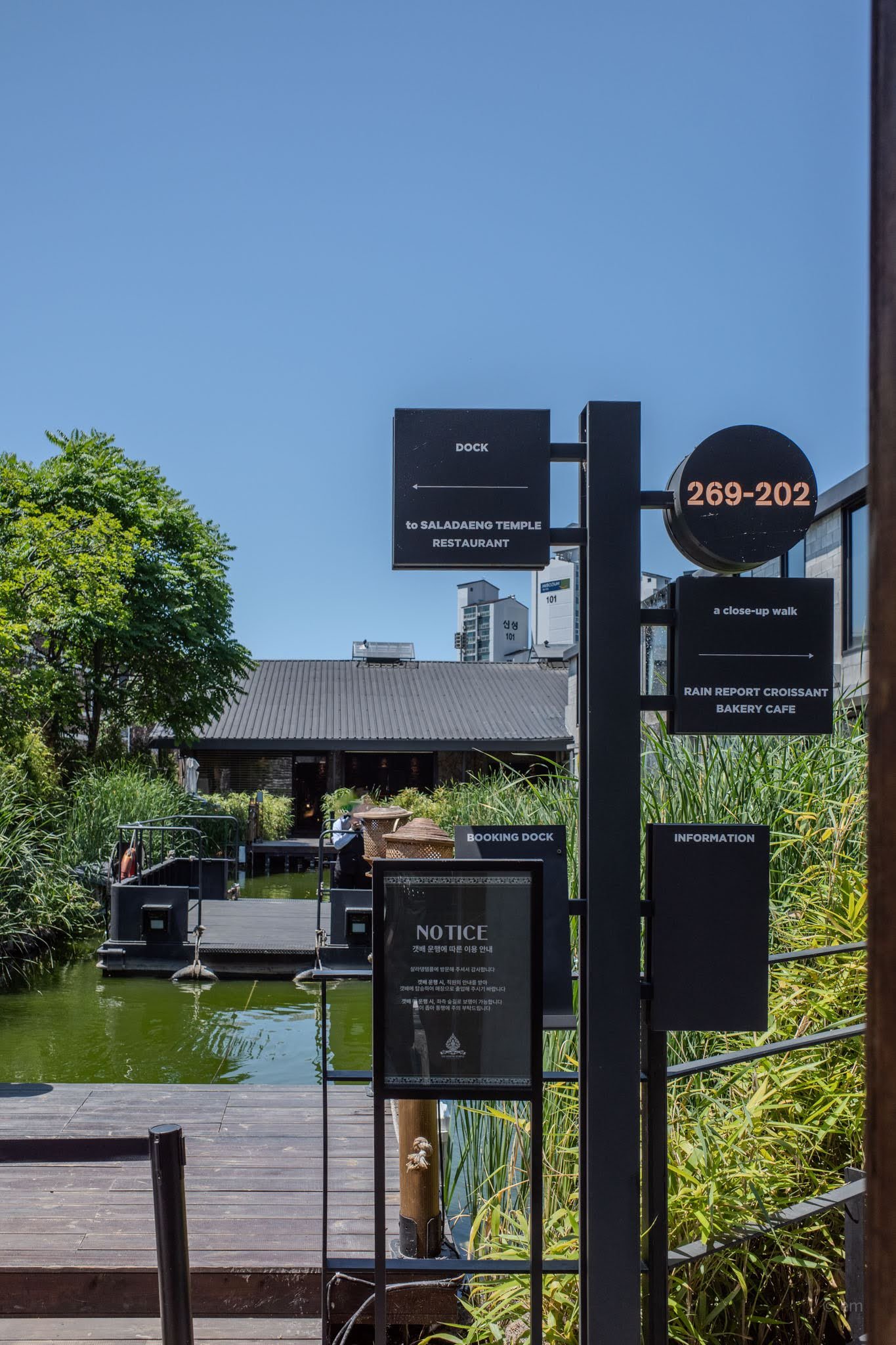
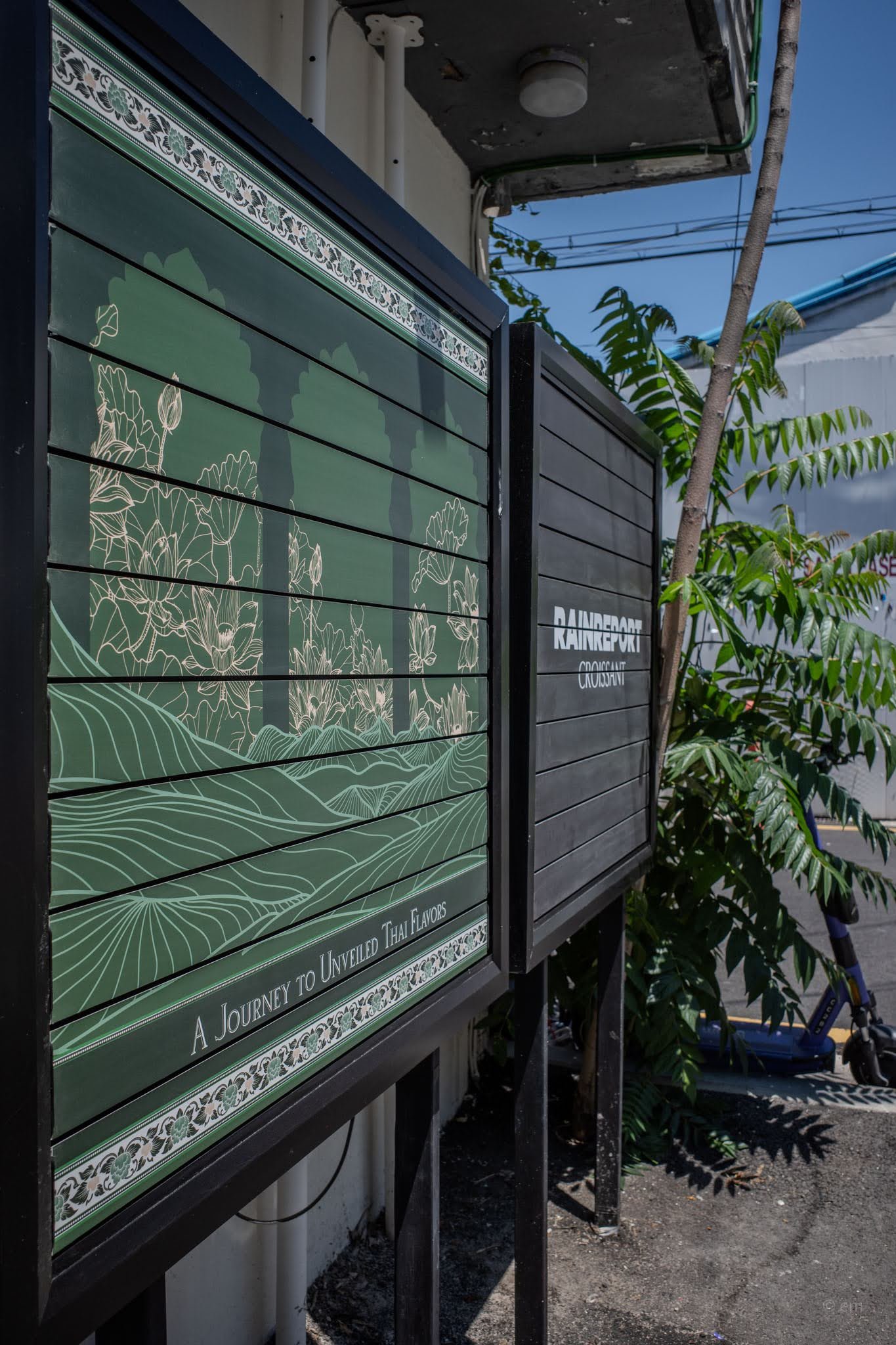
Saladaeng Temple opened in August 2023. Its run was short. The space at Seongsui-ro 16-gil passed through further iterations after it closed — another Glow Seoul concept, then the broader redevelopment of the complex. The dock sign out front eventually began pointing in two directions at once: left toward a restaurant that no longer took reservations, right toward the Rain Report Croissant bakery café that occupied a neighboring section of the same building.
What stays is the geography. The pond, the reeds, the rope railings along the dock. The corrugated awning over the terrace where the lanterns once burned at noon. And the signage at the entrance — still directing arrivals to a boat that doesn’t run anymore.
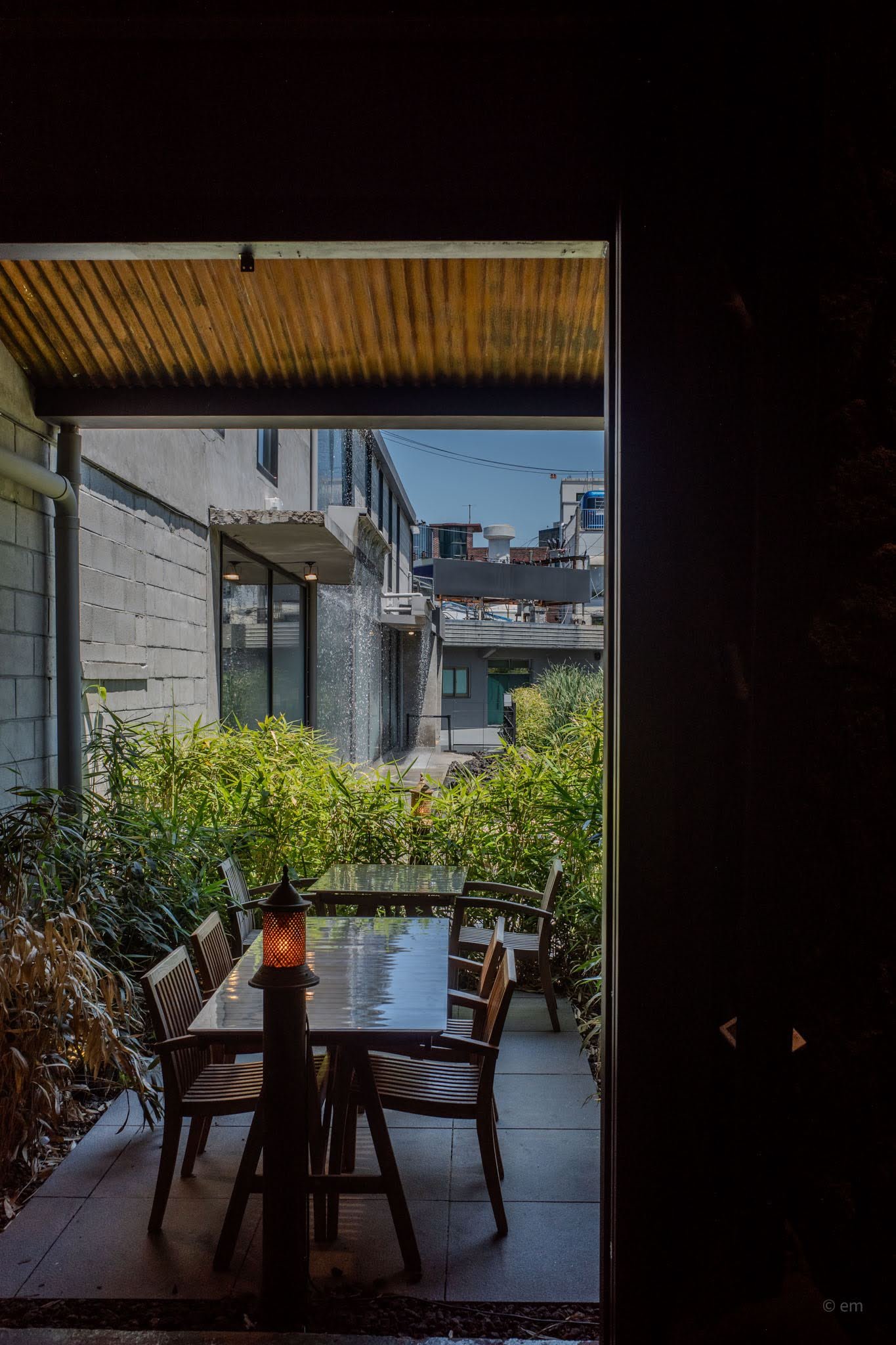
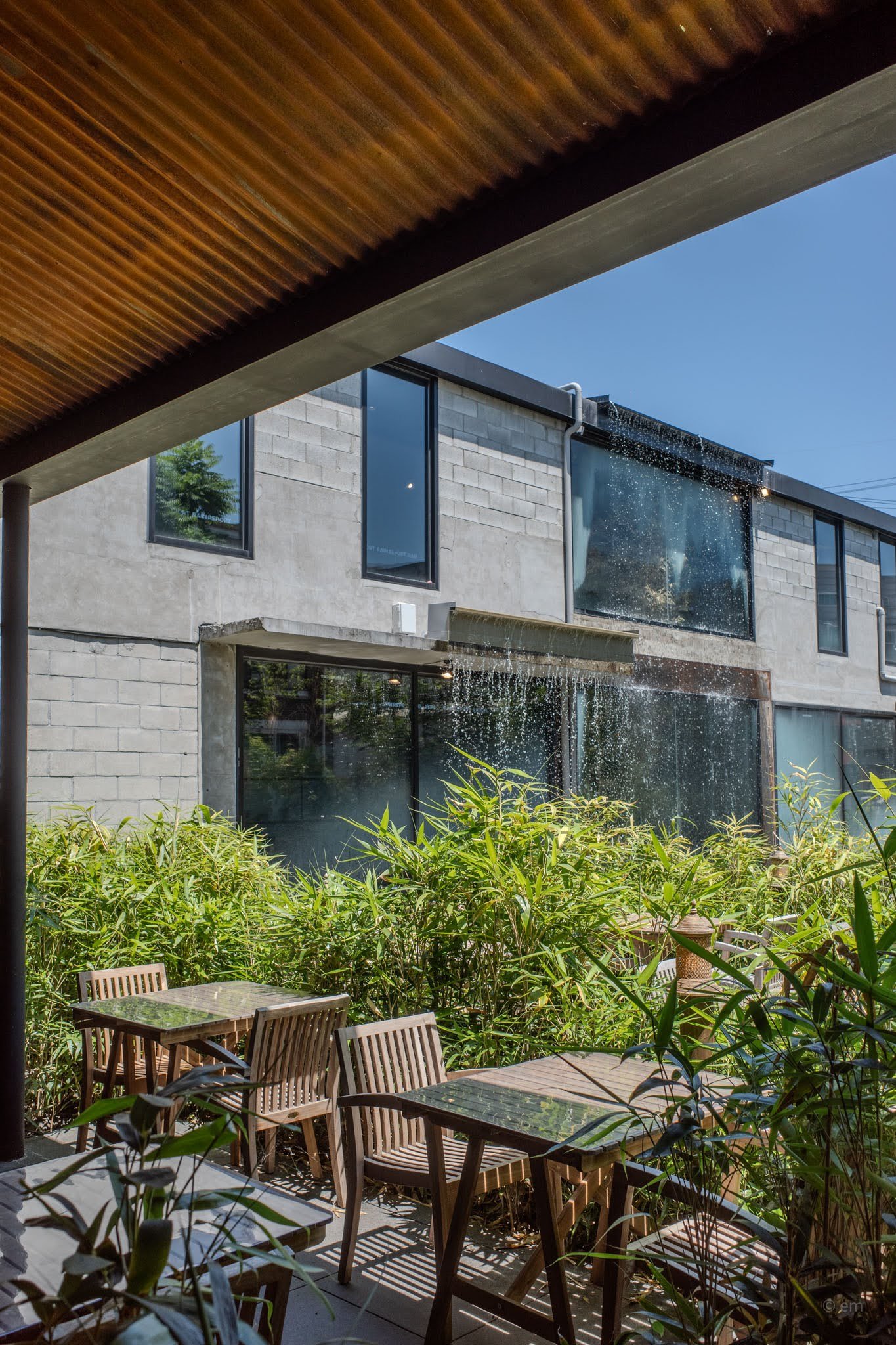
Saladaeng Temple | Opened August 2023 | Permanently closed Address: 32 Seongsui-ro 16-gil, Seongdong-gu, Seoul
The raft crossed the water. For a while, that was enough.
![[Lost] Lujain Espresso Bar, Yangjae-cheon](https://hiddencollector.thesensitiveways.com/wp-content/uploads/2026/03/R0018314-200x300.jpg)
![[Lost] Hey, Laura!](https://hiddencollector.thesensitiveways.com/wp-content/uploads/2025/03/HEY-LAURA-200x300.png)
![[Lost] Moon Landing: A Retro American-Style Cafe in Bogwang-dong](https://hiddencollector.thesensitiveways.com/wp-content/uploads/2026/03/R0013789-200x300.jpg)
![[Lost] Oldies Hotdog](https://hiddencollector.thesensitiveways.com/wp-content/uploads/2026/03/Oldies-Hotdog-200x300.png)