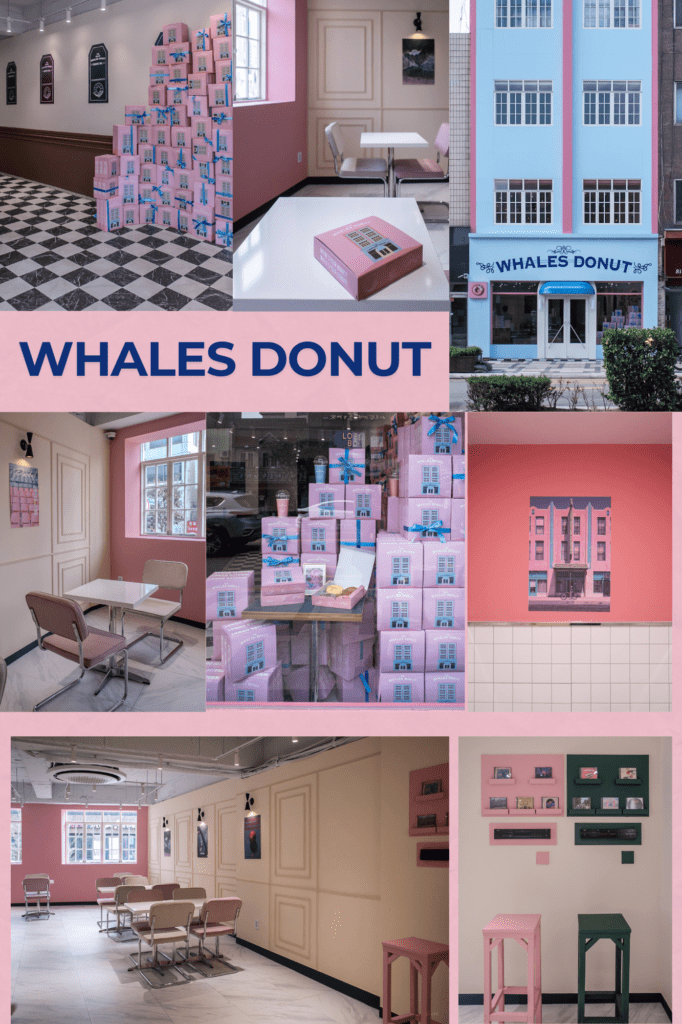
Whales Donut: The Pastel Dreamland That Vanished from Sokcho
There are places you stumble upon that feel less like a donut shop and more like a film set left behind by a director who packed up quietly in the night. Whales Donut, tucked along Jungang-ro in Sokcho, Gangwon-do, was exactly that kind of place — and now it’s gone.
If Wes Anderson ever decided to open a bakery on the East Coast of Korea, it would have looked something like this.
A Building That Stopped You in Your Tracks
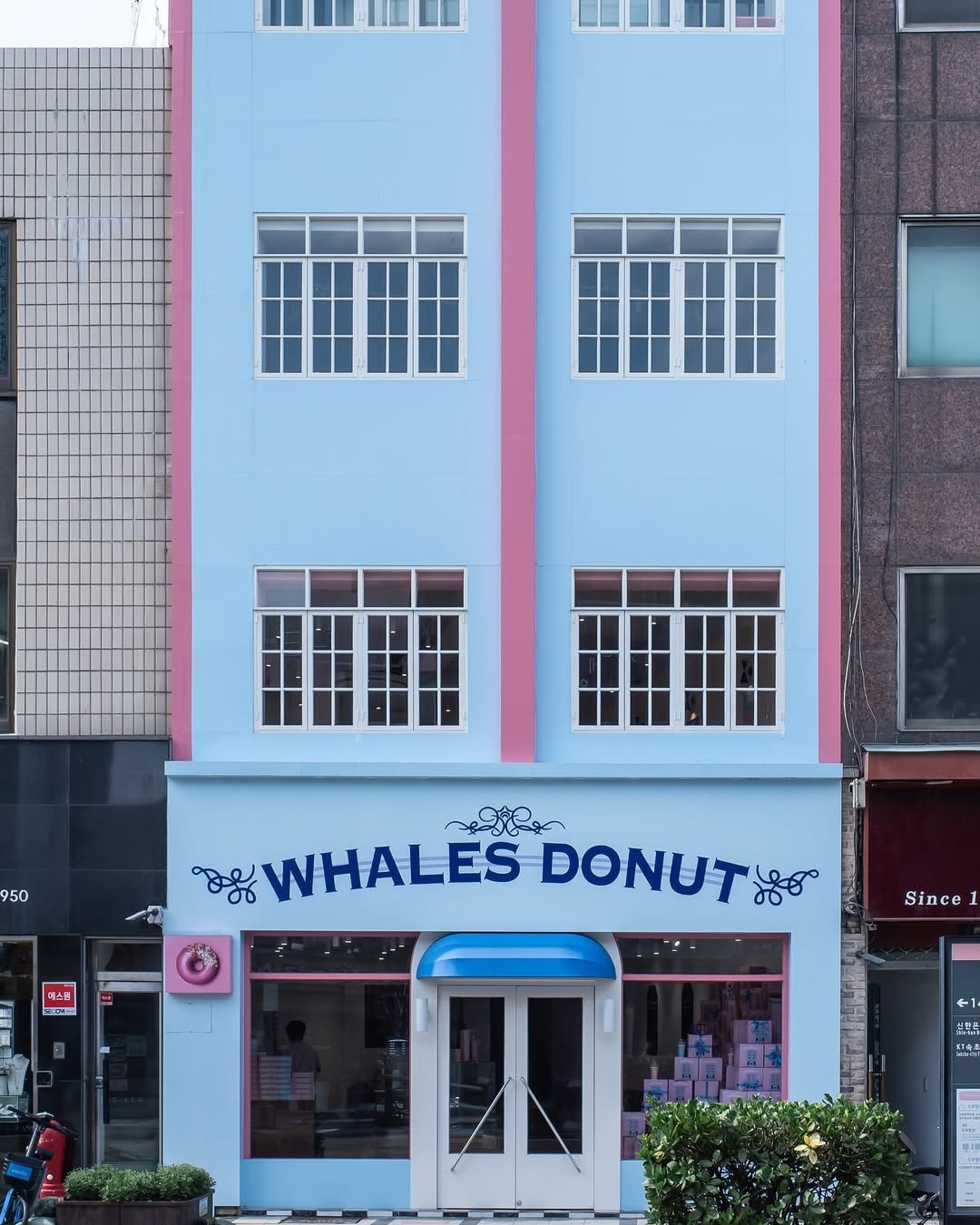
Before you even pushed open the door, the building itself was the first scene. A powder-blue facade, three stories tall, bisected by soft pink vertical stripes. White grid windows framed like something out of The Grand Budapest Hotel. The name — WHALES DONUT — arched across the front in bold navy lettering with decorative flourishes, the kind of typographic detail that belongs on a vintage hotel awning somewhere in Central Europe, not on a side street in a Korean coastal city.
It was jarring in the best possible way. Sokcho is a working port town, famous for raw fish markets and the gateway to Seoraksan. Whales Donut arrived looking like it had been teleported from another dimension — one with better color coordination.
Inside the Symmetry
Step through the blue-canopied entrance and the Wes Anderson comparison only deepens.
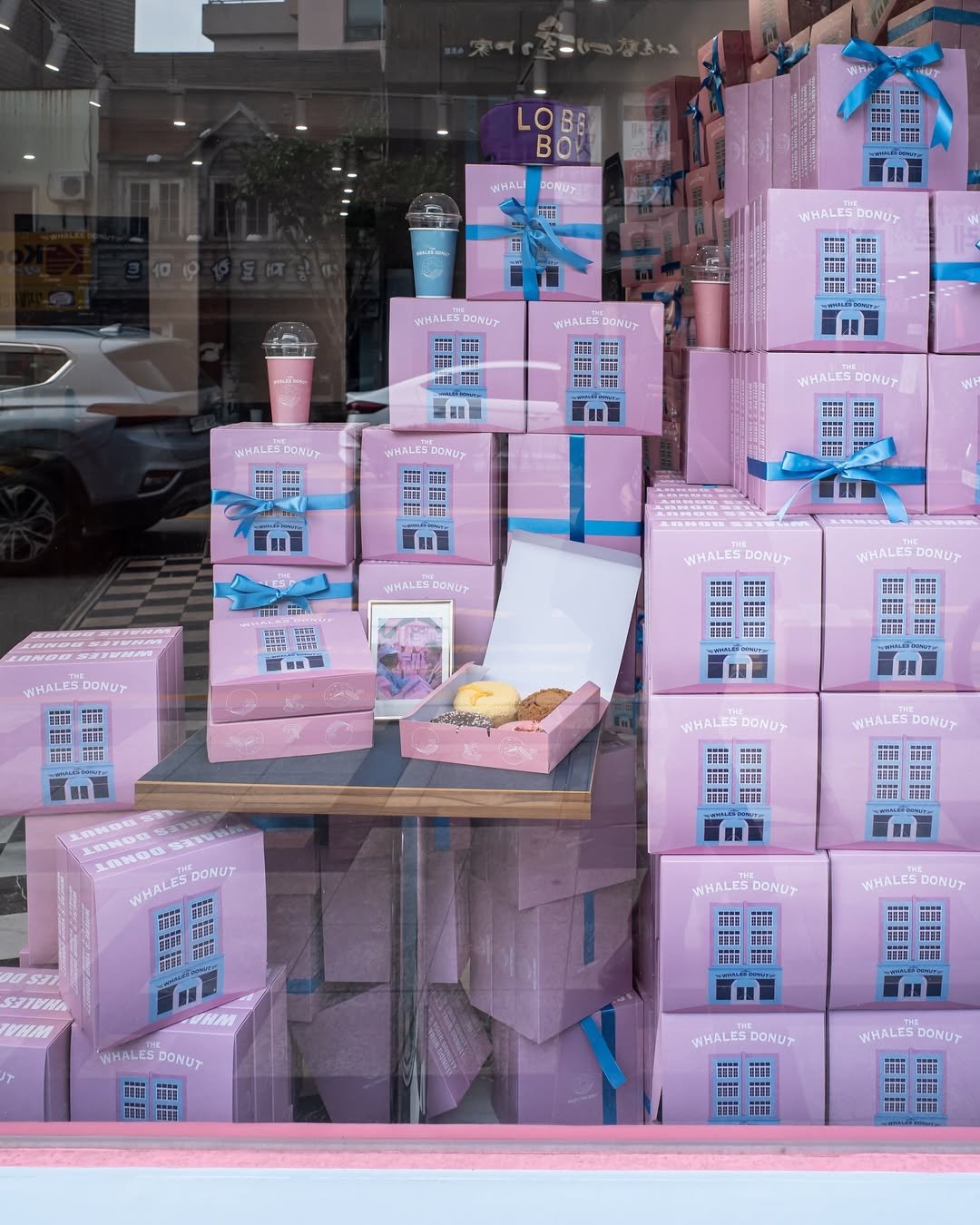
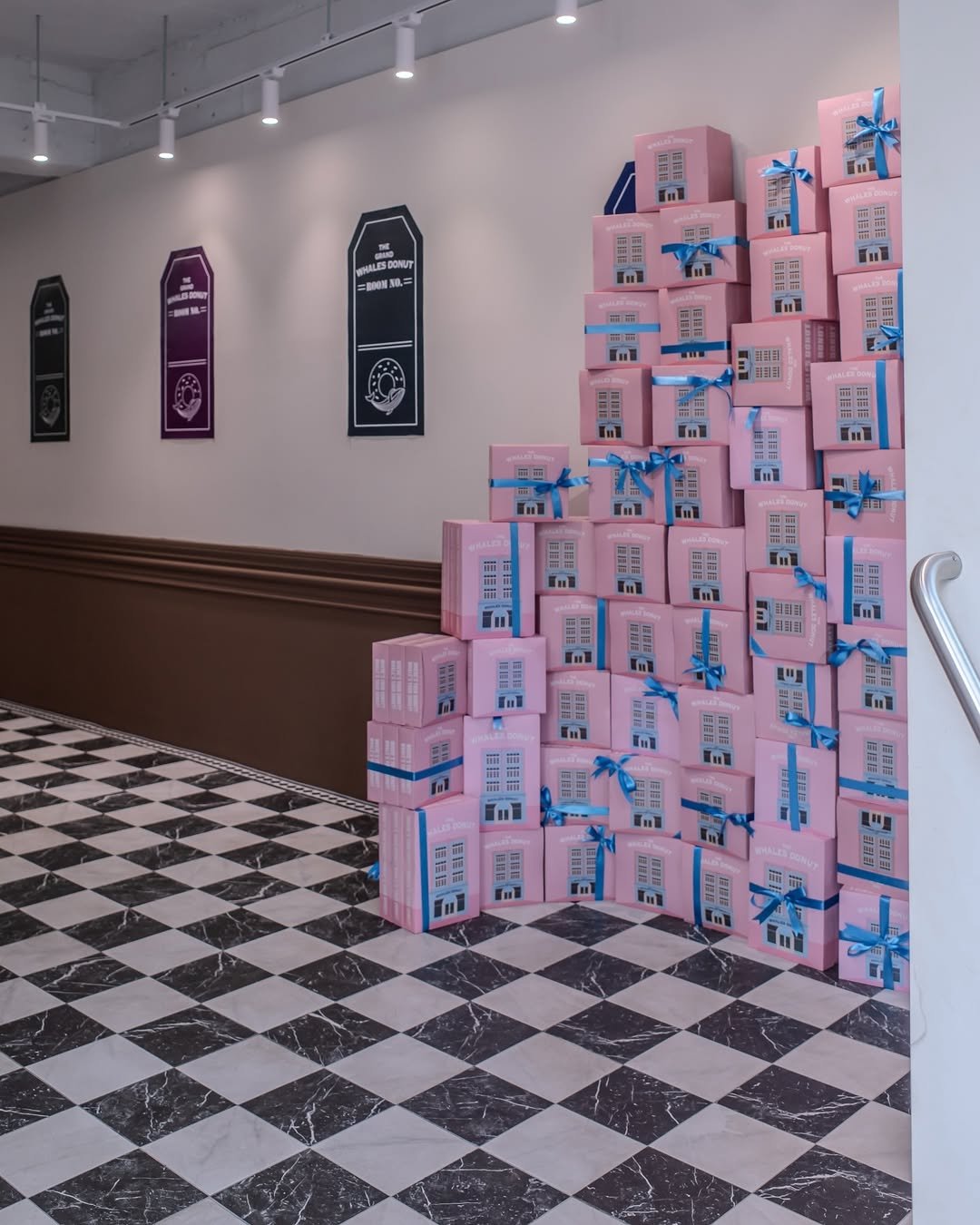
The ground floor greeted you with a black-and-white checkered marble floor — a visual nod straight out of a Mendl’s patisserie fantasy. Stacked against the wall: a towering installation of pink gift boxes, each printed with an illustration of the building itself, tied with electric-blue satin ribbons. It was part display, part art piece, and entirely obsessive in its precision.
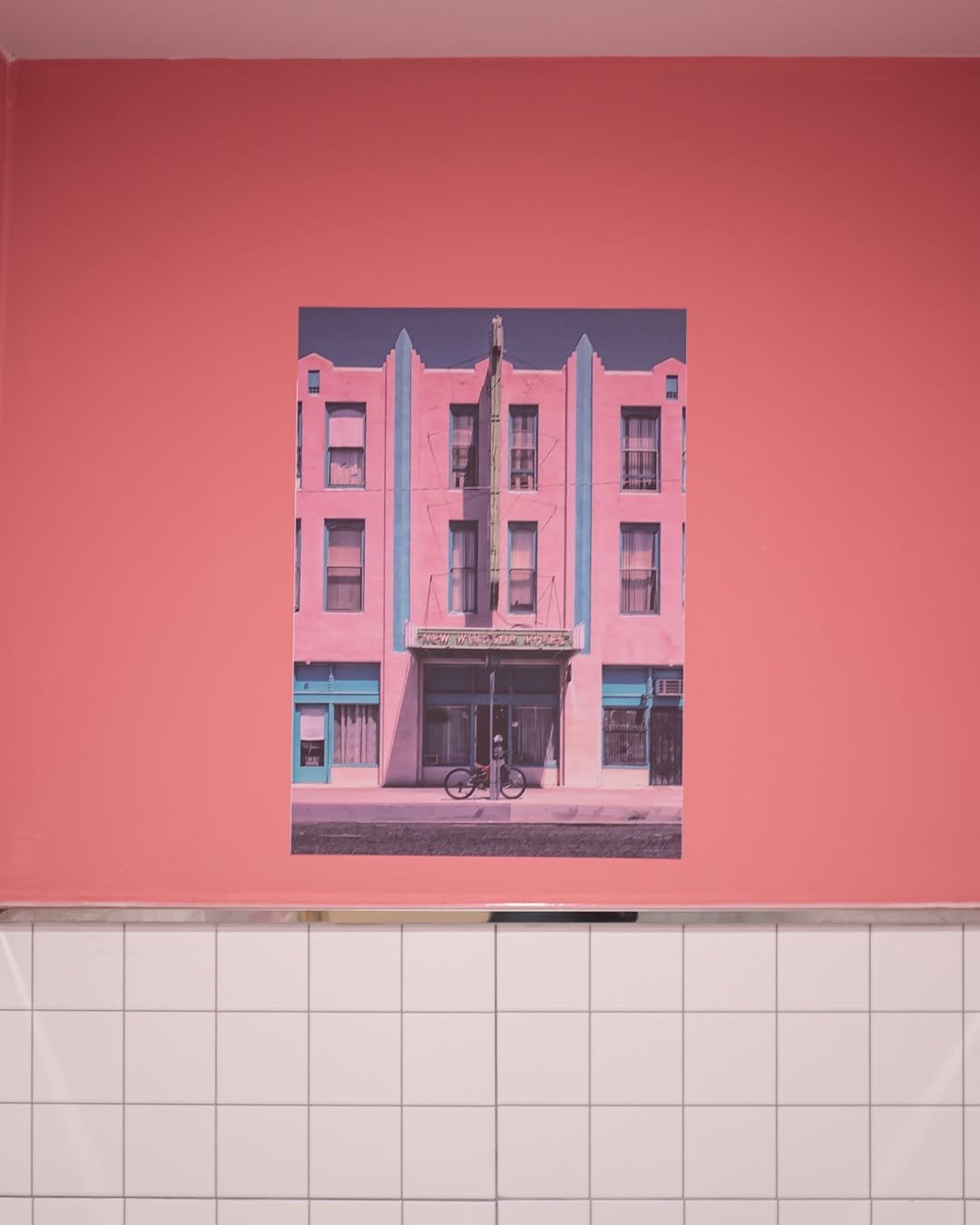
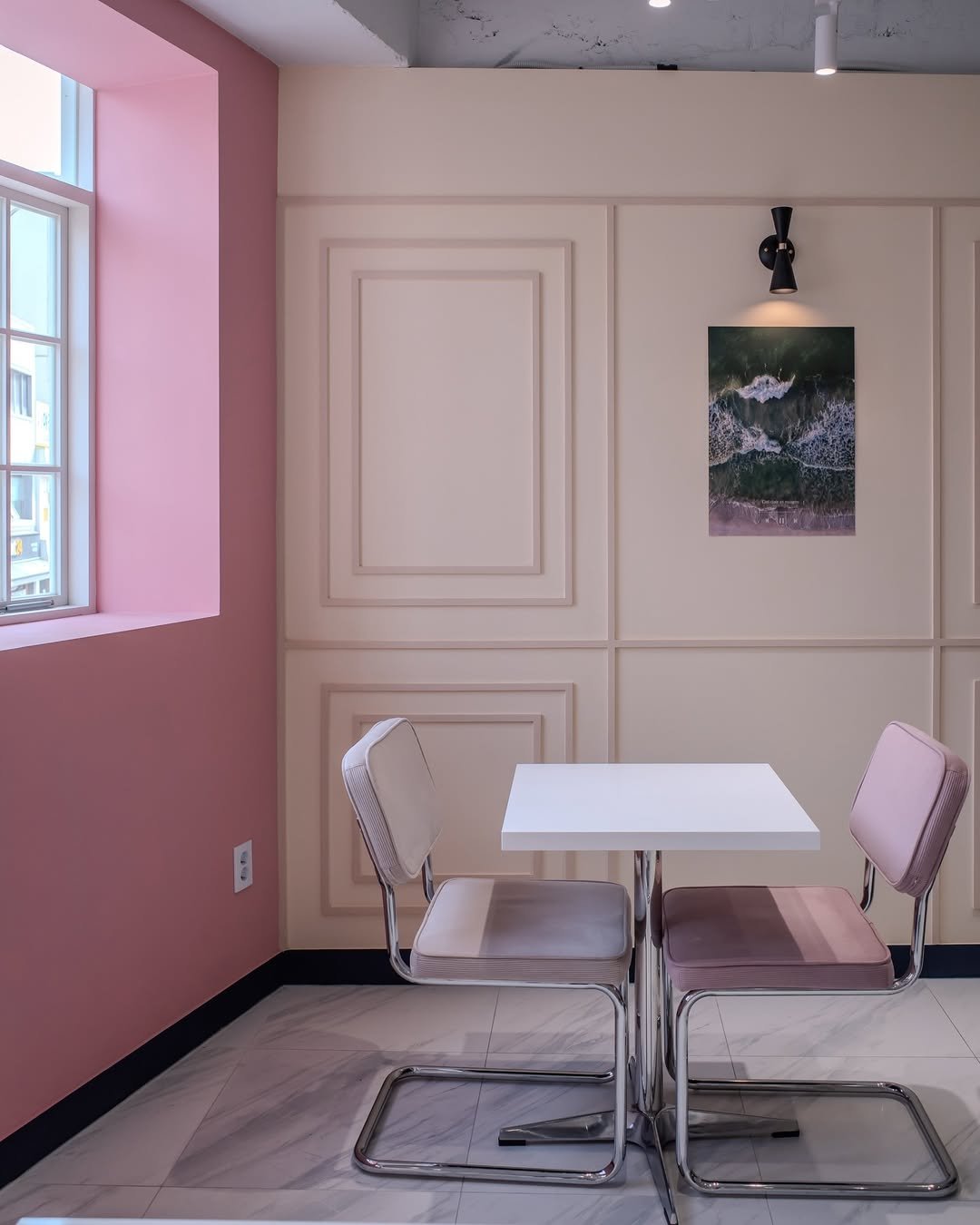
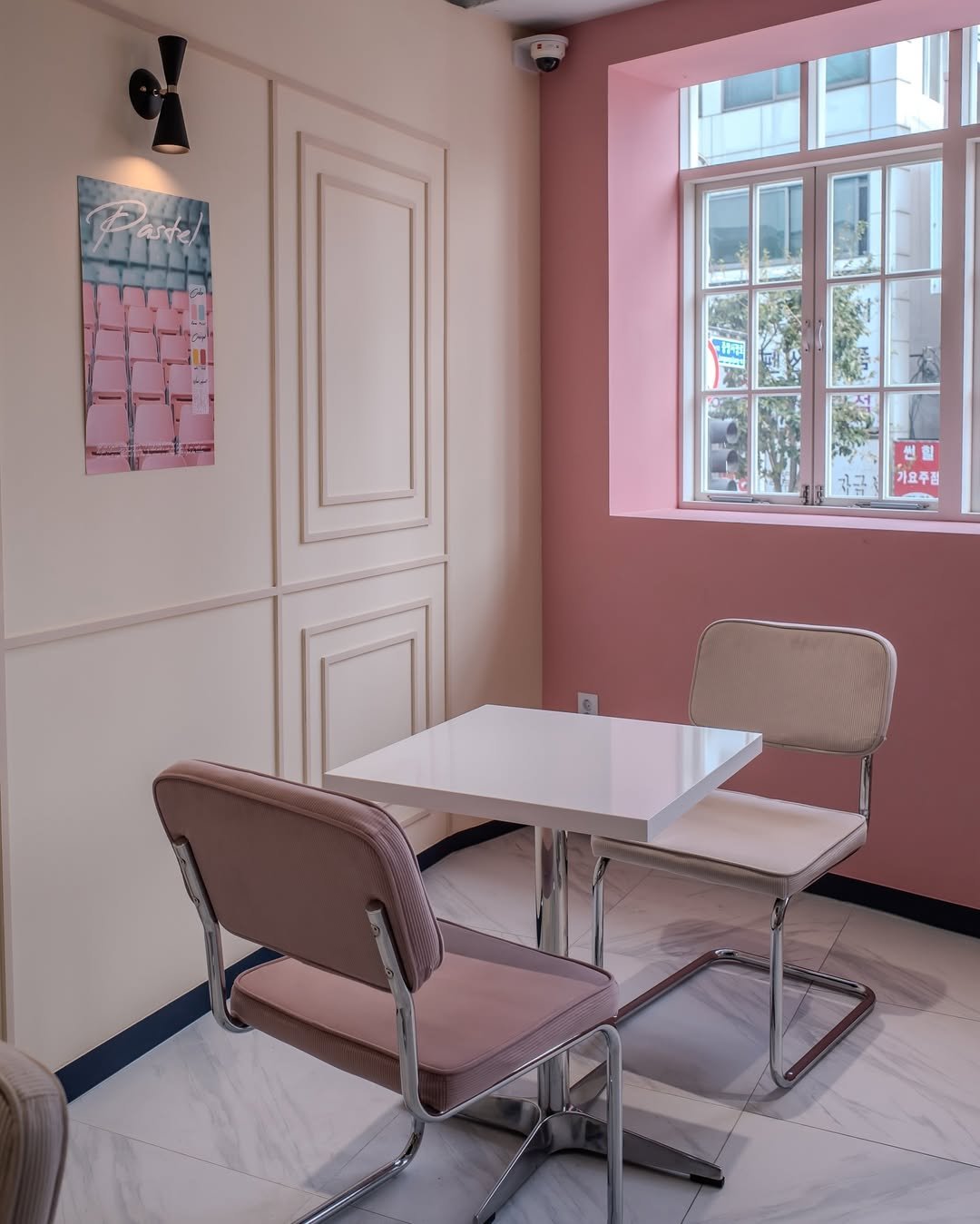
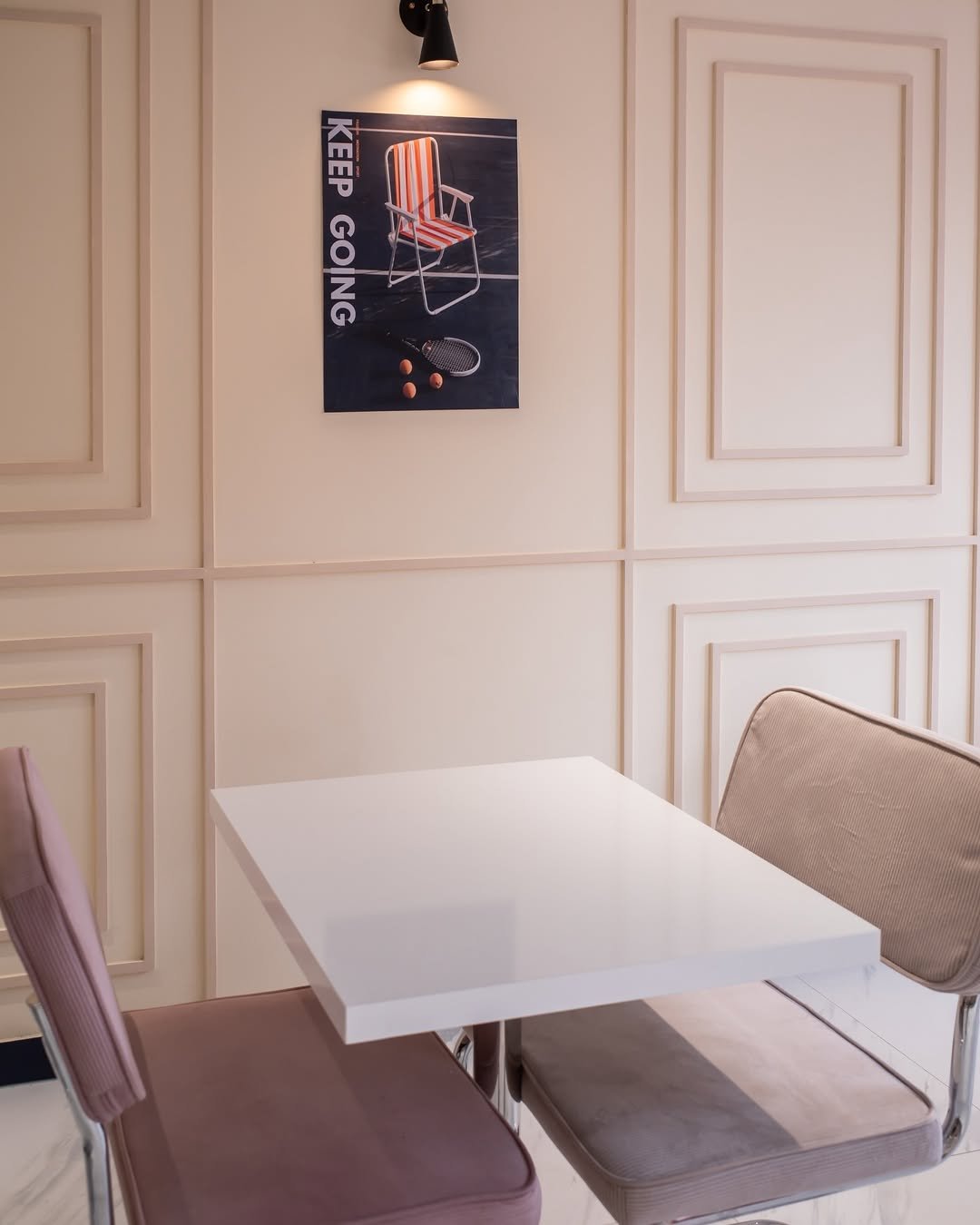
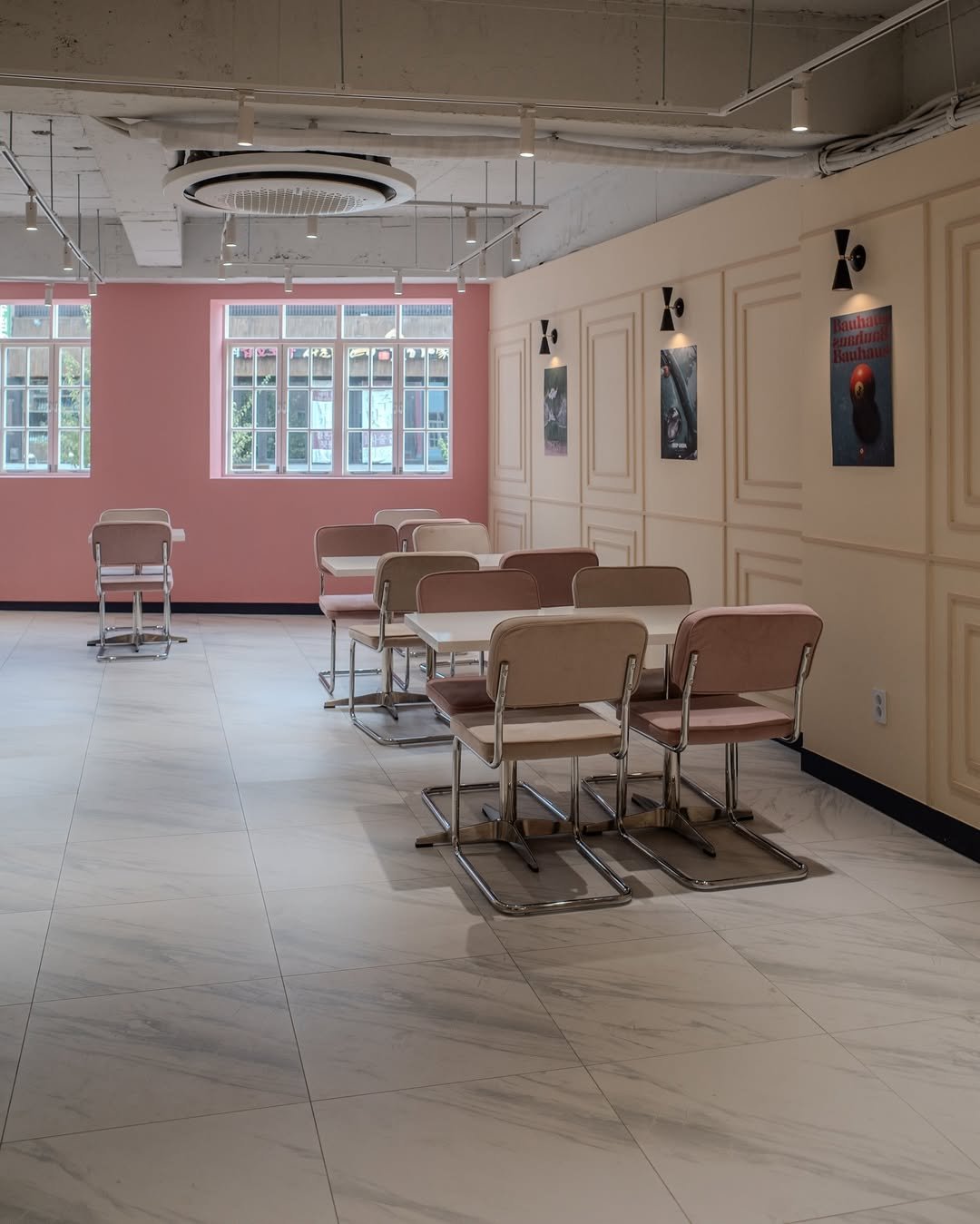
The seating areas upstairs were calmer but no less considered. Walls paneled in warm cream with raised molding detail. Chrome-legged diner chairs upholstered in dusty pink and muted taupe. Small square white tables. Spot-lit posters — a Bauhaus print here, a “Keep Going” tennis chair photograph there — hung with the casual intentionality of a mood board brought to life. The pink wall facing the street, punctuated by tall white-framed windows, flooded the space with soft light that made everything feel slightly unreal.
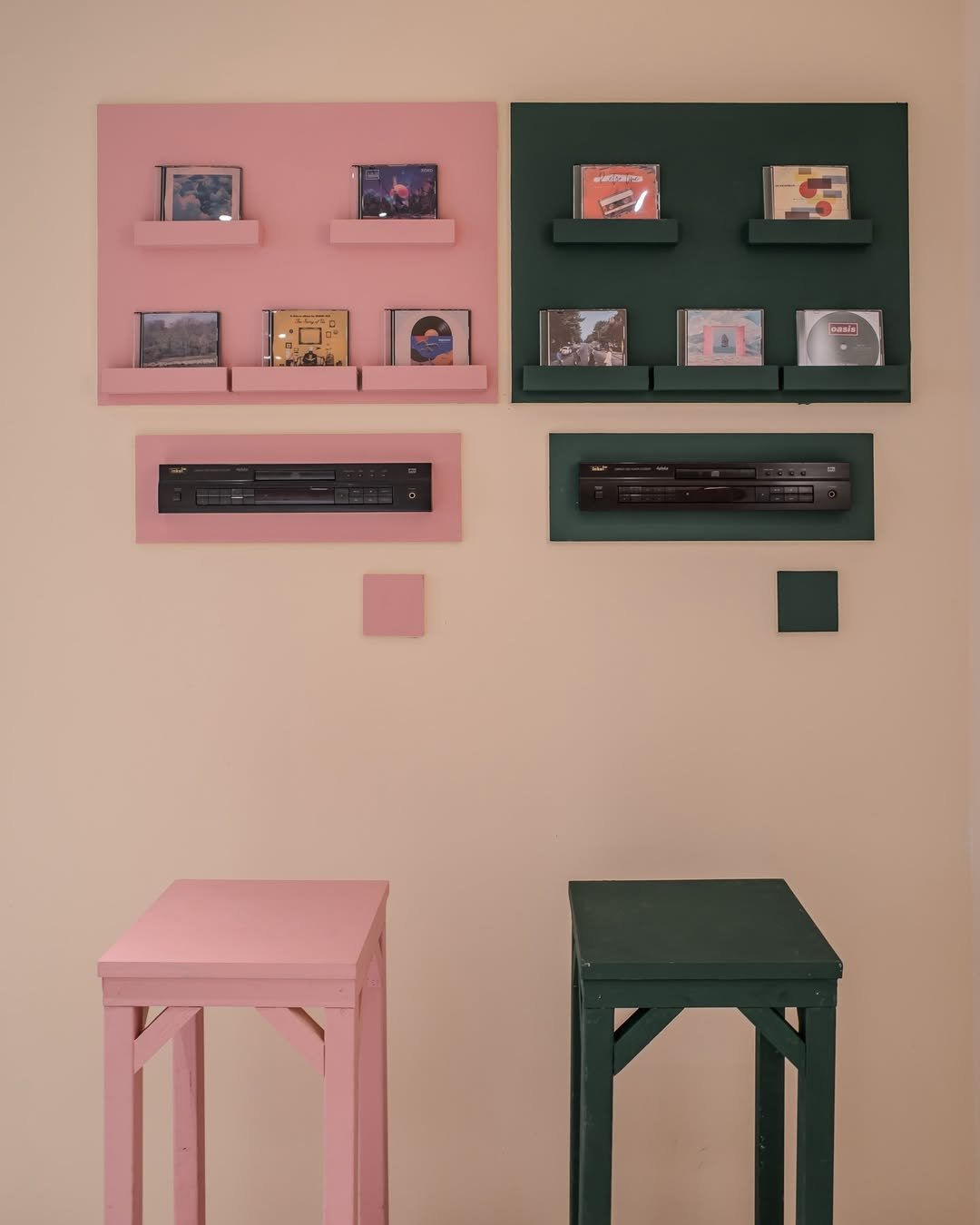
One corner of the shop stopped visitors cold: two wall-mounted panels — one pink, one forest green — each holding vinyl CD players and rows of album covers. Below them, two matching stools painted in the same contrasting colors. Pink side, green side. Symmetry enforced. Oasis on one shelf. The Pacific Ocean in a photograph above a two-top table. The whole place felt curated by someone with strong opinions and a very specific Pinterest board.
The Box Was Also the Point
Whales Donut understood something that many cafes don’t: the packaging is the product.
Those pink boxes — illustrated with the building’s facade in two colorways, blue and pink — were designed to be wanted before you even knew what was inside. They stacked beautifully. They photographed beautifully. They were the kind of thing you’d keep on a shelf long after the donuts were gone.
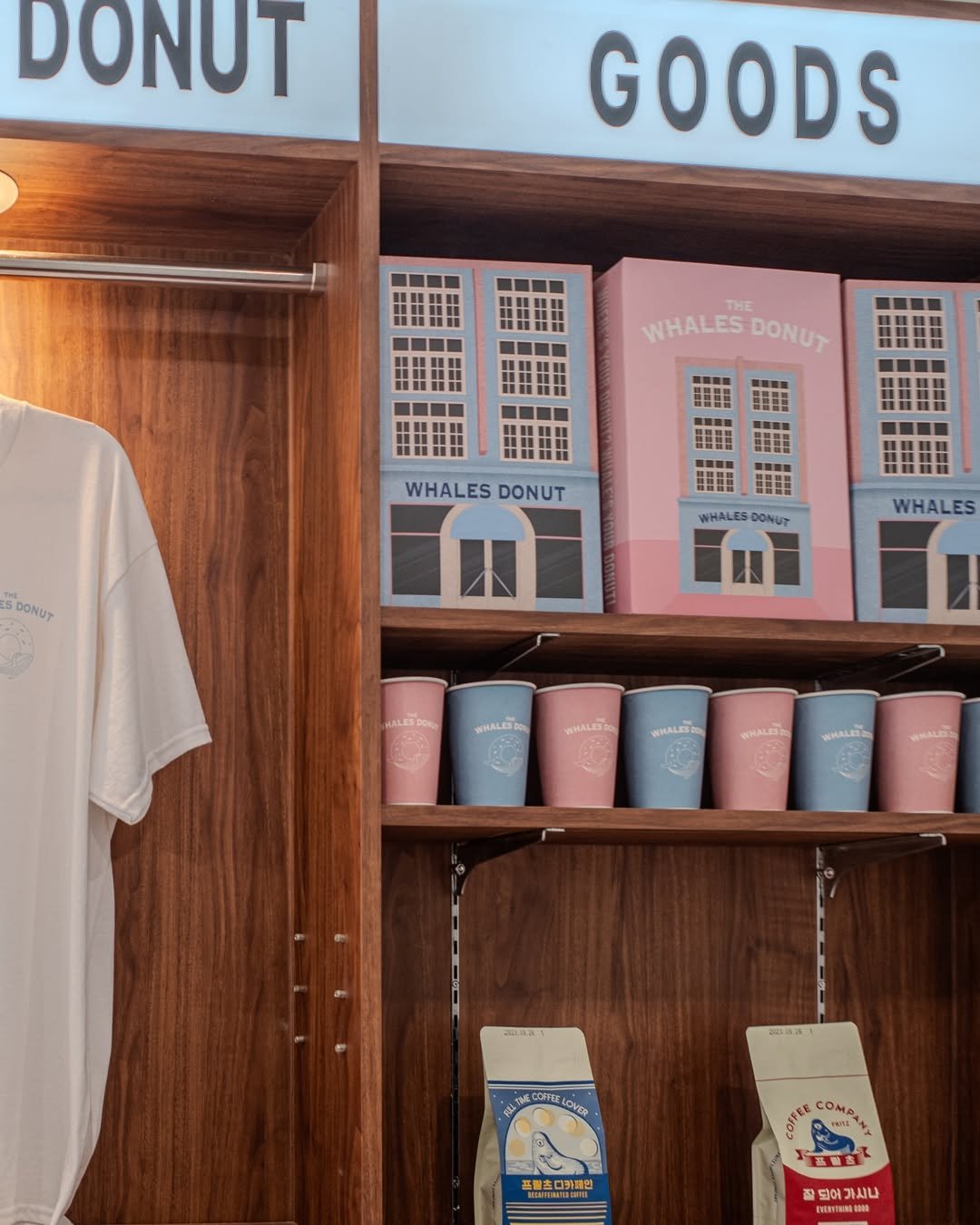
The goods section upstairs extended this logic further: branded tumblers in pink and sky blue, T-shirts in cream, coffee bags from Fritz Coffee Company. The shop sold a world, not just a pastry.
Sokcho Was an Unlikely Setting — Which Was Exactly Right
Sokcho has always attracted a particular kind of traveler: people who come for the sea air, the mountain trails, the seafood, the sense that they’ve escaped Seoul without going too far. Whales Donut arrived into that ecosystem and offered something entirely different — a reason to linger in the city center, to take photos, to buy a box of donuts as a souvenir of a place you’d already started to love.
For a brief window, it worked. The shop drew lines. The boxes stacked in the window became one of those images that circulated quietly on Instagram and KakaoTalk — not viral, but persistent, the way genuinely beautiful things tend to travel.
And Then It Was Gone
This is the part of the story that’s hard to write without some frustration.
Places like Whales Donut — hyper-designed, highly photogenic, clearly labored over — have a complicated relationship with longevity. Sometimes the vision outpaces the volume. Sometimes a coastal city like Sokcho, however beloved, simply doesn’t sustain that kind of concept through all four seasons. Sometimes the math just doesn’t work, no matter how beautiful the boxes.
Whatever the reason, Whales Donut has closed. The powder-blue building on Jungang-ro is back to being just a building. The pink boxes with their blue ribbons exist now only in photographs and in the memories of people who made a detour to find them.
Why It Deserves to Be Remembered
The Hidden Collector documents places like this precisely because they tend to disappear without an obituary. Whales Donut wasn’t famous. It didn’t make international food lists or appear in travel guides. But it was one of those rare spaces where someone clearly thought: what if we made something that looked exactly the way we wanted it to look, and put it somewhere unexpected?
That impulse — to build a small, beautiful, utterly specific world and open the doors to strangers — is worth honoring, even after the doors have closed for good. If you were one of the people who made it to Sokcho and found the blue building: you saw something worth seeing. For the rest of us, these photos will have to do.
Whales Donut
149 Jungang-ro, Sokcho-si, Gangwon-do
(Permanently closed)
Lost & Found is an ongoing series documenting places that no longer exist — shops, cafes, spaces, and experiences that deserved a longer run.
![[Lost] Moon Landing: A Retro American-Style Cafe in Bogwang-dong](https://hiddencollector.thesensitiveways.com/wp-content/uploads/2026/03/R0013789-200x300.jpg)
![[Lost] Hey, Laura!](https://hiddencollector.thesensitiveways.com/wp-content/uploads/2025/03/HEY-LAURA-200x300.png)
![[Lost] Fumu Fumu](https://hiddencollector.thesensitiveways.com/wp-content/uploads/2025/09/fumu-200x300.png)
![[Lost] Cafe Scene Cafe: The Projector Has Gone Dark](https://hiddencollector.thesensitiveways.com/wp-content/uploads/2026/04/IMG_0835-200x300.jpg)