Seoul’s Cinematic Café Feels Like a Wild West Saloon – and That’s Exactly the Point
Frank Coffin Bar, Olympic Park | 프랭크 커핀 바 올림픽공원점
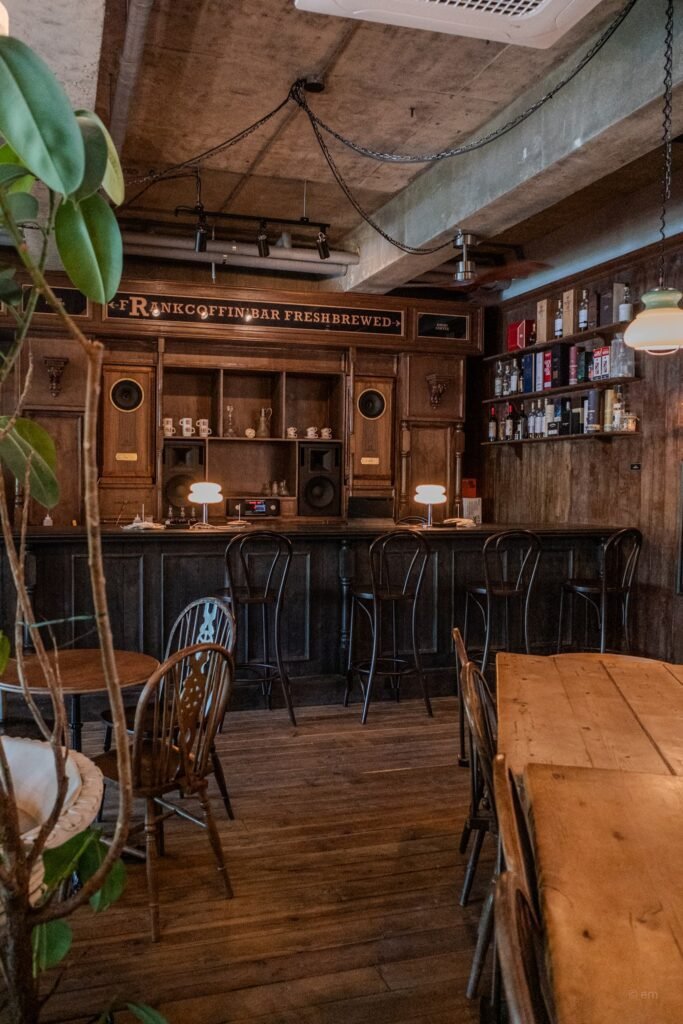
There’s a moment when you step inside Frank Coffin Bar at Olympic Park and your brain does a small double-take. You expected a café. What you got is a 19th-century Western saloon — one that apparently never got the memo that cowboys stopped drinking coffee here over a hundred years ago. Whiskey bottles line the shelves. A marble goddess stands in the middle of the room. A handwritten sign above the bar reads: “No Rules. Just Coffee.”
It takes a beat to figure out if you’ve walked into a film set or a coffee shop. The answer, somehow, is both.
The Space: Part Saloon, Part Victorian Study
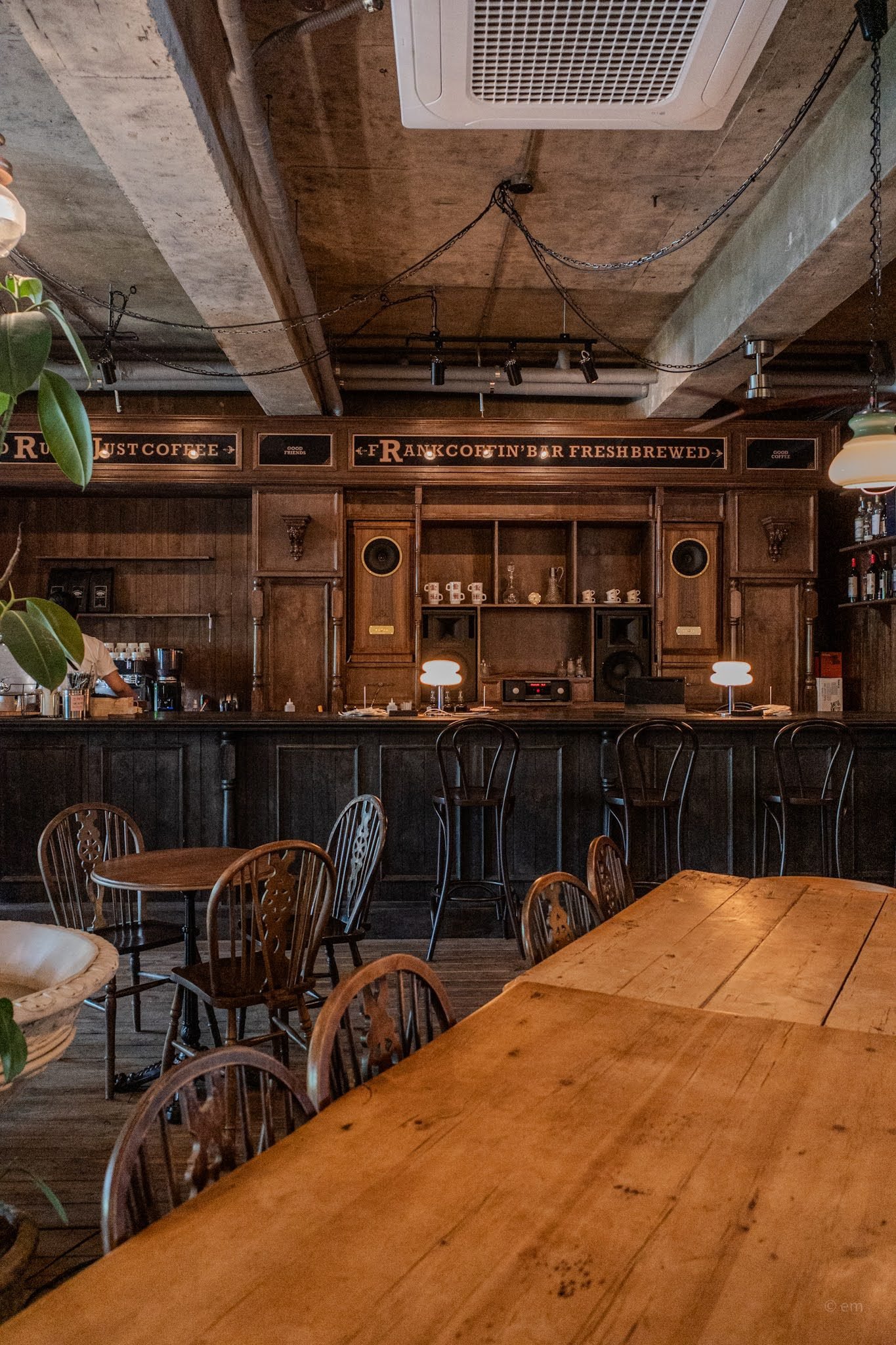
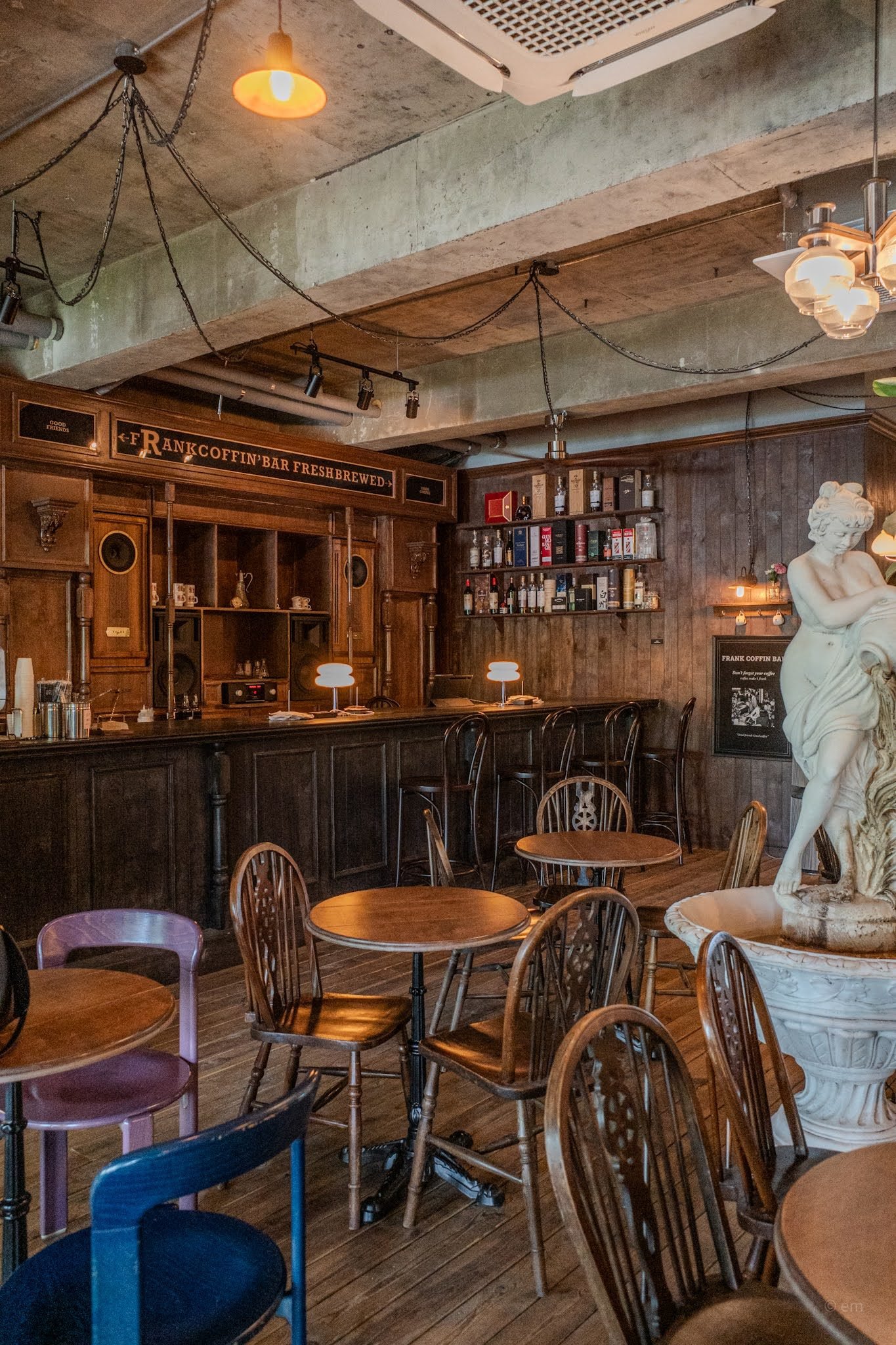
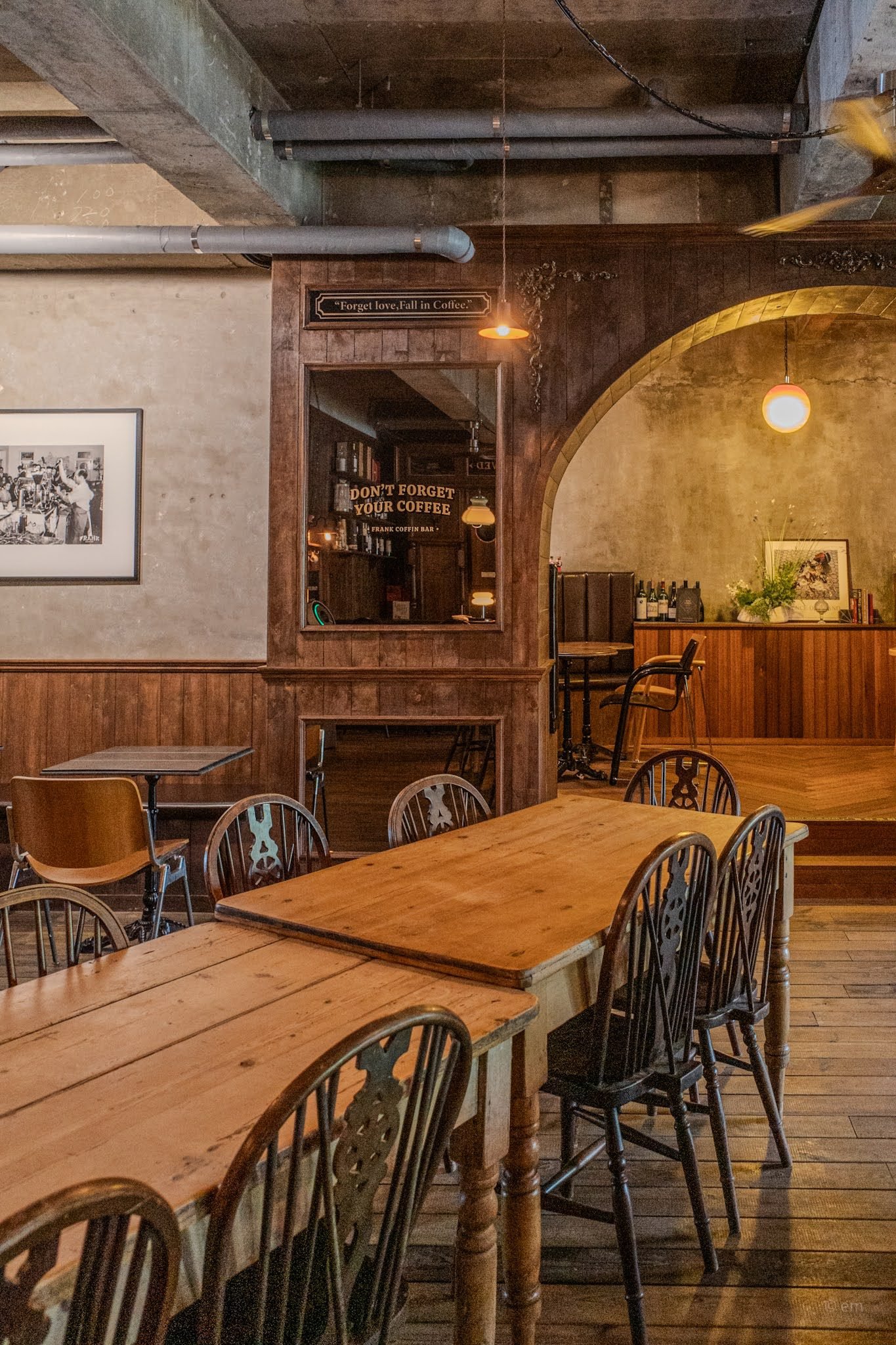
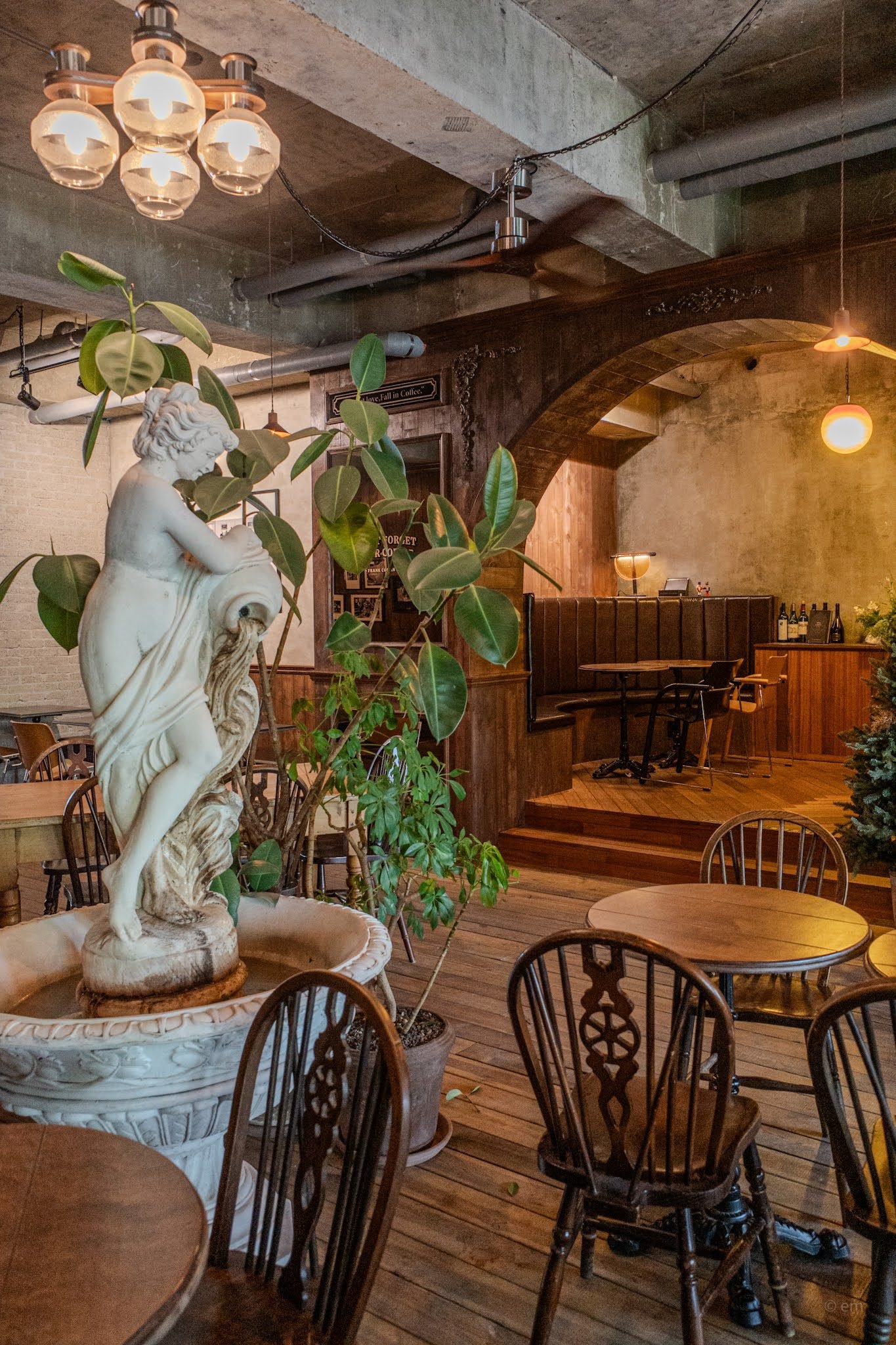
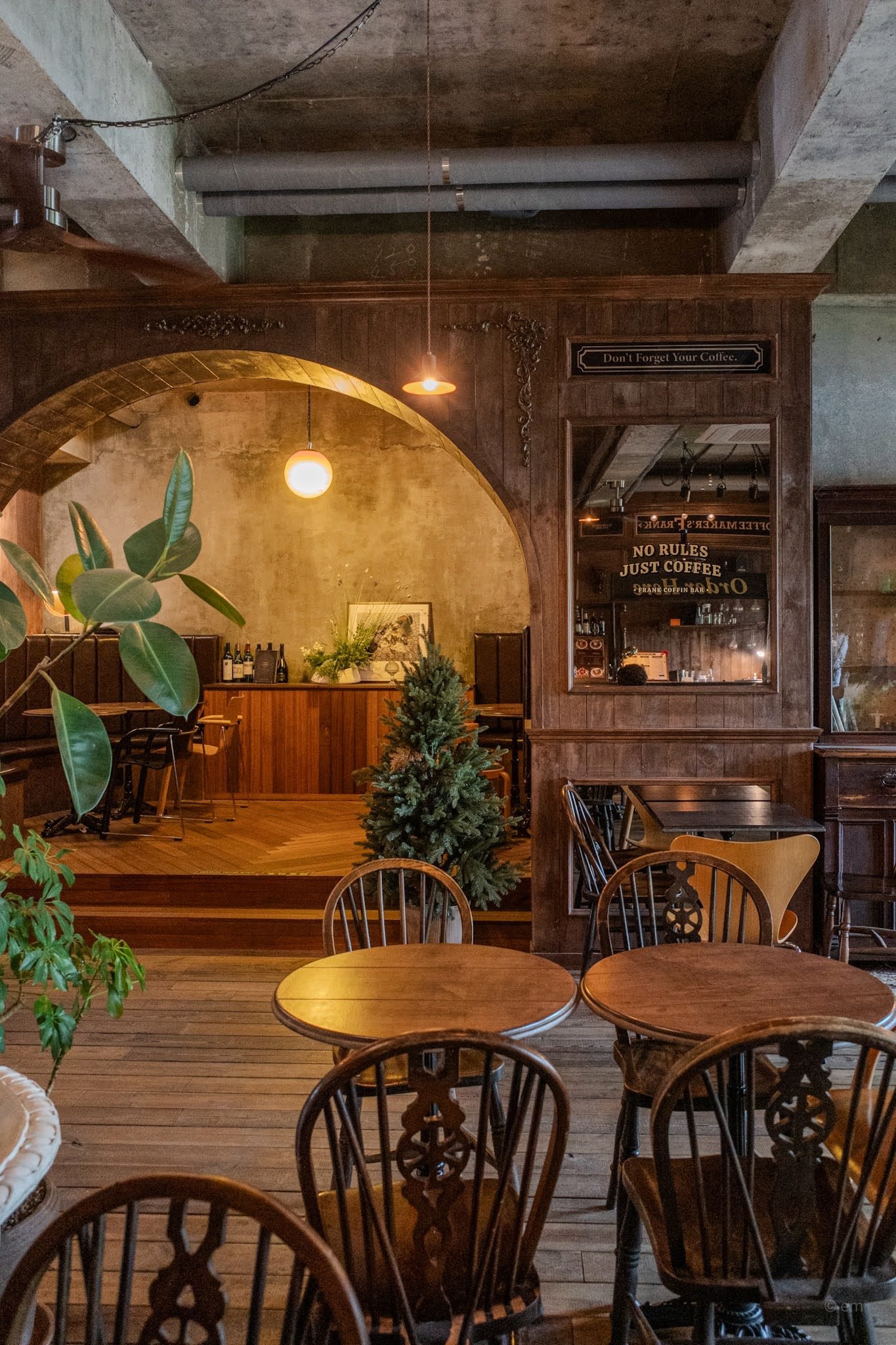
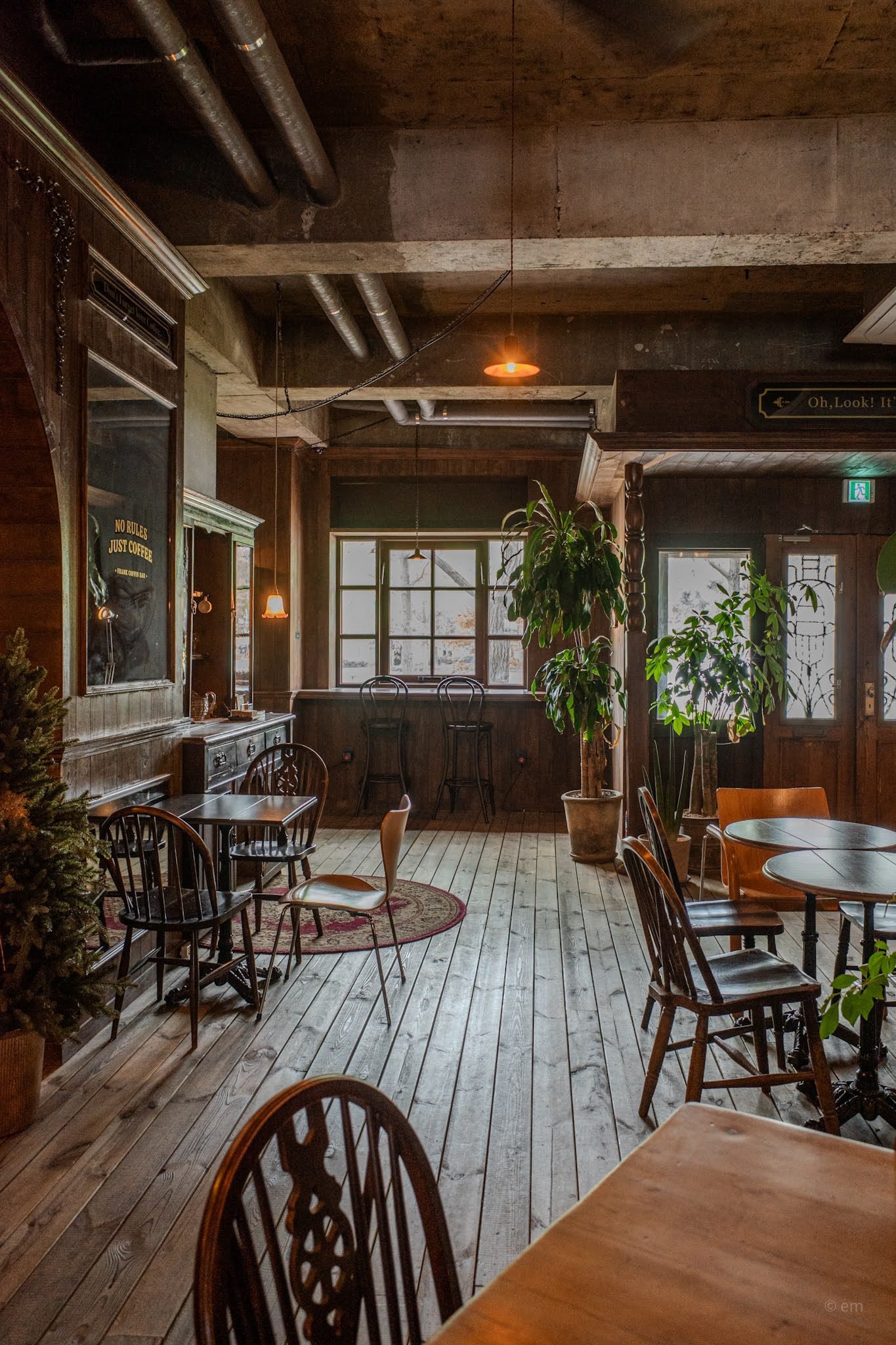
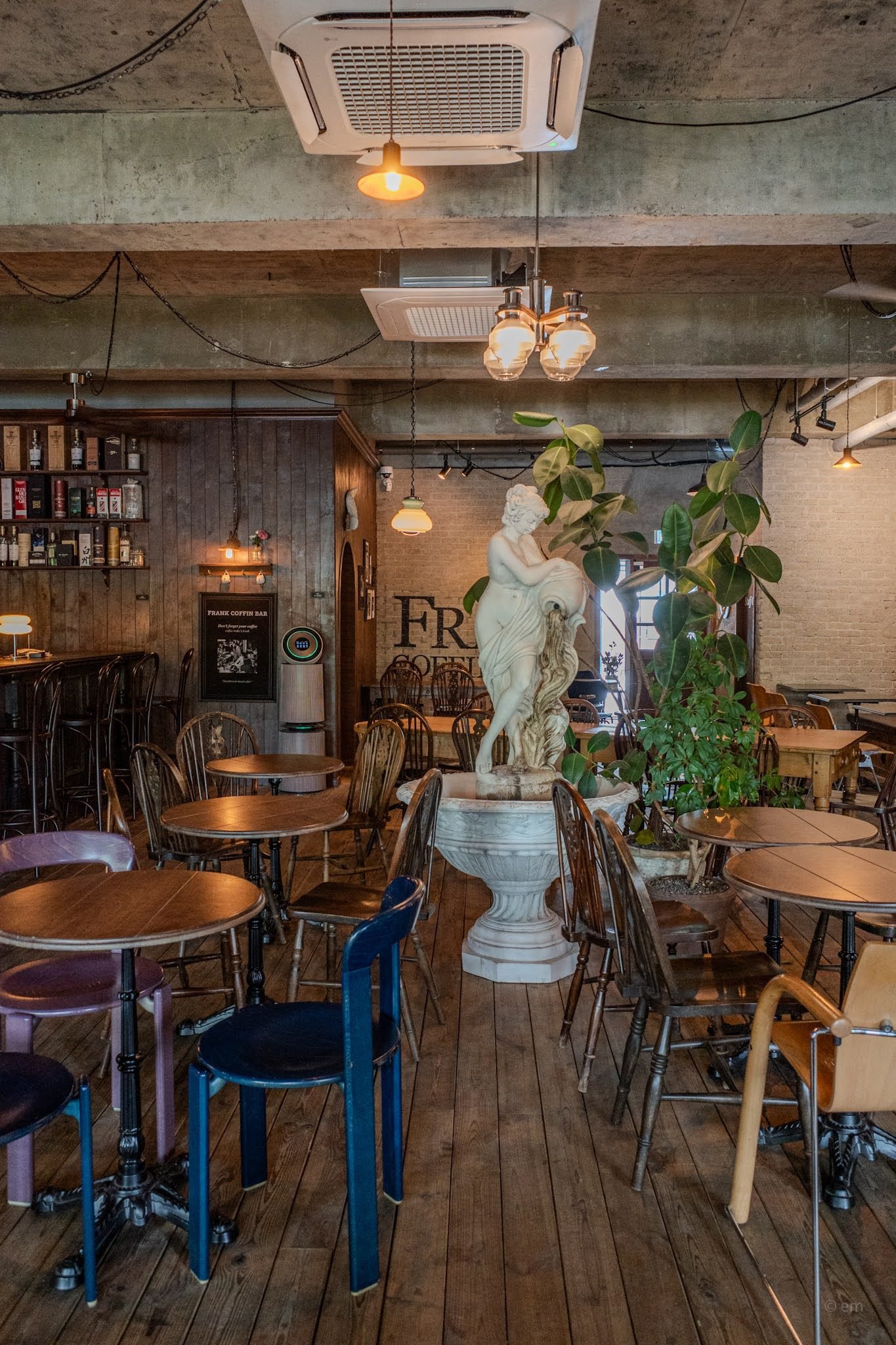
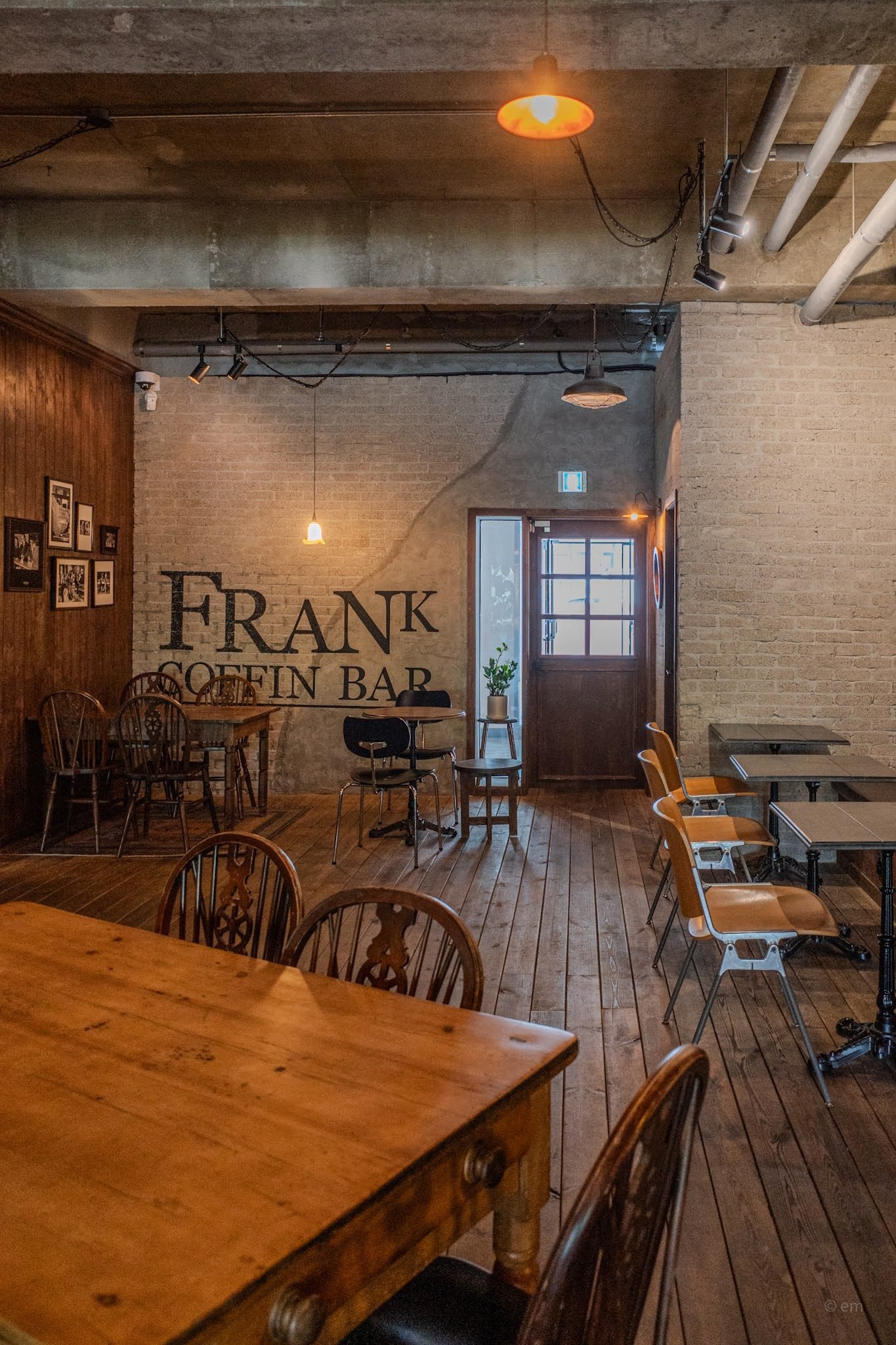
The interior is a masterclass in committed theatricality. Dark stained wood panels cover every vertical surface. The ceiling is stripped bare — exposed concrete beams and industrial ducting run overhead, deliberately raw against all that warm timber below. It shouldn’t work. It completely works.
The centerpiece of the main hall is a large classical fountain sculpture — a white marble-finish nymph, graceful and completely incongruous and absolutely correct — flanked by oversized rubber plants that have clearly been here long enough to become fixtures. Around her, mismatched chairs gather at round copper-top tables: Windsor spindle-backs, bentwood café chairs, the occasional molded plywood seat in honey or slate blue. Nothing matches. Everything belongs.
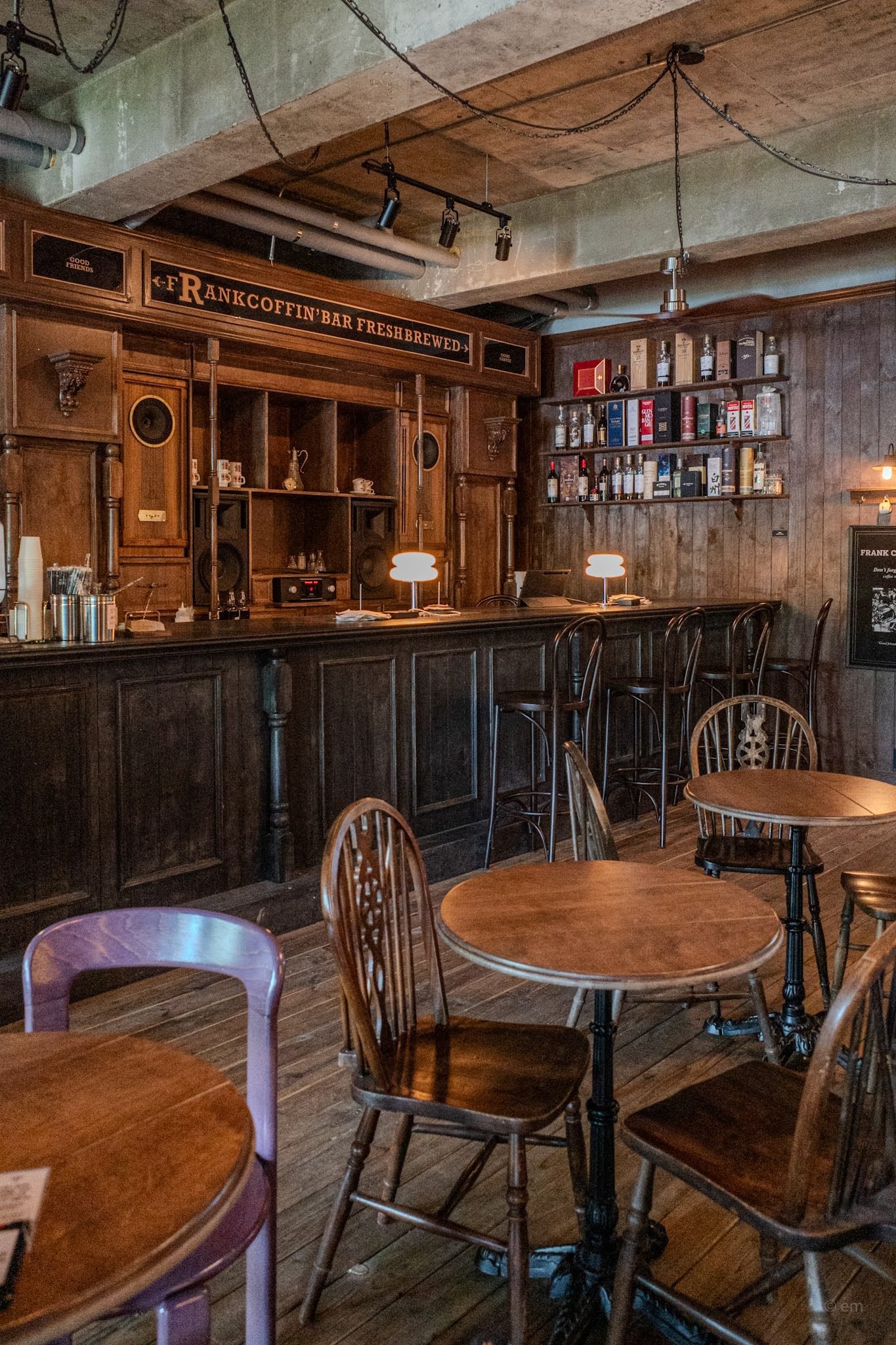
The bar counter itself is the saloon’s heart. A long dark wood structure — paneled, carved, imposing — runs across the room with bar stools lined up in a row. Above it: a bold painted sign reading “FRANKCOFFIN’BAR FRESHBREWED” flanked by built-in speaker circles and niches displaying ceramic mugs. The wall shelf behind holds what appears to be an impressively curated collection of spirits. This is, after all, a bar. The coffee just happens to be the headliner.
The Details That Earn a Second Look
Walk slowly and you’ll keep noticing things.
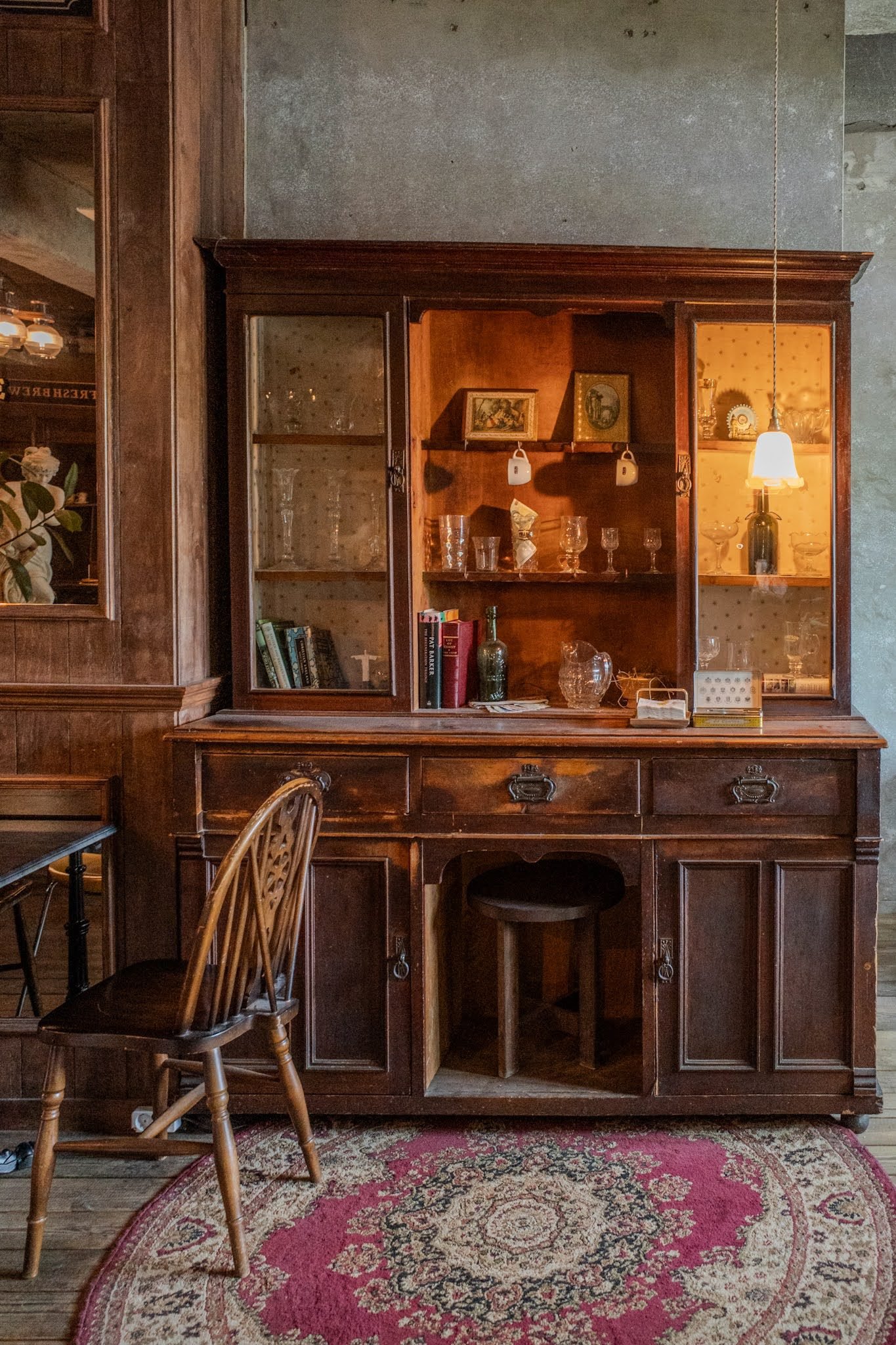
An antique English sideboard glows amber from within — its glass doors slightly open, illuminating crystal stemware, framed miniature paintings, and an assortment of old books. It looks like something rescued from an estate sale and installed here with great intention. Next to it, a faded Persian rug sits under a Windsor chair. The whole vignette could be a still from a Coen Brothers film.
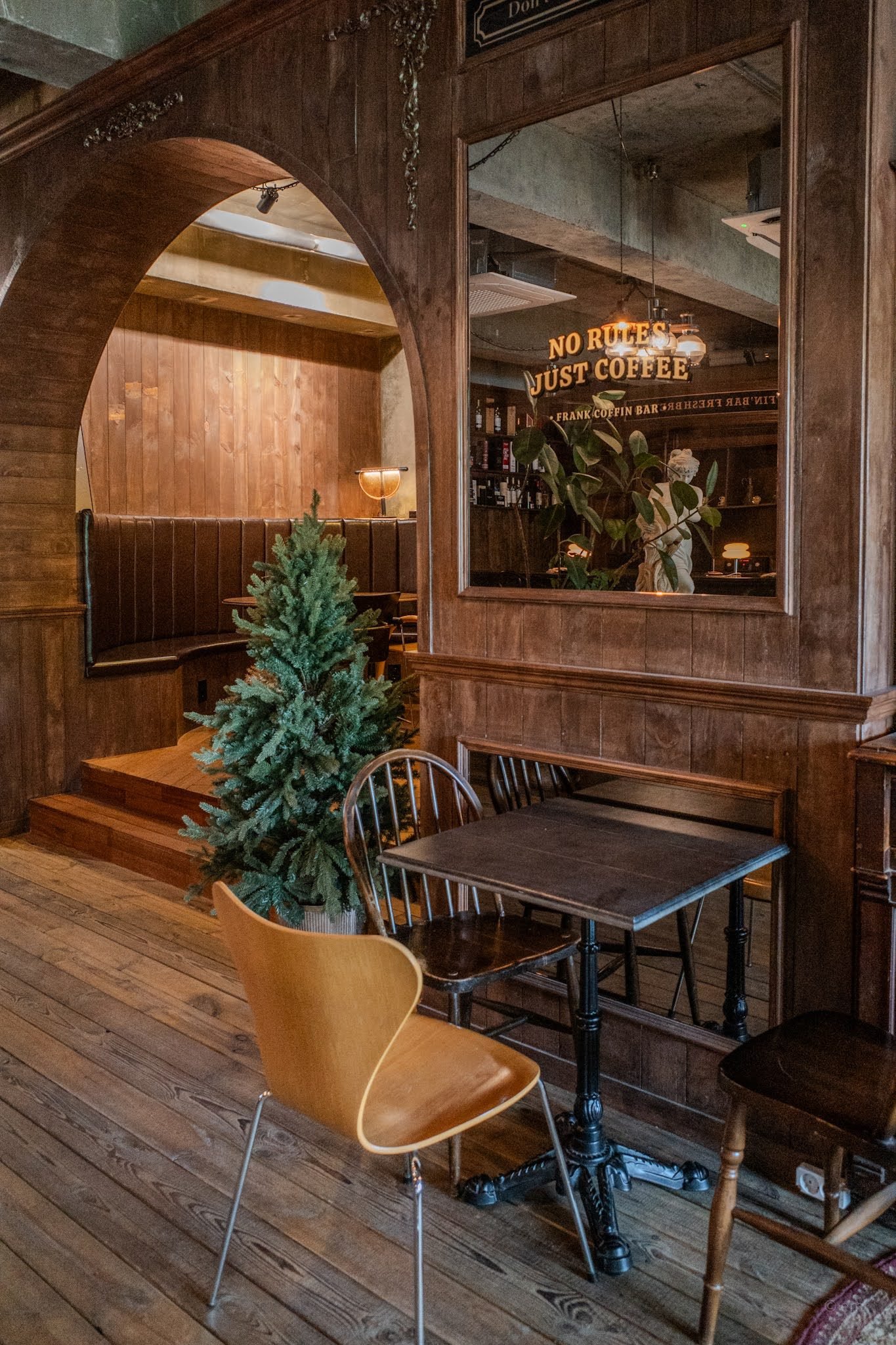
Mirrors are everywhere, each framed in dark wood and stenciled with the café’s rotating roster of mantras: “Don’t Forget Your Coffee,” “No Rules Just Coffee,” “Forget Love, Fall in Coffee.” They bounce the warm light around the room and create the illusion of depth in a space that already feels larger than it should.
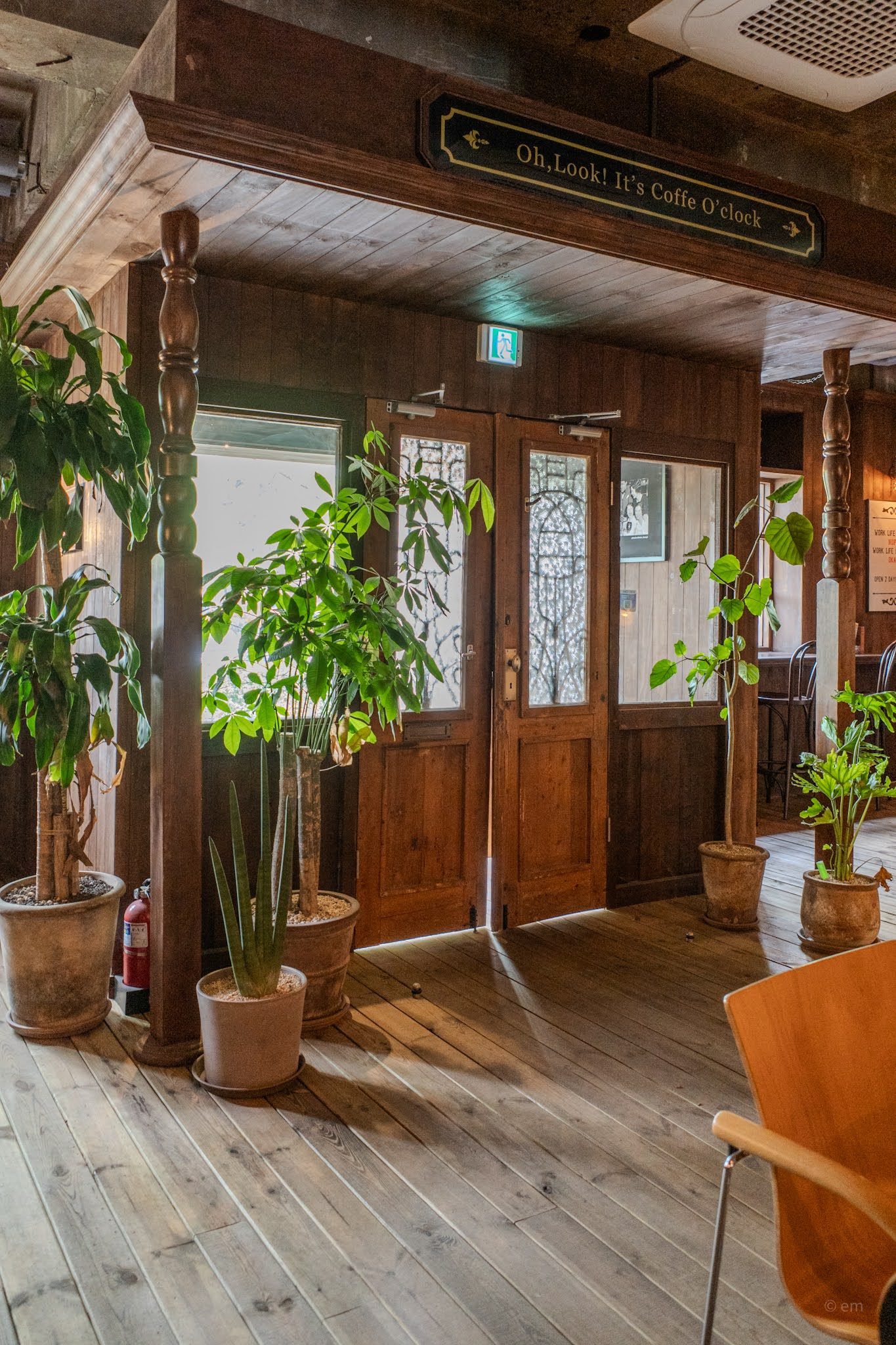
The sign above the entrance corridor — “Oh, Look! It’s Coffe O’clock” — is misspelled with the kind of confidence that suggests it was always intentional.
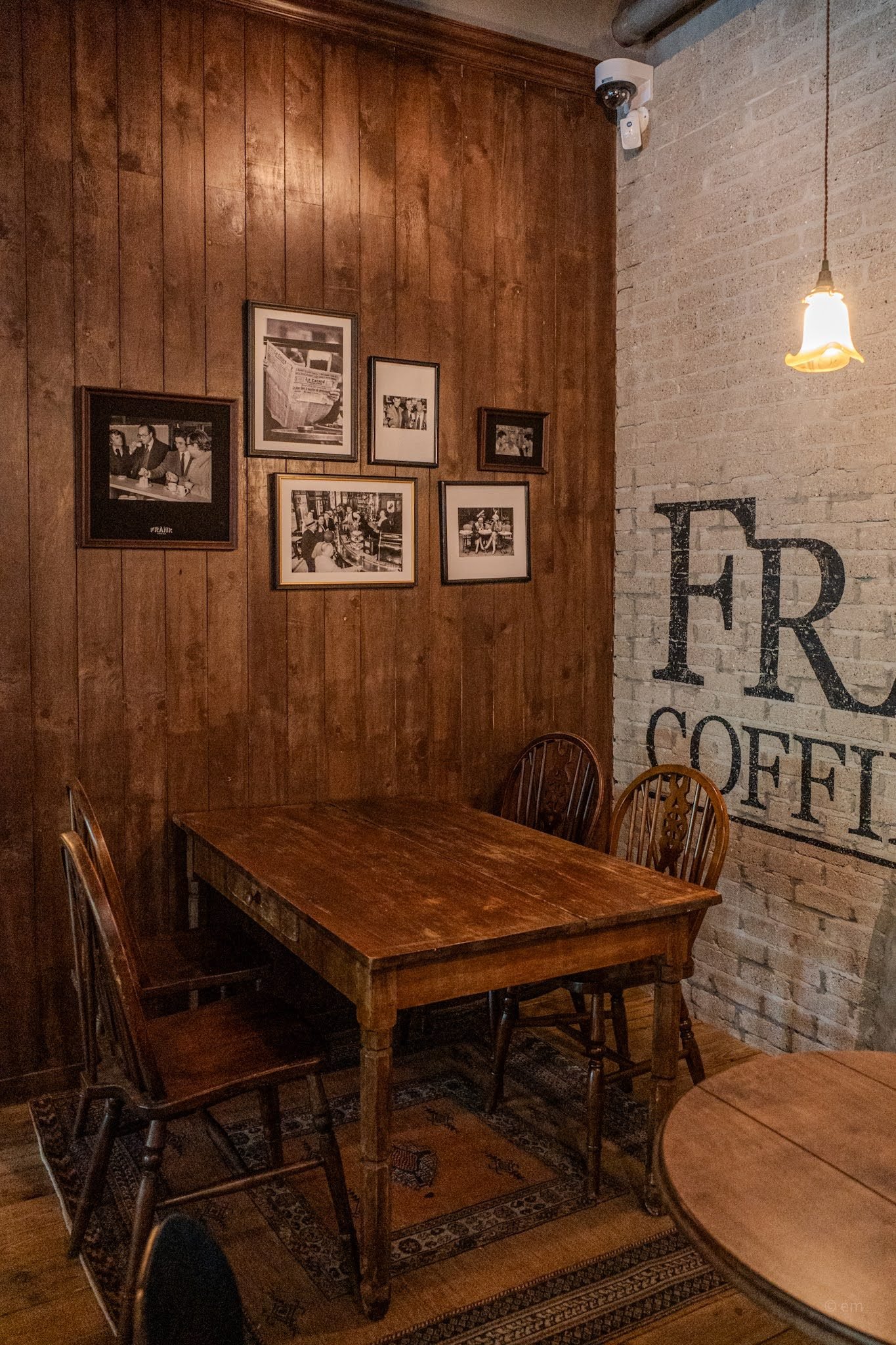
A gallery wall in the corner holds a loose cluster of vintage black-and-white photographs: people in diners, street scenes, a newspaper headline. The frames are mismatched. The mood is consistent.
The Arch Room: A Café’s Best Secret
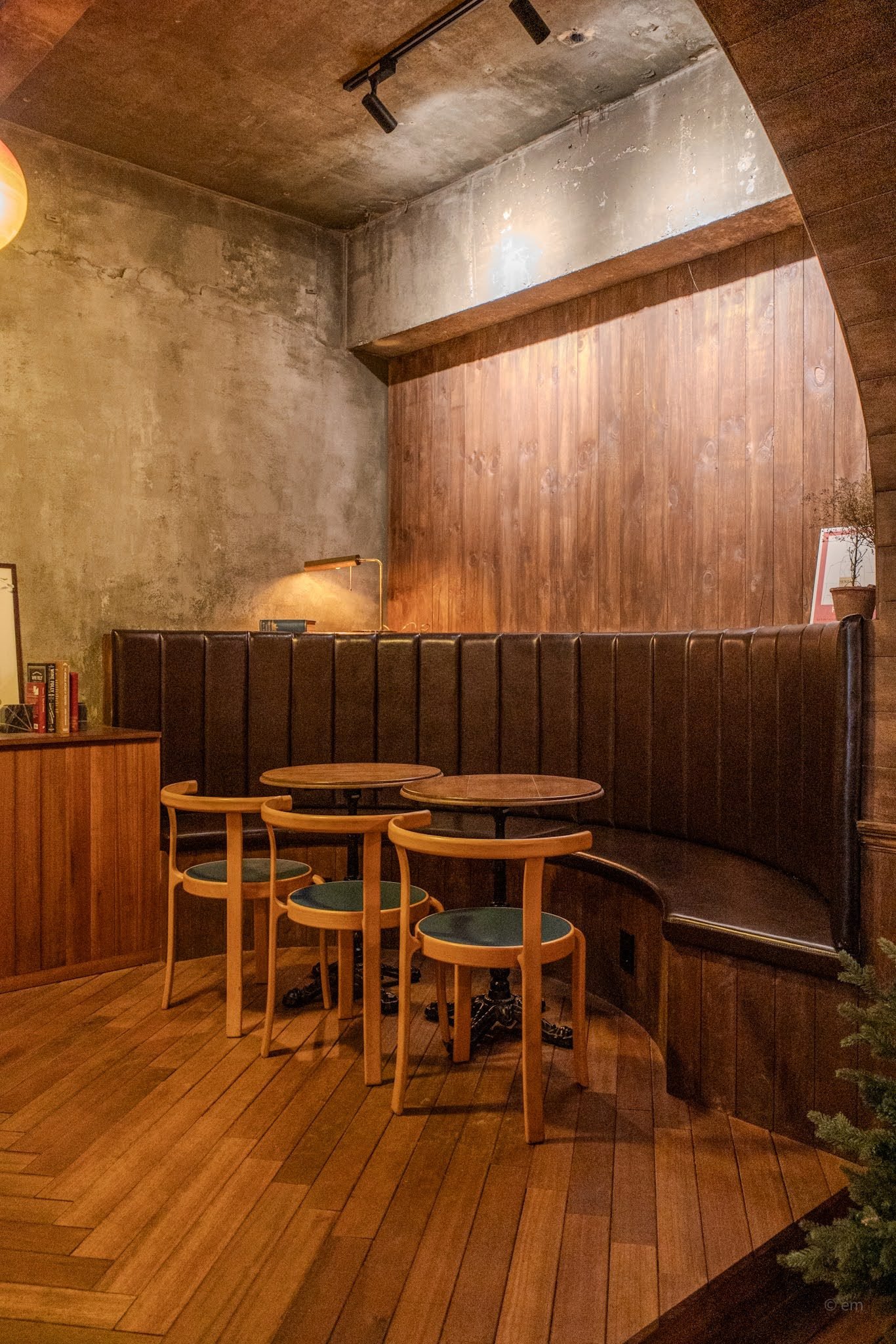
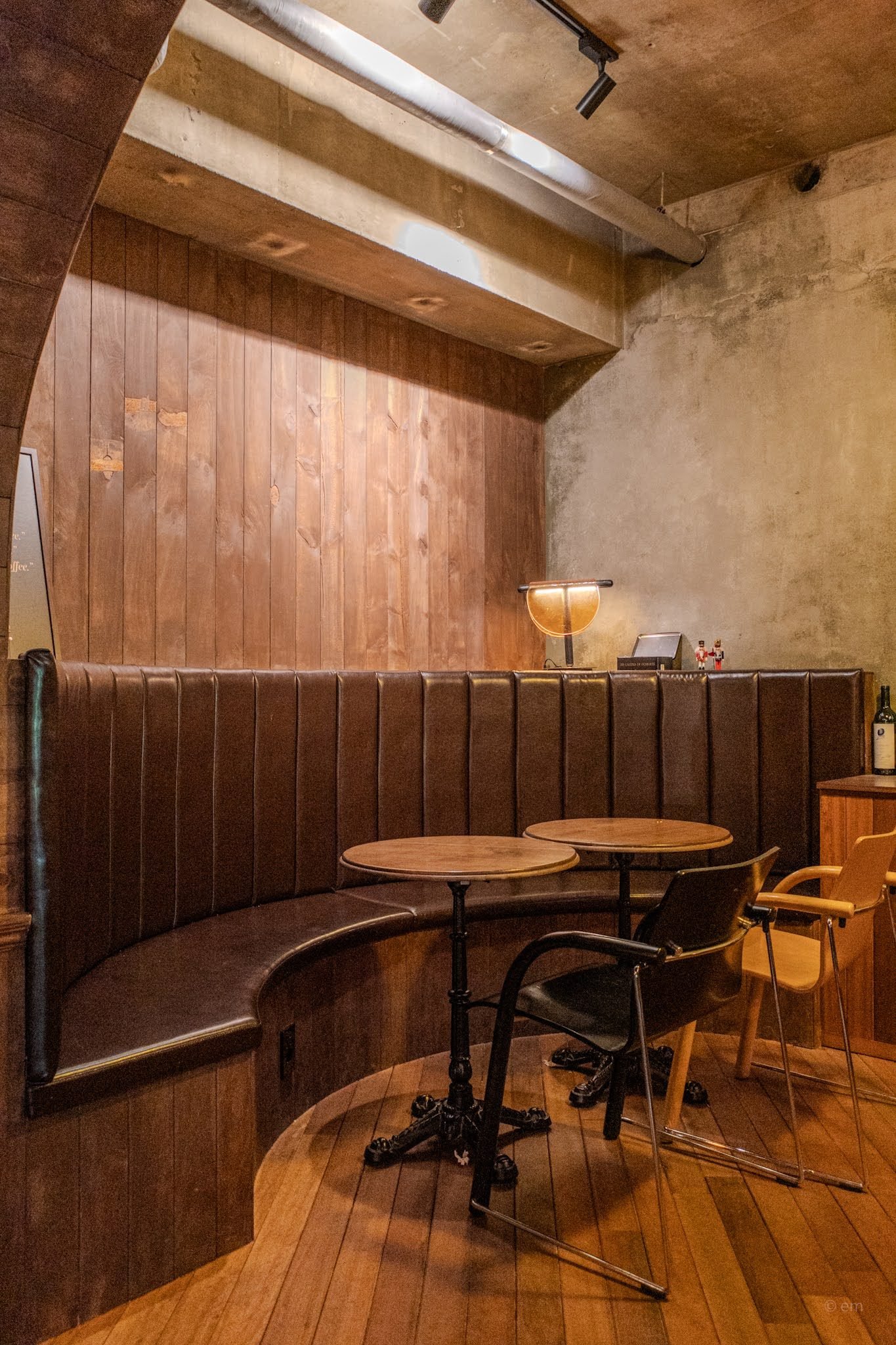
Past the main floor, a carved wooden arch — detailed with ornate millwork along the crown — opens into a semi-private alcove. The walls here transition from dark wood paneling to raw plaster, aged and unfinished. A curved dark brown leather banquette wraps the room in a horseshoe, tufted in vertical channels. It seats six comfortably and feels like exactly where you’d want to have a long conversation or a slow solo afternoon with a book. The light here is warmer, quieter. The architecture does the work.
The Light Side of the Room
Not everything here is dark and dramatic. On the opposite end, near the entrance, the mood lifts considerably. White-painted brick walls and large wood-framed windows let the outside in — you can see actual trees through the glass, a reminder that Olympic Park is just steps away. Pale washed floorboards replace the darker wood of the main hall. Potted scheffleras and fiddle-leaf figs cluster near the stained-glass double doors, all of them thriving.
The contrast between these two zones — the moody saloon and the bright greenhouse entrance — is one of the café’s quiet tricks. You can choose your atmosphere.
Yes, It Also Feels Like a Pub — and No, It Isn’t One
The saloon read is strong, but spend enough time here and a second association surfaces: the British pub. The long dark bar counter with stools pulled up close. The whiskey bottles arranged on open shelves. The banquette seating tucked into a corner alcove. The general sense that this is a place people return to, not just pass through. In a different city, you might call it a local.
But Frank Coffin Bar keeps pulling away from that category too, and the departures are just as interesting as the resemblances.
A traditional pub doesn’t put a neoclassical fountain sculpture in the middle of the room. It doesn’t drape Persian rugs under antique English sideboards lit from within like jewel boxes. It doesn’t have fiddle-leaf figs competing for square footage with the tables, or a bright greenhouse zone near the entrance where the whole mood flips from moody to airy. A pub’s aesthetic tends to be settled, accumulated over decades without much deliberate curation. Everything here is clearly chosen — even the deliberate disorder of mismatched chairs feels intentional rather than inherited.
The concrete ceiling gives it away most of all. A real Victorian pub hides its bones under plaster and ornament. Frank Coffin Bar leaves the structural beams exposed, the ductwork visible, the raw material of a modern building sitting directly above all that reclaimed wood and antique glass. It’s a contemporary space wearing period costume — and it knows it.
The result sits somewhere between saloon, pub, and film set: familiar enough in its parts to feel immediately comfortable, strange enough in its combinations to stay memorable.
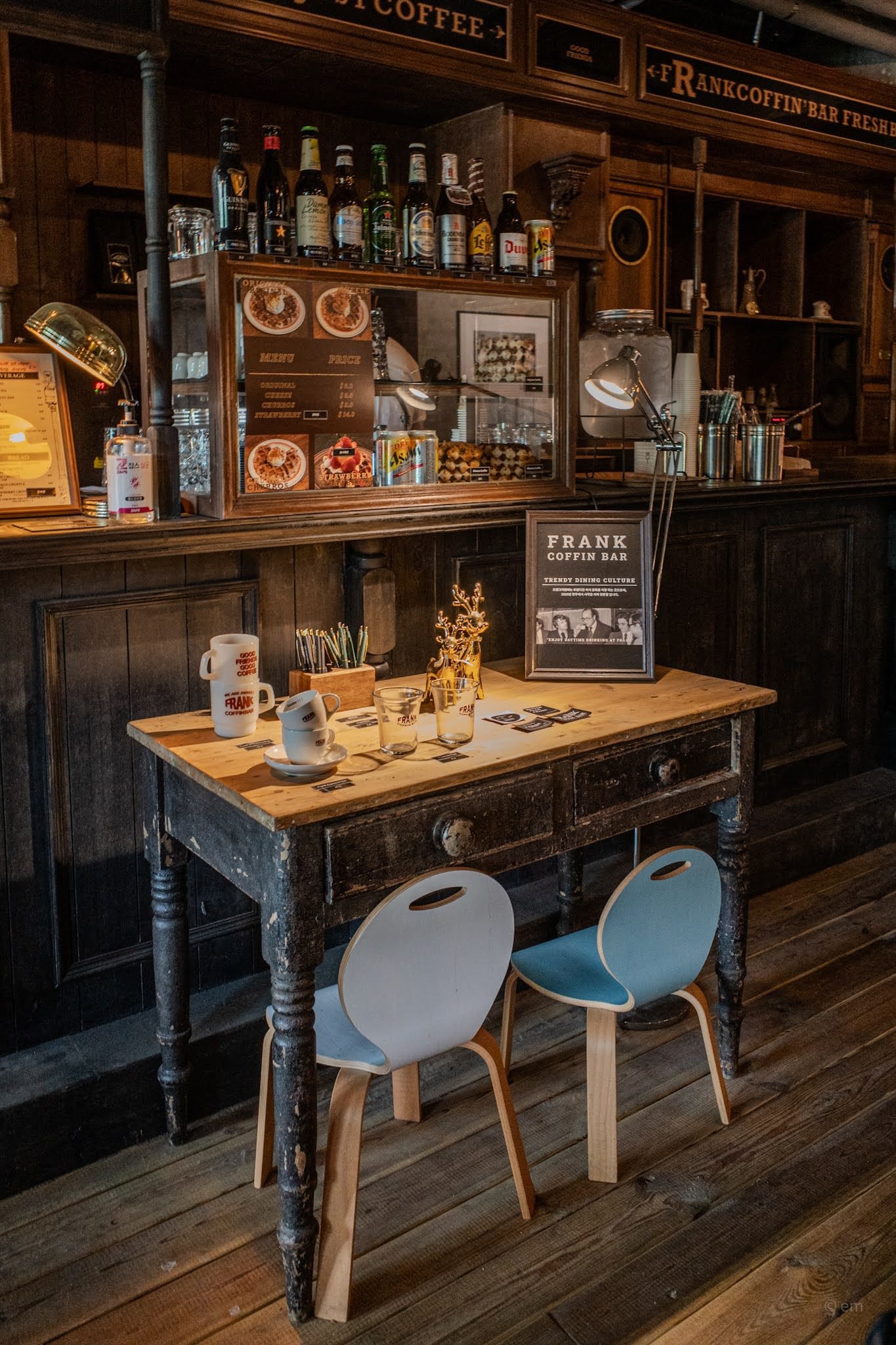
Order Here
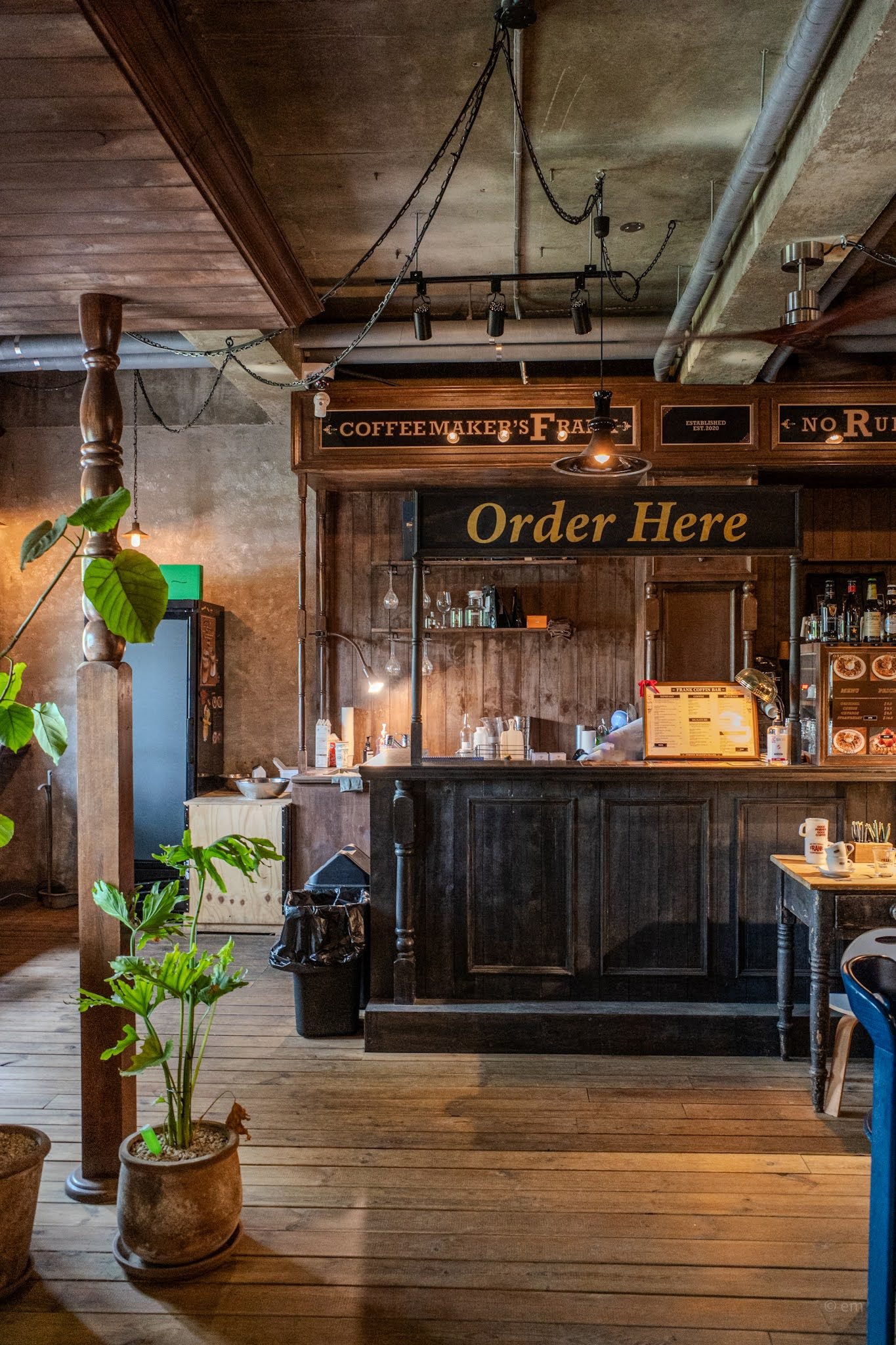
The menu board near the counter advertises waffles alongside coffee, and the branded mugs bearing “GOOD FRIENDS GOOD COFFEE” in bold red type sit out as both merchandise and décor. It’s a café that knows its own personality and leans into it at every touch point. Even the QR code for ordering is mounted on a small chalkboard sign that looks like it could be announcing tonight’s poker game.
The Guinness bottles on the shelf? Decoration. Every bottle in this place — the whiskey, the wine, all of it — is props. Frank Coffin Bar sells coffee, and coffee only. Which somehow makes the whole saloon setup even more committed: all that atmosphere, entirely in service of an espresso.
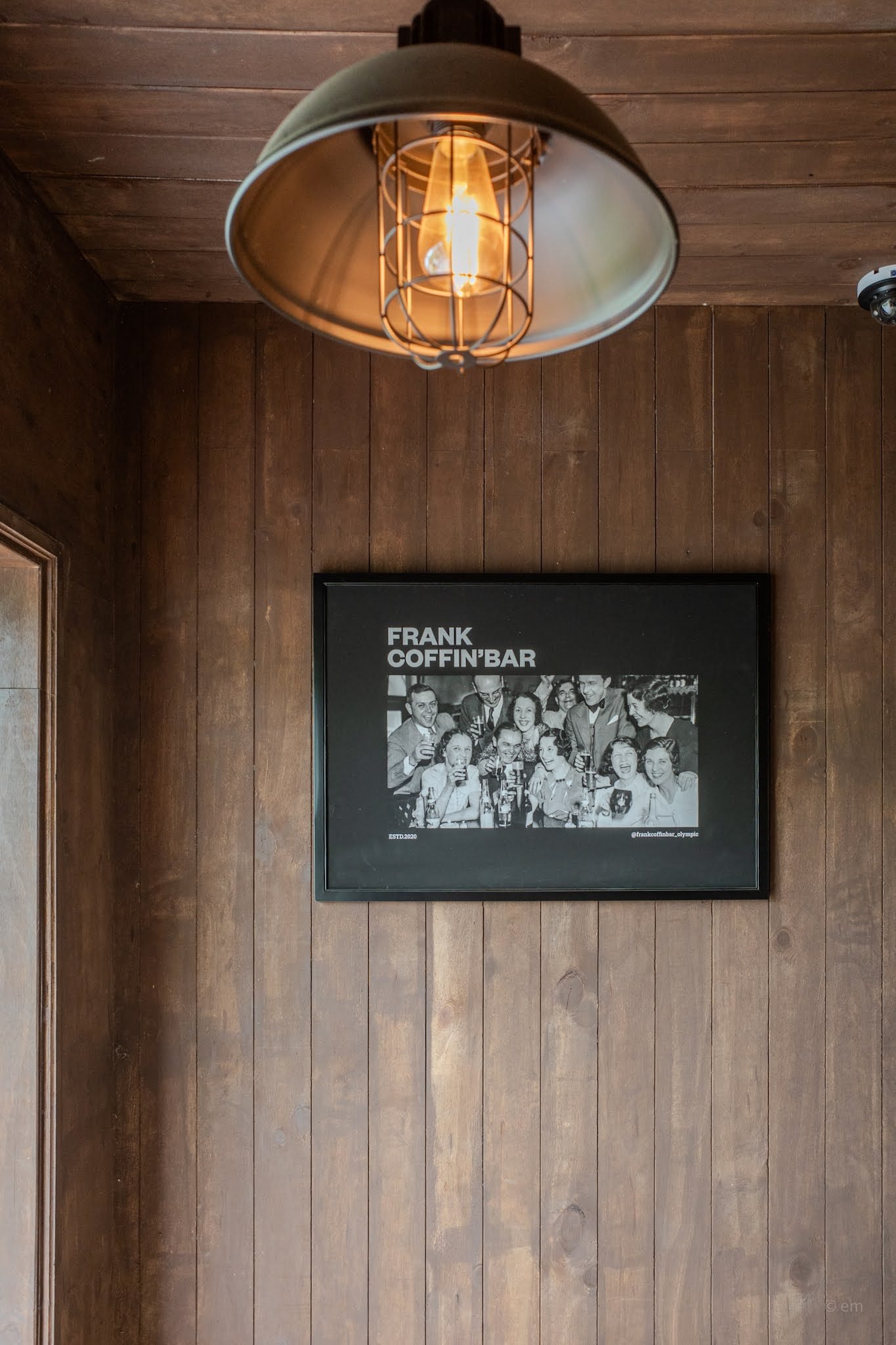
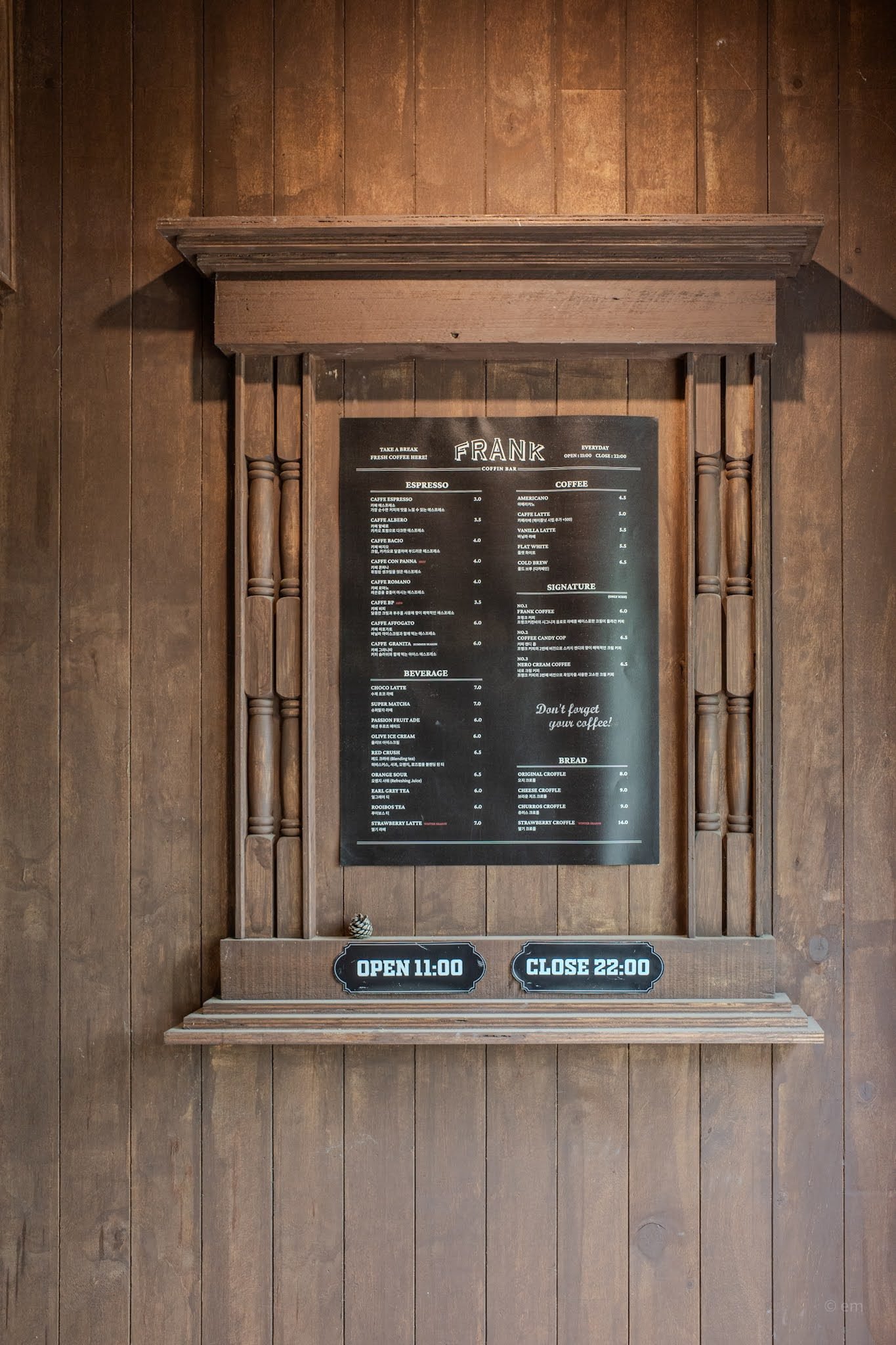
One Café, Many Addresses
Frank Coffin Bar is not a one-off. What started as a single location in Jeonju — the brand’s home city, and still one of its flagship stores — has grown to 38 locations across South Korea. The Jeonju area alone hosts a 100-pyeong-scale branch that shows how seriously the brand takes its hometown. Beyond that, the brand has spread to Seoul, Suwon’s Haenggung-dong near Hwaseong Fortress, Daegu’s Gyodong neighbourhood, and more cities in between.
What’s notable is that the atmosphere doesn’t dilute as the chain grows. Rather than using mass-produced furniture, the brand supplies high-end vintage pieces centrally from its headquarters, which is why each location reads as a genuine sibling of the others rather than a faded copy. The dark wood, the mismatched chairs, the antique cabinets — they travel from city to city, adjusted to the building but never watered down.
Visitors who stumble into Frank Coffin Bar in one city tend to seek it out in the next. It’s become that kind of brand: the kind where the discovery feels personal, even when you find it in a completely different part of the country.
Getting There
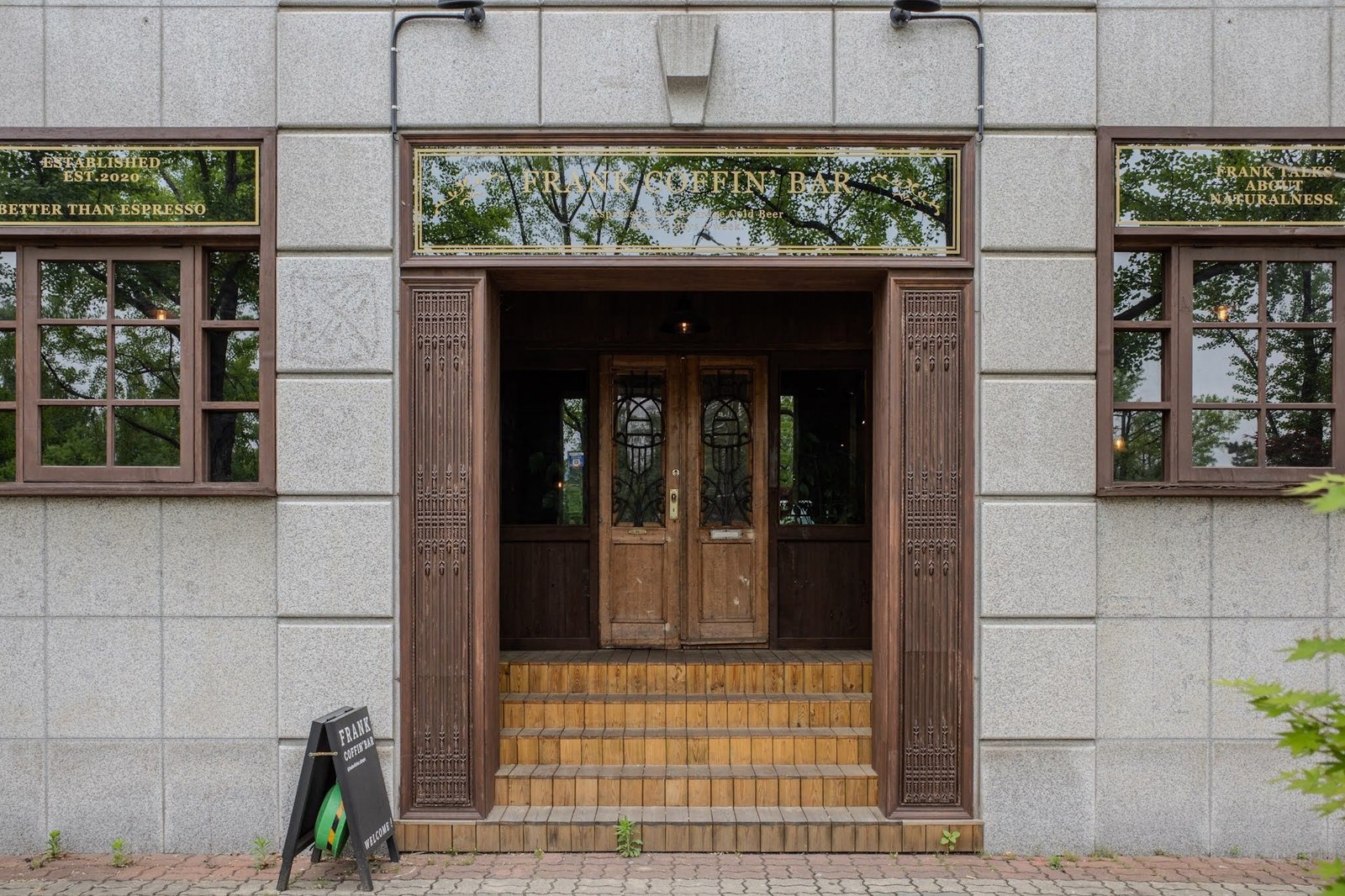
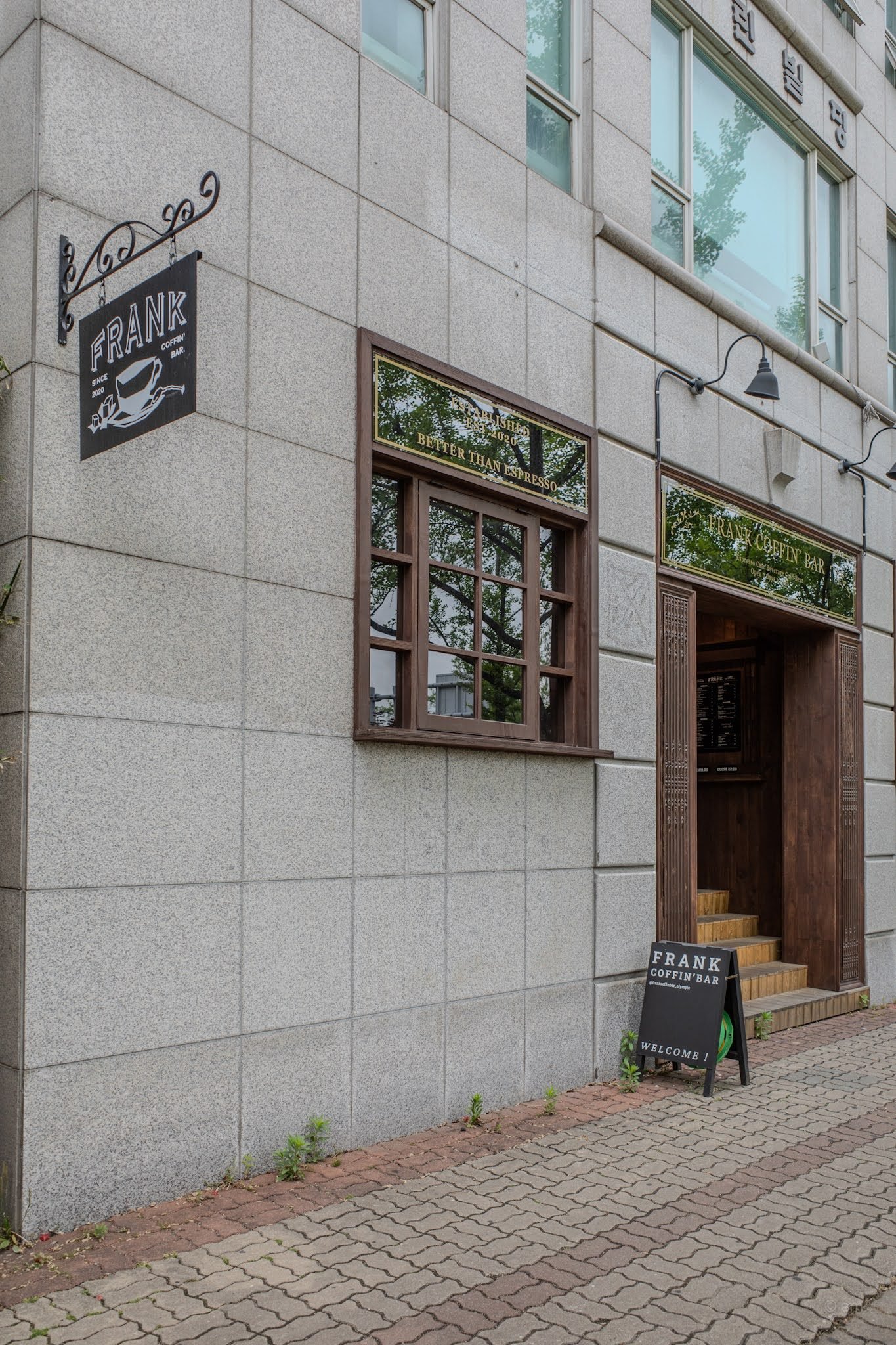
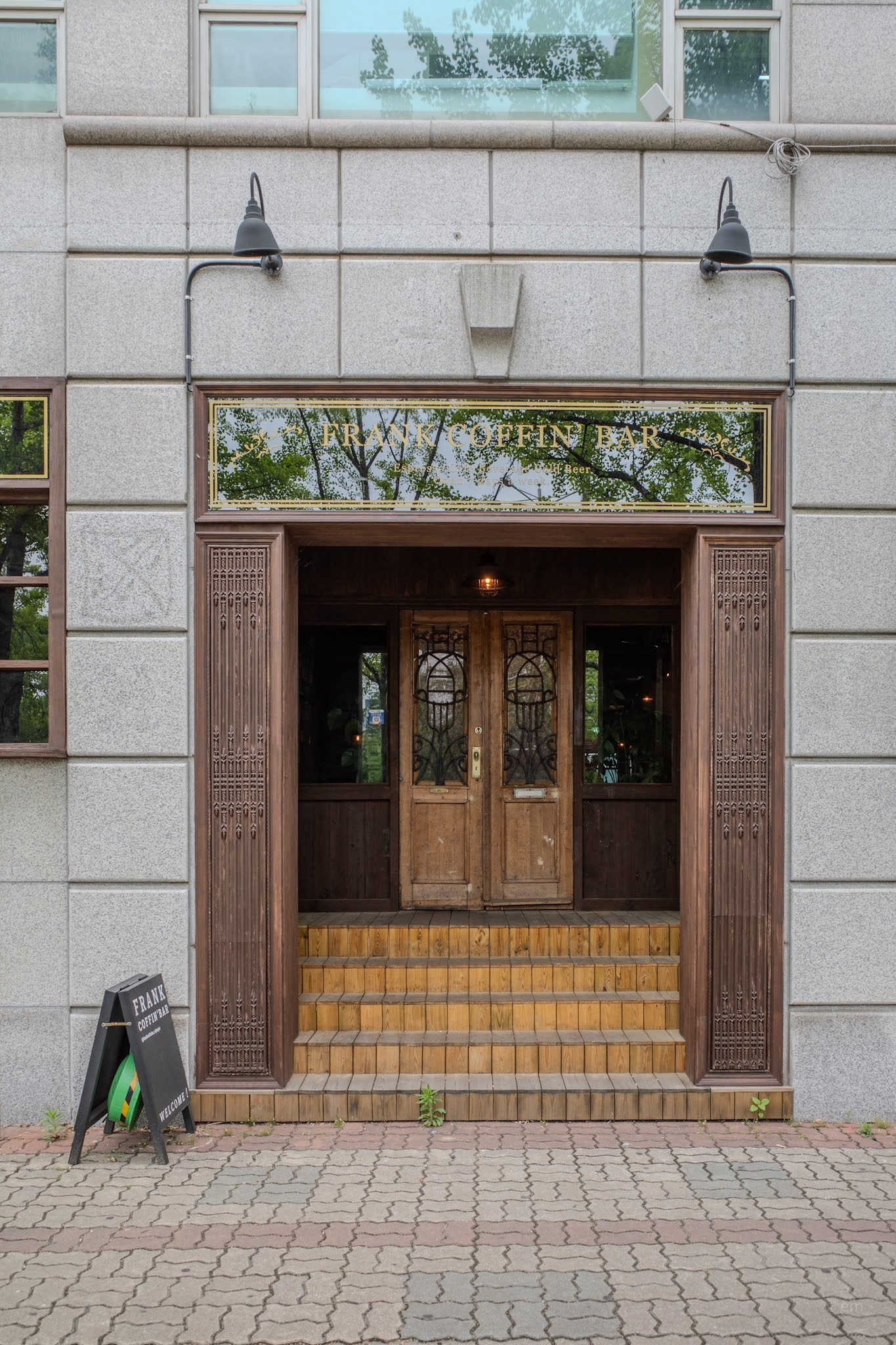
Frank Coffin Bar’s Olympic Park location sits near the park itself, in a building that looks almost aggressively normal from the outside: a grey stone-clad facade, tall windows, a double wooden door at the top of a short flight of tile steps. The sandwichboard out front is the only hint at what waits inside.
- Address: 452-2 Seongnae-dong, Gangdong-gu, Seoul
- Hours: Daily 11:00 AM – 10:00 PM
- Nearest Station: Gangdong-gu Office Station (Line 8)
- Parking: Available
Worth Knowing
Seating is plentiful but the best spots — the curved arch booth, the bar counter stools, the corner table under the black-and-white photos — fill up fast on weekends. Come on a weekday morning and you might have the whole saloon to yourself. The light through the front windows is soft and flattering before noon.
The space photographs beautifully in every direction. Bring a real camera if you have one.
Frank Coffin Bar doesn’t feel like it’s trying to be anything in particular. It’s a coffee shop that happens to look exactly like the frontier bar from the movie you can’t quite place — the one where the stranger walks in from the cold, the whole room goes quiet, and then someone orders a flat white.
“No Rules. Just Coffee.”
Sounds about right.
![[Lost] Moon Landing: A Retro American-Style Cafe in Bogwang-dong](https://hiddencollector.thesensitiveways.com/wp-content/uploads/2026/03/R0013789-200x300.jpg)