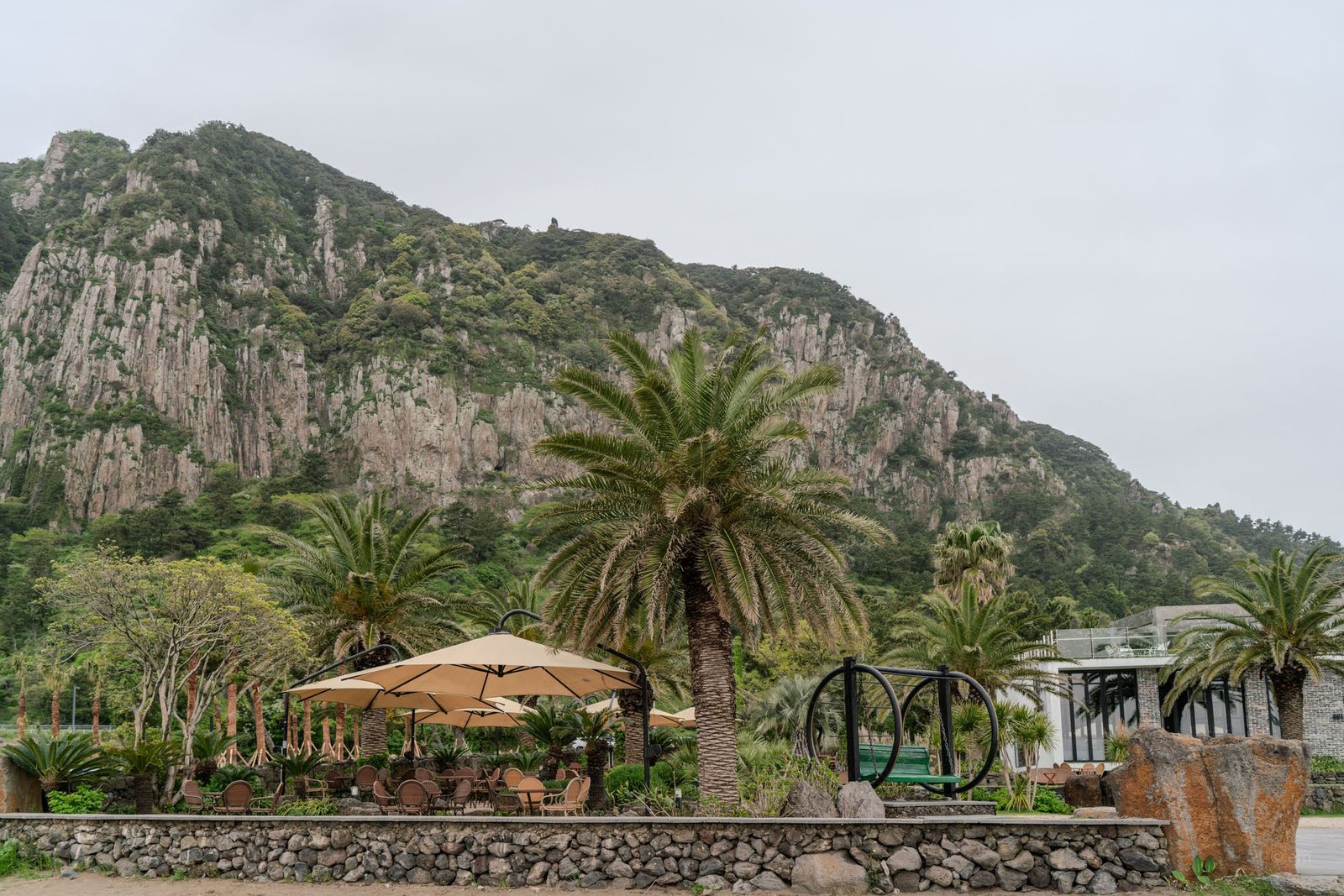
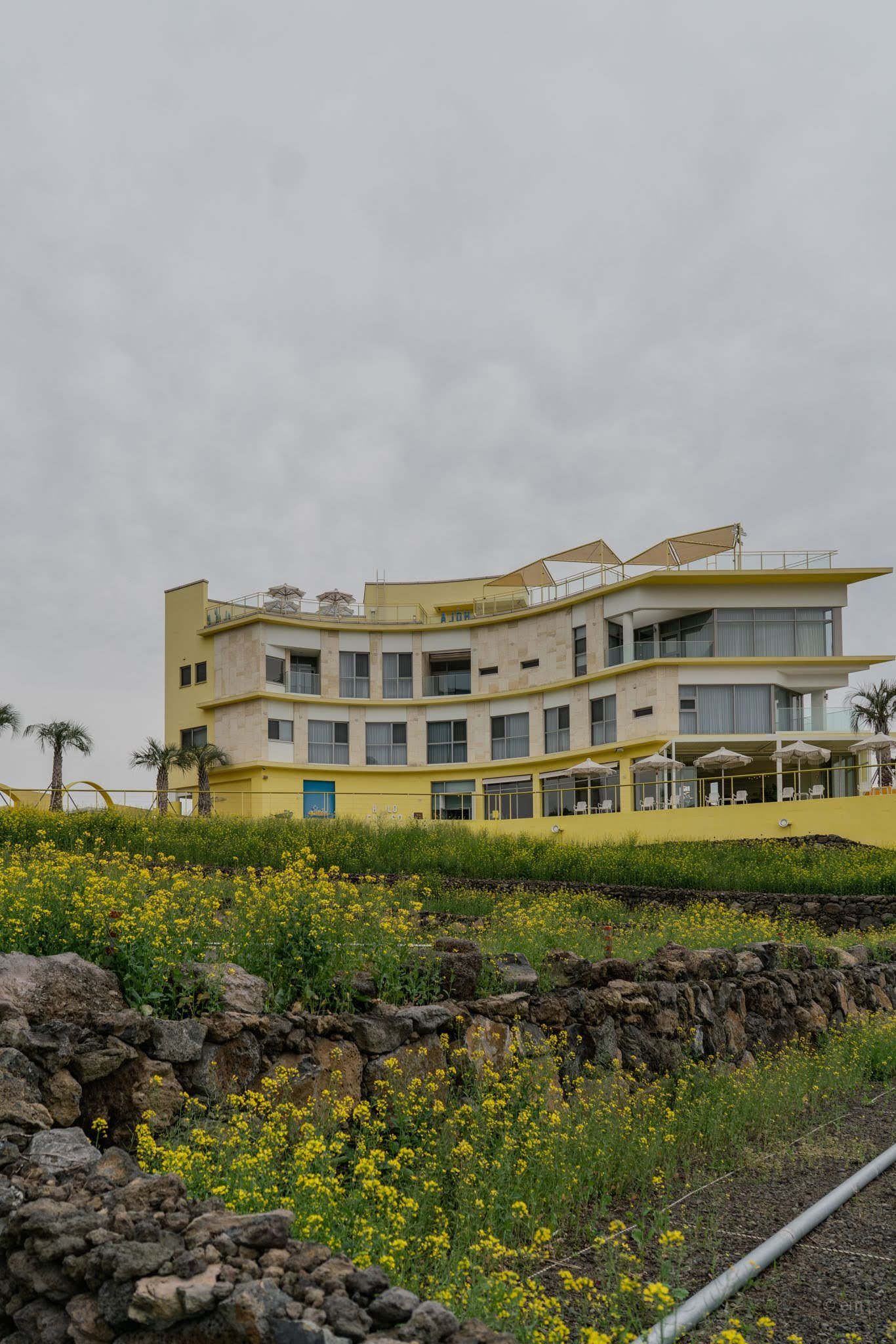
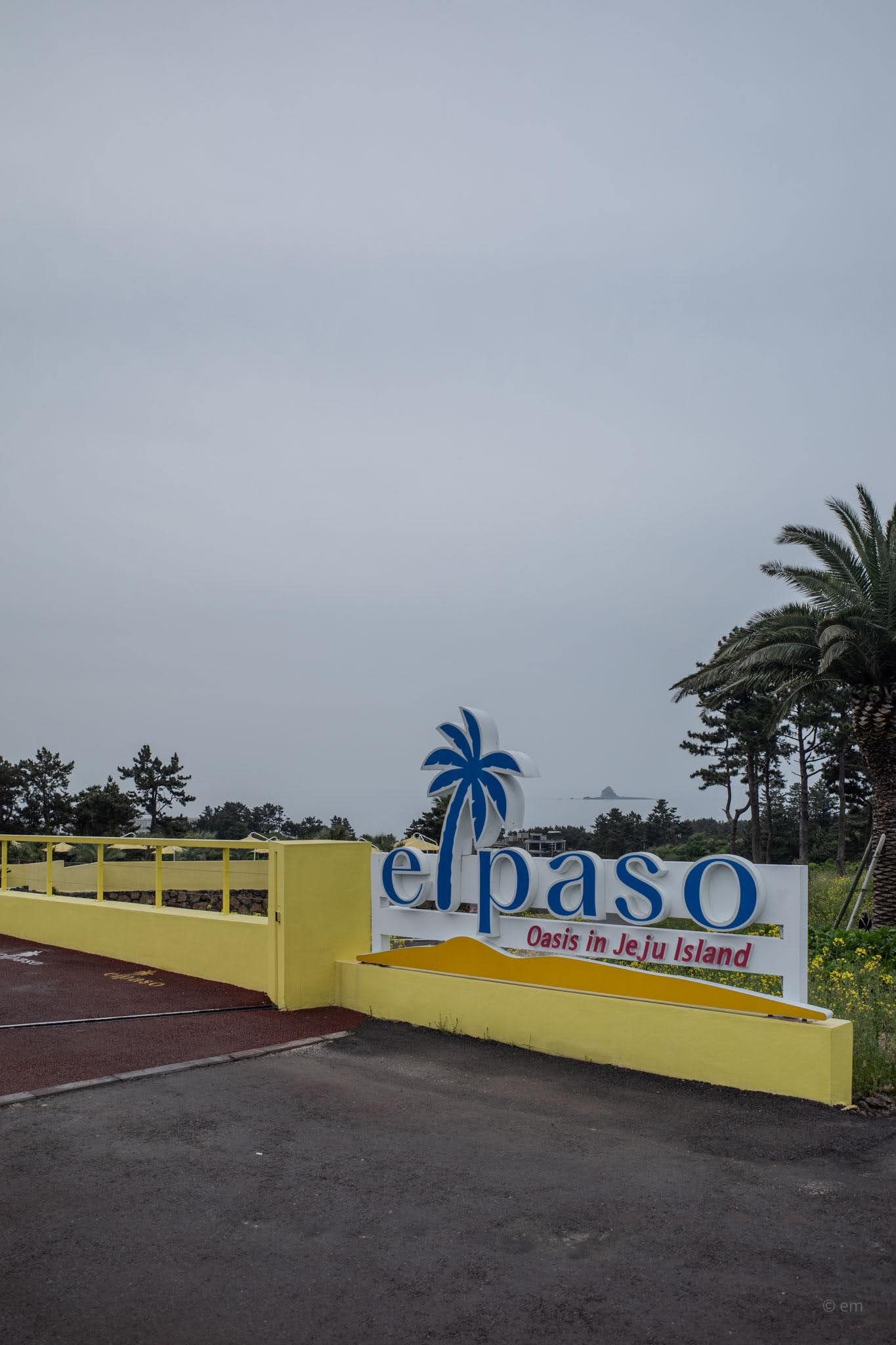
This place calls itself an oasis. Standing here, Sanbangsan rising behind a wall the color of August, you don’t argue.
elpaso closed for renovation in 2024 and has not yet reopened. What follows is the space as it stood — before whatever comes next.
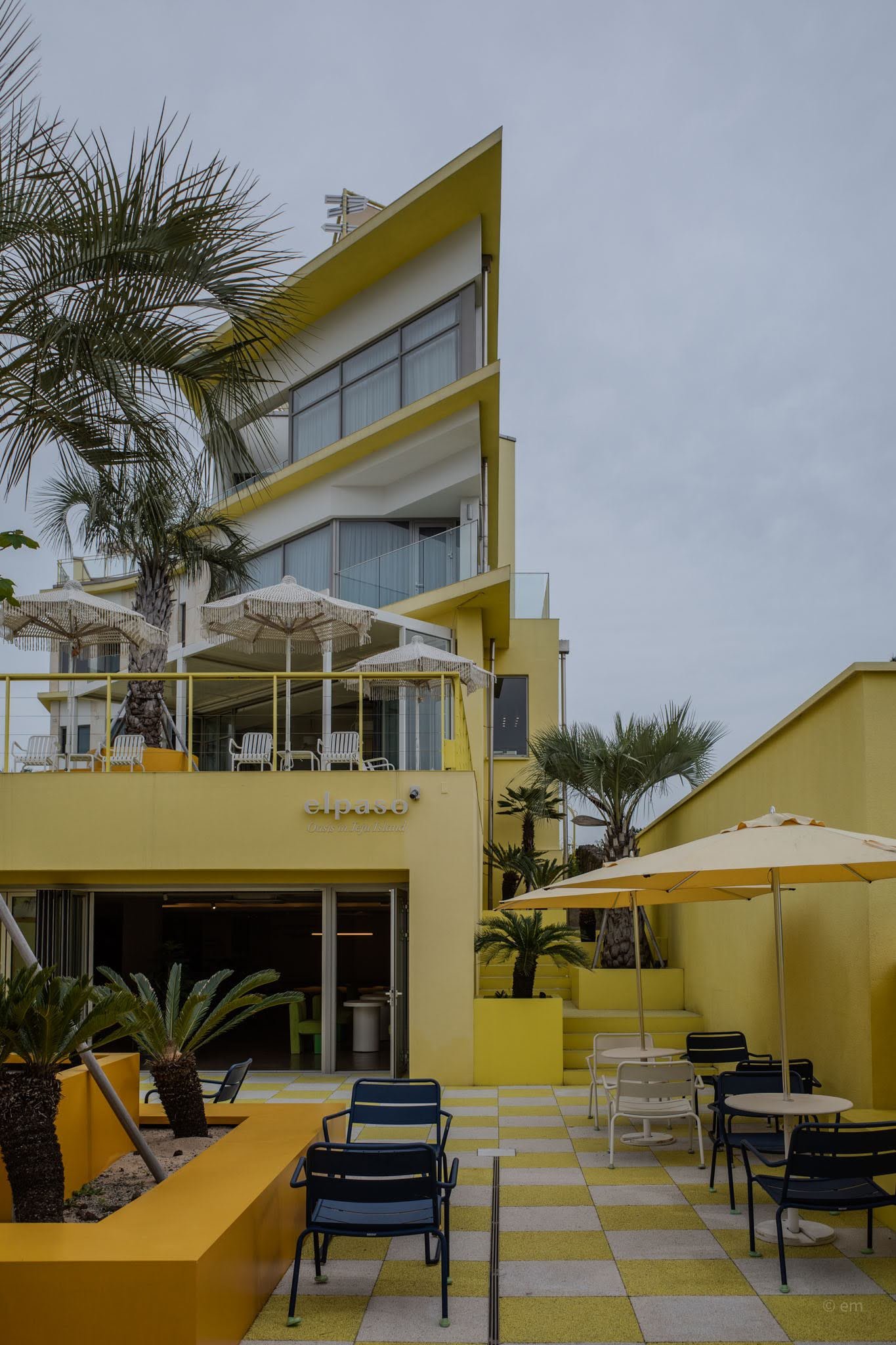
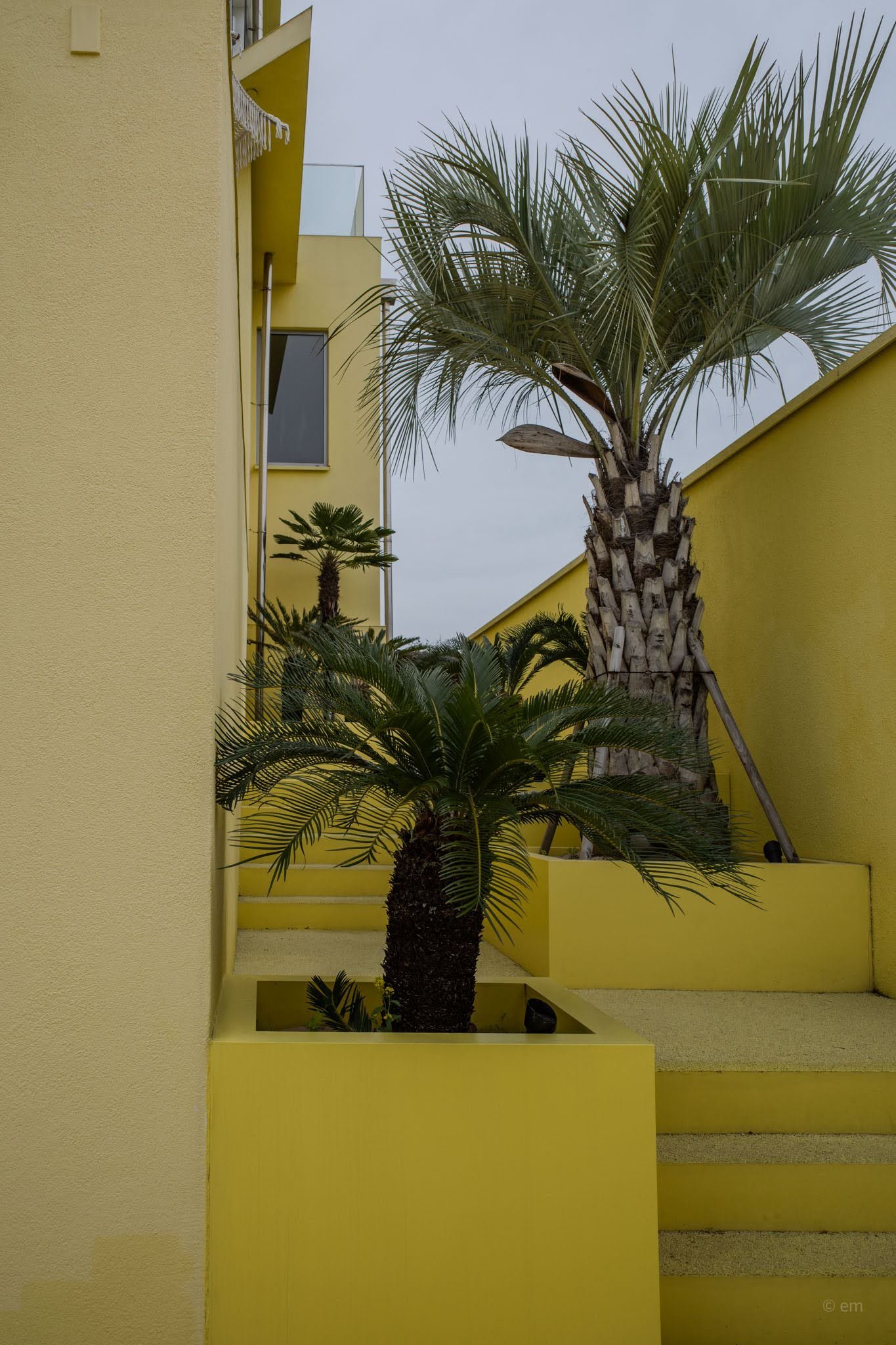
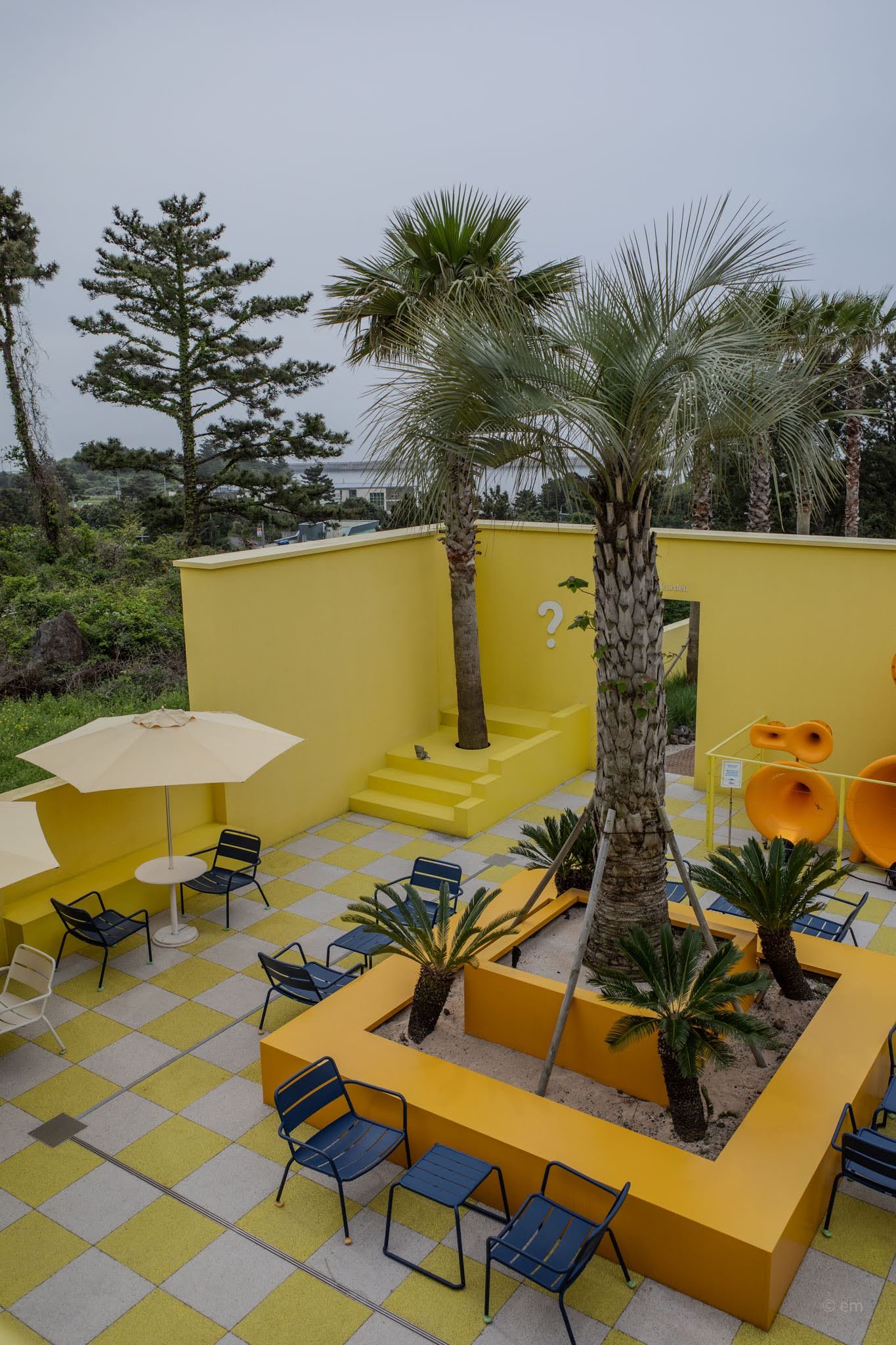
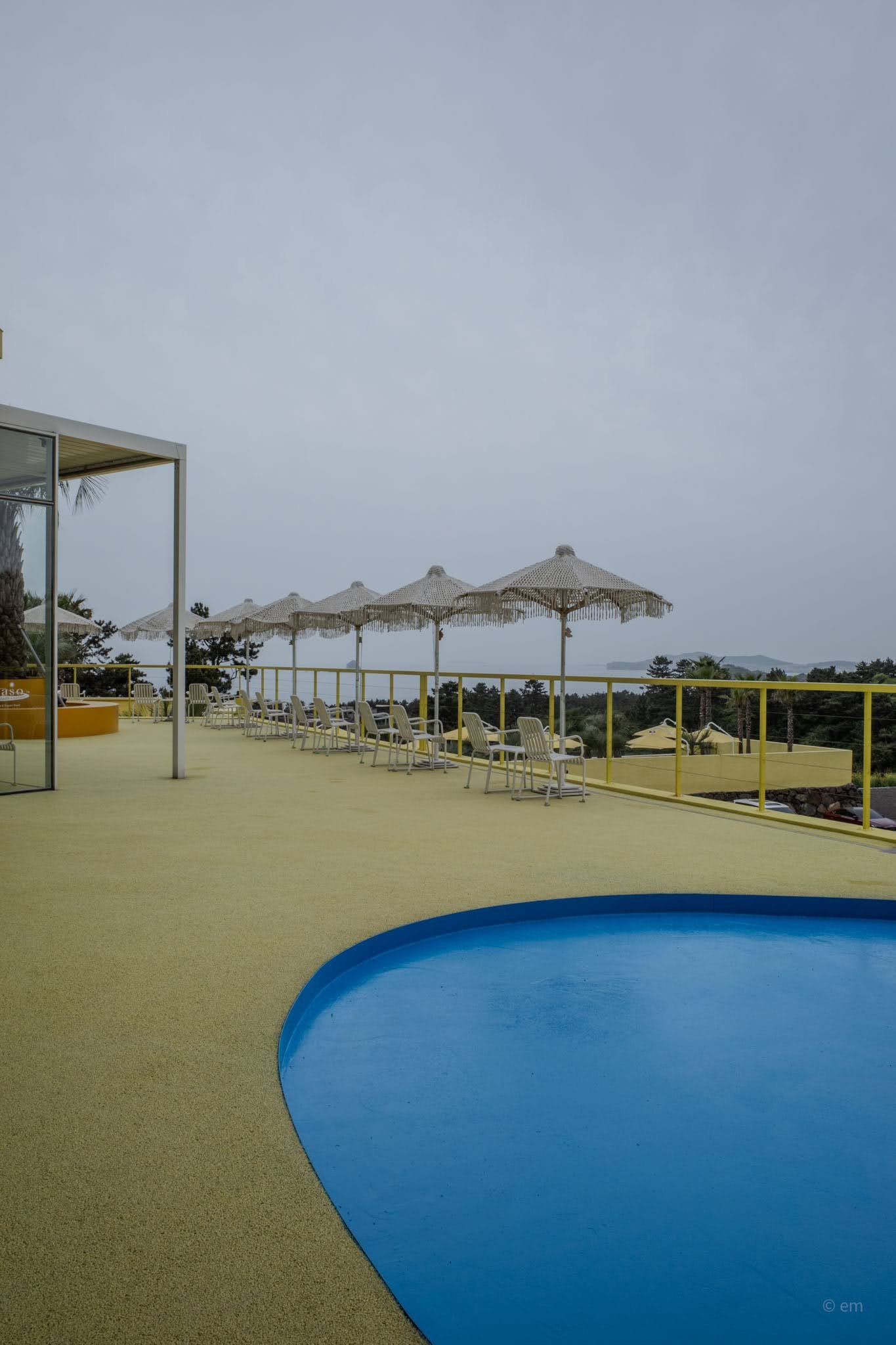
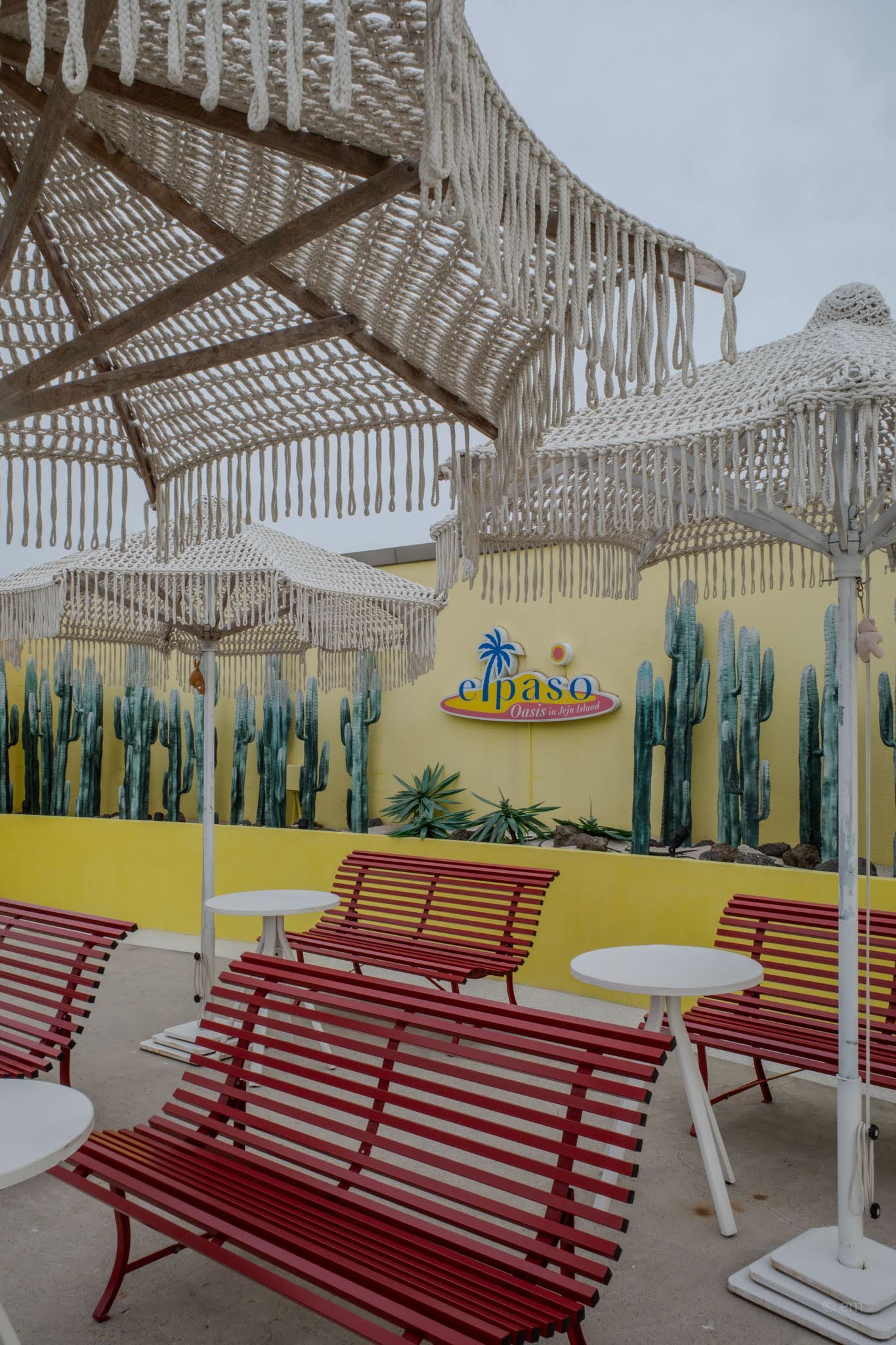
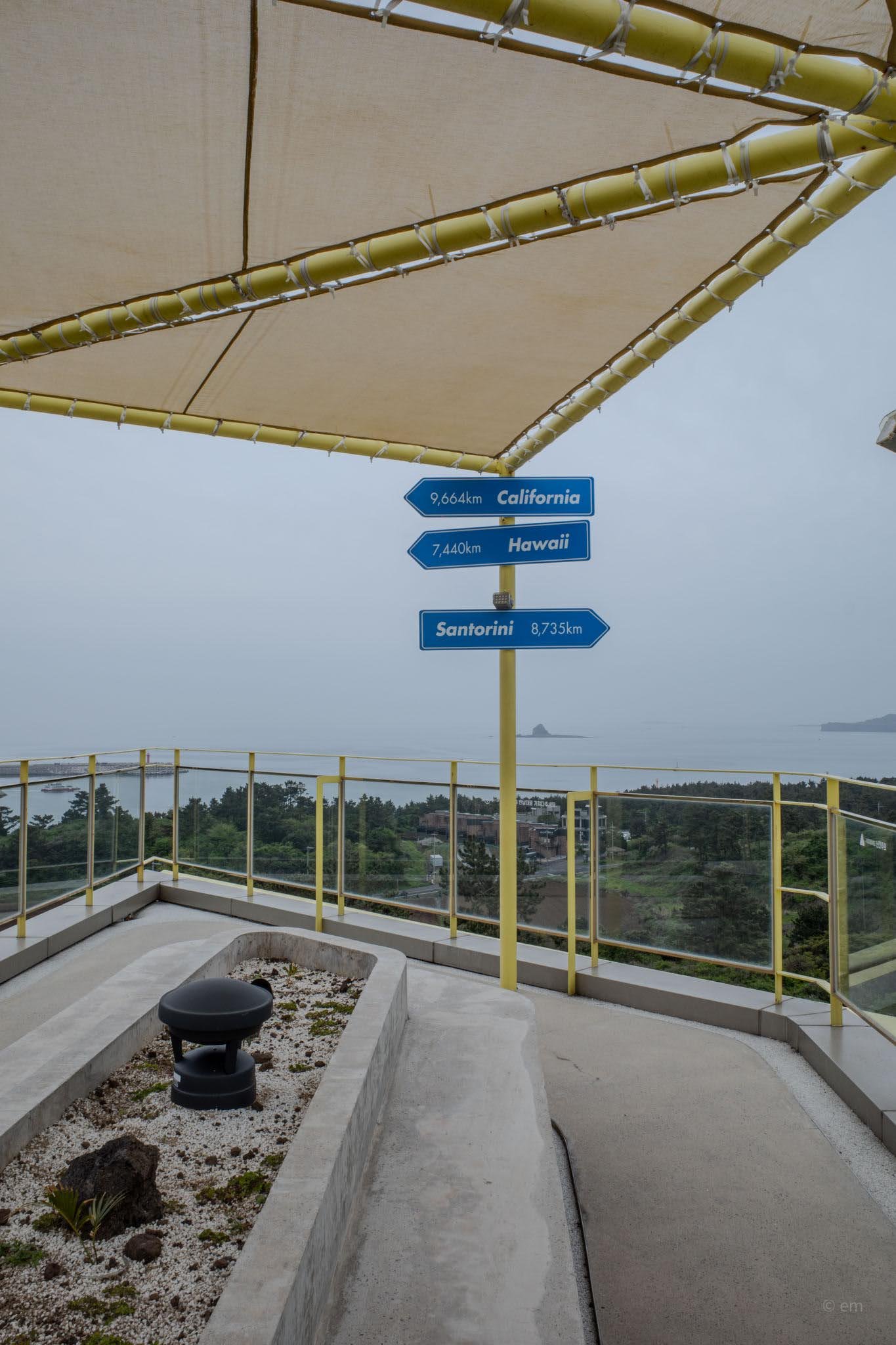
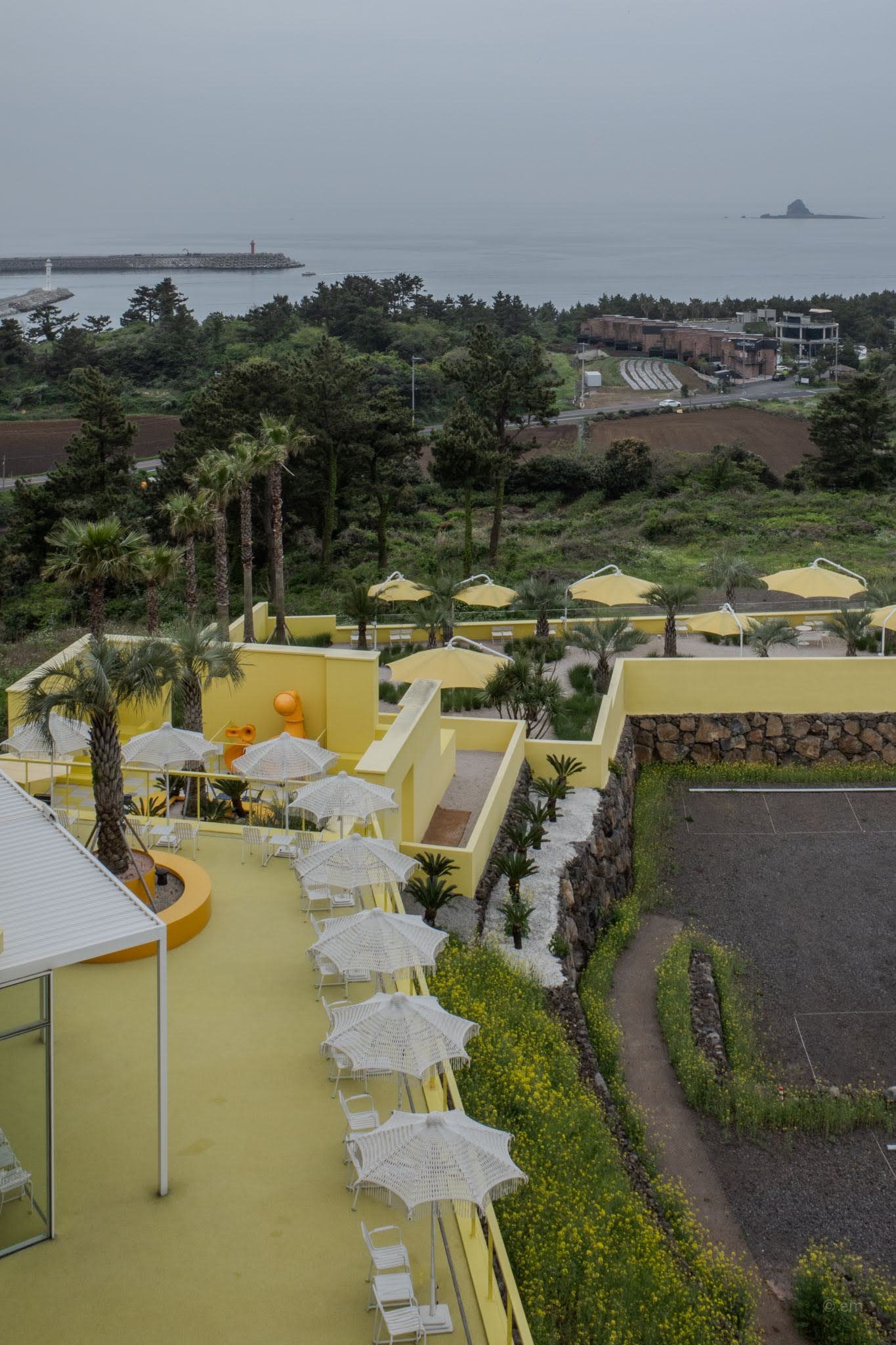
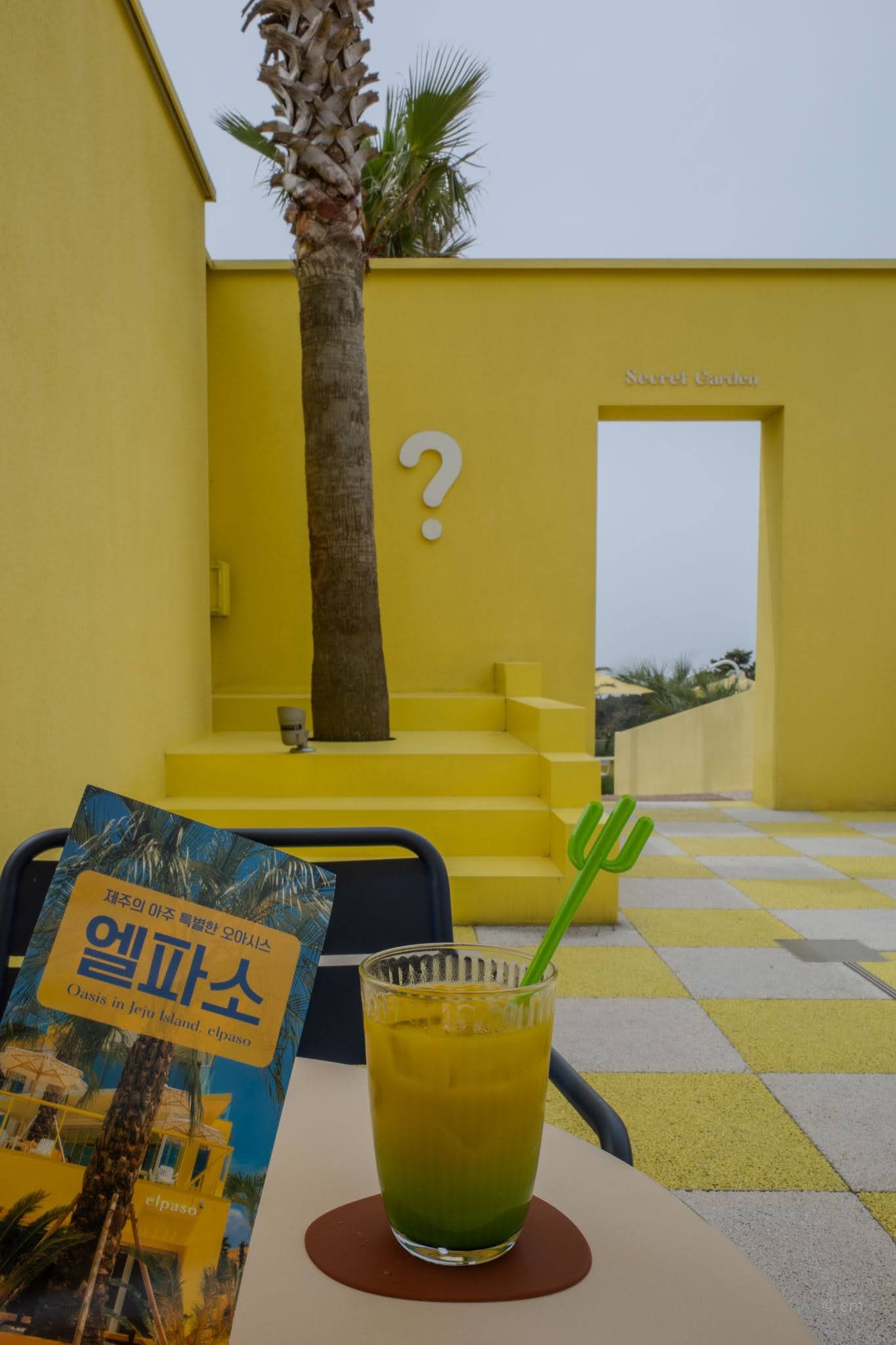
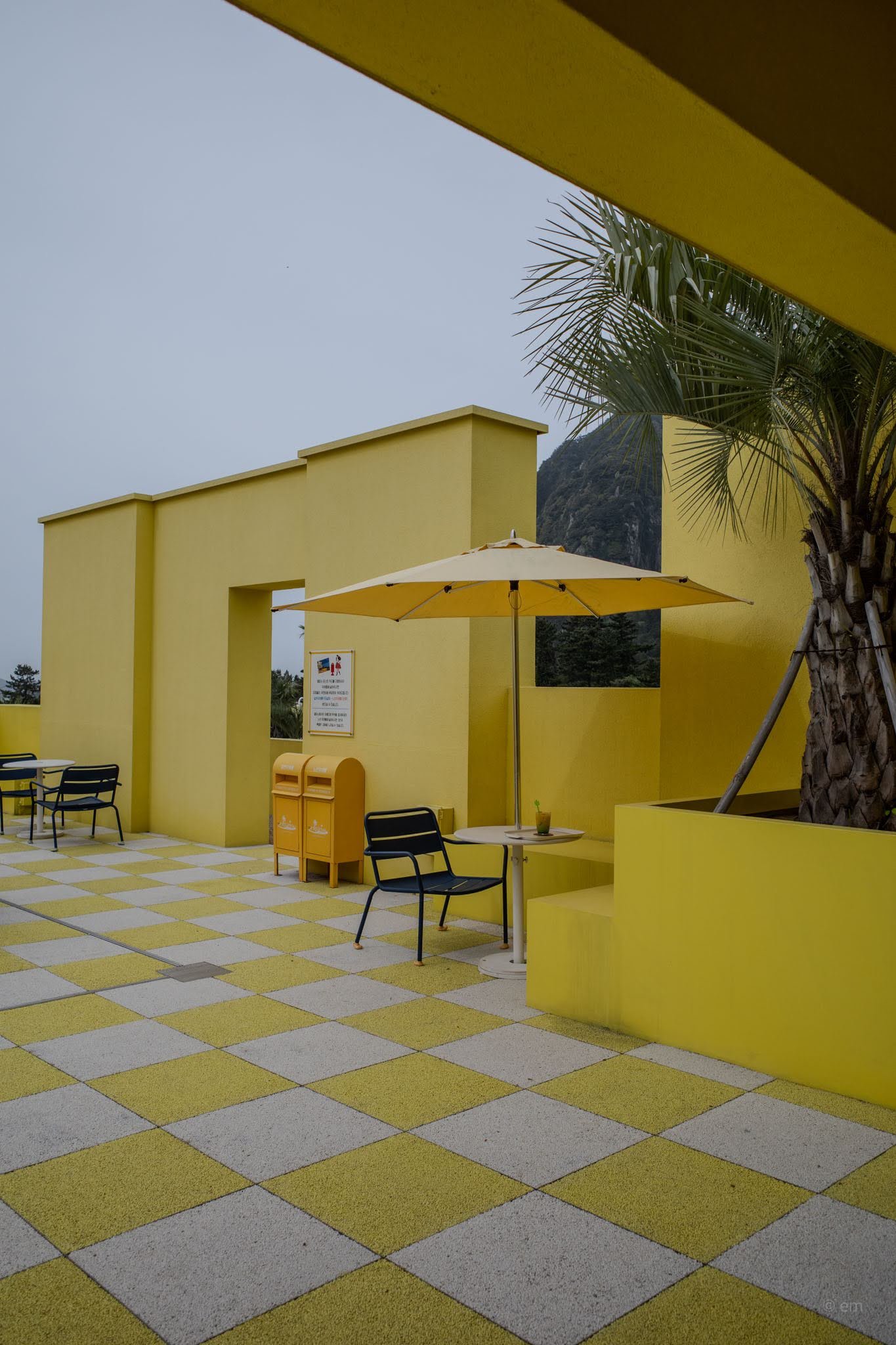
Some cafés borrow a little atmosphere — a cactus here, a palm print there — and then there is elpaso, which commits entirely. The entire building is painted the yellow of hot midday sun. Cacti grow in sandy raised beds. A direction sign on the rooftop points to California (9,664km), Hawaii (7,440km), and Santorini (8,735km). The name comes from El Paso, Texas — the old border city on the edge of the Chihuahuan Desert, where the American Southwest meets the Mexican plateau. “The pass.” Everything here is built on that idea: a place you pass through, between one world and another. Jeju’s southern coast stands in for the desert. Sanbangsan is doing the work of a mesa.
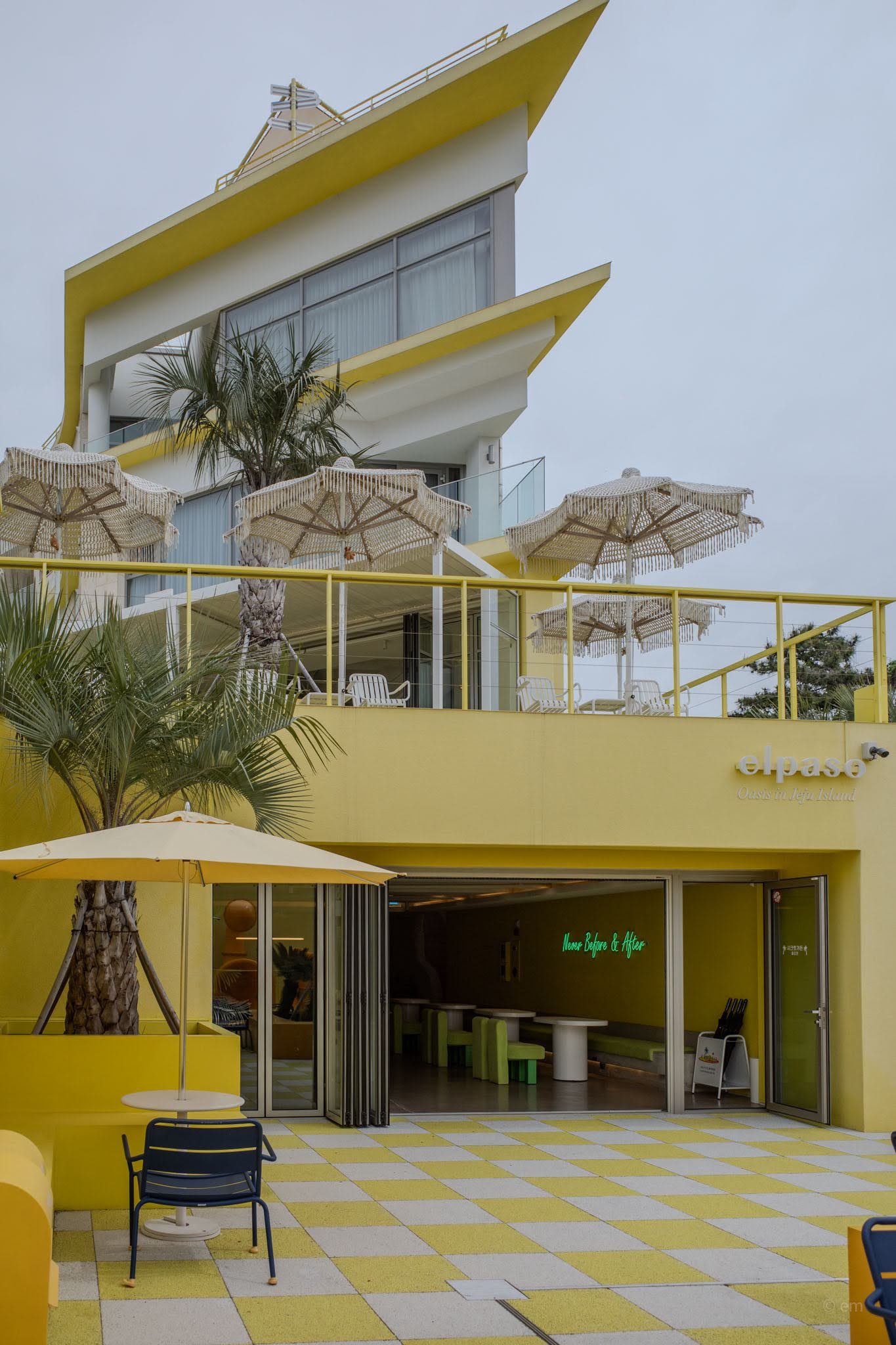
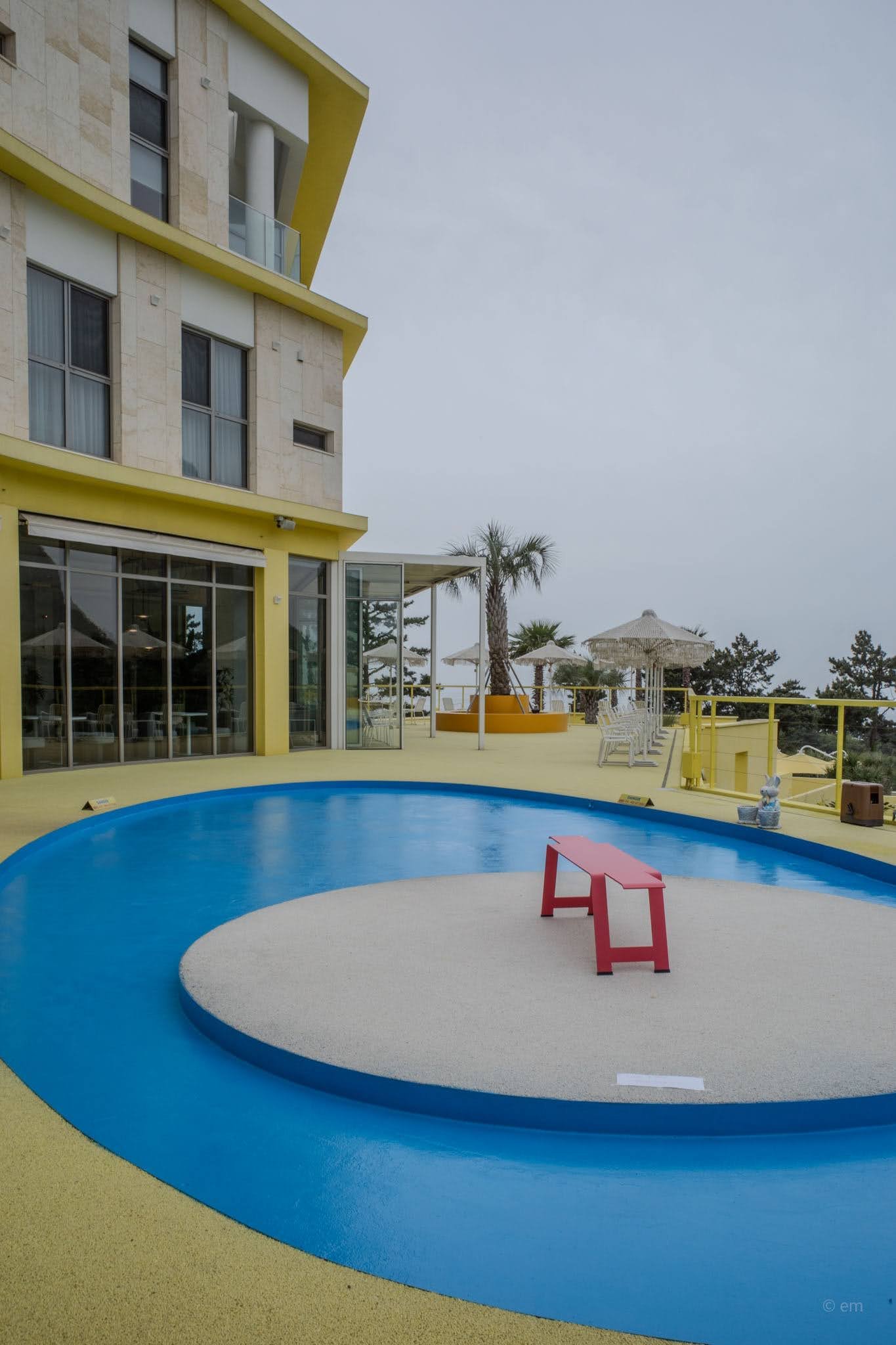
It is enormous. The yellow building itself — curved, stacked, vaguely resort-hotel in its bones — rises above canola fields that bloom the same gold each spring. The café occupies multiple levels both inside and out, and moving through the space feels less like ordering a coffee and more like arriving somewhere.
Into the Yellow
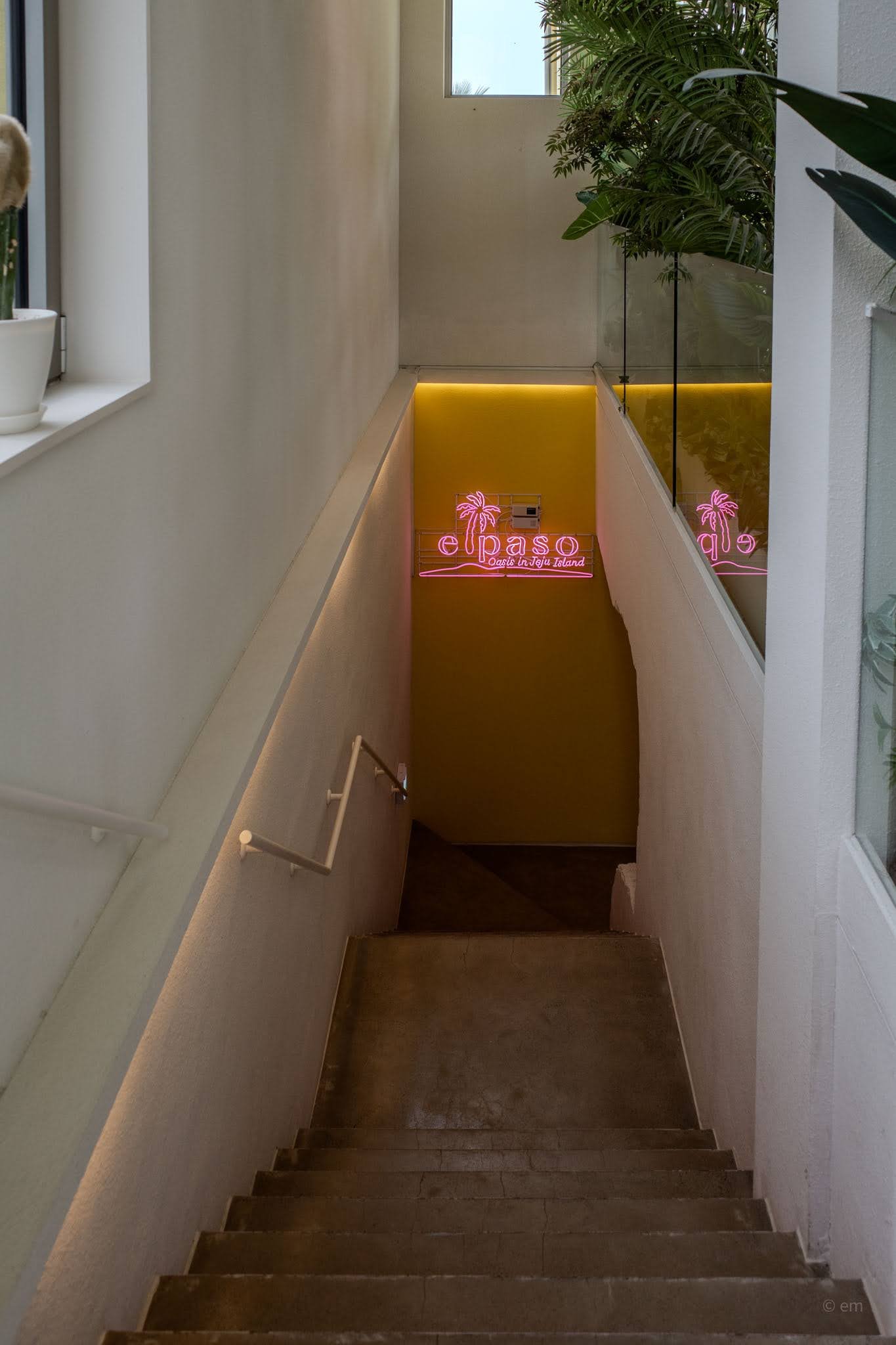
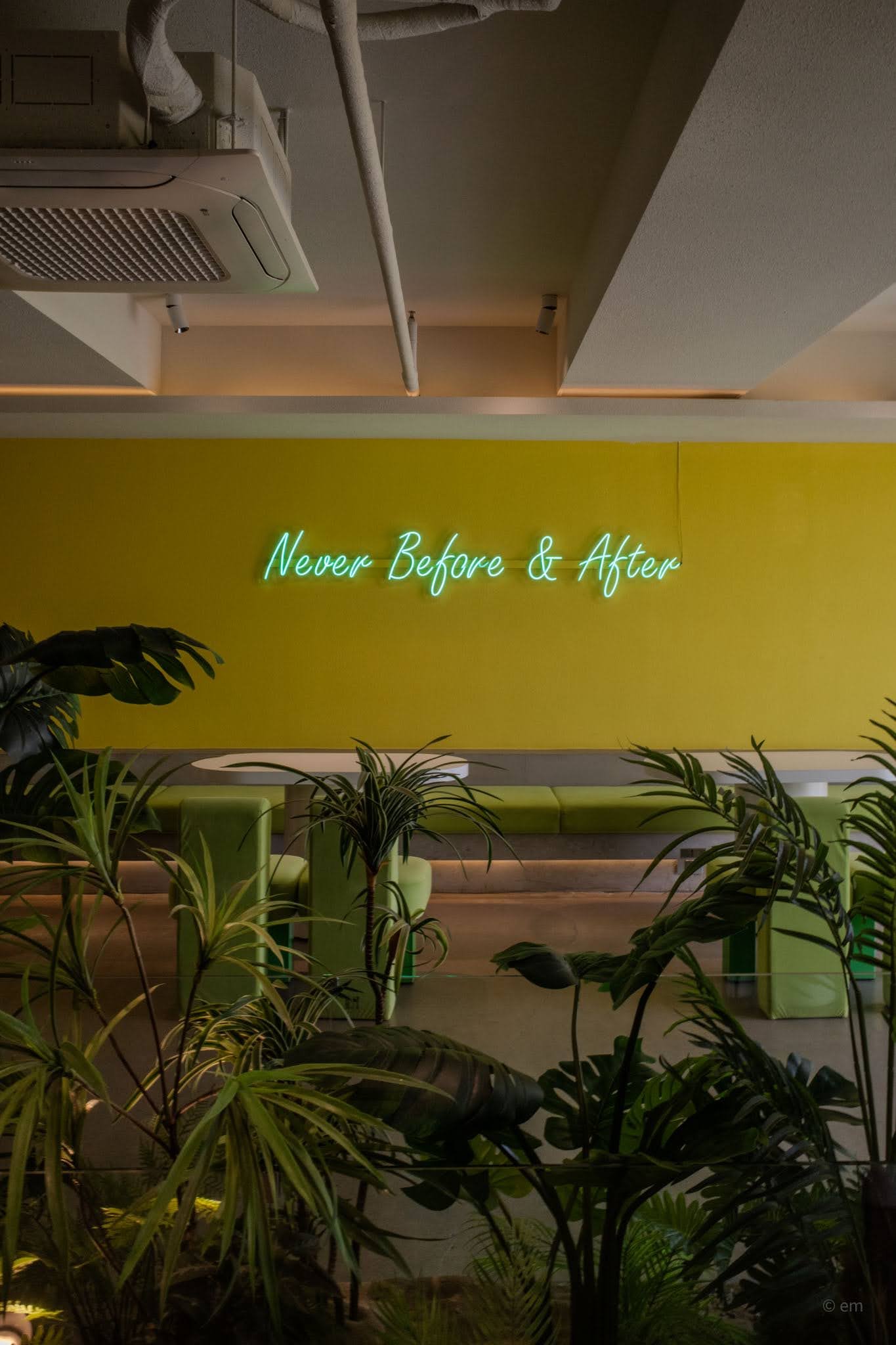
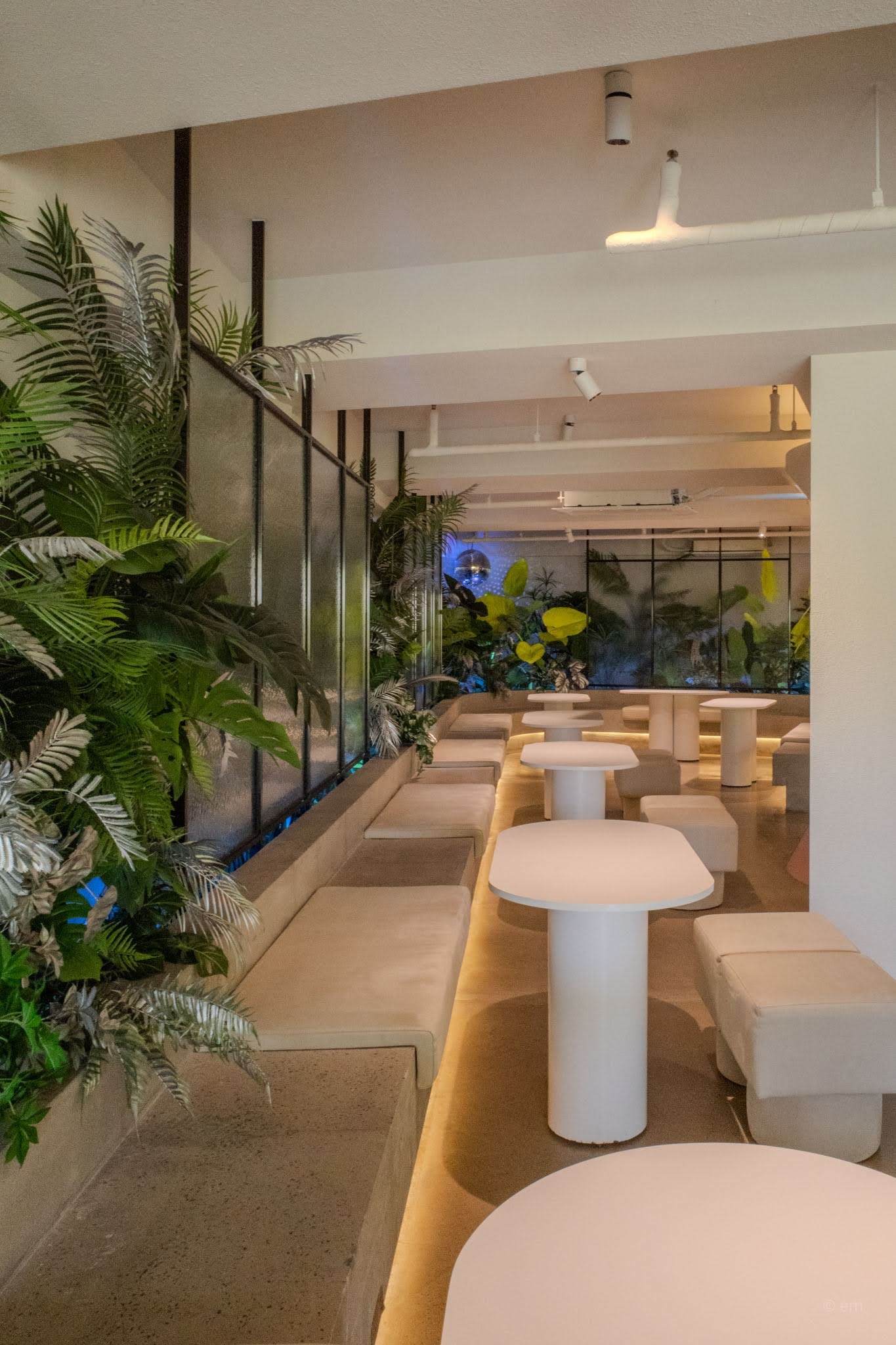
The entry descends. Stairs lead down to a basement level where the first thing you see is a pink neon sign — el paso / Oasis in Jeju Island — set against a deep golden wall, framed by tropical foliage spilling over glass railings above. This lower level runs long and cool: white pedestal tables arranged along a continuous banquette, tropical plants pressing in from a lit terrarium wall on one side, the other side open to a stretch of blue. A second neon sign reads Never Before & After in teal cursive above a dense canopy of monstera and palm.
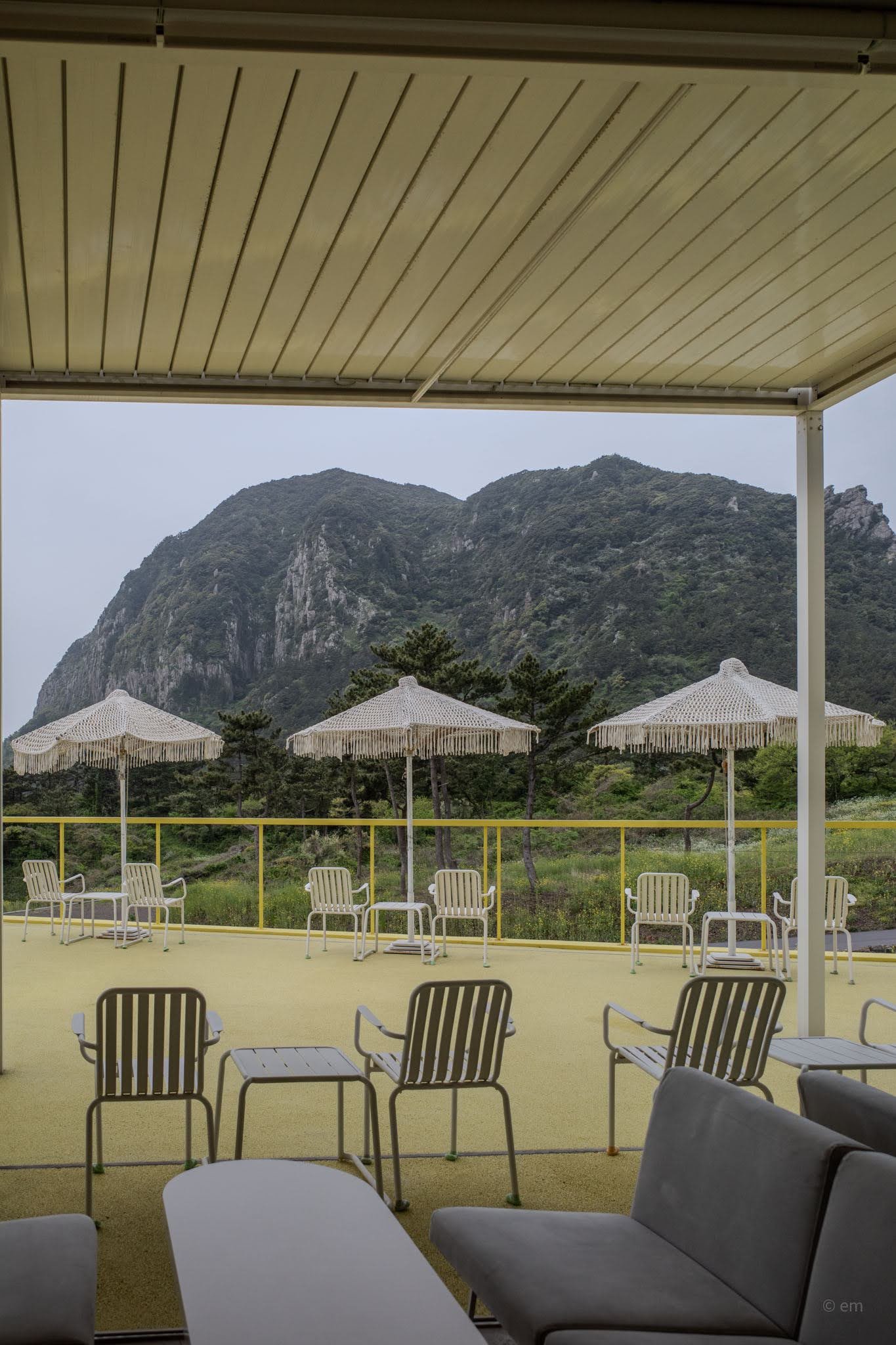
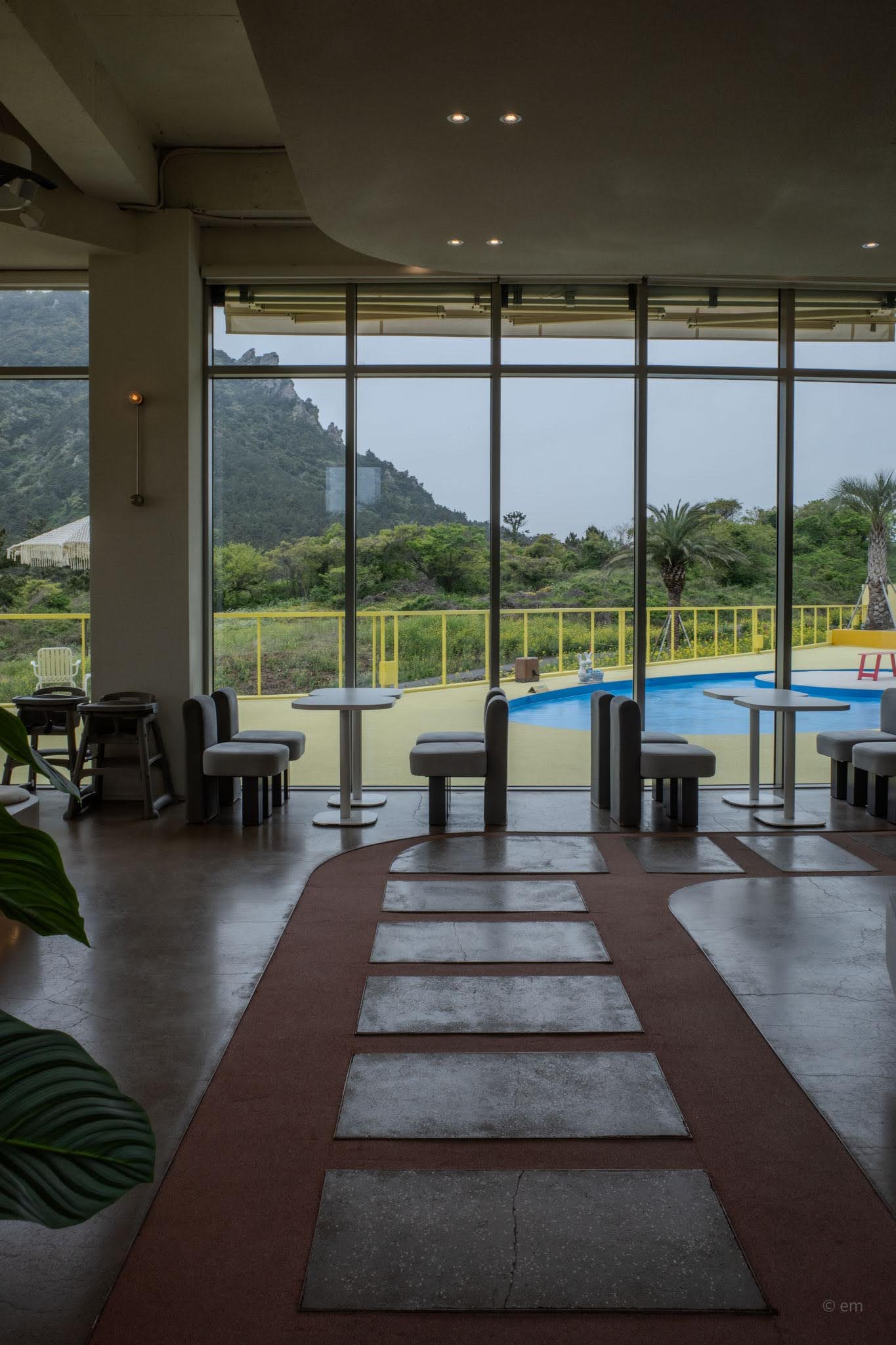
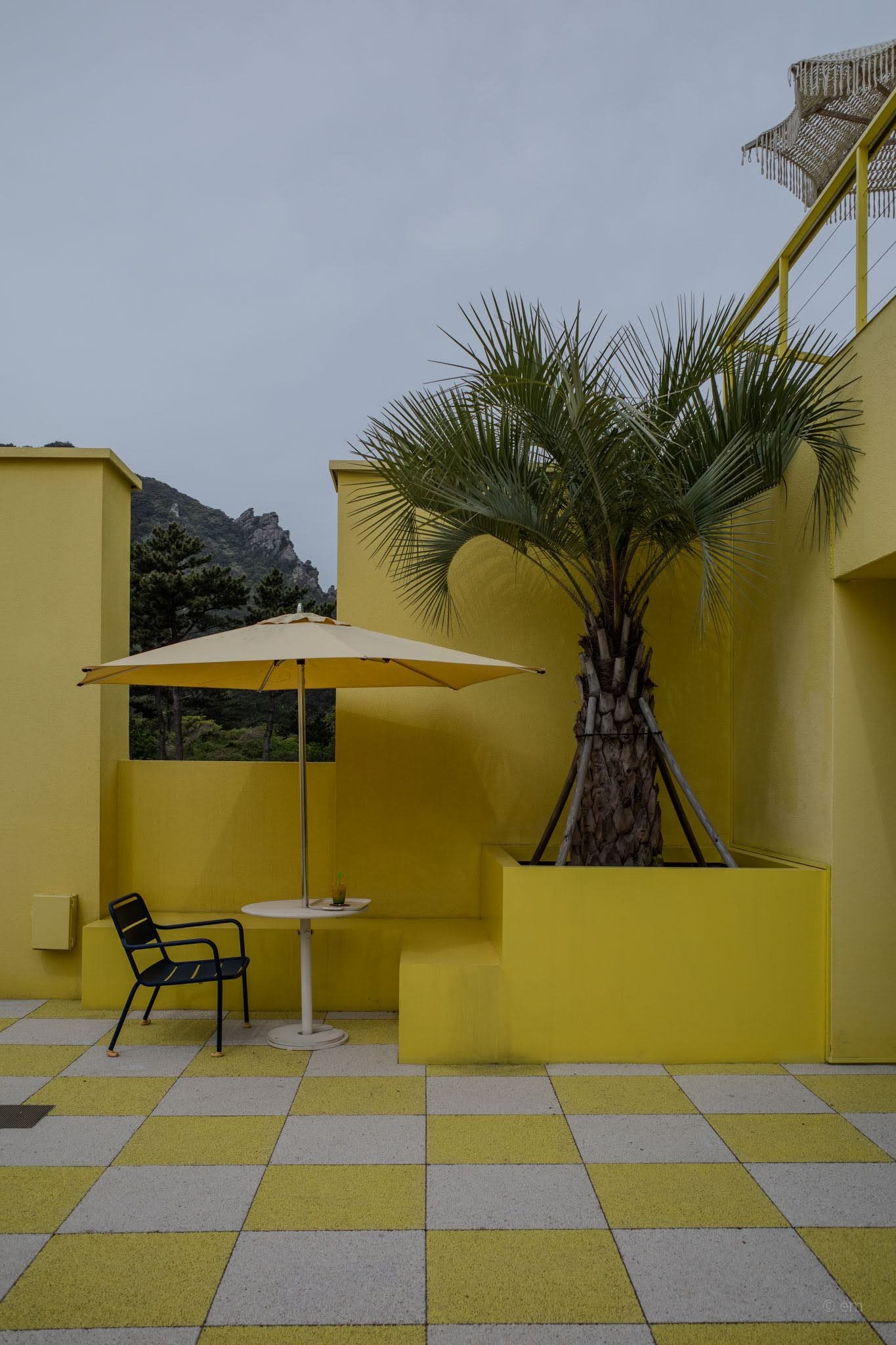
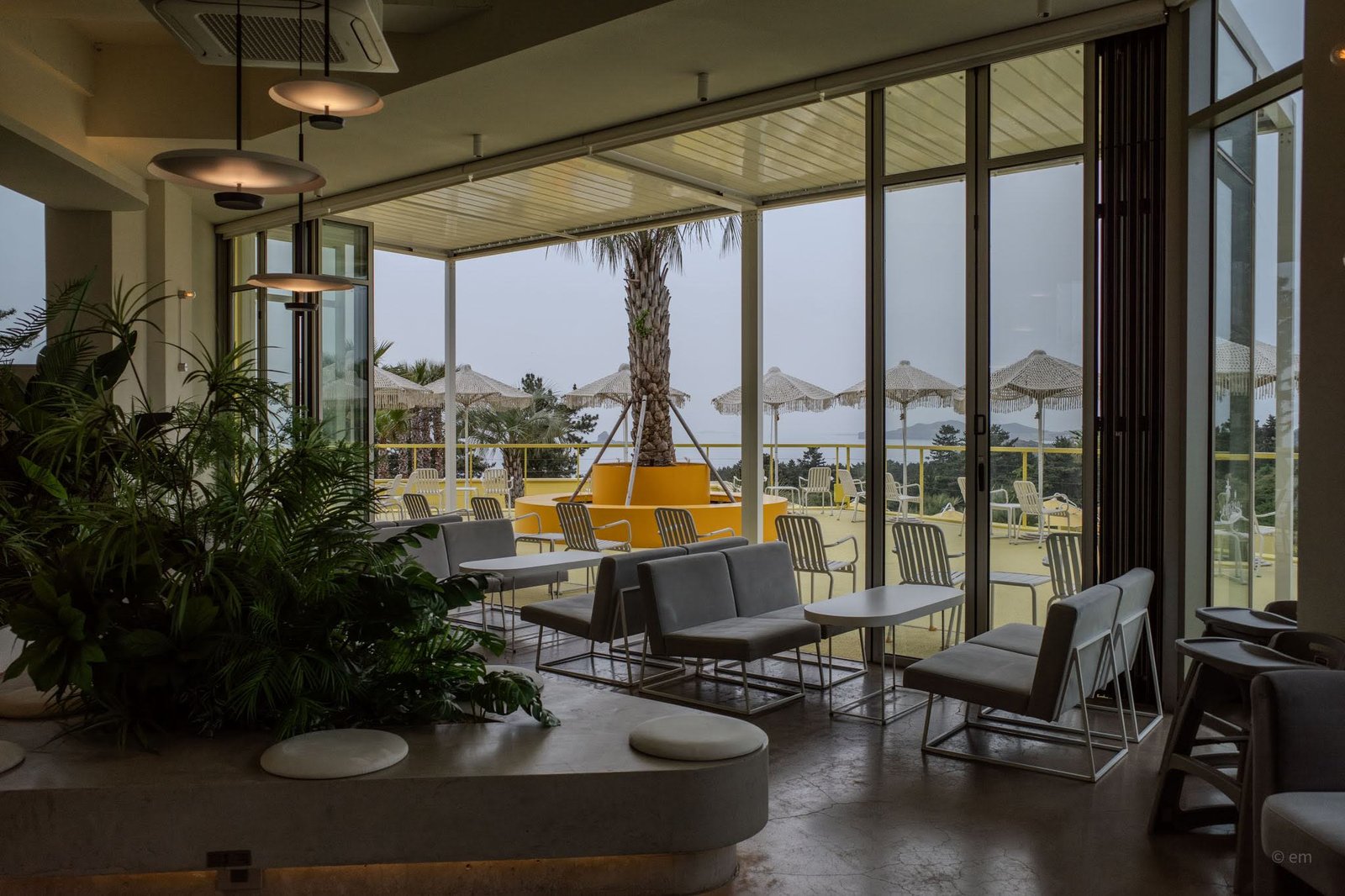
The main interior sits one level up — a glass-walled café space with pendant lights and grey upholstered seating — but the walls slide open entirely to the ocean-facing terrace. Out here, macramé-fringed umbrellas shade a wide yellow deck, a single palm grows from a circular amber planter, and the sea sits low in the distance beyond pine trees. The view is broad and unhurried.
The Courtyard
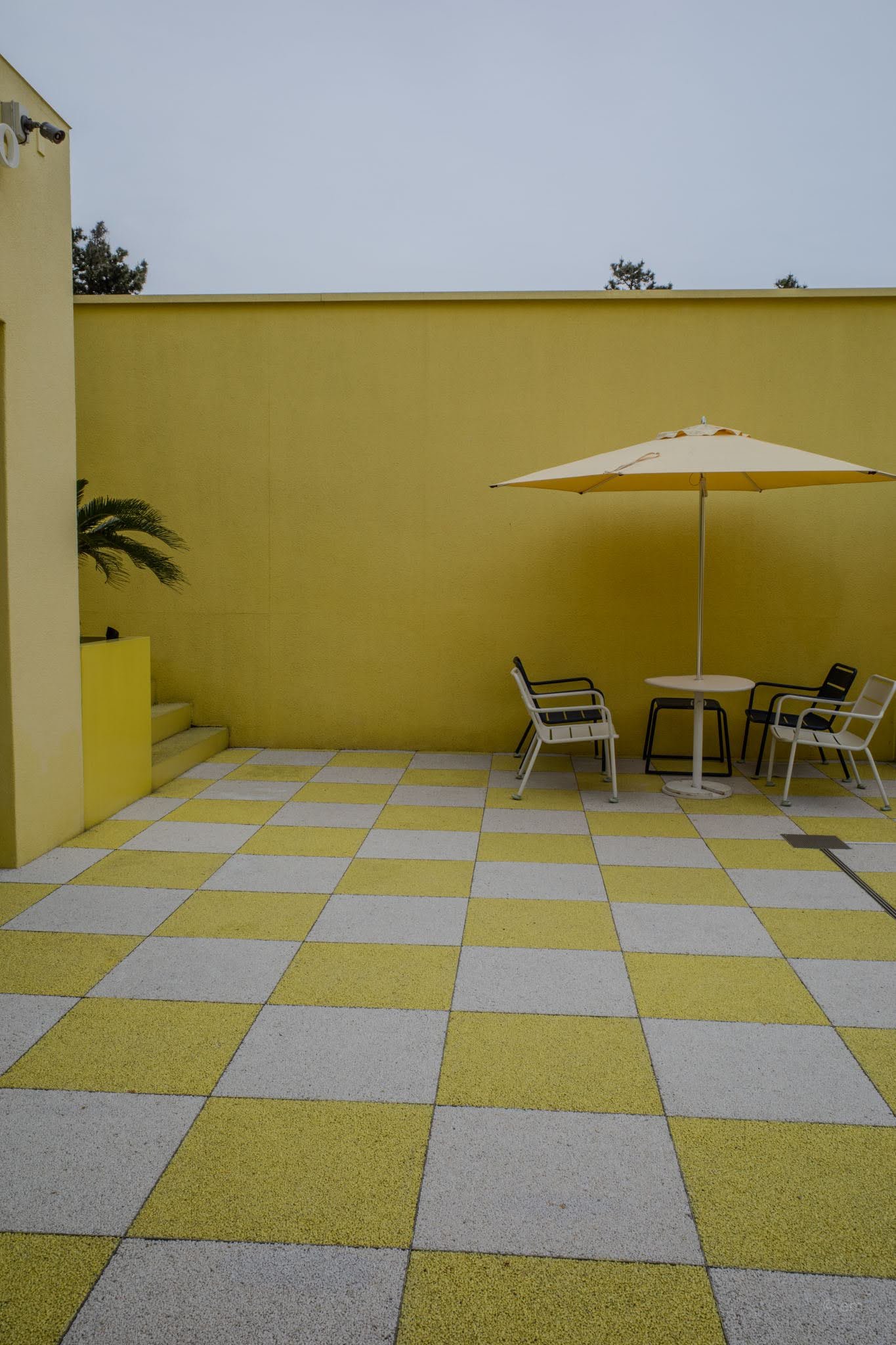
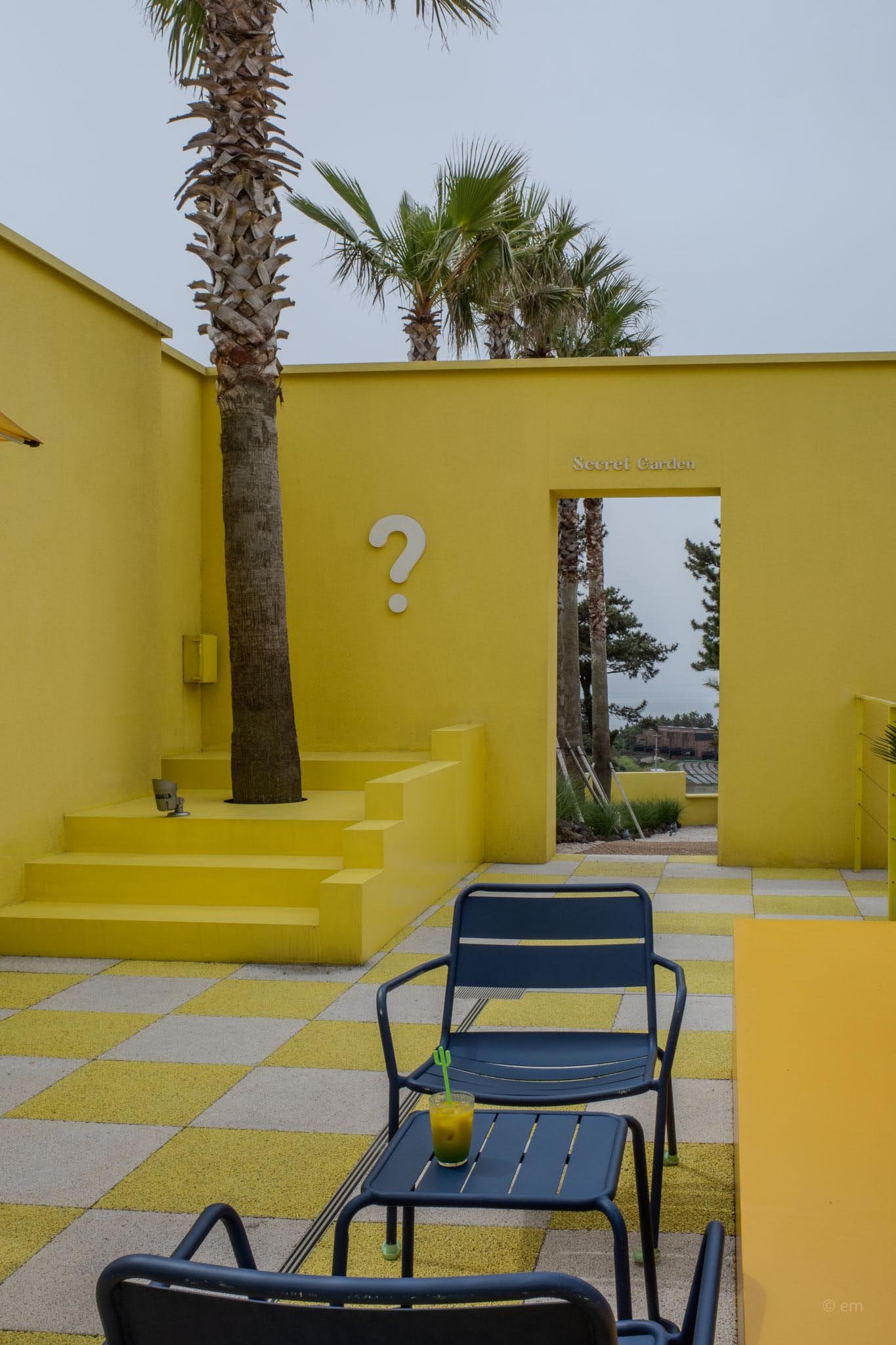
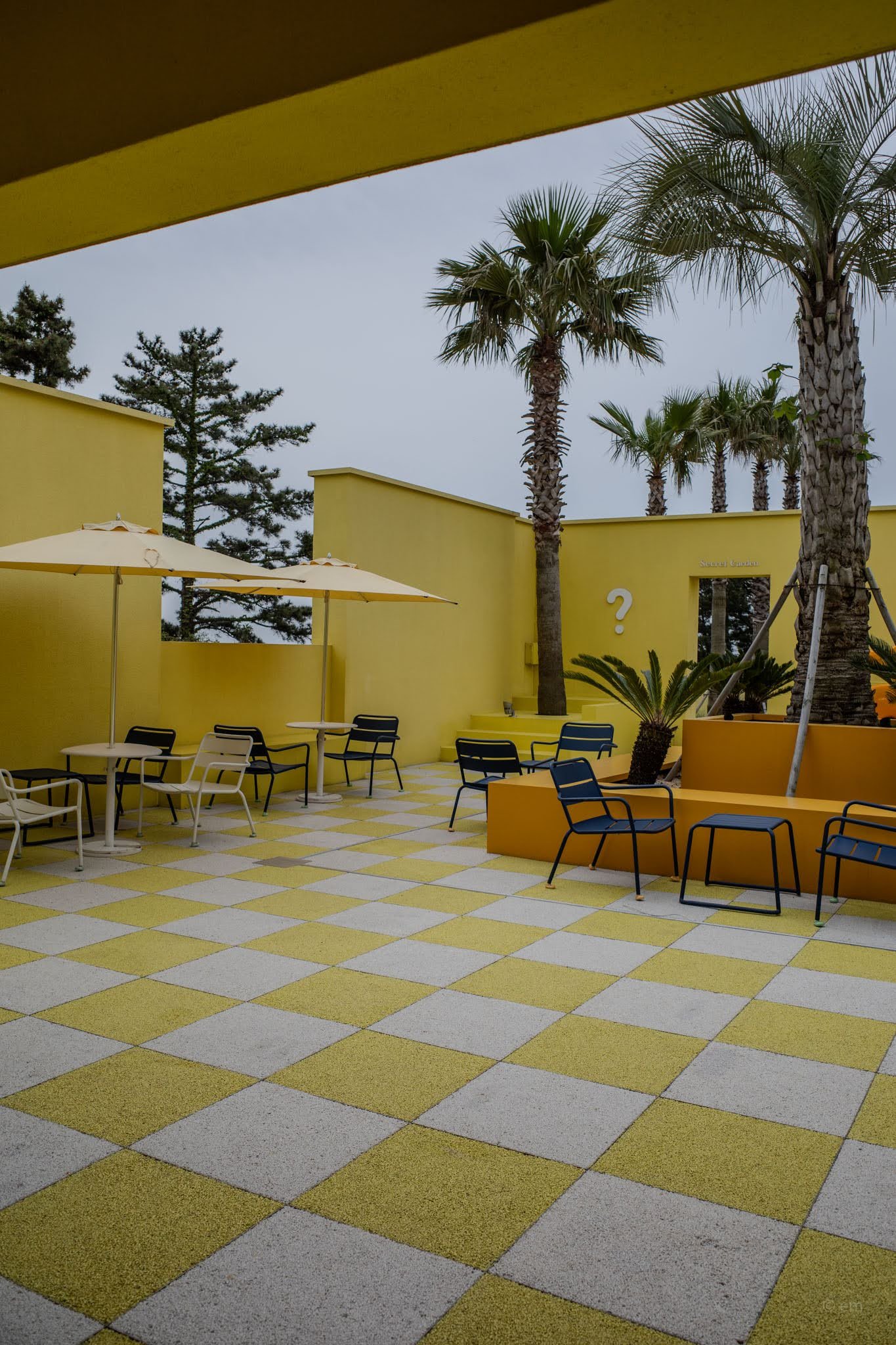
The basement level opens outward into a courtyard: a checkerboard floor in yellow and grey, dark navy chairs clustered around low tables, a raised planter bed of white sand holding several large palms. One yellow wall bears a white question mark and an arched opening labeled “Secret Garden.”
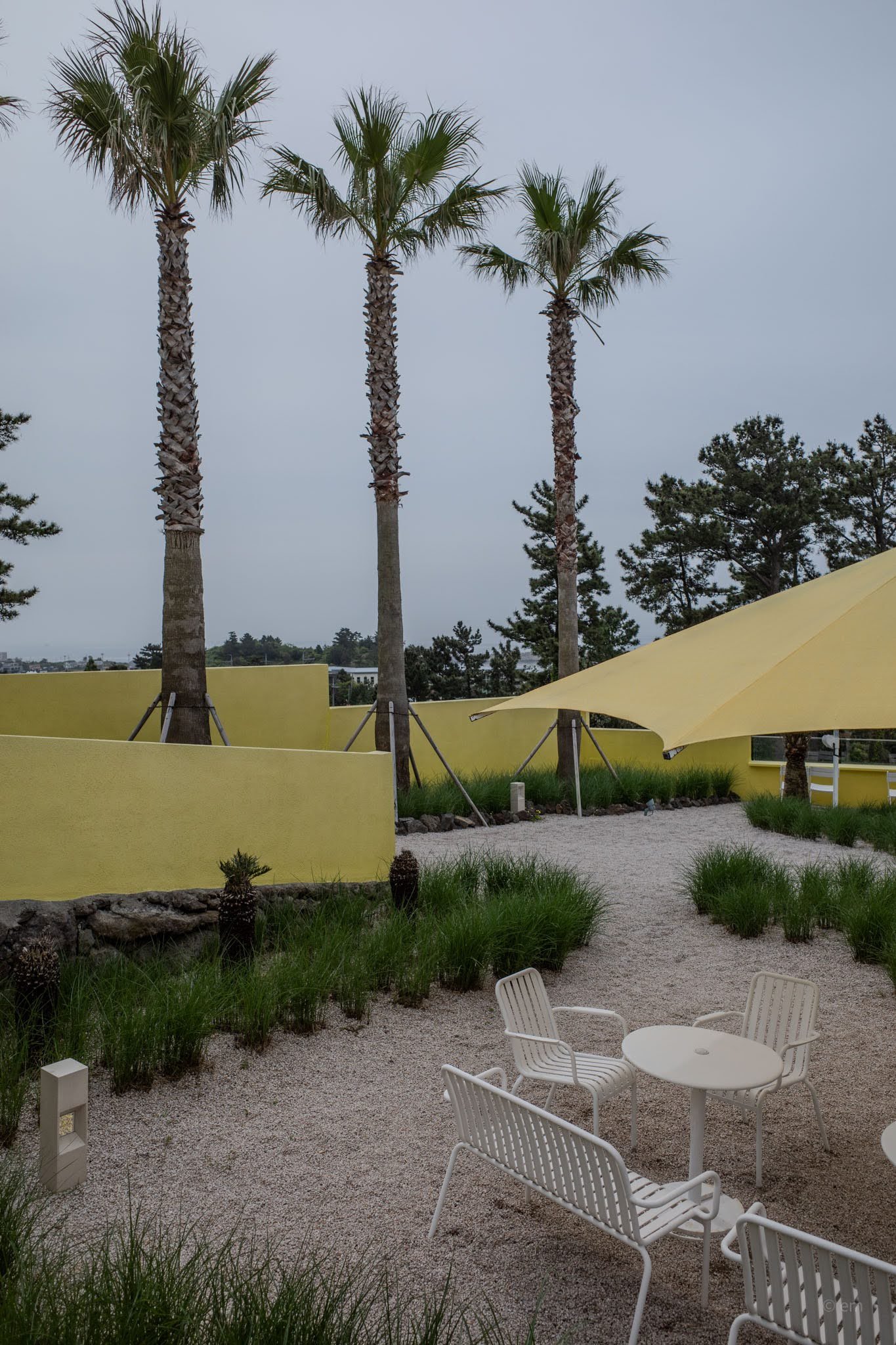
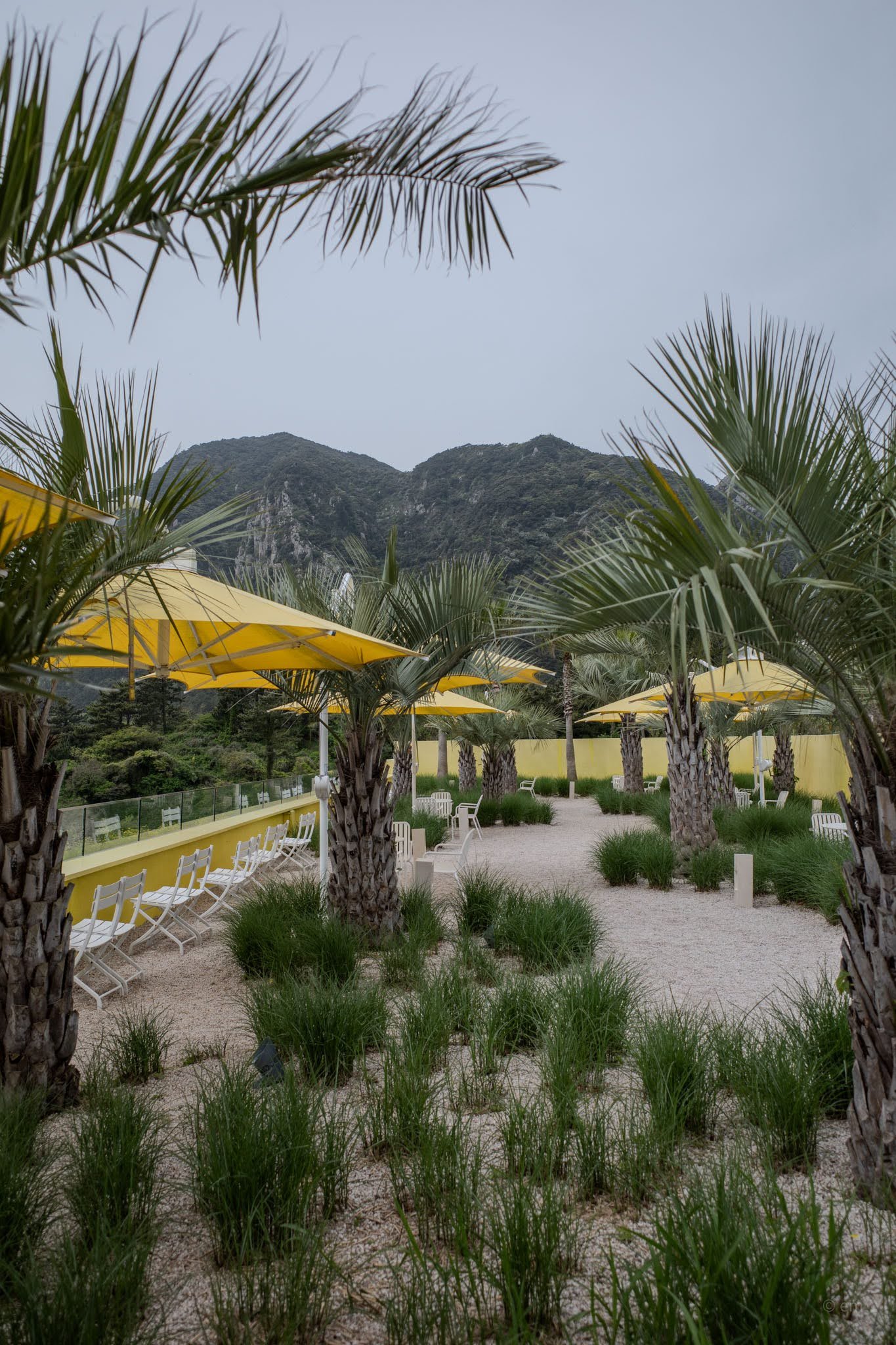
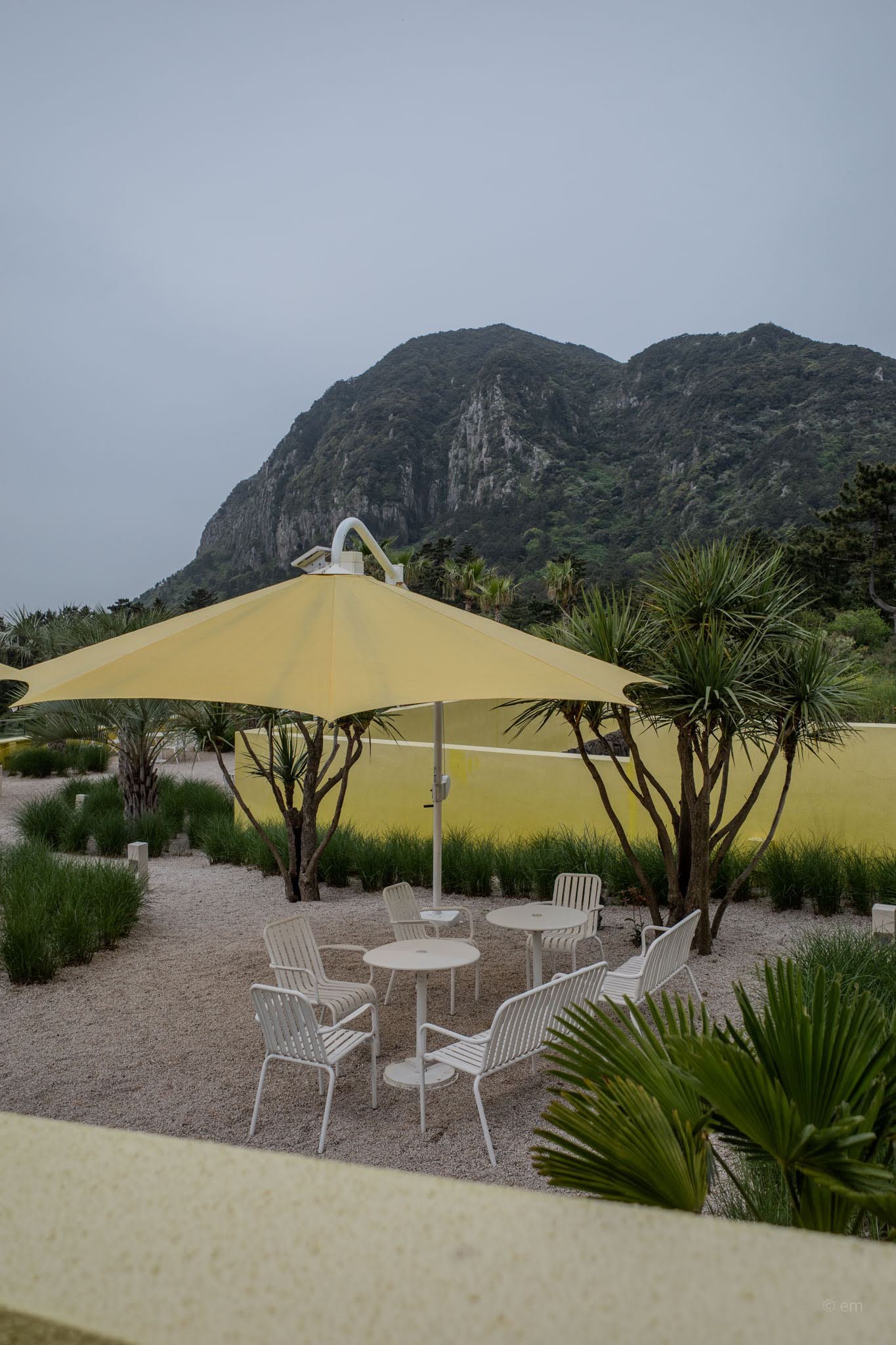
The Secret Garden
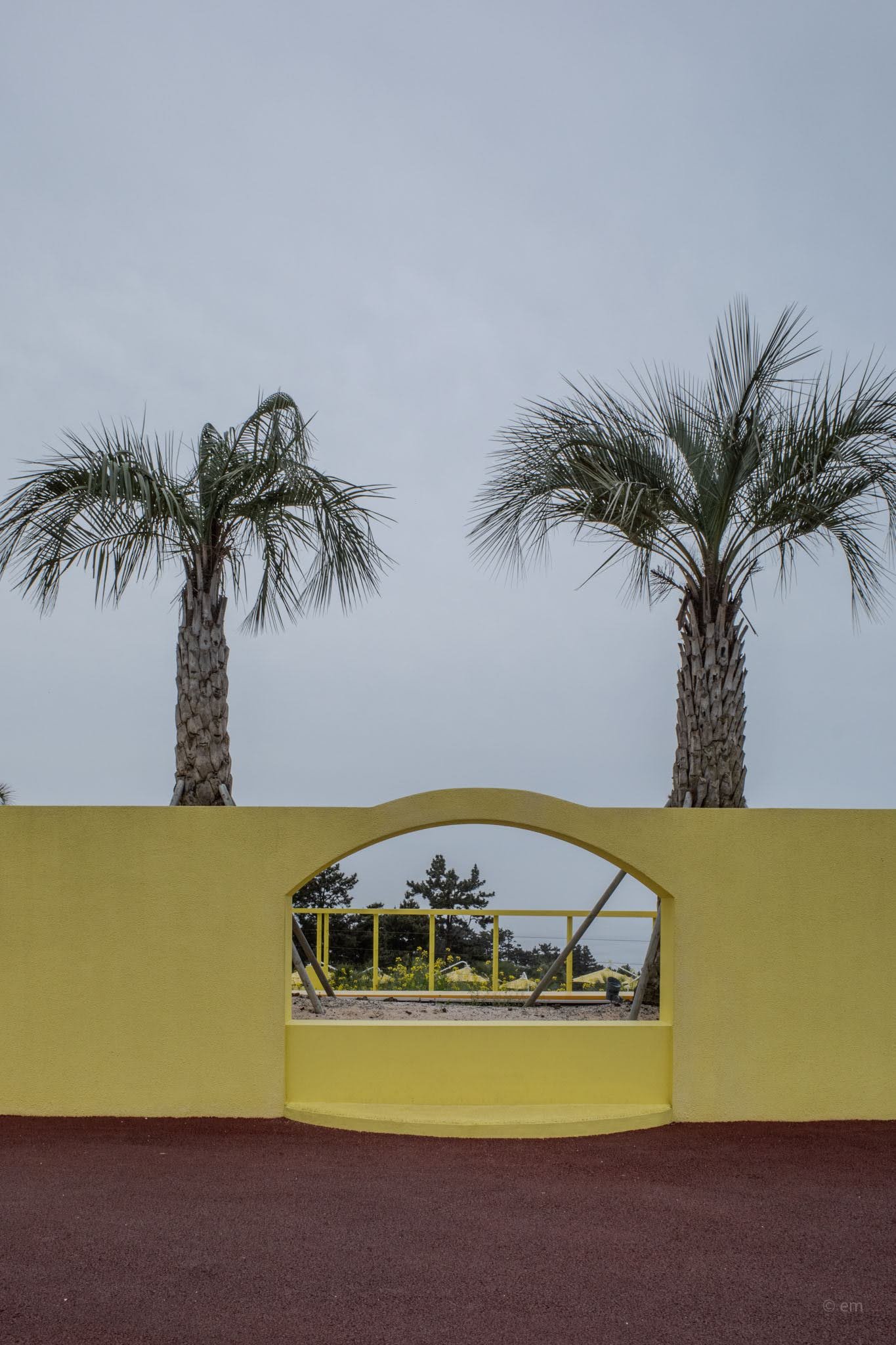
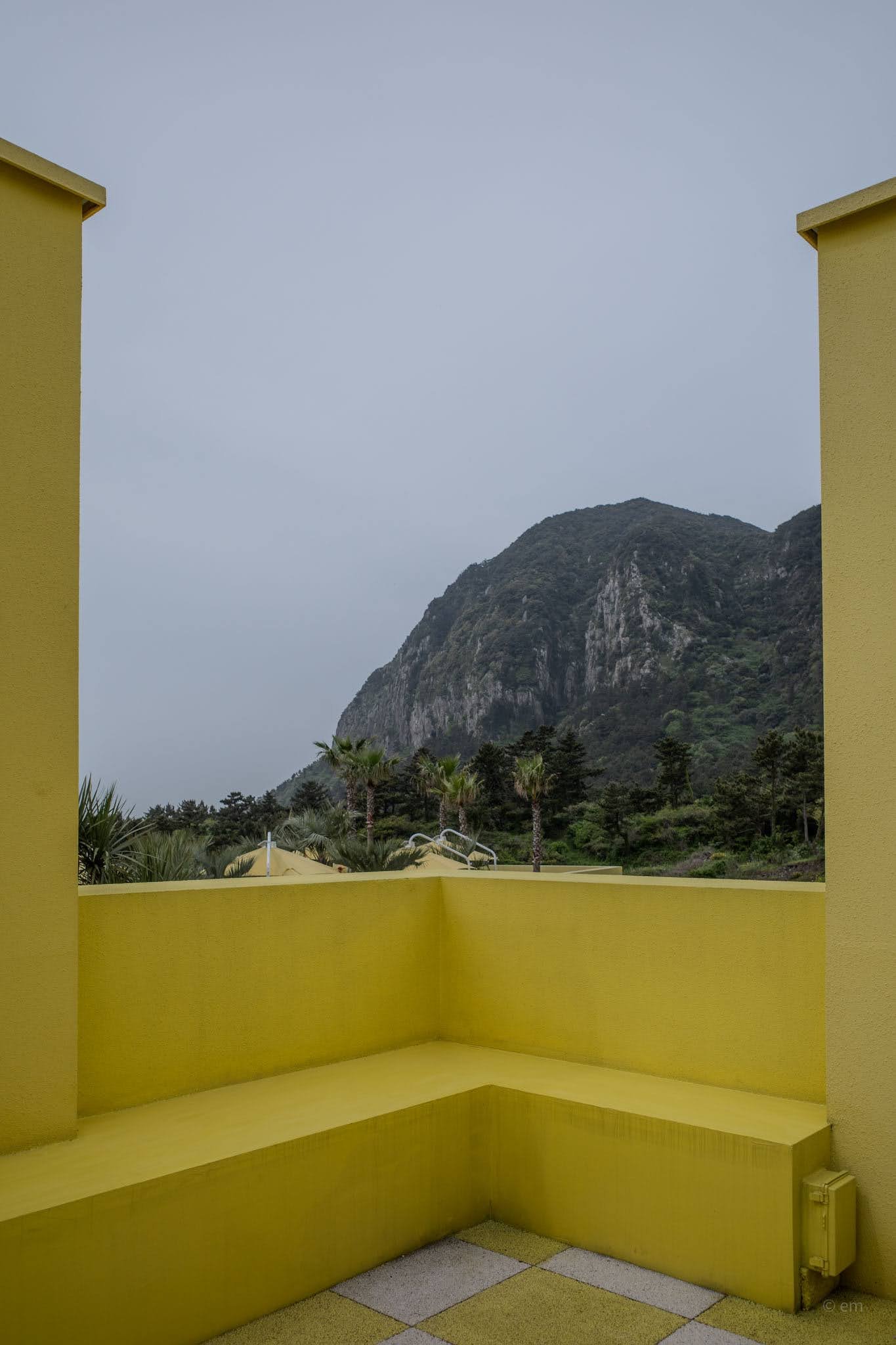
Through the arch, the building releases you entirely. The ground turns to gravel. Dracaenas and ornamental grass grow in loose clusters between tall palms, their trunks rough and close together. Yellow umbrellas on white poles mark the seating — low white chairs, nothing overhead but sky. Sanbangsan sits directly behind, filling the far end of the space with dark volcanic green. The yellow walls enclosing the garden make the mountain look framed, intentional — as if the whole compound were built around this one sightline.
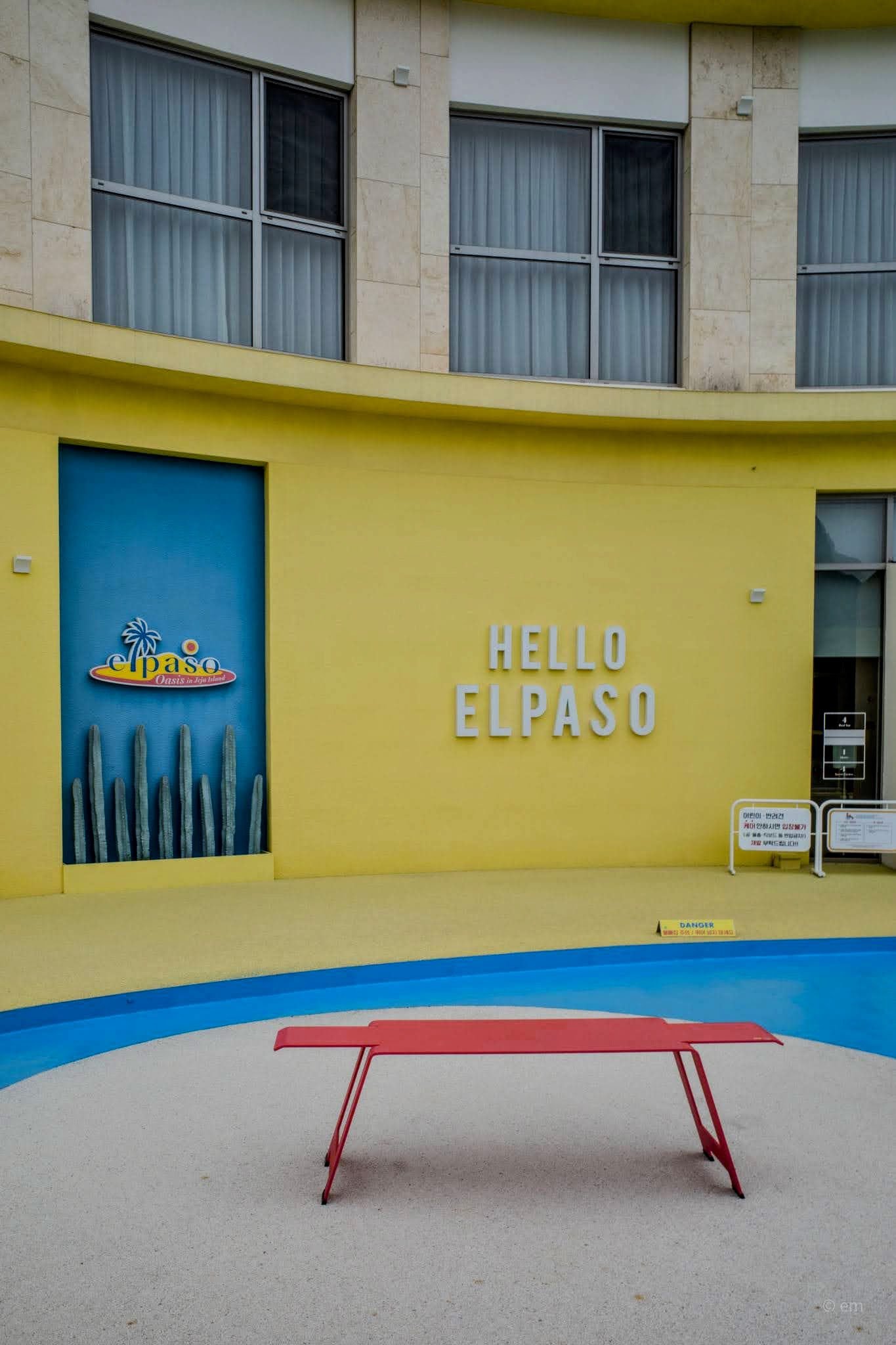
The Entrance
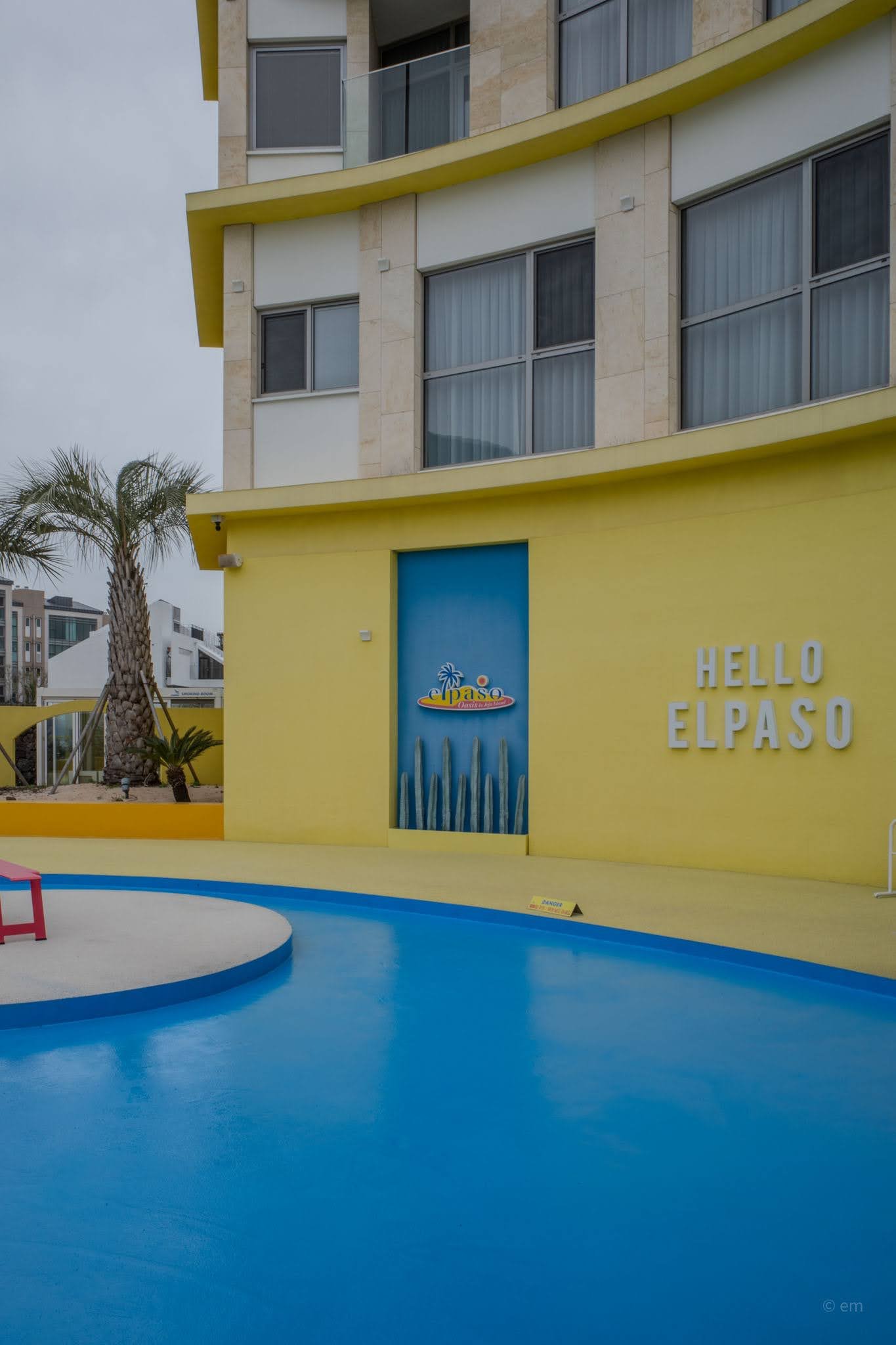
Back at ground level, facing the building’s main facade, a circular blue epoxy floor wraps around a small sandy island — a red bench at its center, “HELLO ELPASO” in block letters on the yellow wall behind it. In season, it fills with water — a turquoise circle at the base of the yellow wall, the red bench marooned on its sandy island at the center.
The Rooftop
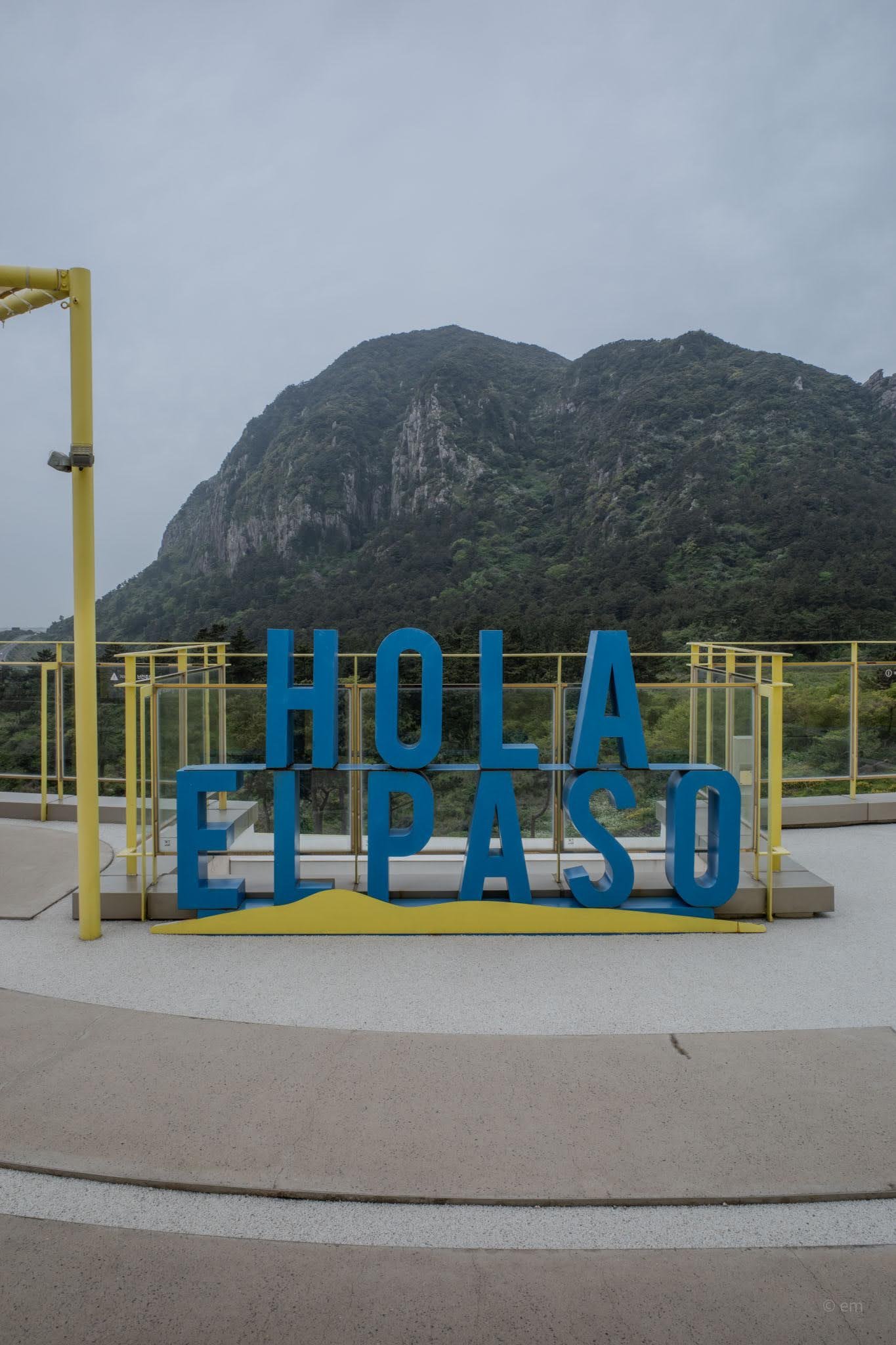
The top floor opens onto the building’s highest deck, where a 3D sign spells out HOLA ELPASO in oversized blue letters against the sky. The directional sign is here — California, Hawaii, Santorini, all of them thousands of kilometers away, all pointing in the same general direction, which is out to sea. Shade canopies on yellow-painted tube steel keep the afternoon at bay. Jeju’s southern coastline stretches below: the harbor, the pine ridge, Hyeongjeseom floating offshore in the grey water.
This is where the mountain is most present — a massive, forested plug of ancient lava sitting just behind the complex, close enough to feel like part of the design. In spring, the canola fields between the building and the road bloom the same yellow as the walls.
The Menu
The signature drink is the Hallabong Blue Coconut — fresh-squeezed hallabong (Jeju’s native mandarin hybrid) juice with a coconut finish, served cold. Jeju’s ingredients run through the menu in this way: the island’s produce folded into the resort fantasy, a reminder that the oasis is, in fact, located somewhere specific.
A note on current status: elpaso closed for renovation in late 2024 and had not reopened as of this writing. Before visiting, check their Instagram or Naver Maps for updates.
Photographically, elpaso is unusually generous. The yellow is saturated enough to anchor almost any composition — against overcast sky, against Sanbangsan’s dark volcanic green, against spring canola that matches the walls so precisely it looks staged. Every level offers a different frame: the staircase descent toward the neon sign, the mountain visible through the yellow cutout walls, the rooftop sign with the sea behind it, the blue pool circle with its lone red bench. It was built to be looked at, and it knows it.
This makes the renovation pause a particular kind of uncertainty. It’s unclear how much of what’s here survives the refresh — whether the yellow stays, whether the courtyard layouts hold, whether the neon signs come back. Spaces like this tend to renovate toward legibility, smoothing the stranger edges. Whether elpaso emerges sharper or softer remains to be seen. Worth watching the Instagram before making the trip.
elpaso: 191-43 Hwasun-ro, Andeok-myeon, Seogwipo-si, Jeju-do
Currently closed for renovation (no confirmed reopening date as of writing — verify before visiting)
Instagram: @elpasojeju to confirm / check Naver Maps
Somewhere between Texas and the tropics, Sanbangsan holds its ground.
![[Lost] Moon Landing: A Retro American-Style Cafe in Bogwang-dong](https://hiddencollector.thesensitiveways.com/wp-content/uploads/2026/03/R0013789-200x300.jpg)