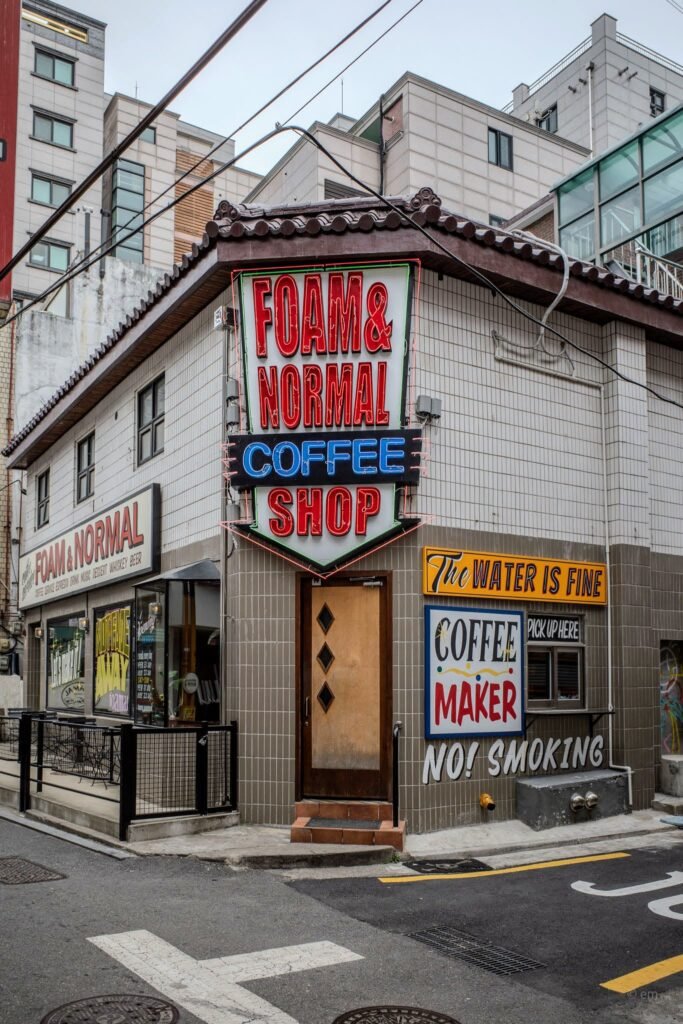
It looks like a corner of America got quietly dropped into a Sillim back alley and decided to stay.
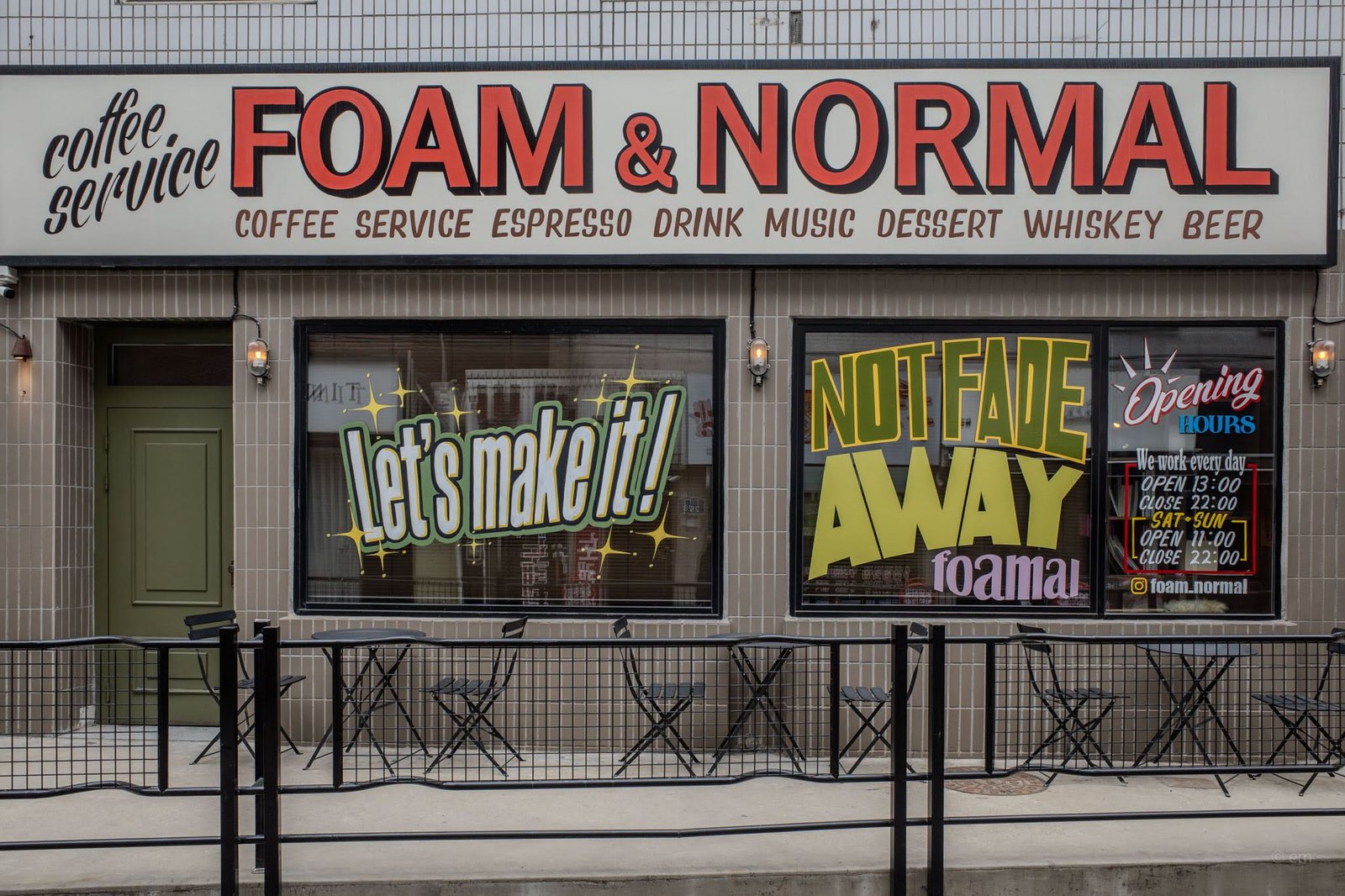
Not every neighborhood expects to be surprised. Sillim — wedged between the university belt and Seoul’s best-known exam-prep district — runs on routine: study halls, convenience stores, the low hum of deferred ambitions. Foam & Normal doesn’t fit that script. Its corner neon sign, blazing red and blue against the tile-faced building, announces itself from a block away, and the painted-glass slogans facing the street — Let’s make it! in looping green lettering, Not Fade Away in bold yellow block — read like a declaration rather than a come-on.
The Corner That Stopped You
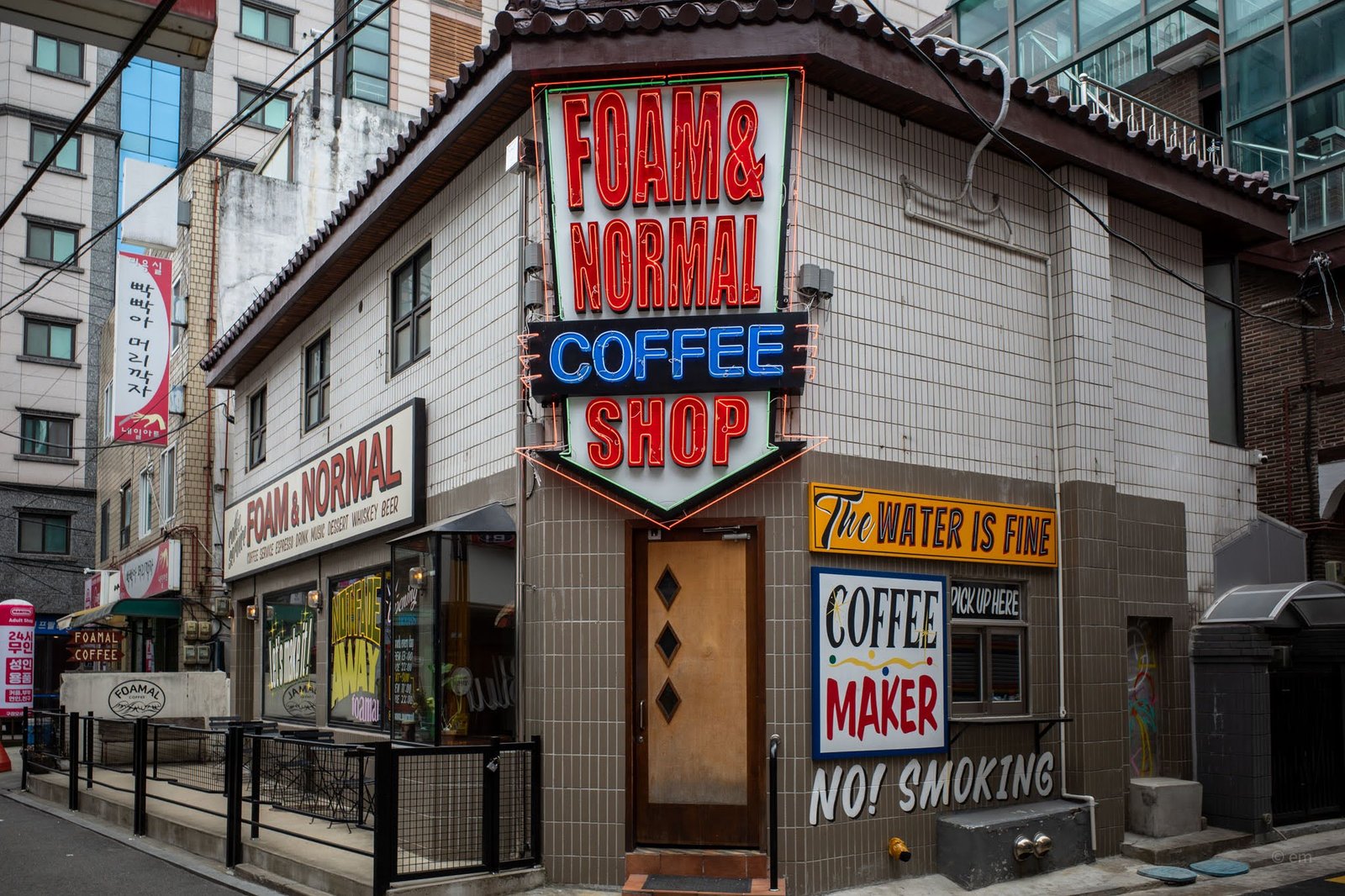
The building occupies a corner lot in the lanes behind Sillim Station, and whoever designed the exterior understood that corners are performances. The main fascia runs the full width: big red block letters spelling FOAM & NORMAL on a cream-and-black horizontal sign, followed by a secondary line listing coffee, espresso, music, dessert, whiskey, beer — everything you might want from a place that takes its own mood seriously. Around the side, a takeout window labeled Coffee Maker / Pick Up Here is surrounded by hand-painted signage, including a yellow banner reading The Water Is Fine. It’s the kind of exterior that makes you stop mid-step to check if you’re still in Seoul.
The neon pentagonal sign mounted above the entrance — Foam & Normal Coffee Shop in red tube letters with a blue Coffee insert — is the centerpiece, visible from the alley approach and lit against the overcast sky with the satisfying weight of something that took commitment.
The window lettering is hand-painted and has been redone at least once; the words stay, the design changes.
The First Floor: Dial It Back to 1972
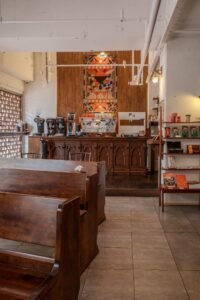
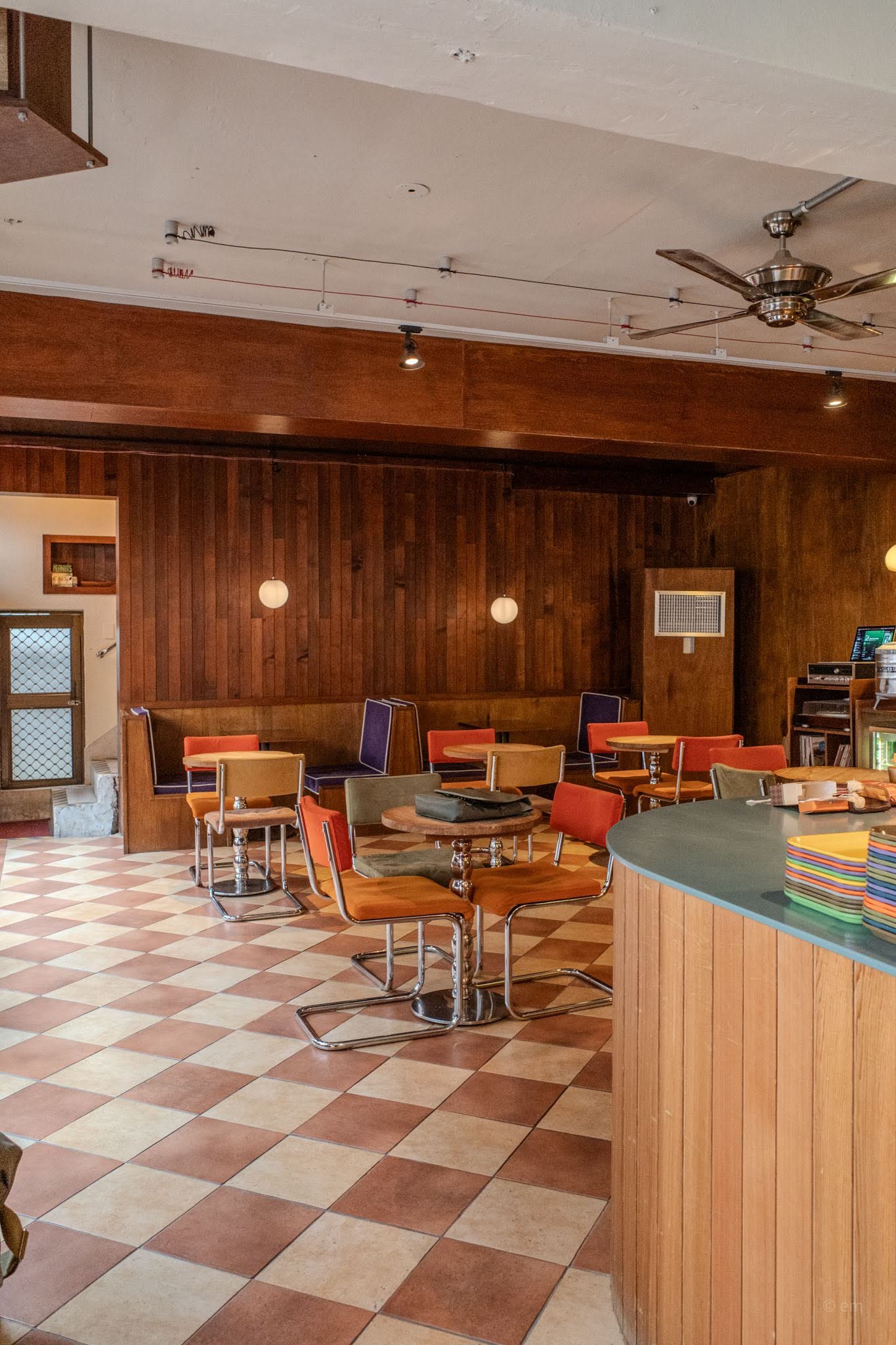
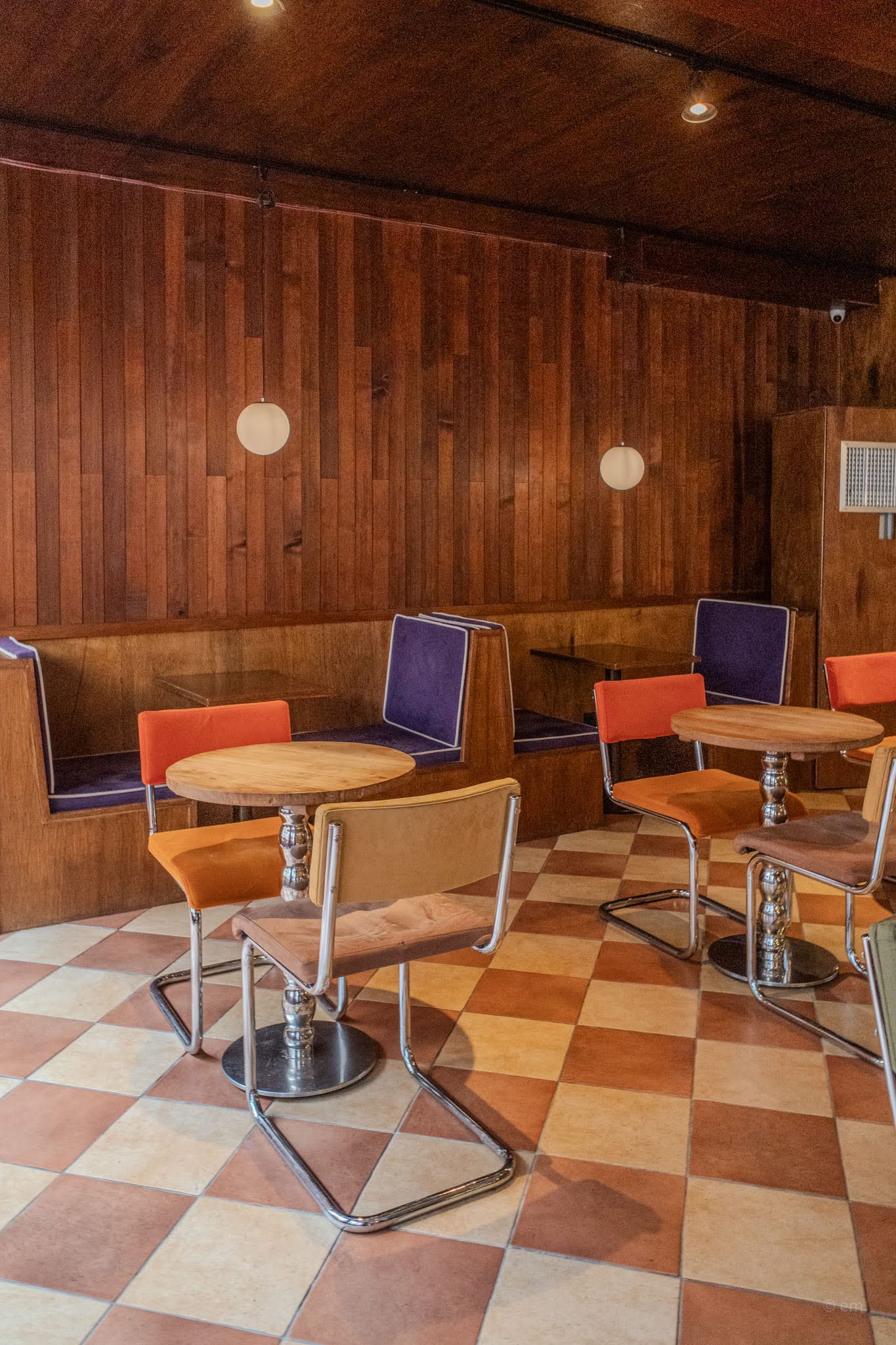
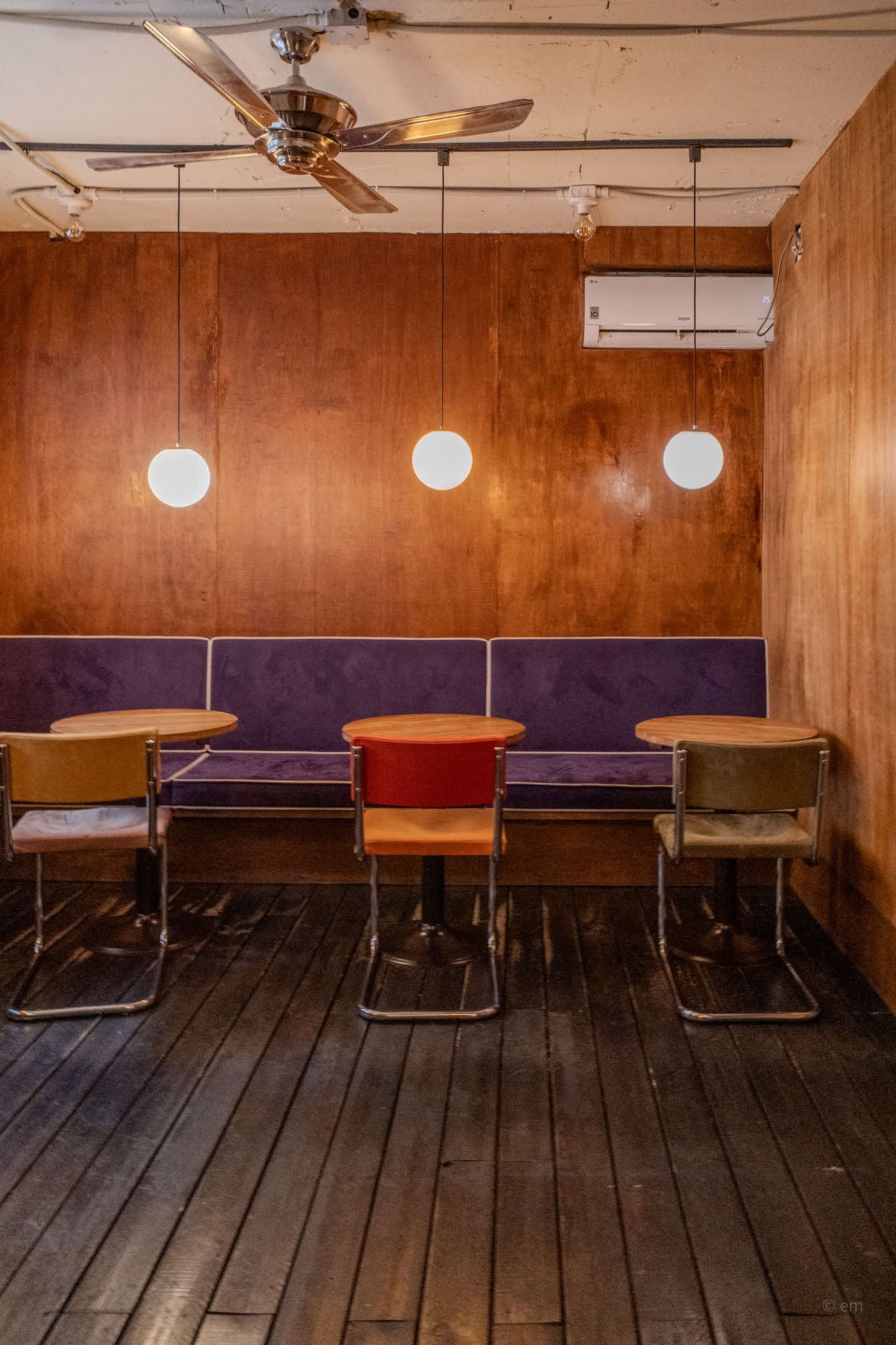
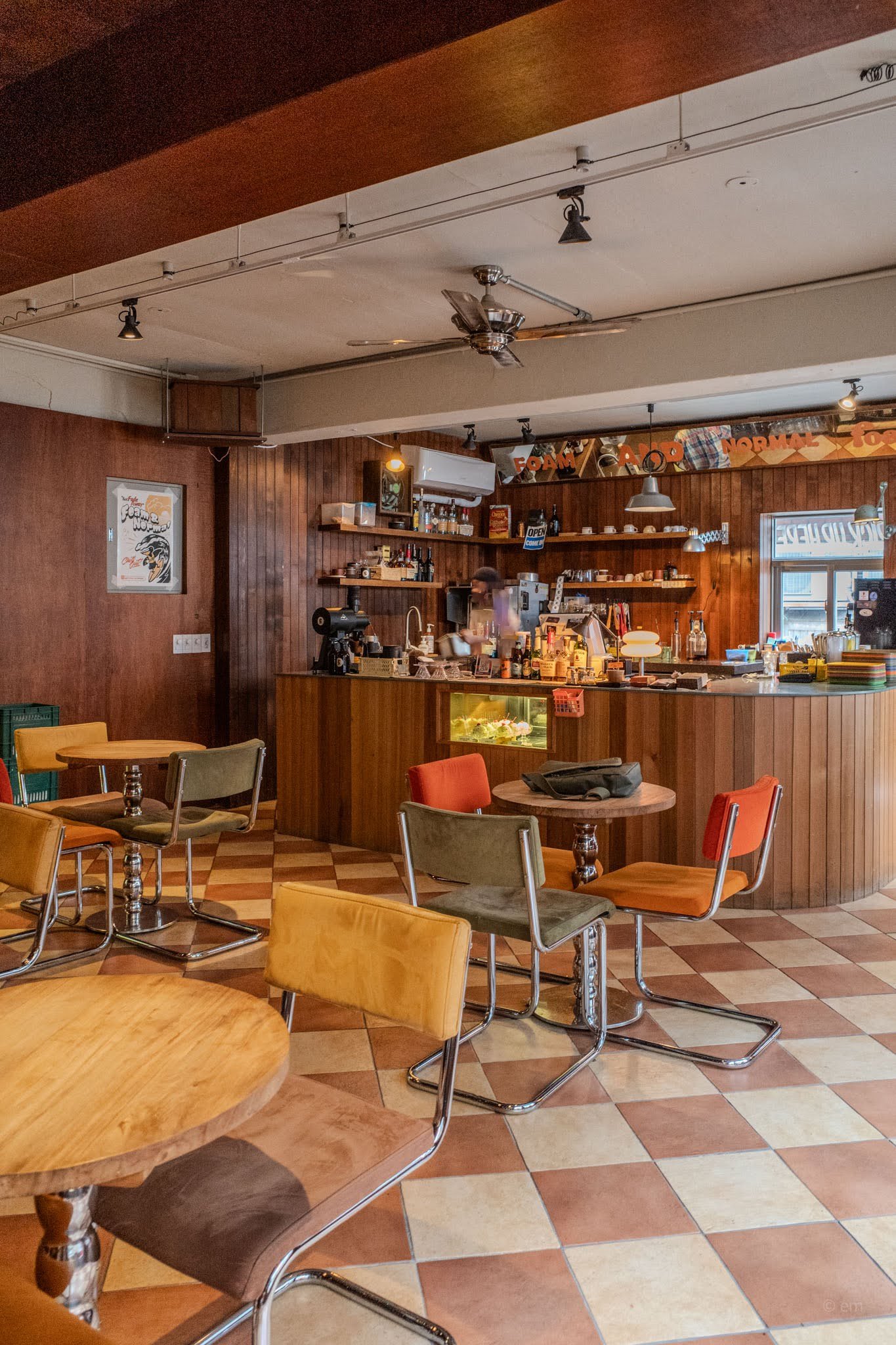
Step inside and the aesthetic lands immediately. The ground floor is all dark wood paneling from floor to ceiling, the walls dressed in vertical planks the color of old bourbon. A terracotta-and-cream checkerboard floor runs the length of the space, the diamond orientation giving it a mild visual bounce. The chairs are chrome-legged cantilever frames upholstered in orange, olive, and tan — mismatched by design, unified by era — arranged around round wooden tables with turned pedestal bases. Along one wall, a continuous purple velvet banquette lines the booth seating. A ceiling fan turns slowly overhead. The overall effect is somewhere between a 1970s supper club and a roadside American diner, but executed with the kind of specificity that signals genuine enthusiasm rather than pastiche.
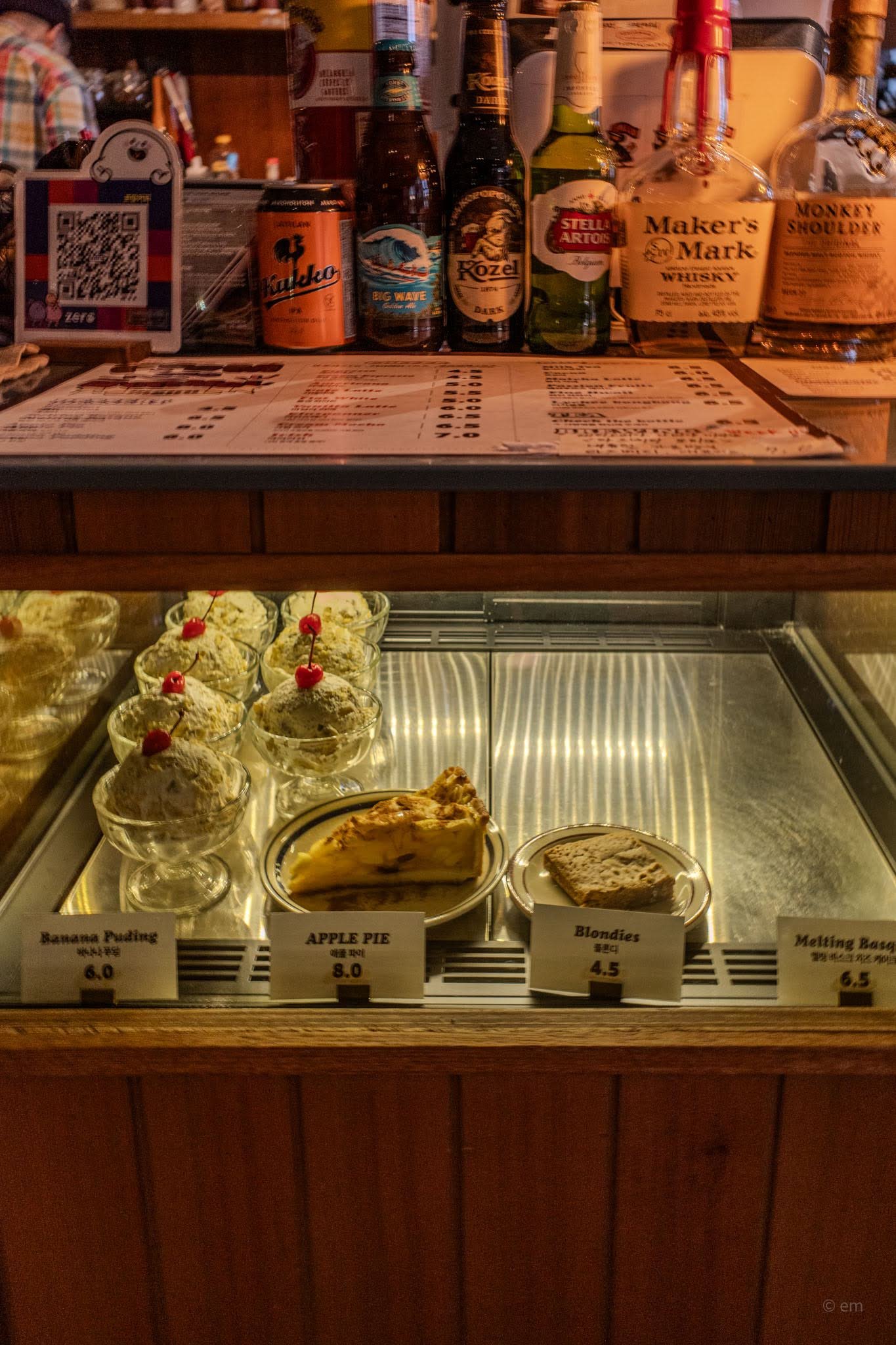
The bar counter curves at one end, surfaced in slate-toned stone over wood cladding. Behind it, open shelves hold bottles of Maker’s Mark and Monkey Shoulder alongside craft beer cans and the usual espresso paraphernalia. A glass dessert case below displays the day’s offerings with labeled placards: banana pudding in coupes topped with maraschino cherries, slices of apple pie, blondies, melting basque cheesecake. There’s a vinyl record setup visible toward the back wall. The music, whatever it is, suits the room.
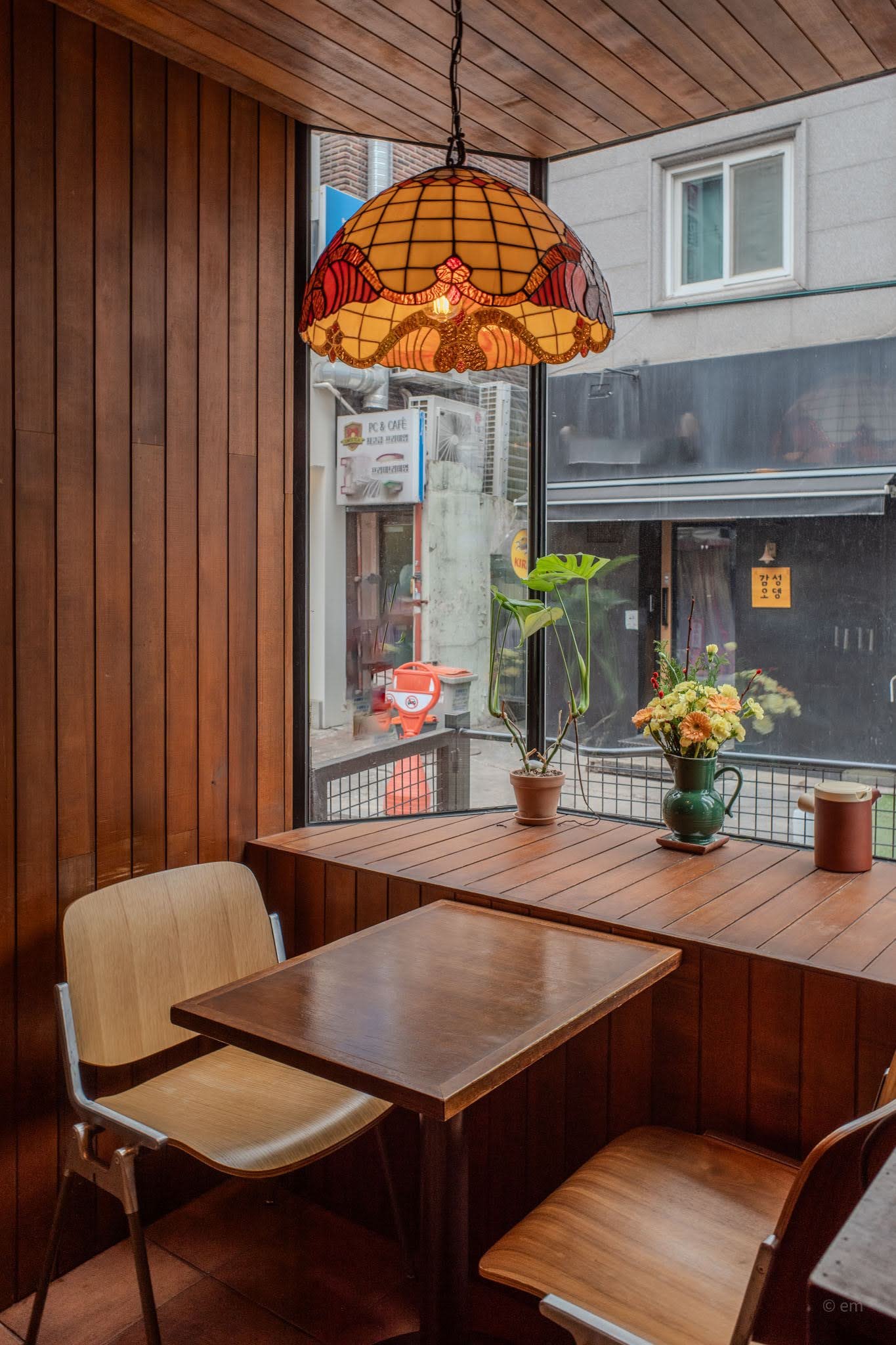
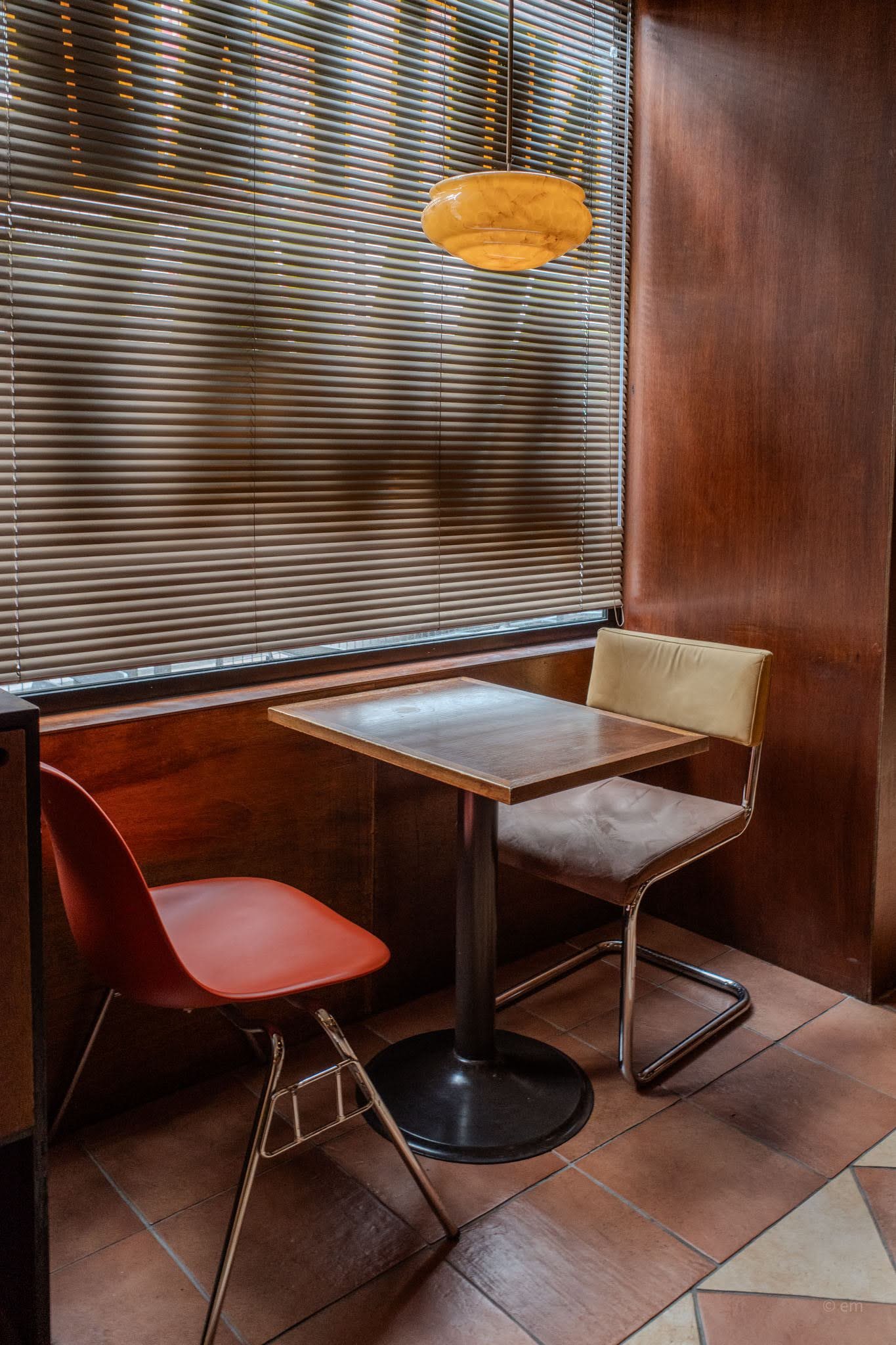
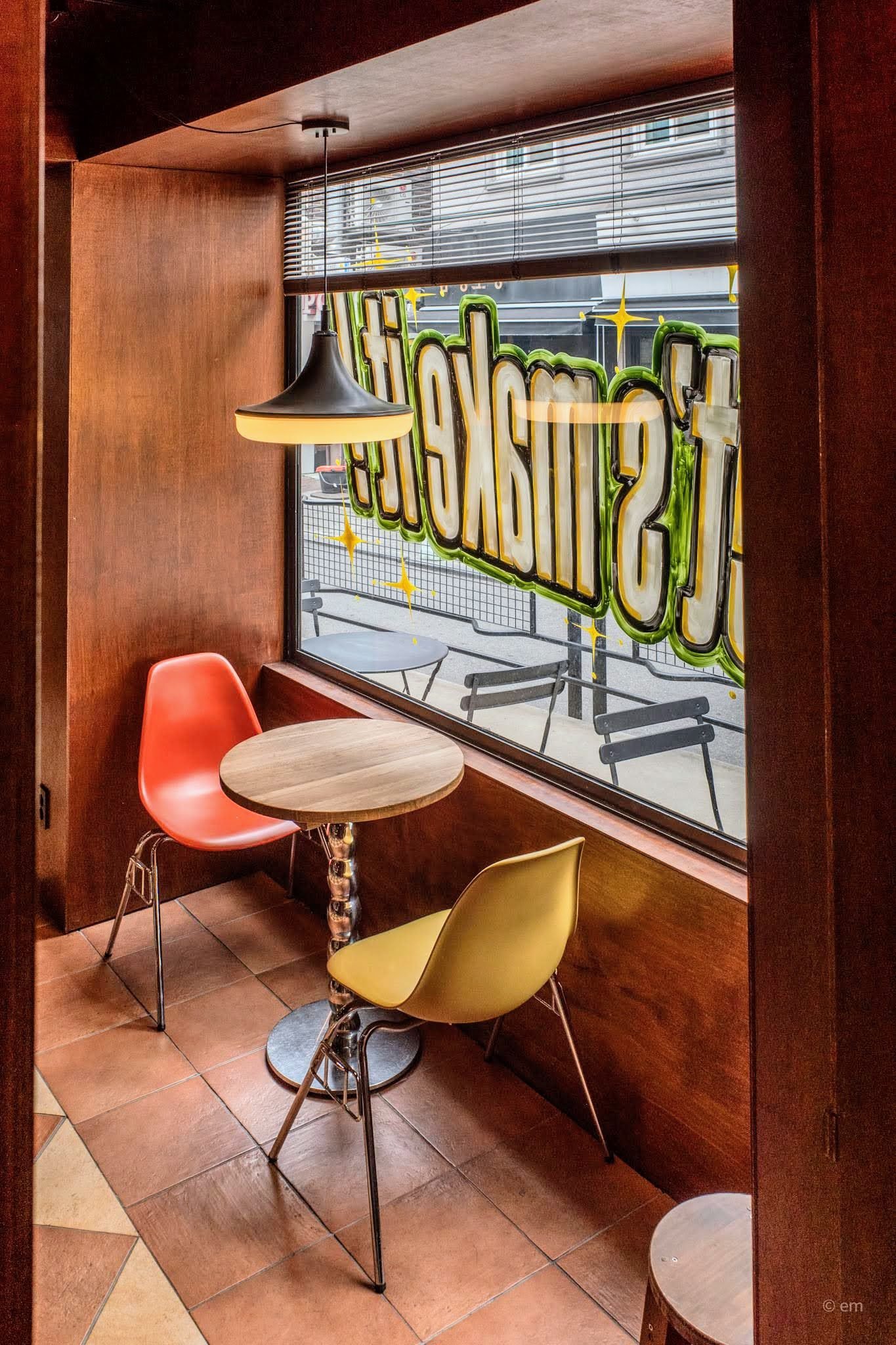
Tucked near the street-facing windows are a handful of two-seater spots: one beneath a stained-glass pendant lamp — amber and red in an art nouveau floral pattern — looking out onto the narrow terrace and alley beyond; another small alcove with an orange and yellow shell chair set, the reversed window lettering of Let’s make it! framing the view from inside.
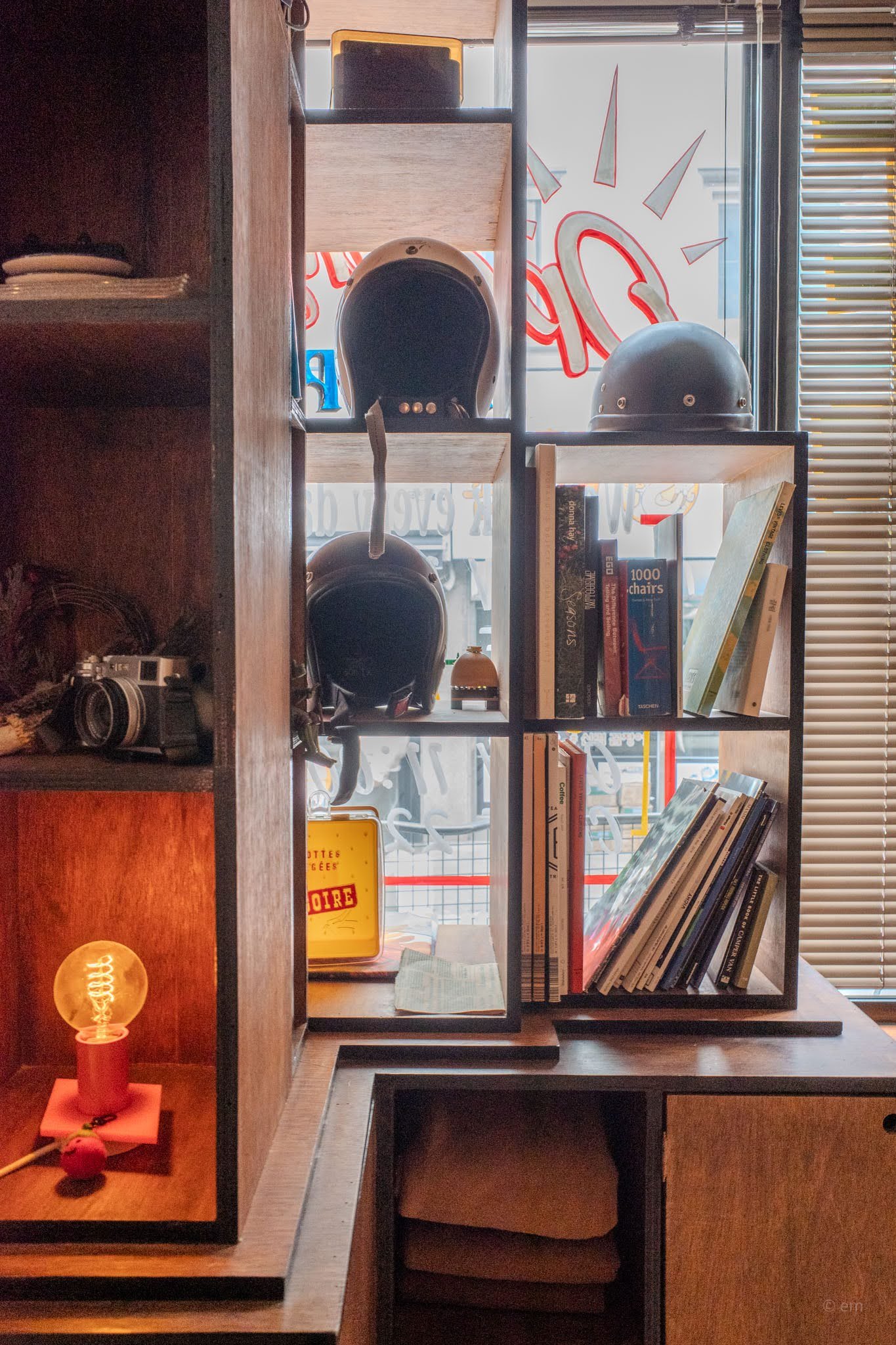
A shelving unit near the windows holds motorcycle helmets, design books, and a film camera on a side shelf — the kind of collected objects that feel personal without being curated into sterility.
The Second Floor: Quieter, Rougher, Stranger
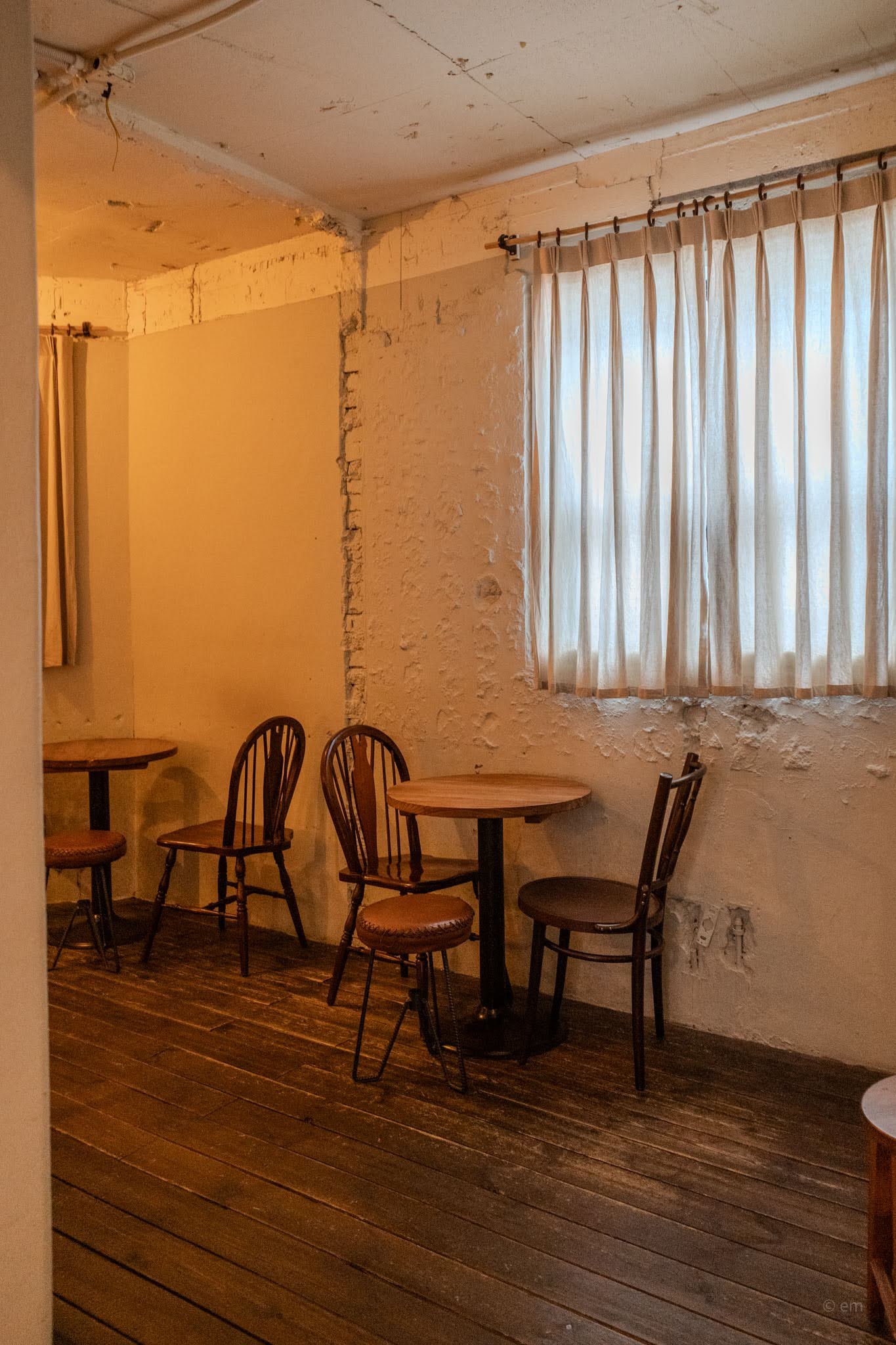
The second floor is a different proposition entirely, and the contrast is one of Foam & Normal’s best ideas. The stairs lead up into a converted house interior: wide wooden-plank floors, whitewashed brick along the upper walls, exposed pipes, the kind of room geometry that doesn’t quite make sense until you remember it used to be someone’s home. The light here is warmer, lower, more lamp-dependent.
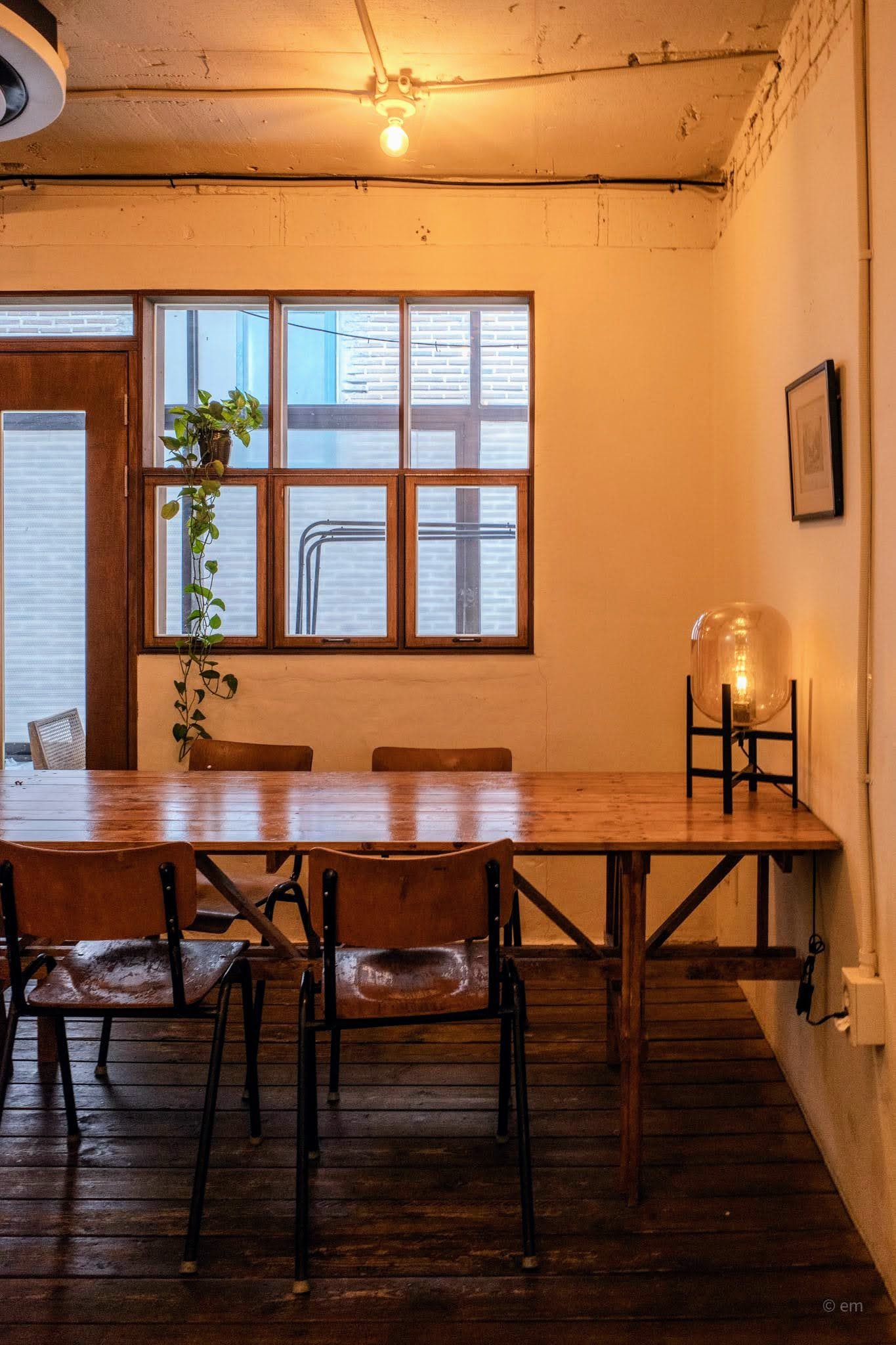
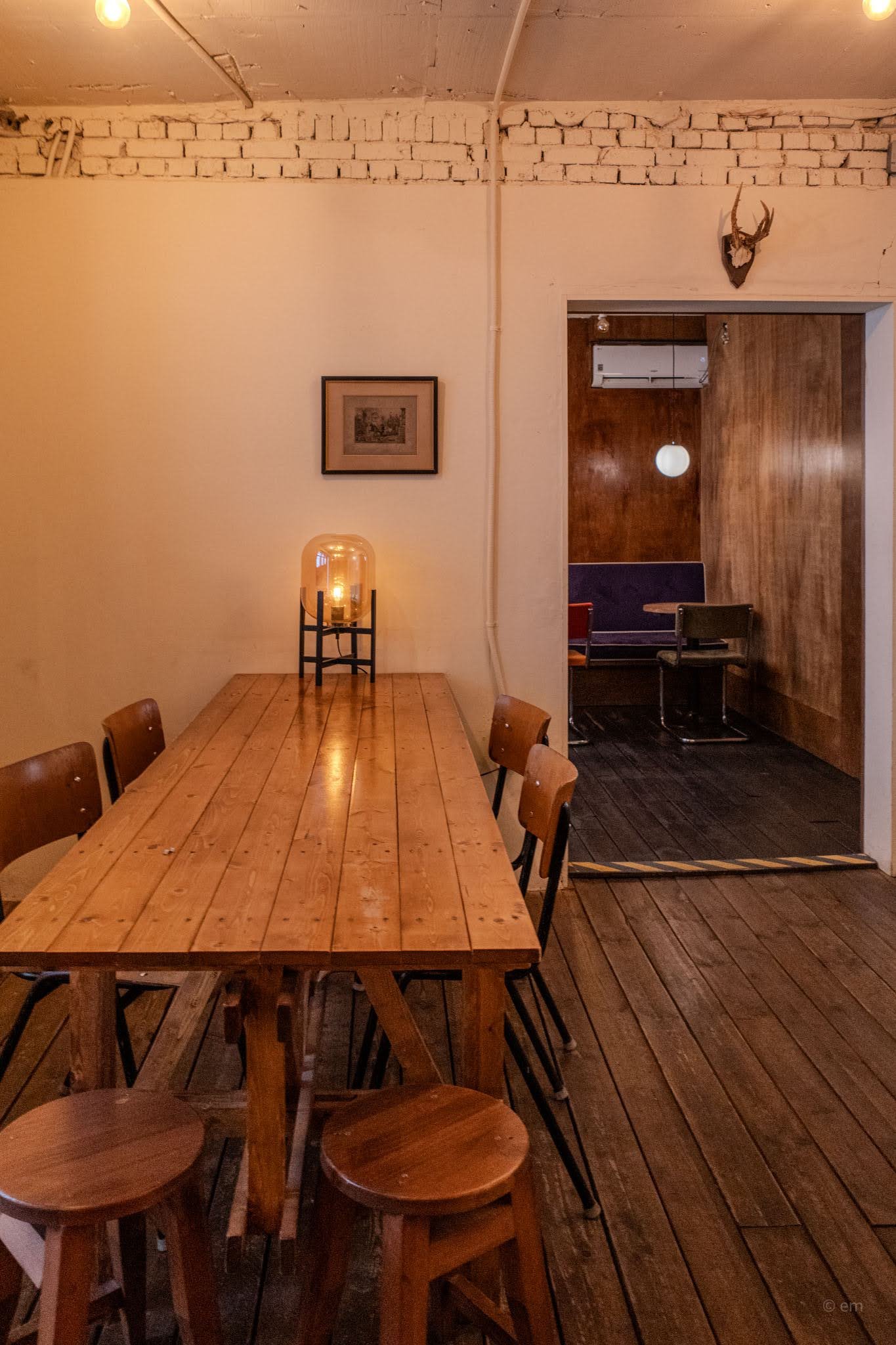
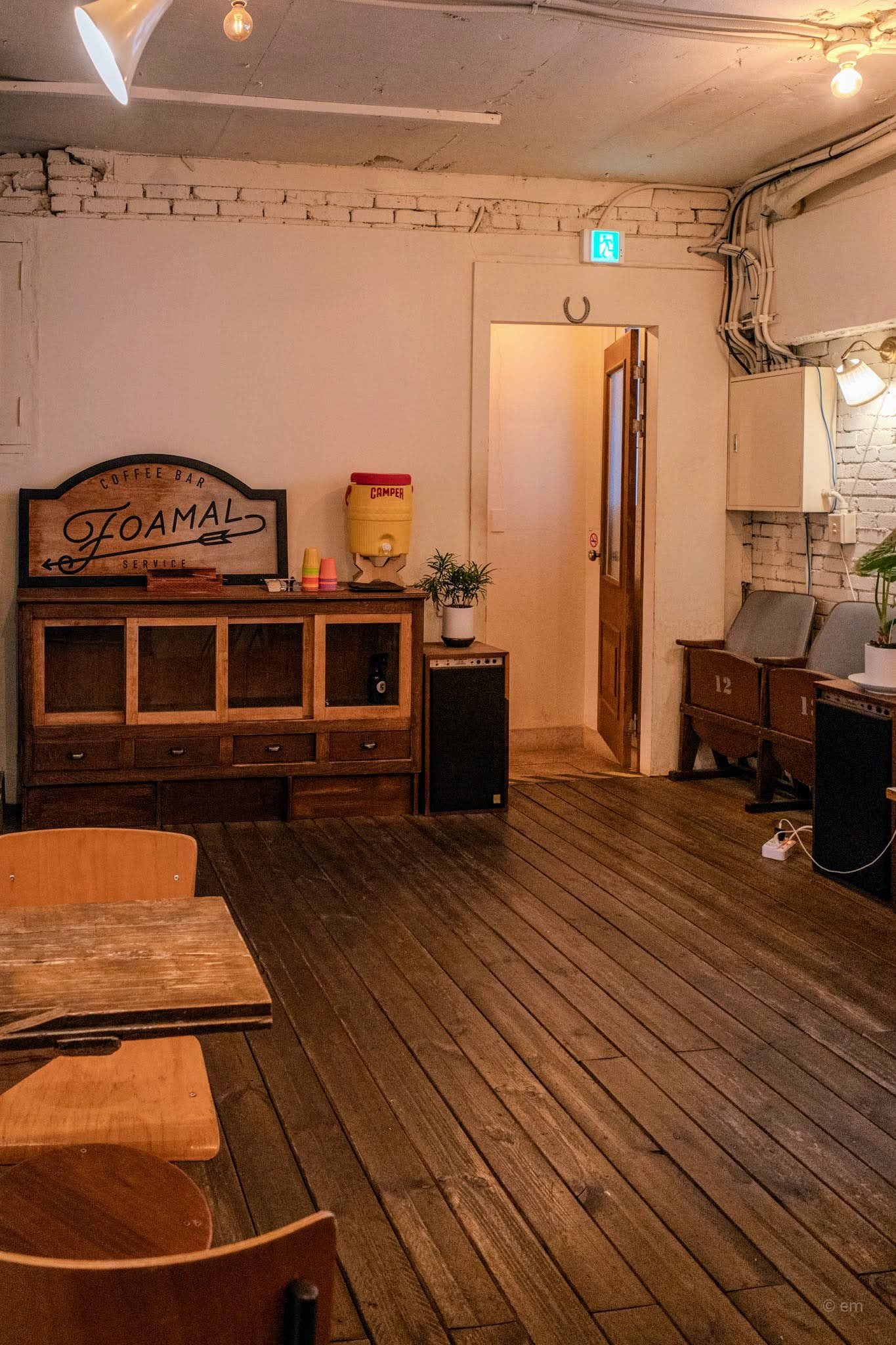
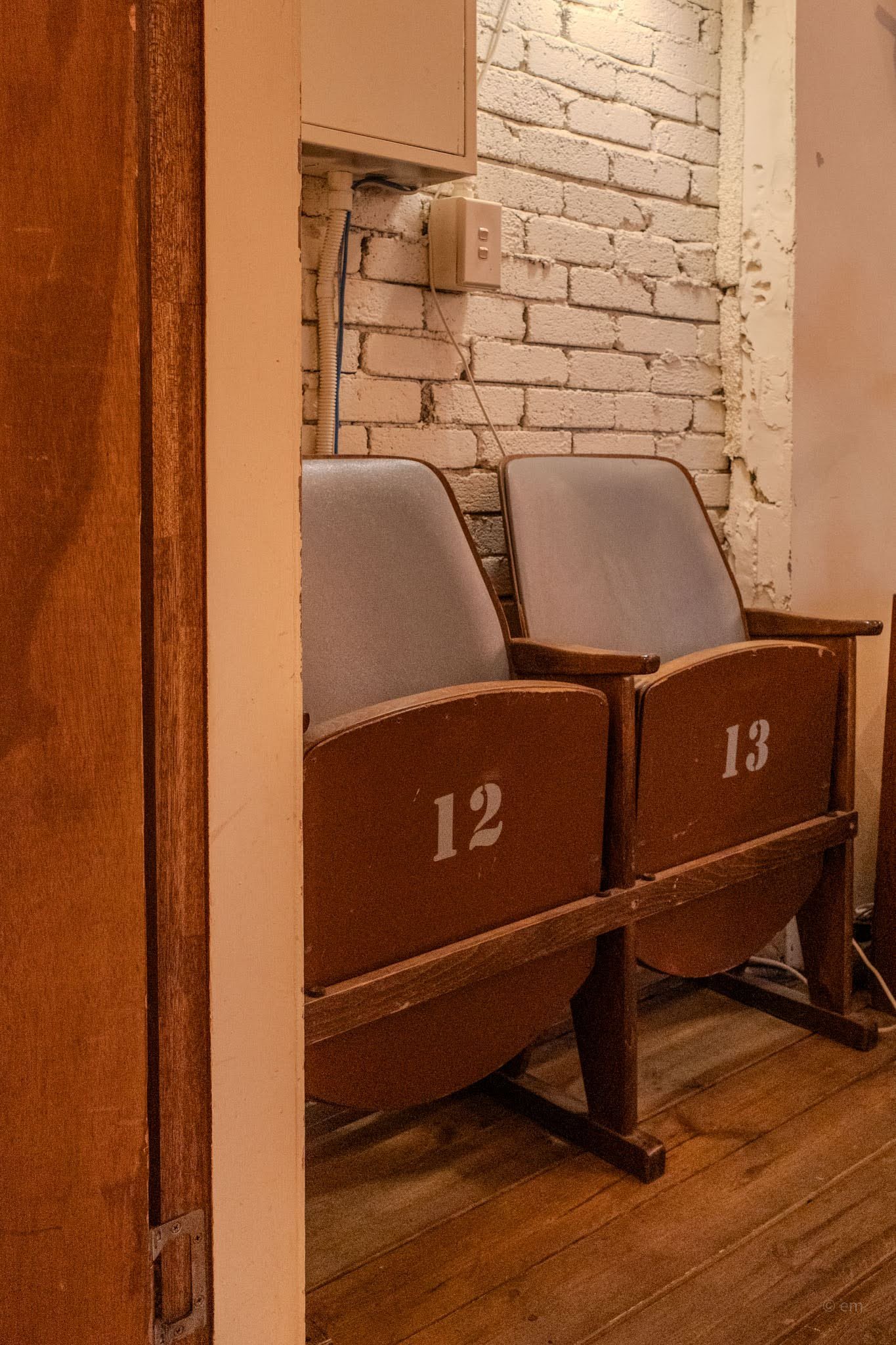
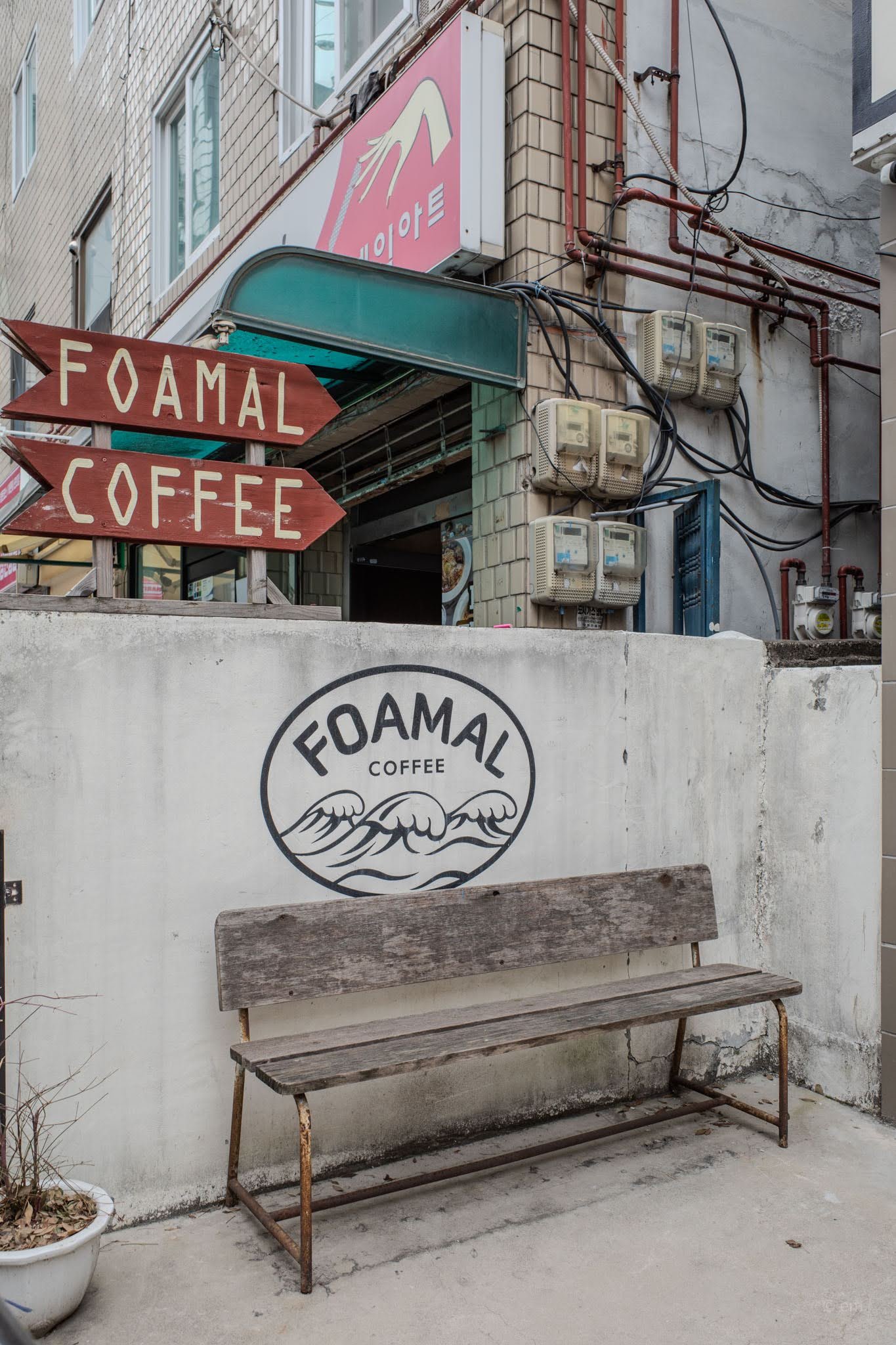
A large open room connects to a series of smaller enclosed spaces through doorways. The main area has a long communal table surrounded by worn school chairs, a glass-globe pendant lamp on a metal stand, and a window with a grid of wooden panes. A hand-painted Foamal Coffee Bar Service sign hangs above a wooden sideboard. Old cinema seats, numbered twelve and eleven, are tucked into one corner. A guitar amp sits nearby. The overall feeling is of a space that accumulated its furniture gradually and kept what worked.
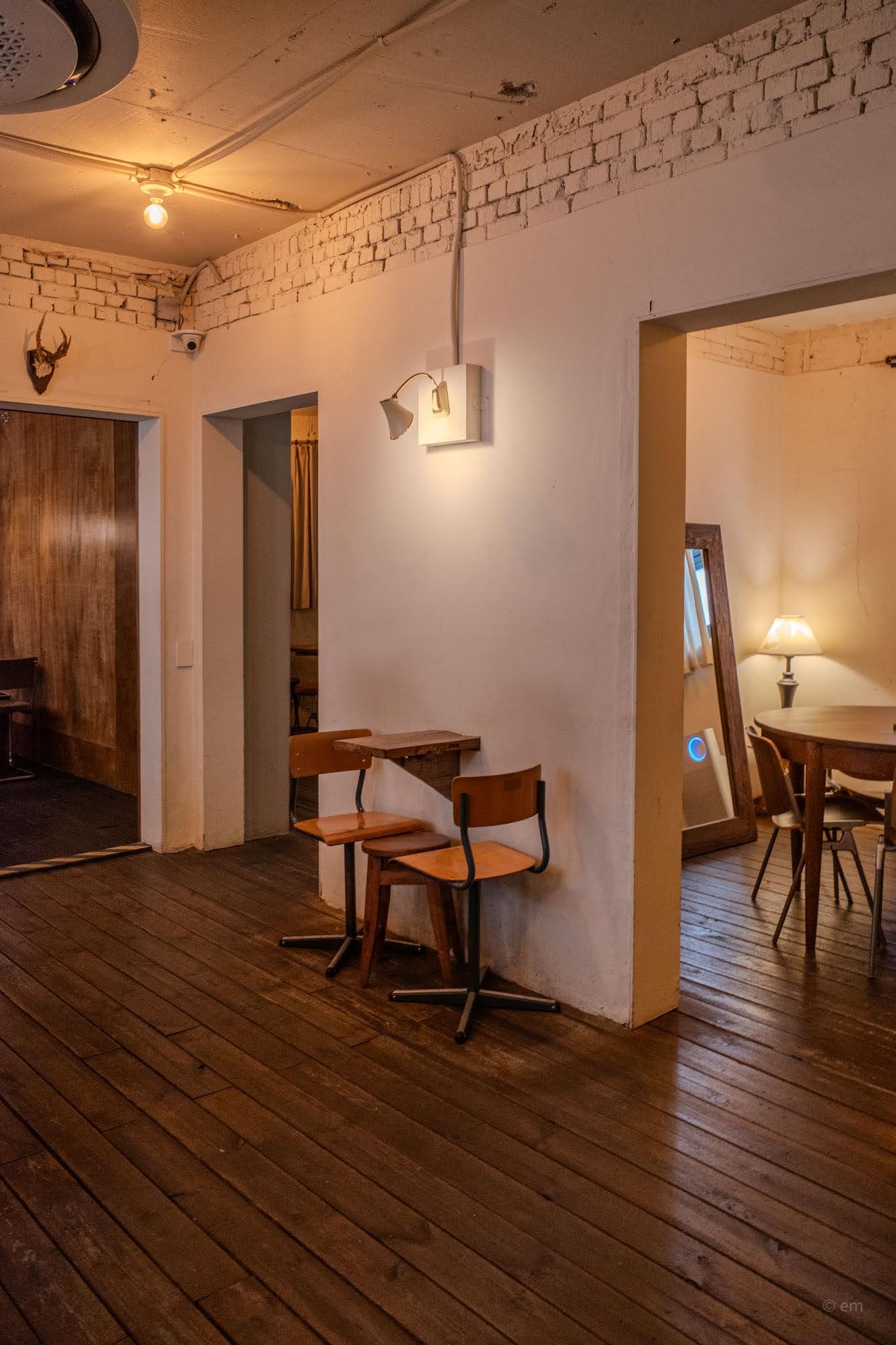
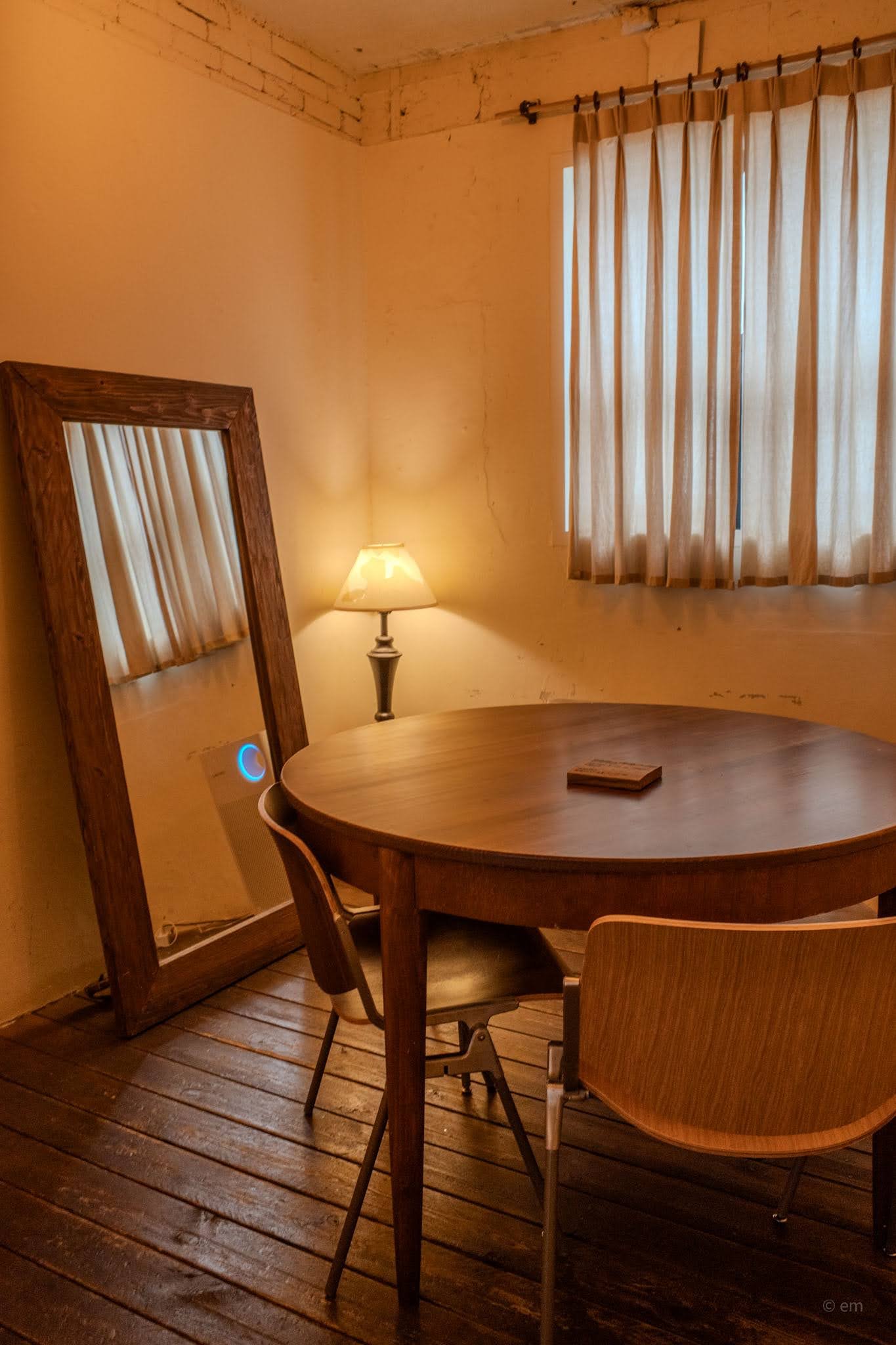
Off to one side, a quieter anteroom opens onto a private alcove: a round dining table, two chairs, a standing floor mirror in a wood frame, a table lamp casting a low amber pool. Linen curtains filter the window. It reads almost like a motel room — in the best possible sense, meaning unhurried, slightly anonymous, free of expectation.
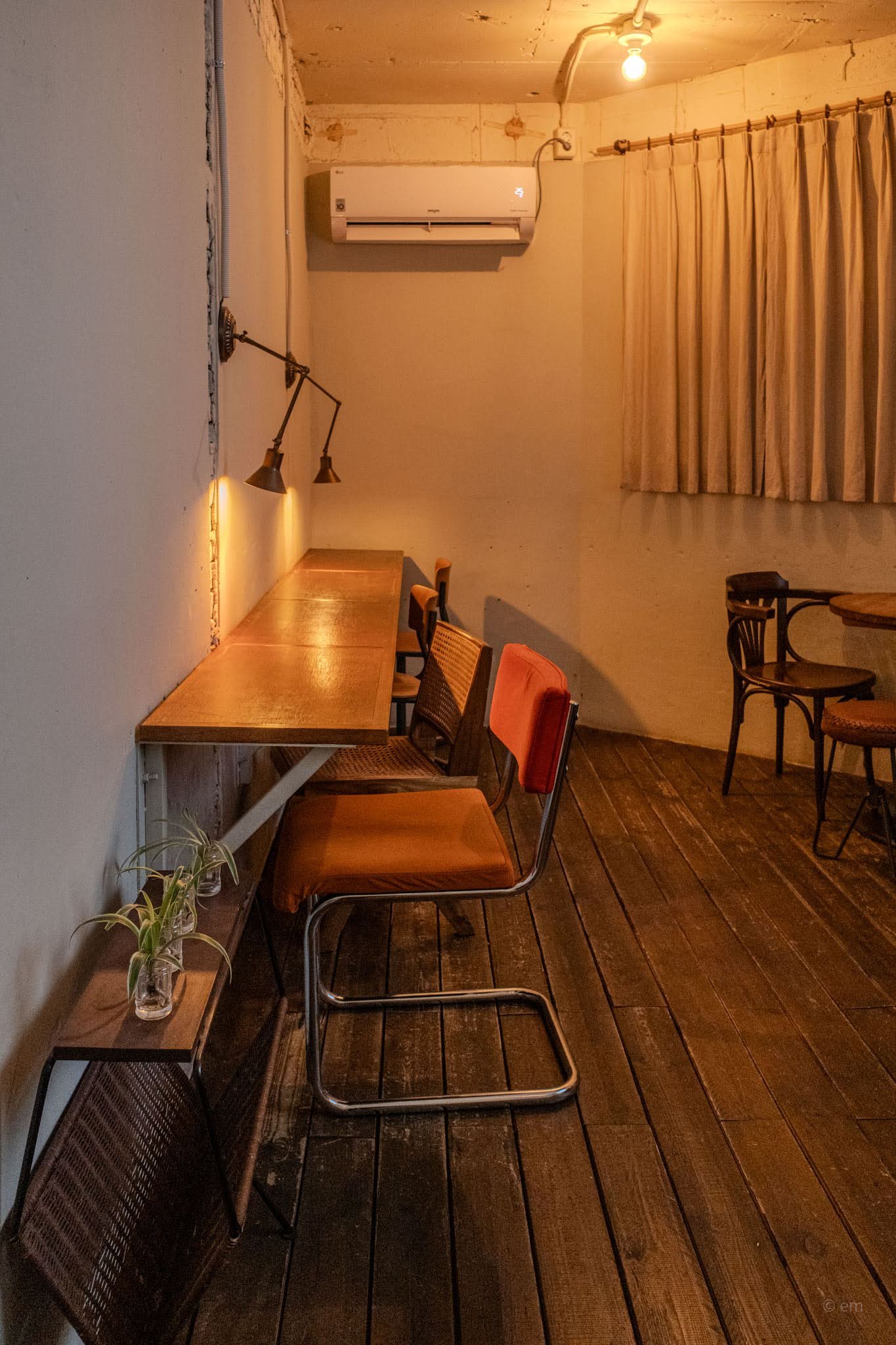
Another section features a long wall-mounted desk with cantilever chairs and task lamps, facing into the room rather than out. Thonet-style bentwood chairs cluster around a small table in the corner. The second floor is noticeably quieter than the first, though this isn’t a study space — the music follows you upstairs, and the room is designed for settling in rather than switching on. Foam & Normal sits squarely in Sillim’s 고시촌, but it isn’t part of that ecosystem. It belongs to a different kind of afternoon entirely.
Menu
The drinks menu covers espresso-based coffee, non-coffee options, and a short alcohol list that includes whiskey pours and bottled beer. Desserts from the first-floor display case are the kitchen’s signature — the banana pudding, served in a glass coupe with cherry, has a strong following — alongside apple pie, blondies, and the rotating basque. Prices sit in the mid-range for Seoul café standards.
Foam & Normal | 폼앤노말
Address: 25 Sillimro 67-gil, Gwanak-gu, Seoul (신림로67길 25, 관악구) — 5 min walk from Sillim Station (Line 2) Exit 6
Hours: Weekdays 13:00–22:00 / Weekends 11:00–22:00
Instagram: @foam_normal
Two floors, two different decades, one building that doesn’t belong in this alley — and is entirely at home in it.