Forty kilometers north of Seoul, there’s a strip of street where the signs are in English, the clubs still glow with neon, and the whole thing feels like it arrived from somewhere else entirely.
Dongducheon doesn’t come up on most Korea travel itineraries. It’s not photogenic in the obvious way, not polished, not particularly easy to explain. But the Bosan-dong neighborhood — rebranded in recent years as Camp Bosan — is one of the stranger and more quietly fascinating places you can reach on Seoul’s subway Line 1, and it’s worth the hour-long ride north for anyone curious about what American military presence actually leaves behind.
The Ville
Six U.S. Army camps occupied the Dongducheon area after the Korean War, and what began as a small village eventually grew large enough to be promoted to an official city in 1981. The neighborhood just outside the main gate of Camp Casey — the largest of those installations — developed entirely around that presence. For decades, American soldiers called it the “TDC Ville,” a name that stuck long after the city’s romanization changed from Tongducheon to Dongducheon. Camp Casey itself started as a tent village in 1953, named after Major Hugh Boyd Casey, killed in a plane crash near the camp site during the Korean War.
The ville’s economy and character were shaped almost entirely by the base next door. Clubs, bars, clothing stores catering to American sizing, hair salons, fast food joints: the whole strip existed to absorb the off-duty hours and paychecks of the soldiers rotating through. U.S. currency earned in Dongducheon was not insignificant to the Korean economy in the 1960s and 70s, and the city grew accordingly — not as a typical Korean city but as something shaped by an outside force it had little control over.
After the Drawdown
The departure began gradually and then all at once. Until the early 2000s, around 20,000 people — including American soldiers, their families, and civilian workers — lived in Dongducheon, fueling a vibrant local economy. Then came the large-scale relocation of U.S. forces south to Camp Humphreys in Pyeongtaek, deployments to Iraq, and a sustained reduction that left the city in a kind of slow-motion economic crisis. Over 70 percent of businesses dependent on the U.S. military presence have closed, and today Camp Casey houses only a few thousand personnel — a fraction of its former population.
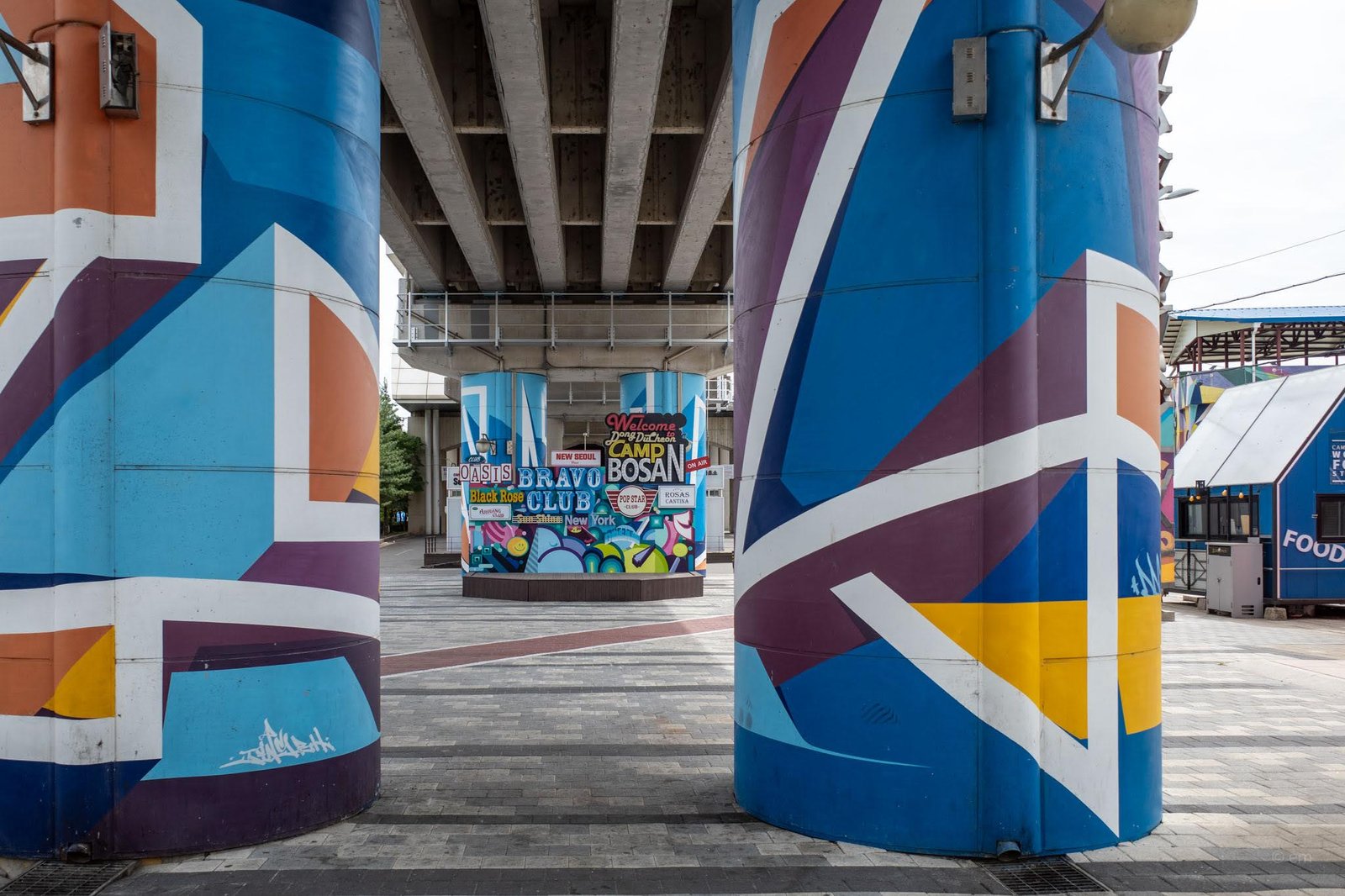
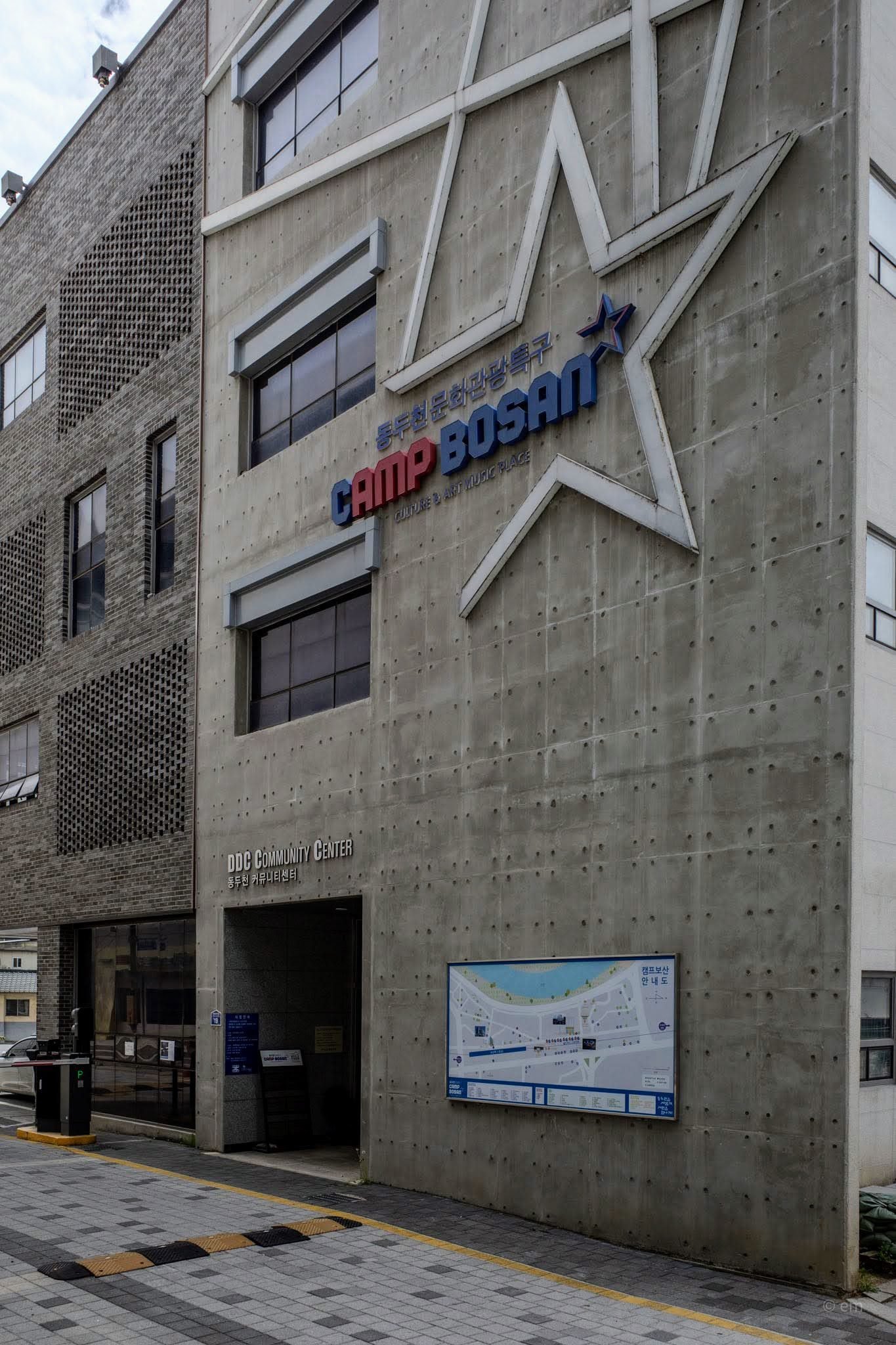
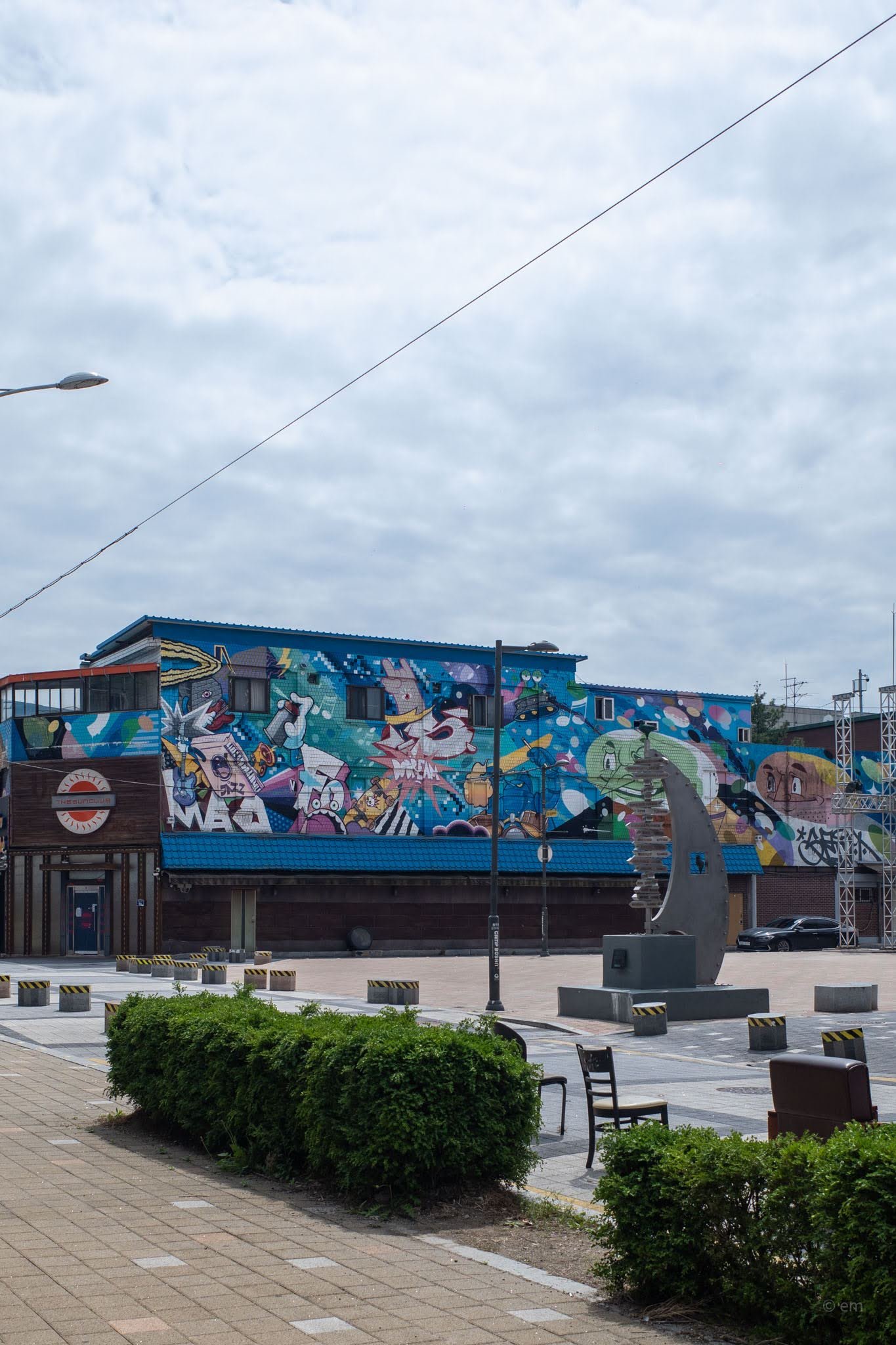
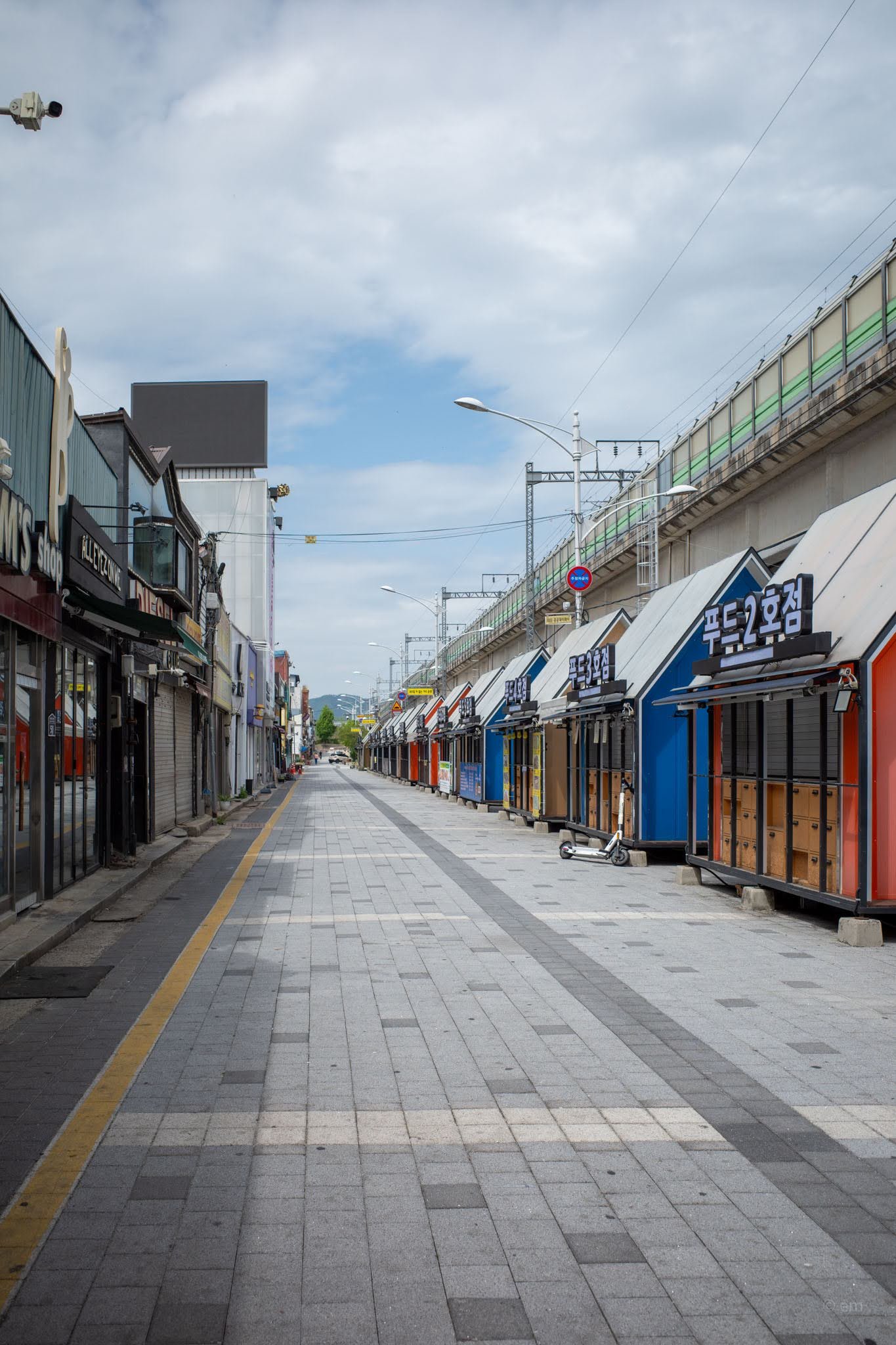
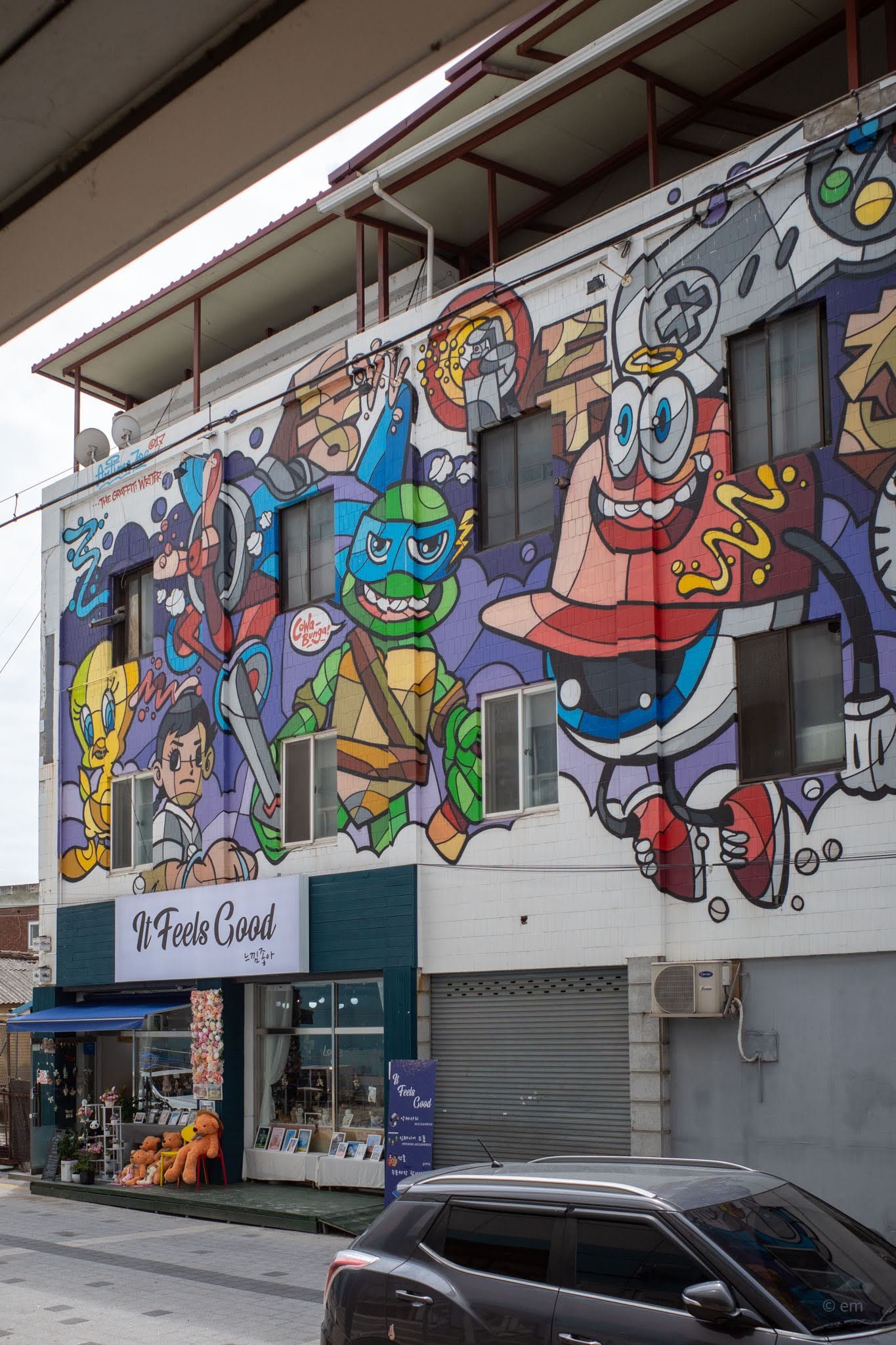
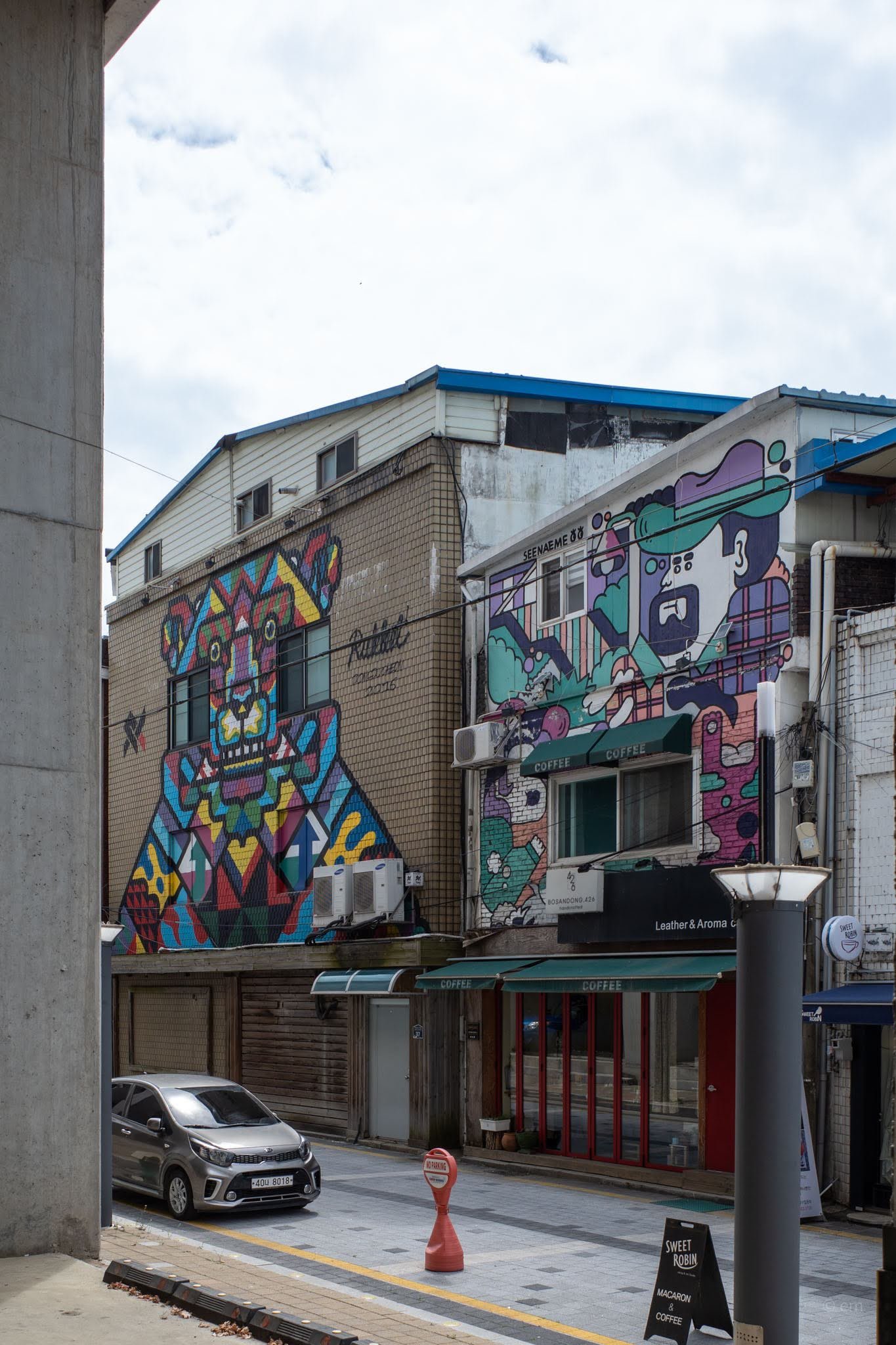
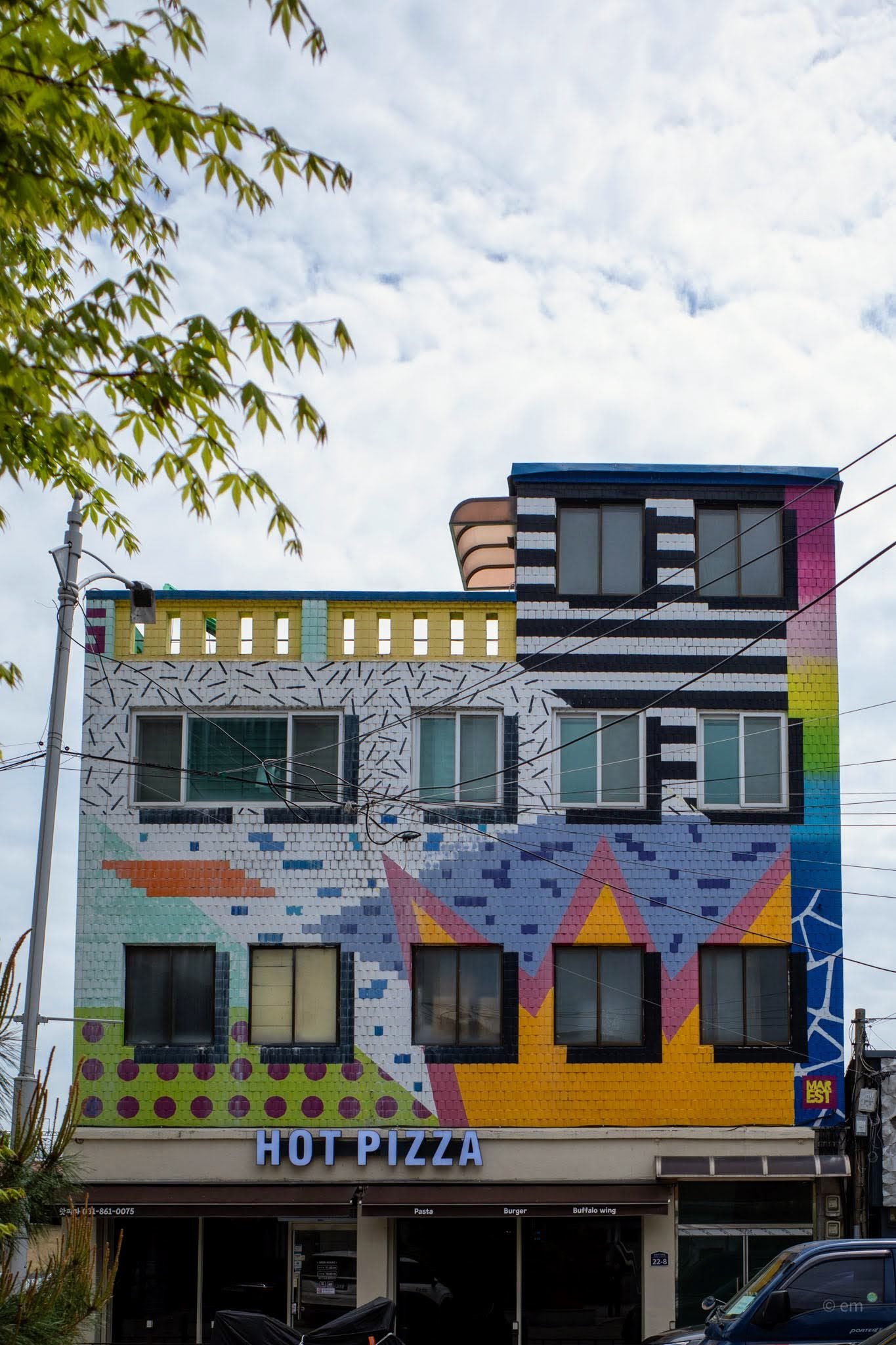
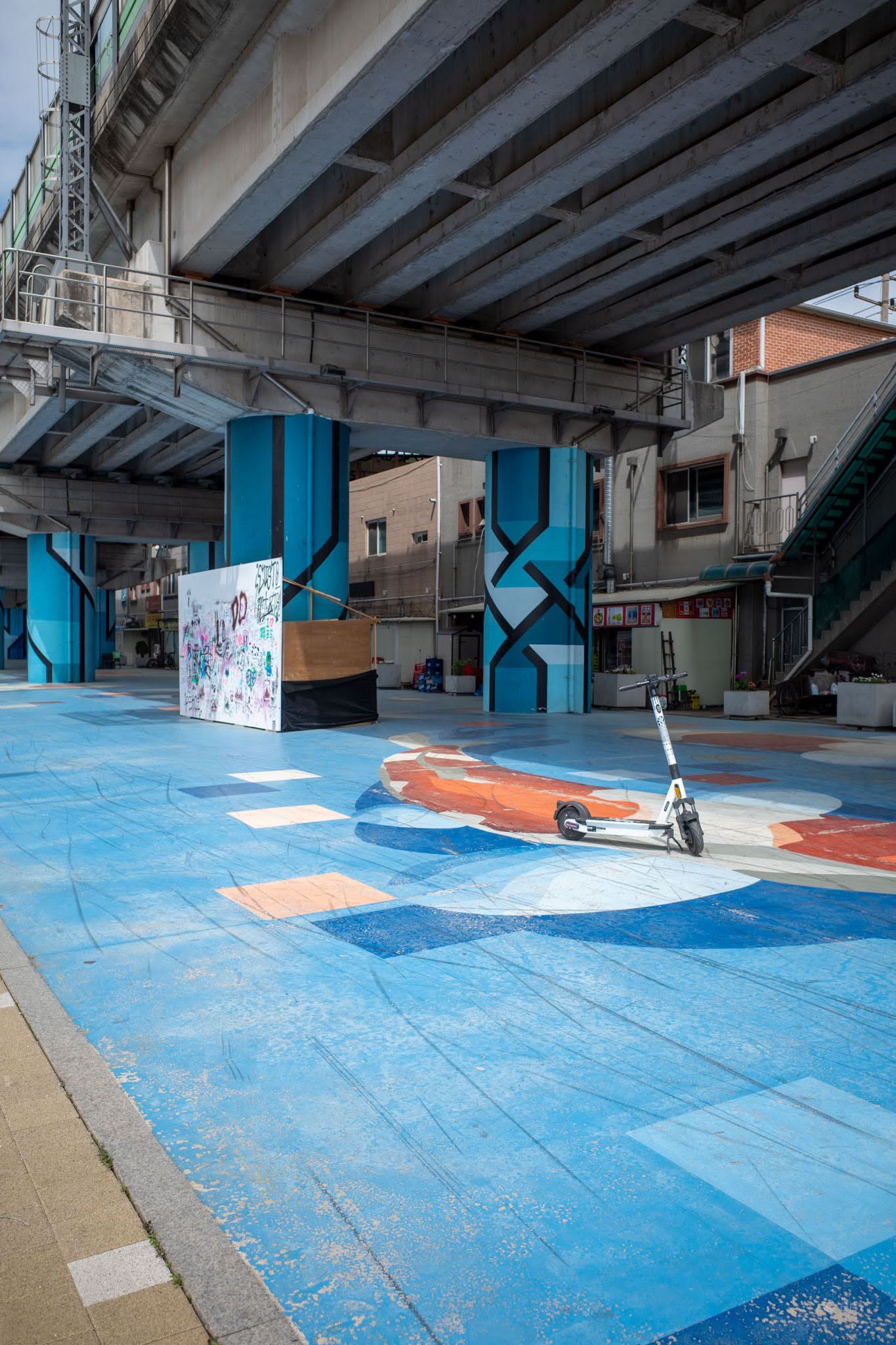
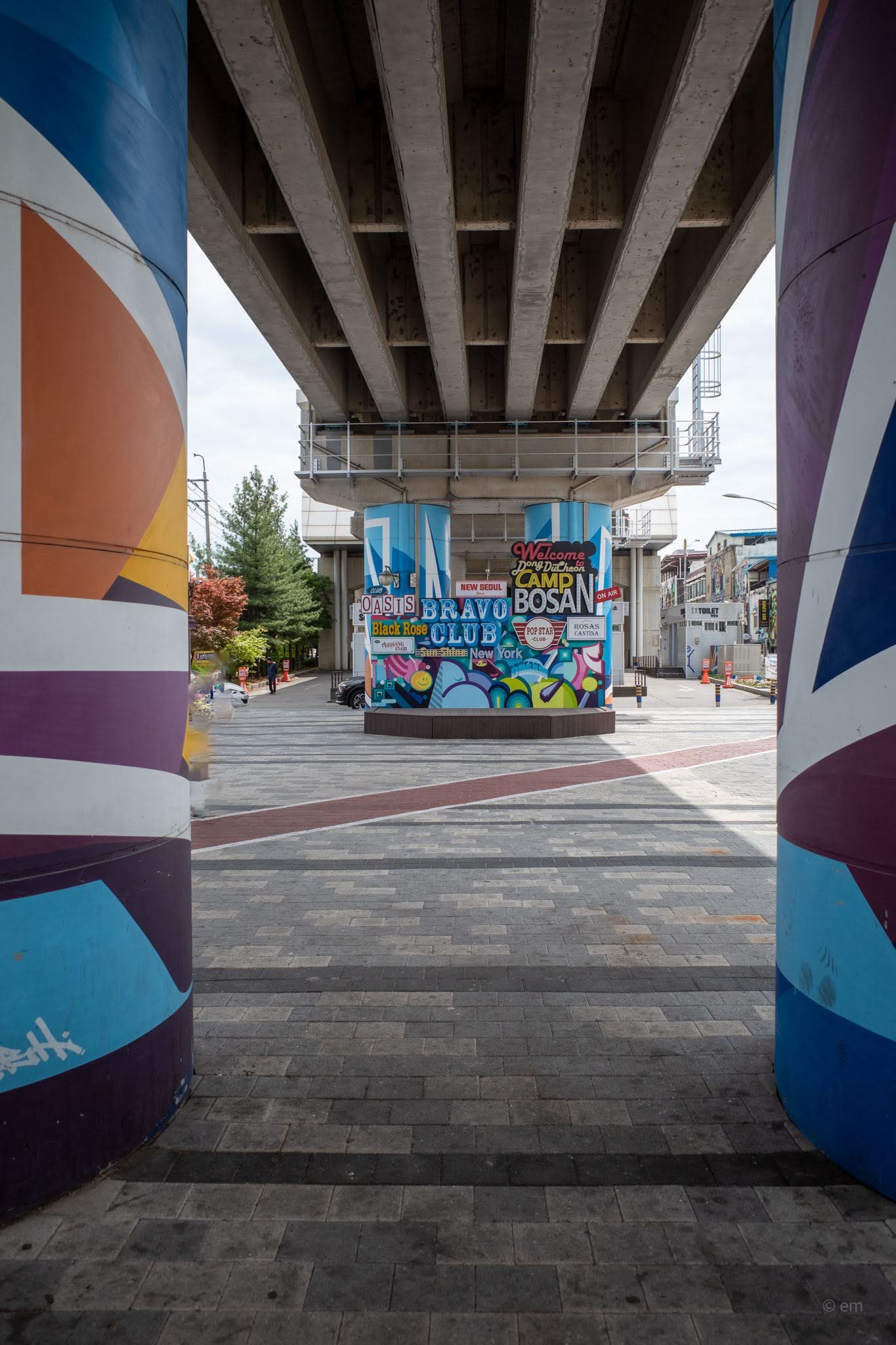
The city’s response was to try to make the neighborhood’s strangeness into an asset. The area was designated as a Foreign Tourist Zone in 1997, and in recent years the name “Camp” has been reframed to stand for “Culture & Art Market Place.” A public art project run by the Gyeonggi Cultural Foundation between 2015 and 2019 brought in street artists from Italy, Russia, Thailand, Denmark, and elsewhere, transforming the elevated subway pillars that bisect the neighborhood into large-scale painted canvases. The result is a pedestrian corridor under a concrete overpass that’s become, somewhat unexpectedly, the most visually striking part of the whole area.
What Bosan-dong Looks Like Now
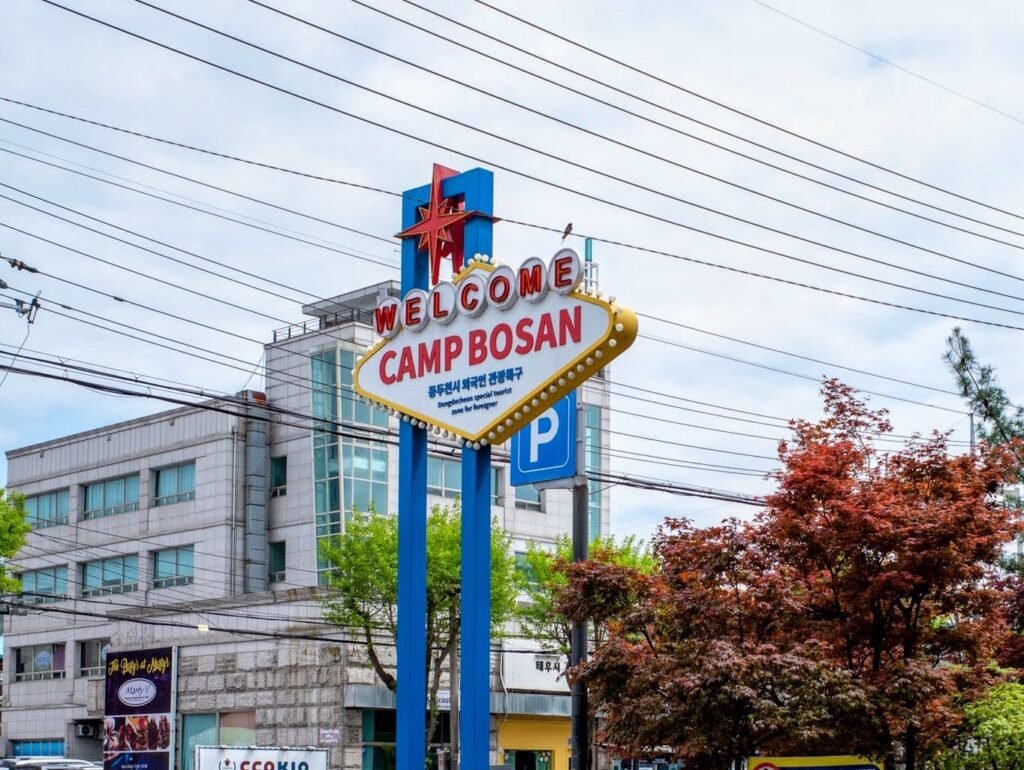
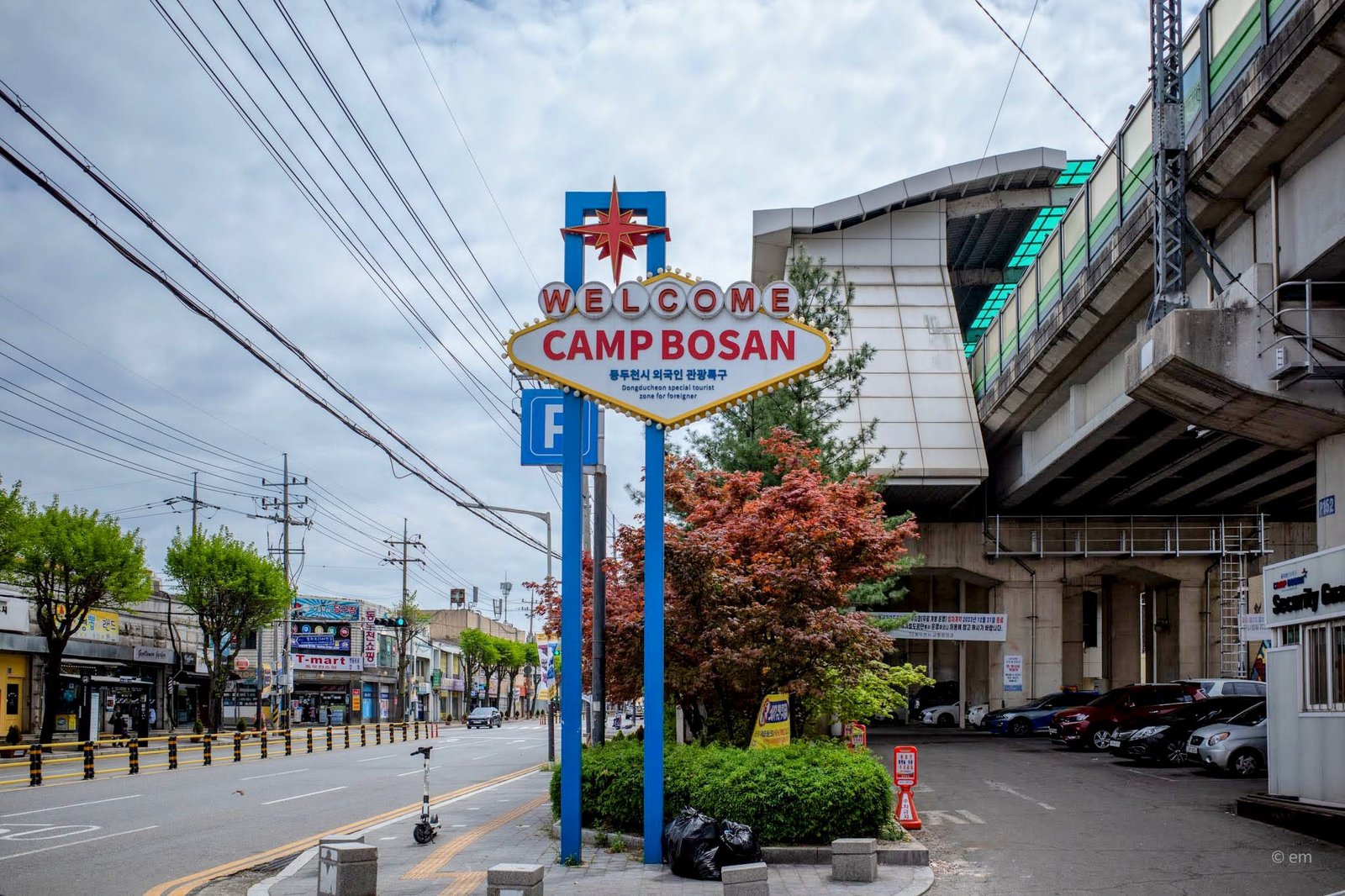
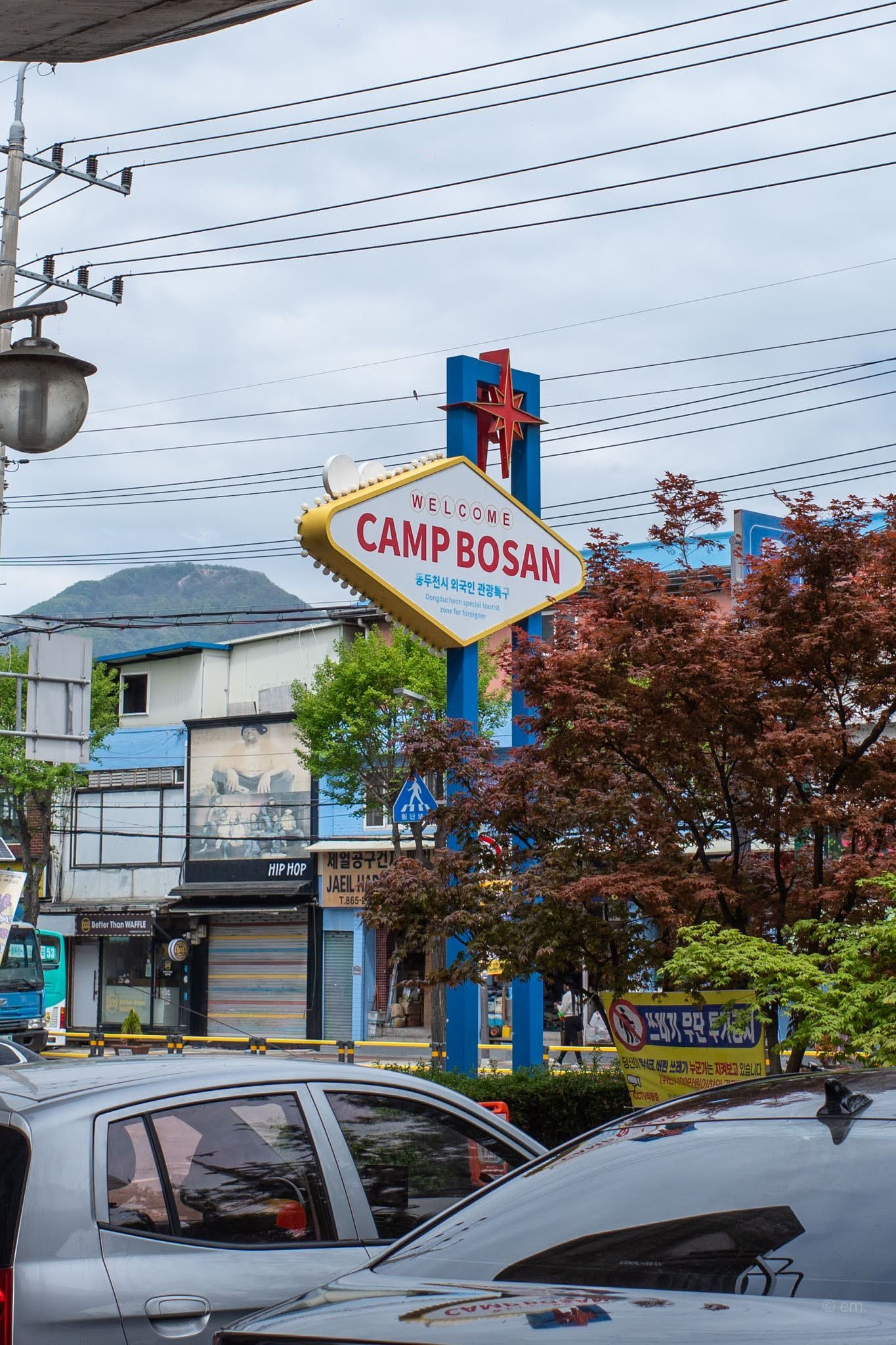
On a quiet weekday, Camp Bosan reads as a place between versions of itself. The Vegas-style “Welcome Camp Bosan” sign — complete with starburst and marquee bulbs, mounted on electric-blue poles — greets you at the street corner near the station, a bit of Las Vegas iconography planted in a Gyeonggi-do intersection. It’s slightly absurd and completely sincere.
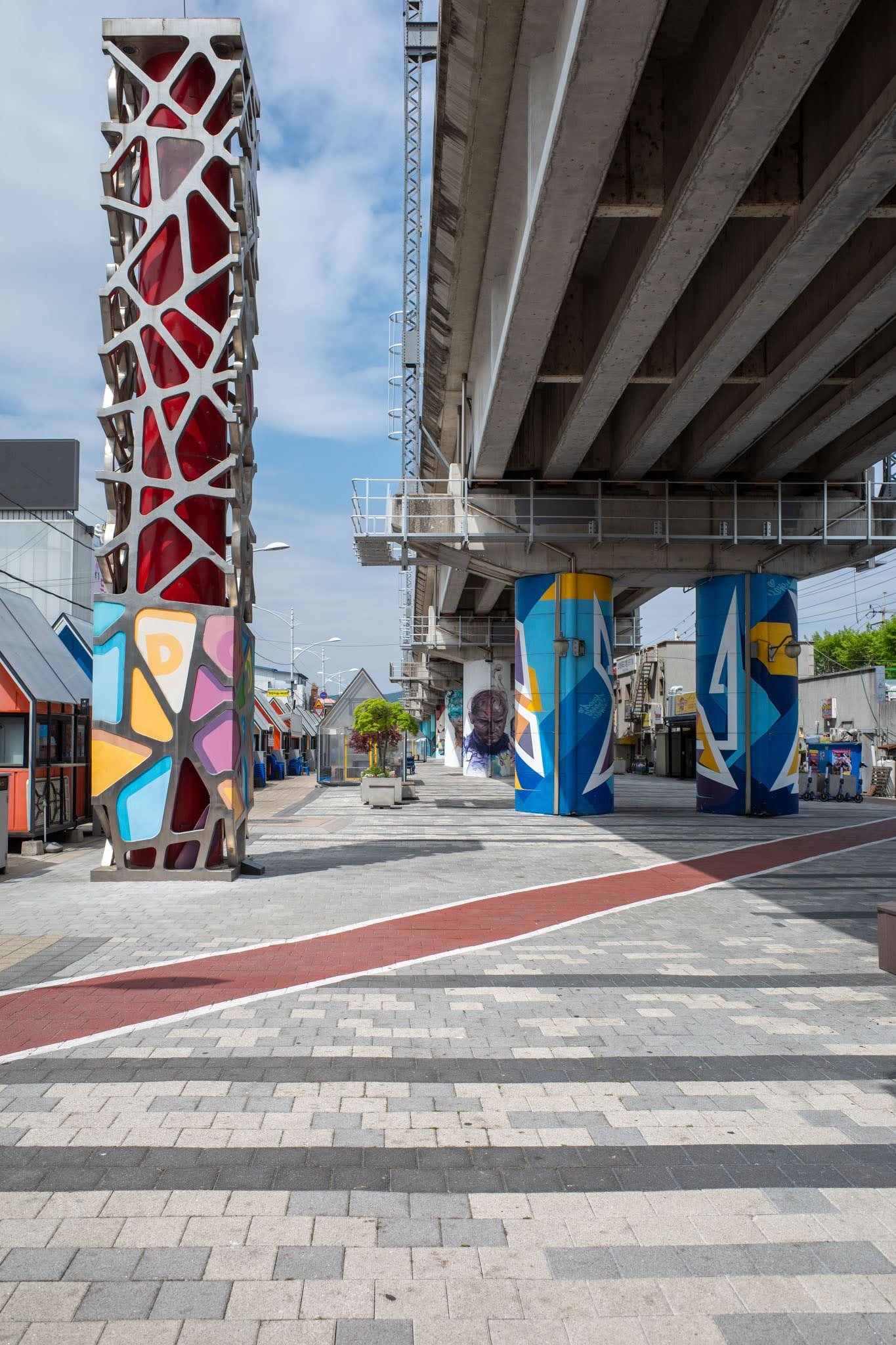
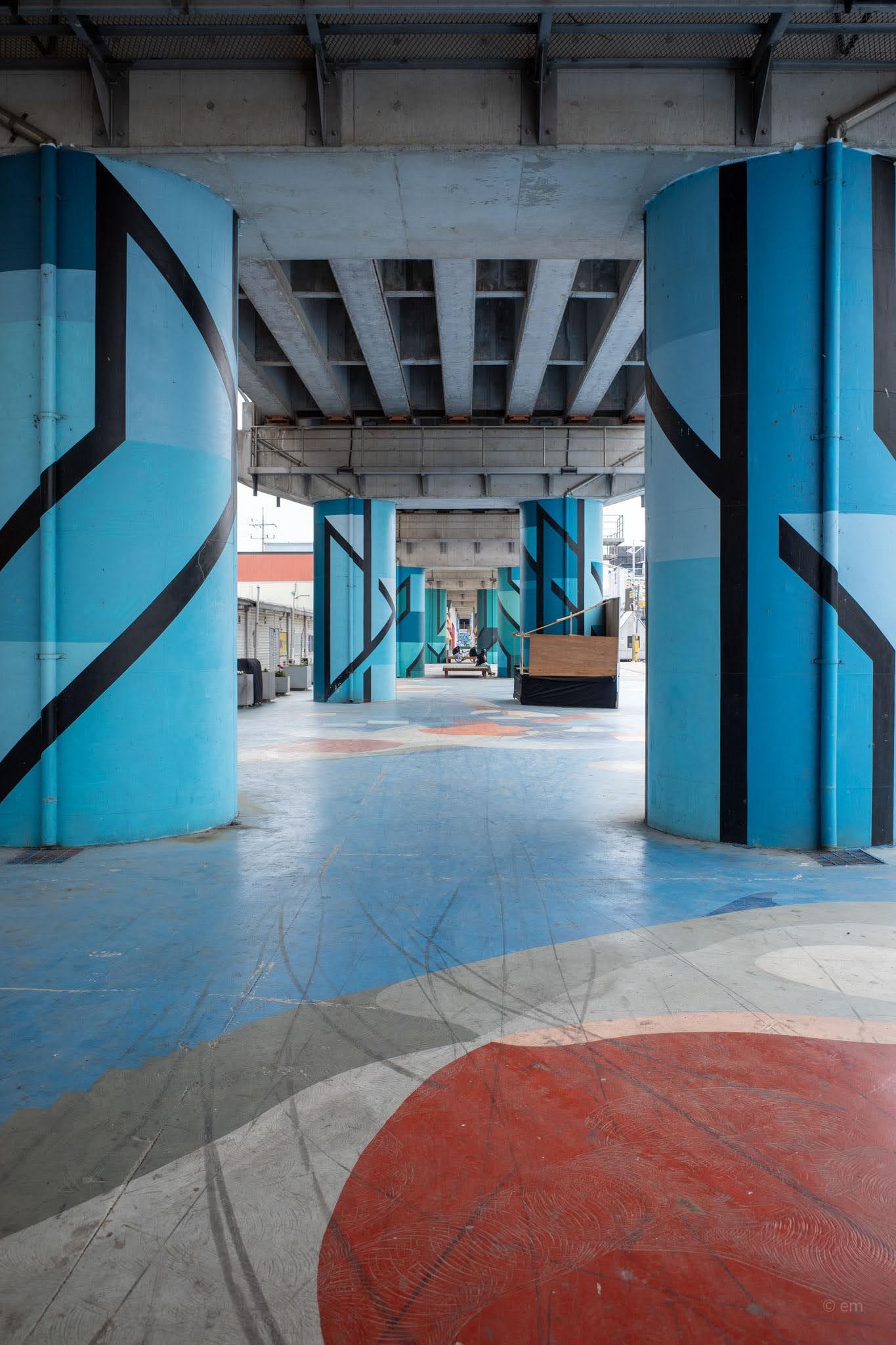
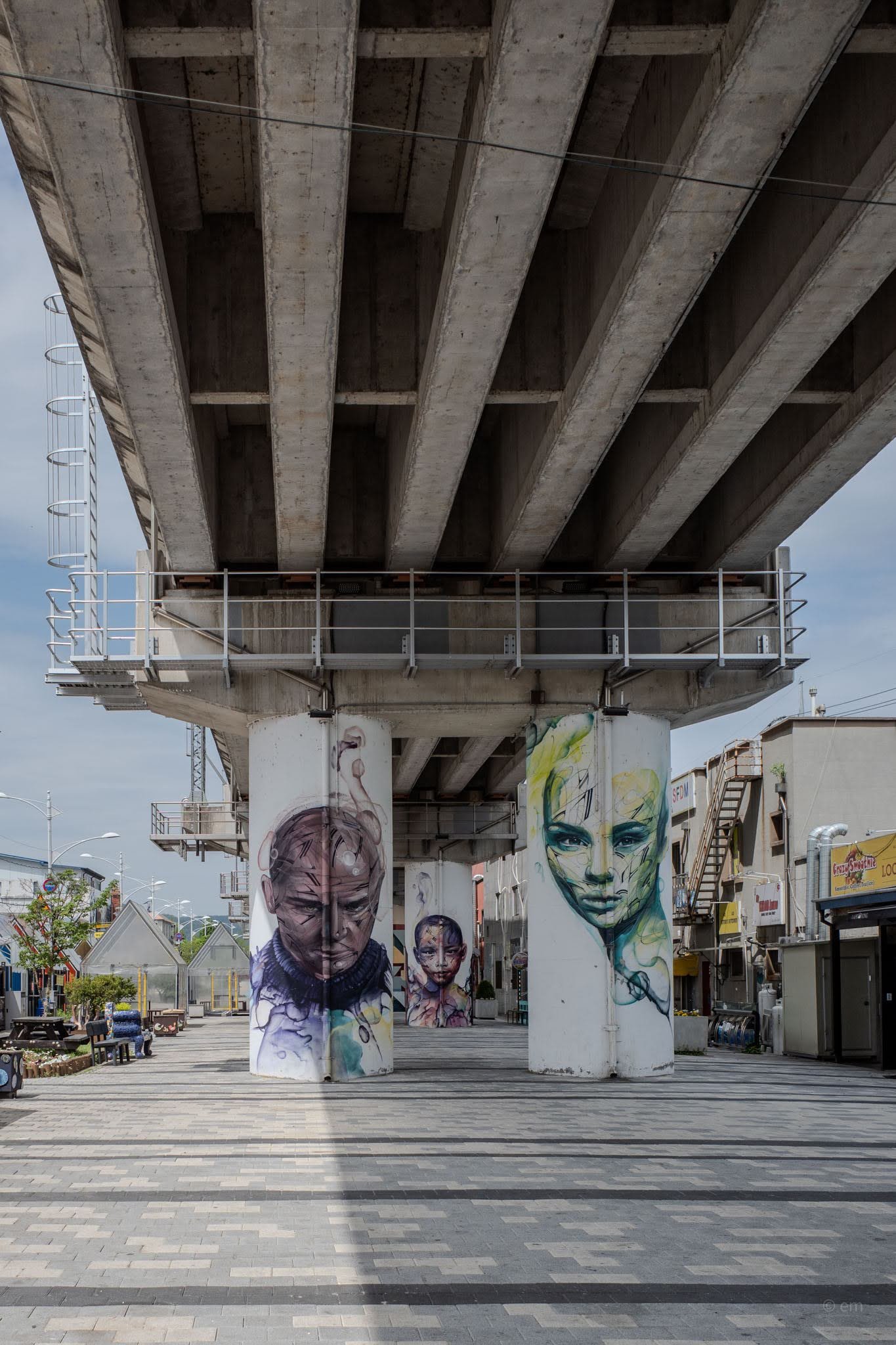
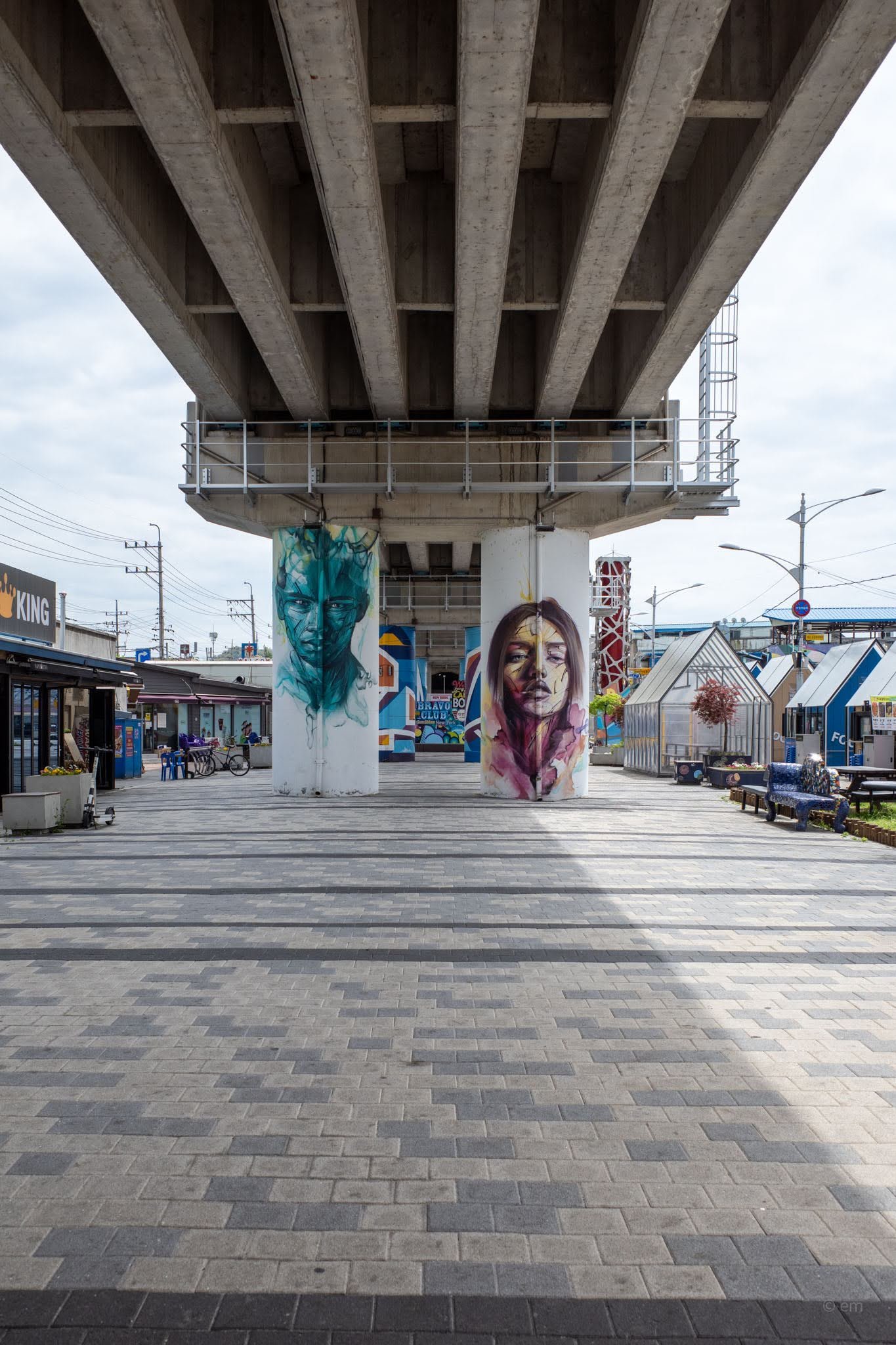
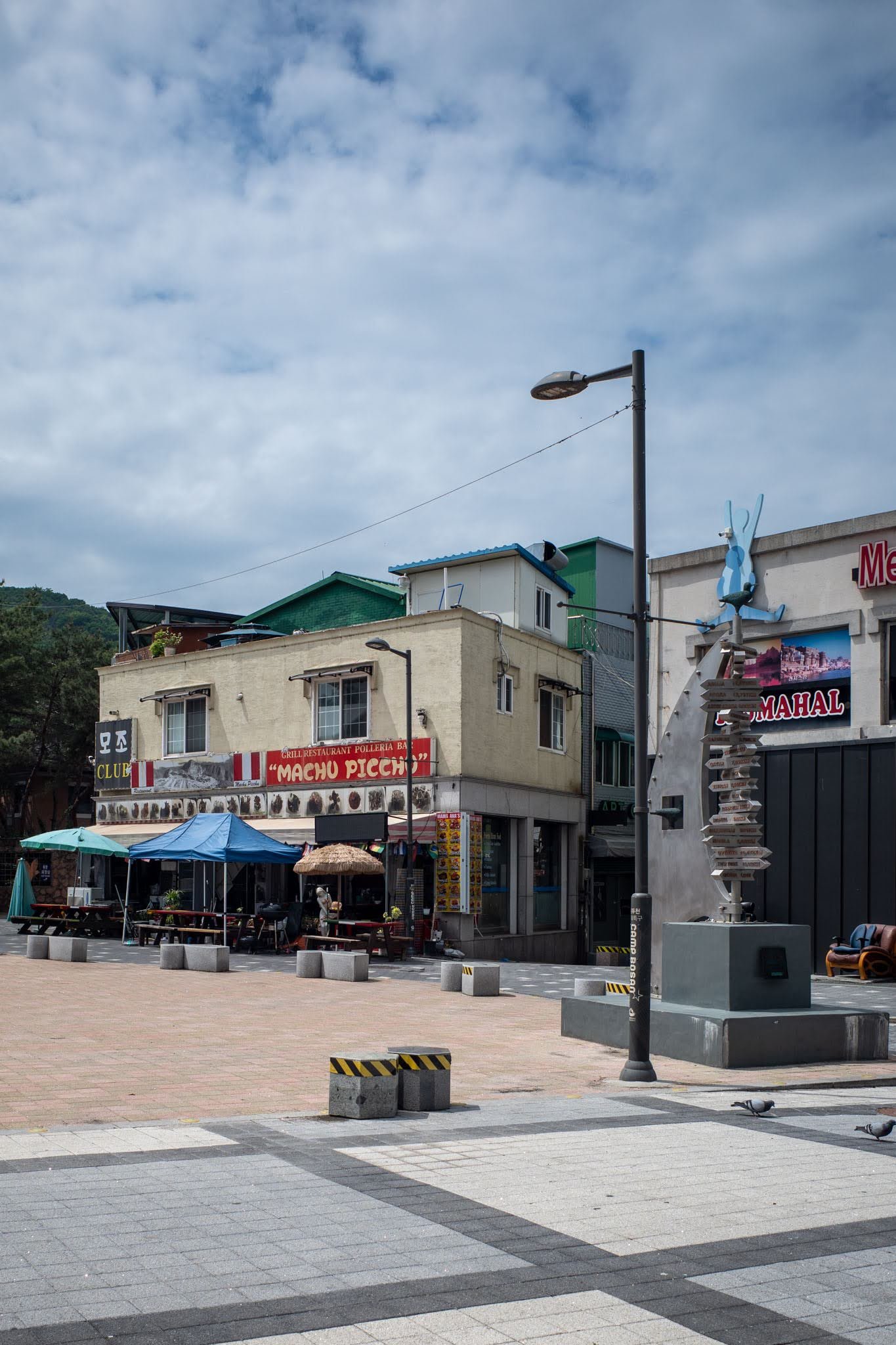
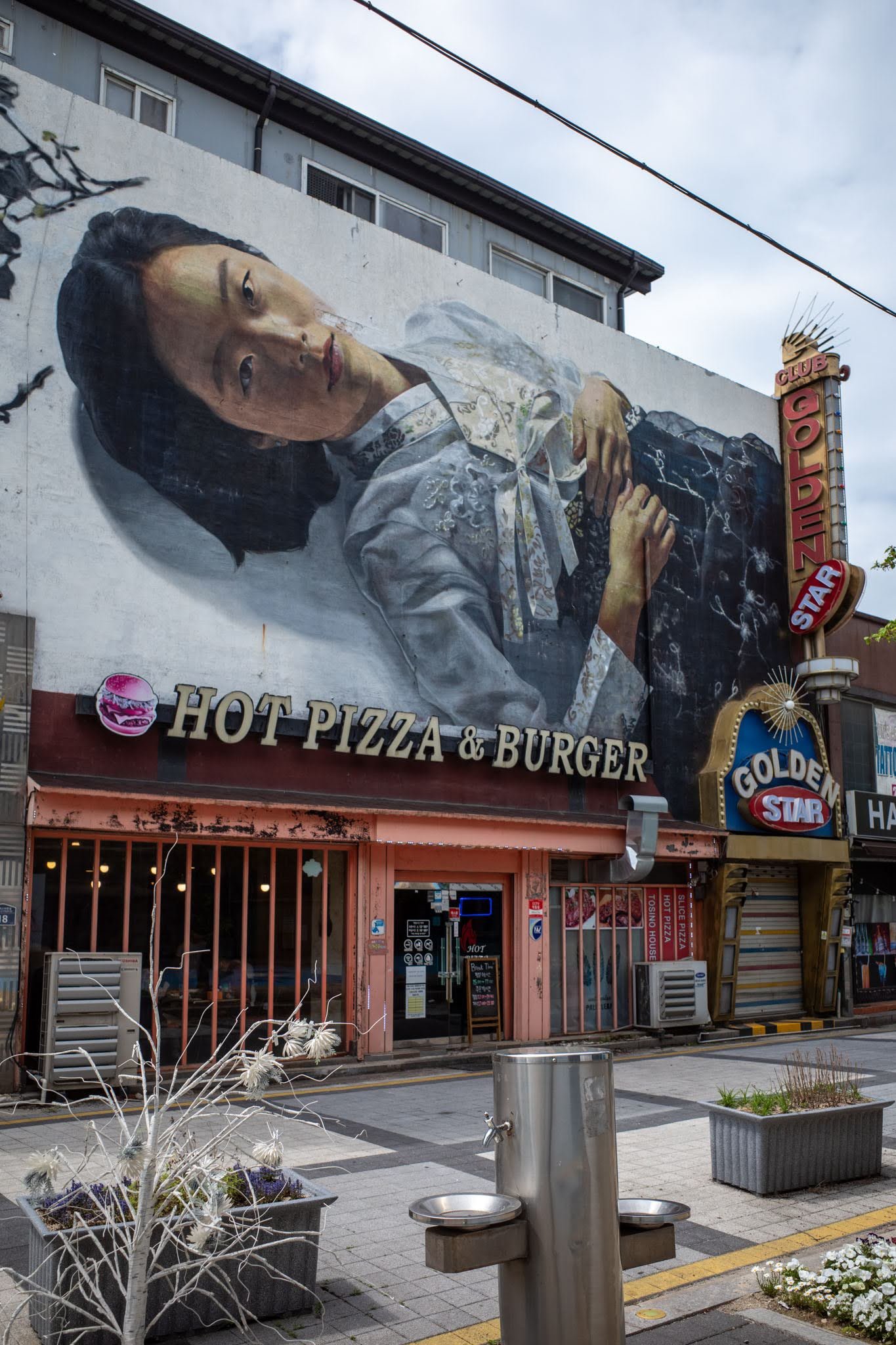
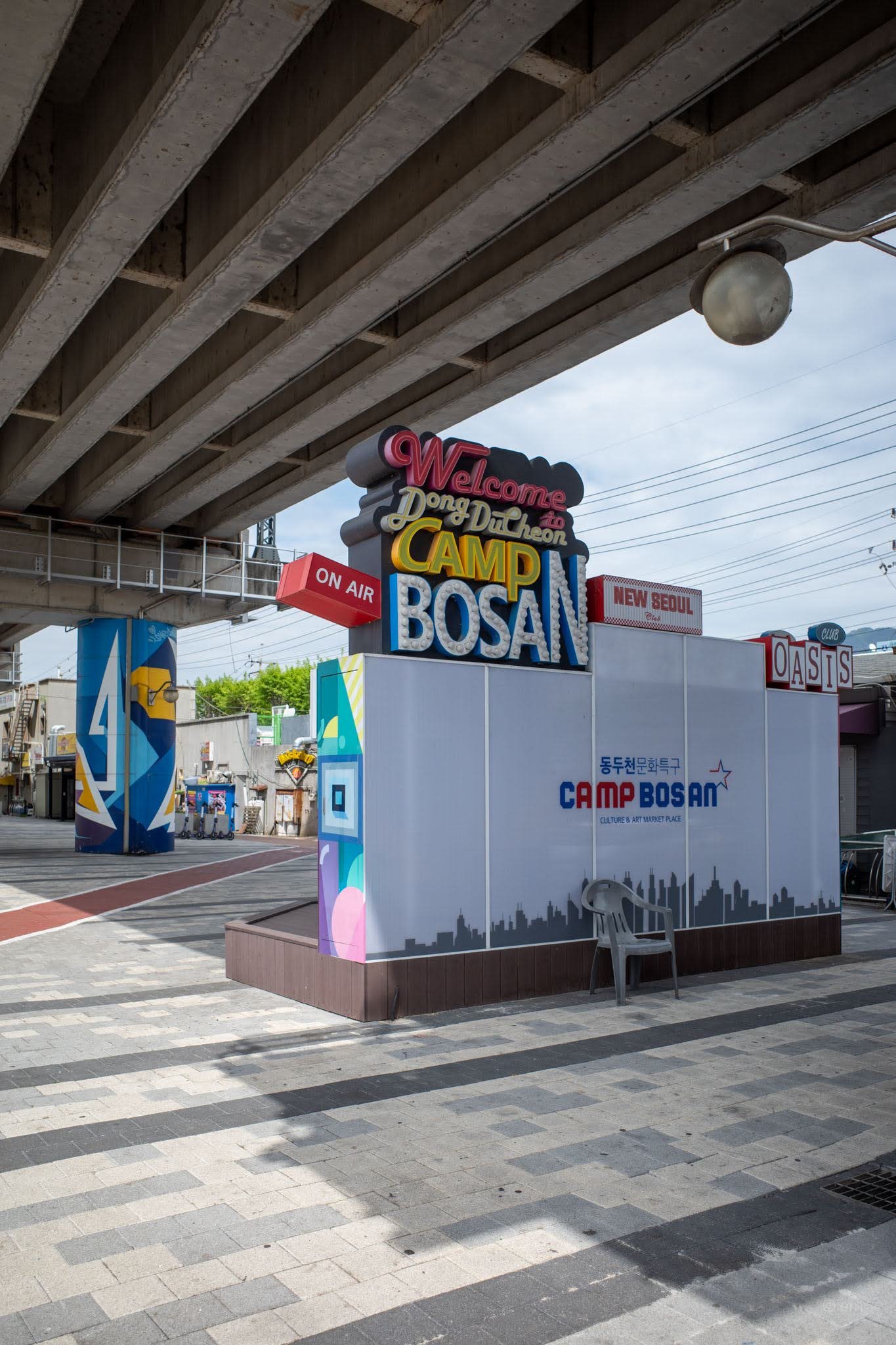
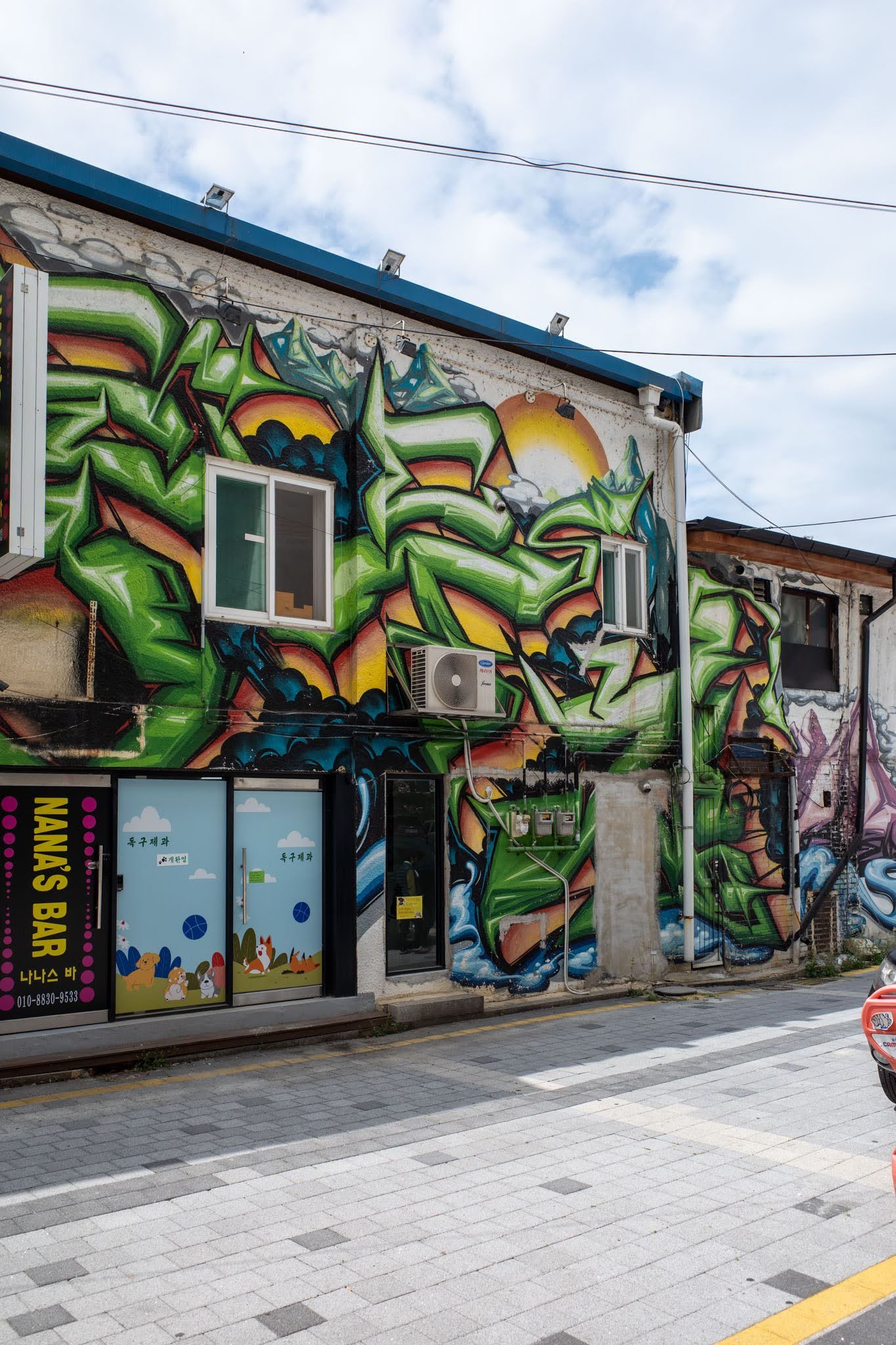
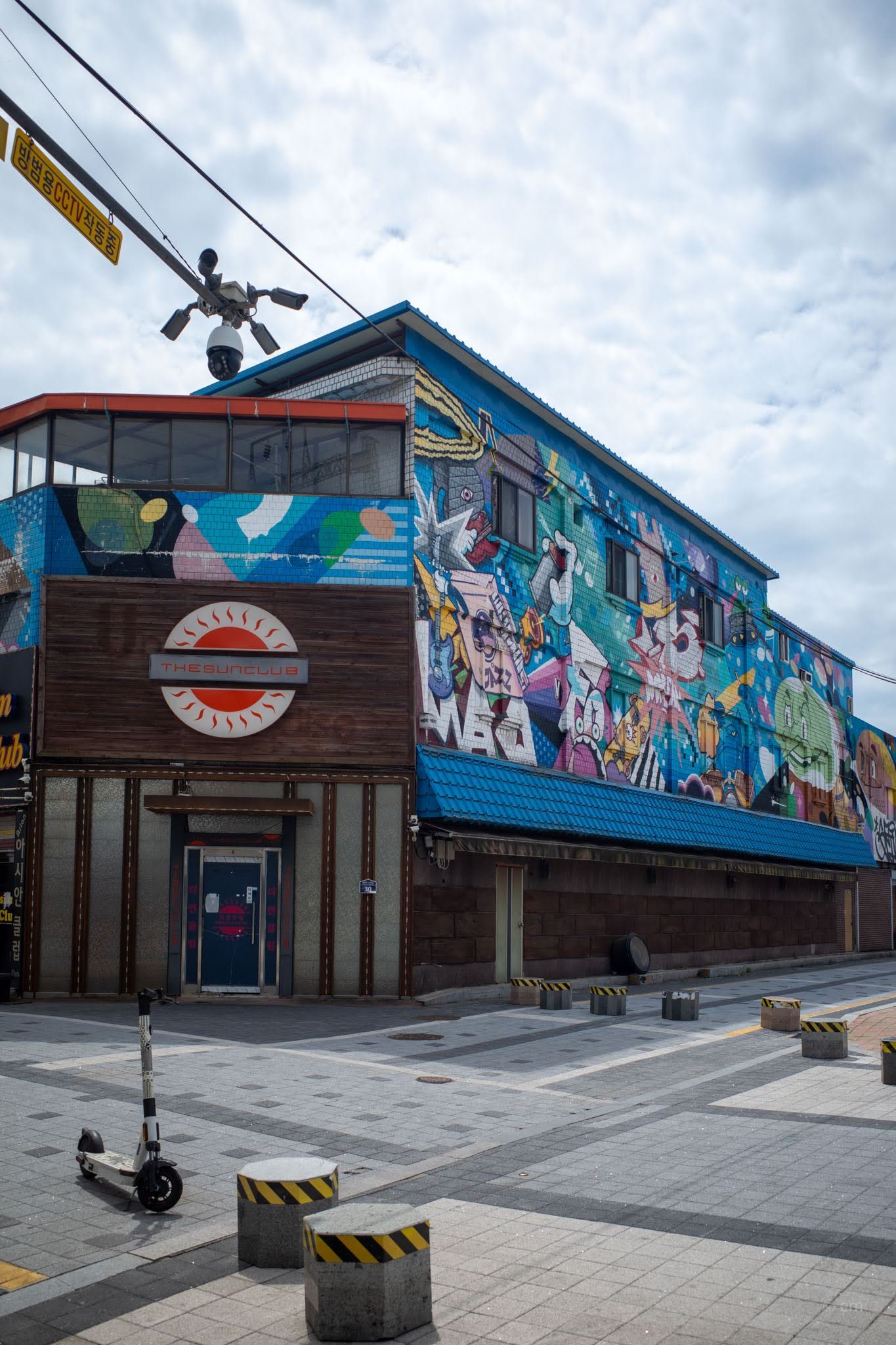
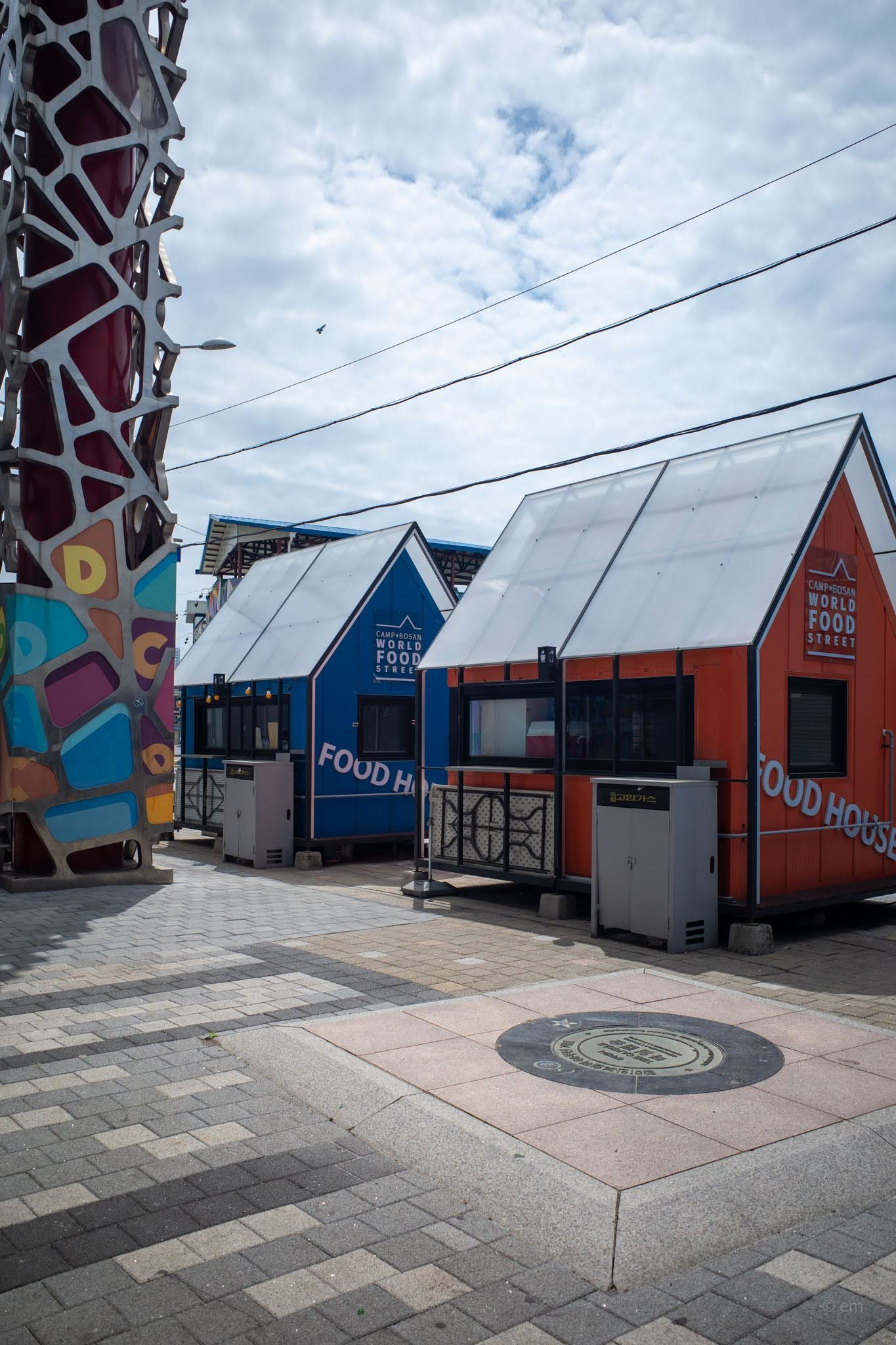
Underneath the elevated subway line, the pillars carry enormous painted faces and abstract geometric forms. The central plaza holds a freestanding sign kiosk whose four sides reference the neighborhood’s old club names — Oasis, Bravo Club, Black Rose, New Seoul — rendered now as pop-art typography, a kind of monument to its own gone nightlife. Along the main pedestrian strip, the shops are a mix of the legacy and the new: English-language barbershops advertising military-style fades, international restaurants, a smattering of cafés, and buildings whose upper floors carry murals ranging from hyperrealistic portraiture to cartoon character assemblages. A Peruvian grill called Machu Picchu sits beside a cluster of open-air food stalls. Everything-style murals compete with everything-style signage, and the overall effect is one of genuine visual density.
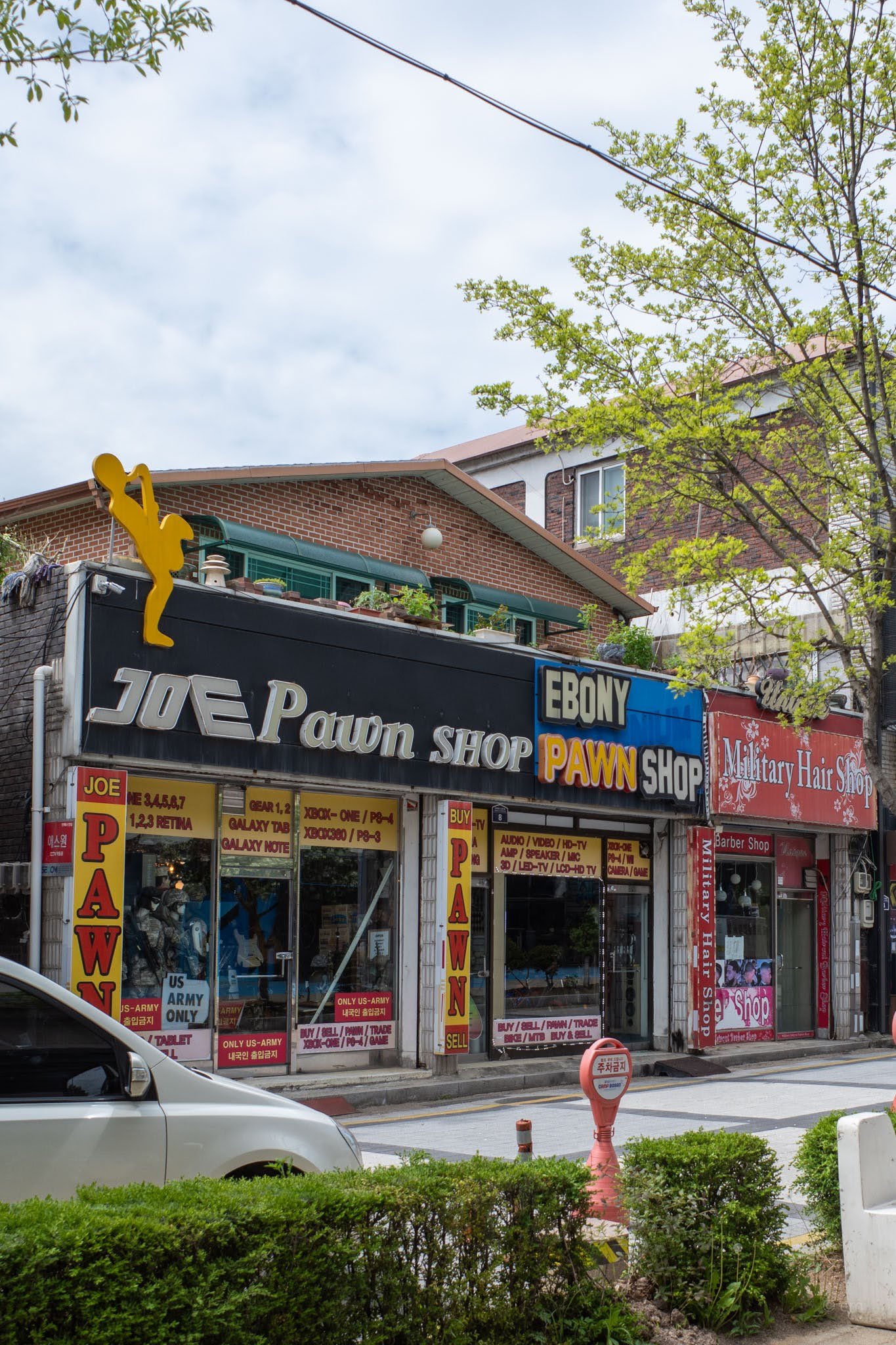
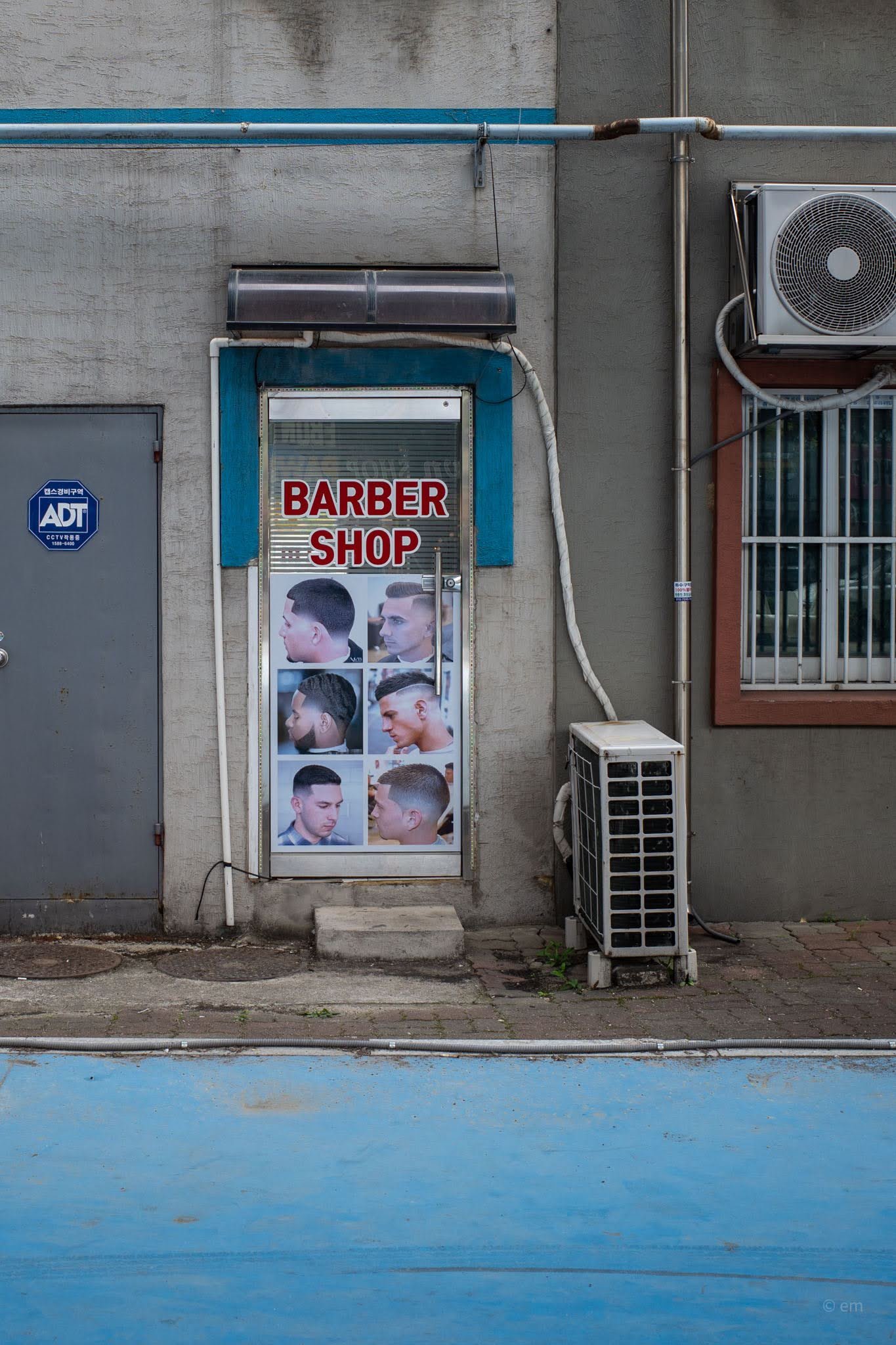
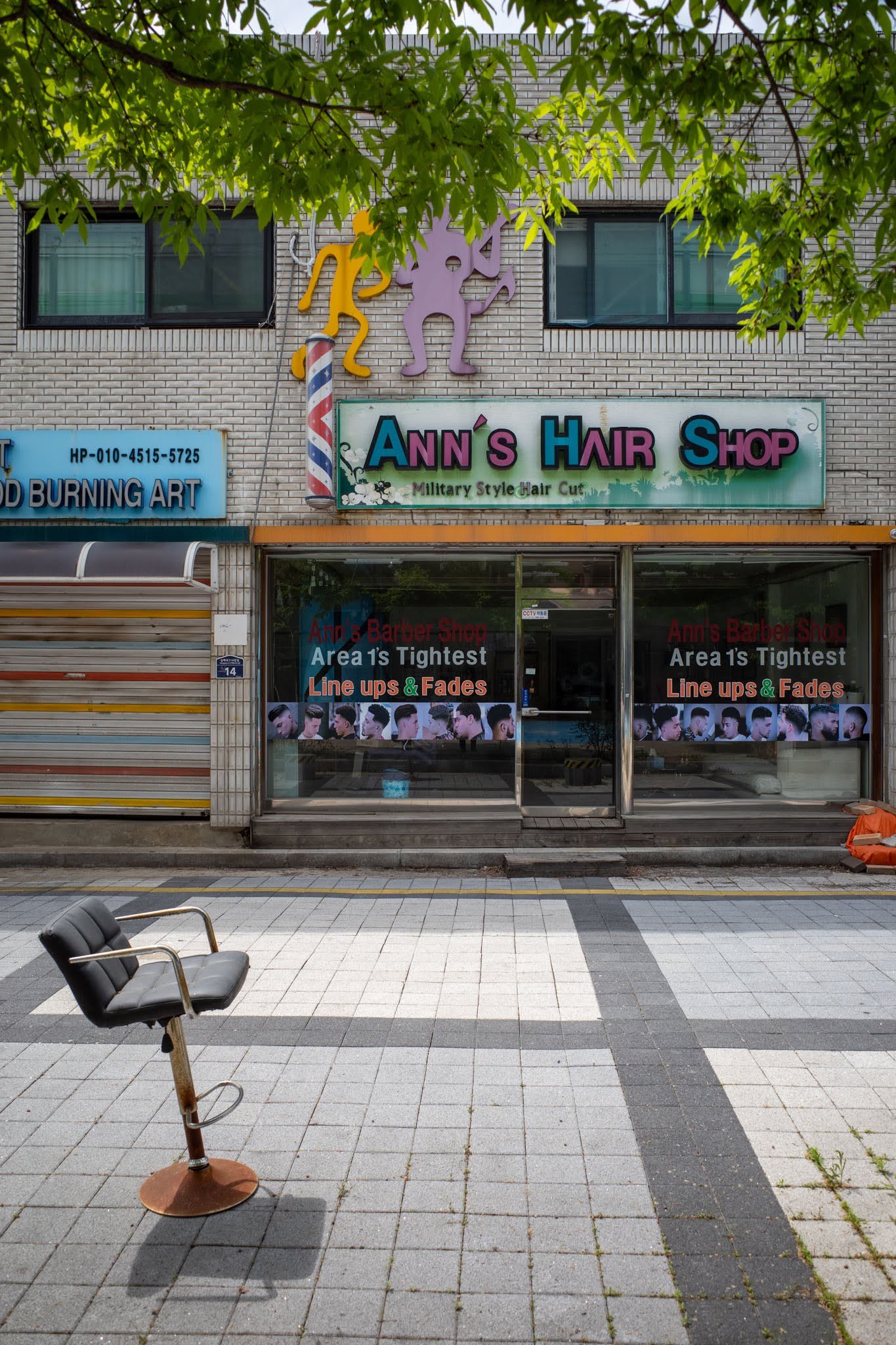
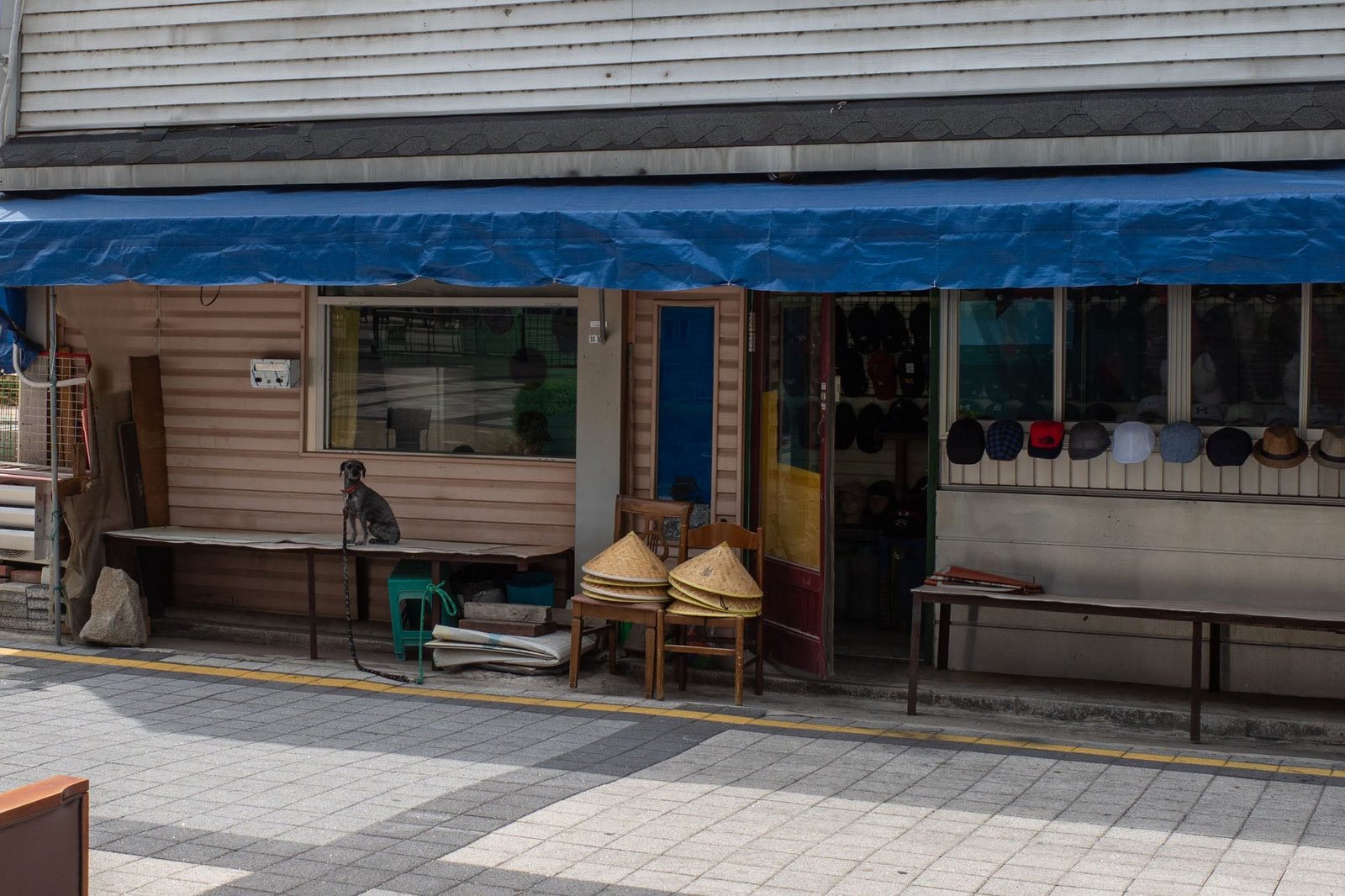
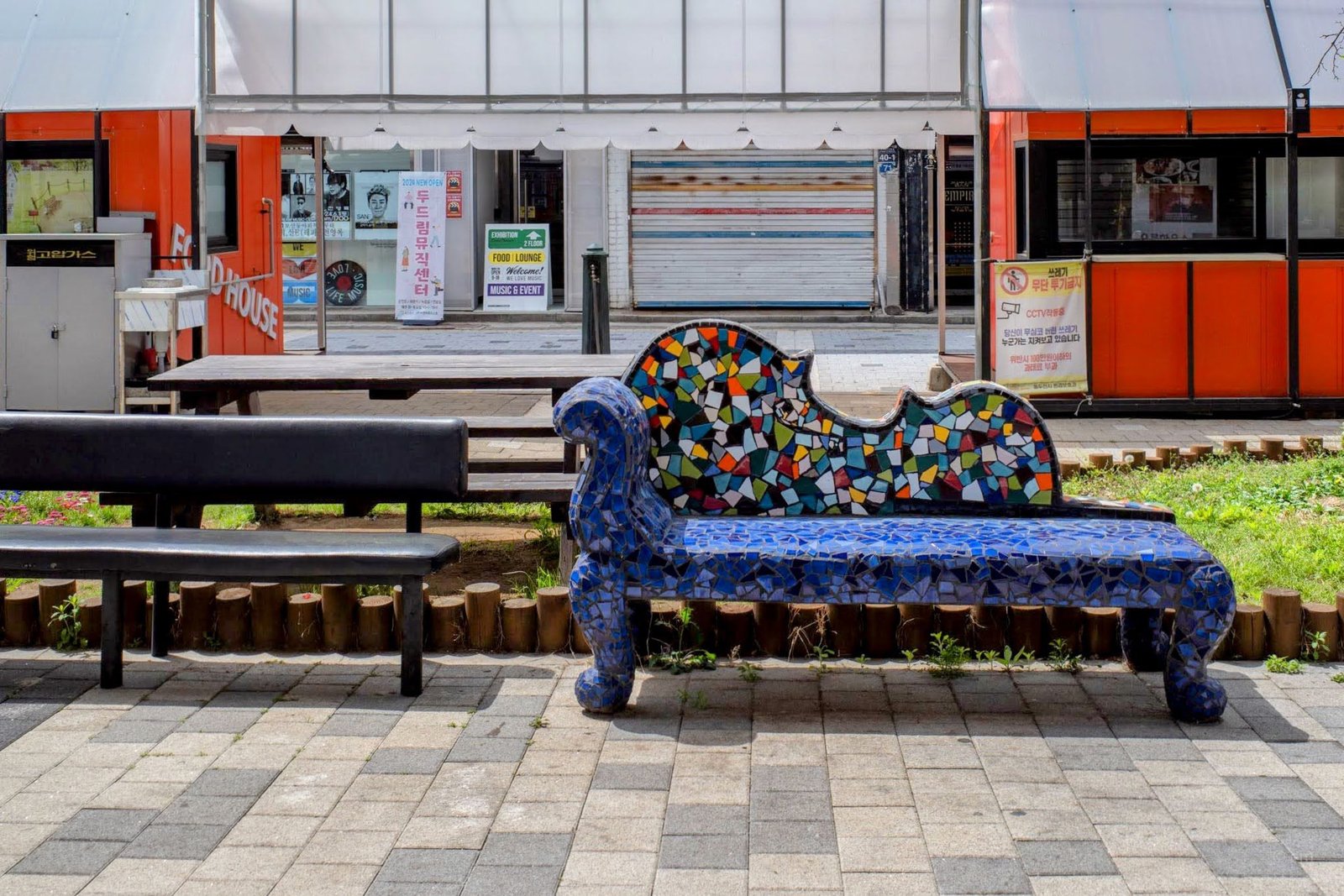
Without the stop signs in Korean letters, both the time period and space would be difficult to distinguish. That’s the point, and also the residue. Bosan-dong has always been a projection of American culture as filtered through Korean eyes and Korean circumstances. The old clubs are mostly shuttered or down to skeleton operations. The Golden Star sign still hangs on the corner building. A barber chair sits out on the sidewalk in front of a military fade shop. Certain things persist because they still have customers. Others persist because no one has gotten around to taking them down.
Getting There
Camp Bosan is a ten-minute walk from Bosan Station on Seoul Subway Line 1 — roughly an hour from Seoul Station, or about thirty minutes from Uijeongbu. The neighborhood runs parallel to the elevated rail line and extends into a few side streets that reward wandering. Most food options open in the late afternoon; the strip is quieter in the morning. There’s no single “attraction” to aim for — the visit is the walk itself.
Camp Bosan | Bosan-dong, Dongducheon, Gyeonggi-do | Bosan Station (Line 1), Exit 1 | @campbosan_official