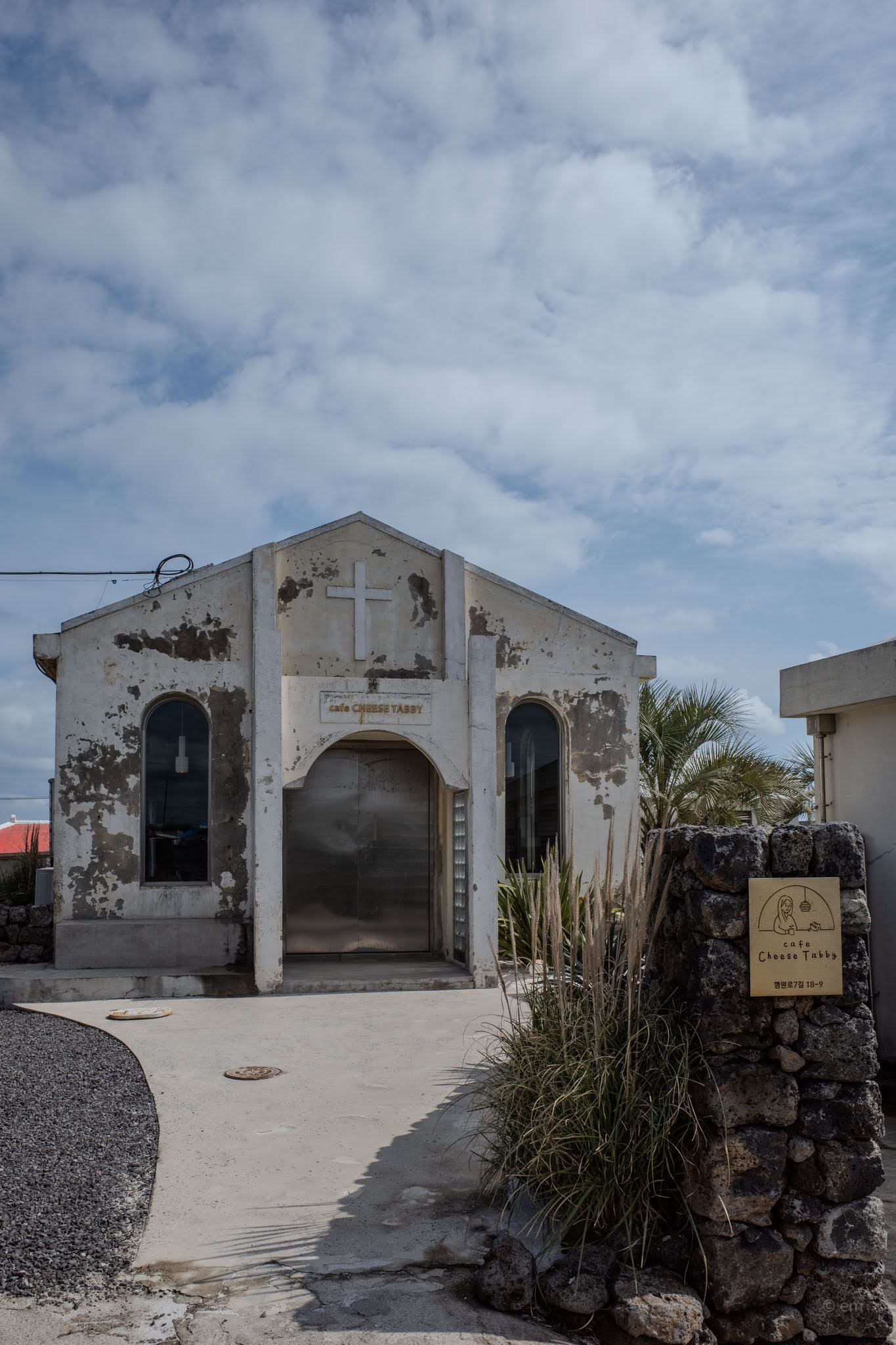
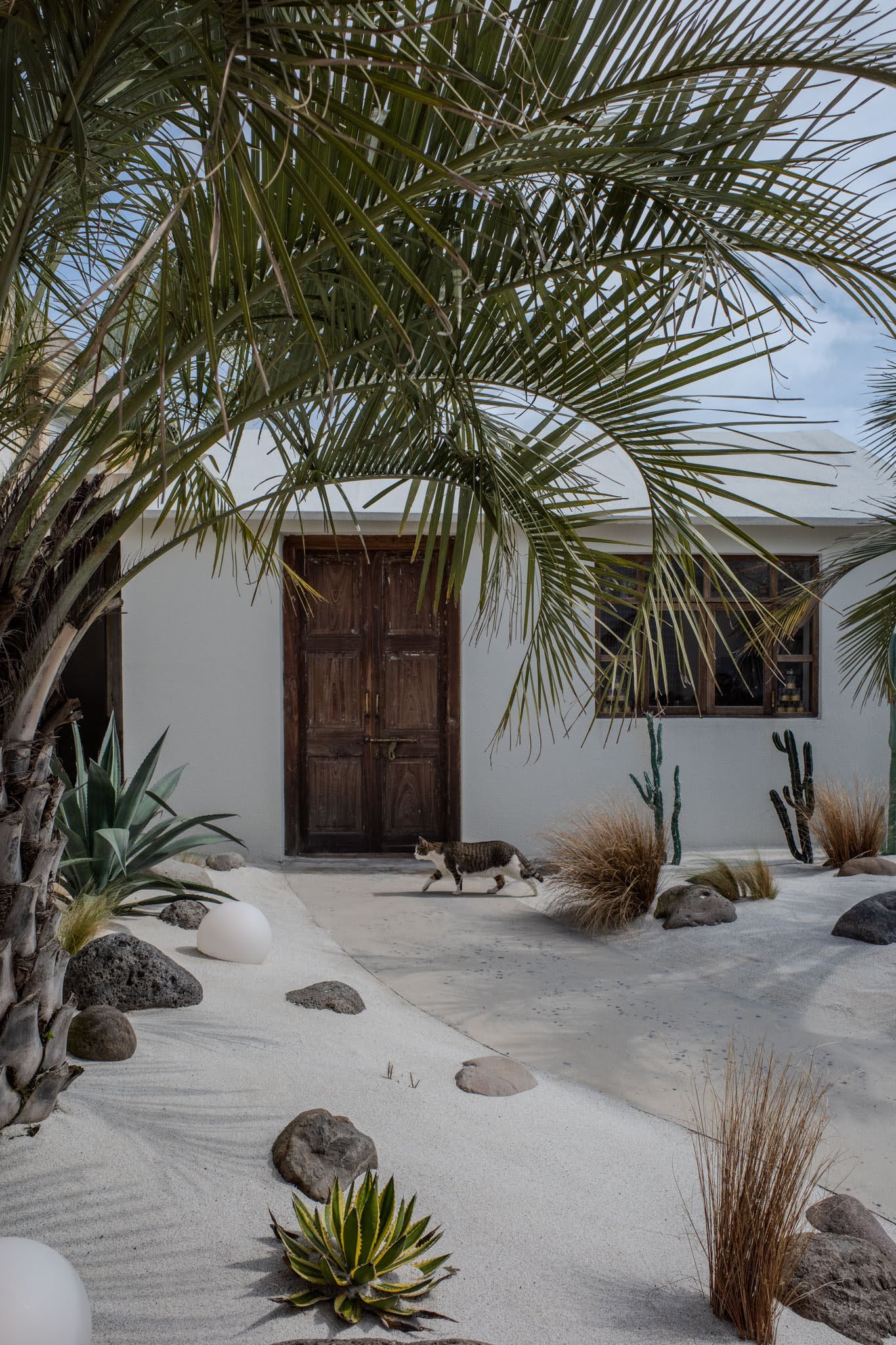
A weathered cross, a desert garden, and a tabby cat passing through white sand as if it owns the place — which, arguably, it does.
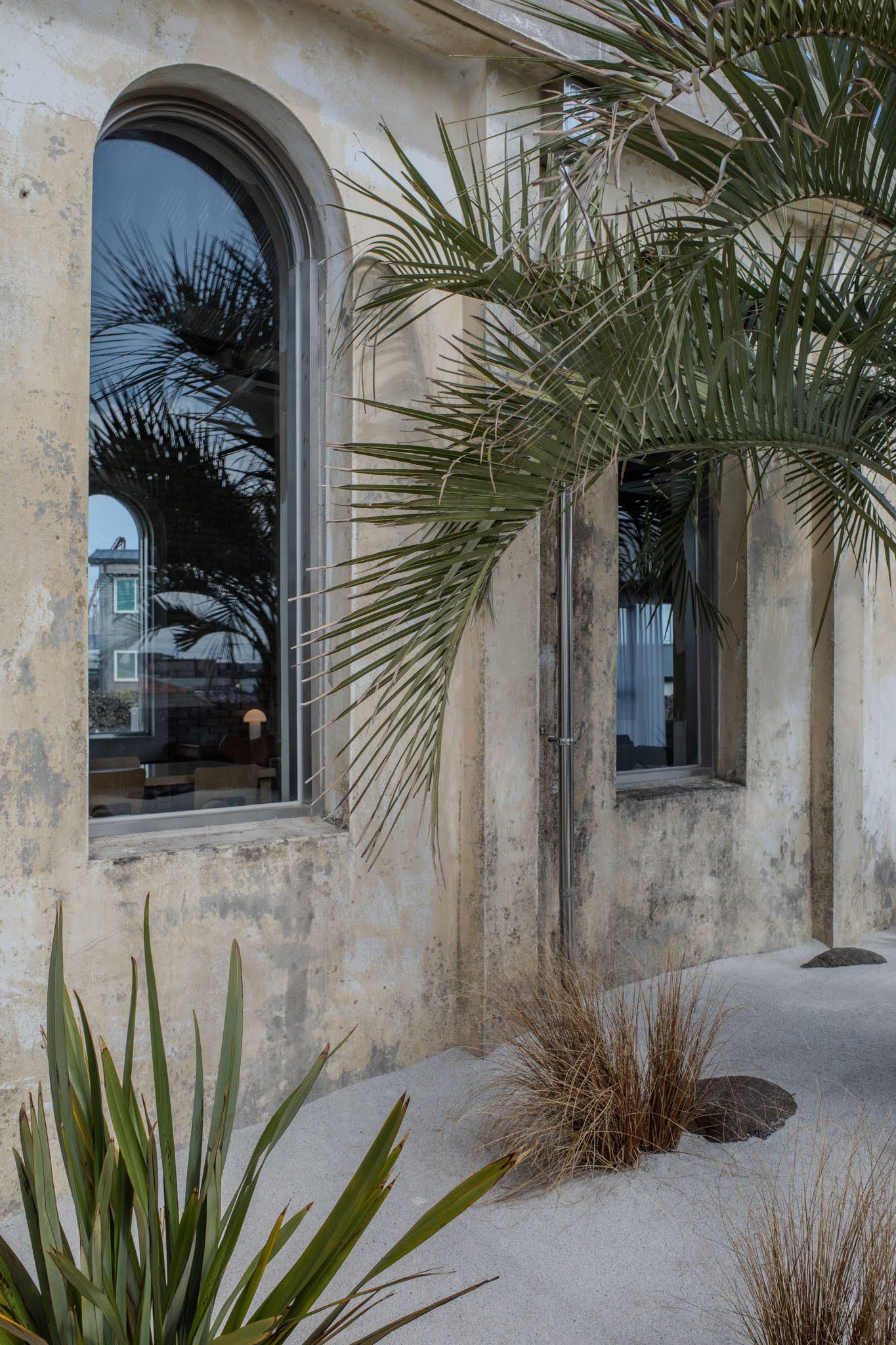
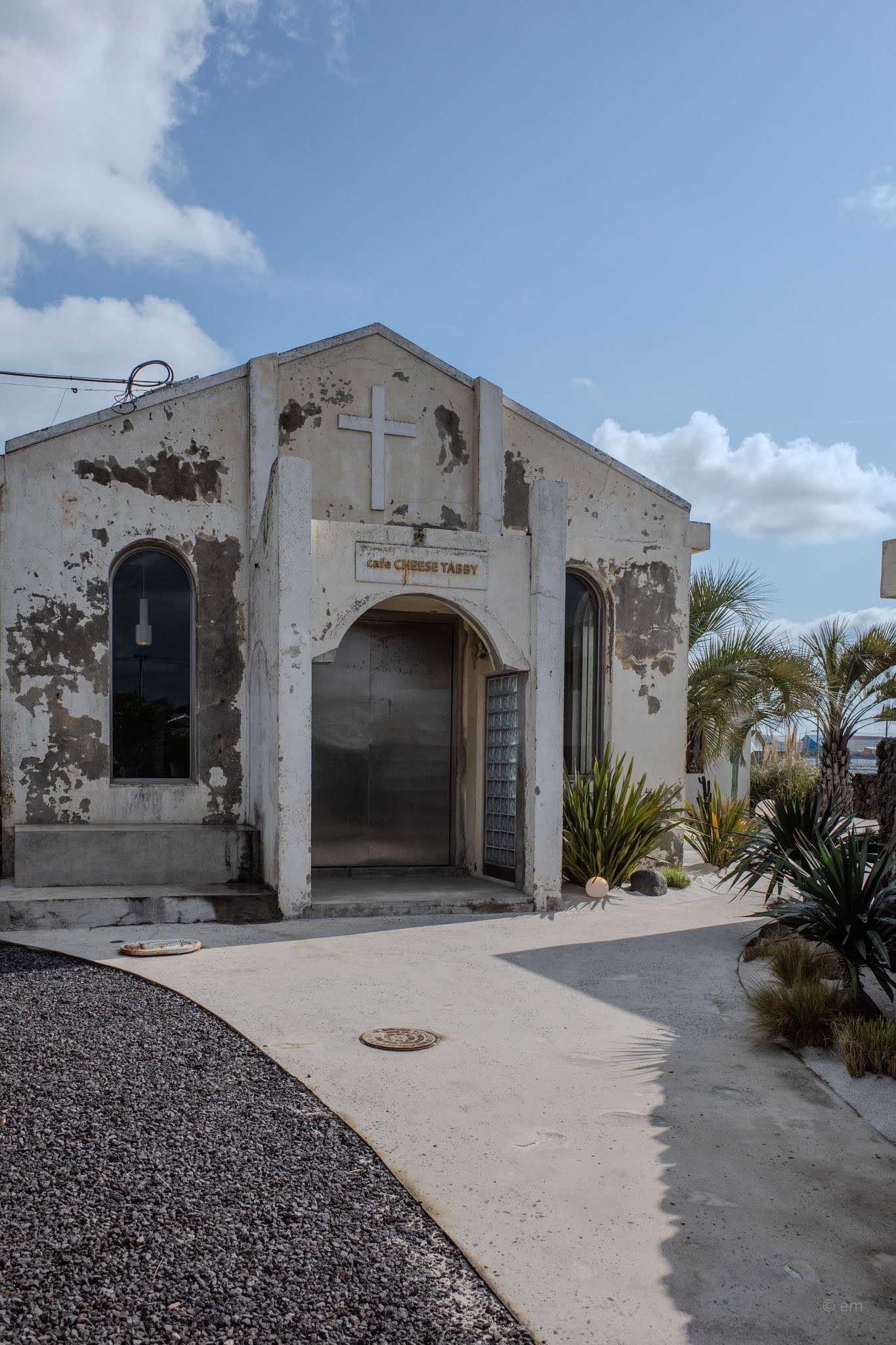
There is a small building on the eastern edge of Jeju’s Gujwa district that looks, at first glance, like an abandoned Protestant chapel. The plaster is peeling in great dark patches, the gable is plain, and a white cross sits above the arched entrance with the quiet authority of something that has always been there. It is not abandoned. The sign reads cafe CHEESE TABBY, and through the steel sliding door, the whole thing opens into one of the stranger, more beautifully considered spaces on the island.
The Congregation of Sand and Palm
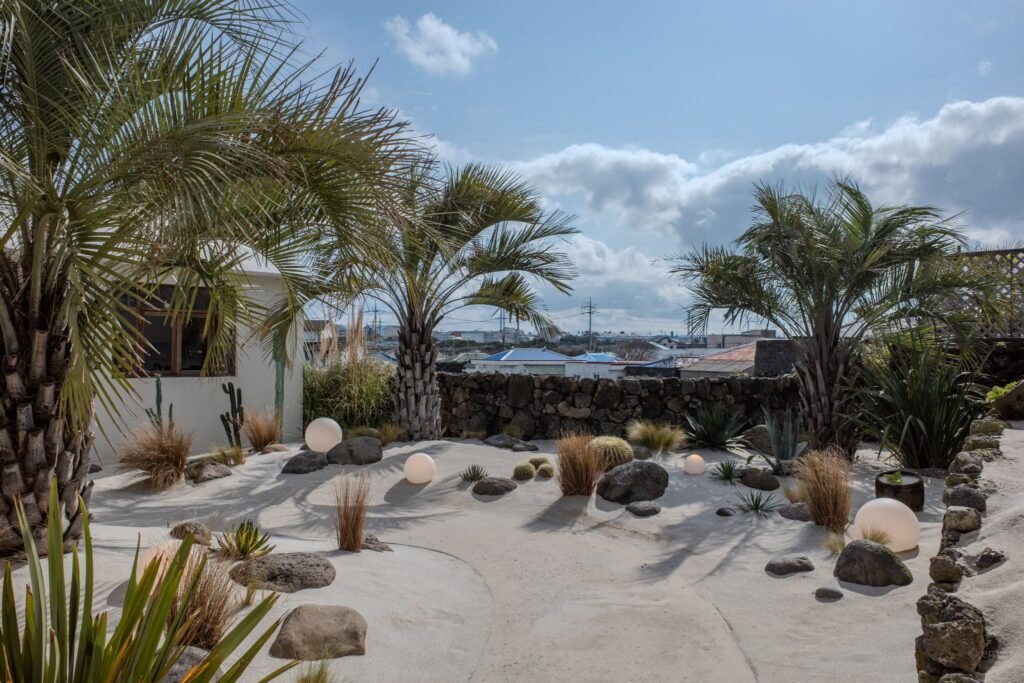
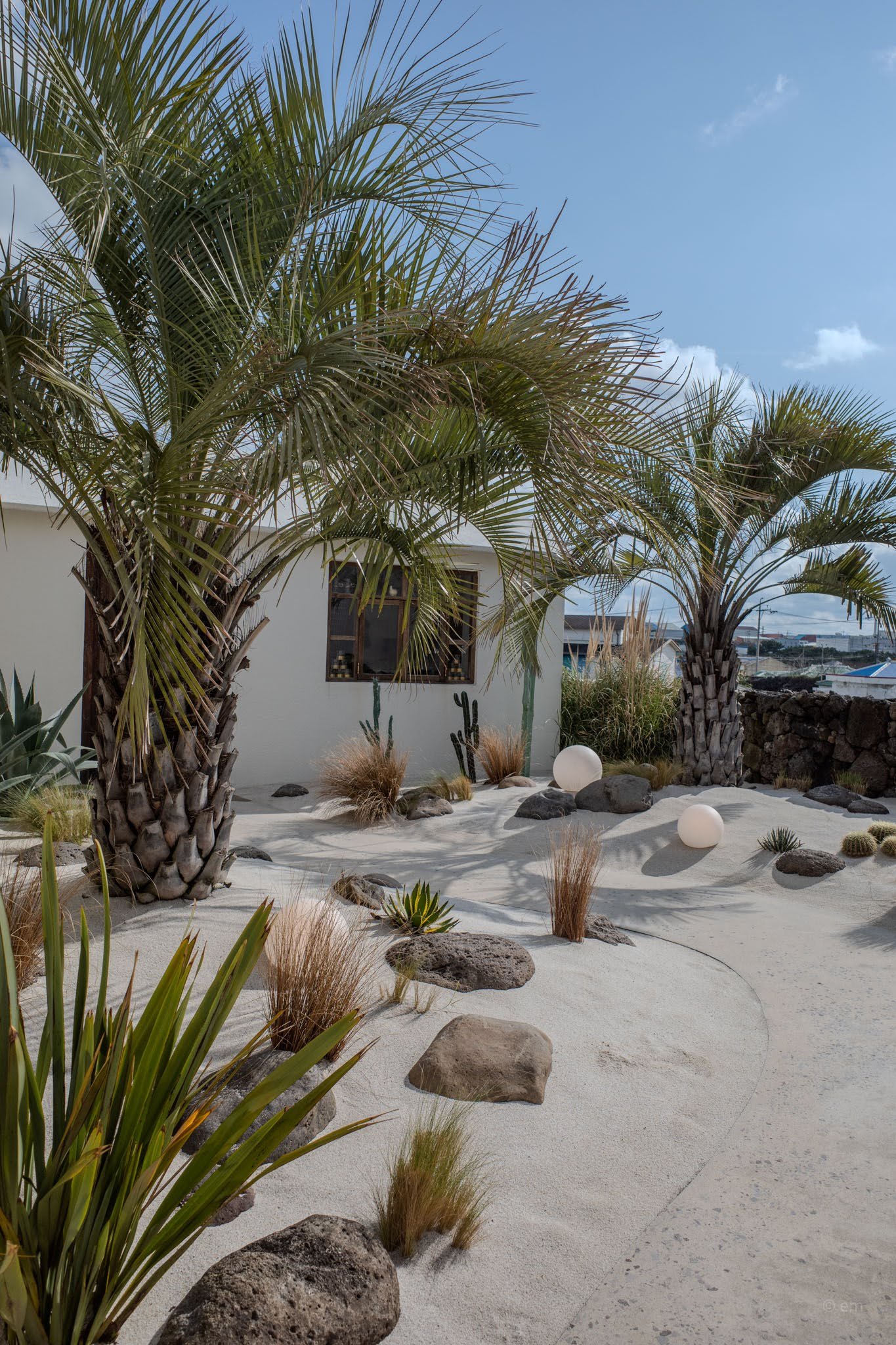
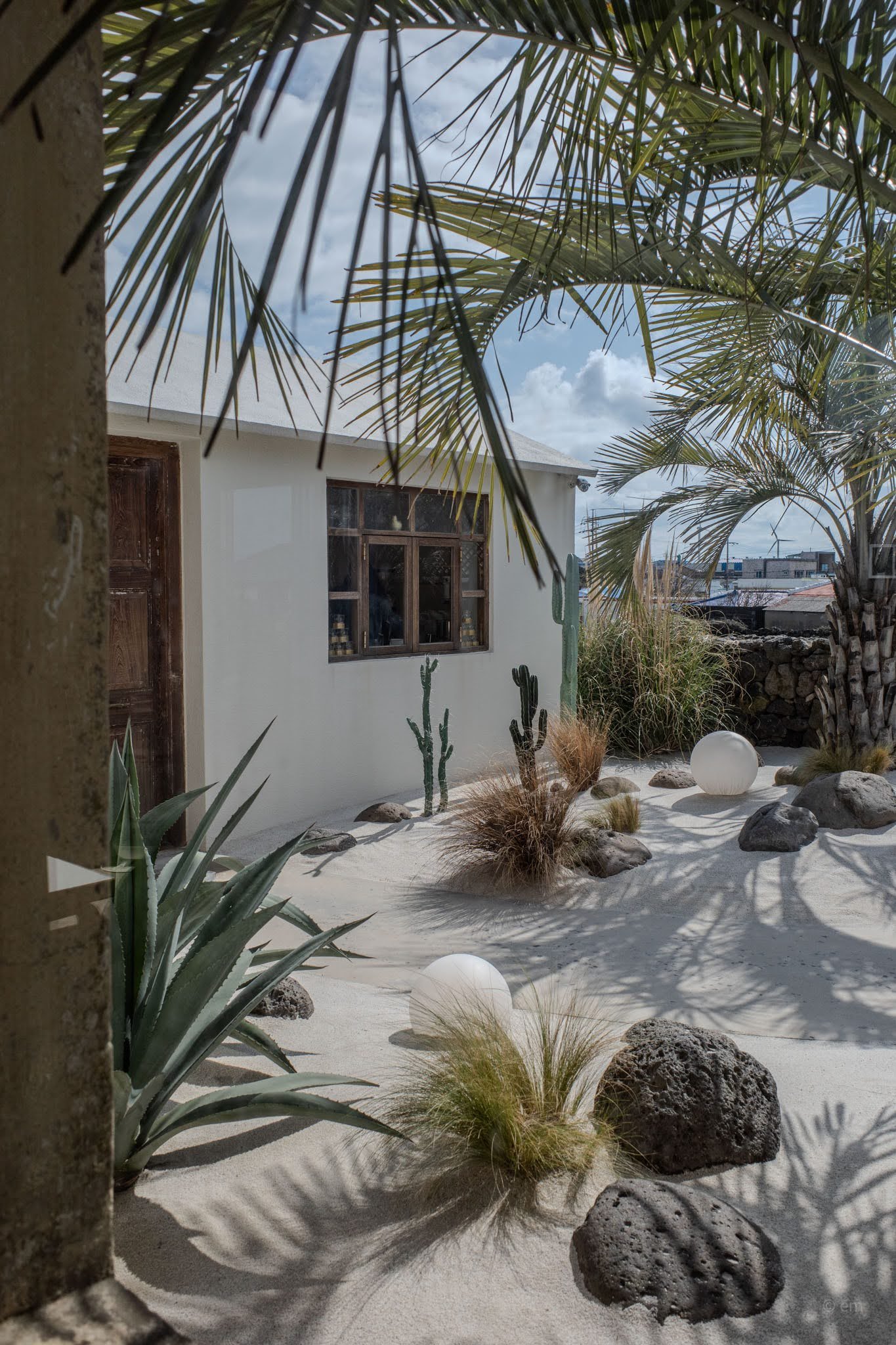
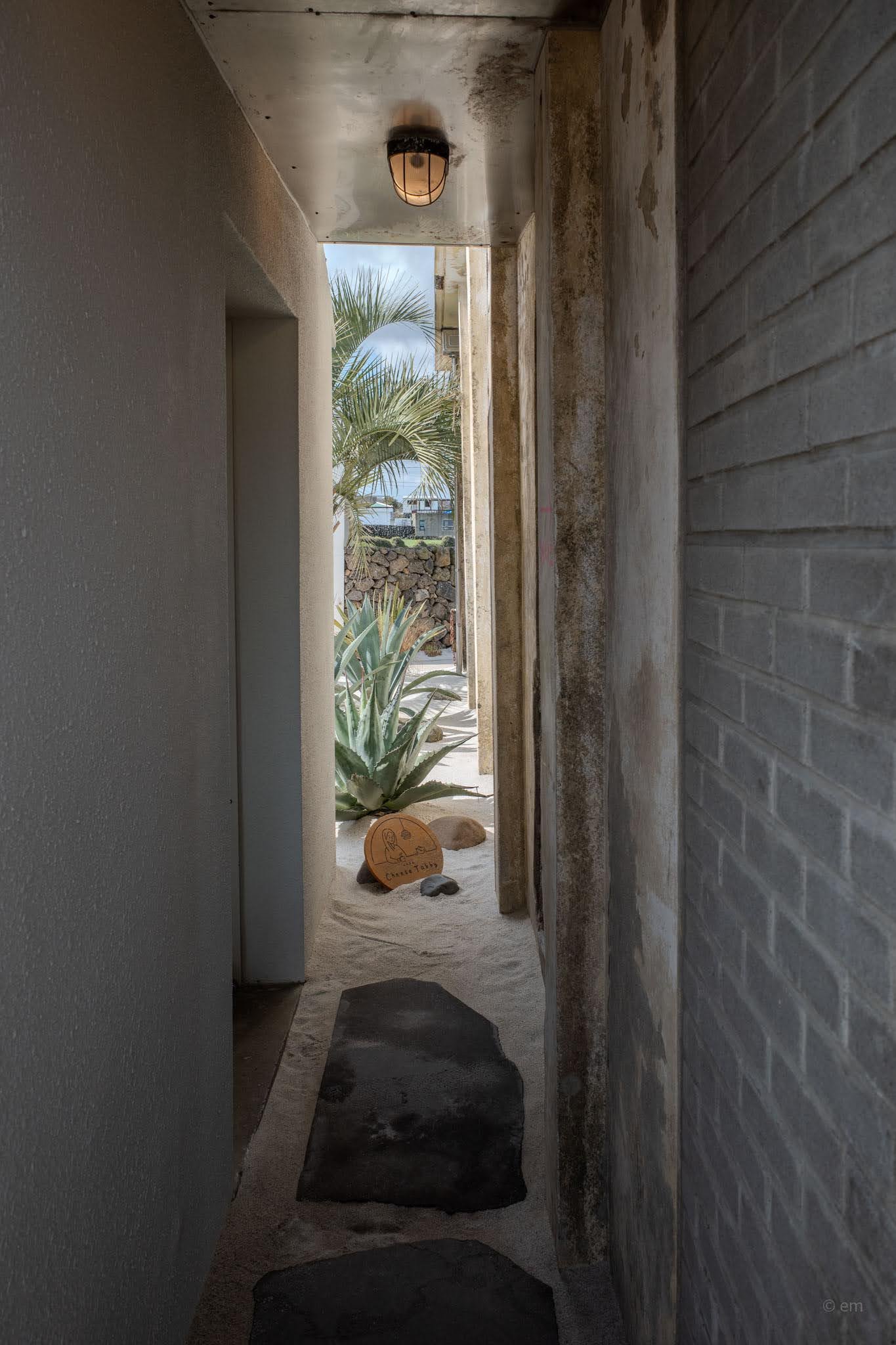
Before entering, you pass through the garden — and the garden is the first argument for why this place is worth the drive to the east coast. White sand fills the courtyard, raked smooth around clusters of agave, towering date palms, barrel cacti, and feather grass. Lava boulders from Jeju’s volcanic terrain are scattered like natural punctuation. Glowing globe lamps sit low among the plants. The whole composition reads less like a Korean café exterior and more like a high-concept corner of somewhere between Morocco and Baja California, framed by Jeju’s characteristic basalt stone walls and the open sky above.
A tabby cat moves through it unhurried. This is, after all, its garden.
Inside the Nave
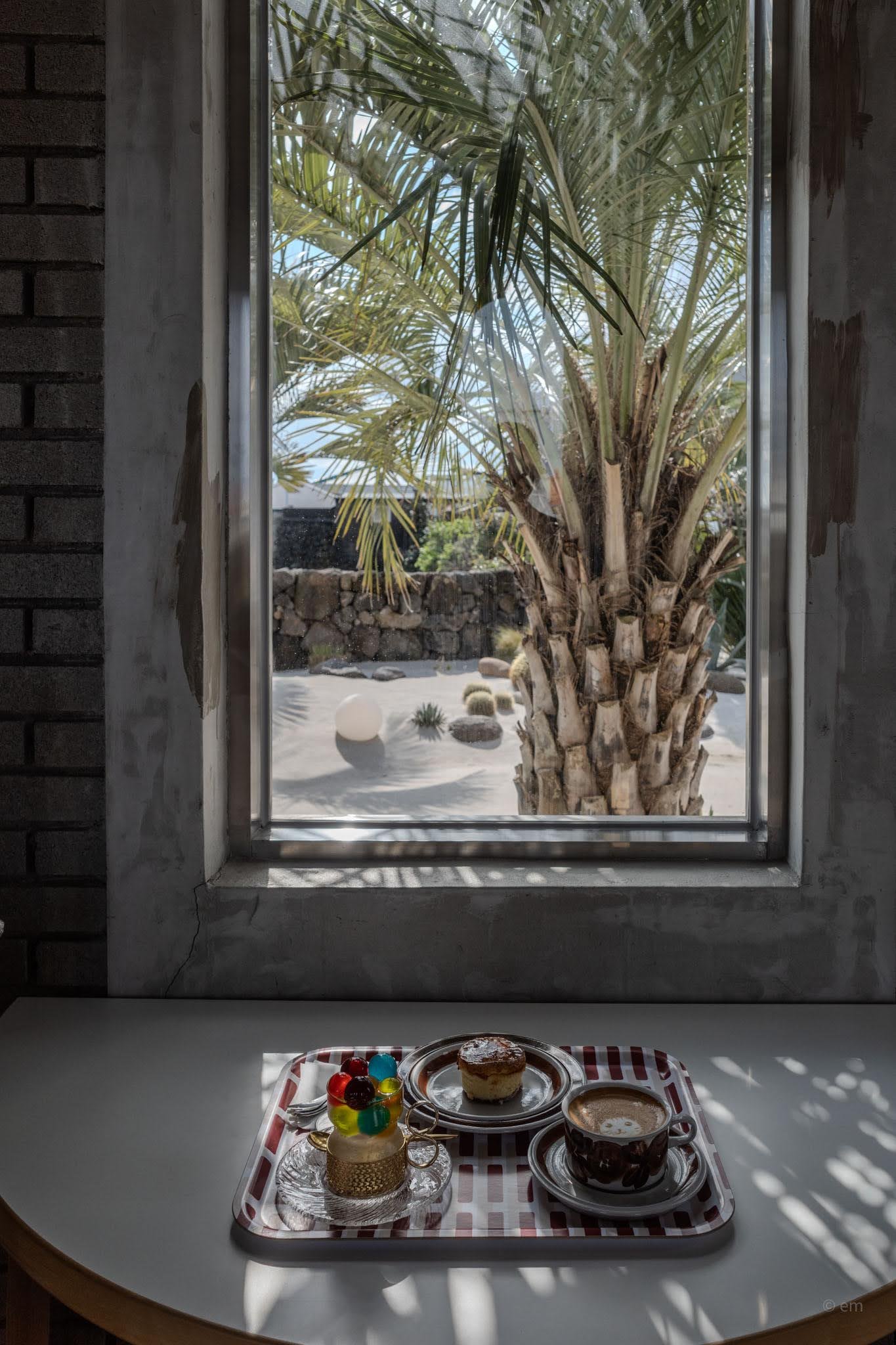
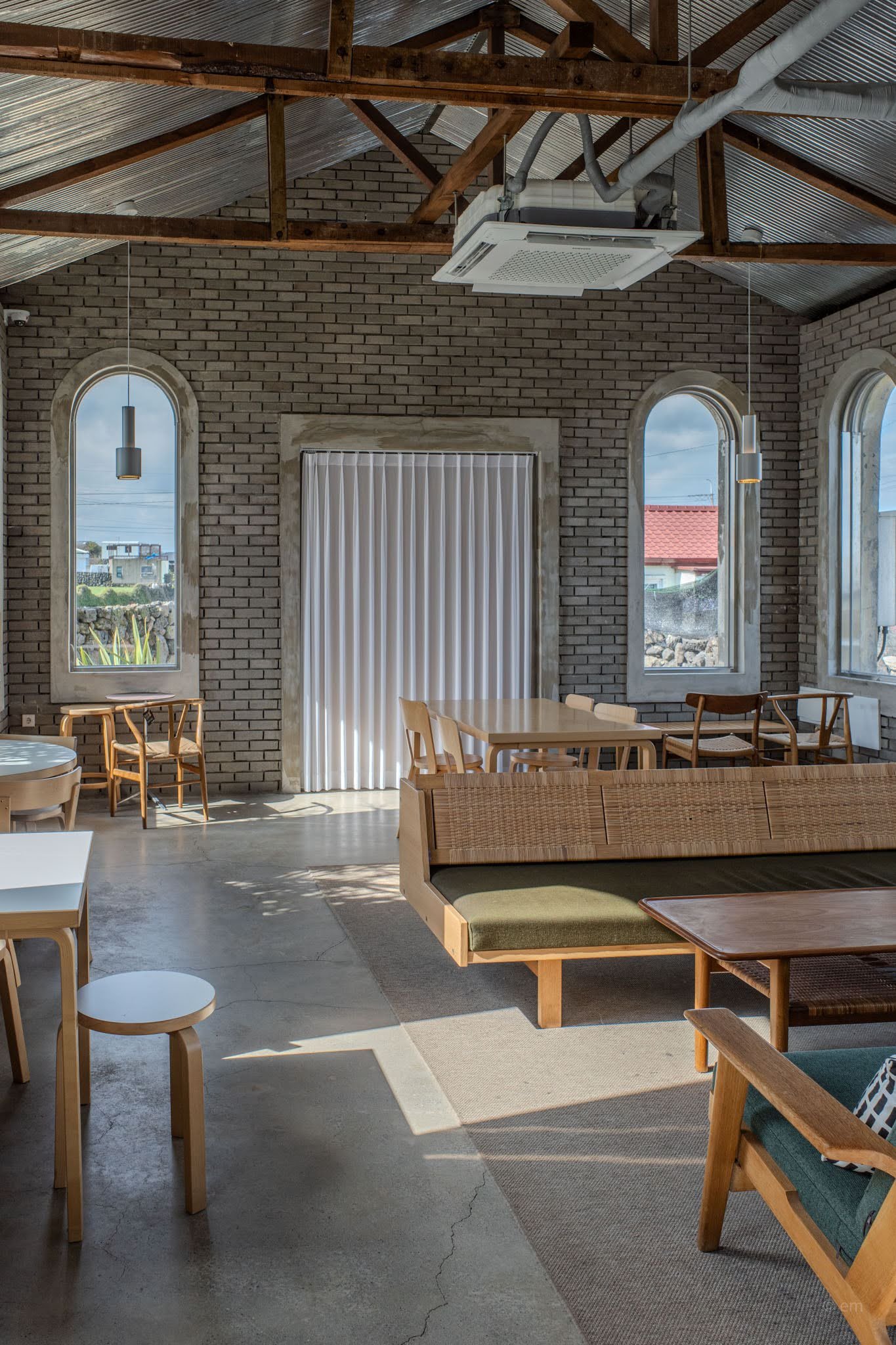
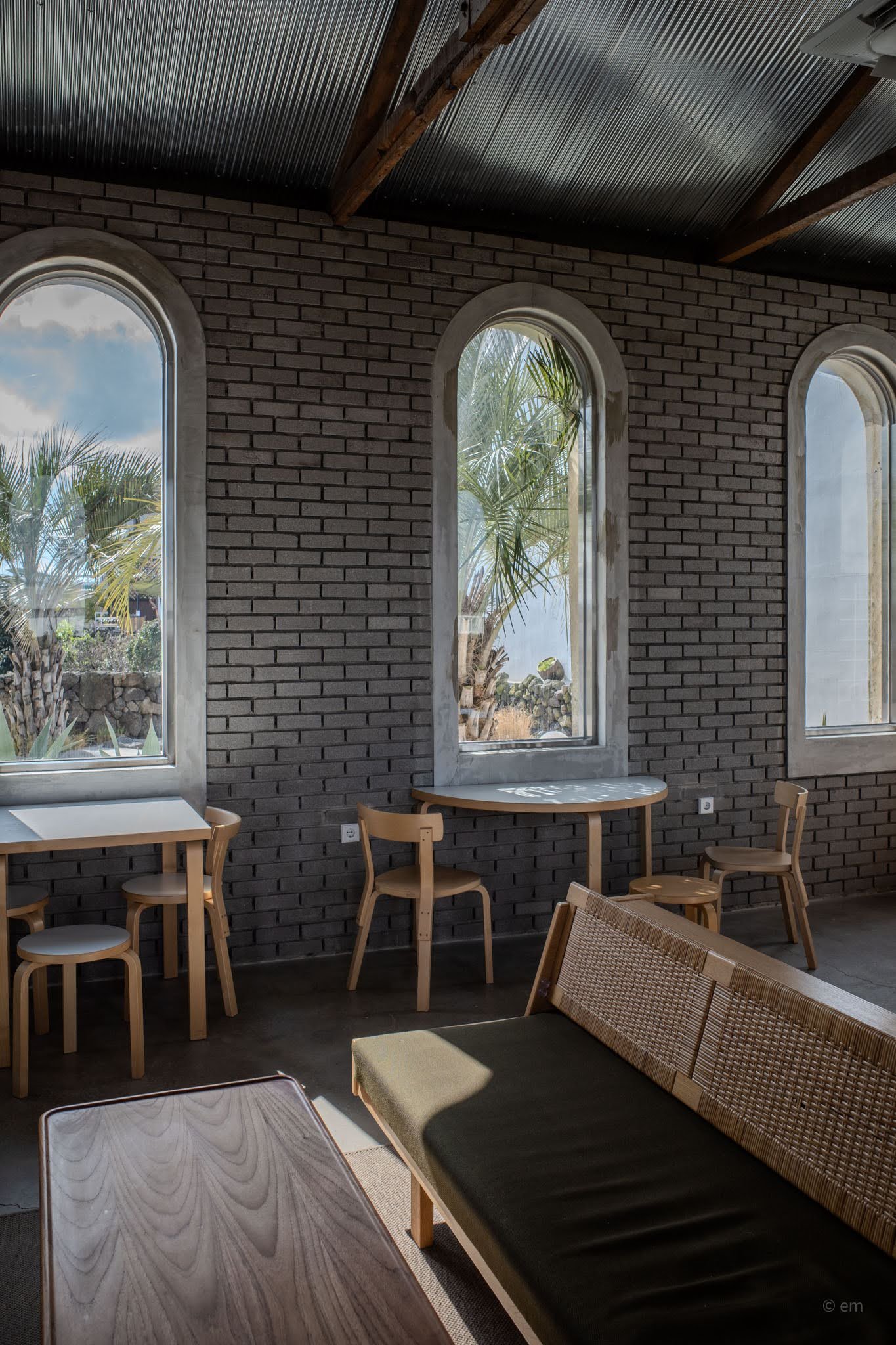
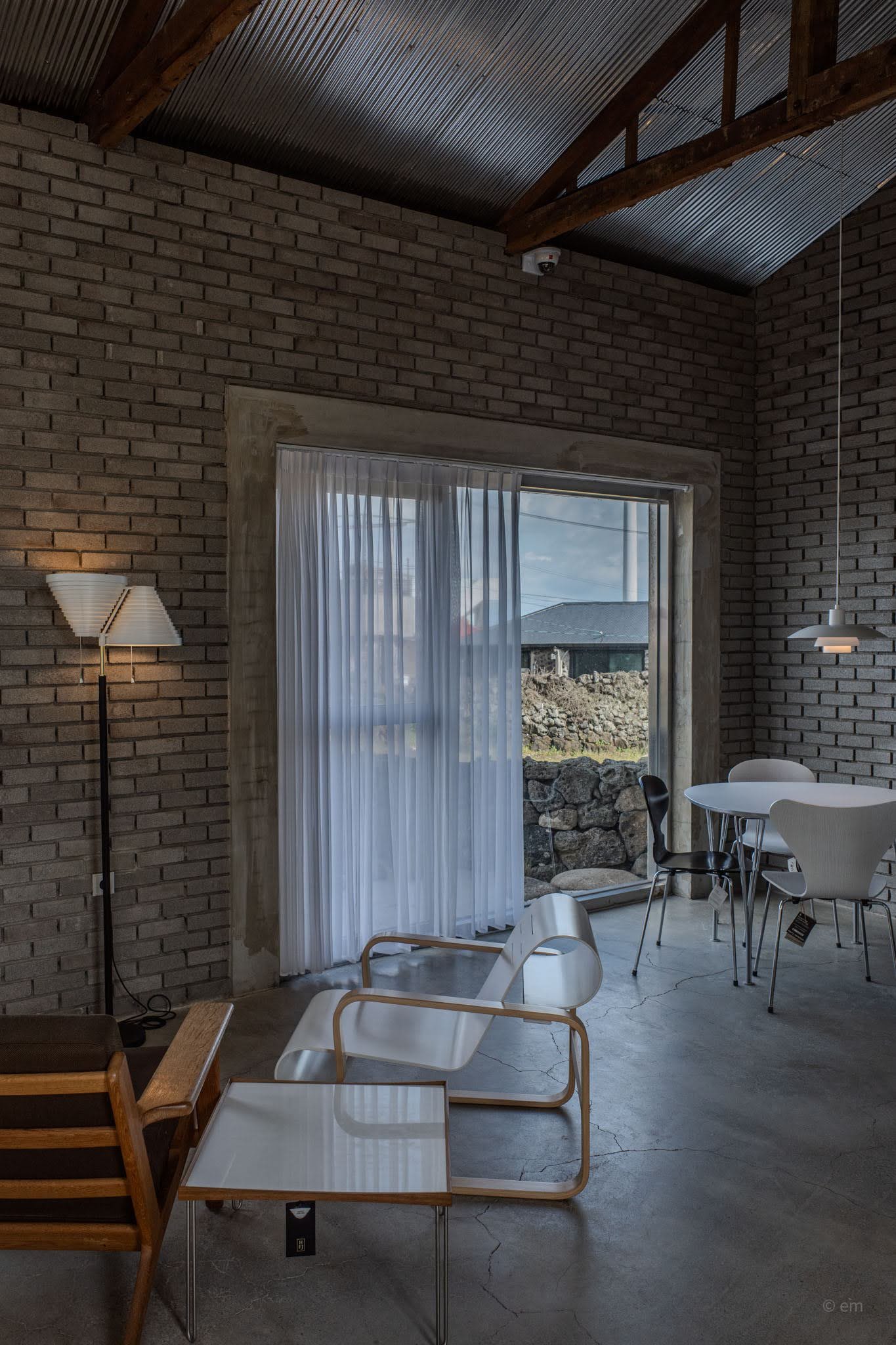
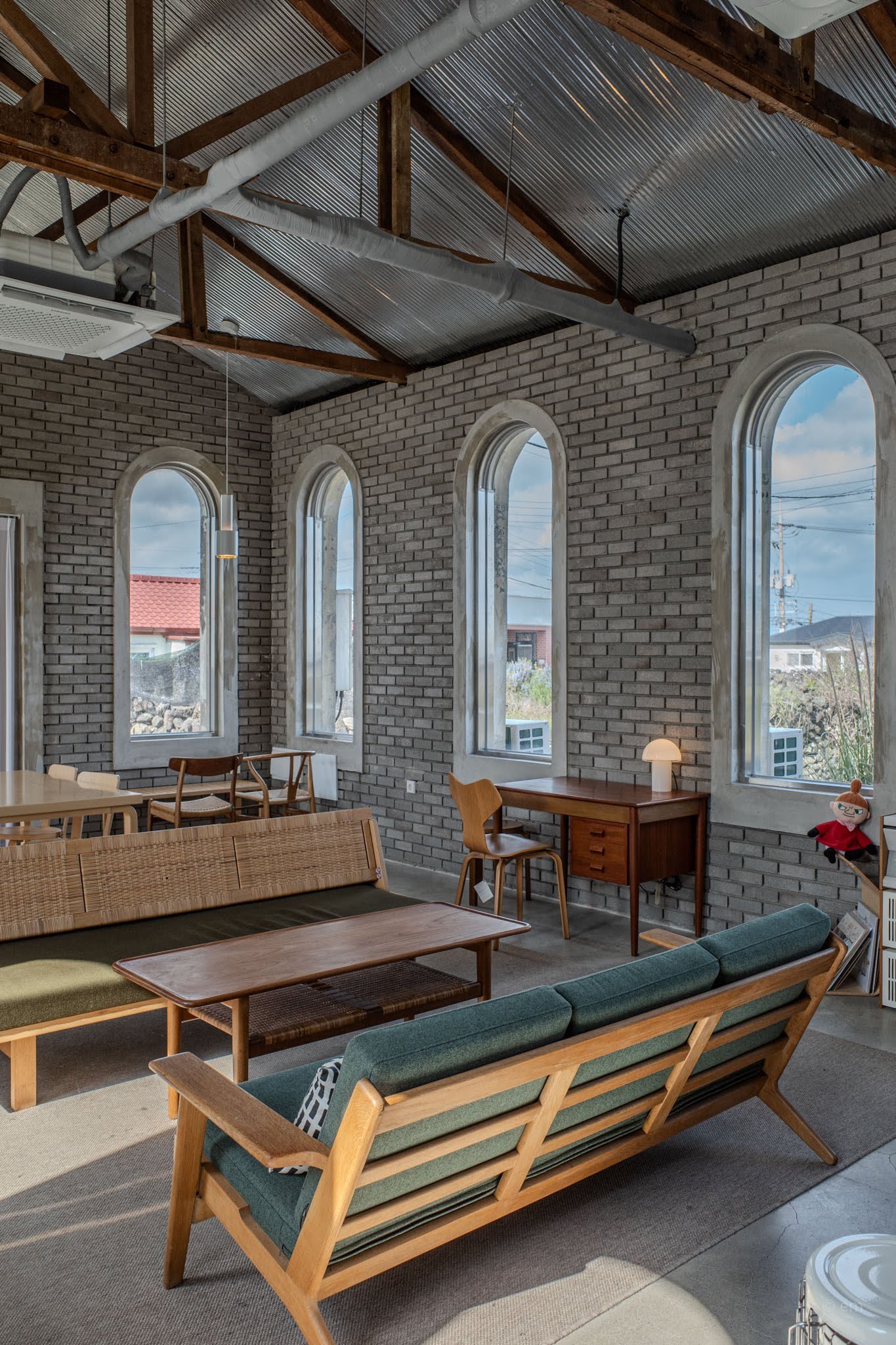
The main space occupies the church building itself, and the conversion has been handled with real intelligence. The interior walls are grey brick — a departure from the weathered white plaster of the facade — and the original pitched roofline is left fully exposed: corrugated metal sheeting, timber beams, a vaulted ceiling that still carries the proportions of a place of assembly. Arched windows run along both sides, framing views of palm fronds, basalt walls, and the low Jeju skyline beyond.
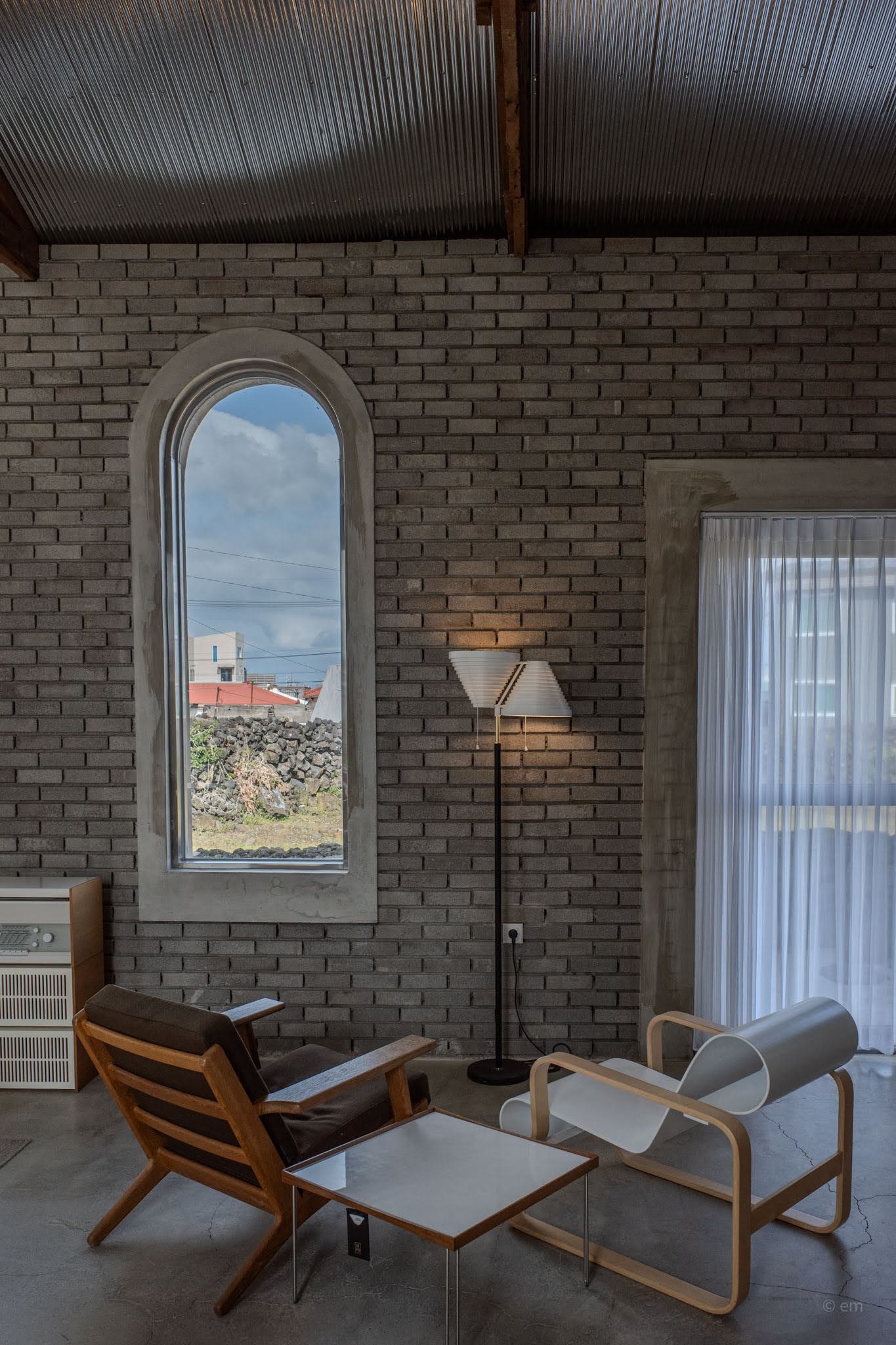
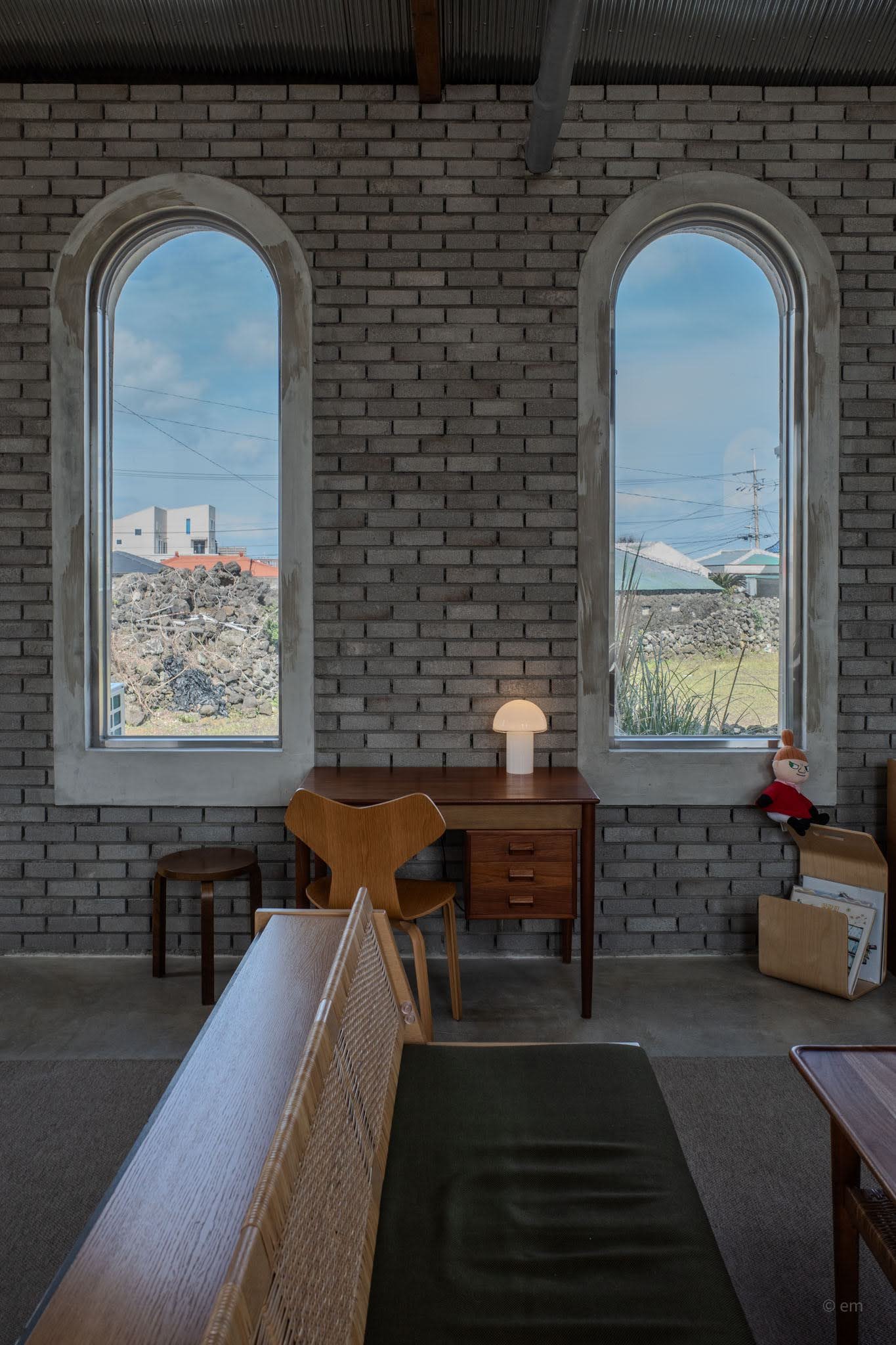
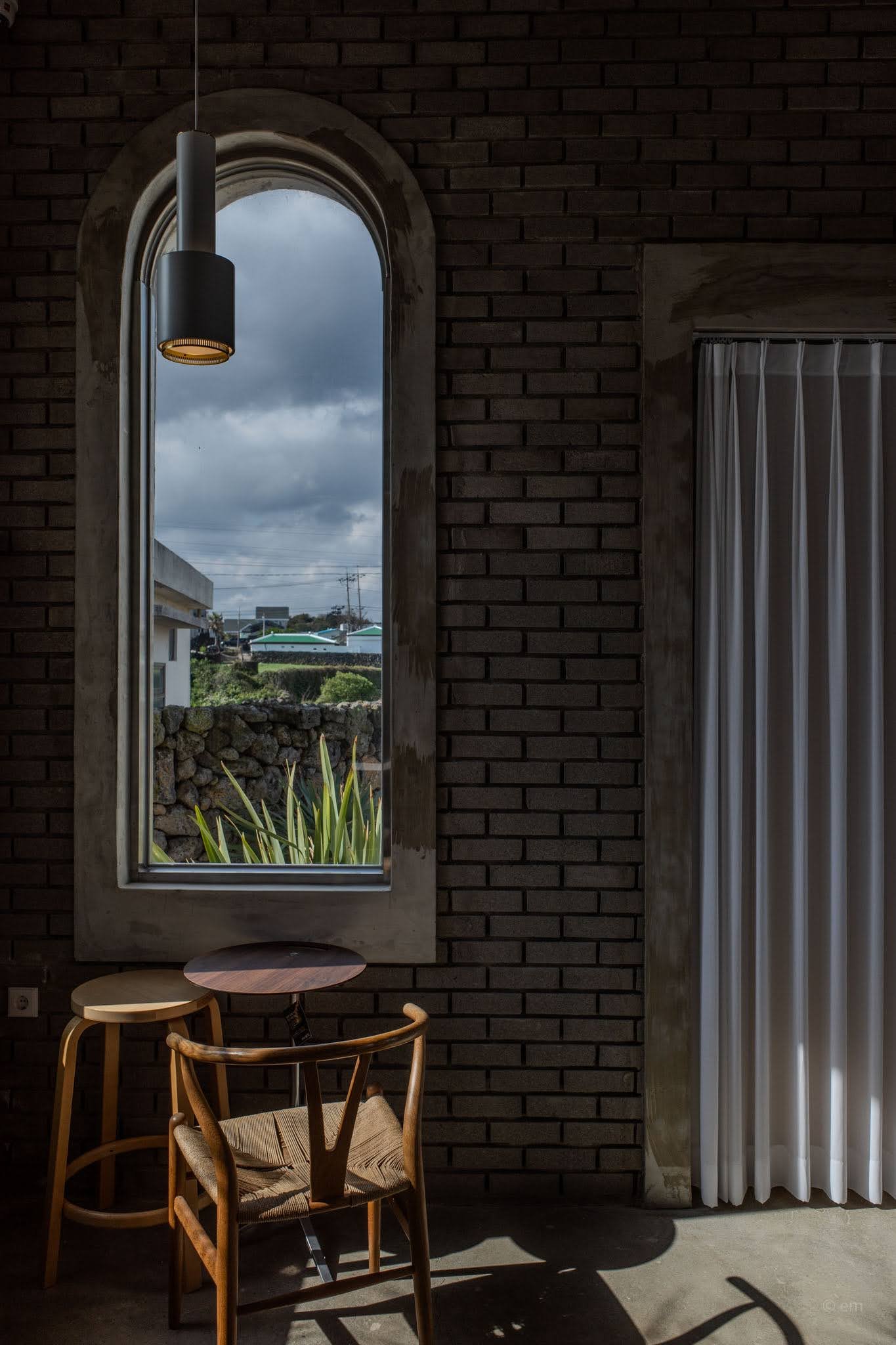
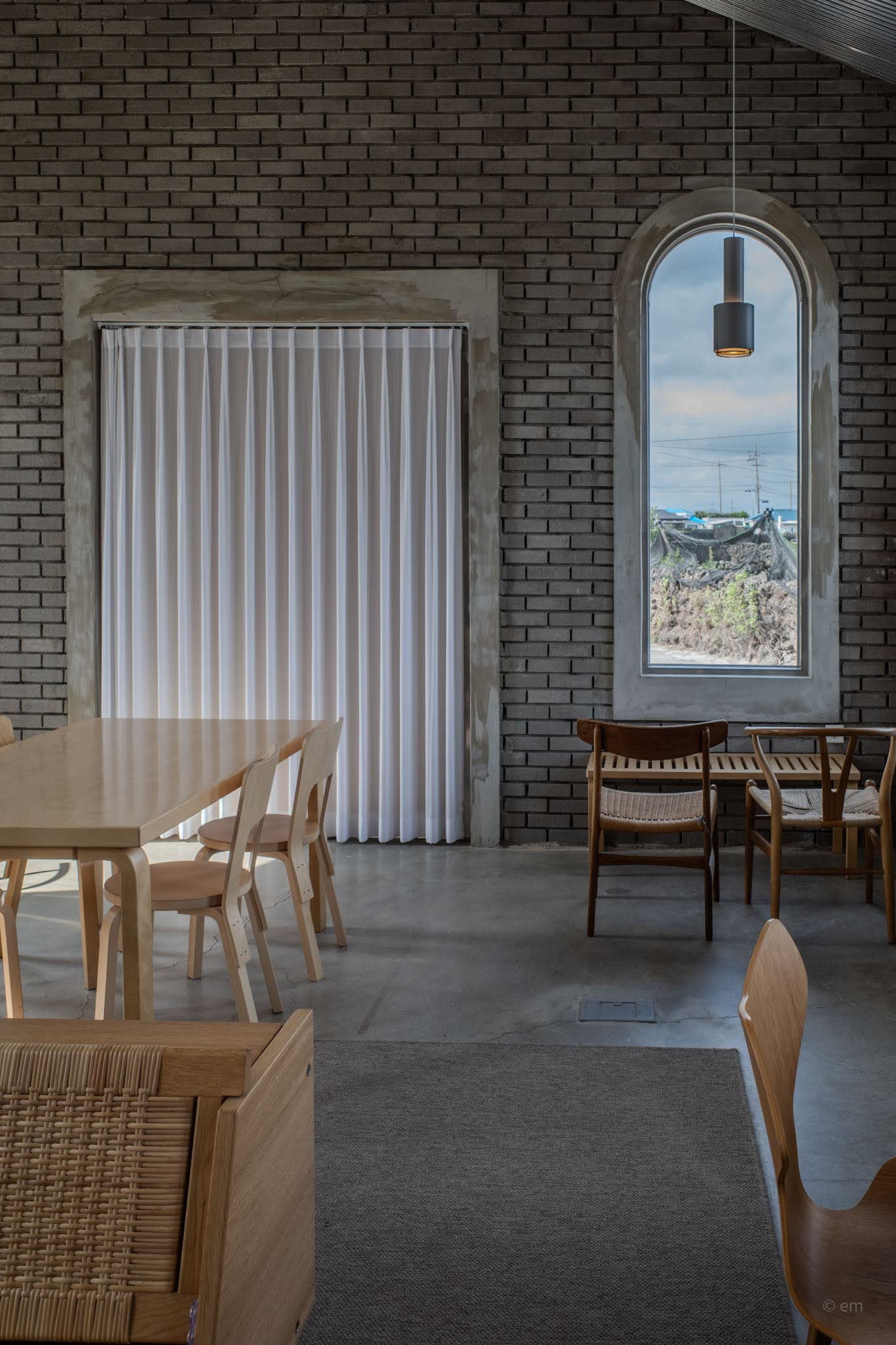
The furniture is Nordic vintage, and it has been curated seriously. Wishbone chairs by Hans Wegner occupy the window tables. A mid-century Danish teak desk sits against the wall beside an Aalto floor lamp. Green-upholstered sofas with clean oak frames face woven rattan benches across worn concrete floors. Artek stools and birch chairs by Alvar Aalto appear throughout, their soft wood tones warm against the grey brick. A small Moomin doll sits on a magazine rack in the corner — the sole concession to whimsy in an interior otherwise governed by restraint.
The effect is something between a Scandinavian design museum and an actual living room: studied, but not cold. The arched windows do the work that stained glass might do elsewhere, parceling the landscape into framed compositions that shift with the light.
The White Room
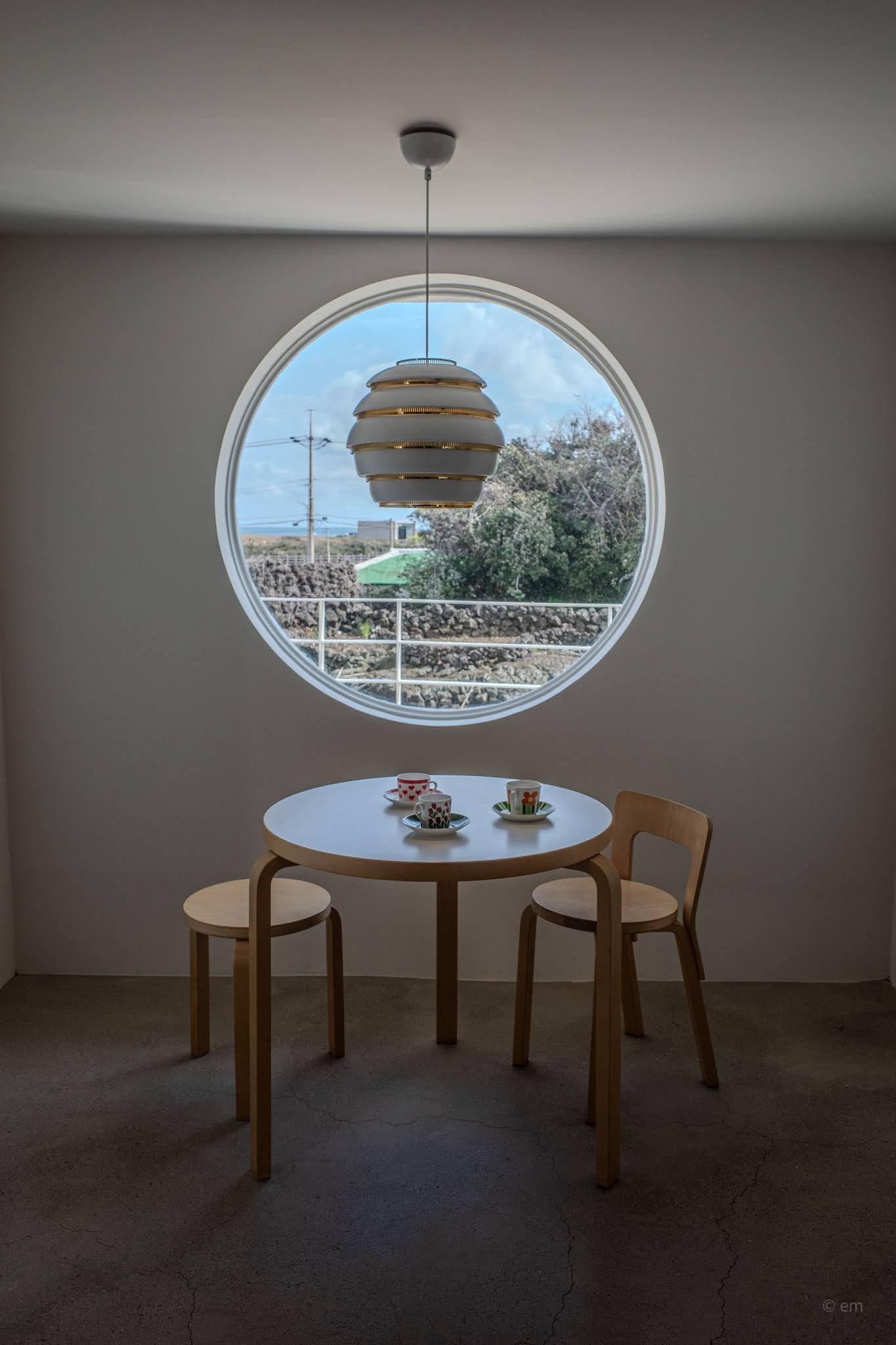
A second, smaller building on the property is almost the photographic and conceptual inverse of the main church space. White-plastered walls, a round porthole window, an Artek table with birch chairs set with espresso cups — and through that perfect circle of glass, a pendant lamp that echoes its own circular form hanging against the sky. This is the room that photographs impossibly well, the one that circulates on Instagram. In person it is genuinely quiet, the kind of small room that feels like it was designed for two people to sit in silence.
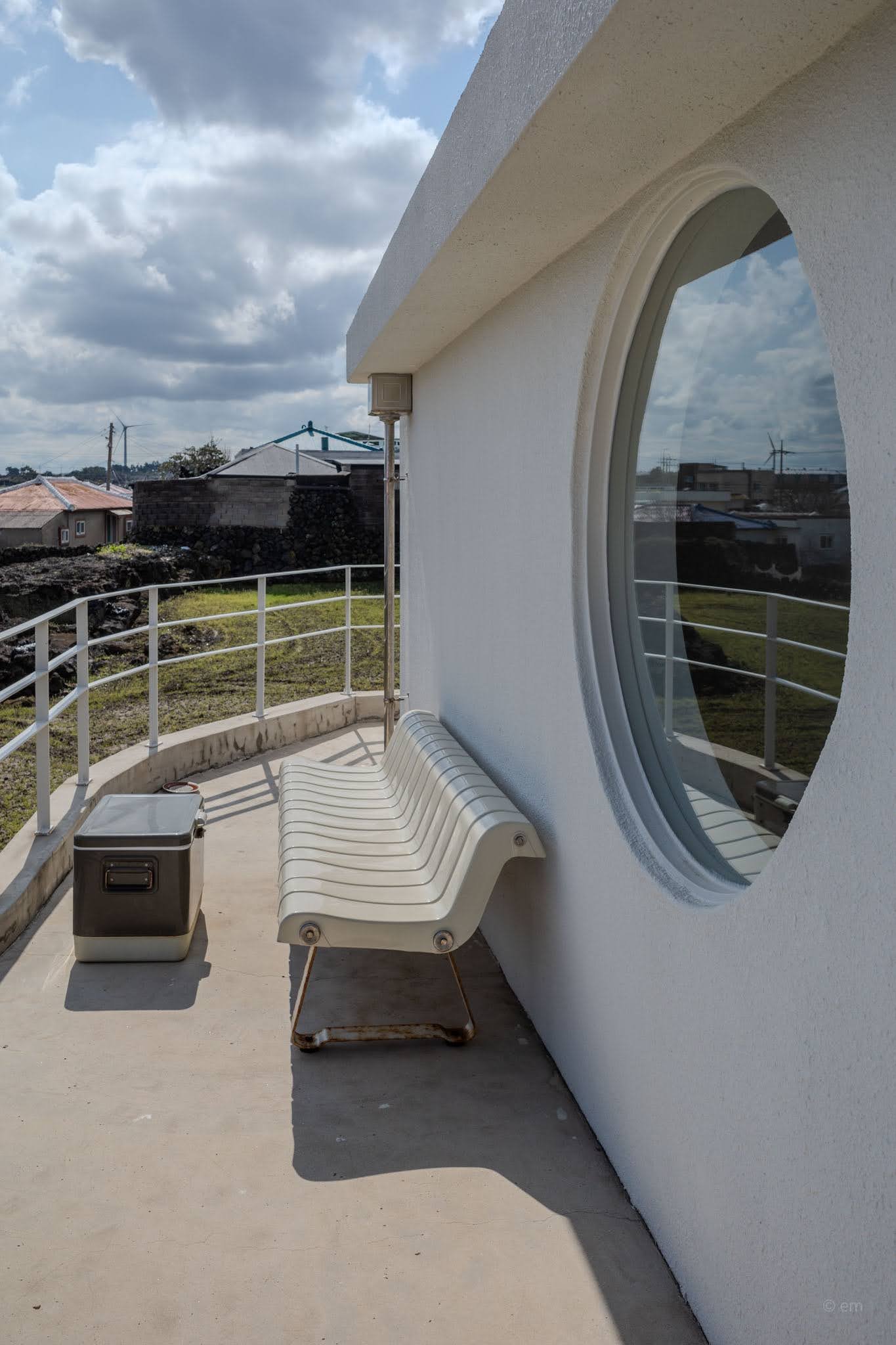
A terrace wraps around the outside, with a curved bench pressed against the white wall and the round window reflected in the glass behind it. The view is Jeju’s east: rooftops, basalt walls, wind turbines on the horizon.
Jelly Soda and Cheesecake
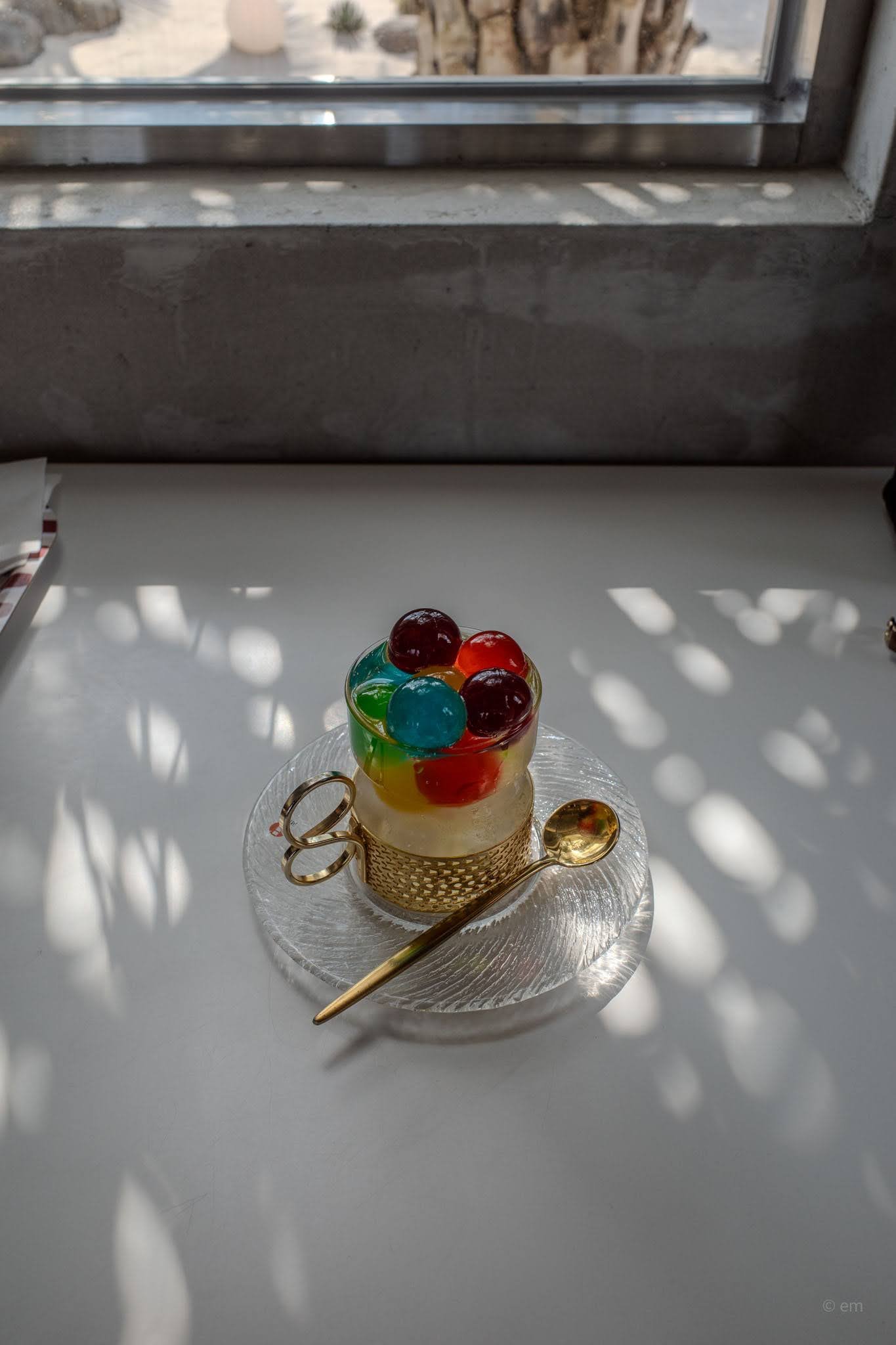
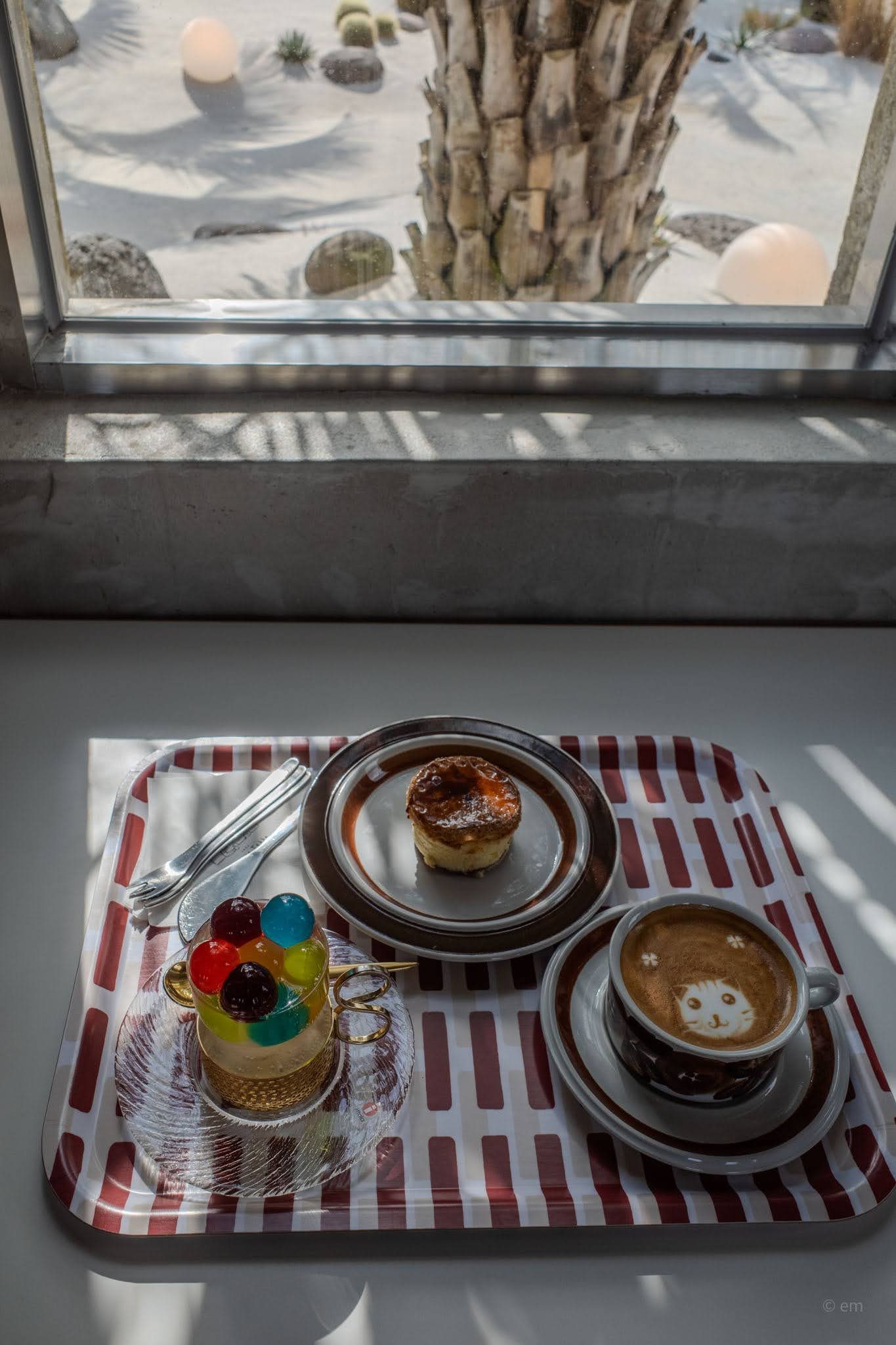
The signature menu item is the jelly soda — a clear glass vessel holding panna cotta beneath a pile of translucent gummy spheres in primary colors: red, green, blue, orange, purple. It arrives on a striped Marimekko-style tray alongside a small basque cheesecake and a latte with latte art. The combination is cheerfully anachronistic against the spare Scandinavian surroundings, as if the dessert menu answered to different design rules than everything else. Other offerings have included kaymak cheese with biscuits, kaya toast, and espresso drinks.
The name makes its own kind of sense once you’re inside: cheese for the dairy-forward menu; tabby for the striped cats that move through the garden. The church is just the building they chose to live in.
Cafe Cheese Tabby Address: 18-9 Haengwon-ro 7-gil, Gujwa-eup, Jeju Instagram: @cafe_cheesetabby Hours: Hours and operating days vary and have been inconsistent across sources — check their Instagram before visiting, particularly if traveling from outside the area. Note-only guests middle school age and older; pets welcome.
Near Konan Beach — the local nickname for Haengwon Beach on Jeju’s east coast — in a neighborhood that still feels like it belongs to the island rather than to the tourism industry — which may explain why the cats here walk so slowly.
If you’re planning a trip around Jeju you can look up nearby experiences and trips here on Klook.
This post contains affiliate links. If you make a booking through them, I may earn a small commission at no extra cost to you.