You come around the bend on Haemajihaean-ro and something is wrong with the island — in the best way.
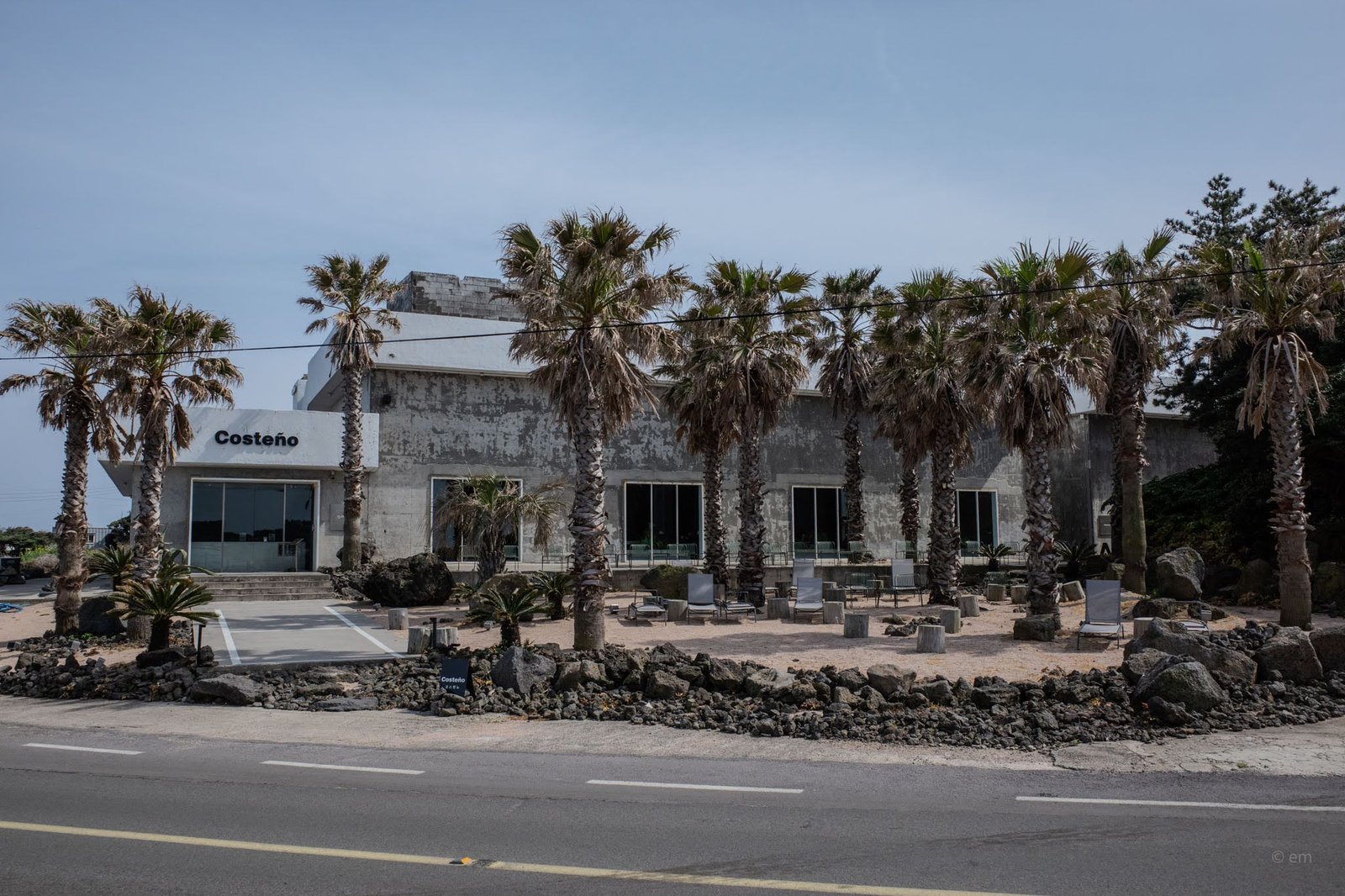
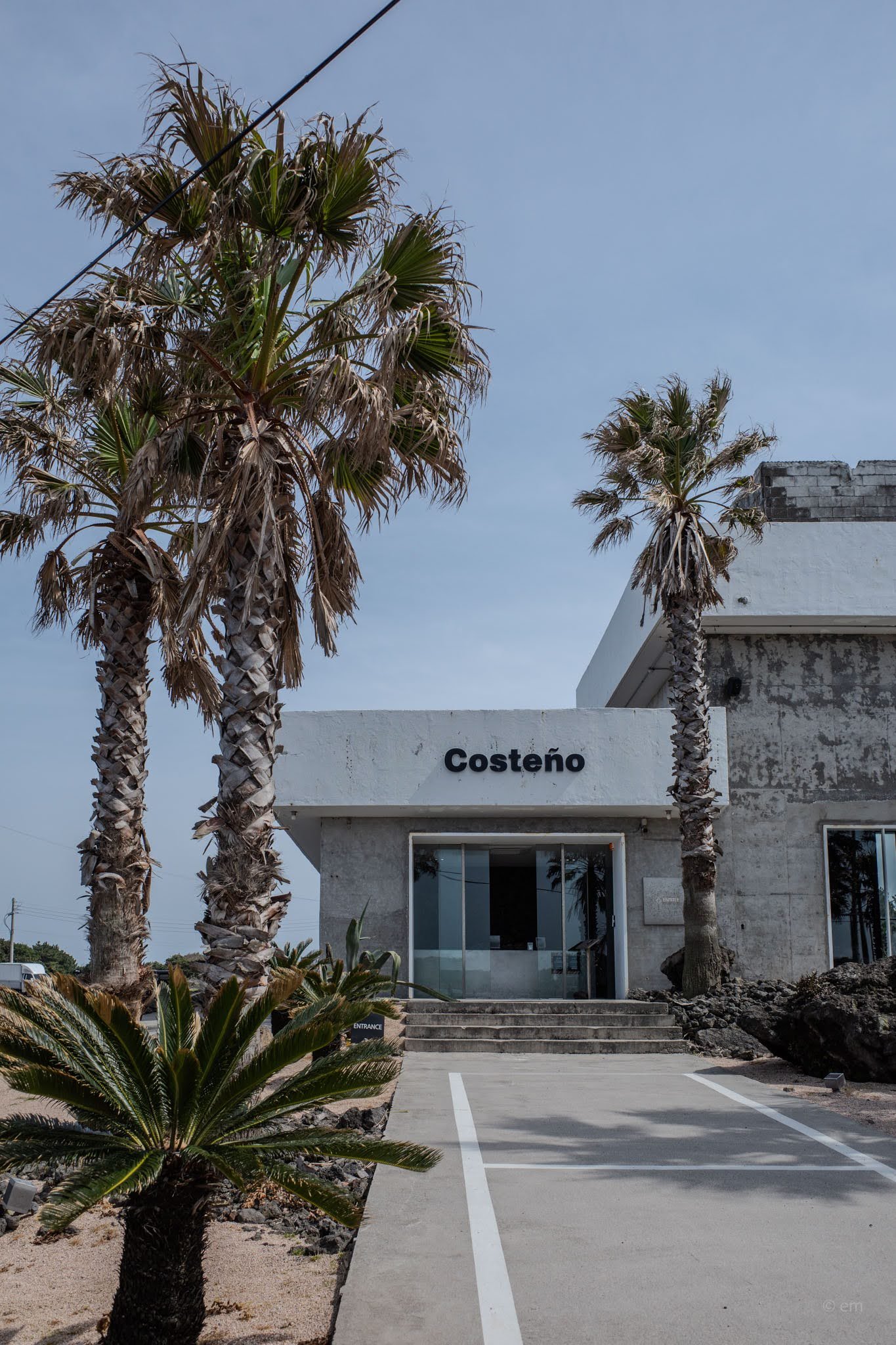
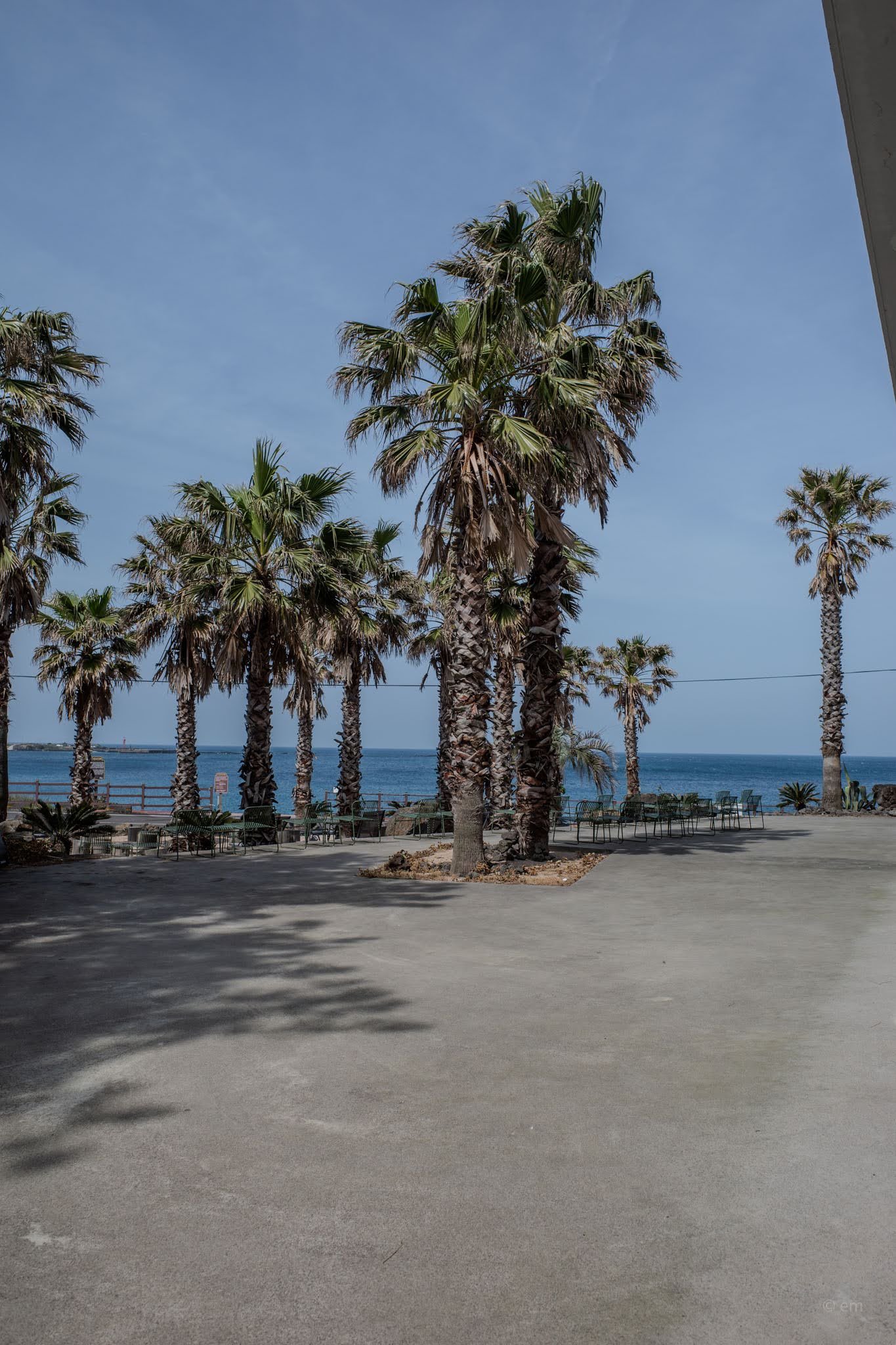
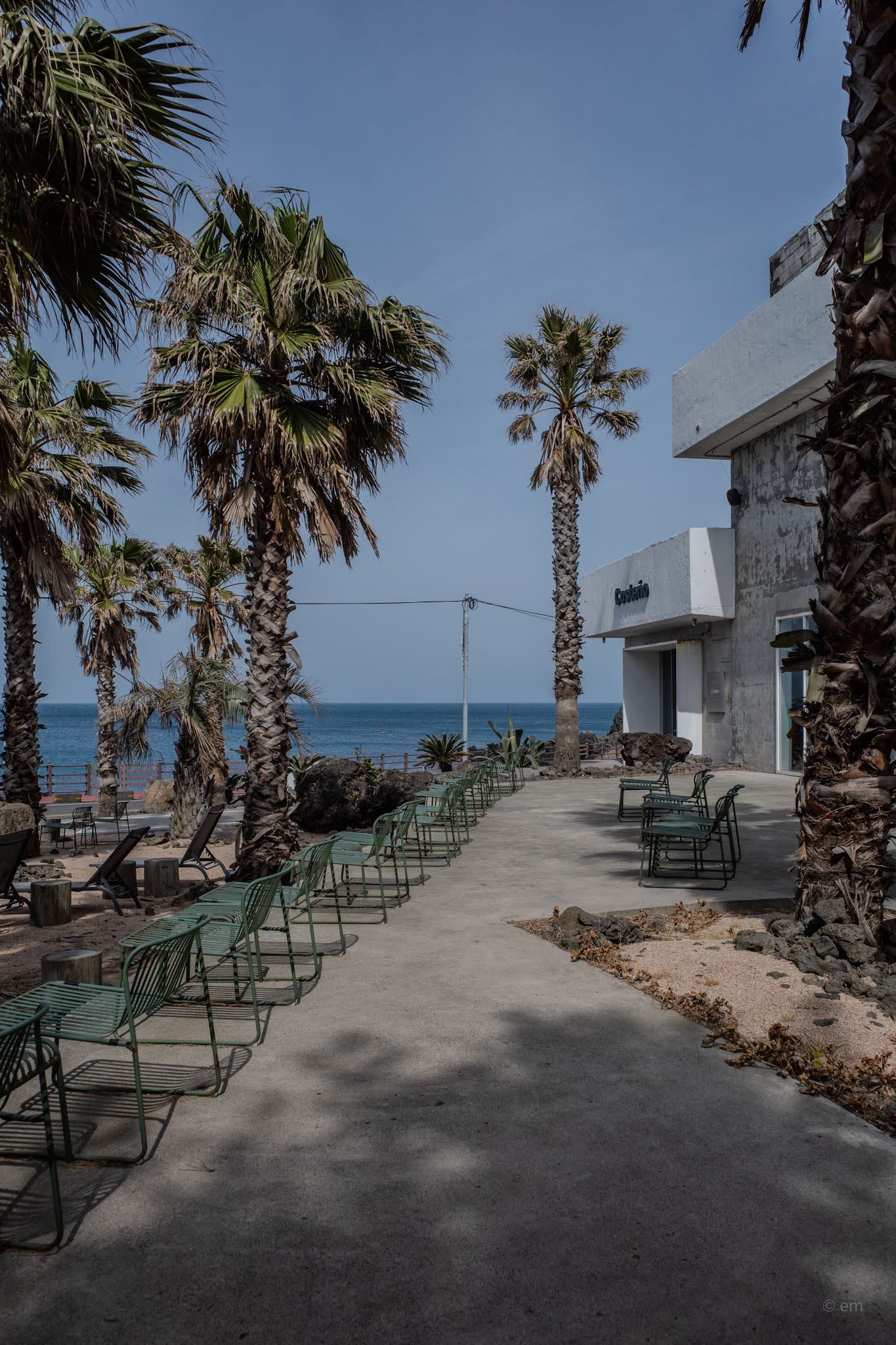
The palms shouldn’t look like this. They’re too tall, too ragged, too wind-beaten and foreign, rising out of black lava rock and pink sand in front of a concrete building that reads more Bogotá warehouse than Jeju café. The sign above the entrance says Costeño — Spanish for someone from the coast, specifically the Caribbean coast of Colombia, where a beach by the same name sits on the country’s northern shore. The name is doing a lot of work. So is everything else here.
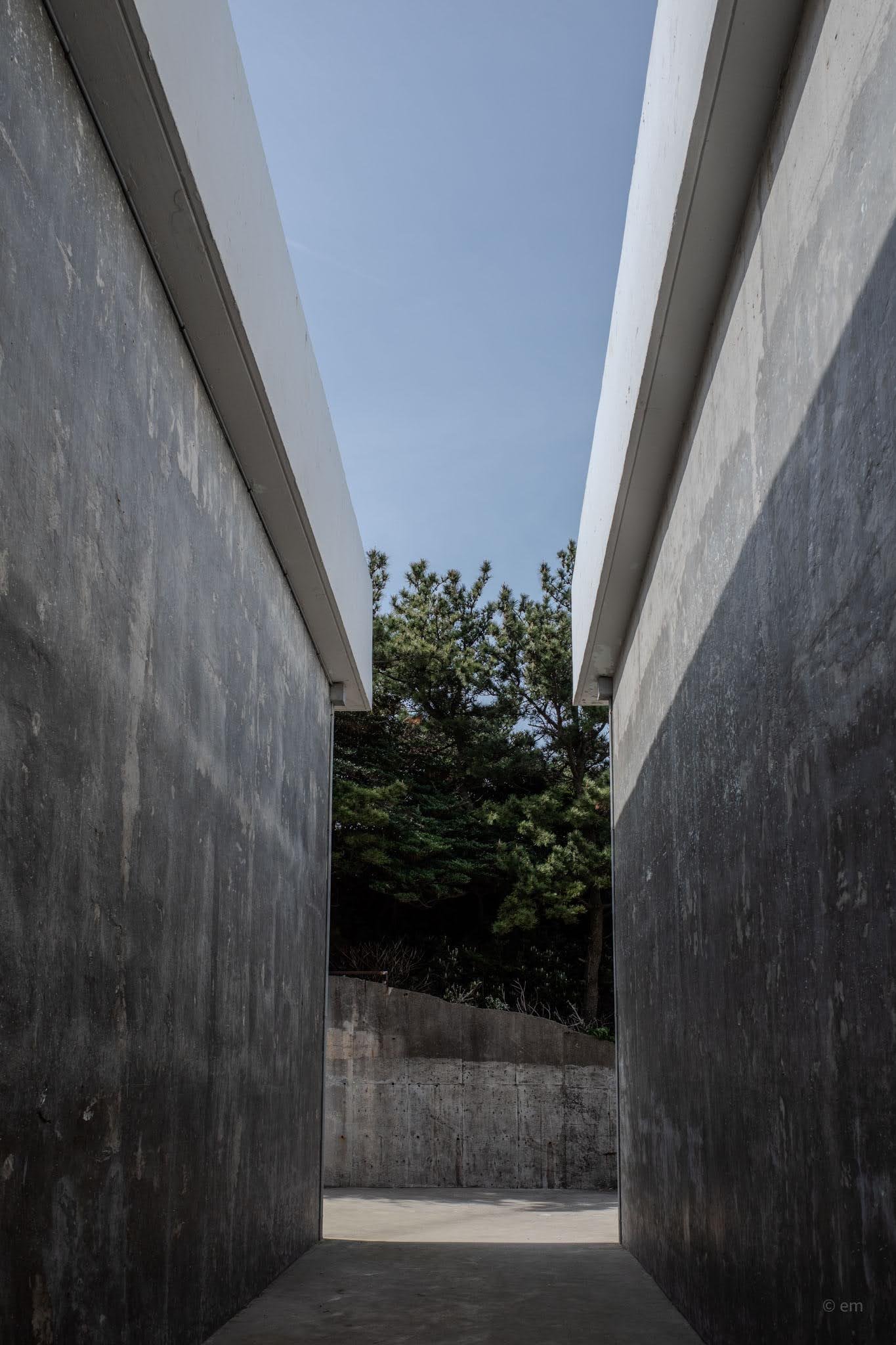
The Building
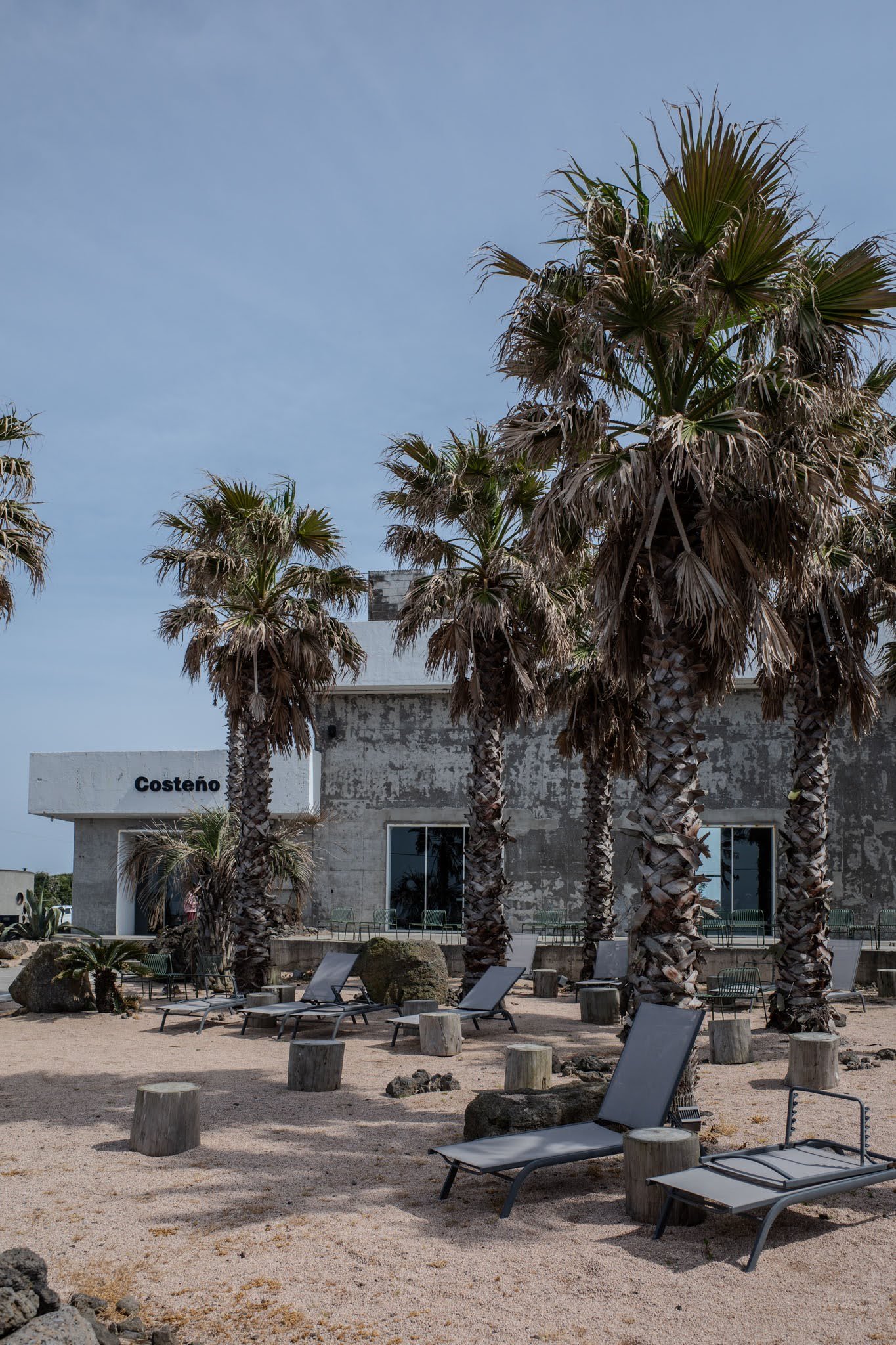
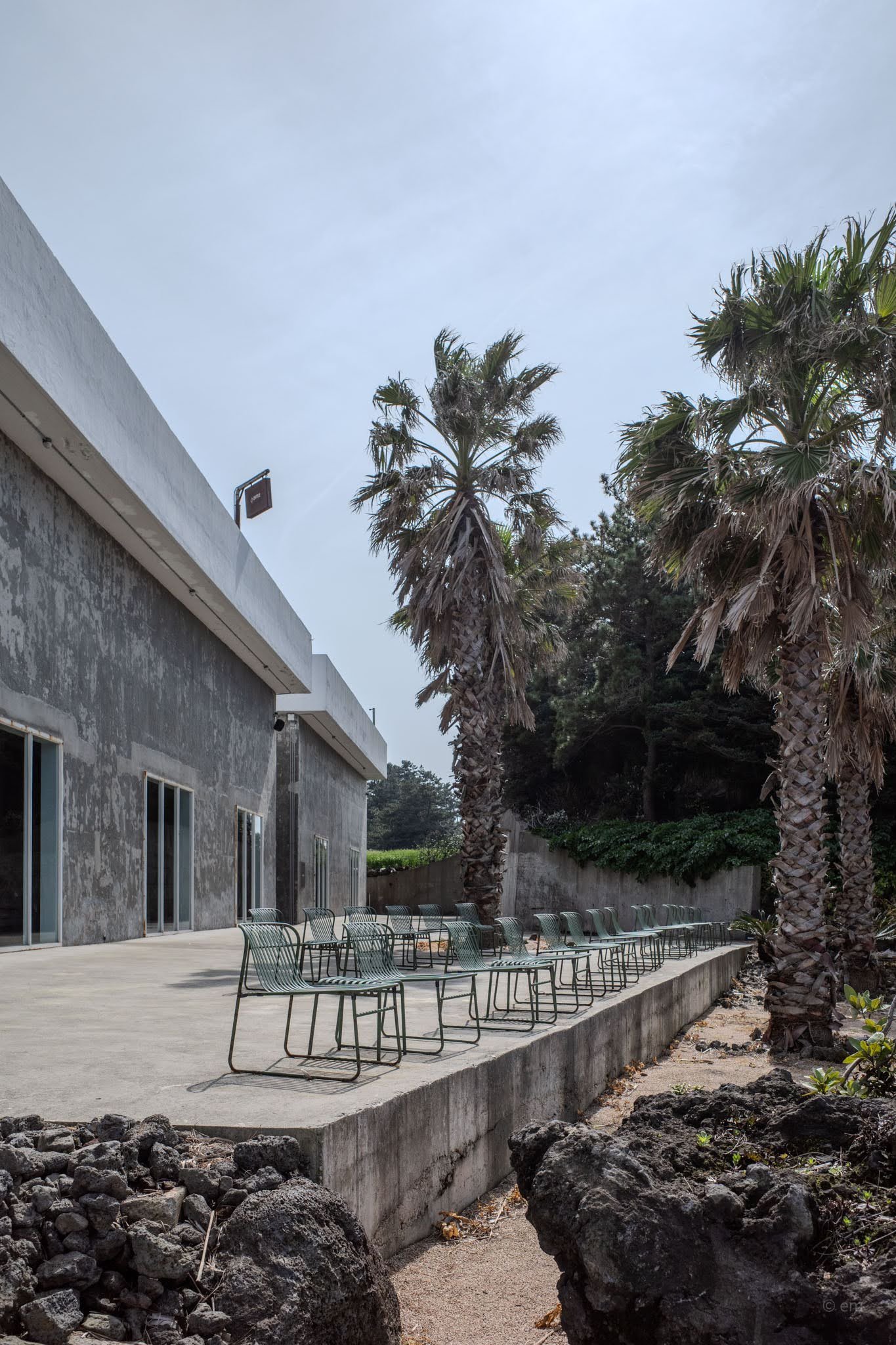
Costeño occupies a large industrial-scale concrete structure in Gujwa-eup, on Jeju’s northeastern coastline. The building is weathered and unhurried about it — the exterior walls are streaked and blotched with age, the concrete worn in ways that feel deliberate without being fussy. A white-trimmed canopy bears the name in clean block lettering. Around it, dozens of fan palms have been planted in the sandy ground between the car park and the road, interspersed with cycads, lava boulders, and wooden log stumps. It doesn’t read as Korea. It reads as somewhere hotter, drier, and further from home.
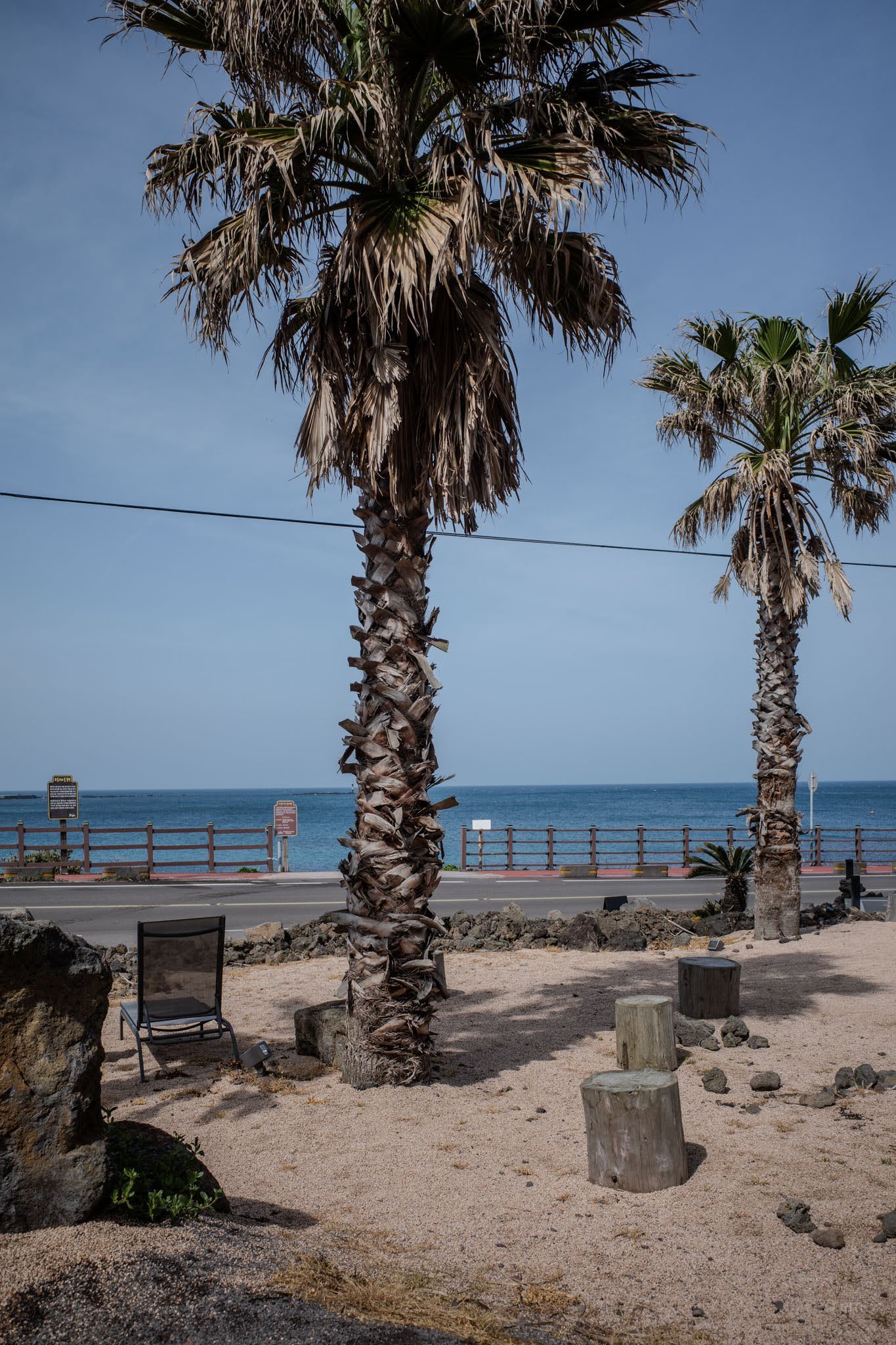
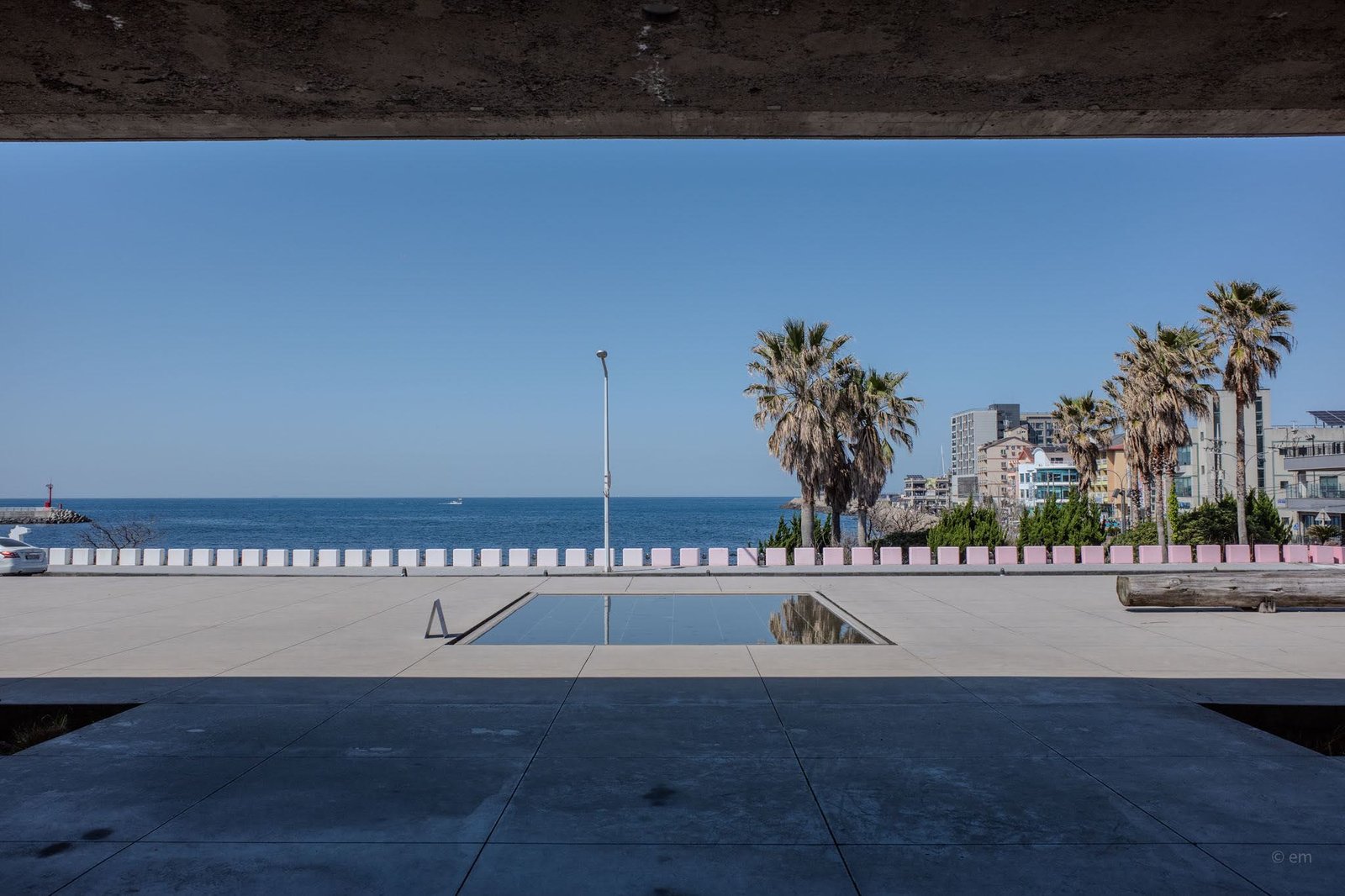
The Jeju sea sits directly across the coastal road. On clear days, the horizon line cuts through the palms from every angle on the property.
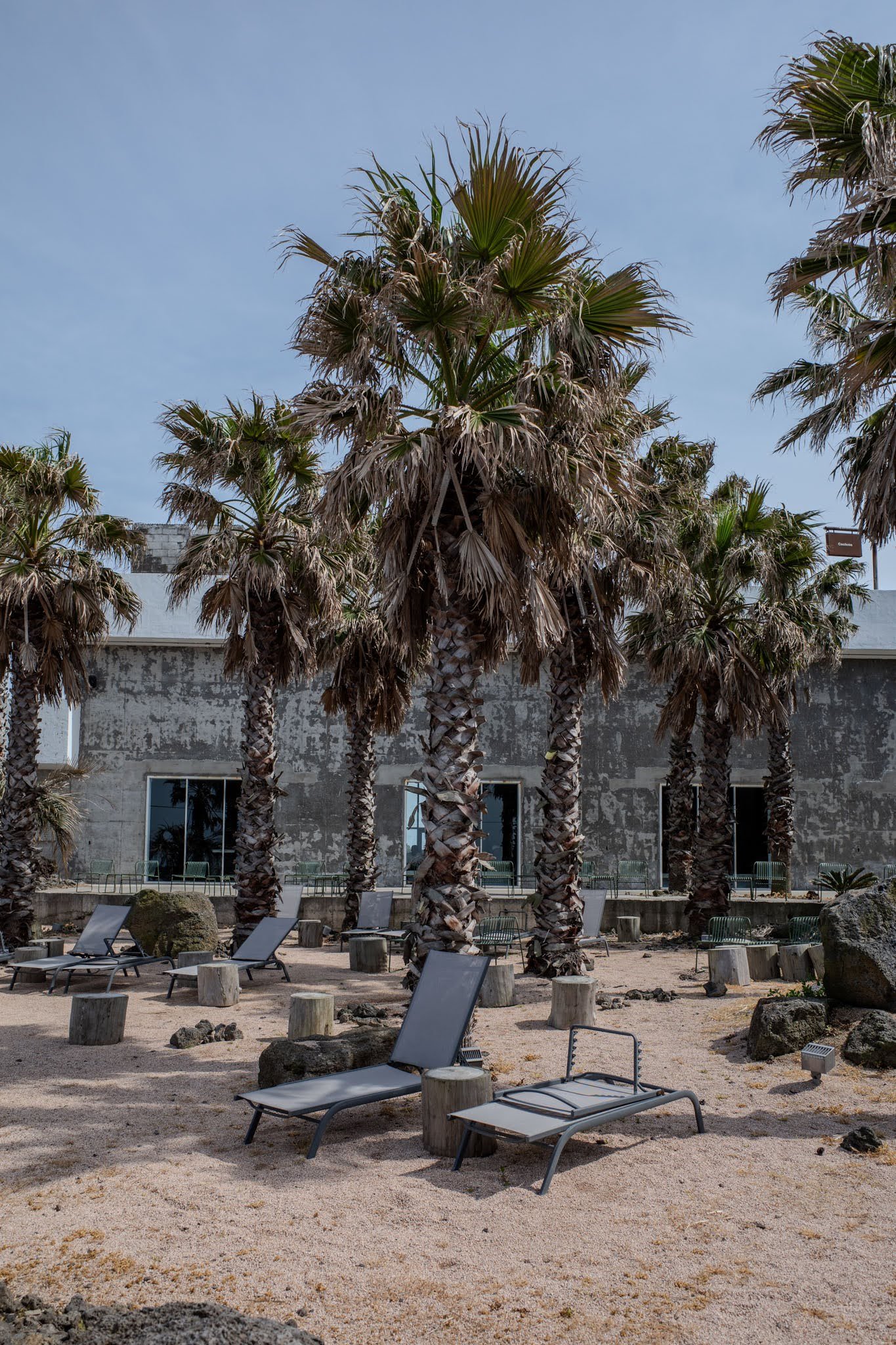
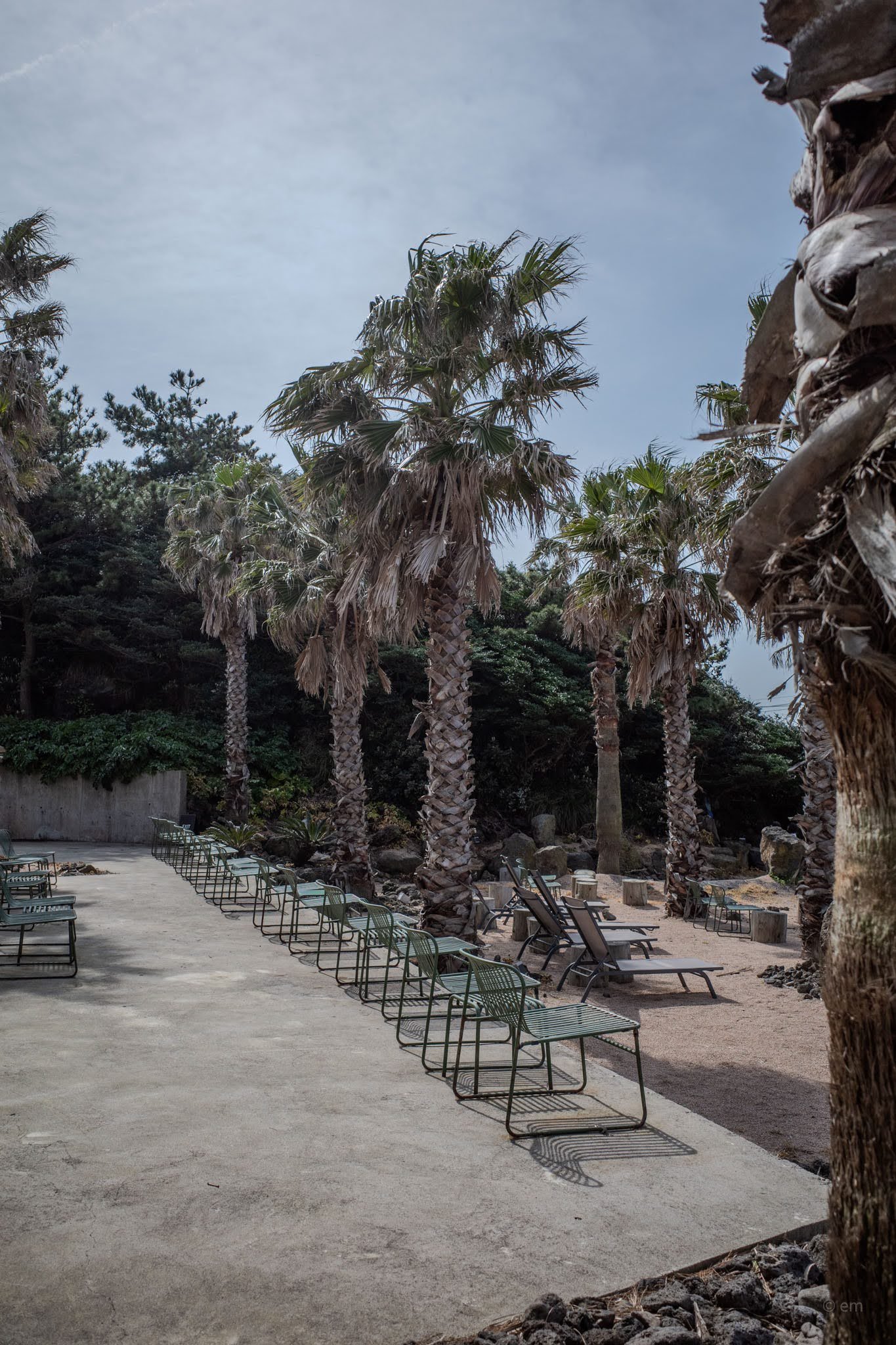
The Grounds
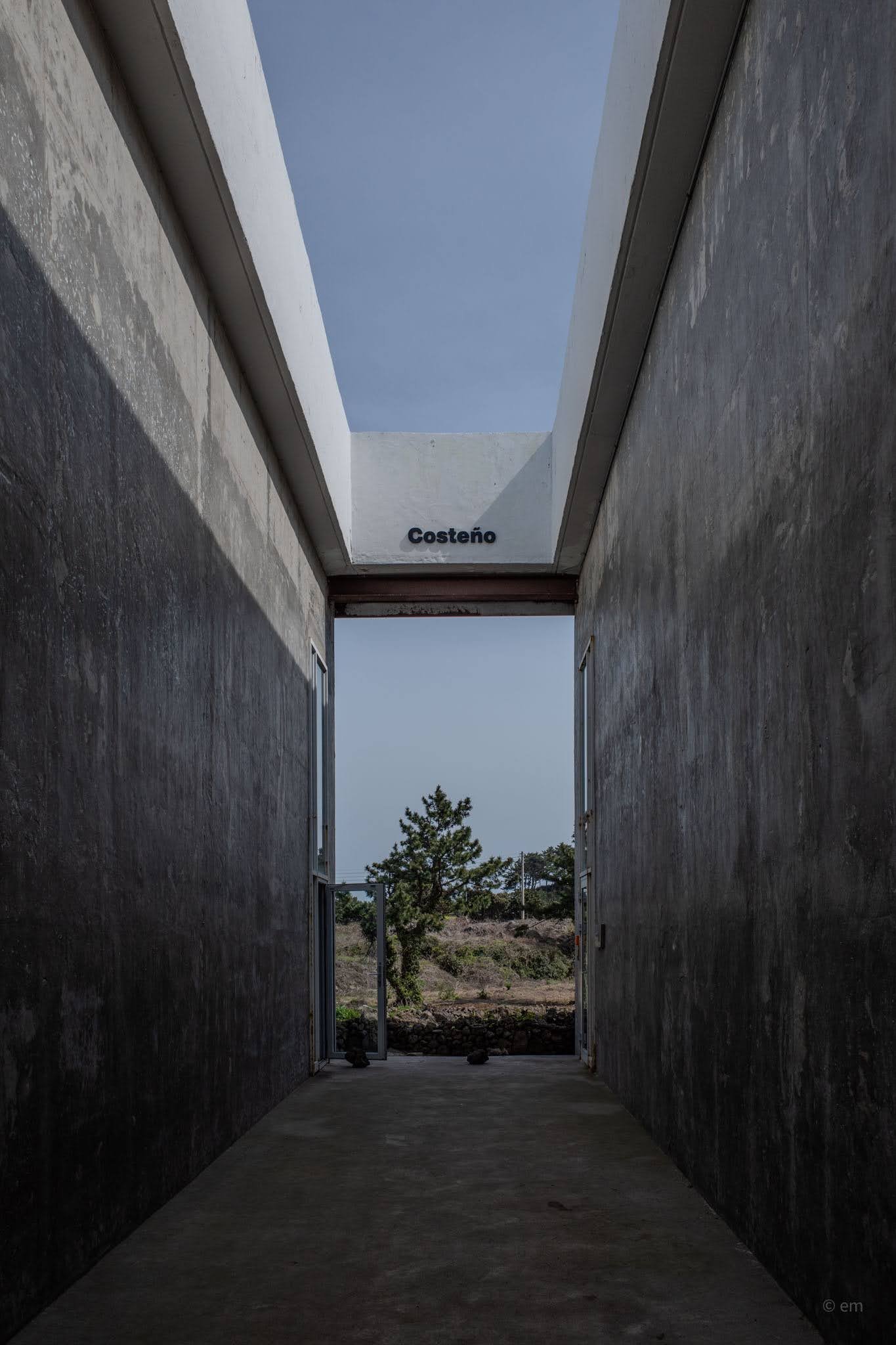
The outdoor space wraps around the building on multiple sides, each zone shifting in character. Out front, the sandy lot with its sunloungers and stumps has the feel of a resort that forgot to finish. Behind the building, a long concrete terrace runs the full length of the sea-facing wall, lined with green wire chairs angled toward the water. Between the two zones, architectural concrete corridors cut through the building’s mass — roofed passages open to sky at the top, their dark walls framing slivers of pine tree and blue above, functioning as thresholds rather than mere hallways.
Everything here is a transition from one version of outside to another.
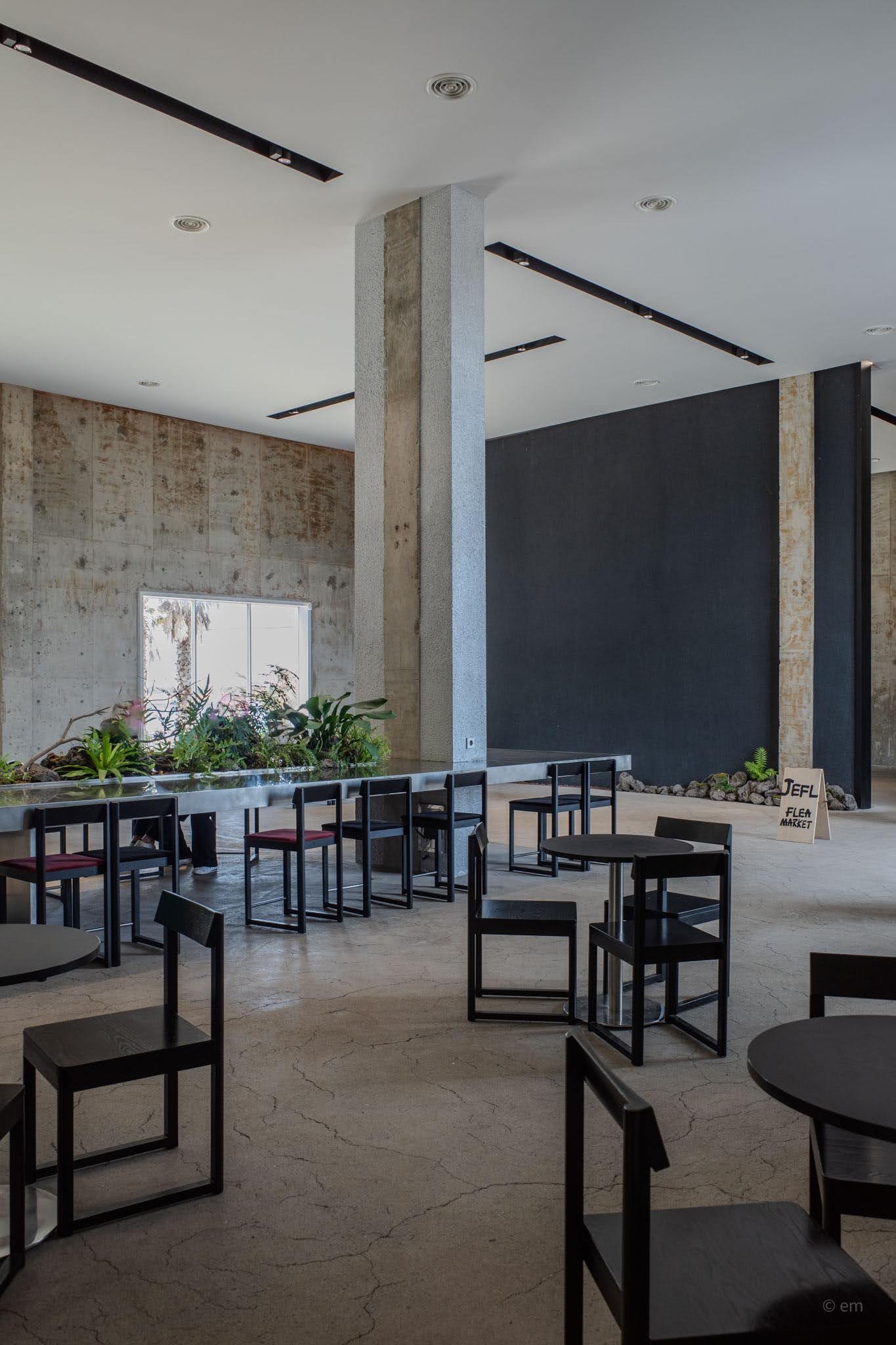
The Interior
The inside is larger than you expect from the entrance, and less unified. The main room is high-ceilinged and bright, with exposed concrete columns rising from a cracked terrazzo floor. Black angular chairs — low-slung and geometric — surround dark circular tables. A long planter runs along one side, dense with tropical growth, backed by floor-to-ceiling glass that faces the palms. A monitor near the counter displays the drink menu. On the day I visited, a sign near the back corner advertised the JEFL Flea Market, which periodically takes over this section of the space.
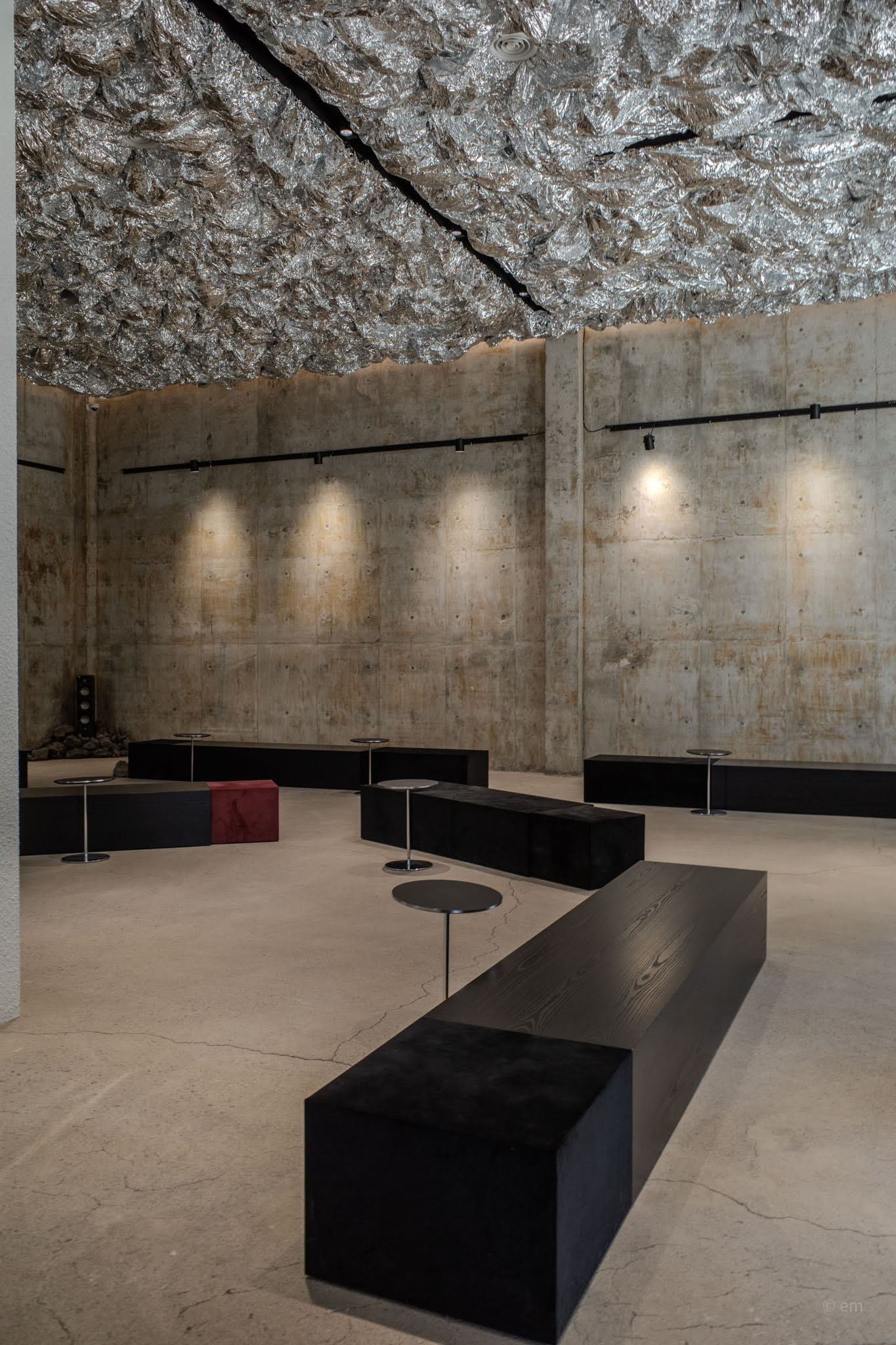
Further in, the building reveals a second room entirely unlike the first. The ceiling here is covered in crumpled metallic foil — silver, textured, catching and scattering light like a frozen ocean surface. The walls are raw concrete, lit from below by warm spotlights that pool against the stone. Dark wooden benches sit low on the ground, with slender chrome side tables. It’s dense and cinematic, the kind of space that makes you lower your voice without being asked.
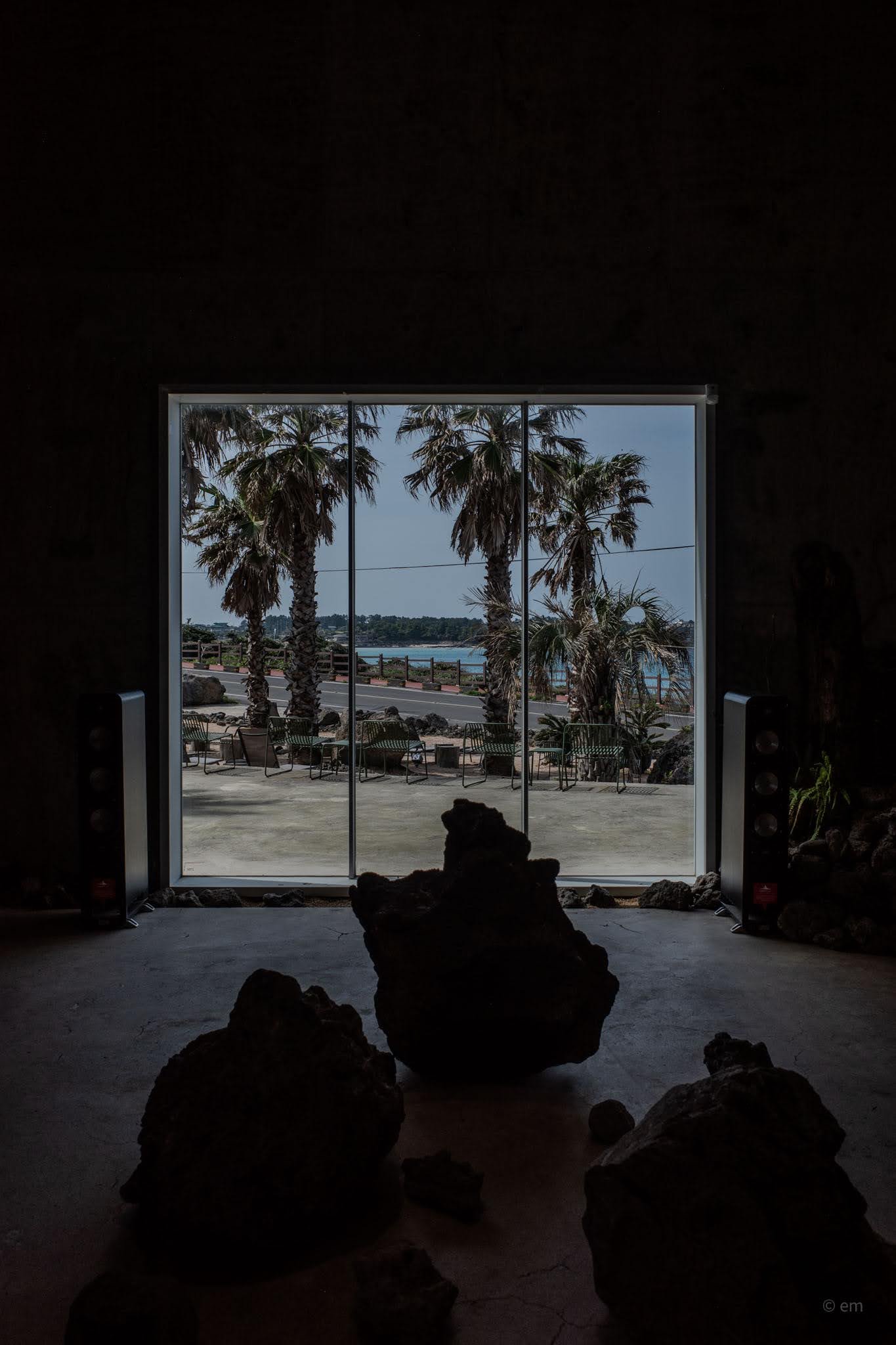
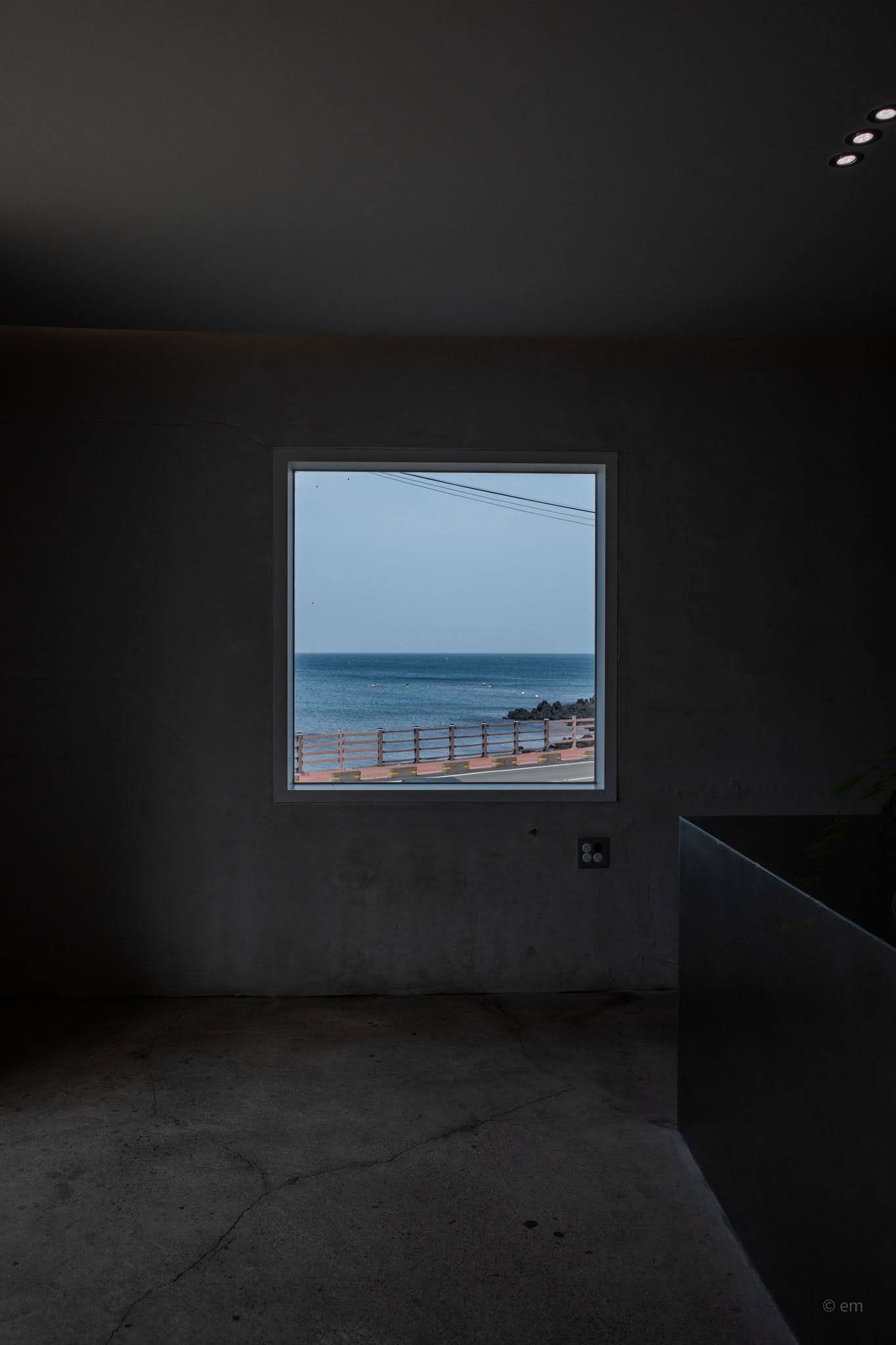
Elsewhere in the building, chunks of Jeju lava rock have been arranged on the floor before a floor-to-ceiling glass panel — a still life positioned to frame the scene outside. Palm trunks, the coastal road, a strip of blue water. The room around it is dark and spare, holding quiet so the window can speak.
The Name
Costeño in Spanish refers to a person from the coast — more specifically, the Caribbean coastal culture of Colombia: hot, relaxed, informal, rhythmically distinct from the Andean interior. Applied to a café on a volcanic island off the southern tip of Korea, it functions less as a geographic claim than as a mood declaration. This is a coastal place that knows it’s coastal, and decided to lean into an imagination of what that could look like if the coordinates were entirely different.
The result is one of the stranger and more committed aesthetic spaces in Jeju — a building that has convinced the landscape around it to play along.
Costeño (꼬스뗀뇨)
Address: 2080 Haemajihaean-ro, Gujwa-eup, Jeju-si, Jeju-do
Hours: Daily, approx. 10am–7pm (last order 6:30pm — confirm current hours via Instagram)
Instagram: @_costeno
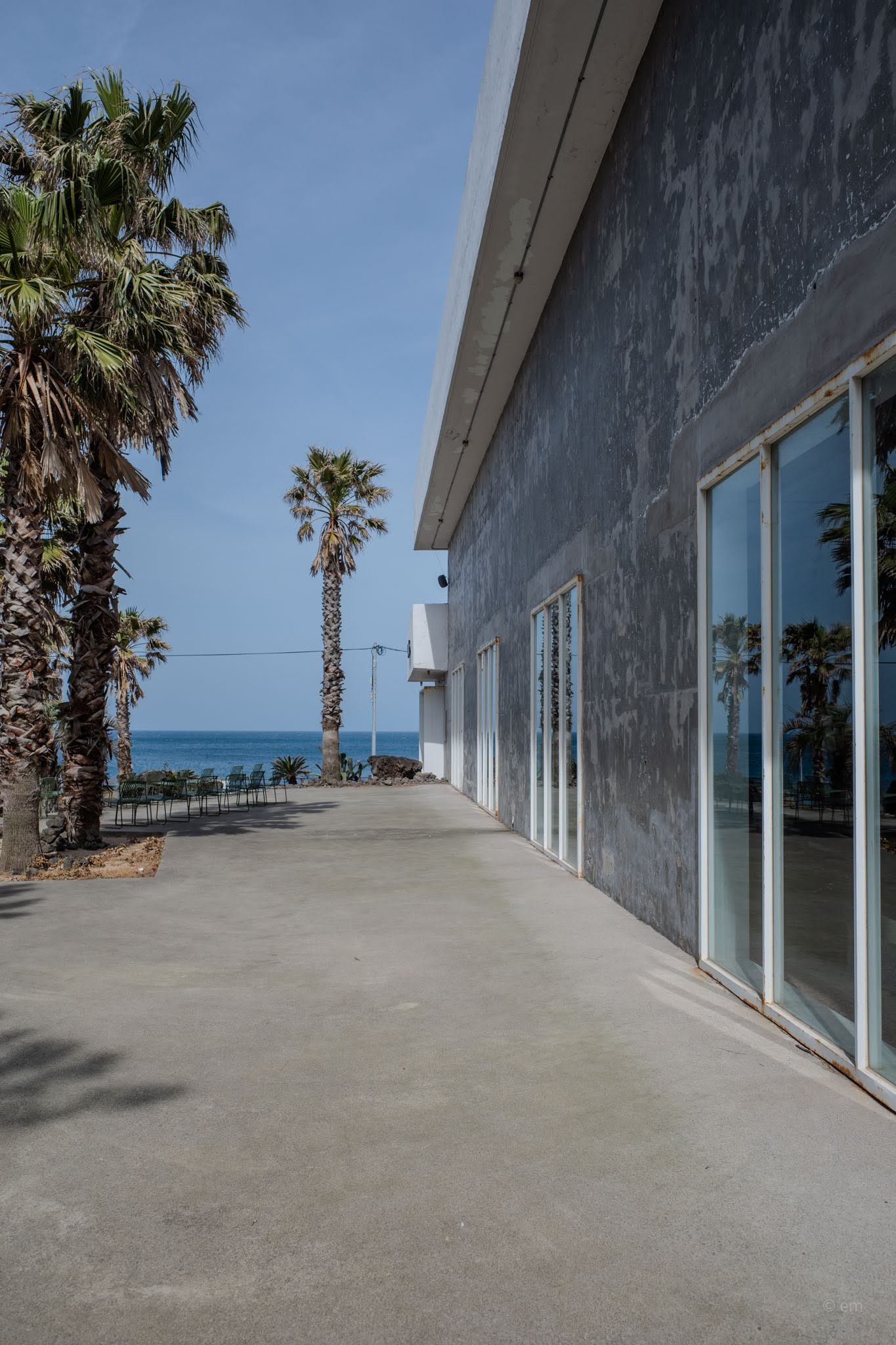
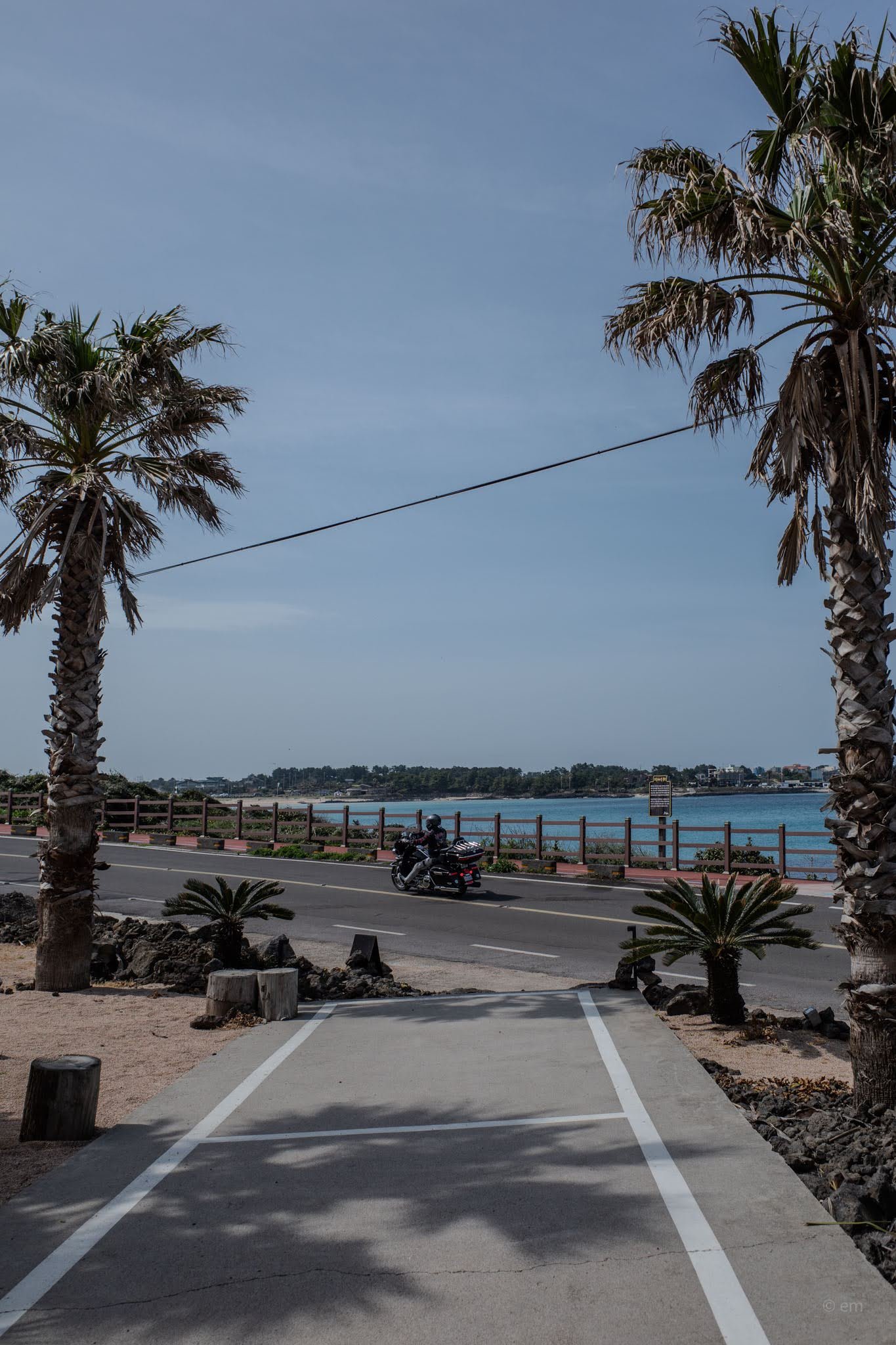
The sea is right there. It was always right there.
![[Lost] Moon Landing: A Retro American-Style Cafe in Bogwang-dong](https://hiddencollector.thesensitiveways.com/wp-content/uploads/2026/03/R0013789-200x300.jpg)