Some places serve coffee. This one hands you a whole other life.
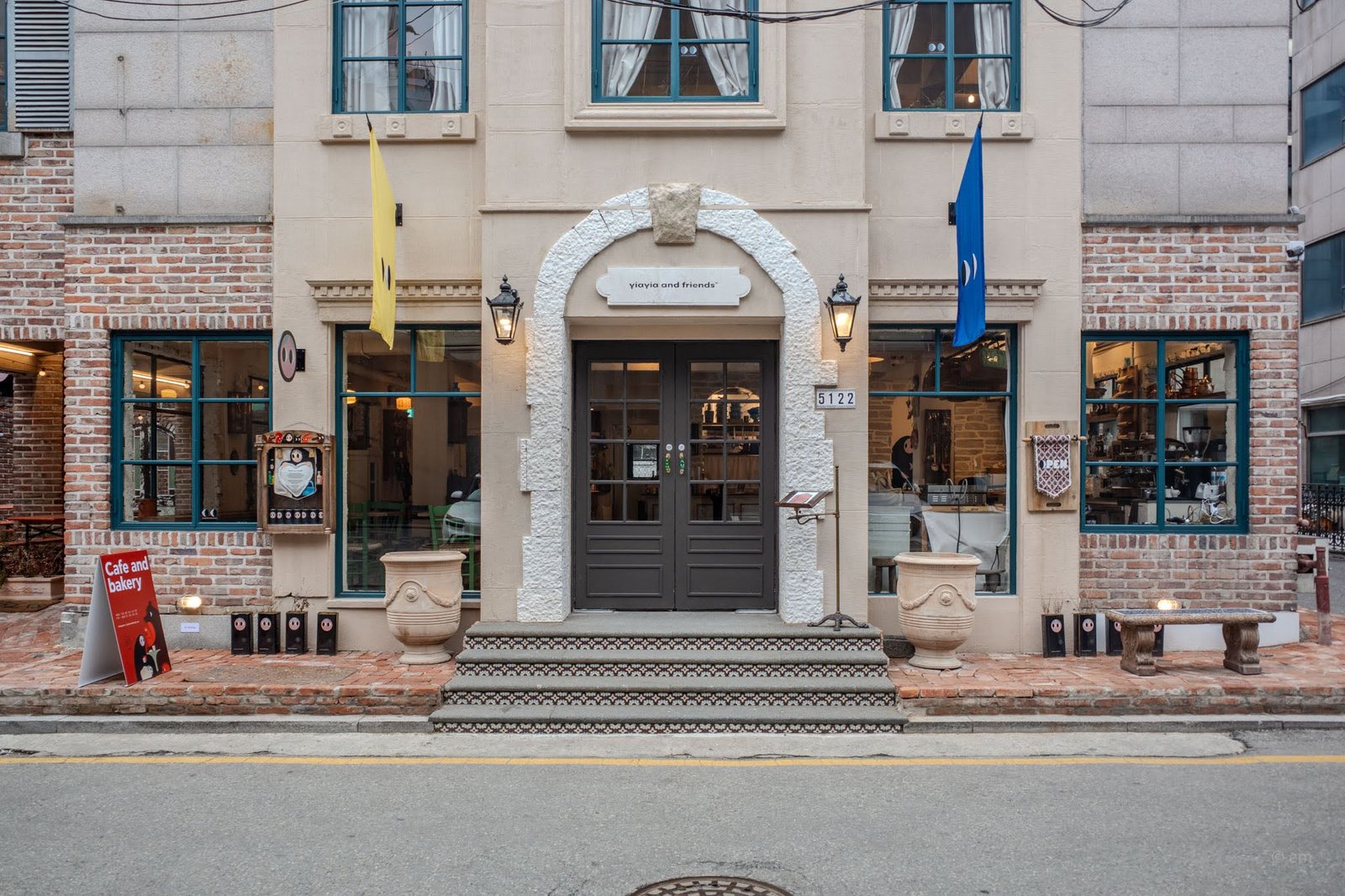
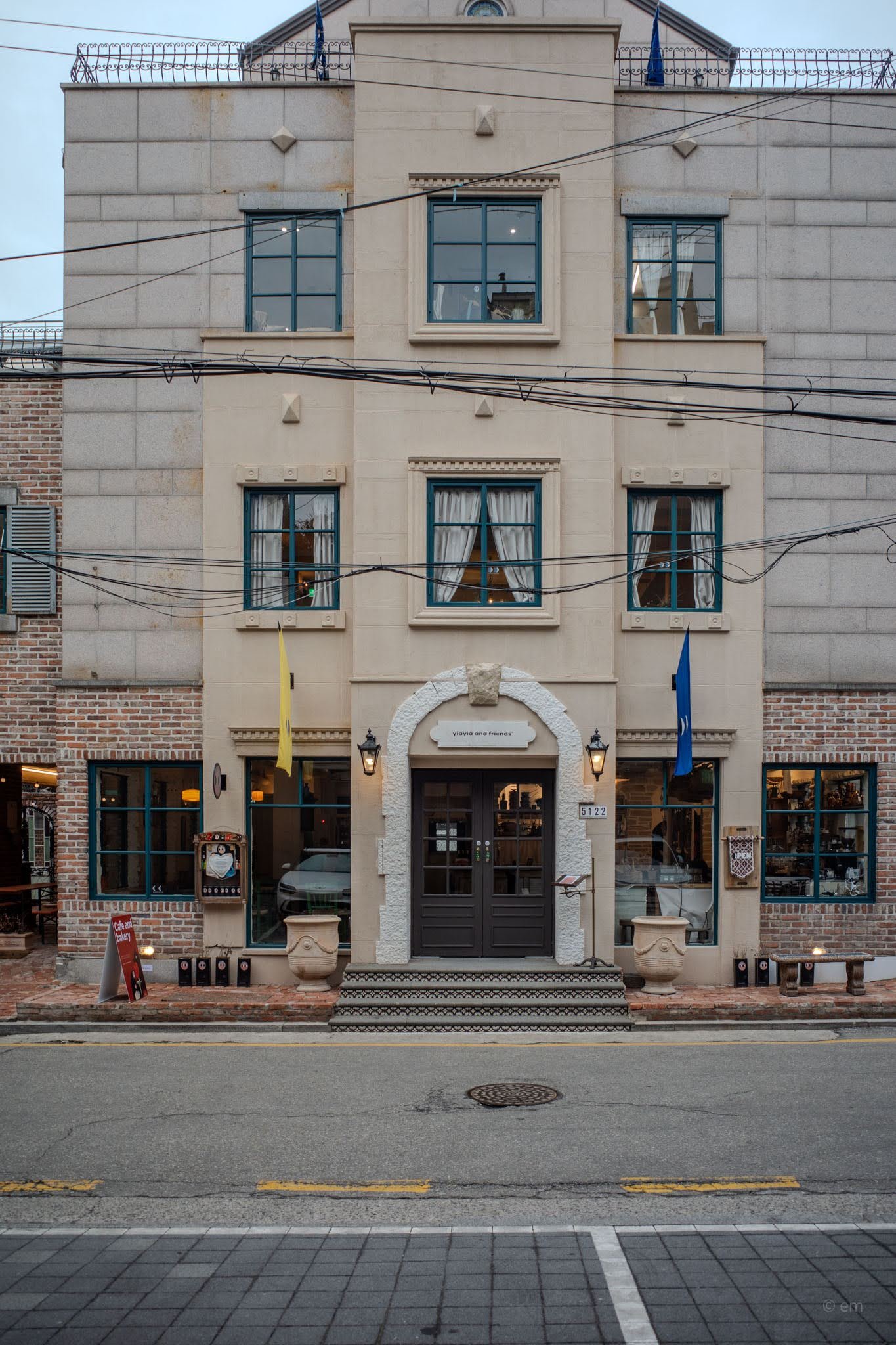
Near the quiet end of a Gangnam alley, a cream stone façade with teal window frames and a white arched doorway announces itself with quiet confidence. No neon. No queue management ropes. Just two terracotta urns flanking the entrance, a yellow flag on one side, blue on the other, and a small brass nameplate that reads yiayia and friends — Greek for grandmother and her circle. Step inside and Seoul largely disappears.
The Brand Behind the Grandmother
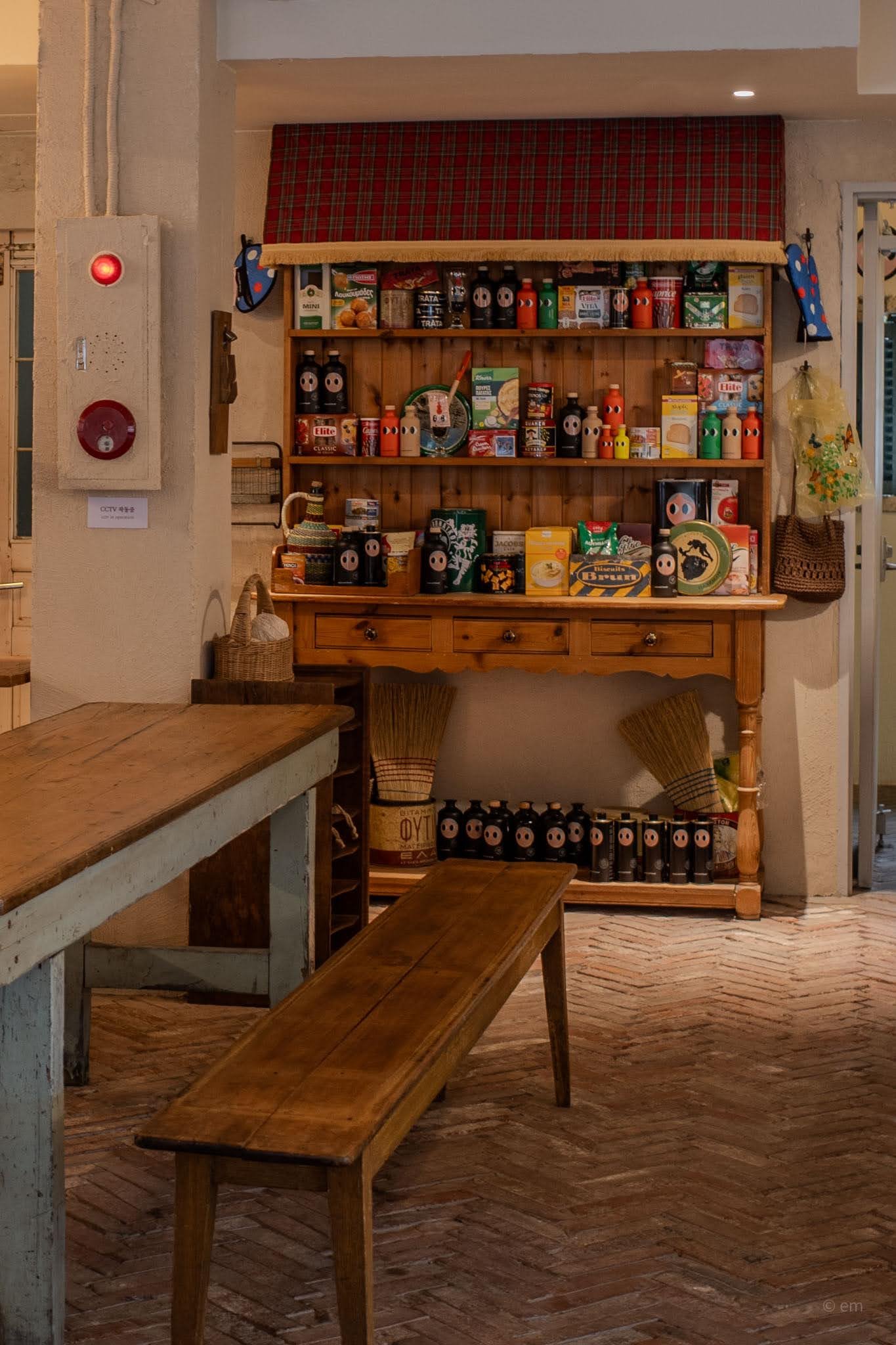
Yiayia and Friends began as something far smaller than this: a family farm on the island of Crete, in the southern Greek archipelago, producing extra-virgin olive oil the old way — handpicked, cold-pressed, from groves tended for generations. The brand grew outward from that single ingredient, accumulating a design language as distinctive as anything in contemporary food retail. Their signature character — a round-headed figure with wide, melancholy eyes — appears on bottles, plates, tote bags, and stickers in a palette somewhere between Bauhaus and fairy tale. The Seoul store opened in October 2023, and with it, the Yiayia universe expanded: new characters, new illustrations, and a physical space large enough to contain an entire imagined world. In 2024, the brand received the Red Dot Award’s “Best of the Best” distinction for packaging illustration — recognition that the olive oil bottles lining their shelves are, in fact, design objects as much as pantry staples.
The Building, Floor by Floor
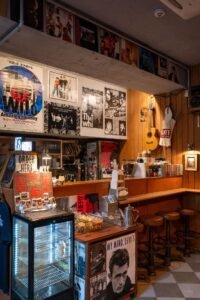
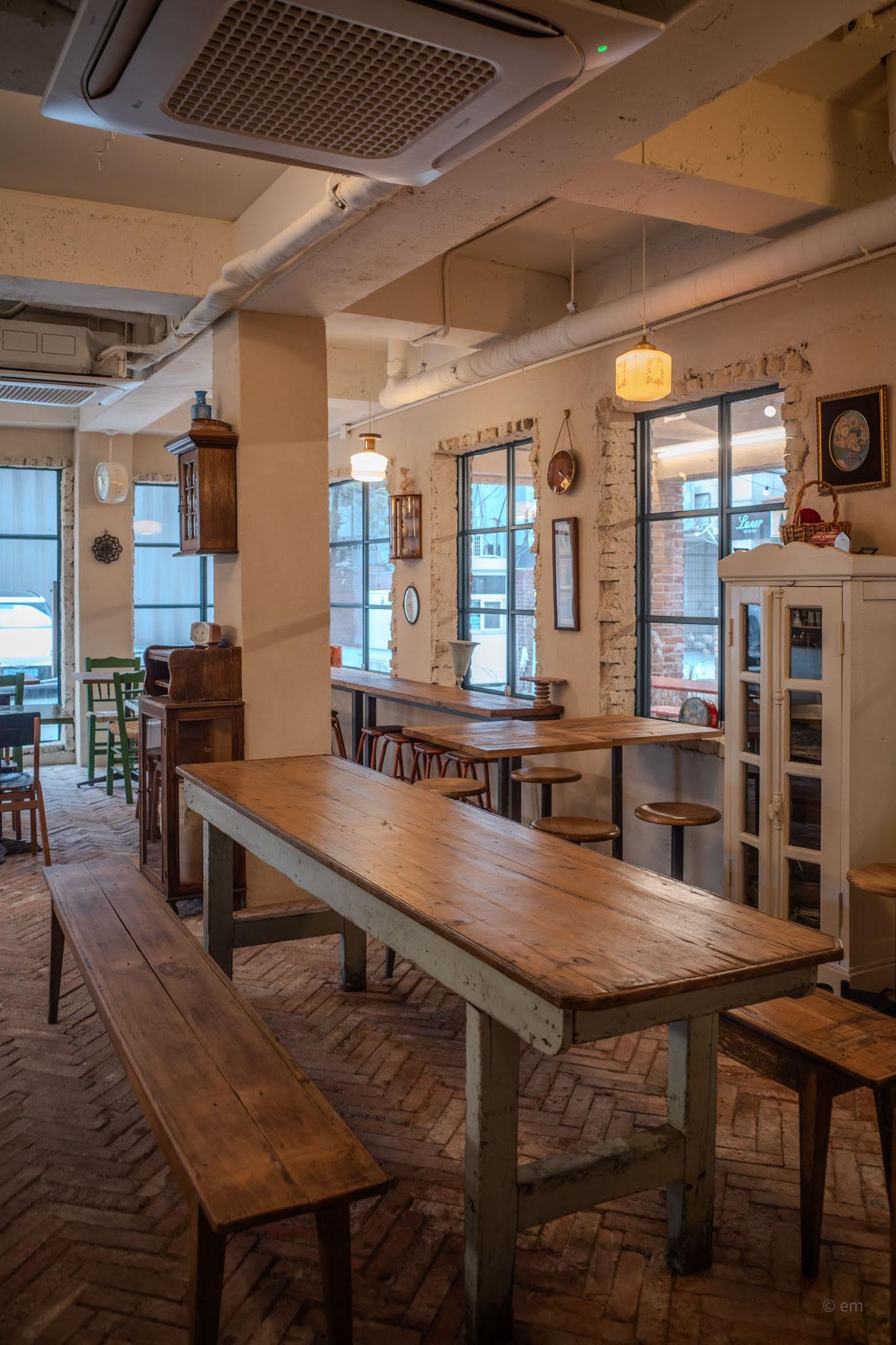
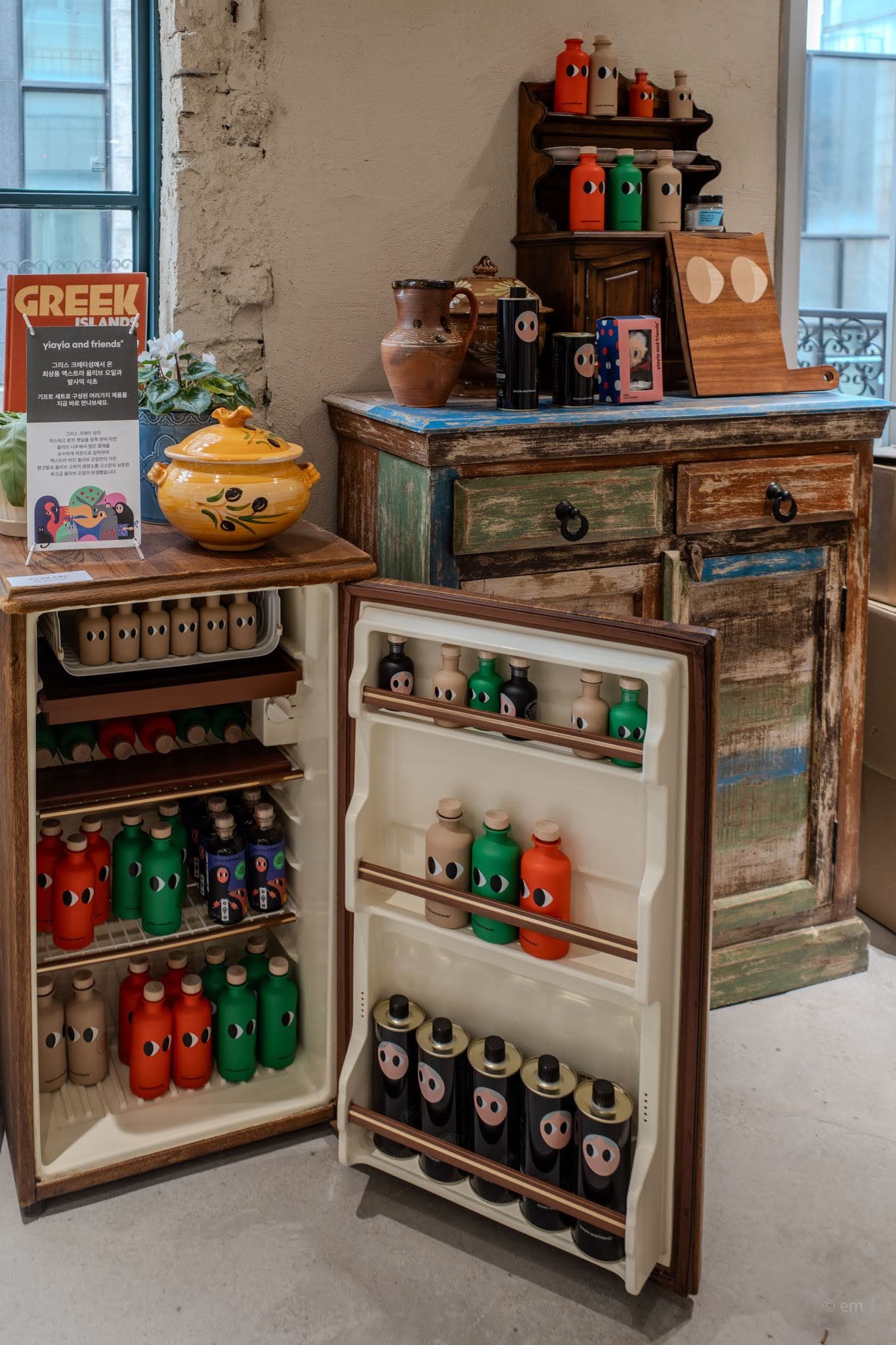
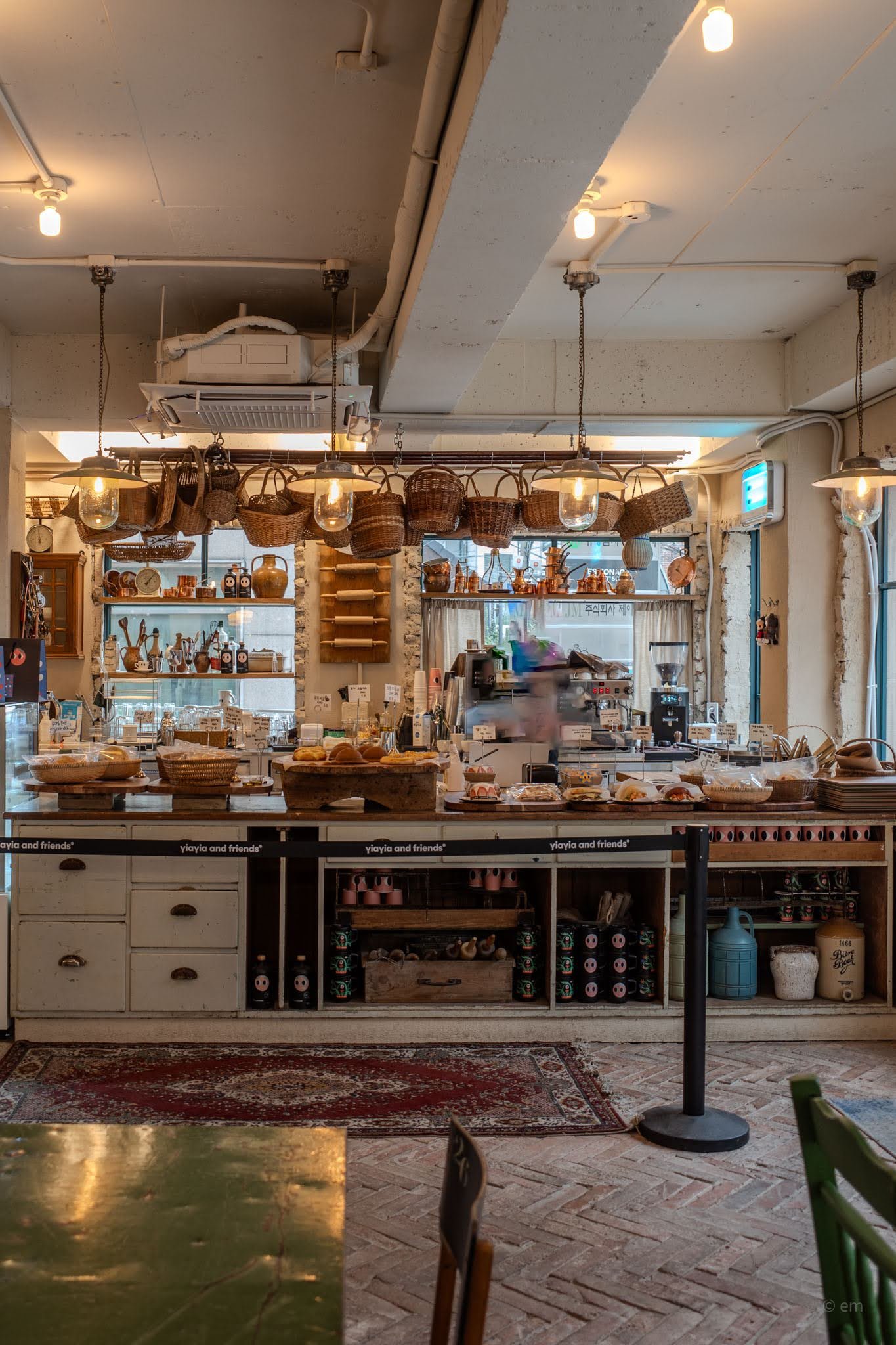
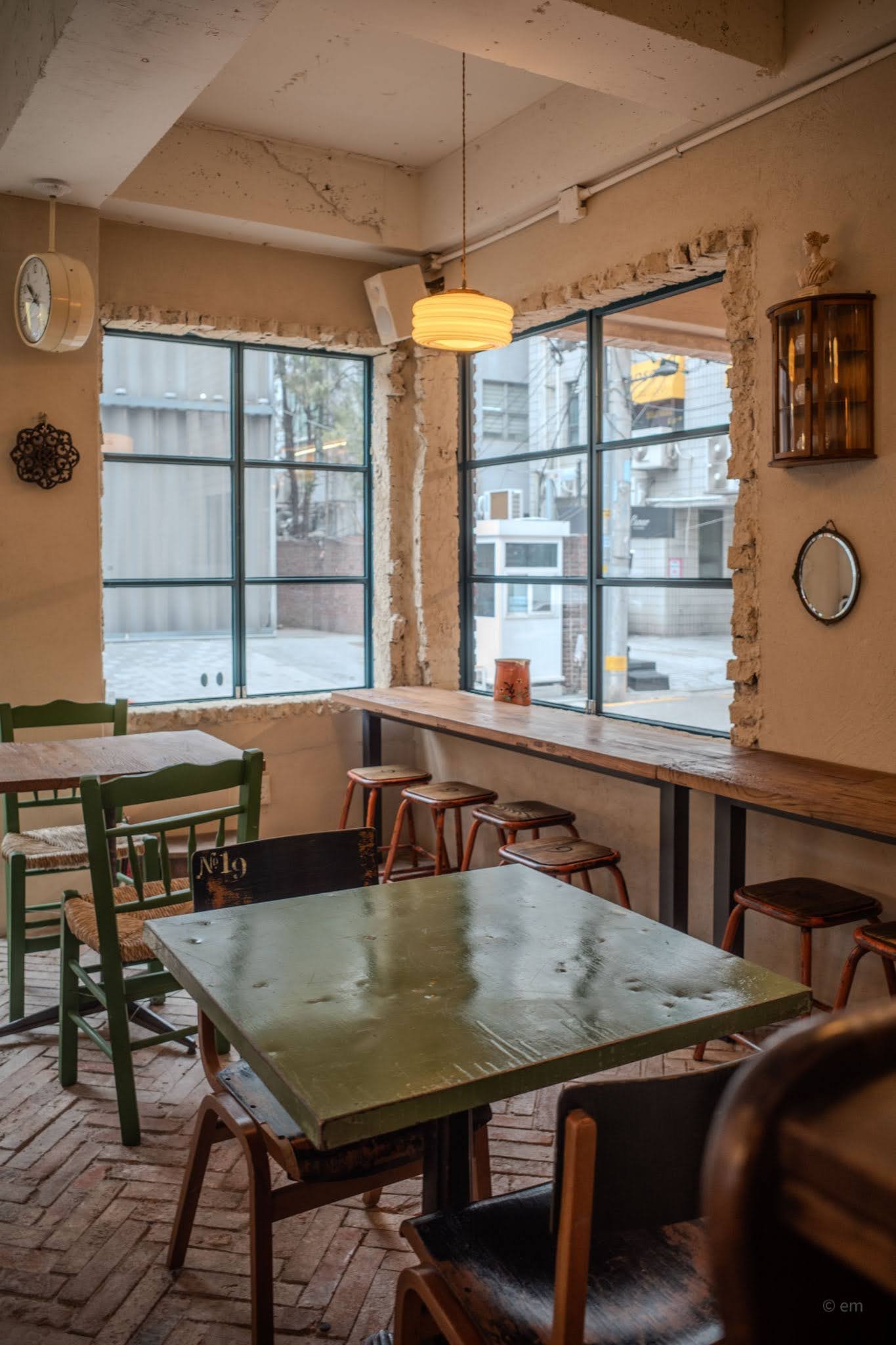
The address is 22 Dosandaero 51-gil, in the Gangnam district near Dosan Park, and the building occupies a narrow lot with surprising depth. The ground floor is the working café: a long counter stacked with pita sandwiches on wooden boards, a bakery spread of croissants and enriched breads, and a row of Yiayia-branded olive oil bottles chilling inside a vintage refrigerator like they’re waiting to be found. The ceiling carries wicker baskets in long rows, suspended above the barista station. The floor is laid in herringbone brick. It reads as a well-stocked Mediterranean village kitchen, if the village kitchen happened to have a La Marzocco.
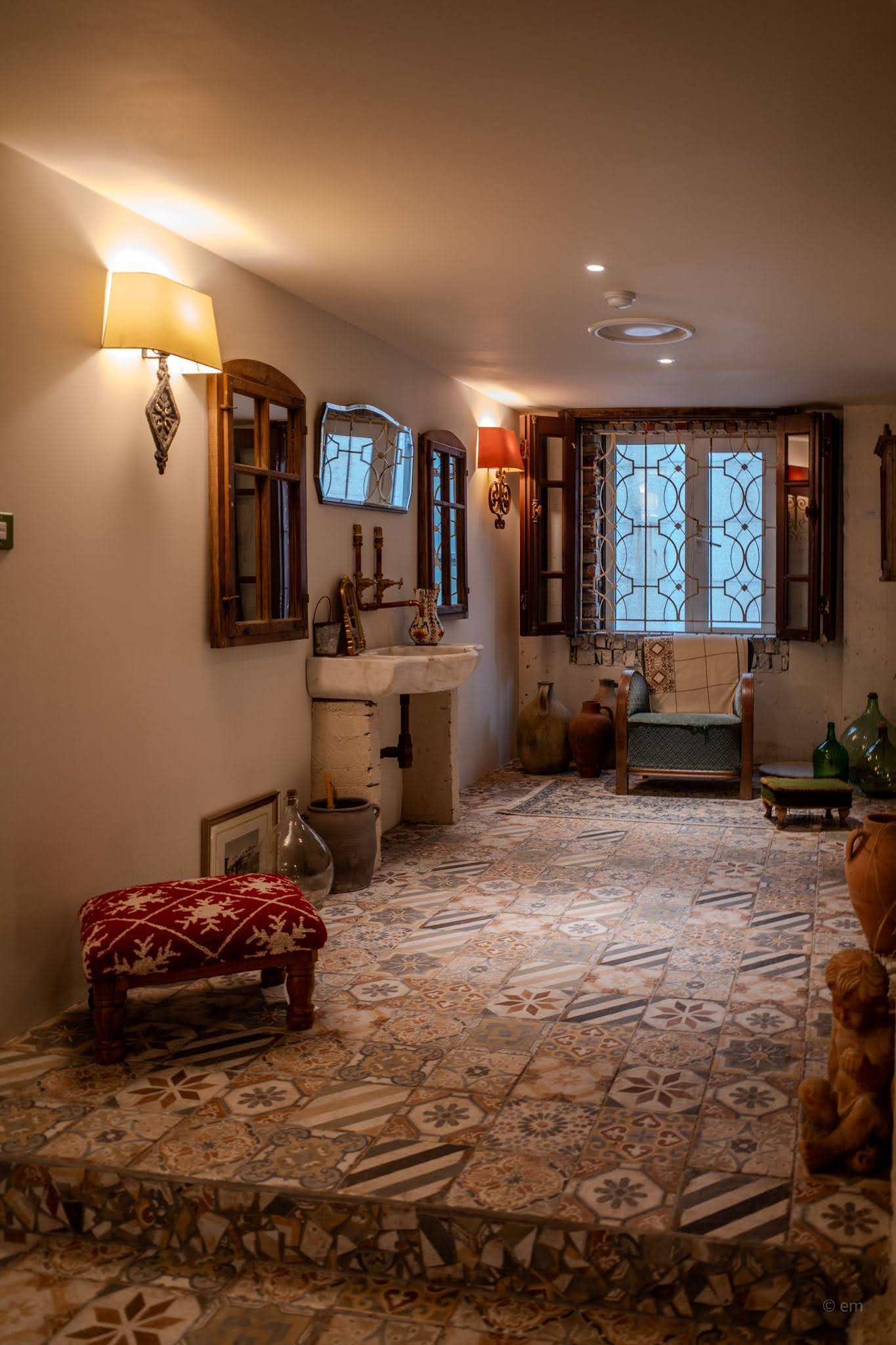
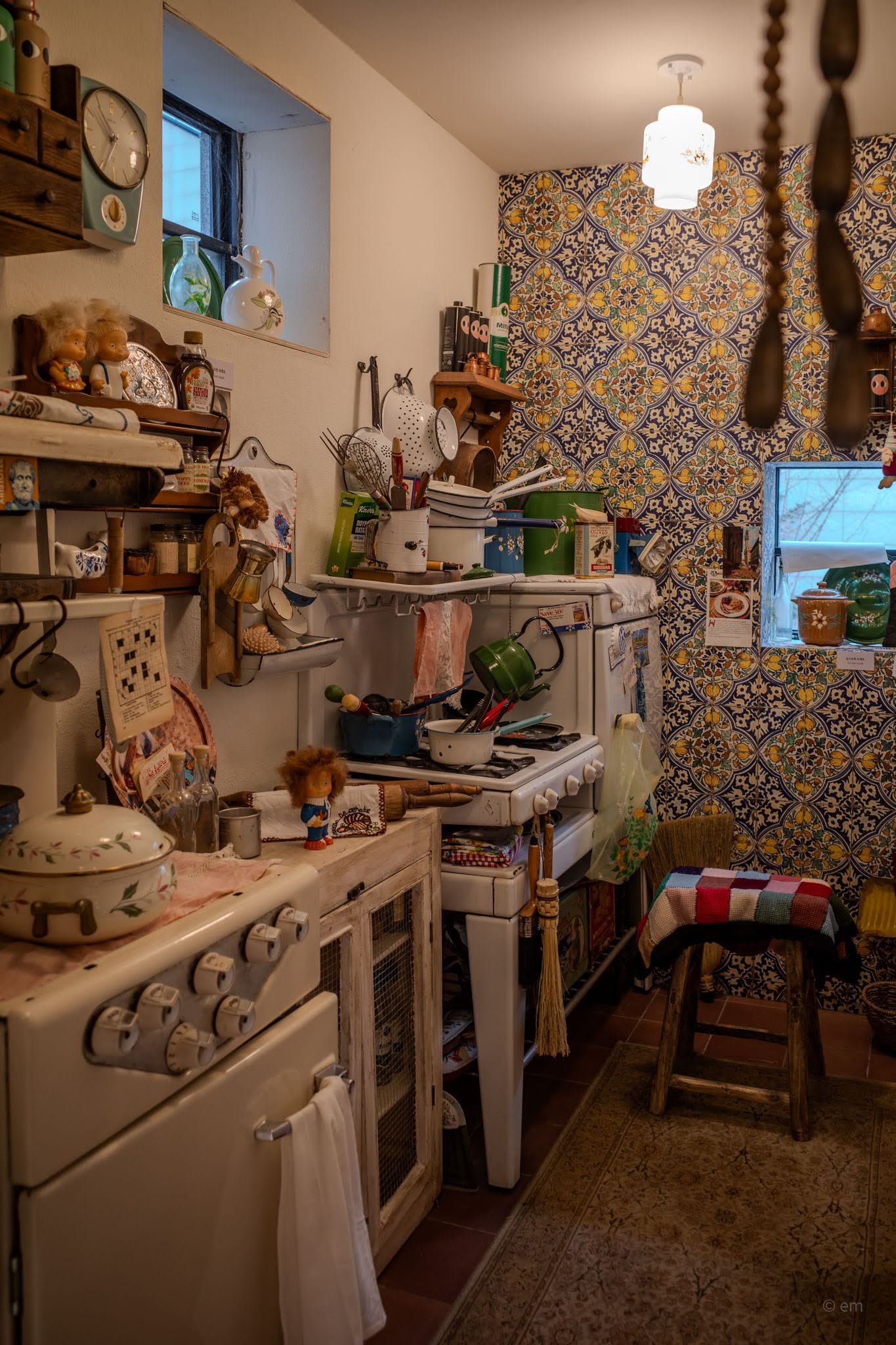
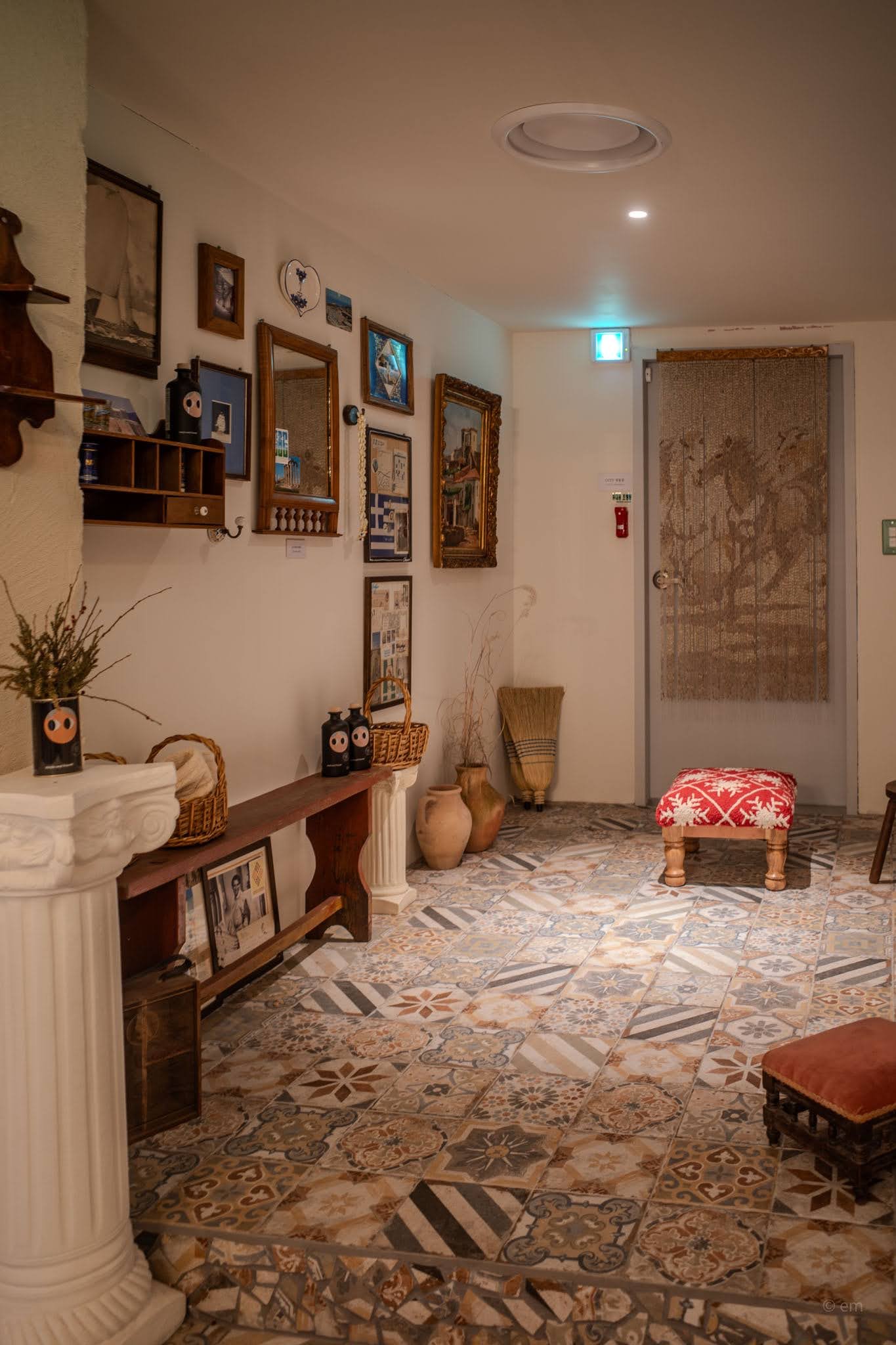
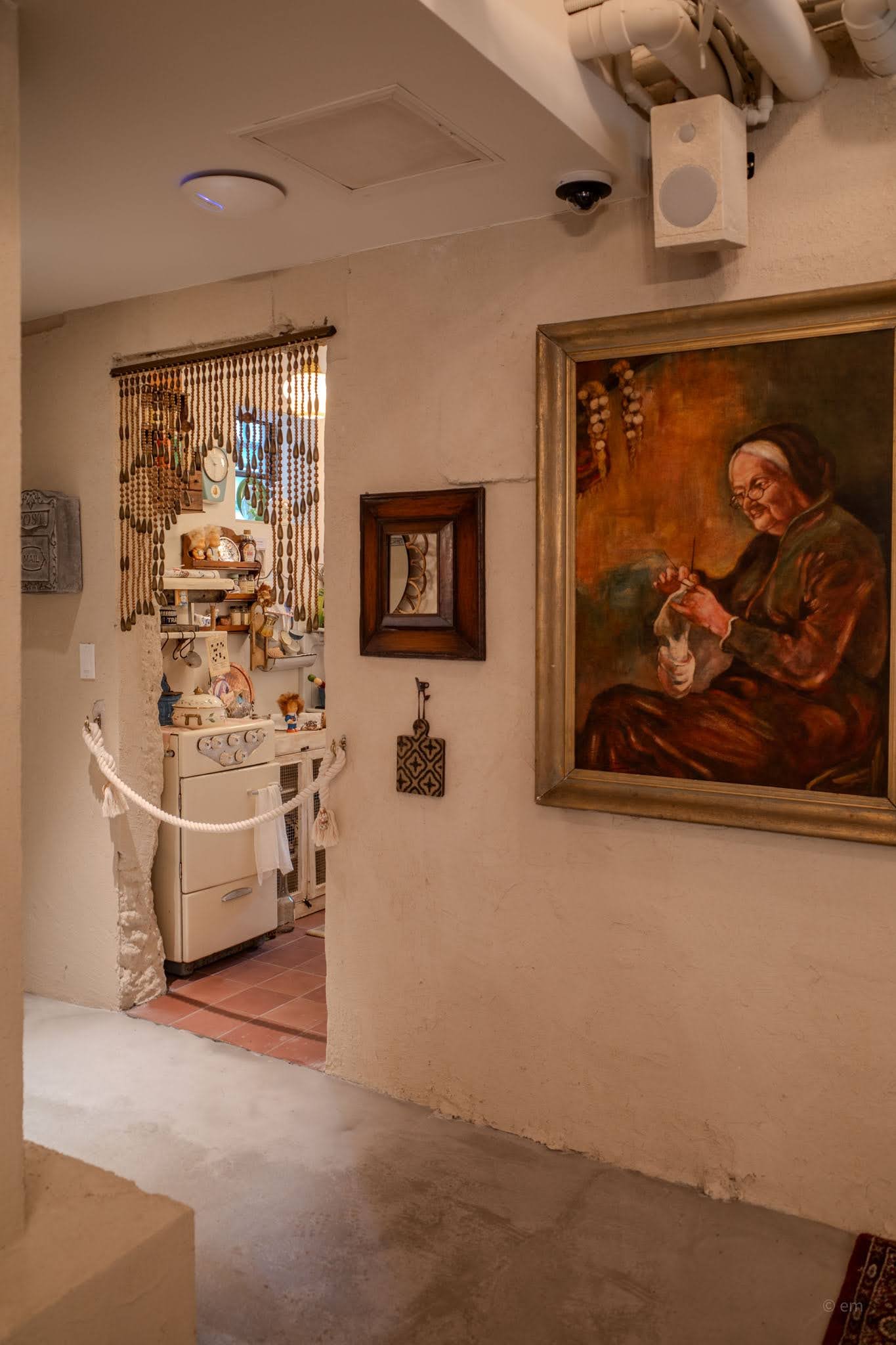
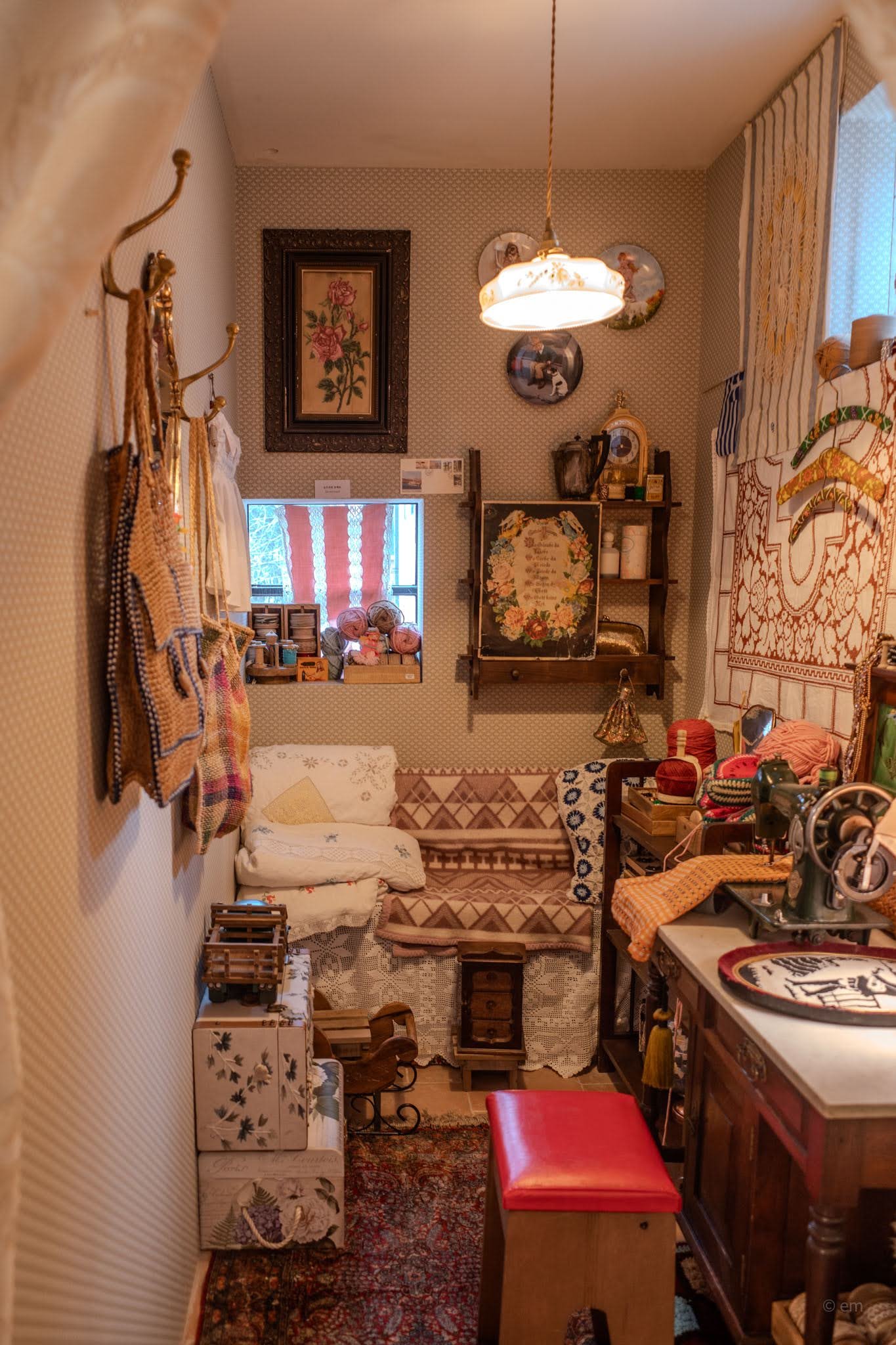
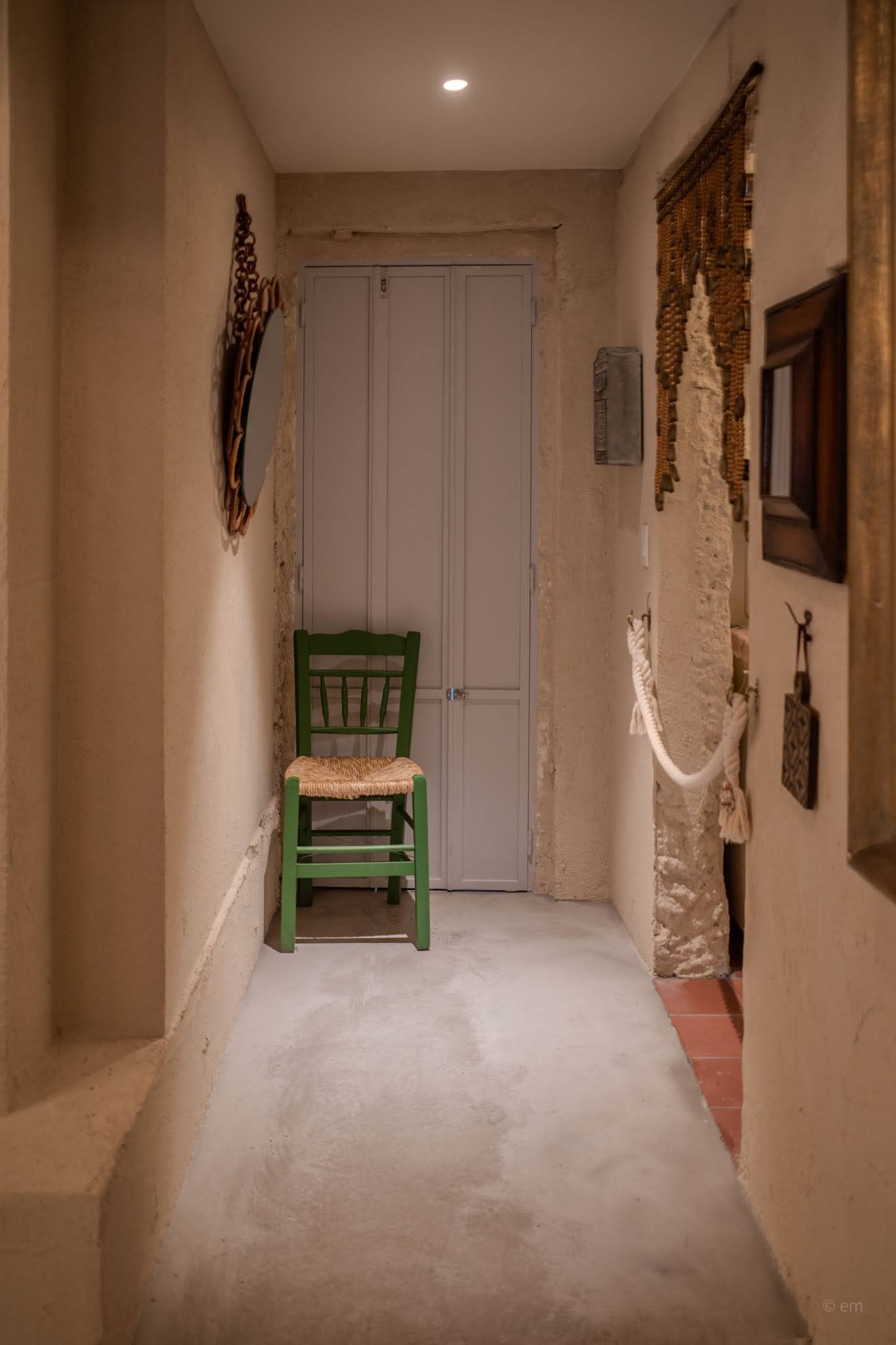
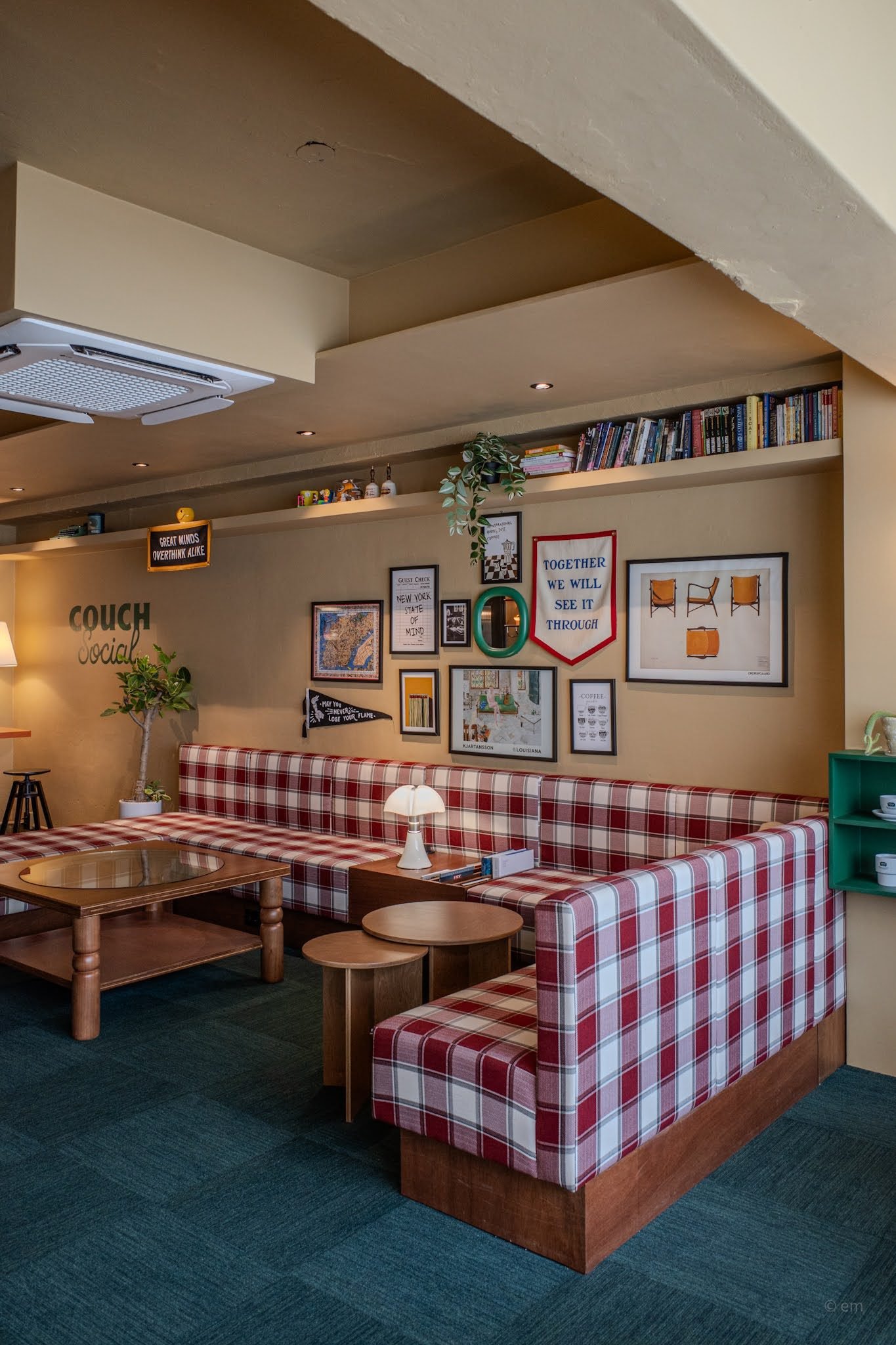
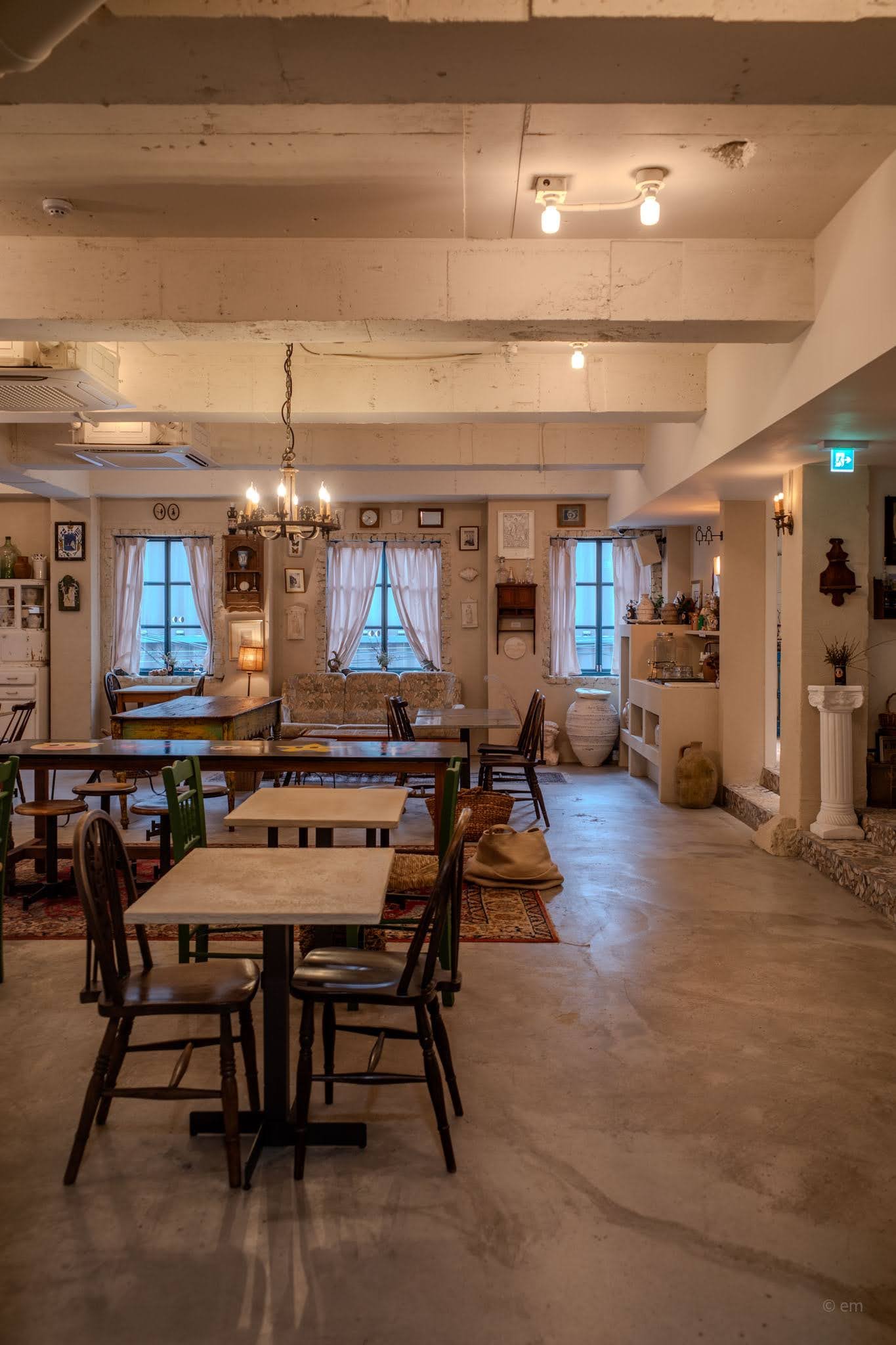
The second floor is the main event, and calling it “seating” would be technically accurate and completely misleading. It is a sequence of rooms — or the illusion of rooms — each inhabited with a different personality, all of them orbiting the idea of a Greek grandmother’s estate encountered over decades rather than designed in a single session.
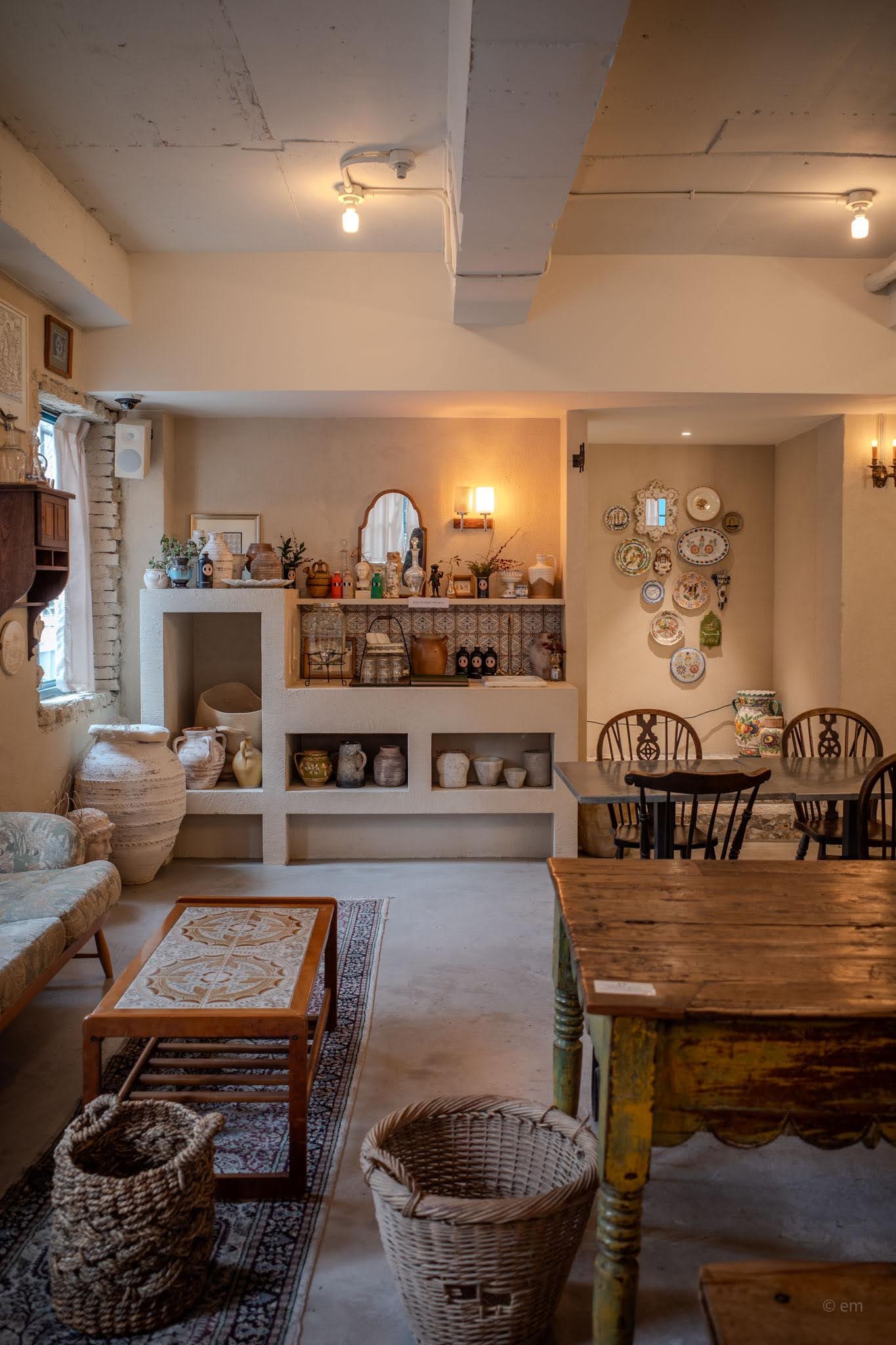
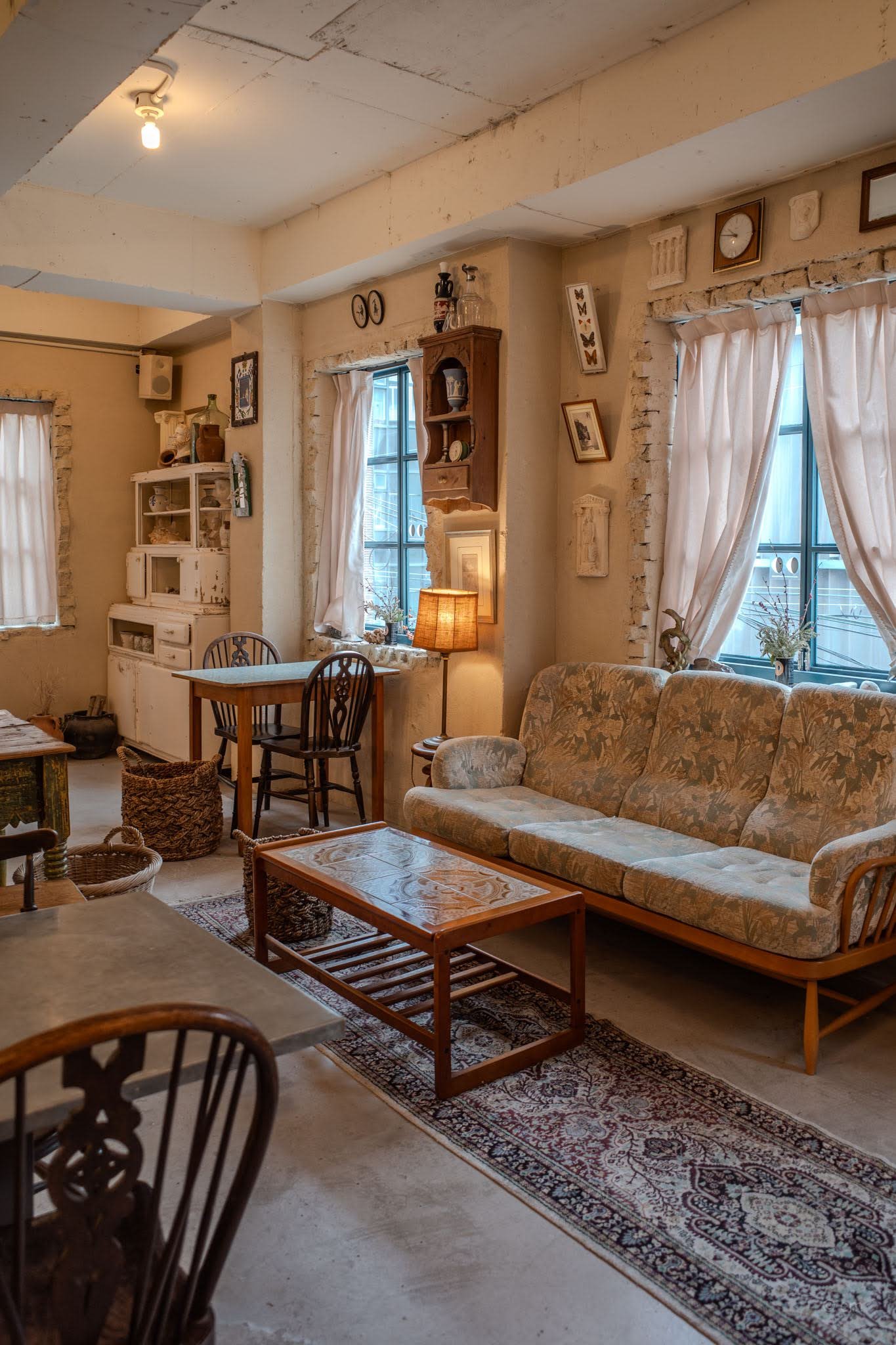
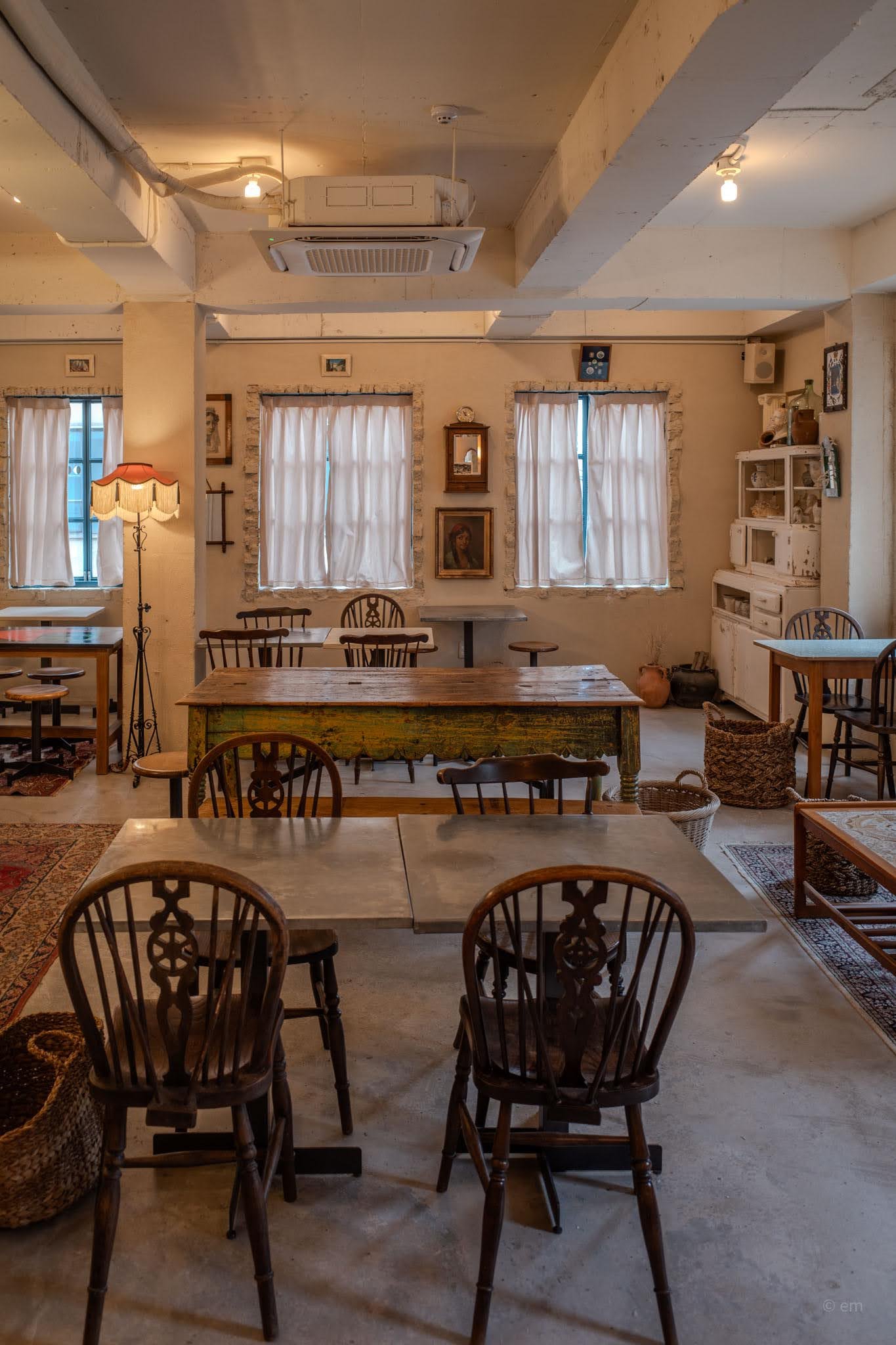
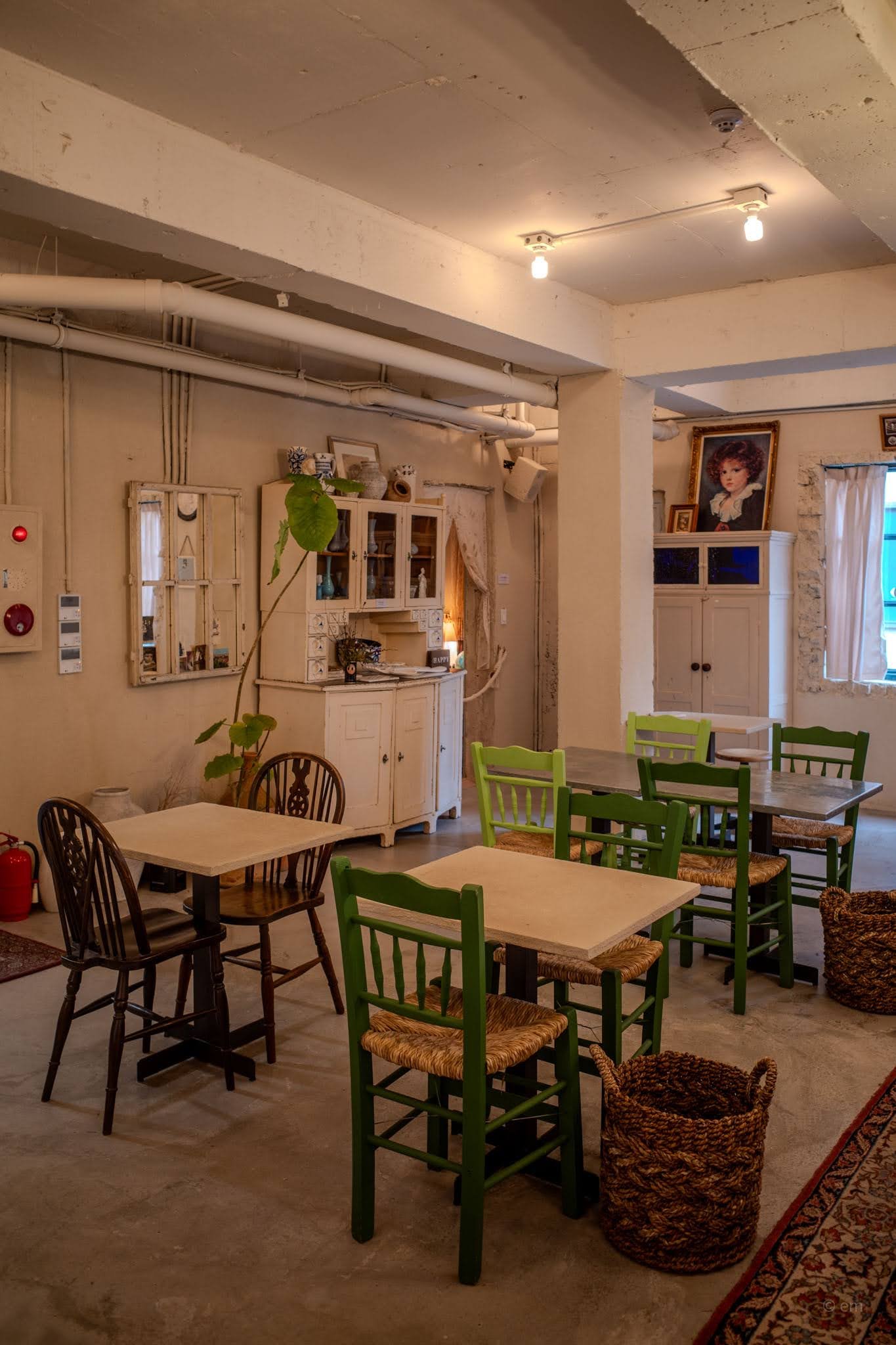
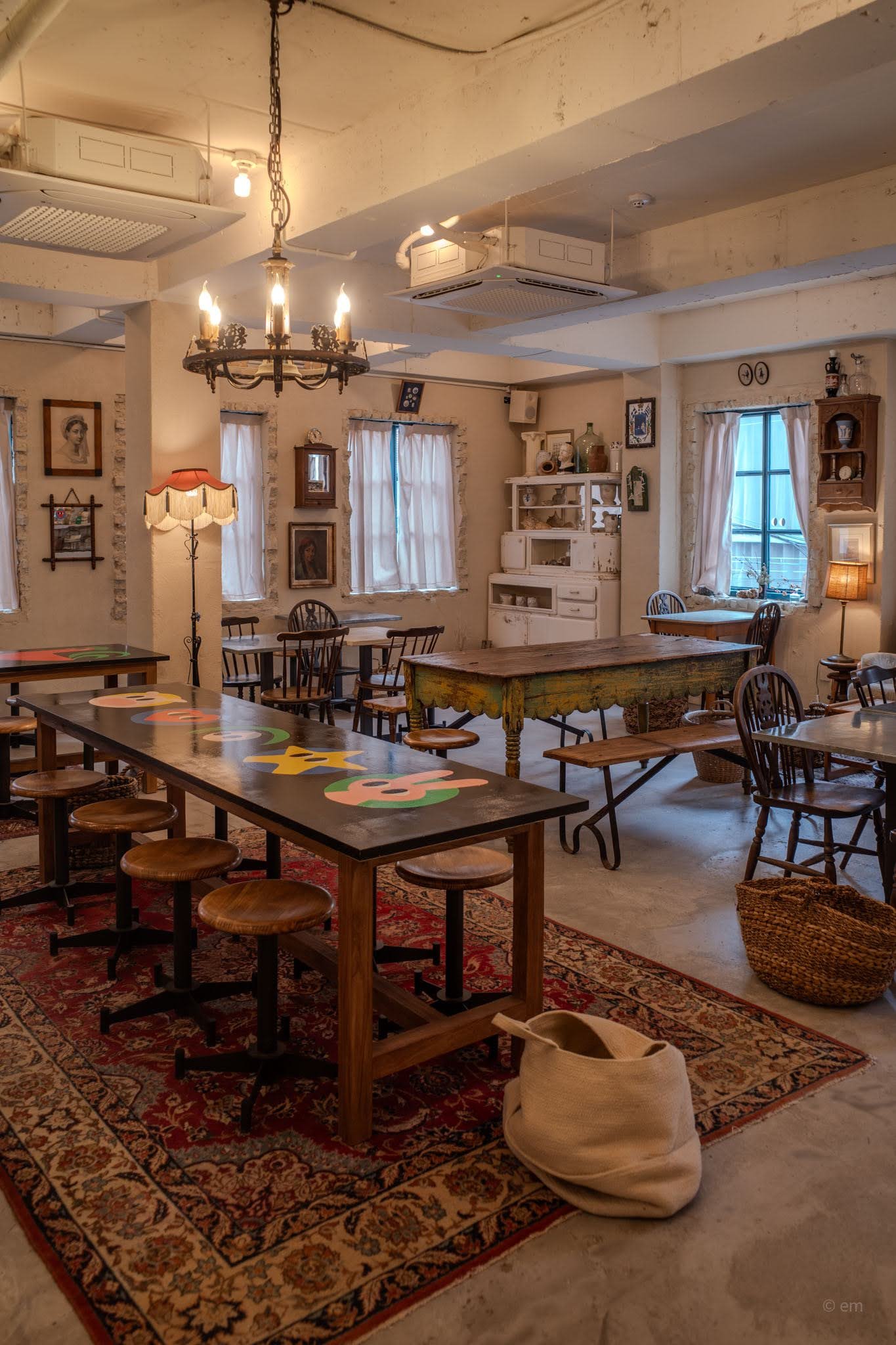
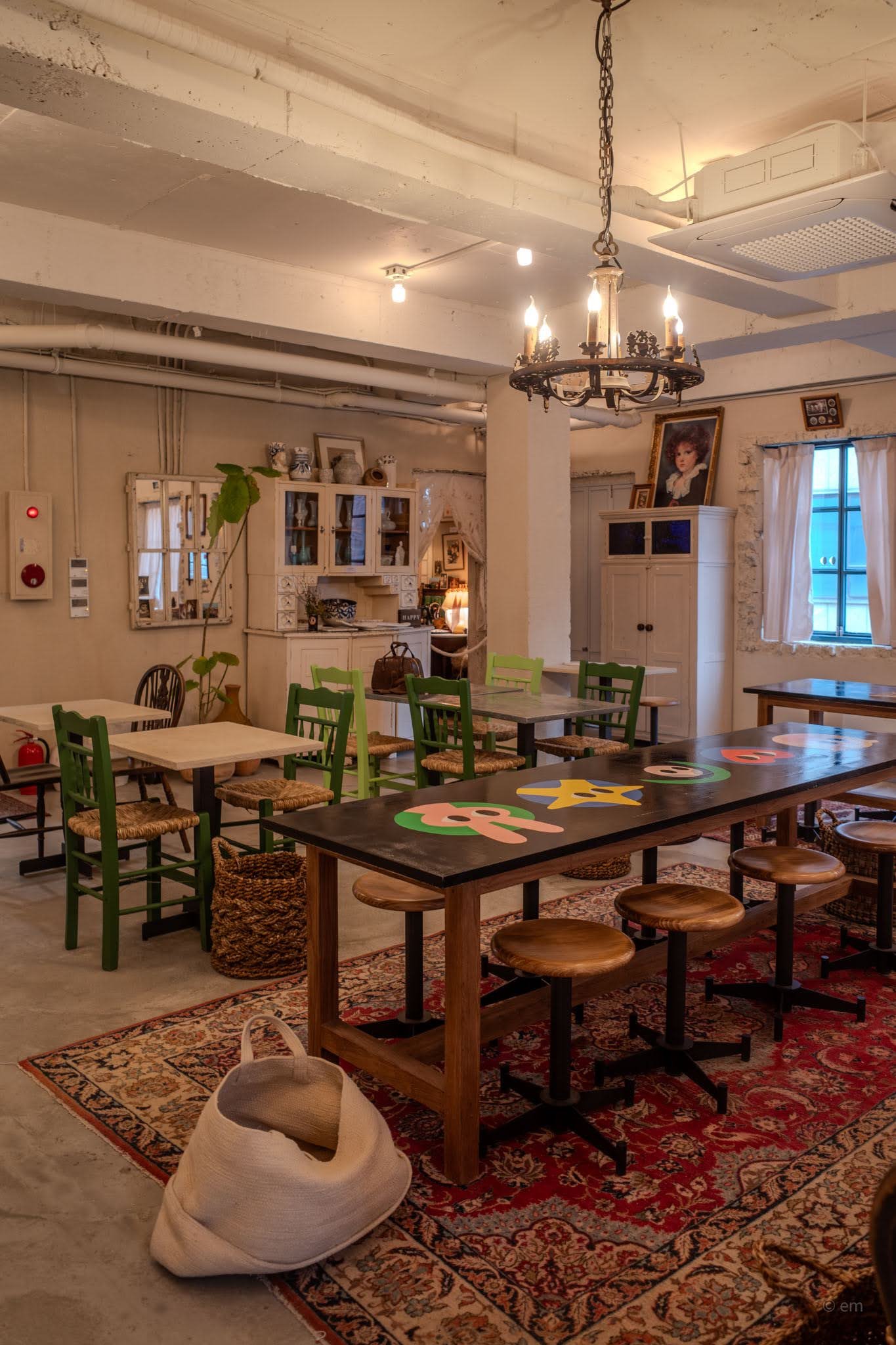
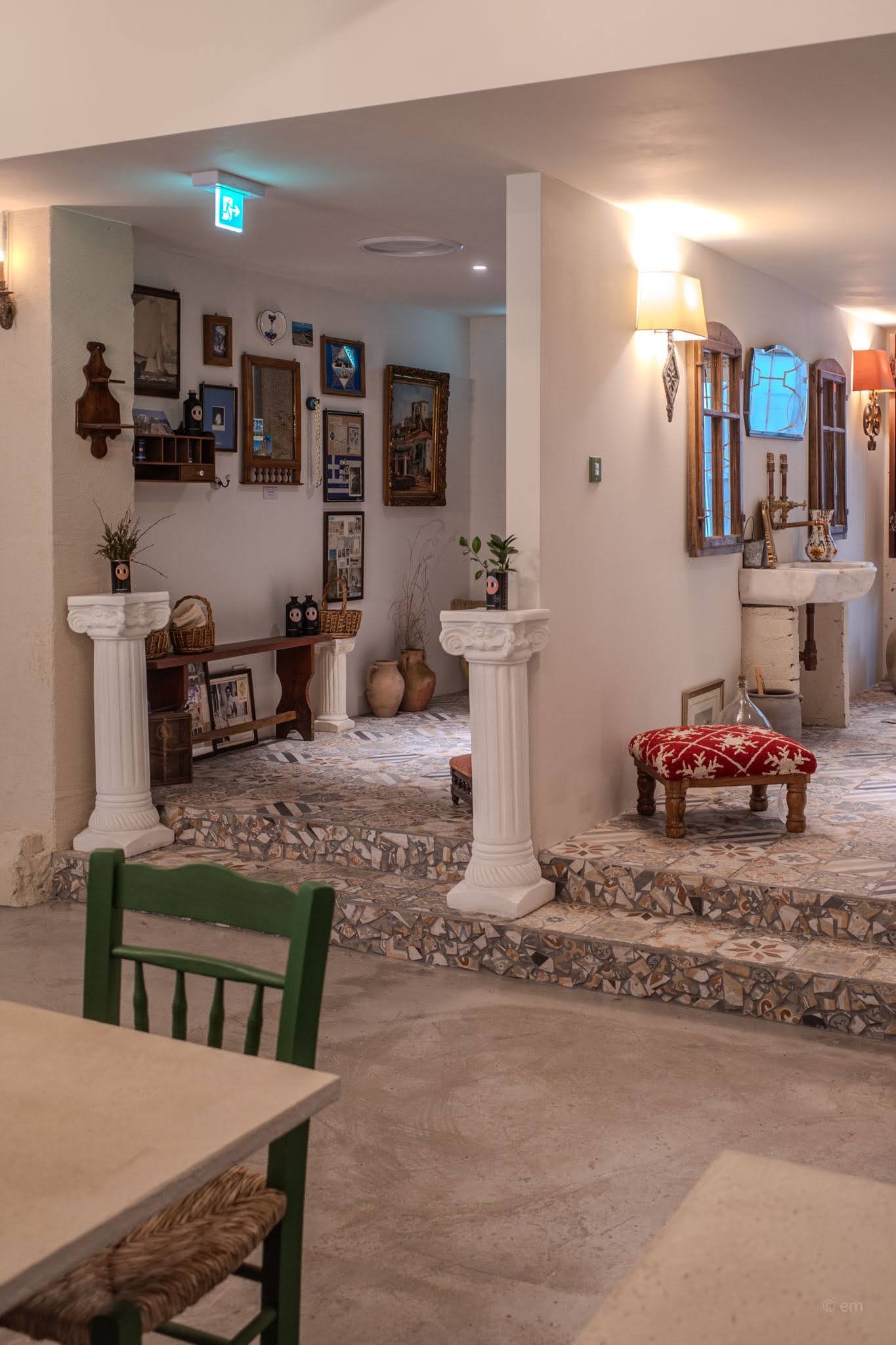
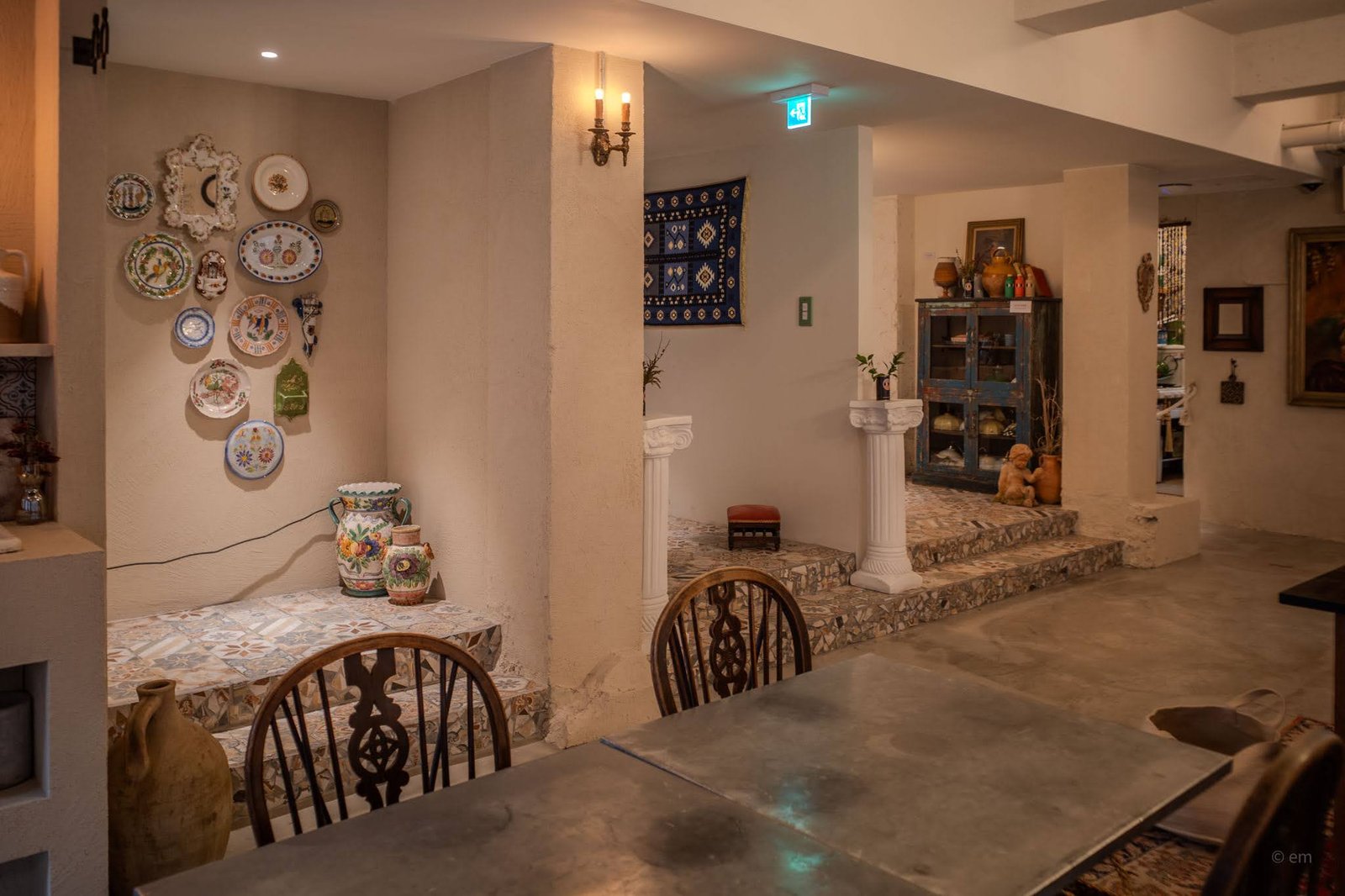
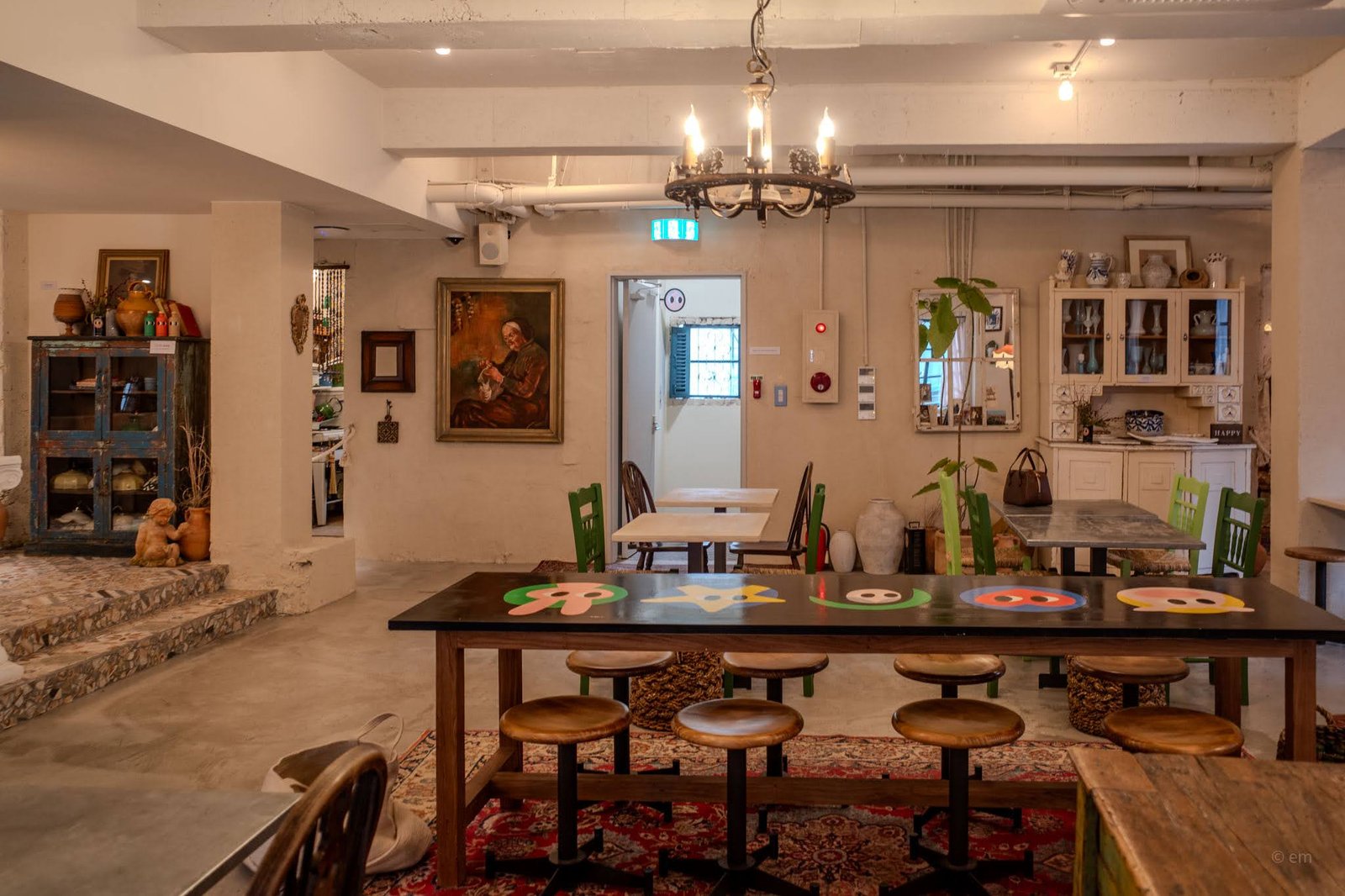
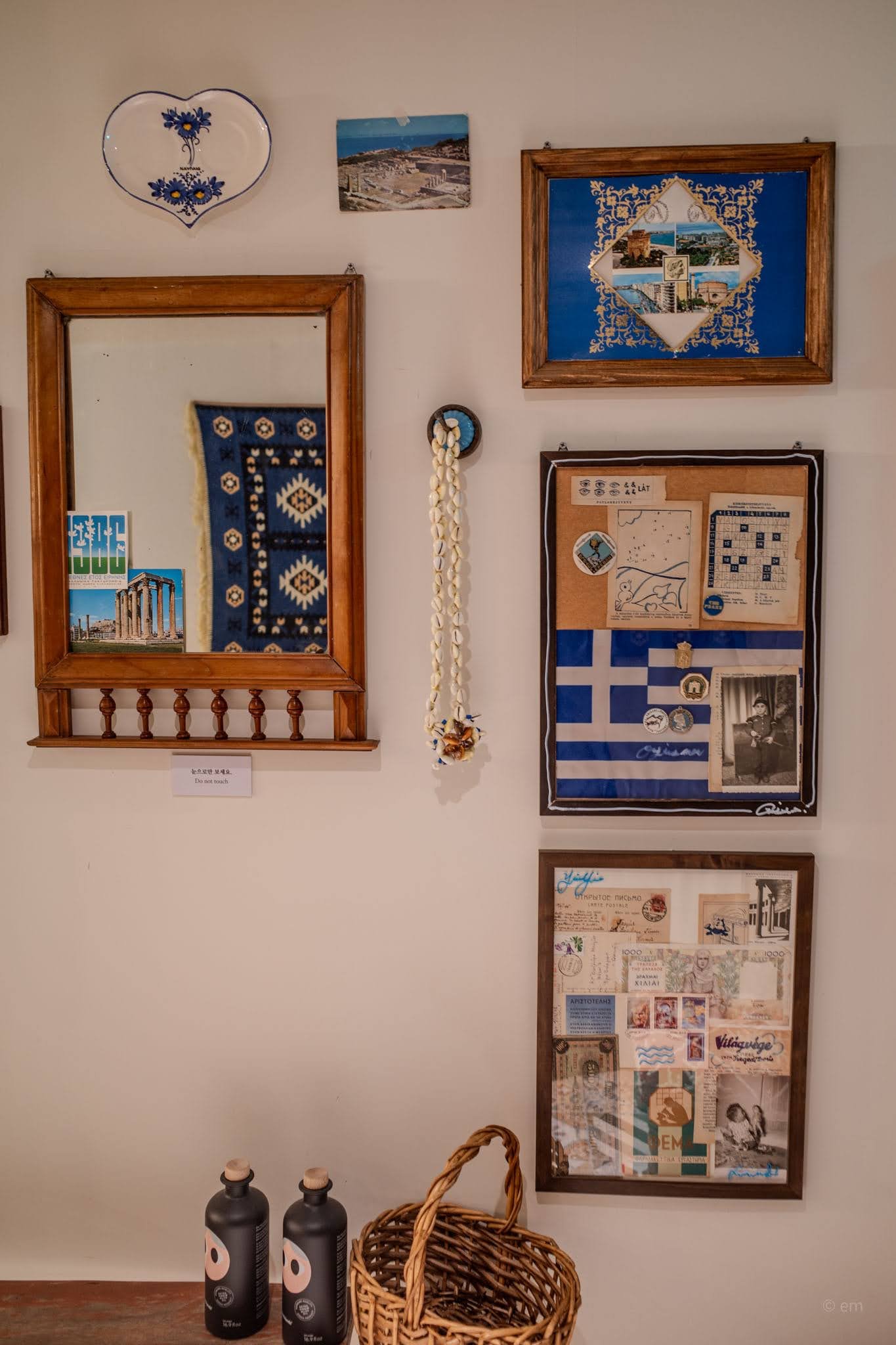
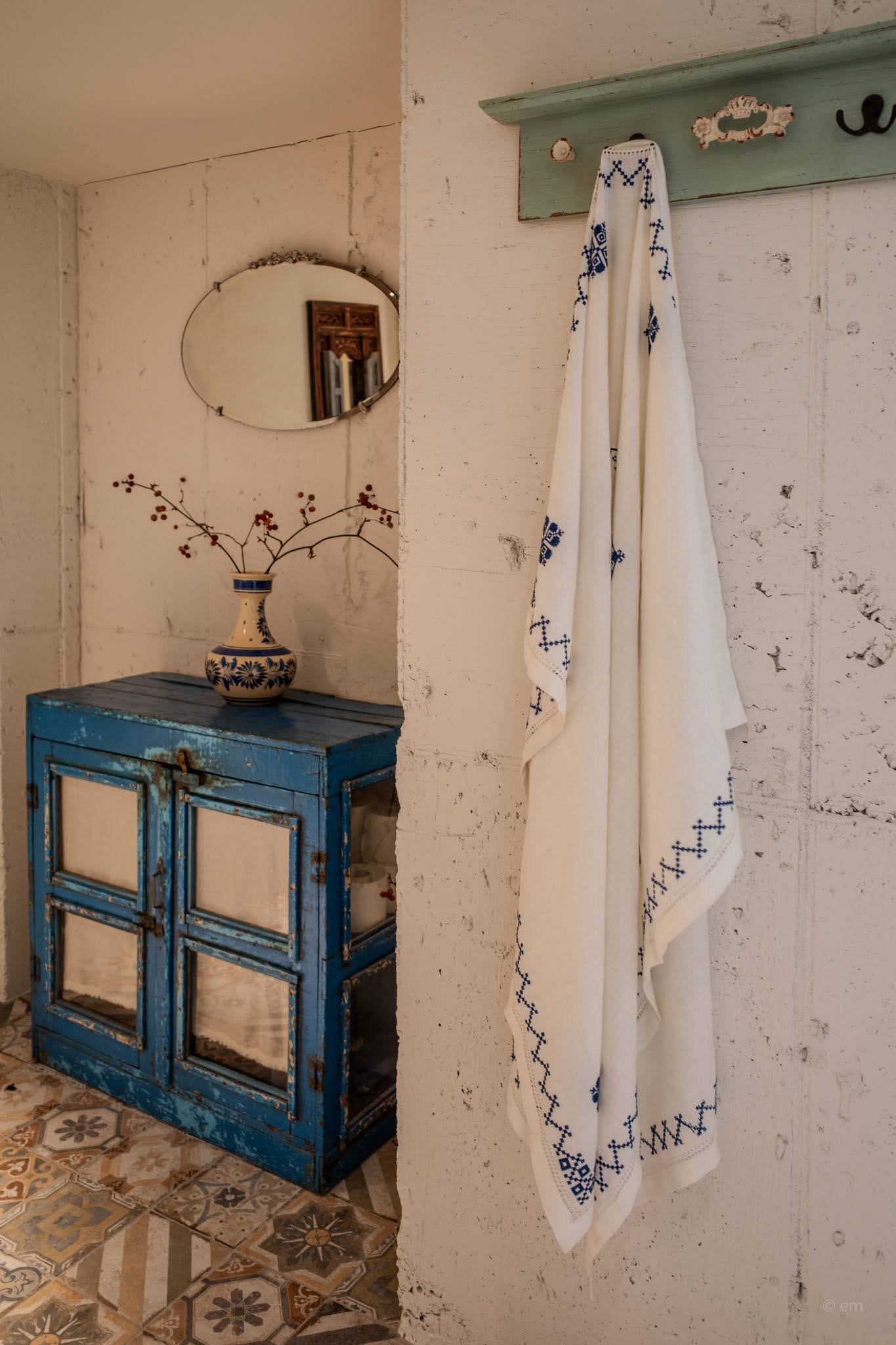
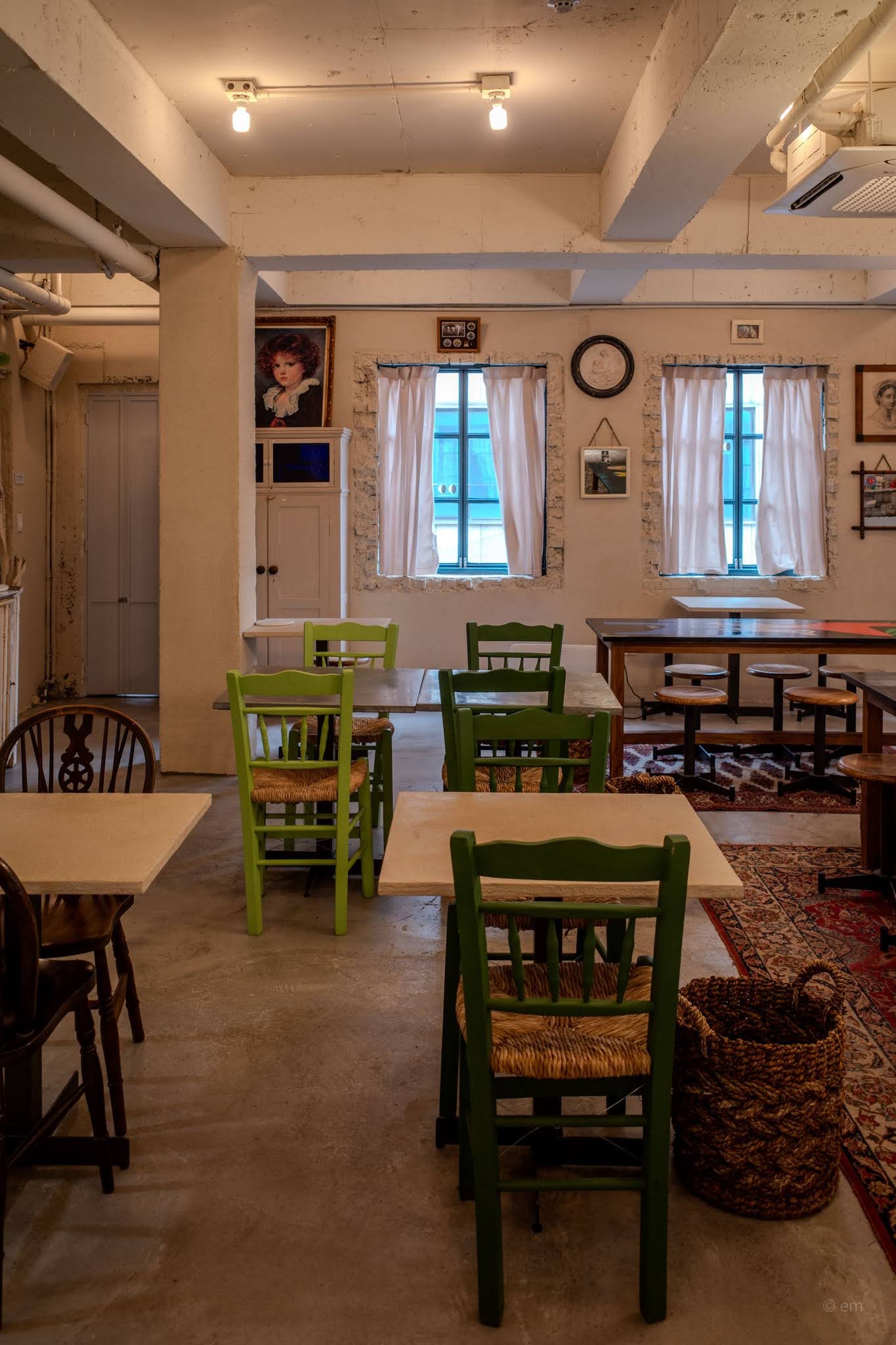
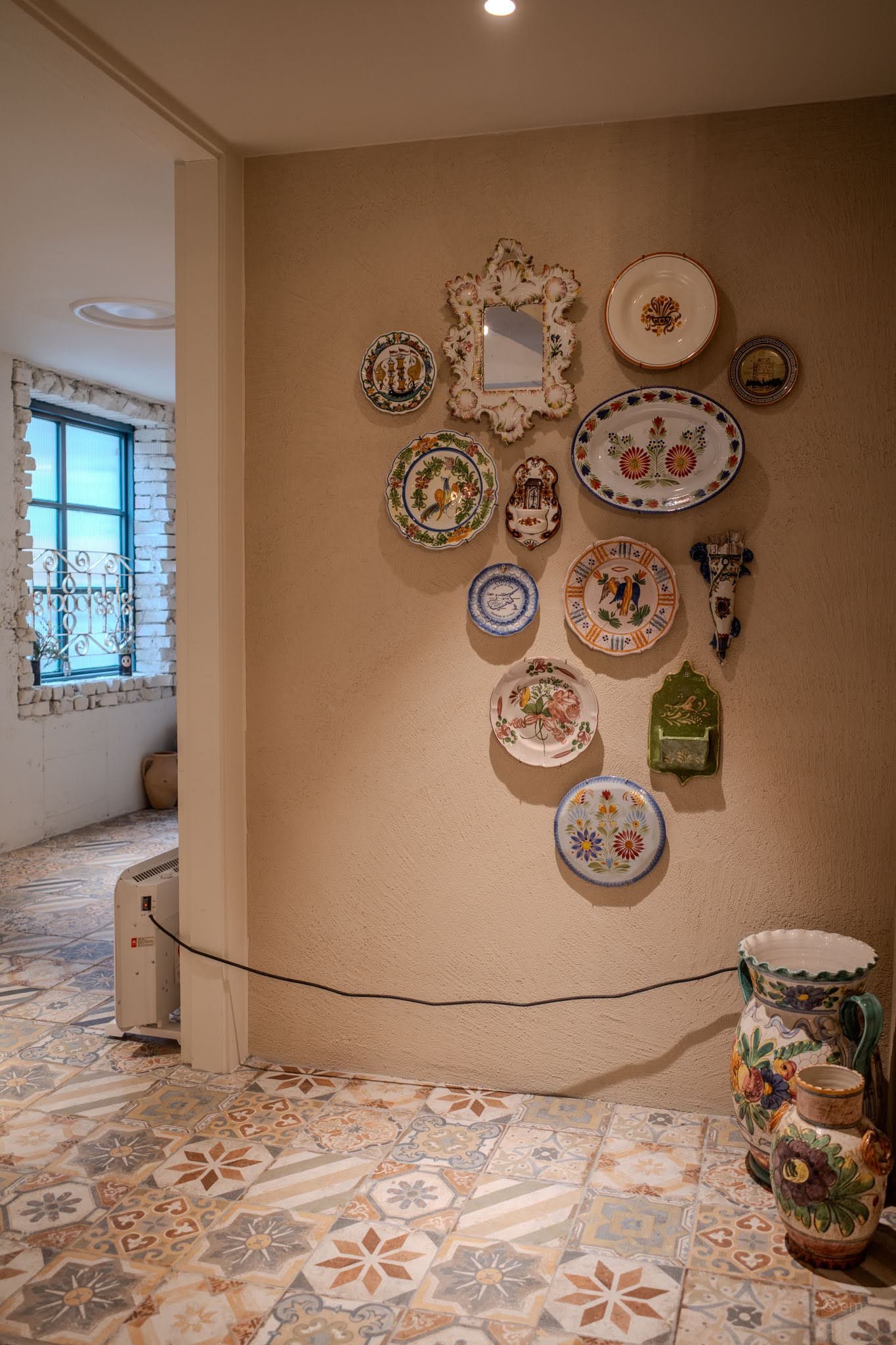
One area reads as a living room: a floral sofa by the window, a low coffee table with mosaic inlay, curtains stirring in the draught. Nearby, a long farm table on painted sage legs stretches across a brick floor, surrounded by mismatched stools, while pendants cast a warm amber circle over the wood. Move further and the floor shifts to a patchwork of encaustic tiles — geometric, floral, faded — and the space narrows into a Mediterranean corridor with a stone pedestal sink, wooden-shuttered windows, and a small red footstool placed at an angle that suggests someone just got up. Past that, white Ionic columns stand on a raised tiled platform beside a gallery wall of Greek island maps, sailing prints, and a Greek flag. Past that, a compact sewing room: floral wallpaper, a treadle machine, yarn spilling from baskets, a porcelain lamp with a gold pull chain. And past that, a kitchen — dense with coloured tile on the back wall, a vintage white stove, shelves packed with enamel pots, crossword clippings, dolls, and copper ladles — a room that has been accumulating things for fifty years and doesn’t intend to stop.
Presiding over one of the main seating areas is an oil painting, large and darkly gilt-framed, of an elderly woman knitting. She is the yiayia. She watches everything.
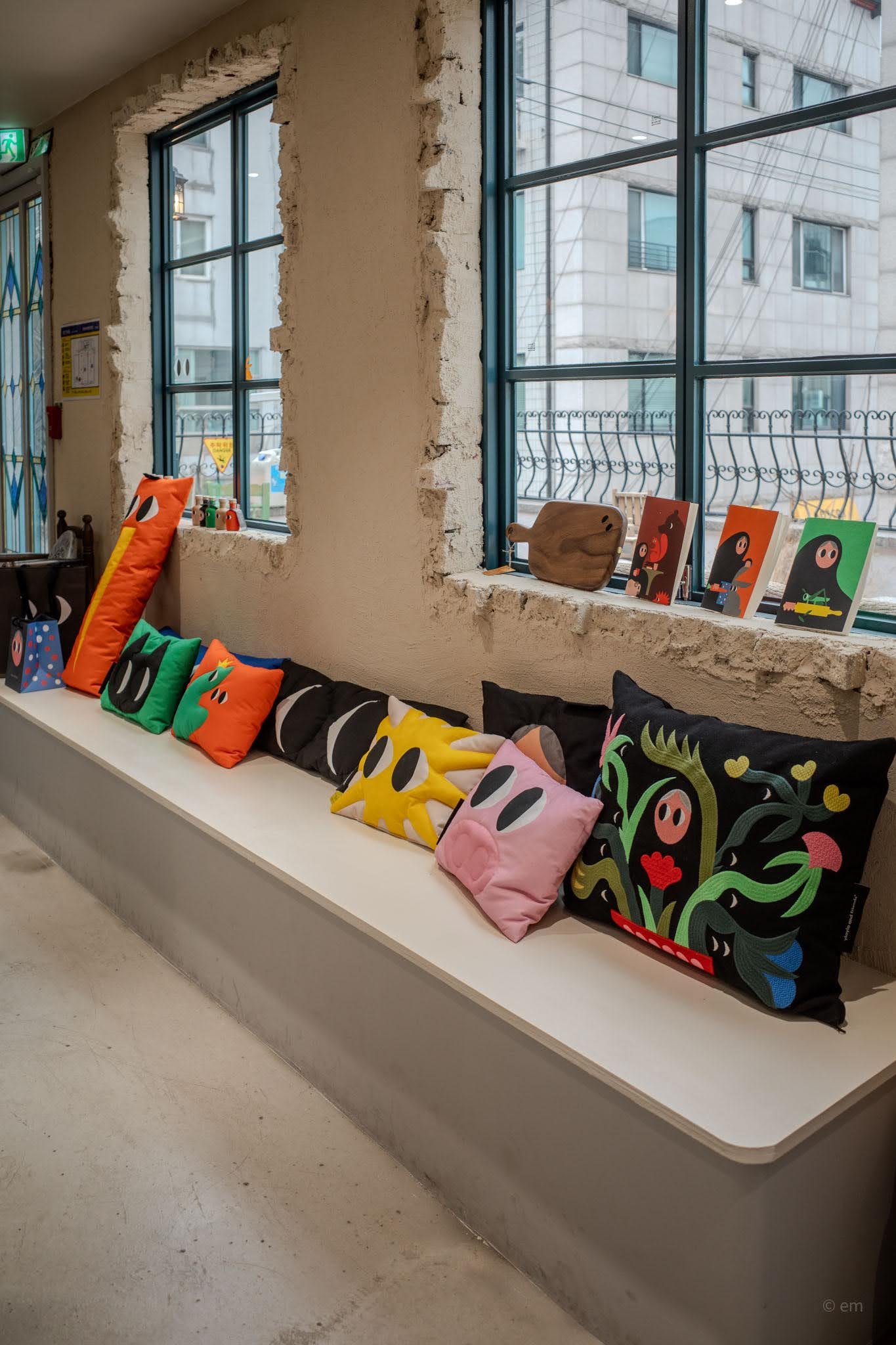
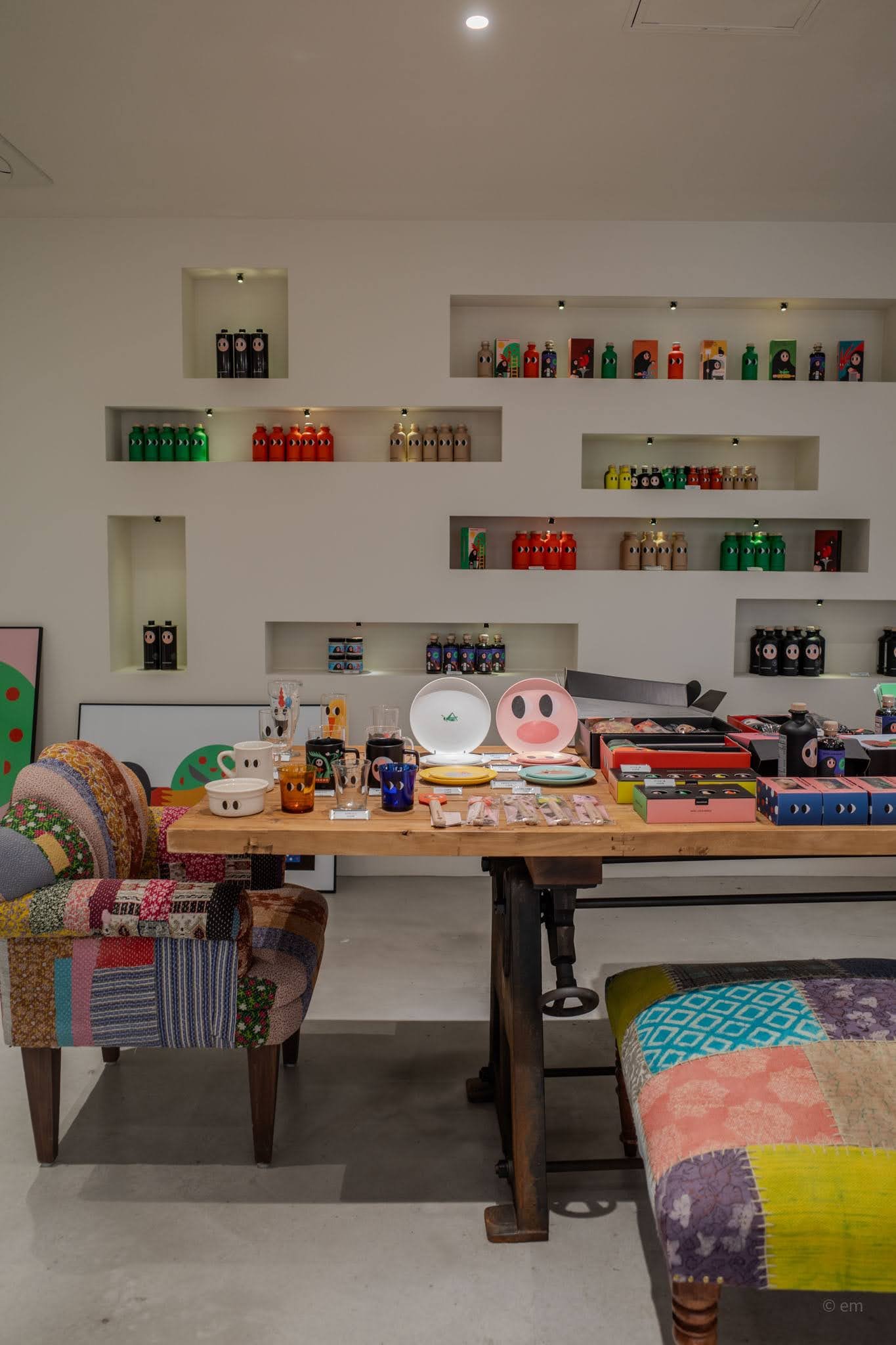
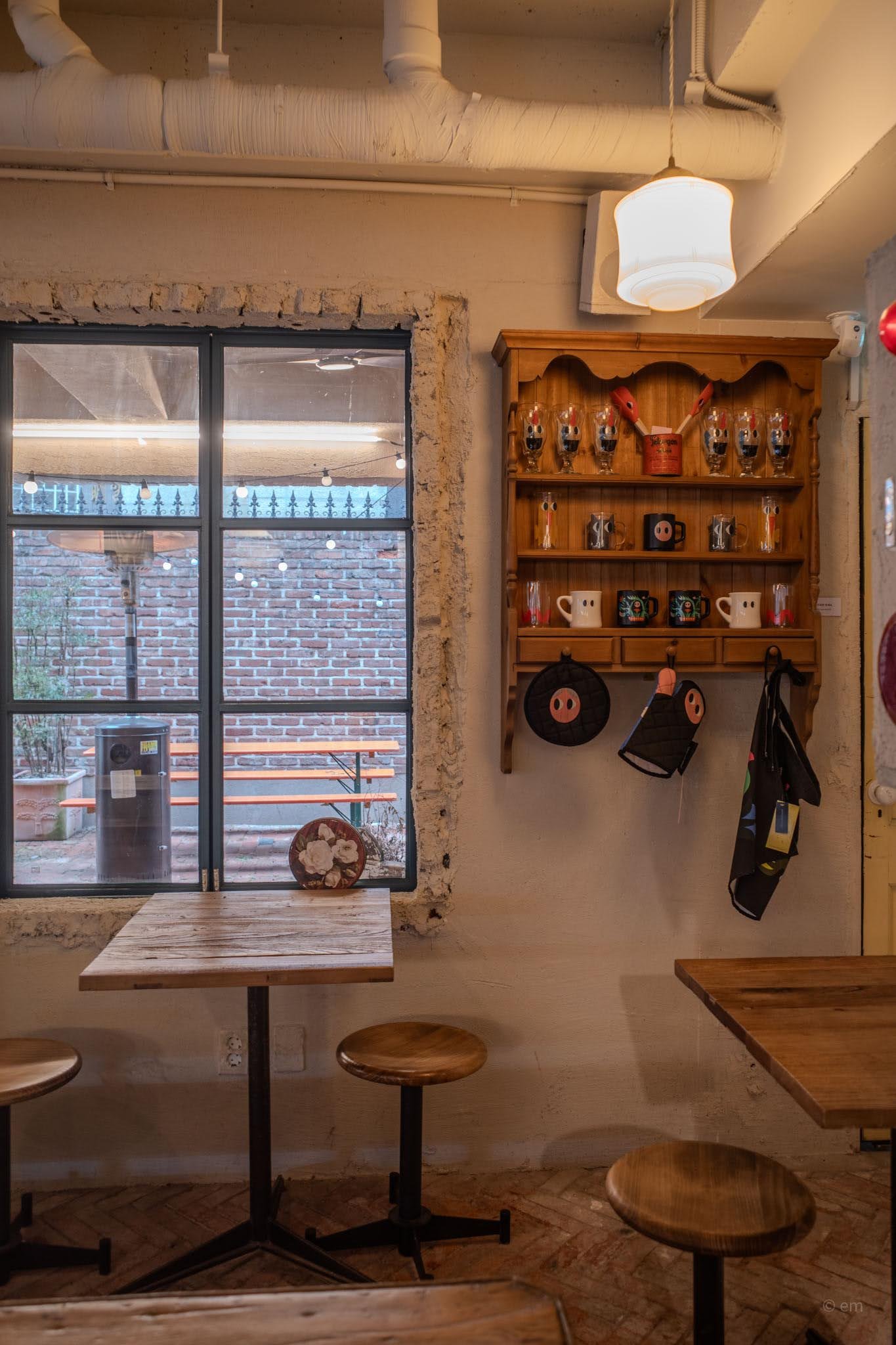
The upper floor transitions to a white gallery space — clean-walled and quietly lit — where the product range is displayed in architectural niches. Olive oil bottles in red, green, black, and ochre stand in rows like a colour chart. Branded ceramics, mugs, and gift boxes are laid across an industrial crank table flanked by patchwork-upholstered chairs. The shift from the accumulated warmth downstairs to this spare brightness is deliberate: the grandmother’s world is below; the design language it inspired is up here.
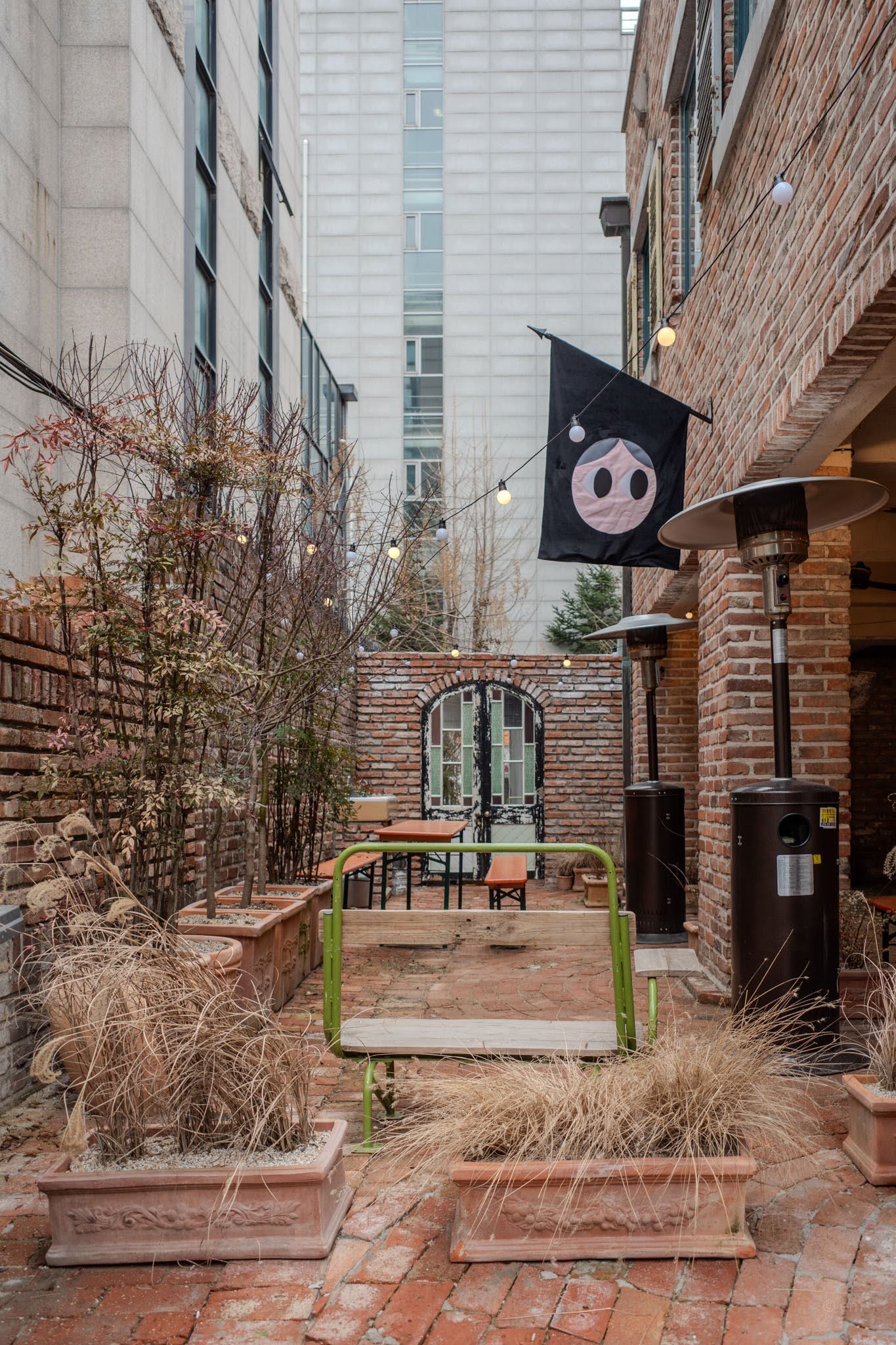
The courtyard, reached from the side, is a narrow brick passage between buildings. String lights, bare-branched trees in terracotta planters, a black Yiayia flag catching the cold. It has the feeling of a garden in winter — not neglected, just patient.
What to Eat
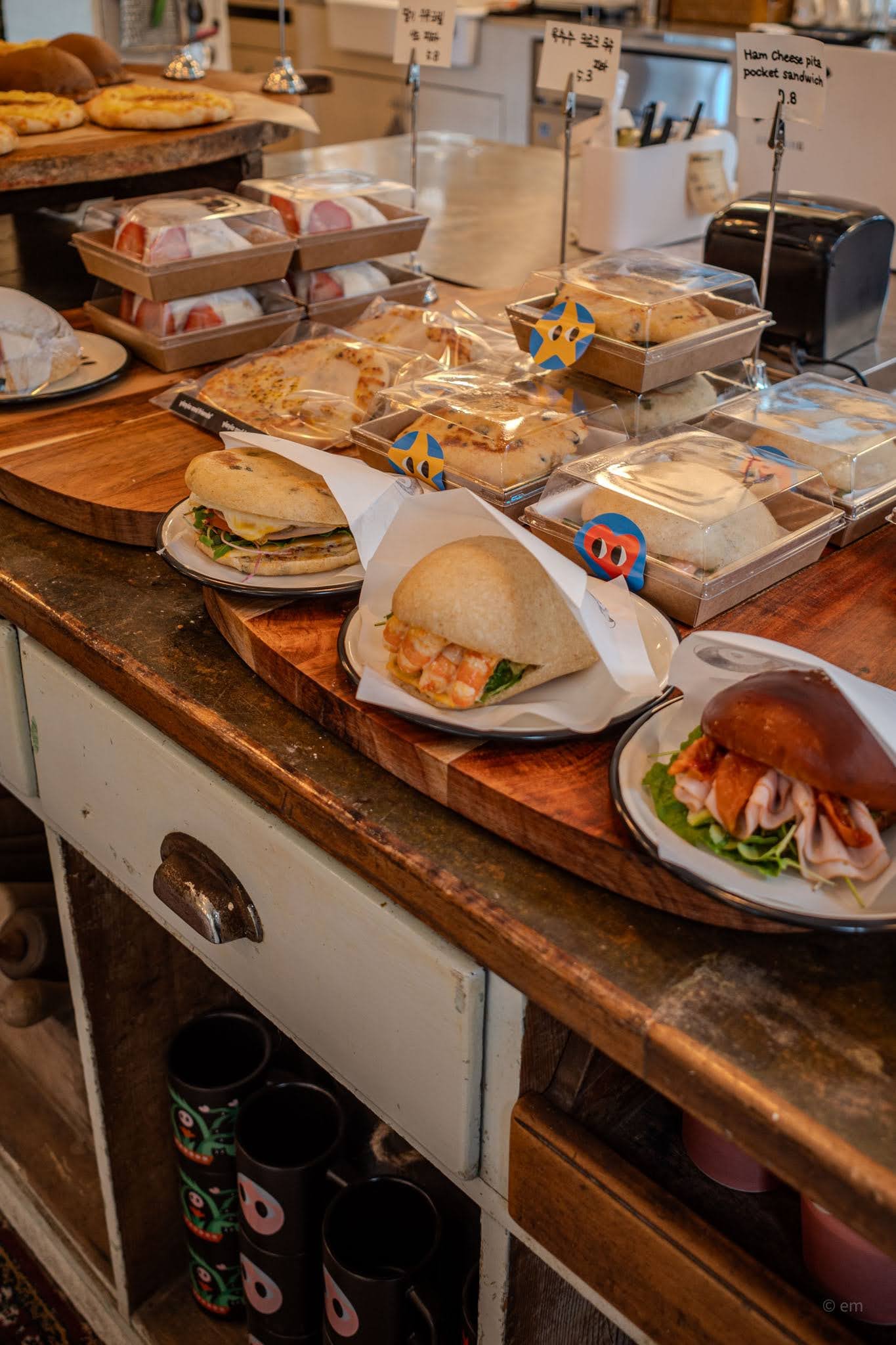
The menu covers coffee, beverages, and a spread of bakery and brunch items including banana bread, caramel croissants, pita bread, and various sandwiches. Pita is a specialty — thick, charred at the edges, stuffed and hand-folded. At the bakery counter, sandwiches are labelled in both Korean and English, and the product shelves beyond the café carry Greek pantry goods alongside the branded olive oils.
A Note on the Space
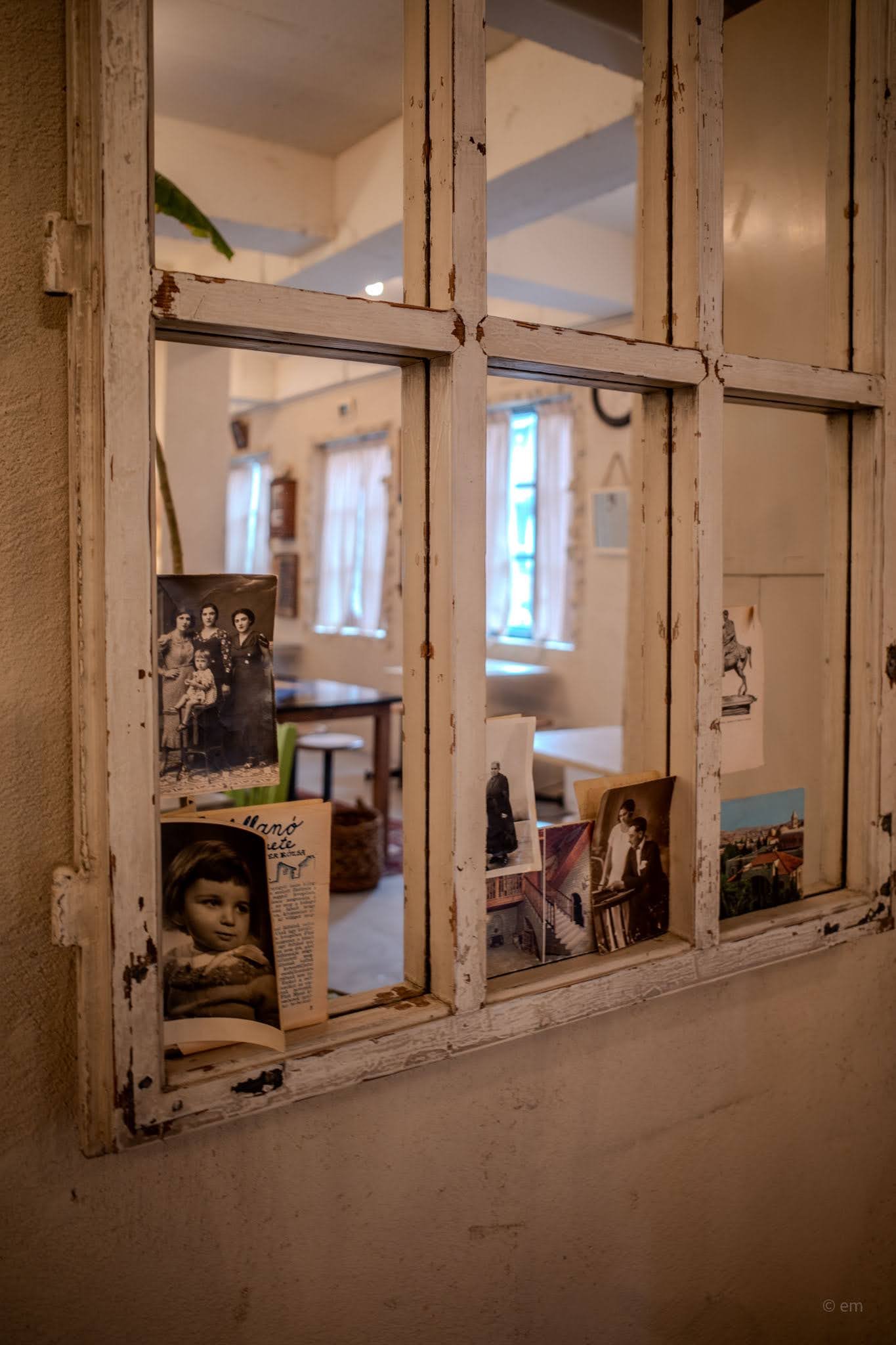
Yiayia and Friends occupies a category of its own in Seoul’s café landscape. It isn’t a vintage café in the conventional sense, nor an antique shop with coffee appended. It’s closer to an inhabited imagination — a place where the objects aren’t decorative but biographical, where every doorway opens into a different episode of a life that may never have existed, but feels entirely real. You don’t sit in Yiayia’s house. You wander through it, room by room, carrying your pita.
Yiayia and Friends | 22 Dosandaero 51-gil, Gangnam-gu, Seoul |
Mon–Thu, Sun 10:00–20:00 / Fri–Sat 10:00–21:00 |
Instagram: @yiayiaandfriends_kor / @yiayiaandfriends_cafe
Greece doesn’t have a Gangnam branch, but Gangnam has a Greece.