It’s not Santorini. It’s not Tulum. It’s a donut café in Suwon, and somehow that’s not the strangest part.
Donas Day didn’t set out to build a vacation. It set out to sell donuts — round, generously dusted, cream-filled things in every colour a donut has any business being. But somewhere between the rooftop pool and the arched whitewashed walls and the cactus standing in terracotta urns against a suburban Seoul skyline, the pastry case became almost incidental. This is the main branch in Omokcheon-dong, Gwonseon-gu, and for a lot of people, it’s the first time Suwon has ever sounded like a destination.
The Story Behind the Name
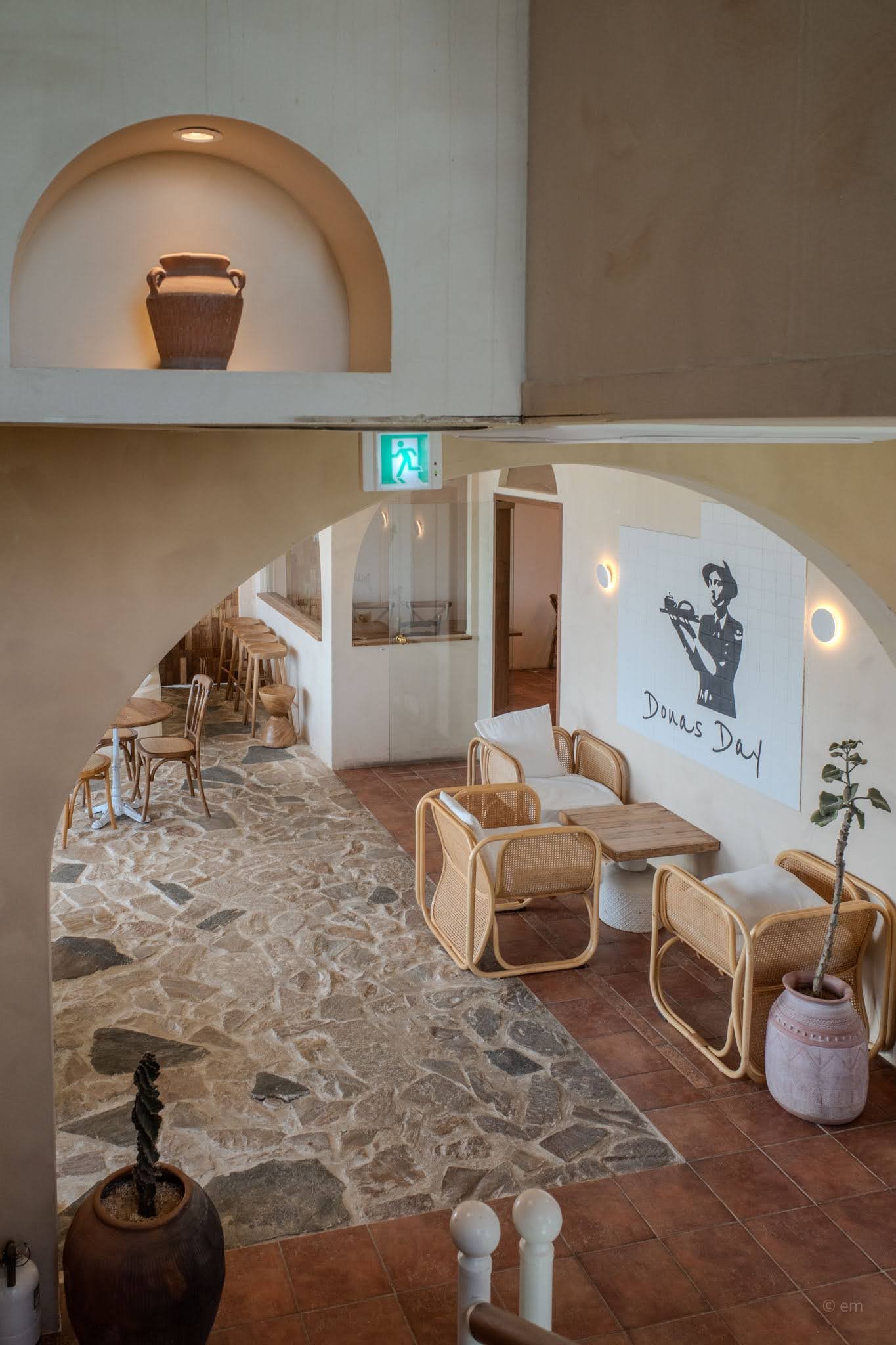
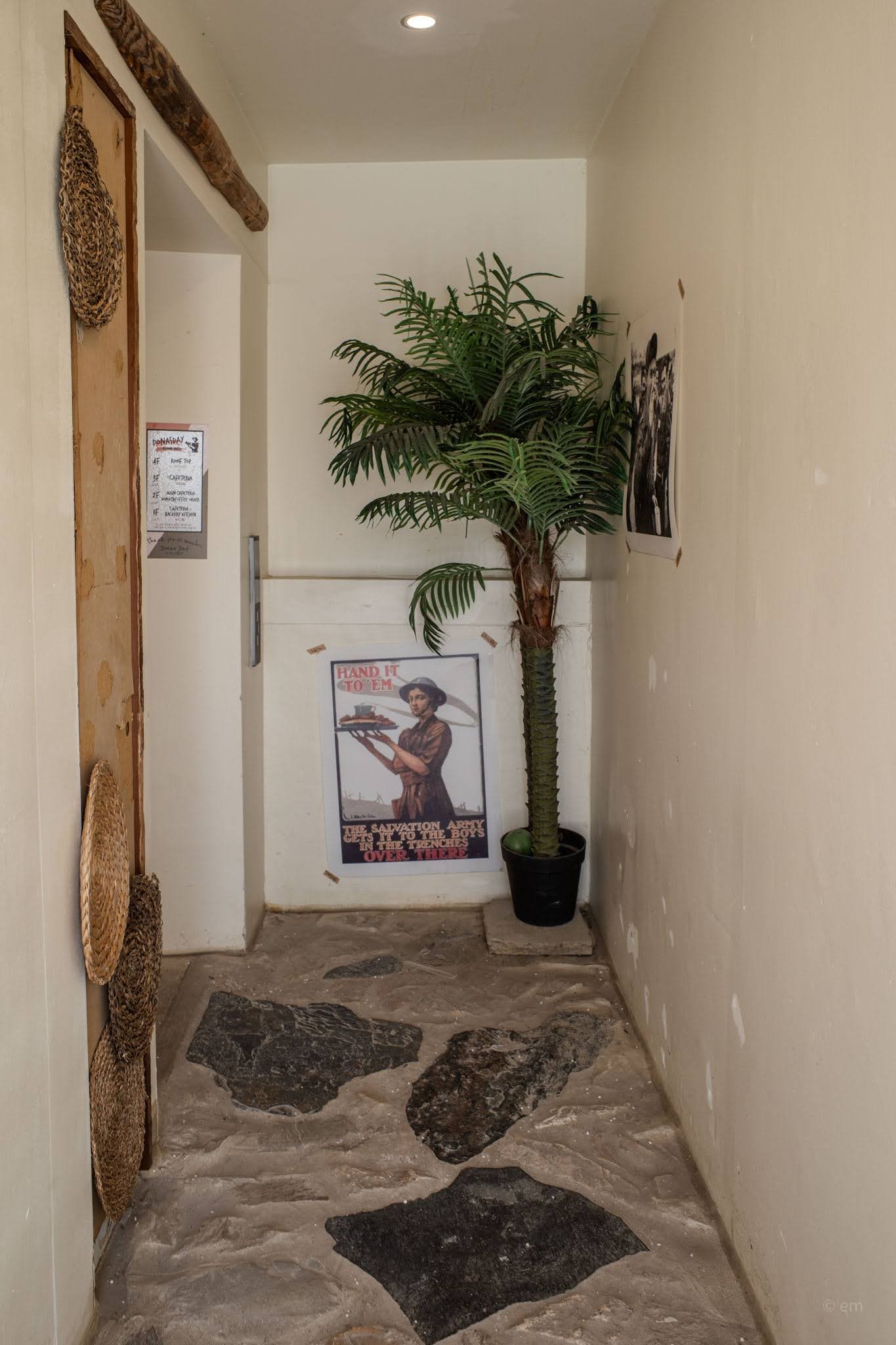
The name has roots in an unlikely place: National Donut Day, and the WWI Salvation Army women — known as Donut Lassies — who fried donuts on the front lines to give American soldiers a moment’s comfort from the war. That origin story lives in the brand’s mascot, the “Dona Girl,” a uniform-clad woman with a tray, rendered in bold graphic linework on the interior walls. The founders took that idea — sweetness as a brief reprieve from an otherwise relentless world — and turned it into a concept: the urban resort. Somewhere you come not just to eat, but to feel, if only briefly, like you’ve gone somewhere else.
The Courtyard Entrance
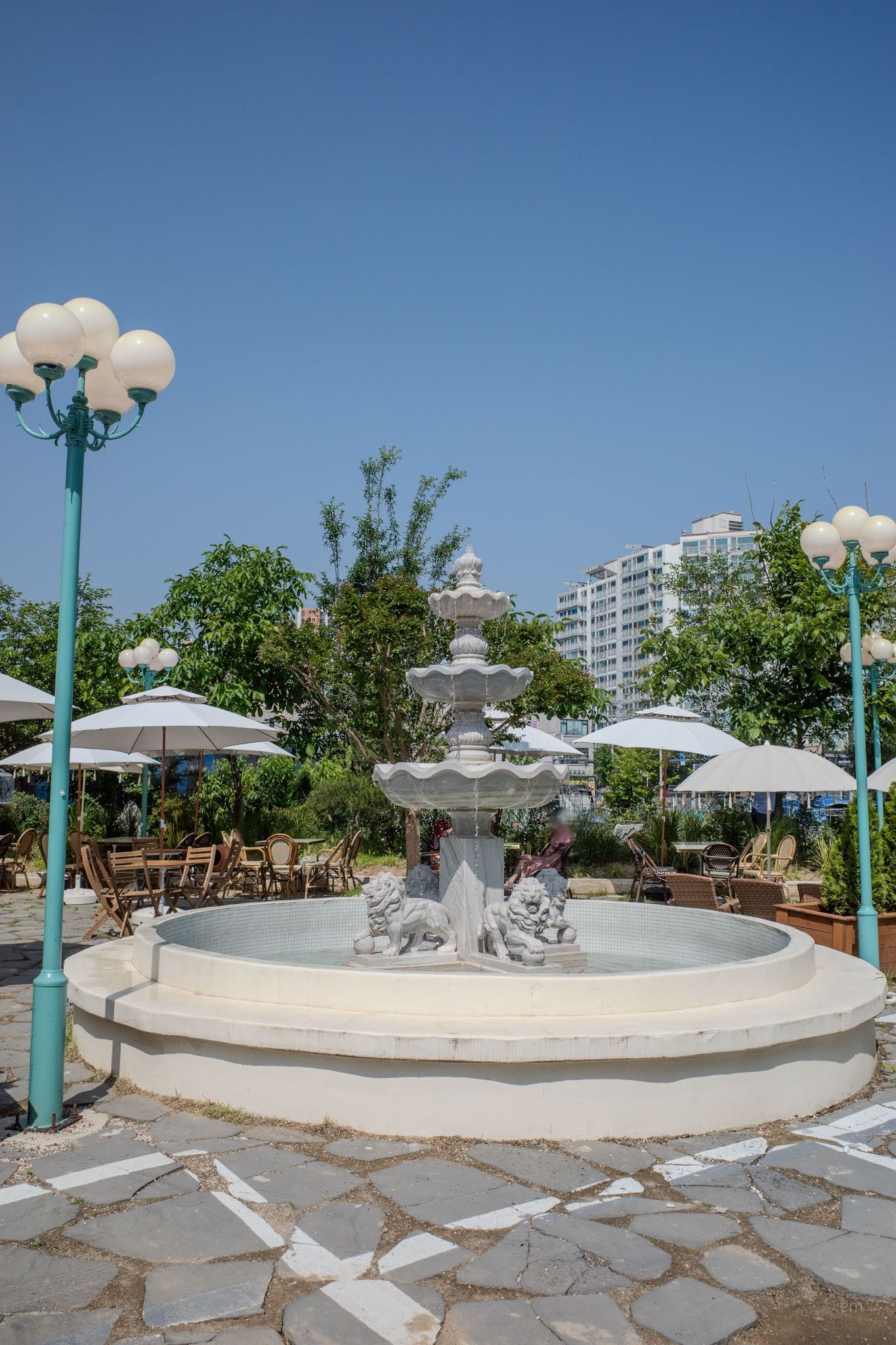
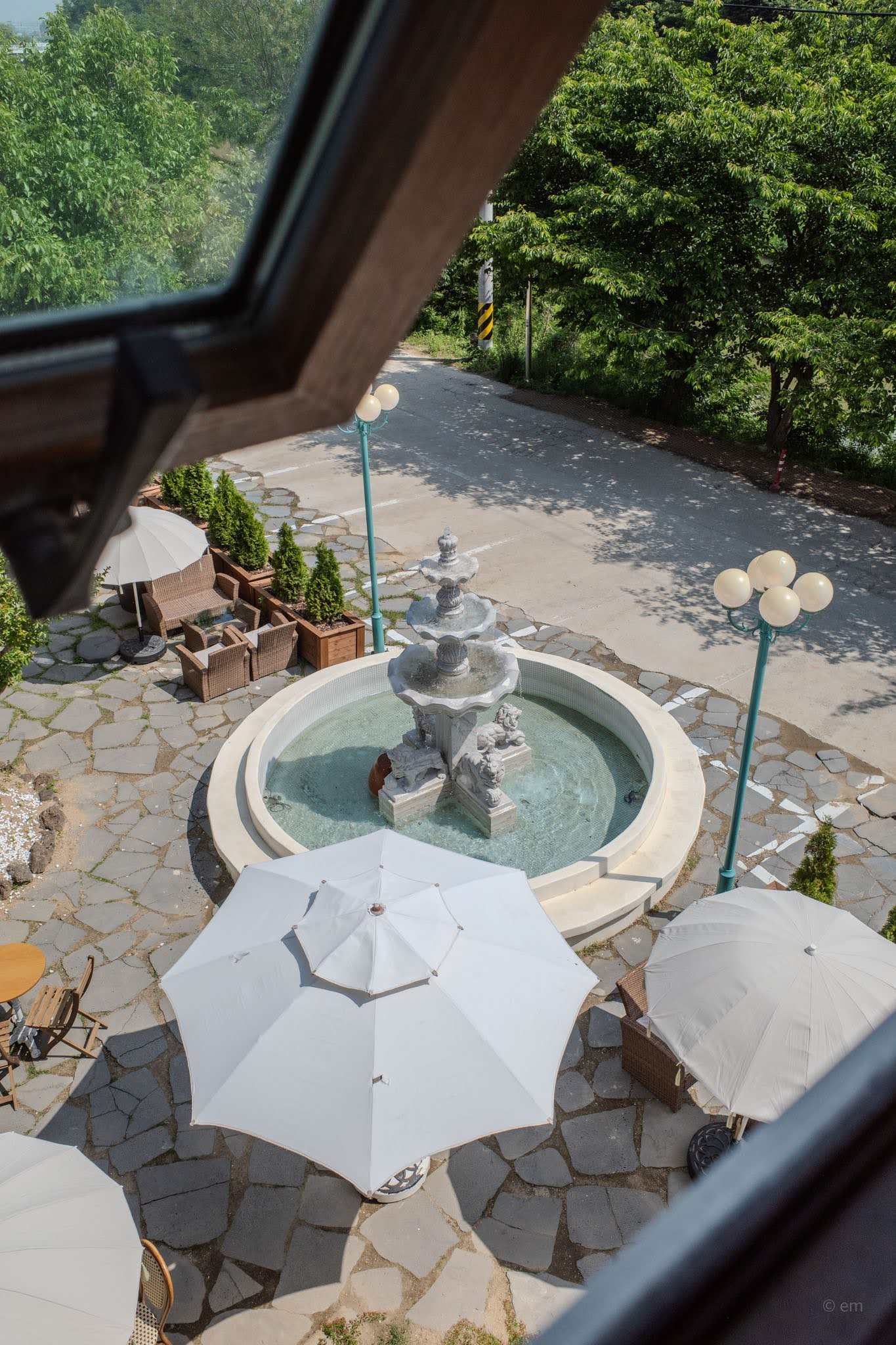
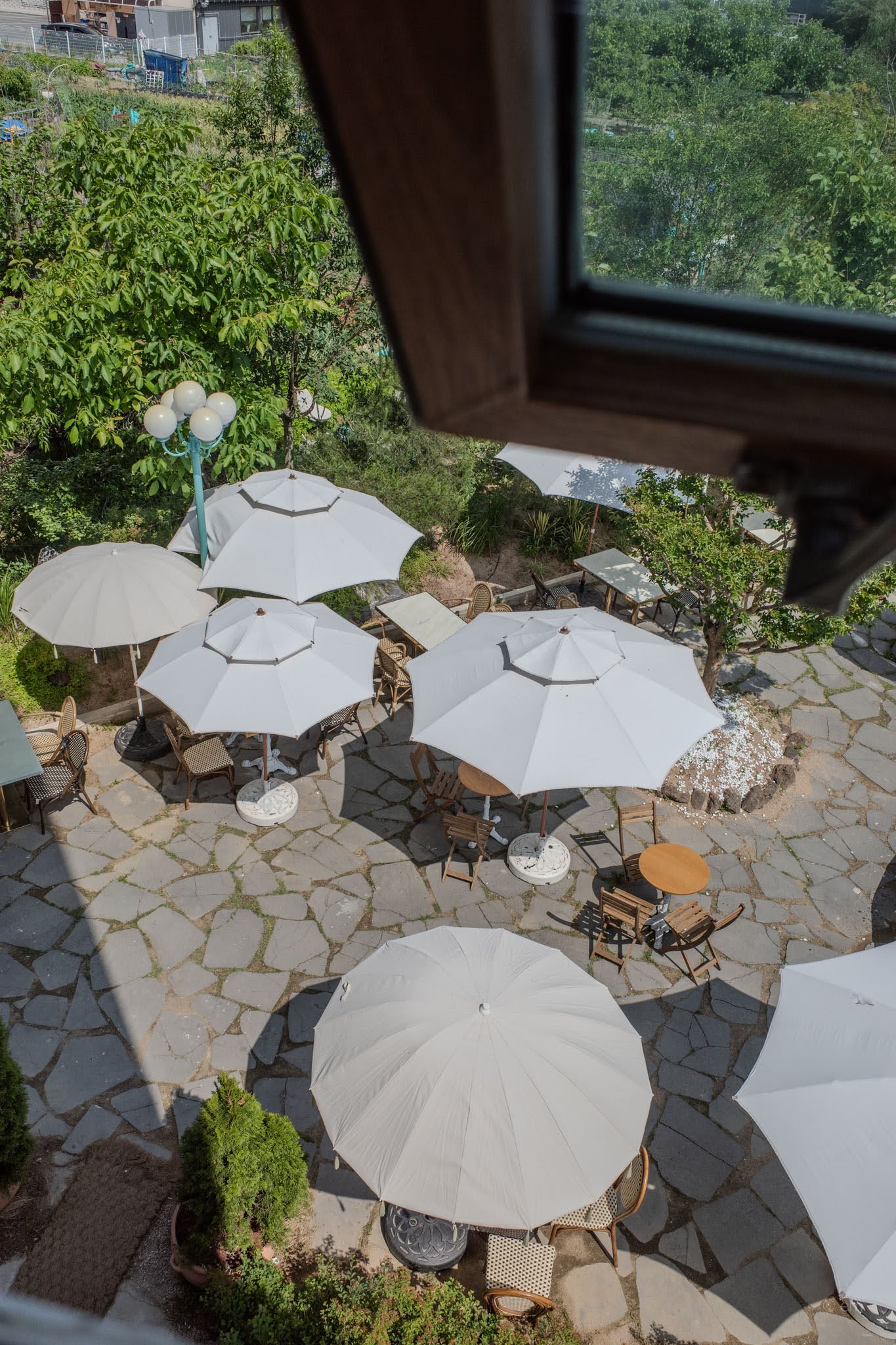
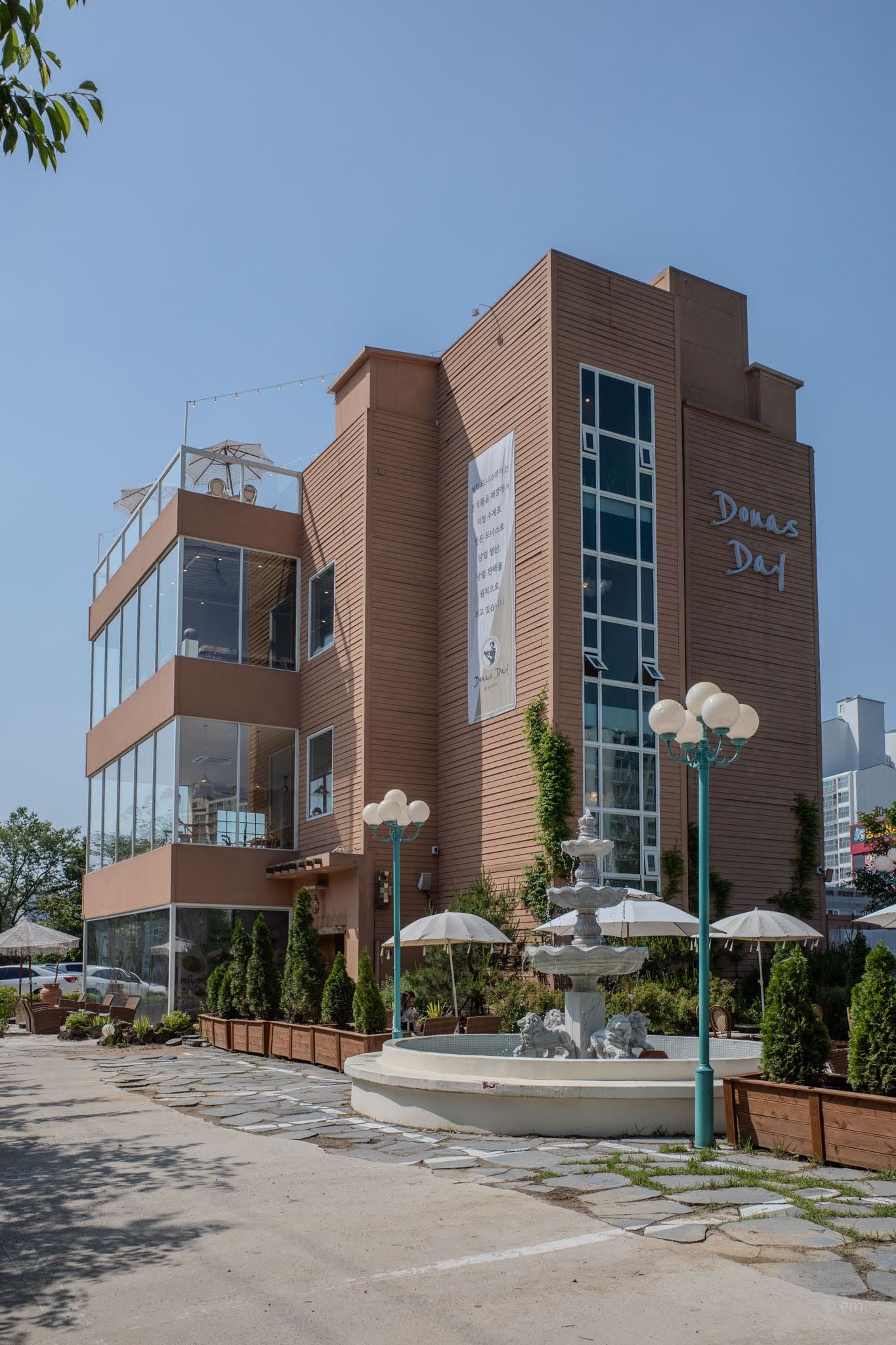
The building announces itself before you’re through the gate. A four-storey block clad in horizontal terracotta-toned panels rises above a stone-paved forecourt, where a tiered marble fountain anchored by lion statues sits flanked by a pair of teal-painted lamp posts with globe clusters at their crowns. White parasols shade clusters of outdoor seating, and the surrounding garden — clipped conifers, planter boxes, a tangle of ivy climbing the façade — gives the whole exterior the quality of a slightly dreamed hotel courtyard. The fountain is not subtle. Neither is anything else here, and that turns out to be the right call.
Inside: Layers of a Different World
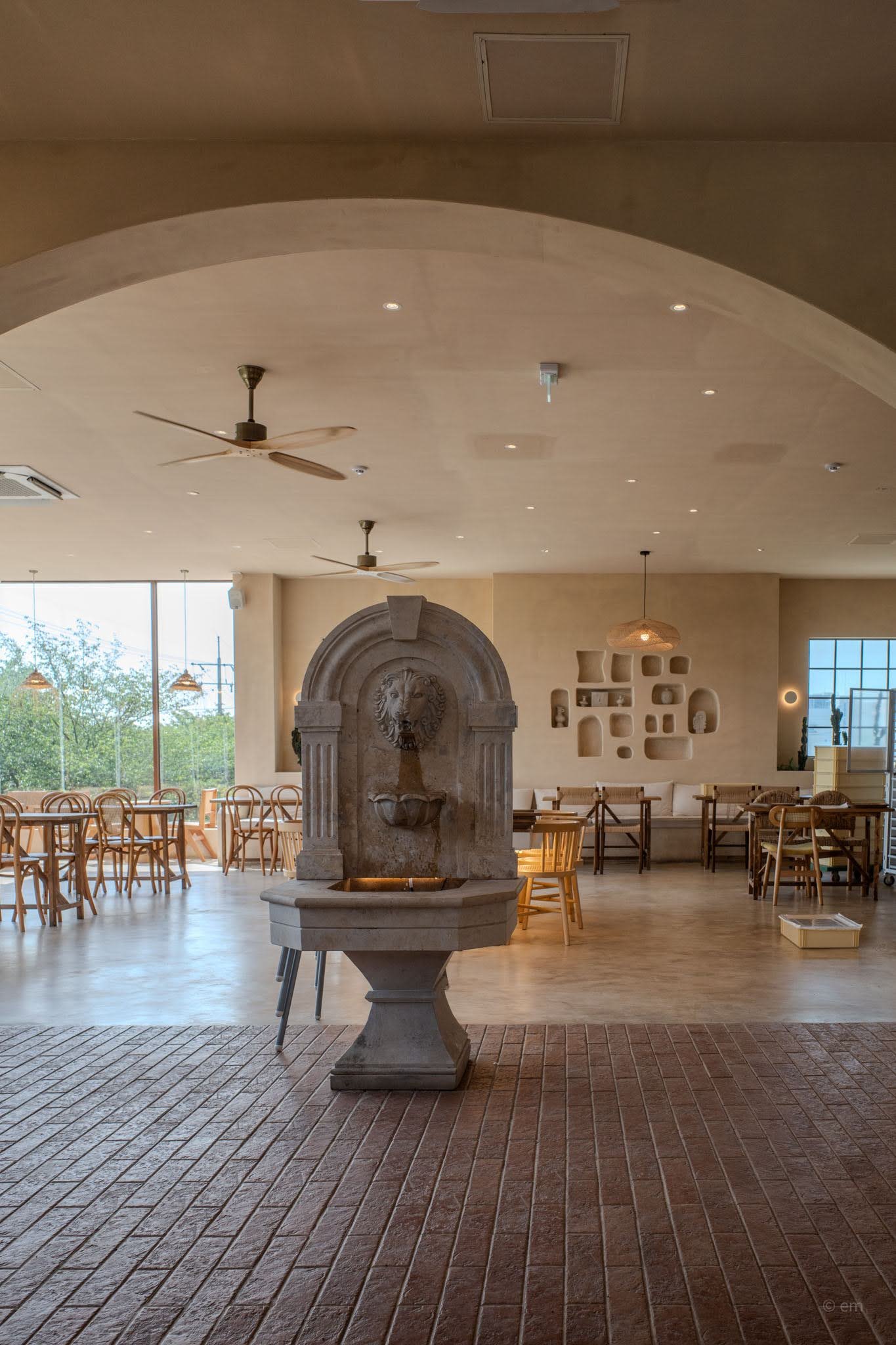
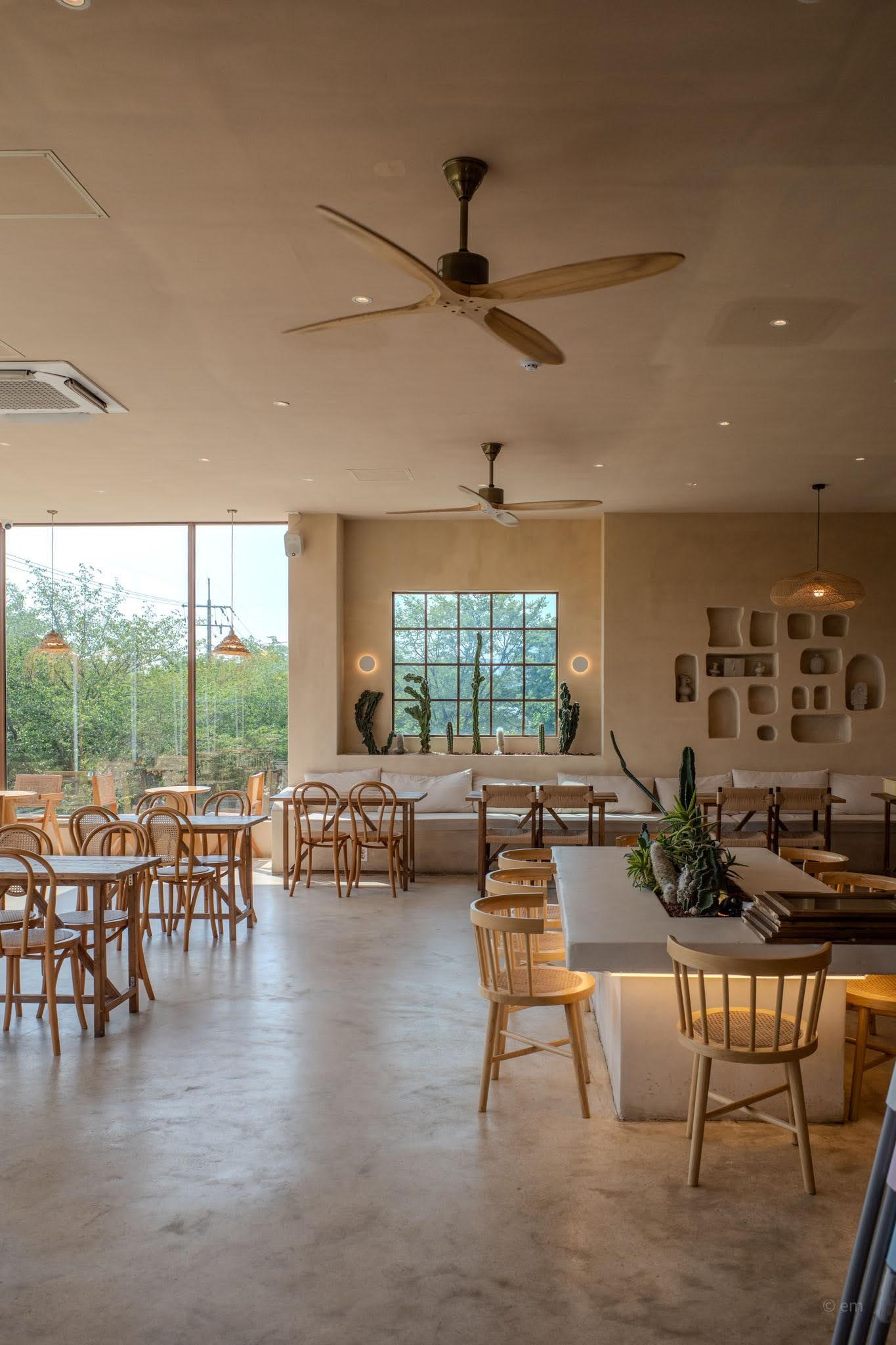
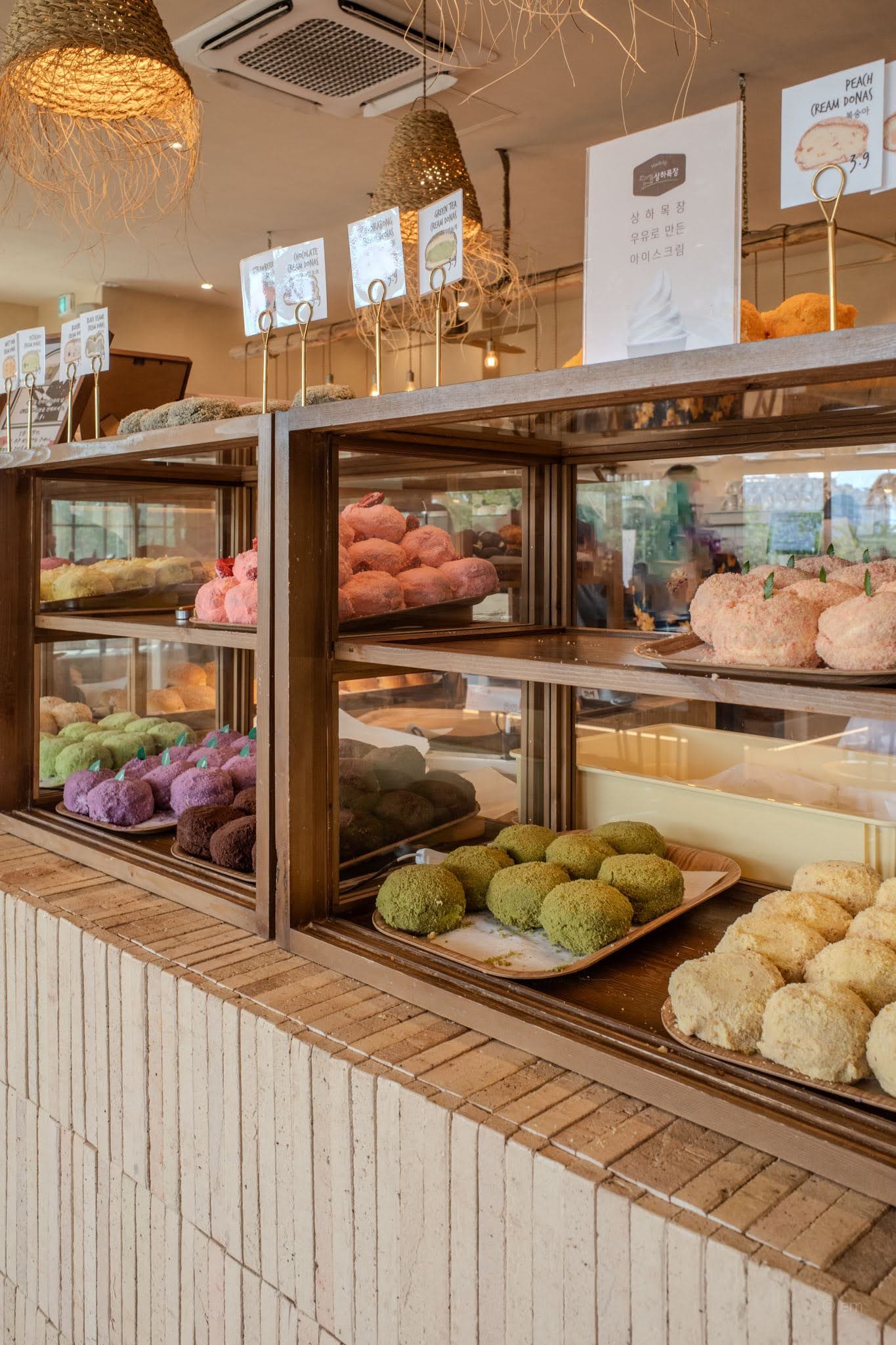
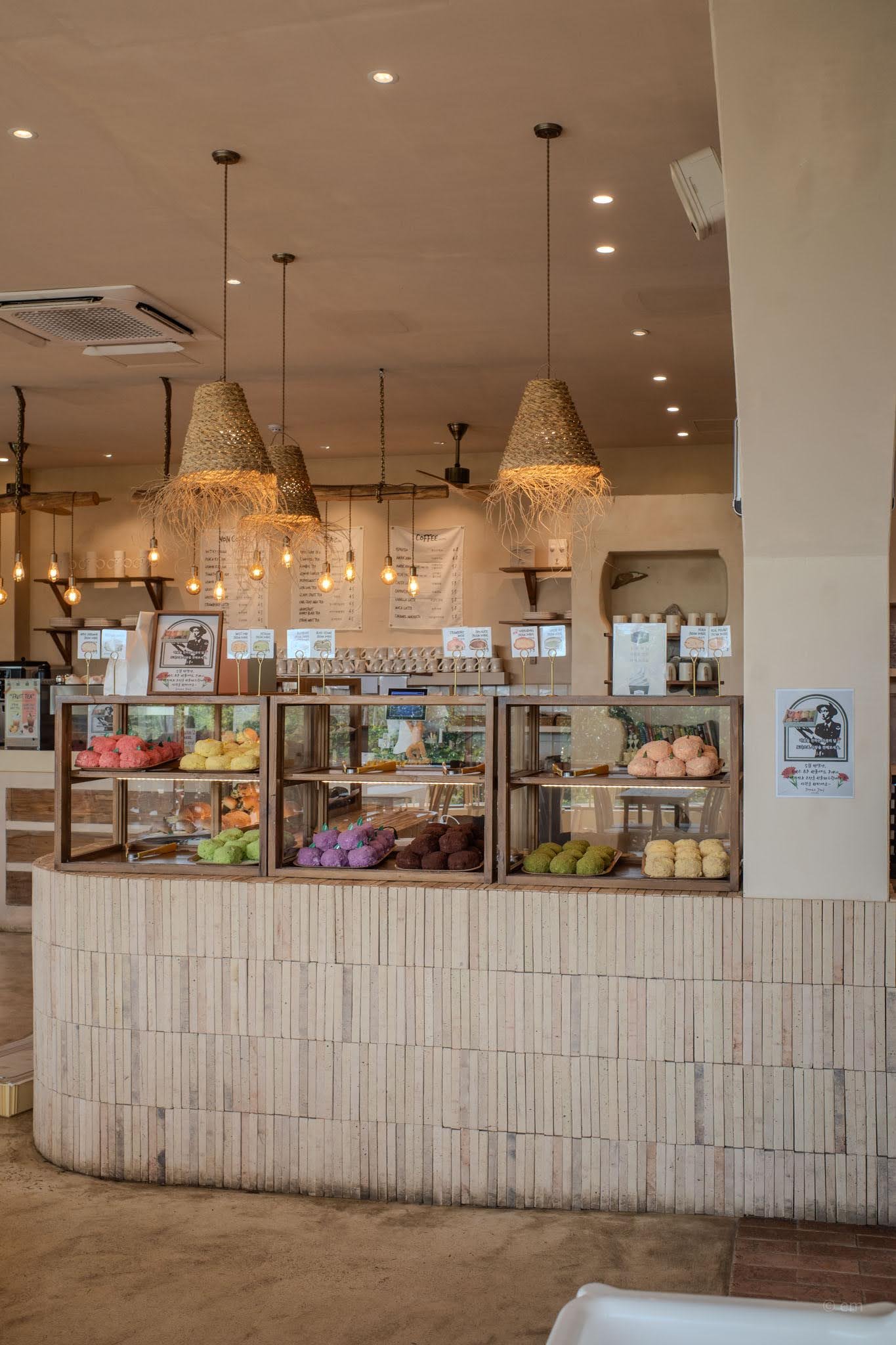
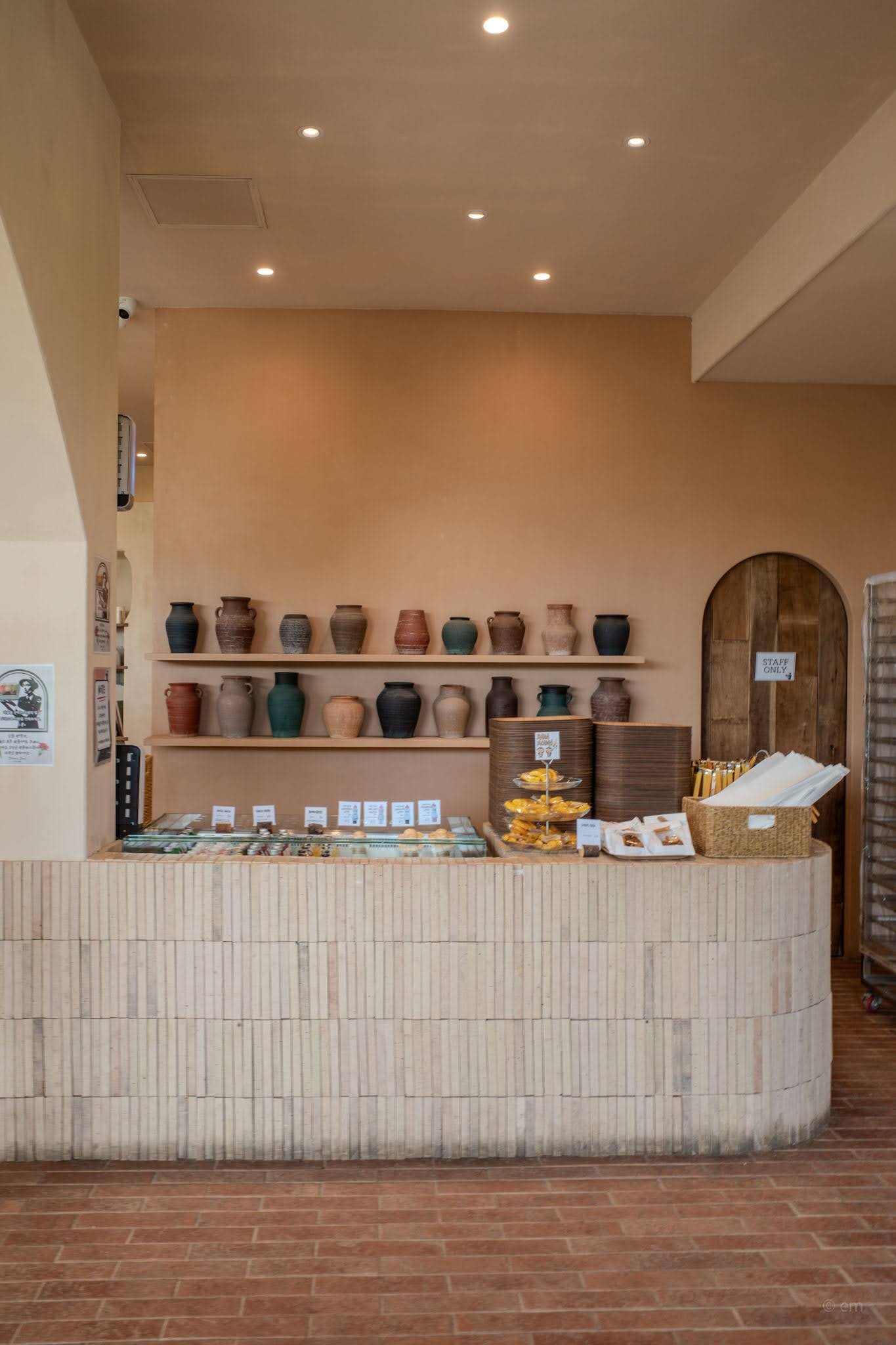
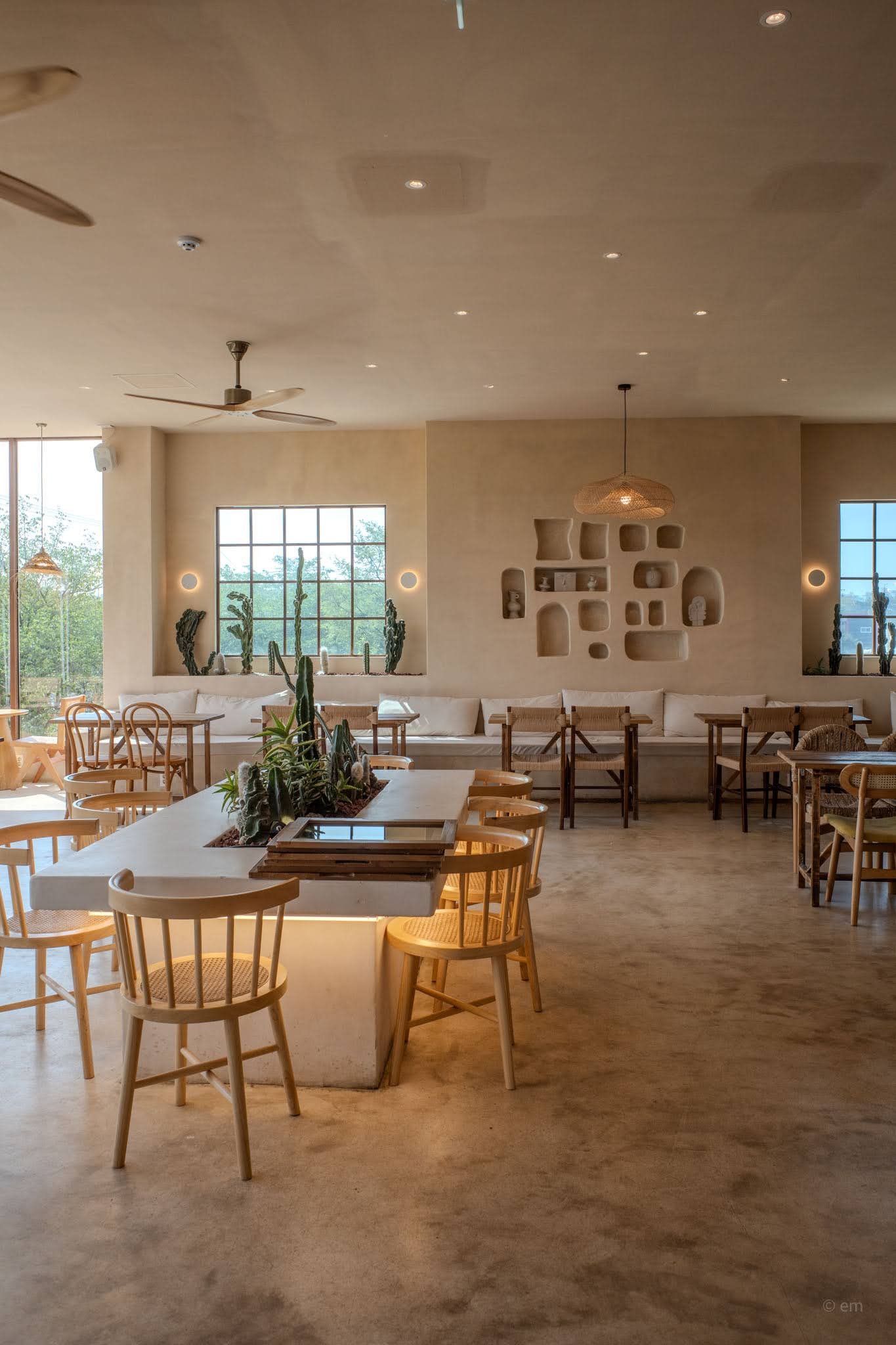
The ground floor is the widest and most theatrical. A low arched ceiling spans the entry hall, beneath which a stone lion-head wall fountain serves as the room’s focal centrepiece — mounted on a plinth, water trickling quietly into a basin below, old-world and deliberate. The floor shifts from red brick to polished concrete as the space opens up: long runs of rattan bentwood chairs at raw-edge tables, slow ceiling fans turning overhead, plaster walls the colour of warm sand. At the counter, a curved case of wood-framed glass holds the donas in rows — matcha green, deep chocolate, blueberry purple, strawberry pink, peach cream — stacked on trays like something from a Wes Anderson confectionery. Conical straw pendants glow above them.
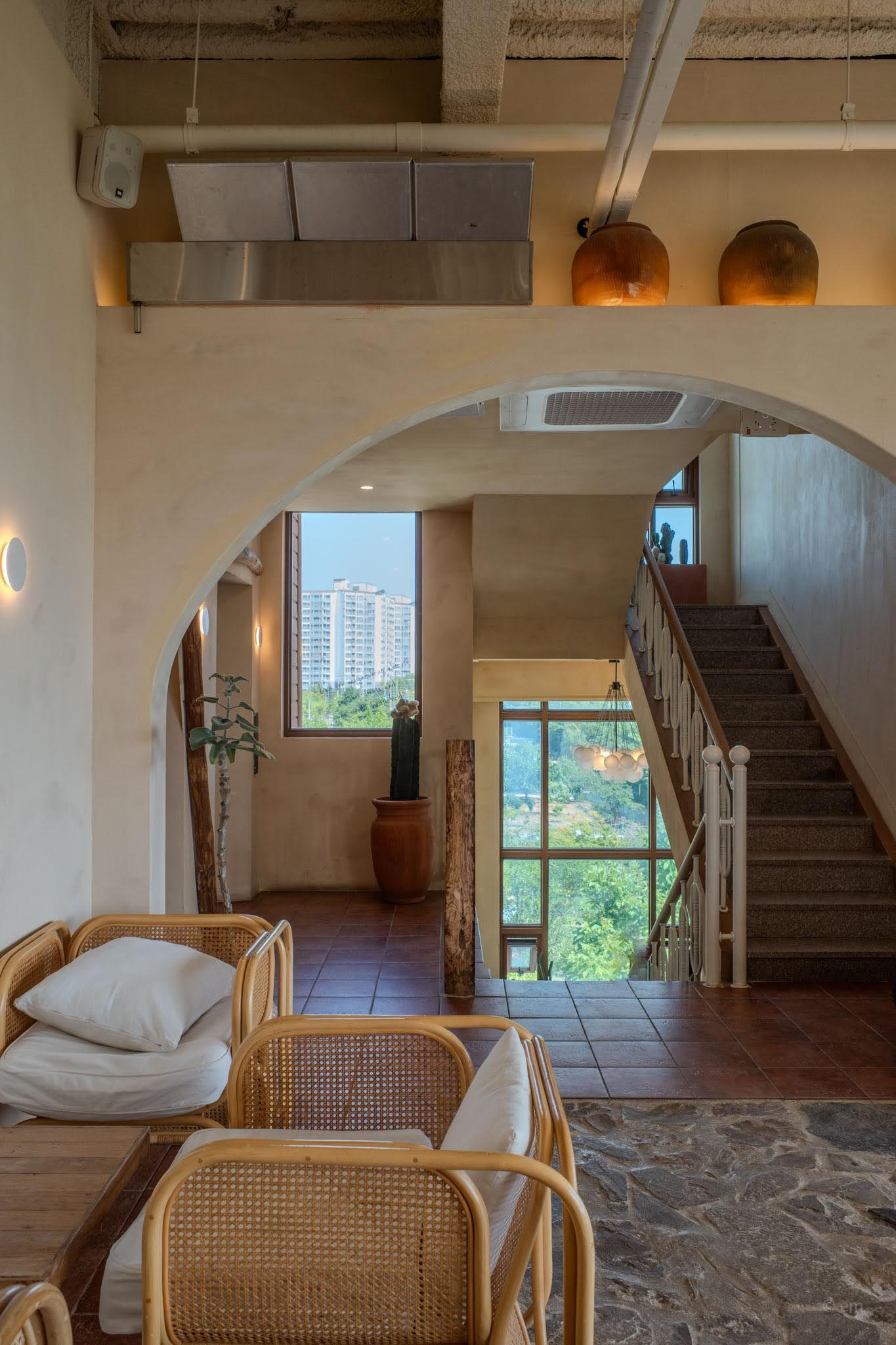
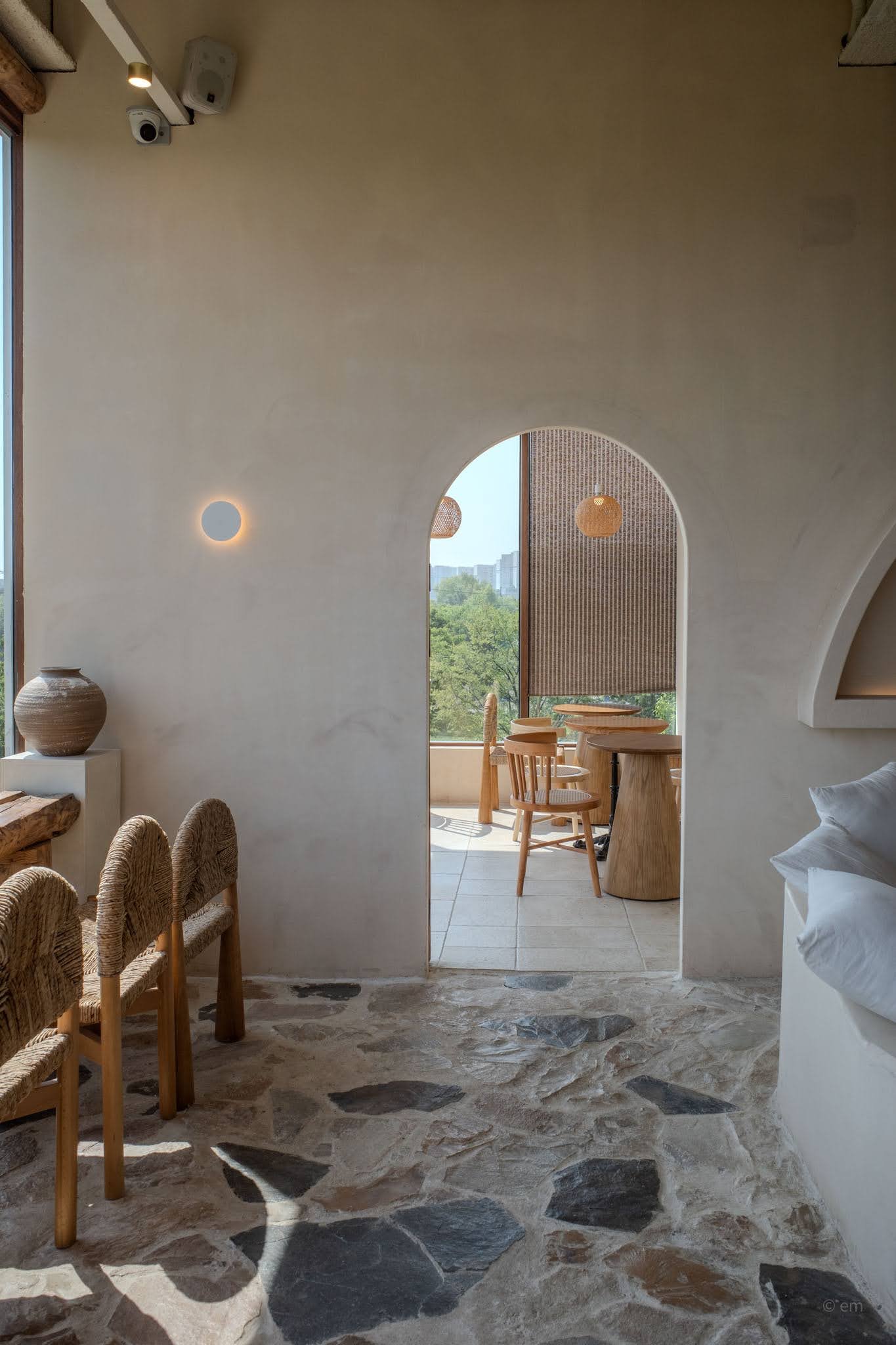
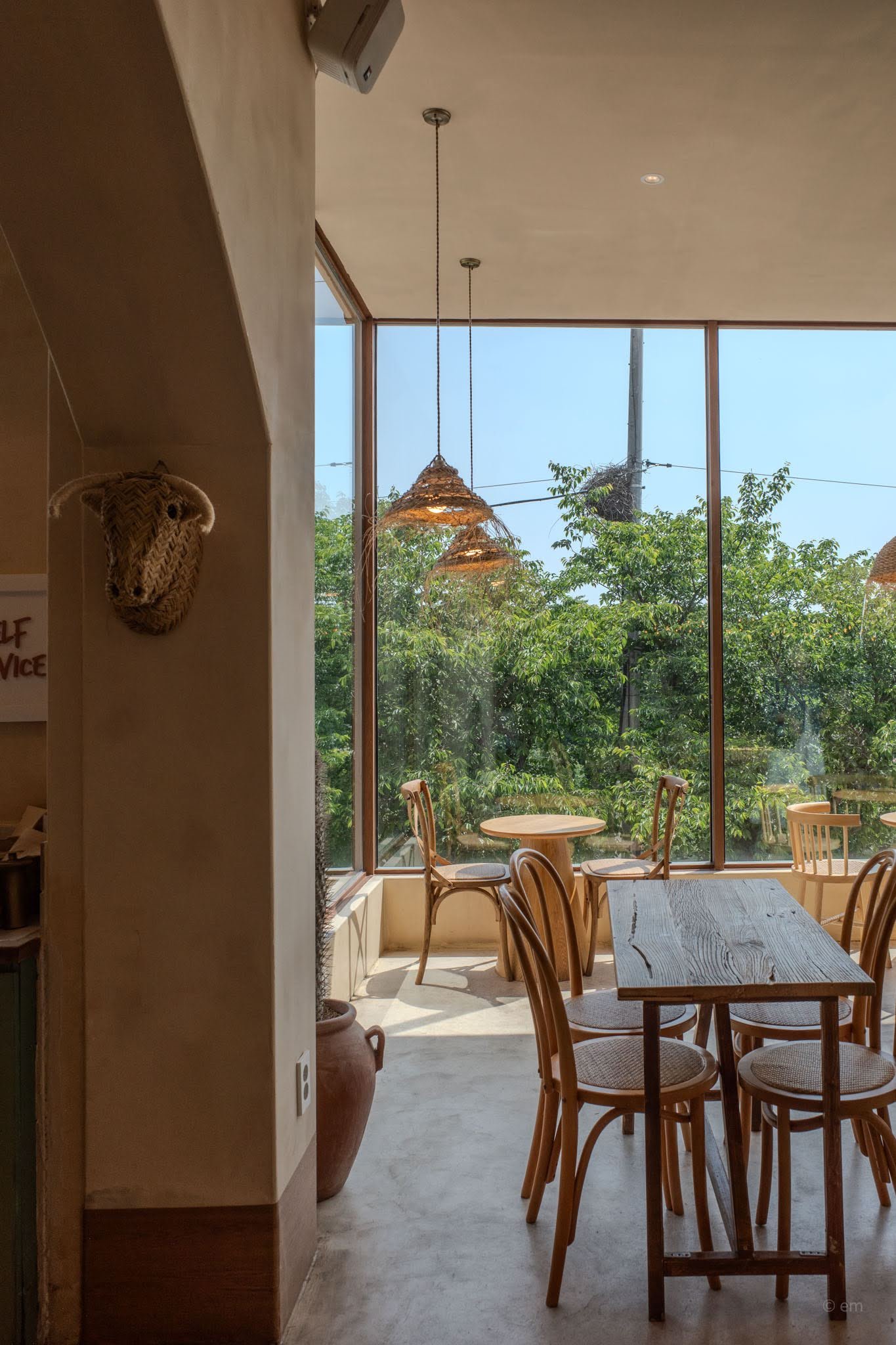
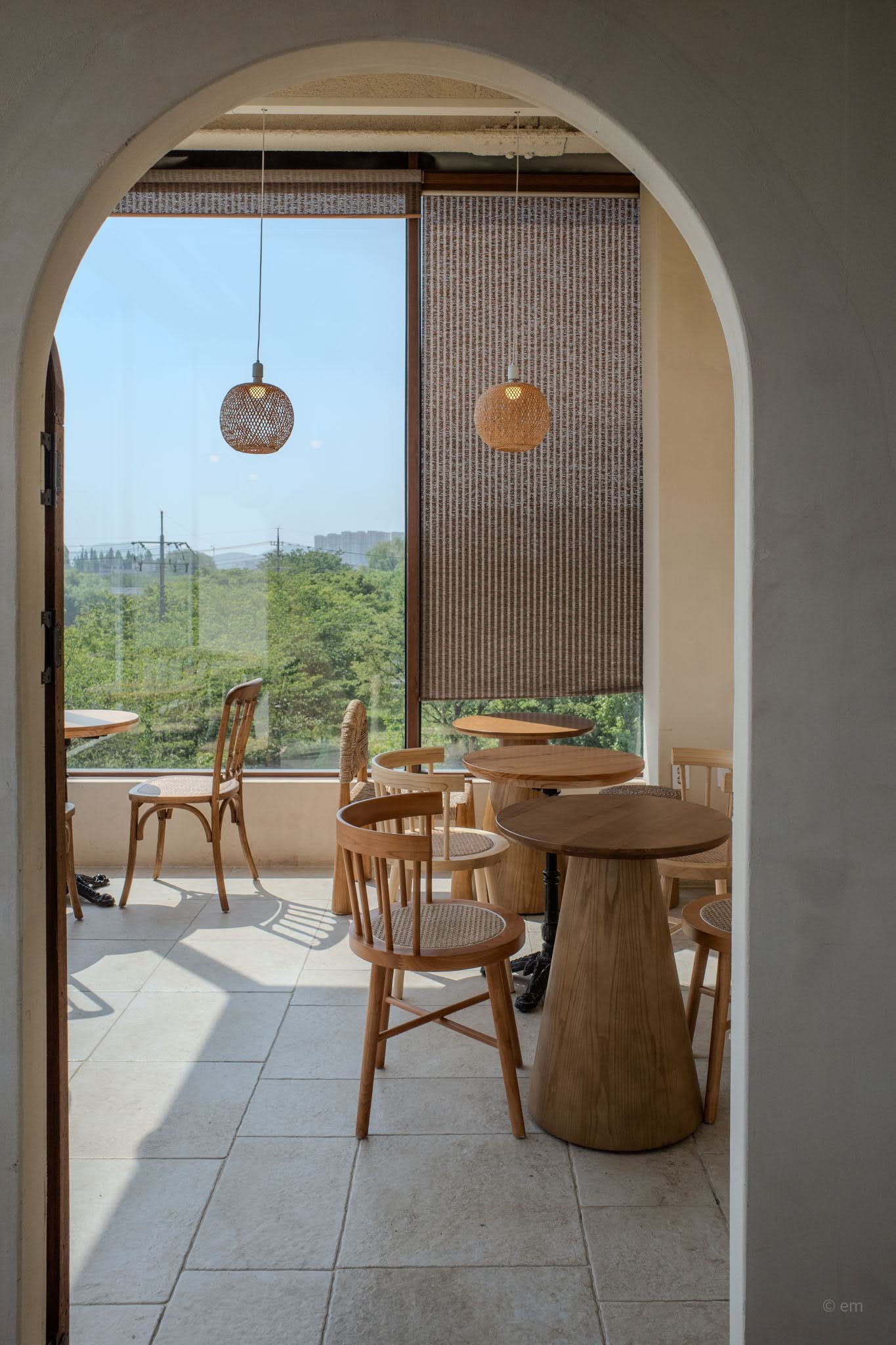
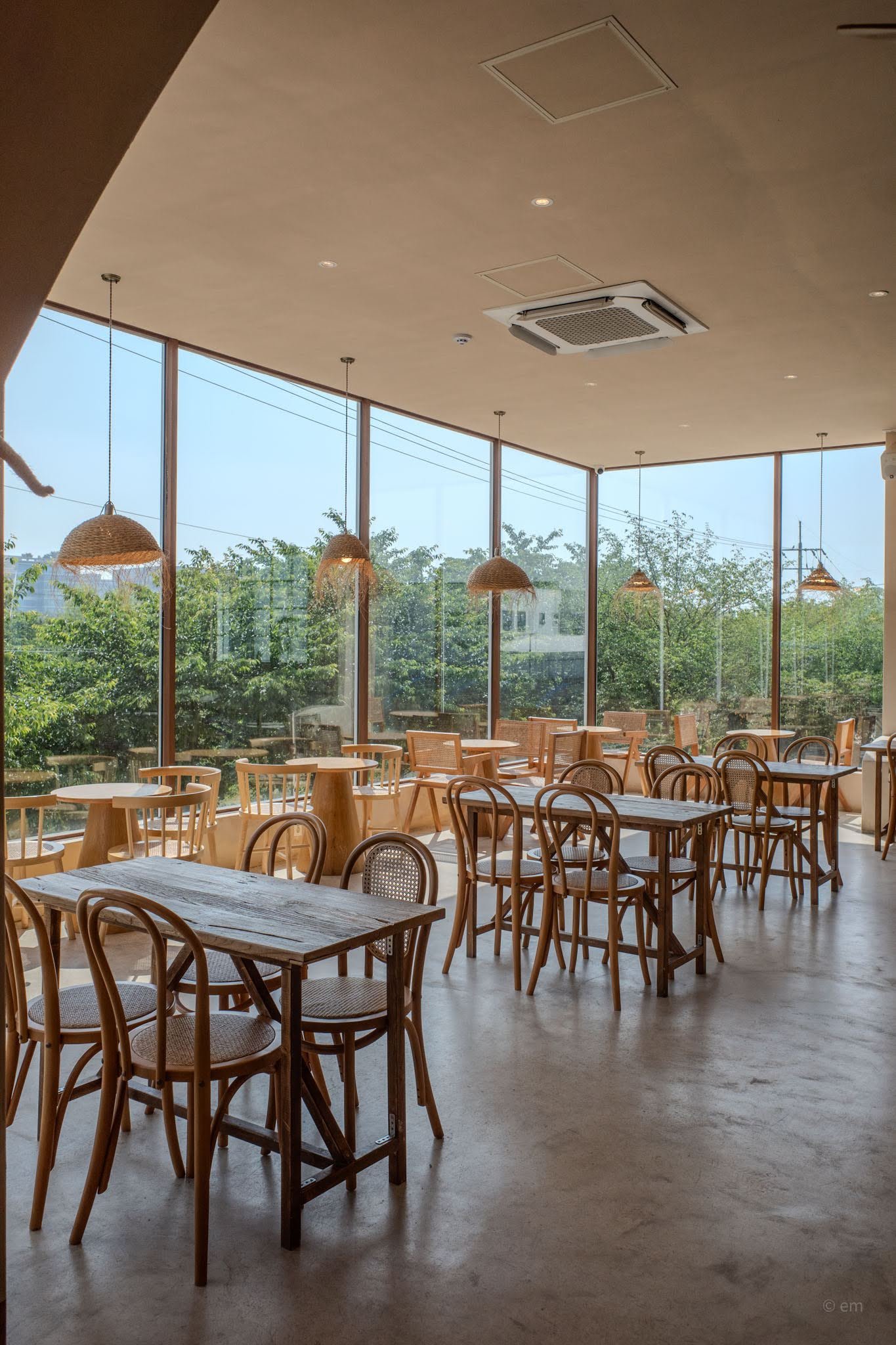
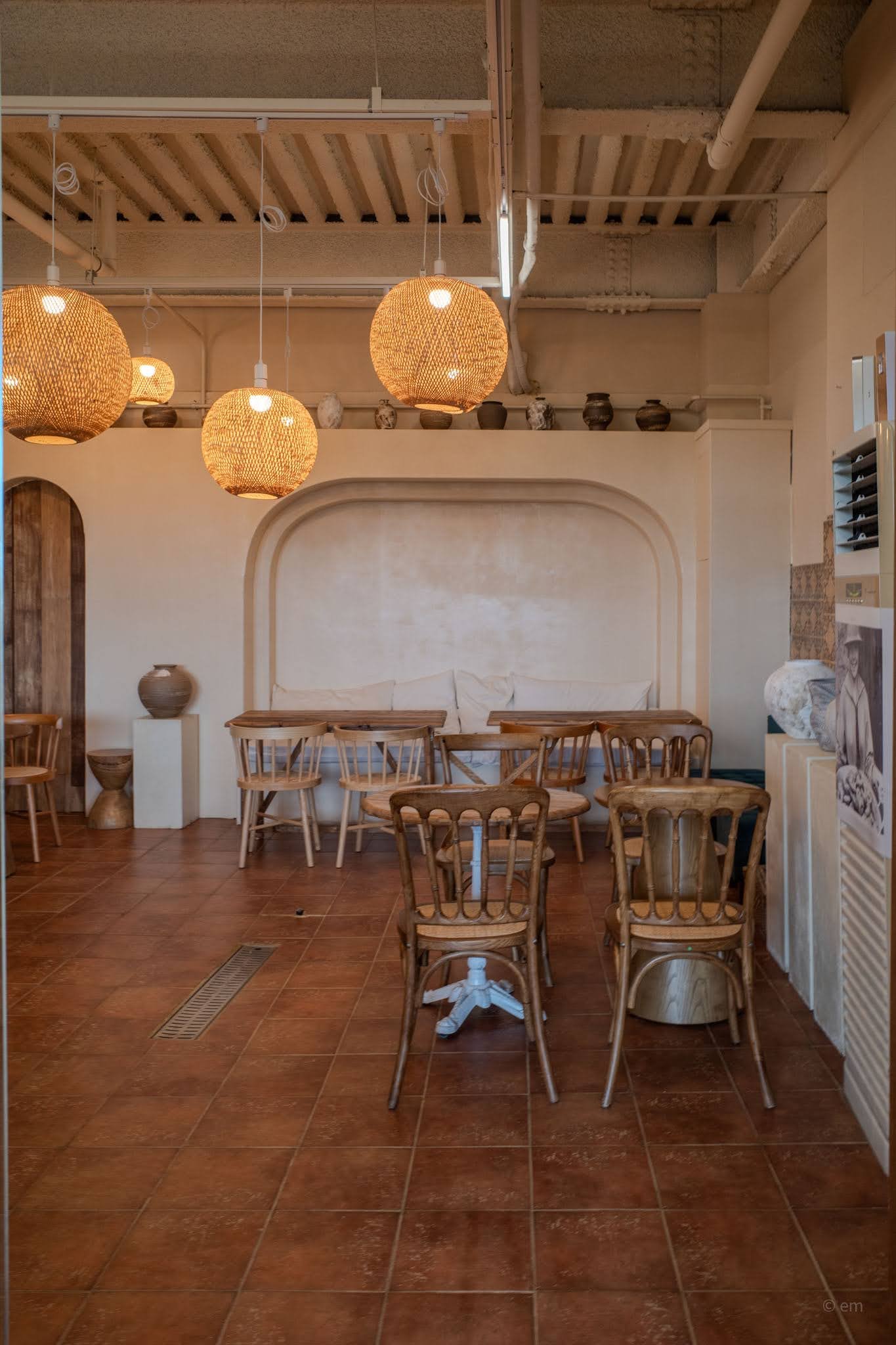
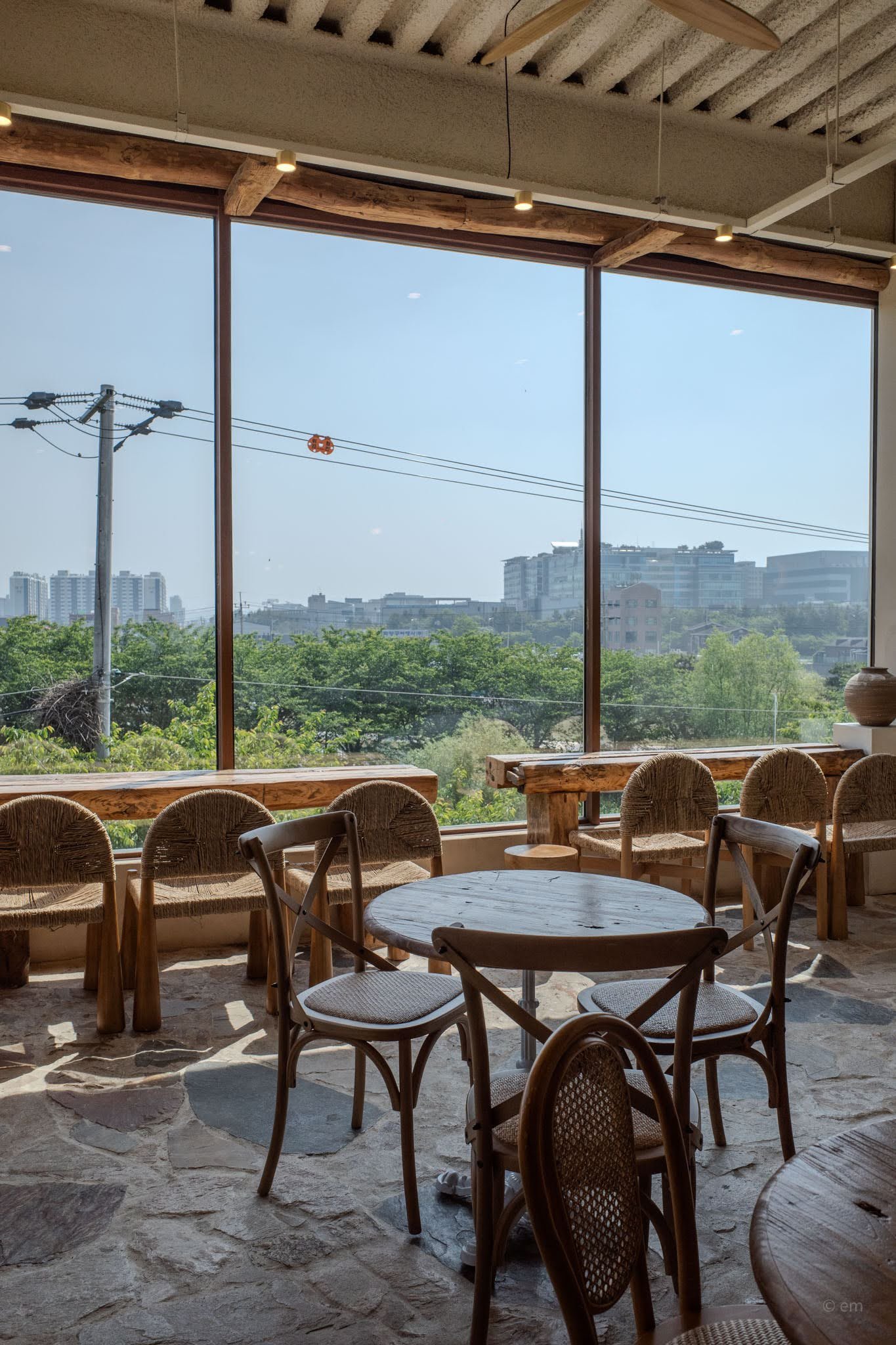
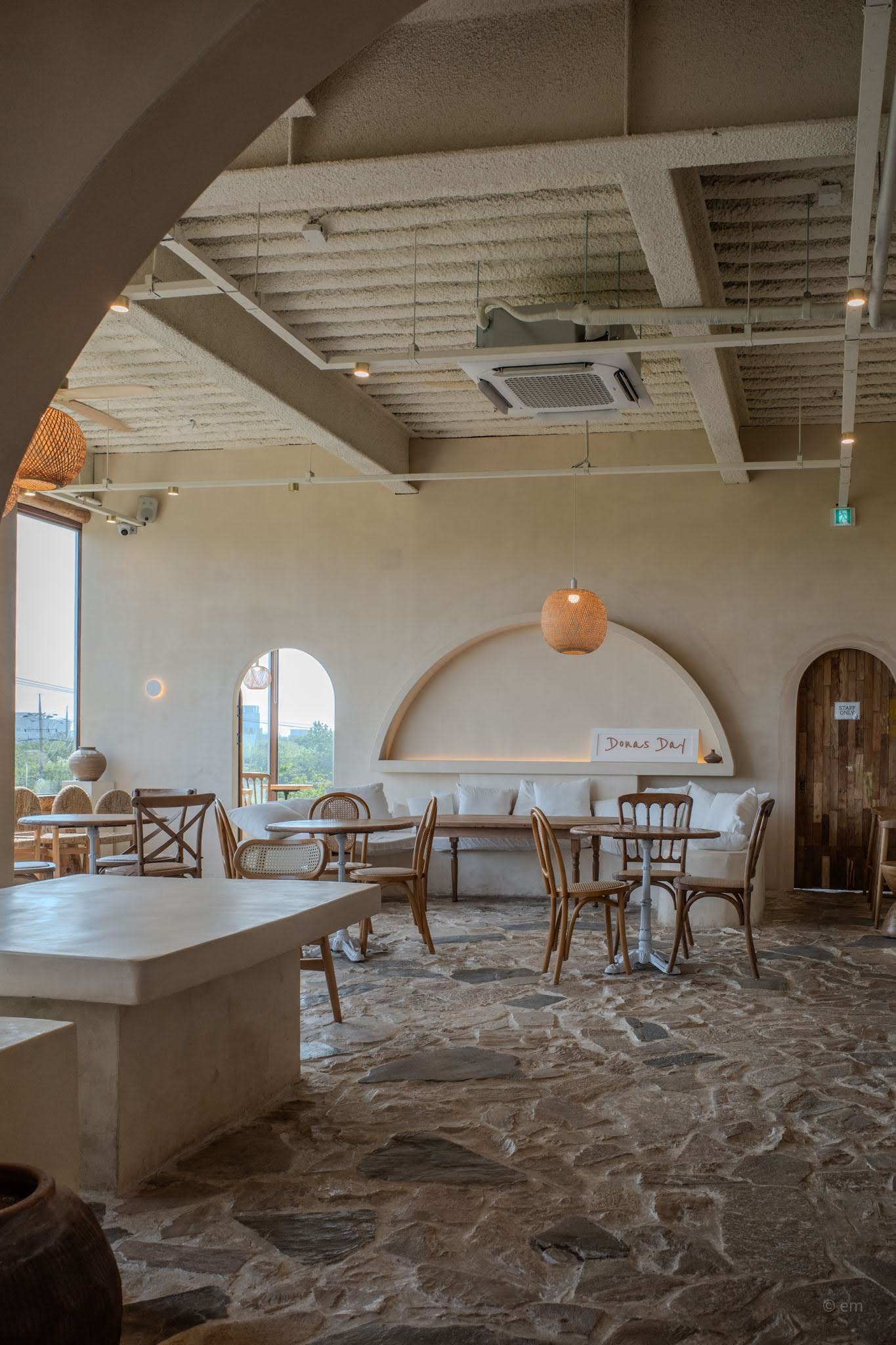
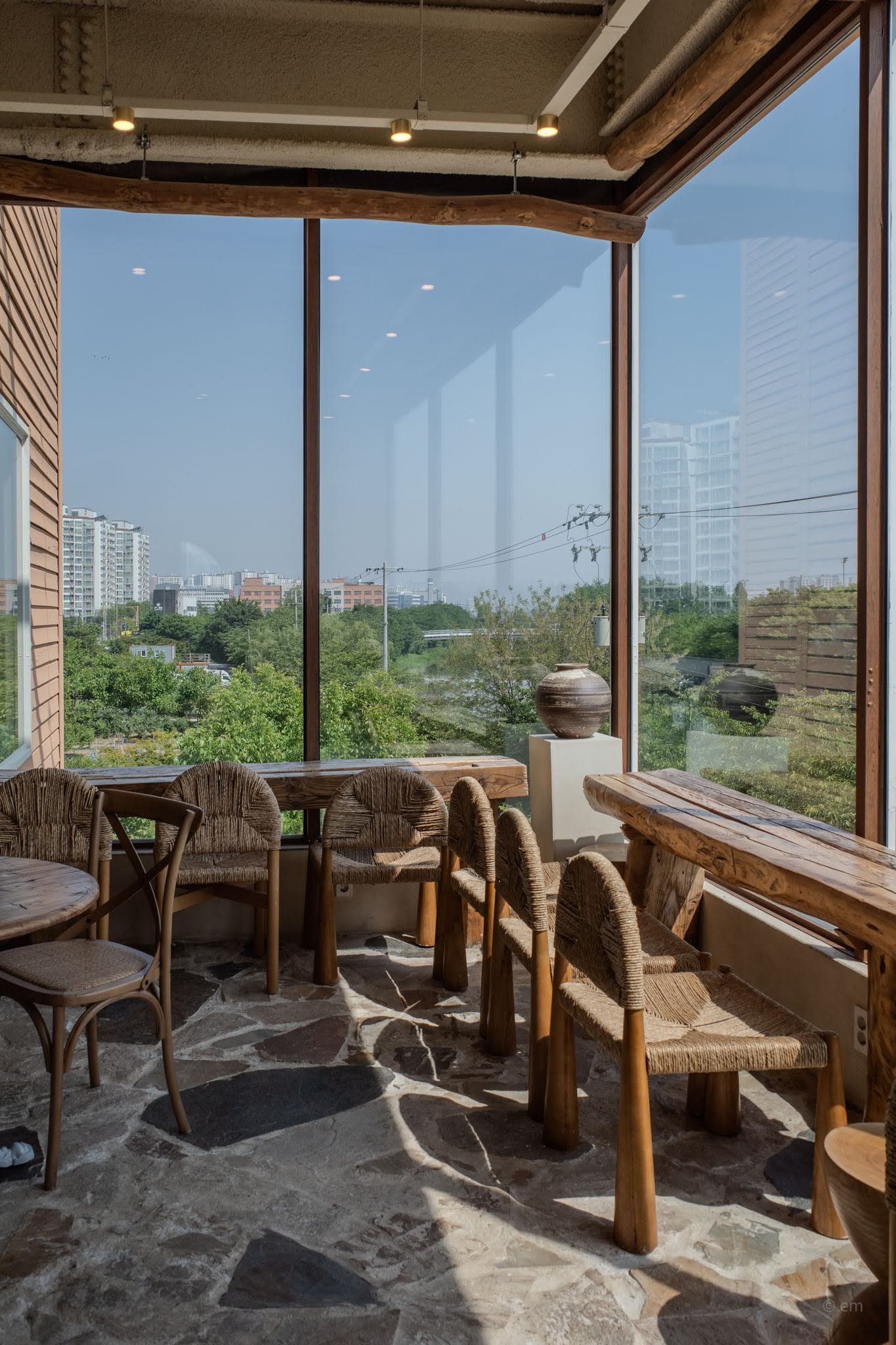
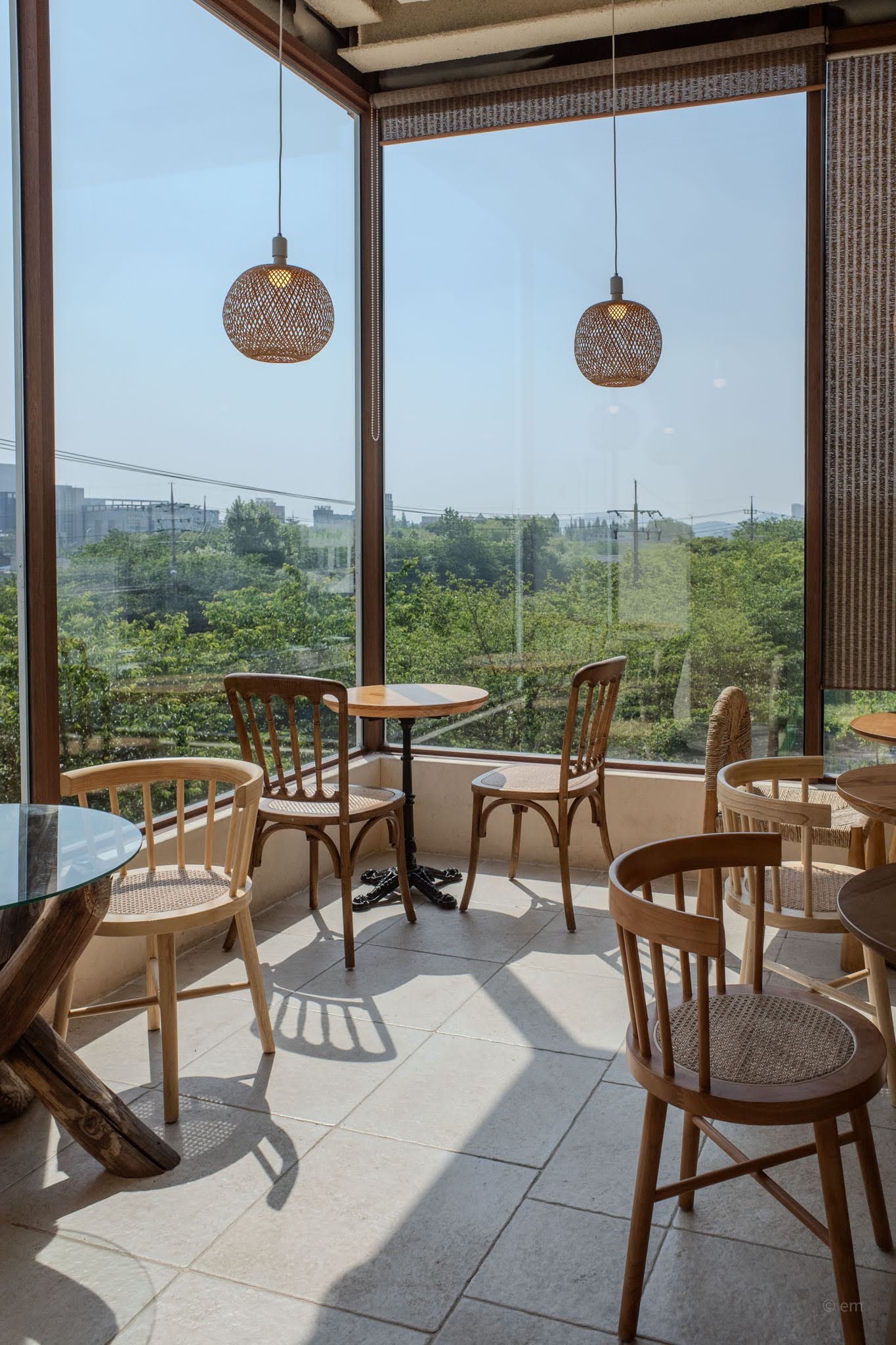
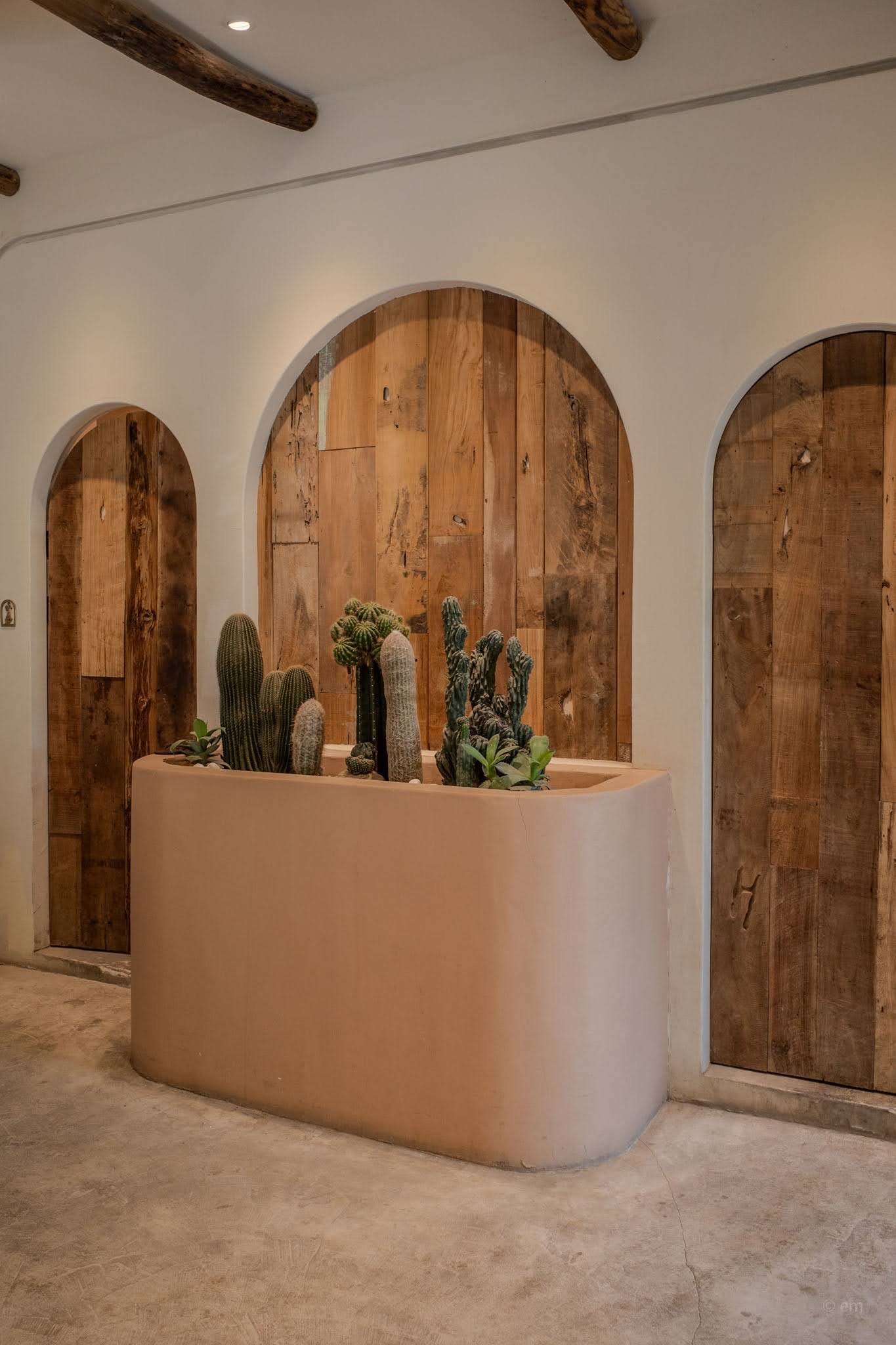
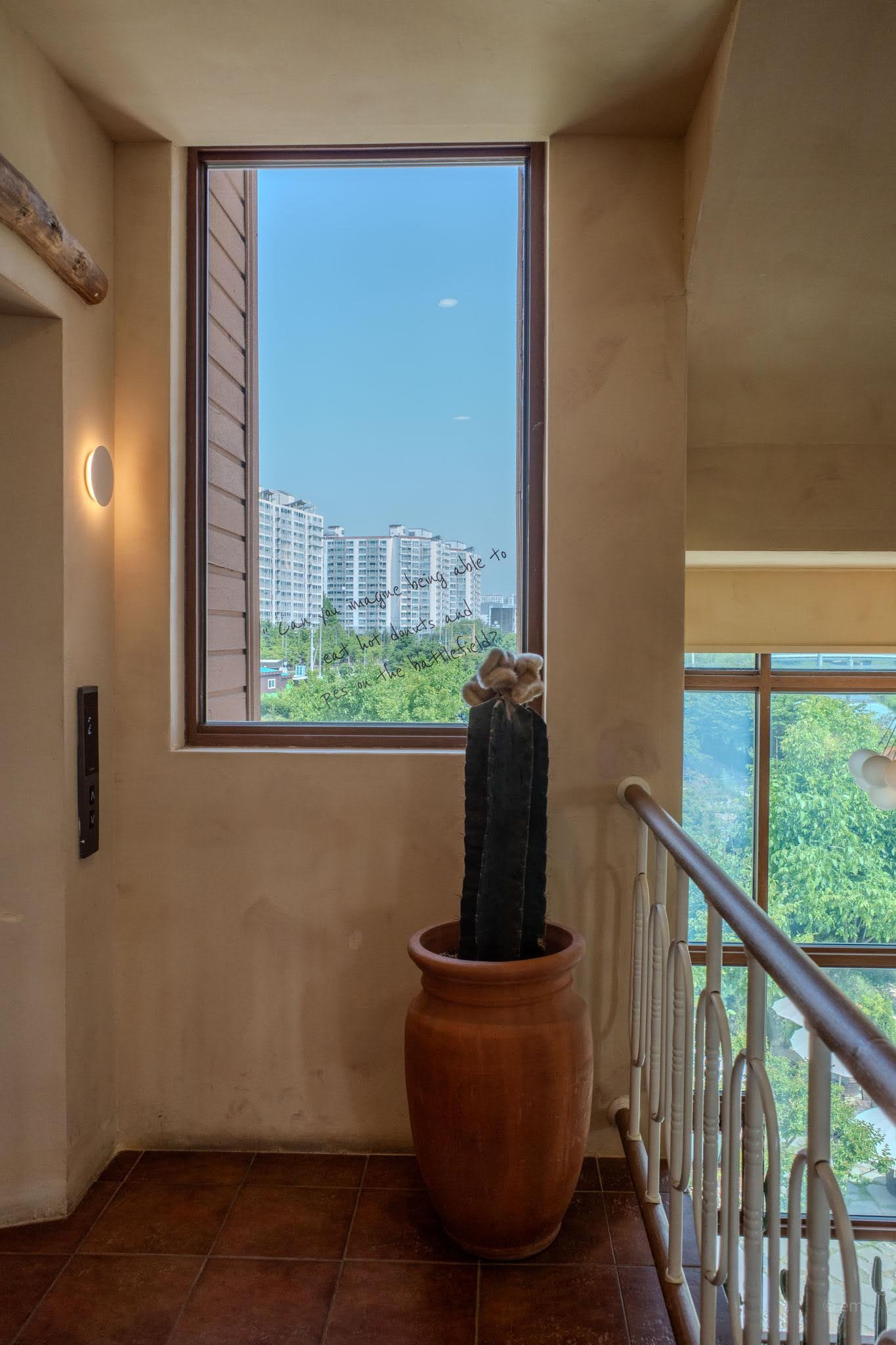
Moving through the building is a lesson in how many aesthetic registers a single space can hold without collapsing under its own ambition. One room runs entirely to rough stone flooring and whitewashed archways, a “Donas Day” sign resting in a half-moon niche beside overstuffed bench seating. A glass-wrapped corner on another floor pulls in a canopy of green from the surrounding trees, light falling clean and hard through two full walls of glazing. A quieter zone carries woven rope chairs and raw, salvaged tables, a ceramic jug on a white plinth, the view beyond it mostly sky. Each room is a different breath.
The Rooftop
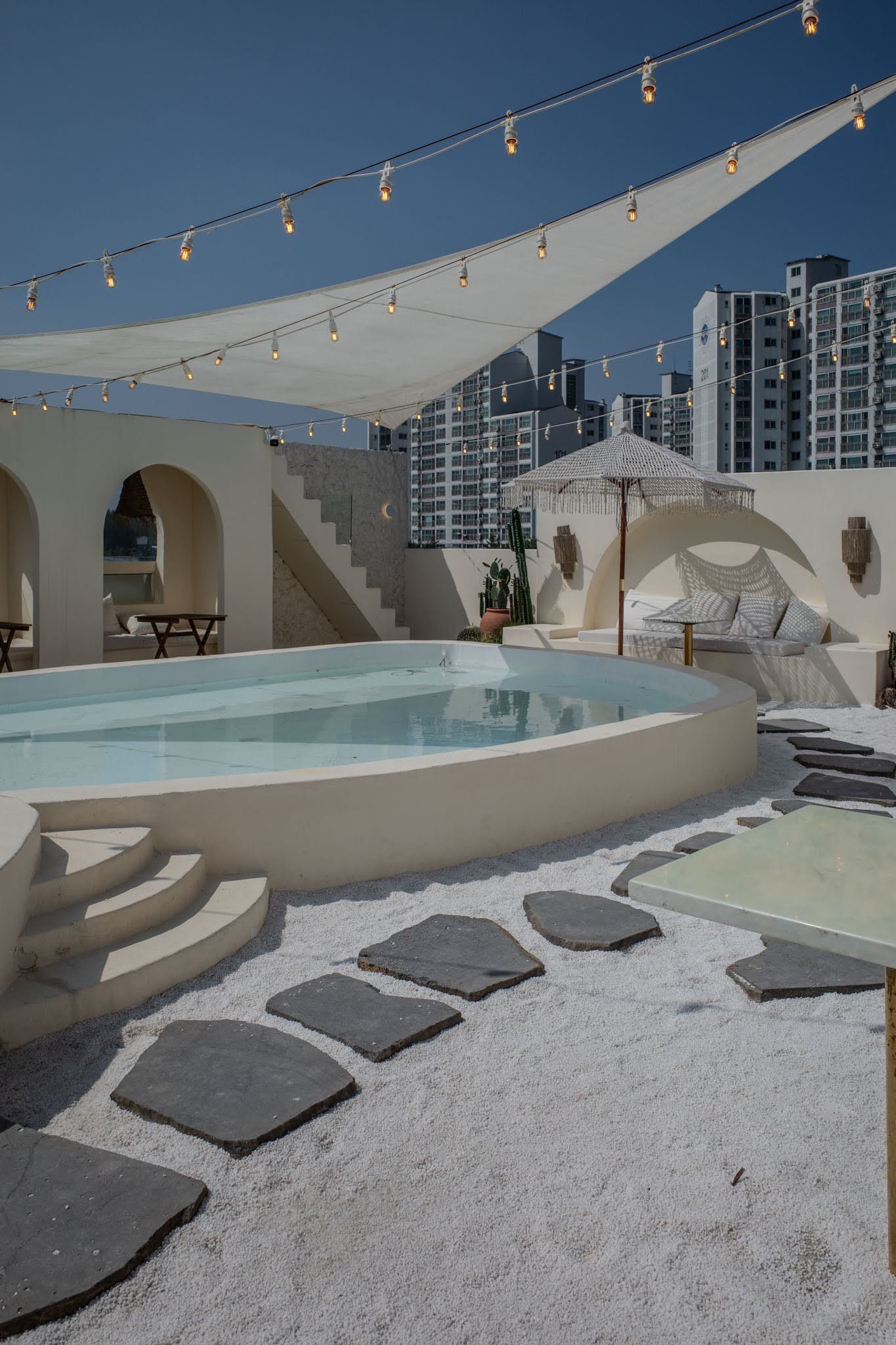
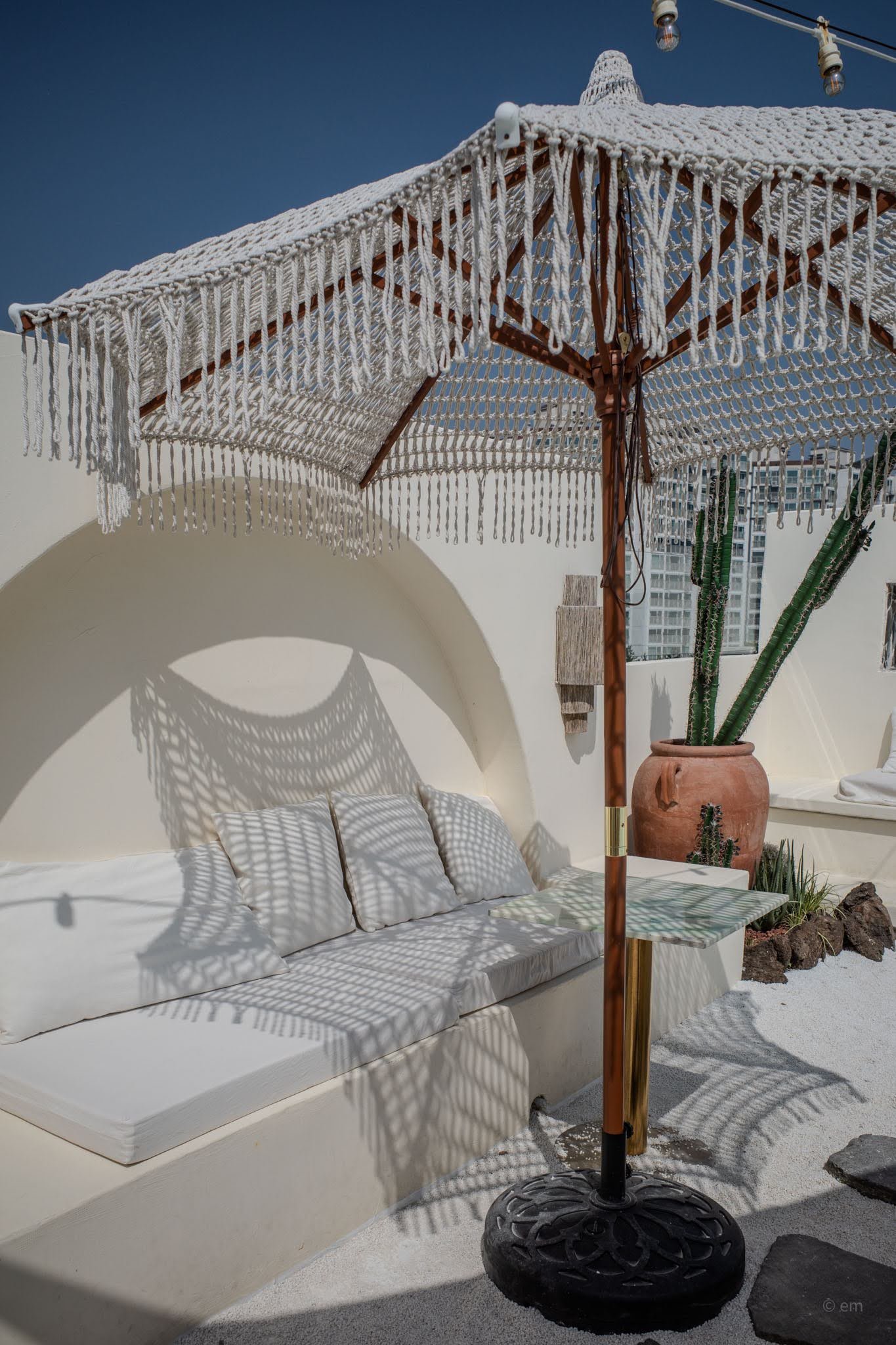
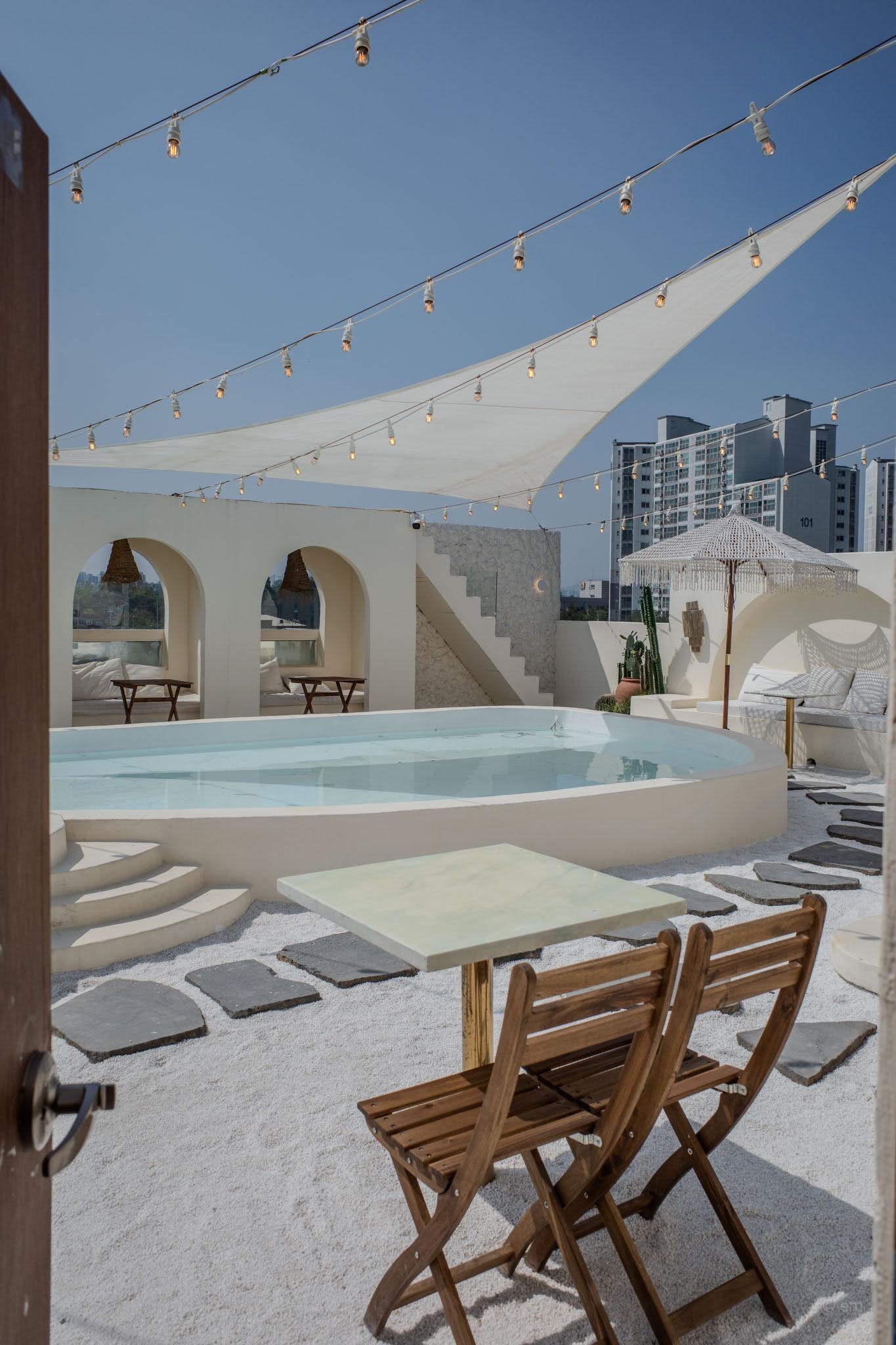
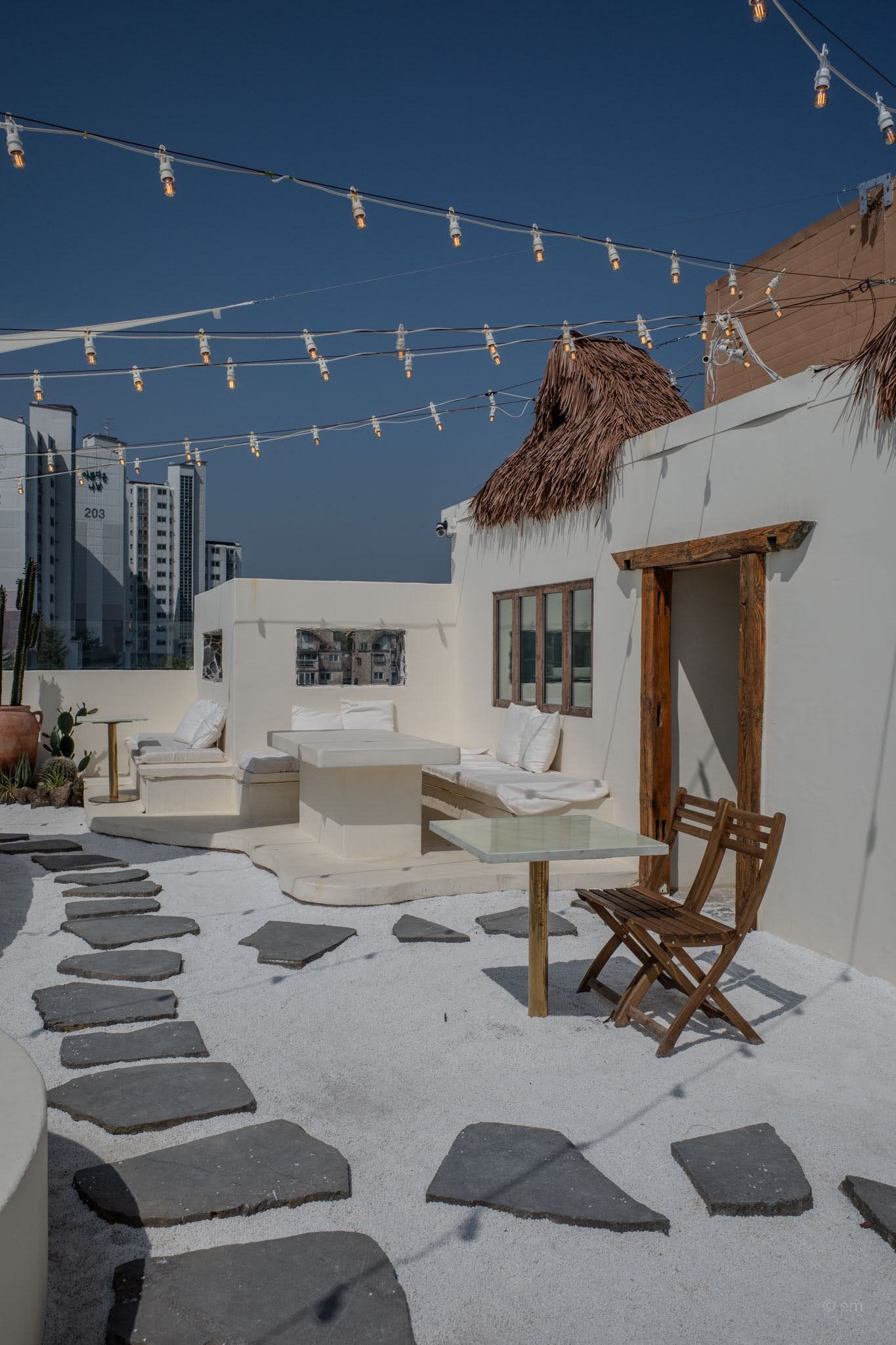
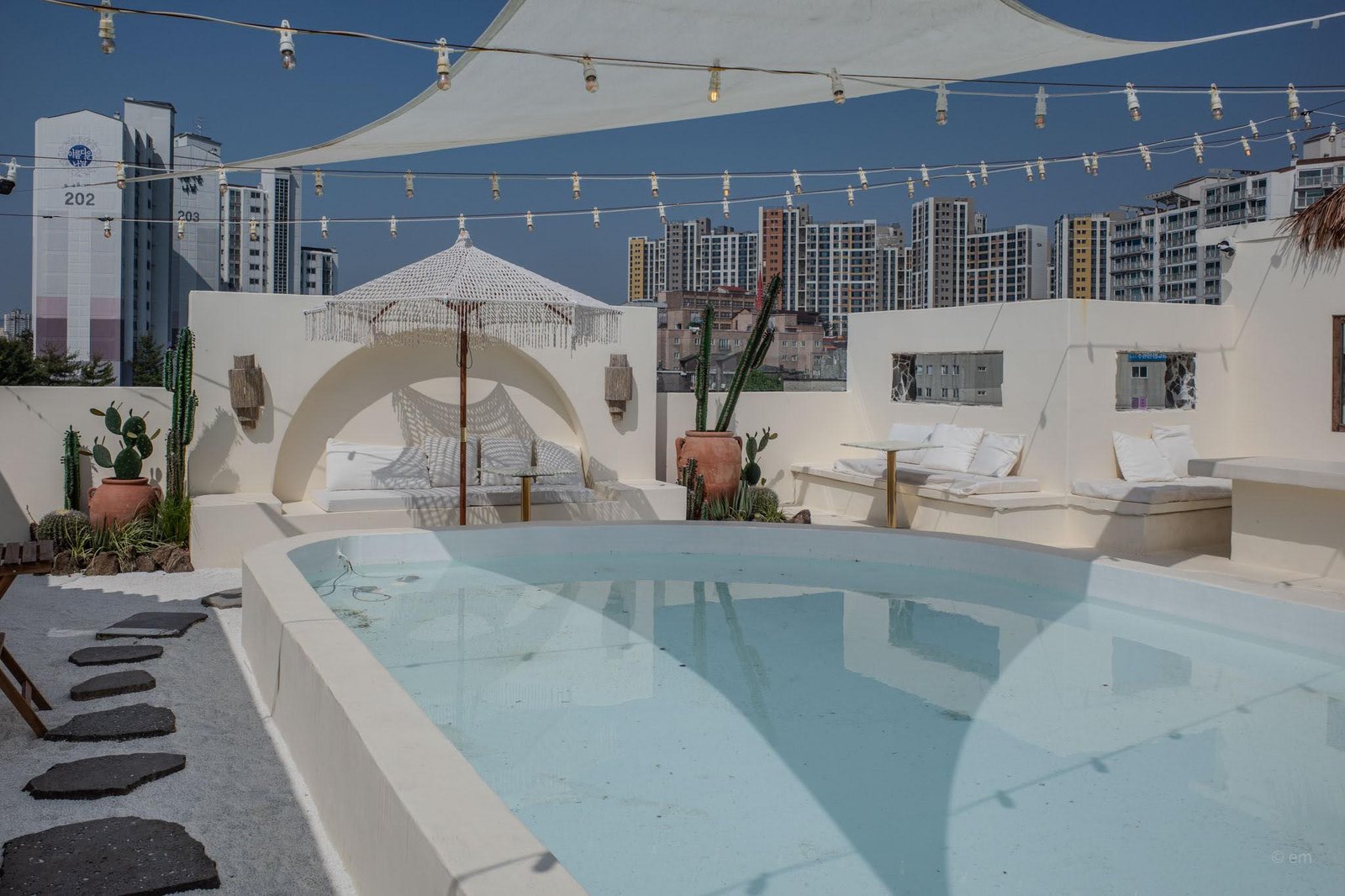
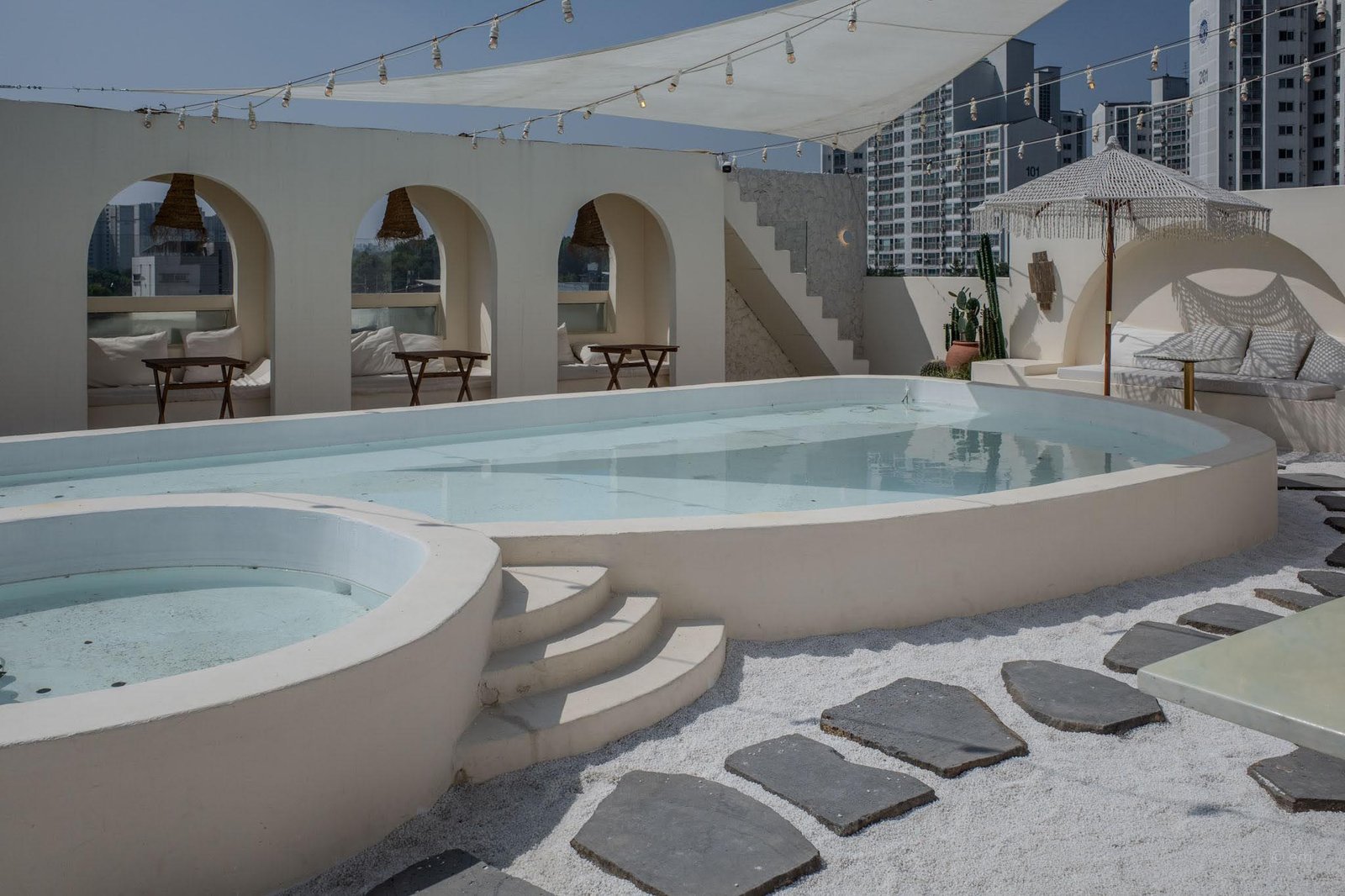
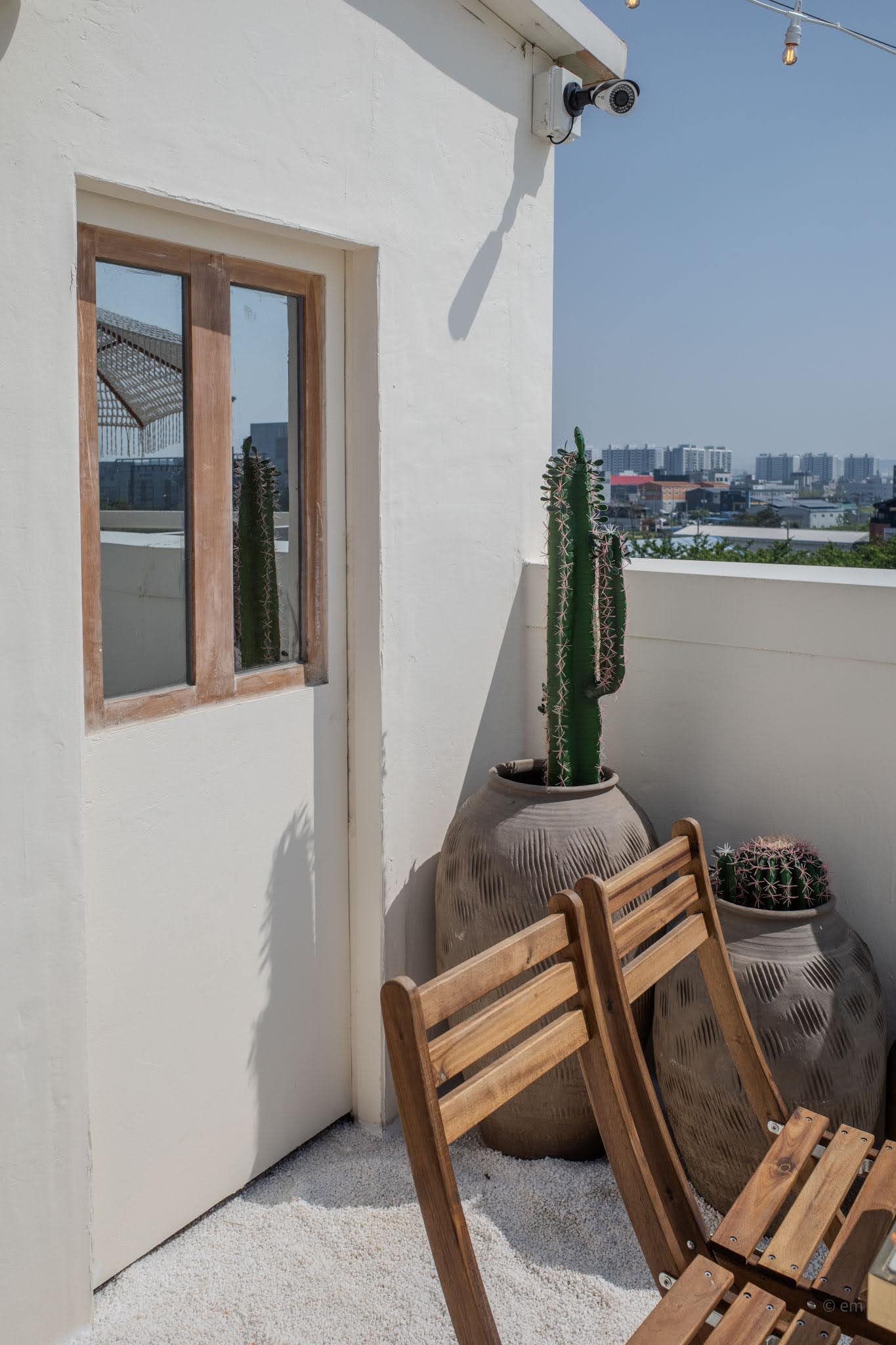
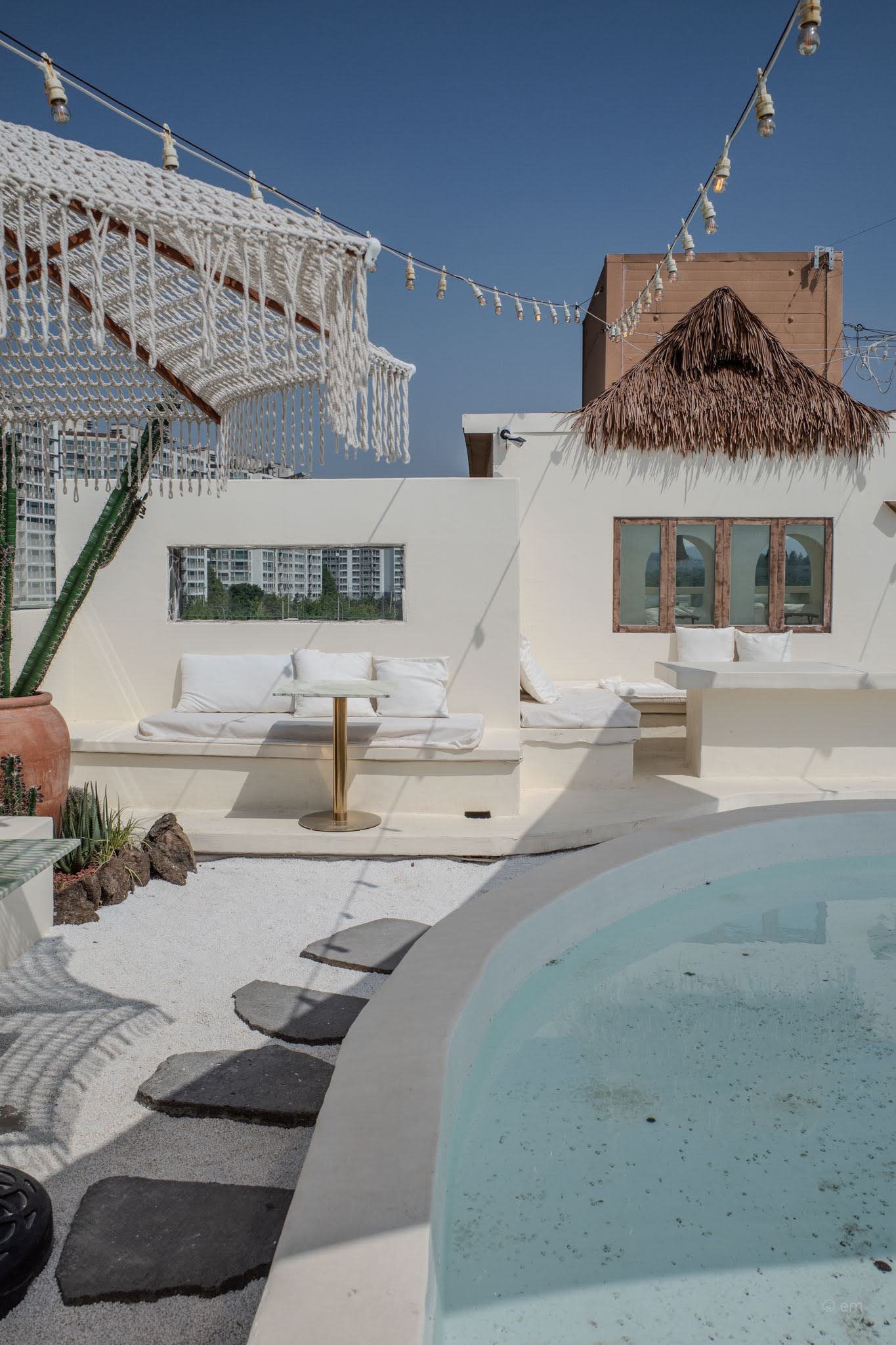
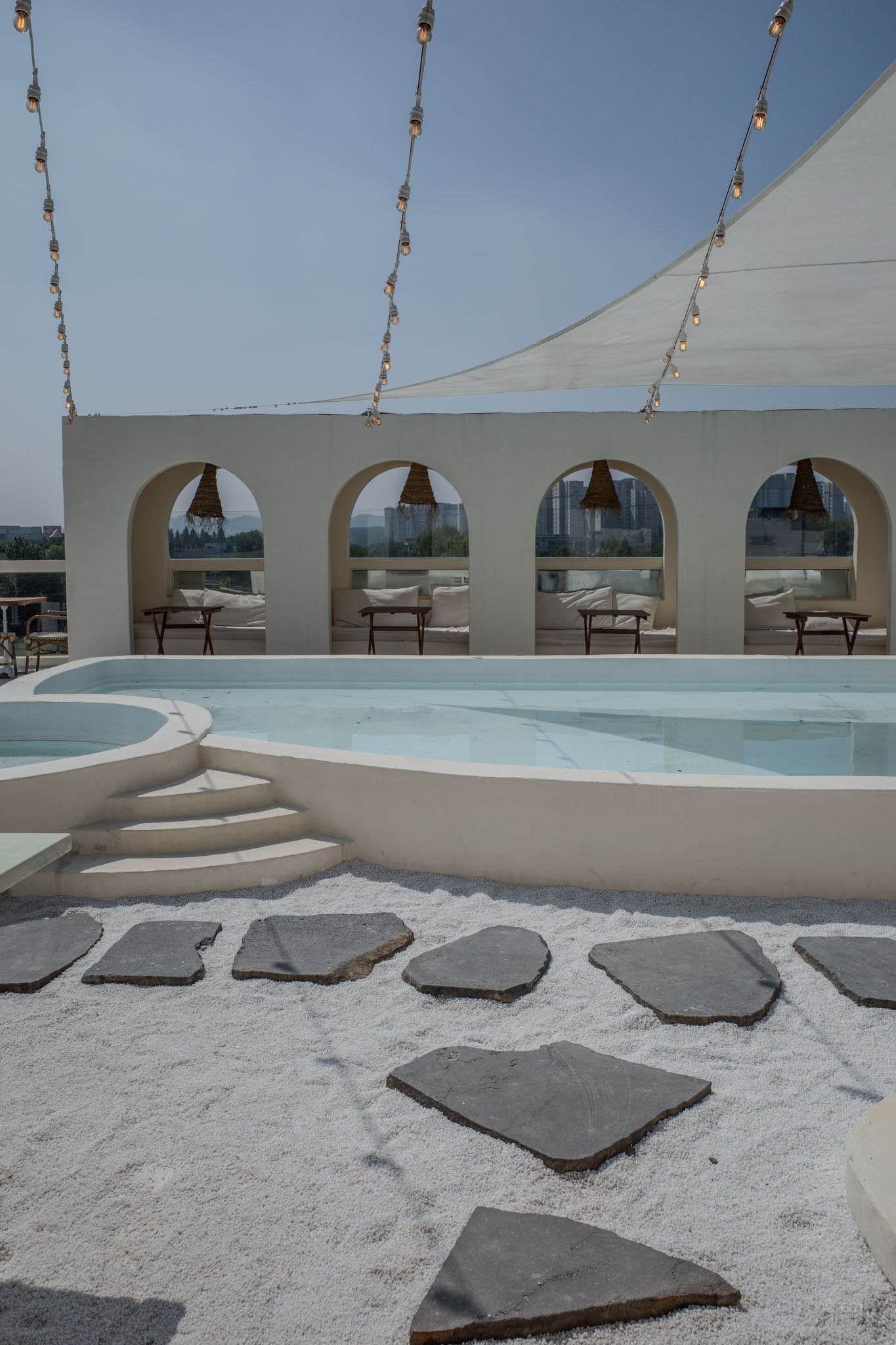
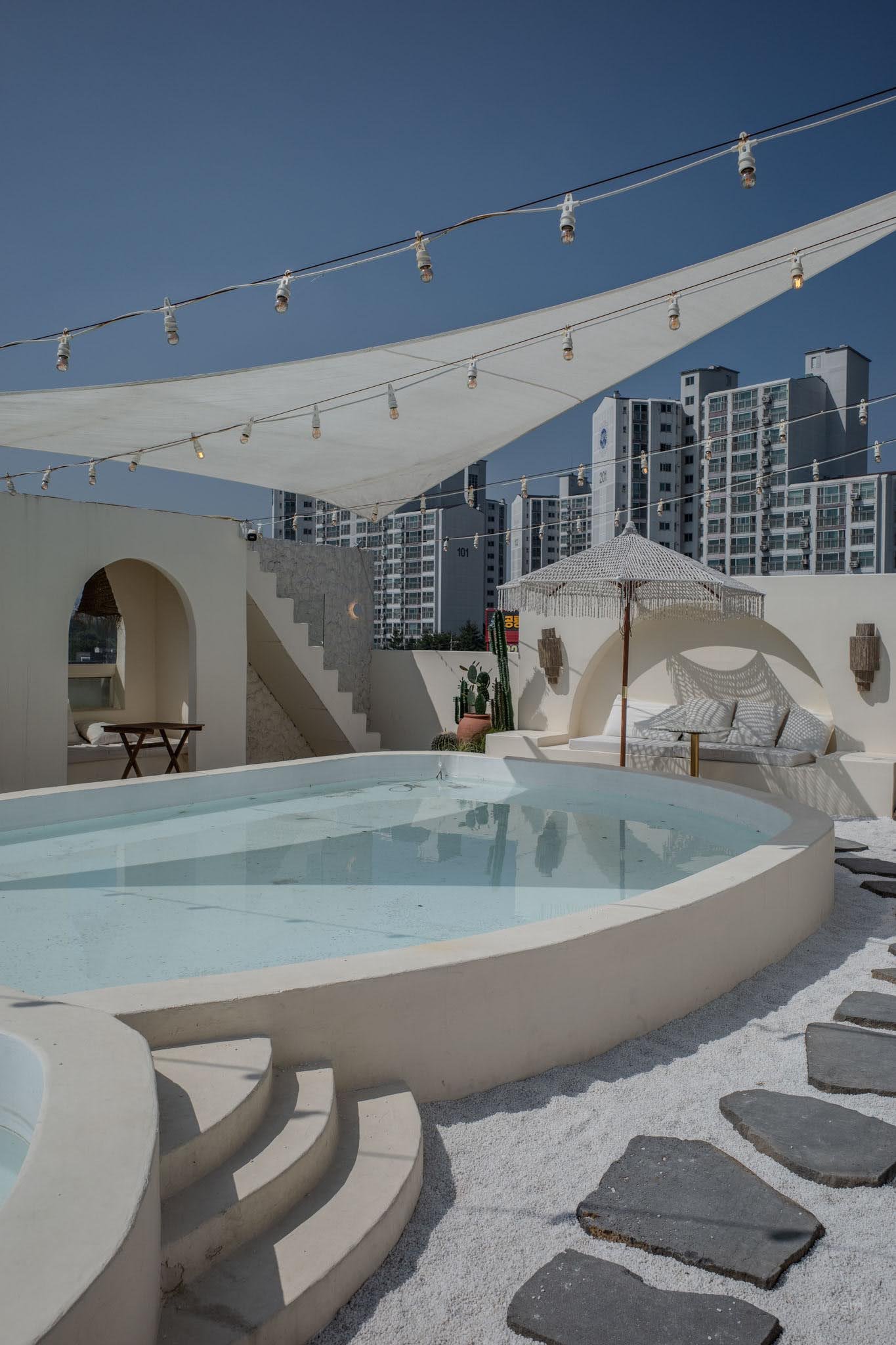
The rooftop is the reason people make the trip from Seoul. You push through a door and the city — apartment towers, transmission lines, the flat suburban sprawl of Gyeonggi-do — appears at every edge, but inside the rooftop’s whitewashed walls, it reads almost as a backdrop. A curved pool sits in the centre, its edges sculpted smooth, the water a particular pale aqua of a Cycladic island postcard. Lounge daybeds line the walls with white cushions. Cacti rise from terracotta pots. A thatched palapa occupies one corner. Macramé-fringed umbrellas shade the café tables scattered on white gravel. String lights run overhead. The floor is white stone chips, broken by dark slate stepping-stones. Nothing about any of this should be in Suwon, and yet here it is.
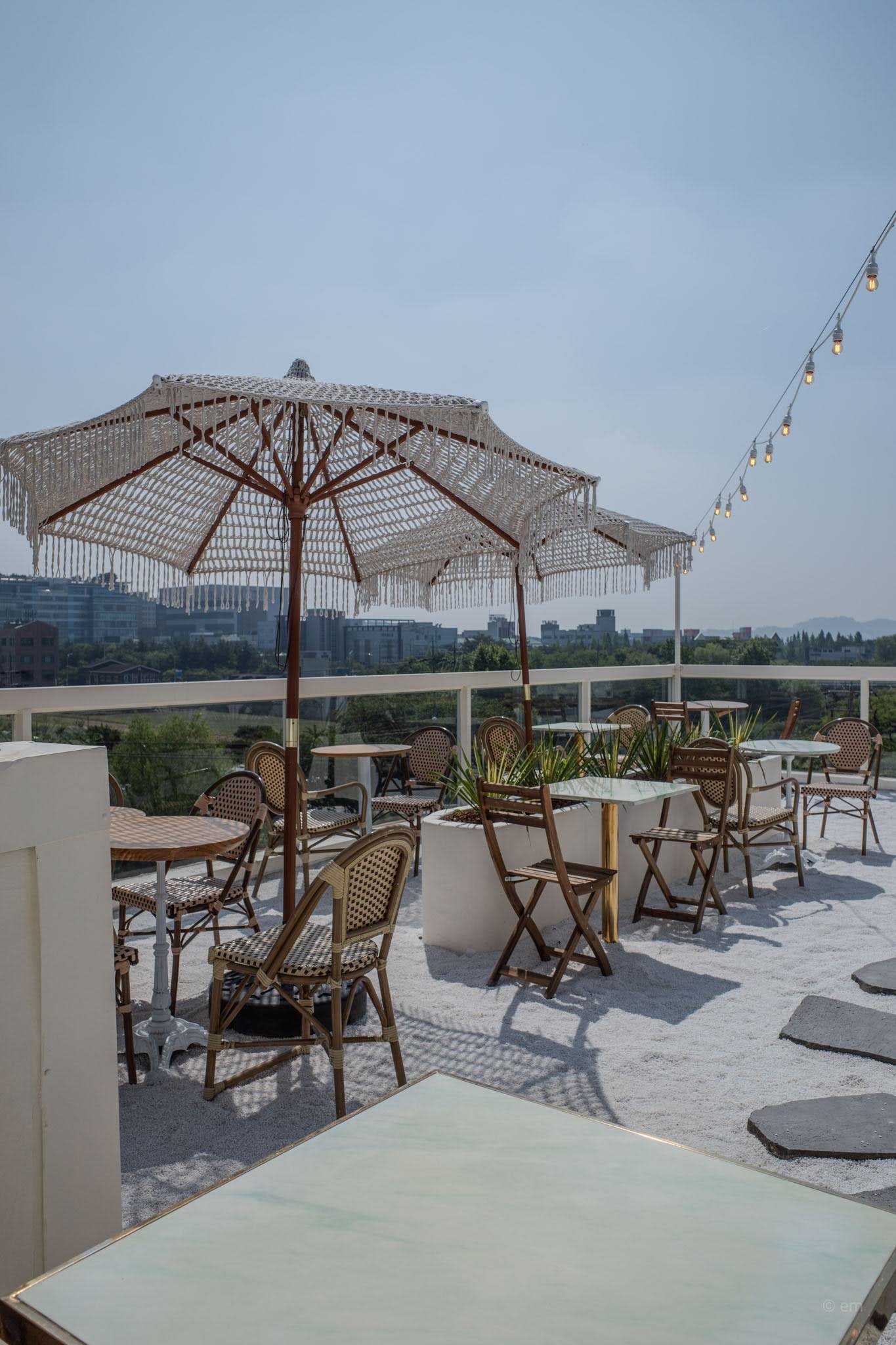
A second, stepped terrace occupies part of the rooftop at a lower level — open sky above, parasols and bistro chairs, and a view that takes in the green edge of the river corridor running alongside the building. On the right day, in the right light, it reads somewhere between an Aegean rooftop bar and an off-season resort patio in the off-season. In summer, it reads exactly that.
The Donas
The donas — spelled always with an s — are the product that the whole building is built around. They’re sold by the piece or in boxed sets, priced in the ₩3,900–4,900 range. The range runs from straightforward sugar-dusted originals to cream-filled seasonal varieties: corn cream, green tea, peach, strawberry, and chocolate. They are not fussy. They are the kind of thing that tastes like it was made that morning because it was, and they pair reasonably with the house coffee, which runs a standard espresso menu.
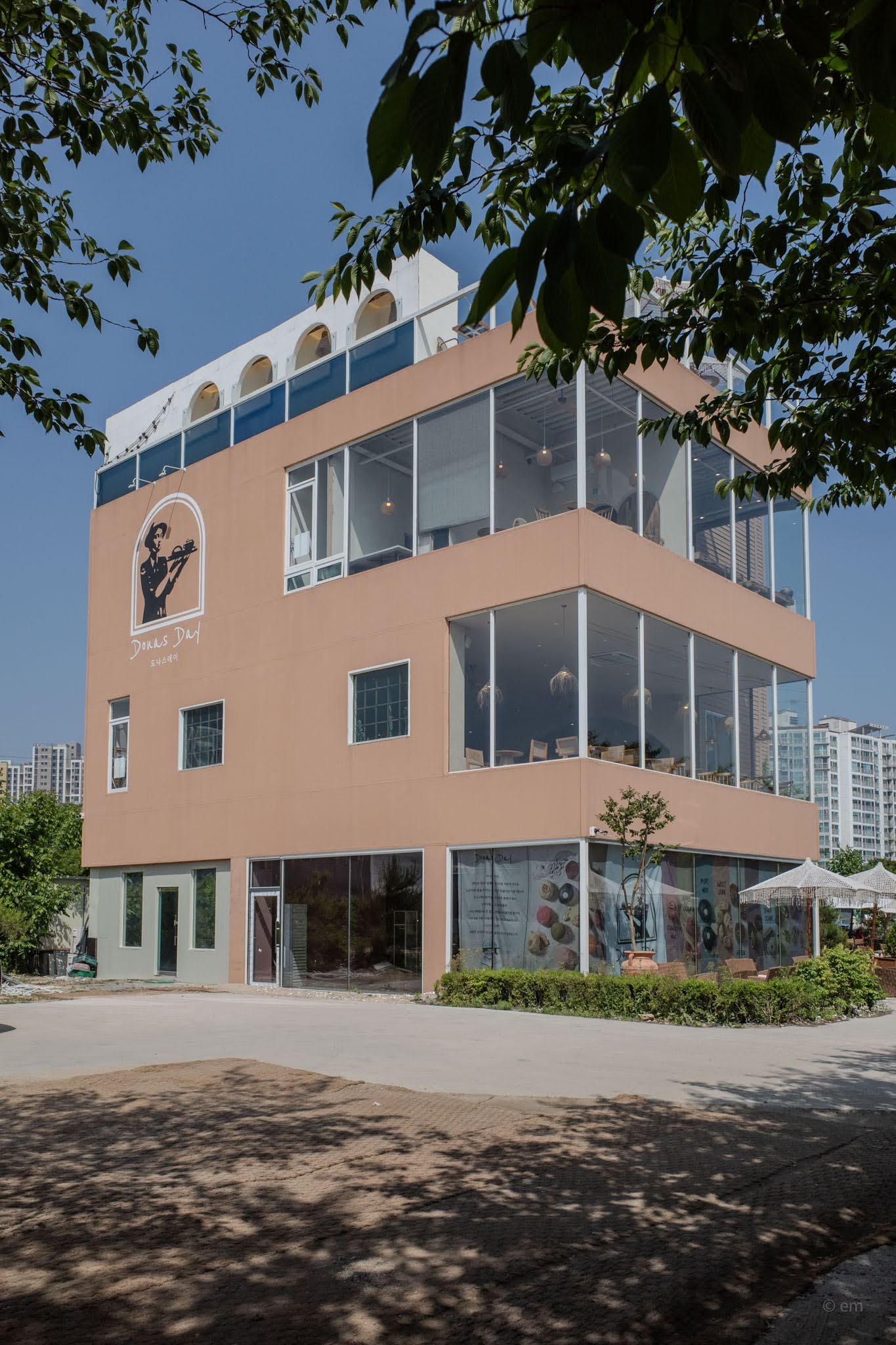
Donas Day (도나스데이 본점)
Address: 174-2 Seosuwon-ro, Gwonseon-gu, Suwon-si, Gyeonggi-do
Hours: Daily 10:00–21:00 (last order 20:30)
Instagram: @donasday
Seoul is an hour away, but it’ll feel further than that on the way home.