There are places you visit, and then there are places that make you want to stay on an island you only planned to see for half a day.
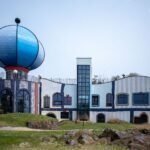
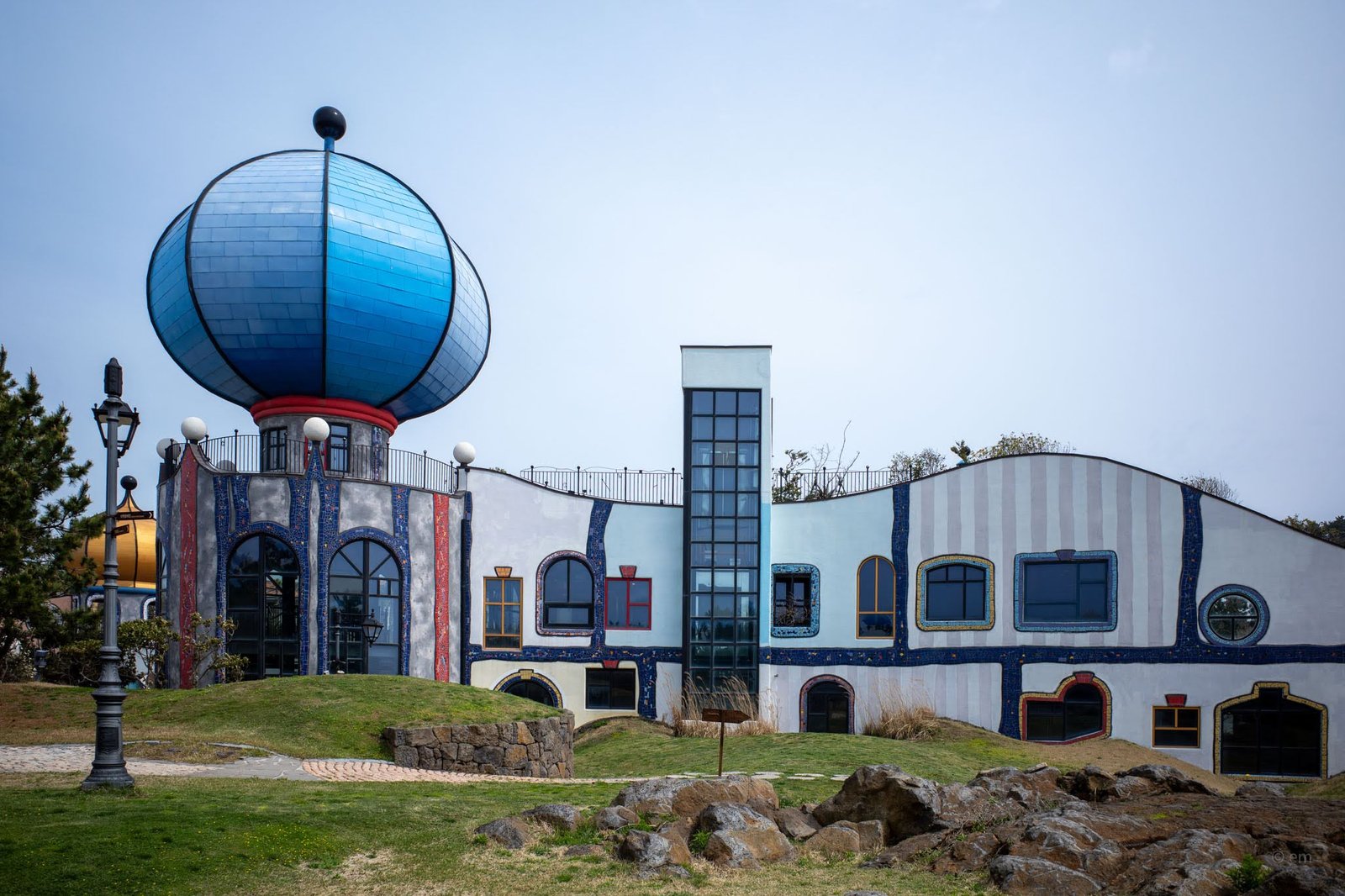
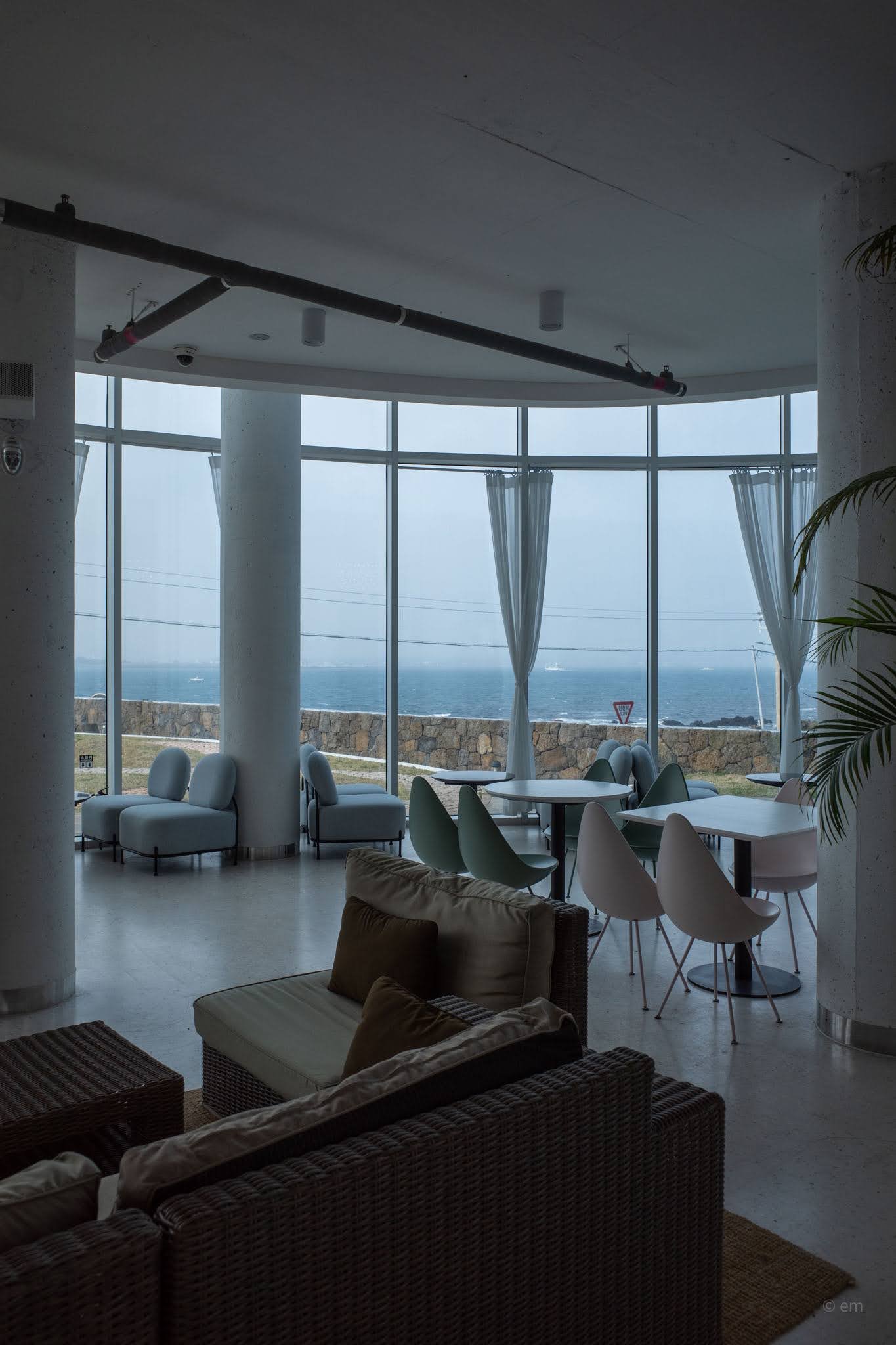
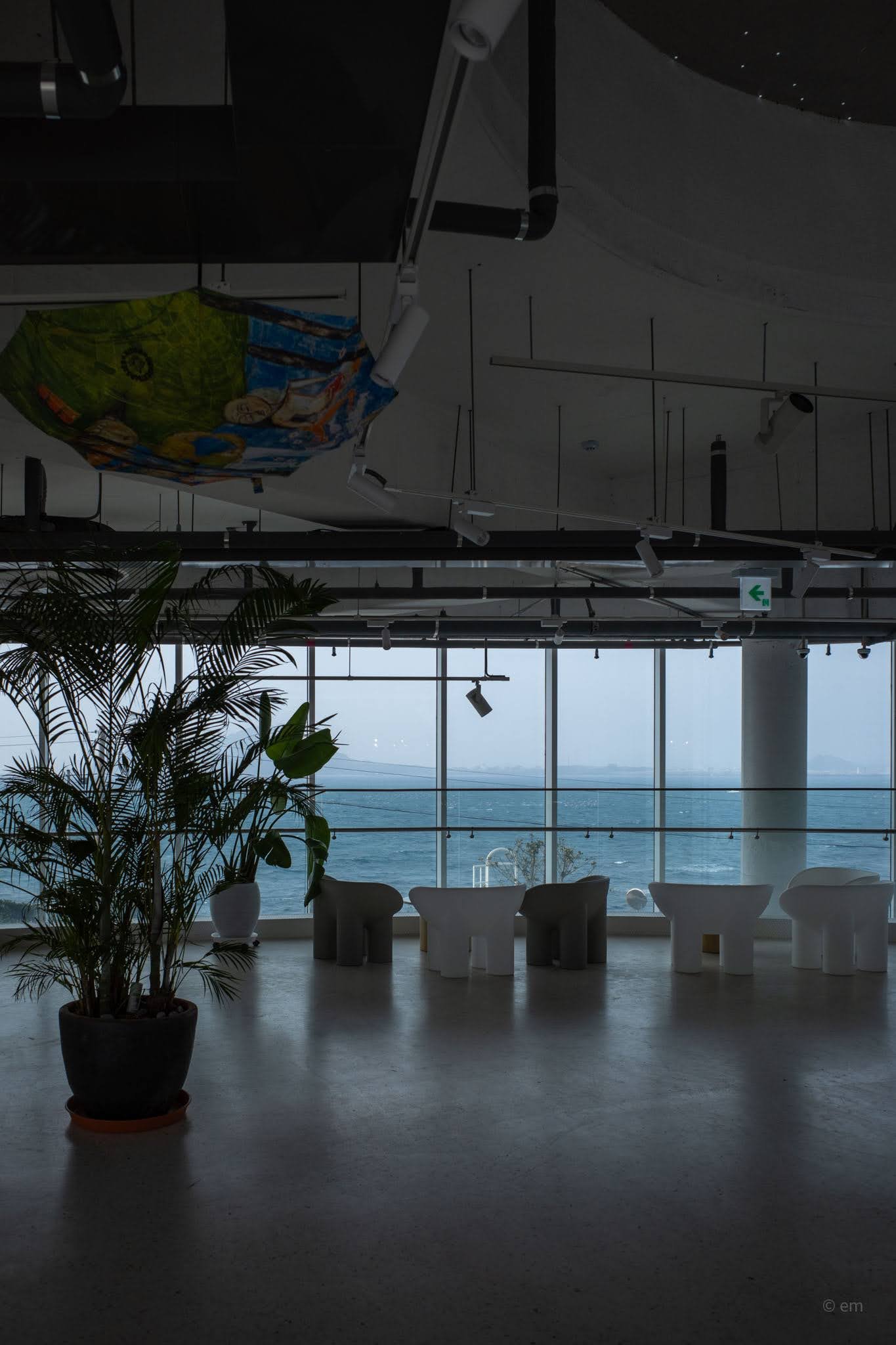
The museum buildings at Hundertwasser Park arrive in colour and declaration — onion domes, ceramic columns, mosaic everything. Hundertwasser Winds is the exhale. A 1,300-square-metre bakery café sitting at the edge of the complex, its curved glass façade trained permanently on Jeju Strait, it operates in an entirely different register from the expressionist architecture across the courtyard. Quieter. More considered. Almost restrained — until you notice the Hundertwasser paintings hanging upside down from the ceiling, their riot of colour suspended overhead like canopies, and realize that restraint is relative here.
The Building, Outside
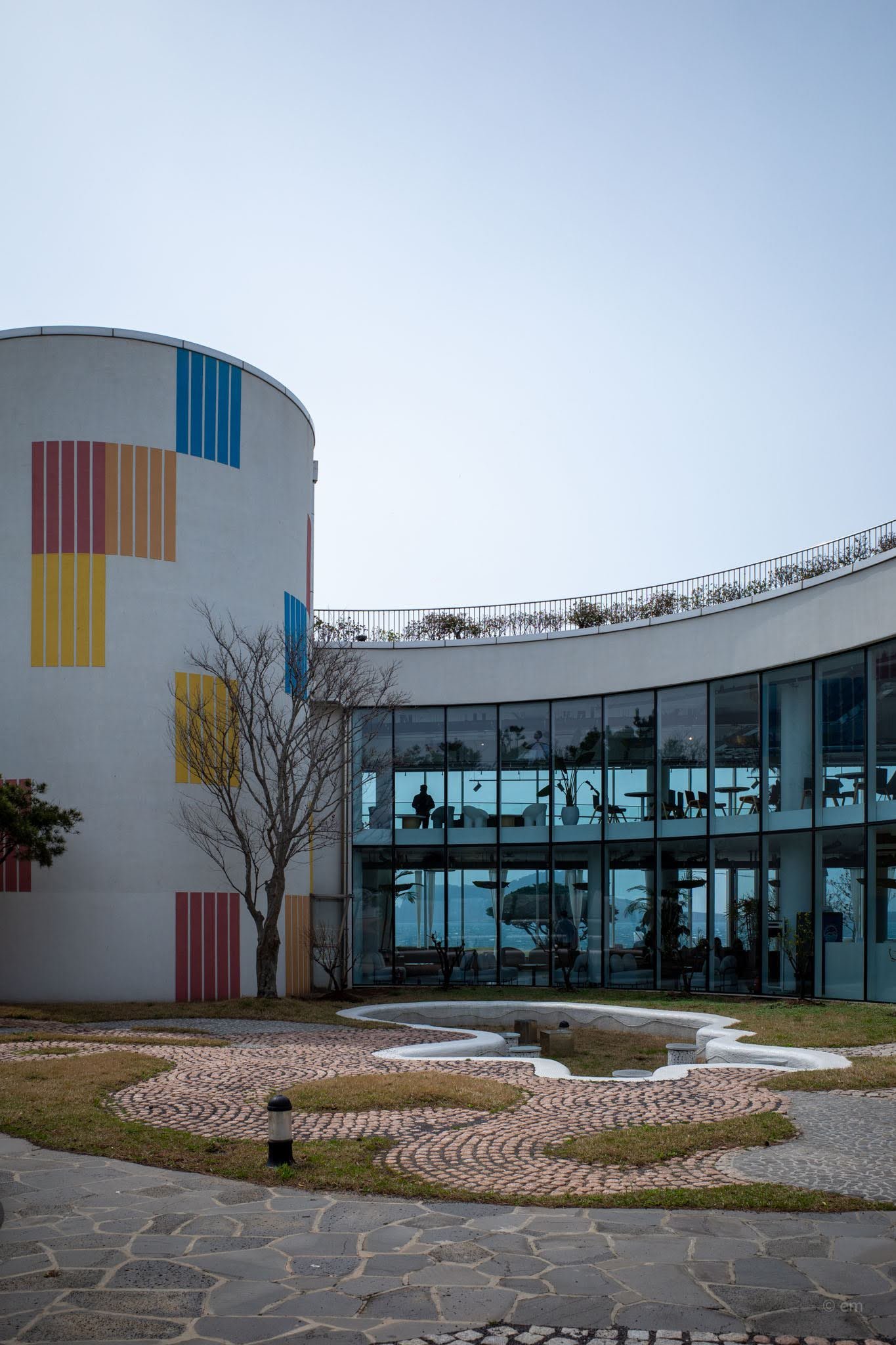
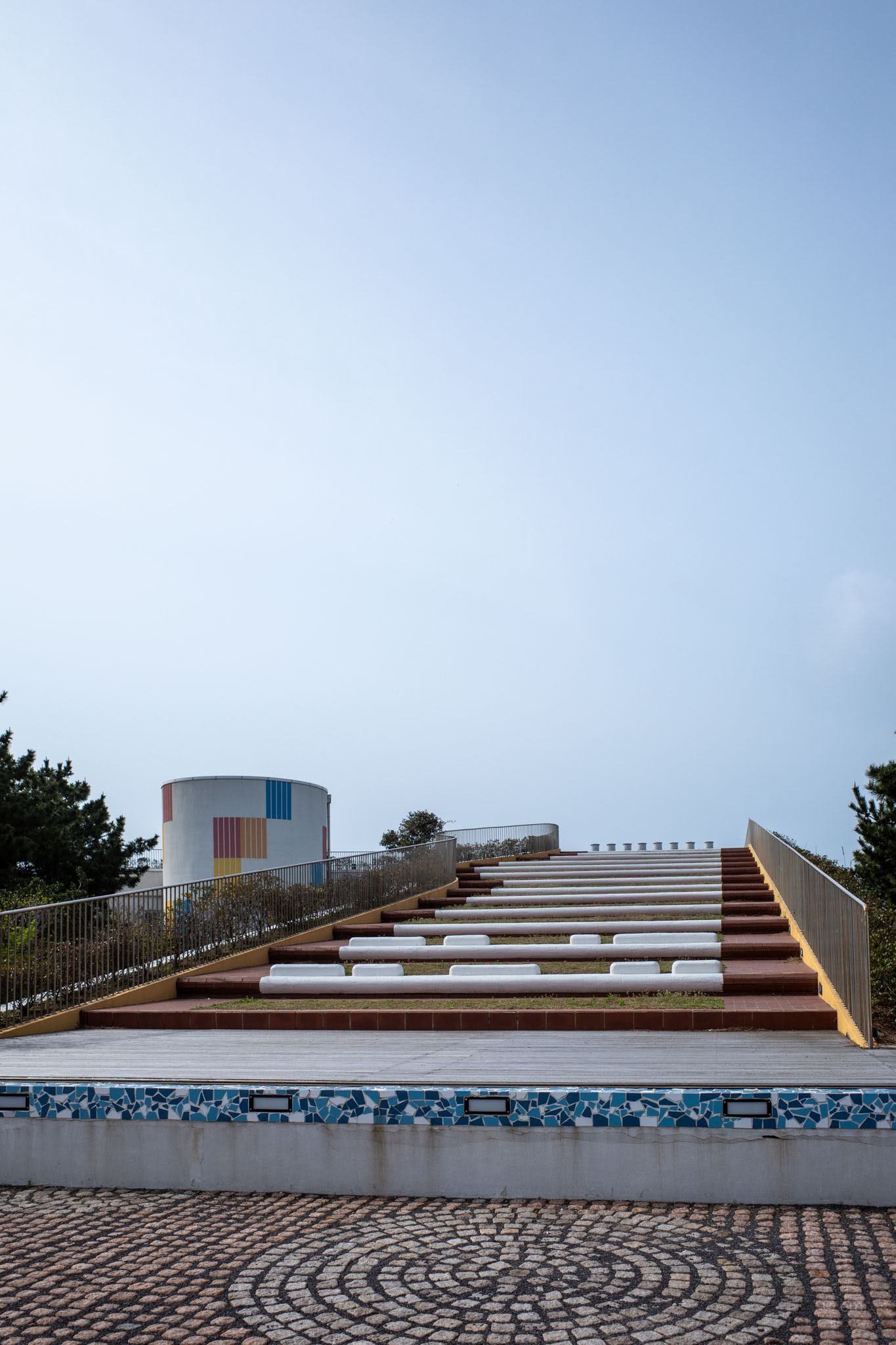
Seen from the cobblestone courtyard that connects it to the park, Hundertwasser Winds presents as a sweeping arc of floor-to-ceiling glass — two stories, curving around the hillside, its face fully oriented toward the sea. The attached cylindrical tower carries the only real decorative gesture on the exterior: a grid of vertical color panels in primary red, yellow, and blue, blocked against white render in a way that reads almost Mondrian. It’s a different visual language from the mosaic-and-dome expressionism next door, and it doesn’t try to reconcile itself with it. The green-planted rooftop terrace curves along the top. The building knows exactly what it is and where it’s looking.
Inside, Floor by Floor
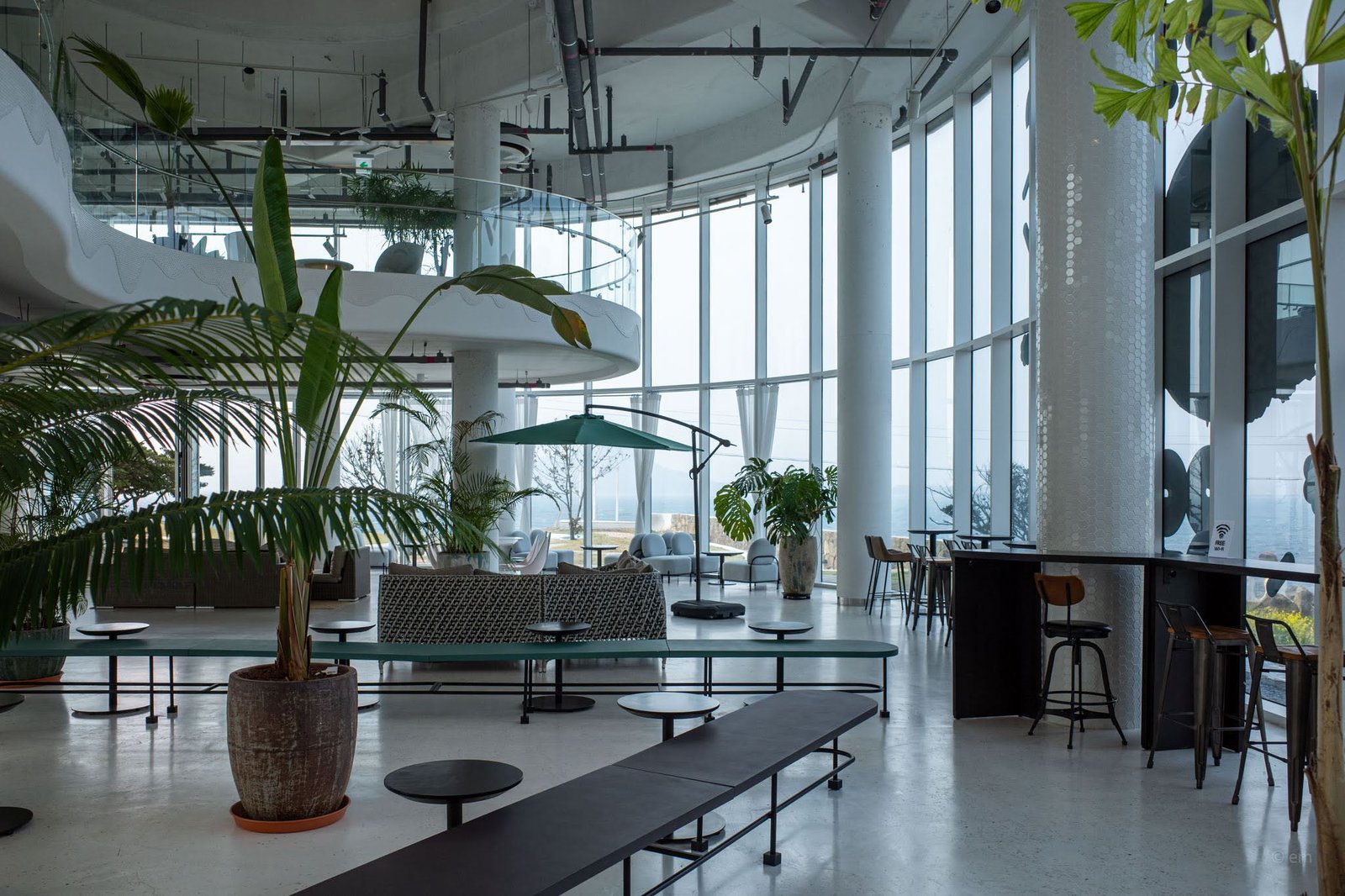
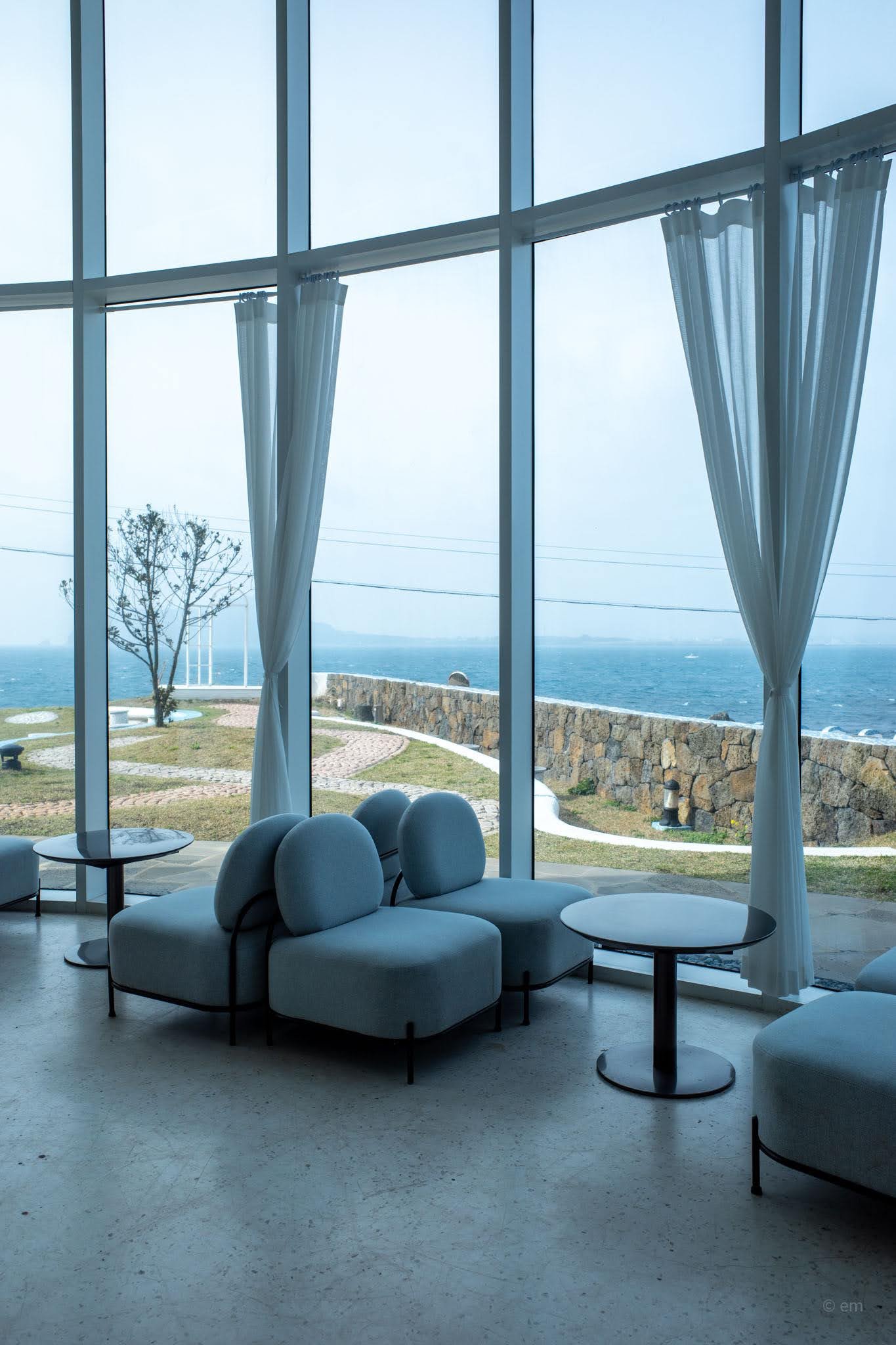
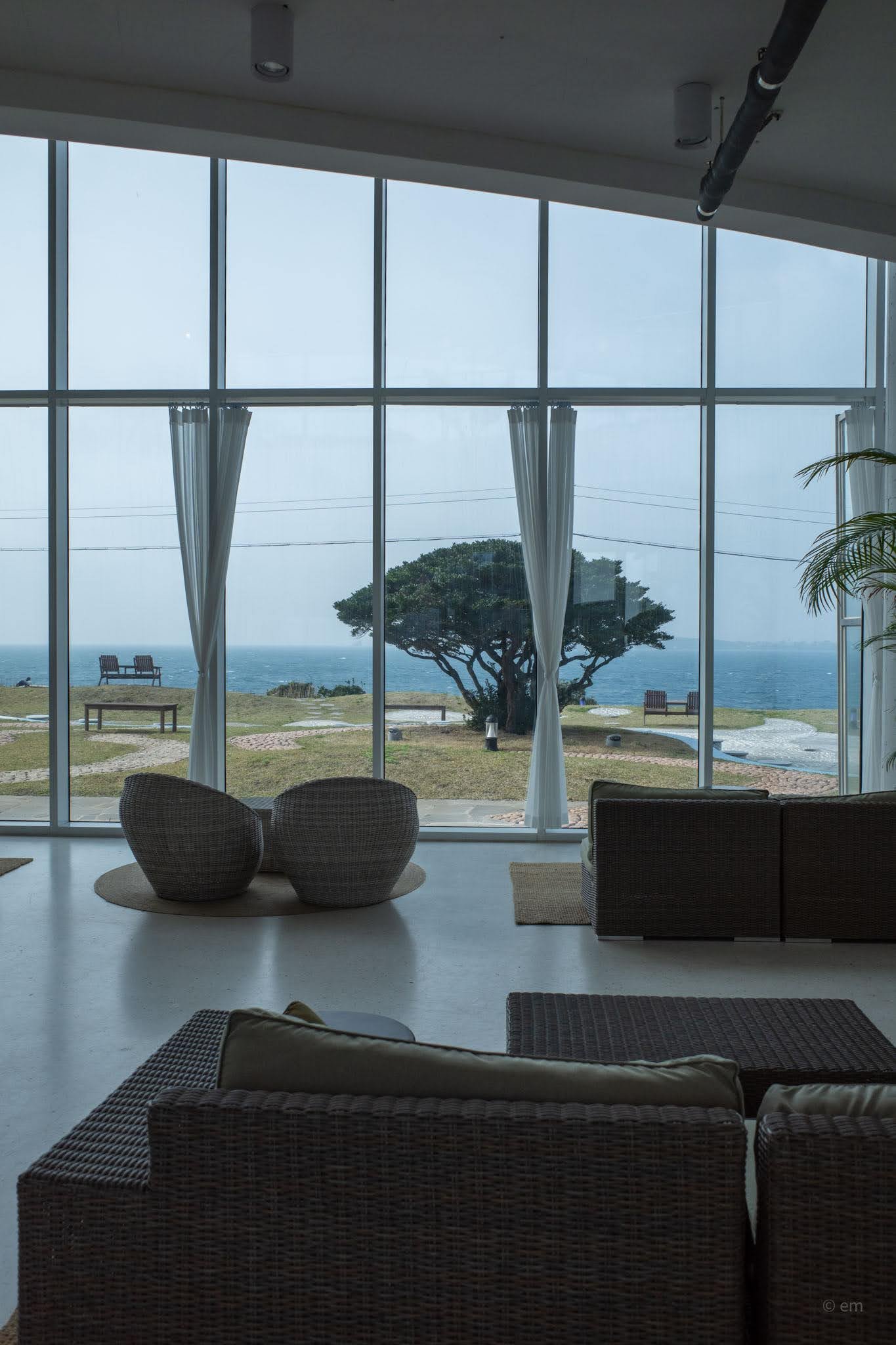
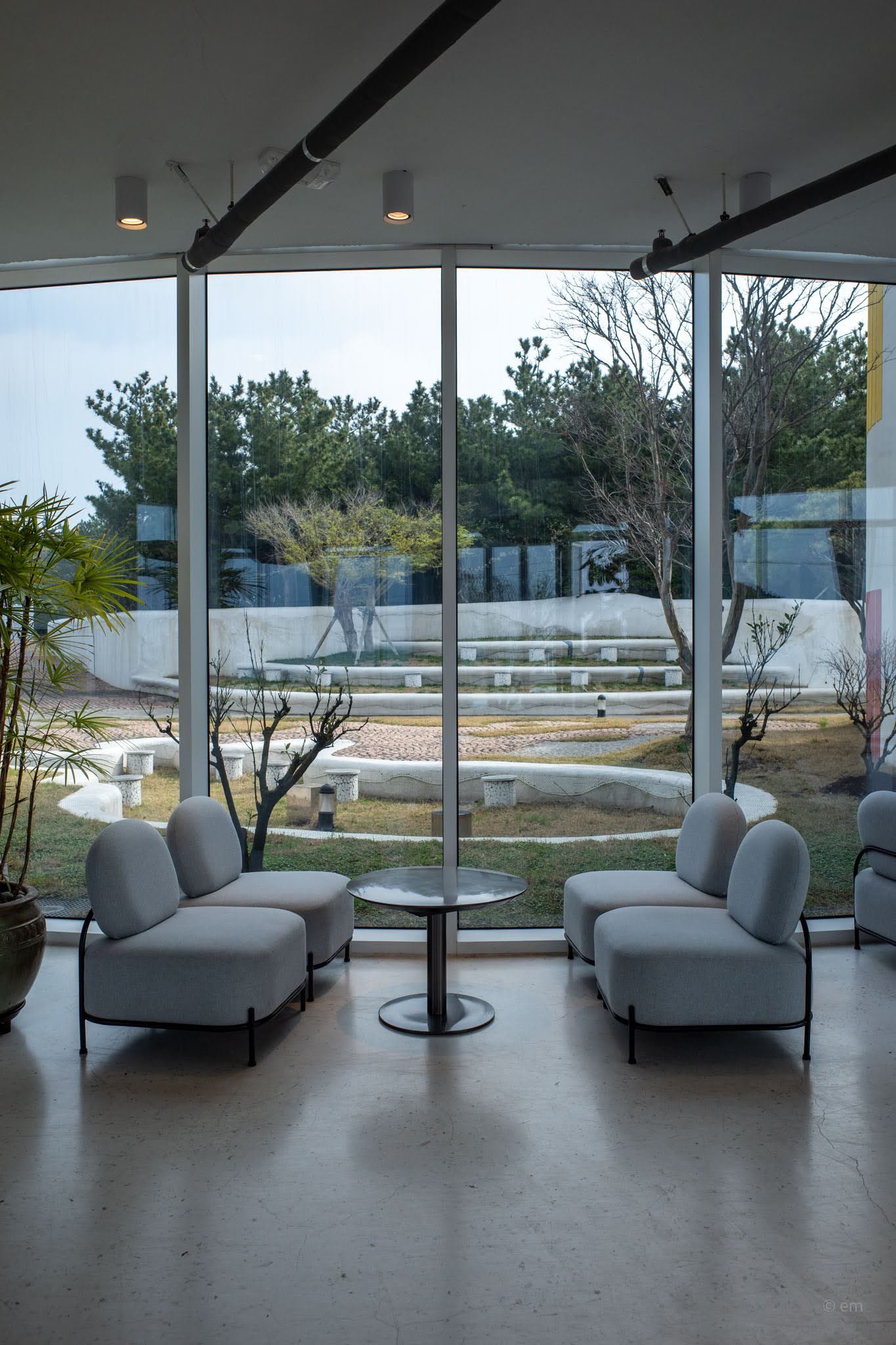
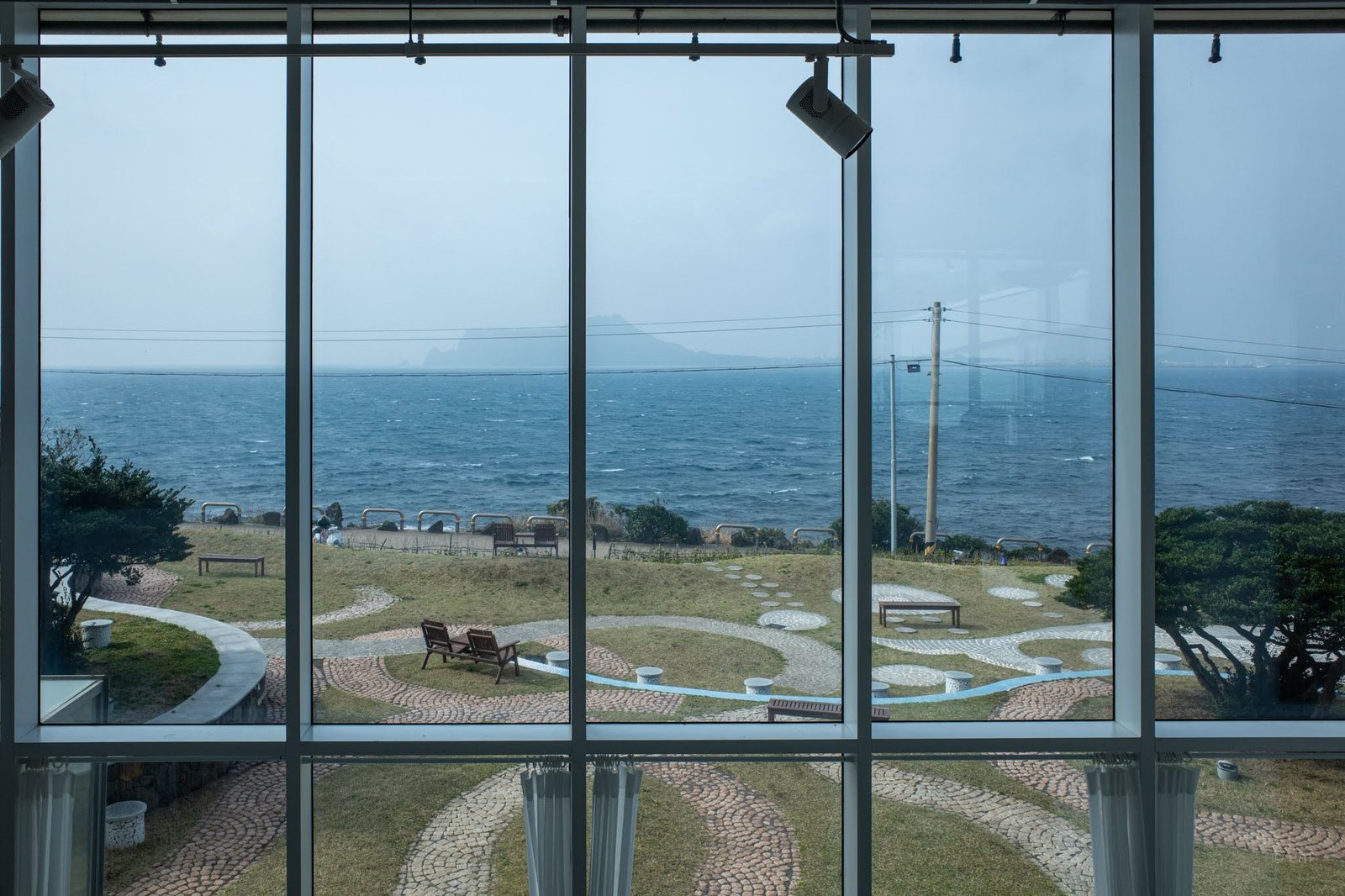
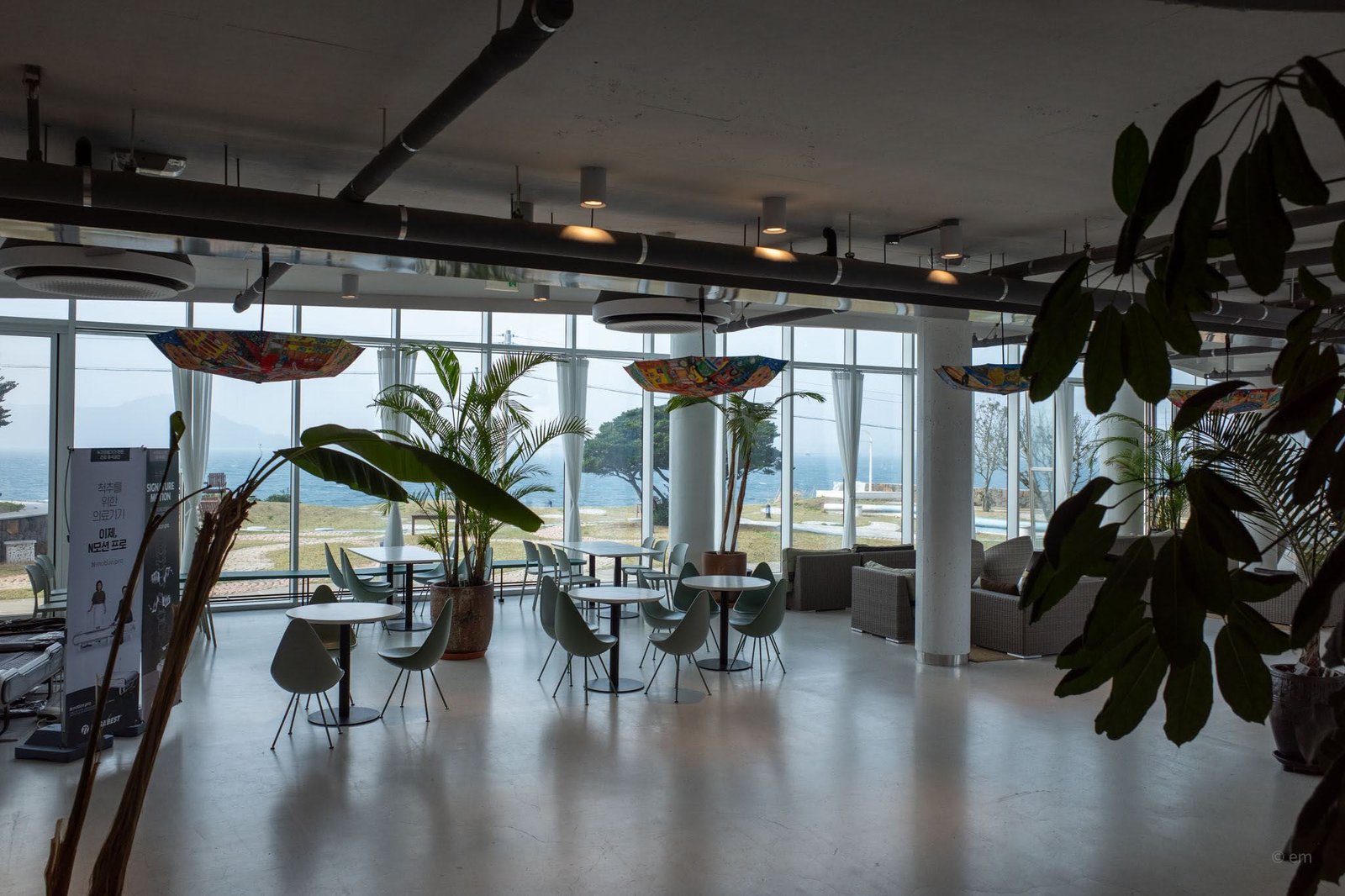
Ground level opens into an enormous, loosely-organized lounge — polished concrete floor, exposed ductwork overhead, concrete columns rising through the space, and more tropical plants than most actual gardens: areca palms, monsteras, banana leaves, ficus trees in pale pots. The seating covers a wide range of temperaments. Rattan sofa clusters occupy the center. Rounded pod chairs in wicker sit on jute rugs near the windows. Sage green drop chairs gather around white café tables. Grey upholstered bubble armchairs face inward toward a garden courtyard. Pale blue rounded sofas cluster at the curve of the glass. All of it — every configuration — has a view. That’s not an accident. There is no bad seat here, only differences in what exactly you’re looking at: open sea, cobblestone wave-patterned lawn, the lone wind-sculpted pine tree at the cliff edge, or the Seongsan Ilchulbong silhouette dissolving into haze across the water.
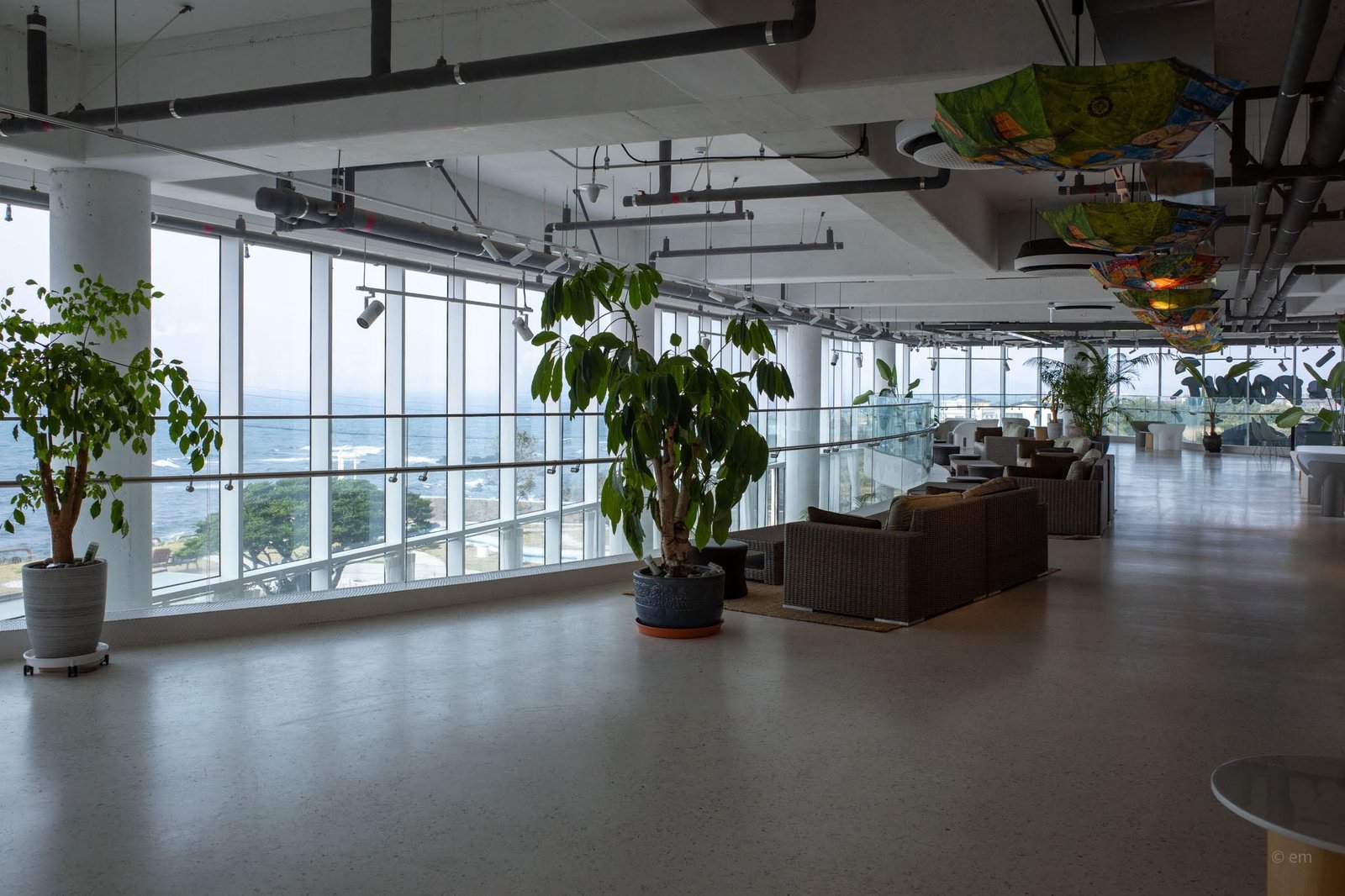
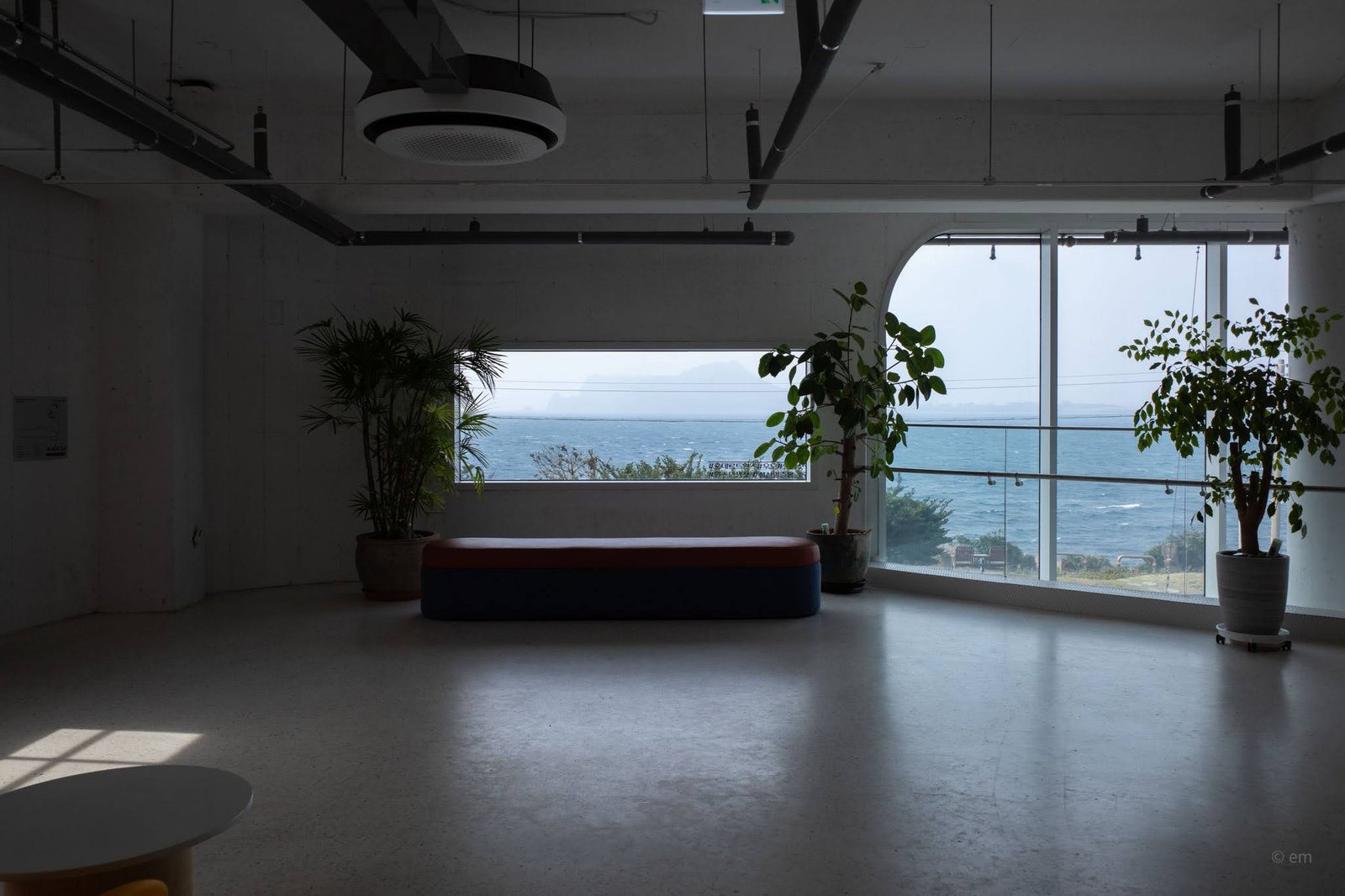
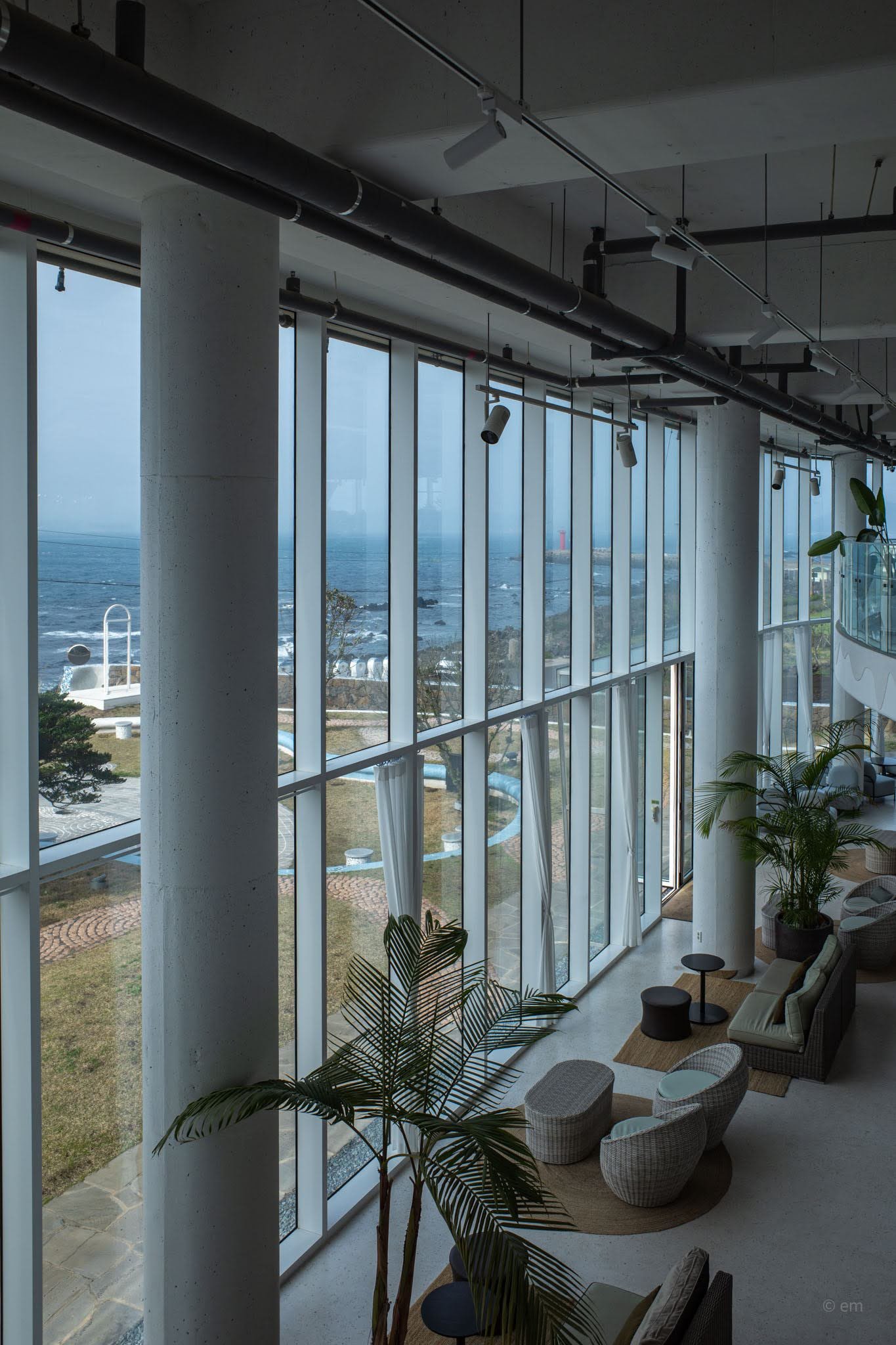
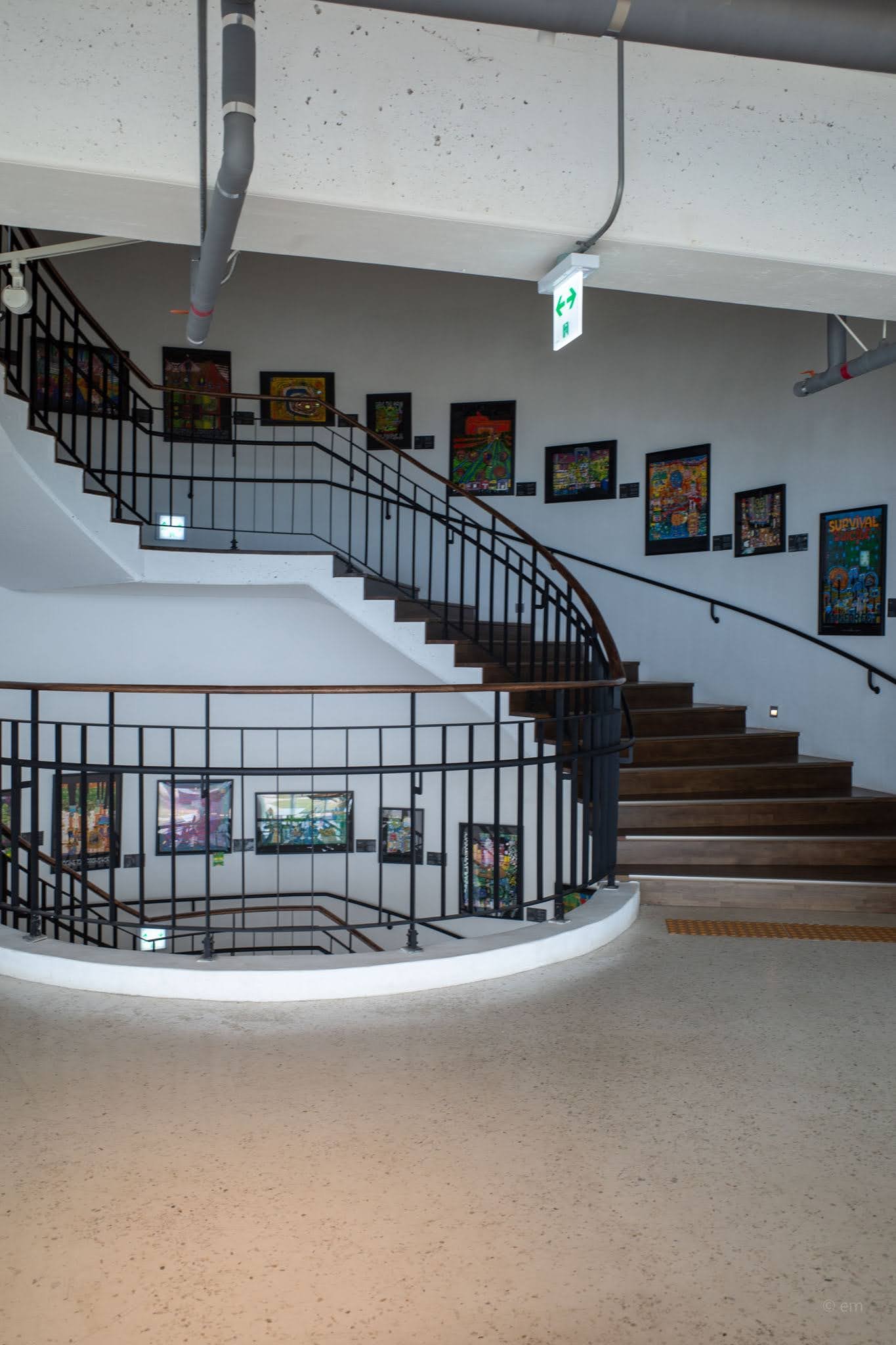
Sheer white curtains hang against the glass walls throughout, caught in the movement of the ventilation system — or perhaps just the building breathing — and they add a softness to the light that might otherwise read too cold. On the upper level, reached by a curved staircase whose walls are lined with Hundertwasser prints ascending in rows, more seating continues the same idea: bigger views, more altitude, the same ease. Inverted Hundertwasser artwork umbrellas hang from the upper ceiling in a long row, their painted surfaces facing down — saturated, busy, technically art — while the windows keep pulling the eye back to the grey-blue open water.
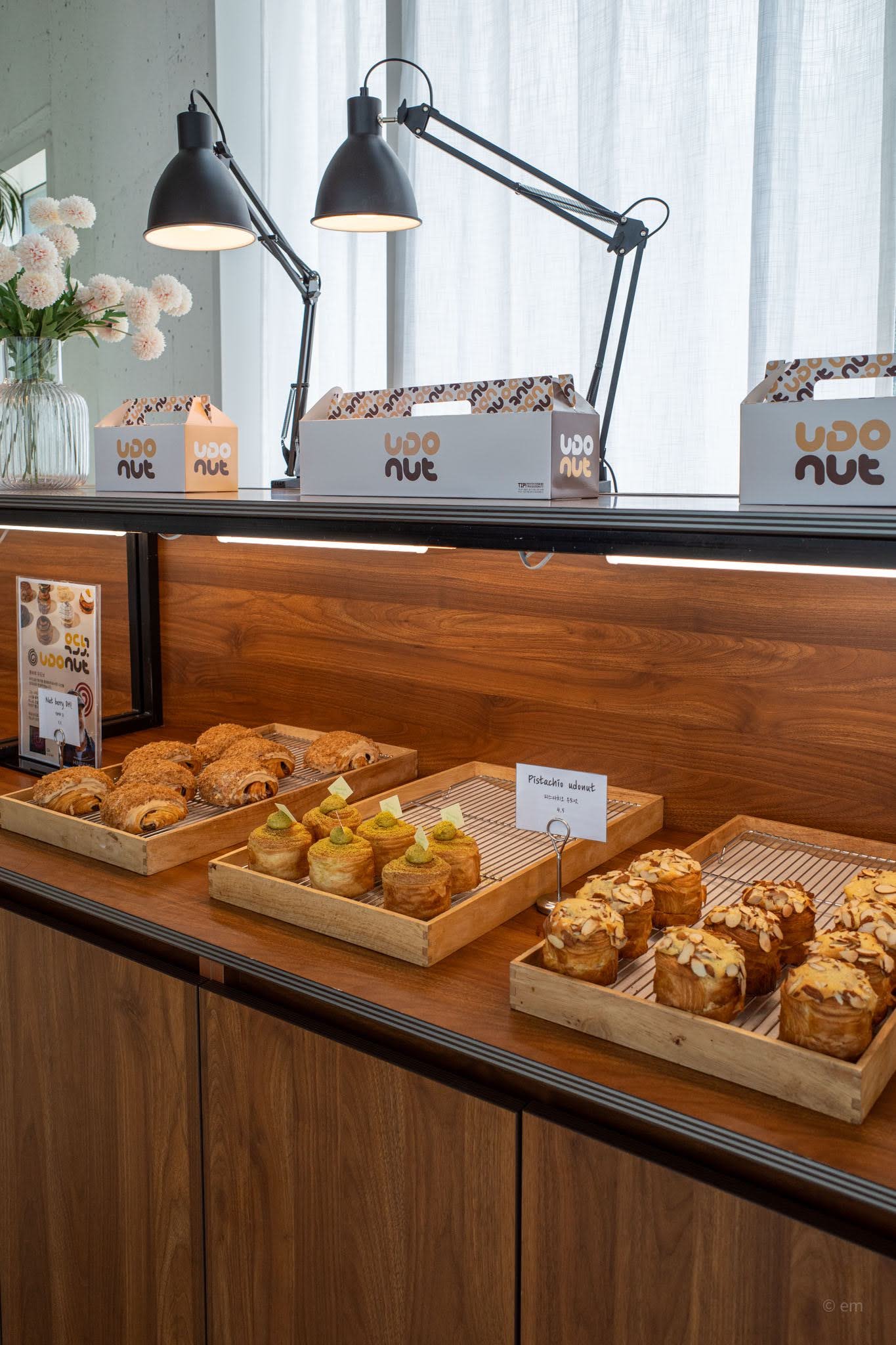
The UDOnut
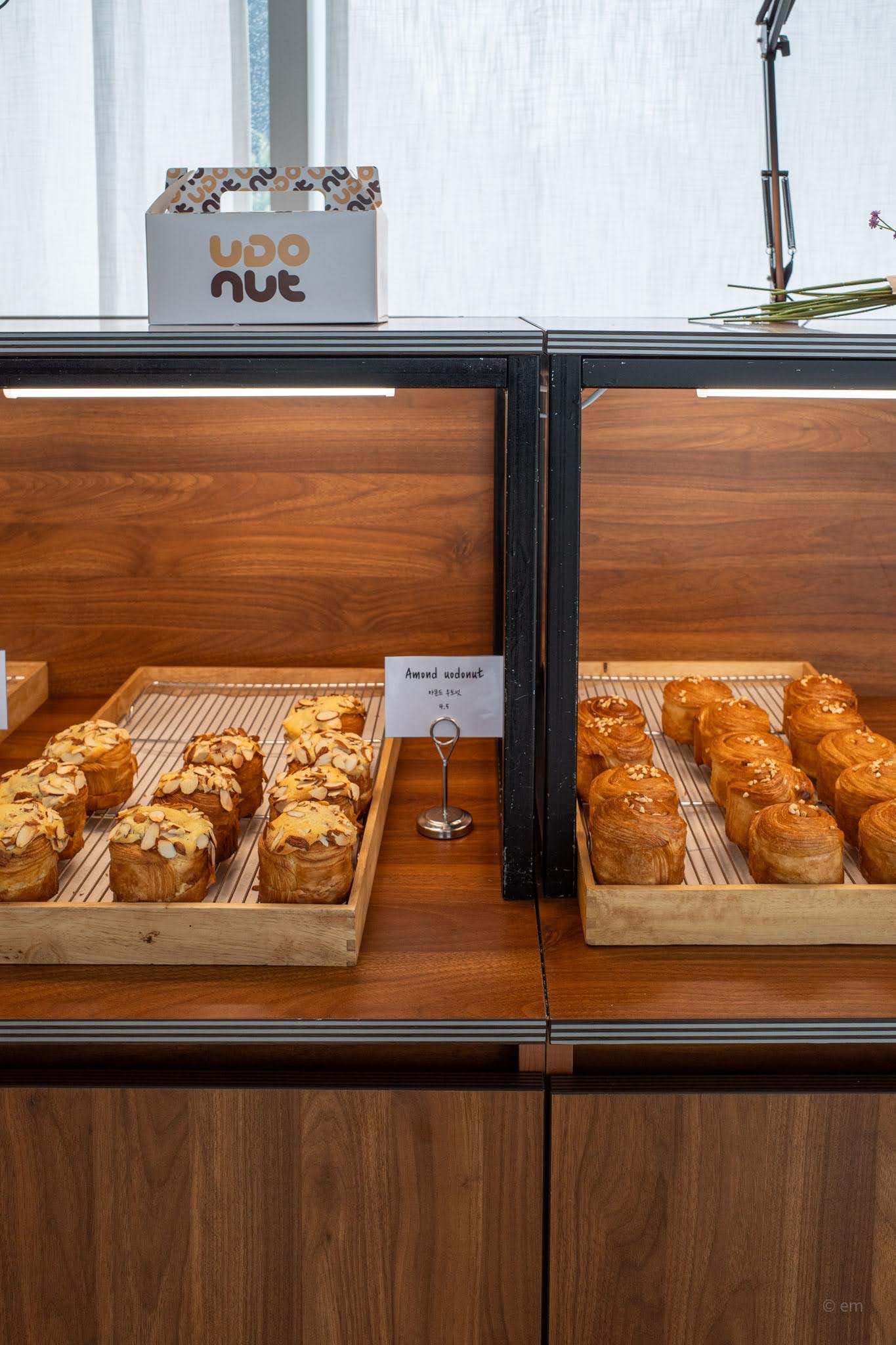
It’s a croissant, technically, or something close to one — laminated, layered, golden on the outside, with the distinctive coiled crown of a kouign-amann and a cream or filling pressed into the center. The UDOnut is the café’s signature item and a product of the park’s insistence on Udo-specific identity: the name collapses the island and the pastry into a single word. Flavors rotate but lean into the rich and slightly indulgent — pistachio with matcha cream, almond with flaked topping, caramel — each one sitting atop its individual wooden tray at the warm-lit counter. The takeaway boxes are well-designed. You will want one to take on the ferry.
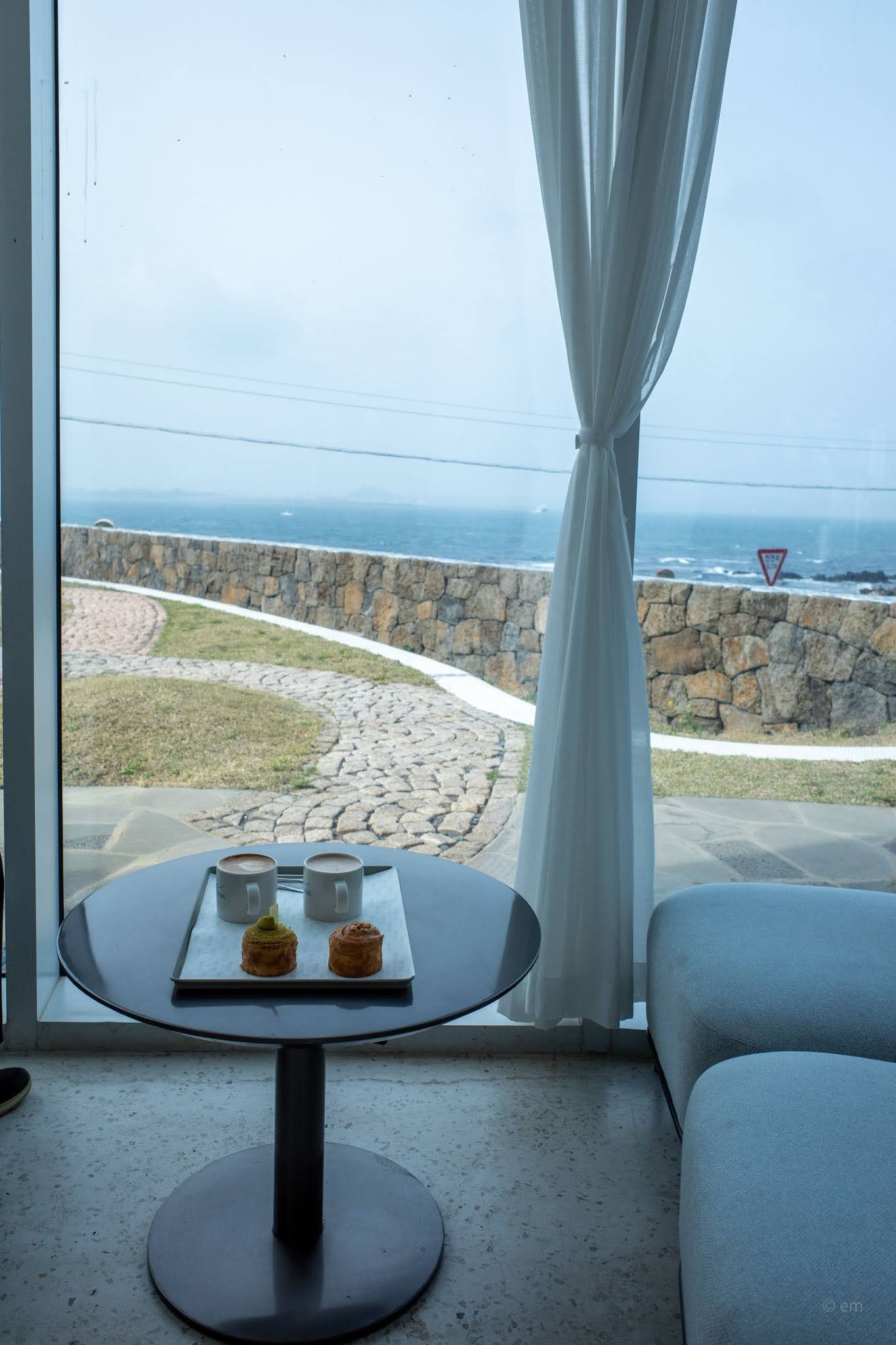
The drinks come in white ceramic mugs. There is a peanut ice cream latte (Udo peanuts being the island’s most local boast), a Borom-ade with what appears to be a summer-drink sensibility, and enough on the menu to justify staying longer than you planned.
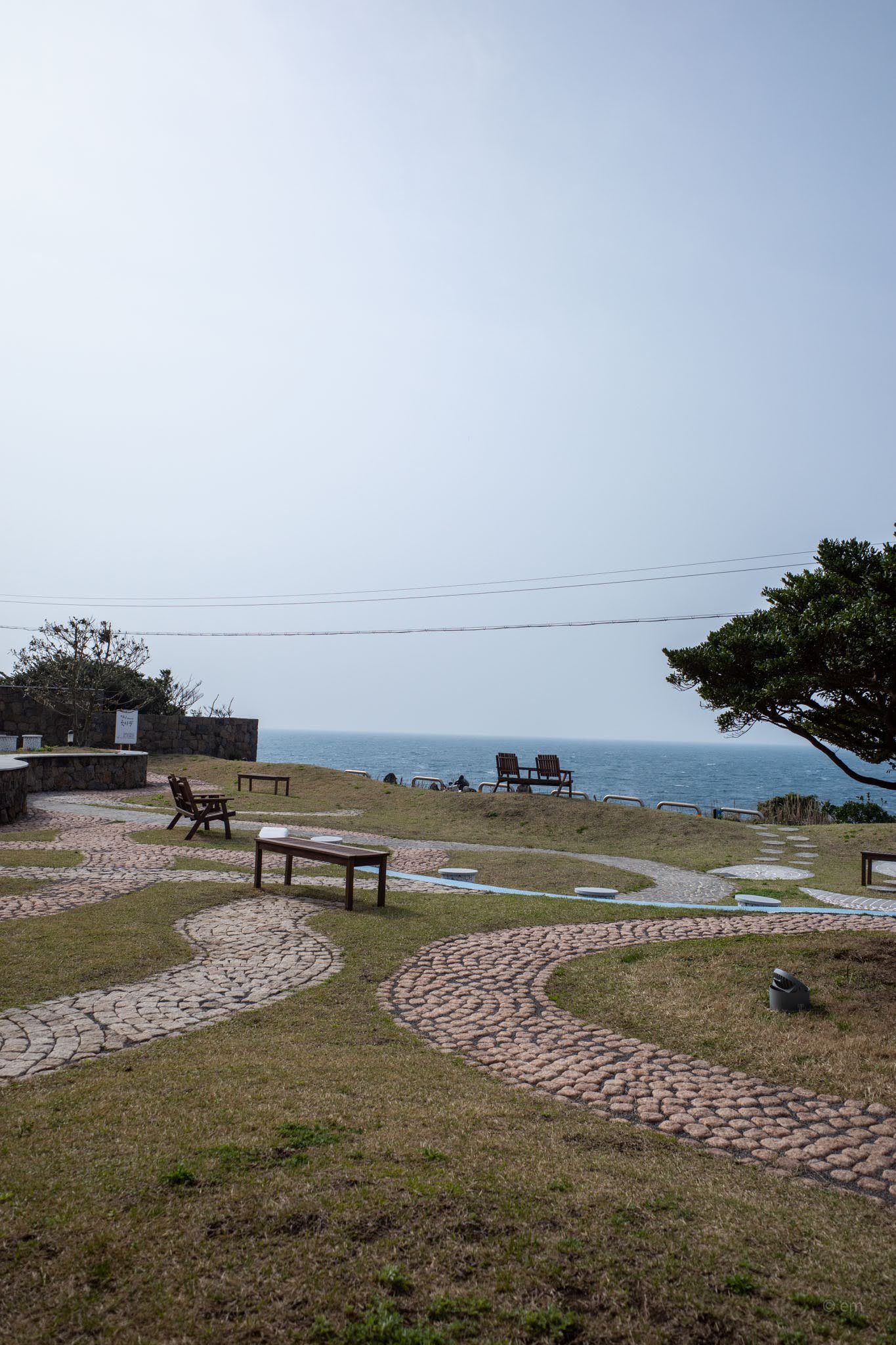
The Ground Outside
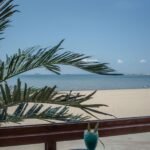
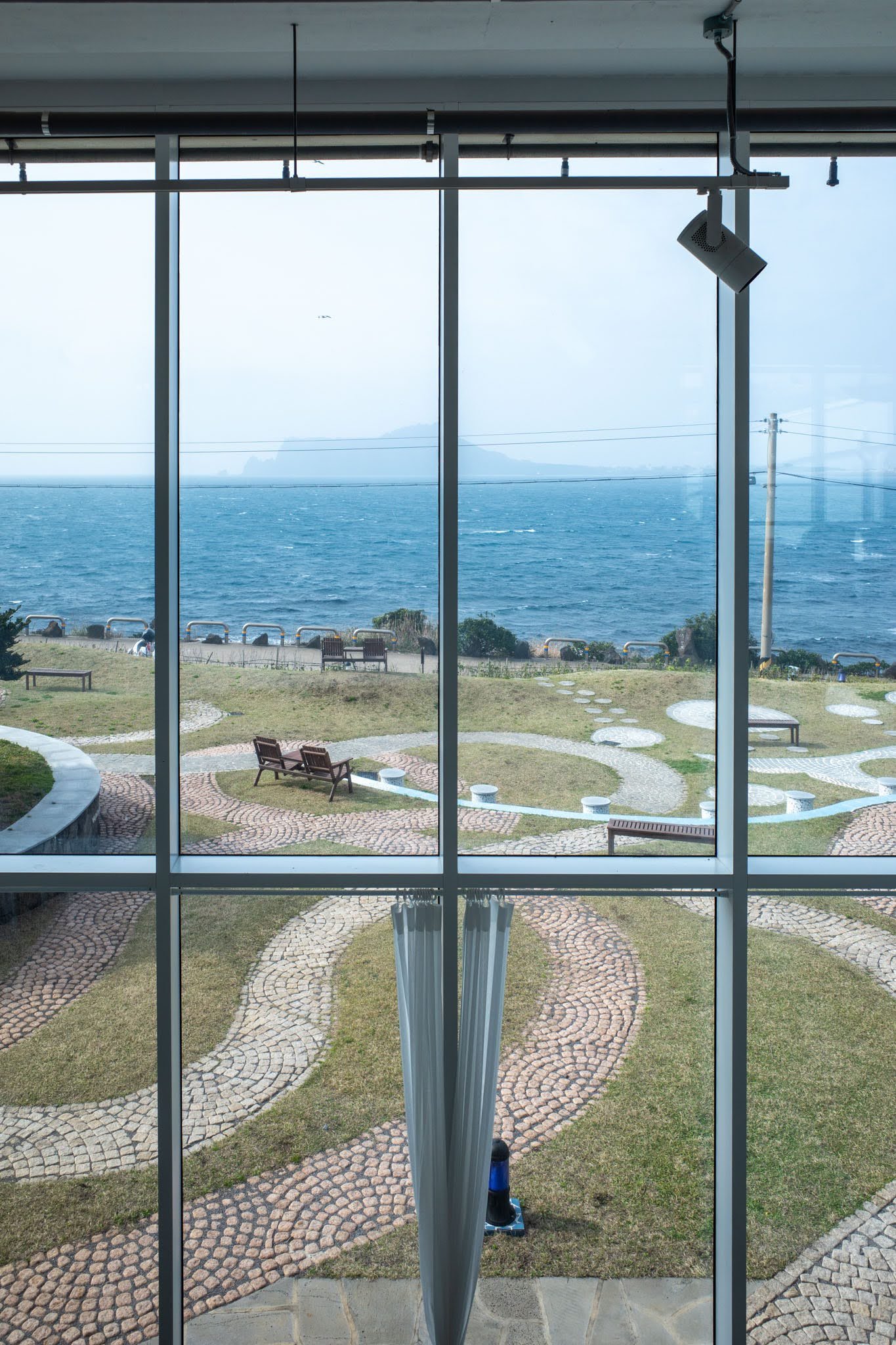
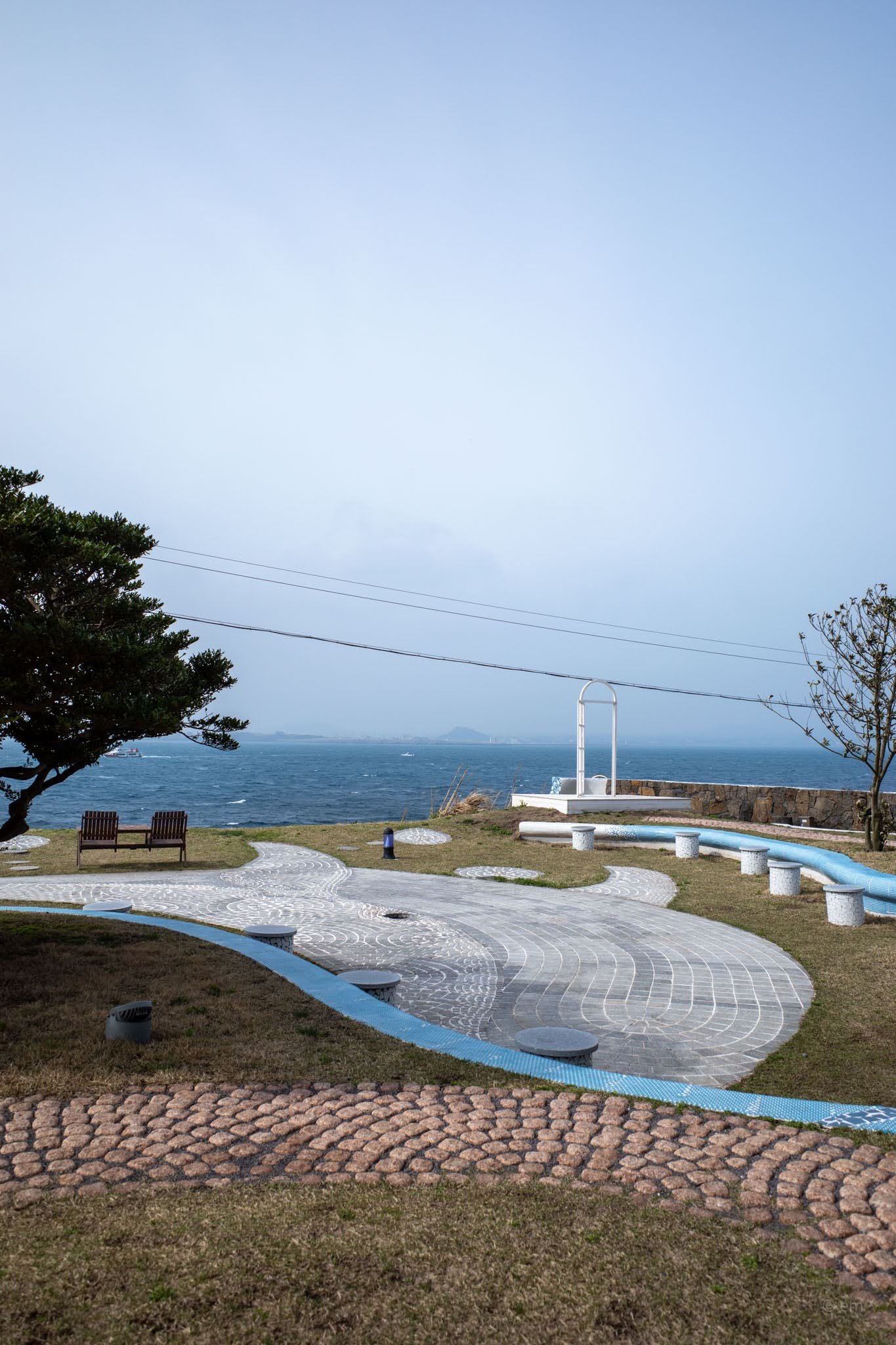
Through the glass, the lawn terrace that runs along the coastal edge is all cobblestone wave patterns embedded into the turf — a surface design that repeats the park’s language of curves — with dark wood benches and pairs of low Adirondack chairs positioned at the bluff edge where the stone wall meets the sea. The water on a windy day breaks beyond the wall in white. Seongsan Ilchulbong sits across the strait, mostly dissolved in grey when the weather is hazy, and occasionally fully present. Two chairs, the horizon, the wind. The outdoor space is part of the experience.
Hundertwasser Winds
Address: 32-2 Udo Haean-gil, Udo-myeon, Jeju-si, Jeju
Hours: 9:30 AM – 6:00 PM (last order 5:30 PM)
The café closes at six. The view doesn’t.