Somewhere between a Joseon teacup and a Mediterranean watchtower, a painter made his home on a Jeju hillside — and then opened the door.
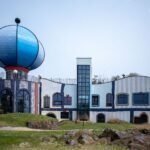
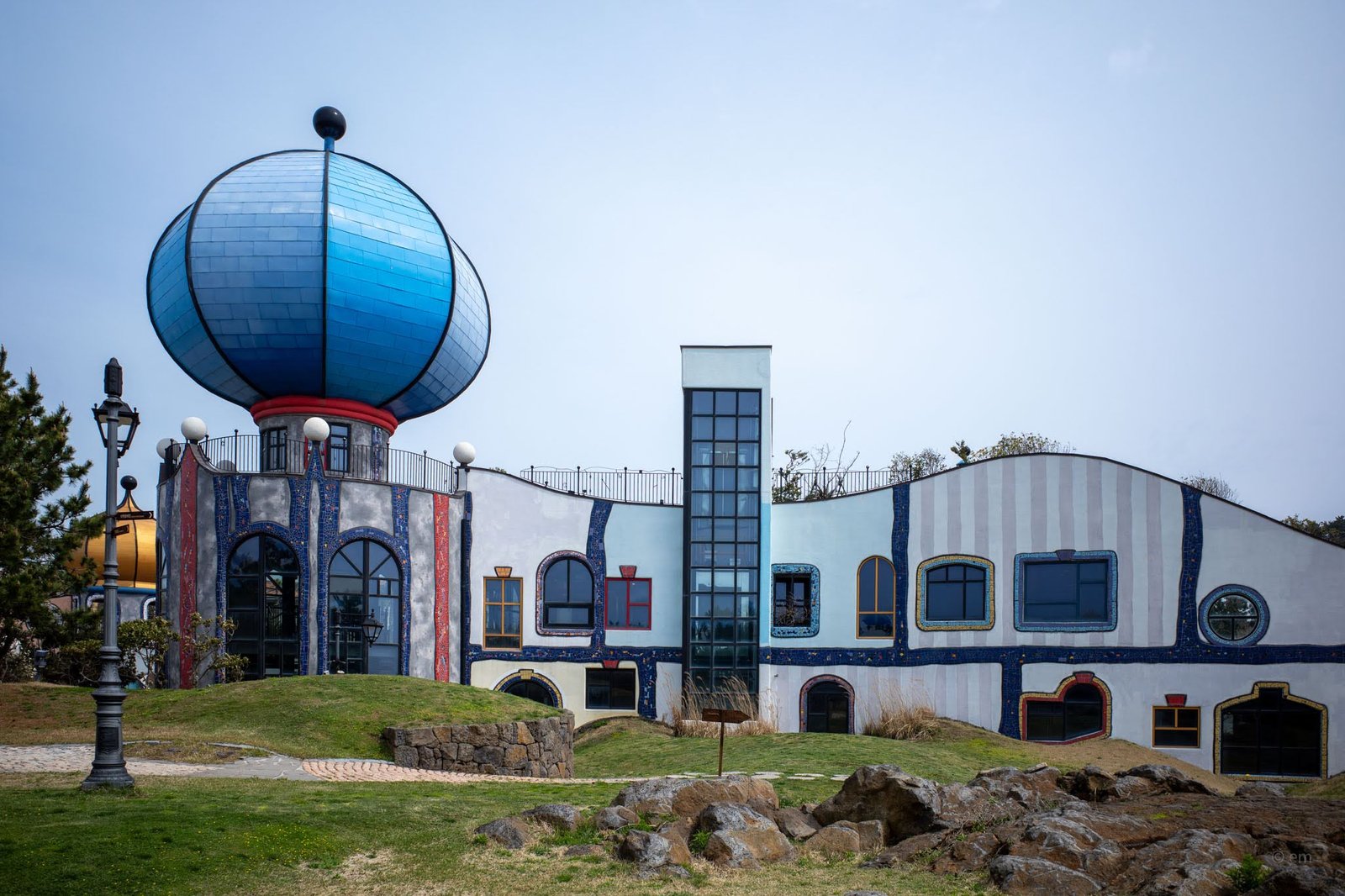
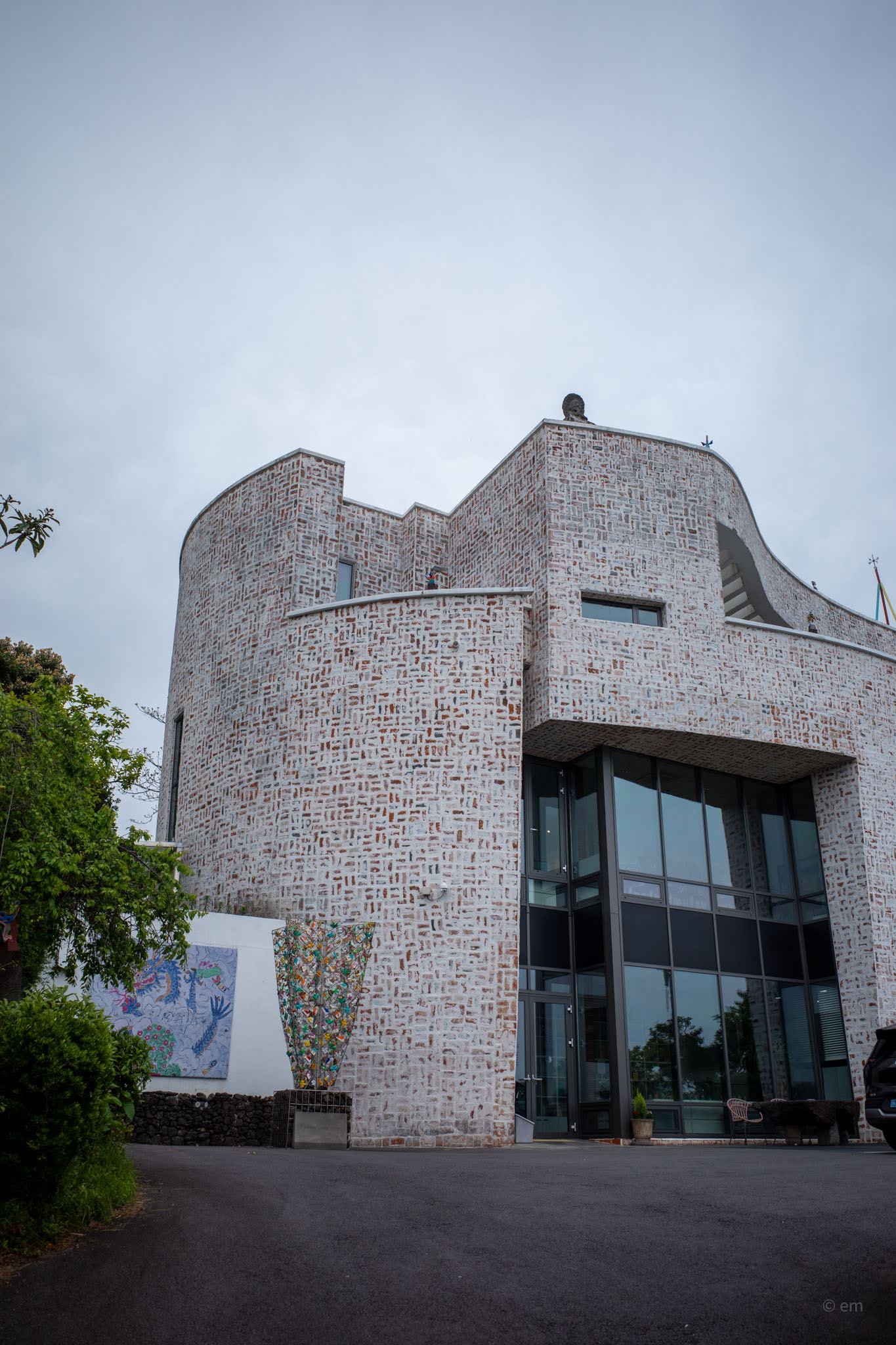
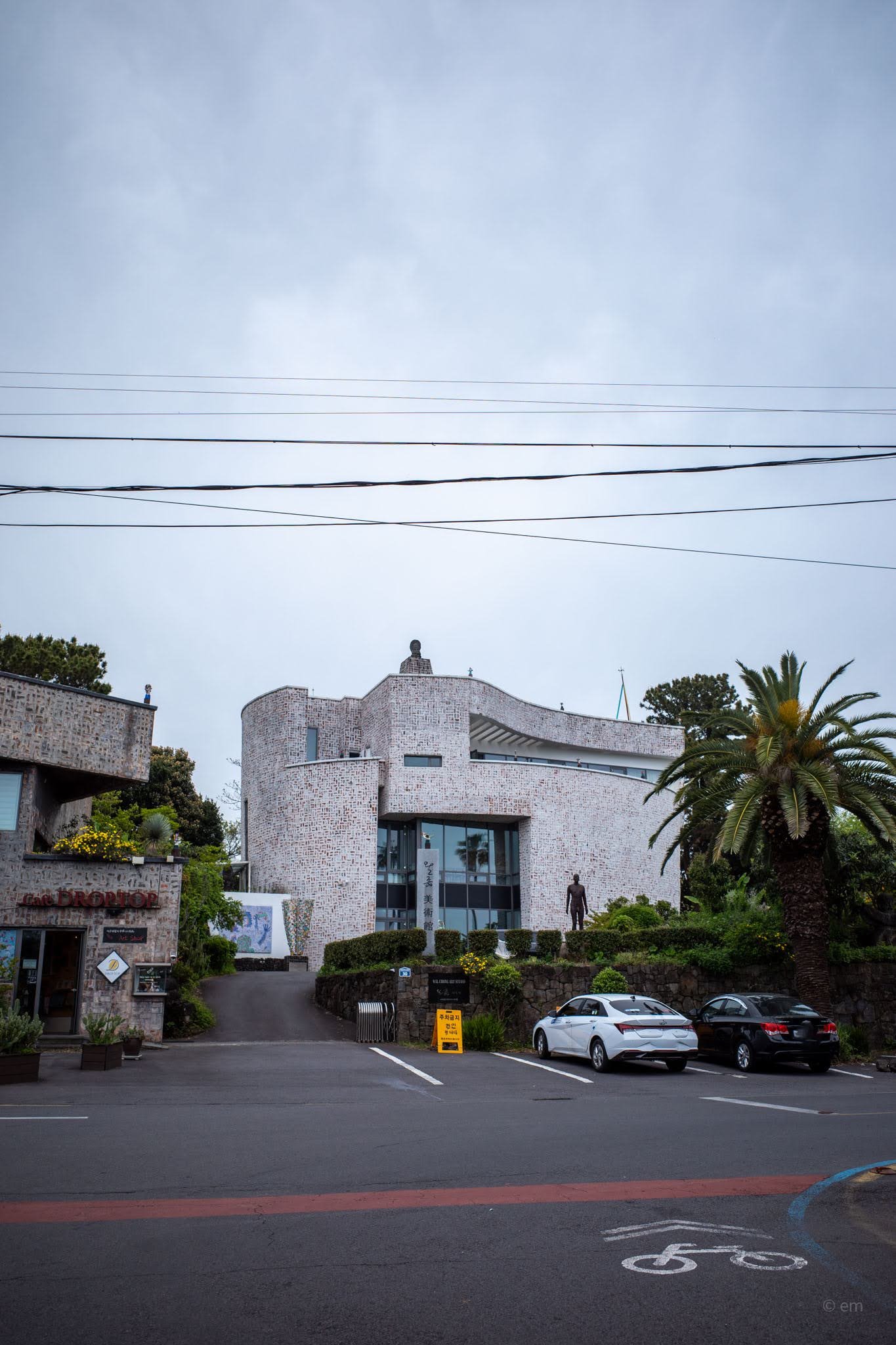
Waljong Art Museum is one of those places that takes a moment to parse. From the road below Jeongbang Waterfall in Seogwipo, the building rises in a silhouette that doesn’t quite belong to any obvious category: rounded brick towers, white-washed walls, crenellated edges, a wall of floor-to-ceiling glass. It reads as Spanish village, or Greek island, or something vaguely Moorish — and none of those readings are wrong, exactly. The building was designed to evoke a Joseon white porcelain teacup, that gentle curve and quiet elegance translated into fifteen meters of stone and mortar, set against Jeju’s south coast. The result is its own thing entirely: genuinely foreign-feeling in a way that Jeju, island of palms and volcanic black stone and sea mist, somehow earns.
The museum was opened in 2013 by Lee Wal-jong, a painter who left a professorship in Seoul in 1990 and moved to Seogwipo permanently — a move that became his subject matter. His long-running series Jeju Life’s Middle Way (제주생활의 중도) documents island life in bold primary colors, loose figures, and a wit that resists solemnity. Golf rounds appear alongside cranes and tangerine orchards. Rooster sculptures perch on basalt plinths. The mood is holiday without irony, joyful without sentimentality — and the museum holds that register from the courtyard all the way to the rooftop.
Before You Go In
The museum was opened in 2013 by Lee Wal-jong, a painter who left a professorship in Seoul in 1990 and moved to Seogwipo permanently — a move that became his subject matter. The building he designed for it is its own category: a rounded brick tower with crenellated edges, the upper silhouette somewhere between a fortress and a teacup. That last reading is the intended one — the structure was conceived as a Joseon white porcelain teacup, its gentle curve and quiet mass translated into fifteen meters of stone and mortar. Against Jeju’s south coast, palm trees in the forecourt and sea mist behind, it reads as genuinely foreign — not any one country’s foreign, just somewhere else entirely.
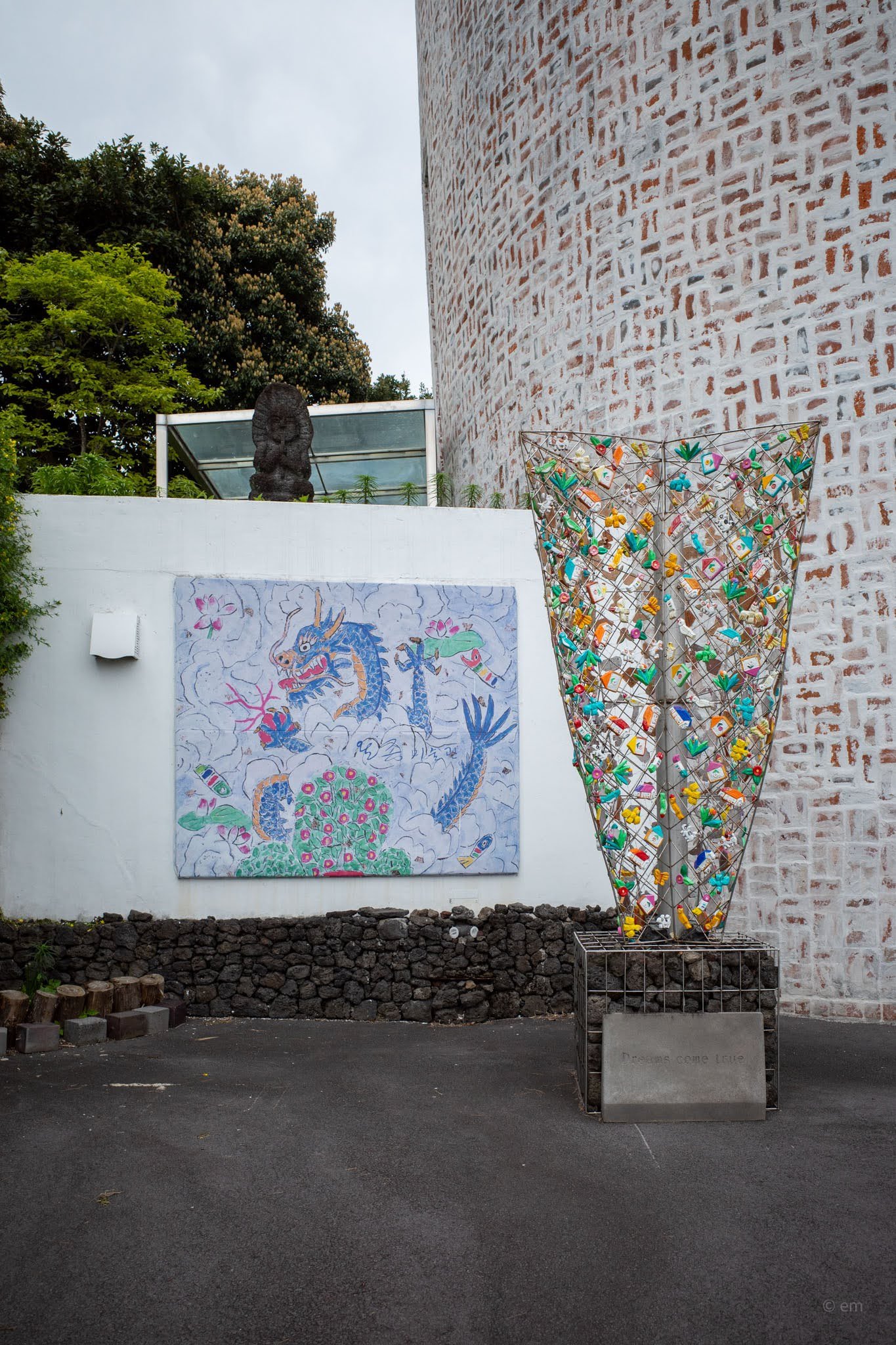
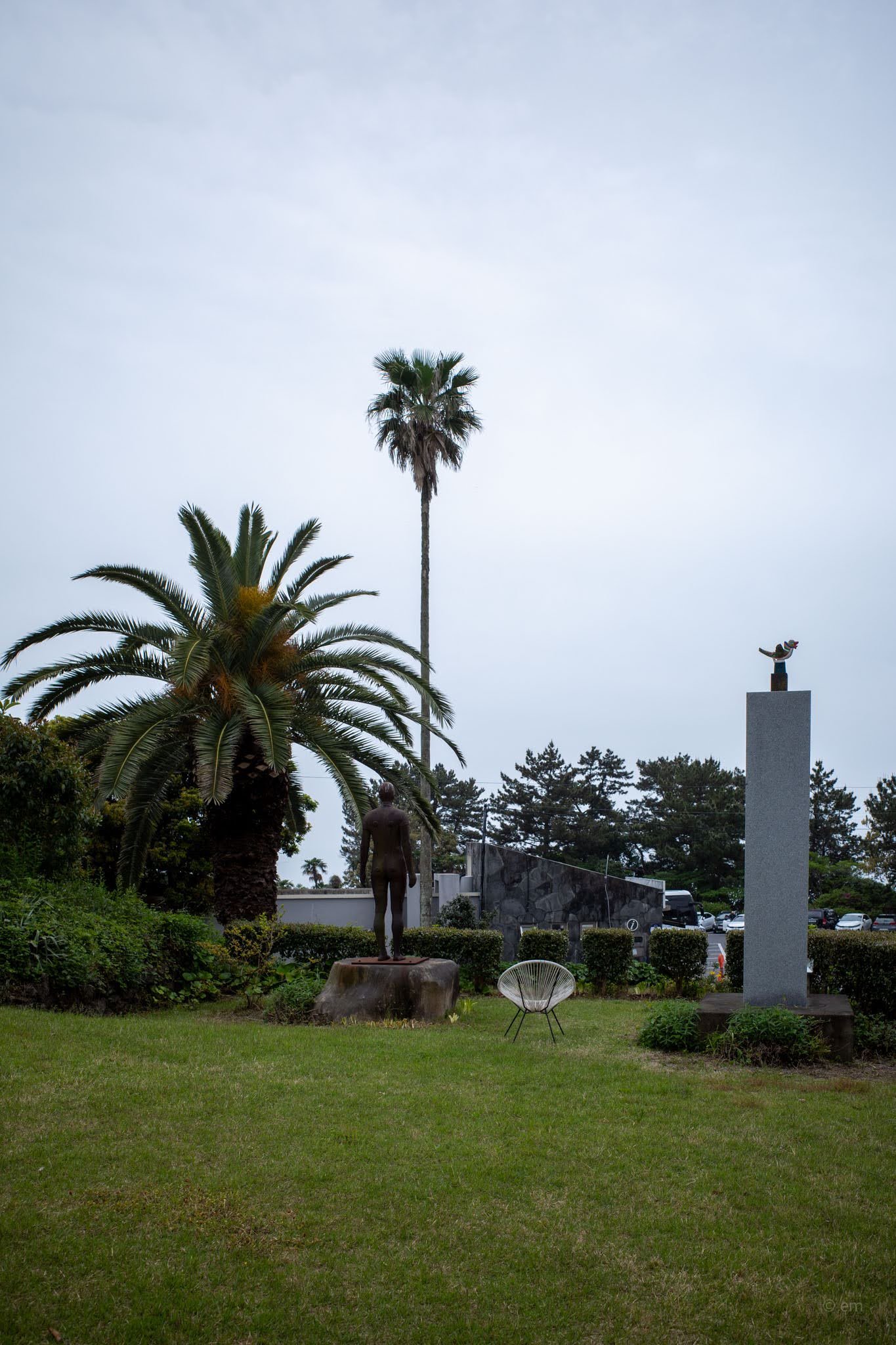
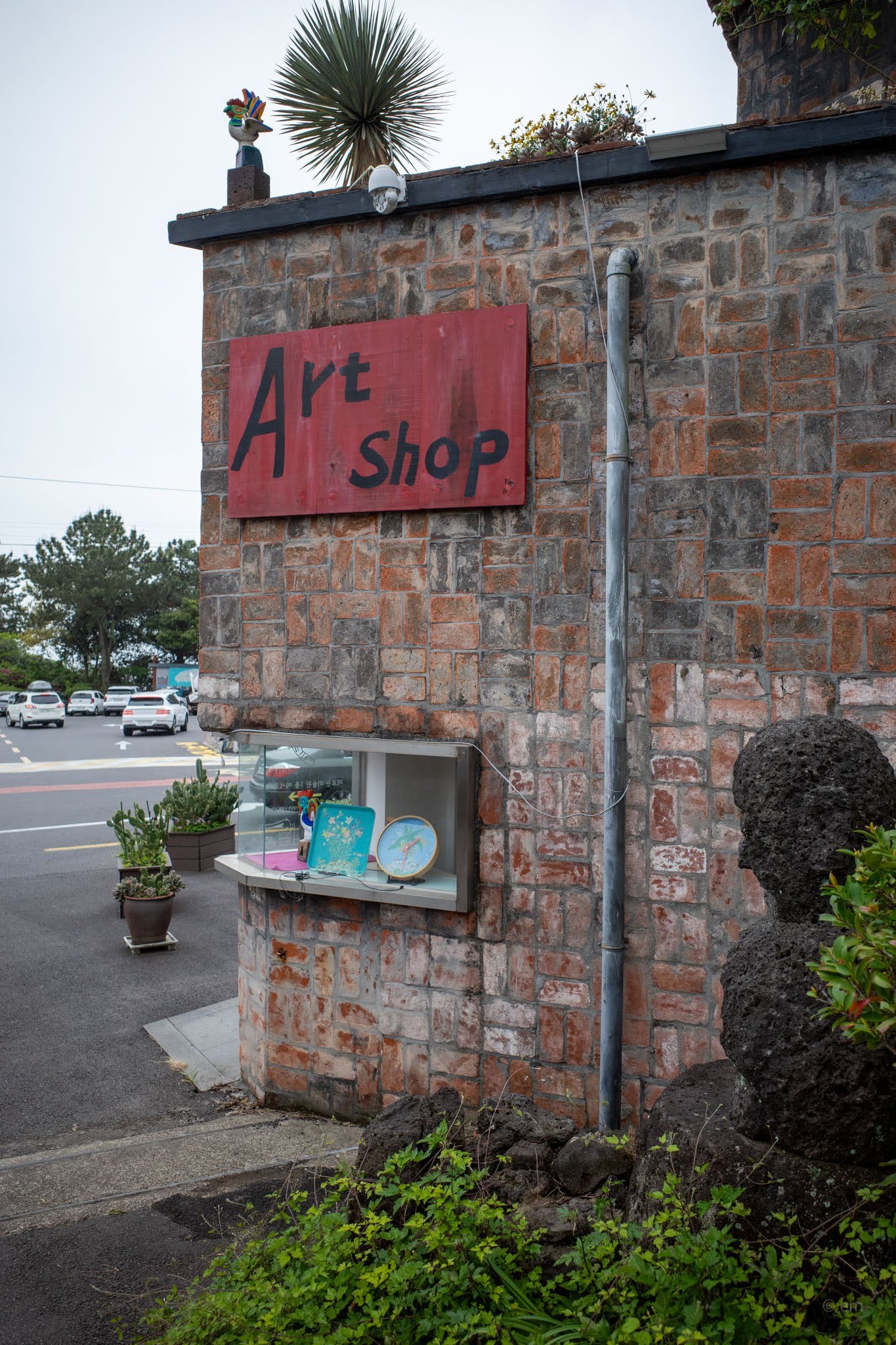
The forecourt sets the tone early. A bronze standing figure faces away from you toward the palm garden, as though it arrived just before you did. Beside the main building, a dragon painting in loose, cloud-washed blues hangs against a white wall, flanked by a wire-and-ceramic totem packed with small colorful objects — toys, fragments, bright small things. On the opposite corner, the art shop announces itself in hand-painted red letters on basalt brick. Nothing here is trying to look polished. It reads more like a working compound than a museum, which is exactly what it is.
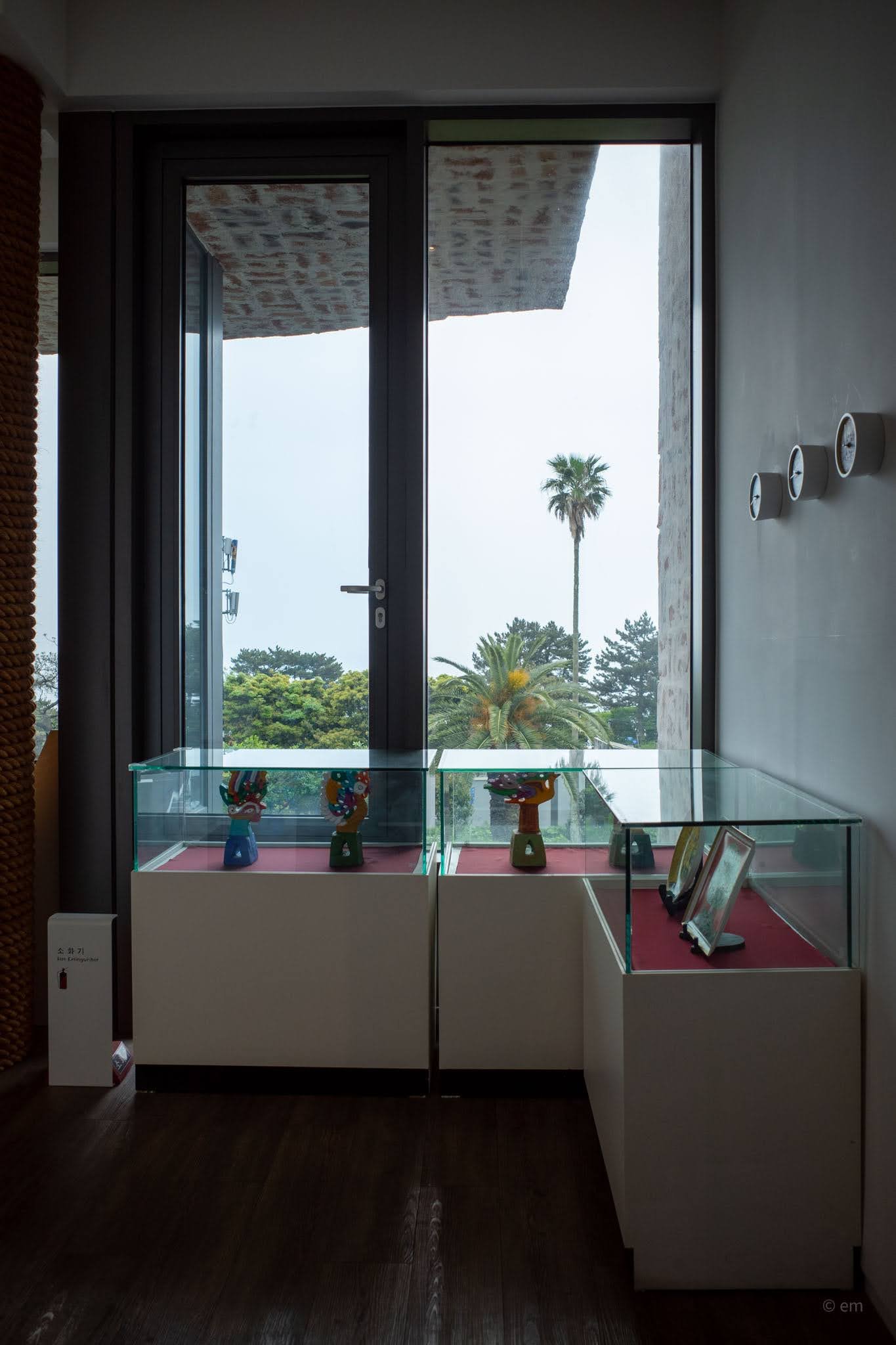
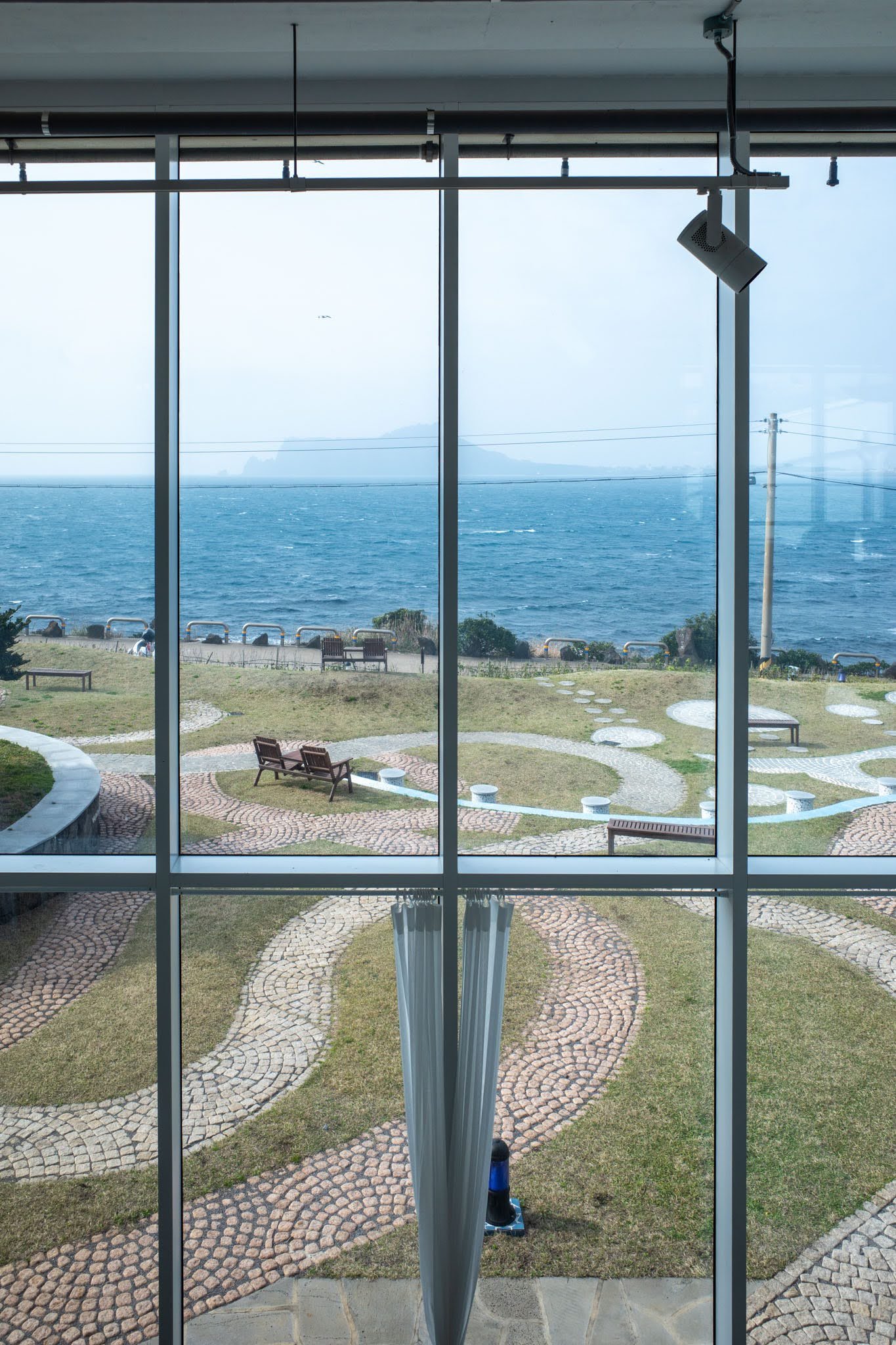
Inside, the building arranges itself across three floors. The ground level holds storage and ceramics workspaces. The second floor is the main gallery — paintings, prints, ceramic works, and mixed-media pieces covering several decades of Lee’s practice. The rooms are bright and unhurried, the windows framing the palm garden and the grey sea beyond. Small ceramic figures sit in glass cases at one window looking out toward Seopsom Island, which floats in the distance like a punctuation mark.
The Work
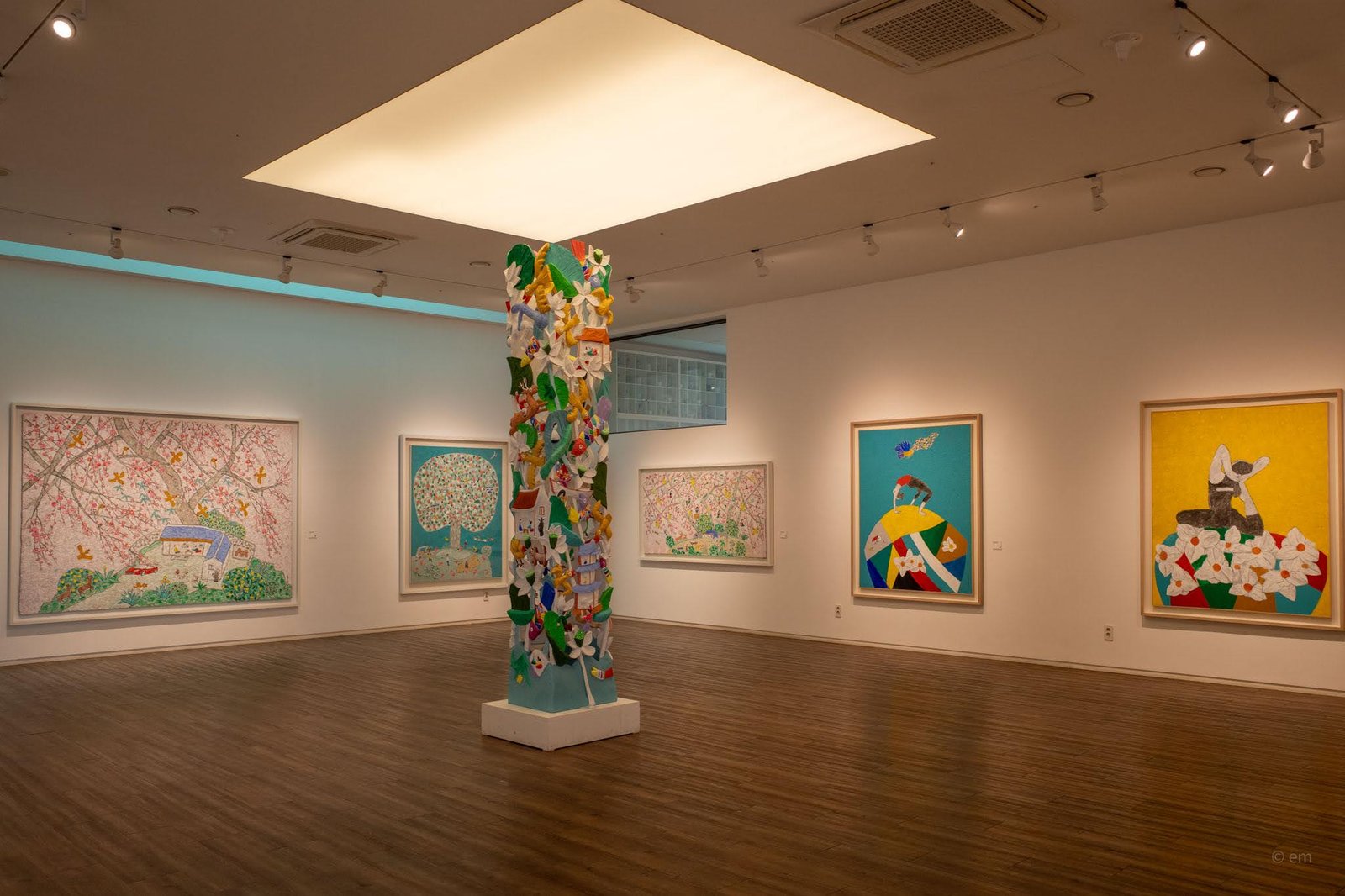
The paintings are larger and denser than they appear in reproduction. The compositions pile up — trees, figures, animals, vehicles, all in close, cheerful proximity — rendered in colours that feel genuinely primary, like a child’s palette used with complete conviction. Lee’s figures are boneless, expressive, slightly absurd. They swim and dance and play golf and climb trees and exist in a Jeju that is less landscape than state of mind. It doesn’t take long to understand why this body of work has stayed specific to one island: this is painting that belongs to its place.
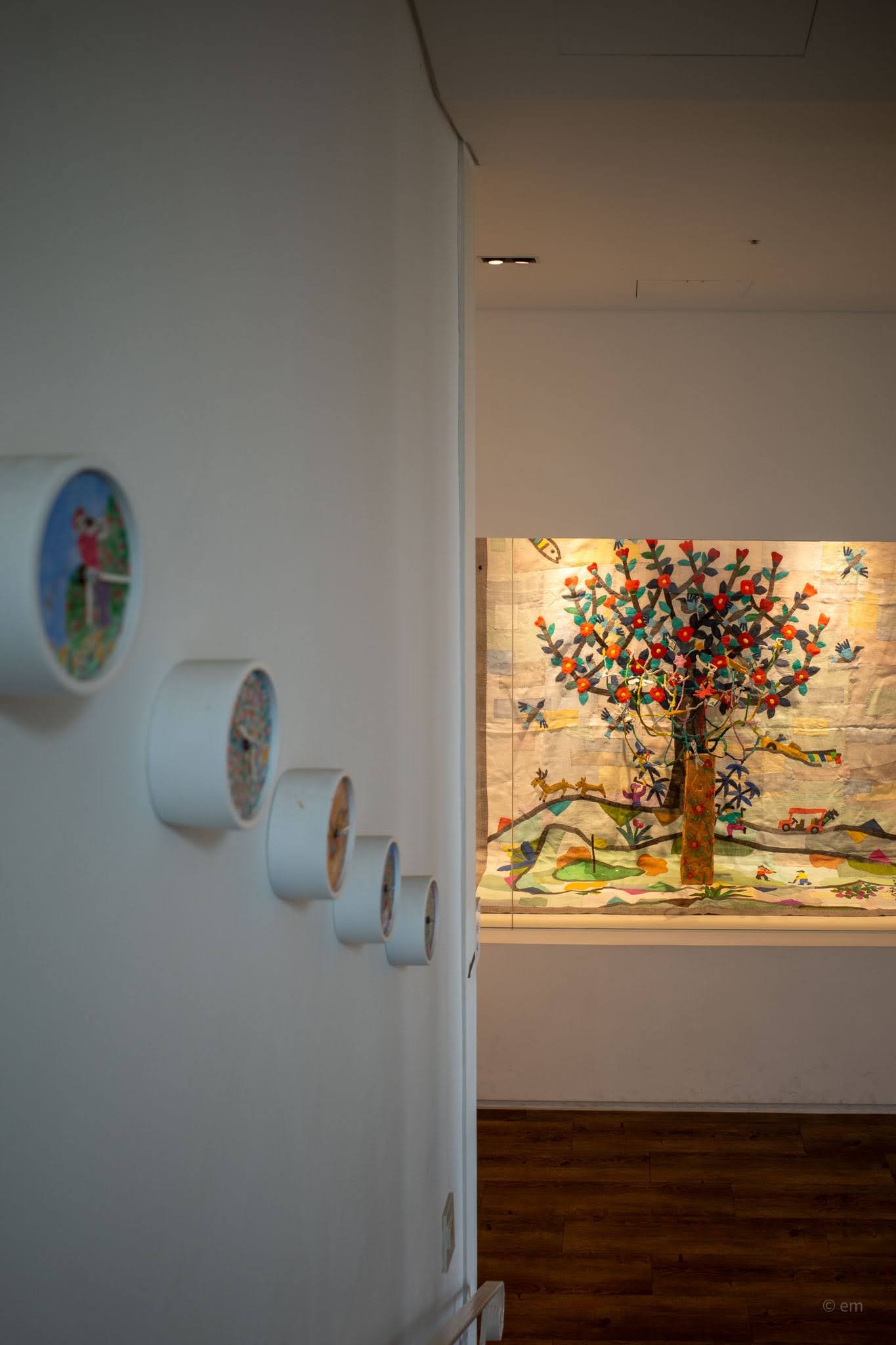
The stairwell between floors is installed with a cascading stream of tiny ceramic and painted figures — people, cars, animals — arranged in a loose diagonal across the white wall, as if they are all falling together from somewhere high up. It is the kind of detail that rewards unhurried looking.
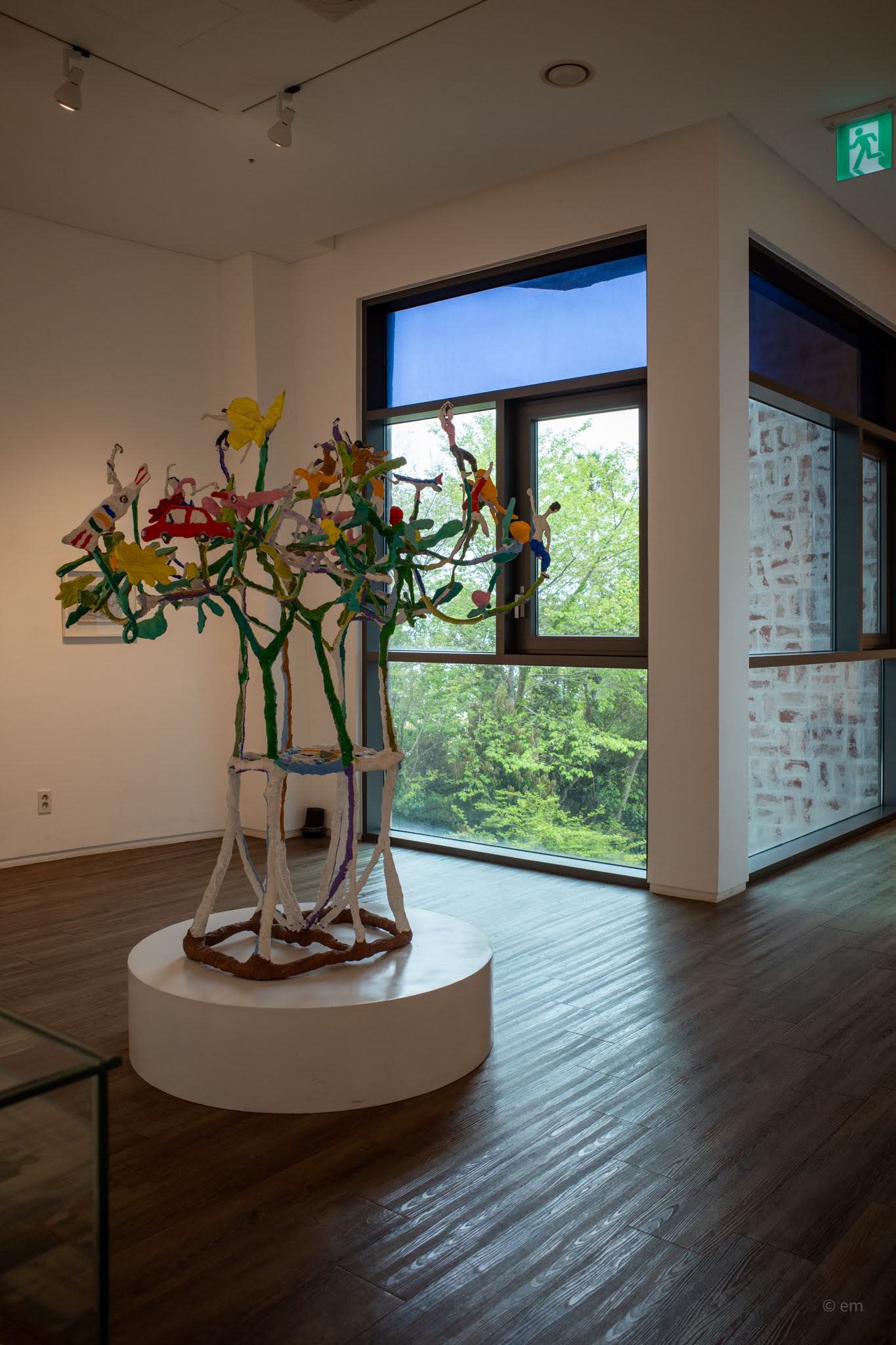
The largest interior space, a gallery with a skylight and warm spotlighting, holds a central floor sculpture — a tall column wound with flowers, leaves, and small painted figures — surrounded by large-format canvases hung on all four walls. Cherry blossoms, coastal pines, diving figures, orange-red flowers against yellow grounds. The room has the feeling of walking into an accumulation of seasons.
The Roof
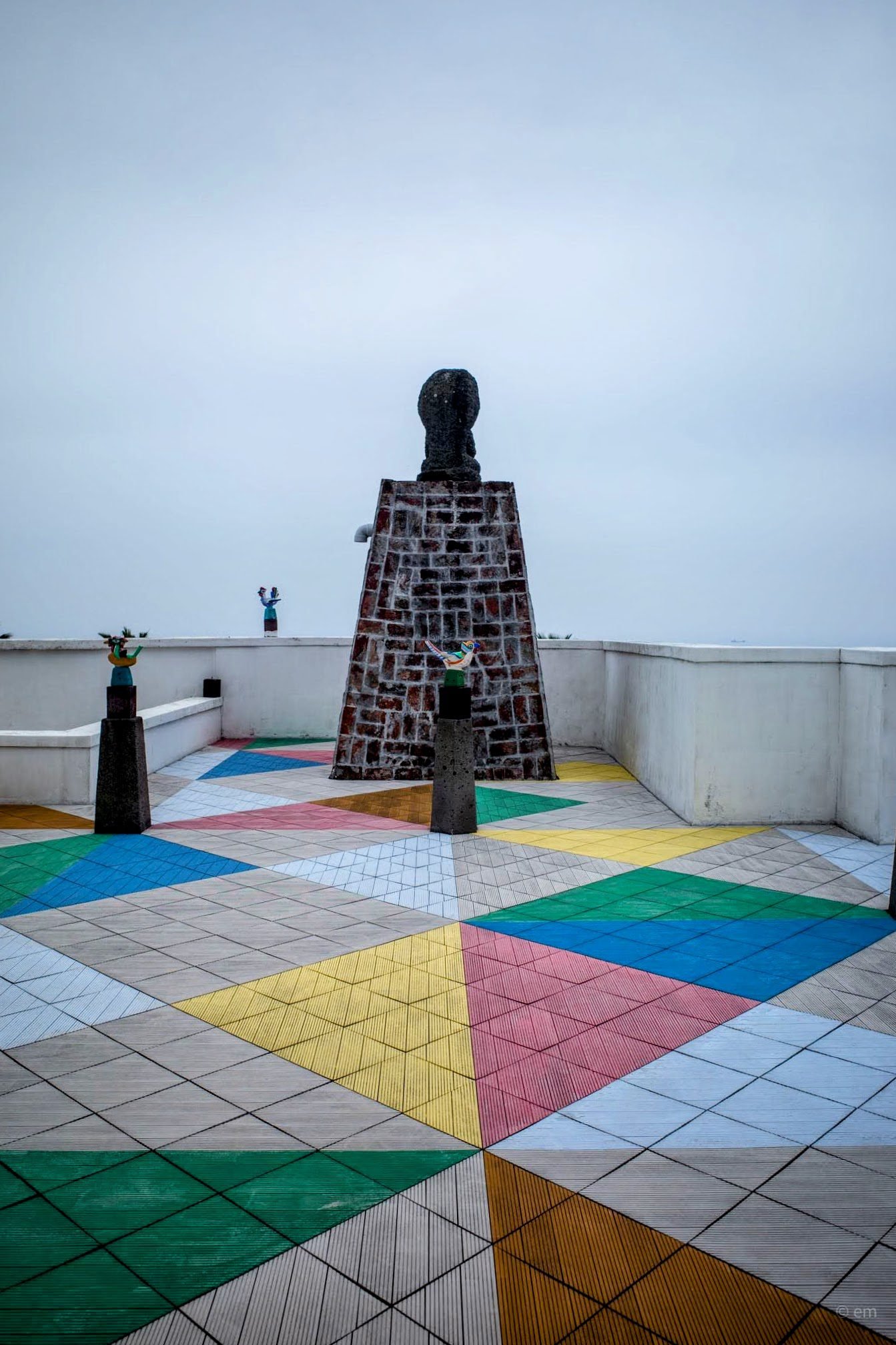
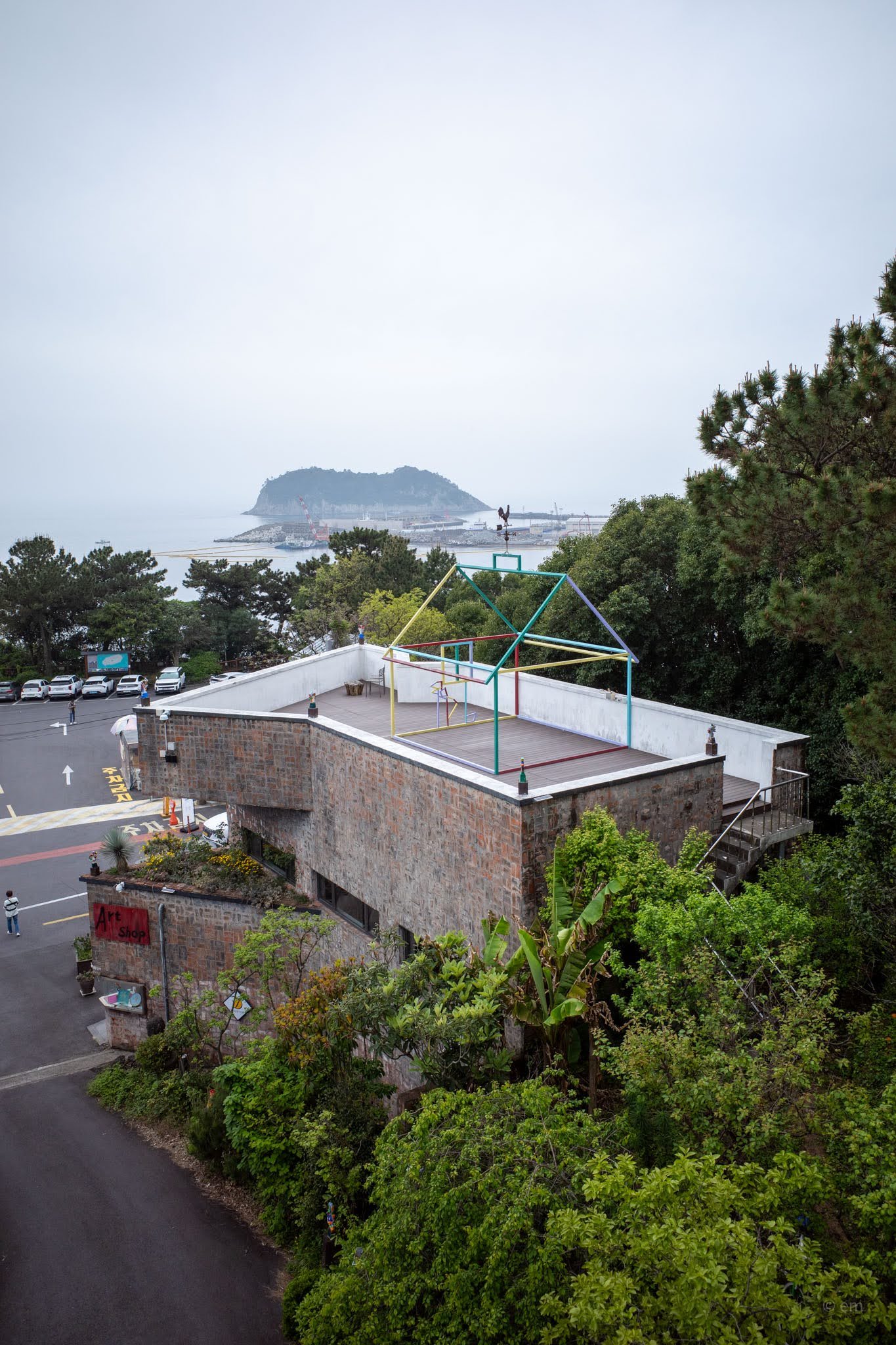
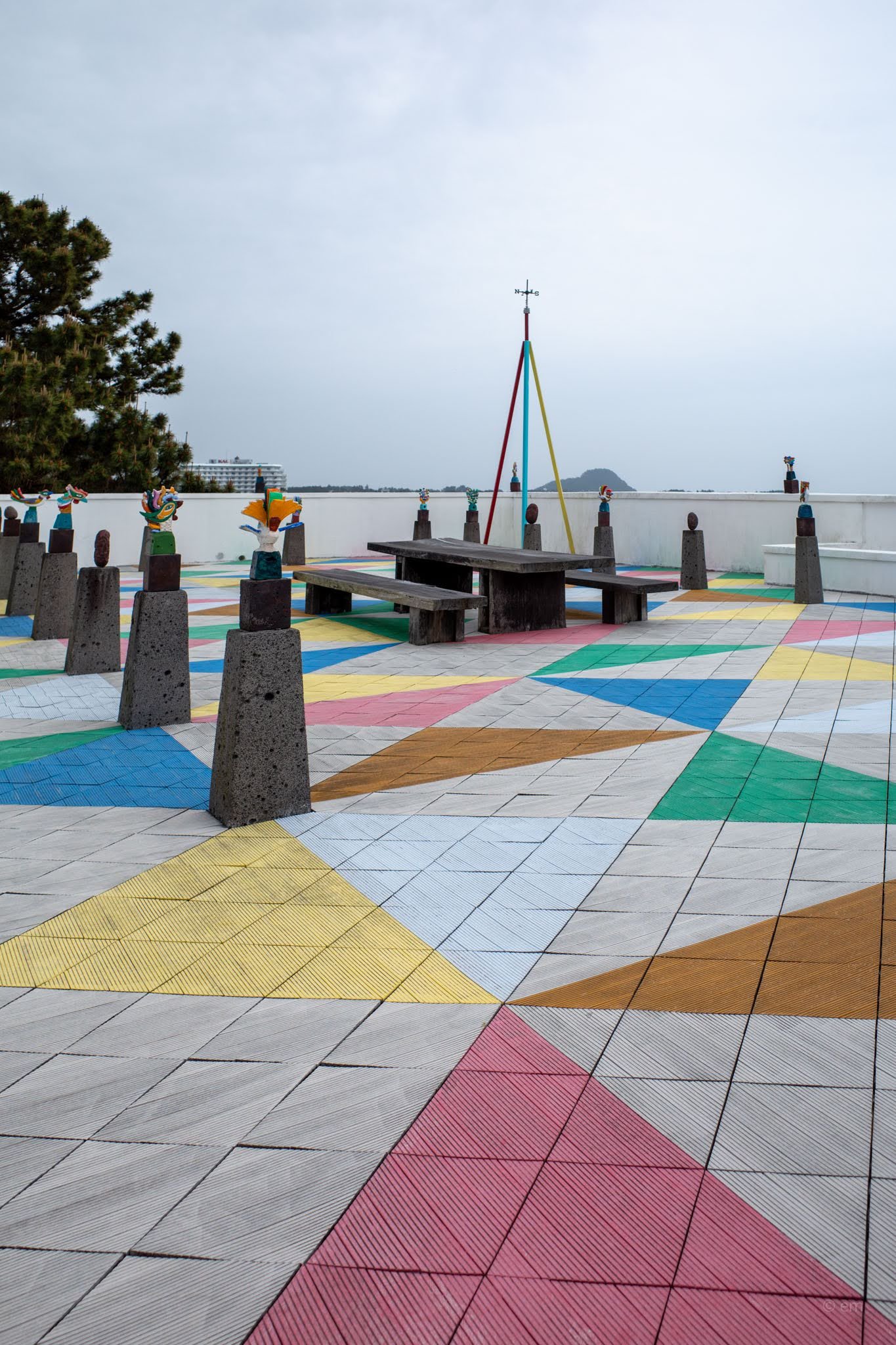
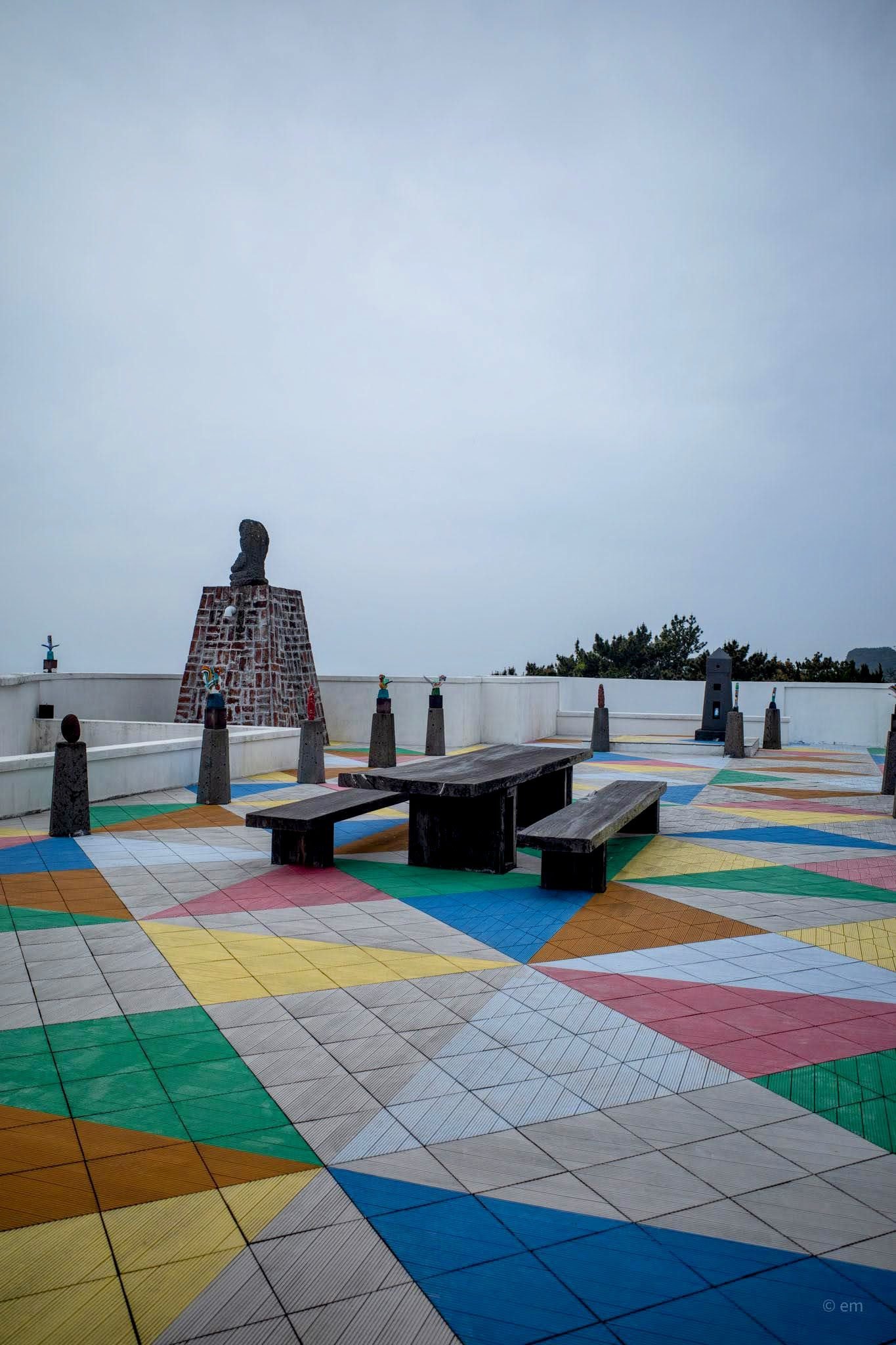
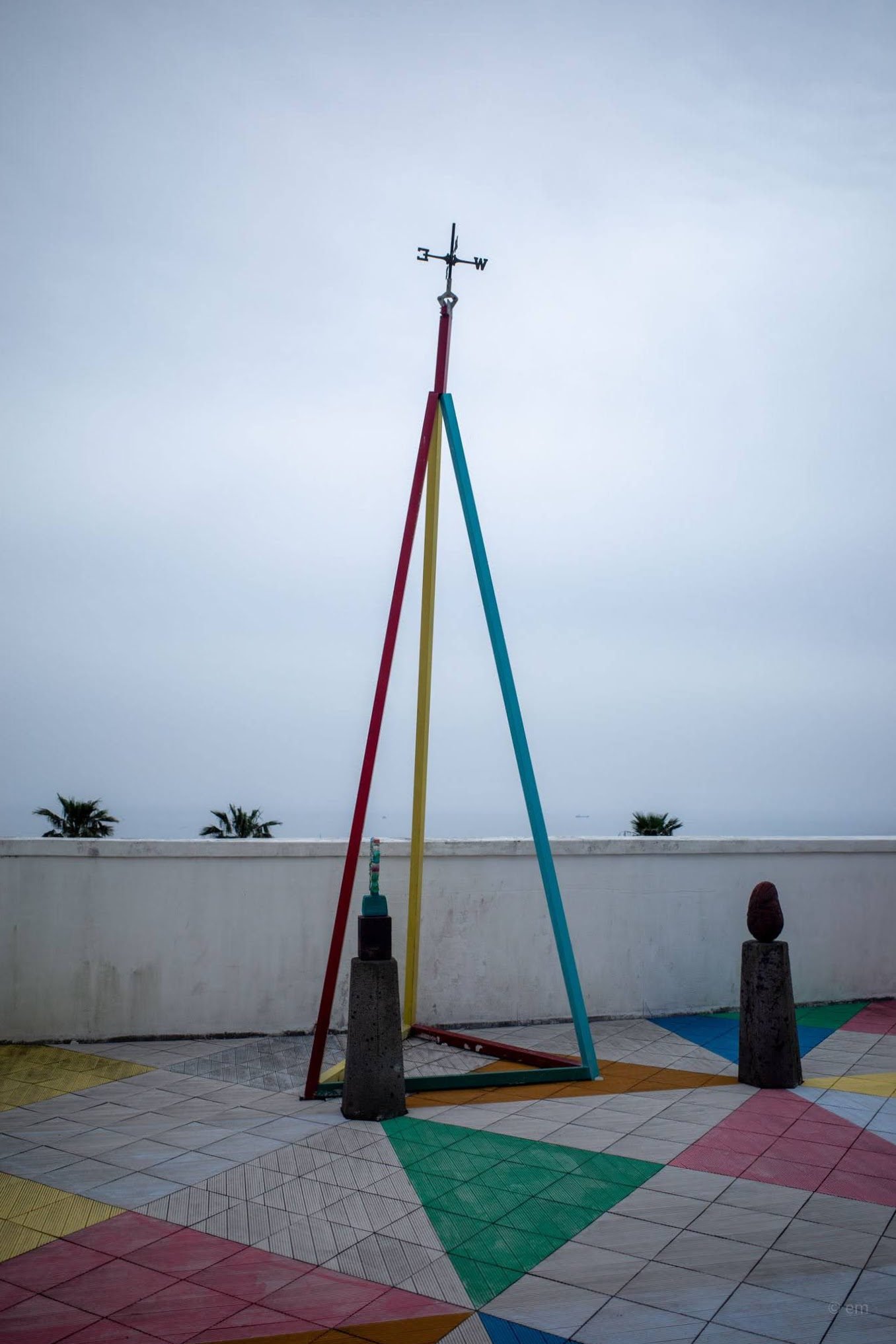
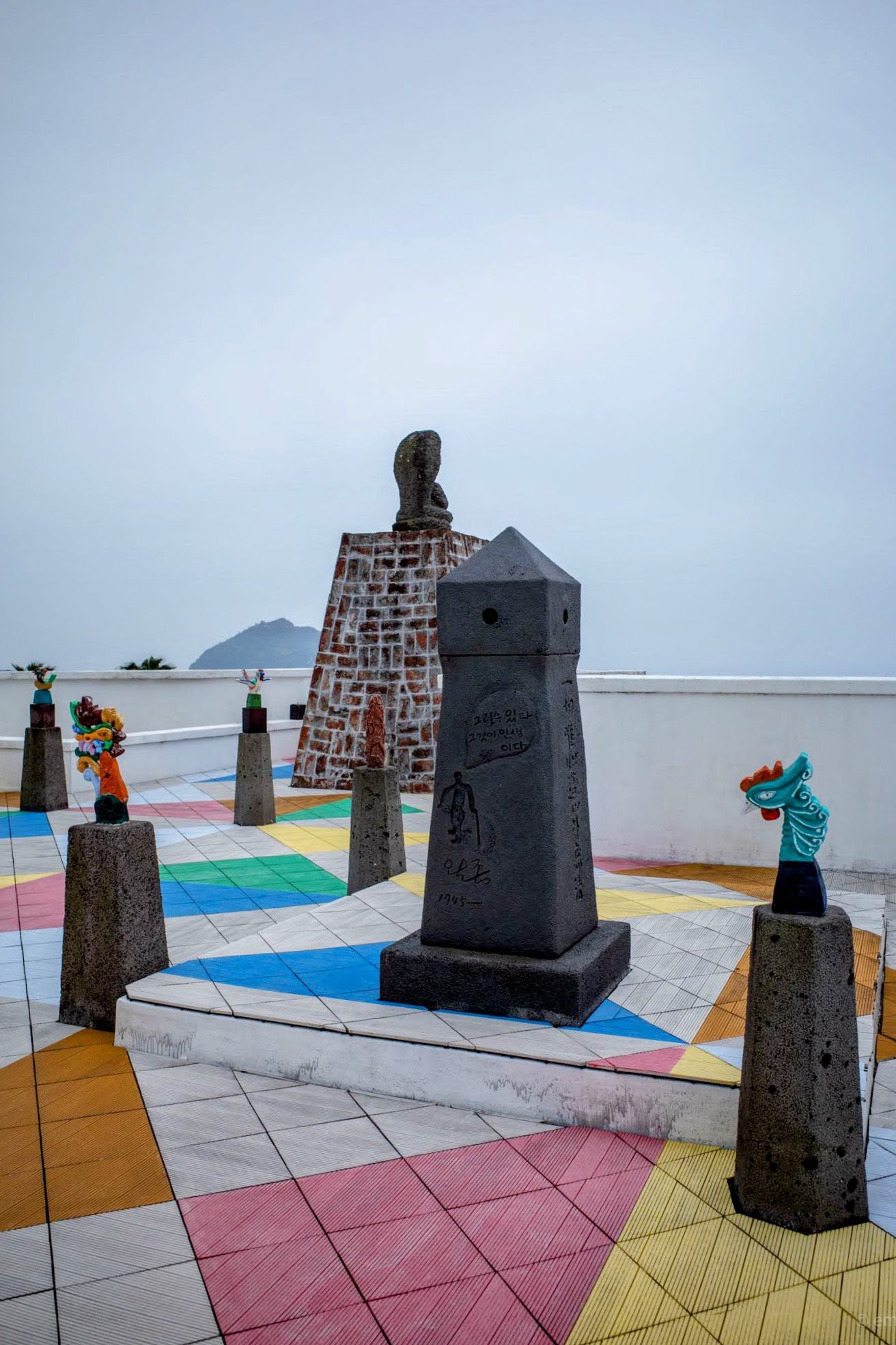
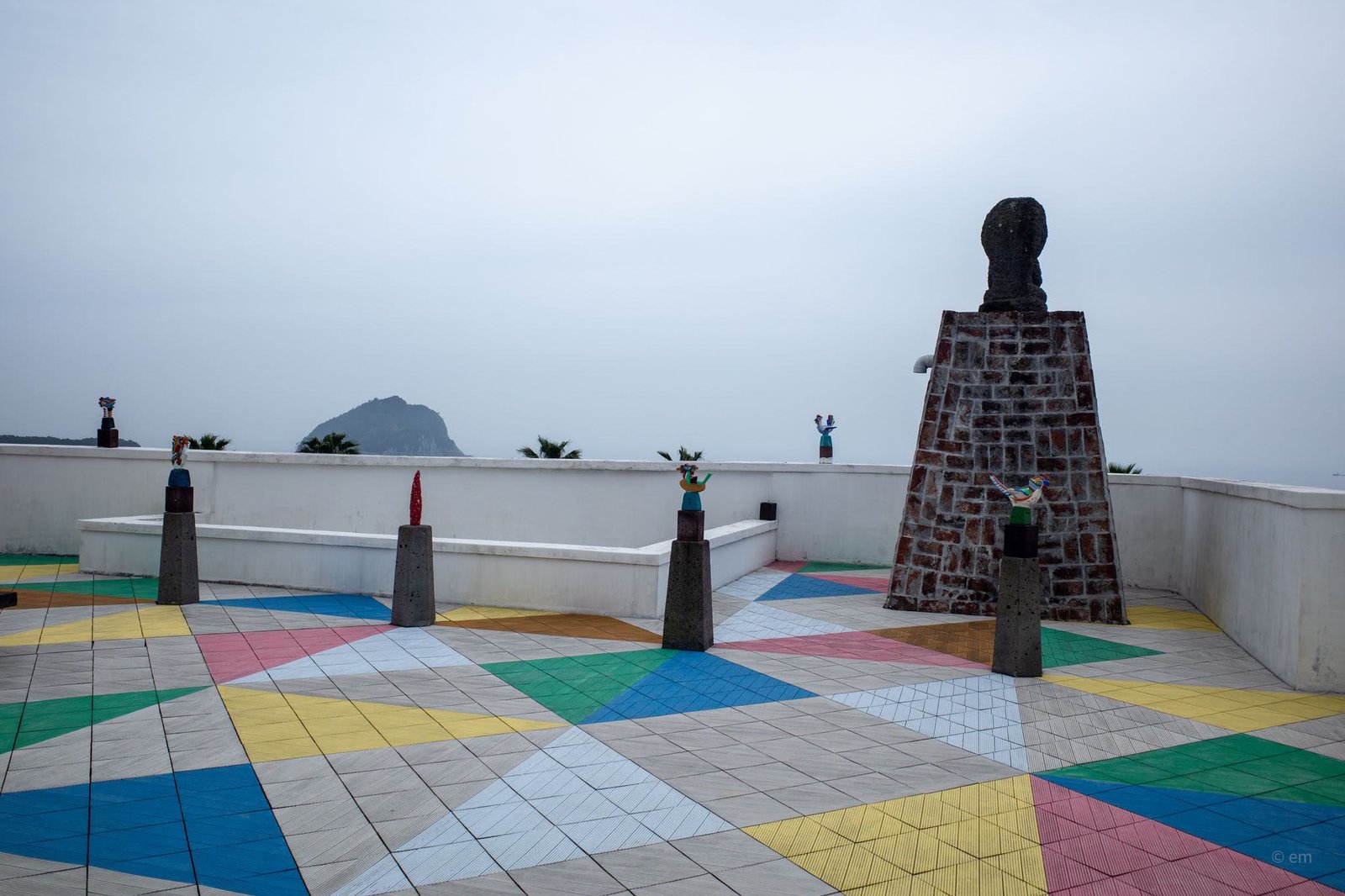
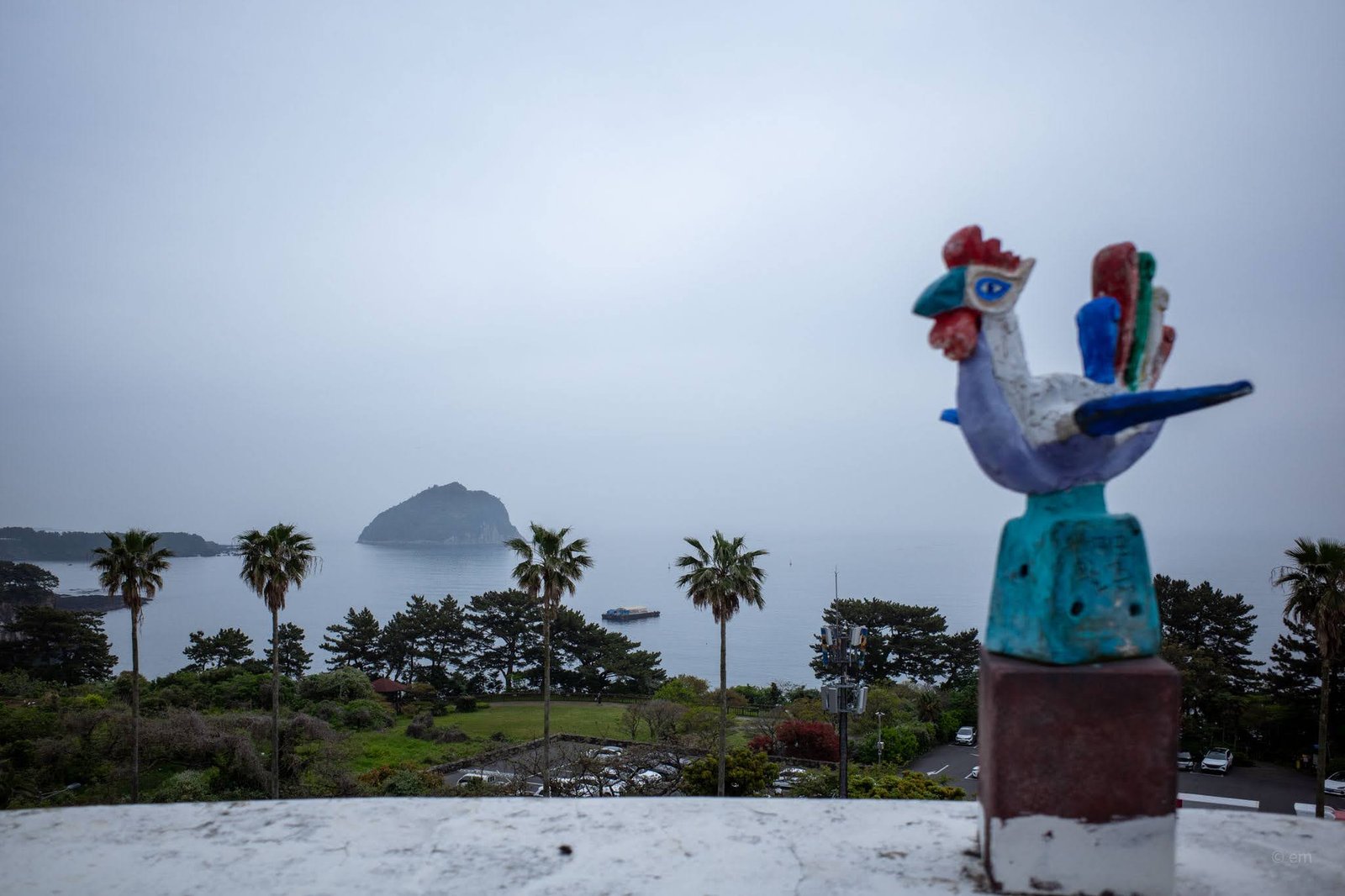
The rooftop is the element that separates Waljong from every other Seogwipo destination. The terrace floor is painted in a bold geometric patchwork — yellow, red, teal, green, ochre, white, arranged in overlapping diamonds — and the overall effect, standing in the middle of it, is something close to Park Güell: that same instinct to turn a surface into a celebration, to make the ground itself an artwork before anything else is placed on it. Across the patchwork stand basalt lava-stone obelisks of varying heights, each topped with a small ceramic figure — a bird, a rooster, a painted deity. At the centre, three painted metal poles — red, yellow, blue — rise to a point capped with a wind vane.
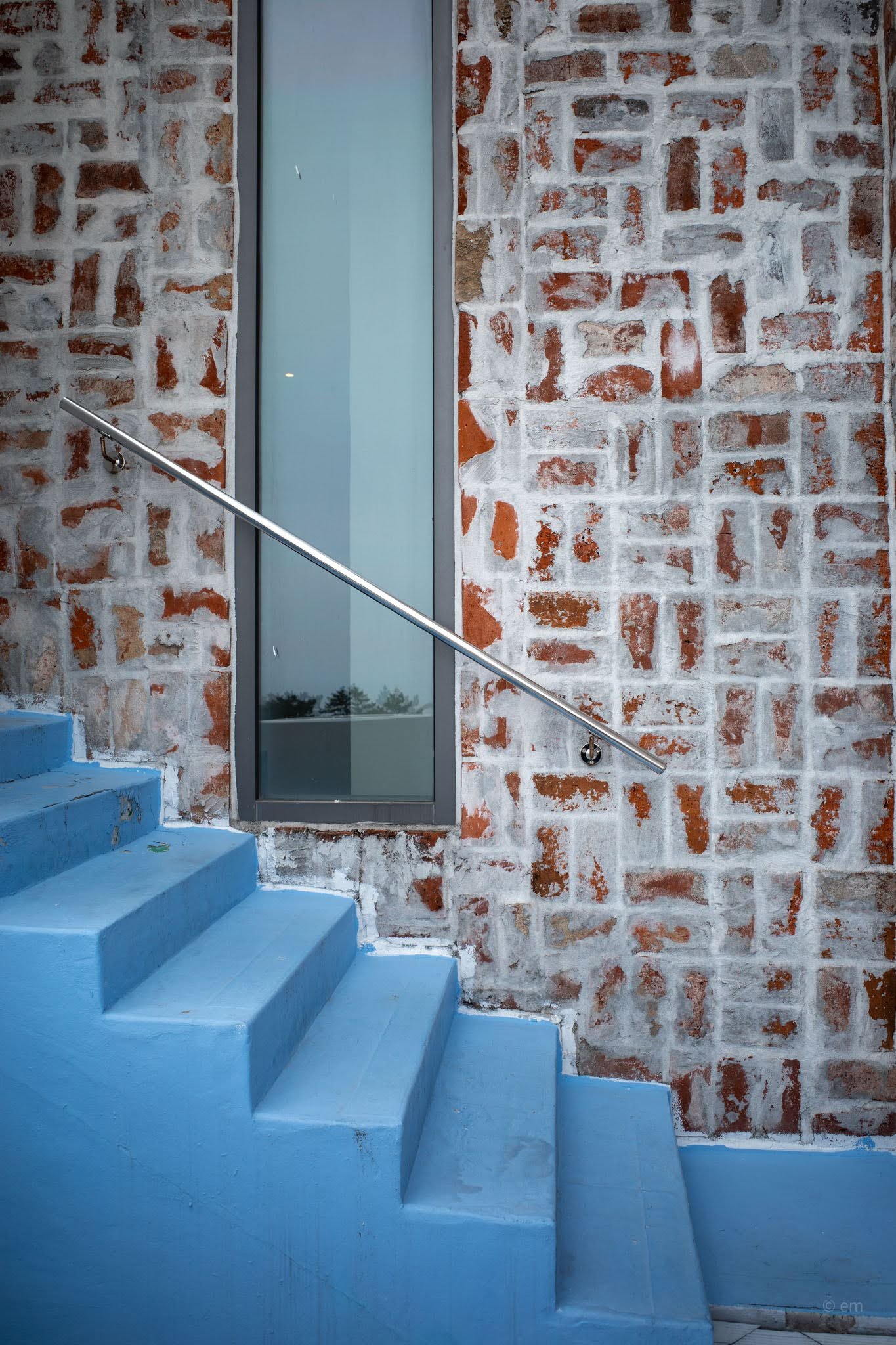
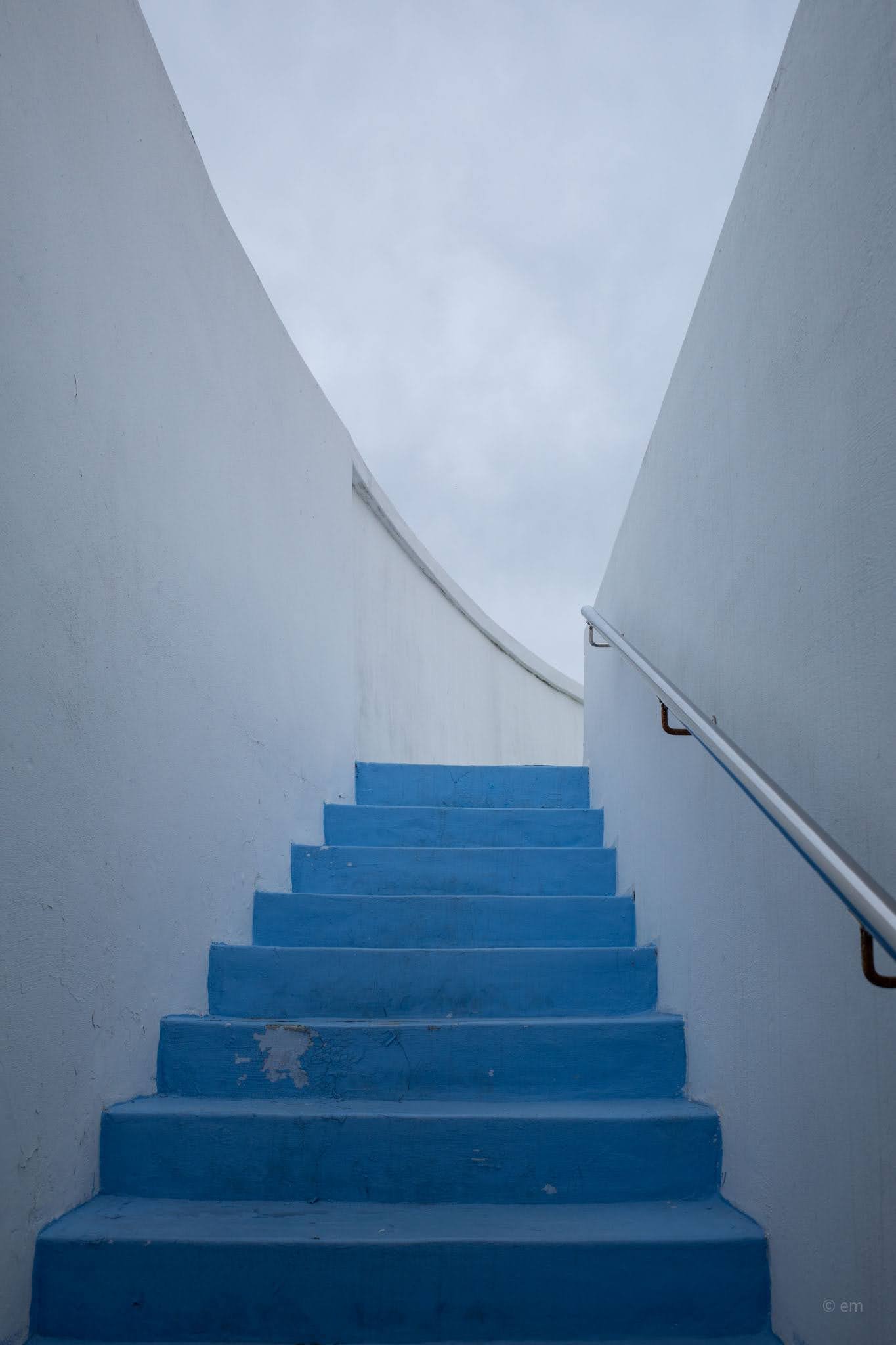
The staircase that climbs to the rooftop is painted in flat, chalky blue — the kind of blue that reads differently in overcast light than it does in sun. It rises between two white-rendered walls that narrow as they go, framing a strip of sky at the top. The effect is simple and slightly vertiginous, the colour doing all the work against bare white.
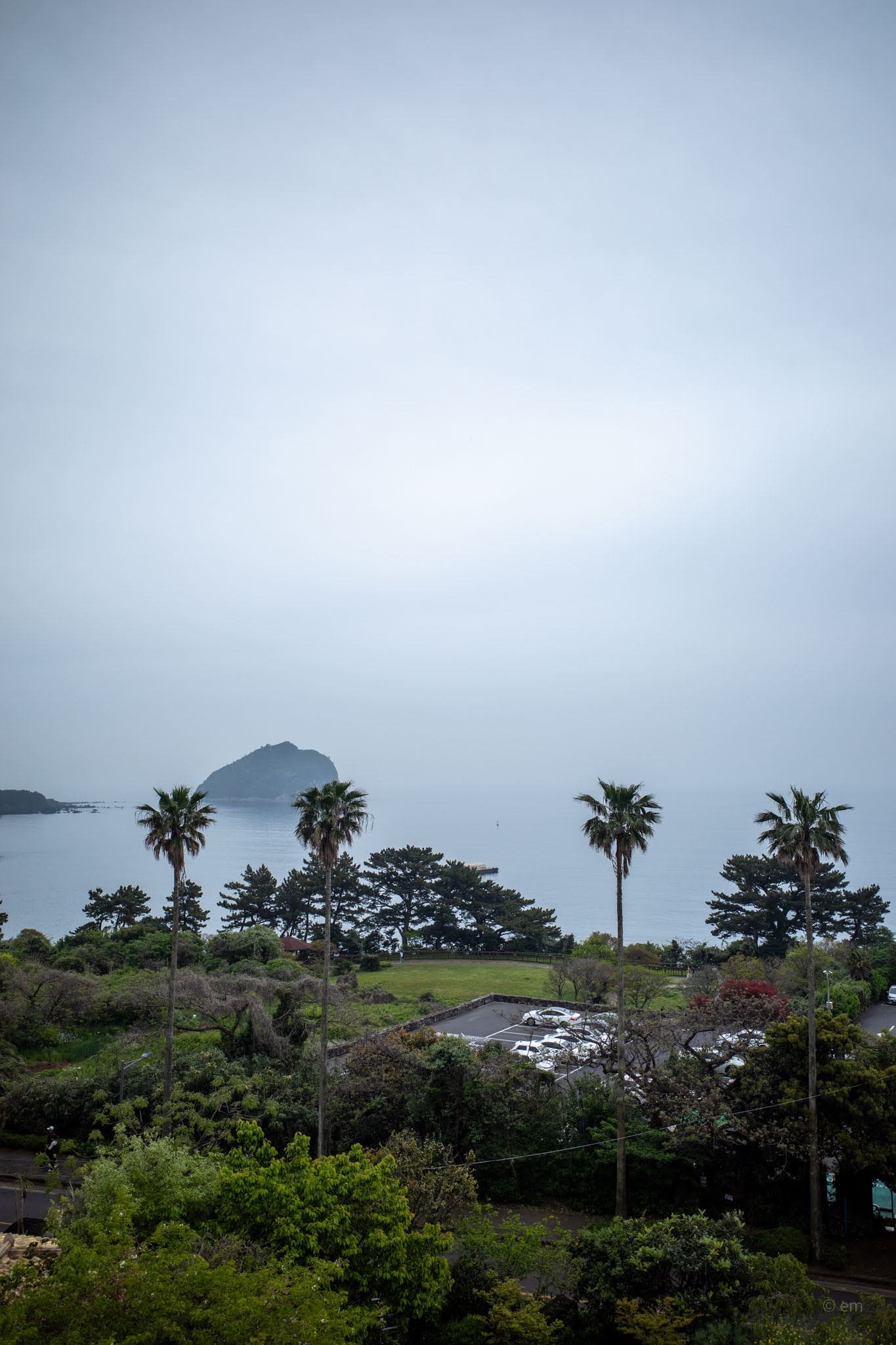
Beyond the white parapet walls: Seopsom Island in the middle distance, softened by sea haze, with palm crowns just visible below the roofline. On a clear day the view extends across the Jeju Strait toward Munsom and Saesom as well. Even in overcast weather, with everything flattened to blue-grey, the rooftop holds — the coloured floor doing enough work for the sky.
Waljong Art Museum
Address: 30 Chilsimniro 214beon-gil, Donghong-dong, Seogwipo-si, Jeju
Hours: 10:00–18:00 (last entry 17:30), closed Mondays
Admission: Adults 10,000 KRW / Youth & Children 6,000 KRW (verify on-site, as fees may have changed)
Instagram: @walartmuseum
A painter left Seoul, moved to the edge of the sea, and built a teacup large enough to walk around in.