Some places survive on spite — demolished in intention, preserved by outcry, standing still on a cliff edge above the South Sea with palm trees for company and the Atlantic-adjacent conviction that it belongs here and nowhere else.
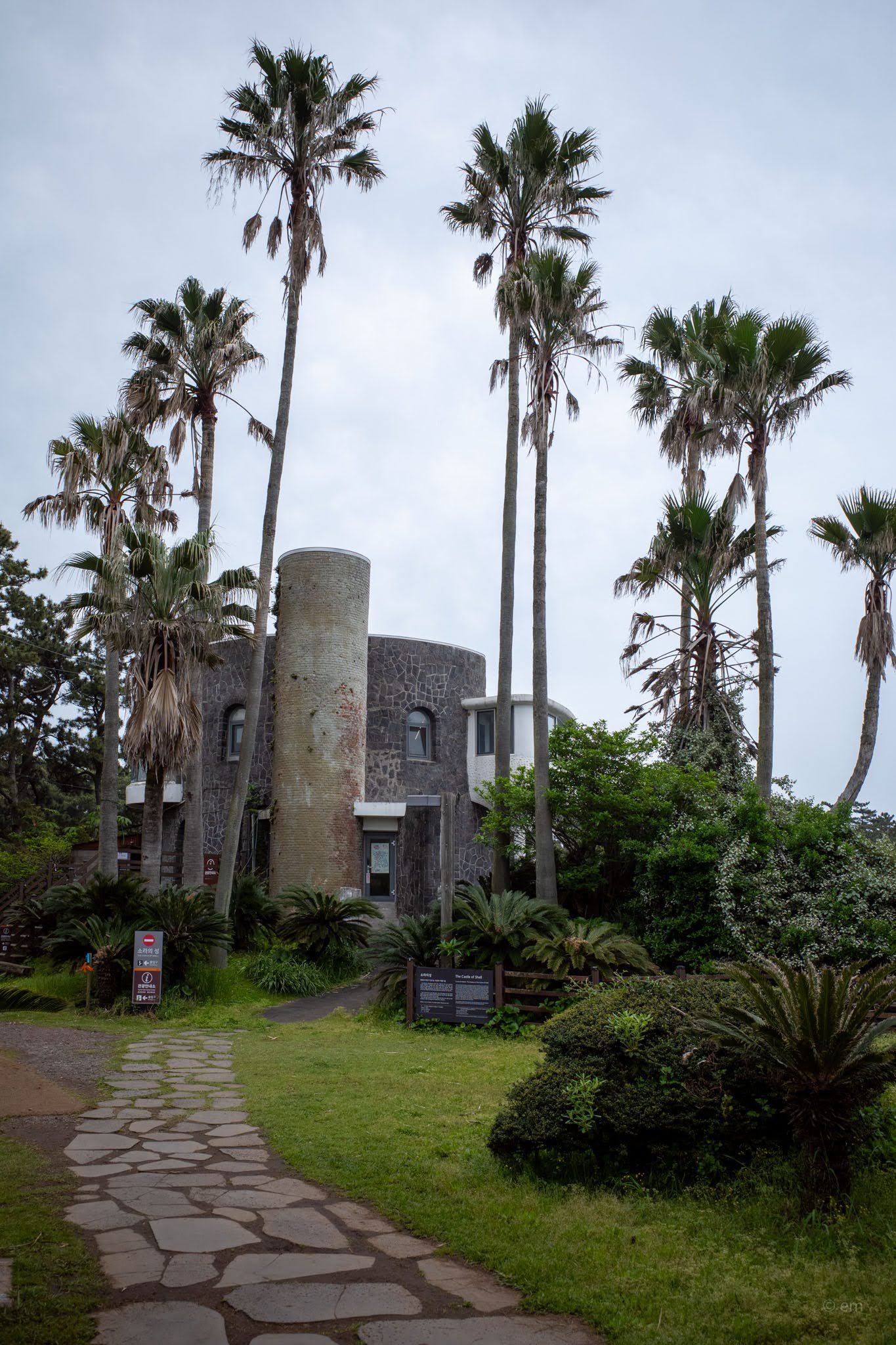
There is a building in Seogwipo that most people walk past on their way to the waterfall. It sits above Sojeongbang, at the edge of a basalt cliff on Jeju Olle Trail Route 6, half-hidden by palms tall enough to seem transplanted from somewhere warmer. The building is called 소라의 성 — The Castle of Shell — and it is, depending on who you ask, a tourist observation deck, a restaurant, an Olle Trail headquarters, a near-demolition, and now a free public book café. All of these things are true. They happened in that order.
The Building and Its Ghost
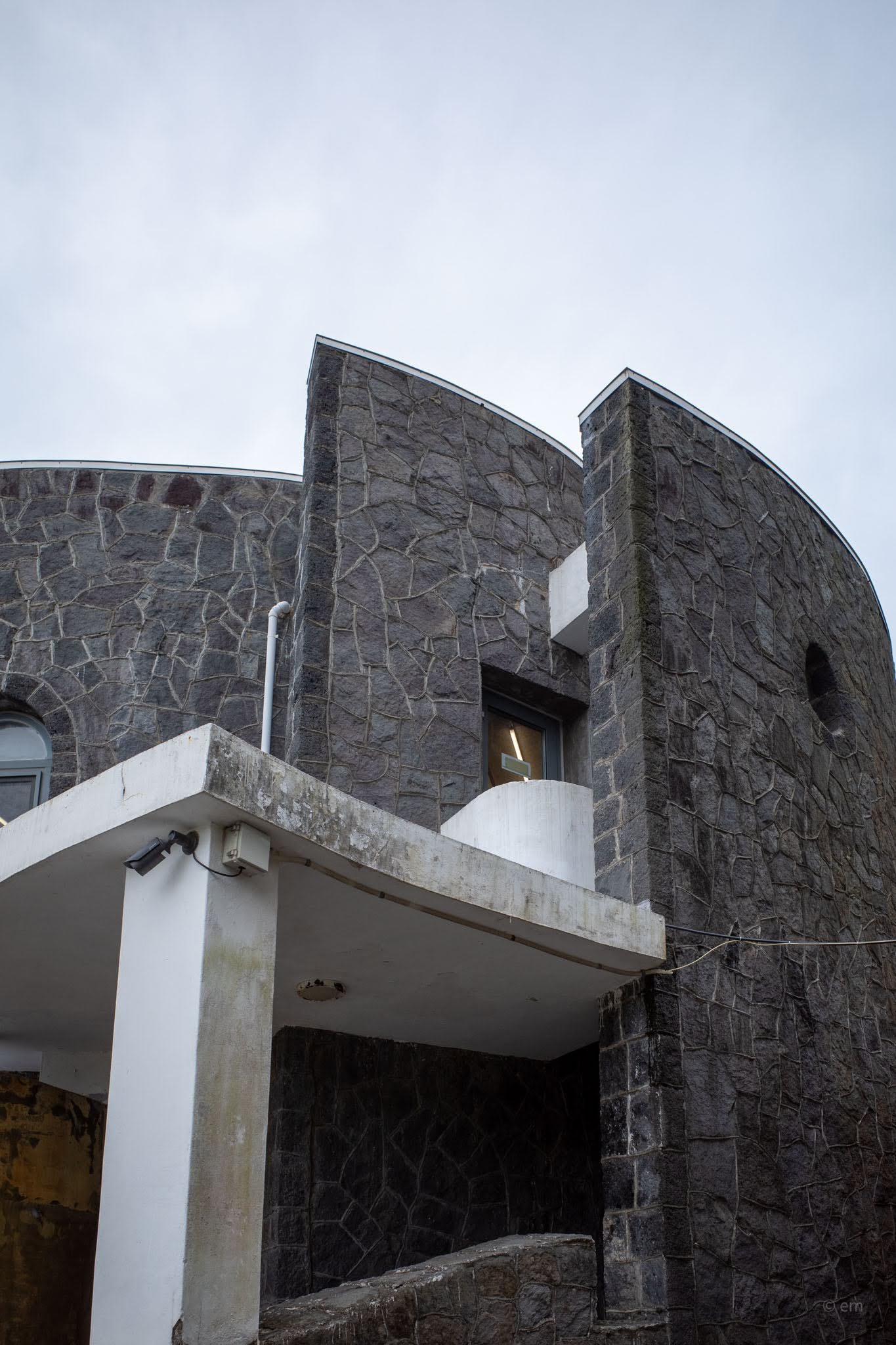
In the late 1960s, a building appeared on the cliff above Sojeongbang waterfall that nobody has been able to fully explain. No original drawings survive. No contracts, no client records, no commission papers. What remains is the object itself — two cylindrical forms in rough-cut basalt stone, one wide and low, one tall and narrow, connected by curving passages and arched openings, the whole composition spiraling faintly like something pulled from the sea.
Architectural consensus holds that the designer was Kim Joong-up (김중업, 1922–1988), the most significant Korean modernist of his generation and a man who spent three years in Paris studying directly under Le Corbusier before returning to Korea to spend the rest of his career in productive conflict with everyone around him. The case for attribution rests on the building’s fearless use of curved surfaces, its pilotis structure, and the sophistication of its arched detailing — qualities that, in the late 1960s, only Kim Joong-up could plausibly have brought to a two-story structure on a Jeju clifftop.
Theories about its original purpose divide between a tourist observation platform and a guesthouse for the security detail of President Park Chung-hee. Given that Kim Joong-up was, by that point, already publicly at odds with the Park government — he would be forced into exile in 1971 for criticizing its urban planning policies — the observation platform theory sits more comfortably with the known biography.
Either way, the building became a restaurant, then a trail office, then nothing.
The Shell and the Other Castle
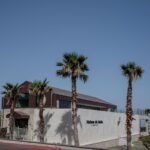
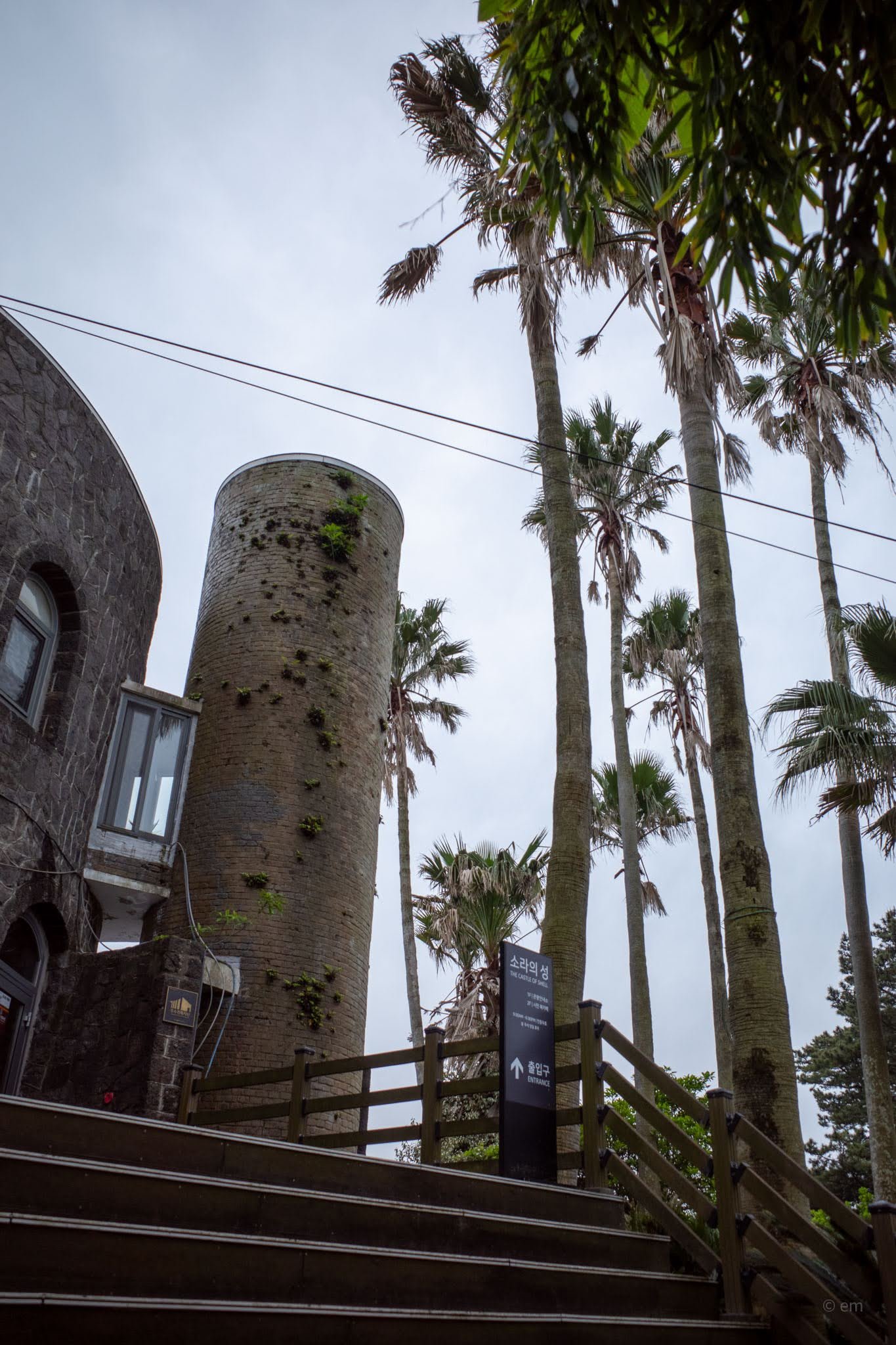
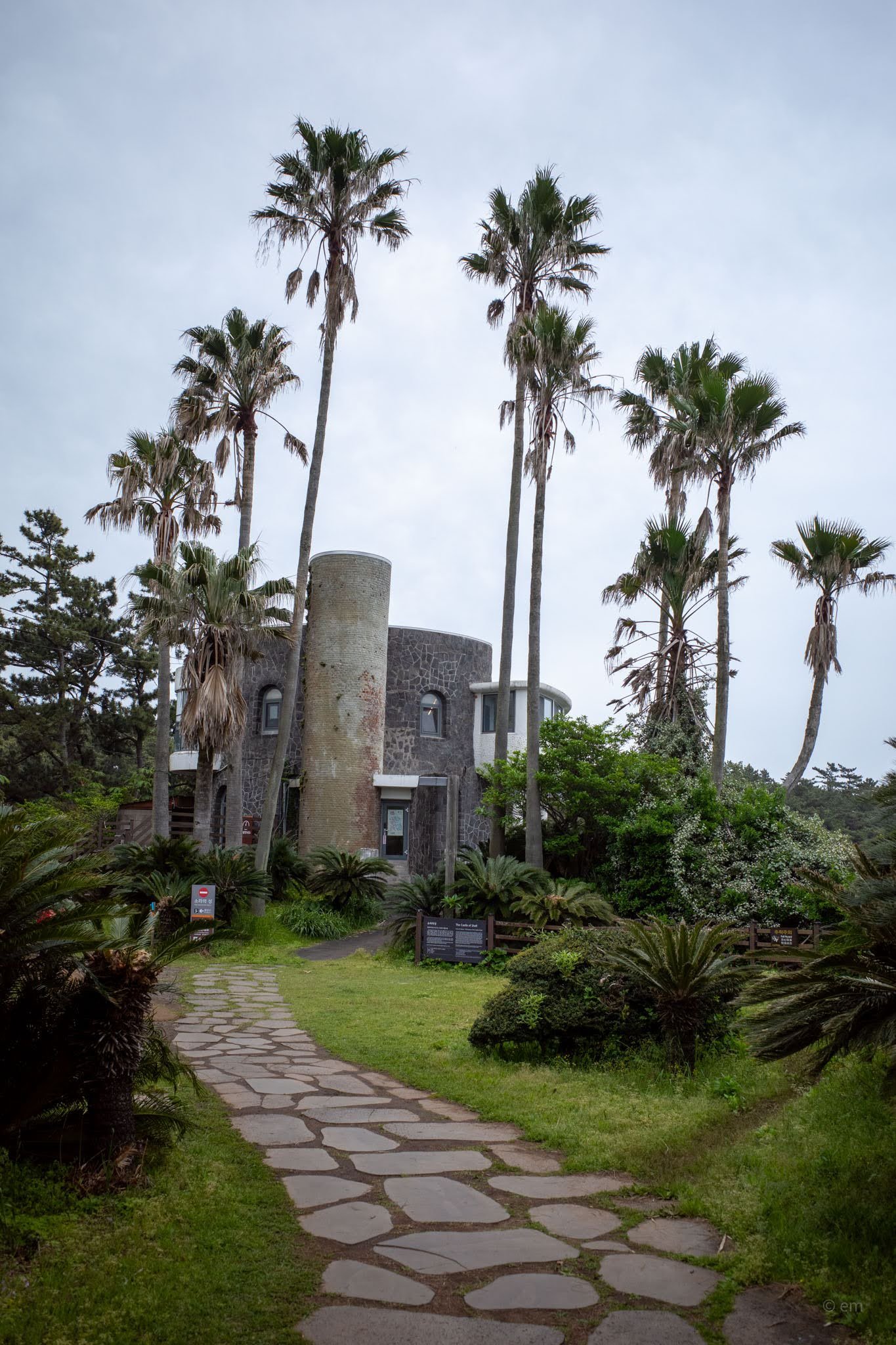
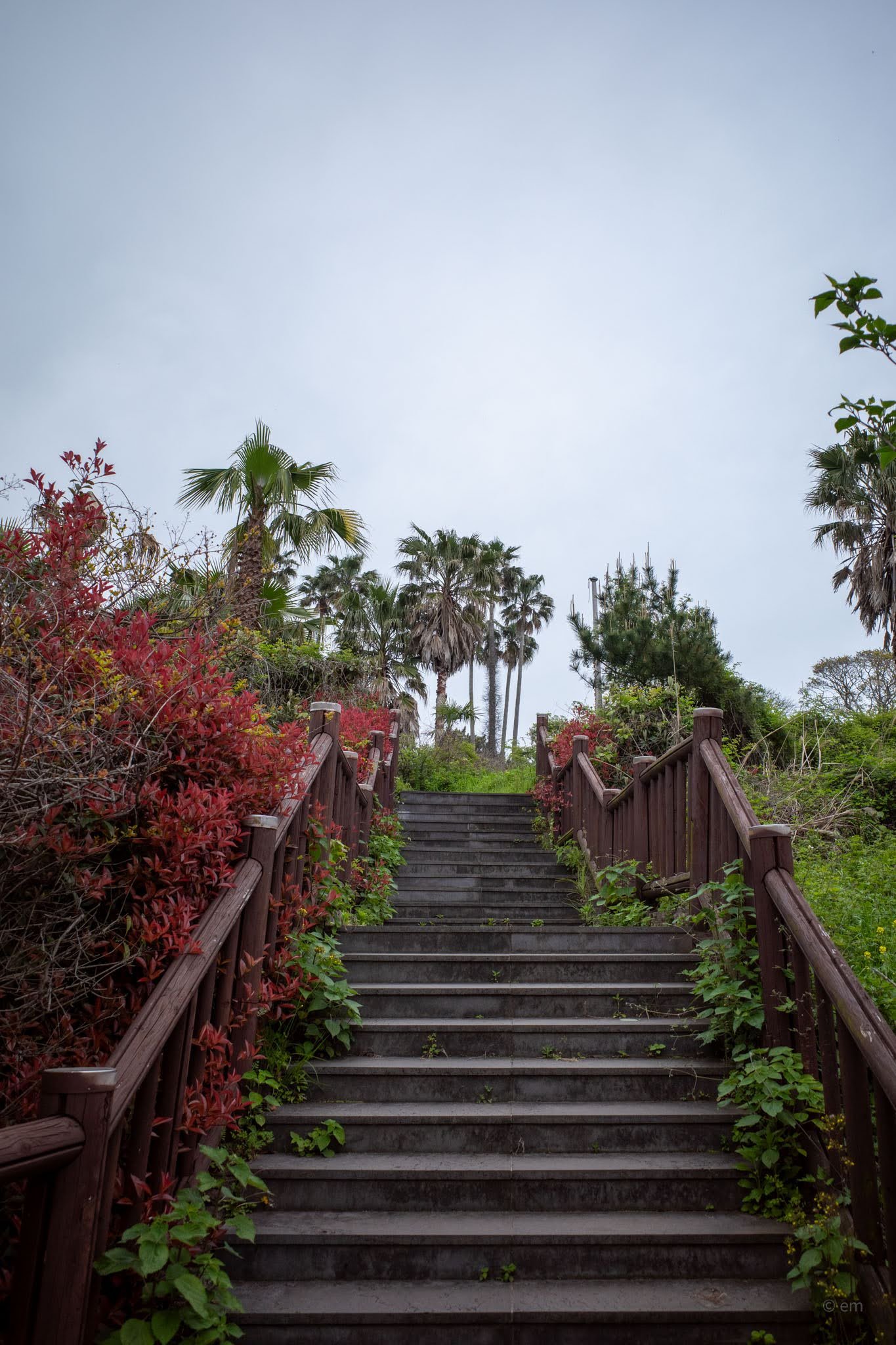
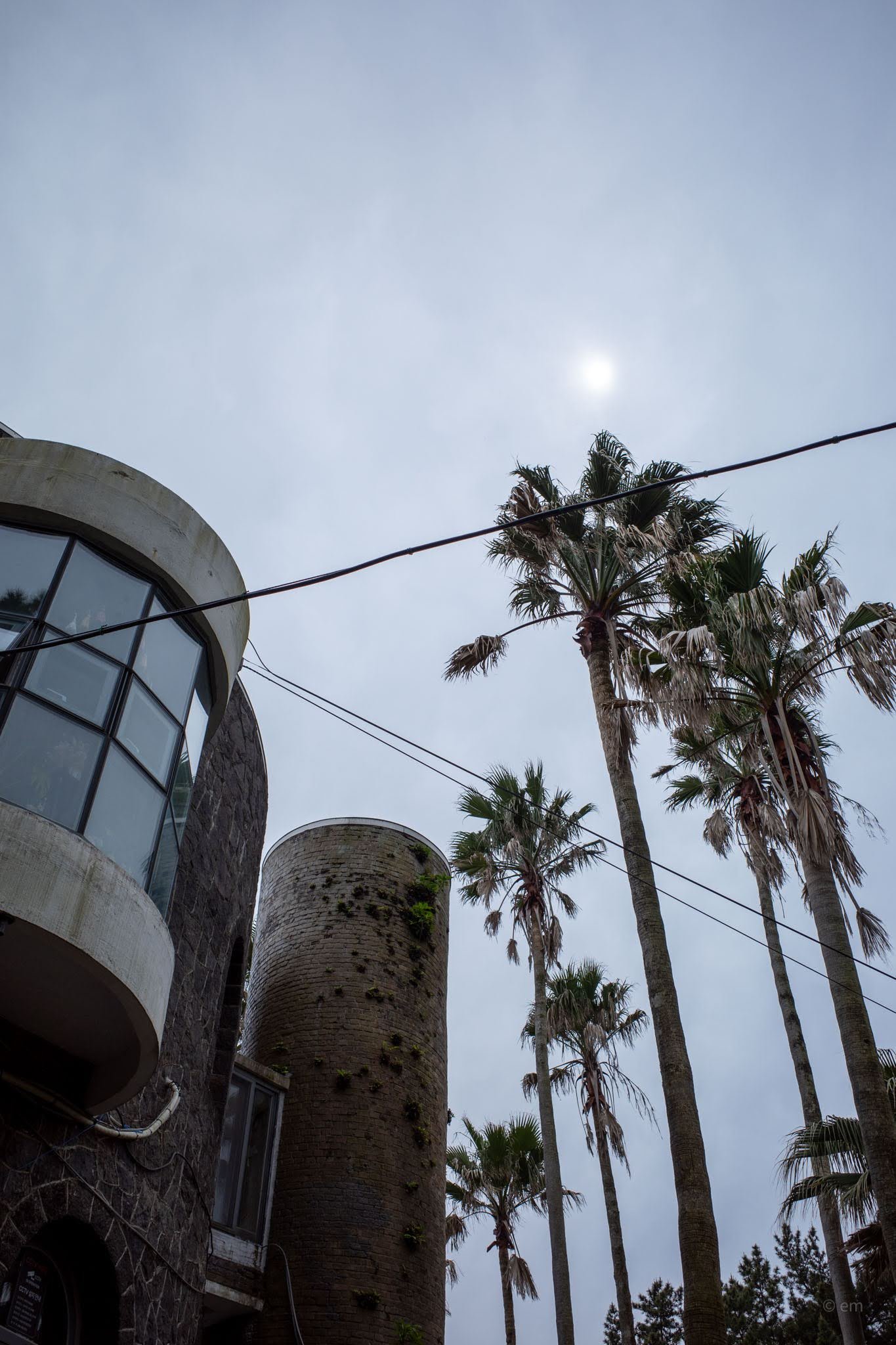
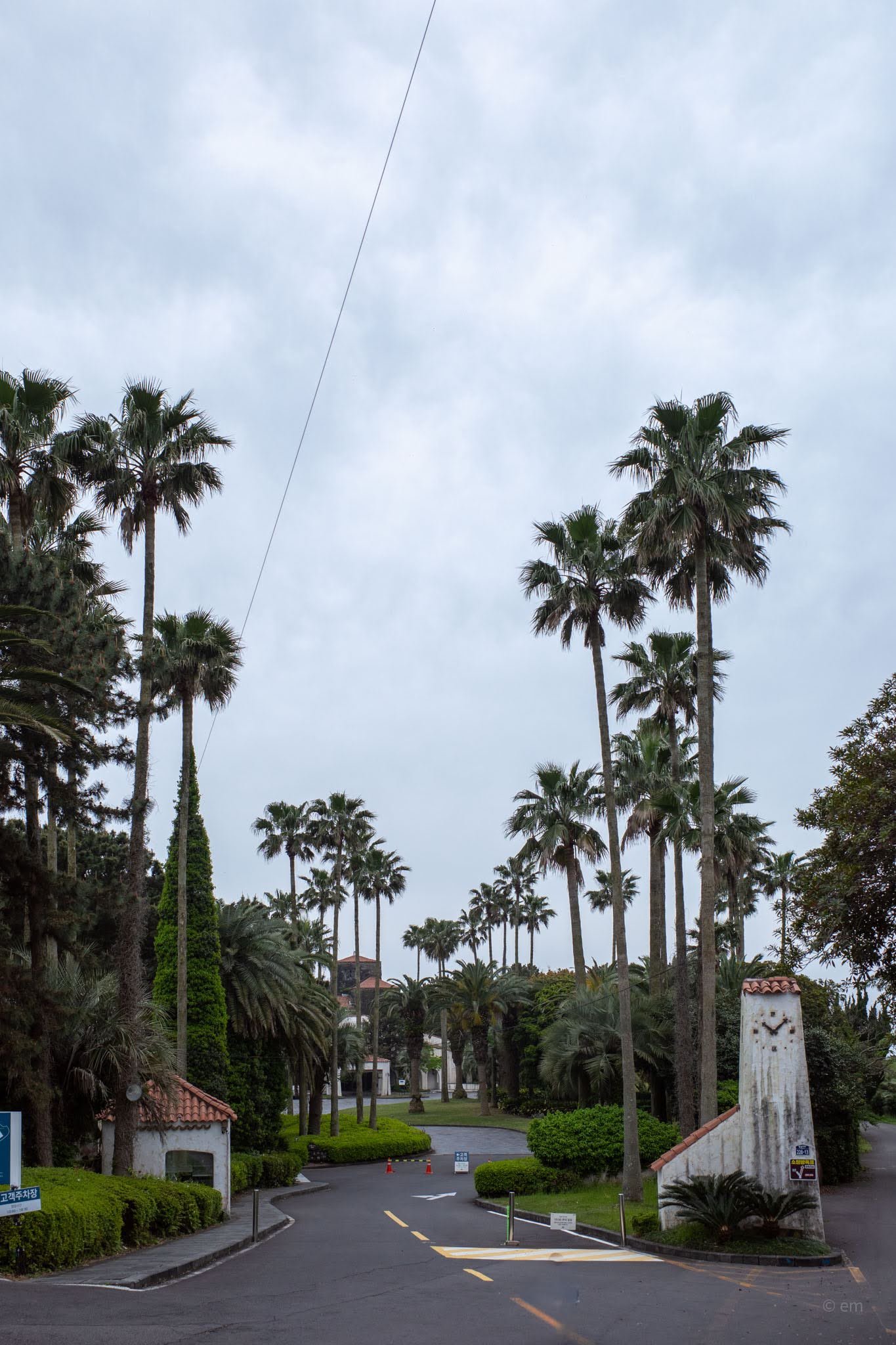
The complex is actually two buildings that read, from a distance, as one — which is part of the disorientation of arriving here for the first time. The dark structure that dominates the approach path is built from cut basalt in the mosaic-like pattern characteristic of older Jeju construction: dark, angular, castle-like, with arched windows punched into the stone and a tall cylindrical tower that sprouts vegetation from its mortar joints. Approaching along the stepping-stone path through the palms, it reads like something from a different latitude entirely — a Moroccan watchtower, a Canary Islands ruin, anything but a 1960s Jeju building.
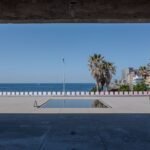
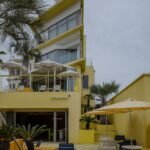
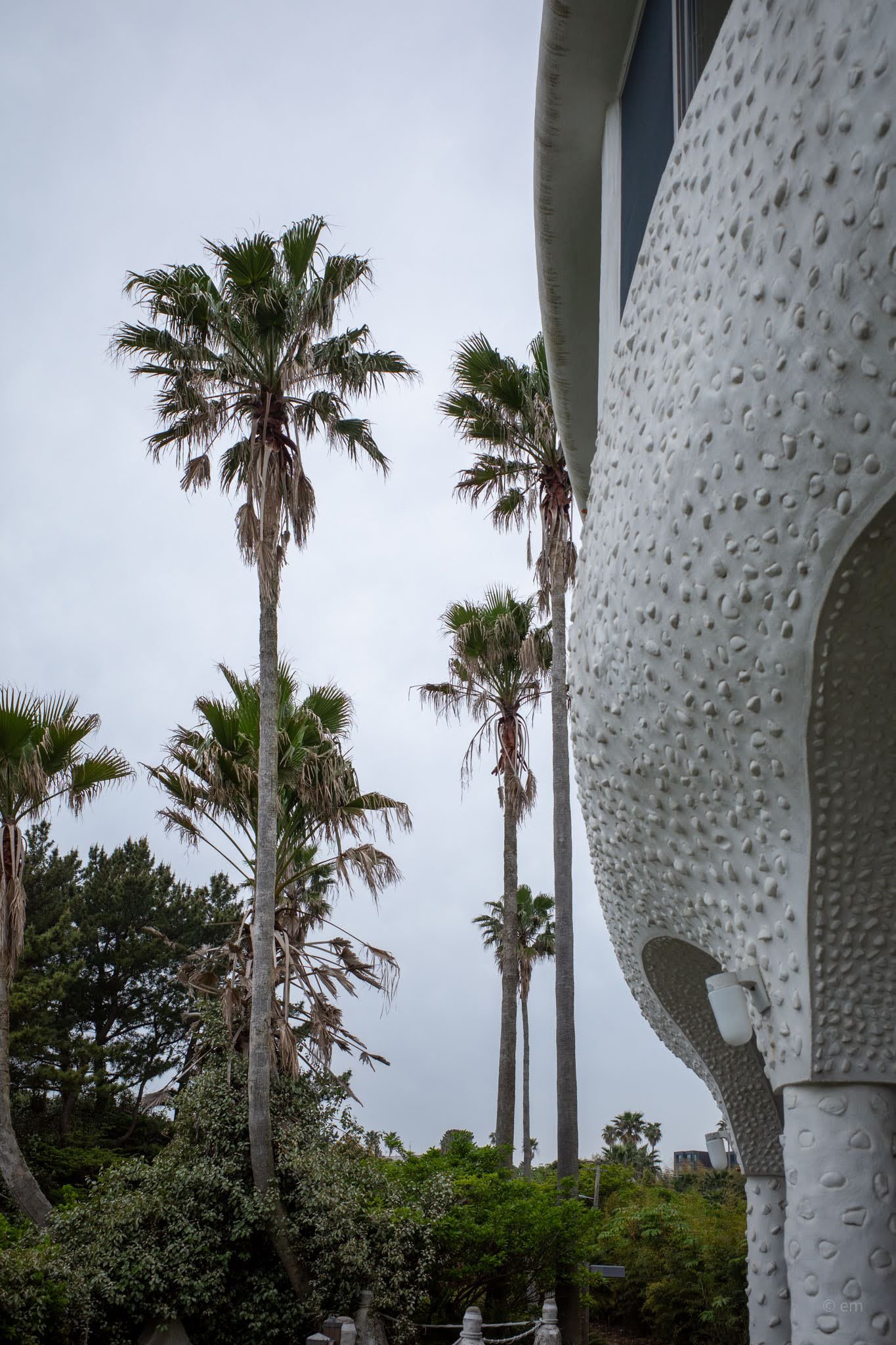
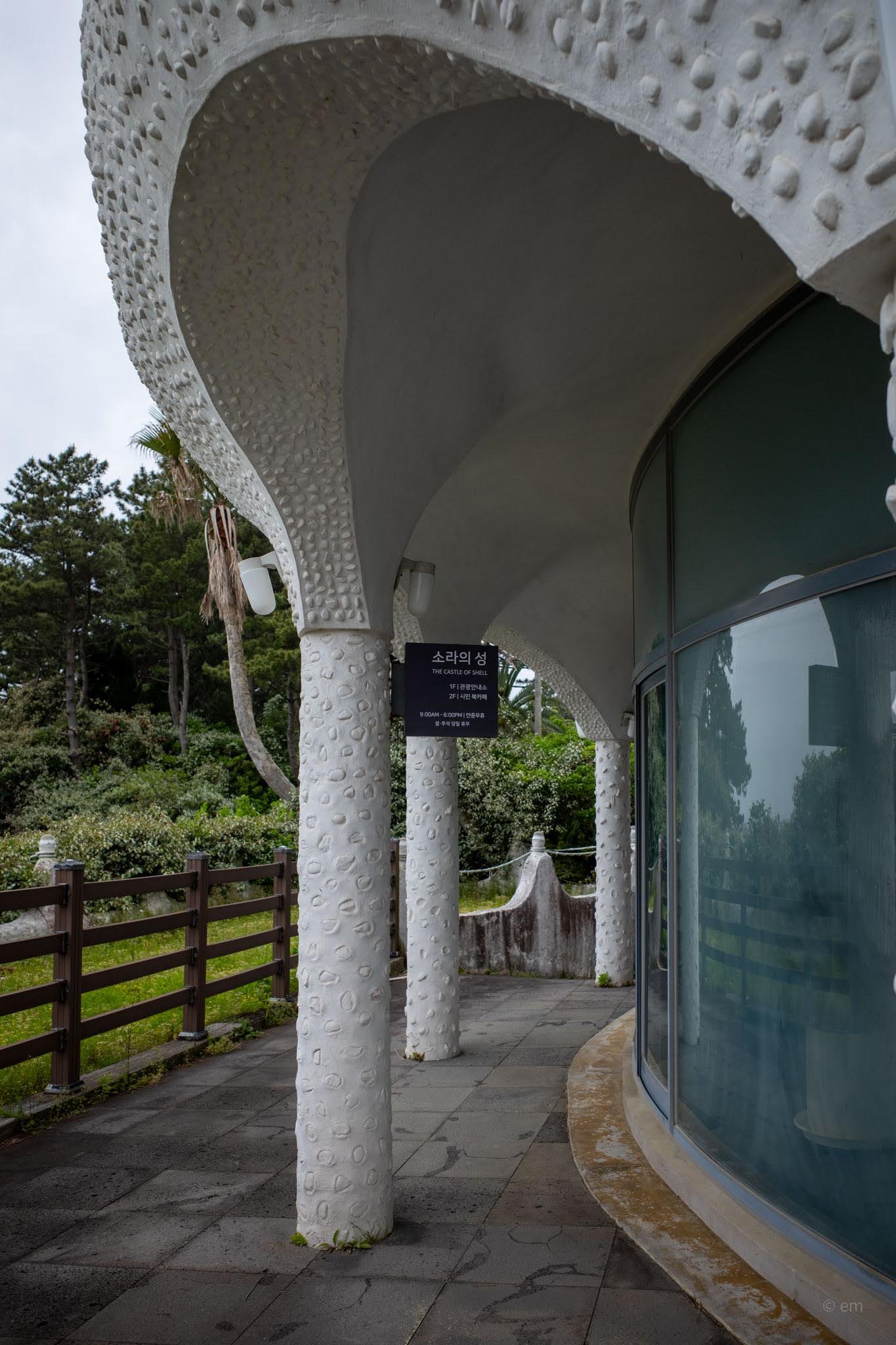
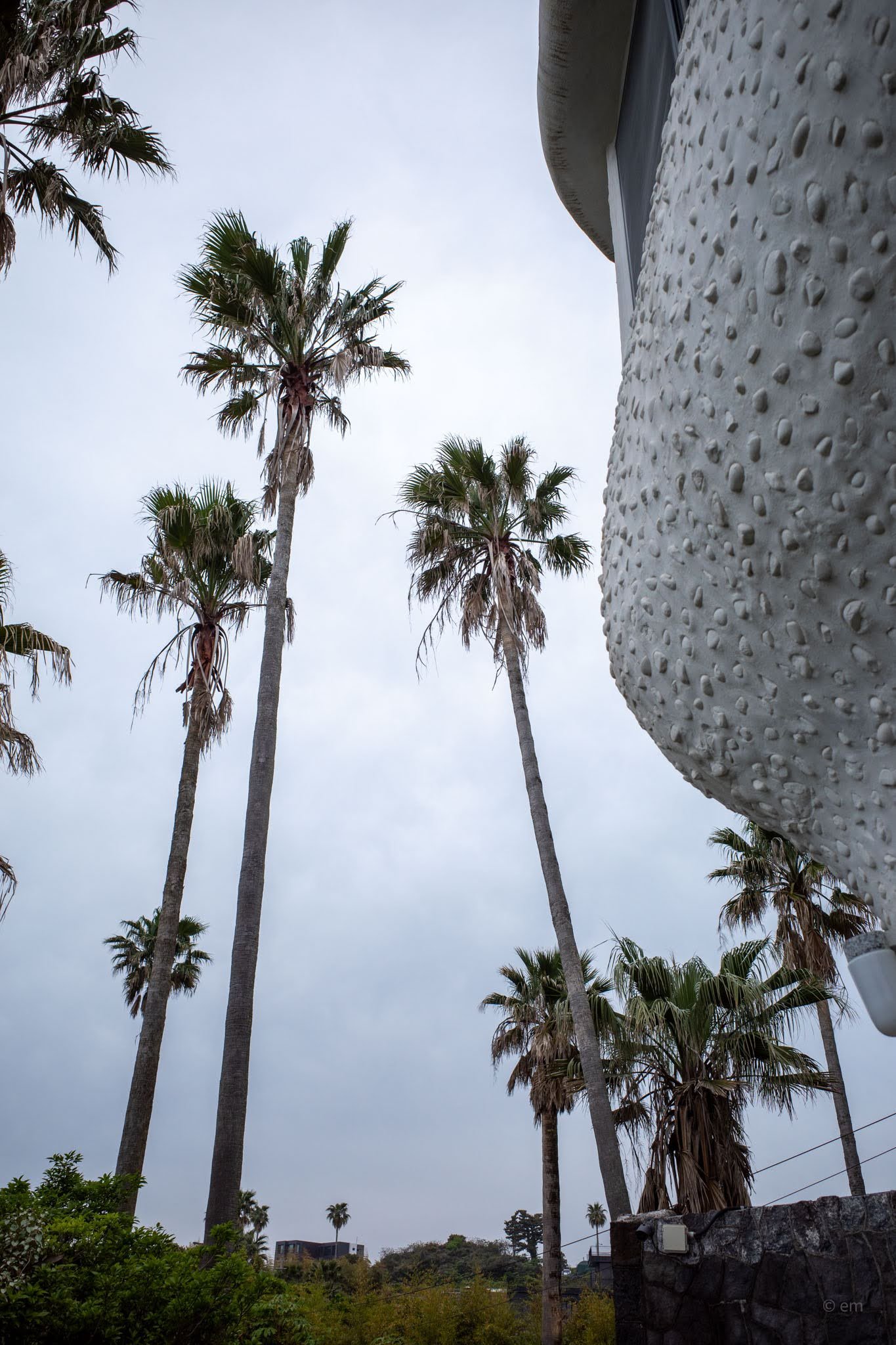
The white structure attached to its seaward face is the shell itself — the 소라 — curved columns embossed with rounded pebble-like protrusions, arching white canopies forming a covered terrace that wraps around the building’s curve. Up close, the texture is tactile, almost marine: each column pocked with stone inclusions like something the ocean made. Every façade reads differently — a building that refuses to resolve into a single image depending on where you stand.
Inside
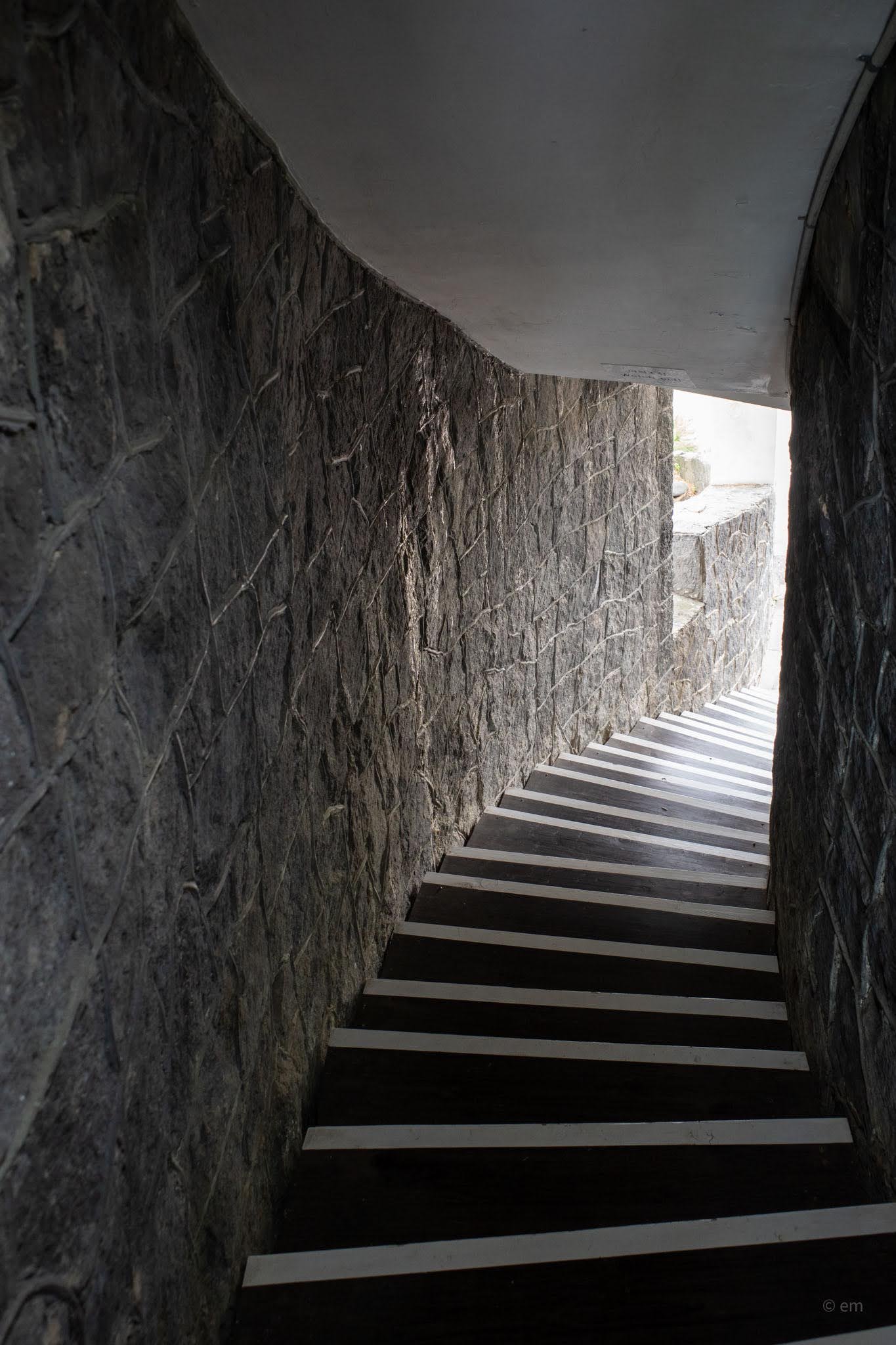
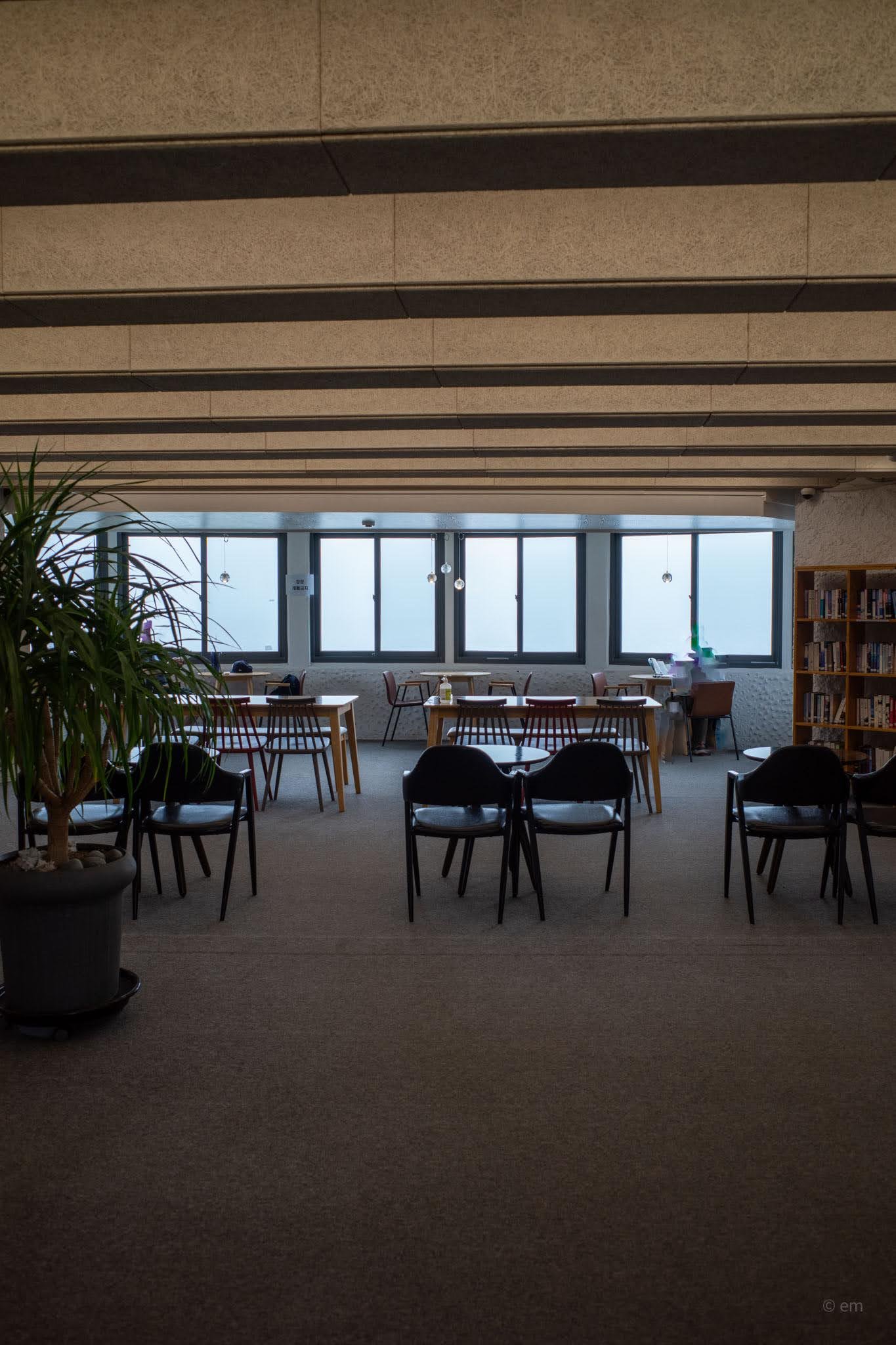
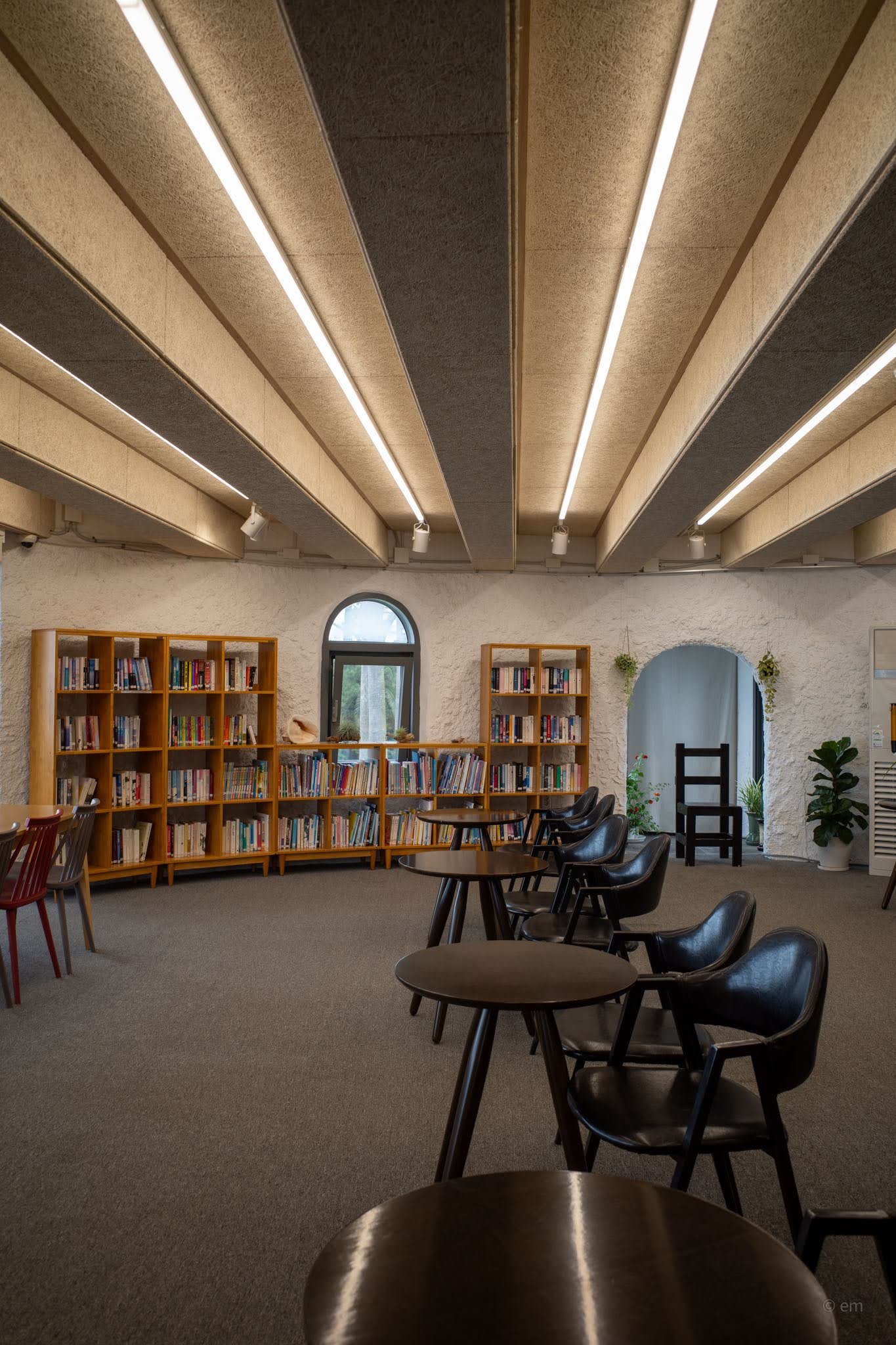
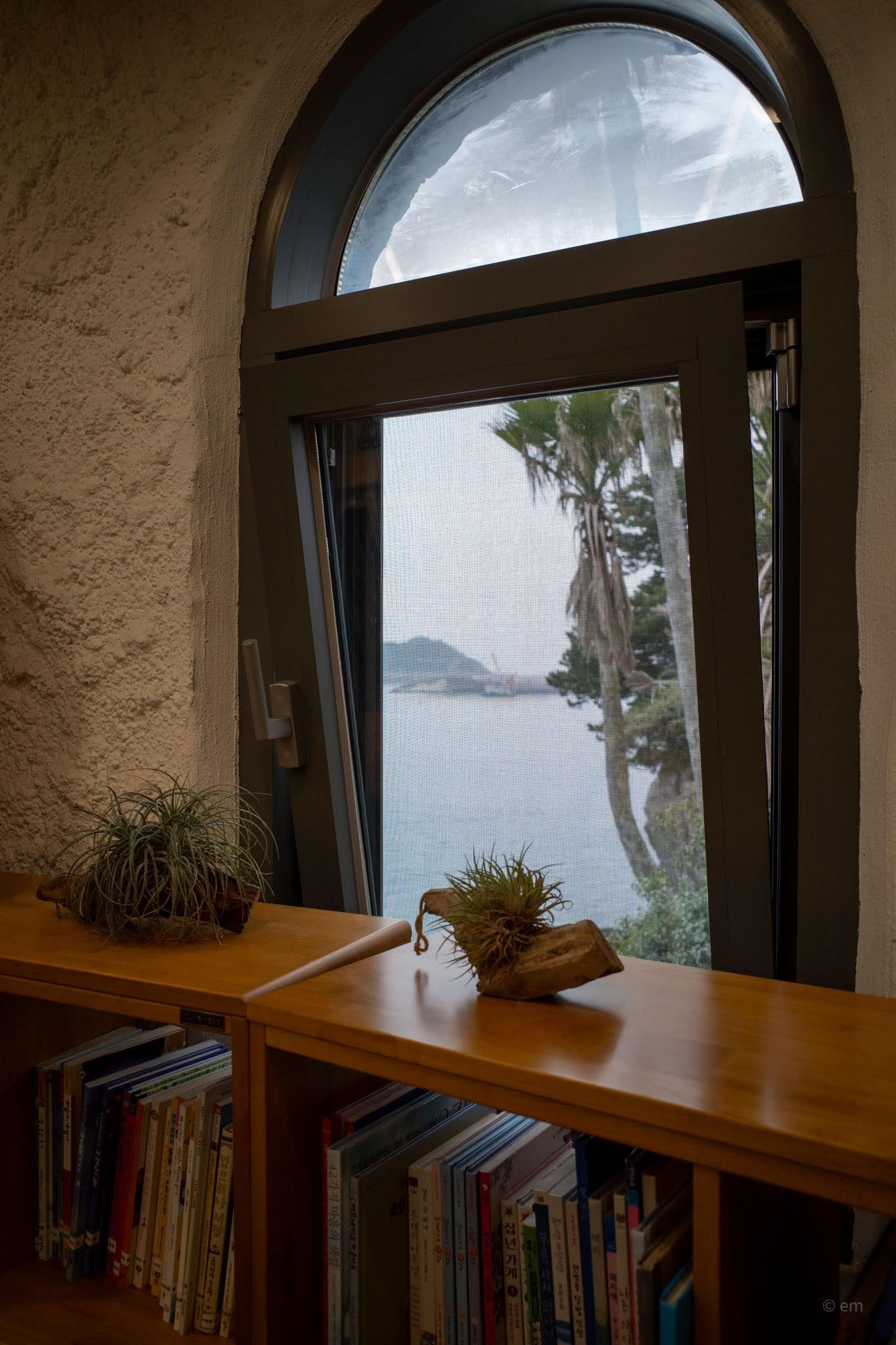
The ground floor is tourist information. The book café occupies the upper level, reached via a narrow staircase channeled through the basalt walls — dark treads, white nosings, volcanic stone pressing in on both sides. The corridor climbs through near-blackness and emerges into something completely unexpected: a carpeted reading room with a ribbed, coffered ceiling lit by long fluorescent strips running like organ pipes toward the windows. Oak bookshelves line the walls. Black leather chairs cluster at low round tables. An arched window — the kind that belongs in a Romanesque chapel — frames a palm trunk and, beyond it, the flat grey of the South Sea.
The room is quiet in the way that rooms with good acoustics are quiet. People read. The sea sits in the window. No drinks are served — it is simply a free public space run by Seogwipo City, a designation that seems both bureaucratically ordinary and genuinely radical for somewhere this beautiful.
The Grounds and the Walk
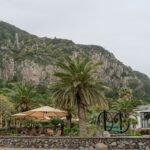
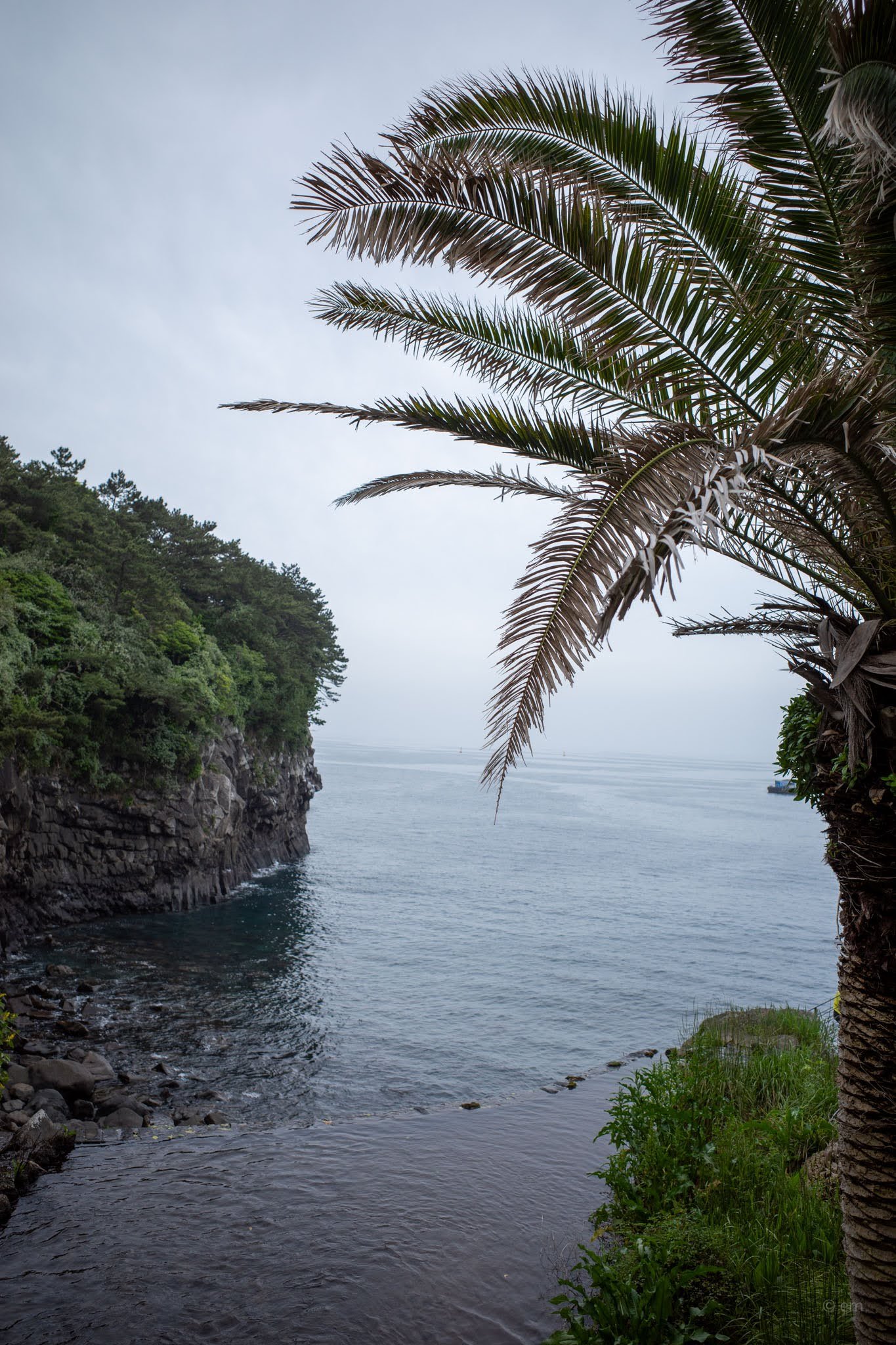
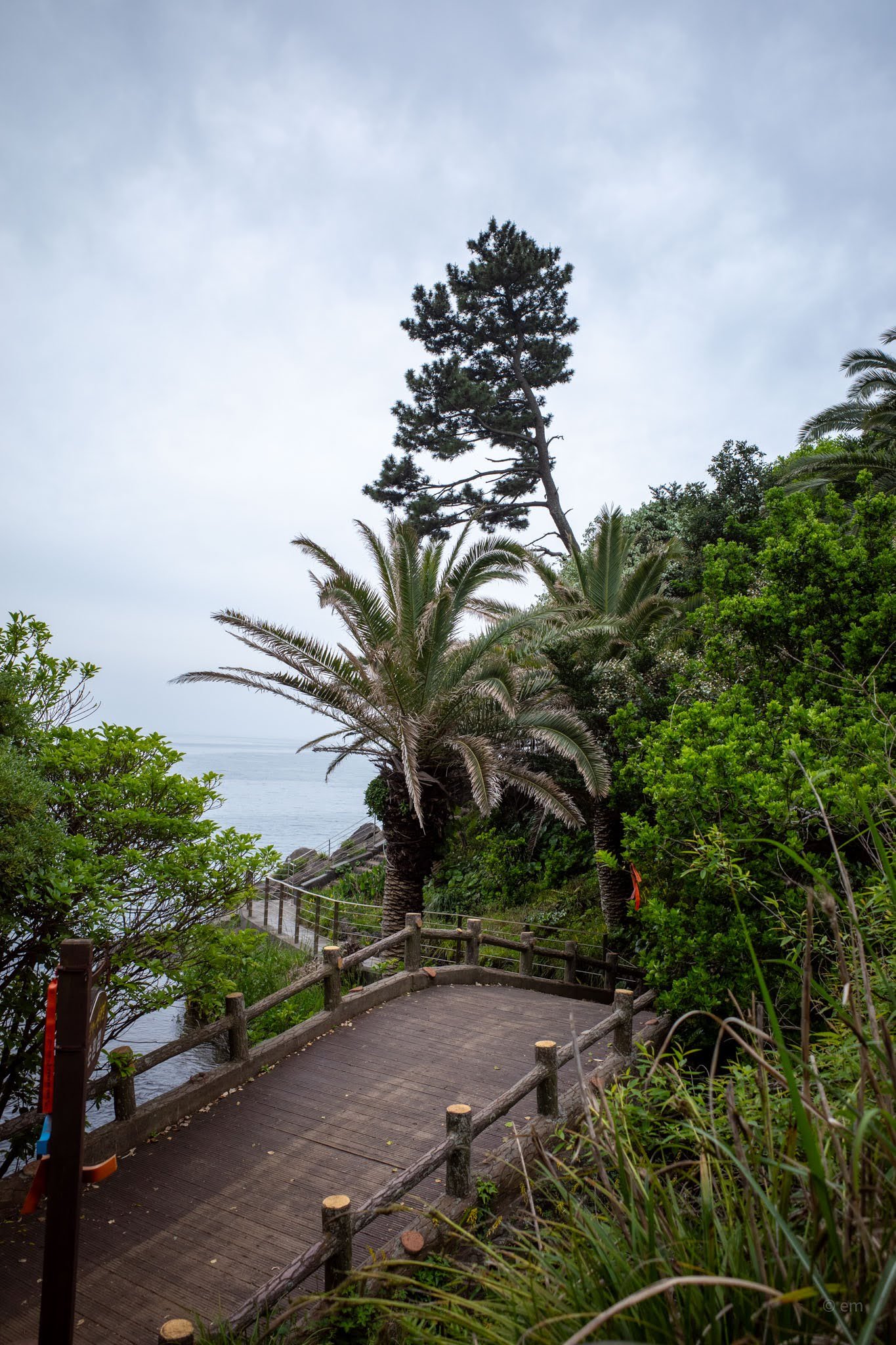
The path down from the castle to the water is worth taking slowly. A wooden boardwalk descends through subtropical greenery — fan palms, cycads, fig, and wild grasses tumbling toward the cliff edge — to a basalt boulder beach where the columns of Jeju’s volcanic shoreline meet the water in layers. Looking back up from the rocks, the scale of the cliff and the improbability of the building’s position above it becomes fully apparent.
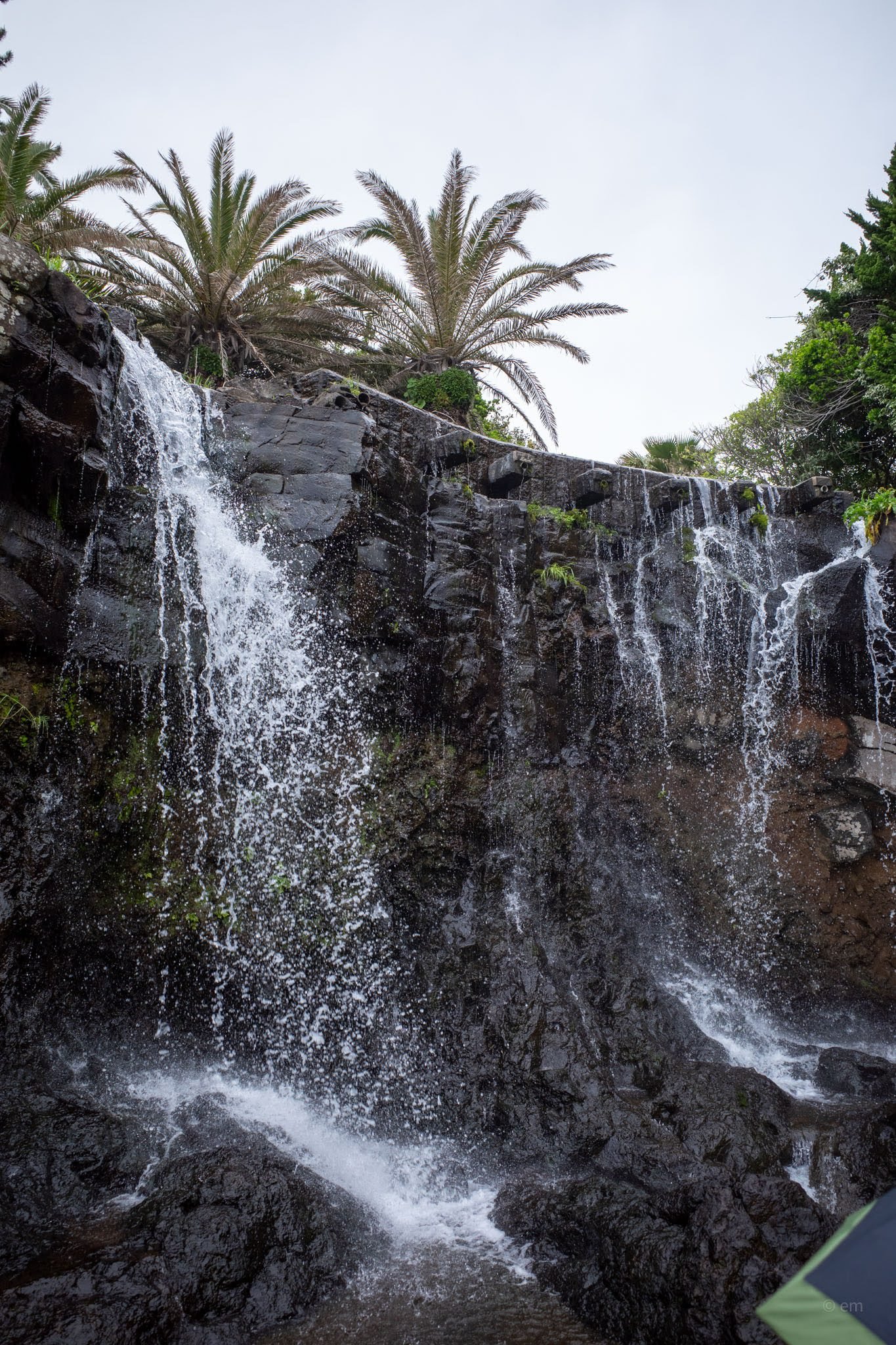
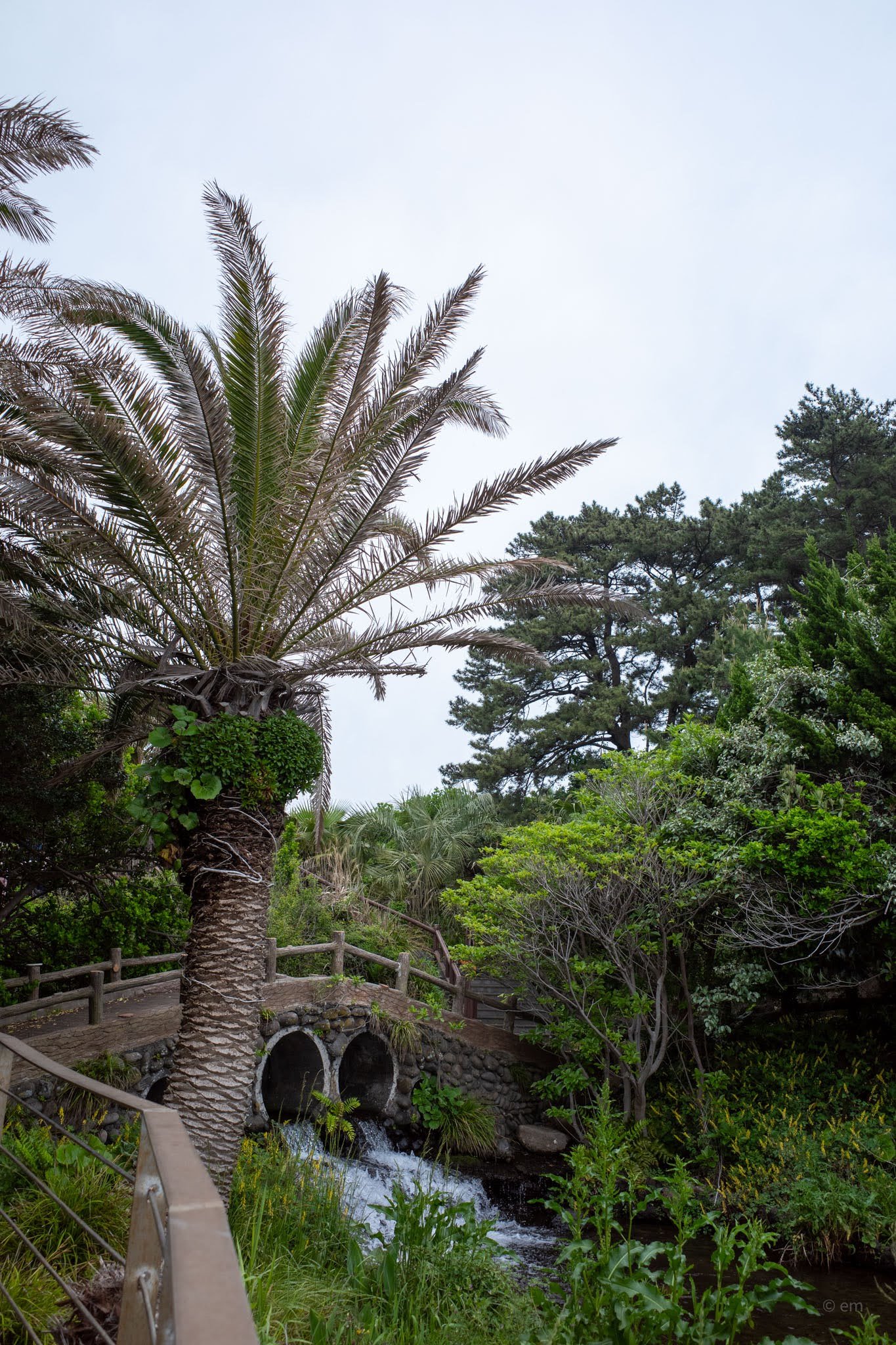
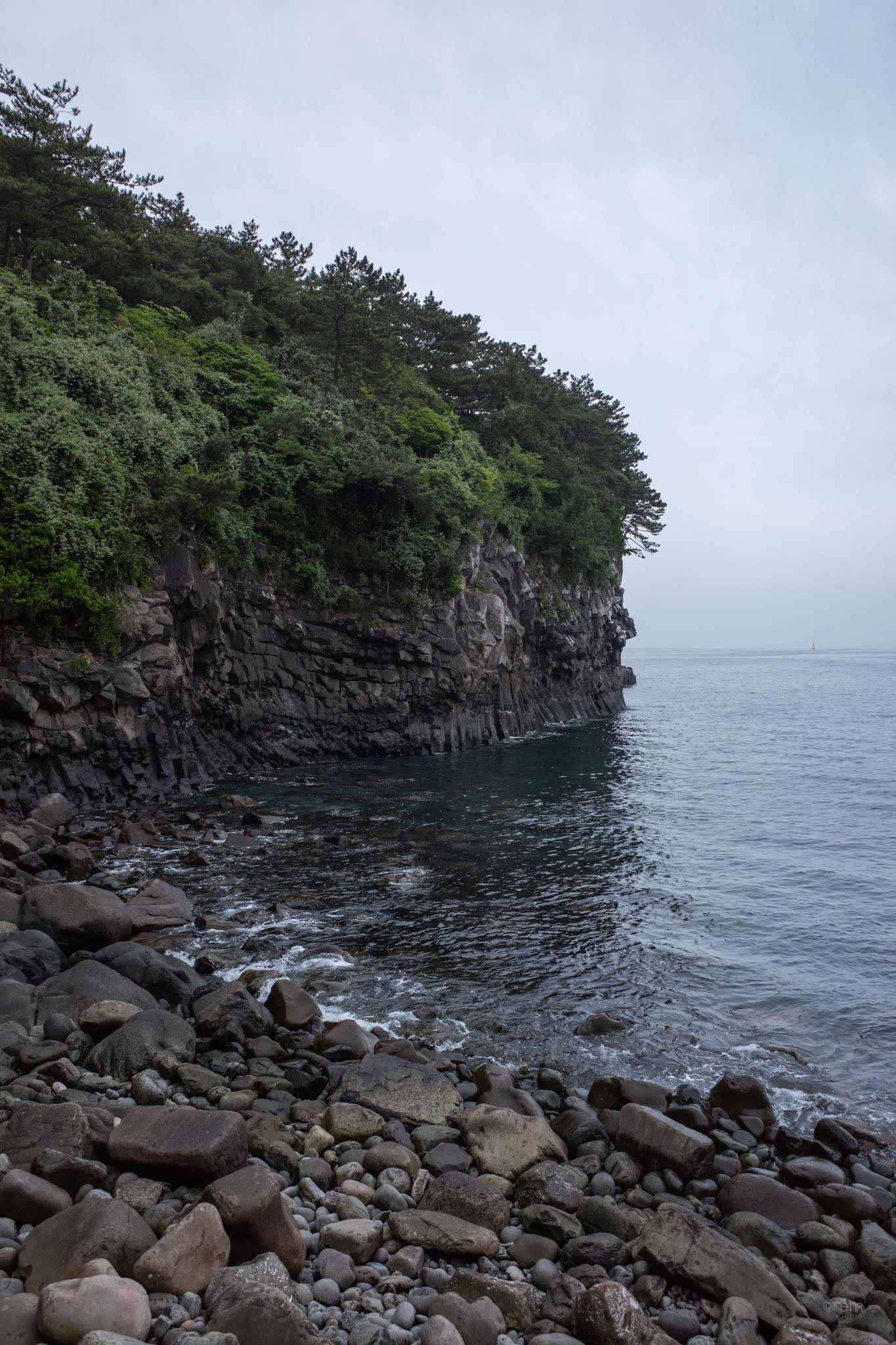
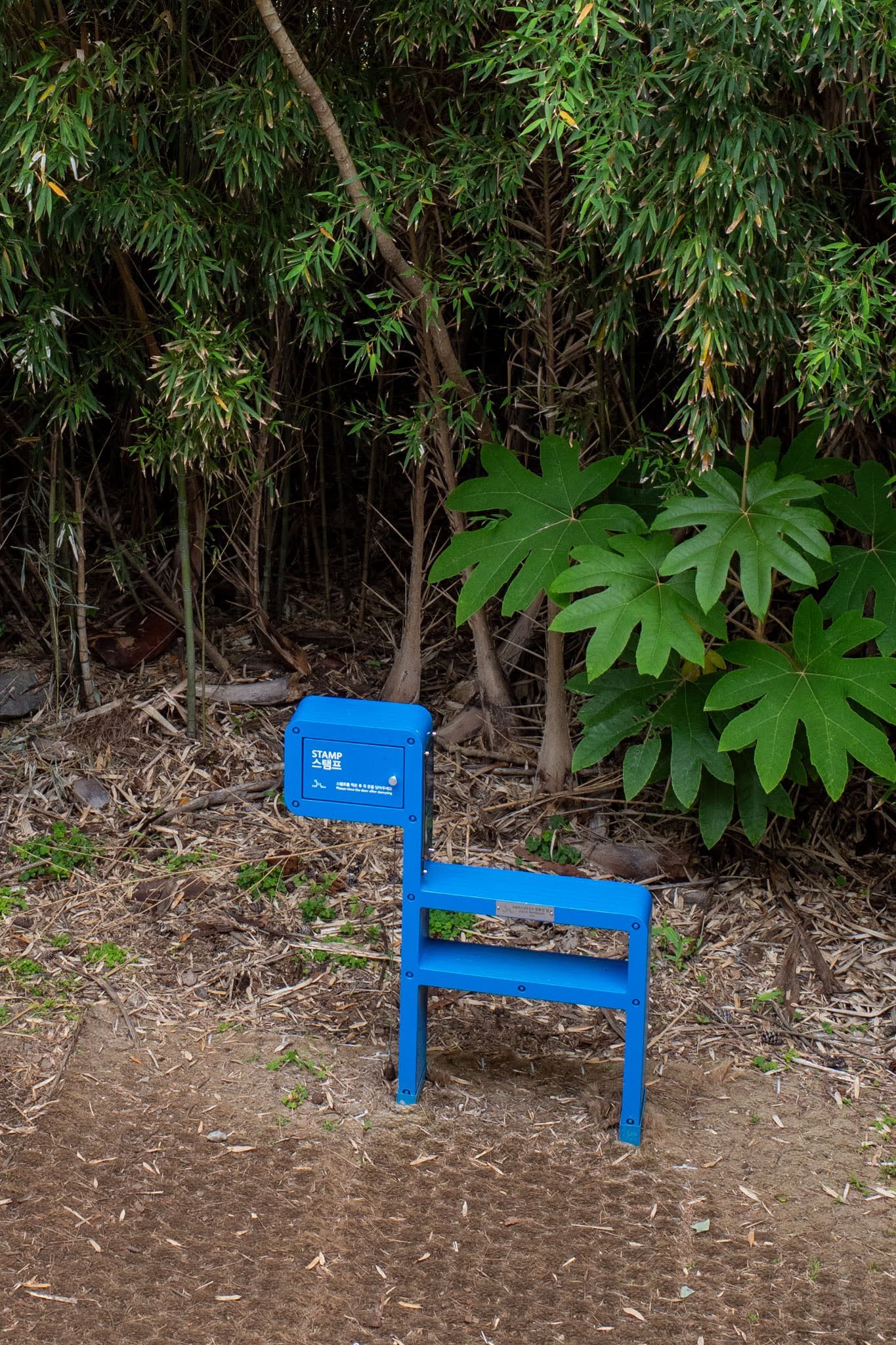
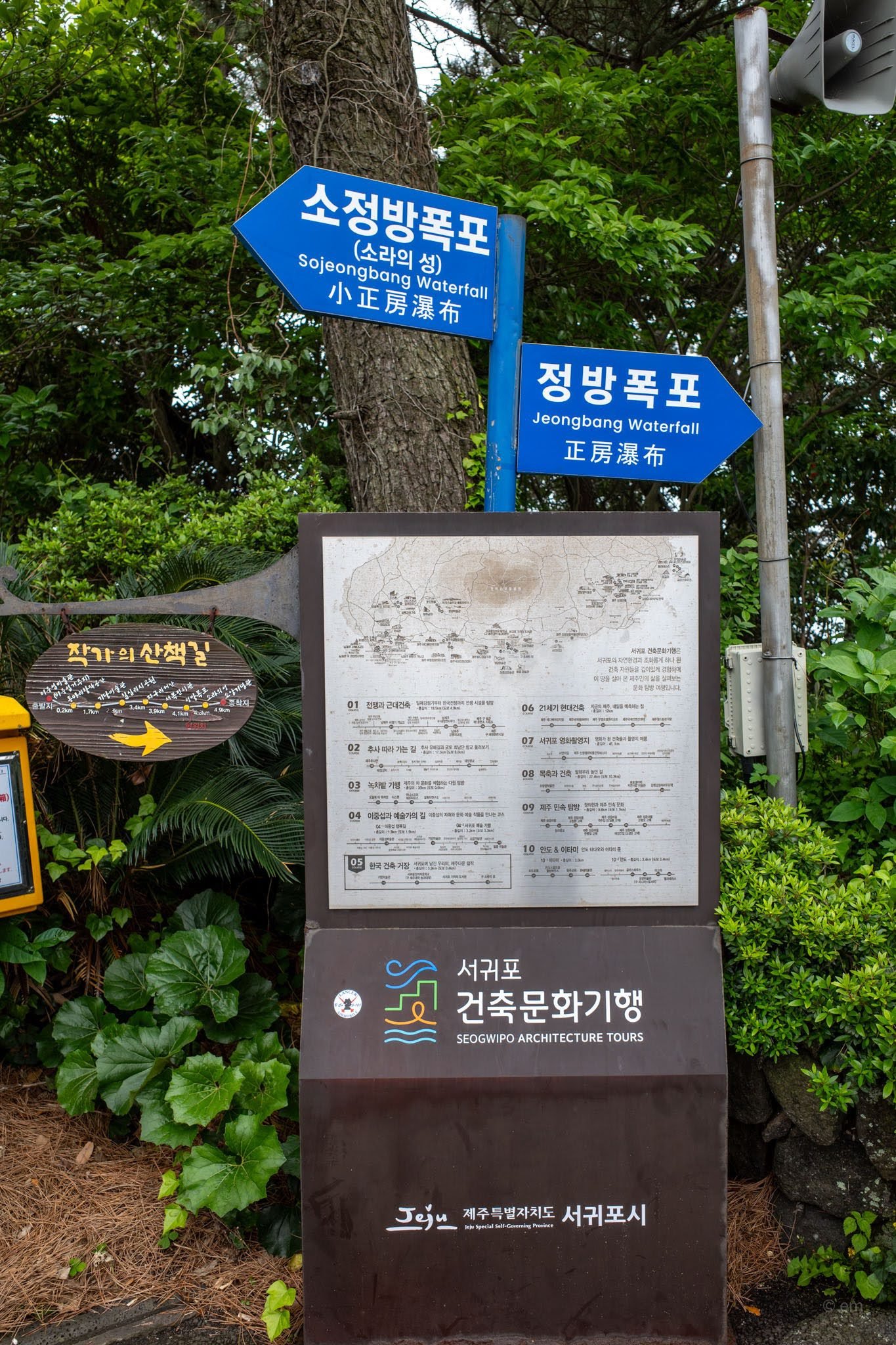
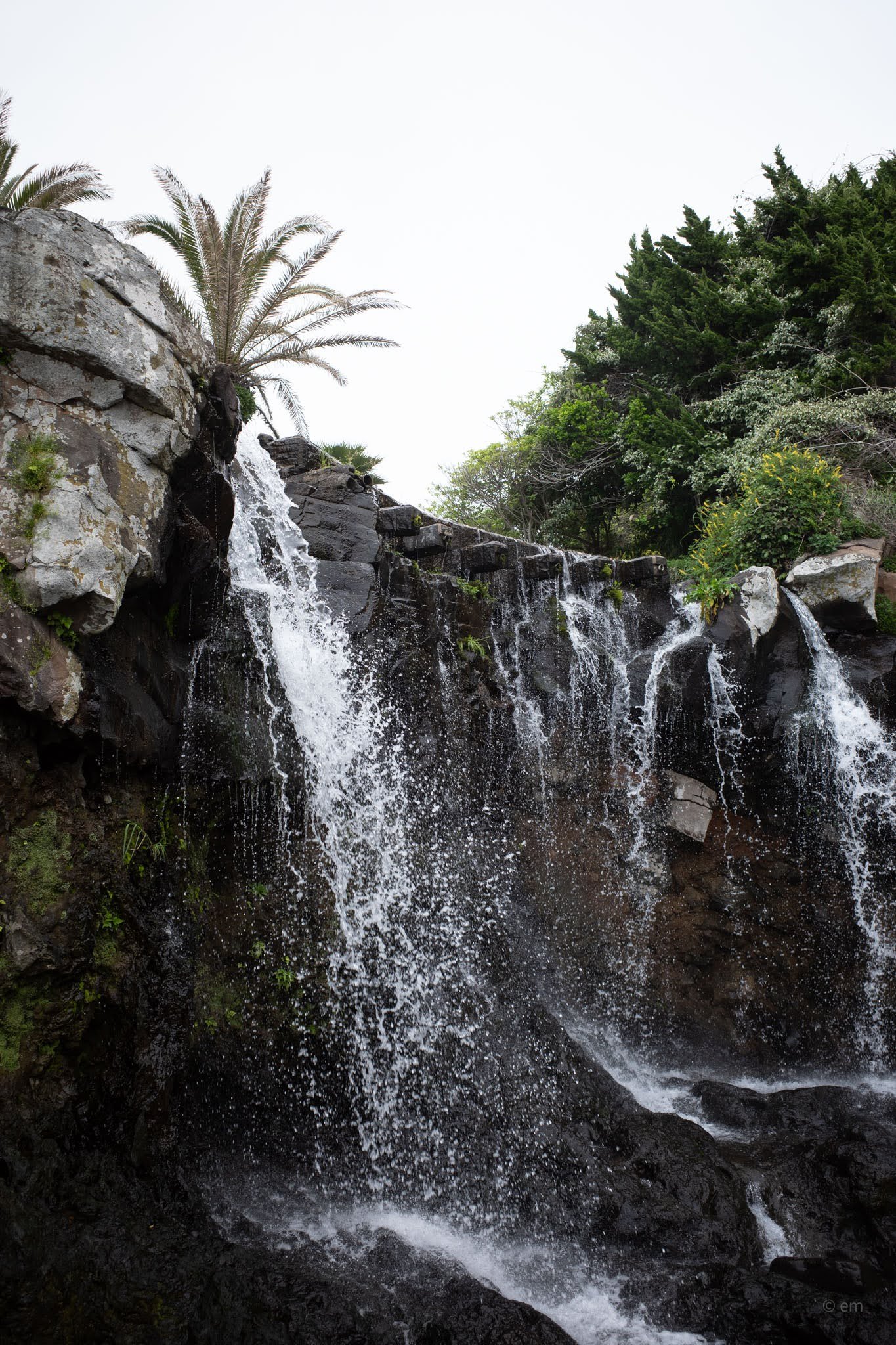
Sojeongbang waterfall is minutes away on foot, down a path through bamboo. A palm tree grows directly from the rock face at the waterfall’s edge — a detail so cinematically placed it looks like set dressing — and the water falls in a wide arc onto the basalt below, free to enter. The blue stamp station in the bamboo grove nearby marks this as Jeju Olle Route 6 territory: a long, mostly coastal walk that is broadly considered the most beautiful of the Olle routes, with 소라의 성 at its visual apex.
Getting There
The Castle of Shell sits in a zone between two paid attractions — Jeongbang Waterfall and Sojeongbang — and is free. The building itself is free. The book café is free. There is no parking on site; use the lot at Jeongbang Waterfall and walk.
소라의 성 시민 북카페 (The Castle of Shell Citizen Book Café)
Address: 17-17 Chilsimni-ro 214beon-gil, Seogwipo-si, Jeju
Hours: 09:00–18:00 (lunch break 12:00–13:00), closed Mondays — verify before visiting
Entry: Free
Tel: 064-732-7128
A building with no records, a name with no owner, and a view that answers neither question.