There’s a moment, somewhere between the concrete and the palm trees, when Jeju stops feeling like Korea.
Cafe Jinjungsung opened its Gimpo location as 기점 — the origin, the departure point. The Jeju branch carries the opposite designation: 종점, the terminal stop. End of the line. It’s not an arbitrary name. The whole brand is built on a kind of journey logic — authentic ingredients, labour-intensive process, a commitment carried from one coast to another — and Jeju is where that journey lands. Facing the sea at Iho, in a building that feels more like a civic monument than a café, it’s a reasonable place to stop.
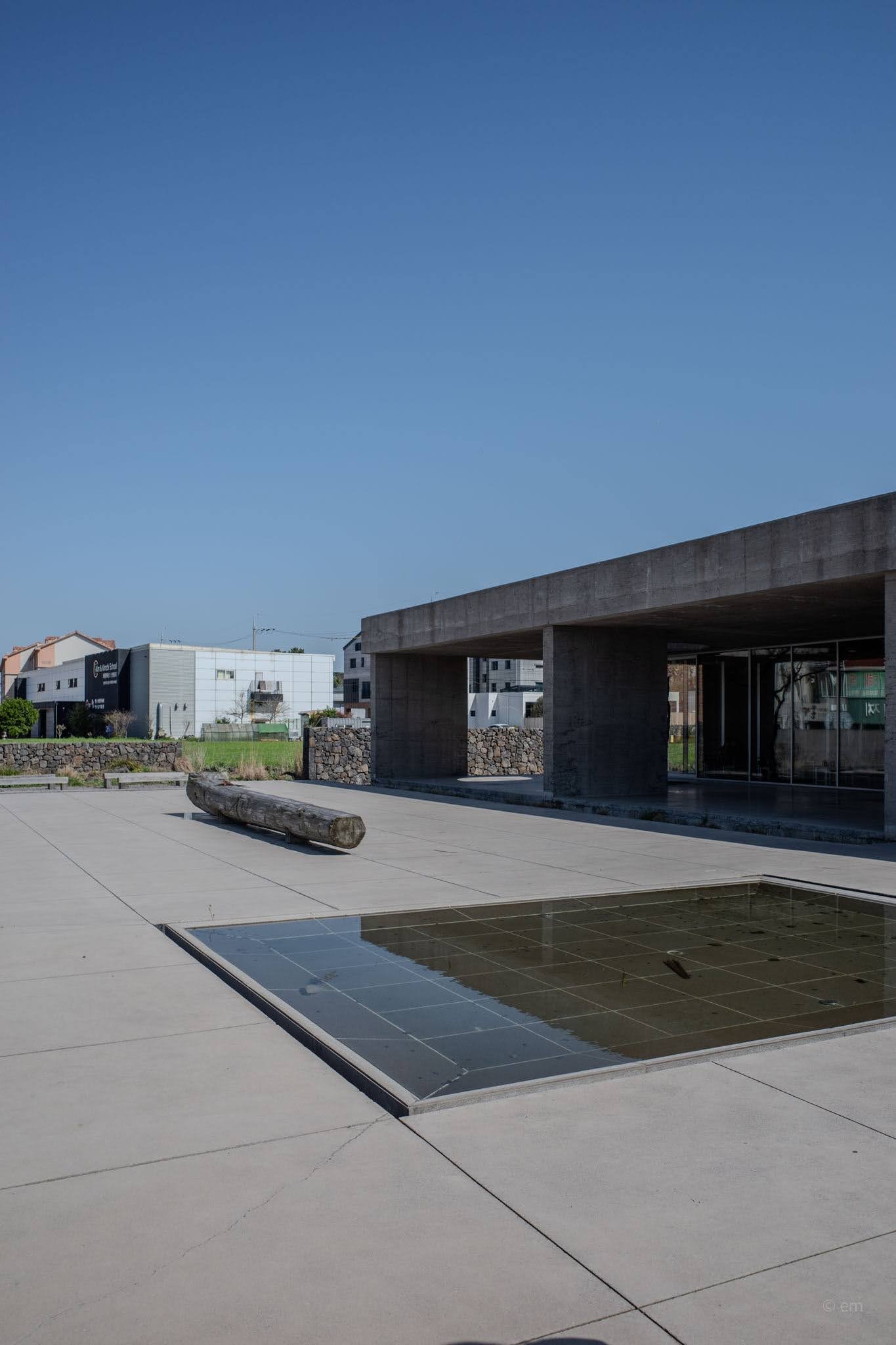
The Architecture
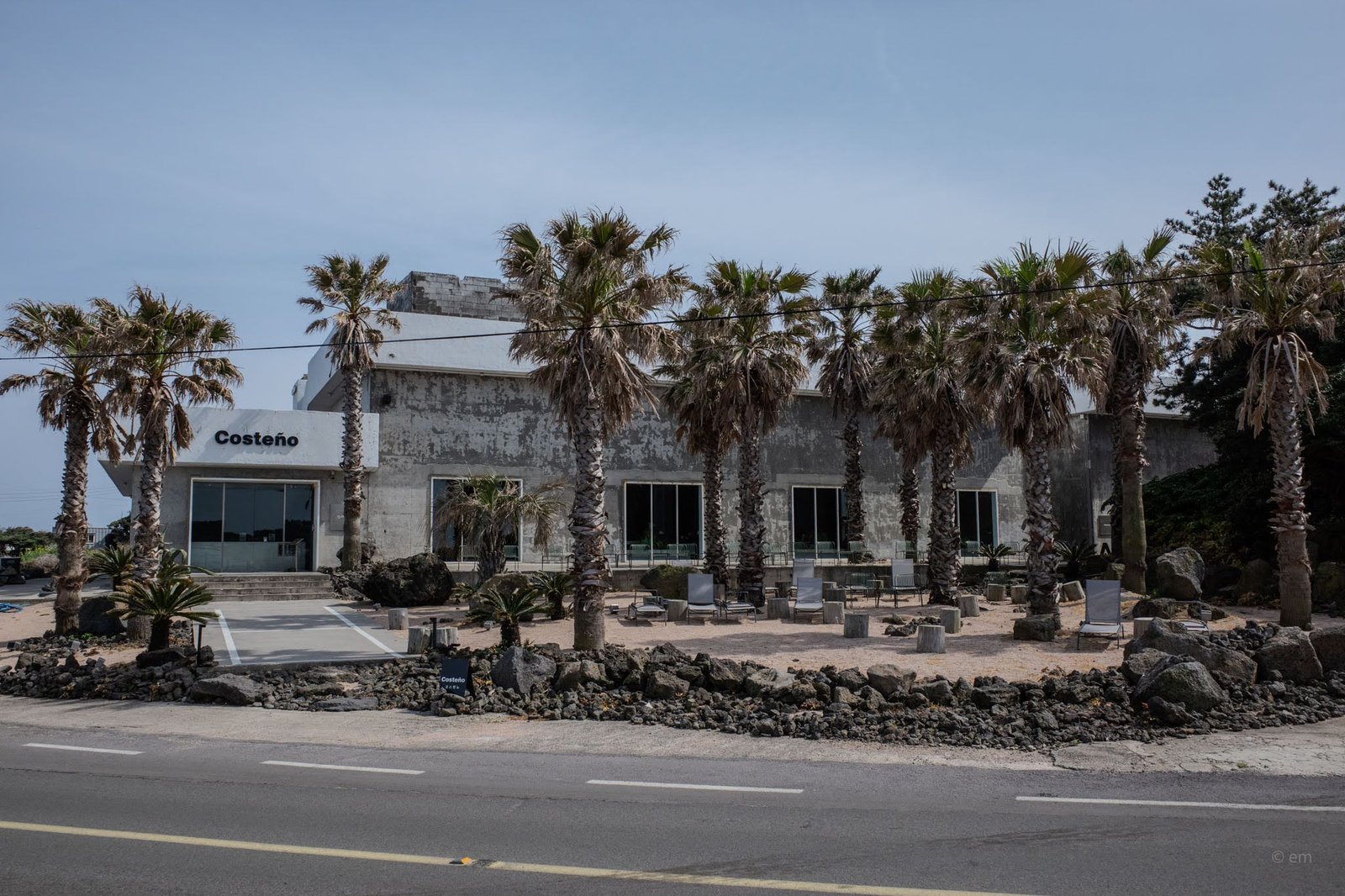
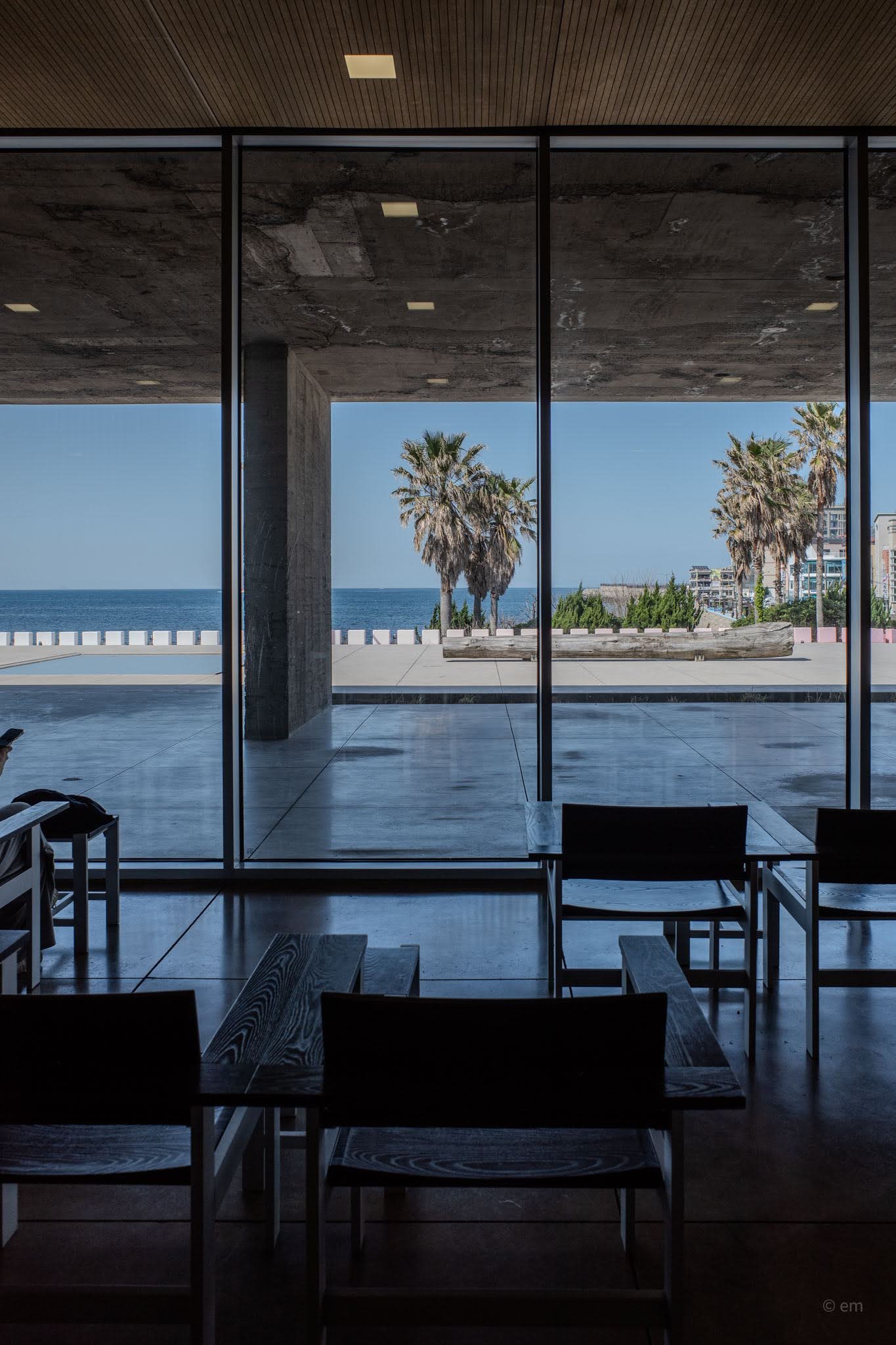
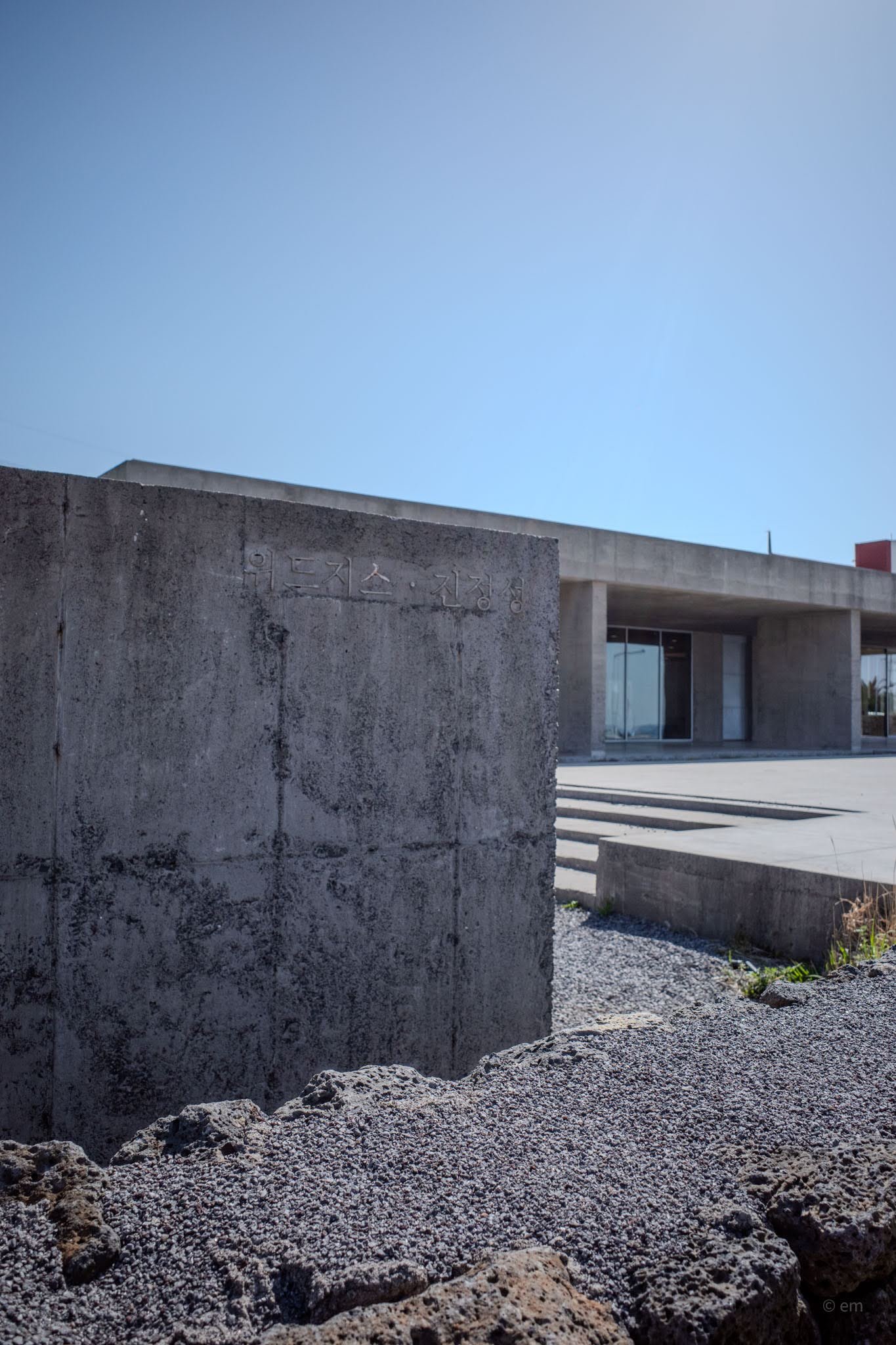
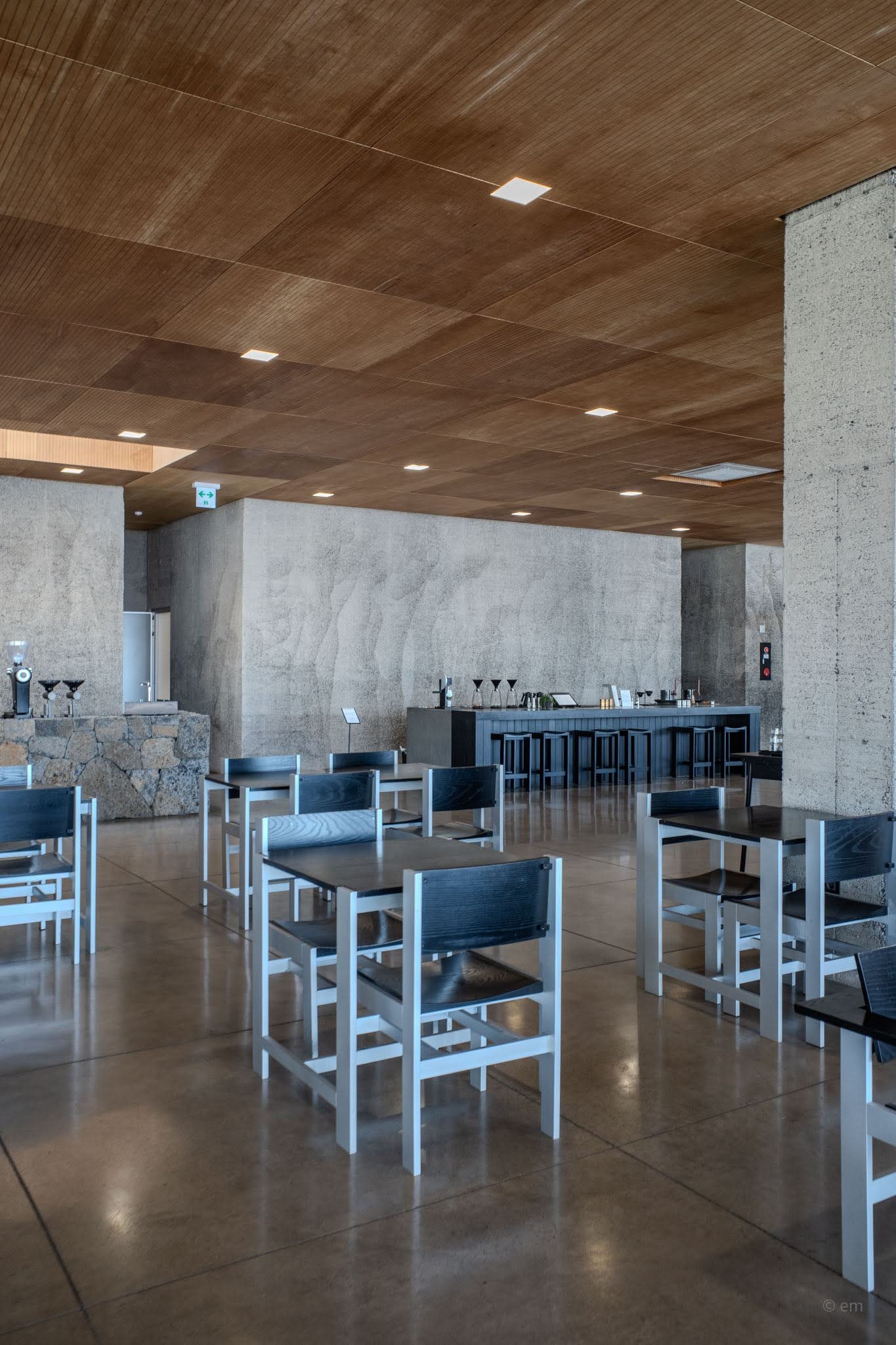
The building is brutalist in the most serious sense. Raw, exposed concrete, poured and board-marked, makes up every wall and the broad roof slab. The structure is almost entirely open on its seaward side — floor-to-ceiling glass panels run the full width of the interior, divided by thin steel frames that do almost nothing to interrupt the view. Above, the ceiling shifts: warm horizontal wood cladding covers the main seating hall, recessed square lights set flush into it, pulling the temperature of the room back from cold to livable. The contrast between the rough exterior concrete and the interior wood ceiling is deliberate and effective.
The furniture is austere. Square white-framed tables and matching chairs in dark wood fill the hall in orderly rows, each pair of chairs facing outward toward the glass. The bar runs across the back wall — low, dark, composed — with bar stools along the counter side. Basalt lava stone appears in low garden walls at the building’s perimeter, grounding the structure in Jeju’s volcanic geology even as the architecture itself reads more international.
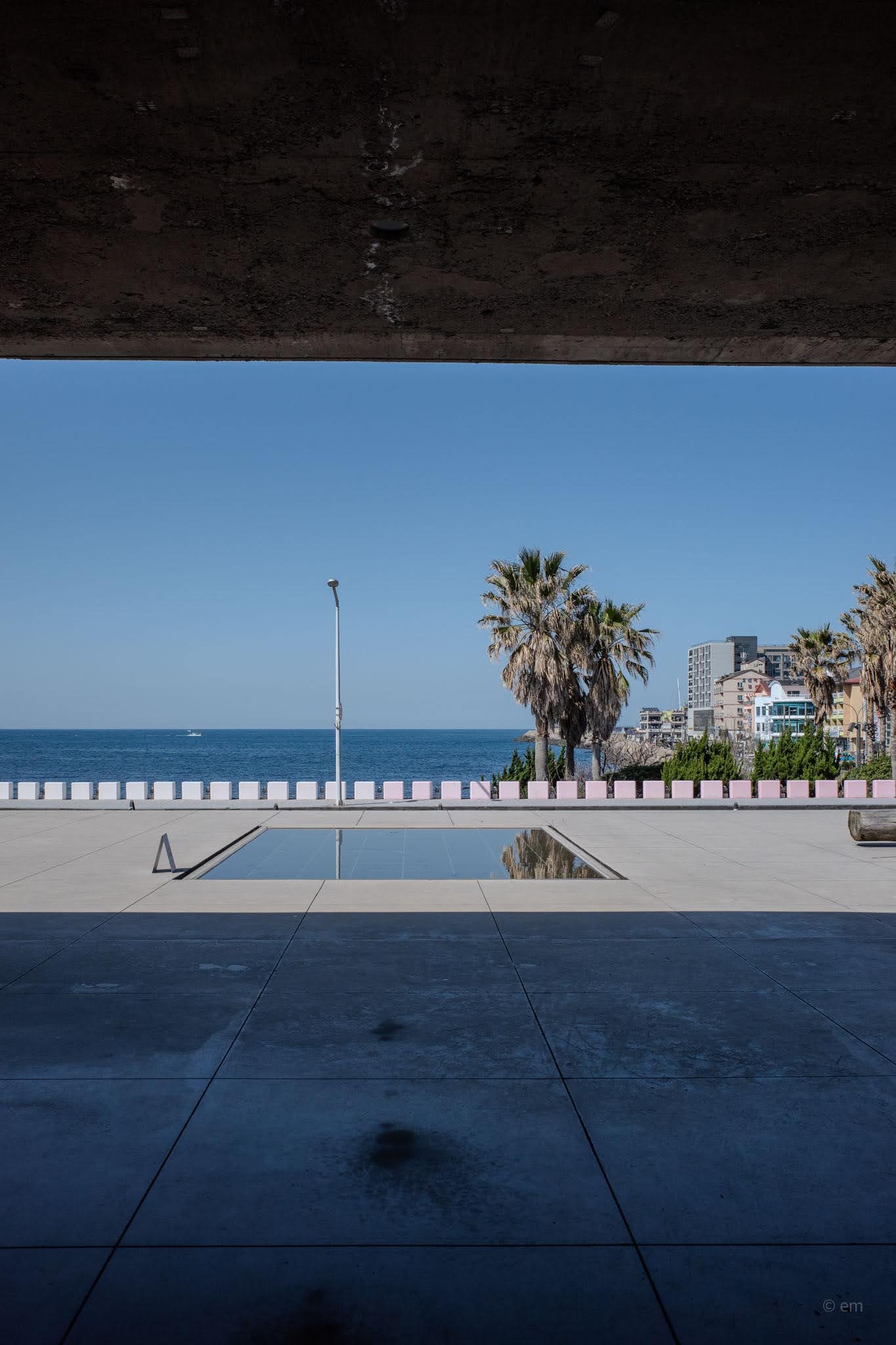
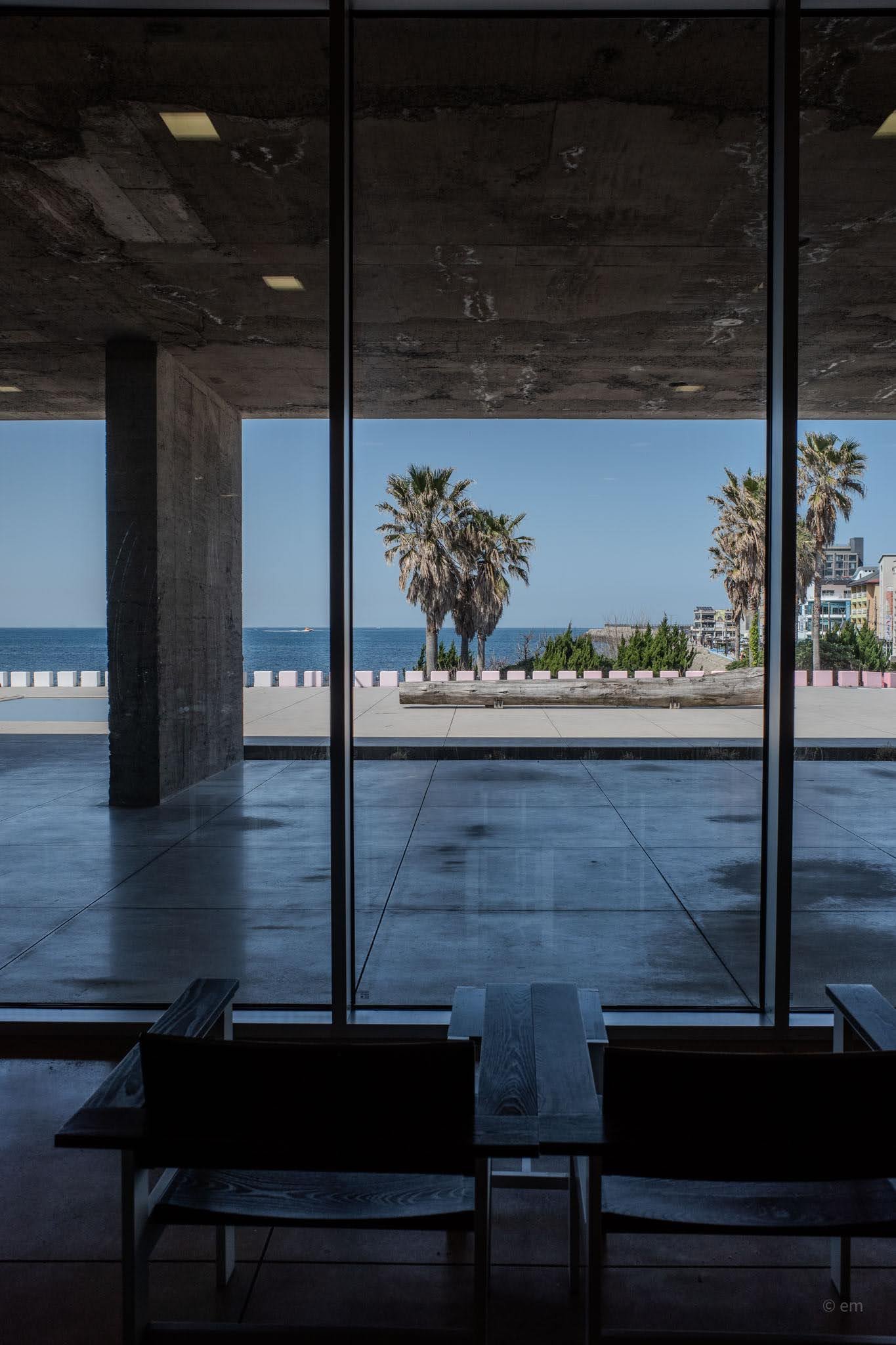
The Terrace and the View
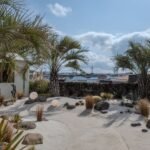
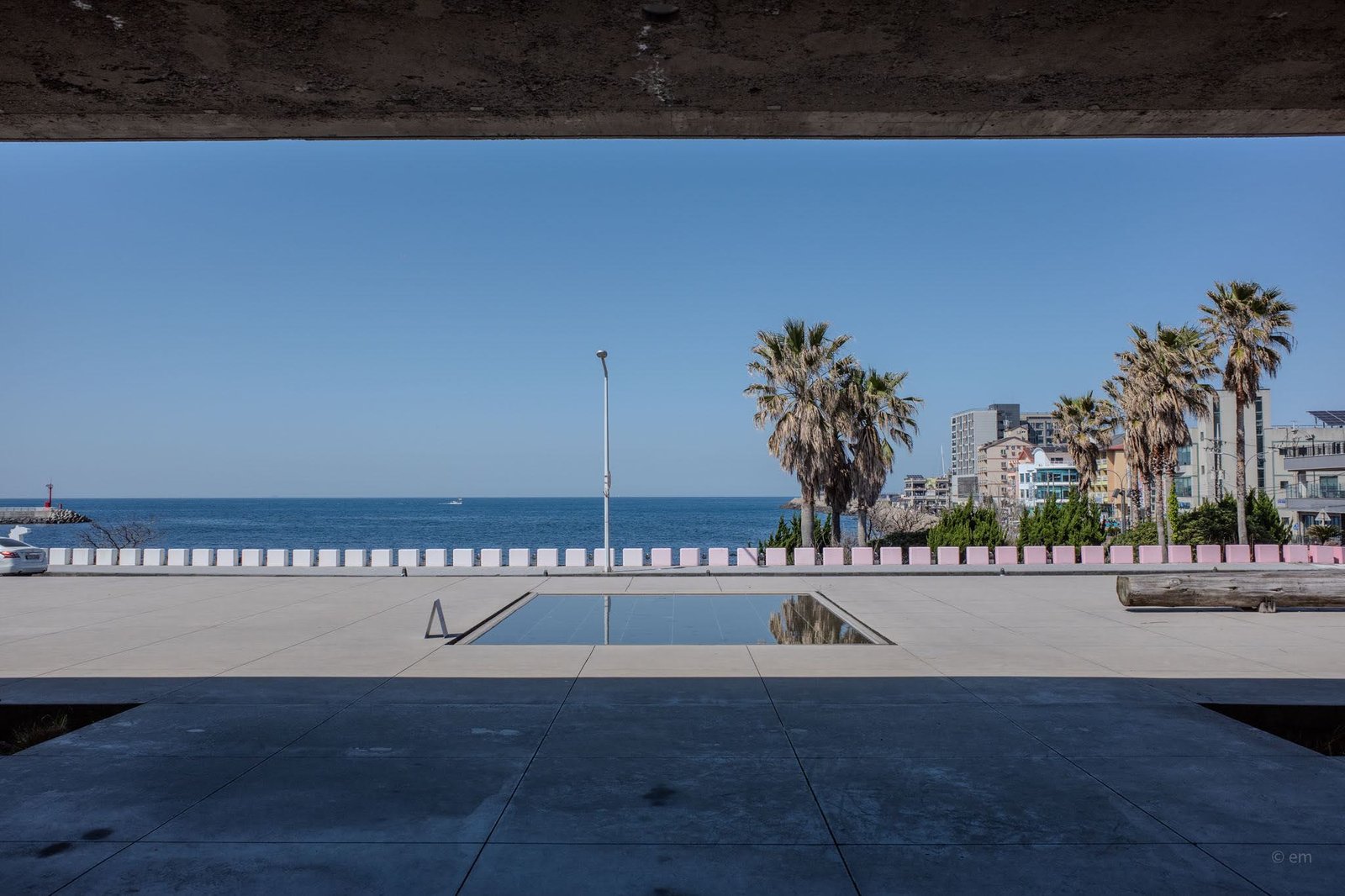
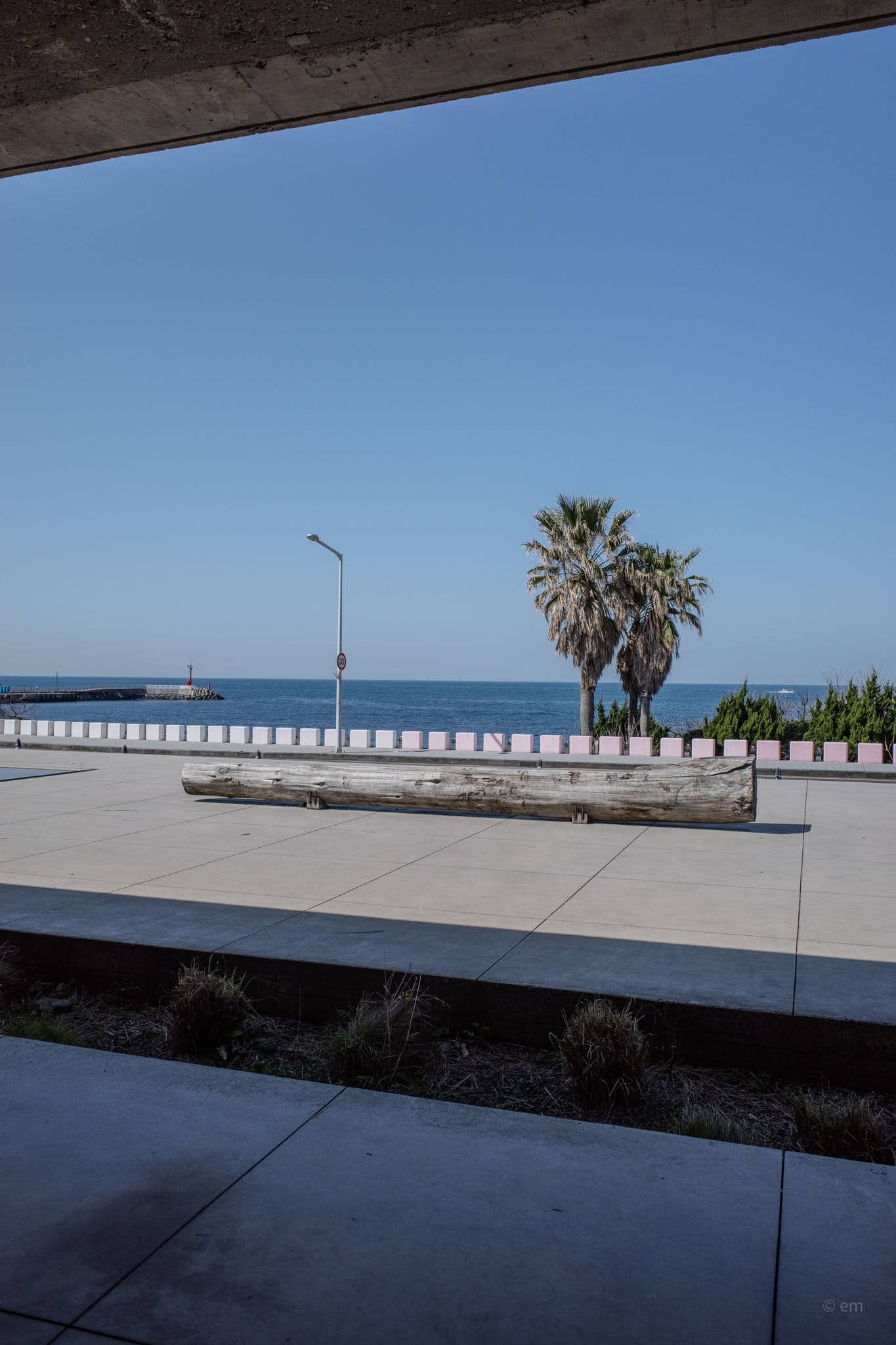
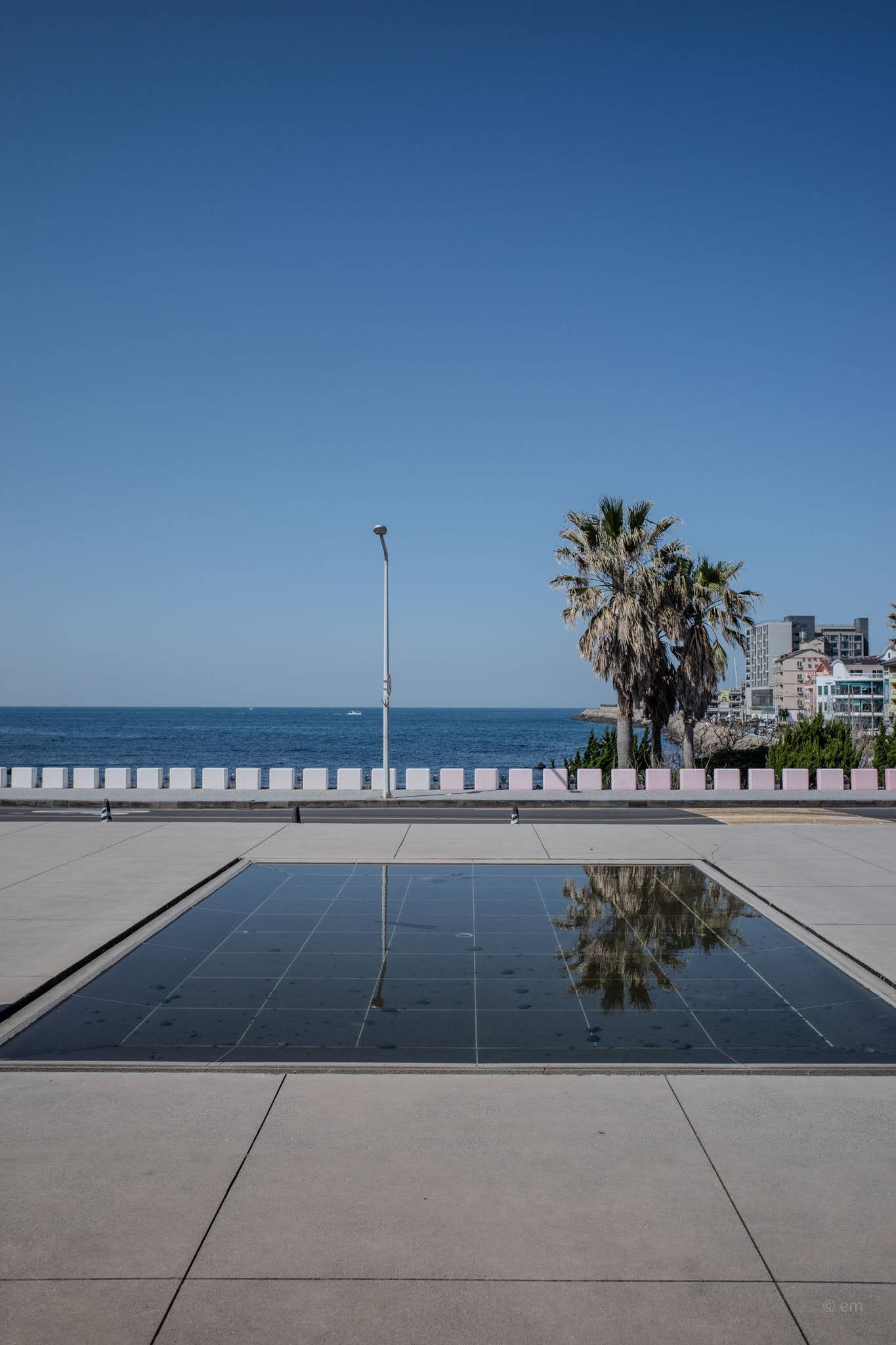
Step outside and the space opens again. A wide concrete terrace extends from the building toward the road, and set flush into it is a large rectangular reflection pool — dark-tiled, flat, sky-filling. The pool mirrors whatever is above it: palm trees, cloud, the pale blue of a March morning. Beyond the pink concrete bollards lining the seawall, the East China Sea. A single weathered log sits on the terrace like a piece of driftwood salvaged from somewhere further along the coast.
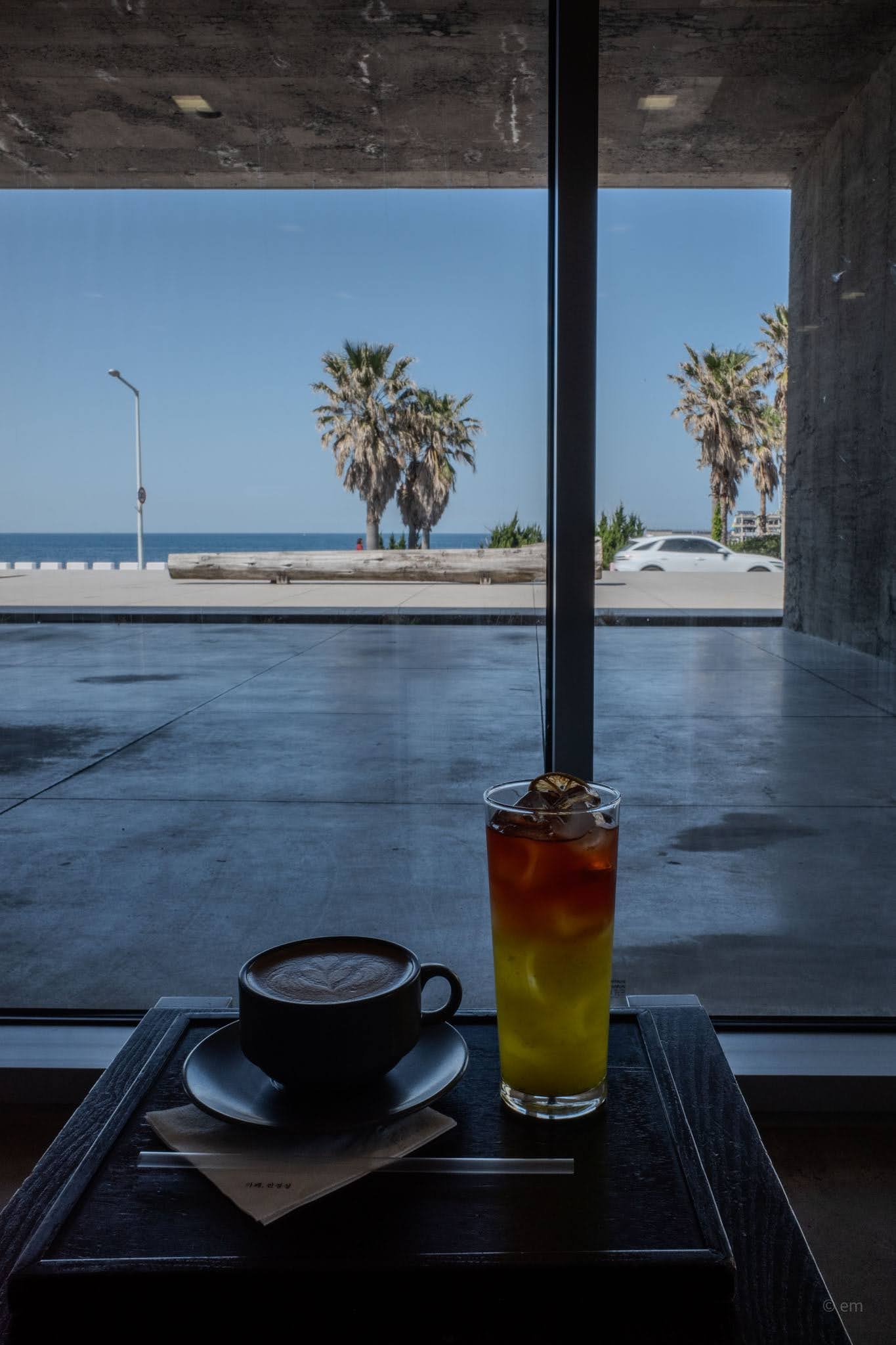
The palm trees are the thing. Several large fan palms stand along the sea road in front of the building, and from inside, framed by the concrete columns and glass panels, they read as deliberately cinematic — the kind of view that doesn’t quite look like it belongs at 33 degrees north latitude. That’s part of the draw.
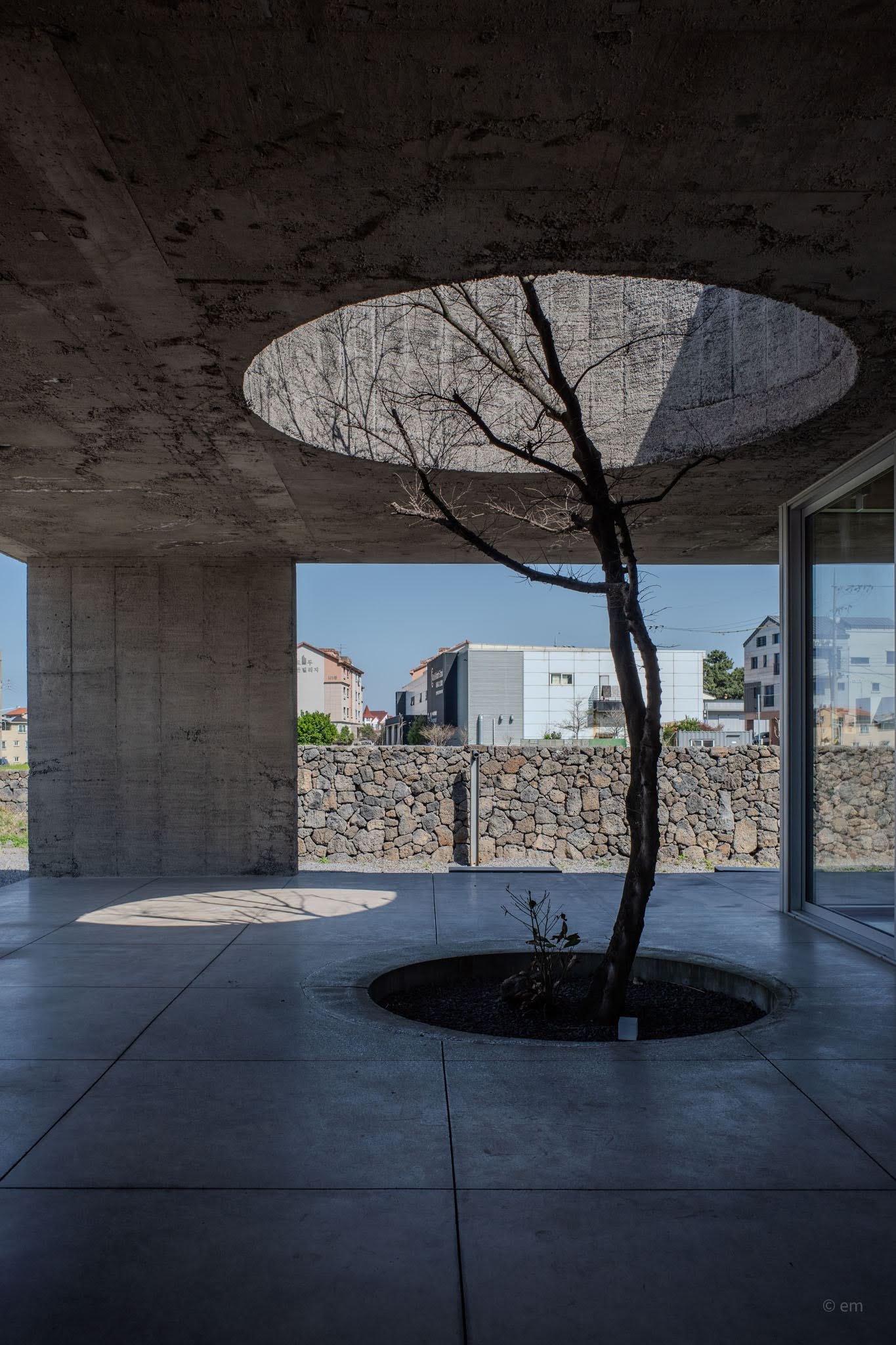
The Oculus
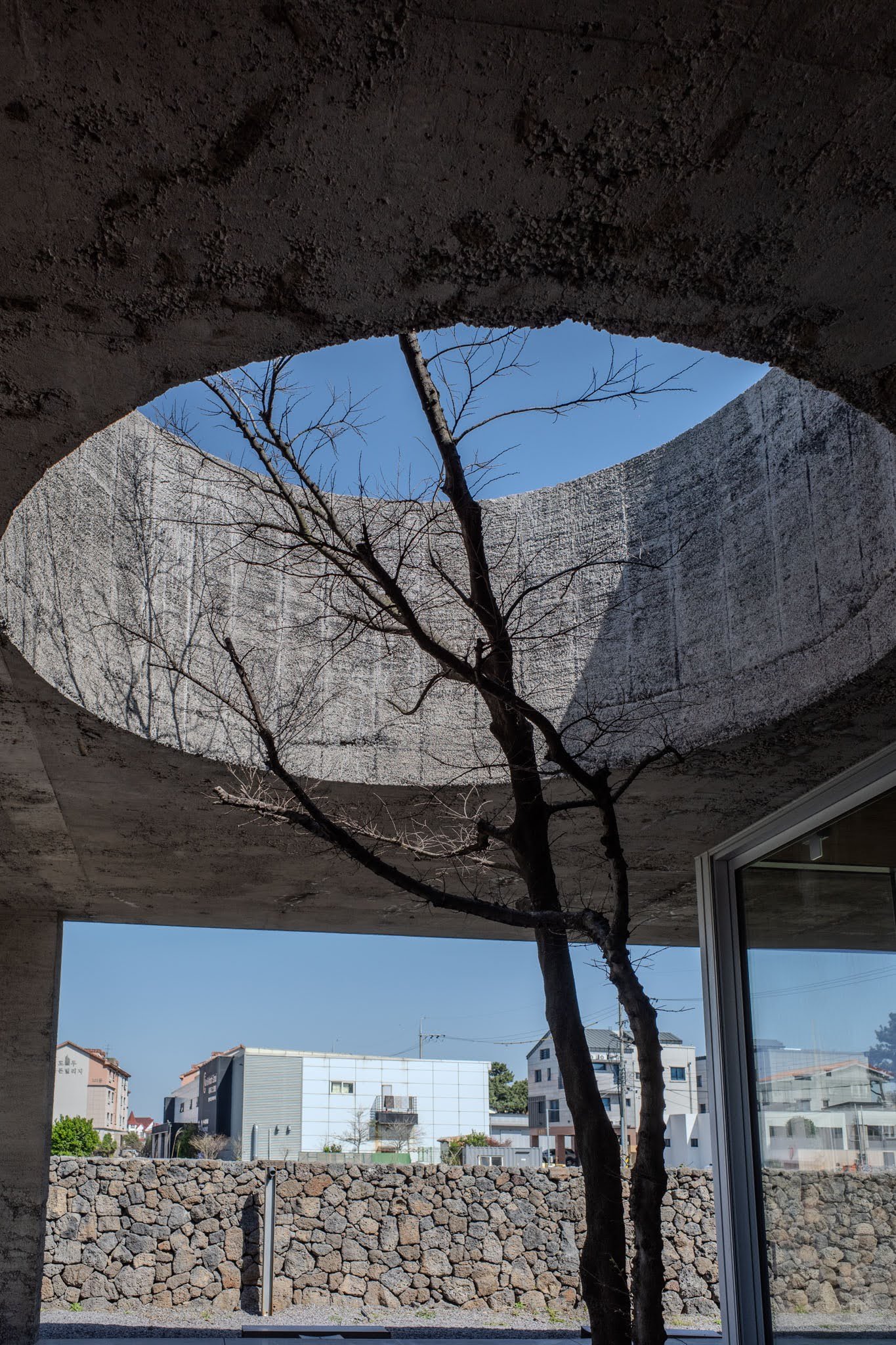
On the building’s inland side, away from the sea glass, a secondary space opens around a concrete courtyard. Here the ceiling is interrupted by a large circular opening — a true oculus, rough-edged, cut clean through the concrete slab. A single bare tree grows up through it from a circular planter sunk into the floor, its branches spreading into the open sky above. It’s the most unusual moment in the building: half outside, half in, the tree neither fully enclosed nor exposed.
What to Order
진정성 has always led with tea. The house signature is a handmade milk tea brewed from 100% whole-leaf black tea, unrefined sugar, and antibiotic-free milk — the kind of recipe that takes a position. Earl Grey versions are available alongside the house blend. Citrus drinks layered in tall glasses appear alongside espresso-based options; the café uses several single-origin beans available for selection at the bar. Pastry runs to madeleine and sablé, with seasonal Jeju-inflected additions.
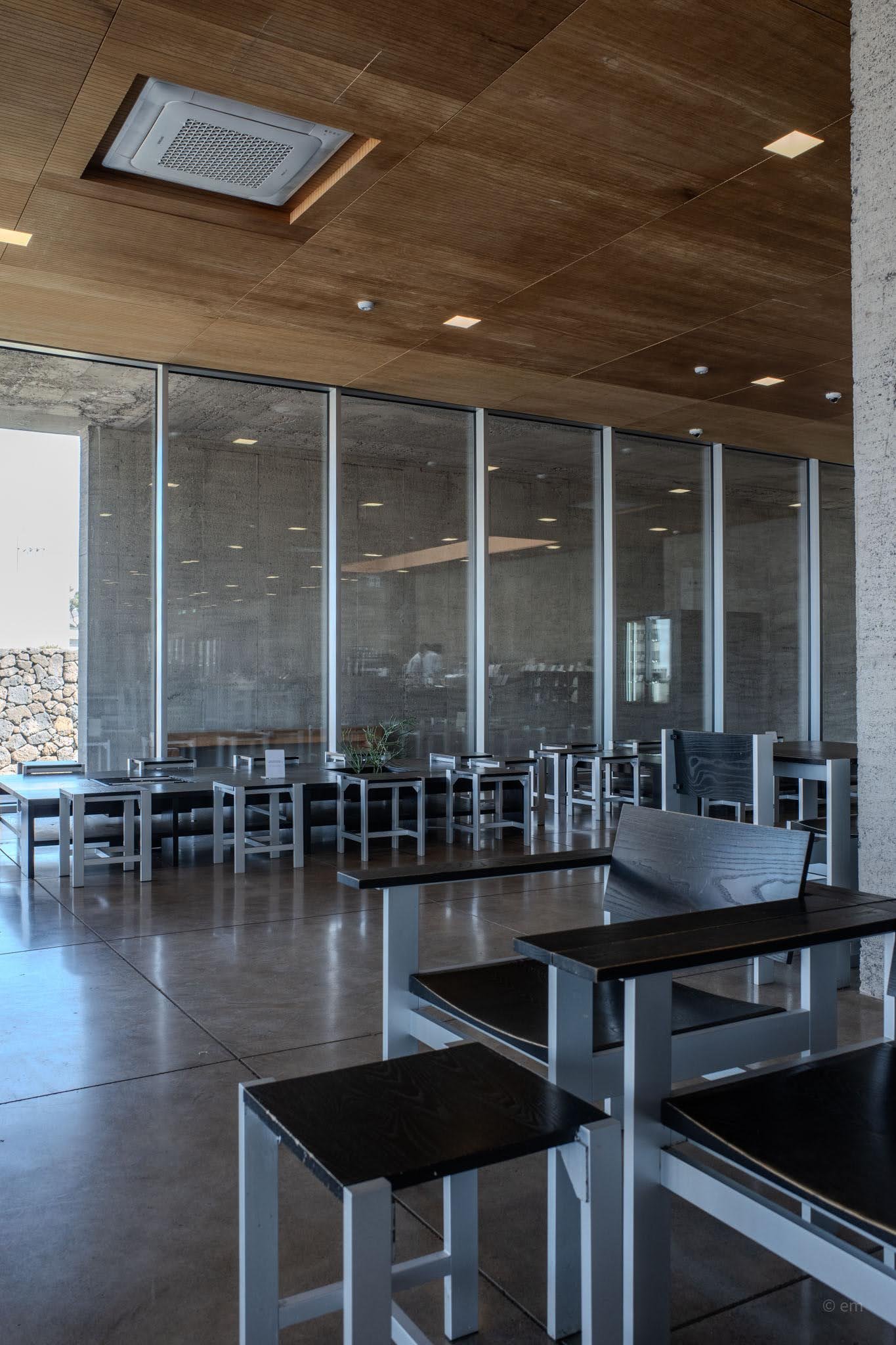
Cafe Jinjungsung Jongjeum (카페 진정성 종점)
Address: 124 Seohaean-ro, Iho 1-dong, Jeju-si, Jeju-do
Hours: Daily 09:00–21:00
Instagram: @cafe_jinjungsung
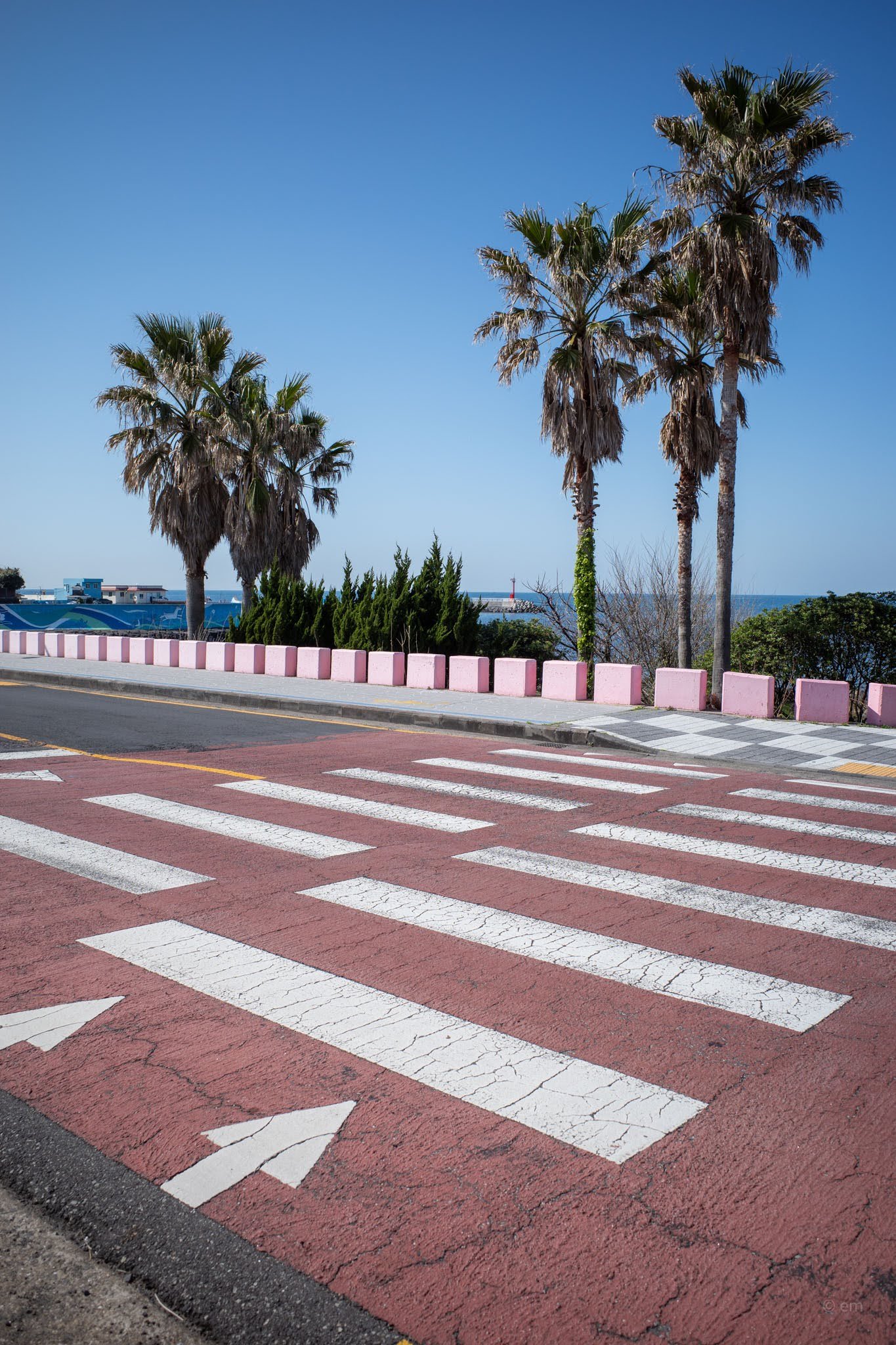
The flight back doesn’t feel as urgent when the terminal looks like this.