A church that stopped holding services and started growing a forest instead.
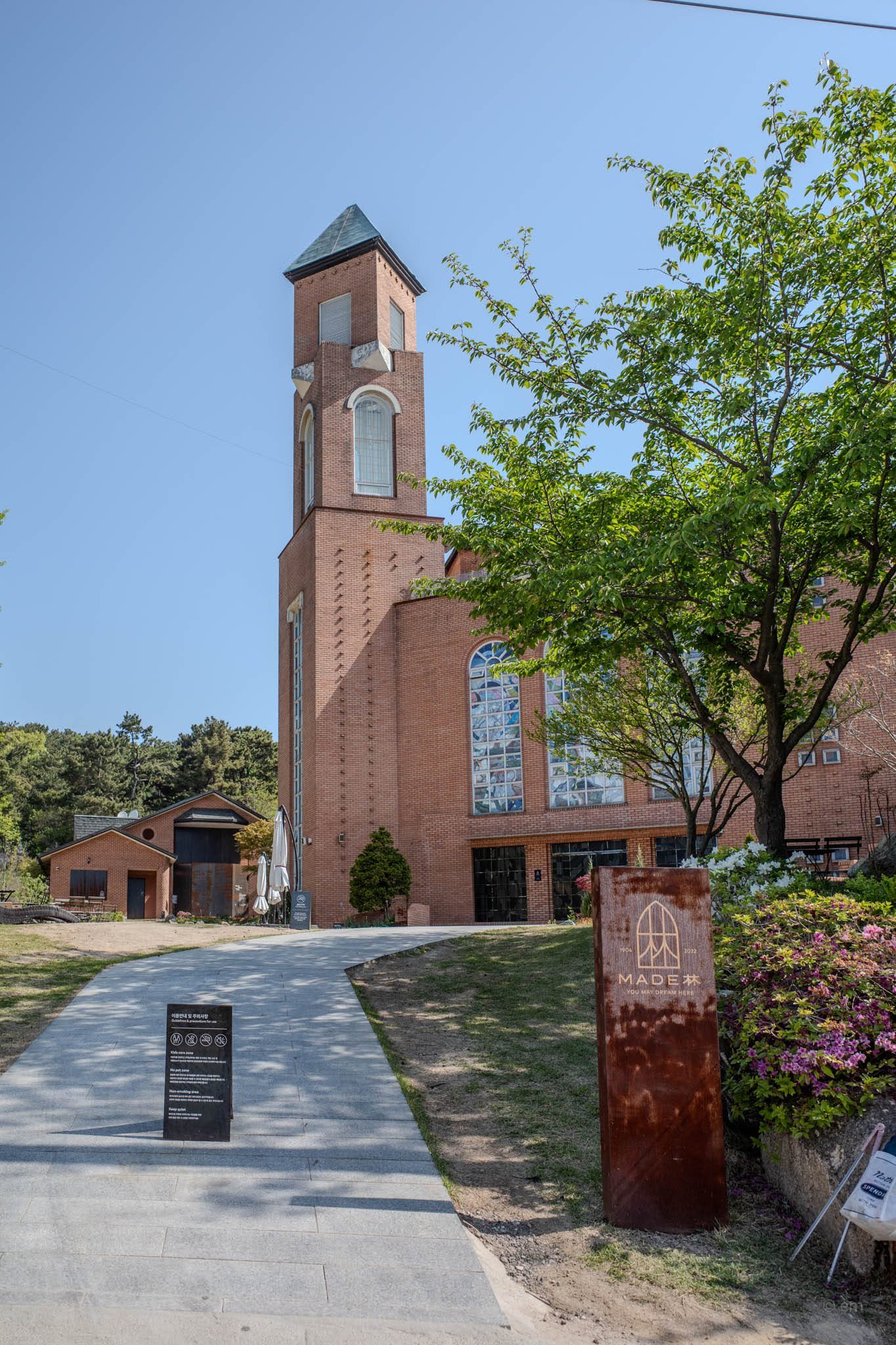
MADE林 arrived in April 2023 with little ceremony and immediately became one of the most photographed spaces in greater Incheon. It occupies the former Wangsan Church on Yeongjong-do — the first church ever built on the island, with over 120 years of history in its red brick walls — and transforms it into something that resists easy categorization. The name carries a deliberate double reading: 林, the Chinese character for forest or grove, grafted onto the English verb made, but also folded into the Korean 메이드림, meaning “May dream.” Forest-made, May-dreamed, dream-made. The place earns all three.
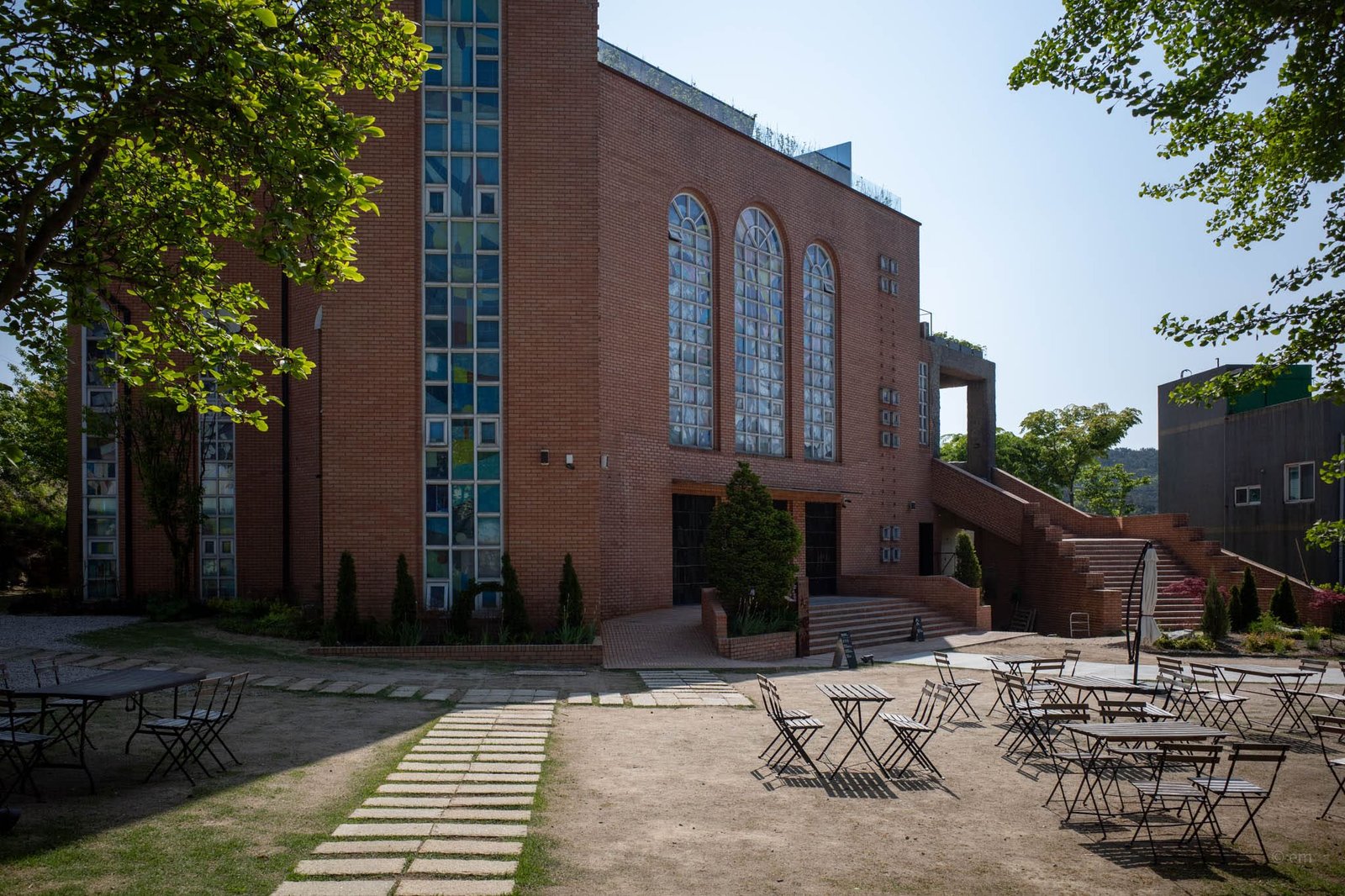
The Grounds
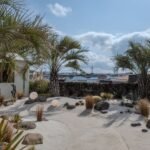
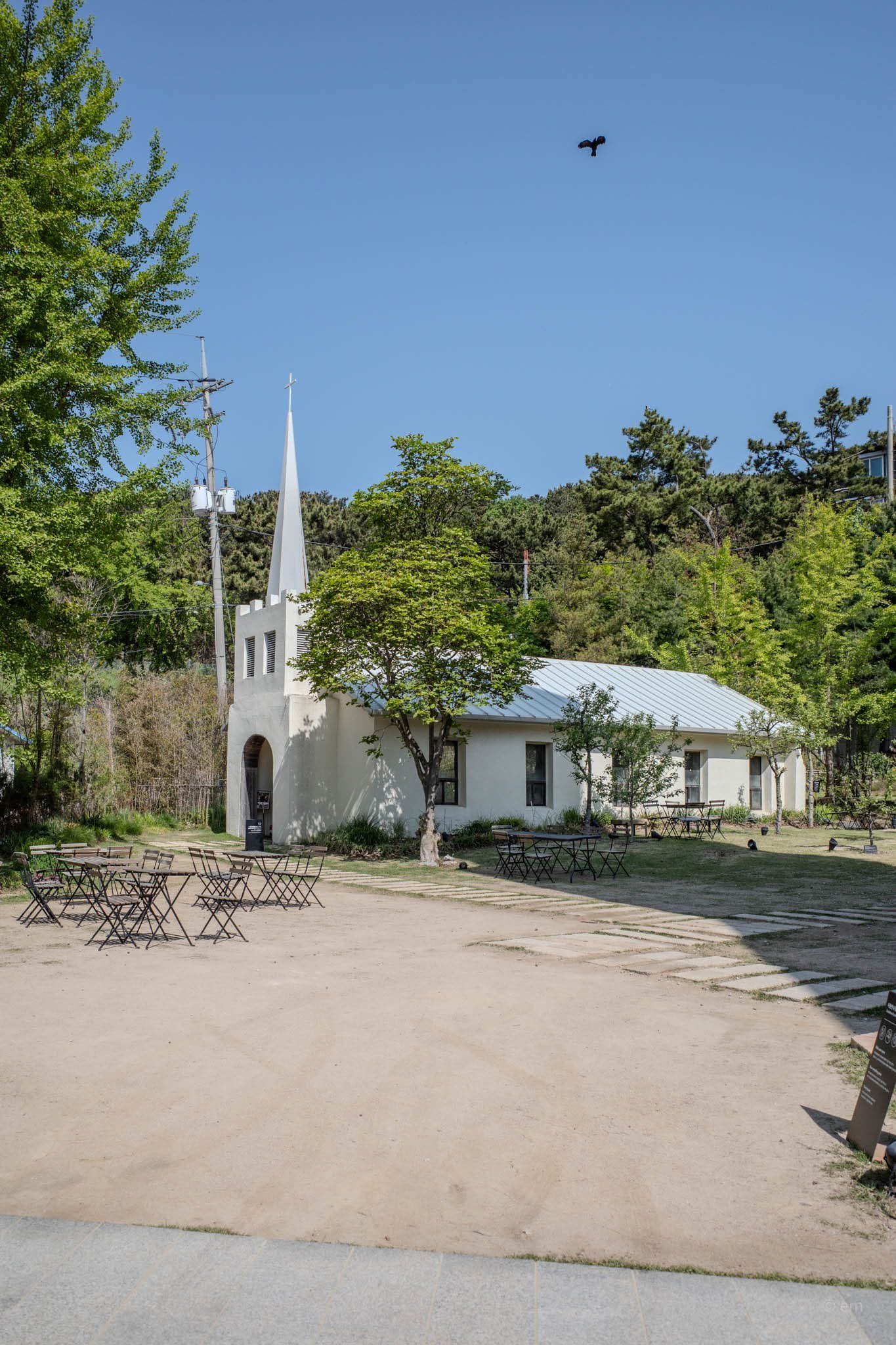
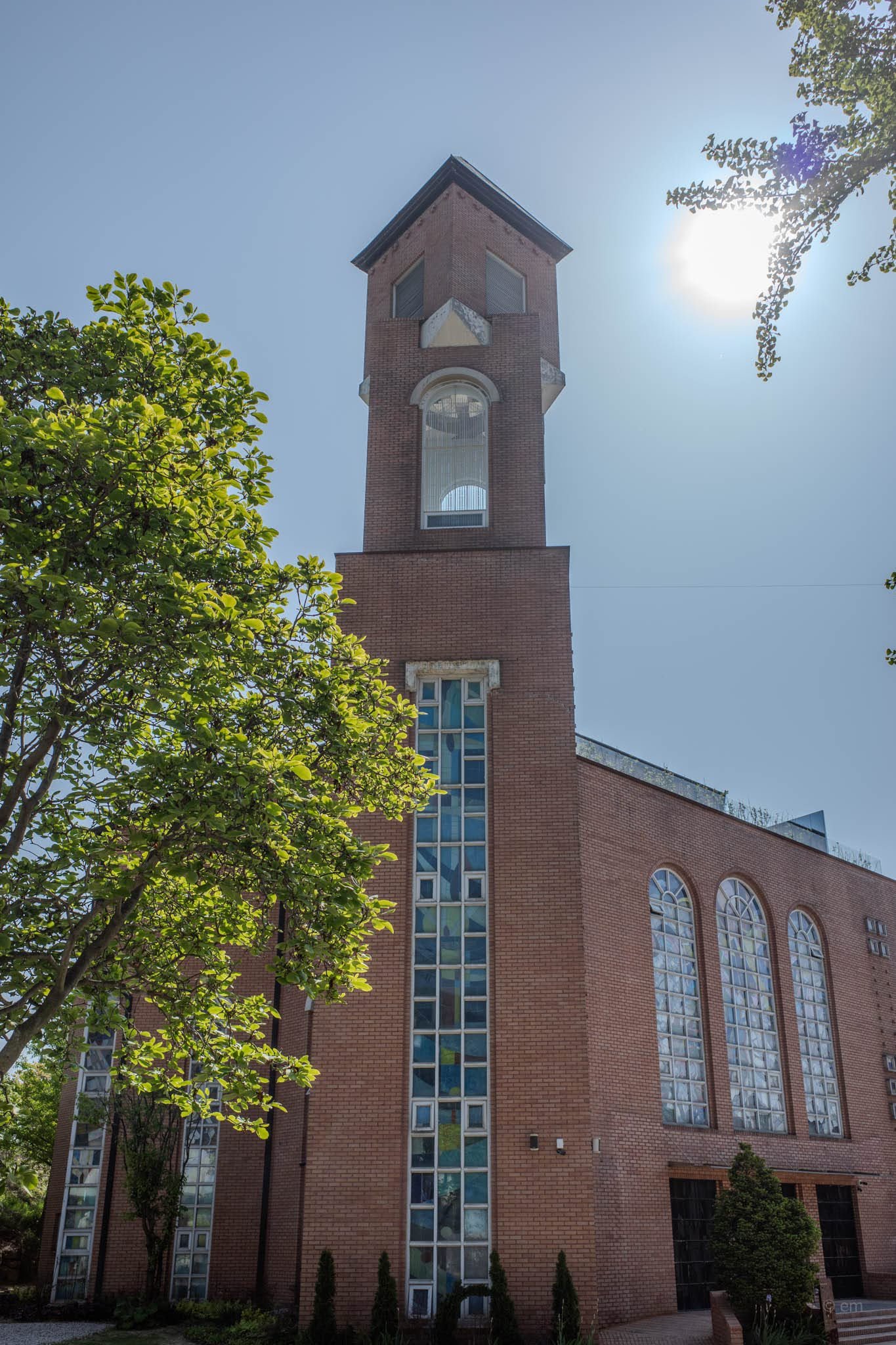
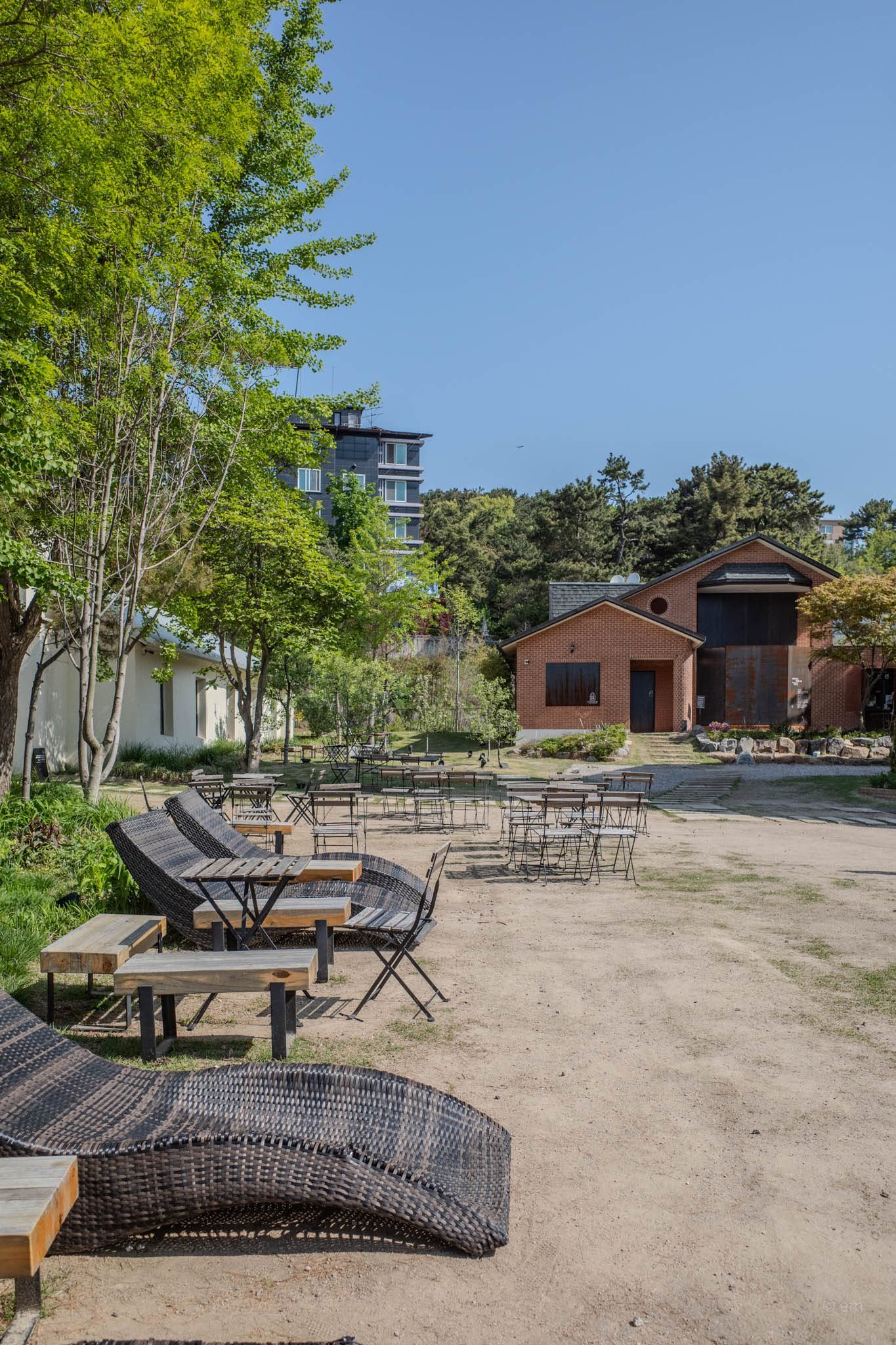
Approaching from the car park, the scale registers before the details do. The bell tower rises against the sky — original brick, original proportions, now wearing a rust-patinated steel sign at its base. Two distinct buildings flank the grounds: the main cathedral mass with its arched stained glass façade, and to one side a modest white-rendered chapel with a pointed spire, more vernacular than Gothic, the two buildings in quiet dialogue across a gravel courtyard. Iron bistro chairs and tables scatter across the sandy open ground between them; wicker loungers lean in the shade of older trees. The whole compound is called 숲의 전당 (Hall of the Forest), 숲의 별당 (Pavilion of the Forest), and 헤리티지관 (Heritage Hall) — three separate structures, one accumulated concept.
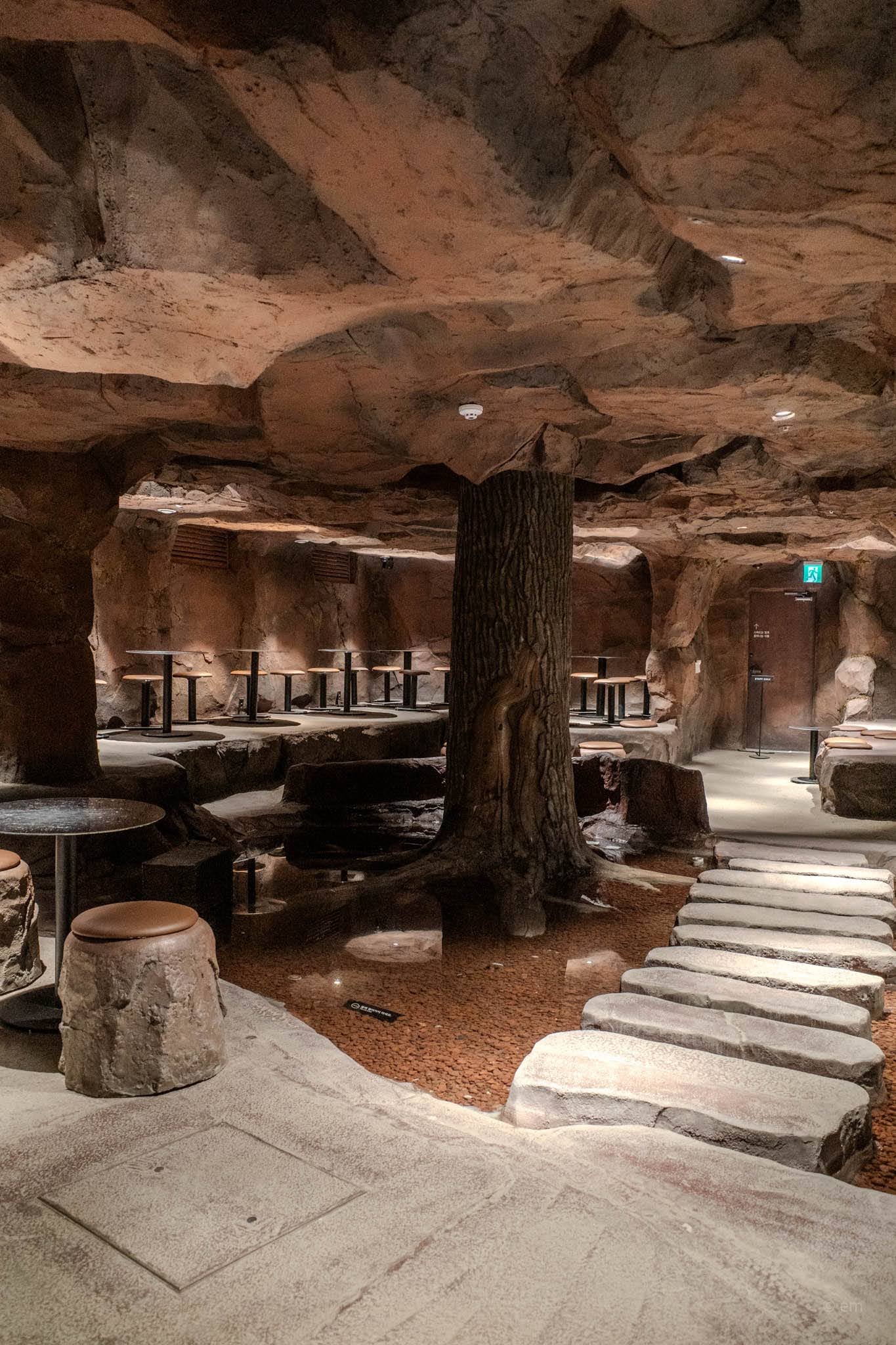
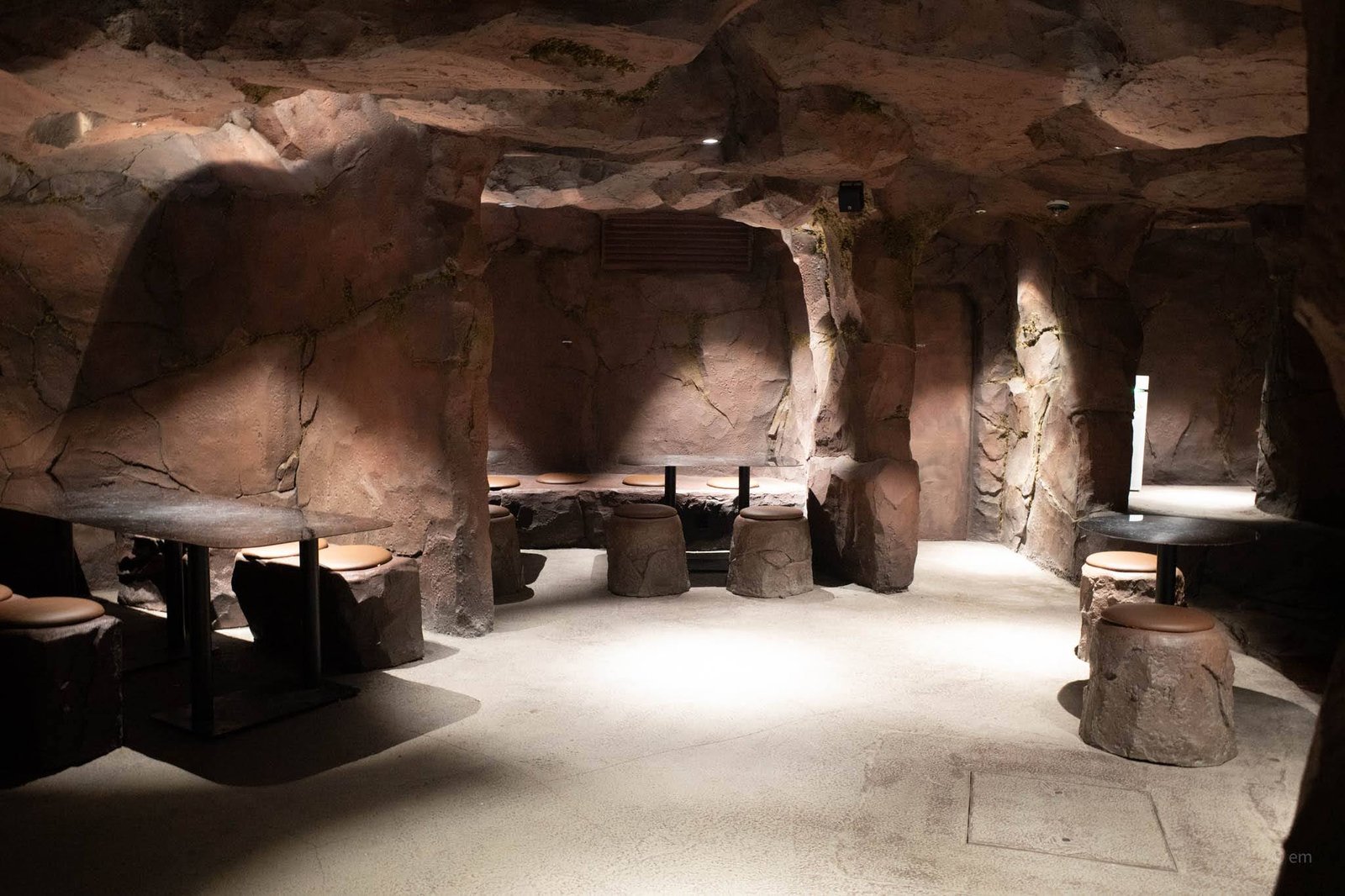
Below Ground
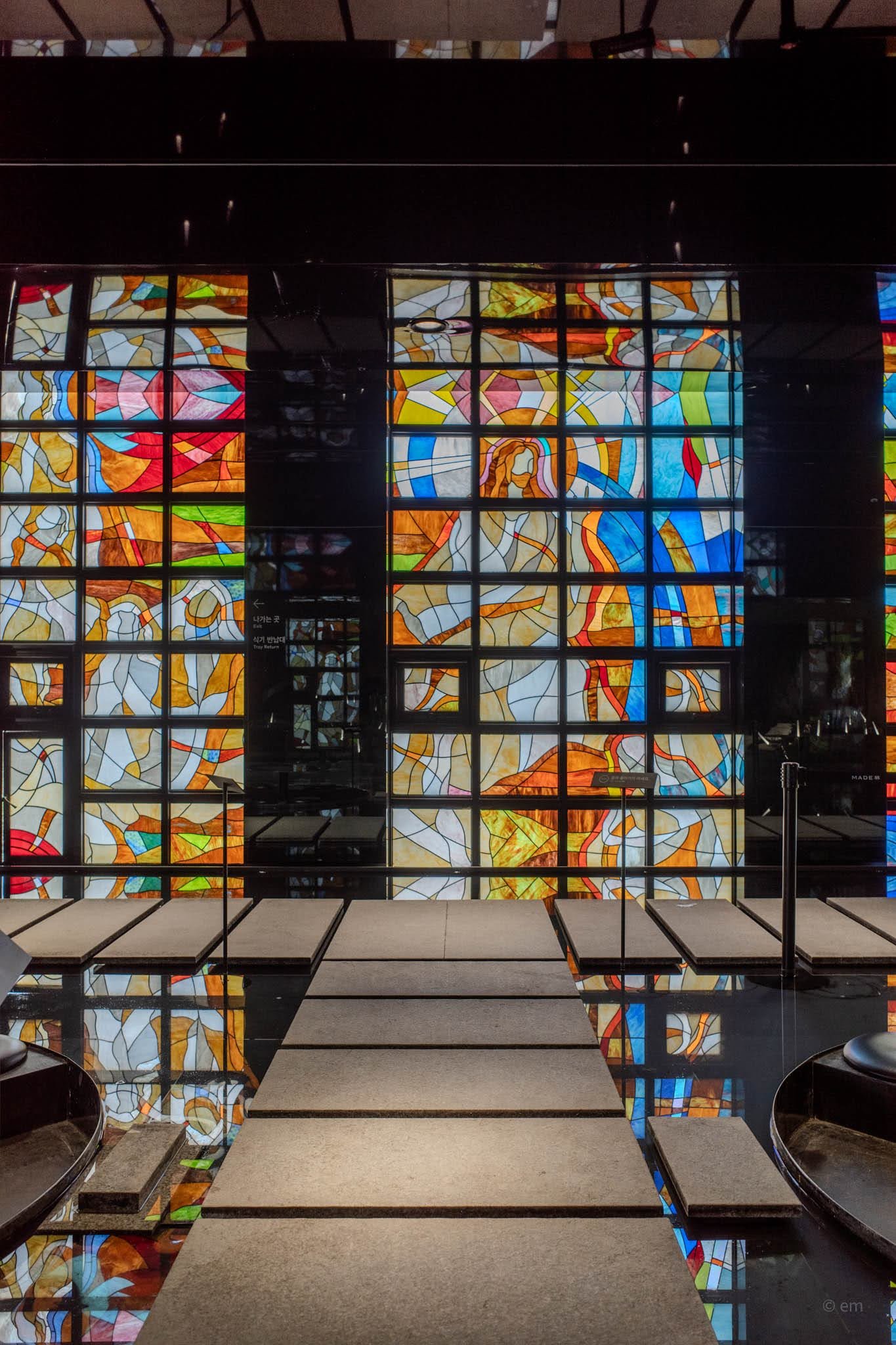
The basement is where the spatial concept announces itself most boldly. Descending the stairs, the temperature drops and the light changes. The space has been sculpted to resemble a cave: walls and ceiling finished in rough-textured earth tones, the rock face articulated with cracks and ridges, actual tree trunks rising through the floor as columns. Stepping stones cross a shallow channel of water. Tables perch on rock platforms at different heights, the seating low and tucked into carved-out alcoves. The effect is less theatrical than it sounds — the dimness and the mineral smell of the space produce something genuinely subterranean, a place where the ordinary measurement of time feels briefly suspended.
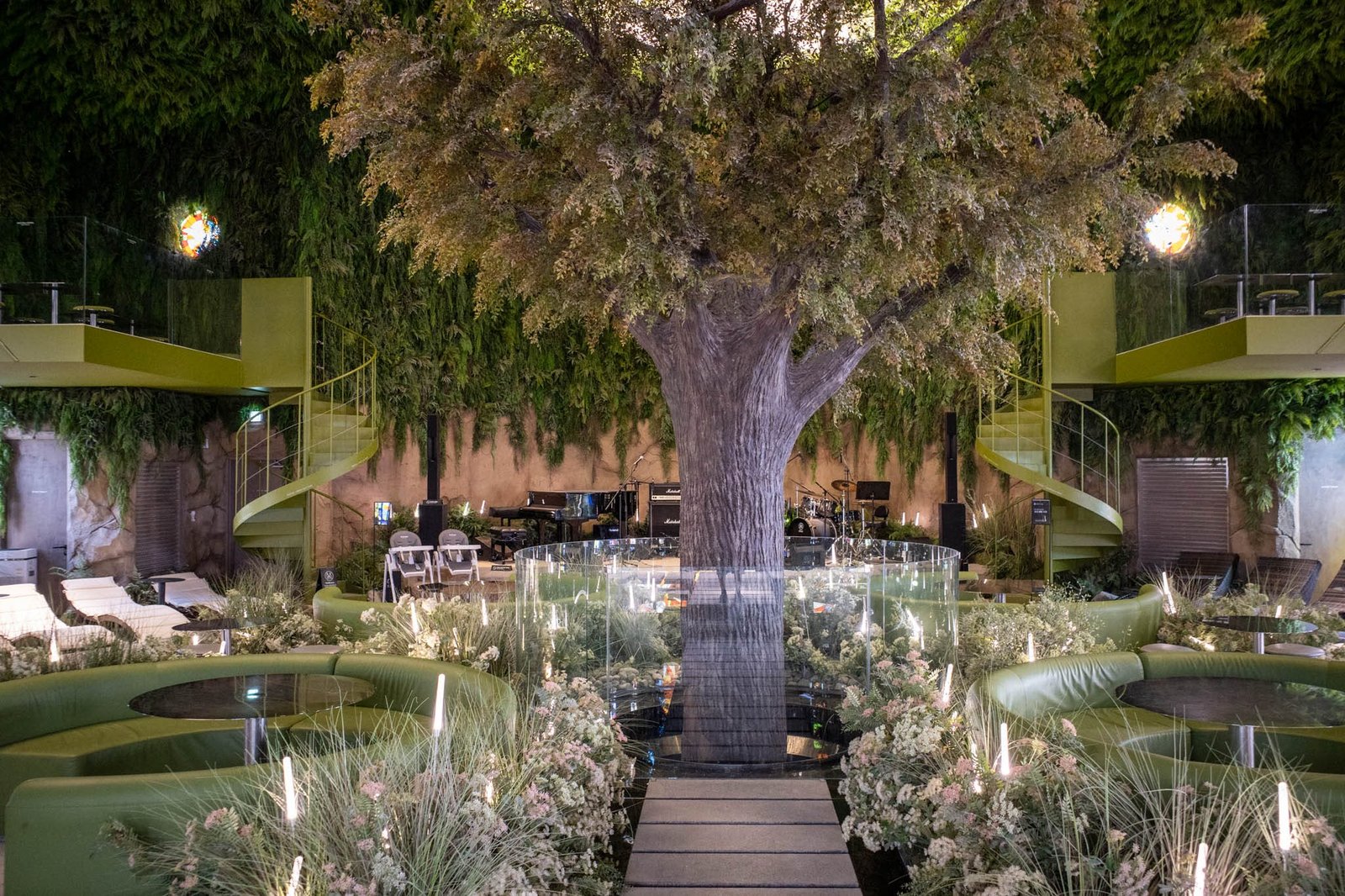
The Main Hall
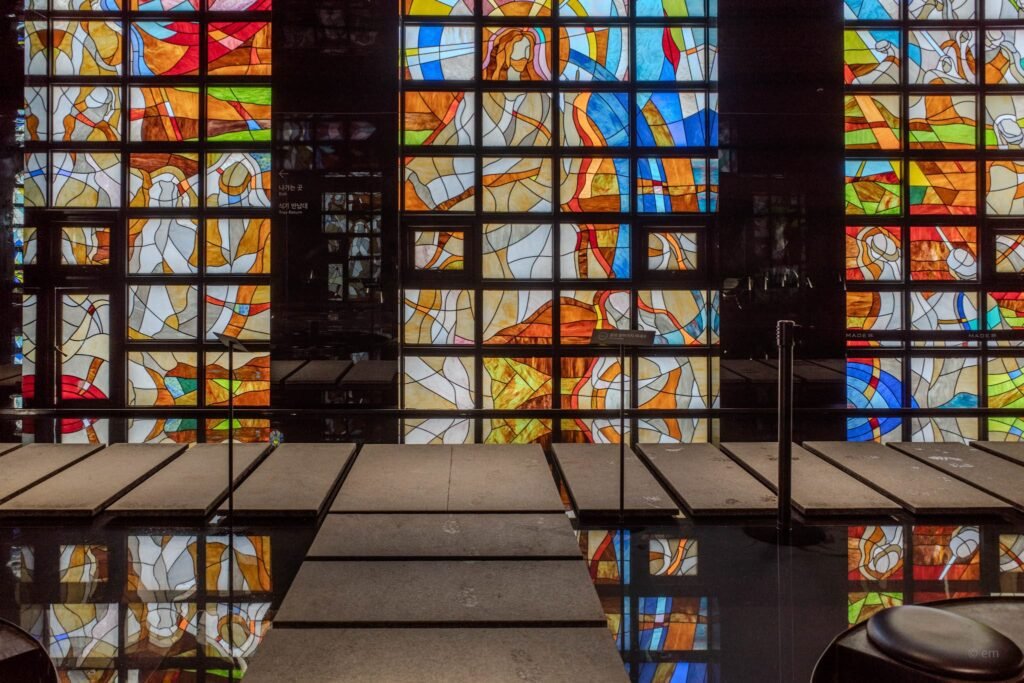
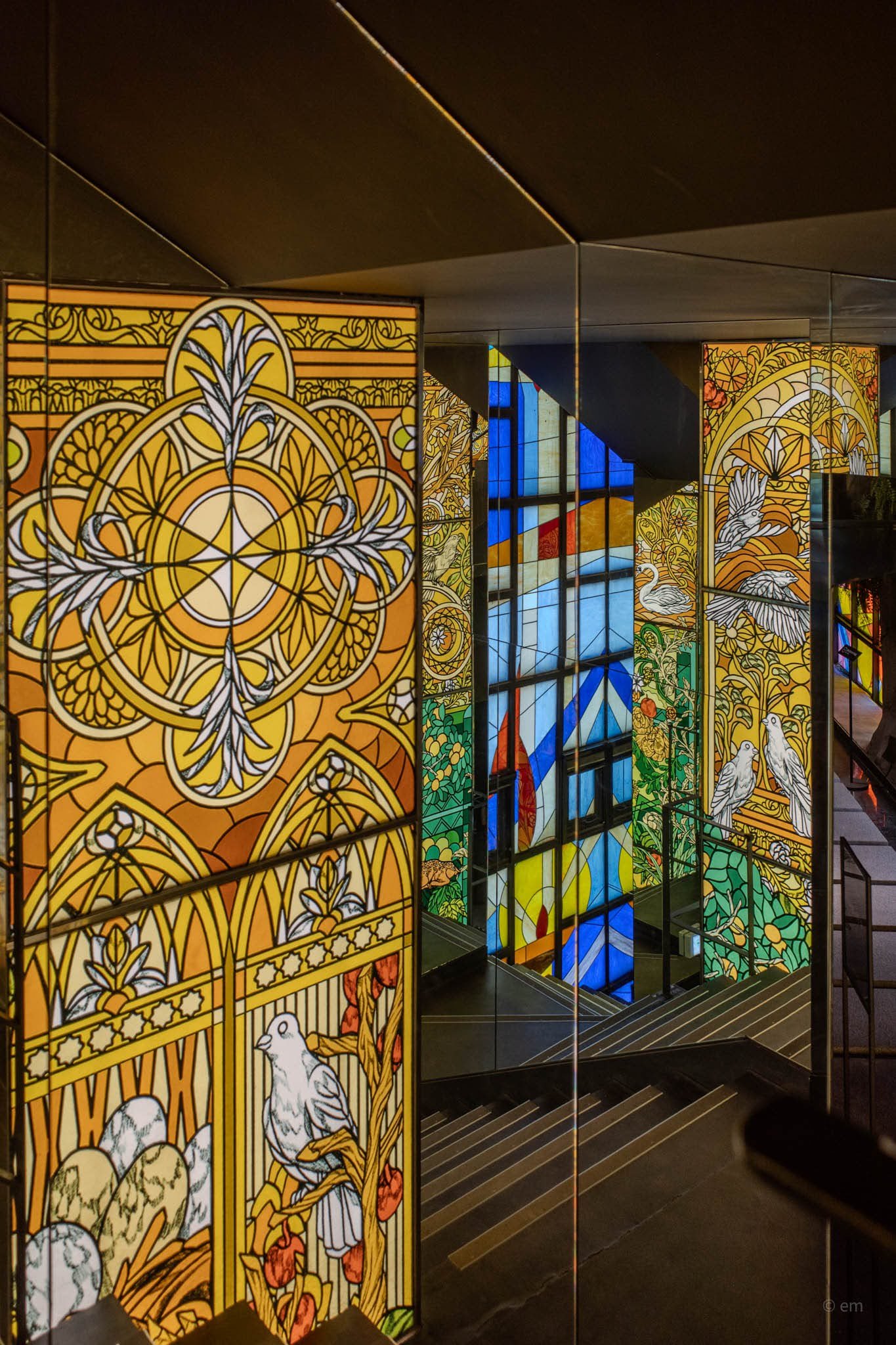
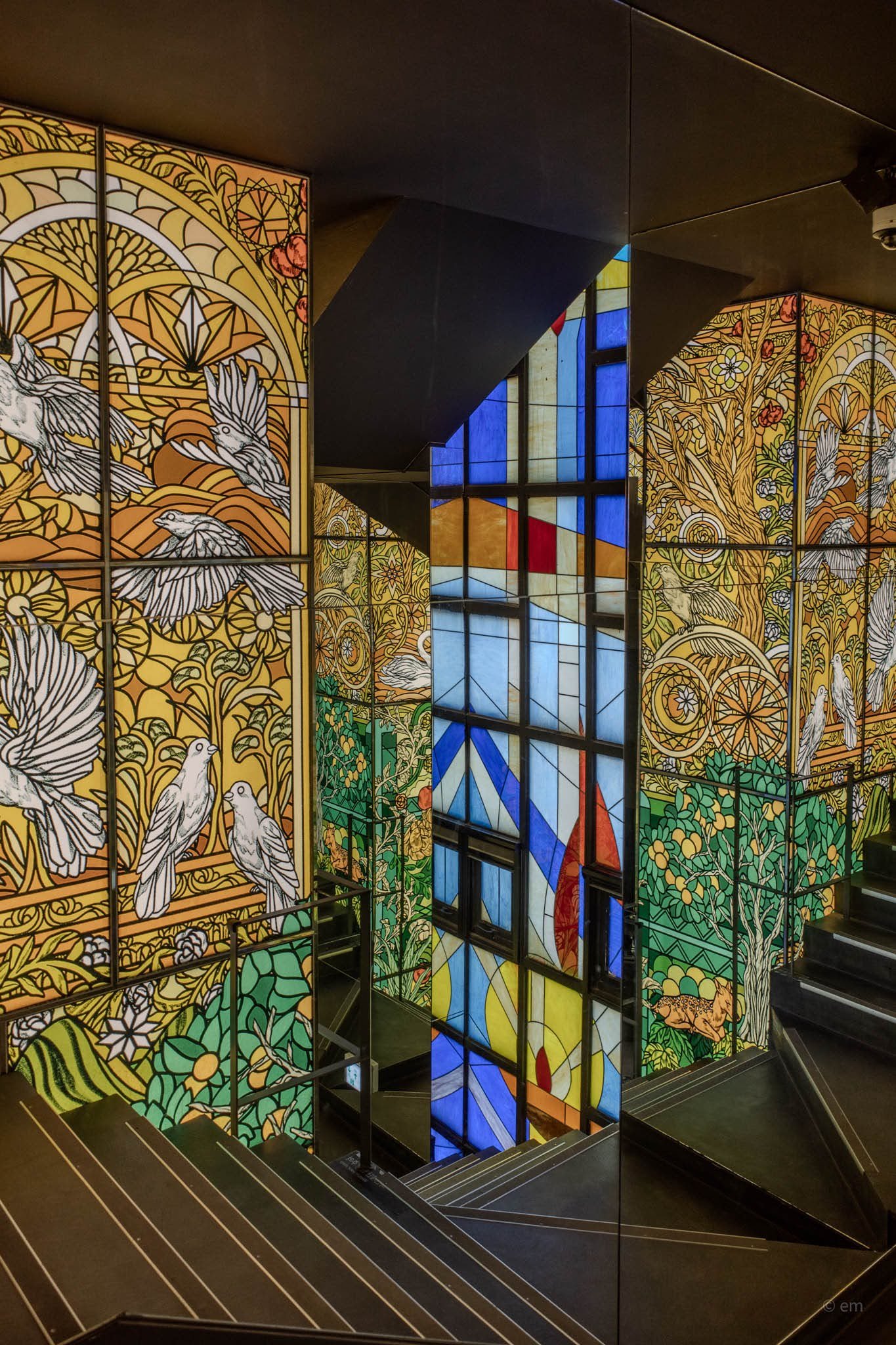
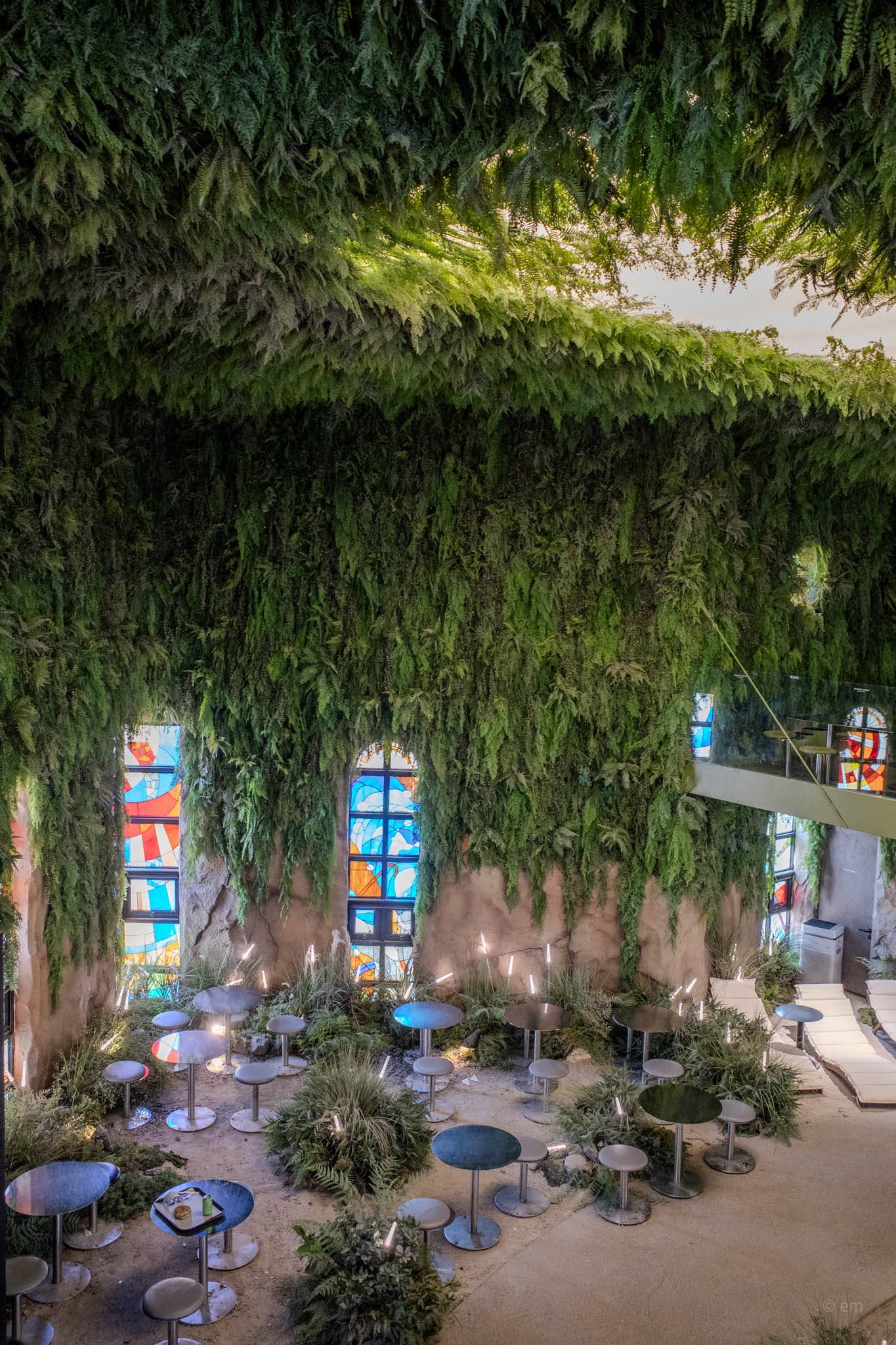
The former nave is where the project reaches its most dramatic register. The interior soars through multiple floors, the original arched windows now filled with vivid abstract stained glass — bold geometric fields of red, blue, and gold at the lower levels, more figurative compositions of wildflowers, deer, and doves winding up through the stairwells in an Art Nouveau key. Every surface of the vertical climb is glazed.
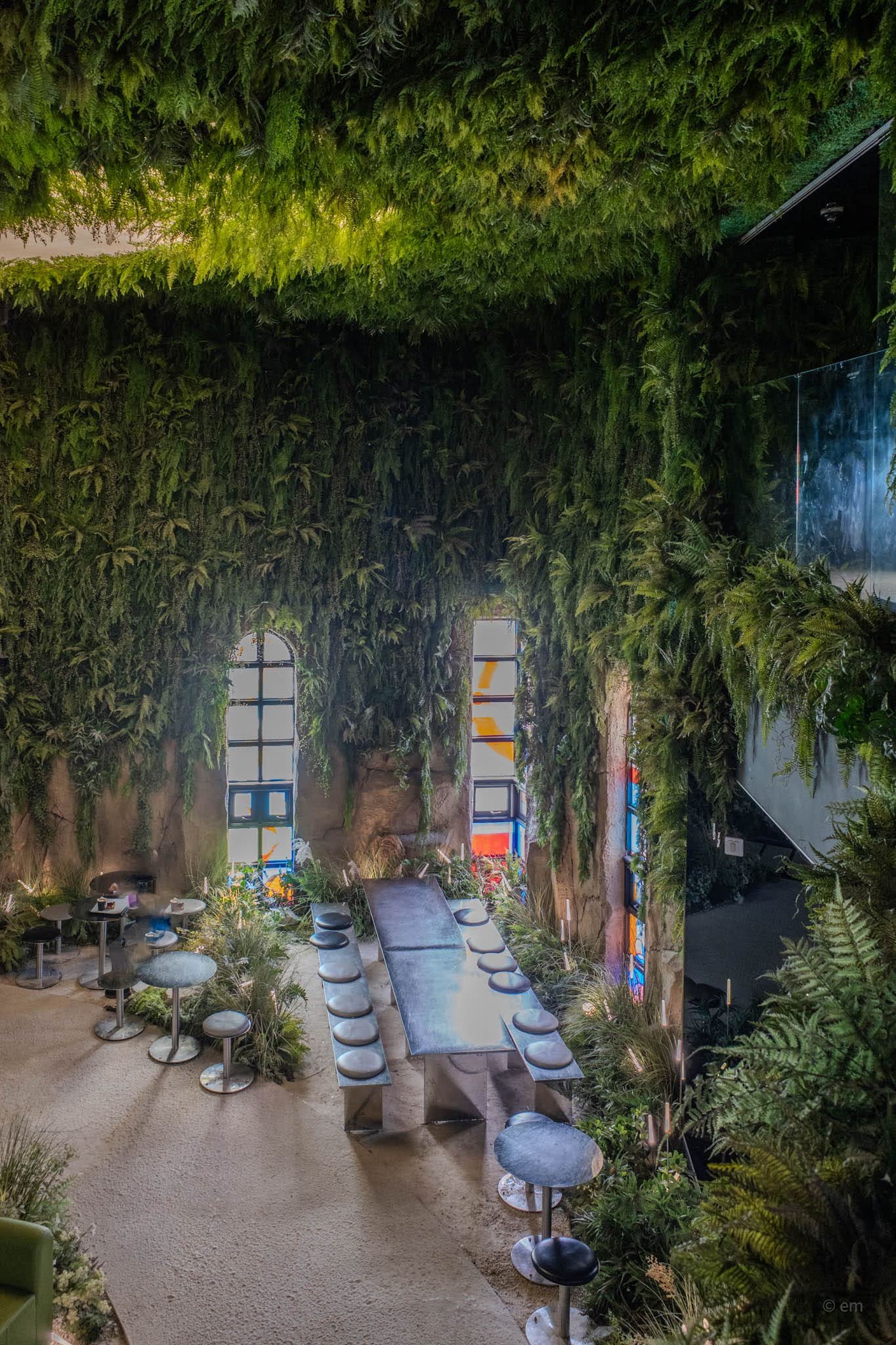
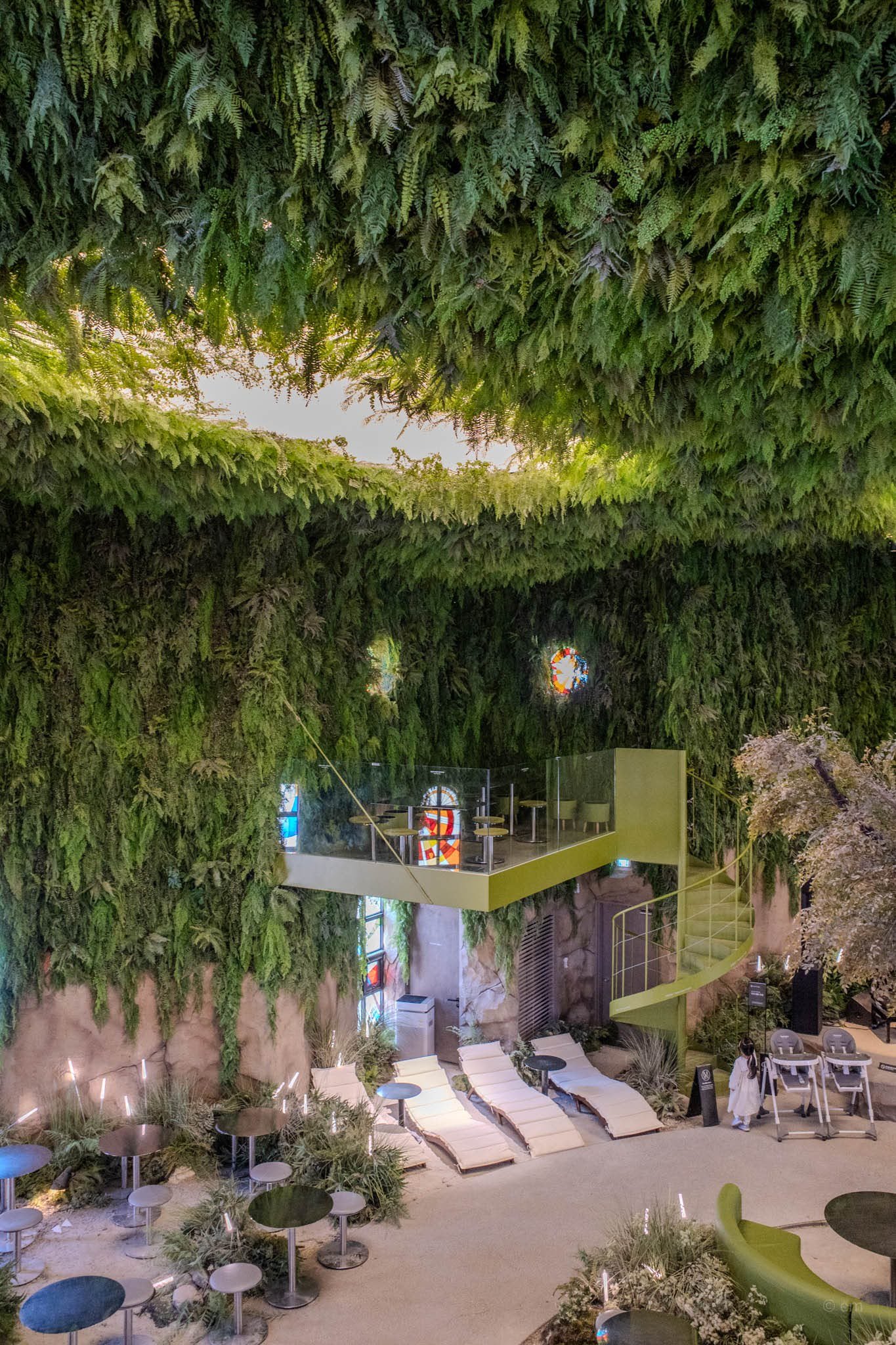
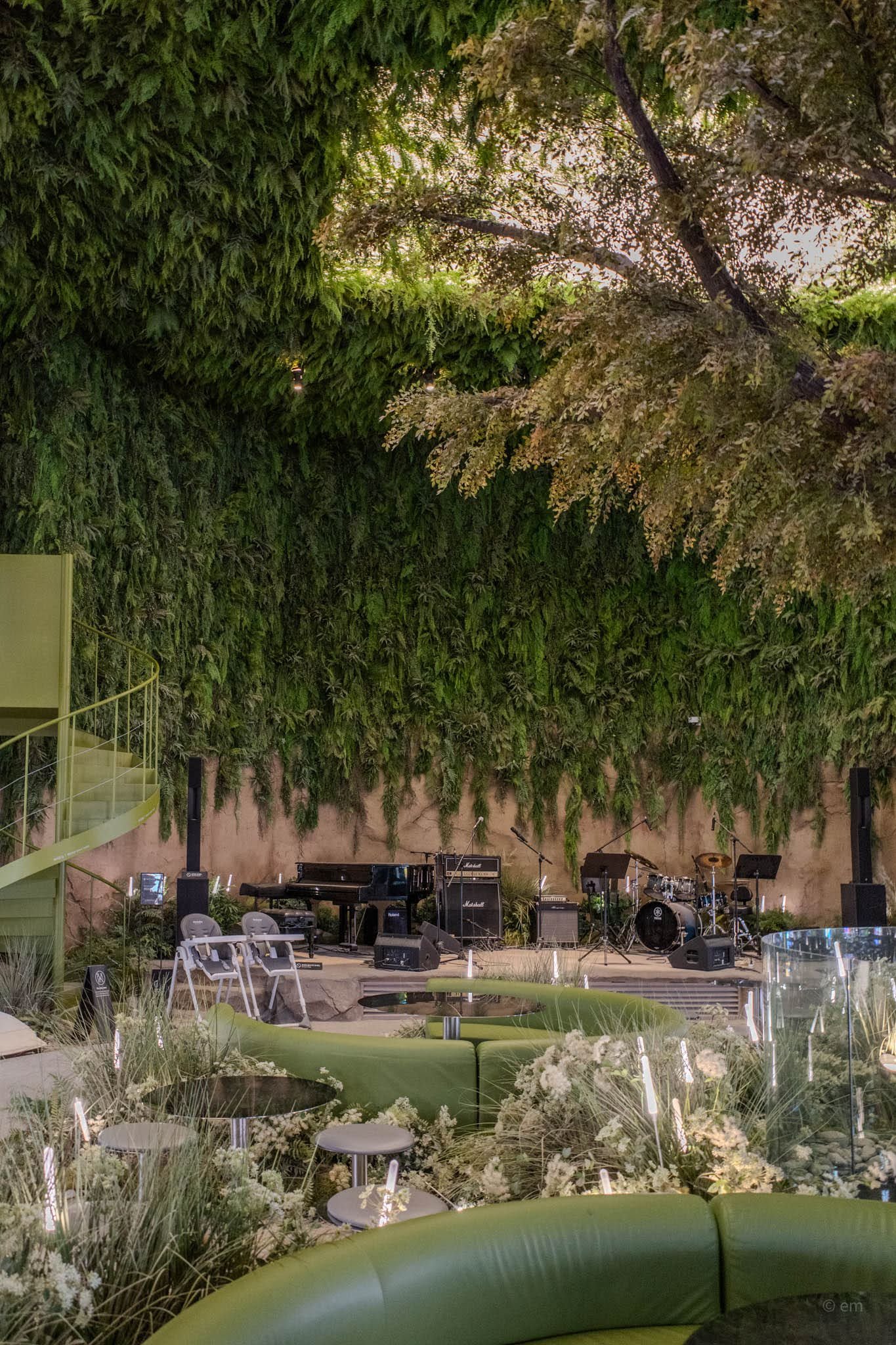
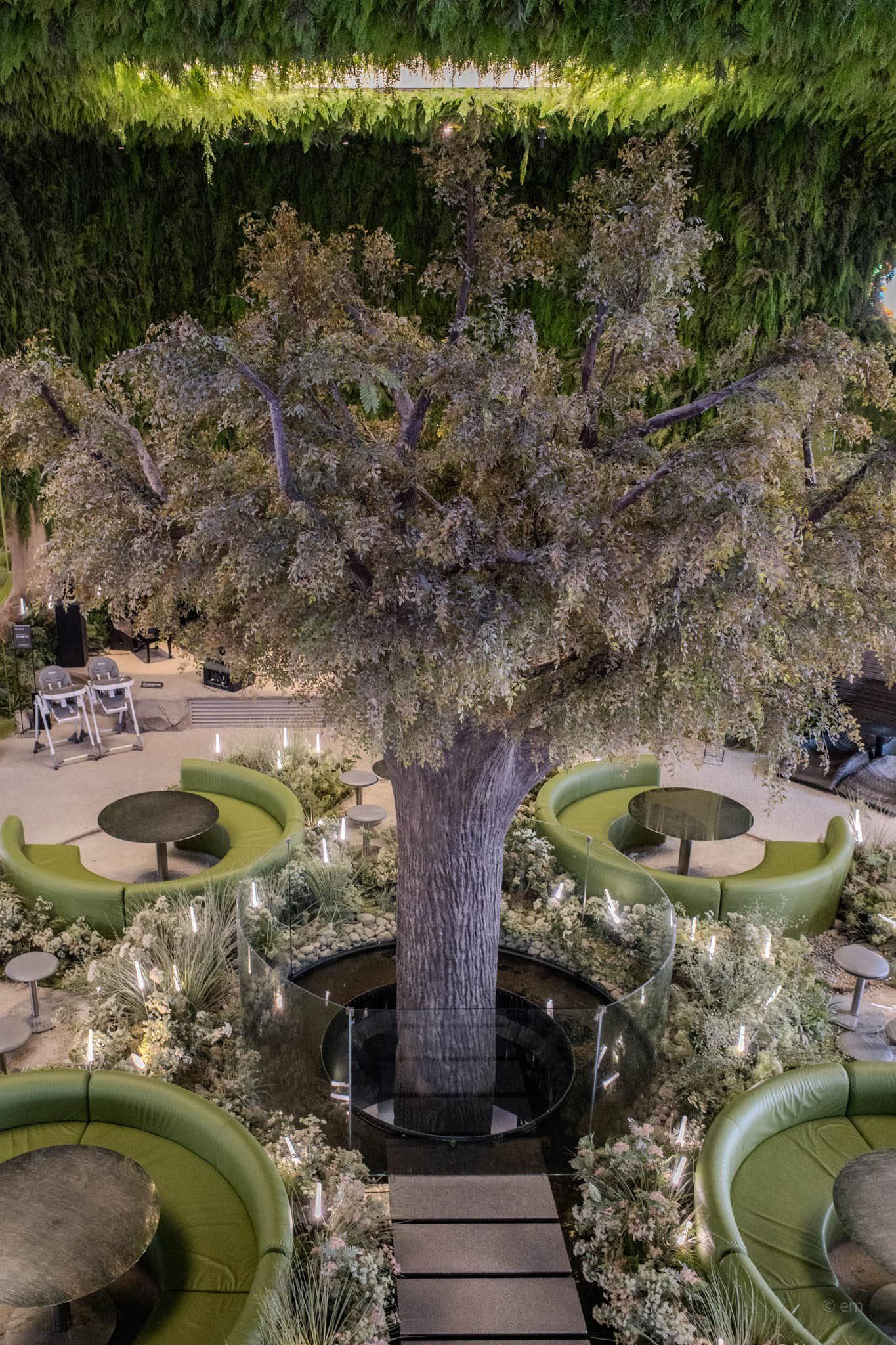
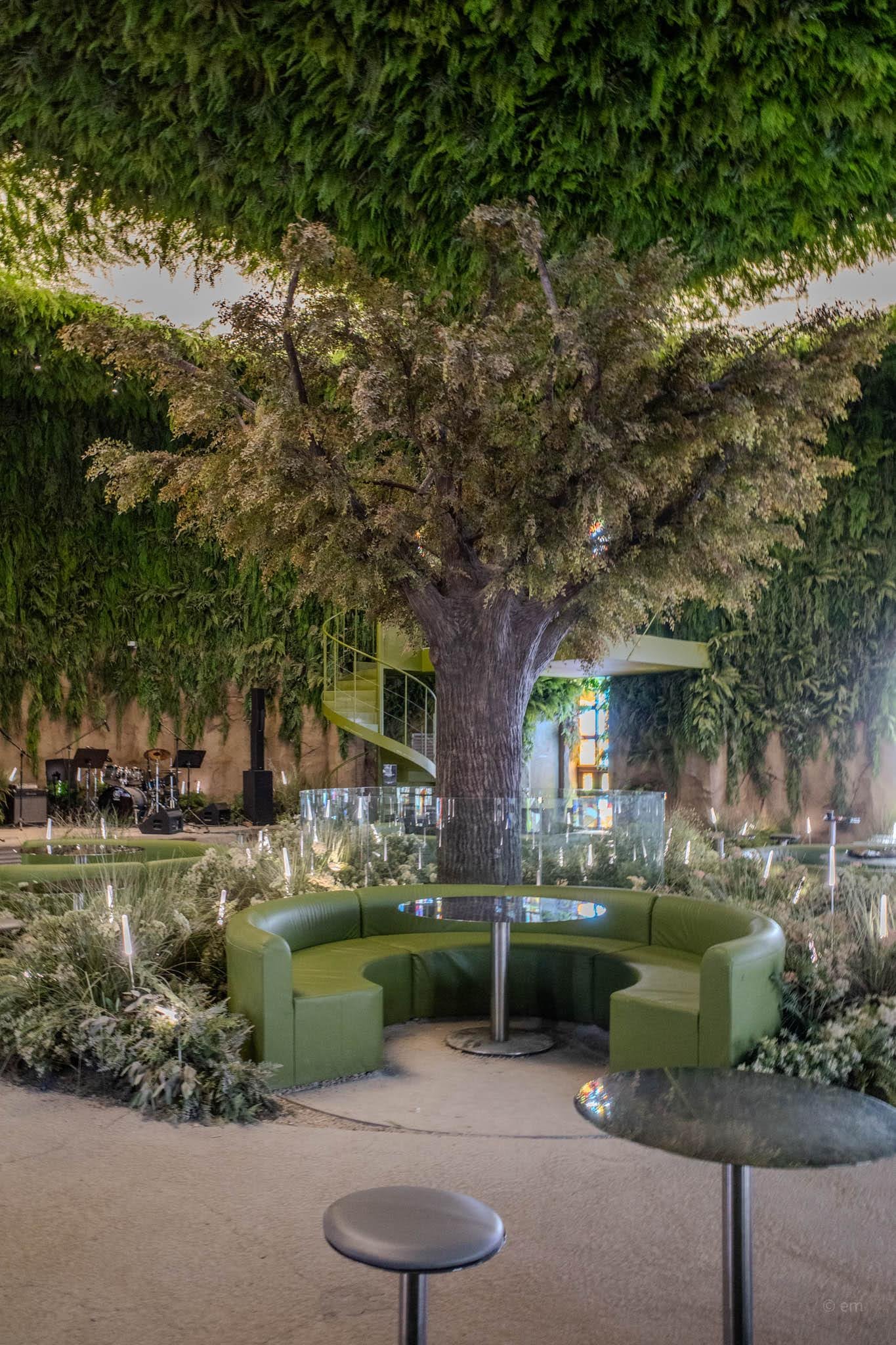
The floor of the main hall has been cleared of pews and replaced with something else entirely: a full indoor garden, planted densely with grasses, ferns, and wildflowers, with slim candlelight-style lamps rising among the stems. At the center of it all stands an enormous tree, its canopy spreading to fill the upper space, its trunk encircled by a cylindrical glass barrier and a ring of curved green leather sofas. From the floors above, looking down through a hanging curtain of ferns that covers the ceiling completely, the effect is genuinely disorienting — the inside and outside have exchanged places. At one end of the ground floor, a grand piano and full drum kit sit ready in front of a Marshall stack. The space hosts live performances in the evenings.
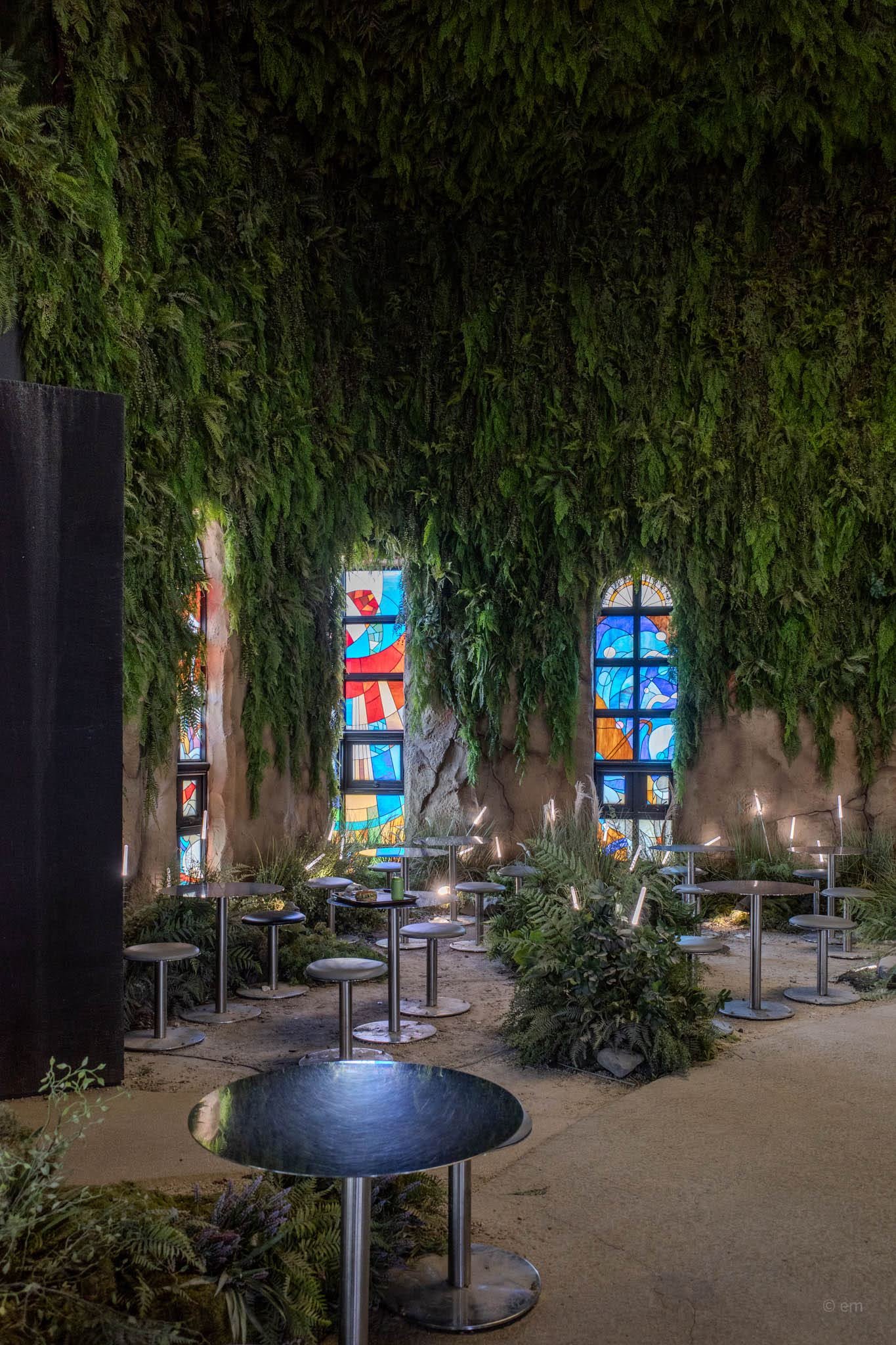
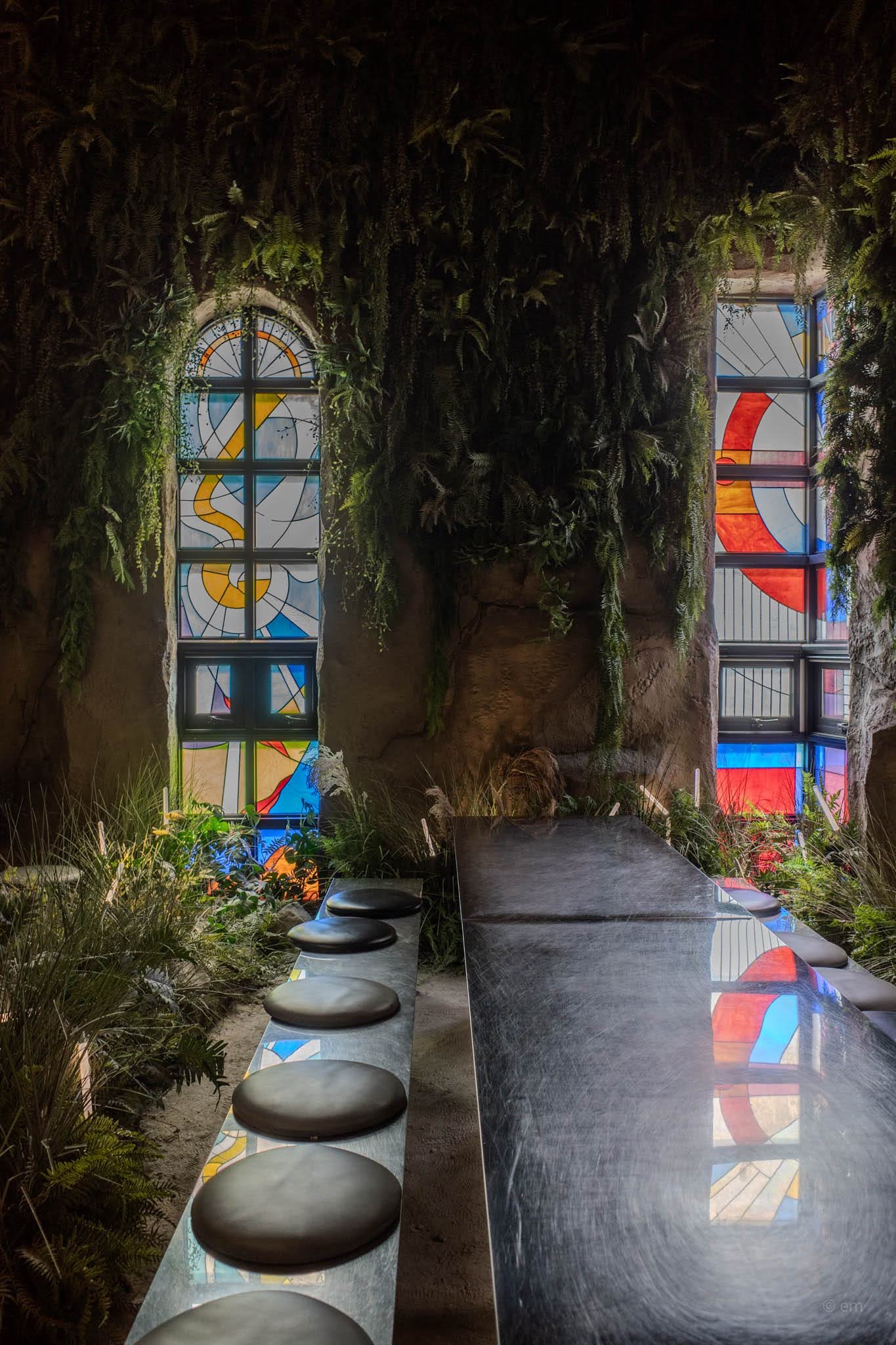
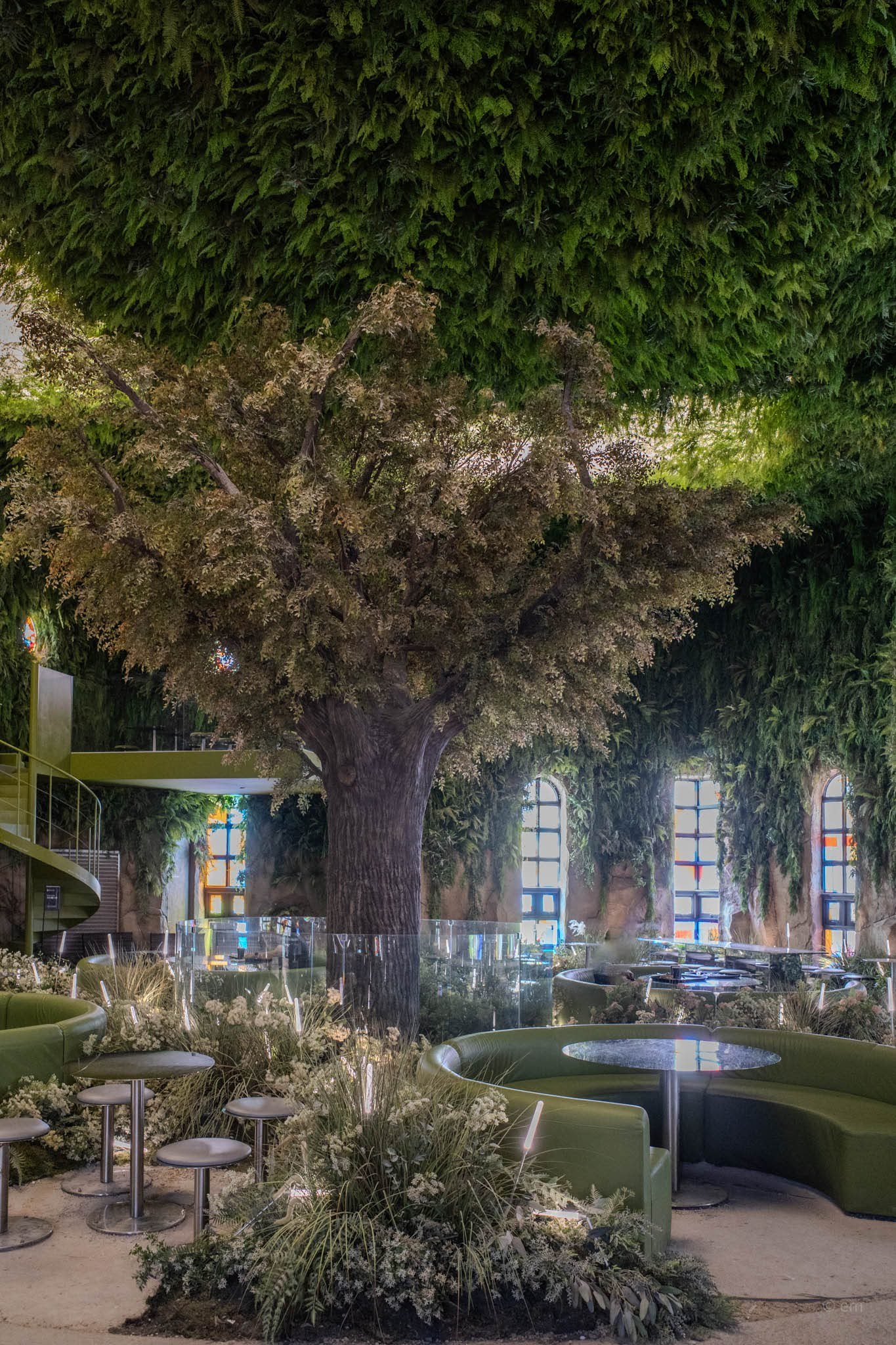
A mezzanine level, reached by yellow-green spiral staircases that spiral up through the fern-draped walls, offers a different vantage — looking down into the canopy rather than up through it, the stained glass circular rose window glowing behind the branches.
The Bakery
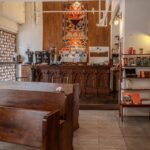
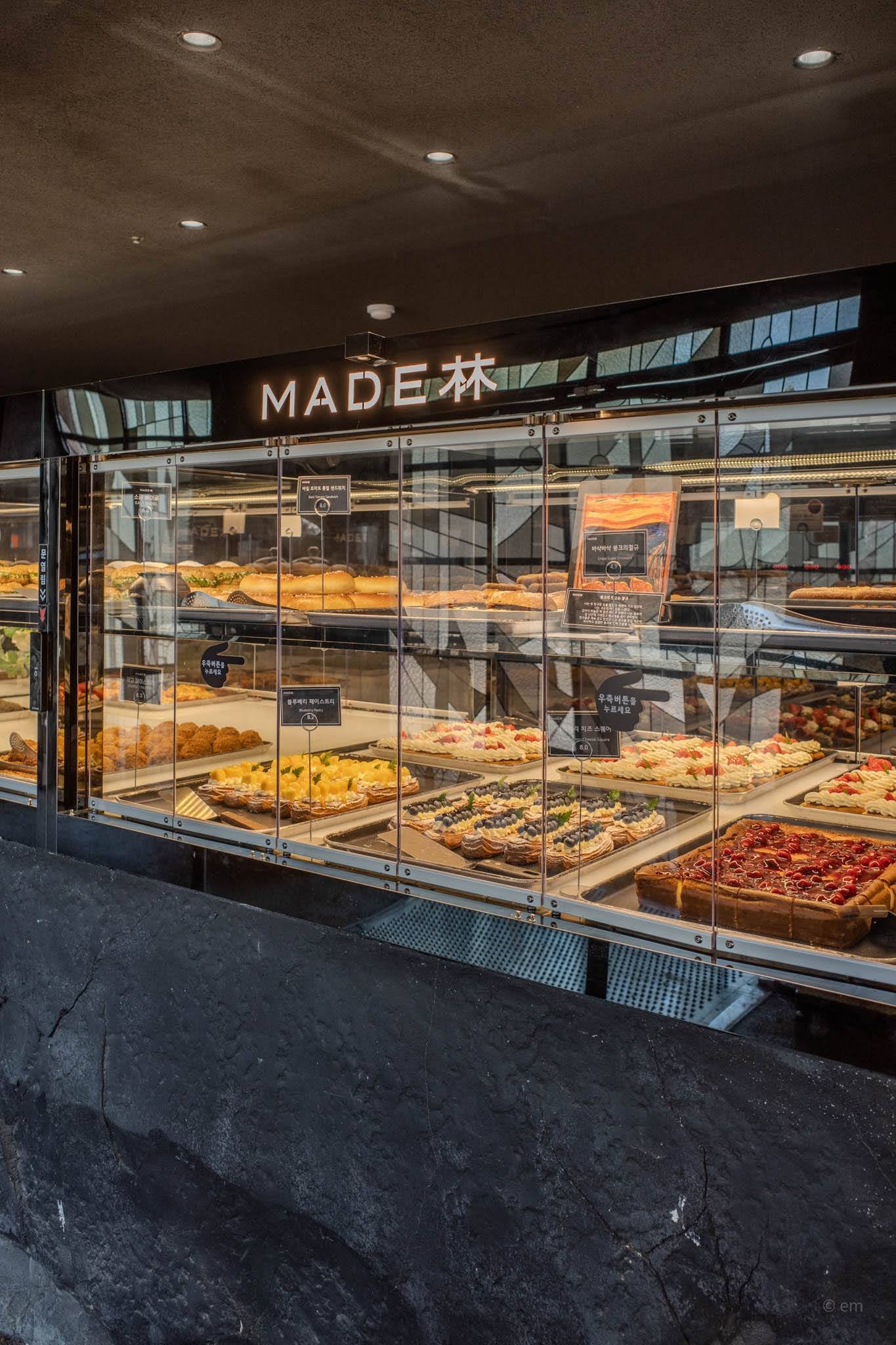
The counter sits off the main hall, the logo backlit in white above a broad refrigerated display case. The signature items are the dolppang (stone bread) and heukppang (soil bread) — names that nod to the earthen concept of the space — alongside a green onion cream cheese bagel that has developed something of a cult following. The bakery operation draws on roasting championship credentials; the pastries lean toward elaborate French-style tarts and fruit-topped cakes. A separate dining menu runs to things like West Sea clam pizza and scallop cream cheese pasta, incorporating local Incheon seafood into a kitchen with hotel-kitchen aspirations.
In the Heritage Hall, a pair of deer named Mae and Dream live behind a low fence — accessible for a small admission fee, an extra layer of the pastoral fantasy the place is building.
MADE林 is located at 42 Yongyuseo-ro 479beon-gil, Jung-gu, Incheon. Open daily 10:00–20:30, last order 19:30. On-site parking available (2 hours free; 1,000 won per additional 10 minutes). Instagram: @madelim_official
The church made a forest; the forest made something harder to name.
If you’re planning a slow day around Yeongjong-do and Incheon, you can look up nearby experiences and day trips here on Klook.
This post contains affiliate links. If you make a booking through them, I may earn a small commission at no extra cost to you.