Somewhere between a Nevada license plate and a Casablanca still, the highway never really ended.
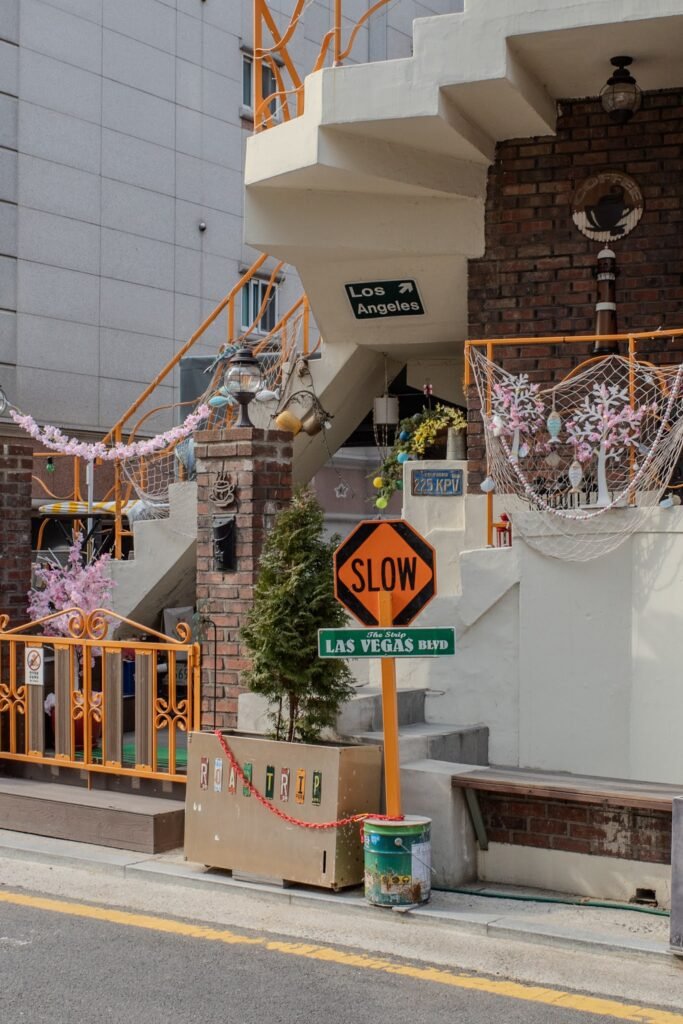
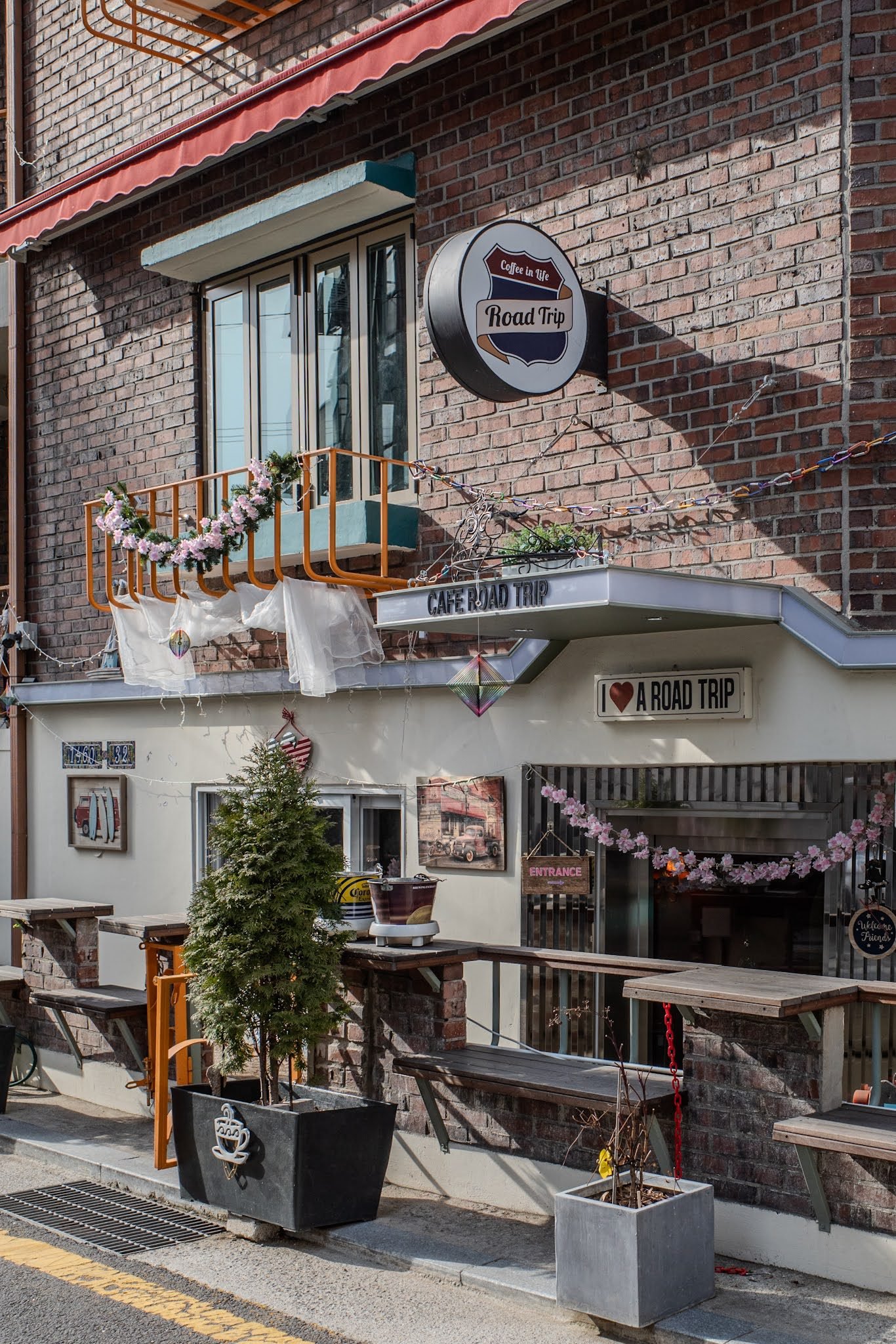
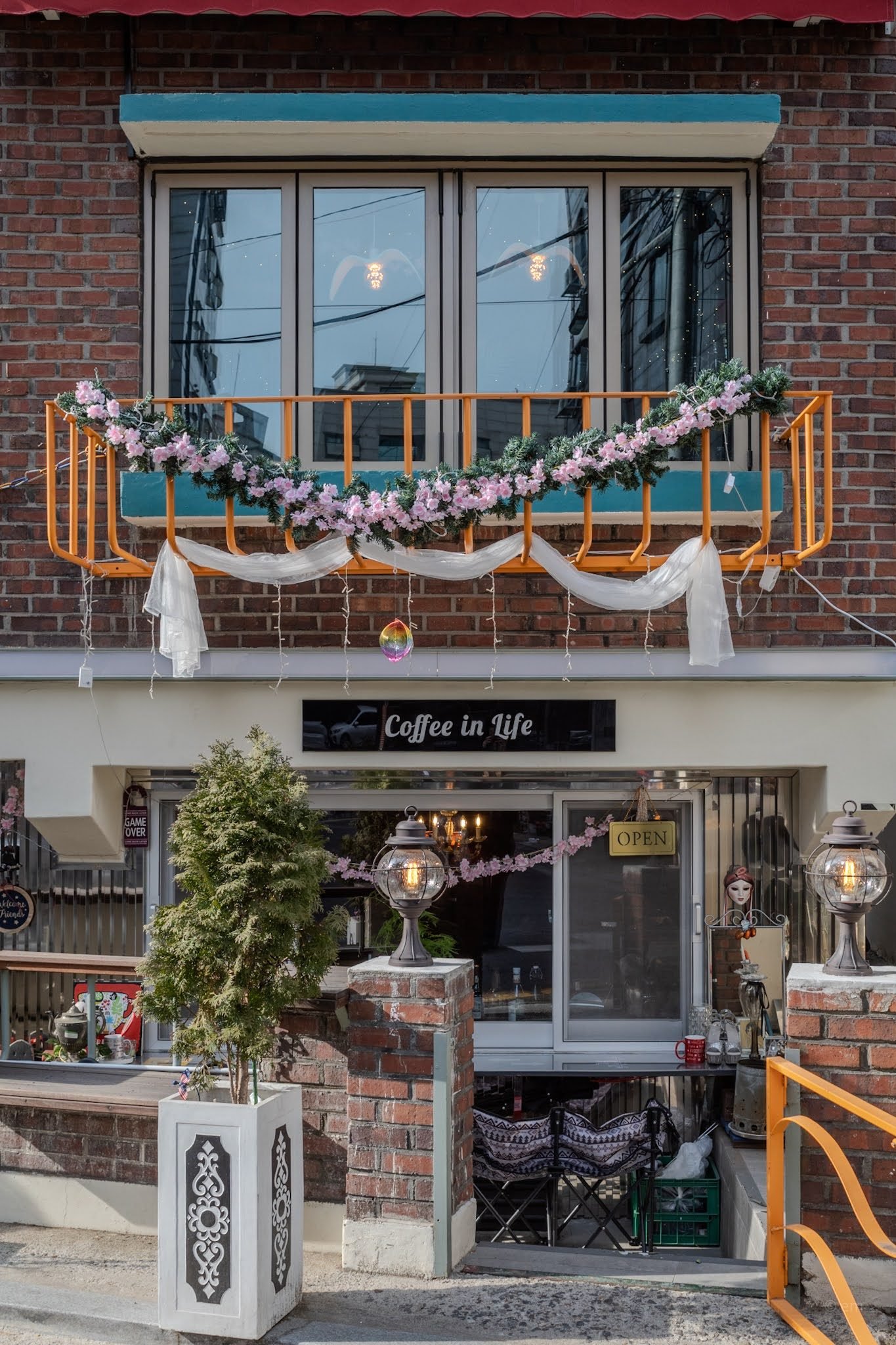
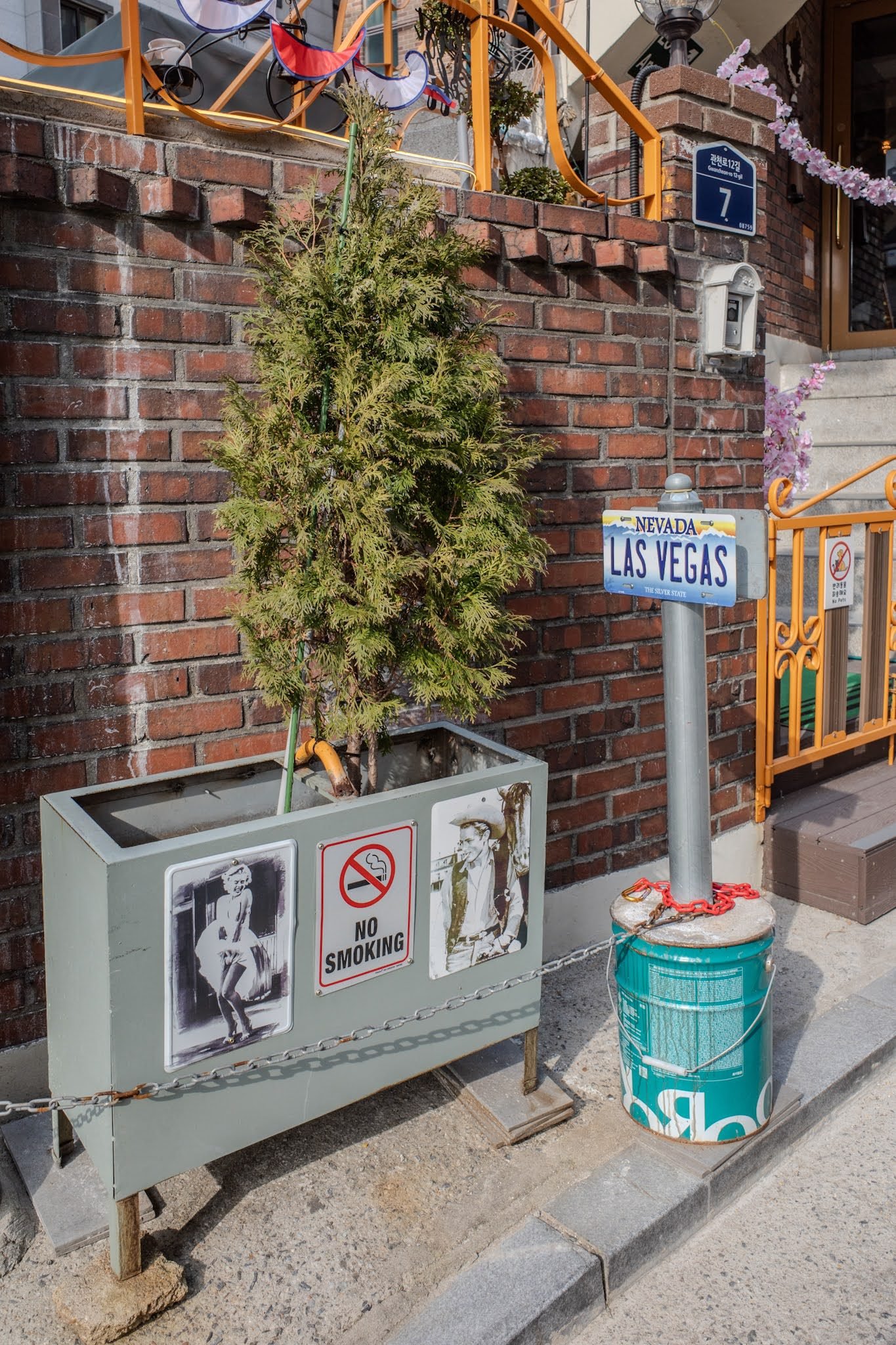
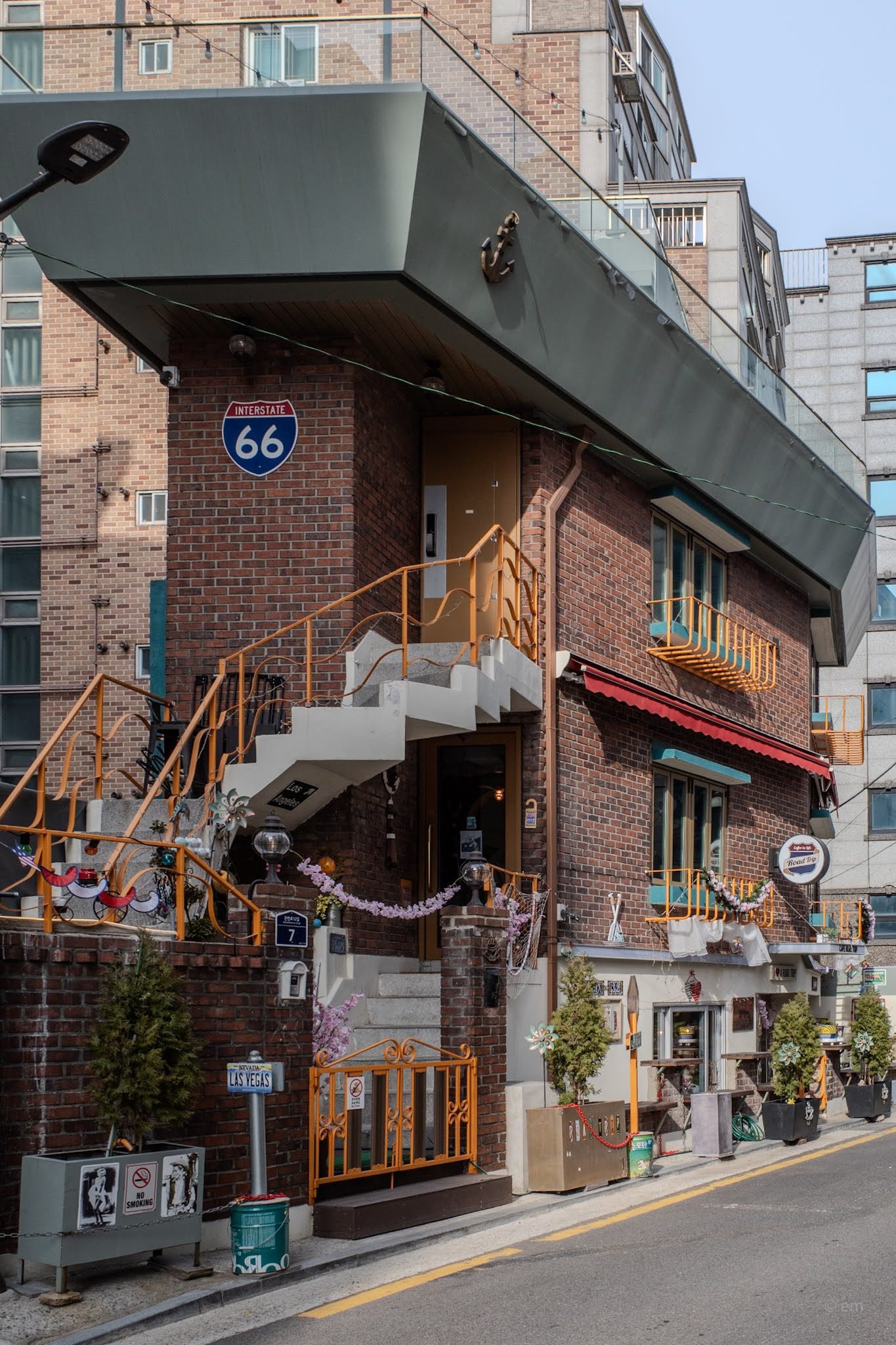
A brick building in a quiet Gwanak-gu backstreet announces itself with the confidence of a roadside attraction: an Interstate 66 shield bolted above the door, a “Las Vegas Blvd – The Strip” street sign staked into the sidewalk, a “SLOW” diamond mounted beside a Los Angeles directional arrow, and cherry blossom garlands strung across orange railings that look lifted from a Route 66 motel. The planter box out front simply reads ROAD TRIP, in mismatched magnetic letters. The message is clear before a single step inside.
Cafe Road Trip — operating under the fuller name Coffee in Life Road Trip — is not a concept café in the tight, coordinated sense. It is more like a private collection that grew around a single obsession: America, specifically the mythologized America of the mid-century road, the Vegas strip, the Pacific shore, and the silver screen. The owner appears to have spent years assembling the evidence.
Two Floors, One Continent
The interior maps a journey most Americans of the 1950s held as a kind of dream: Route 66 east to west, Las Vegas first, then Hollywood, then the Pacific at Santa Monica. The building is organized accordingly.
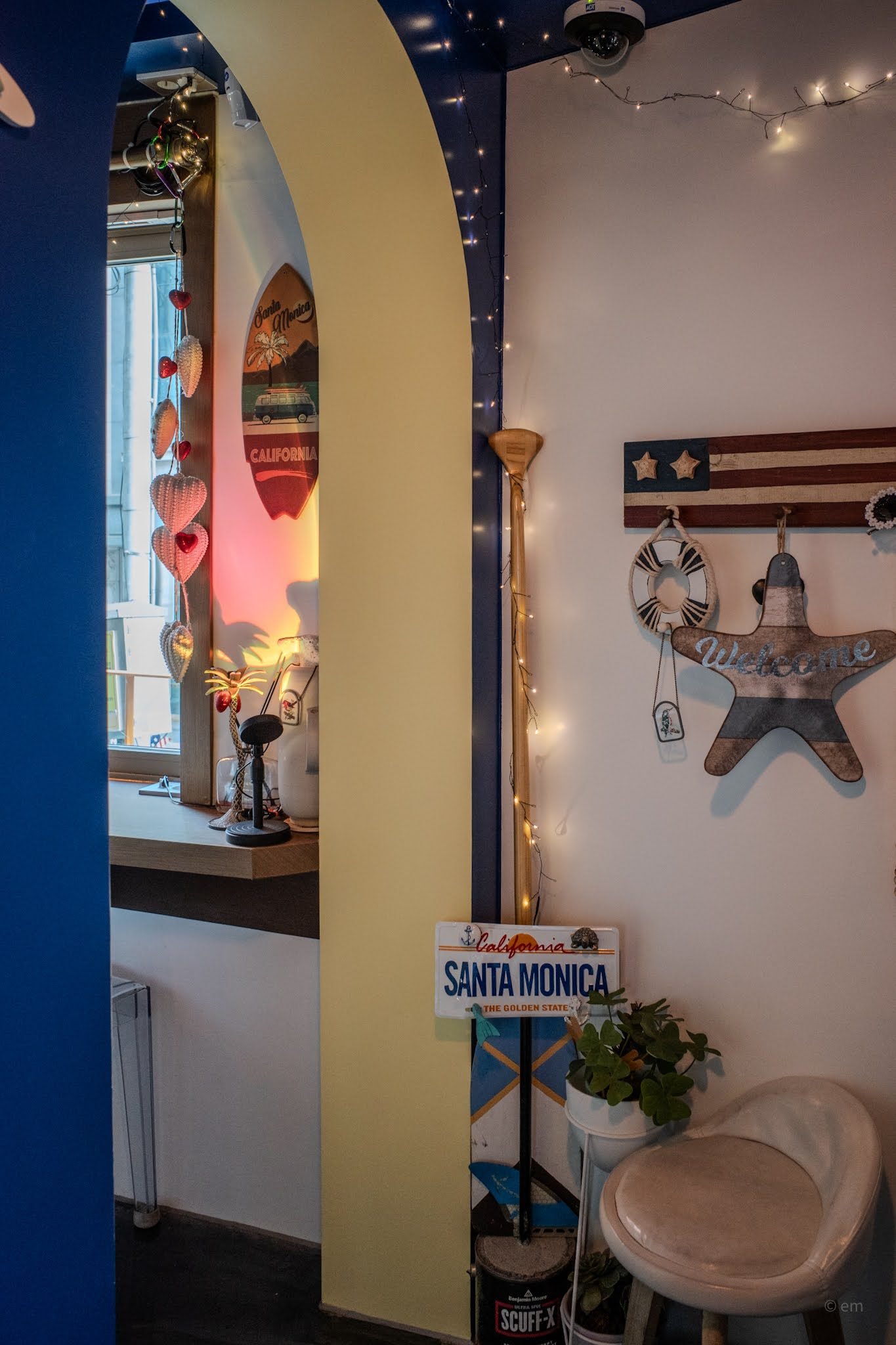
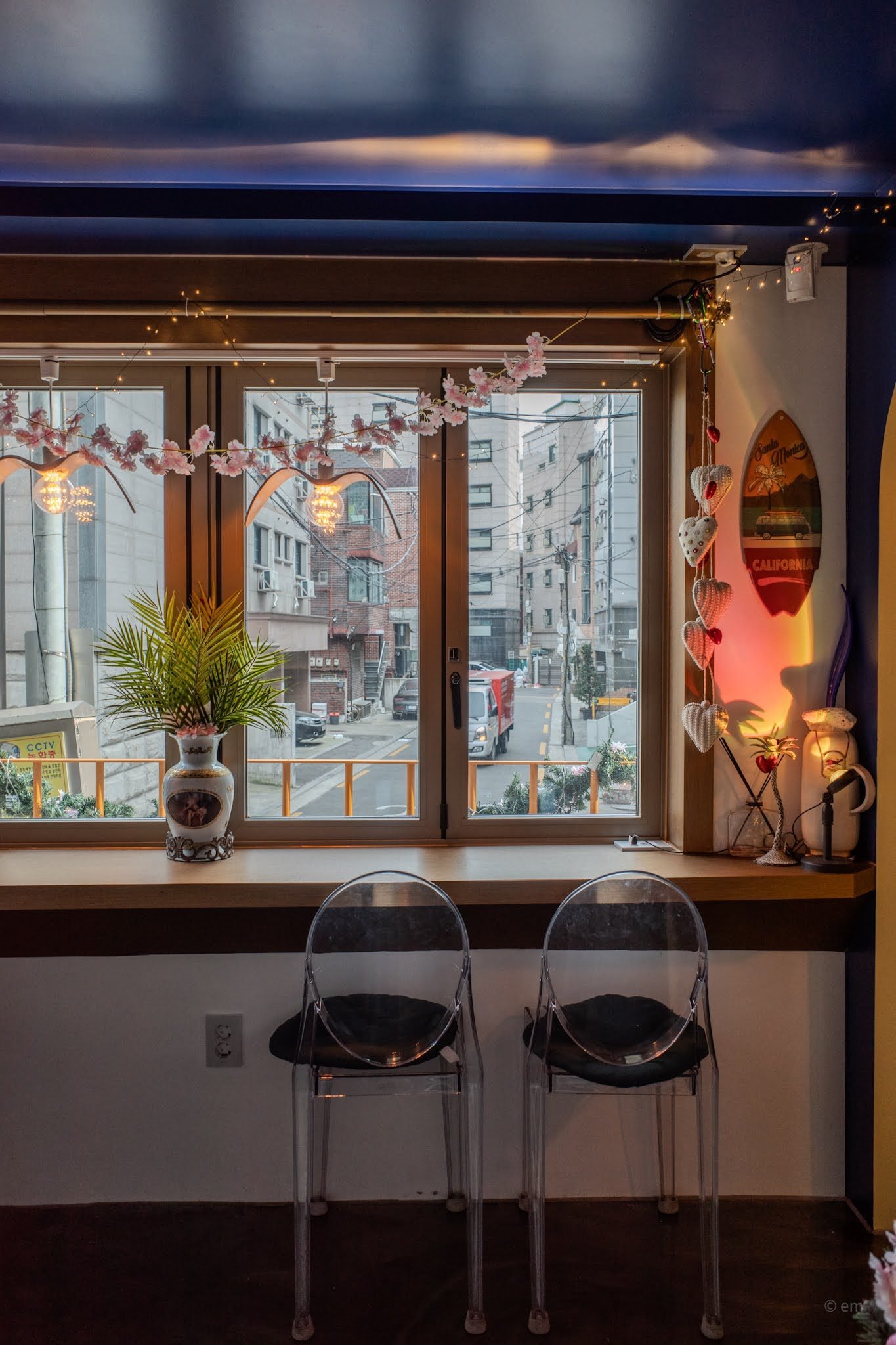
The ground floor entrance is labeled “Coffee in Life” and reads as California. The ceiling is painted deep cobalt. Surfboards lettered Santa Monica and California hang on the walls. A yellow archway frames a nook decorated with starfish, a miniature American flag panel, and a “Santa Monica – The Golden State” placard on a post. The seating runs in clean white shell chairs against teal banquettes, with marble-top tables and fairy lights draped across the deep blue. A cinema marquee sign on the wall reads: I Love a Road Trip — Now Showing.
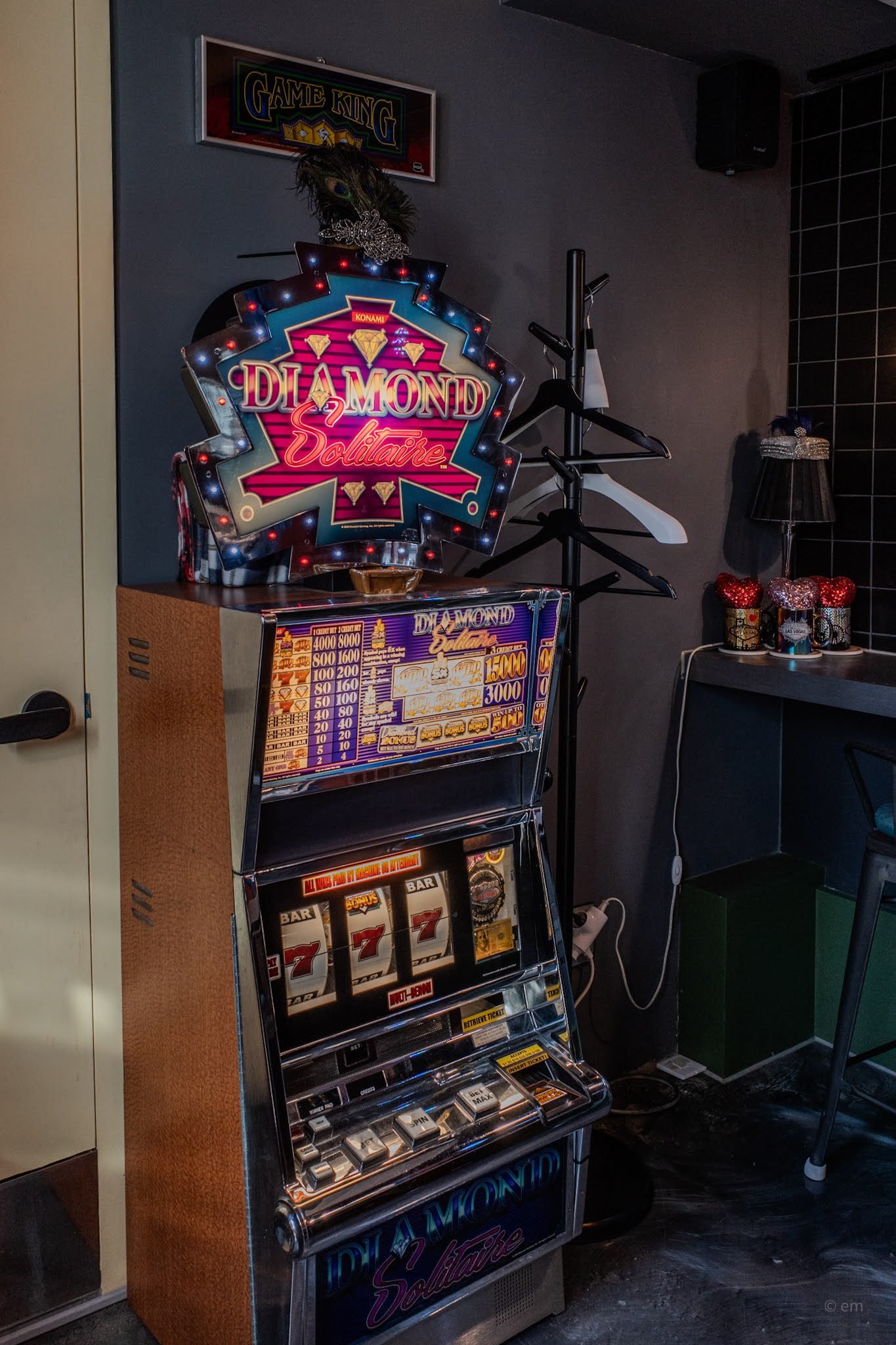
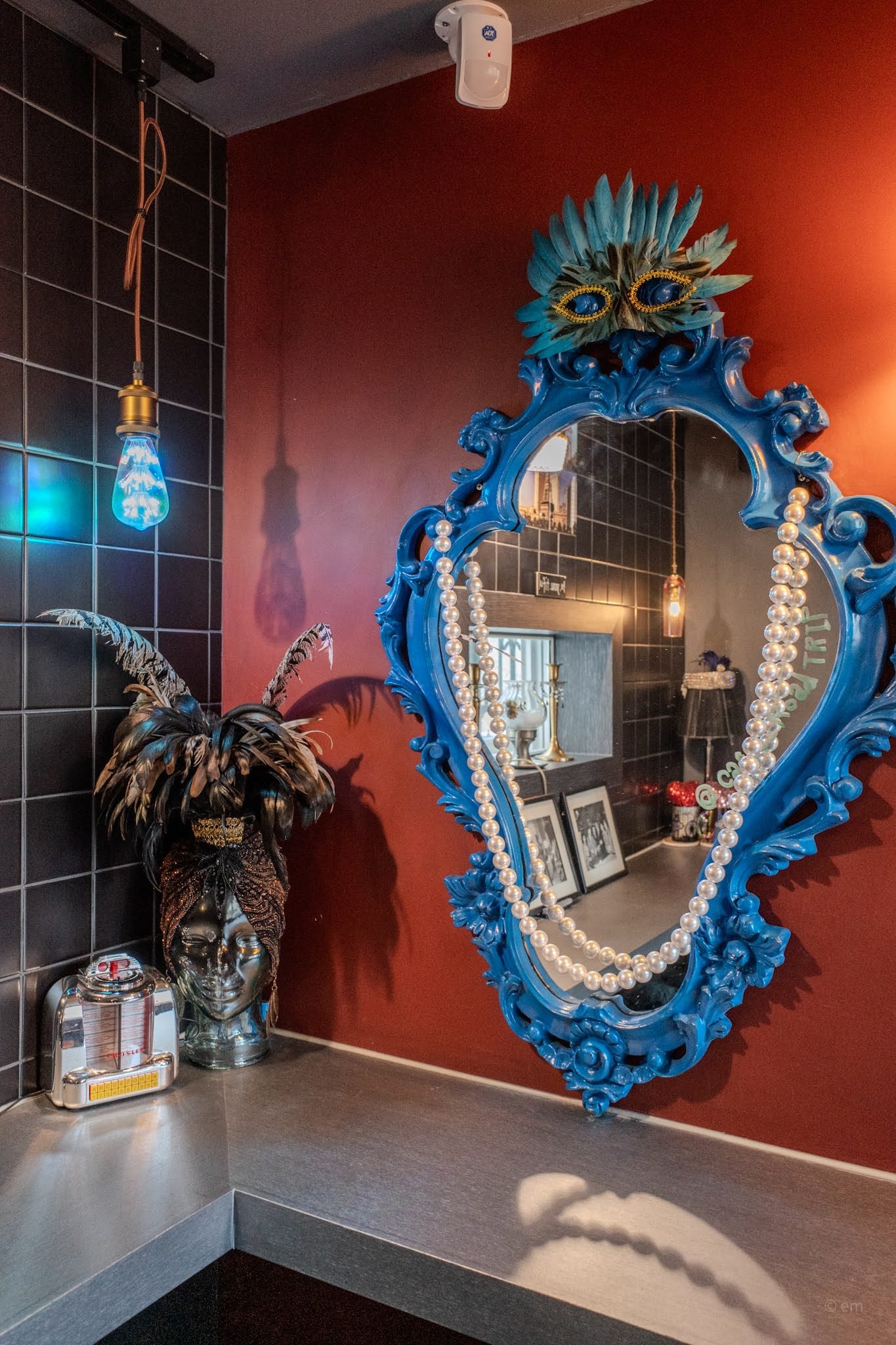
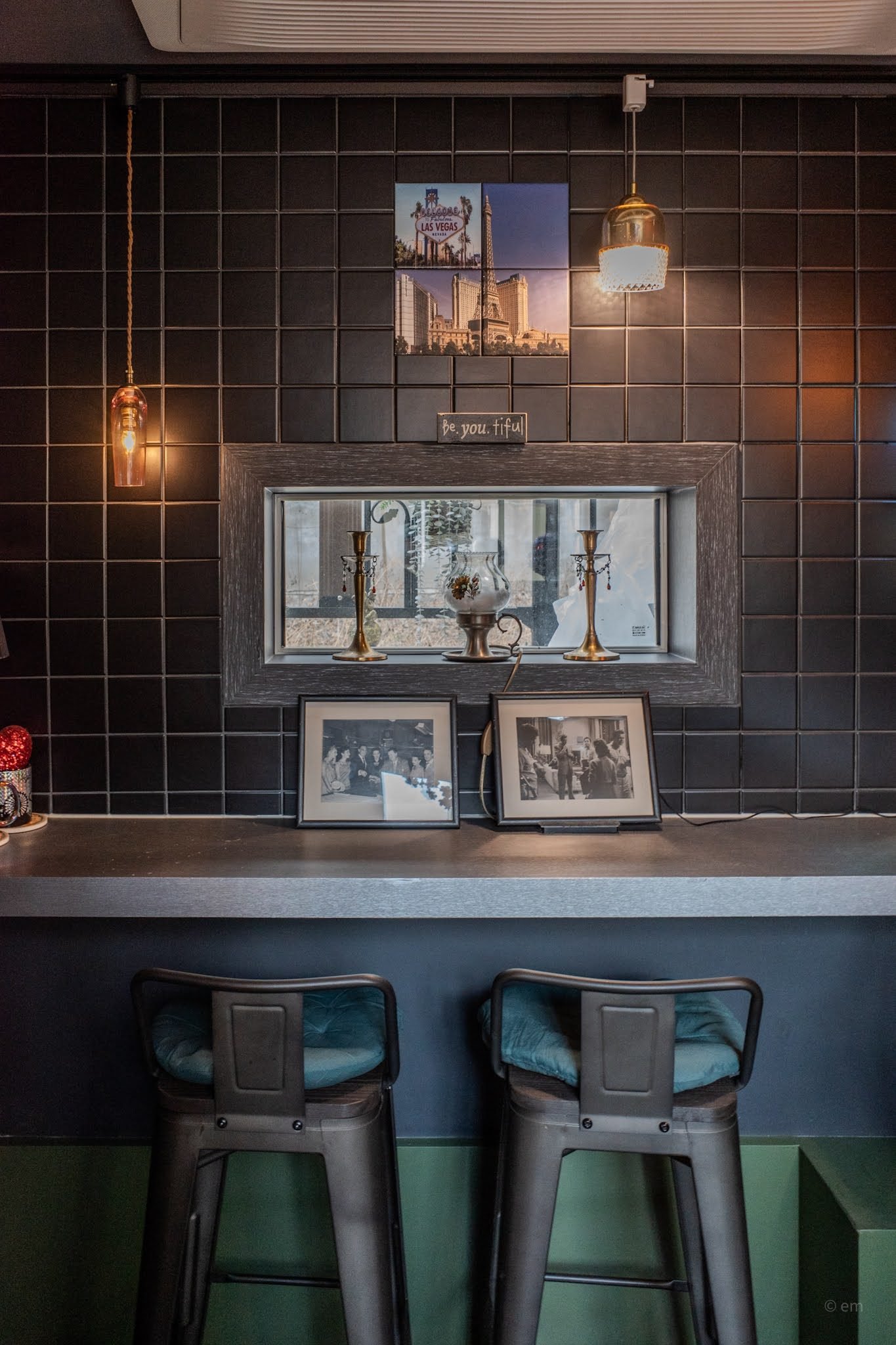
Up through the building, the register shifts. The darker interior rooms operate in deep purple and burgundy, the palette of a Las Vegas lounge at 2am. A full Konami “Diamond Solitaire” slot machine — not a replica, an actual cabinet — stands lit in one corner, neon pink and electric blue, with a peacock feather arrangement balanced on top. A baroque mirror in cobalt blue, hung with a rope of pearl beads and crowned with a masquerade mask, presides over a counter lined with vintage film stills in frames. Framed black-and-white photographs of club scenes, a miniature jukebox, and Las Vegas postcards fill the remaining surface.
Hollywood on the Wall
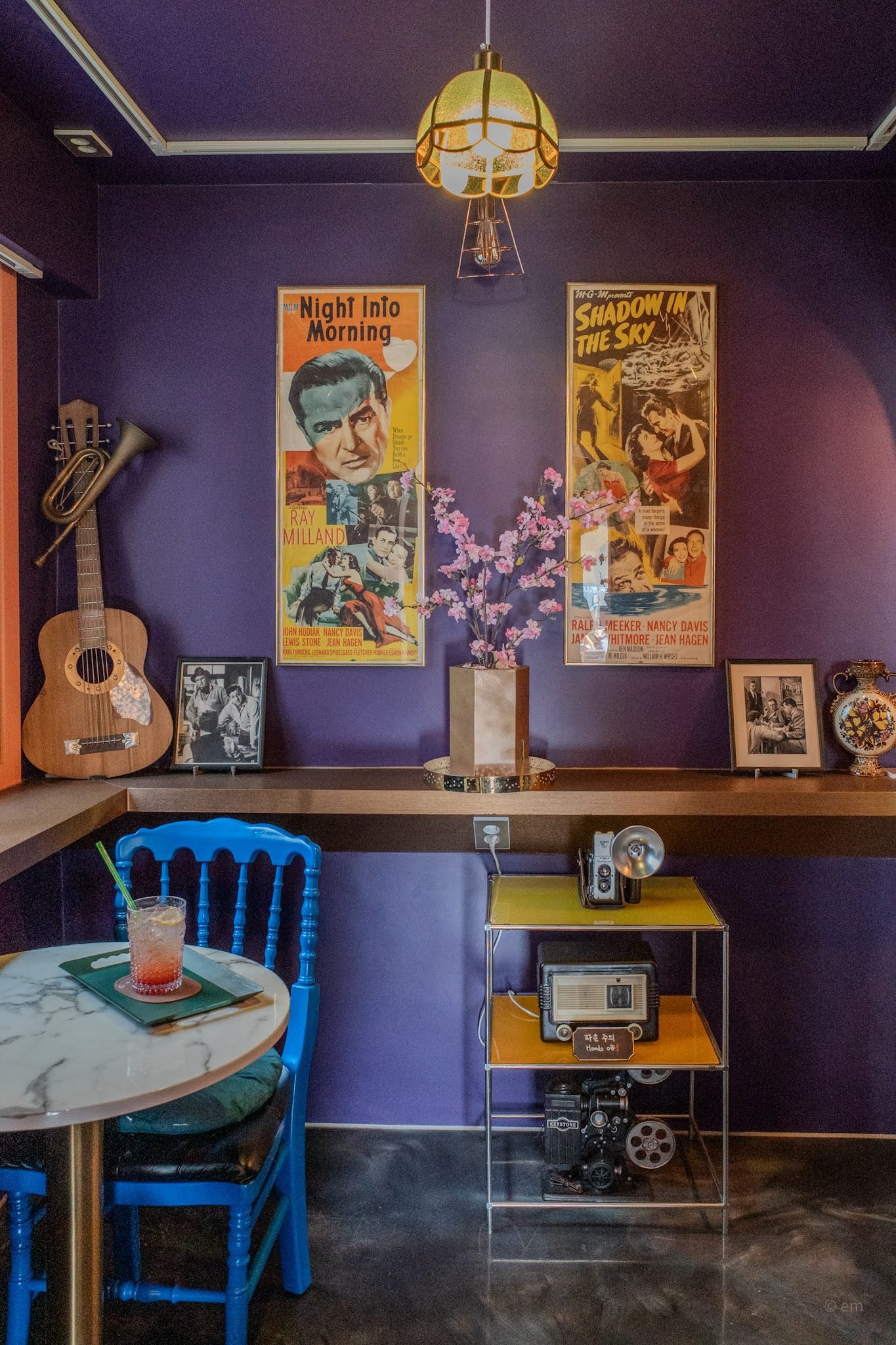
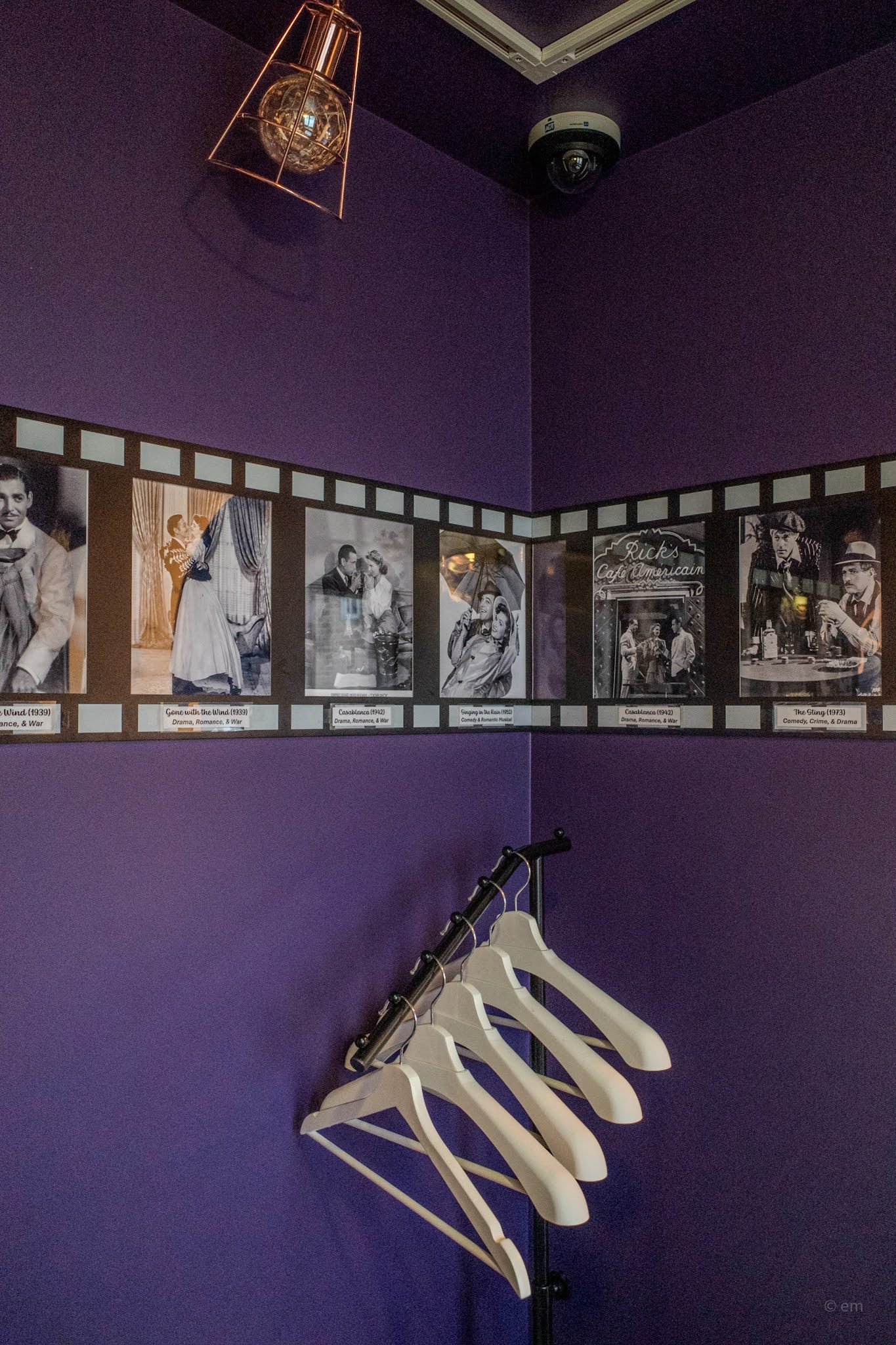
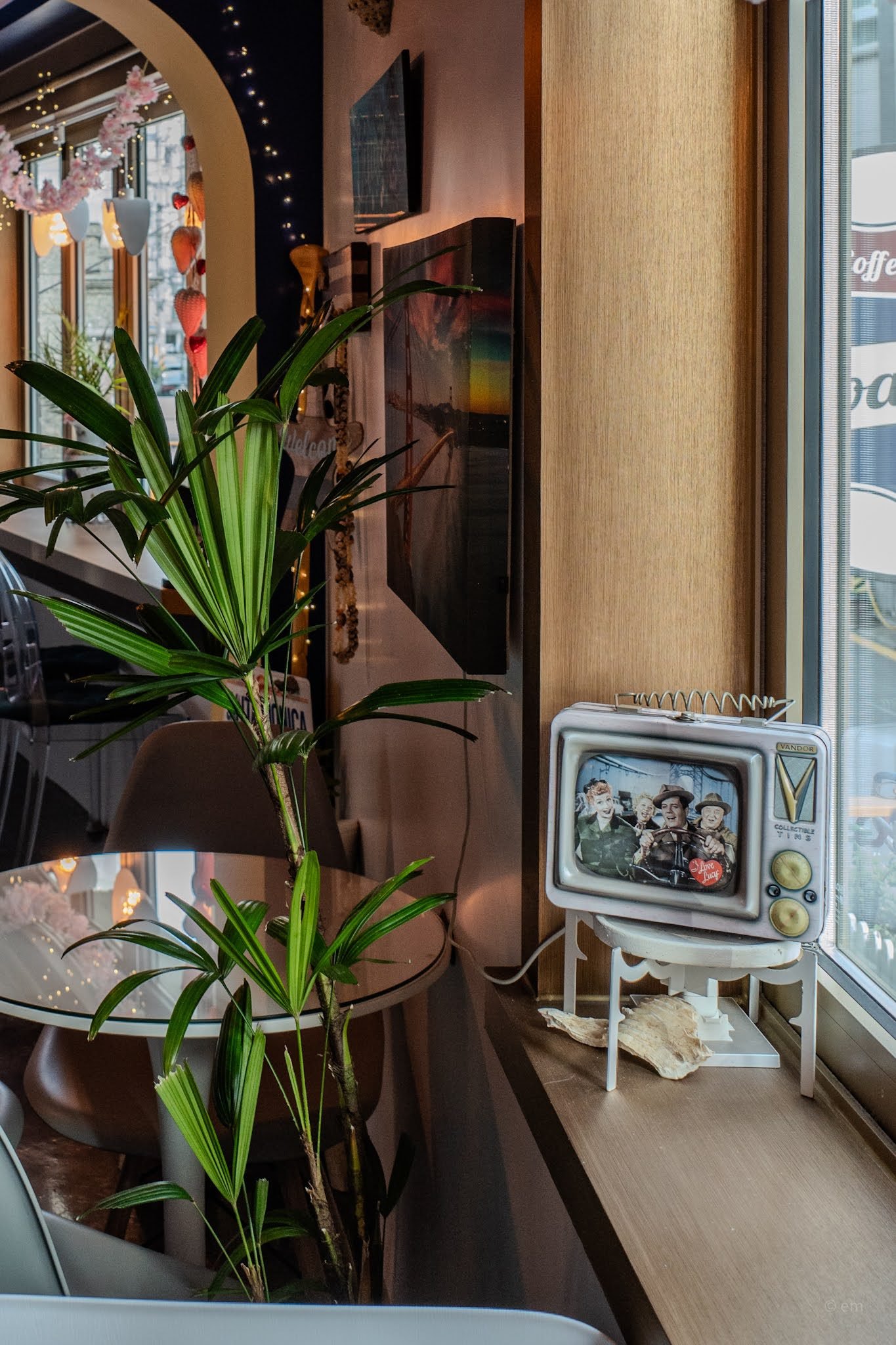
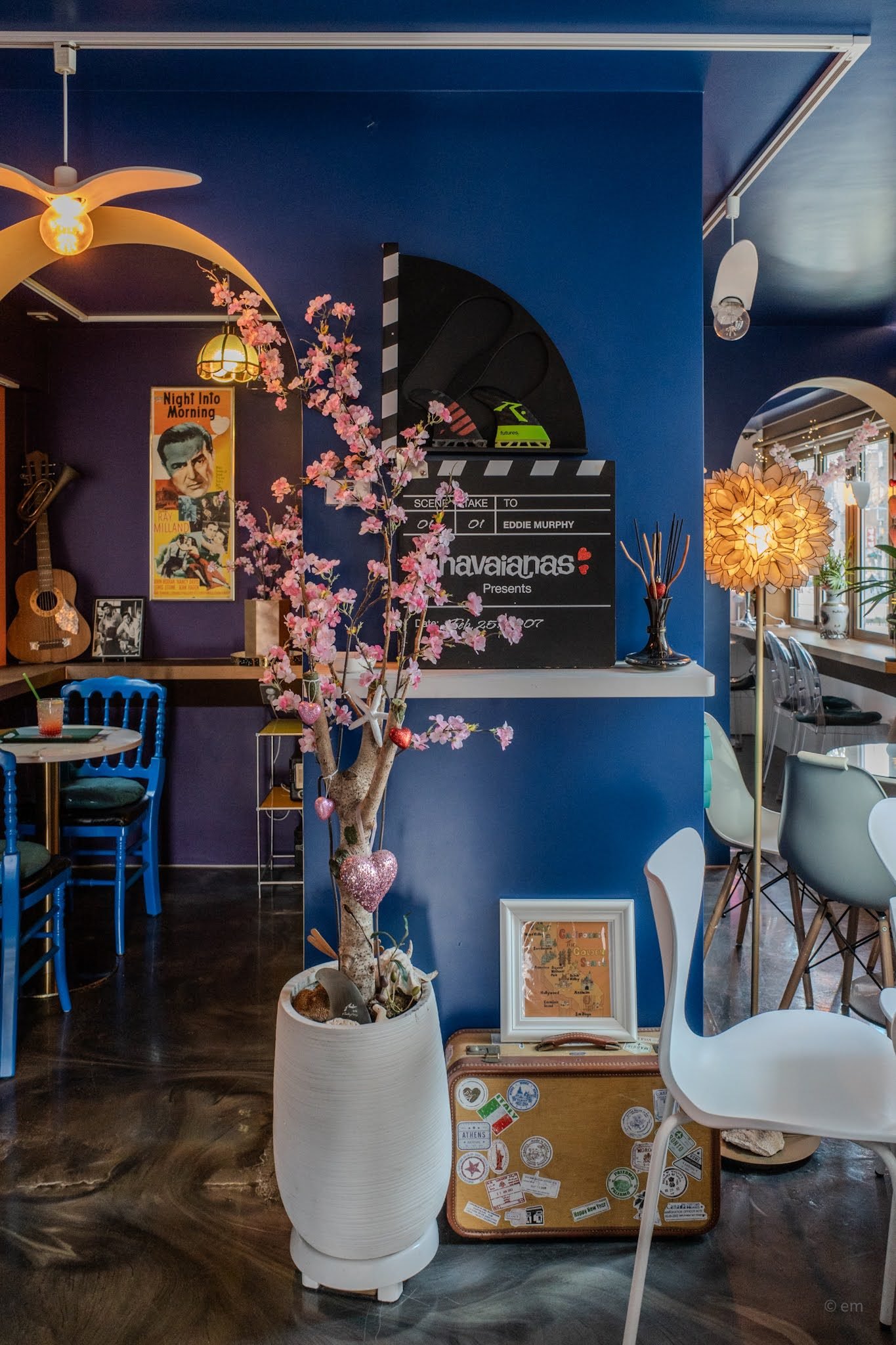
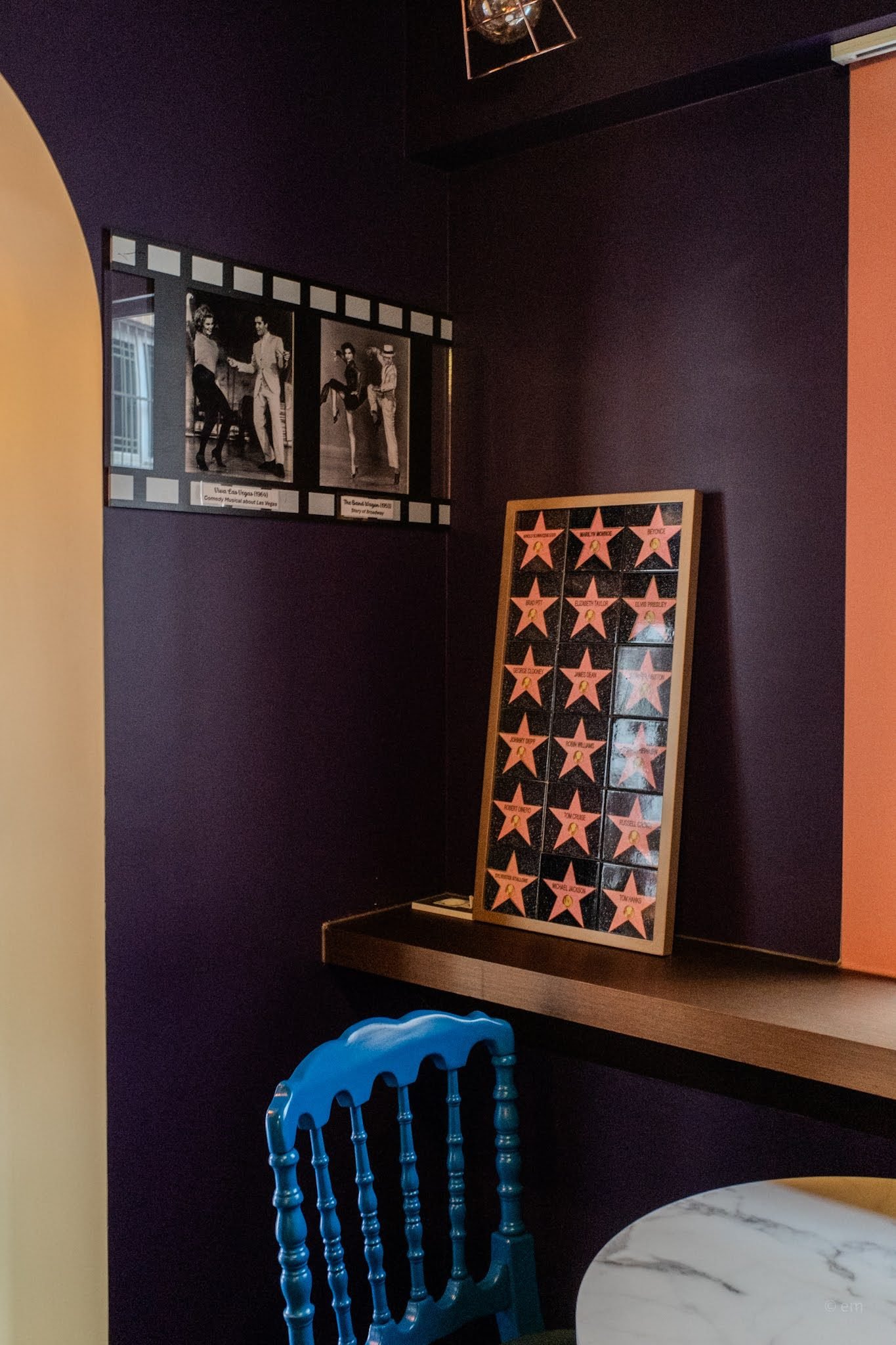
The cinematic references are specific and consistent. One room runs a film strip mural around the walls at eye level: Gone with the Wind, Casablanca, Singin’ in the Rain, The Sting — each frame labeled with genre and year. A Hollywood Walk of Fame panel leans against the shelf, names legible across its rows of pink stars. Full vintage posters for Night Into Morning (1951, Ray Milland) and Shadow in the Sky (1952) hang side by side under a stained glass pendant lamp. A director’s clapperboard on a shelf is made out to “Eddie Murphy.” An old film projector and twin-lens reflex camera sit displayed on a chrome shelving unit. A miniature I Love Lucy collectible tin television rests on a windowsill beside a parlor palm.
The California and cinema rooms connect through the arched yellow passage, so moving between them feels less like walking between themes and more like crossing states. The road continues through each doorway.
The Drink, The Corner, The Window
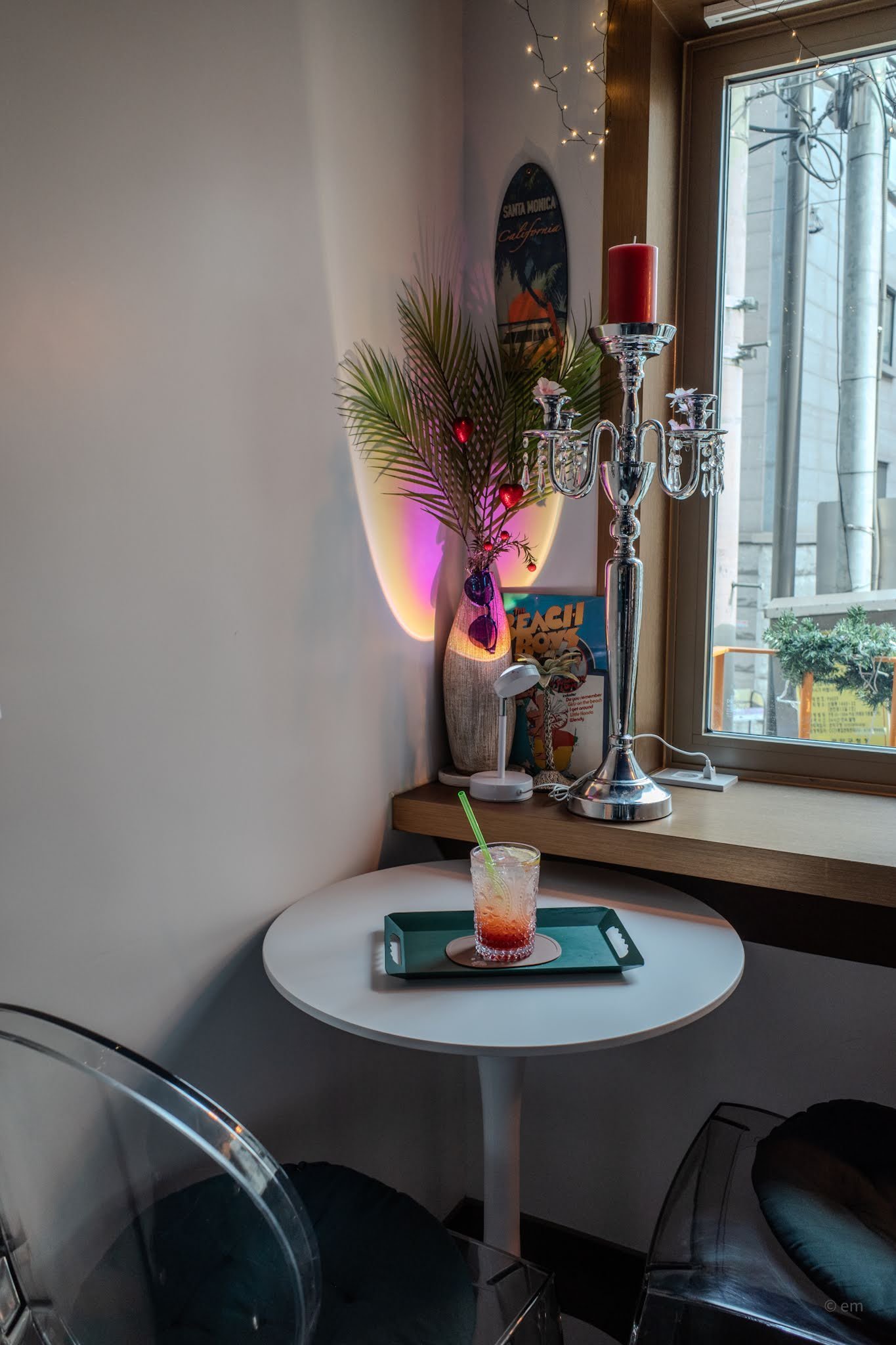
On one small table, an iced strawberry drink — crimson-pink and served with a green straw on a teal tray — sits beside a tall silver candelabra and a palm-frond arrangement backlit by a sunset lamp. A Santa Monica surfboard sign is propped in the corner. The window beside it looks out onto a plain Seoul backstreet, which does nothing to break the spell.
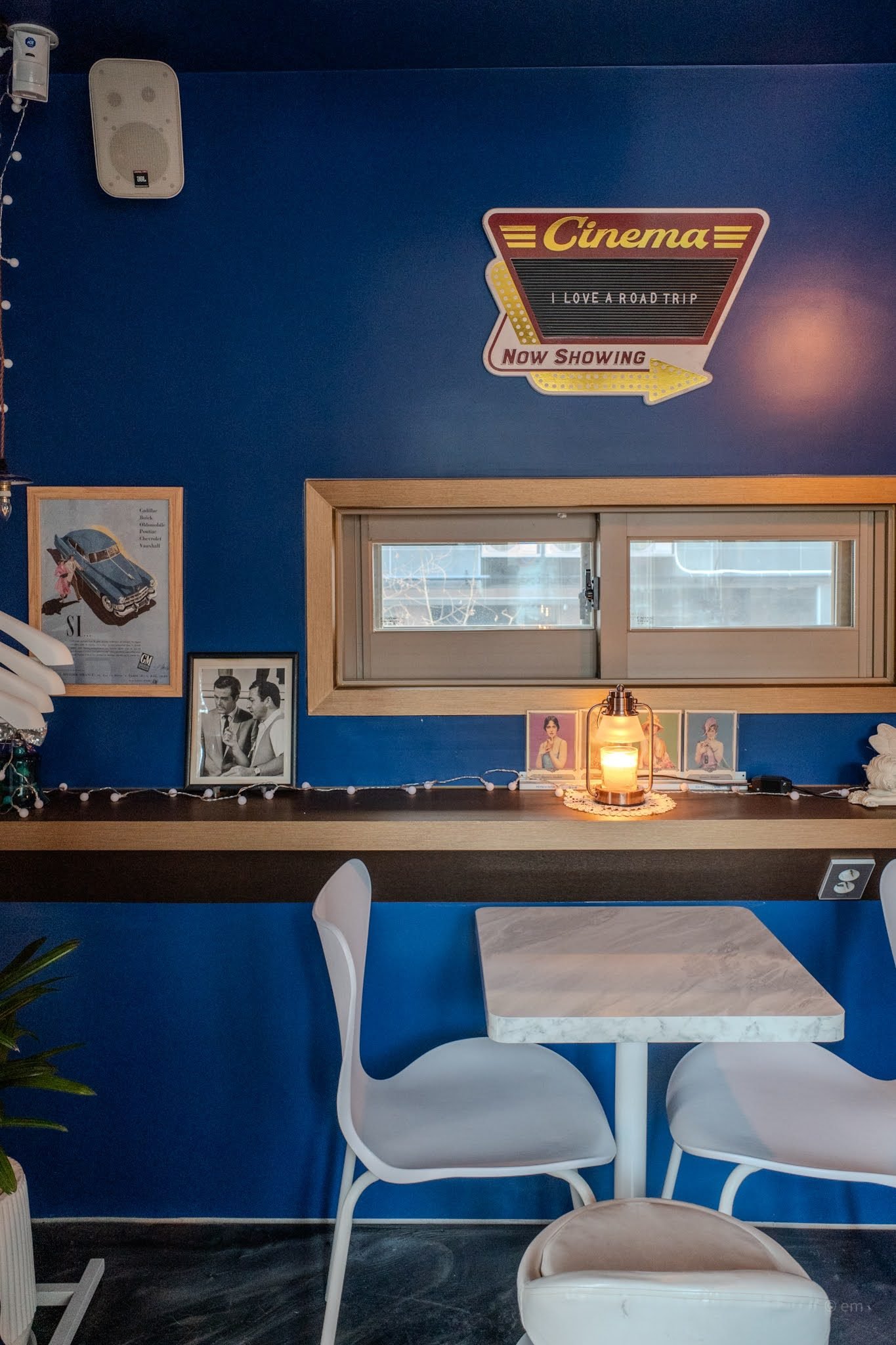
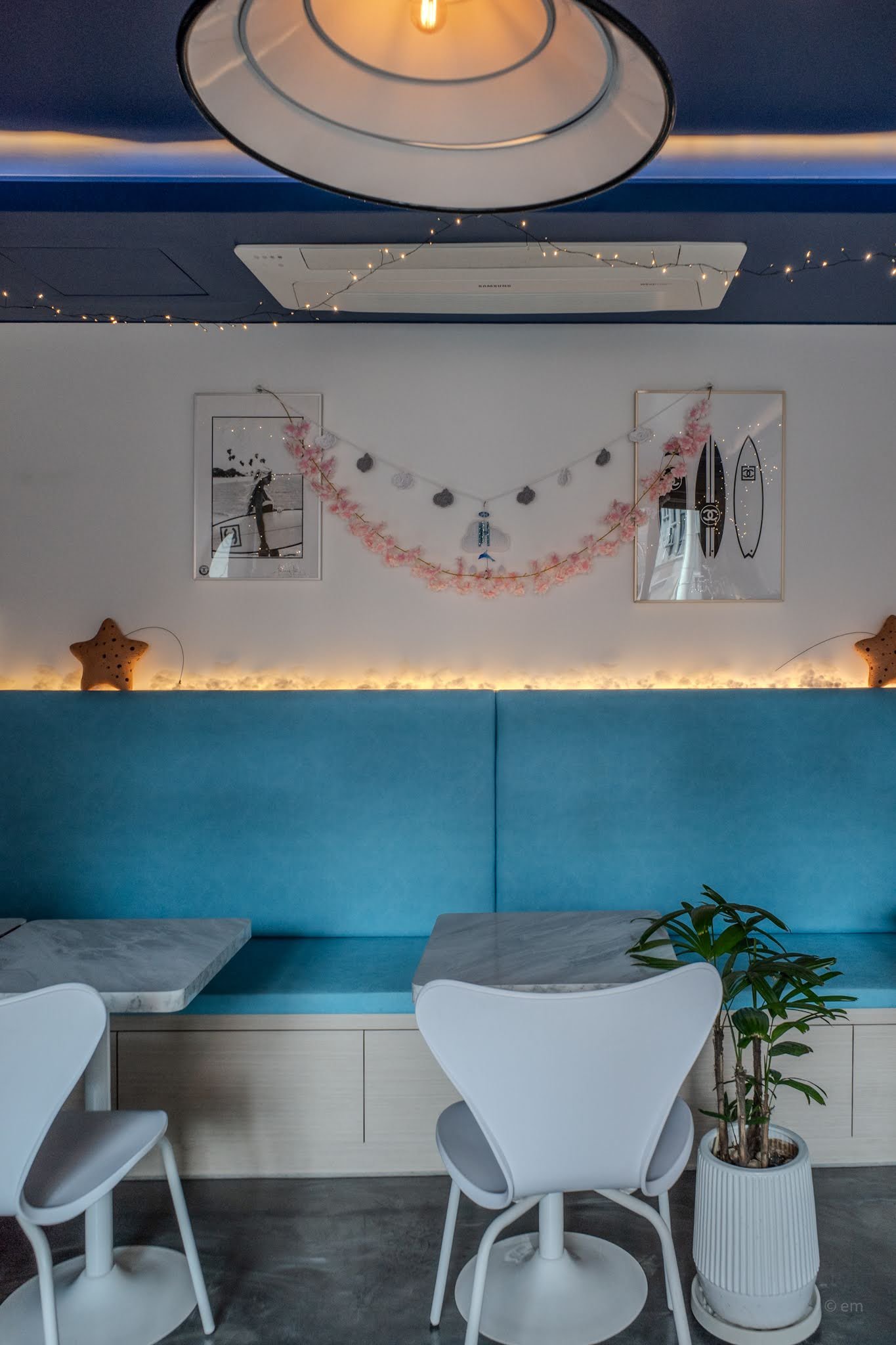
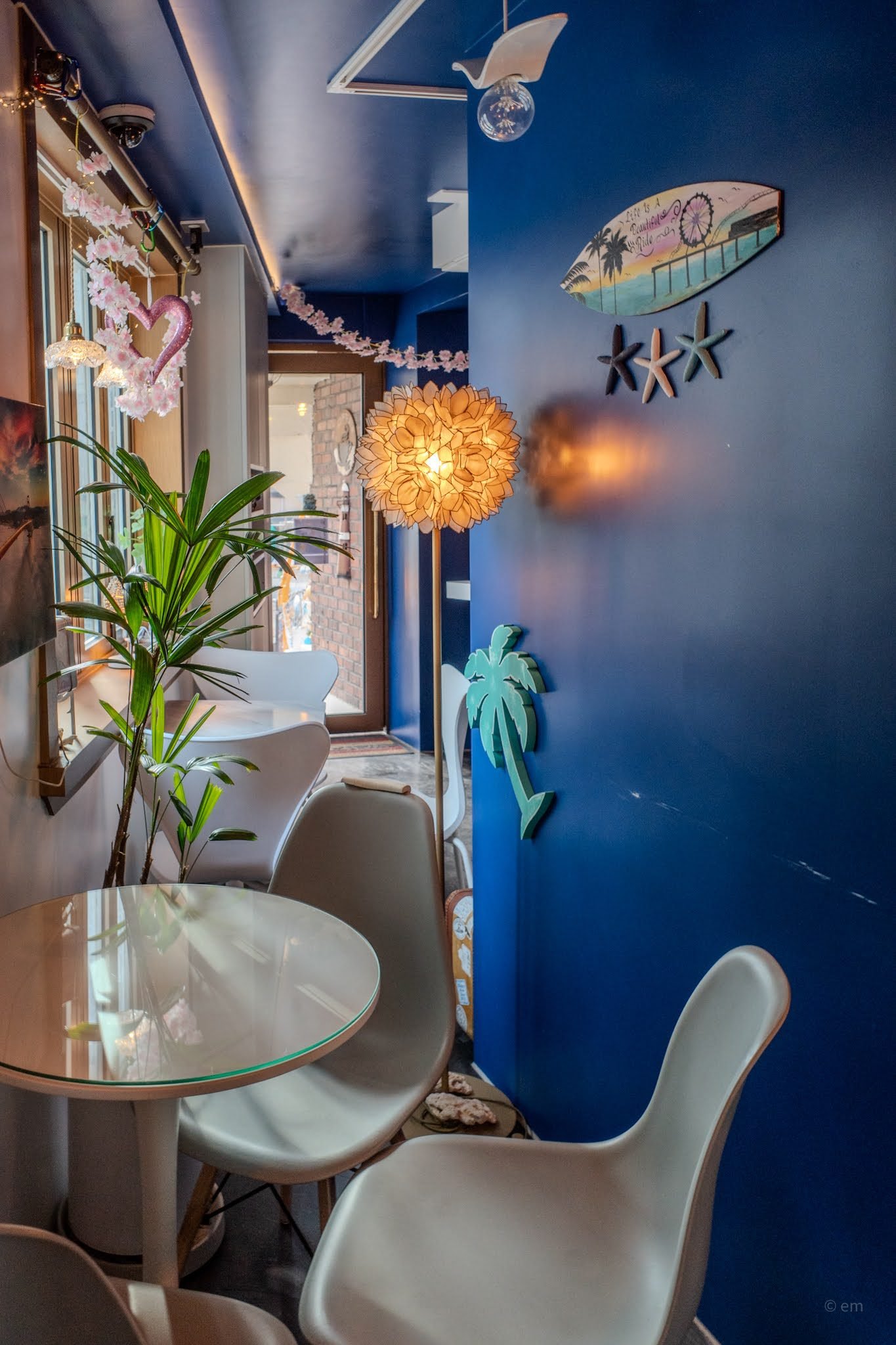
This is not a place optimized for efficiency. Nothing here is minimal. Every surface holds something — a shell, a necklace, a postcard, a vintage radio dial. The accumulation is the point. It reads less like interior design and more like evidence: of somewhere the owner has been, or wanted to go, or watched closely enough that the images stayed.
The café is not widely known, which in Gwanak-gu — not a neighbourhood that rewards aimless wandering — means it receives mostly the visitors who sought it out. On a weekday afternoon the space is nearly empty, the slot machine glowing quietly in the dark.
Cafe Road Trip (Coffee in Life Road Trip)
Address: 7 Cheonseono 12-gil, Gwanak-gu, Seoul
Hours: Weekdays 3:00pm–midnight / Weekends & public holidays 12:30pm–12:30am
Instagram: @cafe__roadtrip
The highway exists inside, and it runs all the way to the Pacific.
![[Lost] Moon Landing: A Retro American-Style Cafe in Bogwang-dong](https://hiddencollector.thesensitiveways.com/wp-content/uploads/2026/03/R0013789-200x300.jpg)